
Search History
Popular Searches
English
Dealer Login / Sign Up
The 2026 Beijing Auto Show officially opened its doors today, and among the sea of production-ready SUVs and sedans, one exhibit stopped traffic not for its promise of mass production, but for its sheer audacity of imagination. Xiaomi, the Chinese tech giant that has aggressively pivoted into the automotive space, unveiled the Xiaomi Vision Gran Turismo Concept – a pure-electric, intelligent hypercar conceived not for the public road, but for the virtual asphalt of Sony's legendary Gran Turismo simulation platform.

According to Xiaomi Automotive, this stunning single-seater was created at the personal invitation of Kazunori Yamauchi, the visionary producer of the Gran Turismo series. It is a bespoke machine designed exclusively for the GT digital driving experience. However, for enthusiasts hoping to see this machine in a showroom, Xiaomi has been unequivocal: this car will never be produced for the real world.
“The Vision Gran Turismo project invites the world’s top automotive manufacturers to break through the boundaries of real-world technology, materials, and processes,” a Xiaomi representative stated at the press conference. “It is a pure exploration of the ultimate driving fantasy, a canvas for a brand’s ultimate dream car. The Xiaomi Vision GT is our deep dive into innovative design, built beyond the constraints of hardcore engineering norms.”

From the moment the drape was pulled back, the car’s design language screamed “sculpted by the wind.” Xiaomi’s global design team has abandoned sharp, aggressive lines in favor of a philosophy they call “Wind Sculpting.” The goal was disarmingly simple: achieve perfect aerodynamics without a single add-on appendage or gimmicky wing.
The silhouette is that of a suspended droplet. Every curve has been optimized for airflow; every structural component features a wing-like cross-section. The result is a remarkably clean, almost organic visual presence. “We wanted the air to do the work, not the designer,” the team explained. “We removed everything that was extraneous and kept only what the physics demanded.”
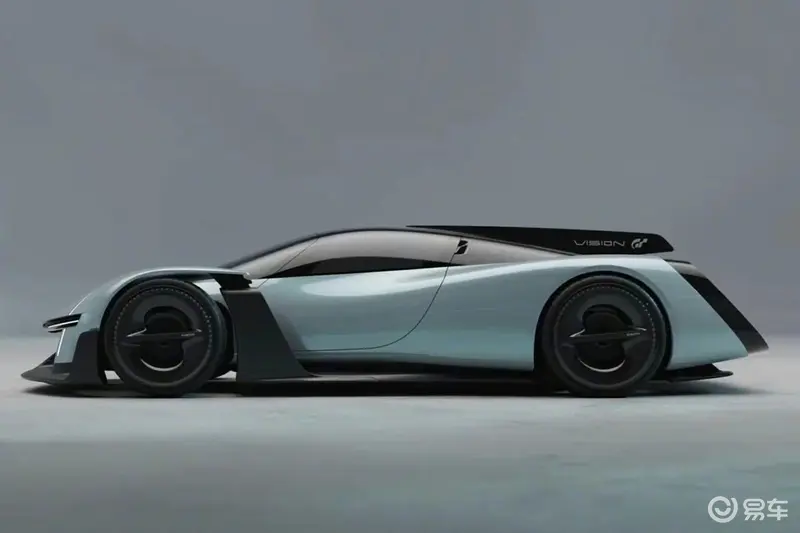
Xiaomi’s signature family design cue—the iconic cross-shaped four-headlight cluster—is not just a lighting element here. It has been repurposed as an active air intake and ducting system, seamlessly integrated into the front fascia. At the rear, the “Halo Ring” taillight is equally functional, cleverly incorporated as part of the tail’s air extraction channel, merging aesthetics with aerodynamic efficiency.

The engineering details are staggering. The body is riddled with hidden hollow channels and intersecting structures designed to manage boundary layers. The underbody features a meticulously crafted diffuser system. Perhaps the most visually arresting feature is the “Black Hole Ring” wheel design—a semi-transparent, magnetically suspended hub cover that appears to hover, reducing turbulence around the spinning wheels. At the back, an “Active Wake Control System” manages the car’s turbulent wake for maximum stability.
These innovations, according to Xiaomi’s simulation data, allow the Vision GT to achieve an aerodynamic efficiency value of 4.1, a drag coefficient of just 0.29 Cd, and a significant -1.2 downforce coefficient. These are numbers that would make even the most advanced hypercars blush.
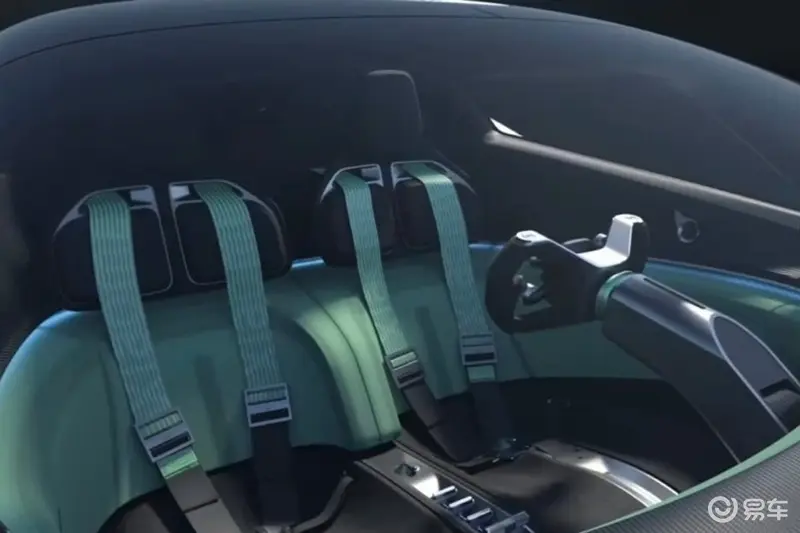
Inside, the cabin is a radical departure from traditional cockpits. Xiaomi introduces the concept of the “Sofa Racer” —a fusion of extreme racing control and domestic comfort. The interior is conceived as an intelligent, immersive “Cocoon Cabin” based on a “Ring” symbiotic architecture. The driver is cradled in a minimalist, lounging position, surrounded by ambient light and haptic feedback surfaces.
But the real magic is the AI. The vehicle is fully integrated with “Super Xiao Ai,” Xiaomi’s voice assistant, and the MiMo large model. This system allows the car to actively perceive the driver’s intent, recognize physiological states, and communicate through light, sound, and touch—rather than cluttered screens. “We are breaking the barrier between vision and experience,” the designer stated. “The driver and the machine are not two separate entities; they are one loop.”
Furthermore, the Xiaomi Vision GT is built to seamlessly integrate into the “Human x Car x Home” ecosystem. Imagine your virtual driving data adjusting your home thermostat, or your Mi Band health data tuning the car’s haptic seat to reduce fatigue. It is the ultimate expression of Xiaomi’s brand promise: everything connected, everything intelligent.
While the Xiaomi Vision Gran Turismo remains a digital ghost, its debut signals something profound about Xiaomi’s ambition. The company has already proven it can build a competent electric sedan with the SU7. But with this concept, they are showing the world that they can dream—and that their design and simulation capabilities are ready to compete at the highest level of automotive fantasy. For now, we can only experience it through a screen and a controller. But the dream, once rendered, is very real.

香港汽車內容平台 🚗 新車・買車・玩車・用車 用香港視角,睇世界嘅車
+ Follow 【揀車有路數】日產新車賣比亞迪價?仲有激光雷達
今集試一台好特別嘅日產新車——NX8,中國特供增程SUV。外觀似熟悉嘅日產味,但內籠同科技配備竟然唔晒傳統日產套路,駕乘感受又有幾多轉變?到底仲係咪你認識嗰部日產?一齊試畀你睇。
#日產 #NX8 #增程 #BitAutoHongKong #揀車有路數 3小时前
【揀車有路數】日產新車賣比亞迪價?仲有激光雷達
今集試一台好特別嘅日產新車——NX8,中國特供增程SUV。外觀似熟悉嘅日產味,但內籠同科技配備竟然唔晒傳統日產套路,駕乘感受又有幾多轉變?到底仲係咪你認識嗰部日產?一齊試畀你睇。
#日產 #NX8 #增程 #BitAutoHongKong #揀車有路數 3小时前  【新車速報】T-Top 回歸?Nissan Z Kaze 概念車現身!
90年代 JDM 味返晒嚟?Nissan 最近喺美國 ZCON 公開 Z Kaze 概念車,以現款 Nissan Z 為基礎,換上全新 T-Top 可拆式車頂,向經典 300ZX 等 Z 系列致敬。
配合碳纖維空力套件、NISMO LMGT2 18吋輪圈,以及 GReddy 排氣、進氣同 intercooler 升級,成部車都充滿 JDM 改裝味。
「Kaze」即係日文「風」,而呢部車係 one-off 概念作品,並非量產車。10月3日仲會現身加州長灘 Japanese Classic Car Show。
如果 T-Top Z 真係量產,你會唔會心動?
#NissanZ #ZKaze #TTop #JDM #BitAutoHongKong 6小时前
【新車速報】T-Top 回歸?Nissan Z Kaze 概念車現身!
90年代 JDM 味返晒嚟?Nissan 最近喺美國 ZCON 公開 Z Kaze 概念車,以現款 Nissan Z 為基礎,換上全新 T-Top 可拆式車頂,向經典 300ZX 等 Z 系列致敬。
配合碳纖維空力套件、NISMO LMGT2 18吋輪圈,以及 GReddy 排氣、進氣同 intercooler 升級,成部車都充滿 JDM 改裝味。
「Kaze」即係日文「風」,而呢部車係 one-off 概念作品,並非量產車。10月3日仲會現身加州長灘 Japanese Classic Car Show。
如果 T-Top Z 真係量產,你會唔會心動?
#NissanZ #ZKaze #TTop #JDM #BitAutoHongKong 6小时前  【新車速報】Skyline 真係要返嚟喇!Nissan CEO:新一代12月登場
等咗咁耐,Skyline 終於有新消息!Nissan CEO Ivan Espinosa 接受《朝日新聞》專訪時透露,新一代 Skyline 將於今年12月亮相,亦係 Nissan 加快新車開發嘅代表作。
新車開發周期縮短至約 26個月,並利用生成式 AI、數碼模擬等工具加快開發流程。Nissan 官方亦已將 Skyline 列入 Heartbeat 車系,代表品牌工程技術、駕駛性能與情感。
至於動力、規格同最終量產設計,目前仍未全面公開。今次 Skyline 回歸,你最期待保留邊樣經典元素?
#Nissan #Skyline #新車速報 #BitAutoHongKong 1天前
【新車速報】Skyline 真係要返嚟喇!Nissan CEO:新一代12月登場
等咗咁耐,Skyline 終於有新消息!Nissan CEO Ivan Espinosa 接受《朝日新聞》專訪時透露,新一代 Skyline 將於今年12月亮相,亦係 Nissan 加快新車開發嘅代表作。
新車開發周期縮短至約 26個月,並利用生成式 AI、數碼模擬等工具加快開發流程。Nissan 官方亦已將 Skyline 列入 Heartbeat 車系,代表品牌工程技術、駕駛性能與情感。
至於動力、規格同最終量產設計,目前仍未全面公開。今次 Skyline 回歸,你最期待保留邊樣經典元素?
#Nissan #Skyline #新車速報 #BitAutoHongKong 1天前 Get the latest car news first!
【揀車有路數】日產新車賣比亞迪價?仲有激光雷達
今集試一台好特別嘅日產新車——NX8,中國特供增程SUV。外觀似熟悉嘅日產味,但內籠同科技配備竟然唔晒傳統日產套路,駕乘感受又有幾多轉變?到底仲係咪你認識嗰部日產?一齊試畀你睇。
#日產 #NX8 #增程 #BitAutoHongKong #揀車有路數 3小时前 【新車速報】T-Top 回歸?Nissan Z Kaze 概念車現身!
90年代 JDM 味返晒嚟?Nissan 最近喺美國 ZCON 公開 Z Kaze 概念車,以現款 Nissan Z 為基礎,換上全新 T-Top 可拆式車頂,向經典 300ZX 等 Z 系列致敬。
配合碳纖維空力套件、NISMO LMGT2 18吋輪圈,以及 GReddy 排氣、進氣同 intercooler 升級,成部車都充滿 JDM 改裝味。
「Kaze」即係日文「風」,而呢部車係 one-off 概念作品,並非量產車。10月3日仲會現身加州長灘 Japanese Classic Car Show。
如果 T-Top Z 真係量產,你會唔會心動?
#NissanZ #ZKaze #TTop #JDM #BitAutoHongKong 6小时前 【新車速報】Skyline 真係要返嚟喇!Nissan CEO:新一代12月登場
等咗咁耐,Skyline 終於有新消息!Nissan CEO Ivan Espinosa 接受《朝日新聞》專訪時透露,新一代 Skyline 將於今年12月亮相,亦係 Nissan 加快新車開發嘅代表作。
新車開發周期縮短至約 26個月,並利用生成式 AI、數碼模擬等工具加快開發流程。Nissan 官方亦已將 Skyline 列入 Heartbeat 車系,代表品牌工程技術、駕駛性能與情感。
至於動力、規格同最終量產設計,目前仍未全面公開。今次 Skyline 回歸,你最期待保留邊樣經典元素?
#Nissan #Skyline #新車速報 #BitAutoHongKong 1天前  BAWToyotaBYDZeekrGACDongfengXPengMGMaxusLeapmotorDenzaIMiCAURDeepalWulingOraJuneyao AutoKYCSkyworthAvatrFotonFordGeelyHongqiJAECOOKGMOMODADFSKTeslaHondaBMWMercedes-BenzsmartMINIPorscheNissanLexusSuzukiVolvoSubaruMazdaKiaHyundaiLand RoverRolls-RoyceFerrariAudiLamborghiniRiddaraSeresFarizonfireflyLingboxKaiyiVoyahHIMAM-HeroIsuzuBentleyPolestarMcLarenMitsubishiMaseratiPeugeotAston MartinAcuraJeepJaguarLotusVolkswagenEpiclandJACLepasLi
 © 2024 Bitauto.com. All Rights Reserved.
Bitauto (www.yiche.com and www.bitauto.com) is one of the most visited automotive websites in China. We provide detailed info on Chinese car brands available in your area. Please note that the information provided on this website is based on publicly available data and is for reference only. It may not be fully updated or accurate at all times.
Help us improve our website


