
Search History
Popular Searches
English
Dealer Login / Sign Up
The 2026 Beijing International Automotive Exhibition, currently underway at the China International Exhibition Center, has witnessed a slew of groundbreaking debuts. Among them, Xiaomi Auto’s highly anticipated performance-oriented SUV, the YU7 GT, has taken center stage. The company officially confirmed that the YU7 GT will be formally launched at the end of May, marking a significant milestone in Xiaomi’s rapidly expanding automotive portfolio.

Positioned as a high-performance variant of the standard YU7, the GT model retains the core design language of its sibling while introducing a host of distinct enhancements. Industry insiders expect the price to fall within the 450,000 to 500,000 RMB range (approximately $62,000 to $69,000), placing it firmly in the premium segment where it will contend with established players like the Tesla Model Y Performance and the NIO ES6.
From a design standpoint, the YU7 GT exudes an unmistakable aura of aggression and athleticism. The front fascia is dominated by a reworked bumper featuring a prominent, sculpted front splitter that channels air more effectively and lowers the visual center of gravity. The signature “Water Droplet” headlamps—a hallmark of Xiaomi’s automotive design—now feature a ventilated, hollowed-out structure that not only enhances cooling but also adds a layer of technical sophistication.

One of the most eye-catching additions is the new “Cherry Red” (车厘子红) body color, a deep, lustrous shade that commands attention under the exhibition hall’s lights. The color is not merely cosmetic; Xiaomi claims the multi-layer paint application is formulated to improve durability and UV resistance, a detail appreciated by discerning buyers.
Moving to the side profile, the YU7 GT retains the sleek, low-drag silhouette that is characteristic of the YU7 family. The roofline slopes gracefully into a fastback-style rear, optimizing aerodynamics. Frameless side mirrors and flush-mounted door handles—now electrically deployed and retracted—contribute to a coefficient of drag that Xiaomi engineers hint is among the best in its class. The vehicle rides on massive 22-inch alloy wheels shod with 295/40 R22 tires, providing a commanding stance and ample contact patch for high-performance driving.
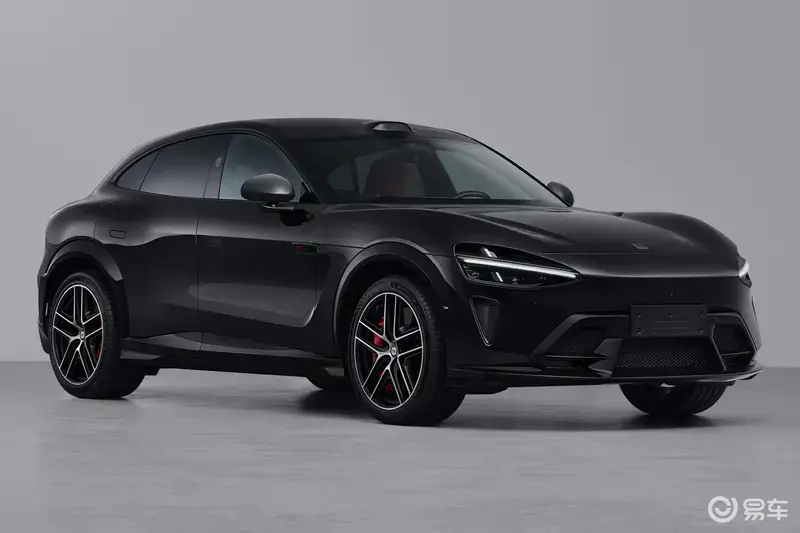
According to earlier regulatory filings, the GT variant offers an optional 24K carbon fiber emblem, a luxury touch that underscores the model’s premium aspirations. The side profile is further defined by ten sets of through-type air ducts and nineteen strategically placed air vents—a design approach borrowed from aerospace engineering to manage thermal loads and reduce lift at high speeds.
In terms of dimensions, the YU7 GT measures 5,015 mm in length, 2,007 mm in width, and 1,597 mm in height, with a wheelbase spanning 3,000 mm. These proportions—long, wide, and relatively low for an SUV—hint at a vehicle designed to prioritize on-road dynamics over off-road capability, a trade-off that performance buyers will welcome.
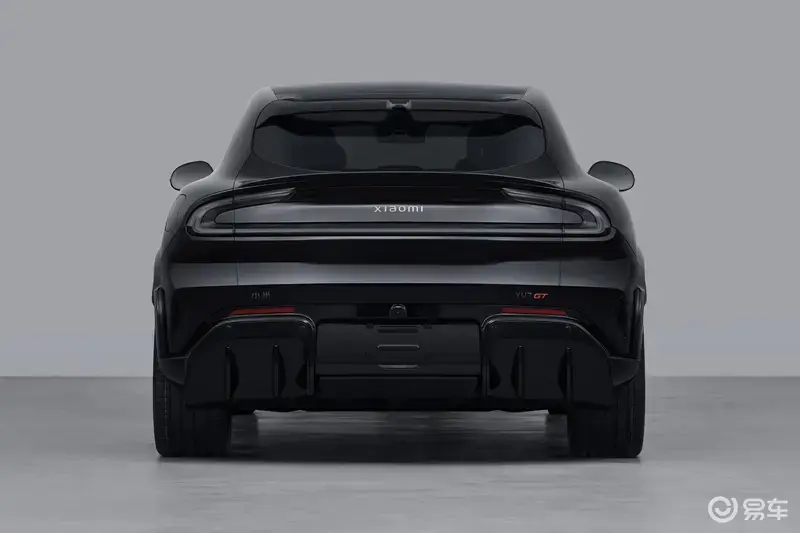
The rear of the YU7 GT is equally dramatic. The brand’s signature “Halo” taillight assembly—a continuous, ring-like strip—stretches across the tailgate, creating a distinctive light signature at night. Below it, the bumper houses an aggressive diffuser with vertical, blade-like strakes, commonly referred to as “vertical knife” diffusers, which improve downforce and give the car a purposeful race-derived appearance. A prominent “GT” badge adorns the tailgate, signaling the model’s elevated status within the lineup.
Under the hood—or rather, under the floor—the YU7 GT’s powertrain is the headline act. The vehicle is equipped with a dual-motor, all-wheel-drive system. The front motor delivers 288 kW, while the rear unit pushes out 450 kW, resulting in a combined system output of 1,003 metric horsepower (approximately 738 kW). This level of power places the YU7 GT in the same league as supercars, allowing for a claimed top speed of 300 km/h (186 mph).
Despite this ferocious performance, Xiaomi has managed to maintain a respectable driving range. The YU7 GT is equipped with a high-energy-density battery pack, enabling a CLTC-rated range of 705 kilometers on a single charge. While real-world range will likely be lower, especially under spirited driving, the figure suggests that the GT is not merely a track toy but a usable daily driver with sufficient range for long-distance touring.
Charging infrastructure support is also expected to align with Xiaomi’s broader ecosystem, with compatibility for ultra-fast DC chargers capable of replenishing the battery from 10% to 80% in under 30 minutes. The company has been rapidly expanding its network of dedicated charging stations across major Chinese cities, and the YU7 GT will benefit from priority access and faster charging rates through the Xiaomi HyperCharge system.
Inside the cabin, the YU7 GT is expected to feature a heavily revised interior compared to the standard YU7. While official images have not been released, sources close to the project suggest the adoption of lightweight sport seats with integrated headrests, Alcantara and Nappa leather upholstery, and a GT-specific steering wheel with paddle shifters for regenerative braking adjustment. The infotainment system will be powered by Xiaomi’s latest HyperOS, offering seamless integration with Xiaomi smartphones, smart home devices, and over-the-air update capabilities.
The 2026 Beijing Auto Show has always been a barometer for the Chinese auto industry’s direction, and the YU7 GT’s debut underscores the accelerating shift toward high-performance electric vehicles. Xiaomi, which entered the automotive market only a few years ago, has already established itself as a serious contender by leveraging its expertise in consumer electronics, supply chain management, and software development.
Industry analysts have noted that the YU7 GT’s price point of 450,000 to 500,000 RMB strategically undercuts European rivals such as the BMW iX3 and the Mercedes-Benz EQB, while offering significantly more power and a more advanced technology suite. The GT could serve as a halo model that elevates the entire Xiaomi EV brand, much like the Xiaomi SU7 Ultra did for the sedan lineup.

However, challenges remain. Production capacity is a perennial concern for new entrants, and Xiaomi will need to ramp up its factory in Beijing to meet expected demand. The company recently announced a second shift at its manufacturing plant and is actively recruiting additional engineering and assembly staff. Delivery timelines for the YU7 GT are expected to begin in early July, provided that final homologation processes proceed smoothly.
Another potential hurdle is the competitive landscape. BYD, NIO, XPeng, and Li Auto are all aggressively expanding their high-performance model lines. The BYD Sea Lion 07 GT and the NIO EC6 are direct rivals that offer similar combinations of style, range, and performance. Xiaomi’s ace in the hole remains its ecosystem advantage: customers who already own Xiaomi phones, tablets, and smart home devices will experience a level of integration that competitors cannot easily replicate.
For now, the YU7 GT has succeeded in generating tremendous buzz. Visitors to the Xiaomi booth at the Beijing Auto Show have been queuing for hours to get a closer look at the Cherry Red prototype. Company executives have been fielding questions about pricing, availability, and whether a more hardcore “Track Edition” might follow. While Xiaomi remains tight-lipped about future derivatives, the engineering platform appears robust enough to accommodate even higher levels of performance tuning.
As the auto show continues through the end of April, the YU7 GT will remain one of the most talked-about vehicles on the floor. Xiaomi has proven that it can design, engineer, and manufacture a world-class electric vehicle. The question now is whether the market is ready to embrace a 50,000-dollar SUV from a company better known for smartphones and smart home gadgets. Based on early reactions, the answer appears to be a resounding yes.
For more information on the 2026 Beijing Auto Show and the latest in automotive innovation, download the Yiche App and search for “2026 Beijing Auto Show” to access the full library of in-depth reports and exclusive show floor coverage.

香港汽車內容平台 🚗 新車・買車・玩車・用車 用香港視角,睇世界嘅車
+ Follow 【揀車有路數】日產新車賣比亞迪價?仲有激光雷達
今集試一台好特別嘅日產新車——NX8,中國特供增程SUV。外觀似熟悉嘅日產味,但內籠同科技配備竟然唔晒傳統日產套路,駕乘感受又有幾多轉變?到底仲係咪你認識嗰部日產?一齊試畀你睇。
#日產 #NX8 #增程 #BitAutoHongKong #揀車有路數 3小时前
【揀車有路數】日產新車賣比亞迪價?仲有激光雷達
今集試一台好特別嘅日產新車——NX8,中國特供增程SUV。外觀似熟悉嘅日產味,但內籠同科技配備竟然唔晒傳統日產套路,駕乘感受又有幾多轉變?到底仲係咪你認識嗰部日產?一齊試畀你睇。
#日產 #NX8 #增程 #BitAutoHongKong #揀車有路數 3小时前  【新車速報】T-Top 回歸?Nissan Z Kaze 概念車現身!
90年代 JDM 味返晒嚟?Nissan 最近喺美國 ZCON 公開 Z Kaze 概念車,以現款 Nissan Z 為基礎,換上全新 T-Top 可拆式車頂,向經典 300ZX 等 Z 系列致敬。
配合碳纖維空力套件、NISMO LMGT2 18吋輪圈,以及 GReddy 排氣、進氣同 intercooler 升級,成部車都充滿 JDM 改裝味。
「Kaze」即係日文「風」,而呢部車係 one-off 概念作品,並非量產車。10月3日仲會現身加州長灘 Japanese Classic Car Show。
如果 T-Top Z 真係量產,你會唔會心動?
#NissanZ #ZKaze #TTop #JDM #BitAutoHongKong 6小时前
【新車速報】T-Top 回歸?Nissan Z Kaze 概念車現身!
90年代 JDM 味返晒嚟?Nissan 最近喺美國 ZCON 公開 Z Kaze 概念車,以現款 Nissan Z 為基礎,換上全新 T-Top 可拆式車頂,向經典 300ZX 等 Z 系列致敬。
配合碳纖維空力套件、NISMO LMGT2 18吋輪圈,以及 GReddy 排氣、進氣同 intercooler 升級,成部車都充滿 JDM 改裝味。
「Kaze」即係日文「風」,而呢部車係 one-off 概念作品,並非量產車。10月3日仲會現身加州長灘 Japanese Classic Car Show。
如果 T-Top Z 真係量產,你會唔會心動?
#NissanZ #ZKaze #TTop #JDM #BitAutoHongKong 6小时前  【新車速報】Skyline 真係要返嚟喇!Nissan CEO:新一代12月登場
等咗咁耐,Skyline 終於有新消息!Nissan CEO Ivan Espinosa 接受《朝日新聞》專訪時透露,新一代 Skyline 將於今年12月亮相,亦係 Nissan 加快新車開發嘅代表作。
新車開發周期縮短至約 26個月,並利用生成式 AI、數碼模擬等工具加快開發流程。Nissan 官方亦已將 Skyline 列入 Heartbeat 車系,代表品牌工程技術、駕駛性能與情感。
至於動力、規格同最終量產設計,目前仍未全面公開。今次 Skyline 回歸,你最期待保留邊樣經典元素?
#Nissan #Skyline #新車速報 #BitAutoHongKong 1天前
【新車速報】Skyline 真係要返嚟喇!Nissan CEO:新一代12月登場
等咗咁耐,Skyline 終於有新消息!Nissan CEO Ivan Espinosa 接受《朝日新聞》專訪時透露,新一代 Skyline 將於今年12月亮相,亦係 Nissan 加快新車開發嘅代表作。
新車開發周期縮短至約 26個月,並利用生成式 AI、數碼模擬等工具加快開發流程。Nissan 官方亦已將 Skyline 列入 Heartbeat 車系,代表品牌工程技術、駕駛性能與情感。
至於動力、規格同最終量產設計,目前仍未全面公開。今次 Skyline 回歸,你最期待保留邊樣經典元素?
#Nissan #Skyline #新車速報 #BitAutoHongKong 1天前 Get the latest car news first!
【揀車有路數】日產新車賣比亞迪價?仲有激光雷達
今集試一台好特別嘅日產新車——NX8,中國特供增程SUV。外觀似熟悉嘅日產味,但內籠同科技配備竟然唔晒傳統日產套路,駕乘感受又有幾多轉變?到底仲係咪你認識嗰部日產?一齊試畀你睇。
#日產 #NX8 #增程 #BitAutoHongKong #揀車有路數 3小时前 【新車速報】T-Top 回歸?Nissan Z Kaze 概念車現身!
90年代 JDM 味返晒嚟?Nissan 最近喺美國 ZCON 公開 Z Kaze 概念車,以現款 Nissan Z 為基礎,換上全新 T-Top 可拆式車頂,向經典 300ZX 等 Z 系列致敬。
配合碳纖維空力套件、NISMO LMGT2 18吋輪圈,以及 GReddy 排氣、進氣同 intercooler 升級,成部車都充滿 JDM 改裝味。
「Kaze」即係日文「風」,而呢部車係 one-off 概念作品,並非量產車。10月3日仲會現身加州長灘 Japanese Classic Car Show。
如果 T-Top Z 真係量產,你會唔會心動?
#NissanZ #ZKaze #TTop #JDM #BitAutoHongKong 6小时前 【新車速報】Skyline 真係要返嚟喇!Nissan CEO:新一代12月登場
等咗咁耐,Skyline 終於有新消息!Nissan CEO Ivan Espinosa 接受《朝日新聞》專訪時透露,新一代 Skyline 將於今年12月亮相,亦係 Nissan 加快新車開發嘅代表作。
新車開發周期縮短至約 26個月,並利用生成式 AI、數碼模擬等工具加快開發流程。Nissan 官方亦已將 Skyline 列入 Heartbeat 車系,代表品牌工程技術、駕駛性能與情感。
至於動力、規格同最終量產設計,目前仍未全面公開。今次 Skyline 回歸,你最期待保留邊樣經典元素?
#Nissan #Skyline #新車速報 #BitAutoHongKong 1天前  BAWToyotaBYDZeekrGACDongfengXPengMGMaxusLeapmotorDenzaIMiCAURDeepalWulingOraJuneyao AutoKYCSkyworthAvatrFotonFordGeelyHongqiJAECOOKGMOMODADFSKTeslaHondaBMWMercedes-BenzsmartMINIPorscheNissanLexusSuzukiVolvoSubaruMazdaKiaHyundaiLand RoverRolls-RoyceFerrariAudiLamborghiniRiddaraSeresFarizonfireflyLingboxKaiyiVoyahHIMAM-HeroIsuzuBentleyPolestarMcLarenMitsubishiMaseratiPeugeotAston MartinAcuraJeepJaguarLotusVolkswagenEpiclandJACLepasLi
 © 2024 Bitauto.com. All Rights Reserved.
Bitauto (www.yiche.com and www.bitauto.com) is one of the most visited automotive websites in China. We provide detailed info on Chinese car brands available in your area. Please note that the information provided on this website is based on publicly available data and is for reference only. It may not be fully updated or accurate at all times.
Help us improve our website


