
Search History
Popular Searches
English
Dealer Login / Sign Up
BEIJING, May 11 – The China Passenger Car Association released final certified sales data for April 2026 on May 11. Passenger car retail sales reached 1.384 million units, down 21.5% year-on-year and 16.0% month-on-month, with the year-to-date cumulative retail total reaching 5.604 million units, down 18.5% from the same period last year.
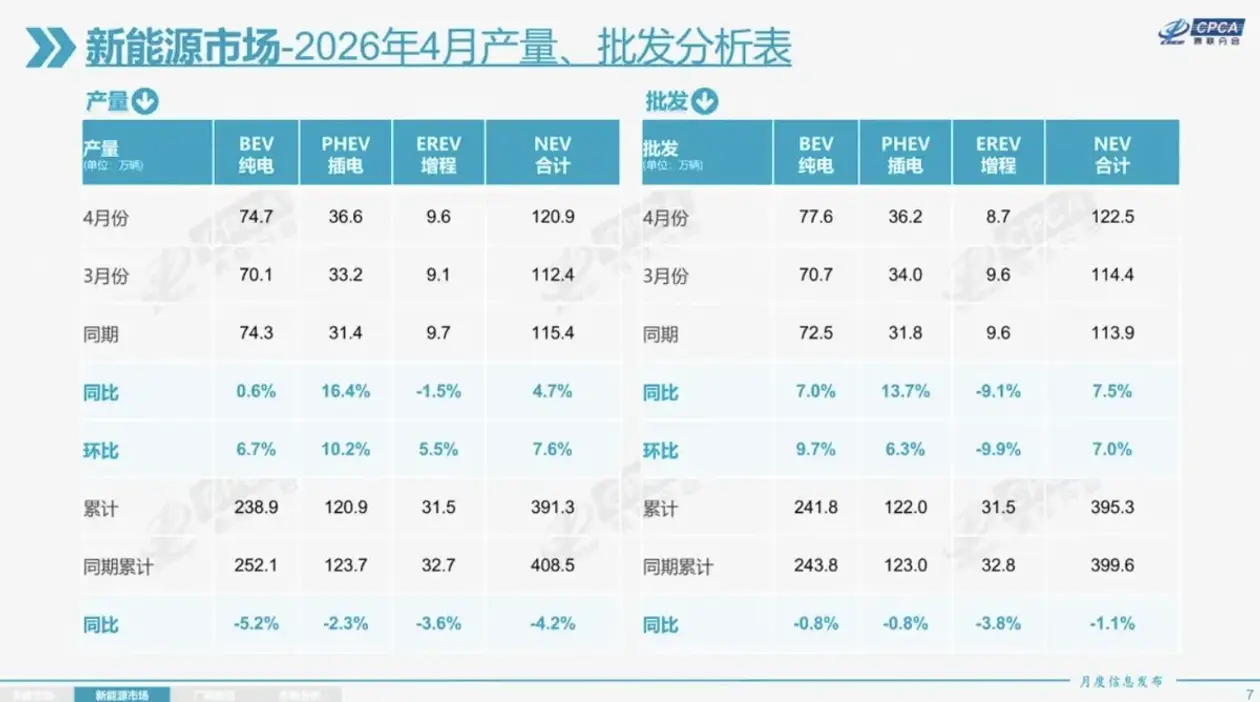
This marks the third consecutive quarter of year-on-year decline since Q4 2025, with the contraction deepening month by month. The pre-loading of demand in the first quarter materialized in April, while the diminishing marginal effectiveness of promotional policies further weakened terminal consumption momentum.
NEV Retail at 849,000 Units, 61.4% Penetration Breaches 60% Barrier for the First Time
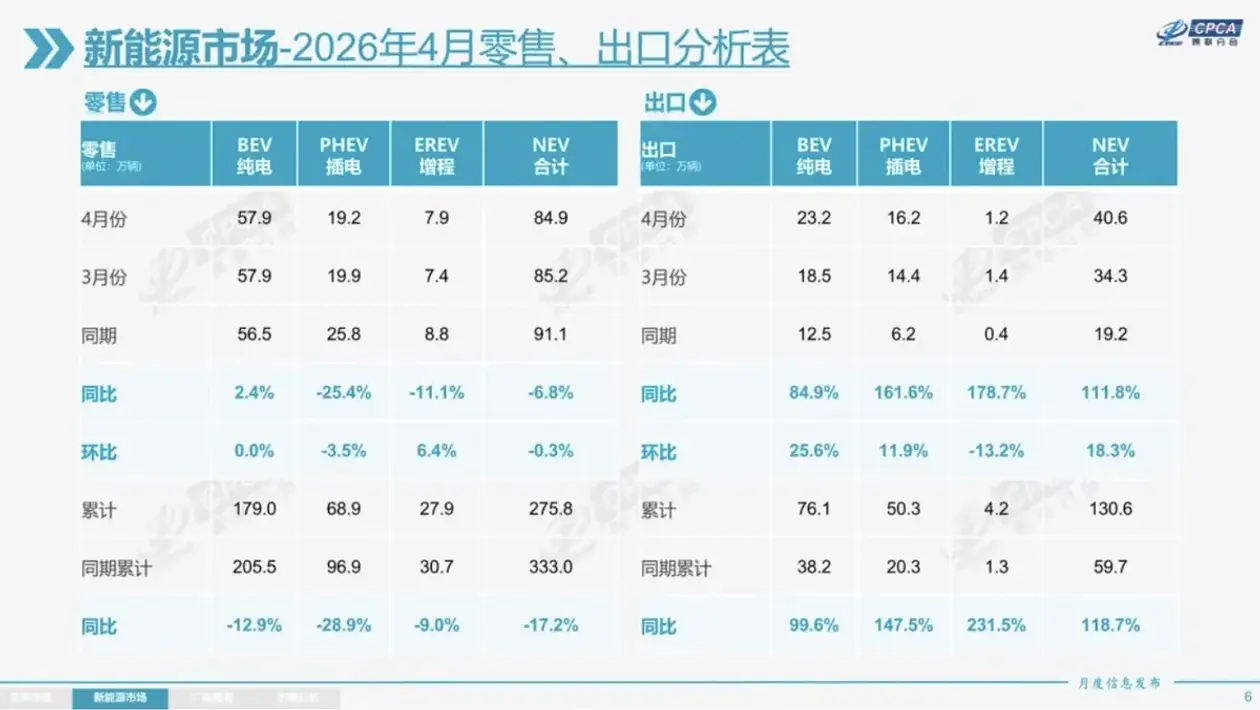
The NEV sector remained the lone structural bright spot. April NEV retail sales reached 849,000 units, down 6.8% year-on-year but essentially flat month-on-month. Cumulative NEV retail for Q1–Q4 stood at 2.758 million units, down 17.2% year-on-year. The modest NEV decline of just 6.8%, against a total market contraction of 21.5%, underscores that conventional vehicles have absorbed the overwhelming majority of the market decline.
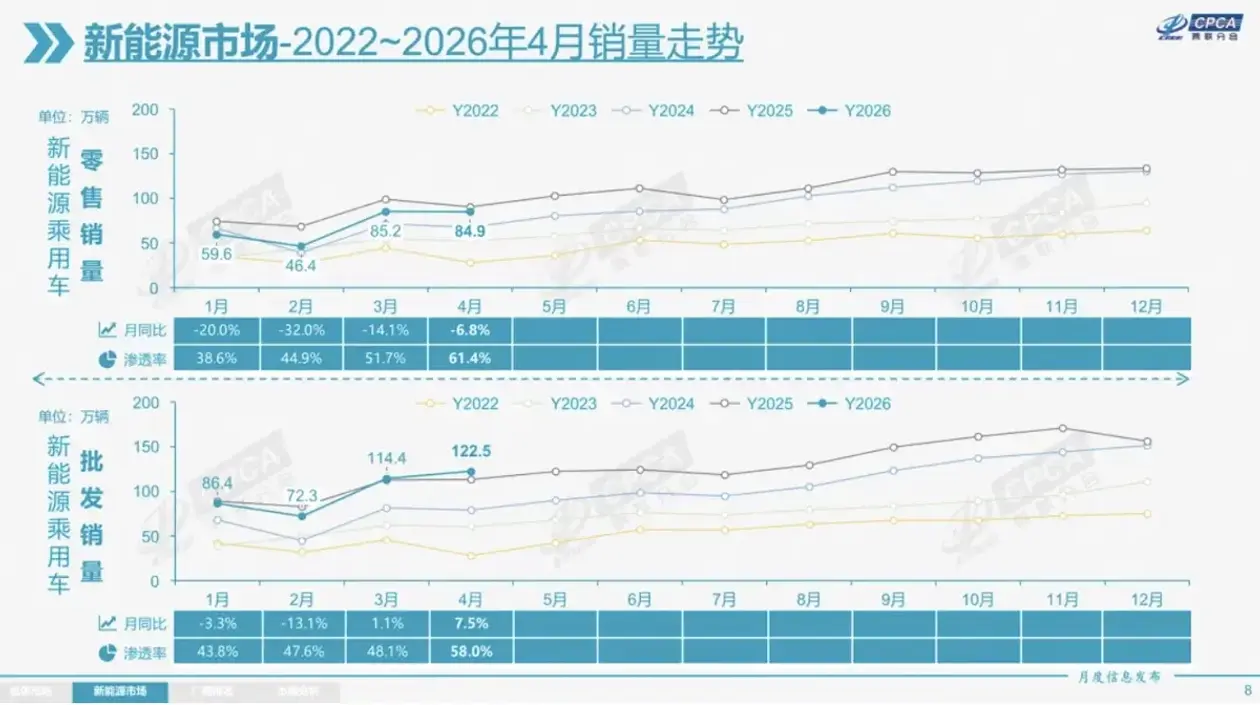
The most significant development was the NEV penetration rate breaching the 60% threshold for the first time. NEVs accounted for 61.4% of total passenger vehicle retail in April, up 9.7 percentage points year-on-year and 9.6 percentage points month-on-month. By CPCA's alternative calculation, the NEV retail penetration rate hit 62.8%, with wholesale penetration at 57.3%. One out of every ten new vehicles sold in April was already an internal combustion engine vehicle.
Conventional fuel vehicle retail fell to just 530,000 units, down 37% year-on-year and 33% month-on-month. The pace of fuel vehicle contraction has accelerated dramatically from approximately 25% in Q1 to 37% in April, exceeding most industry forecasts.
Exports Surge: NEV Exports Double Year-on-Year
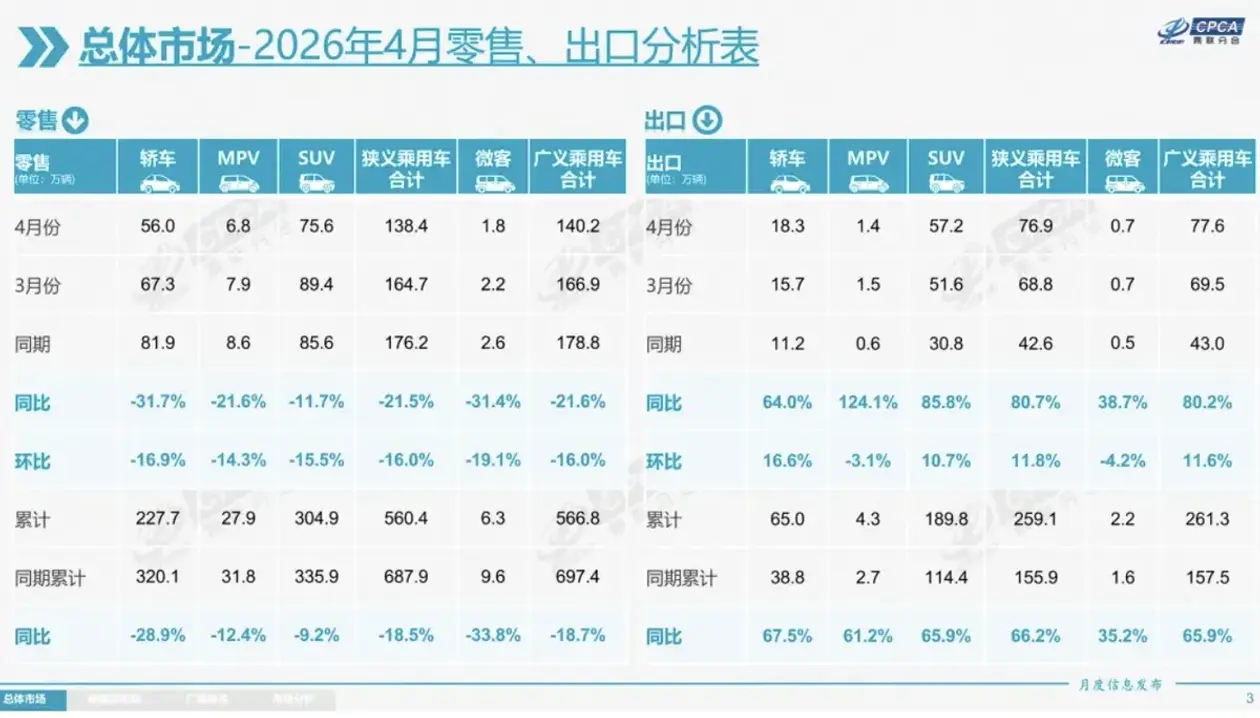
Exports provided a strong counterbalance to weak domestic demand. April passenger car exports reached 769,000 units, up 80.7% year-on-year, with SUV exports growing 85.8% to 572,000 units. NEV exports reached 406,000 units, up 111.8% year-on-year and 18.3% month-on-month, accounting for 52.7% of total passenger car exports. BYD recorded a record 134,542 overseas sales, up 70.9% year-on-year. Chery Group exported 177,600 units, representing a staggering 70.7% of its total sales.
Domestic Brands Cement Dominance, Joint Ventures Accelerate Marginalization
Domestic brands retailed 970,000 units in April, down 16% year-on-year but gaining 4 percentage points in market share to reach 69.6%, meaning nearly 7 out of every 10 vehicles sold in China now come from domestic brands. In stark contrast, mainstream joint venture brands retailed just 280,000 units, down 37% year-on-year. German brand market share fell to 13.3%, Japanese brands to 10.9%, and US brands to 4.5%. Domestic brand NEV penetration reached 80.1%, compared to just 14.1% for mainstream joint venture brands.
New Energy Automaker Rankings
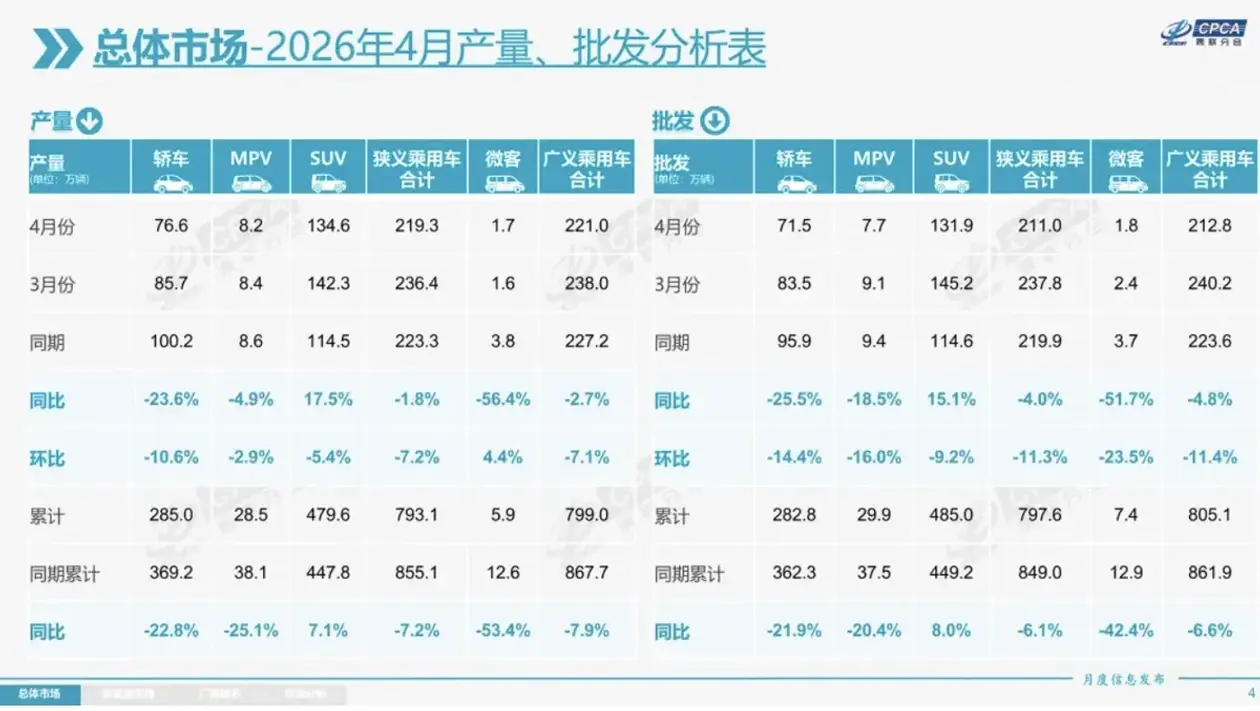
BYD led with 314,100 wholesale deliveries, followed by Geely at 135,591 and Chery at 93,043, with Chery’s NEV sales exceeding 100,000 for the first time. Among new EV makers, Leapmotor delivered a record 71,387 vehicles, up 73.9% year-on-year, becoming the first start-up EV brand to surpass 70,000 monthly deliveries. Li Auto delivered 34,085 vehicles. XPeng delivered 31,011 vehicles, lagging year-on-year due to a high base from G6 deliveries in April 2025. NIO delivered 29,356 vehicles, up 22.8% year-on-year.
Outlook for the Hong Kong Market
From a Hong Kong buyer's perspective, the April data sends several important signals. The 60% NEV penetration milestone signals that electrification has decisively become the dominant powertrain path in mainland China, a trend that will increasingly influence consumer preferences in Hong Kong. The growing quality-price gap between imported luxury BEVs (Mercedes-Benz EQ series, BMW i series) and more competitively priced Chinese domestic NEVs continues to widen, presenting Hong Kong consumers with increasingly compelling alternatives. However, while Chinese NEV exports continue to grow rapidly, most automakers have not yet announced definitive import timelines, homologation certification progress, or distributor arrangements for the Hong Kong market. Hong Kong buyers should closely monitor future official announcements from brands including BYD, Geely, Leapmotor, and others regarding their Hong Kong market entry plans.
Market Outlook
The April market decline was driven by several converging factors: pre-loaded Q1 demand, Beijing Auto Show-induced buyer wait-and-see behavior, tightening local subsidy availability, and a high year-ago base. The final week of April showed some recovery momentum, with weekly retail up 25% month-on-month, suggesting a potential bottoming pattern. Whether a meaningful rebound materializes in May will depend on order conversion rates and manufacturer promotional intensity through mid-to-late Q2. The CPCA projects a "weak recovery" characterized by month-on-month warming but continued year-on-year pressure, internal demand bifurcation, export leadership, and steadily rising NEV penetration.

香港汽車內容平台 🚗 新車・買車・玩車・用車 用香港視角,睇世界嘅車
+ Follow 【新車速報】兩座車又殺返嚟?smart精靈#2今次有啲料喎
鍾意細車嘅香港車迷留意!全新 smart 精靈#2 配置公布,採用 ECA 電動緊湊型架構,搭載 35.8kWh 磷酸鐵鋰電池,CLTC 續航 410km,30%-80% 快充最快15分鐘。
車長約 2.75米、轉彎半徑僅3.35米,仲有前麥弗遜+後五連桿獨立懸架;安全配備最多7個氣袋及 ACC、盲區監測等功能。
0-50km/h 3.8秒,10月12日巴黎車展全球首發!
兩座純電+細車身,放落香港街道會唔會幾對味?
#smart #smart精靈2 #純電車 #BitAutoHongKong 2小时前
【新車速報】兩座車又殺返嚟?smart精靈#2今次有啲料喎
鍾意細車嘅香港車迷留意!全新 smart 精靈#2 配置公布,採用 ECA 電動緊湊型架構,搭載 35.8kWh 磷酸鐵鋰電池,CLTC 續航 410km,30%-80% 快充最快15分鐘。
車長約 2.75米、轉彎半徑僅3.35米,仲有前麥弗遜+後五連桿獨立懸架;安全配備最多7個氣袋及 ACC、盲區監測等功能。
0-50km/h 3.8秒,10月12日巴黎車展全球首發!
兩座純電+細車身,放落香港街道會唔會幾對味?
#smart #smart精靈2 #純電車 #BitAutoHongKong 2小时前  【揀車有路數】日產新車賣比亞迪價?仲有激光雷達
今集試一台好特別嘅日產新車——NX8,中國特供增程SUV。外觀似熟悉嘅日產味,但內籠同科技配備竟然唔晒傳統日產套路,駕乘感受又有幾多轉變?到底仲係咪你認識嗰部日產?一齊試畀你睇。
#日產 #NX8 #增程 #BitAutoHongKong #揀車有路數 1天前
【揀車有路數】日產新車賣比亞迪價?仲有激光雷達
今集試一台好特別嘅日產新車——NX8,中國特供增程SUV。外觀似熟悉嘅日產味,但內籠同科技配備竟然唔晒傳統日產套路,駕乘感受又有幾多轉變?到底仲係咪你認識嗰部日產?一齊試畀你睇。
#日產 #NX8 #增程 #BitAutoHongKong #揀車有路數 1天前  【新車速報】T-Top 回歸?Nissan Z Kaze 概念車現身!
90年代 JDM 味返晒嚟?Nissan 最近喺美國 ZCON 公開 Z Kaze 概念車,以現款 Nissan Z 為基礎,換上全新 T-Top 可拆式車頂,向經典 300ZX 等 Z 系列致敬。
配合碳纖維空力套件、NISMO LMGT2 18吋輪圈,以及 GReddy 排氣、進氣同 intercooler 升級,成部車都充滿 JDM 改裝味。
「Kaze」即係日文「風」,而呢部車係 one-off 概念作品,並非量產車。10月3日仲會現身加州長灘 Japanese Classic Car Show。
如果 T-Top Z 真係量產,你會唔會心動?
#NissanZ #ZKaze #TTop #JDM #BitAutoHongKong 1天前
【新車速報】T-Top 回歸?Nissan Z Kaze 概念車現身!
90年代 JDM 味返晒嚟?Nissan 最近喺美國 ZCON 公開 Z Kaze 概念車,以現款 Nissan Z 為基礎,換上全新 T-Top 可拆式車頂,向經典 300ZX 等 Z 系列致敬。
配合碳纖維空力套件、NISMO LMGT2 18吋輪圈,以及 GReddy 排氣、進氣同 intercooler 升級,成部車都充滿 JDM 改裝味。
「Kaze」即係日文「風」,而呢部車係 one-off 概念作品,並非量產車。10月3日仲會現身加州長灘 Japanese Classic Car Show。
如果 T-Top Z 真係量產,你會唔會心動?
#NissanZ #ZKaze #TTop #JDM #BitAutoHongKong 1天前 Get the latest car news first!
【新車速報】兩座車又殺返嚟?smart精靈#2今次有啲料喎
鍾意細車嘅香港車迷留意!全新 smart 精靈#2 配置公布,採用 ECA 電動緊湊型架構,搭載 35.8kWh 磷酸鐵鋰電池,CLTC 續航 410km,30%-80% 快充最快15分鐘。
車長約 2.75米、轉彎半徑僅3.35米,仲有前麥弗遜+後五連桿獨立懸架;安全配備最多7個氣袋及 ACC、盲區監測等功能。
0-50km/h 3.8秒,10月12日巴黎車展全球首發!
兩座純電+細車身,放落香港街道會唔會幾對味?
#smart #smart精靈2 #純電車 #BitAutoHongKong 2小时前 【揀車有路數】日產新車賣比亞迪價?仲有激光雷達
今集試一台好特別嘅日產新車——NX8,中國特供增程SUV。外觀似熟悉嘅日產味,但內籠同科技配備竟然唔晒傳統日產套路,駕乘感受又有幾多轉變?到底仲係咪你認識嗰部日產?一齊試畀你睇。
#日產 #NX8 #增程 #BitAutoHongKong #揀車有路數 1天前 【新車速報】T-Top 回歸?Nissan Z Kaze 概念車現身!
90年代 JDM 味返晒嚟?Nissan 最近喺美國 ZCON 公開 Z Kaze 概念車,以現款 Nissan Z 為基礎,換上全新 T-Top 可拆式車頂,向經典 300ZX 等 Z 系列致敬。
配合碳纖維空力套件、NISMO LMGT2 18吋輪圈,以及 GReddy 排氣、進氣同 intercooler 升級,成部車都充滿 JDM 改裝味。
「Kaze」即係日文「風」,而呢部車係 one-off 概念作品,並非量產車。10月3日仲會現身加州長灘 Japanese Classic Car Show。
如果 T-Top Z 真係量產,你會唔會心動?
#NissanZ #ZKaze #TTop #JDM #BitAutoHongKong 1天前  BAWToyotaBYDZeekrGACDongfengXPengMGMaxusLeapmotorDenzaIMiCAURDeepalWulingOraJuneyao AutoKYCSkyworthAvatrFotonFordGeelyHongqiJAECOOKGMOMODADFSKTeslaHondaBMWMercedes-BenzsmartMINIPorscheNissanLexusSuzukiVolvoSubaruMazdaKiaHyundaiLand RoverRolls-RoyceFerrariAudiLamborghiniRiddaraSeresFarizonfireflyLingboxKaiyiVoyahHIMAM-HeroIsuzuBentleyPolestarMcLarenMitsubishiMaseratiPeugeotAston MartinAcuraJeepJaguarLotusVolkswagenEpiclandJACLepasLi
 © 2024 Bitauto.com. All Rights Reserved.
Bitauto (www.yiche.com and www.bitauto.com) is one of the most visited automotive websites in China. We provide detailed info on Chinese car brands available in your area. Please note that the information provided on this website is based on publicly available data and is for reference only. It may not be fully updated or accurate at all times.
Help us improve our website


