
Search History
Popular Searches
English
Dealer Login / Sign Up
The May Day holiday had barely ended when a chilling video began circulating widely across Chinese social media. In the footage, a parent is demonstrating the zero-gravity seat function of a Stelato S9 — a premium model under the Harmony Intelligent Mobility Alliance (HIMA), which includes AITO. As the front passenger seat slowly folds forward, it visibly presses down on a small child seated in the rear. The parent frantically shouts, “Xiaoyi, stop!” but the voice assistant repeatedly replies, “The current state does not support pausing.” The child is only freed after the parent manually pulls him out from the gap.
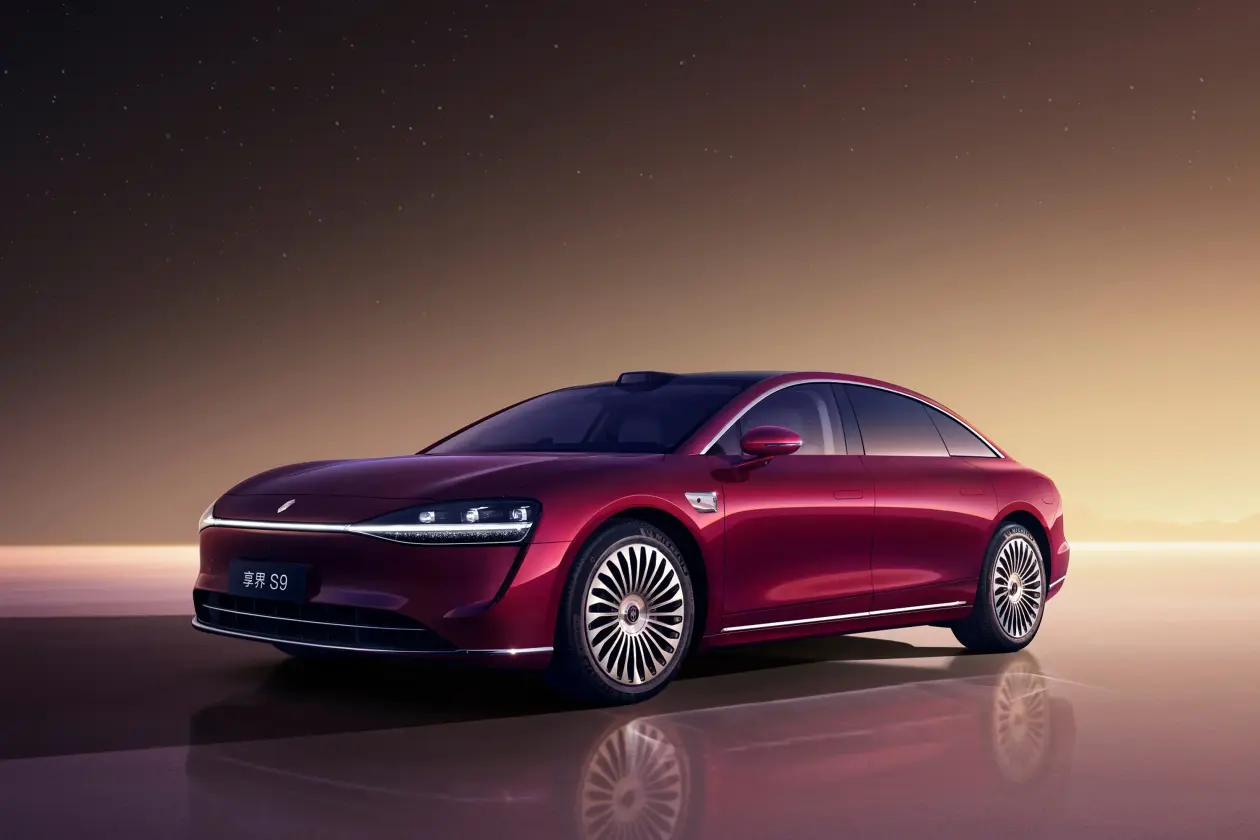
The backlash was immediate. How could a “smart” car, packed with sensors and AI, fail to detect a child and stop a seat from crushing him?
On May 5, AITO issued a formal statement. After technical verification, the company concluded that the seat’s safety systems had functioned as designed — because the severity of the pinch in the video did not reach the activation threshold of the anti-pinch mechanism. In other words: the child wasn’t crushed hard enough to trigger a safety stop.
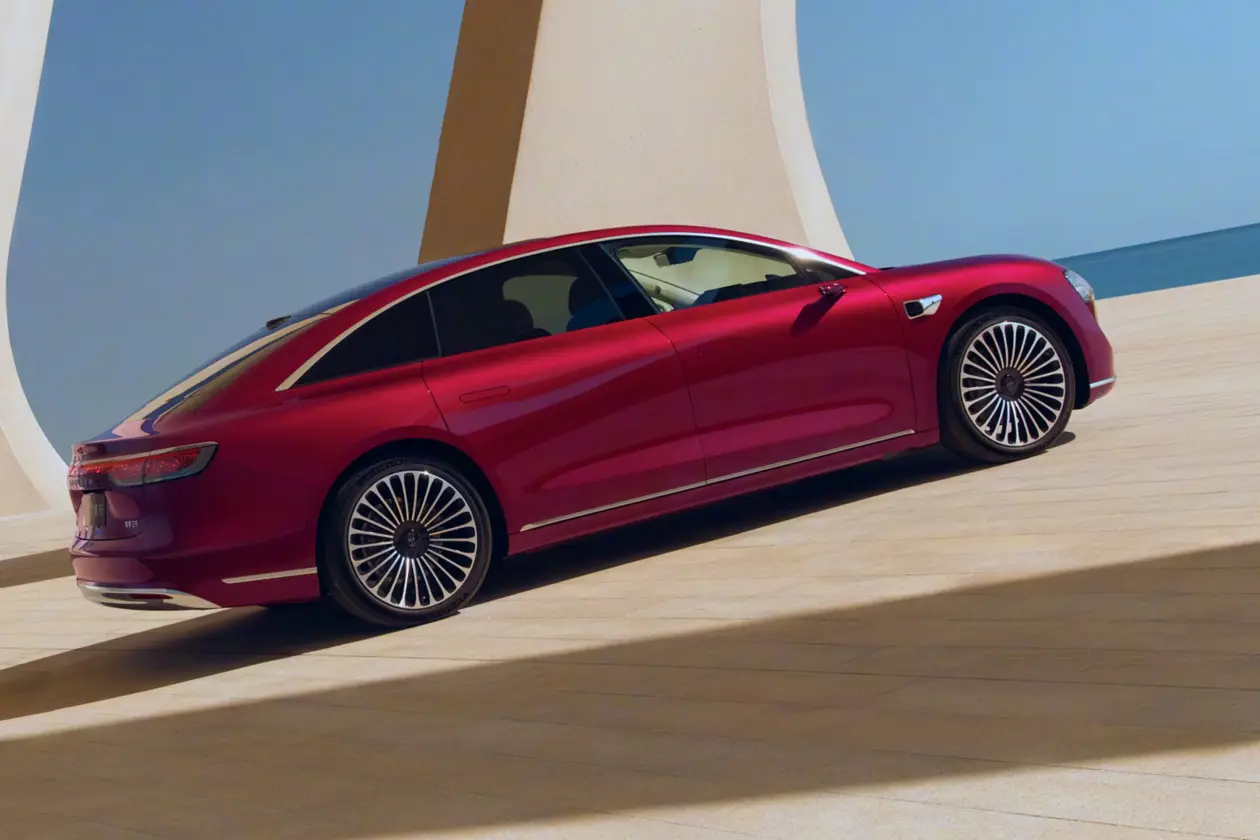
This cold, engineering‑driven explanation ignited a second wave of outrage. To the public, the phrase “threshold not reached” sounded disturbingly like the car had a minimum required level of pain before it would intervene.
In its defence, AITO detailed the three‑layer safety logic designed into the Stelato S9’s zero‑gravity seat:
Occupancy detection – The seat will not fold if it detects someone sitting or if a seatbelt is fastened.
Mandatory voice confirmation – Even when a folding command is given, the system verbally warns the user to check for obstacles and requires a spoken “confirm” reply.
Physical emergency button – A dedicated hardware button on the door panel is supposed to stop seat movement instantly.
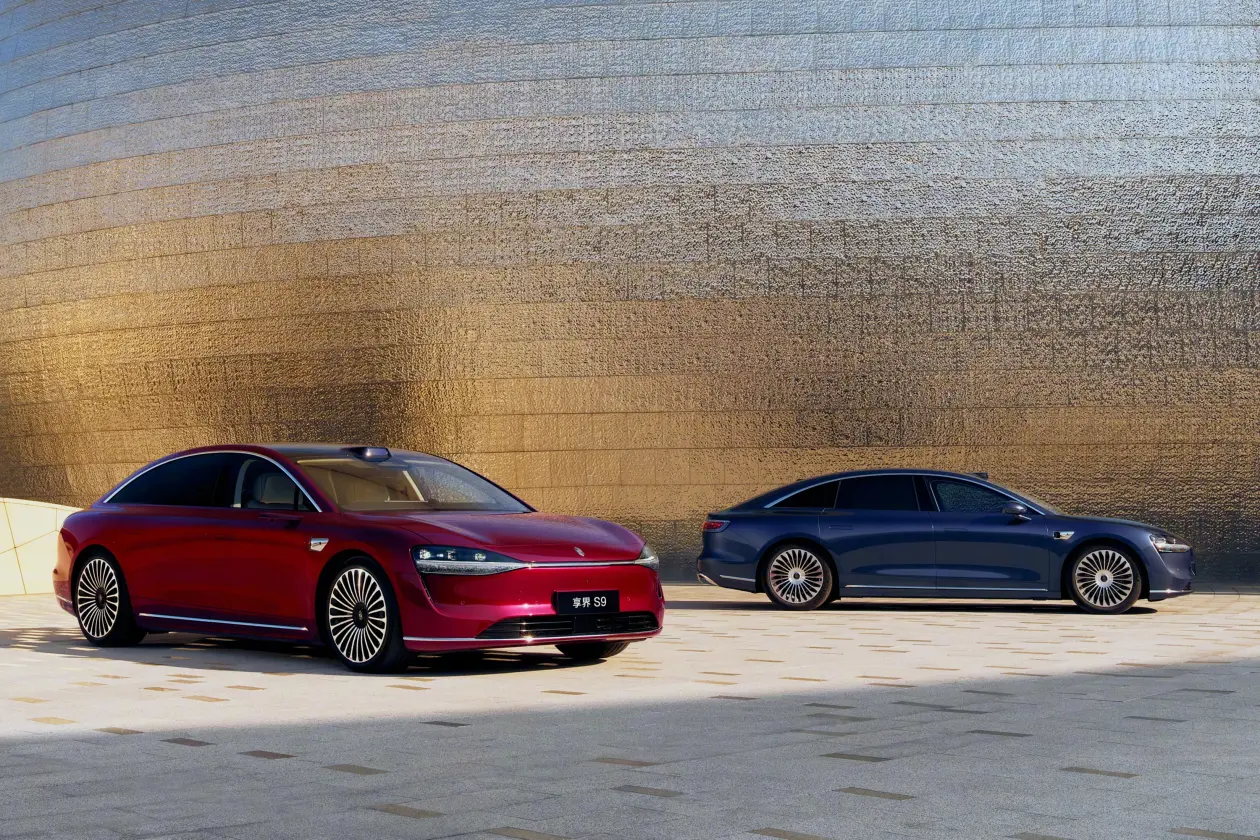
In the video incident, all three layers technically “functioned” from an engineering perspective. The child’s weight was below the pressure sensor’s detection threshold, so the seat did not register an occupant. The voice confirmation was completed. And in the panic, the parent did not use the physical button.
Thus, the system’s logic was internally consistent – yet the outcome was a child being painfully squeezed by a machine.
What makes this incident particularly galling is the stark contrast with AITO’s marketing narrative. The same brand that boasts about its Huawei‑powered advanced driver assistance systems — capable of detecting a low‑lying tyre or a fallen cone over 100 metres away, and executing evasive manoeuvres at highway speeds — could not detect a living child sitting less than half a metre from a moving seat.
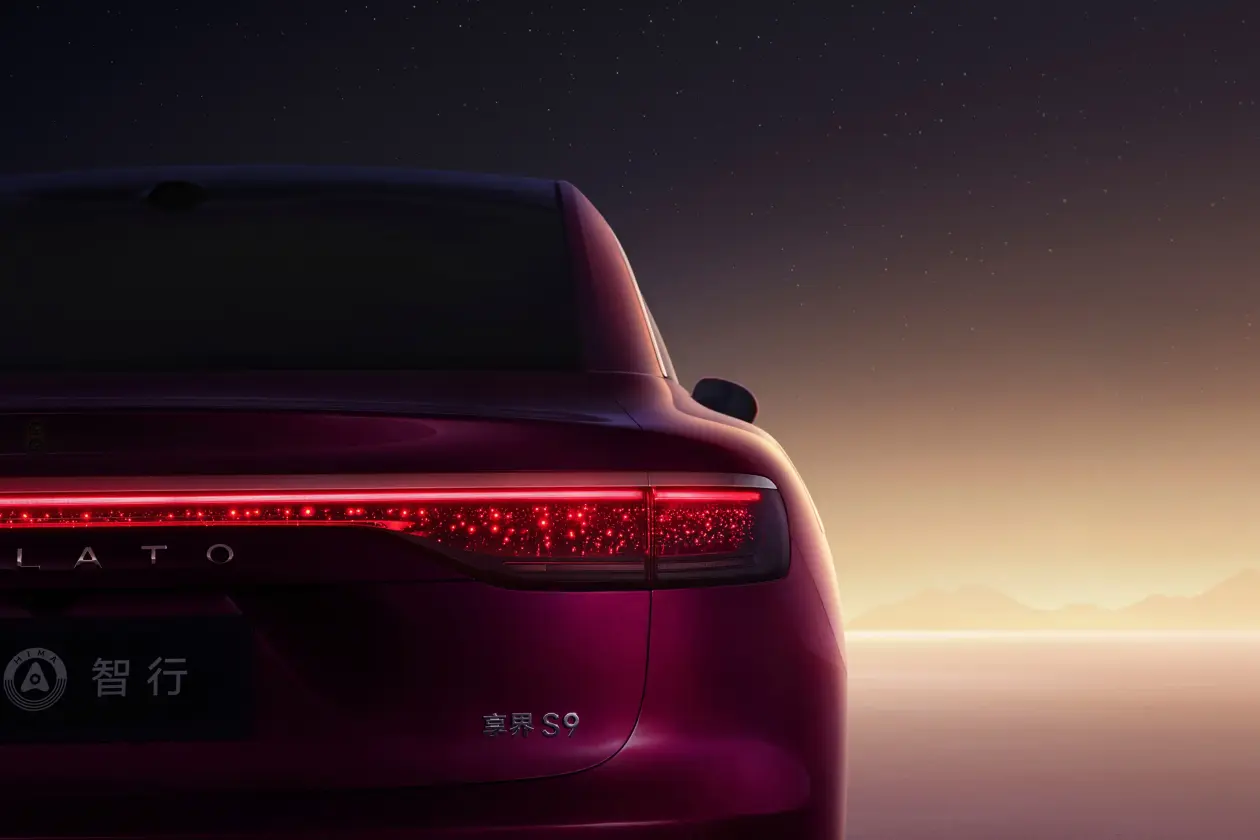
Why can roadside obstacles be sensed with millimetre‑wave precision, yet a human being sitting inside the car fails to trigger any sensor? Where is the “intelligence” when it matters most for vulnerable passengers?
The public’s frustration stems from a deep paradox: if a car is smart enough to avoid a piece of debris on the road, it should also be smart enough not to crush its own occupants.
AITO’s response was legally and technically accurate. The vehicle passed all relevant safety standards. The seat’s design complied with regulations. But the video reveals that regulatory minimums and real‑world family scenarios are not the same thing. A child is not a statistical outlier — children of low weight are precisely the type of passenger who often sits in the back. A safety system that fails to account for that is a system with a blind spot.
The incident forces a broader question: should intelligent vehicles rely solely on rigid, pre‑set thresholds, or should they adapt to the presence of human vulnerability? A truly intelligent car would not need a button to be pressed in panic. It would see the child, recognise the risk, and refuse the movement.
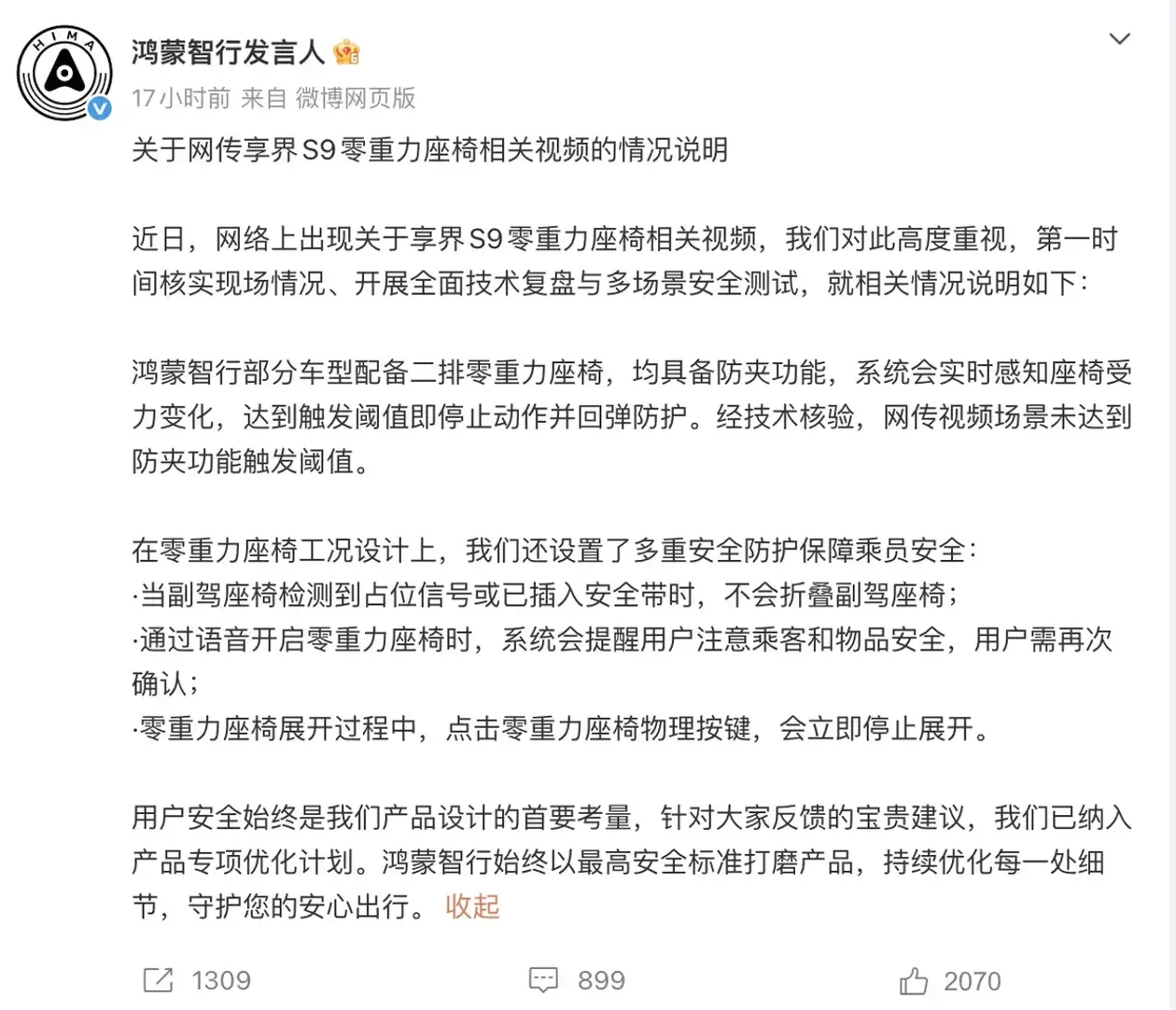
To its credit, AITO responded quickly. In its statement, the company acknowledged that the event highlighted areas for improvement. It promised to incorporate user feedback into an upcoming OTA update to optimise the seat’s safety logic.
Whether that update will lower the detection threshold, add new sensing capabilities, or allow voice commands to override the folding process remains to be seen. But the incident has already damaged a precious asset: consumer trust. For every parent watching that video, the fear is real: “Could this happen to my child in a ‘smart’ car?”
The path forward is clear. Engineers must move beyond a checkbox mentality of “meeting standards” and embrace a philosophy of “anticipating harm”. A car that sees a cone from 150 metres away but cannot see a child sitting right next to its moving seat is not yet truly intelligent. It is just a very good machine with a very dangerous blind spot. And that blind spot will only be fixed when the industry realises that safety is not a threshold — it is a mindset.

香港汽車內容平台 🚗 新車・買車・玩車・用車 用香港視角,睇世界嘅車
+ Follow 【新車速報】兩座車又殺返嚟?smart精靈#2今次有啲料喎
鍾意細車嘅香港車迷留意!全新 smart 精靈#2 配置公布,採用 ECA 電動緊湊型架構,搭載 35.8kWh 磷酸鐵鋰電池,CLTC 續航 410km,30%-80% 快充最快15分鐘。
車長約 2.75米、轉彎半徑僅3.35米,仲有前麥弗遜+後五連桿獨立懸架;安全配備最多7個氣袋及 ACC、盲區監測等功能。
0-50km/h 3.8秒,10月12日巴黎車展全球首發!
兩座純電+細車身,放落香港街道會唔會幾對味?
#smart #smart精靈2 #純電車 #BitAutoHongKong 2小时前
【新車速報】兩座車又殺返嚟?smart精靈#2今次有啲料喎
鍾意細車嘅香港車迷留意!全新 smart 精靈#2 配置公布,採用 ECA 電動緊湊型架構,搭載 35.8kWh 磷酸鐵鋰電池,CLTC 續航 410km,30%-80% 快充最快15分鐘。
車長約 2.75米、轉彎半徑僅3.35米,仲有前麥弗遜+後五連桿獨立懸架;安全配備最多7個氣袋及 ACC、盲區監測等功能。
0-50km/h 3.8秒,10月12日巴黎車展全球首發!
兩座純電+細車身,放落香港街道會唔會幾對味?
#smart #smart精靈2 #純電車 #BitAutoHongKong 2小时前  【揀車有路數】日產新車賣比亞迪價?仲有激光雷達
今集試一台好特別嘅日產新車——NX8,中國特供增程SUV。外觀似熟悉嘅日產味,但內籠同科技配備竟然唔晒傳統日產套路,駕乘感受又有幾多轉變?到底仲係咪你認識嗰部日產?一齊試畀你睇。
#日產 #NX8 #增程 #BitAutoHongKong #揀車有路數 1天前
【揀車有路數】日產新車賣比亞迪價?仲有激光雷達
今集試一台好特別嘅日產新車——NX8,中國特供增程SUV。外觀似熟悉嘅日產味,但內籠同科技配備竟然唔晒傳統日產套路,駕乘感受又有幾多轉變?到底仲係咪你認識嗰部日產?一齊試畀你睇。
#日產 #NX8 #增程 #BitAutoHongKong #揀車有路數 1天前  【新車速報】T-Top 回歸?Nissan Z Kaze 概念車現身!
90年代 JDM 味返晒嚟?Nissan 最近喺美國 ZCON 公開 Z Kaze 概念車,以現款 Nissan Z 為基礎,換上全新 T-Top 可拆式車頂,向經典 300ZX 等 Z 系列致敬。
配合碳纖維空力套件、NISMO LMGT2 18吋輪圈,以及 GReddy 排氣、進氣同 intercooler 升級,成部車都充滿 JDM 改裝味。
「Kaze」即係日文「風」,而呢部車係 one-off 概念作品,並非量產車。10月3日仲會現身加州長灘 Japanese Classic Car Show。
如果 T-Top Z 真係量產,你會唔會心動?
#NissanZ #ZKaze #TTop #JDM #BitAutoHongKong 1天前
【新車速報】T-Top 回歸?Nissan Z Kaze 概念車現身!
90年代 JDM 味返晒嚟?Nissan 最近喺美國 ZCON 公開 Z Kaze 概念車,以現款 Nissan Z 為基礎,換上全新 T-Top 可拆式車頂,向經典 300ZX 等 Z 系列致敬。
配合碳纖維空力套件、NISMO LMGT2 18吋輪圈,以及 GReddy 排氣、進氣同 intercooler 升級,成部車都充滿 JDM 改裝味。
「Kaze」即係日文「風」,而呢部車係 one-off 概念作品,並非量產車。10月3日仲會現身加州長灘 Japanese Classic Car Show。
如果 T-Top Z 真係量產,你會唔會心動?
#NissanZ #ZKaze #TTop #JDM #BitAutoHongKong 1天前 Get the latest car news first!
【新車速報】兩座車又殺返嚟?smart精靈#2今次有啲料喎
鍾意細車嘅香港車迷留意!全新 smart 精靈#2 配置公布,採用 ECA 電動緊湊型架構,搭載 35.8kWh 磷酸鐵鋰電池,CLTC 續航 410km,30%-80% 快充最快15分鐘。
車長約 2.75米、轉彎半徑僅3.35米,仲有前麥弗遜+後五連桿獨立懸架;安全配備最多7個氣袋及 ACC、盲區監測等功能。
0-50km/h 3.8秒,10月12日巴黎車展全球首發!
兩座純電+細車身,放落香港街道會唔會幾對味?
#smart #smart精靈2 #純電車 #BitAutoHongKong 2小时前 【揀車有路數】日產新車賣比亞迪價?仲有激光雷達
今集試一台好特別嘅日產新車——NX8,中國特供增程SUV。外觀似熟悉嘅日產味,但內籠同科技配備竟然唔晒傳統日產套路,駕乘感受又有幾多轉變?到底仲係咪你認識嗰部日產?一齊試畀你睇。
#日產 #NX8 #增程 #BitAutoHongKong #揀車有路數 1天前 【新車速報】T-Top 回歸?Nissan Z Kaze 概念車現身!
90年代 JDM 味返晒嚟?Nissan 最近喺美國 ZCON 公開 Z Kaze 概念車,以現款 Nissan Z 為基礎,換上全新 T-Top 可拆式車頂,向經典 300ZX 等 Z 系列致敬。
配合碳纖維空力套件、NISMO LMGT2 18吋輪圈,以及 GReddy 排氣、進氣同 intercooler 升級,成部車都充滿 JDM 改裝味。
「Kaze」即係日文「風」,而呢部車係 one-off 概念作品,並非量產車。10月3日仲會現身加州長灘 Japanese Classic Car Show。
如果 T-Top Z 真係量產,你會唔會心動?
#NissanZ #ZKaze #TTop #JDM #BitAutoHongKong 1天前  BAWToyotaBYDZeekrGACDongfengXPengMGMaxusLeapmotorDenzaIMiCAURDeepalWulingOraJuneyao AutoKYCSkyworthAvatrFotonFordGeelyHongqiJAECOOKGMOMODADFSKTeslaHondaBMWMercedes-BenzsmartMINIPorscheNissanLexusSuzukiVolvoSubaruMazdaKiaHyundaiLand RoverRolls-RoyceFerrariAudiLamborghiniRiddaraSeresFarizonfireflyLingboxKaiyiVoyahHIMAM-HeroIsuzuBentleyPolestarMcLarenMitsubishiMaseratiPeugeotAston MartinAcuraJeepJaguarLotusVolkswagenEpiclandJACLepasLi
 © 2024 Bitauto.com. All Rights Reserved.
Bitauto (www.yiche.com and www.bitauto.com) is one of the most visited automotive websites in China. We provide detailed info on Chinese car brands available in your area. Please note that the information provided on this website is based on publicly available data and is for reference only. It may not be fully updated or accurate at all times.
Help us improve our website


