首頁Chery

搜尋歷史
熱門搜尋
經銷商登入 / 註冊

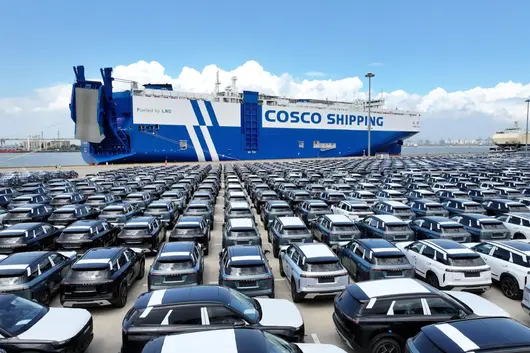
May 2026, data from the China Association of Automobile Manufacturers refocused the industry's attention overseas. From January to May, cumulative exports of Chinese automobiles exceeded 4.25 million vehicles, a year-on-year increase of over 50%. Annual exports are expected to break through the 10 million mark.
Last year, Chinese automobiles with a total export volume of 7.098 million units (data from CAAM) suppressed Japan for the third consecutive year, reclaiming the global first place, surpassing Japan's historical export record of 6.85 million units set in 1985.

Previously, logos of Toyota, Honda, and Nissan were found everywhere in streets and alleys across Southeast Asia. Suzuki dominated the South Asian market, while Mazda was highly sought after in Europe. Japanese cars relied on a reputation for reliability, fuel efficiency, and value retention to weave a global sales network over the course of four decades.
Now, this network is being torn apart by Chinese carmakers one opening at a time.
BYD, Geely, Chery, three Chinese carmakers with annual sales exceeding 1 million vehicles, are launching a "group charge" in overseas markets. Why these three? Because their internationalization paths are quite representative in different fields: one attacks Europe with strong vertical integration of new energy technology, one weaves a brand matrix through global M&A, and one ground out export volume first through the hard work of building channels overseas for twenty years.
This is no longer a question of "whether China can export", but "among the fleet of Chinese carmakers going overseas, who is the most capable"?
But at the same time, the volume of exports is just one side of a mirror. The final victory in the battlefield lies in: among these three export "giants" BYD, Geely, and Chery, who can be the first to complete the qualitative change from "trade export" to "industrial export" and become a new generation of global car giants? The answer to this question will determine the final move of the Chinese automotive industry in the world map.
# Overseas Markets, Chinese Cars Successively Take Positions #
From importing complete vehicles in the early 21st century to establishing joint ventures in the 2010s, Chinese automobiles went through a long and helpless period of "trading market access for technology". For 30 years, domestic carmakers were technology importers, and reverse exports were basically zero.
But in recent years, this trend is reversing. In 2025, Chinese automobile exports reached 7.098 million vehicles, a year-on-year increase of 21.1%. Among them, new energy vehicle exports reached 2.615 million vehicles, doubling year-on-year, accounting for about 36.8% of the total export volume; traditional fuel vehicles were 4.483 million vehicles, a decrease of 2% year-on-year. Under the CAAM statistical caliber, in 2025, the share of complete vehicle exports in wholesale exceeded 20% for the first time.
Entering 2026, the export growth rate accelerated further. From January to May 2026, cumulative passenger vehicle exports reached 2.649 million vehicles, a year-on-year increase of 61.7%. Among them, new energy passenger vehicle exports were 1.732 million vehicles, a year-on-year increase of 117.3%. The proportion in passenger vehicle exports jumped from about 37% in 2025 to over 65%.

In May alone, new energy passenger vehicle exports reached 424,000 vehicles, a year-on-year increase of 112.6%, accounting for 54.1% of passenger vehicle exports. For every 10 vehicles exported, more than 5 are electric vehicles. At the same time, the average price per exported vehicle has risen from about 100,000 yuan five years ago to the 300,000 yuan level. Export products are accelerating towards mid-to-high ends.
Except for the growth in volume, Chinese car exports have moved from "single dependence" to "blooming in multiple points".
In 2025, the top ten destinations for Chinese passenger vehicle exports were: Russia (555,400 vehicles, -46.1% YoY), UAE (539,700 vehicles, +74.3%), Mexico (490,800 vehicles, +44.2%), UK (320,800 vehicles, +70.3%), Brazil (299,900 vehicles, +34.6%), Belgium (289,500 vehicles, +4.5%), Saudi Arabia (250,500 vehicles, +11.2%), Australia (246,200 vehicles, +59.3%), Kazakhstan (187,000 vehicles, +74.3%), Iran (164,100 vehicles, -31.6%).
Except for exports to the CIS region dominated by Russia, which declined due to policy and inventory impacts, other regions showed a growth trend: exports to Europe reached 1.51 million vehicles, a 32% increase year-on-year; exports to the Middle East and West Asia reached 1.27 million vehicles, a 48% increase year-on-year; exports to South and Central America reached 1.01 million vehicles, a 49% increase year-on-year; exports to Southeast Asia reached 1.98 million vehicles, a 57% surge year-on-year; exports to Africa reached 800,000 vehicles, a 119% increase year-on-year.
Europe, as a critical breakthrough market, saw Chinese exports to the EU exceed 1 million vehicles for the first time in 2025, reaching 1.0062 million vehicles, a year-on-year increase of 30.7%, with an export value of 13.72 billion euros.
Currently, China is the number one source of automobile imports in the EU region, and also the fifth largest supply source for the European automotive market. In statistics with a broader caliber, it is shown that in 2025, Chinese brand automobiles sales in the European market reached 811,000 vehicles, a year-on-year increase of 99%, with market share rising to above 7%.
The Middle East, currently arguably one of the important markets for Chinese carmakers to earn high profits. In 2025, Chinese exports to the Middle East region reached 1.4 million vehicles, among which 570,000 in UAE and 300,000 in Saudi Arabia combined contributed over 60% share. The market share of Chinese carmakers in this market has approached 30%. Benefiting from the high unit price market characteristics, the profit margin of Chinese carmakers in this market is significantly higher than in other countries and regions.

The Mexico market in the Latin America region, surpassed Russia last year to become China's largest export country. In 2025, Mexico's cumulative exports reached 625,200 vehicles. Mexico has always been regarded as an important stepping stone for Chinese cars to enter the Americas market, and now has an increasingly higher proportion.
As for Southeast Asia, Japanese carmakers have previously established market barriers belonging to them, but now the entry of Chinese cars is eroding the inherent market share of Japanese cars. Data shows that the market share of Japanese brands in Thailand has dropped from 90% to 70%. The main reason for this data change is the entry of Chinese cars; furthermore, the share of Japanese brands in Indonesia fell below 81%, while Chinese brands reached 14%. Currently, the number of Chinese automobile exports accounts for about 27% of the sales in the Southeast Asian market.
Currently, the overseas expansion of Chinese carmakers is basically concentrated in the top few, such as Chery, SAIC, BYD, Geely, etc. Among them, as representative of private enterprises, BYD, Chery, and Geely actually have different overseas strategies, and also represent three paths of Chinese cars going overseas at present.
# Rivalry of the Three Powers, Who Will Be the Future Overseas Leader? #
Chery is currently the leader in Chinese car exports and also the carmaker with the largest export volume.
In Q1 2026, Chery exported 393,000 vehicles, a year-on-year increase of 54%, with an export proportion as high as 67%. Such a number means that in Chery's sales structure, overseas sales have exceeded domestic sales, and its average price per vehicle at the export end reached 121,600 yuan, about 14,700 yuan higher than domestic. The performance of the overseas market is directly linked to Chery's profitability.
According to different market regions, Chery's advantage in the European market is quite prominent. From January to April 2026, Chery's export volume in Europe reached 147,000 vehicles, firmly occupying the first tier of Chinese brands. The European market grew year-on-year by over 200% for the full year and has entered 16 countries including the UK and Italy.

In the Middle East market, Chery still took the export top spot with 56,000 vehicles in the first quarter. As for the Southeast Asian market, Chery exported 24,000 vehicles from January to April 2026, a year-on-year increase of 18.2%. Chery's export path is mainly "fuel + hybrid" side-by-side. Among the current exported models, the Tiggo series is very competitive in the Russian and Latin American markets, while OMODA and JAECOO are accelerating penetration into the European market.
BYD ranked second to Chery in export volume in May this year, with a strong potential to surpass. First, look at the data. BYD's overseas sales reached about 1.1 million vehicles in 2025. This year's first quarter exports were about 320,000 vehicles, with an export proportion exceeding 46%. On this basis, BYD has increased its 2026 export target to 1.5 million vehicles, which is the most aggressive target among the three.

BYD's overseas exports not only grew in scale but also optimized in structure. Currently, Brazil is its largest overseas market. From January to April, export volume reached as high as 148,000 vehicles, among which pure electric and plug-in hybrid accounted for almost half each. The European market exported nearly 100,000 vehicles from January to April, a year-on-year increase of 29.7%; the Middle East market exported 26,000 vehicles from January to February; in terms of Southeast Asia, BYD exported 32,000 vehicles from January to April, a year-on-year decrease of 25%.
As for Geely, it is exchanging quality for quantity. If looking at shipment volume alone, Geely cannot compare with Chery and BYD. In May 2026, Geely exported 85,100 vehicles, a year-on-year increase of 183.7%; cumulative exports from January to May reached 371,400 vehicles, a year-on-year increase of 157.7%. Its export plan for this year is 750,000 vehicles.

But it is worth noting that Geely's average price per overseas vehicle has approached 180,000 yuan, and the export gross profit margin is 9 percentage points higher than domestic. The average price per vehicle in the first quarter reached 118,100 yuan, a year-on-year increase of nearly 15,000 yuan, with growth leading among domestic brands.
In terms of overseas regional distribution, Geely is the most balanced among the three. In the North American Mexico market, it grew over 3 times with 16,000 vehicles; in South America Brazil, it first broke 7,000 vehicles; in Southeast Asia, it firmly occupies the Chinese brand top spot with 46,000 vehicles export volume from January to April leading Chinese brands; in Europe, Geely exported 40,500 vehicles from January to April, a year-on-year increase of 63.6%, and the absolute volume of exports is still rising rapidly.
# Three Paths, Three Strategies? #
Combining the previous content, we will find that these three carmakers represent the three mainstream internationalization models currently domestic, they each have their focus on the overseas path, and the strategies are completely different.
BYD takes the new energy full supply chain overseas route, which is closely related to its brand development path. Currently, its exported models are mainly pure electric and plug-in hybrid, with a price range covering 15,000 to 80,000 Euros.
BYD's logic is very clear: utilize China's full supply chain advantage in the electrification field to quickly seize the overseas market with technological leadership and cost advantage. In the two electrification frontier markets of Europe and Southeast Asia, BYD chose the asset-heavy model of self-built factories plus own channels.

The advantage of this model is strong brand control and complete profit chain. The disadvantages are large investment, long return cycle, and high sensitivity to local policy environments. The electric vehicle tariff policy just implemented in Europe might be the greatest uncertainty BYD faces for a period of time.
Geely takes the multi-brand matrix + overseas brand leveraging route. Through acquiring Volvo, investing in smart, and establishing Polestar as a joint venture, Geely has already possessed a brand matrix spanning Europe, Asia, and the Americas.
This matrix allows Geely to send different brands for different markets. Europe is led by Volvo and Polestar, Southeast Asia by Geely's mother brand and Proton, smart serves as global urban premium EVs, while the Middle East and Latin America are promoted synchronously by Geely's mother brand and Lynk & Co.

This model allows Geely to rapidly enter the high-end market by leveraging Volvo's dealer network, after-sales system, and brand premium, while using the Geely main brand and Lynk & Co to fight for the mainstream market. However, multi-brand synergy itself is a high-difficulty management art. If brand differentiation is unclear, left-hand vs right-hand fighting may occur.
Chery takes the high cost-performance fuel vehicle + wide channel coverage route. Export main force is still fuel SUVs, with a price range concentrated between 12,000 to 25,000 USD.
Chery's advantage lies in its product pricing and developing countries' purchasing power matching highly. These markets like South America, Middle East, Russia, North Africa have imperfect charging infrastructure, consumers are highly sensitive to price, and brand loyalty has not solidified. Chery has almost no direct electrification competitors here.

The export route is the simplest, but also the easiest to replicate. When more Chinese brands bring fuel vehicles of similar high cost-performance to flood these markets, Chery's first-mover advantage will sooner or later be diluted. Chery is trying to open new space with new energy products like Exeed, but from the current situation, the proportion of new energy in Chery's total exports is still far lower than BYD and Geely.
As for these three overseas paths, who can win the future overseas center spot battle, it cannot be easily concluded.
Chery's biggest advantage is the largest export base, difficult to surpass in the short term. But it also has concerns, such as its current export structure, which is highly dependent on the Middle East and Eastern European markets. Once geopolitical or trade policy changes, the impact may come.
Geely's overseas profit level is relatively the highest, and multi-brand differentiation overseas is also the most mature. Its problem lies in whether it can form true confrontation with BYD and Chery in scale. Even if the 2026 export target is increased to 750,000 vehicles, there is still a significant gap compared to BYD's 1.5 million.
BYD has the strongest long-term momentum for overseas expansion because it is not just selling cars, but exporting the standards of the new energy industry chain globally. As long as new factories are built in markets, the cost efficiency advantage of "Made in China" can quickly convert to cost-performance advantage. The uncertainty is BYD's overseas brand recognition. Among mainstream consumer groups in Western Europe, BYD's brand premium has not yet been established. Once trade barriers are encountered, whether BYD can maintain profit levels per vehicle overseas still poses a challenge.
# Overseas Localization Level Determines Future Ranking #
Global largest car exporter, this laurel was previously hanging on the head of the Japanese automotive industry. But from 2023, it finally changed hands, and China surged to become the world's largest car exporter. In the subsequent 2024 and 2025, this status remained firmly in place.
This is a milestone event. At the same time, we also need to clearly recognize that this overseas expansion is just the first step for Chinese cars to go international. And regarding the issue of complete internationalization, there is still a gap compared to Japanese brands.
Why say this? Setting aside the single data of export volume, there are many other data determining whether internationalization is successful. A very important point is overseas capacity.

Through data showing 2025 full year, Chinese carmakers' overseas production was 8 million units. Although this data rose relatively clearly compared to before, looking at Japanese carmakers' overseas capacity, it was as high as 20.4 million units. Although Chinese cars' total volume went up, it was more relied on domestic markets and whole vehicle exports to absorb, far from the complete overseas production system of Japanese carmakers.
So how important is overseas localized production?
A simple example can figure it out. For example, it's the same opening a restaurant. Relying purely on imports requires making food into finished products and transporting them completely to the local place. This involves not only considering transportation quality but also even higher costs. If using locally available ingredients and cooking on site, costs are not only lower, but taste will also be more suitable for local consumers.
The automotive market is the same. Taking Toyota as an example, according to the group's externally announced news, in 2025 Toyota Group's global total sales reached 11.323 million units. Among them, Toyota and Lexus brand Japan domestic sales were 1.5013 million units, overseas sales were 9.0355 million units. If counting all sub-brands like Daihatsu, Hino, etc., overall overseas sales would increase further, overall scale approaching 10 million units, accounting for about 85% of the group's total sales.
It is known that although Toyota currently appeared profit decline, it is still the world's most profitable carmaker without question. A very important point in this is its global localized system ecosystem.
At this stage, most of our independent brands' overseas localization layout is mostly an "extension" of exports. For example, many factories are mainly assembly, core component supply is still exported from domestic to local, and sales networks are also slightly thin. There is still a distance from a complete industry ecosystem.
As for the future, establishing local system ecosystems will naturally be the focus. As for BYD, it has already had three mass production complete vehicle factories in Thailand, Uzbekistan, and Brazil. As for the Hungary factory, it is a key step for BYD to enter Europe. Planned annual capacity 150,000 vehicles. After production starts in Q2 2026, it will achieve zero tariff entry to Europe, cost reduced by 20%-30%. The Indonesia factory also plans to start production in 2026.
BYD's global factory map covers the three core regions of Asia, Europe, and South America. It is the Chinese carmaker with the most active overseas capacity.
Geely has a mature production system overseas. Malaysia's Proton factory has been deeply localized for many years and has launched new energy Proton X70; Belarus BELGEE joint venture CKD factory annual capacity 60,000 units, can directly radiate Russia and Eastern European markets.
Geely is currently investing in Renault Brazil factory. In 2026, Geely brand models are expected to be produced. Factories in Belgium and the UK are more focused on high-end model localization. Geely is not simply newly building capacity but cutting into global layout with existing capacity renovation + equity investment hybrid mode. Cost controllability is stronger.
Chery has established a complete full process and CKD factory matrix overseas. It has four major production bases in Russia; Brazil has two CKD factories with a combined annual capacity of 236,000 vehicles; Spain has an European Industrial Base; Iran, Thailand, and Vietnam also have layouts. Among them, the Vietnam factory claims to be the largest in ASEAN. Chery is also seeking strategic alliances with Renault in Colombia and Argentina to further expand the Latin American market.
BYD invests heavily in new factories to quickly seize zero tariff channels; Geely is good at integrating existing resources to quickly revitalize existing capacity through equity cooperation; Chery relies on early cultivation to form capacity networks in key regions. The three can be said to have their own focuses. Regarding the future, localization speed will determine the sustainability of overseas sales. Currently, it looks like BYD invests the heaviest, determination is greatest; Geely leverages the most, model is most flexible; Chery outlets are densest, but depth needs strengthening.

This Chinese car internationalization competition is not a sprint but a global marathon spanning several years.
Short term, Chery is the champion of current scale. Million-vehicle level export volume, twenty years of overseas deep cultivation, no one can match in the short term; Medium term, growth rate and brand momentum are these two key points. BYD is quickly catching up. The global wave of new energy is its biggest tailwind; Long term, system capability is Geely's advantage. Brand matrix, Volvo's global layout, Proton's Southeast Asian foundation, construct a relatively balanced and risk-resistant globalization system.
Ultimately, who can take the lead depends on a deeper question. Who can truly win hearts after selling to the globe?
Chinese carmakers have proved we can conquer the market with cost and efficiency. But we have not yet fully proved we can conquer users with brands and trust. Toyota's globalization took half a century, Volkswagen's European foundation took decades. Chinese carmakers' overseas expansion has just begun.
In this sense, the competition between BYD, Geely, and Chery is not who defeats who, but who can win a true position for Chinese automobiles in global consumers' minds.
The fundamental victory of Chinese carmakers going overseas is not export volume surpassing Japan. It is when global consumers choose a premium electric car, "Chinese Brand" can sit on equal footing with "Made in Germany" and "Made in Japan". In this critical period of moving from an automotive big power to a powerhouse, for every solid stake Chinese carmakers drive overseas, it means shortening the distance from a big power to a powerhouse.


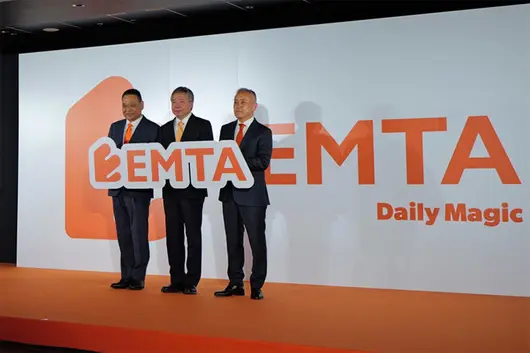
As stated in the title, Chery (Chery) has confirmed it will enter the Japanese market through Electric Mobility Technologies (EMT), the joint venture is registered in Singapore, with participants including Chery, Jiangsu Yueda Group, Autobacs Seven, Gotion High-Tech and Anest among others.
According to media reports, the joint venture will launch a new brand named Emta in Japan. The first model is a pure electric light vehicle, commonly known as a K-Car, expected to officially launch in 2027. Product-wise, the new car will be built based on Chery's vehicle architecture, electric drive system and ADAS driving assistance technology, while the power battery will be supplied by Gotion.
In terms of production, this model is expected to be produced at Yueda's factory located in Yancheng, Jiangsu Province, China. The factory currently also undertakes production tasks for Kia and HiPhi (HiPhi). If the brand subsequently achieves scaled success in the Japanese market, the company does not exclude the possibility of establishing a production base in Japan after 2030. In terms of division of labor, Autobacs Seven will be responsible for sales network construction and channel operations, while Anest will undertake quality and after-sales support systems.

According to the plan, the Emta brand will launch a total of four models for the Japanese market before 2029, with the K-Car being the launch product. Afterwards, it will gradually expand to a series of larger-sized models, including hatchbacks, SUVs and a multi-purpose vehicle with a shape close to an MPV.
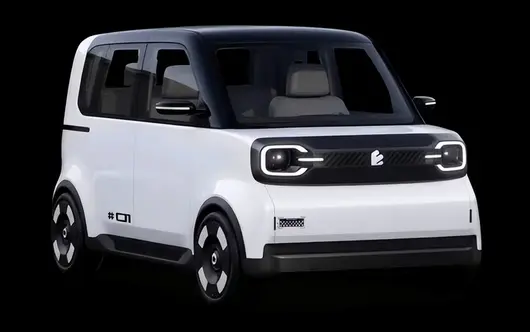
From the currently revealed teaser images, the outside world generally believes the first model may be named Emta #01. Regarding design language, the overall contour of the car has some similarity to Chery QQ Ice Cream, but it has been redesigned in details, including a more simplified front face styling, redefined headlight group structure and more miniaturized exterior mirror design, making it better comply with the strict requirements of the Japanese K-Car market for practicality and space efficiency. In terms of body dimensions, the new car is about 3400mm long and 1480mm wide, complying with the typical K-Car regulatory framework.
It is worth noting that this Emta K-Car will directly face competition from multiple local brands in the Japanese domestic market in the future, and will also welcome opponents from the Chinese camp, such as BYD Racco and other same-class small electric vehicle products planned to be launched in Japan by BYD. As multiple parties accelerate layout, the competitive landscape of the Japanese micro electric vehicle market is expected to heat up significantly.

Written by | AUTO Xinqiu
Author | AUTO Xinqiu Team
In the vast family of Chinese automobiles, there is a "non-typical" leading enterprise.
It has ranked first in exports among Chinese brand passenger cars for 23 consecutive years, with almost half of its annual sales sold abroad, recognized as the No. 1 exporter.
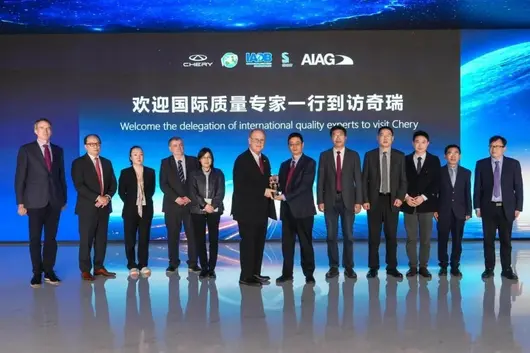
You might not know, what is the status of it in the hearts of overseas consumers? On April 23 this year, the International Automotive Quality Expert Group, consisting of the International Automotive Task Force (IATF), International Automotive Oversight Bureau (IAOB), Automotive Industry Action Group (AIAG), and Society of Motor Manufacturers and Traders (SMMT), followed it, personally visited and presented the "Automotive Industry Peak Award: Quality Innovation Figure" to the chairman of this enterprise.

Not to mention, winning the ICQCC Quality Gold Medal, regarded as the "Olympic" grade of international quality, for three consecutive times, proved its popularity in overseas markets has already "far surpassed" domestic peers.
If the above does not give you a sense, let me tell you, the recently in-the-spotlight Land Rover Freelander's engine is manufactured by it.
Congratulations, you answered correctly! Yes, what I am referring to is Chery Automobile.
So, why is Chery so radiant? What did Chairman Yin Tongyue do right?
"Technology Fanatic" Dual-Drive: R&D Obsession, Honest Collaboration
Yin Tongyue graduated from Hefei University of Technology, known as the "Huangpu Military Academy" of Anhui's automotive industry. After graduating in automotive manufacturing major in 1984, Yin Tongyue directly joined FAW Hongqi Sedan Plant, working as an automotive process engineer. Due to his diligence and outstanding performance, he was quickly identified as core talent and sent to Germany and the US for further study.
After returning to China, Yin Tongyue served as Director of the Final Assembly Workshop and Chief of the Logistics Section at FAW-Volkswagen. He was also awarded the "FAW Top Ten Outstanding Youth" title, with a bright future ahead.

However, a visit and study tour organized by Wuhu City completely changed Yin Tongyue's life trajectory.
At that time, Wuhu City was planning to build an Auto City, and also received strong support from the provincial government. Yin Tongyue, who had already shown his锋芒, was talent scarce in Wuhu City. Thus, the visit group invited him to return home to develop and lead the local auto project. What truly moved Yin Tongyue was a sentence from the visit group: Always working for foreigners is not worthwhile. It was this sentence that ignited his "Dream of Domestic Brand" deep in his heart.
So, he quit and handled the procedures, carrying luggage from Changchun, the Automobile Capital of China, to Wuhu which seemed unrelated to automobiles.
Heaven will assign great responsibility to this person. Yin Tongyue deeply felt the heavy responsibility, only able to exert all efforts and give whole heart.
Chery started from the "Heart of the Automobile", the engine. To ensure this project would be won, Yin Tongyue even made a hardcore commitment: If it failed, I would jump into the Yangtze River.
Possessing this persistence and resilience, he recruited 288 cadres and over 1,000 employees from FAW. It was also with this persistence and resilience that, facing a foreign production line assembly team shirking and slacking, they loudly shouted: "Get back to your home, let us do it ourselves!"
Thus, after 500 days of hard fighting, on April 27, 1999, Chery's first engine successfully rolled off the line, ignited successfully in one try. 7 months later, the first Chery sedan - Fengyun 000001 successfully rolled off the line.

From then on, under Yin Tongyue's leadership, Chery hit models emerged one after another. In 2003, Chery launched the generation mythic car Chery QQ, with annual sales revenue exceeding 8 billion RMB.
How popular was Chery QQ back then? Describing it as a "Phenomenal National Mythic Car" was no exaggeration, because it was the first true "Hit" among Chinese independent brands. Before Chery QQ ceased production in 2014, cumulative sales reached 1.40-1.54 million units, exported to over 100 countries and regions, with cumulative exports exceeding 500,000 units.

In 2013, under a new system and process, Chery created another classic model - Tiggo 5. To strictly control quality, before listing, Yin Tongyue even invited a Japanese expert for acceptance check. This Japanese expert scratched the inside of the car door handle with his fingernail and found a mark, saying: "This is unacceptable."
So without a word, they remade it. During the second inspection, the Japanese expert said the material formula needed re-adjustment and re-certification.
Thus, Yin Tongyue led the team to repeatedly tear down and start over. When Tiggo 5 passed rigorous verification, it also meant Chery bid farewell to the primary stage of "Assembling Parts to Build Cars", and car manufacturing technology and systems truly approached international standards.
Taking engine thermal efficiency as an example, this is a hard indicator measuring core capability of fuel vehicles. Currently, mainstream engine thermal efficiencies mostly range between 38%-45%, while Chery Kunpeng Tiqing Engine achieved 48%. According to Chery internal data, cumulative global installations of its Kunpeng Power Engine Upgraded Version has exceeded 3.1 million units. So, does Made in China fuel engine work? Currently, only Chery dares to pat their chest and say "Yes".
Nowadays, Chery engine thermal efficiency has stabilized at 44.5%, which is top-tier in the industry. With this unique skill, Chery won the favor of two major international luxury car benchmarks, Jaguar and Land Rover. Both parties jointly established a new company, and the new energy vehicle brand "Freelander" directly equipped with Chery's 1.5-Liter Range Extender.
The cooperation with Huawei is a strong alliance. Yin Tongyue has a sentence often mentioned: "When opinions differ, listen to Huawei; when opinions align, listen to Chery." This is not surface-level flattery nor deliberate humility, but a truest respect for technology and the most pragmatic posture of an entrepreneur with an engineer background.
In fact, since Zhijie S7/R7, both sides have been satisfied and mutually appreciative. Why did HarmonyOS Intelligent Mobility select Zhijie V9 as its first MPV? It is precisely due to comprehensive consideration of Chery's manufacturing hard power, a need for deep integration of "Technology Definition + Top Manufacturing".

Firstly, in capacity and quality control aspects, Chery specially created a Super Factory and Brand New Welding Line for Zhijie V9, investing over 20 billion RMB in special funds, capable of delivering this large size MPV and models with high craft requirements with quality and quantity. Secondly, in supply chain cost control, Chery possesses a perfect supply chain system, capable of effectively balancing the high BOM cost brought by Huawei Advanced Smart Driving (such as 896-line LiDAR), supporting V9 being fixed in the 389,800 RMB starting price range, possessing strong market impact.
Global Layout: Not "Sold Out", but "Grown Out"
As early as 1999, Yin Tongyue determined one thing: Chinese automobiles must go out, but not in the way of dumping at cheap prices, but in the way of long-termism.
What was the result? Chery has held the No. 1 position in Chinese brand passenger car exports for 23 consecutive years. In 2025, exports reached 1.344 million units, nearly half of annual sales, cumulative exports exceeding 5.85 million units. More rarely, for Chery exported new energy vehicles, for every 5 sold, 1 is sold to Europe with the strictest regulations, meaning Chery Automobiles' quality is globally top-tier.
Yin Tongyue summarized Chery's globalization philosophy with one sentence: "In somewhere, For somewhere, Be somewhere — Wherever, For Wherever, Become Part of Local." Considering deep integration into local market as the core goal of car exporting.
This is not a slogan. Chery has 10 overseas factories globally. Like Russia, Brazil, Egypt, etc. KD factories achieved "Parts Export, Local Assembly", which both avoids tariffs and drives local employment, deeply welcomed and supported by local governments.
For the extreme cold of Russia and Middle East, Chery strengthened car AC and engine cooling functions; for Brazil and Latin America market, Chery developed flexible fuel engines capable of adding ethanol and gasoline; for Europe market, entering with OMODA, JAECOO New Brands, fully meeting Euro NCAP 5-Star Safety Standard; for Southeast Asia market, Chery developed RHD models using local factories.

Besides, Chery developed multiple modular platforms like T1X, M1X, Mars Architecture, letting products quickly adapt to different countries' regulations, road conditions, and climate.
In April this year, Chery established its first Overseas Regional Operation Center in Barcelona, Spain, and simultaneously launched Spain Research Institute, main focus is Electrification, Smart Mobility and Sustainable Development, with the goal to develop "Cars with More Local Flavor".
In the overseas market, Chery did not consider itself as a "Foreign Manufacturer", but also voluntarily undertook corporate social responsibility for locals. For example, cooperated with World Conservation Union (IUCN), conducted a Mediterranean Posidonia Seagrass Bed Restoration Project, to protect local "Lungs of the Ocean"; Chery also organized local owners in Malaysia, conducted Afforestation Public Welfare Activities, doing all for protecting local ecological environment.

When many companies still "Chase Trends, Make Quick Money", Chery has already built supply chain and layout R&D network overseas for years. This persistence has now finally turned in a shining report card.
Conclusion: Not a Stroke of Genius, but 23 Years of "Hard Work"
What Yin Tongyue did right was never any one "Stroke of Genius", but determined 23 years ago that "Chinese Automobiles Must Go Out", then using Engineer's Rigor, Merchant's Patience, Long-termist's Steadfastness, brick by brick built the "Made in China" reputation into Global Market.
When domestic car companies still race price and configuration, Chery has already completed the transformation from "Cheap Alternative" to "Quality Choice" in overseas market - this is the fundamental reason and confidence of the International Quality Expert Team "Chasing Awards": Not because of what you said, but because in the global market, using over 20 years time, you truly achieved what.
Objectively speaking, Chery Helmsman Yin Tongyue is not only the Top Domestic Car Exporter, but also the Founder and Torchbearer Promoting Chinese Cars to the World, this honor will be written into Chinese Auto Industry Chronicles.
Hope Chery Automobiles Advance Further!
*Images in this article sourced from Internet
Focusing on Smart Cars, Assisting Key Decisions.

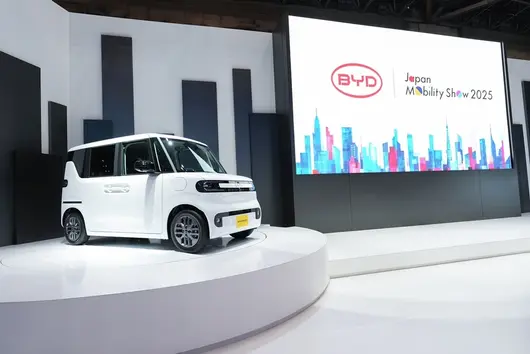
At last year's Tokyo Motor Show, BYD launched an all-electric K-Car model for the Japanese market, the BYD RACCO Sea Otter. Now, another Chinese automaker has set its sights on this market. According to reports, Chery recently announced it will enter the Japanese market, and the exterior of its first K-Car model was revealed simultaneously.

It is reported that Chery is entering the Japanese market through a joint venture. Chery will cooperate with four companies to establish a new EV brand, EMTA. The four companies are Jiangsu Yueda, Japanese auto parts manufacturer Autobacs Seven, Chinese battery company Gotion High-Tech, and Japanese machinery company Anest. Chery will provide platforms and drive hardware for the new brand among these.
Unlike the previous BYD situation, Chery's strategy this time is to build a brand new brand and emphasizes a Japanese brand positioning. Therefore, besides the participation of two Japanese companies, technicians from Japanese automakers such as Honda and Mazda were recruited to participate in localized development. The company CMO is Shun Uchiyama, who served at Dongfeng Nissan in the early years. At the same time, EMTA's registration location was chosen to be Singapore, which can be said to help avoid the "Made in China" label, so as to better establish in the Japanese market.

As for the first model, EMTA chose a K-Car model with distinct Japanese characteristics. The vehicle length is 3.4 meters, and it will be developed according to Japanese K-Car specifications. Currently, the new car has not been named, and more parameters are unclear. However, looking at the shareholding structure of the enterprise, we can make some guesses. The new car will adopt Chery's electric drive technology and Gotion High-Tech's batteries. Some technologies might adopt the setting of Chery's pure electric small car QQ Ice Cream. As for the two Japanese companies, Autobacs Seven is responsible for sales business, and Anest is responsible for quality management. The new car is scheduled for delivery in 2027 and will form a product matrix of four models by 2029.

However, the competition in this market is still very huge. Competitors include local hot models such as Honda N-Box, Nissan Sakura, Daihatsu Tanto, and Suzuki Hustler, of course, there is also BYD's Racco Sea Otter. K-Car models occupy one-third of Japan's car sales, and for a long time have been almost entirely occupied by Japanese local manufacturers.

BYD entered the Japanese market in 2023, but penetration progress has been very slow, perhaps this is also one of the reasons why Chery entered this time in the form of a joint venture. But whether it can skip the dilemma currently faced by BYD and achieve better results still needs the market to give the answer. For this new Chery car and the move to enter the Japanese market, we will also continue to follow closely.

Chery's globalisation strategy has delivered another outstanding result. Data shows that in May, Chery Group exported 181,871 vehicles, a year-on-year increase of 80.5%, marking the third consecutive month setting a new record for monthly vehicle exports by Chinese automakers. Among them, new energy vehicle exports grew by 138.8% year-on-year, becoming the main engine for Chery's "going global" strategy.
Looking at the overall performance, from January to May this year, Chery Group cumulatively exported 752,755 vehicles, a year-on-year increase of 69.5%, creating a new record for Chinese automakers "exceeding 700,000 vehicles exported within five months", and continuously surpassing the milestones of 140,000, 170,000, and 180,000 vehicles, consistently leading the "going global" of Chinese cars.

The core driving force behind the continuous surge in export volume is Chery's long-established "Green Going Global" strategy. Relying on continuously iterated green technologies, a complete product matrix, and global layout, Chery has successfully converted green competitiveness into global market growth, bringing Chinese cars' "Green Solutions" to the world.
First Sino-European Carbon Footprint Mutual Recognition Certificate: Securing the European "Green Passport"
Green and low-carbon technology is the "passport" for Chinese automakers to enter high-regulation markets. Chery focuses on greening the entire industry chain, from raw materials to recycling throughout the full lifecycle, dedicated to making greenery permeate the entire process of a car from birth to rebirth.
Taking the European best-selling model JAECOO 7 SHS as an example, its full lifecycle carbon footprint is only 120.40 g CO₂e/km, at the leading level of its class. This stems from the model's systematic green technology layout: using approximately 75% low-carbon aluminum to reduce carbon emissions at the material stage, and production factories now use 100% green electricity to reduce carbon emissions at the manufacturing stage.
This all-chain, systematic low-carbon solution allowed Chery to obtain the first Sino-European mutual recognition full lifecycle carbon footprint report among Chinese automakers, and JAECOO 7 SHS received China's first Sino-European carbon footprint mutual recognition certificate.

Figure: JAECOO 7 SHS receiving China's first Sino-European carbon footprint mutual recognition certificate
Recognition in High-End Markets: New Energy Vehicle Sales in Europe Grow by 5.7 Times
With the support of the "Green Pass", Chery's sales have continued to climb in high-regulation markets such as Europe. From January to April, Chery cumulatively sold 107,000 vehicles in 24 European markets where it has already entered, including 53,600 new energy vehicles, a year-on-year surge of 570%. Today, for every 2 cars Chery sells in Europe, 1 is a new energy vehicle.
In the UK, a core European market, Chery has ranked in the top two of new car sales for two consecutive months, among which JAECOO 7 became the best-selling model in the entire UK market across all brands in March, earning recognition in Europe's high-end market.

In Australia, Chery continues to achieve new breakthroughs. Chery has maintained positive sales growth in Australia for 22 consecutive months. In May, OMODA&JAECOO sales increased by 729% year-on-year, ranking at the forefront of the industry; JAECOO J5 ranked second in the pure electric vehicle sales chart, second only to Tesla Model Y.
Multifaceted Efforts to Deepen Global Markets: New Energy Layout Accelerates
While consolidating high-end markets such as Europe, Chery is accelerating the global rollout of new energy products, focusing efforts on key regions such as the Middle East, Southeast Asia, Africa, and Latin America, comprehensively accelerating the global new energy layout.
In May, iCAR (the overseas brand name) landed in Oman, Indonesia, and South Africa, further expanding the layout of high-end new energy markets in the Middle East, Southeast Asia, and Africa; Vantec G700 launched in Mexico, accelerating the deepening of the high-end off-road market in Latin America. Meanwhile, Jetour landed in markets such as Poland, Malaysia, Brazil, and South Africa, continuously deepening the global new energy layout. By the end of May, OMODA&JAECOO had entered 70 markets globally. The accelerating new energy global map is bringing Chery's "Green Mobility" solutions to more users worldwide.

Figure: iCAR V27 landed in Oman in May to deepen the high-end new energy market in the Middle East

Figure: iCAR V23 landed in South Africa in May, further perfecting the African regional network

Figure: Vantec G700 carrying out off-road test drive activities locally in Mexico
Continuous product iteration, technology upgrades, and globalisation have enabled Chery's global user base to rise steadily. By the end of May, Chery Group's cumulative global users surpassed 19.62 million, of which overseas cumulative users exceeded 6.59 million. Looking to the future, Chery will persist in green development and green going global, providing greener, safer, and smarter travel products and experiences for users worldwide.


Gasgoo News In the Japanese automotive market, a long-neglected niche segment is quietly becoming a new battlefield for electrification transformation—Mini Cars (Kei Car). This Japan-exclusive vehicle category, with its lower price and tax fees, and the convenience brought by smaller dimensions, has long accounted for about 40% of new car sales in Japan. Since it is mainly used for short urban commutes and family transportation, the range requirements are relatively low, so Japanese mini cars are naturally suitable for electrification transformation. Today, with the entry of Chinese car companies and the strategic shift of Japanese local car companies, the Japanese mini car market is accelerating its transition from the fuel era to electrification.
BYD and Chery Bet on Japanese Electric Mini Car Market
Last October, BYD showcased a boxy four-door pure electric mini car named Racco at the Japan Mobility Show in Japan, and announced that this model would officially launch in Japan this summer. This is BYD’s first electric mini car built specifically for the Japanese market.

BYD Racco; Image Source: BYD
It is reported that the Racco model offers 3 versions, with the entry-level version having a range of about 200 km, and the other two versions having a range of 300 km. Racco strictly follows Japanese mini car standards and is equipped with sliding doors for the first time on such pure electric vehicles to better adapt to narrow streets and parking environments in Japanese cities. At the same time, the new car will also provide richer assisted driving functions.
BYD also plans to rapidly expand its sales network in Japan by opening numerous micro stores that display only one or two models. Atsuki Tofukuji, President of BYD Automotive Japan, stated: “We plan to cover local small commercial circles to sell micro electric vehicles.” These stores will be located in remote cities with a population of less than 500,000, displaying at most a few exhibition cars per store, with a faster store opening speed. BYD’s micro stores will feature Racco as the core recommended product.
Following BYD, Chery Motors also plans to launch a pure electric mini car in Japan next spring. Chery will join forces with four partners to jointly create a new electric brand EMTA, and has already established the operating company EMT in Yokohama, Japan, responsible for vehicle R&D and sales work. The CEO of EMT said in an interview recently: “This brand is built for Japanese consumers, aiming to create a more convenient and comfortable way of travel for the public.”
EMT belongs to a Singapore joint venture. The joint venture is led by Chery, while the other four cooperating enterprises are China Jiangsu Yueda Automobile Group, power battery manufacturer Gotion High-Tech, and Japanese automotive supplies retailer Autobacs Seven, and painting equipment company Anest Iwata.
This light vehicle is jointly developed by China and Japan. It will initially be produced in China, and core functions such as driving assistance all adopt Chery technology.
EMT Company Chief Marketing Officer Susumu Uchikoshi stated that the new car pricing will benchmark against fuel-powered mini cars of the same class. It is reported that the sales price of Honda N-Box fuel mini cars, which are very popular in the Japanese market, is 1.74 million to 2.48 million yen (approximately 10,915 to 15,560 USD).

Image Source: EMTA
According to the plan, EMT will start with this pure electric light vehicle and launch four electric vehicle models in Japan before 2029. Autobacs will rely on its own offline store network to assist in vehicle sales.
After the launch of this electric light vehicle, EMT plans to build 100 stores integrating sales and after-sales in Japan, and continue to expand channels, striving to increase the store scale to hundreds by the 2027 fiscal year. The CEO of EMT Company stated: “Japan is our most important market, and the brand new European mini electric vehicle standards have also brought new opportunities for the brand’s global development.”
Japanese Car Companies Accelerate Mini Car Electrification Layout
With Chinese car companies accelerating their layout, Japanese local car companies are also actively promoting electric mini car products and market planning.
Honda’s electrification pace is the most eye-catching. Its N-Box mini car is the absolute king of the Japanese market. Sales broke through 200,000 units in 2024, ranking first in sales for three consecutive years. Honda launched the N-One e: pure electric mini car last September. The group will also launch the pure electric version of the N-Box model in 2028. Currently, the range and pricing of the electric N-Box model are still in the final confirmation stage. Besides the electric version, Honda is expected to continue selling the fuel version of the N-Box model.

N-One e; Image Source: Honda
Nissan officially launched the revised model of its Sakura electric mini car in April this year, aiming to maintain its competitiveness in the Japanese electric mini car market. The Nissan Sakura model was initially launched in 2022 as the mass production version of the IMk concept car and has continuously become the best-selling electric mini car in Japan in recent years. According to data released by Nissan, the sales of this model reached 14,093 units in the full year of 2025, ranking first in this sub-market for four consecutive years. It is reported that the sales of the two electric mini car models, Nissan Sakura and Mitsubishi eK X, in 2024, accounted for more than 40% of the total sales of electric vehicles in Japan.
In addition, Suzuki Motors plans to launch its first electric mini car within this fiscal year. Daihatsu also launched an electric mini commercial vehicle jointly developed with Toyota in February this year. Japanese local brands are building a deep moat using their huge channel advantages (Daihatsu alone has about 700 regular stores; if small outlets are included, it reaches 6,000).
Currently, in the Japanese new car market, the proportion of electric vehicles is only about 2%, ranking last among developed countries. Insufficient number of charging piles and high vehicle prices are the main constraints. High cost-performance electric mini vehicles are expected to improve the local electric vehicle penetration rate. Since mini cars are mainly used for short-distance travel, range requirements are not high, which fits very well with the positioning of pure electric vehicles. Seiji Sugiura, a senior analyst at an automotive market analysis institution, said: “Pure electric mini cars do not need to reach the range level of conventional passenger cars. As long as the pricing is reasonable, electric light vehicles are expected to quickly occupy the market.”
However, for BYD and Chery, the real test lies not only in launching a mini electric vehicle priced to benchmark the N-Box, but also in how to eliminate Japanese consumers' brand concerns over time, and how to maintain the balance between price and quality under the local advantages of Toyota, Honda, and Suzuki. This battle of pure electric mini cars may be the key battle for Chinese car companies to truly open the door to the Japanese market.

According to media reports, Chery is establishing a joint venture with multiple Chinese and Japanese enterprises to launch an independent all-electric brand in Japan. Instead of following Chery's traditional direct overseas model, the new venture adopts a strategy of "Chinese Technology + Japanese Local Operation".

This is a result of a five-party cooperation, including: Chery Automobile, which provides vehicle platforms, electric powertrains, and core intelligent driving technology, while serving only as a shareholder without participating in local Japanese operations; Jiangsu Yueda Group, which utilizes the former HiPhi factory in Yancheng to handle vehicle production; and Gotion High-Tech, which is responsible for supplying power batteries.

The Japanese side is mainly responsible for channels, craftsmanship, and localization. Autobacs Seven, Japan's largest automotive aftermarket retail chain with approximately 1,200 stores, manages sales, after-sales service, and localized brand operations. Anest Iwata, a prominent leader in industrial painting equipment, provides specialized technical support for the vehicle's body-painting and finish processes.
The operating entity's parent company is registered in Singapore, with a subsidiary EMT (Electric Mobility Technologies) established in Yokohama, Japan, to fully operate the new brand, R&D, and sales.

Positioned as an all-electric brand originating from Japan, the new venture has built a world-class team, recruiting technical talent from Honda and Mazda alongside a former Nissan executive serving as Chief Marketing Officer (CMO).
In terms of product planning, the first all-electric model is scheduled for delivery in Japan in 2027, focusing on the compact and subcompact EV segments to adapt to Japanese urban driving needs. By 2029, the company aims to launch four distinct models covering subcompact cars, SUVs, and MPVs. Looking beyond 2030, it plans to explore building localized factories in Japan.

Chery Automobile's overseas expansion strategy dictates that its vehicles utilize Chery's proprietary technology and are Made in China, while carrying a new brand identity tailored for the Japanese market. Direct utilization of AUTOBACS's nationwide stores bypasses heavy overseas retail construction costs, enabling rapid network scalability. This joint venture allows Chery to precisely target Japan's electric vehicle vacuum, created by the slower electrification pace of legacy giants like Toyota and Honda. Capitalizing on this massive market gap, Chery is well-positioned to leverage its technological edge and local partnerships to seize a powerful first-mover advantage—an expansion strategy that holds immense promise.
According to data from the Japan Automotive Importers Association (JAIA), total New Energy Vehicle (NEV) sales in Japan reached 16,924 units in March 2026, with BYD capturing a 3.7% market share. Notably, within the imported EV segment, BYD secured a dominant 10.3% share, ranking first among all imported all-electric vehicles. Driven by this momentum and upcoming market entries from other Chinese brands like GAC Aion and Zeekr, annual sales of Chinese NEVs in Japan are projected to surpass 20,000 units by 2027.