首頁Chery

搜尋歷史
熱門搜尋
經銷商登入 / 註冊

On September 22, Chery held a press conference at Wuhu Jiuzi Square in Anhui, named "QQ Show and Friends". The QQ3 Modern Edition was officially unveiled.
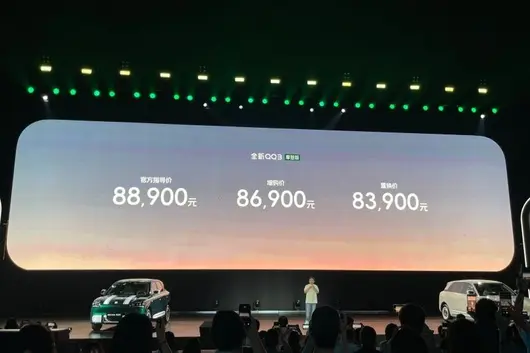
Regarding price, the official guide price is 88,900 Yuan; for existing car owners purchasing a second vehicle, the final price is 86,900 Yuan; for limited-time trade-ins, the lowest is 83,900 Yuan.
There are four tiers of car-buying benefits. Note that the second-purchase subsidy of 2,000 Yuan and the trade-in subsidy of 5,000 Yuan cannot be enjoyed simultaneously. Financial plans can go up to 70,000 Yuan, 36 months interest-free, supporting 0% down payment. For data traffic, base traffic is free for life, entertainment traffic is provided for 2 years, 10GB per month, and OTA vehicle upgrades are also free for life.

Regarding warranty, the first non-commercial owner gets a lifetime warranty for the whole vehicle. The battery warranty includes an 8-year or 150,000 km degradation guarantee, plus lifetime free roadside assistance. Place an order now, and you can choose small gifts like Sun Li signed car models or factory original racing decals. However, subsidy eligibility, price differences by region, and trade-in audits still depend on real-time policies from Chery and local dealers.
Simply put on positioning: This is considered the QQ3 version with factory original modification effects, not a new car developed on a new platform. It is a retro-style factory upgrade based on the current QQ3, featuring a Neo-Retro retro style. Modifications focus on paint colors, exterior kits, interior materials, and some comfort features. Specifically targeted at users who want a unique and stylish car but find subsequent color changes and accessory installation troublesome, eliminating the need to handle modification registration themselves.

The exterior comes with two exclusive colors: Modern Era and Annie Pearl. It also comes with exclusive time emblem wheels, factory original racing decals, retro white front and rear bumpers, shiny chrome trim strips, with wheel arches and side skirts matching the body color. The paint uses a 6-layer 2K process, with paint suppliers being big brands like Kansai and PPG. It essentially turns popular modification styles like national trends, urban retro, and holiday camping directly into factory configurations, saving users the hassle of modification filing and incompatible parts.

The body is an A0-class pure electric compact car, with overall vehicle dimensions of 4229/1812/1573mm and a wheelbase of 2700mm. There are quite a few storage places inside, rear seats can be folded down to expand space, and actual trunk loading capacity depends on the official specification list.
The key point is it features a 70-liter drainable electric front trunk, with a total of 8 ways to open, including voice from outside the car and mobile APP. Usually for putting sundries when shopping, or dirty/wet items when camping, it is much more practical than ordinary commuter small cars.
The interior main color is called "Cloud Velvet Beige", the ceiling, A/B pillars, and sun visors are all wrapped in velvet. The center console and door panels feature houndstooth patterns, and the armrest box has contrast-color webbing, creating a fully immersive atmosphere.
Configurations include dual soft-light makeup mirrors, 50W wireless fast charging, 256-color ambient lighting, steering wheel heating, and front seat heating and ventilation are all included. Compared to commuter cars in the same price range, the interior quality is noticeably more exquisite.

Regarding intelligence, the infotainment system uses a Qualcomm 8155 chip, paired with a 15.6-inch 2.5K center screen. It comes with the Carmind AI intelligent assistant; speaking can control the car, checking car status, and voice control work well. It also supports smartphone connectivity like CarPlay and HiCar.
Driving assistance configurations are also ample: 540-degree panoramic view, 12 ultrasonic radars, supporting hundreds of scenarios for automatic parking; plus a full L2 assistance suite including adaptive cruise control, lane keeping, AEB emergency braking, blind spot monitoring, collision warning, and door opening warning. It supports vehicle exterior callout and voice opening of front trunk and trunk. The mobile APP also supports remote vehicle pre-conditioning, turning on AC and seats in advance.
Regarding safety and battery, the body features a five-vertical, eight-horizontal cage structure. High-strength steel makes up 82%, hot-formed steel accounts for 16%, with 1300MPa integrated hot-formed door rings, and standard 6 airbags across the full lineup.
The battery is named Rhino Battery, using CATL cells, achieving IP68 waterproof and dustproof, and passing the CATARC NESTA 6D electric safety certification. Active safety configurations such as active braking and blind spot monitoring are also fully equipped.
Power is divided into two versions:
The full series features rear-wheel drive, front MacPherson independent suspension, and rear multi-link independent suspension. The minimum turning radius is 5.2 meters, making city U-turns very flexible. Fast charging from 30% to 80% takes as little as 16 minutes and 30 seconds, and it includes 6.6kW vehicle-to-load discharge, making camping electricity convenient. In A0-class pure electric compact cars, rear-wheel drive with independent rear suspension is rare, so city lane changing and vibration damping performance will be better.

Let's discuss the market situation: The QQ series has cumulatively sold over 1.6 million units over the years, reaching over 100 countries and regions globally. The current QQ3 has broken sales of 10,000 units for 5 consecutive months. In August, single-month delivery reached 19,103 units, a month-over-month surge of 64.07%. Domestic and international orders have exceeded 100,000, with overseas pre-sales in Thailand and Indonesia alone exceeding 20,000.
The positioning of the Modern Edition is not to chase maximum volume. It targets the 80,000 Yuan price bracket pure electric market, creating differentiation through factory retro exterior, upgraded interior, front trunk, and external discharge features. Compared to competitors like Seagull, Bingo, Star Wish, and Nano 01, it places more emphasis on personalized exterior and diverse usage scenarios, rather than simply competing on low price.
Overall, the Modern Edition's chassis and powertrain hardware remain unchanged. It directly handles the exterior colors, decals, and interior upgrades that enthusiasts like to tinker with, done by the factory. Paired with the 8155 infotainment system, 70L front trunk, and rear-wheel drive independent suspension, at the trade-in price of 83,900 Yuan, it is indeed quite attractive.
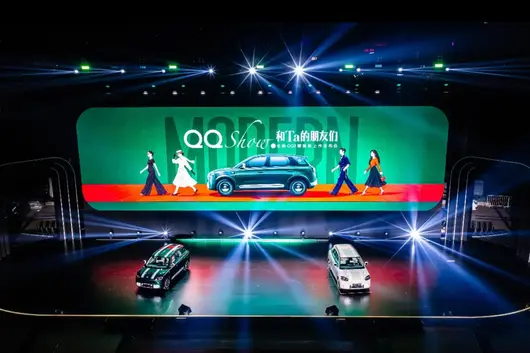

When talking about classic domestic small cars in China, Chery QQ cannot be avoided. In 2003, Chery QQ entered public life with bright colors and smiley face designs, becoming the leader of China's fashion small car trends. Over more than 20 years, QQ series cumulative sales exceeded 1.6 million units, selling well in over 100 countries and regions, becoming a life memory for a generation of users. Entering the smart electric era, the new QQ3 inherits classic genes, with higher quality, stronger intelligence and more global expression, continuously releasing premium small car value.

On September 22, the new QQ3 Modern Edition officially launched. Official guide price 88,900 Yuan, additional purchase price 86,900 Yuan, trade-in price 83,900 Yuan. As a new member of the QQ3 family, the Modern Edition is not simply adding configurations, but around design, texture, intelligence and safety, carried out a refresh closer to contemporary aesthetics for the "Citizen Car".
Appearance is the most intuitive change of the new QQ3 Modern Edition. The new car takes Neo Retro design concept as the core, integrating retro-futurist language on the basis of new QQ3 square-round aesthetics, combining classic car elements with smart electric era craftsmanship naturally.


Modern Era, Anne Pearl two exclusive colors, respectively presenting retro green film texture and pearl luster between milk apricot and rice pink. Full-cover same color paint surface, 6-layer 2K high texture car paint, Time Badge wheel hubs, Wind Track Racing Stripes, Golden Age Grille, Flowing Light Chrome Trim and Retro White front and rear bumpers and other details, collectively strengthened the whole car's modern identification. Car paint actual aging luster loss controlled within 5%, far lower than industry 20% standard, can achieve 10-year body no fading.
In terms of design, the Chery new QQ won the Red Dot Design Award four consecutive times from 2025 to 2026. Among them, the new QQ3 won the "2026 Red Dot Product Design Award", its smart cockpit interaction interface won the "2026 Red Dot Brand & Communication Design Award", providing strong backing for the new car's appearance and design system.

The interior also continues the exquisite self-pleasing idea. Cloud Velvet Beige interior sets a soft and bright background, control panel decoration and door inset trim panels integrate Houndstooth high-end custom textures, seats and central armrest box adopt Modern contrasting color webbing accents. Ceiling, A/B pillars, driver and co-driver sun visors upgraded with Velvet cover, touch is finer.

10-layer Cloud Comfort seats support front row electric adjustment and heating, driver seat cushion and backrest ventilation, combined with steering wheel heating, dual smart soft-light vanity mirrors, 50W wireless charging and 256-color ambient light, making daily car use more comfortable and textured. In terms of space, 2700mm wheelbase and 85% effective occupant cabin space utilization, bring passenger performance rarely seen in its class; 38 storage spaces, 70L drainable smart electric front trunk and second-row seat under storage space, then enhanced the practicality of commuting, pickup, camping and other scenarios.
Intelligent configuration is the important selling point of the Modern Edition. The new car is equipped with high-pass vehicle-grade 8155 chip and 15.6-inch 2.5K ultra-high-definition central control screen, combined with Carmind large model, supporting AI natural language chat, vehicle status data real-time acquisition, fault intelligent answer, smart car control, surrounding recommendation and route planning and other functions. Hand-car interconnection covers CarPlay, HiCar, CarLink, AutoNavi Map 810 supports traffic light countdown, destination planning charging, WeChat location sharing navigation and group travel.
540° panoramic image, 12 ultrasonic radars, 100+ full-scenario automatic parking and L2-level assisted driving, cover cruising, collision warning, lane assist, blind spot monitoring, door opening warning and other 15 functions. Rest, Baby, Pet, Karaoke, Sentry, Camping 6 major intelligent scenarios, then allow the vehicle to switch quickly according to different life states.

In terms of power and handling, the new QQ3 Modern Edition is built based on native intelligent pure electric platform, adopting rear-motor rear-wheel drive, four-wheel independent suspension and 50:50 front and rear axle load ratio, forming a rare handling foundation for premium small cars. 10-in-1 electric drive system volume reduced by 10%, power increased by 8%, C-EPS brushless motor steering system assist efficiency reaches above 90%, combined with 5.2-meter turning radius, making city shuttle, U-turn and parking easier. In terms of energy replenishment, 2.11C fast charging can achieve 30% to 80% fastest 16.5 minutes, combined with liquid cooling management system and wide-temperature domain cells, further guaranteeing daily use convenience.

In terms of safety, the Modern Edition continues the new QQ3 system strength. Rock-solid body adopts 5 vertical 8 horizontal cage structure, high-strength steel ratio 82%, hot-formed steel ratio 16%, 1300MPa integrated hot-formed door ring significantly improves side collision safety.
Rhinoceros battery equipped with CATL cells, battery box adopts high-strength steel DP780 made, reaching IP68 highest waterproof grade, each cell equipped with separate explosion-proof valve, single cell failure does not occur thermal runaway, and can provide power output in -35°C to 60°C wide temperature domain.
Whole vehicle passes China Automotive Technology and Research Center NESTA six-dimensional electric safety certification, equipped with 6 airbags, equipped with AEB active braking, BSD blind spot monitoring, front and rear collision warning, door opening warning and other functions, ONEBOX integrated brake brings 100km shortest braking distance 38m, CN95 air conditioner filter, water-based damping material and other configurations then further strengthen health quality.
Editor's Comment: This August, new QQ3 sales reached 19,103 units, month-on-month growth 64.07%, has exceeded 10,000 units in sales for consecutive 5 months. At the same time in Thailand, Indonesia pre-sale order volume quickly broke through 20,000 cumulative, on sale so far domestic and foreign orders broken 100,000. QQ series users, female users proportion reached 56%, self-pleasing, trend, love expression characteristics obvious. Modern Edition arrival, just strengthened design personality, cockpit texture and intelligent configuration, highly fit with this part of user needs.
Comprehensive look, new QQ3 Modern Edition with lowest 83,900 Yuan trade-in price enters the market, in premium pure electric small cars provided relatively complete design, intelligence, safety and space value. It both inherits QQ brand historical reputation, also strengthens new QQ3 Modern personality expression.
Current premium small car market is turning from simple commuting to self-pleasing life carrier, user requirements for appearance, configuration, safety and emotional value rise synchronously. Relying on QQ3 consecutive monthly sales over 10,000 market momentum, and Modern Edition appearance interior and intelligent experience differentiation, new QQ3 Modern Edition expected to attract first purchase, additional purchase, family second car and female user groups, further consolidate QQ3 position in premium pure electric small car market.

August 2026, Chery Group sold 280,128 cars, up 15.4% year-over-year. Among them, new energy vehicles reached 120,909, up 69.8%, breaking through 100,000 units for 5 consecutive months; exports were 196,984, up 52.1% year-over-year. Cumulative sales from January to August totaled 1,914,481, up 10.8% year-over-year.
The automotive market is fiercely competitive this year, with price wars lasting years showing no signs of fading. Joint ventures are retreating or shrinking, while some new entrants are still burning money to boost volume. In such an environment, Chery maintaining double-digit growth with both export and new energy lines performing well is indeed impressive.
However, looking closely, the core driving force behind these results lies not in marketing or price wars, but on the product side – it is the depth of the product matrix that supports synchronized growth in both domestic and overseas markets.
Stable output from the new energy series relies on "full price coverage"
In August, Chery New Energy sold 120,909 units, a 69.8% year-over-year increase, standing at the 100,000-unit milestone for the 5th consecutive month. Behind this number is not a breakout single model, but stable output from the entire new energy series.

Let's look at a few specific products.
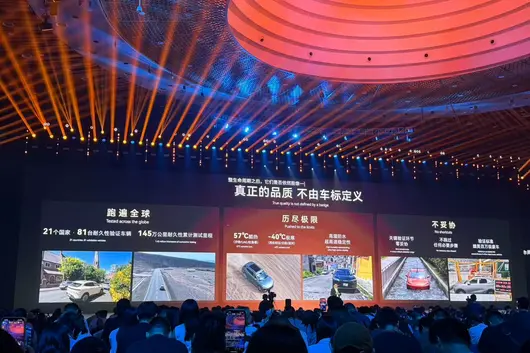
Fengyun T7, a global quality pure electric SUV launched in August. After 2 years of planning, 3 years of R&D, and over 6 million kilometers of global testing and validation, orders surpassed 23,000 within 24 hours of launch. As is well known, pure electric SUVs are currently the most competitive niche market, without a doubt. Being able to win in this red ocean to some extent proves that Fengyun T7's product positioning fits the needs of the target market.

All-new QQ, with sales breaking 10,000 for 5 consecutive months, locking in a spot as a star product in the A0 class. What does A0 class mean? Low unit price, thin margins, many competitors; it is the price segment that best tests cost control and product foundation. The fact that the All-new QQ can stand firm shows that Chery's system capability has been verified in the entry-level market.
Looking upwards, the Luxeed V9 cumulative deliveries exceeded 20,000 units, refreshing the fastest delivery record for the 500,000 RMB new energy MPV segment. The 500,000 RMB tier is a price band domestic brands once didn't dare to touch.
Putting these cars together, you will find: from the tens-of-thousands QQ, to the Fengyun series for mainstream families, to the 500,000 RMB Luxeed, Chery's new energy products cover different price segments, with family users, young users, and high-end users finding what they need. This is how the monthly domestic new energy penetration rate continuously breaks through 60%.
This is the difference between "series-based operations" and "single product blockbusters." Single product blockbusters rely on luck, while series output relies on the system.
Fuel and New Energy, Supporting Overseas Markets
Exports are Chery's real trump card. In August, Chery exported 196,984 units, up 52.1% year-over-year. From January to August this year, cumulative was 1,343,334 units, up 68.1% year-over-year. As of August this year, Chery Automobile cumulative exports have surpassed 7 million units, the first Chinese automaker to achieve this.
Why Chery? I think the answer comes down to two words: pragmatism.

Second, product matrix layered, adapting to local conditions. Consumers in different countries have different road conditions, usage habits, and purchasing budgets. Chery's approach is not to simply move domestic products abroad, but to perform localization adaptation, using a rich vehicle matrix to match market demands in different regions. Low-cost markets have economic products, mature markets have quality products, interconnected.
How is the effect? We can look at Chery's performance in the European market. Data shows, from January to July this year, Chery sold over 208,000 units in 24 European countries, up 201% year-over-year; among them new energy exceeded 101,000 units, up over 3.3 times. In the UK market, JAECOO 7, JAECOO 5, OMODA 5 three models broke into the UK top 10 best-selling vehicle list. According to China Passenger Car Association data, from January to July, Chery New Energy cumulative exports ranked second in the industry.

It is worth noting that Europe is one of the markets with the highest thresholds and most competition globally. This 201% growth rate indicates that Chery's product strength has passed the test of the most picky users.
Additionally, JAECOO 5 became the sales champion in the Australian niche market, and pure electric markets in Indonesia and Thailand; iCAUR V23 ranked first in niche markets in Thailand, South Africa, etc. This shows Chery's products have been validated by the market in multiple countries globally.
Product strength is the true moat
In the end, sales growth is essentially product strength being recognized by global users. Where does product strength come from? From R&D.
Chery is willing to spend on R&D. In 2025, Chery R&D investment was 14.715 billion yuan, up 39.6% year-over-year. This number ranks third among Chinese automakers, second only to BYD and SAIC.
Where was the money spent? Kunpeng Power, fuel, hybrid, pure electric, hydrogen energy four-in-one. Kunpeng Super Power Hybrid C-DM, thermal efficiency greater than 44.5%, fuel consumption per 100km with depleted battery as low as 4.2L, comprehensive range over 1,400 kilometers. On the intelligent level, Chery has Falcon Assist Drive, Lingxi Smart Cockpit, Flying Fish Digital Smart Chassis, etc., and these advanced technologies are already installed on mass-produced cars.

The effect is also visible. In full year 2025, Chery sold 903,847 new energy vehicles, up 54.9% year-over-year. Moreover, among all new products launched in 2025, new energy accounted for over 90%. Looking at Chery's August data again: new energy broke 100,000 for 5 consecutive months, exports up 52.1% year-over-year. This shows Chery's product matrix has continuous ability to generate vitality.
On the other hand, Chery New Energy is currently transitioning from scale expansion to a new stage of value growth. In the first half of 2026, Chery Automobile new energy business revenue reached 59.284 billion yuan, up 63.8% year-over-year, accounting for a share of total revenue rising from 25.6% to 41.4%.
R&D investment turns into technology, technology turns into products, products turn into sales. This closed loop is operational.
In the future, Chery will use intelligent electrification technology to stand firm in the global market. Domestically relying on new energy matrix to hold the position, overseas relying on fuel and new energy walking on two legs to expand the territory.
Product-oriented, let products speak. This sounds simple, but in today's automotive market relying on traffic, buzz, and subsidies, it turns out to be the most solid path. Chery's August scorecard proves one thing: Do products well, and the market will give you the answer.
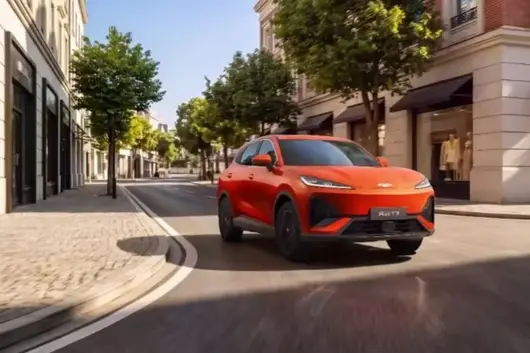

In the most competitive A-class fuel SUV sub-segment ranging from 70,000 to 120,000 yuan, where real skill is most tested, buyers fear two things: first, a specification sheet looks full but minor issues arise after two years; second, domestic pricing and standards differ from export standards, where the term "global car" is just marketing. The Tiggo 7 series' market feedback over the past few years happens to address these two pain points. Since its launch in 2016, the Tiggo 7 has entered over 100 countries and regions globally, with cumulative series users breaking one million. Recently, official communication mentioned a global user scale of 1.93 million, consistently ranking among the top for Chinese brand A-class SUV exports. More importantly, its reputation wasn't built by single hit models but is driven by both domestic commuting families and overseas users in multiple climates.

Global Quality: Standards aren't made just for export, but for home use by global standards
The Tiggo 7's "global car" attribute is reflected in standards rather than slogans. Chery's public data states the Tiggo 7 series R&D phase covered regulations and usage scenarios in multiple regions including China, ASEAN, Australia, and Europe, with targeted verification in environments like complex roads in Brazil, high temperature and humidity in Indonesia, and high temperature/dust storms in the Middle East. Tiggo 7 PLUS related communication also emphasized passive safety configurations like high-strength body, 6 pieces of Benteler hot-formed steel in key areas, and 6 airbags with wraparound protection. Regarding safety certification, series communication frequently mentioned multiple 5-star safety evaluations including China, ASEAN, Australia, and Europe. The Tiggo 7 PLUS official website and early global car materials involve international endorsements like Australia A-NCAP 5-star. On the design side, it won the German Red Dot Award, avoiding the stereotype that "cheap = shoddy".

Third-party reliability data added a second layer of credibility. In J.D. Power's "2026 China Vehicle Dependability Study (VDS)", Tiggo 7/Tiggo 7 PLUS ranked first in the mid-size economy SUV sub-segment. This study is based on feedback from real car owners 13–48 months after purchase, focusing on long-term use rather than the first test drive. For editors finalizing the article, this statement is harder than "lifetime warranty": lifetime warranty is what the manufacturer dares to promise, VDS is what owners are willing to rate.

User Reputation: 190,000 kilometers and 25,000 kilometers a year both say "worry-free"
A domestic Tiggo 7 owner shared a 190,000 kilometer mileage, concluding with just one phrase "never let us down", used for commuting, long-distance, and full-load family travel. In dealer-collected owner feedback in Shaanxi, Gansu and other places, the 1.5T version is often mentioned as "light and brisk in the city, enough for school runs, 7+ MPG on display", the second row is not cramped for a family of five, baby strollers, camping gear, and supermarket shopping fit in one car. Some first-time buyers mentioned the 1.5T Enjoyment version, priced over 80,000 yuan on the road, emphasizing "no decoration add-ons, transparent insurance and registration fees", such reviews are most relatable to 70k-90k level users.

Overseas reputation is even more direct. A South American owner drove a Tiggo 7 Sport for nine months and commented "only happiness"; another overseas user drove 25,000 kilometers a year, evaluating "maintenance doesn't hurt the wallet, insurance is cheap, must be full marks"; an experienced driver in Brazil with 50 years of driving experience described it as "comfortable, strong power, value far exceeds expectations" after trying it; European owners focus more on the whole vehicle warranty policy, believing manufacturers dare to offer long-term support, only then do they dare to buy Chinese brand fuel SUVs. From 190,000 km domestically to tens of thousands of kilometers overseas in a year, the keywords pieced together from cross-market samples are highly consistent: reliable, cheap to maintain, large space.


A-Class Body: 2670mm Wheelbase, 475—1500 Liters, 70k-Level Automatic
Back to the product itself, Tiggo 7 makes "A-Class Value" very tangible. Based on the new Tiggo 7 and Tiggo 7 PLUS on sale: body approx 4530x1862x1695mm, wheelbase 2670mm, positioning compact/A-class; rear legroom is approx two fists for a 175cm tester, floor is nearly flat, a family of five won't feel knee-bumping on long trips; trunk is standard 475L, expands to 1500L with seats folded, baby strollers, folding bikes, camping boxes can all fit, PLUS higher version also provides 24.6-inch curved surround screen, Lion car internet, 8155 chip, CarPlay/HiCar, 360°or 540°camera view.

The Tiggo 7's low trim isn't just "enough is good", but defines a new entry-level comfort standard with solid hardware—multi-link chassis, zero-gravity seats, remote temperature control, and flat rear seat are the four pillars, allowing an 80,000 yuan budget to experience crossover-level driving quality. If you value daily commuting and family travel comfort sensation, it truly achieves "low trim without compromise".

Power and Cost of Use: 1.5T for Commuting, 1.6T for Long Distance
Tiggo 7 power splits into two lines by scenario. When the whole family departs fully loaded, the golden combination of 1.5T high-efficiency turbo engine and 9-speed CVT transmission is enough for use, max power 115kW, max torque 230N·m, light start, stable high-speed cruise, smooth shifting without jerking. Meanwhile, the boulder-like body built by global 5-star safety standards protects family safety.

To let users completely eliminate worries, Tiggo 7 launched that the first non-operating owner can enjoy a whole vehicle lifetime warranty. This means, compared to the common 3 years or 100,000 kilometers warranty on the market, Tiggo 7 extends this guarantee to the vehicle's entire lifecycle. Discounts at purchase time are visible benefits, while lifetime warranty is real money saved in the vehicle use life of the next ten years or even longer.

Why it Deserves the Name A-Class Value Benchmark
The benchmark for A-class SUVs is not about how many screens are piled up, but whether "price, space, reliability, safety, ownership volume" are all balanced. Tiggo 7, through a "low price, high spec" strategy and global technology endorsement, precisely meets family users' needs for comfort, safety, and intelligence. Its sales performance of consecutively reigning as the A-class SUV export champion of Chinese brands for three years further confirms its market recognition as a "value benchmark". It may not be the most aggressive in every individual item, but it does everything family SUVs care most about: "don't break, don't be expensive, don't be cramped, don't cut specs".

For young families, the first car often determines trust in the brand for the next ten years. The A-Class Value Benchmark shouldn't be defined by joint venture brands, nor by individual parameters, but should be defined by long-term real-world user reputation.

Conclusion
A-Class family SUV users have never wanted the flashiest, but the most stable; global quality plus local reputation is the truly irreplaceable benchmark at this price point. In one sentence: Tiggo 7's reputation is not that a certain parameter explodes, but making "upgrade specs + global verification + lifetime warranty" a long-term account for family use.
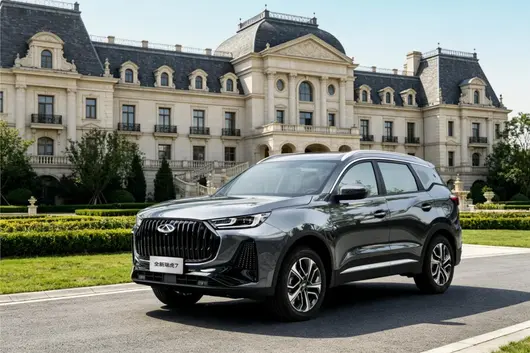
The continuous "price war" intensifies market involution, while also prompting Chinese automakers to expand into overseas markets. However, as the scale of China's automotive exports continues to grow, the competitive order and compliance in overseas markets are becoming the industry's focus.
Recently, the Ministry of Commerce, the Ministry of Industry and Information Technology, and the State Administration for Market Regulation jointly released a document—"Guidelines for Overseas Competitive Behavior and Compliance Construction in the Automotive Industry". This document directly points to a series of controversies triggered by frequent price cuts by Chinese automakers in overseas markets in recent years, and for the first time at the official level, systematically set clear compliance requirements for automakers' overseas pricing, promotions, and localized operations, among other behaviors.

Among them, Chery Automotive's response was swift and steady, clearly stating it will establish a scientific pricing system in overseas markets and regulate terminal prices and promotional behaviors. GAC Group was not left behind, with its statement stating, "Integrating compliance concepts throughout the entire R&D, production, supply, sales, and service chain". Moreover, BYD, Great Wall Motor, and Geely Holding Group also issued statements in response in succession.

From the industry's top-level call to standardize benign competition and eliminate spillover involution, to automakers generally recognizing the ineffective competition of low-price killing, the whole industry has formed a unified consensus on breaking the deadlock. However, reaching a consensus does not mean risks automatically dissipate; the warning bell against "involution" spillover must still ring long.
1
Export Acceleration, Compliance Faces Challenges
The background for the release of the "Guidelines" is the explosive growth in the scale of Chinese automotive "going global". Data shows that in the first 7 months of this year, China exported 6.14 million automobiles, a year-on-year increase of 66.8%. The monthly export volume first broke through the 1 million mark in June of this year, and July continued this trend, achieving consecutive two months of over 1 million automobiles exported. Industry predictions suggest the full year may hit 10 million.

Against the background of intensified competition in the domestic market, overseas exports have become the core growth engine for numerous Chinese automakers. Taking August sales as an example, BYD's single-month overseas sales exceeded 180,000, setting a new historical high; Chery exported 197,000, a year-on-year increase of 52.1%, with cumulative exports exceeding 7.18 million; Geely's overseas exports in August reached 110,100, a significant increase of 205% year-on-year. Great Wall Motor's overseas sales of 289,000 in the first half of this year have surpassed its domestic sales of 286,700; this is the first time in Great Wall's history that overseas sales have exceeded domestic sales.
Behind rapid expansion, the hazards of extensive overseas expansion are gradually emerging. Some enterprises expanding overseas continue to use the domestic "trade price for volume" strategy, with frequent price cuts, channel channeling, and failure to fulfill promises to dealers occurring from time to time. This not only harms consumer interests but also impacts the overall brand image of Chinese automobiles.
2
Overseas Markets Can No Longer "Price Arbitrarily"
Pricing is the core focus of this guideline. It is reported that the document urges vehicle and component manufacturers to avoid fierce price wars and significant price-cut promotions in overseas markets. It requires enterprises to base pricing on costs and local market supply and demand, avoiding frequent and large price cuts. Different configurations must have clear price gradients and cannot rely on low prices to disrupt local market order. At the same time, dealer channels must be regulated, and a complete compliance system for overseas after-sales, quality, and data security must be improved.

The intent of "admonishing" in this section is obvious, referring precisely to the "involution" spillover that everyone has been very familiar with in recent years. Many automakers, after expanding overseas, adopted aggressive methods such as price cuts to quickly grab market share. Although this was due to market behavior, it did exert certain impacts on the stability of the local market. There are already some negative cases, for example, in the Thai market, some automakers made successive price cuts in Thailand, raising the dissatisfaction of users who had already purchased cars. Thai public institutions also launched investigations into this matter.
This scene inevitably recalls the past lessons of Chinese motorcycle exports to Southeast Asia. If Chinese auto enterprises continue to blindly "involute" and replicate the domestic price war tactics, it will only undermine the value of Chinese brands, and even trigger anti-dumping and trade protection investigations by local regulators. This is a very dangerous signal for Chinese automakers who are just beginning to emerge in overseas markets.

The purpose of the state issuing relevant guidelines this time is clear: no longer solely encouraging the expansion of export scale, but beginning to standardize and manage the increasingly complex global business layout. In other words, previously Chinese automobiles competed on "whether they could go out", but now they are competing on "whether they can stay".
Overseas markets are full of gold mines, automakers must not mess this up. Chinese automakers going overseas cannot just think about selling cars; they must also learn to do business long-term and in a compliant manner. After all, the outcome of long-term competition no longer depends on who has the lower price or faster shipment, but on the comprehensive ability of localized operations, global compliance governance, supply chain collaboration, and brand building.

Currently, China's automotive export faces dual pressures of intensifying trade barriers and the spillover of internal price wars. The joint release of compliance guidelines by the Ministry of Commerce and two other ministries is precisely to curb malicious competition. Of course, the guidelines are essentially guiding, non-mandatory regulations. To be implemented, it ultimately depends on whether enterprises can reach a true industry consensus and take concrete actions.
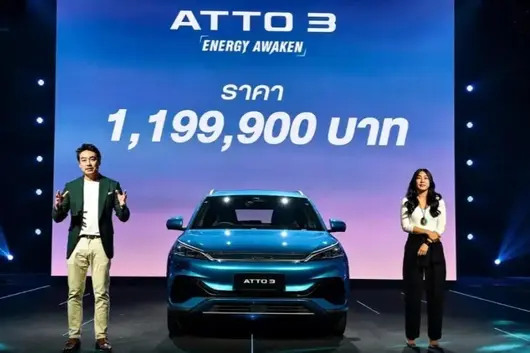

Auto Talk Industry | As the global automotive industry's electrification transition enters the deep-water zone, Chinese brands are continuously amplifying their voice on the world stage. Relying on the solid foundation of the domestic market, combined with high-speed expansion in overseas markets, Chery Group's new energy sector has delivered a report of scale and quality.
Latest sales data shows that Chery Group's new energy vehicles achieved a monthly sales volume exceeding 100,000 units for five consecutive months, securing the fifth position in the global new energy landscape, and becoming an important sample for China's automotive "overtaking by changing lanes".

In August, Chery Group's new energy vehicle sales reached 120,909 units, a year-on-year surge of 69.8%, with wholesale volume ranking in the top three of the industry for five consecutive months. From January to August 2026, Chery Group's new energy cumulative sales reached 725,214 units, a year-on-year increase of 46.2%, maintaining a strong upward growth curve on a high base.
According to statistics from CPCA's Cui Dongshu, from January to July 2026, Chery Group's new energy global market share reached 5.5%, ranking in the top five of global automotive groups in new energy vehicle sales.

It is worth noting that among the global new energy sales TOP 5 list, four slots are occupied by Chinese automotive companies, marking that China's new energy vehicles have upgraded from local rise to a global force, reshaping the global automotive industry competition landscape. From 100,300 units in April to 121,000 units in August, the monthly rising new energy sales volume verifies that Chery's electrification transition has shifted from phased explosion to normalized growth.
Behind the surge in total volume is a deep restructuring of the internal structure, with new energy becoming the core pillar of Chery's domestic market. In August, Chery Group's full-vehicle sales reached 280,128 units, a year-on-year increase of 15.4%. The new energy penetration rate in the domestic market soared to 61.9%, equivalent to two out of every three Chery cars sold domestically being new energy models.

High penetration means Chery's product structure has completed a fundamental switch. New energy is no longer a supplementary sector but the main force driving the brand's basic foundation. From traditional fuel vehicles to new energy carrying the national market banner, Chery has completed the iteration of internal tracks, laying product foundations for subsequent global output.
Export business is another major engine for Chery's growth. In August, Chery exports reached 196,984 units, a year-on-year increase of 52.1%, continuing to hold the number one spot for Chinese brand exports. New energy is becoming the core driver for going global; currently, one out of every seven new energy vehicles exported domestically comes from Chery.
In August, Chery's new energy exports approached 70,000 units, with a year-on-year increase as high as 124.2%, and the proportion of new energy in total monthly exports rose to 35.3%. New energy products are rewriting Chery's overseas sales composition, helping exports break away from the old pattern dominated by fuel vehicles.
Europe, as the mainstream automotive market with the strictest global regulations, has become the touchstone for testing Chery's global product power. From January to July 2026, Chery sold over 208,000 cars in 24 European countries, a year-on-year increase of 201%; among them, new energy vehicle sales were 102,000 units, a year-on-year surge of 332.5%, with the new energy proportion approaching 50%.

The high-speed growth in the European market proves that Chery's new energy products can adapt to mature markets with high safety and high emission standards, breaking the stereotype in overseas markets that Chinese new energy vehicles are "only suitable for emerging markets", and accumulating reputation and experience for further opening up developed markets.
Achieving flourishing growth both domestically and internationally stems from Chery's blockbuster product matrix covering different price ranges, different categories, and adapting to global diversified demands.
Domestically, new models continue to ignite the consumption market. On the launch day of the Fulid T7, orders exceeded 23,000, and the "Origin Global Car" concept received a warm market response; the FREELANDER Shenxingzhe 8, the first mass-production car of the Shenxingzhe series, opened pre-sales, with orders exceeding 10,000 in 48 hours, officially launching an attack on the high-end new energy track; the new QQ3 sales exceeded 10,000 for five consecutive months, stabilizing its star position in the A0-level pure electric market; the Luxeed V9 cumulative deliveries exceeded 20,000 units, refreshing the fastest delivery record for new energy MPVs at the 500,000 yuan level.
From small commuting cars to family SUVs, then to high-end MPVs, Chery has achieved comprehensive positioning in the segmented market, catering to both mass consumption and high-end upgrade demands.
On the overseas battlefield, multiple main models broke through strongly. The JAECOO 7, JAECOO 5, and OMODA 5 models entered the top ten best-selling car lists in the UK; the JAECOO 5 won the sales champion in the Australian segmented market, Indonesia, and Thailand pure electric markets; the iCAR V23 topped the segmented market榜首 in Thailand and South Africa.
The simultaneous success of multiple models in different continental markets shows that Chery is not simply selling domestic models overseas, but developing products based on global user demands, truly achieving one model adapting to multiple countries' road conditions, regulations, and consumption preferences.
While sales scale surged, Chery's new energy is moving away from the development model that relied solely on volume, stepping into the value growth stage of quality and quantity improvement. In the first half of 2026, Chery's new energy business revenue reached 59.284 billion yuan, a year-on-year increase of 63.8%, and the proportion of new energy business in the group's total revenue rose from 25.6% to 41.4%.
The significant increase in revenue proportion represents that new energy business is no longer just a tool for boosting sales but a core business unit that truly creates revenue value, with product premium capabilities continuously improving.

As of the end of August, Chery's global cumulative sales exceeded 20.44 million units, and overseas cumulative sales exceeded 7.18 million units. Decades of production and sales foundation, combined with the new momentum of new energy business, propelled Chery to a new development starting point.
From domestic penetration rate breaking through 60% to global ranking in the top five, from blooming everywhere in emerging markets to achieving more than triple growth in European developed markets, Chery's development trajectory is precisely a microcosm of China's automotive industry overtaking by changing lanes.
Under the wave of electrification, Chinese automotive companies bypassed the technical barriers of the traditional fuel vehicle era, relying on a complete industrial chain and rapid iterative product R&D capabilities, achieving a shift from following to running alongside, and leading in some areas. Chery solidifies its foundation with the domestic large cycle, leverages the global market with new energy products, and continuously writes the globalization story of China's automotive industry with one global model after another.
Market Commentary:
Chery's new energy achieved dual drive through high domestic penetration and high-speed overseas expansion, with a 5.5% global share verifying its top tier status. The product matrix caters to both high and low-end markets, and the breakthrough in the European market proves product power withstands strict tests. However, overseas high-end brand building and profit level improvement remain the core themes for follow-up. Chery's growth path provides a highly valuable practical model for the globalization transformation of domestic brands.
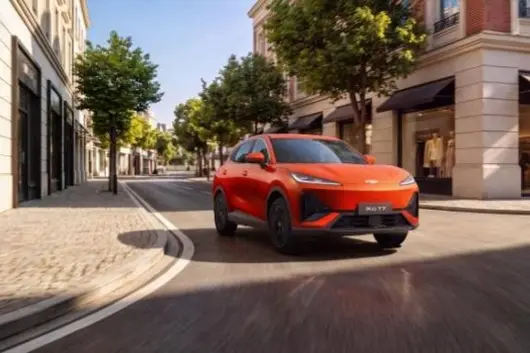

Here is the new energy sales report from Chery Group for August. Sold 120,900 new energy vehicles in August, a year-on-year increase of 69.8%, with sales exceeding 100,000 units for five consecutive months. What does this signify? Domestic new energy wholesale volume ranked in the industry top three for five consecutive months. More noteworthy is the penetration rate—August domestic new energy penetration was 61.9%, meaning for every 3 cars sold, 2 are new energy. This is not the "wolf is coming" fable, but results achieved through fierce competition. From a global perspective, from January to July this year, Chery new energy sales accounted for 5.5% of the global share, ranking in the top five automotive groups worldwide. Chinese automotive groups occupy four of the TOP5 spots, and Chery is one of them. From quantitative to qualitative change, Chery's pace is accelerating.

According to statistical analysis by Cui Dongshu, head of the China Passenger Car Association, from January to July 2026, Chery Group's new energy sales world share reached 5.5%, ranking in the top five automotive groups globally. From 100,300 units in April to 121,000 units in August, Chery's rapid new energy growth propelled Chery's rise in the global new energy market position. On the global new energy sales share TOP5 list, Chinese automotive groups occupy four seats, showcasing a new brand image of Chinese cars in the global market. In August, Chery Group sold 280,128 vehicles, a year-on-year increase of 15.4%, including exports of 196,984 vehicles, a year-on-year increase of 52.1%, maintaining the No.1 position among Chinese car brands.
What is worth noting is the increase in new energy penetration rate behind Chery's scale growth: In August, Chery's domestic market new energy penetration rate again broke through 60%, reaching 61.9%. This means that for every 3 cars sold by Chery in the domestic market, 2 are new energy vehicles. New energy has become the absolute main force in Chery's domestic market.
New energy has also become a powerful engine for Chery's globalization. Currently, for every 7 new energy vehicles exported from China, 1 comes from Chery. In August, Chery Group's new energy exports were nearly 70,000 units, a year-on-year increase of 124.2%, accounting for 35.3% of total monthly exports.

The "new energy content" in the European market is higher. From January to July, Chery sold over 208,000 vehicles in 24 European countries, a year-on-year increase of 201%; of which new energy 102,000 vehicles, a year-on-year increase of 332.5%. From the European sales structure perspective, new energy accounts for about 50%. Chery new energy products are accelerating entry into global high-regulation markets, and product strength has been verified and recognized by the world's most stringent markets.
Chery has formed a "blockbuster matrix" covering different markets, price points, and categories in the global market, driving continuous breakthroughs in Chery new energy sales and solid improvement in industry status.
Domestically, the Fengyun T7 broke 23,000 orders on the first day of launch, verifying the market explosive power of the "Native Global Car" concept; FREELANDER's first mass-production model, Freelander 8, opened pre-sales, breaking 10,000 orders in 48 hours, launching an attack on the high-end new energy market; The all-new QQ 3 sold over 10,000 units for 5 consecutive months, solidifying its status as a star A0-class pure electric product; The Zhijie V9 cumulative deliveries have exceeded 20,000 units, breaking the fastest delivery record for 500,000-level new energy MPVs.

Overseas, the three models JAECOO 7, JAECOO 5, and OMODA 5, featuring new energy characteristics, entered the UK top 10 best-selling models list; JAECOO 5 became the sales champion in the Australian sub-market, Indonesian and Thai pure electric markets, while iCAUR V23 ranked first in the sub-market in Thailand, South Africa, etc.

Chery New Energy has not only "quantitative growth", but also "qualitative leaps". Chery New Energy is moving from scale expansion to a new stage of value growth. In the first half of 2026, Chery Auto's new energy business revenue reached 59.284 billion yuan, a year-on-year increase of 63.8%, with the proportion of total revenue rising from 25.6% to 41.4%.
Chery New Energy's growth is not only a breakthrough in scale. Revenue from new energy business in the first half was 59.284 billion yuan, a year-on-year increase of 63.8%, with the proportion of total revenue rising from 25.6% to 41.4%. Revenue growth outpaced sales growth, indicating an increase in the proportion of higher-priced models and an optimization of structure. At the product level, Fengyun T7 broke 23,000 orders on launch day, Freelander 8 broke 10,000 orders in 48 hours pre-sale, Zhijie V9 cumulative deliveries exceeded 20,000, setting the fastest record for 500,000-level new energy MPVs. Both domestic and international legs are moving forward. By the end of August, Chery's cumulative global sales exceeded 20.44 million vehicles, with overseas cumulative sales exceeding 7.18 million vehicles—this is a new starting point, and new energy is injecting new connotations into this starting point. The story of Chinese automobiles overtaking by changing lanes, Chery is continuously writing on the global map.
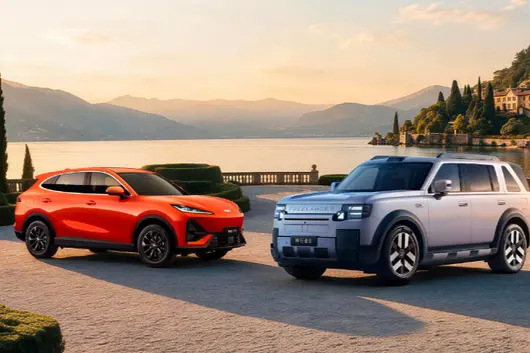

While Chinese cars were "overtaking by changing lanes", Chery New Energy's explosive growth has entered a new normal. With the August sales release, Chery Group New Energy saw its sales exceed 100,000 units for the 5th consecutive month: In August, the group sold 120,909 new energy vehicles, up 69.8% year-over-year, ranking top three in wholesale volume in the industry for 5 consecutive months; From January to August, the group cumulatively sold 725,214 new energy vehicles, up 46.2% year-over-year.

Chery New Energy sales account for 5.5% of the world share
According to statistical analysis by CPCA Head Cui Dongshu, from January to July 2026, Chery Group's new energy vehicle sales world share reached 5.5%, ranking among the top five global auto groups. From 100,300 units in April to 121,000 units in August, Chery New Energy's rapid growth promoted Chery's leap in global new energy market status. On the global new energy sales share TOP5 list, Chinese car companies occupy four seats, showcasing a new brand image of Chinese cars in the global market.

New energy penetration rate continues to rise, European new energy growth exceeds 3 times
In August, Chery Group sold 280,128 cars, up 15.4% year-over-year, including 196,984 units in exports, up 52.1% year-over-year, maintaining the first position for Chinese brand cars.
What deserves attention is the improvement in new energy penetration rate behind Chery's scale growth: In August, Chery's domestic market new energy penetration rate broke through 60% again, reaching 61.9%. This means that for every 3 cars sold in Chery's domestic market, 2 are new energy. New energy has become the absolute main force in Chery's domestic market.
New energy has also become a powerful engine for Chery's globalization. Currently, for every 7 new energy vehicles exported from China, 1 comes from Chery. In August, Chery Group's new energy exports were nearly 70,000 units, up 124.2% year-over-year, accounting for 35.3% of total exports for that month.

Global Best-Selling Model JAECOO 7
The "New Energy Content" in the European market is higher. From January to July, Chery sold over 208,000 cars in 24 European countries, up 201%; among them 102,000 new energy vehicles, up 332.5%. From the European sales structure, new energy accounts for about 50%, Chery new energy products are accelerating entry into global high-regulation markets, and product capability has been verified and recognized by the world's strictest markets.
Hit Product Matrix: From Fengyun T7 to JAECOO 7
Chery has formed a "Hit Product Matrix" covering different markets, price points, and categories in the global market, promoting Chery New Energy sales to continuously break through and solidifying its industry status.
Domestically, Fengyun T7 exceeded 23,000 orders on its first day of launch, validating the market explosiveness of the "Native Global Car" concept; FREELANDER's first mass-produced Freeland 8 started pre-sale, with 48-hour orders exceeding 10,000 units, attacking the high-end new energy market; Brand new QQ3 sold over 10,000 units for 5 consecutive months, solidifying its status as a star A0-class pure electric product; Luxeed V9 cumulative delivery exceeded 20,000 units, breaking the fastest delivery record for 500,000-level new energy MPVs.

"Native Global Car" Fengyun T7
Overseas, three models featuring new energy, JAECOO 7, JAECOO 5, OMODA 5, entered the UK Top 10 Best-Selling Models list; JAECOO 5 became the sales champion in Australia's sub-segment, as well as in Indonesia and Thailand's pure electric market, iCAUR V23 ranked first in sub-segments in Thailand, South Africa, and other places.

iCAUR V23
Rise in Both Quantity and Quality: New Energy Revenue Share Rises to 41.4%
Chery New Energy not only has "quantity growth", but also "quality leap". Chery New Energy is moving from scale expansion to a new stage of value growth. In the first half of 2026, Chery's new energy vehicle business revenue reached 59.284 billion yuan, up 63.8% year-over-year, increasing the proportion of total revenue from 25.6% to 41.4%.
As of the end of August, Chery's global cumulative sales exceeded 20.44 million units, with overseas cumulative sales exceeding 7.18 million units. This is a new starting point, and new energy is injecting a new meaning into this new starting point. The story of Chinese cars "overtaking by changing lanes", Chery is continuously writing on the global map.
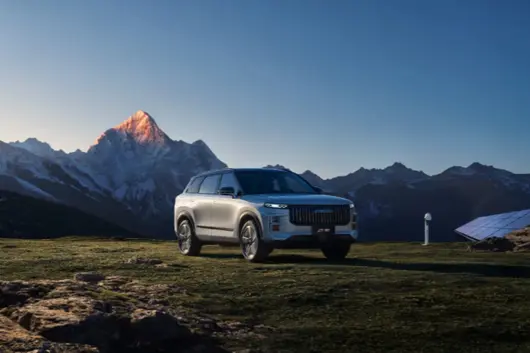


Author: Wang Shanshan
Braking is not admitting defeat; it is changing lanes. "Cannot live in past success," does not deny the past, but sees the future clearly.
Cars are not FMCG and should not chase short-term quick gains. But the reality is, the competition in the entire industry has degenerated into a racing game. Capital pressure, traffic frenzy, constantly squeezing automakers' development cycles. When everyone is accelerating, someone choosing to decelerate becomes an outlier.
Recently, the Chery Fengyun T7 went on sale. Chery Automobile Executive Vice President Li Xueyong went on stage and his first sentence silenced the venue for a few seconds: "Global cars, they can't be rushed."

In the current automotive industry, this sentence is almost going against everyone. Vehicle development cycles have been compressed from 48 months to 26 months, and bugs that should have been solved in the lab were directly handed over to owners for road testing. Chery took a completely opposite path. The Fengyun T7 underwent 2 years of planning and 3 years of R&D, completing 1.45 million kilometers in durability special testing. The homologous model Lepas L6 was launched in Thailand and pre-sold in South Africa first, refining the overseas market before returning to the domestic market, taking a non-mainstream "reverse listing" path.
This new car that chose to "make it slowly" tore open the most core proposition for Chery: When the entire industry is desperately stepping on the gas, why did Chery hit the brakes?
Why Step on the Brakes After 20 Million Units?
A month ago, on July 25, Chery's global cumulative sales broke through 20 million units. For any automaker, this is a moment worthy of a grand celebration. But Chery's celebration exuded abnormality from start to finish.
Not immersed in the number frenzy, Yin Tongyue said a paragraph of words publicly: "After 20 million, we will no longer participate in involution, no longer only pursue sales, but pursue brand moving upmarket, pursue more technical breakthroughs, and pursue greater improvement in customer satisfaction."

From an outsider's perspective, Chery which has been sprinting all the way seems to have no need to adjust. From 960,000 units in 2021 to 2.8 million units last year, the growth curve is pretty enough. But Yin Tongyue almost stepped on the brakes and turned the steering wheel.
Subsequently, Chery Automobile Executive Vice President Zhang Guozhong spoke even more transparently: "Chery cannot live in past success experiences. Facing rapid industry changes, some need minor adjustments, some even need restructuring, only in this way can we adapt to the development of the next cycle."
He gave an example. A few years ago, the industry mainstream judgment on future energy structure was hybrid 4, pure electric 3, fuel 3, but now pure electric growth speed and market share have long far exceeded initial expectations. "Such consumption trend changes come very fast and fierce. In the past, we thought Falcon 500 intelligent driving was enough, but starting from the second quarter, consumers want higher-order versions like Falcon 700 or even 900 more."

Changes come too fast. If Chery still clings to 20 years of past success experiences—continuing to rely on fuel vehicle dividends, continuing to prioritize sales, continuing to use past product definition logic to cope with the market—it is very likely to fall behind in the next cycle.
What Did We Do Right in the Past 20 Years?
To understand why Chery needs to "brake", we must first understand how Chery "ran" to today.
Chery's rise was itself a resistance to industry prejudices. In the 1990s, two phrases were popular in the Chinese automotive circle: Without joint ventures there is no way to live; do not talk about independent R&D until you reach the million unit scale. Chery simply did not believe it.
In 1999, the first independently developed engine ignited successfully. In December of the same year, the first "Fengyun" went off the line. Without joint venture endorsement and without existing systems, Chery hard-chewed core components like engines, transmissions, and chassis from scratch, becoming the first Chinese brand automaker to master core "three major components" technology. This persistence in independent technology R&D allowed Chery to dodge many automakers' "strangled throat" crises.

This road was walked correctly. In 2007, Chery became the first domestic brand to accumulate sales exceeding one million units. The QQ achieved a sales legend of 1.4 million units, allowing ordinary families to drive private cars. The Tiggo series, relying on high cost-performance and low maintenance costs, quickly expanded scale, accumulated massive users and a complete supply chain, completing the most critical initial accumulation for the enterprise.
The smartest move Chery made was stepping out of the country early. In 2001, the first batch of Fengyun exported to Syria, ranking first in Chinese brand passenger car exports continuously for 23 years. When all domestic brands squeezed in the domestic market for fierce close-quarters combat, Chery quietly paved global channels. Overseas markets have always been Chery's cornerstone; when domestic price wars don't make money, overseas markets provide stable financial support and hedge risks.

In summary, Chery's past success logic is not complicated: Use independent R&D to stabilize the chassis, use cost-performance to expand sales, use overseas to stabilize the core base.
This play style worked time and time again over the past 20 years. But now, the halo is dimmed.
Why Not Live in the Past?
The most fundamental change in the industry is: shifting from incremental expansion to stock competition. The extensive growth model of diluting costs by scale and exchanging price for volume has reached its end; industry profit margins dropped to 1.5%, even showing selling more means losing more. Desperately chasing sales is no longer making big and strong, but inefficient internal friction.
Another change is sector switching. What Chery is best at is hardware R&D and power technology in the fuel vehicle era. But the current competition core is electrification, intelligence, and software experience. In the past, we compared whether cars were durable enough and if power was strong enough; now we compare whether intelligent driving is easy to use and if the car system is smooth enough. Chery's steadily iterating pace was steady in the fuel vehicle era, but in the new energy era, it is slow.

There is another reality shortcoming: brand constraints. Relying on cost-performance to start is Chery's advantage, but also its biggest burden. In the minds of most consumers, Chery is "affordable family car", not associated with words like high-end, value, and premium. 20 million accumulated users are mostly affordable users, difficult to form brand premium. Without brand height, one can only be trapped in the low-end price band to fight.
What is harder to change than products and markets is organizational inertia. A play style successful for twenty years, enterprises will definitely form mental rigidity. Fuel vehicle experience, old project processes, sales-only evaluation methods, will be unconsciously applied to new energy and new models. This is the terrible thing about path dependency—experience that once led you to the peak will become walls trapping you. Zhang Guozhong said "some need minor changes, some need restructuring", the changes are not only cars, but the entire enterprise's thinking and system.
After Saying Goodbye to Shadows, Where Will Chery Go?
Restructuring has begun. The most intuitive signal is that in the past few years Chery did not shy away from holding many launches, 189 events were held in 2025, but since this year, media visits to Wuhu decreased by more than half.
Another manifestation is in sales. In the first half of the year, Chery issued 150,000 fewer cars domestically, actively squeezing out "water", significantly reducing dealer inventory, domestic retail about 412,800 units, down 36.4% year-on-year. This is growing pains, and also a necessary cost to repair the terminal price system. And overseas, 200,000 units monthly sales are becoming normal, July overseas sales share has quietly reached 70%.

Changes have begun to happen. On September 1, August sales data showed Chery single-month sales 280,128 units, among which exports 196,984 units, domestic sales 83,144 units. Compared to July exports first breaking 200,000 units, domestic sales about 74,000 units data, August domestic sales month-on-month rose by nearly 10,000 units. After continuous contraction for several months, the domestic core base showed signs of recovery.
Between one down and one up, Chery is completing a switch in development logic. In Zhang Guozhong's words, "No internal stability, no external strength", Chery is no longer solely reliant on the domestic fuel vehicle market, but has constructed two new growth curves: "Overseas + New Energy".
Internally, the brand matrix enters an integration period. Chery recently adjusted the reporting lines of the Exeed business unit, strategic center turning comprehensively to overseas; the Zhiji brand turned from pursuing single product explosion to "long-distance thinking". Although multi-brand same source overlap problems are not fundamentally resolved, actions to streamline SKUs and clarify positioning have been initiated. In new energy, gross margin in the first half of the year rose significantly from 5.2% to 12.8%, saying goodbye to low price volume, entering scale profitability cycle.

The listing path of the Fengyun T7 happens to illustrate this new logic. One car debuted first at Milan Design Week, then launched in South Africa and Thailand, accepted overseas consumer and market testing, refined and then returned to domestic—"Global cars, can't be rushed". Not competing with the industry on new speed, using product strength verified by the global market to speak.
Auto Times says:
The catch-up racing among Chinese brands continues to add intensity. BYD overseas sales in July reached 179,800 units, Geely raised export target to 920,000 units and impact million scale, Great Wall set 600,000 units target. Chery's first-mover advantage is being diluted, window of opportunity is narrowing.
Wanting to cross the cycle, Chery's path is already clear: Globalization shifting from "sell more" to "earn steady"; open both-way technical feedback channels between domestic and overseas; domestic market no longer blindly rush wholesale volume, focusing on product value competition. The core task of the domestic market is to become a test bed for intelligent new technologies, complete verification before feeding back global models.

For Chery, crossing 20 million units is not the destination, but a watershed. The braking Yin Tongyue stepped on is not admitting defeat, but changing lanes. Zhang Guozhong said "Cannot live in past success", not denying the past, but seeing the future clearly.
When noise subsides, this enterprise that walked out of Wuhu small huts, still uses near-stubborn simplicity ways, to walk a farther road.
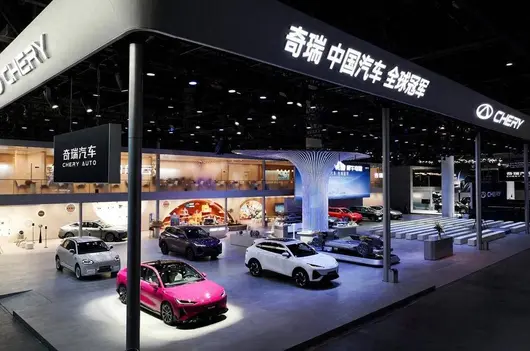

If we draw a curve of the past 20-plus years of Chinese automotive overseas expansion, the earliest comparison was "whether there is one", later it was "how many", and by today, the real question separating the competition has become: Is a Chinese car first built domestically and then sold globally, or is it defined from the very first day of project initiation according to global users, global regulations, and global environments?
These are two completely different concepts. The former is exports, testing channel, cost, and product competitiveness; the latter is true globalization, testing whether a car manufacturer can build a cross-market operating system in R&D, design, testing, manufacturing, services, and even local operations.
At the newly opened 2026 Chengdu Auto Show, Chery once again took the theme "Chinese Cars, Global Champions", with Chery, Exeed, Zongheng, Jetour, and iCAR five major brands and 38 models collectively appearing. Compared to the massive product lineup, what is more noteworthy is that this time Chery repeatedly emphasized one keyword—"Global Car".

From Fengyun T7 and Fengyun A9 to the all-new QQ3 and Arrizo 7, the role these products bear is no longer just that of "export vehicles", but they are trying to answer a new question: After Chinese cars enter the deep waters of globalization, what kind of car deserves the three words "Global Car"? This question is important because Chinese car overseas expansion has reached a stage where standards must be redefined.
In the past few years, the scale of Chinese car exports grew rapidly, "how many countries to sell to" and "how many vehicles exported" were once the most intuitive indicators of globalization. But sales can prove market breakthroughs but not necessarily equal global capability.
A true global car, first of all, cannot just be "domestic version + overseas adaptation". The differences between different markets are far more complex than left-hand/right-hand drive conversion and language switching. European consumers are used to high-speed driving, the Middle East faces long-term high temperatures, Southeast Asia is humid and rainy, and the Nordic region has extreme cold, darkness, and icy environments; consumers in different countries have obvious differences in steering feel, physical buttons, interior materials, lighting methods, and even parking habits. That is to say, the real difficulty of a global car is not "selling the same car to more places", but how to use a product system to respond to the real needs of different markets simultaneously.

Fengyun T7 is a relatively typical example. According to the definition given by Chery, it does not modify for overseas markets after development is completed domestically, but unfolds according to global needs from the product project initiation phase. The project researched global regulations two years in advance, designed benchmarking the 2026 version E-NCAP standards, and conducted surveys around 15 typical countries and more than 5,000 global users, incorporating real needs from different regions into product definitions in advance.
Some details particularly explain the problem. For example, Thai users prefer a heavier steering feel, so the vehicle increases steering force accordingly; Indonesian road conditions have many bumps, so the steering wheel return feel is optimized; Southeast Asia, South Africa, and Australia/New Zealand regions have intense sunlight, so low-reflection materials are used in the steering wheel and center control area; Turkish and Israeli users are more used to physical operations, so physical buttons are retained for high-frequency functions; European users more often park nose-first, so the vehicle automatically displays the front camera when approaching obstacles.
Looking at these functions individually, it is hard to call them "showing off technology", and they might not even appear in a core parameter table. But it is precisely these seemingly insignificant differences that constitute the true threshold of a global car. Because the essence of globalization is not to require global users to adapt to a Chinese car, but for the product to actively understand users in different markets.
This logic also permeates the vehicle verification phase. Fengyun T7 accumulated test mileage exceeding 6 million kilometers, covering 100-plus types of environments and road conditions such as the EU, Australia/New Zealand, Middle East, South Africa, Mexico, Brazil, and others. From Southeast Asian rainy seasons and Middle Eastern high temperatures to Siberian low temperatures, Brazilian gravel roads, and Mexican cobblestone roads, the meaning of testing has gone beyond simply proving whether a vehicle "is durable", but rather trying to move the real environments a vehicle might face in the future into the R&D cycle as much as possible.
This actually also indicates that Chinese automotive globalization is crossing a new threshold. In the past, Chinese brands overseas expansion relied on "product power + cost-effectiveness"; what will increasingly determine how far a brand can go in the future is global regulations, global quality, global verification, and global user understanding capabilities. In other words, sales prove whether you have entered a market, while system capability determines whether you can stay in that market long-term.

What Fengyun A9 represents is another dimension of globalization. For a long time, Chinese cars have faced a problem in design: how to establish their own cultural expression while avoiding falling into excessive symbolization; how to conform to global aesthetics without becoming followers of mature luxury brand design languages.
The "Oriental Originality, Global Aesthetics" emphasized by Fengyun A9 is exactly trying to answer this question. Taking Oriental aesthetics as a starting point, but not simply stacking so-called traditional elements, it attempts to translate the Oriental understanding of lines, proportions, and artistic conception into a more modern and universal automotive design language. Winning the 2026 German Red Dot Product Design Award, of course, is only an external certification, but the significance behind it lies in: Chinese brands beginning to attempt moving from "adapting to global aesthetics" to establishing their own global aesthetic expression.
This step is not easy. Technical parameters can be caught up, configurations can be downgraded, but design recognition and brand awareness require longer accumulation. A truly global brand must eventually not only have product output but also possess its own aesthetic and cultural expression.

Beyond this, the all-new QQ3 provides another observation sample. QQ was once one of the most representative products in the Chinese small car market. Today, the all-new QQ3 re-emphasizes personality, fashion, and user expression, and is gradually entering markets in Southeast Asia, South Asia, South Africa, etc., cumulatively winning global 1.6 million users, bearing a role beyond just a commuting tool.
Europe has MINI and Fiat 500, Japan has its own K-Car culture, and Chinese small cars were more often given the label of "economical and practical" in the past. Today, the QQ series is outputting personalized, youthful lifestyles to the global market again, which is in a certain sense also a microcosm of Chinese automotive culture beginning to go global. Because a truly mature automotive industry ultimately outputs not only vehicles but also the lifestyle and cultural identity formed around automobiles.
Arrizo 7 has taken the matter of "Global Car" to a more mainstream price range. This new car positioned for the 100,000 yuan tier market, developed according to global standards from the very beginning of project initiation, and simultaneously provides fuel and hybrid powertrains. The important signal it releases is: global standards should not belong only to high-end models, nor should it only be the value-added nature of export products. Only when global safety, global verification, global aesthetics, and global quality gradually enter the mainstream market accessible to ordinary consumers, can "Global Car" truly have the opportunity to change from a brand label to a common product capability.
And the fact that Chery can take "Global Car" as today's core proposition is also inseparable from more than 20 years of overseas accumulation.

As of the end of July 2026, Chery Group's cumulative global users have broken through 20.16 million, of which overseas users exceed 6.99 million; in July this year, the group's single-month exports exceeded 200,000 vehicles, January to July cumulative exports broke 1.14 million vehicles, products entered more than 130 countries and regions globally.
But what is more noteworthy than export scale is the change in Chery's globalization method. Currently, Chery's overseas employees exceed 20,000 people, of which local employees account for 85%. From Spain to South Africa, Chery is promoting local production, local employment, and local supply chain construction. This means that the relationship it has with overseas markets is gradually moving from the past simple "produced in China, sold overseas" to deep integration of R&D, manufacturing, talent, supply chain, and market operations.
This is also the real problem that Chinese automotive globalization's next stage must face. Export volume is still important, but it is increasingly like a result. What truly determines a company's global competitiveness is whether it can convert global user needs into product definitions, transform regulations of different countries into R&D standards, turn complex environments into verification systems, and then incorporate local manufacturing, local talent, and local operations into the same global system.

In this sense, "Global Car" has never been a model label, but the ultimate projection of a car manufacturer's global capabilities. In the past more than 20 years, Chinese automobiles have completed the transition from "going out" to "selling out"; but today, the real competition has become how to move from "selling globally" to "built for the globe".
Chery has ranked first in Chinese brand passenger car exports for 23 consecutive years, giving it enough long-term global market experience. But what is more noteworthy than "exports first" is that it is trying to take the more than 20 years of globalization accumulation and re-settle it into a standard that can enter product definitions, R&D, and manufacturing systems.
So looking at "Chery is a Chinese car, but more importantly a global car" today, what it really wants to express might not be so simple as "Chinese cars have gone global". More importantly, Chinese cars are beginning to answer a question that long-term defined by multinational car companies in their own way: What kind of car can truly belong to the globe.
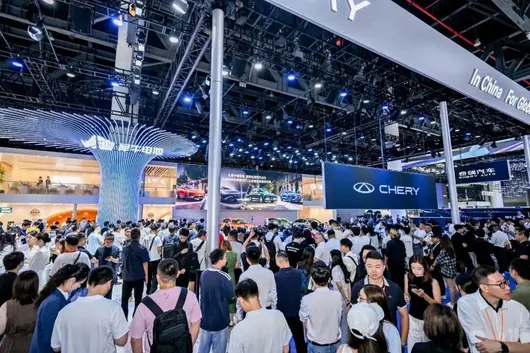

Chery was the first to break the traditional path of "domestic model modifications for export", establishing a new development model for "native global vehicles": From the very first day of product definition, it conducts forward development targeting global market user needs. Safety standards, durability verification, usage scenarios, etc., are based on the highest global requirements. No longer making "fast-moving consumer goods", but "durable goods, works of art".
This concept is being translated into solid market performance.
OMODA&JAECOO dual brands launched only three years ago, global cumulative sales broke 1 million vehicles; entered the UK market less than two years ago, cumulative sales immediately broke 100,000, with JAECOO 7, JAECOO 5, OMODA 5 three models entering the UK top 10 best-selling car list.
LEPAS L6 successfully launched in South Africa and Thailand, its domestic homologous model "native global vehicle" Fengyun T7 directly benchmarks 2026 version European 5-star safety standard, just launched in August, 24-hour orders broke 23,188 vehicles, verifying the "one platform, global blooming" R&D path.

Picture shows LEPAS L6
Energy Switch: For every 7 new energy vehicles exported from China, 1 is from Chery
While scale continues to climb, the export product structure of Chery is undergoing profound transformation, new energy vehicles have become the "powerful engine" driving growth.
January-August, Chery Group new energy exports exceeded 450,000 vehicles, year-on-year growth 136.8%, growth rate exceeding the overall market. According to China Passenger Car Association data, January-July, Chery New Energy cumulative export volume ranked second in the industry; since April, monthly new energy exports have continuously been firmly in the top two of the industry.

Picture shows global best-selling model JAECOO 7
A more convincing number: Currently, for every 5 cars exported from China, 1 is from Chery; for every 7 new energy vehicles exported, 1 is from Chery.
The explosion of new energy exports is not accidental. From LUXEED V9 refreshing the 500,000 level new energy MPV fastest delivery record, to Freelander 8 pre-sale 48-hour orders breaking 10,000, to Fengyun T7 exploding the pure electric SUV market with 24-hour 23,000 orders — Chery is using "hit new energy matrix" to cover all global niche tracks. New energy vehicles have become Chery's new business card for going global, also showing the new image of Chinese automotive technology brands in the global market.
Market Breakthrough: UK Overall Runner-up, Australia Top Three
Chery's export market layout has also achieved breakthrough from emerging markets to global high-regulation markets.
Europe as one of the most stringent automotive regulation markets globally, has become Chery's high-quality overseas export core position: January-July, Chery in Europe 24 countries cumulative sales exceeded 208,000 vehicles, year-on-year growth 201%; among them new energy sales reached 102,000 vehicles, year-on-year big increase 332.47%. In the UK, since March Chery has continuously firmly held the monthly car sales total list runner-up; in Australia, July single-month sales have already entered industry top three.

Picture shows Chery Group overseas vehicles about to board ship
High-regulation market breakthrough means Chery's product power is being verified in the world's pickiest markets, and also further promoted global weight improvement. According to China Passenger Car Association director Cui Dongshu's statistical analysis, January-July, Chery Group world sales share increased to 4.2%, ranked ninth globally. From "China Export Champion" to "Global Sales Share Top Ten", Chery has determined new coordinates in the global automotive industry pattern.
Beyond Business: Globalized "Chery Path"
Beyond business expansion, Chery simultaneously doing another thing: carving "long-termism" into every step of globalization.
August, Chery in partnership with World Conservation Union (IUCN) in Spain launched "Cherish Nature" second phase ocean ecological protection activity, focusing on Posidonia seagrass ecosystem restoration and protection — this is one of the UN-recognized global most important blue carbon ecosystems. Relying on recycled aluminum low-carbon material technology, multiple countries global biodiversity protection projects, social emergency rescue public welfare practices, etc., Chery also won 2026 Chinese Automotive Industry Sustainable Development Practice Cases "Green Development" "Smart Innovation Technology" "Harmony and Shared Benefit" three major honors.

Picture shows Chery Group working with IUCN to carry out Mediterranean Posidonia seagrass monitoring activities and seminars
At the same time "going out" "integrating in", embracing the world, contributing to the world — this is the true moat behind 7 million vehicles.
From 2001 to 2026, from 10 vehicles to 7.18 million vehicles, Chery 25 years of overseas journey is Chinese automotive speeding up globalization vivid microcosm. 7 million vehicles is milestone, even more so new starting point. Chinese automotive new overseas chapter, is writing in every global market.
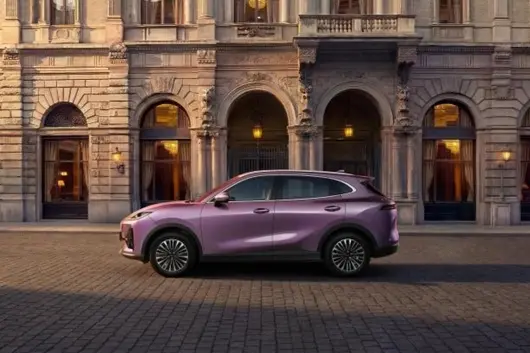
At the moment the 7,000,000th “Chery-built” vehicle boarded the ship at the port, a new chapter was added to the history of Chinese automobiles "going global".
In August 2026, Chery Group's single-month exports reached 196,984 units, a year-on-year increase of 52.1%, continuing to firmly rank first in Chinese automobile exports; cumulative exports from January to August totaled 1,343,334 units, a year-on-year increase of 68.1%. Calculating down, on average, one “Chery-built” vehicle heads overseas every 16 seconds. Thus, Chery Group's global cumulative sales surpassed 20.44 million units, among which overseas cumulative sales exceeded 7.18 million units, becoming the first Chinese auto manufacturer to cumulatively break through exports of 7 million units.
From 2025 to the present, Chery has successively claimed the three "firsts" records of cumulative Chinese auto manufacturer exports reaching 5 million, 6 million, and 7 million units, completing three million-level leaps in just 14 months. Behind ranking first in Chinese brand passenger car exports for 23 consecutive years, lies Chery's systemic breakthroughs in dimensions such as product development, business structure, market layout, and overseas expansion concepts, exploring a globalization path for Chinese enterprises from "going out" to "integrating in".

Product Evolution: From "Revised Models for Export" to "Native Global Cars"
What Chery first broke was the traditional path of "domestic models revised for export", establishing a new development model of "Native Global Cars": from the first day of product definition, it conducts positive development facing global market user needs, with safety standards, durability verification, usage scenarios, etc., benchmarking the highest global requirements ———— not making "fast-moving consumer goods", but making "durables, artworks".
This concept is being converted into solid market performance.
OMODA&JAECOO dual brand launch was only three years ago, global cumulative sales exceeded 1 million units; having entered the UK market for less than two years, cumulative sales broke 100,000 units, with the three models JAECOO 7, JAECOO 5, OMODA 5 joining the top 10 best-selling models in the UK.
LEPAS L6 was successfully launched in South Africa and Thailand, its domestic homologous model "Native Global Car" Fengyun T7 directly benchmarks the 2026 European 5-Star Safety Standards, launched in August, 24-hour orders broke 23,188 units, validating the R&D path of "One Platform, Global Success".

Image shows LEPAS L6
Power Switch: For Every 7 New Energy Vehicles Exported from China, 1 Comes from Chery
While scale continues to climb, the product structure of Chery's exports is undergoing profound changes, New Energy Vehicles have become the "powerful engine" driving growth.
January to August, Chery Group New Energy Vehicle exports exceeded 450,000 units, year-on-year growth 136.8%, growth rate exceeded the overall market. According to China Passenger Car Association data, January to July, Chery New Energy Vehicle cumulative export volume ranked in the top two in the industry; since April, monthly New Energy Vehicle exports have continuously maintained the top two in the industry.

Image shows Global Best-Selling Model JAECOO 7
A more convincing number: Currently, for every 5 cars exported from China, 1 comes from Chery; for every 7 New Energy Vehicles exported, 1 comes from Chery.
The explosion of New Energy Vehicle exports is not accidental. From Luxeed V9 breaking the 500,000-level New Energy Vehicle MPV fastest delivery record, to Freelander 8 pre-sale 48-hour orders breaking 10,000, to Fengyun T7 exploding the pure electric SUV market with 23,000 orders in 24 hours — Chery is using a "Blockbuster New Energy Vehicle Matrix" to cover all global niche tracks. New Energy Vehicles have become Chery's new card for going global, also showcasing a new technical brand image for Chinese automobiles in the global market.
Market Breakthrough: UK Overall Rank 2nd, Top 3 in Australia
Chery's export market layout has also achieved a breakthrough from emerging markets to global high-regulation markets.
Europe, as one of the markets with the strictest global automotive regulations, has become the core position for Chery's high-quality global expansion: January to July, Chery's cumulative sales in 24 European countries exceeded 208,000 units, year-on-year growth 201%; among which New Energy Vehicle sales reached 102,000 units, year-on-year increase 332.47%. In the UK, since March Chery has continuously maintained the second place in the monthly car sales total ranking; in Australia, July's single-month sales have entered the top 3 in the industry.

Image shows Chery Group export vehicles about to board ship
The breakthrough in high-regulation markets means Chery's product power is being verified in the world's most picky markets, and further promotes the increase of global weight. According to Cui Dongshu, head of the China Passenger Car Association, January to July, Chery Group's world sales share increased to 4.2%, ranking ninth globally. From "Chinese Export Champion" to "Top 10 Global Sales Share", Chery has established new coordinates in the global automotive industry landscape.
More Than Business: The "Chery Path" of Globalization
Beyond business expansion, Chery is synchronously doing another thing: engraving "long-termism" into every step of globalization.
In August, Chery in conjunction with the International Union for Conservation of Nature (IUCN) launched the second phase of "Cherish Nature" marine ecological protection activity in Spain, focusing on the restoration and protection of the Posidonia seagrass ecosystem — this is one of the globally most important blue carbon ecosystems recognized by the UN. Relying on recycled aluminum low-carbon material technology, biodiversity protection projects in multiple countries globally, socialized emergency rescue public welfare practices, etc., Chery also won the 2026 China Automotive Industry Sustainable Development Practice Cases "Green Development", "Innovative Technology", "Harmonious Benefit" three major honors.

Image shows Chery Group working with IUCN to carry out Mediterranean Posidonia seagrass monitoring activities and seminars
Integrating in while going out, embracing the world, contributing to the world — this is the true moat behind 7 million units.
From 2001 to 2026, from 10 units to 7.18 million units, Chery's 25-year journey of going global is a vivid microcosm of Chinese automobiles accelerating globalization. 7 million units is a milestone, more so a new starting point. The new chapter of Chinese automobiles going global is being written in every market globally.
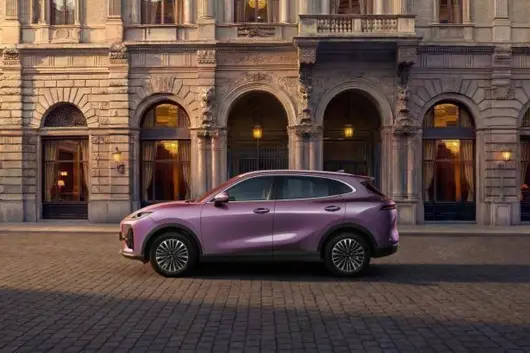

The family all-electric SUV market adds another new player. On August 26, Chery Fengyun T7 officially launched. This all-electric SUV featuring global quality, with "steady happiness" as the product core, offers three configuration versions for ordinary families pursuing pragmatic and safe travel. The new car launch guide price is 97,900 - 118,900 Yuan, with an advance trade-in price of 94,900 - 115,900 Yuan.

At the press conference, musician Wu Kequn attended as the "Happiness Experience Officer", exchanging views with Chery Auto Executive Vice President Li Xueyong around "steady happiness". Combining family travel scenarios, they shared driving insights. Both parties jointly launched the "Happiness Co-creation Plan", inviting users to record happiness moments in life.

Facing the rapidly iterating market environment, Fengyun T7 adheres to the long-termist concept of "patience builds good cars". It belongs to a native global model, not simply a domestic model modified for export. Vehicle R&D benchmarks the 2026 version E-NCAP safety standards, relying on the global 1+7+N R&D system, completing 1.45 million km durability verification. It underwent extreme environment tests including high heat, extreme cold, and high humidity, adapting to diverse global road conditions and climates. The homologous model Lepas L6 has been released in markets such as South Africa and Thailand, and will subsequently land in regions such as the EU and Australia-New Zealand.

At the product level, Fengyun T7 is built around four core values: Super Performance, Global Beauty, Safer, and Smart Wisdom, simultaneously possessing six major redundant product strengths. All series are standard with 65.05kWh Rhino Battery, CLTC range 600km. 30%-80% fast charging takes only 20 minutes, achieving range equality to avoid the industry's common problem of range reduction in entry-level versions. The body high-strength steel proportion reaches 80%, equipped with 9 airbags. The battery has a multi-layer protection structure, leaving sufficient redundancy in collision and battery safety. In terms of intelligence, it is equipped with an 8775 cockpit-integrated chip, combining Lingxi Smart Cockpit 2.0 and Doubao Large Model. It supports 300+ full-scenario automatic parking, highway pilot assistance, etc., balancing comfort and convenience for family travel.

In the 100,000-level all-electric segment, many consumers care about price and also value the vehicle's safety, range, and long-term reliability. Based on Chery's years of overseas market accumulation, Fengyun T7 brings global R&D verification results to the domestic market. We hope to provide practical all-electric travel options for the vast family users using balanced product performance and substantial purchasing policies, guarding every bit of security and peace of mind during daily commuting and weekend trips.


August 26, 2026, Chery Fengyun T7 officially launched, official guide price 97,900-118,900 RMB, early trade-in price starts from 94,900 RMB, immediate delivery upon launch. Amidst the fierce competition in the domestic new energy market characterized by "fast iterations, spec stacking, and downgraded entry-level", the Fengyun T7 walks a path distinct from others a common route: Native global vehicle, validate overseas first, then return to the domestic market, with a three-year R&D cycle and rigorous global verification, focusing on the real usage demands of household family users, attempting to reshape the value benchmark for the 100,000-level pure electric SUV.
Reverse overseas expansion: A home electric SUV built for the world
Currently, the logic for the vast majority of Chinese new energy models is: complete R&D and launch domestically, verify in the market, then make local modifications to adapt to overseas regulations to achieve exports. The Fengyun T7 chooses a reverse path: the homologous model Lepas L6 has already launched in South Africa and Thailand, followed by the EU, UK, Australia, Israel and other markets, to withstand global market testing before being sold to domestic consumers.

Created based on Chery's global 1+7+N R&D system, the Fengyun T7 has an R&D cycle of up to three years, benchmarked against the 2026 Version E-NCAP 5-Star Safety Standard, adapted for driving environments in 210 countries and regions. The R&D phase invested in 81 durability test vehicles, cumulatively completed 1.45 million km durability verification and 6 million km global road tests, covering 21 countries, encompassing most typical road conditions globally; at the same time, over 5,000 domestic and international users were invited to participate in co-creation, balancing aesthetics and usage habits of different regions.

Chery's proposal "Global Vehicle, No Rushing Allowed" is exactly the product DNA of the Fengyun T7. It does not pursue rapid updates, but places safety, durability, and reliability as the top priority, directly transferring overseas rigorous standards to the domestic version, which is also the core differentiation point distinguishing it from many models at the same price point.
Product Capability Analysis: Range Equality, Giving Core Hardware to Every User
The Fengyun T7 is positioned as a compact pure electric SUV, body dimensions 4570×1852×1694mm, wheelbase 2700mm, 5-seat layout, body dimensions balance easy driving and parking in the city, while meeting the daily travel space needs of a 3-person family.
Three-Electric System: All Models 600km, Refuse Range Shrinkage on Entry-Level
A common phenomenon in the 100,000-level pure electric market: entry-level versions reduce battery capacity, lower range, using low prices to attract users, while long-range versions require significant price hikes. The Fengyun T7 directly achieves range equality: all three configurations are equipped with the 65.05kWh Rhino LFP battery, CLTC range unified at 600km, energy consumption 12.9 kWh/100km, 30%-80% DC fast charging only takes 20 minutes, supports 6.6kW V2L (Vehicle to Load), meeting camping outdoor scenarios.

Powertrain uses the 12-in-1 Kunpeng Super Electric Drive, front single motor max power 178kW, peak torque 275 N·m, max speed 180 km/h, balancing city commuting and highway overtaking capabilities. Chassis is Front MacPherson + Rear Multi-link independent suspension, tuned by an overseas chassis expert team, 560mm low center of gravity design, bringing good driving stability; the vehicle has 500mm wading depth, battery pack has complete liquid cooling, PTC pre-heating, wide temperature range heat pump AC, balancing range performance in low-temperature environments.
Exterior and Cabin: Family-Oriented, Practical Configurations Not Stingy
Fengyun T7 adopts the Oriental Wind Aesthetics Family Design, closed front grille paired with L-shaped daytime running lights, overall vehicle lines are simple and steady, balancing global market aesthetics. All models standard equip AGS Intelligent Active Grille Shutter, 14 items of low drag optimization for the whole car, effectively reducing wind noise and improving range performance; full-width taillights, all models standard equip power tailgate, which is very practical configuration at this price point.

Market Landscape: 100,000-Level Pure Electric SUV, A Pragmatic Challenger
Current 100,000-120,000 RMB pure electric SUV track competition is hyper-competitive, with products from Aion, Leapmotor, MG and others competing on the same stage. Users in this niche market are mostly buying their first family car, demands are very realistic: stable range, reliable safety, sufficient configurations, low ownership costs, not interested in flashy gimmick configurations.

Fengyun T7 and Fengyun T9L positioning form differentiation: T7 is a city home pure electric SUV, suitable for daily commuting, families with convenient charging conditions; T9L is a PHEV large 5-seater, suitable for frequent long-distance travel, users without fixed charging conditions, complementing each other, perfecting the Fengyun brand's home new energy matrix.

The launch of Fengyun T7 represents a product strategy of the Chery Fengyun brand: not mindlessly stacking parameters, not doing trimmed-down entry-level, implementing global standards on home models, using warranty and safety guarantees, serving ordinary family real-world usage scenarios.
When many models blindly pursue acceleration, large screens, and flashy functions, the Fengyun T7 returns to the family essence: sufficient range, reliable safety, solid chassis, worry-free after-sales. The development model of "Overseas First, Then Home" also provides a reference for the domestic new energy industry: good cars not only serve the domestic market, but must withstand the test of the global market.
For ordinary consumers, if the budget falls between 90,000-120,000 RMB, wanting a 600km range, with lifetime warranty, pure electric SUV balancing city commuting and short trips, the Fengyun T7 is a pragmatic choice worth considering in depth.
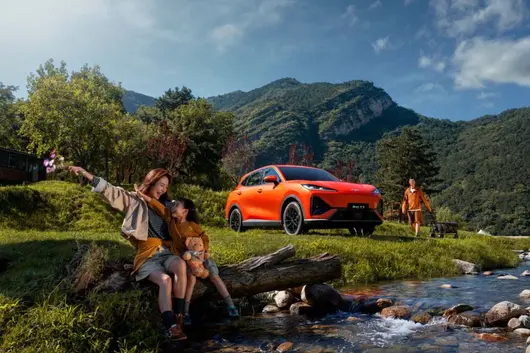

Competition in the domestic new energy vehicle market is becoming increasingly fierce, industry part of the car companies pursue rapid iteration, in the 100,000-level pure electric track configuration differentiation, safety downgrade, range discrimination and other phenomena appear. August 26, Chery Fengyun T7 officially launched to the market, this globally positioned quality pure electric SUV, with launch guide price 97,900-118,900 RMB, priority exchange price starting from 94,900 RMB entering the market, with "Slow Work Builds Good Cars" long-termist thinking, bringing global standards, redundant safety, full-series long range down to the 100,000-level interval, bringing new thoughts to the national pure electric market.

Current 100,000-level pure electric SUV track involution intensifies, many models trapped in "surface low price, high config surcharge" trick. Entry versions reduce range, safety configurations shrink, high-order smart functions only left for mid-high specs, becoming common industry operations. Consumers wanting complete range, complete safety and smart experience, often forced to raise car purchase budget. Against this background, Fengyun T7 launches "Six Redundancies" product system, from collision safety, battery safety, range equality, all-domain energy saving, handling performance, whole vehicle verification six dimensions do capability reservation, breaking low price market "save what you can" product logic, attempting to rewrite segmented market value structure.
So-called native global car, is not simply domestic model modifications going overseas. According to reports, Fengyun T7 went through three-year R&D cycle, relying on Chery global 1+7+N R&D system polished, benchmarking 2026 version E-NCAP five-star safety standard development, early stage completed large amount overseas road conditions and regulation verification before returning to domestic market. Whole vehicle invested 81 durability test vehicles, durability special mileage reached 1.45 million kilometers, whole vehicle cumulative test mileage over 6 million kilometers, completed 21 countries real vehicle verification, covering -40°C to 55°C ultra-wide temperature domain, adapting global 95% road types, from Brazilian bumpy cobbles, Mexican cobblestone roads, to German highway curves, South African unpaved roads, completed trials in diverse extreme environments.
As enterprise ranking first in Chinese brand passenger car exports for 23 consecutive years, Chery global users have exceeded 20 million, products sold to over 130 countries and regions. Fengyun T7 same-source model Lepas L6 has already launched in South Africa, Thailand, subsequently will land Indonesia, EU, Australia New Zealand etc. markets. Launch event scene, overseas R&D engineers, overseas owner representatives jointly stood support, launch simultaneous delivery start, foreign owners become first batch of users, achieving "Launch means delivery".
In the range aspect most concerned by users, Fengyun T7 achieves Range Equality Redundancy, full series standard 65.05kWh Rhino Battery, CLTC range 600km, actual test range up to 681.6km, achieving reverse false labeling; 30%-80% fast charge only 20 minutes, battery has over 2,500 cycle life, high and low specs no longer do range cutting. Full series standard dual source wide temperature domain heat pump air conditioning plus high voltage PTC combination, minus 10°C environment range can increase 15%-20%, alleviating Northern winter pure electric model range dive pain points, achieving cold heat condition energy consumption stability.
Safety is the bottom line of family car use. Fengyun T7 adopts 9 horizontal 5 vertical cage-type Panstone body, high strength steel ratio 80%, equipped with same level unique Shotgun structure, double frame subframe and Pack anti-collision beam, equipped with same level most 9 airbags, including 48L far end airbag. Rhino Battery has 6D Armor Lock 31 layer protection structure, side extrusion capacity is 2 times national standard, pass 1,008 hours salt mist, 105 seconds fire severe test, IP68 water proof. Official also launched power battery safety backing policy, if power battery itself reason causes whole vehicle thermal runaway damage, compensate same model or not lower than original car config new car; smart driving assistance scenario accident highest 5 million compensation, put safety promise into policy level.
Intelligence aspect, this car equipped with same level first launch 4nm process 8775 cockpit drive integrated chip, 72 TOPS computing power, Lingxi Smart Cockpit 2.0 accessed Doubao large model, support fuzzy natural voice interaction; 22 high precision sensors, achieve 300+ all scenario auto parking, highway navigation assistance. Space 84% car interior acquisition rate, seats support heating ventilation, rear floor pure flat, seats fold down can form 1955mm×1310mm pure flat large bed mode, trunk max expand to 1550L, balance commute, camping, family outing diverse scenarios.
Launch event scene, musician Ken Wu attended as "Happiness Experience Officer" identity, with Chery Automobile Executive Vice President Li Xueyong around "Steady Happiness" conducted dialogue, co-launched "Happiness Co-creation Plan". Organizers stated, so-called steady happiness, not only material level, but also points to travel solid ground, reassurance, turning global quality into ordinary families accessible daily experience. New car launch 8-fold launch rights, include limited time free personal car color, finance interest-free, exchange subsidy, whole vehicle lifetime warranty, 666 RMB purchase lifetime basic maintenance package etc., pre-sale 1000 deductible 2000 rights extended to August 31.
Industry observation believes, China new energy vehicles have already said goodbye to simple price fight stage. Low price does not equal low quality, 100,000-level market can also have global car standard. Past many global models, first domestic polish then simple adapt overseas; Fengyun T7 walks reverse path, first complete global severe verification then serve domestic consumers, this to industry is a new attempt. When market many brands pursue "fast iteration, fast new products", Chery chooses slow work builds good cars, put a lot of cost into user unseen verification, safety redundancy, environment adaptation.
From market trend perspective, China new energy vehicles both want to move up to impact high-end, also want to move down to consolidate national market. Fengyun T7 gives industry inspiration: National level electric car, should not be configuration compromise commuter tool, but put global standard, safety redundancy, long range, intelligence, truly give to 100,000-level ordinary families. This car subsequent overseas many countries sequentially launch, will also become Chinese native global car outbound another sample.
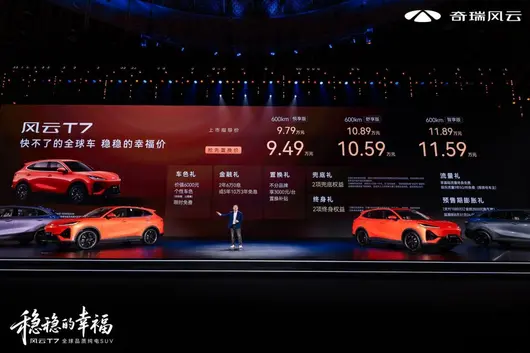

On August 26, themed on "Steady Happiness", Chery Fengyun T7 officially landed in the domestic market. As a native global quality pure electric SUV, the new car launched with three trims. The official guide price ranges from 97,900 to 118,900 Yuan, with a pre-launch trade-in price of 94,900 to 115,900 Yuan, achieving delivery upon launch. At the press conference, musician Kelvin Wu served as "Happiness Experience Officer". Alongside Chery Executive Vice President Li Xueyong, he engaged in a dialogue on the happiness of family travel, jointly launching the "Happiness Co-creation Plan", calling on the public to discover small certain happiness in ordinary travel in daily life and discuss the car happiness concept belonging to ordinary families.

Currently, competition in the new energy vehicle industry is intensifying, with many brands pursuing rapid new model launches and compressing R&D verification cycles to seize market share. Fengyun T7 goes against the trend, adhering to the long-termism concept of "slow work builds good cars". This car is not simply a domestic model facelift for export; from the project initiation phase, it was benchmarked against regulations in multiple global regions. It underwent a 3-year R&D cycle, refined based on Chery's global 1+7+N R&D system, and developed according to the 2026 version E-NCAP 5-Star Safety Standard. Its same-platform model, Lepas L6, has already launched in Thailand and South Africa, and will subsequently launch in Indonesia, the EU, Australia & New Zealand, and other overseas markets. The vehicle invested 81 dedicated durability test vehicles, completing 1.45 million km of specialized durability verification. Real vehicles traveled to 21 countries globally for road tests, facing extreme conditions such as Northern Europe extreme cold, Middle East high temperatures, Southeast Asia high humidity and rain, and Latin America bumpy unpaved roads. Various potential issues like squeaks and rattles, environmental adaptation, and component durability were closed-looped during the R&D phase. Only after passing these global strict trials did it officially return to the domestic market, targeting ordinary domestic family consumers.

Looking at the current 100k-level pure electric SUV market, many models suffer from range shrinkage in entry-level versions, compromised safety specifications, and advanced intelligence only reserved for high-trim models. Fengyun T7 faces industry pain points with "Six Major Redundancies" product strength, being the first to achieve range equity. All three trims are equipped as standard with the 65.05kWh Rhino Battery, CLTC range is 600km, and actual test range reaches 681.6km, achieving reverse false labeling. Fast charging from 30%-80% takes only 20 minutes, supporting long-distance travel with short energy refills. Meanwhile, the dual-source wide temperature range heat pump air conditioning is standard across all trims. Facing the northern winter, it effectively alleviates the problem of range plunge due to low temperatures. Whether it is the southern heatwave or the northern severe winter, it can provide users with more stable and true range performance.

For the car-buying household group, safety is always a core demand that cannot be avoided. Fengyun T7 has fully implemented redundancy design at the body and battery levels. The Rock-solid Body high-strength steel ratio reaches 80%, paired with class-unique 9 Airbags, including 48L Dual-chamber Far-end Airbags, further reducing the risk of injury to occupants during collisions. The Rhino Battery is equipped with 6D Lock Armor 31-layer Protection Structure, side anti-crush capability is twice the National Standard, and it possesses IP68 waterproof rating, fully coping with daily scenarios like wading and bumps. Meanwhile, the official announced two major safety backstops: if thermal runaway damage is caused by the power battery itself, a brand new same model will be compensated; within one year of purchase, in parking and intelligent pilot scenarios, if an accident is judged to be caused by the intelligent driving assist system, compensation up to 5 Million Yuan can be enjoyed, genuinely building psychological security for household users.

In terms of intelligence, the new car is equipped with the class-debut 4nm process 8775 Cockpit-Driving Integrated Chip, supported by 72 TOPS high computing power. System response is as low as 80ms. Paired with Lingxi Smart Cockpit 2.0 and Doubao Large Model, it supports natural full-scene fuzzy voice interaction. On the hardware level, it is equipped with 22 units of high-precision sensors, capable of achieving 300+ full-scene automated parking and highway pilot assist. Facing narrow parking spaces and complex highway road conditions, it effectively reduces the burden of commuting and long-distance driving. Space performance is also tailored for household needs. The vehicle has an interior utilization rate of 84%, the rear floor is completely flat, and seats have heating and ventilation functions. After folding the rear seats, a fully flat bed of 1955mm×1310mm is formed. Whether it is weekend camping parking rest or long-trip car naps, it can easily handle it, transforming cold hardware parameters into comfortable experiences that household users can feel personally.

By bringing global car product power down to the 100k-level price range, Fengyun T7 attempts to rewrite the market landscape of home-use pure electric vehicles at this level. Not relying on piling gimmicks, but using massive global verification from the early stage, non-shrunk standard specs, and solid safety assurance, it targets ordinary families pursuing reliability, enabling more consumers to own a "steady happiness" in travel.
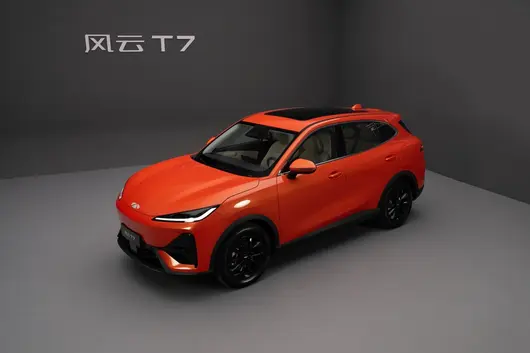

August 26, 2026, Chery Fengyun's globally-quality pure electric SUV — Fengyun T7 officially launched. The new car offers three editions: 600km Joyful Edition, 600km Comfort Edition, and 600km Intelligent Edition, with a guided launch price ranging from 97,900 RMB to 118,900 RMB, with early trade-in prices as low as 94,900 RMB to 115,900 RMB, and simultaneous delivery upon launch.

Against the backdrop of the new energy vehicle industry where "speed is king" and new cars are intensively launched monthly, Fengyun T7 chooses a completely different path. The press conference took "Steady Happiness" as its theme, with famous musician Hacken Lee appearing as a "Happiness Experience Officer", exchanging views on the happiness of daily travel with Chery Automobile Executive Vice President Li Xueyong, jointly launching the Fengyun T7 "Happiness Co-creation Plan". The deeper intent of this press conference is precisely Chery's solemn declaration of adhering to the long-termism of "Patience Builds Quality Cars" in the impulsive industry.

Patience Builds Quality Cars: Three Years to Forge a Sword, Refined Through Reverse Global Expansion
When the industry generally pursues "crash-course car manufacturing", Fengyun T7 uses the "slow" character throughout the full chain of R&D, design, standards, and verification.
Slow in R&D. Fengyun T7 underwent 2 years of planning and a 3-year R&D cycle, forged based on Chery's global "1+7+N" R&D system. Different from the conventional path of domestic premiere followed by overseas follow-up, Fengyun T7 takes the unique path of "Reverse Global Expansion" — the overseas same-source model Lepas L6 already landed in the Thai market as early as July 24, first pre-selling in South Africa, then entering Indonesia, arriving in the EU in September, covering Australia and New Zealand and UK markets in October, before returning to China for official launch. This "run through the whole world first, then return home" approach allows Chinese users to purchase a mature product verified by global markets.
Slow in Design. 5000+ domestic and international users co-created throughout, with Chery's top 10 global design centers and over 100 designers collaborating. The same-source model Lepas L6 received widespread acclaim when it debuted at Milan Design Week, and Fengyun T7 integrates global aesthetics and Oriental elegance, becoming a design work that "global users find durable to look at".
Slow in Standards. Fengyun T7 was developed directly aligned with the 2026 E-NCAP 5-star safety standard, with functional safety level reaching the highest ASIL D level, entering high-regulation European markets soon. The body adopts 80% high strength steel plus 18.84% hot formed steel to create a nine-transverse five-longitudinal cage structure, with 9 airbags standard across the lineup.
Slow in Verification. Chery simultaneously invested 81 dedicated durability cars for global road tests, with accumulated vehicle testing mileage exceeding 6 million km, and durability-specific actual testing 1.45 million km. Testing covers EU, Australia and New Zealand, Middle East, South Africa, Mexico, Brazil and other 100+ extreme road conditions. Crosses five major extreme environmental tests including high temperature, extreme cold, high humidity, and high salinity, adapting to an ultra-wide temperature range of -40°C to 55°C. Tropical rainy humid zones can calmly cope with 500mm deep water wading, and Nordic extreme cold conditions see dual-source heating efficiency doubled.

Global Quality: Born Global, Unified Standard Delivery
Chery ranked first among Chinese brand passenger car exports for 23 consecutive years, with products sold to 130+ overseas markets. As of the end of July 2026, Chery's global cumulative users broke 20.16 million, among which overseas users exceeded 6.99 million. Fengyun T7 is the culmination of Chery's global car-making system.
Fengyun T7 is not a simple domestic model modification for overseas export, but rather aligned with global standards from the R&D source, completely building an integrated car-making system of global R&D, global standards, global verification, and global quality. Covering 95% global road types verification: Brazil high speed bumps, Mexico cobblestone roads, Germany high-speed large-curvature curves, South Africa unpaved mud roads, etc. Before the Fengyun T7 officially debuted domestically, it had already completed strict real-car road tests spanning continents, with users all over the world performing scenes of "Global Encounter Fengyun T7". At the press conference site, three foreign vehicle managers came on stage to tell stories with Fengyun T7, covering design, chassis tuning, and other fields. Overseas real owner testimonials and endorsements from overseas verification engineers, chassis engineers, and design engineers jointly confirmed the global strength of Fengyun T7's four core values of "Super Range, Beautiful Globally, Safer, and Smarter".

Four Core Values, Six Redundancy Strengths
As a native global car, Fengyun T7 brings reliable and reassuring pure electric travel choices for global users with product strengths of "six redundancies": crash safety, battery safety, range equality, all-domain energy saving, handling performance, and vehicle verification.
Super Running. The entire lineup is standard with 65.05kWh Rhino Battery, CLTC pure electric range 600km, actual range breakthrough 667km, realizing "Reverse False Marking". 30%-80% fast charge takes only 20 minutes. Entire lineup equipped with dual-source wide temperature range heat pump air conditioning, -30°C to 55°C ultra-wide temperature range stable operation.
Safer. Rock-solid body high strength steel accounts for 80%, hot formed steel 18.84%; Rhino Battery owns 31 layers of 6D lock armor protection, IP68 waterproof capability reaches 96 times national standard. At the press conference, Chery launched two hard-core backing rights: if the power battery is damaged due to thermal runaway for its own reasons, compensate with a new car of the same model; in autonomous driving scenarios, maximum compensation for accidents is 5 million RMB. Writing responsibility into commitments shows the brand's absolute confidence in its own technology.
Smart. Equipped with Qualcomm Snapdragon 8775 Cockpit-Drive Integrated Chip, Lingxi Smart Cockpit 2.0 and Doubao Large Model, 15.6-inch 2.5K central control screen supports mainstream mobile phone interconnection. Falcon 500 Driver Assistance System integrates 22 high-precision sensors, supporting 300+ all-scenario automatic parking.
Beautiful Globally. Oriental Wind Aesthetics design, 6 elegant car colors paired with luxury-level paint craft, interiors provide Warm Black Brown and Polar Night Black Obsidian two styles.

Delivered at Launch, Sincere Pricing Delivers Global Quality
Fengyun T7 releases the product momentum of "Global Quality Pure Electric SUV" with sincere selling price and global strength. From now until September 30, ordering enjoys 8-layer gift package rights: value 6,000 RMB Blaze Orange, Mountain Smoke Purple personalized car colors limited time free; 2-year 60k 0% interest or 5-year 100k low interest financial solutions; regardless of brand enjoy 3,000 RMB/car trade-in subsidy; simultaneously enjoy whole vehicle lifetime warranty (including powertrain, battery, and motor), lifetime basic maintenance and other benefits.

At the new car launch site, handover ceremony was conducted simultaneously, a batch of foreign users living in China for a long time became Fengyun T7's first owners. From pre-sale leading, global standards, global verification, global adaptation to delivered at launch, Fengyun T7 delivers global quality commitments with solid product strength.
Against the backdrop of "crash-course cars" controversy intensifying, Fengyun T7 submitted an answer sheet on "Long-termism" using three years of patience polishing and global strict verification. Fengyun T7's "Quality Global Car" is not only a communication slogan, but also Chery's 23 years of globalized technology accumulation and millions of kilometers of real-car verification piled up hard-core strength. 100,000 RMB level price, 200,000 RMB level global quality, Fengyun T7 is unlocking "Super Beautiful Better" car life for global users, guarding every bit of steady happiness.
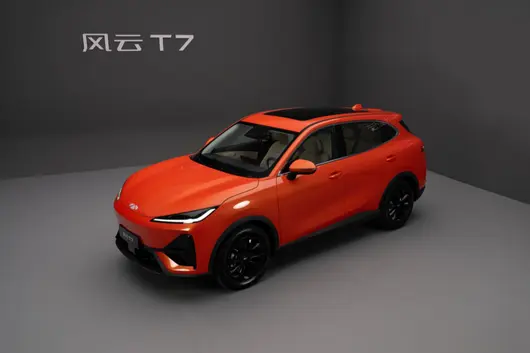

On August 26, themed on "Steady Happiness", Chery Fengyun T7 was officially launched. The new car launches in 3 versions, official guide price 97,900 - 118,900 yuan, priority trade-in price 94,900 - 115,900 yuan, and achieves delivery upon launch, bringing a new global quality choice to the 100,000-class home pure electric SUV market.

At the press conference, famous musician Kevin Wu served as Fengyun T7 "Happiness Experience Officer", engaged in dialogue with Chery Auto Executive Vice President Li Xueyong around "Steady Happiness", discussed real needs of family travel, conveyed the car-making philosophy "Crafting Quality Takes Time", jointly launched "Happiness Co-creation Plan", and called on the public to discover happiness moments in life.

As a native global vehicle, Fengyun T7 is not simply restyling domestic models for export. The new car relies on the global 1+7+N R&D system, has undergone a 3-year R&D cycle, is developed benchmarking the 2026 version E-NCAP 5-star safety standards, completes vehicle verification in 21 countries, accumulates extensive durability testing, undergoes extreme environment trials such as high temperature, extreme cold, high humidity, high salinity, adaptable to -40°C ~ 55°C ultra-wide temperature range, covering 95% of global road types. Its sister model Lepas L6 has launched in South Africa, Thailand, and will land in EU, Australia & New Zealand and other overseas markets later.

On the product level, Fengyun T7 revolves around four core values: Super Performance, Global Aesthetics, Safer, Smart Intelligence, building "Six Redundancies" hardcore strength: Crash Safety, Battery Safety, Range Equality, All-domain Energy Saving, Handling Performance, Vehicle Validation. All series standard equipped with 65.05kWh Rhino Battery, CLTC range 600km, actual test reaches 681.6km, achieves exceeding claimed rating, 30%-80% fast charging takes only 20 minutes. Equipped with dual-source wide-temperature heat pump AC, solving low-temperature range degradation pain points. In terms of safety, 80% high-strength steel rock-solid body, 9 airbags, 31-layer 6D chainmail battery protection, build a double safety fortress; class-first launch 8775 cockpit-driving integrated chip, paired with Lingxi Smart Cockpit 2.0 and Doubao Large Model, supports 300+ full-scenario automatic parking, highway pilot assist, smart experience maxed out.

Regarding purchase benefits, from now until September 30, ordering enjoys 8 benefit packs, including limited-time free custom colors, interest-free finance, trade-in subsidy, power battery and driver assistance dual coverage, whole vehicle lifetime warranty, low cost lifetime basic maintenance, data benefits, etc., pre-sale 1,000 yuan deposit deducts 2,000 yuan purchase payment policy extended to August 31.

Relying on global standards, strict verification, fully equipped strength and sincere pricing, Fengyun T7 redefines the value benchmark for 100,000-class pure electric SUVs, allowing ordinary families to also own a global quality travel experience, guarding the steady happiness on every journey.

On August 26, 2026, the global quality pure electric SUV Fengyun T7 was officially launched. The new car comes in 3 versions, with a guided launch price of 97,900 yuan to 118,900 yuan, and an early trade-in price of 94,900 yuan to 115,900 yuan. Amidst the noise of the current new energy vehicle industry "Fast is Invincible", Chery provided a completely different answer with a launch event themed "Slow Craftsmanship Makes Good Cars, Sorry for the Wait".
Slow is an attitude, and even more a strength
In the past two years, the automotive industry has been experiencing a rare "Fast Moving Consumer Goods" transformation—the R&D cycle for new cars was compressed from 60 months in the fuel vehicle era to 24 months, with some models even completing development in 18 months. Some car companies update their models two or three times a year. When the industry falls into the vicious cycle of "Speed Competition", Fengyun T7 chose another path: 2 years of planning, 3 years of R&D, a total of 5 years of polishing.
Slowness in R&D. Fengyun T7 relies on Chery's global "1+7+N" R&D system, integrating R&D resources in multiple regions worldwide to complete targeted technical adaptations for regulations, climate environments, and road conditions in different countries. This underlying architecture, powertrain, and safety system are all built based on global requirements.
Slowness in design. Over 5,000 domestic and international users co-created in-depth, with 10 global design centers and hundreds of designers collaborating. Its homologous model Lepas L6 appeared at Milan Design Week and received wide recognition in the international market. The aerodynamic aesthetic design lines are simple and fluid, with a 0.286Cd drag coefficient, balancing visual texture and energy consumption performance.
Slowness in standards. Fengyun T7 was developed directly against the 2026 version E-NCAP 5-star safety standard, functional safety reached the highest ASIL-D level. Compared to the mode of most peer models adapting to domestic standards first, then iteratively adapting to overseas regulations, Fengyun T7 reduced later model revision costs from the source.
Slowness in verification. 81 dedicated endurance vehicles tested simultaneously, cumulative vehicle test mileage over 6 million kilometers, endurance specific actual measurement 1.45 million kilometers. Test footprints covered the EU, Australia/New Zealand, Middle East, South Africa, Russia, Mexico, Brazil and other 100+ extreme road condition environments. Global environmental adaptation interval covers -40°C to 55°C—from Nordic extreme cold to Middle East high-temperature sun exposure, from Southeast Asian rainy season waterlogging to plateau strong ultraviolet radiation, Fengyun T7 has traversed the most extreme road conditions in the world.

Native Global Car, Cannot Be Fast at All

Fengyun T7's "slowness" has its insurmountable objective logic. It is not simply modifying a domestic model for export, but was developed from scratch from the start based on global regulations, diverse road conditions, and user habits in different regions.
Chery has ranked first in Chinese brand passenger car exports for 23 consecutive years, with global users breaking 20 million, and products sold to over 130 overseas markets. Fengyun T7's homologous model Lepas L6 was launched first in South Africa and Thailand. In August it landed in China and Indonesia, in September entered the EU, in October continued to promote to Australia/New Zealand, UK, Israel, Malaysia—such a global launch schedule, every stop needs local regulation certification, user research and actual vehicle verification, cannot be fast, and should not be fast.
At the launch event, overseas verification engineers, overseas chassis engineers, and overseas styling engineers took the stage to endorse one after another. The chassis was tuned led by former Maserati senior chassis engineers, supported by world-class suppliers such as Bosch and Sony. These top forces from all over the world jointly built the four core values of Fengyun T7: "Super Performance, Global Beauty, Enhanced Safety, Superior Intelligence".
Delivery Upon Launch, Global Quality Needs No Waiting

Fengyun T7 comes standard with 65.05kWh Rhinoceros battery, CLTC pure electric range 600km, actual test range over 667km. 30%-80% fast charging takes only 20 minutes. Body uses 80% high strength steel + 18.84% hot formed steel to build a nine-cross five-long cage structure, all models standard with 9 airbags. Equipped with Qualcomm Snapdragon 8775 Cockpit-Driving Integrated chip, 15.6-inch 2.5K HD large screen, Lingxi Cockpit 2.0 x Doubao Large Model—all core configurations are standard across the series, no "configuration reduction tricks".

At the launch event, the handover ceremony was carried out simultaneously, a batch of foreign users living in China for a long time became the first owners of Fengyun T7. Previously, Fengyun T7 attracted many foreign car viewing groups at the Chengdu Auto Show, and the Associated Press also featured it in a special report. From global verification to global launch and then to global delivery, Fengyun T7 fulfilled every commitment of "Global Quality".
When the industry is addicted to the "Fast is Invincible" crash course narrative, Fengyun T7 used 3 years of R&D, 5 years of polishing, 6 million kilometers of global road testing to interpret what is called "Slow Craftsmanship Makes Good Cars". It is not a parameter machine walking out of the laboratory, but a global car run out of actual vehicles on Brazilian high-speed bumps, Mexican cobblestone roads, German highway high-curvature curves, South African unpaved muddy roads. The launch of Fengyun T7 proved one thing: A truly good car cannot be fast at all. And this "slow" quality is being witnessed by global users together.
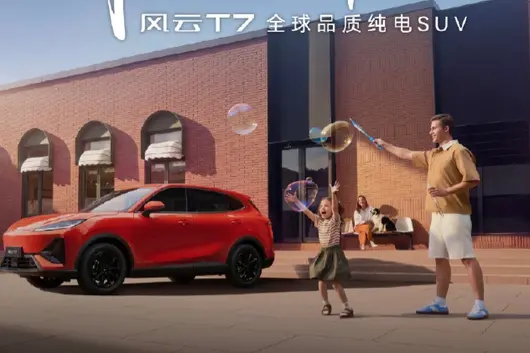

On August 26, at the Yanqi Lake International Convention Center in Beijing, Chery held a press conference to officially launch the global quality pure electric SUV Fengyun T7, introducing three versions: Enjoyment Edition, Comfort Edition, and Intelligence Edition, with an official launch price ranging from 97,900 yuan to 118,900 yuan, and a priority trade-in price from 94,900 yuan to 115,900 yuan.

At the press conference, well-known musician Hank Wu appeared as a surprise guest as a "Happiness Experience Officer", chatting with Chery Automotive Executive Vice President Li Xueyong on the topic of "Steady Happiness", sharing driving experiences and interpreting the steady happiness brought by Fengyun T7. Both parties agreed on the philosophy of "Slow Craftsmanship Builds Good Cars", officially launching the Fengyun T7 "Happiness Co-creation Plan" on-site, calling on everyone to discover happiness moments in life.
From pre-sale leadership, global standards, global verification, and global adaptation to delivery upon launch, Fengyun T7, with sincere pricing and global strength, released the product momentum of "Global Quality Pure Electric SUV", unlocking a "Beautiful and Better" car life for global users and guarding every bit of steady happiness.

"Global quality extracts refined craftsmanship, slow work and fine details are not compromised. Thousands of hammerings reveal the truth, steady happiness lasts longer," introduced Chery Executive Vice President Li Xueyong. Fengyun T7, with global quality as the foundation, relies on four core values: Super Performance, Global Aesthetics, Safer, and Smart Intelligence, as well as six major redundant product strengths including crash safety, battery safety, range equity, full-domain energy saving, handling performance, and whole-vehicle validation, providing a reliable and reassuring pure electric travel choice for global users.

Super Performance, Global Aesthetics, Safer, and Smart Intelligence, Four Core Values,
At the press conference scene, Li Xueyong focused on introducing the four core values of Fengyun T7.
Super Performance: All series standard 65.05kWh Rhinoceros battery, CLTC range 600km, tested range 667+km with reverse false labeling, 30%-80% fast charging only 20 minutes; dual-source wide-temperature range heat pump + 14 low drag designs, winter range increased by 30%, 12-in-1 Kunpeng Electric Drive comprehensive efficiency 90.8%, leading in the class.
Global Aesthetics: Relying on 10 global design centers, over 100 designers collaborated to create, 5,000+ users co-created, blending Eastern elegance with global aesthetics, 6 Eastern elegant paint colors, unique in-class Blazing Orange Tri-coat three-layer luxury car grade craftsmanship; Cloud Wing wrap-around cockpit transparent and premium, two interior colors adapt to different aesthetics, balancing aesthetics and home practicality, long-term use does not easily appear old.
Safer: High-strength steel accounts for 80%, unique in-class shotgun structure, world premiere dual-frame subframe + Pack anti-collision beam; maximum 9 airbags in class; 6D Armored Lock 31-layer battery protection, IP68 waterproofing reaches 96 times the national standard, side anti-compression reaches 2 times the national standard, guarding family travel comprehensively.
Smart Intelligence: World premiere 4nm process 8775 cockpit-integrated chip, 72TOPS computing power, system response as low as 80ms; Lingxi Smart Cockpit 2.0 x Doubao Large Model, full-scenario fuzzy voice interaction; 22 high-precision sensors, support 300+ full-scenario automatic parking, highway pilot assistance, all series standard AGS Intelligent Grille.

Upholding Three "Cannot Rush" Commitments and Promising Two Bottom-Line Policies
"Cars are not fast-moving consumer goods, they carry the travel safety of millions of families, facing different road conditions in all parts of the world, high temperature and cold, salt alkaline and damp tests. Sometimes, we really dare not save time," Li Xueyong introduced. 1. R&D cannot rush, whole vehicle, three-electric, and intelligent driving must be repeatedly polished and iterated; 2. Validation cannot rush, reliability must be run out through real global scenarios; 81 test vehicles, 21 countries, 1.45 million km extreme durability tests, developed according to 2026 Edition E-NCAP European five-star safety standards, no paper parameters; 3. Global user co-creation cannot rush, visiting users in multiple countries, listening to real vehicle usage demands of different families.
Li Xueyong said, Fengyun T7 is not late, it is just the time a good car should take. A true global car is not built domestically then modified and sold overseas, but developed according to global standards from the first day of the project, verified through overseas markets first, then returned to China for Chinese consumers. The overseas same-source model Lepas L6 has already been launched in Thailand and South Africa, later landing in EU, Indonesia, and Australia/New Zealand markets.
Finally, Li Xueyong promised users two bottom-lines:
1. Battery safety guarantee: If thermal runaway is caused by quality issues with the Chery battery pack itself, we will compensate with a brand-new car of the same model;
2. Intelligent driving guarantee: Falcon 500 assisted driving, within 1 year of purchase, if the accident is caused by system issues, compensation up to 5 million.
"At the same time, providing users with whole vehicle + three-electric system lifetime warranty; 666 yuan optional purchase of lifetime basic maintenance package, reducing family car maintenance pressure. Trade-in subsidies, 2 years 0-interest financing, free exclusive paint and other rights and interests are given to everyone," Li Xueyong said.