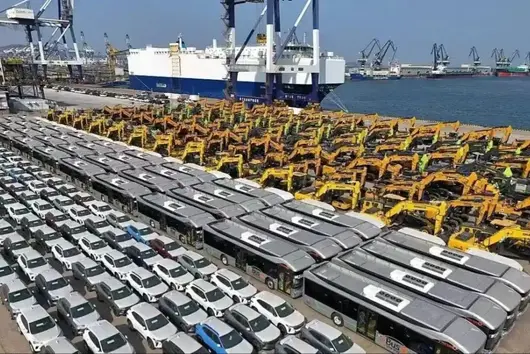
首頁Chery

搜尋歷史
熱門搜尋
經銷商登入 / 註冊

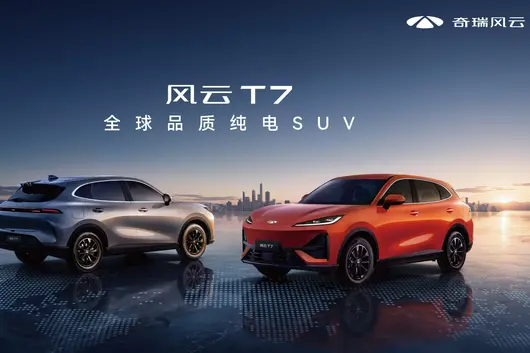
On August 12, Chery Fengyun T7 officially opened pre-sale, launching 3 versions, pre-sale guide price range is 109,900 - 129,900 Yuan. In the current scenario where the new energy vehicle market is deeply involved in "specs race" and "fast-track manufacturing", Fengyun T7 adheres to the concept of long-termism in vehicle manufacturing. Having undergone 2 years of planning and 3 years of dedicated R&D, it not only brings a highly sincere price and benefit system but also showcases a differentiated vehicle manufacturing path of "global trial first, then feedback to domestic market" to the market.

Unlike the industry's common "domestic launch first, overseas later" model, Fengyun T7 was branded with "global car" DNA from its birth. Relying on Chery's global 1+7+N R&D system, the new car is built according to the 2026 version E-NCAP five-star safety standard, visiting 15 typical countries, completing over 5,000 sets of global user surveys, sending 81 test vehicles to various parts of the world for road tests, accumulating over 6 million kilometers of whole vehicle testing and 1.45 million kilometers of special durability verification. It covers diverse extreme environments such as extreme cold, high temperature, high humidity, and plateau, able to adapt to 95% of global road scenarios, truly achieving global standards, global verification, and global sharing. Its homologue model Lepas L6 has already accepted real-world testing in markets such as South Africa and Thailand first. This "reverse outbound" rhythm is essentially using the world's strictest standards to preemptively clear minefields and provide a safety net for domestic family users.

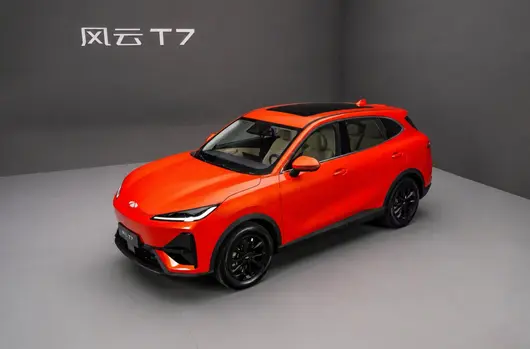
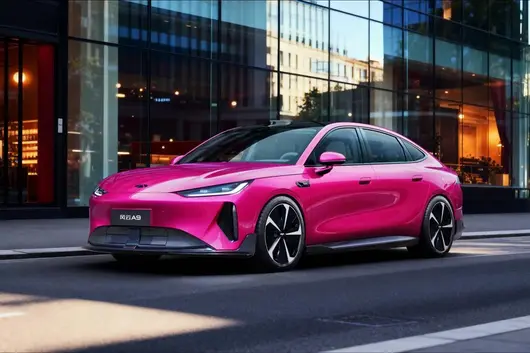
The exterior design gathers the wisdom of global designers, adopting a wind-harnessing front face and wind-sculpted light strips, with wind-sculpted silk curved lines being restrained and good-looking. The new car offers 6 styles of Eastern elegance car paints, Blazing Orange adopts a 3-layer pearl spray process, sun-resistant and anti-aging; Interior Cloud Wing enveloping cockpit uses soft material covering on a large area, providing two interior styles, balancing home warmth and minimalist tech sense. All exterior and interior materials have undergone plateau UV, high-low temperature alternating tests, and are not easy to age or fade with long-term use.

In terms of intelligence, Fengyun T7 is equipped with the same-level debut 4nm 8775 Cockpit-Driving Integrated Chip, achieving Cockpit and Smart Driving Hardware Fusion. A 15.6-inch 2.5K Anti-glare Screen is equipped with Lingxi Smart Cockpit 2.0 and Doubao Large Model, voice interaction is fluent and natural, fully supporting mainstream mobile phone interconnection. Falcon 500 Smart Driving is equipped with 22 high-precision perception hardware, not only possessing 300+ all-scenario automatic parking, but also downsizing the 2km unlimited multi-floor memory parking only available in high-end models, solving multi-floor mall and 3D garage parking problems, truly achieving parking freedom.

Driving and riding comfort has been finely polished by a professional team. The whole vehicle wheelbase is 2700mm, interior space utilization is 84%, rear pure flat floor brings spacious seating space, seats folded down can form 1955mm super large pure flat space, meeting camping, rest diverse scenarios. Chassis is tuned by a former Maserati chassis expert team, achieving 50.8:49.2 golden front and rear axle load, matching large shock absorber bushings and One-Box line control braking, balancing city commute comfort and high-speed driving stability.

Safety is the bottom line that family cars cannot yield. Fengyun T7 builds a Rock-like Cage Body, 80% high-strength steel combined with 18.84% hot-formed steel, equipped with same-level exclusive Shotgun structure, double-frame subframe, and PACK crash beam. All series standard 9 airbags, including 48L super large capacity far-end airbag and long-lasting pressure side curtain. Rhinoceros Battery owns 31-layer 6D chainmail armor protection, protection standard significantly surpasses national standards. At the same time, Chery launches industry-rare double safety bottom line: power battery due to its own fault causing thermal runaway damage can compensate new car; first year of car purchase, smart driving system caused accident highest compensation 5 million Yuan, using hardcore policy to convey safety confidence.

When many brands pursue quickly launching new products to grab the market, Chery chooses to settle down and polish a global model that can withstand time tests. Fengyun T7 pre-sale starting at 109,900 Yuan, integrates long range, high safety, advanced intelligence, and comfortable space. It does not pursue a flash in the pan in terms of parameters, but uses the endorsement of 20 million global users' trust to provide a "peace of mind choice" without hesitation for family users. For consumers pursuing quality and pragmatism together, the arrival of Fengyun T7 is timely.
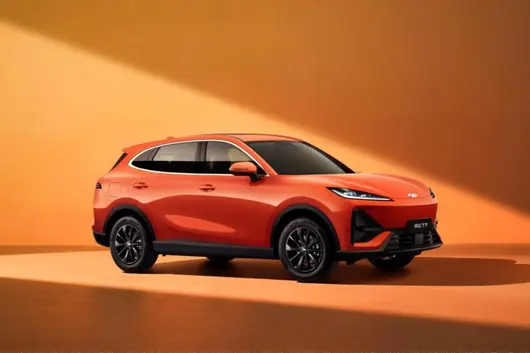

When "one new car every 18/12 months" becomes the industry norm, Chery instead used 2 years of planning and 3 years of R&D to refine a global BEV SUV—the Fenwang T7. A total global investment of 963 test vehicles, with cumulative durability testing of 1.45 million kilometers.
On August 12, this "slowly crafted" global car began pre-sale,starting from RMB 109,900.

Supporting this confidence is Chery's global strength.In the first half of 2026, Chery exported 943,800 vehicles. For every 5 cars exported from China, 1 comes from it, ranking first in passenger car exports among Chinese brands for 23 consecutive years.

While many brands are still telling "going overseas stories" or haven't even started,Fenwang T7 has already taken the "go overseas first, then return home" path. The homologous model Lepas L6 has started pre-sale in South Africa and launched in Thailand, and will later land in the EU, Australia, New Zealand, and other markets.

This means it had to adapt toglobal standards from the very beginning of R&D.
Fenwang T7 is developed according to the 2026 edition E-NCAP 5-star safety standards, covering extreme temperature zones from -40°C to 55°C, and investing 81 durability vehicles with cumulative test mileage exceeding 6 million km.

This investment is solely to solve the most core concerns of EV users: reliability, environmental adaptability, and long-term durability.
Fenwang T7overall dimensions 4570×1852×1694mm, wheelbase 2700mm. The body is not large, but the interior space is not small either. Rear legroom is 911mm, and can be folded down to expand into a large bed. Seats come with ventilation and heating, plus 38 storage spaces. There are also four anchor rings with a max load of 300kg for securing large cargo.

Regarding product strength, the most direct approach for Fenwang T7 is "equal treatment across all trims".All trims standard 65.05kWh battery, CLTC 600km range, regardless of trim levels. Actual range can reach 667km, fast charge 300km in 20 minutes, battery cycle life over 2500 times, basically no need to replace for 15 years of home use.

Safety is also treated equally. 80% high-strength steel + 18.84% hot-formed steel cage body, standard 9 airbags, including rare rear side airbags and curtain airbags in class. Battery reaches IP68 waterproof (96 times national standard) and 6D protection standards.

On the intelligence aspect, first in class 4nm process 8775 cockpit-driving integrated chip, NPU compute power 72TOPS, paired with 15.6-inch 2.5K screen and Lingxi Smart Cockpit 2.0; Falcon 500 Intelligent Driving supports 200+ scenarios automatic parking.

In addition, Chery provides lifetime warranty for the whole vehicle (including powertrain), compensation with a new car of the same model for battery thermal runaway, and up to 5 million RMB coverage for intelligent driving accidents within one year of purchase.

In the first half of 2026, 5.31 million Chinese cars were exported, of which 2.42 million are new energy. As large durable consumer goods like cars also start rapid iteration, and as Chinese cars rapidly rush to the global stage, it is not only Chery but more Chinese excellent enterprises that have realized:Some paths cannot be bypassed, some effort cannot be skipped.
Today's "slow" is for tomorrow's "fast".
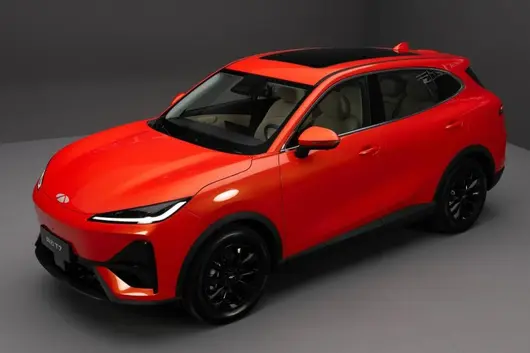

August 12, Chery Fengyun T7 entered the market with pre-sale prices ranging from 109,900 to 129,900 yuan, waving the banner "Good cars take time, we've kept you waiting." This pure electric SUV, born from global R&D and global validation, does not pile up flashy specs, but instead strikes a heavy blow at the industry's rush-to-market trend with three years of R&D and one million kilometers of actual testing.

I. Global Standards Refinement: Chery's Slow Craftsmanship Finally Produces Great Things
The creation process of Fengyun T7 itself constitutes a response to the industry's short-term logic. Chery did not choose to quickly release new models by changing shells, but invested in two years of planning and three years of R&D, bringing global regulations forward to the product definition stage. Benchmarking the 2026 Edition E-NCAP Five-Star Safety Standard, developing functionally safe ASILD high-level systems, while simultaneously meeting global data compliance requirements, this approach endowed Fengyun T7 with the genes of a global car from its inception.
Real-world feedback from overseas markets wrote a footnote to Fengyun T7's reliability. Its sibling model Lepas L6 has already launched earlier in South Africa and Thailand, gaining recognition from local users, and will subsequently enter markets such as Europe and Australia/New Zealand. In other words, Fengyun T7 is not an exam-oriented model specifically tailored for the domestic market, but an "elite student returning home" who first struggled in complex global environments before calmly returning to the Chinese market. This sequence of global verification followed by domestic launch is, in itself, a quality insurance policy.
More noteworthy is the underlying foundation of Chery being the top exporter for 23 consecutive years. 20 million global users and over 130 overseas markets mean Chery has massive data accumulation regarding road conditions, climate, and user habits in various regions. These accumulations have not stayed on PPTs, but transformed into over 80 localization adaptations, such as strengthening battery connector protection for Brazilian gravel roads and optimizing wiper lifespan for Northern European extreme cold. The skills honed by slow craftsmanship are now all precipitated on the Fengyun T7.

II. Quality Price Equality: Fengyun T7 Shakes Market Structure
The starting price of 109,900 yuan is like a deep-water bomb when placed among peer pure electric SUVs. This price point was previously dominated by entry-level models with a range of 400-500km, stingy safety configurations, and blank intelligent driving. Fengyun T7, however, directly comes standard with a 65.05kWh battery, 600km range, AGS active air intake grille, dual-source heat pump air conditioning, and even includes 9 airbags and a rock-solid body as standard across the entire range. Using top-tier hardware to attack entry-level prices is a clear dimensional strike.
Behind this pricing strategy is Chery's confidence in its global supply chain and economies of scale. The whole vehicle spreads R&D costs on a global sales scale of one million, rather than needing high prices to cover investment like new forces. More importantly, Fengyun T7 provides lifetime whole-vehicle warranty and battery safety protection from the start, and even offers up to 5 million yuan in compensation for assisted driving accidents. These rights hit home on family users' safety anxiety regarding electric vehicles, turning quality promises from slogans into black-and-white written contracts.
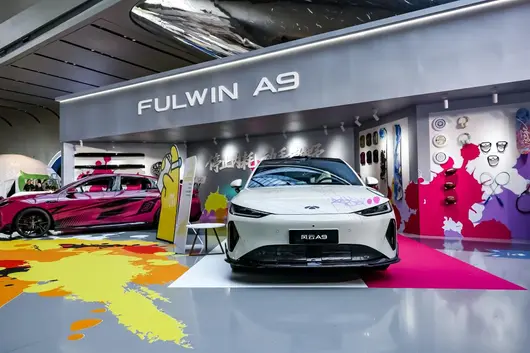
For Chery itself, Fengyun T7 is also a key move for brand upward mobility. The Fengyun sequence had established a technical image previously with models like A9, while T7, as the first global pure electric SUV, bears the heavy responsibility of expanding the results. With global quality endorsement and affordable prices, it shifts Chery's "honest engineering guy" label to a new perception of "reliable global carmaker". Once this perception is established, other models in the subsequent Fengyun family will benefit from it.

III. Value Reshaping Benchmark: Home Pure Electric Enters All-Dimensional Era
When most automakers are still using "smart fridges, large TVs, and big sofas" as selling points, the focus point of Fengyun T7 has returned to the essence of vehicle usage. It does not pursue extremes in any single parameter, but grabs the six essential needs of range, safety, intelligence, comfort, appearance, and peace of mind all at once. The full range 600km range is just the baseline; more importantly, it includes backups for assisted driving, automatic braking after collisions, and payouts for battery thermal runaway—these "invisible guarantees". These experiences cannot be quantified on a spec sheet, but directly determine whether a car can allow a whole family to drive safely for ten years.
From the perspective of industry competition patterns, the appearance of Fengyun T7 is rewriting the value scale of the 100,000-yuan market. Previously, users in this price range had to make trade-offs; if you wanted long range you had to sacrifice intelligent driving, if you wanted safety you had to accept mediocre design. Fengyun T7 responds to all pain points with global car standards, forcing competitors at the same price level to follow up with quality upgrades. It proves one thing: home pure electric should not be a product of parameter compromises, but the optimal solution after global resource integration.
In the second half of the pure electric track, competitiveness has shifted from piling materials to systems. The Chery global quality manufacturing system supporting Fengyun T7 covers the entire chain of R&D, verification, supply chain, and after-sales. This is not a lead in any single technology, but the thickness of the entire board game. When other brands are still competing on single selling points, Fengyun T7 has already redefined the passing line for home pure electric with the height of a global car. This pre-sale is just the beginning; what it will pry open is the entire niche market's re-examination of the word "Quality".


Conclusion:
Some once questioned that Chery joining the pure electric camp was too slow; now Fengyun T7 proves with three years of sharpening a sword's patience that slow is fast. Only after a thousand tests does a vessel become an instrument; true quality is seen in the global market. "Seemingly ordinary yet most extraordinary, seeming easy but actually arduous." When quick-fix cars begin to recede, the global cars that truly put effort into the dark places will ultimately reap the compound interest of time.
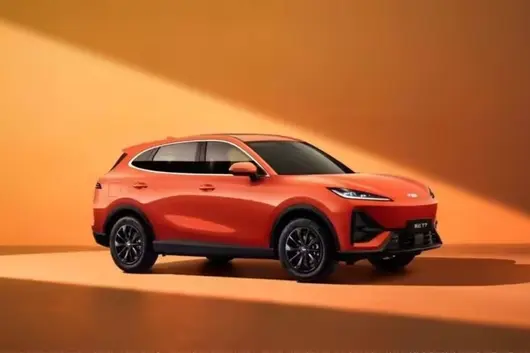

Many people have such experiences.
Strolling through the mall with the whole family, circling the underground garage three times without finding a parking spot; driving skills are slightly lacking, only able to stare helplessly in front of a mechanical parking lot; or encountering a narrow parking spot at a dead-end road when it is windy or rainy, struggling for a long time but unable to park.
In the past, car brands categorized their products into levels. To thoroughly solve the difficulty of parking, you had to spend at least over 200,000 to buy a high-end electric vehicle with cross-floor memory parking, while the basic models around 100,000 only had the most superficial intelligent experience.
Now this unwritten rule has been broken.

Chery Fengyun T7 officially starts pre-sale.
The new car has three configurations, covering a price range from 109,900 to 129,900, with 600 kilometers of range across the entire series. At first glance, this configuration seems to only pass in many new energy models, but what truly makes the Fengyun T7 seem "out of place" among 100,000-level pure electric SUVs is that it has put a dedicated function long monopolized by high-end electric cars, cross-floor memory parking, into the product list of 100,000-level family cars.
Let's look at the intelligent configuration again.
Fengyun T7 is equipped with the Falcon 500 driver assistance system, the whole vehicle is equipped with 22 high-precision sensors, including 3 millimeter-wave radars, 7 high-performance cameras and 12 ultrasonic radars, see far, see clearly, measure accurately. In the automotive industry, it is considered to have broken the price barrier first.
Cross-floor memory parking is undoubtedly Fengyun T7's biggest selling point. There is no floor limit, supporting up to two kilometers of memory parking. Coupled with over 300 all-scenario automatic parking functions, dead-end road parking, irregular parking spots, and one-touch track reverse are all supported.

This means ordinary families do not need to spend double the budget to own the experience of automatic cross-floor travel in mall underground garages and automatic parking in narrow spots. New drivers don't need to panic in front of narrow parking spots, and experienced drivers can cope calmly when encountering irregular parking spots.
What the industry calls "parking freedom" has also been implemented on 100,000-level family SUVs.
If it is just downgrading a high-end configuration, that is called spec stacking.
But Fengyun T7 is far more than parking freedom. Its difference lies in that it is a global car with reverse input. The overseas version is called Lepas L6. Pre-sales have started in South Africa, and Thailand launched in July. Next, Indonesia, EU, Australia/New Zealand, and the UK will follow in succession.
Accepting global market testing first, then launching domestically, this process is not common among local car companies because there are not many car companies that can do it. But behind Fengyun T7 happens to be Chery, ranking first in exports of Chinese brand passenger cars for 23 consecutive years, with an accumulation of global users breaking 20 million.

Admittedly Fengyun T7, anchored global standards from the beginning of R&D, developed according to the 2026 version E-NCAP five-star safety standards. 81 exclusive durability cars are undergoing road tests simultaneously. The whole vehicle cumulative testing mileage exceeds 6 million kilometers, covering -40 degrees to 55 degrees whole environment, adapting to 95% of global road types.
Body safety is also unquestionable.
80% high-strength steel, 18.84% hot-formed steel, 9 airbags. However, for a car to simultaneously meet regulations, climate conditions, road conditions characteristics, and user habits of so many countries and regions such as Europe, Australia/New Zealand, Middle East, Southeast Asia, Latin America, the R&D cycle is destined not to be short. In this industry rhythm where delivery happens upon launch and iteration happens upon delivery, Fengyun T7 used two years for planning and three years for R&D. Chery seems anti-trend, but slow manufacturing builds good cars.
It is exactly this five-year slowness that makes this car perform differently in many dimensions. The entire series is standardly equipped with a 65.05kWh Rhino battery, CLTC range 600 kilometers, actually running over 670 kilometers; without distinction of high or low configuration; no need to pay extra for a large battery pack; Fengyun T7 directly treated this heart disease of 100,000-level pure electric SUV users.

But the most interesting thing is Chery's two bottom-line guarantees on rights.
Battery power safety bottom line, first-time non-operating owner, thermal runaway caused by battery reasons, compensate with a new car of the same model; Assistant driving bottom line, first-time non-operating owner within one year of buying a car, parking or intelligent pilot scenarios, accidents caused by intelligent driving system reasons, compensate up to 5 million yuan.
Daring to make such a promise shows confidence in their own technology.
Back to the original question, what exactly are 100,000-level pure electric SUV users paying for?
Range, space, safety, intelligence... In the past, these needs were split across models of different price levels. To achieve all-dimension balance, you have to keep adding money to upgrade. Fengyun T7 is very pure. Cross-floor memory parking that should belong to high-end models, 600-kilometer long range that should be added for selection, 8775 chip and nine airbags that should be exclusive to high configuration are all packed into the 100,000-level price range.

This is no longer a simple price war.
Instead, Chery uses product power verified by the global market to tell the domestic home pure electric car market what exactly is a good product and what is worth buying.
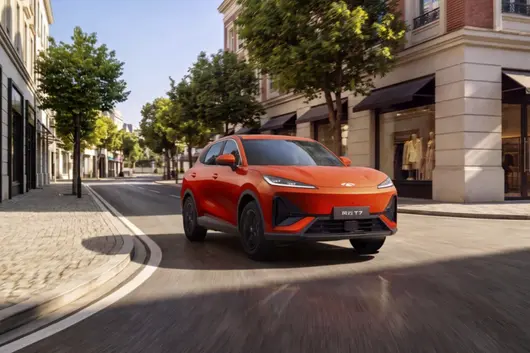

August 2026, the automotive industry repeatedly mentioned a term — “Speed-build cars”.
In the industry, some new cars have development cycles compressed to 18 months or even 12 months, parts verification passes in one round, durability road tests are cut in half directly. Cars go on the market first, users act as “test drivers”, problems lead to OTA recalls later, becoming routine operation for some automakers. What consumers buy is “half-baked cars” — products that are half-baked, things to be verified weren’t, things to be run weren’t completed.
August 12, Chery Fengyun T7 launched pre-sales, putting out a completely opposite tag — “Global car cannot be fast at all”. 109,900 RMB to 129,900 RMB, three configurations. Full system unified 65.05kWh Rhinoceros Battery, CLTC range 600km.
The 16th Hexagram of the “I Ching” is “Yu”, Upper Zhen Lower Kun, Thunder rises from the earth and stirs. The hexagram text says, with preparation, there will be no panic. The 17th Hexagram is “Sui”, Upper Dui Lower Zhen, Thunder in the marsh. The hexagram text says, move in accordance with the timing, achieving smoothness and success. First comes Yu, then comes Sui. Fengyun T7 spent four years completing “preparation”, then used today’s product to respond to the market’s “timing”.

Fengyun T7 is not a “China Special” car made for domestic first then exported. Its overseas homologous model is called LEPAS L6, already pre-sold in South Africa, launched in Thailand, subsequently entering the European Union, Australia, New Zealand, United Kingdom, and more than 130 other countries and regions. A car must meet regulatory standards of so many countries simultaneously, the R&D starting point is different.
In terms of safety, Fengyun T7 targets the 2026 version E-NCAP 5-star standard, functional safety reaches ASIL D highest level. The 2026 version E-NCAP breaks vehicle safety down into four pillars: safe driving, collision avoidance, collision protection, and post-collision safety. If any item has obvious weakness, 5-star rating cannot be achieved. Body adopts 80% high-strength steel, hot-formed steel accounts for 18.84%, nine cross five longitudinal cage body structure. Most safety airbags in class 9 airbags, including 48L dual-chamber far-end airbags and rear side airbags. Rhinoceros Battery IP68 water resistance reaches 96 times national standard.
These standards are not added later, they were written into product definition from the first day of R&D.

Chery Automobile Executive Vice President Li Xueyong said, Fengyun T7’s four-year cycle was spent on three “cannot be fast” places — R&D cannot be fast, products need repeated polishing; verification cannot be fast, reliability needs real scenario testing; global user co-creation cannot be fast, need to hear voices from different markets.
81 exclusive durability cars simultaneous road testing, vehicle cumulative test mileage over 6 million kilometers, durability special actual measured 1.45 million kilometers. Covers -40°C to 55°C full range environment, covers 95% global road types. Conducted extreme real car trials for different global regions such as Southeast Asian rainy season, Middle East high-temperature sun exposure, Indonesia high humidity, etc.
Global invested 963 test cars. 5000+ global user research, 15 typical countries in-depth visits. Optimized product design starting from actual vehicle usage needs, not engineers guessing what users want in the office.
Fengyun T7’s “Global Verification” is not going overseas to run around for show, it includes global different markets’ regulations, road conditions, user habits into the verification system from the R&D stage. European users habit car front into storage, vehicle within 70cm automatically displays front camera. Thai users prefer heavier steering hand feel, engineers increase steering force by one level. Turkey and Israel users prefer physical buttons, high-frequency functions keep physical switches. Indonesia bumpy road sections make users lack sense of security, engineers optimize steering return quality. These details are not post-event patches, they are adaptations included in consideration from the R&D stage.

Fengyun T7’s pricing is the last link of this “Global Standards” logic. 109,900 RMB to 129,900 RMB, three configurations price difference is 10,000 RMB each, battery unified 65.05kWh, range unified 600km. No lower configuration cutting range, higher configuration adding range graded premium tricks.
Put this price on the market, in the same price range pure electric SUVs, full series 600km range, full series 9 airbags, full series 8775 chip, full series independent rear suspension models, currently only Fengyun T7 one model.
The meaning of this price is not only “cheap”, but “buy products verified with global standards with national prices”. Fengyun T7 ran verification process overseas first, then landed domestically with China market pricing logic. Homologous model LEPAS L6 price in Thailand about 160,000 RMB, domestic pre-sale 109,900 starting — same set of global standards, two pricing logics. Overseas verification costs shared by global sales, domestic consumers enjoy price dividends brought by scale effects.
Smart Cockpit. Class first 4nm process Qualcomm SA8775 Cockpit-Driver integrated chip. 15.6 inch 2.5K HD large screen, Lingxi Smart Cockpit 2.0 equipped with Doubao Large Model. Falcon 500 Smart Driving equipped with 22 high-precision sensors.
Comfortable and solid. 2700mm wheelbase, 84% utilization rate. Seats folded down form 1955mm×1310mm pure flat large bed. Chassis involved senior engineer from former Maserati in tuning.
109,900 to 129,900 RMB price range, let this set of global standard products entered China mainstream family selectable range.

First half of 2026, Chery in Europe cumulative sales 174,000 units, among them new energy 86,000 units, year-on-year growth 385%. For every 5 cars exported from China, 1 comes from Chery. Consecutive 23 years China brand passenger car export No.1.
Fengyun T7’s “Global Rebound” is not a slogan, it is solid verification result. The gold content of this logic does not lie in the export quantity itself, but in the standards, systems, and quality cognition behind the export. When the industry is still consuming each other with price wars, Chery uses a car verified by global market, pulling competition back from “who is cheaper” to “who is more trustworthy”.
Yu Hexagram says “Prepare for the unexpected”, Sui Hexagram says “Move according to timing”. First spend four years preparing global standards, then use this car to respond to the market’s “timing”. Global verification, Chinese prices — this is Fengyun T7 “Global car cannot be fast at all” true meaning.

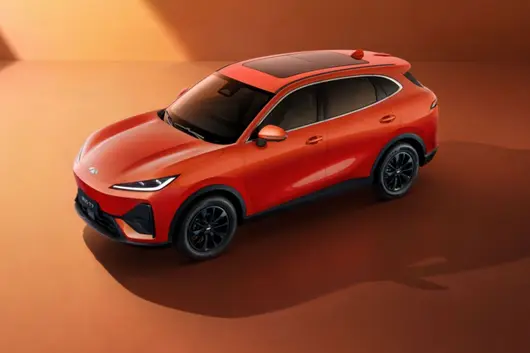
August 12, Chery Fengyun T7 officially started pre-sales, theme "Slow work builds a good car, you've waited long enough". Three trim levels pre-sale price 109,900 - 129,900 RMB, all models standard with 600 km range. In the "launching new cars every 18 months" new energy vehicle market, Chery spent 5 years refining a 100,000-level SUV, this "overseas first then returns home" global car, is it worth buying? Let's analyze by integrating functions into scenarios.

Monday Morning Rush Hour: All Models 600 km Range, Charge Only Once a Week
Monday morning at 7:30, drop kids at school, go to office myself. Fengyun T7 all models standard with 65.05kWh Rhinoceros battery, CLTC range 600 km, actual test reaches over 667 km. Calculated at 50 km commute round trip daily, charging once a week is completely enough. 30% charging to 80% takes only 20 minutes, enough time to buy a coffee at the mall.

Northern Winter Morning: Can Drive Normally at -30℃, Heating Doesn't Consume Power
Minus 15 degrees, many EV ranges are halved directly. Fengyun T7 features class-first dual-source wide-temperature range heat pump, -40℃ to 55℃ works stably. Seats support cushion + backrest dual heating, -20℃ environment 5 minutes heats to 30℃. No need long time, car interior already warm, range not compromised.

Weekend Kids Camping: Rear Seats Flatten to 1.95 Meter Large Bed
Saturday early morning, trunk easily holds tent, folding chairs, cookware. Whole car 38 storage spaces, 4 anchor rings carrying 300kg and 2 hooks carrying 3kg, gear fixed securely. Rear pure flat floor, extends 1955mm pure flat large bed after folding, kids play tired lie flat sleep. 911mm rear legroom, two adults plus child seat not crowded.

Encountering Heavy Rain Waterlogging: IP68 Waterproof is 96 Times National Standard
Summer heavy rain, road waterlogging severe. Fengyun T7 Rhinoceros battery IP68 waterproof rating is national standard 96 times. Others detour you go straight, rainy season travel no need nervous.
Parking Challenge: 300+ Scenarios Automatic Parking, Dead-End Roads Also Parkable
Mall underground garage, parking space narrow, light dim. Fengyun T7 Falcon 500 Smart Driving System equipped with 22 sensors, supports 300+ scenarios automatic parking, dead-end road parking, cross-floor parking, one-click trajectory reversing all handled. Wife in passenger seat says "Bought the right car".

Long Distance Self-Driving: 667 km Actual Range, 20 Minutes Fast Charge
National Day family outing, one way over 400 km. Full charge depart midway only need recharge once, 20 minutes from 30% to 80%. Body 80% high strength steel + 18.84% hot formed steel, 9 airbags include 48L dual chamber remote airbags and rear side airbags. Whole vehicle undergoes over 6 million km testing, covers Southeast Asia rainy season, Middle East high temp, Indonesia high humidity etc extreme environments. Family old and young in car, safe.
Two "Guarantees" Make People Relieved
Battery Safety Guarantee: If whole vehicle thermal runaway damage caused by battery reasons, compensate same new car.
Smart Driving Accident Guarantee: Buying car within one year due to smart driving system reasons cause accident, max compensate 5 million.
Whole vehicle lifetime warranty (including three-electric) + 666 RMB purchase lifetime basic maintenance.

How to choose three configurations?
Three versions price difference all 10,000, battery, range, motor exactly same:

600km Enjoy Edition (109,900): All models 600 km range, 5-star safety, 9 airbags, 15.6 inch large screen. Pursue ultimate cost-performance, buy without hesitation.
600km Comfort Edition (119,900): Adds front seat heating ventilation, SONY audio etc comfort configs. Spend extra 10,000 to exchange for daily comfort, most recommended.
600km Smart Edition (129,900): Full spec Falcon 500 smart driving, 300+ scenarios auto parking, Highway NOA. Often on highway or parking difficult, one step done.

Order now or wait for launch?
7 layers pre-sale rights include 1,000 offset 2,000 expansion, lifetime warranty etc, usually better than launch rights. Suggest store test drive then early order lock rights.
100,000 level pure electric SUV, most cars compete price compete specs. Fengyun T7 takes another path, 5 years R&D, global verification, all models 600 km range no shrinkage. It is not parameter most explosive, but maybe this price point most reassuring. If you want a "worry-free, safe, anxiety-free" home pure electric SUV, Fengyun T7 worth serious consideration.
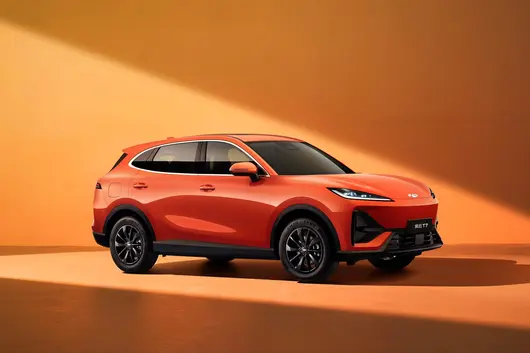

August 12, 2026, Chery Fengyun T7 officially launched pre-sale. The new car is positioned as a compact pure electric SUV, with a total of 3 trim levels, and the pre-sale price range is 109,900 Yuan to 129,900 Yuan.

 Regarding body dimensions, Fengyun T7 has a length/width/height of 4570/1852/1694mm, and a wheelbase of 2700mm. For reference, the wheelbase of the BYD Yuan PLUS in the same class is 2770mm, Geely Galaxy E5 is 2750mm, and Leapmotor B10 is 2735mm.
The three Fengyun T7 models—600km Enjoy Edition, 600km Comfort Edition, 600km Smart Edition—all come equipped with a Rhino Lithium Iron Phosphate battery with a capacity of 65.05kWh, and CLTC range is uniformly 600km.
Power-wise, the new car adopts a rear-mounted single motor layout, with a maximum power of 178kW (approx. 242 hp), and a peak torque of 275N·m. In terms of recharging efficiency, official data shows the vehicle takes about 20 minutes for fast charging from 30% to 80% battery level. From the paper specifications, this powertrain is oriented towards daily home use scenarios.
"Global Car" Safety and Chassis Configuration
Fengyun T7 is designed according to the 2026 E-NCAP 5-star safety standards, with the body using 80% high-strength steel and 18.84% hot-formed steel, and comes standard with 9 airbags. The chassis structure features front MacPherson and rear multi-link independent suspension, and the rear-wheel drive layout is relatively rare in SUVs at this price point. The official statement says the vehicle was developed for multiple global market regions, and its overseas models have already launched in markets such as South Africa and Thailand.
Configuration Gradient: Differentiation in Cockpit and Driving Assistance The core differences among the three models are mainly concentrated on the smart cockpit and driving assistance levels.
The entry-level Enjoy Edition (109,900 Yuan) provides basic intelligent driving assistance functions and comfort configurations, equipped with a 15.6-inch 2.5K central screen, powered by Qualcomm 8155 chip.
The mid-spec Comfort Edition (119,900 Yuan) is upgraded in experience levels such as seat functions, audio system, etc.
The top-spec Smart Edition (129,900 Yuan) is equipped with Falcon 500 Driving Assistance System, sensor count increased to 22, supporting full-scenario automatic parking and highway pilot assist functions, cockpit chip upgraded to Qualcomm 8775. All trims support CarPlay, HUAWEI HiCar, CarLink and other smartphone interconnection solutions.

The 100,000 to 150,000 Yuan pure electric compact SUV market where Fengyun T7 is positioned is fiercely competitive. BYD Yuan PLUS (115,800 to 149,900 Yuan) occupies a stable share thanks to brand recognition and market presence, with a maximum range of 630km; Deepal S05 (119,900 to 151,900 Yuan) has a wheelbase of 2880mm, equipped with 3C supercharging and LiDAR option; Aion AION Y (99,800 to 136,800 Yuan) has a lower price threshold, with a maximum range of 610km.

2026 Model Yuan PLUS 630KM Excellent Edition

2026 Model Deepal S05 620Ultra Pure Electric Edition
The new car forms a differentiated competition with "All trims 600km range" and a starting price of 109,900 Yuan. Providing a long-range option from the entry level is the main feature of its pricing strategy.
It also needs to be pointed out that the vehicle is at a mid-level in some indicators: 2700mm wheelbase is on the shorter side among peers, rear space performance needs verification with physical car experience; 20-minute fast charging time is mainstream level against the background of supercharging technology becoming increasingly popular; high-end intelligent driving scheme is not equipped with LiDAR, function limit has a gap with competitors carrying relevant hardware. In addition, the official has not yet published detailed motor power and acceleration performance data, dynamic performance also needs to be further understood through physical car test drive. (Edited by: Xiaozhou)
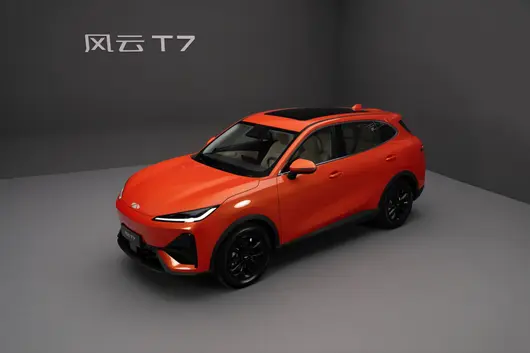
On August 12, Chery Fengyun T7 officially launched pre-sales, with a pre-sale price ranging from 99,800 yuan to 139,800 yuan.
This launch event, themed "Slow Craft Builds a Good Car, Sorry for the Wait", was less about a product reveal and more about a statement — in the current EV racing track, Chery, a car company jokingly called an "honest engineering nerd", chose to use one vehicle to tell the market: some things cannot be rushed, some roads cannot be bypassed.

Let's look at a set of figures first. In the first half of 2026, Chinese car exports reached 5.096 million vehicles, a year-on-year increase of 65.3%, and the world automotive landscape is entering "China Time". Amidst this wave of going global, Chery led the pack with an export volume of 943,800 vehicles, a year-on-year increase of 71.5%, with a Chery vehicle leaving for overseas markets every 17 seconds on average. More noteworthy is that Chery has ranked first in exports of Chinese brand passenger cars for 23 consecutive years, with cumulative global users surpassing 20 million, and overseas users approaching 7 million. Products are sold to over 130 countries and regions. These figures form the underlying logic of Fengyun T7 — it is not a car built domestically first and then figured out how to sell abroad, but a product that was developed according to global standards from the very beginning, verified globally, and returned to the domestic market only after receiving real feedback from the overseas market.

This path of "Going Global First, Returning Home Later" is not common in the current automotive industry. Fengyun T7 is called Lepas L6 overseas. Pre-sales have already started in South Africa, Thailand launched on July 24, followed by Indonesia in August, European Union in September, Australia/New Zealand and the UK in October. To meet the regulatory standards, climate conditions, road characteristics, and usage habits of so many countries and regions simultaneously, the R&D cycle is inevitably long. The fact is indeed the same — 2 years of planning, 3 years of R&D. In today's industry rhythm of "one new car every 12 months", this cycle almost seems out of place.

But it is precisely this 5-year slowness that allows Fengyun T7 to differentiate itself in many dimensions. In terms of safety, it was developed according to the 2026 version E-NCAP 5-star safety standard. The 2026 version E-NCAP decomposes overall vehicle safety into four pillars: safe driving, collision avoidance, collision protection, and post-collision safety. If any item has a significant weak point, a 5-star rating cannot be achieved. Fengyun T7 anchored this standard from the R&D stage, and also achieved the highest level of functional safety ASILD and global data compliance. This is not simply "piling up parts", but placing safety standards upfront into the product definition stage.

In terms of environmental adaptability, Fengyun T7's full-domain adaptation interval covers -40°C to 55°C. This range means it must function normally in the extreme cold of Northern Europe, the scorching heat of the Middle East, the humidity of Southeast Asia, and the strong UV radiation of plateaus. To this end, it is equipped with a dual-source wide-temperature heat pump plus PTC system launched in its class first; in tropical high-humidity areas, the air conditioning filter was optimized specifically to prevent mold and odors; in the Middle East region, a 4.5L large-capacity washer fluid tank was equipped; battery front and rear beam protection was added for Brazilian gravel roads. These details seem insignificant when viewed individually, but together they reflect a mindset of "building cars for global users" — not making a car first and then figuring out how to adapt to the environment, but understanding the needs of different environments before starting to build the car.

The validation process illustrates the point even more. Fengyun T7 simultaneously invested 81 dedicated durability vehicles for road tests, with cumulative vehicle testing mileage exceeding 6 million kilometers, and specific durability field testing covering 1.45 million kilometers. It covers 100+ extreme road condition environments including the EU, Australia/New Zealand, Middle East, South Africa, Russia, Mexico, Brazil, etc. The global road type coverage rate reaches 95% — high speed bumps in Brazil, cobblestone roads in Mexico, high-curvature curves on German Autobahns, unpaved muddy roads in South Africa, all have been run. Behind this scale of real vehicle verification lies huge time costs and capital investment, but it solves an essential problem: the reliability, environmental adaptability, and long-term durability that EV users worry about most can only be answered after running them through real global road conditions.

At the product capability level, Fengyun T7's configuration approach also reflects an "uncompromising" stance. In terms of range, the entire series is standard-equipped with 65.05kWh Rhinoceros battery, CLTC range 600km, real-world test up to 667km, 30% to 80% fast charging takes only 22 minutes. Battery cycle life exceeds 2500 times, the whole vehicle requires no battery replacement for 15 years. In terms of safety, 80% high-strength steel body, 18.84% hot-formed steel, nine-transverse and five-longitudinal cage body, class-leading 9 airbags. In terms of intelligence, class-first 4nm process 8775 chip, 15.6-inch 2.5K anti-glare screen, Falcon 500 intelligent driving equipped with 22 high-precision sensors. In terms of space, vehicle dimensions 4570×1852×1694mm, wheelbase 2700mm, 84% floor space rate. These configurations, looking at each item individually, are not extraordinary, but standard equipment across the series without gradient grading is indeed rare in the current home EV market.

Another dimension often overlooked is design. Fengyun T7 was completed jointly by 8 global R&D design centers, top international designer teams, and over 5000 global users. The same-source model Lepas L6 previously appeared at Milan Design Week, receiving the evaluation that it was "very attractive and good-looking". Among the 6 Eastern Elegance paint colors, Blazing Orange uses the Tri-coat three-layer paint process unique to its class, and the entire body paint underwent plateau high-intensity UV and high-low temperature alternating extreme tests, anti-fading, anti-aging. This pursuit of "looking good for a long time" follows the same logic as the whole vehicle "working well for a long time".

Back to the theme of that launch event — "Slow Craft Builds a Good Car, Sorry for the Wait". In the current situation where quick-made cars frequently encounter quality skepticism, Fengyun T7's "slowness" instead became a scarce value proposition. Slow in R&D — 3-year cycle, global 1+7+N R&D system polishing; Slow in Design — co-created by over 5000 users, coordinated by over 100 designers; Slow in Standards — designed according to 2026 version E-NCAP, about to enter high-regulation European market; Slow in Validation — 1.45 million kilometers, five major extreme environments. Behind these "slownesses" is the car-building system accumulated by Chery in 23 years of export ranking first and 20 million global users supporting the bottom line.

Fengyun T7 might not be the most aggressive pure electric SUV in terms of parameters, but it uses a complete "Global R&D — Global Standards — Global Validation — Global Quality" closed loop to answer a simple question: how should a pure electric SUV truly worth long-term trust for the whole family be built. In the second half of the industry where "piling up parts" shifts to "comparing quality", this answer might carry more weight than any showing off skills.


August 12, Chery Fengyun T7 officially opens pre-sale. This pre-sale event theme "Quality Cars Are Built Slowly, You've Waited Long Enough", conveys Fengyun T7's long-term manufacturing philosophy, the persistence in refining products and solidly building good cars, and also expresses the brand's sincere gratitude for users' long-term expectations. As a trusted pure electric SUV created by Chery for global families, Fengyun T7 is born from Chery's global quality manufacturing system, one-stop coverage of quality family appearance, mobility, safety, intelligence, comfort, peace of mind six major needs, reshaping the value benchmark for household pure electric SUVs with global quality.


Slow Work Yields Fine Results: Global Cars "Cannot Be Rushed"
In the current home pure electric market, "fast-track car building" has become an industry pain point. Under the tide of fast car building, Fengyun T7 chose a completely different path – slow down R&D, slow down design, slow down validation, slow down acceptance of global standard tests.
Behind this seemingly joking slogan lies Fengyun T7's persistence in the long-term manufacturing logic. 2 years planning, 3 years R&D, Fengyun T7 developed according to the 2026 Edition E-NCAP 5-star safety standard, functional safety reaches ASIL-D high level, meeting global data compliance requirements. Completed 5000+ global user research, 15 typical countries in-depth visits, global environment adaptation range covers -40℃~55℃.
Slow in R&D: 3-year R&D cycle, polished by the global 1+7+N R&D system; Slow in Design: 5000+ user co-creation, 100+ designers collaborating on design; Slow in Standards: Designed according to 2026 Edition E-NCAP standards, soon entering high-regulation European markets; Slow in Validation: 1.45 million km specialized actual tests, having undergone 5 extreme environment tests. Fengyun T7 uses a complete global validation loop to prove to users: A pure electric SUV truly forged through global beating and polishing, quality is worthy of long-term family trust.


Global Quality Confidence: #1 Export for 23 Years, Endorsed by 20 Million Users
This quality trust stems from Chery's profound global accumulation. Ranked #1 in exports of Chinese brand passenger cars for 23 consecutive years, global users exceeded 20 million, products sold to 130+ overseas markets. The same-source global car Lepas L6 has been launched in South Africa and Thailand and received recognition from overseas users, now returning with global market verification.
Fengyun T7 anchored global standards, global actual tests, global users, global durability, global quality manufacturing five systems from the beginning of R&D. Total vehicle cumulative test mileage exceeds 6 million km, durability specialized actual test 1.45 million km, covering EU, Australia/New Zealand, Middle East, South Africa, Russia, Mexico, Brazil, and other 100+ extreme road conditions environments. 81 exclusive durability cars for road testing, safety benchmarks against 2026 Edition E-NCAP strict standards – Chery accumulated 71 global 5-star safety models, strength is undeniable.
From tropical extreme humidity to Nordic extreme cold, from plateau strong UV to overseas complex road conditions, Fengyun T7 underwent all-around extreme actual vehicle trials. National standard water immersion height is only 150mm, Fengyun T7 reaches 500mm off-road level waterproofing; Heat Pump + PTC dual-source heating, -30℃ stable operation, -20℃ environment 20 minutes to heat up to 23℃, winter range achievement rate increased by 30%. Under the support of global unified smart manufacturing processes, welding automatic welding precision reaches ±0.01mm, AI+5G Eagle Eye Inspection Station 200+ visual inspection points, inspection sensitivity is 100 times that of human eyes, ensuring every car has no difference in standards.
One Car Meets 6 Major Needs: Compromise-Free Home Value Benchmark
Breaking the consumer pain points of disconnected distribution of range, safety, space, intelligent driving, comfort, and appearance on the market, allowing ordinary families not to compromise, one car covers commuting, camping, parent-child, long-distance full scenarios.

In terms of mobility, the series is standard equipped with 65.05kWh Rhino Battery, CLTC range 600km, actual test reaches 667km, 30%-80% fast charge only 22 minutes. Battery cycle life exceeds 2500 times, whole vehicle 15 years no need to replace battery. In terms of safety, 80% high-strength steel body + 18.84% hot-formed steel, nine horizontal five vertical cage body, most 9 airbags in class including 48L max volume dual-chamber far-end airbags. Rhino Battery 6D Armor 31-layer protection, IP68 waterproofing reaches 96 times national standard.
In terms of intelligence, same-class first launch 4nm Cockpit-Driving Integrated 8775 Chip, 72 TOPS NPU computing power, equipped with Lingxi Smart Cockpit 2.0 × Doubao Large Model. 15.6 inch 2.5K 1000nit anti-glare large screen, six one-touch scene modes, Falcon 500 Intelligent Driving 22 high-precision sensors achieve 200+ full-scenario automatic parking. In terms of comfort, body 4570×1852×1694mm, wheelbase 2700mm, usage rate 84%, rear leg 911mm pure flat floor. Same-class largest pure flat large bed mode 1955mm×1310mm, trunk max expansion 1550L.

Global Timeless Oriental Aesthetics: Beauty Twin Stars Shine Debut
Fengyun T7 is the wisdom of co-creation by 8 global R&D design centers, top overseas designer teams and 5000+ global users. Same-source model Lepas L6 appeared at Milan Design Week previously, receiving consistent praise of "Very attractive, very timeless". Wind-leading front fascia wind lines outline atmospheric not flamboyant. Wind blade headlights cleanly split light and shadow. Wind sculpted satin body surface curved smooth. Horizon sunset tailgate wide shoulder line creates steady power.
Six exclusive Oriental Aesthetics car paints – Blazing Orange, Mountain Mist Purple, Cloud Pink Beige, Flowing Light Silver, Green Bamboo Grey, Ink Stone Black, sourced from Oriental landscape natural features. Among them Blazing Orange uses same-class unique Tri-coat three-layer car paint process, paired with 2K 8-layer high appearance paint, nano pearlescent color paste presents gradient texture in different light. Cloud Wing wrap cockpit Seagull style spreading shape, jewelry grade diamond grid double-row quilting, lively water wave interior texture, large area soft wrapping feels premium.


The appearance twin stars of Sedan and SUV have become a mainstream design combination trend, Chery Fengyun A9 and Fengyun T7 are the strength appearance twin stars under Fengyun sequence. Fengyun T7 stands on global aesthetic vision, blending international design language and Oriental elegant intention – Good looking not flashy, balancing style and premium texture.

From global standard R&D to million km actual test, from 6 major needs full coverage to Oriental aesthetics global timelessness, Fengyun T7 uses "slow work" to polish out a high-quality pure electric SUV that can withstand global market inspection. In the second half of pure electric competition shifting from stacking materials to comparing quality, Fengyun T7 with global quality as the base color, brings a one-stop solution for quality families. August 12 pre-sale officially opened, Fengyun T7 will match global quality with exceptional value national price, worth looking forward to.

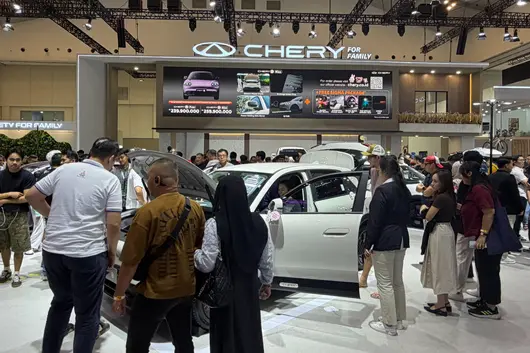
In 2026, the story of Chinese cars going global turns a new page. Under the spotlight of the Bangkok International Motor Show in Thailand, amidst the crowds at the Indonesia GIIAS Motor Show, a pure electric compact car named "Chery Q" is refreshing external perceptions of Chinese brand premium compact cars with market performance exceeding expectations.

Boom in Dual Markets, An "Unprecedented" Hot Sales Phenomenon That Was No Accident
Global debut at the March Bangkok Motor Show, orders exceeded 1,000 vehicles within just ten days; the official price was announced on June 24 (449,900 THB - 519,900 THB), cumulative orders have strongly exceeded 3,000 vehicles. In July, the first batch of over 2,000 Chery Q vehicles arrived in Thailand from China, launching deliveries.
Almost at the same time, the Indonesia market opened pre-orders on May 18, officially launched sales at the GIIAS Motor Show on July 31 (239.9 million - 264.9 million Indonesian Rupiah), orders have exceeded 6,000 units. Chery Thailand General Manager Jim Lee stated plainly at the launch event: "Chery QQ has accompanied Thai users for 20 years; this is our greatest confidence in deeply cultivating the local market."

This is not an accidental boom in a single market, but a validation of the systemic competitiveness of Chinese premium compact cars in the Southeast Asian market. More notably, the all-new QQ3 also exceeded 56,000 units in orders in its first month of launch domestically—from Wuhu to Bangkok, from Chengdu to Jakarta, a compact car exploding simultaneously in multiple markets is rare in the history of Chinese cars going global.
20 Years of Nostalgia Return, From "National Compact Car" to "Global ICON"
In 2006, the old QQ model drove into the streets of Thailand and Indonesia, becoming the youth memory for a generation of Southeast Asians. In 2026, the all-new QQ3 returns under the name Chery Q. In 20 years, it has completed the brand leap from "National Commuter Car" to "Global Premium Compact Car".
The power of this nostalgia is clearly visible in the order structure—62% of orders in the Thailand market are from female users, with many young people spontaneously checking in and sharing on Facebook, Instagram; the Indonesia market attracted many middle-aged family users to pre-order due to "nostalgia". A single car moving two generations relies on more than just nostalgia.

The all-new QQ3 is not simply a "reprint of classics". It was designed by the first domestic team to win both Red Dot design awards. The 2025 all-new QQ concept car swept the Red Dot Concept Design Award and the Red Dot Brand and Communication Design Award, becoming the first Chinese fashion EV to win both Red Dot awards in the same year. In April 2026, the mass-produced all-new QQ3 won the Red Dot Product Design Award again; in July, its smart cockpit HMI interface won the Red Dot Brand and Communication Design Award. From concept to mass production, from styling to smart cockpit, the four Red Dot trophies fully showcase Chery Design's full-link capability from creative implementation to whole vehicle mass production.
Global Same Standards, No Downgraded Specs, No Special Supplies
In past narratives of going global, "overseas special edition" often meant downsized configurations. The all-new QQ3 breaks this convention.
Chery Automobile Vice President Zhang Hongyu explicitly stated: "From chassis architecture, battery safety to body structure, we adapt to Southeast Asian right-hand drive regulations simultaneously, undergoing rigorous testing in multiple global regions, without downsizing specs or making special supplies." Chery Indonesia General Manager Assistant Zeng Shuo also emphasized: "At Chery Indonesia, quality is always prioritized over profit."
This commitment to the product manifests as the complete presentation of class-leading configurations ("Top 10 Unique in Class, Top 13 Leading in Class") in the overseas market. The 2700mm ultra-long wheelbase brings a B-class space experience with 85% space utilization efficiency; 82% high-strength steel ratio, 1300MPa integrated hot-formed door rings build a rock-solid body; IP68 highest waterproof level Rhino Battery, tailor-made for the Southeast Asian rainy season; the Lingxi Cockpit composed of Qualcomm 8155 chip and 15.6-inch 2.5K ultra-HD center control screen, equipped with Carmind large model supporting AI natural language chatting.
Thailand's rainy season flooding, Indonesia's tropical heat, Bangkok's narrow streets—these localization challenges were not avoided by "downgrading specs", but were addressed one by one through engineering means such as right-hand drive tuning, battery waterproofing enhancement, and high-temperature heat dissipation optimization.
"The World's Three Little Ones", New Coordinates for Chinese Automotive Culture
The all-new QQ3 proposed an ambitious positioning: to jointly build the "World's Three Little Ones" global compact car culture pattern with German SMART and British MINI.
This is not a simple brand benchmarking. MINI has over sixty years of brand accumulation, SMART has Mercedes-Benz technical endorsement, and QQ accumulated 1.5 million global users in 23 years. The common point among the three is having long brand accumulation, and all have undergone electrification rebirth. The arrival of the all-new QQ3 is a key leap for Chinese compact cars from functional inclusiveness to value leadership, from local deep cultivation to global breakthrough.
Thai authoritative automotive media Autolife Thailand believes Chery Q has strong competitiveness in the 500,000 THB price range; Indonesian automotive media OtoDriver evaluated it as "with more comprehensive product power, becoming the most direct competitor of products in the same class". Professional media recognition proves that "The World's Three Little Ones" is not a castle in the air—it won the market's genuine financial vote with global unified quality and class-leading product power.

From the 2003 first-generation QQ knocking open the door of Chinese family travel with 39,800 yuan, to the 2026 all-new QQ3 conquering Southeast Asia in the posture of a "complete solution"; from the "enough is good" national commuter car to the global premium compact car competing on the same stage with SMART, MINI—QQ's transformation is a vivid footnote of Chinese automobiles going from product export to brand export, from technology export to cultural export.

At the 2026 China Auto Forum, Beijing Hyundai GM Li Fenggang publicly criticized some brands for cutting necessary testing links to accelerate launch schedules, making consumers substitute as "test drivers". Almost simultaneously, the National Automotive Standardization Technical Committee proposed increasing the total mileage of new energy vehicle reliability driving tests to 30,000 kilometers. Both issues point in the same direction — "Rushed Cars" are being called off.

At this critical juncture, Fengyun T7 became the "center of attention": Others complete the full process from R&D to launch in 12 to 18 months, while this car is just preparing for pre-sale, having started preliminary research in 2022.
So, why is Fengyun T7 so "slow"? According to Li Xueyong, Executive Vice President of Chery Automobile, it is simply that R&D cannot be rushed, testing cannot be rushed, and co-creation cannot be rushed.

First, look at R&D. Fengyun T7 is not a "China-special car"; overseas it is called LEPAS L6. South Africa has pre-sales, Thailand has launched, and it will later enter the EU, Australia/New Zealand, UK, and over 130 other countries. Created collaboratively by top 10 global R&D design centers and hundreds of designers, with deep co-creation by 1000+ global users. Adapting to different countries' regulatory standards, road conditions, and climate environments means the R&D cycle cannot be compressed.

Next, look at testing. Fengyun T7 has cumulatively invested in 963 test vehicles, with a global durability testing mileage reaching 1.45 million kilometers. Test routes cover the EU, Australia, South America, Middle East, Southeast Asia, and Russia, enduring extreme environments including high heat, extreme cold, high humidity, and high salinity. This is not data run out in a lab, but ground up inch by inch in real extreme environments. Meanwhile, the full suite of evaluations covers four major dimensions: safe driving, collision avoidance, collision protection, and post-collision safety: these testing links cannot be saved on, nor can they be rushed.

Finally, look at co-creation. Fengyun T7 has 1000+ global users deeply participating in the R&D process; users' real feedback and actual needs from different markets are all integrated into the product definition. This co-creation model itself requires time; it cannot be hurried.
To be honest, some cars in the industry can be "fast" now by compressing testing and simplifying verification. But making cars is not making phones; a car concerns the travel safety of a family for at least several years, or up to over a decade. Rather than letting users act as "test drivers" to find problems after launch, it is better to solve all problems before launch. Fengyun T7 ran 1.45 million kilometers genuinely in global extreme environments; this "slowness" is the slowness that is responsible to users.

Simply put, Fengyun T7's "slowness" is not low efficiency, but a necessary path of positive development. It is not built in China and then tweaked and modified and sold abroad, but designed from day one according to global standards: first run a verification lap globally for quality, then return to the domestic market. This path of "first going global, then returning home" inherently requires several times the time of "rapid completion".
It can be said that Fengyun T7's "slowness" is that sense of reverence when facing the global market: reverence for safety, reverence for quality, reverence for users. This "slowness" is worth it.

1997, north of Wuhu city, a barren stretch of land.
No factories, no equipment, no technical drawings, hardly anyone believed anything could grow here. Chery drove its first stake into such a place. Back then, the Chinese auto market was dominated by joint-venture brands. Santana, Jetta, Fukang "the old three" ruled supreme. Domestic brands? In many people's concepts, that was just a joke.
Two years later, the first Fengyun came off the line. Two more years passed, and Fengyun became the first Chinese brand sedan to cross the border. No one could have imagined that this car, which raced out of the barren land, would weave a story of 20 million vehicles 29 years later.
But what is truly worth discussing about the number 20 million is never how big it is, but how "heavy" it is.

20 million, placed in today's Chinese auto market, just looking at the numbers, it's not earth-shattering. But if you calculate this arithmetic problem differently, the result is completely different.
Among Chery's 20 million users, nearly 7 million are from overseas. Accounting for 35%. What does this mean? For every 3 Chery vehicles sold, 1 is sold outside China. This proportion is unique among all Chinese automakers.
This first half of the year, Chery exported 943,800 vehicles, up 71.5% year-on-year. On average, one Chery vehicle heads to an overseas wharf every 17 seconds. June was even more exaggerated, with overseas sales hitting 191,000 in a single month, with an export ratio as high as 69.5%. In other words, nearly seven out of ten Chery vehicles sold that month were bought by foreigners.
If we look at the timeline, in 2007 Chery completed its first 1 million in the first decade—that was the first time a Chinese domestic brand knocked on the door of the "million club". From 1 million to 20 million, 19 years, compound growth rate 17%. The growth curve of the last two years is steep and frightening; just the export volume of the first half of this year already exceeded the total global sales of certain brands for the entire year.
But what is worth pondering more behind the numbers is: Chery didn't just recently think about going overseas, it has walked this road of globalization for over twenty years. Starting from the first Fengyun exported to Syria in 2001, Chery has always been moving outwards. The first 20 years were a slow simmer, only in the last two years has it come to a quick boil.

At the delivery site of the 20 millionth vehicle on July 25, 2026, there was an interesting detail.
The owner is named An Xinran, Australian nationality, pursuing a PhD at Zhejiang University. Why did she buy a Chinese brand EV? The story starts with her mom. An Xinran's mom was already a Chery owner in Australia. Back then she chose Chery because Chery received a five-star rating in the Australia and New Zealand high-spec safety test. The old lady felt this Chinese car was reliable, safe, and trustworthy.
Influenced by her mother, after coming to China to study, An Xinran has been paying attention to Chery. Later she saw the Fengyun A9, was moved by its appearance and intelligent cockpit, became the recipient of the 20 millionth vehicle, and received the car key from Yin Tongyue and spokesperson Yang Zi.

Where is the gold content of this story? In "intergenerational transmission" and "trans-oceanic trust".
Mom drives a Chery in Australia for safety; daughter drives a Chery in China for intelligence. Two generations, two countries, two completely different usage scenarios and consumption needs, caught by the same brand. This is not something ad copy can fabricate; this is real word-of-mouth rolling into a snowball.
Think about it, how harsh the Australian market is on car safety requirements, anyone who knows cars slightly knows. Getting a five-star rating there is equivalent to getting an "entry ticket" for the entire mature Western market. And an Australian family, mom drove it and thought it was good, daughter continues to buy — this trust chain is more convincing than any "Global Sales #1" slogan.
What is truly difficult is not selling the car, but taking root
Many people think "globalization" is just shipping cars to ports, loading ships, and sending them off. That is trade, not globalization.
Chery's understanding of globalization is three stages: product going overseas, capacity going overseas, ecosystem going overseas. As Yin Tongyue said, it is from "going out" to "going in" and then to "blending in".
How to blend in?
As of now, Chery has 16 overseas factories globally, distributed in Brazil, Spain, Thailand, South Africa, etc. In 2024, Chery cooperated with Spanish EV MOTORS, revived the Spanish national brand EBRO, directly creating over 1,000 jobs, called a "model of China-Spain cooperation" by both governments. This July, Chery launched the upgrade and renovation of the South African Rosslyn plant — this plant was built in 1963, after Chery took over it promised to retain all 692 employees, and also drove nearly 3,000 jobs upstream and downstream.

Among Chery's 150,000 global employees, overseas employees exceed 20,000.
Yin Tongyue has a sentence that impressed me deeply. He said Chery cannot be a "tumbleweed chasing profit", rolling wherever the wind blows, cannot take root; it must be a "tree planter rooted locally", wherever it is, for wherever it is, becoming a part of the locals.
This sounds simple, but weighs heavily. The "tumbleweed" style of going out is the logic of making fast money — rush in when the market is good, run away when the market is bad. But the logic of the "tree planter" is — I came, and I won't leave, I grow together with this land.
In 2026, Chery joined the IATF International Automotive Task Force Board, obtained the voting right for global auto standard formulation. From "abiding by rules" to "participating in setting standards", this leap is much harder and more valuable than selling hundreds of thousands more cars.
After 20 million, why dare to say "no involution"?
At the Fengyun A9 launch event on July 25, 2026, Yin Tongyue said: "After 20 million vehicles, we will no longer participate in involution, we will no longer only pursue sales, but pursue upward brand growth, pursue greater value creation."
Spoken by others, this might be face-saving talk. But spoken by Chery, it is backed by solid actions.
This first half of the year, Chery actively "squeezed out excess" domestically, significantly reducing dealer inventory, shipping 150,000 fewer cars domestically. The sales figures indeed looked bad, but dealer inventory pressure eased, channels became healthier. What was the cost? Decline in short-term sales. What was exchanged? Beneficial operation of the entire system.
In the latest Fortune China 500 list, Chery ranked 87th on its debut, with a return on net assets of 36.5%, number one in the auto industry. Not competing on price is because it found things more valuable than competing on price.

Fengyun A9 is that "upward" spear. Full series standard equipped with 70kWh battery, 655 km range, 8 airbags, front double wishbone rear five-link suspension, pre-sale price 109,900 to 129,900. Pulling this spec sheet to the European market, the level of competitiveness is clear to those in the know. 72-hour pre-sale orders 18,173 units, 15 days broke 31,729 units. The market votes with its feet, more real than any self-praise. From the first Fengyun going off the line in 1999, to today Fengyun A9 becoming the carrier of the 20 millionth; from "making cars ordinary people can afford" to "defining global high-quality mobility standards" — the name Fengyun has been used for 27 years, the logic behind it has climbed several steps.

What did that stake hammered on the barren land pierce out?
Back to 1997. When Chery drove the first stake into the barren land, no one believed this zero-start domestic brand could survive, let alone believed it could go out.
That year, the landscape of Chinese cars was still decided by joint-venture brands. "Market for Technology" was exchanged for 20 years, how much technology was actually exchanged, everyone has a number in their heart. Chery took a different road from the beginning — no joint ventures, no relying on foreign parties, gnawing technology by itself, expanding market by itself.
Was this road difficult? Too difficult. The first 1 million in 2007 took ten years; from 1 million to 2 million took three years; from 2 million to 5 million took five years; from 5 million to 10 million took six years; from 10 million to 15 million took three years; from 15 million to 20 million took only two years. The slope gets steeper and steeper, but every step is stepped solidly.
This number 20 million, the real weight is not in "20 million" itself, but in its composition — 35% overseas users, first Chinese brand exports for 23 consecutive years, three-digit growth in European market, one seat on the IATF board, An Xinran and her mom crossing two generations and two countries brand trust.

These are the assets that cannot be taken away. Yin Tongyue said, 2027 is Chery's 30th anniversary, by then Chery will not only be an auto company, but also a tech ecosystem company. From barren land to 20 million vehicles, from Wuhu to over 100 countries and regions globally, Chery has walked this road for 29 years.
No short cuts, all hard work. But on the road of globalization, it is precisely hard work that is most valuable.
Chery Group July new energy vehicle sales hit a new high again, reaching 129,067 units, with a year-on-year increase of 97.5%, approaching a doubling. From January to July, Chery Group cumulatively sold 604,305 new energy vehicles, a year-on-year increase of 42.3%, breaking 100,000 units in a single month for four consecutive months. According to data released by the China Passenger Car Association, Chery has ranked in the top three in the industry for new energy wholesale volume for four consecutive months.

Scaled development enters a boom period, ranking in the top three in the industry for wholesale volume for four consecutive months
From stabilizing at 100,000 units to successively breaking through 110,000 and 120,000 units, and then approaching 130,000 units, Chery Group new energy vehicles maintain high-speed growth, and scaled development has entered a boom period. So far this year, Chery Group has cumulatively sold over 604,000 new energy vehicles.
According to the July passenger car main manufacturer new energy wholesale volume sales bulletin released by the China Passenger Car Association, Chery ranked third in the industry. Thus far, Chery has ranked in the top three in the industry for new energy wholesale volume for four consecutive months this year.
New energy transformation accelerates, domestic penetration rate exceeds 60%
New energy has become a new label for Chery Group. In July, Chery Group's total sales were 276,820 units, of which new energy vehicle sales were 129,067 units, and the overall new energy penetration rate steadily climbed to 46.6%.
New energy is already the absolute main force of Chery Group in the domestic market. In July, Chery Group's domestic new energy sales were 46,044 units, with a new energy penetration rate of 62.0%. For every three vehicles sold by Chery Group in the domestic market, two are new energy.

Figure: Fengyun A9

Figure: New QQ3
New energy is also an important growth pole for Chery Group's expansion into overseas markets. From January to July, Chery Group's new energy exports grew by 175.7% year-on-year, more than double the overall export growth rate. In the first half of the year, Chery sold 86,000 new energy vehicles in Europe, a year-on-year increase of 385%, accounting for about half of the sales in Europe, meaning Chery's new energy penetration rate in Europe is already around 50%.
Hit product matrix formed, winning global user love
More and more global users are choosing Chinese new energy products, choosing Chery new energy vehicles. Chery has currently formed a new energy hit product matrix both domestically and overseas:
In the domestic market, the new QQ3 broke 10,000 sales for four consecutive months; Fengyun A9 pre-orders exceeded 31,000 units in 15 days; iCAR V27 firmly held the monthly sales champion in the 200,000-level extended-range SUV segment; the high-end new energy MPV Luxeed V9 delivered over 10,000 units in a single month.
In the overseas market, JAECOO 7 topped the UK monthly all-market sales first place, JAECOO 5 was the champion in the Australian BEV small SUV market, Indonesian and Thai BEV markets, iCAR V23 took the first place in the box-style SUV sub-segments in South Africa, Thailand, and Nepal.

Luxeed V9 single-month delivery exceeded 10,000 units

Figure: JAECOO 7 New Energy Vehicle Model
Consolidating the "Battery Pillar", building a strong new energy safety and charging foundation
The dual growth of sales and penetration rates cannot be separated from the continuous breakthrough of new energy core technologies. Chery's "Battery Pillar" is being continuously consolidated. Currently, Chery's battery layout covers two material systems: ternary lithium and lithium iron phosphate, three cell structures: short blade, prismatic, and large cylindrical, and three product series: dedicated hybrid, dedicated pure electric, and dedicated solid-state. Chery's Rhino solid-state battery cell energy density has reached 400Wh/kg, aiming for 600Wh/kg. By the end of 2025, Chery Rhino battery-equipped vehicles have cumulatively driven over 1.2 billion kilometers, with the highest single vehicle at 160,000 kilometers, delivering a market report of "0 spontaneous combustion, 0 battery safety incidents".
Chery has won continuous authoritative recognition in the battery safety field. In July, at the National New Energy Power Battery Safety Warning Algorithm Competition hosted by the Technical Innovation Center of the State Administration for Market Regulation, Chery Group won three first prizes in both ternary lithium and lithium iron phosphate tracks; meanwhile, it passed the industry's first six-vehicle major serial extreme tests implemented by the China Automotive Technology and Research Center, verifying safety capabilities in extreme environments.

Figure: Fengyun A9 undergoing whole-vehicle six major serial extreme tests
Battery safety is the bottom line, while charging efficiency is key to user experience. Chery's "Xunlong Instant Charge" energy technology is promoting the transformation of new energy vehicles from transportation tools to mobile energy nodes; Rhino batteries support charging for 8 minutes with a range of 500 kilometers, ready to set off after a cup of coffee. Chery plans to build over 20,000 charging stations supporting V2G functionality before 2029.
From ranking in the top three in the industry for new energy wholesale volume for four consecutive months to domestic penetration rate exceeding 60%; from a complete hit product matrix both domestically and overseas to continuous battery technology breakthroughs, Chery Group is entering the fast lane of brand elevation with a high-quality new energy transformation.

In the first half of 2026, competition in the automotive industry continued to intensify, and market structures accelerated iteration. Chery Group, relying on clear strategic layouts, deep independent technology accumulation, and a mature global operation system, achieved comprehensive breakthroughs in four dimensions: sales scale, quality reputation, globalization progress, and frontier technology layout. It continuously achieved landmark results such as record-breaking sales figures, industry-recognized quality certifications, global production and sales milestones, and a spot on the Fortune Global 500 list, delivering a highly valuable report on high-quality development for the first half of the year with stable growth resilience, leading business performance, and diversified technology layout.

From the perspective of market sales volume, in the first half of 2026, Chery Group's cumulative vehicle sales reached 1.3575 million units, a year-on-year increase of 7.7%, refreshing the highest sales record for the same period since the brand's establishment and solidifying its status as a top-tier independent brand. Behind the outstanding data, exports and new energy businesses form the core dual engines driving growth, becoming Chery's core advantage distinguishing it from most peers. In the first half, Chery's total overseas export volume reached 943,800 units, a significant year-on-year increase of 71.5%. On average, one Chery vehicle is shipped to various global destinations every 17 seconds. Relying on solid product strength, the brand continued to achieve breakthroughs in market share in global high-regulation standard markets such as Europe, the UK, and Australia. Currently, Chery's global overseas user scale is approaching 7 million, accounting for 35% of the brand's total user base. The overseas market has become the core foundation supporting the brand's long-term development.

At the level of going global model, Chery has long moved beyond the primary trade mode of simply exporting vehicles, building a unique 'Integrative Going Global' paradigm. Currently, Chery has laid out six core overseas manufacturing nodes in Spain, South Africa, Brazil, Russia, Thailand, and Iran, building a localized production network covering key global markets. Among them, the Spain EBRO plant deepens into the European local market, and the South Africa Roslyn plant takes over the capacity of a century-old automotive manufacturing base. All major overseas factories adhere to deep localization operations, hiring a large number of local employees, cultivating local upstream and downstream supply chains, complying with local regulations, and implementing various public welfare projects. They abandoned the simple replication of domestic factory expansion ideas, achieving a model upgrade from 'simply selling cars' to 'rooting locally and co-developing', providing replicable and referenceable industry samples for the globalization development of Chinese brands.
At the level of product and service quality, Chery achieved a landmark industry breakthrough in 2026, sweeping first place in four core research independent brand categories of J.D.Power New Car Quality IQS, Product Appeal APEAL, Purchase Experience PXI, and After-sales Service CSI. It became the first domestic automotive enterprise to achieve the 'Grand Slam' of this evaluation. The four authoritative evaluations cover vehicle factory quality, driving product experience, terminal purchase service, and after-sales maintenance full life cycle. Leading evaluation results in all dimensions fully verify Chery's long-term adherence to the quality manufacturing system implementation, achieving a benign development pattern of 'steady sales growth and simultaneous consolidation of reputation'. Meanwhile, Chery's frontier intelligent industry layout has yielded results. Its Moji Robotics business has completed global scaled implementation. Products have entered more than 60 countries globally, covering hundreds of commercial and industrial scenarios. Until the first half of the year, global cumulative sales exceeded 2,000 units. The humanoid robotics business has officially become Chery's new technology going global business card, marking Chery's transition from a traditional complete vehicle manufacturing enterprise to a multi-track technology group.

From the first half of 2026 to July, Chery continuously welcomed two key milestones worthy of being recorded in the brand's development history. The first milestone was reaching a global cumulative sales breakthrough of 20 million units on July 25. Looking back on the 29-year development process, Chery has always stuck to the independent R&D route, breaking industry inherent prejudices such as 'no joint venture, difficult to develop' and 'low volume cannot independently develop core technology', paving a completely independent and controllable Chinese automotive development path. 20 million units is not the end of development, but a brand new starting point. Currently, Chery has simultaneously laid out frontier tracks such as high-level intelligent driving, flying cars, embodied intelligence robots, '3G Strategy', and even controlled nuclear fusion. It continues to break the industry boundaries of traditional car companies, evolving steadily into a global high-tech group.

Another heavyweight milestone is Chery Automobile successfully listing on the 2026 Fortune Global 500 list as an independent listed company entity, ranking 383rd, and also being the only complete vehicle enterprise newly listed in mainland China this year. At the level of business performance, Chery's Return on Equity (ROE) exceeded 36%, ranking 30th globally among this year's Fortune 500 enterprises, and first among all listed Chinese enterprises. Different from many enterprises that rely on revenue volume to be listed, Chery listed this year as an independent listed entity, reflecting the comprehensive maturity of the enterprise's modern governance system and market-oriented operation mechanism. It further broke the single evaluation standard of the industry competing only on production and sales scale, proving that besides scale growth, Chery simultaneously possesses industry-leading profitability and efficient asset turnover capabilities, completing the key strategic turnaround from simple scale expansion to high-quality benefit growth.
The accumulation of multiple outstanding results fully demonstrates Chery's all-round, multi-level comprehensive competitiveness in the first half of 2026. Standing at the six-month development node, relying on a huge global user base, perfect overseas manufacturing network, industry-leading quality endorsement, and diversified frontier technology reserves, Chery's growth momentum continues to be sufficient. In the second half of the year, Chery will continue to amplify the dual growth curve advantages of exports and new energy, relying on 20 million global user accumulation and Fortune 500 platform momentum. It will continuously deepen independent core technology innovation, deepen global localization ecological layout, steadily promote the construction of a global high-tech group, continuously consolidate the foundation of high-quality development of independent brands, and convey the core force of Chinese automotive industry upward breakthrough to the global market.
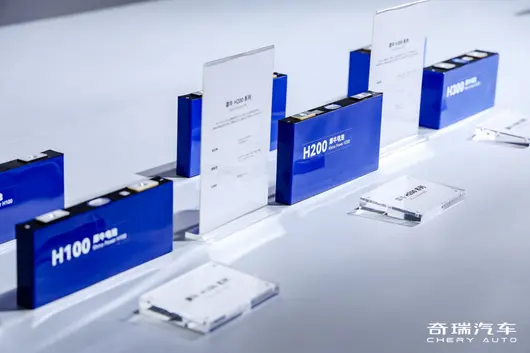
On average, 17 seconds. In the time it takes you to read this pause, another Chery-made vehicle roars toward a port on the other side of the Earth.
To be honest, half-year exports nearing 950,000 units, single month nearing the 200,000 unit mark, these numbers are indeed substantial. But if you only look at sales volume, you fall into a data trap. What we see is not how many cars Chery sold, but how this enterprise is forcibly rooting the car manufacturing roots into the soil of the global market. This is no longer simple trade export, but a fundamental restructuring of the globalization survival model.
 From Product Transit to Industrial Rooting
In the past, when we talked about going global, the essence was door-to-door delivery. Domestic production, ocean shipping, terminal sales, short chains, weak stickiness. Chery's current approach has clearly changed the logic.
Spain's European Operation Center, UK Liverpool Commercial Vehicle Headquarters, are not simply offices, but have moved the decision-making brain of market operations, compliance management, supply chain coordination, and financial control to the local level. Even more significant is the South Africa Rosslyn Plant, fully taken over from foreign enterprises, retaining all 692 original employees, and driving 3,000 supply chain jobs in the surrounding area.
 It can be said that this deep cultivation of the whole value chain is more penetrating than spending heavily on advertising. You place manufacturing on their land, taxes into their treasury, employment links to locals. This "In somewhere, For somewhere" (Here, For Here, Becoming a Local Member) deep binding is the true moat for going global.
 From Single Product Breakout to Group Strategy
Look at the product side again. Early Chinese brand global expansion often relied on one or two cost-performance models to open the market, concentrated risk, insufficient follow-up. Chery has now formed a blockbuster matrix with multiple lines advancing together.
Tiggo 7 monthly overseas sales broke 30,000 units, Tiggo 4 took the runner-up spot in South Africa monthly rankings; JAECOO 7 topped the UK full market monthly leader, JAECOO 5 led in three lines: Australia small pure electric SUV, Indonesia pure electric, Thailand markets; JETOUR T2 even secured the South Africa Car of the Year award, an authoritative award with a 40-year history. Also, OMODA 5 and iCAR V23 continue to sell well in the UK and Thailand respectively.
 Yes, this is the true meaning of the matrix. From fuel to pure electric, from entry-level home to light off-road, every segment has a capable main product. This multi-point supported product structure is the true portrayal of capacity and demand behind one car every 17 seconds.
 From Compliance Adaptation to Rule Participation
The European market is a benchmark-level arena for the global auto industry, with strict regulations and dense barriers. Chery has not only achieved sales breakthroughs but also completed advancements at the standards level.
Jan-May Europe cumulative sales 138,800 units, year-on-year growth 216.69%; in the UK for three consecutive months ranked second overall brand, second only to Volkswagen. More critically, Chery became one of the Chinese car companies to obtain the China-Europe Automotive Carbon Footprint Mutual Recognition Report, and officially entered the IATF (International Automotive Task Force) Board of Directors, directly participating in the formulation and revision of global automotive quality standards.
 From Trade Going Global to System Export
In the end, Chery's over 940,000 unit export volume in these half years marks that China's automotive global expansion has entered a new stage.
In the past it was trade going global, revenue counted per car sold; now it is system going global, while exporting products, synchronously exporting technical standards, manufacturing systems, brand culture, and localized operational capabilities. New energy export grew 1.6 times, in the European market for every 2 Chery cars sold, 1 is new energy; commercial vehicle sector June export year-on-year growth 146%, 1000 Mojia robots also opened up commercial service tracks in over 50 countries and regions.
 Zhang Guan's Comment: One car every 17 seconds, sounds very fast. But for Chinese brands aspiring to become global car companies, this rhythm perhaps has just entered the stable zone. True globalization has never been as simple as shipping cars out, but rather making oneself truly a local enterprise in every local market.
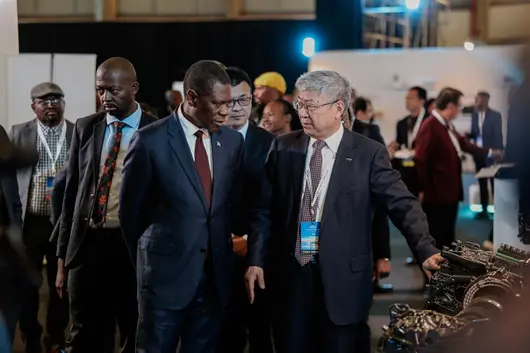

In the first half of 2026, the overseas export rankings of domestic automakers witnessed profound changes. If excluding Russia and Iran, these two special markets with geopolitical dividends, BYD's overseas sales have already surpassed Chery. This data also reflects the completely different globalization layout strategies of the two automakers.

BYD Chairman and President Wang Chuanfu
Customs export data for the first half shows Chery's overall exports at 944,000 units, among which the Russia and Iran markets contributed a combined 283,000 units. Excluding these two markets, Chery's sales in global marketized regions totaled 661,000 units. Out of strategic considerations, BYD actively abandoned the Russia and Iran markets. On one hand, the geopolitical situation in these two areas is complex, operational stability is very poor, currency fluctuations and sanctions could bring operational risks at any time; more critically, to concentrate all resources on deepening the European mainstream market, avoiding chain reactions in Western public opinion caused by the layout in Russia and Iran which could affect the European layout, BYD chose to strategically exit these two regions. All of BYD's 789,400 unit exports came from fully marketized regions such as Europe, Southeast Asia, Australia, Latin America, etc., and the total amount is already significantly leading Chery after excluding the dividend markets.

For many years, Chery relied on the market dividends of the Russian-speaking region and Iran, long staying at the first place in Chinese car exports. After Western European and American automakers actively withdrew, a huge vacuum appeared in the local fuel vehicle market, and Chery took stable sales through this. However, such markets are greatly affected by geopolitical situations, stability is insufficient, and do not have reference value for the global market. BYD actively gave up short-term dividends and persisted in deepening mainstream mature economies, making the growth more solid.

The European market has become BYD's most important growth engine. In the first half of 2026, BYD new registrations in Europe reached 162,400 units, compared to 70,500 units in the same period last year, with a year-on-year increase of up to 136%, achieving over doubling growth. Breaking it down, DM-i plug-in hybrid models were the largest incremental growth, surging 260% year-on-year, skillfully avoiding the pressure brought by the EU pure electric anti-subsidy measures; pure electric models climbed steadily, rising 78% year-on-year. Germany, Italy, Spain and other core Western European countries all achieved substantial growth, with no weak markets.
BYD's ability to continue rising relies on a complete system layout. Factories in Thailand and Brazil are continuously ramping up, and the Hungarian production base is about to go into production in the fourth quarter, which can avoid EU tariffs and further amplify the advantage in Europe. The independent Ro-Ro fleet is continuously expanding, thoroughly breaking free from the limitations of ocean shipping capacity, laying the foundation for continuous exports. Chery lacks overseas production bases, capacity is already close to the ceiling, superimposed with the Russia-Iran dividend markets showing top growth, subsequent growth will gradually slow down.

Based on the current growth rhythm, even if Russia and Iran sales are fully counted, BYD's total export volume at the end of this year has a high probability of surpassing Chery and taking the number one spot in annual Chinese car exports.
Short-term geopolitical dividends can support the rankings for a while, but cannot support long-term globalization. Looking only at mainstream markets with free competition, BYD has already surpassed, which also means that Chinese automakers going global have officially entered a new stage relying on product power to layout globally.

This article originates from AutoR Interviews, author Jia Hongbing

"The return of the all-new QQ, we are not simply competing with opponents to make this market more competitive. We hope to give users a new choice, to have a warmer companionship with QQ."
"Many A0 class small cars in the industry are making 'trade-offs', but users actually don't want to make trade-offs; they want it all. We use platformization and scale to bring down costs without reducing user experience."
"The Chinese market is just a part of the all-new QQ. Since its birth, it has been built as a global car according to global standards."
—— Chery QQ Owner Zhang Hongyu
Interview with Chery QQ Brand Owner Zhang Hongyu: How Does QQ Return?
Produced by: AutoR
Host: Jia Hongbing
Guest: Zhang Hongyu
Chery Automobile's senior 'veteran', possessing deep accumulation in the automotive industry for over 20 years. He personally experienced and witnessed the history of the first generation of Chery QQ sweeping the nation and becoming a national divine car; now, he shoulders the main burden again, serving as the all-new Chery QQ brand owner.
He takes the lead in the operations of the product sequence for the all-new QQ. Relying on the 'Grand Middle Platform' system of big Chery, he promotes the full chain from brand definition, product development, manufacturing to terminal delivery, committed to opening a new chapter for the QQ brand in the electrification and intelligence era facing the global market through intelligent pure electric native platforms and 'tech with warmth'.
AutoR interviews Chery Automobile QQ Brand Owner Zhang Hongyu: How Does QQ Return?
01.
All-new QQ operates independently within the Chery system
AutoR: You have a new Title here, I am quite interested, why call it 'QQ Owner'?
Zhang Hongyu:QQ returns, refreshed, actually at this time point, domestic brands are not just Chery, everyone is thinking about brand issues.
Chery already has Fengyun, Jetour has Shanshui, Jetour high-end Zhongheng, Chery's high-end also has Exeed.
If QQ returns again as a brand brand, it seems quite a lot.
Of course QQ should also be a brand with a lot of feelings, the first generation of QQ everyone still likes it very much!
So for the first product of the all-new QQ return, we still want to use hardcore product power to respond to everyone's expectations.
Why call it Owner? It is back to what I just said, that we don't want to come back and use a new brand organizational structure to do it, we still want to borrow the ability of the big system.
I as the product person in charge, later our team said, then you just call Owner!
This naturally came out, in fact it is still pushing forward according to the idea of operating as an independent brand.
From brand to product definition, to product development to manufacturing to delivery to the whole terminal delivery, experience channel operation management, in fact it still runs according to a set of organizational structure.
Overall I lead this team, in charge of everyone pushing this thing, so everyone gave me a name Owner.
AutoR: How many people are in your team now?
Zhang Hongyu: It is the wholeQQ from brand to marketing to terminal channels, to product definition development, this is actually QQ team exclusive, we this team total about 1,000 people.
AutoR: Over 1,000 people?
Zhang Hongyu:Over 1,000 people. Then the whole backend also has us do product engineering development specially, do engineering development verification, do manufacturing delivery, do quality control management, these are actually Chery whole 'Grand Middle Platform' give us do support, equivalent to we make requirements, we set targets, they have to give us delivery, to reach my requirements.
Then this is 'Big Chery' system team help us do support, we exclusive team now already about 1,000 people.
AutoR: You are also an old Chery person, here for more than 20 years.
Zhang Hongyu: Yes.
AutoR: Actually the first generation QQ was also nearly 20 years ago, exactly you witnessed the first generation QQ to now second generation QQ resurrection. When the first generation, you originally in Chery what position?
Zhang Hongyu: Cannot mention position, now also cannot mention any position.
Do Chery, everyone still very happy.
We hope regardless of do QQ or do Chery other brand cars, must do it well, let users like.
First generation QQ why there so big sales, actually essence is still that car from modeling above say, is grow on everyone's aesthetics point.
That car in that era, its color very bright, color many, let users have many choices.
At the same time its product power also very capable, in that time small cars achieved large space, chassis also very solid, its power also very strong.
Many users actually drive QQ that small car still open to Lhasa up, Lhasa certain degree represent do car, your hardcore mechanical performance still very solid.
Users many spontaneously set up car owner association, we also set up QQ primary school, actually is users through QQ this platform, many people become very good friends, some also borrow this platform do their career make very well.
QQ second time return, I personally think also is everyone's voice, users very look forward.
Today we again come do all-new QQ, more confident, because today electrification, intelligence, Chery technology foundation strength stronger.
So we more confident do QQ every car can achieve user interaction experience sense, driving experience sense should can do better.
So we not simple come do a compete with opponent car, or let user choose very hard car, we hope it can achieve like past QQ same, it very classic, it very different, it very lively, it can reflect young people that kind exploration, free.
Put this spirit can return to new QQ, we want do such thing.
So we all-new QQ, actually company still spent heavy money create a new platform, call intelligent pure electric platform.
It can in electronic architecture, chassis platform these aspects just can very well realize, we future regardless whether in space, in driving, in intelligence, in OTA above, it can do infinite stretch.
We not simple go compete with opponent, let this market more competitive, we hope let users have a new choice, can with QQ do more warm companionship.
We internal team say we must use more temperature technology, give users bring best, extreme experience.
All-new QQ3 everyone can see four get users point call high appearance, large layout, strong body, more understand you.
We talk large layout is space not only big, not only more is easy to use, more is you maybe use more use want, so we for this why like put front trunk, we want do many kind open way, actually we think each kind open way it may certain in scene under let your experience sense pull full, let you very convenient.
I once with our team say, I say we do a voice interaction, you think ah, I say mom drive car go pick her own baby, then in school gate, this baby use he like wake word open front trunk, put his schoolbag in.
I say that instant open and auto close that instant, this kid absolutely in his classmate face, he is full sense of pride, this certain degree reflect this car technology, but more reflect it has temperature technology, it understand you.
So we hope do such QQ, this is Chery confidence, technology strength.
QQ second time return time, we think we can achieve call 'King Return, One Step到位'.
02.
All-new QQ focuses on A0 class small cars
AutoR: Chery so many brands, QQ in Chery new brand group, it status a what position?
Zhang Hongyu: We now should call product sequence, just belong Chery brand below product sequence, focus do this kind call A0 class level small cars.
This kind car we hope for a kind call have passion, explore, can enjoy in it also willing to share (people provide), just hope put our brand build have this slogan spirit a product sequence.
So our product you will see it very suitable do DIY, it very lively.
At the same time its inside technology factors many, just this kind intelligence.
And this kind intelligence thing still can constantly OTA, it this chassis solid, let you can go farther place.
These are we QQ next do product, we want grasp technology route.
For example our space and driving, we just use all-new intelligent pure electric platform go create.
We next car wheelbase may can achieve 2 meters 8 above, this platform will make our internal space, regardless height, main line above this length and width, it all will very comfortable.
AutoR: China many brands also all do A0 class small cars, and all are pure electric, just our this native pure electric platform have what advantage no?
Zhang Hongyu: This platform because is new consider ah! It from start design time, is with user demand as origin go consider, at the same time consider do multi model have extendibility, so in chassis platform above, first achieve rear drive layout.
Rear drive layout benefit lies in put front space give let out, it has front trunk.
This kind small cars past all are oil cars, oil cars sure front drive, because engine all in front ah, engine gearbox in front you then less space utilization, very convenient electric front trunk it just unable achieve.
This must rely on platform layout, another, I just said chassis layout above, we in steering, braking above all consider future extend models.
So this kind platformization, universal design, future small cars cost also favorable, it not let users do configuration trade-off, actually use we this kind platformization, universalization put scale do up, cover multiple markets.
So my cost can hit down, but user experience I not reduce, his demand not reduce.
For example its computing power must enough, it can support from domain control to central integration, so it can constantly OTA.
It not a piecemeal, makeshift car, now industry small cars, I not say complaint our friends not good, everyone actually all for users do very hard, also do all very excellent, but overall say I think many directions still in trade-off.
Because you trade-off after, he will inconvenient, or his experience just not so good.
For example some want range do very high very long, but he for this more pile cost after, other place maybe do interior do pull weak a bit, plastic sense stronger, or material use maybe it smell just not how good, even he sometimes in body chassis safety on he maybe do some sacrifice, in turn he some maybe is chassis driving comfort above maybe he also sacrifice, for example he use torsion beam, then you think he use torsion beam that this bump, pass shock absorber strip it sure uncomfortable ah!
We consider small cars time, we second row often consider elderly want with family together, weekend time go out elderly sit back, itself elderly he just endure not fiddle, you this small car again bump, that sure not like sit ah.
This not our original intention, these are we consider do QQ time, we how use platform put it create well.
03.
Born Global, China is just one of QQ's markets
AutoR: We know Chery export very powerful, QQ is a face global market model, you on its global sales how view?
Zhang Hongyu: Now domestic brands all go export, call domestic brand strengthen, make strong, do long-term, inevitable experience this process.
Especially this one two year, should domestic brand export do all very excellent.
Chery because always do overseas market, always do global layout, Chery do time is longest, from performance look also not bad, continuous many years all domestic brand export first.
QQ from start all consider global layout, right steering like Thailand, Indonesia, Malaysia these markets, still left steering markets, we all are do global layout.
So this car from start platform design time, in development verification time, we all according to local law, regulation and user demand.
So I in launch release meeting once say, we QQ3 actually experienced various exams, global big exam, practice a body skill.
So you in China market buy QQ3, actually it is fit global car standard.
This year 5 month, I just go to some right steering markets, like Malaysia, Indonesia, to 9 month I will go Europe like UK, Aus New these markets, about next year beginning just direct global pave. China just is me this QQ one market.
AutoR: Then on its sales have what expectation?
Zhang Hongyu: Sales ah naturally bigger better.
Currently look, domestic market demand should very lively, last year year, this Geely one car Xingyuan just sell 460,000 units, and single month sales several months just passed 50,000, and it now overseas export also very good; include BYD many small cars, like Seagull, Dolphin, these cars export also very good.
Buy electric car, its experience sense better than oil car very much, economic performance also very good, use maintenance cost also low, then consumer is understand, so I believe choice people will more more.
AutoR: This small car this year actually some new technology configurations, for example like 80,000 yuan install LiDAR, some want run world model, but we feel this QQ3 actually not above go compete. In intelligence driving aspects we how layout?
Zhang Hongyu: We this car also configure Falcon500, on Highway NOA above is not have problem.
On Sharing Edition above all up automatic parking, just parking assist. This small cars parking assist, we think user should be use high frequency scene, because many moms she on parking mind actually still have anxiety, include young people just get driving license, so we in Sharing Edition two configurations up, automatic parking all have.
Because QQ in this platform also plan new others models, we also will with this intelligence driving ability continuous enhance, cost continuous dip, finally also must put it perfect match to QQ above go, but this must look intelligence driving experience maturity and it can give consumer pricing, because small cars overall sale price should not high, so must overall put it match well.
I think in intelligence driving above, especially domestic brands, in chip, computing power, large model above, this development in multiple models above application more and more mature, I believe more and more excellent.
AutoR: Is future QQ this product line how arrange? For example have QQ5, still a car is right?
Zhang Hongyu: Later we will with industry will gradually release these information, overallQQ dream still very big, global layout, we also aim for more consumers can choose QQ, as mission to go develop, so later models have bigger point, also more personality point, all go launch.
AutoR: If take five years as one time node, you hope five years after, QQ can achieve a what vision can satisfy your effort?
Zhang Hongyu: I think right now we first step go well, first step go well, everything possible.
Of course is company include shareholder, expect maybe all very big ah!
QQ overall because we global layout, according now industry this kind A0 class car currently development trend look, I think we achieve a bigger target should have challenge, but should we have confidence.

"Interviewing Pioneering Figures, Recording Human Mobility Transformation." AutoR Interviews is AutoR Network's in-depth interview column launched for AI and future mobility field, planned and hosted by AutoR Network founder, editor-in-chief Jia Hongbing.
AutoR Interviews ID:DeepAutoR
Cooperation or news tips contact email: zhubian@autor.com.cn
Contact person WeChat: buyuziya
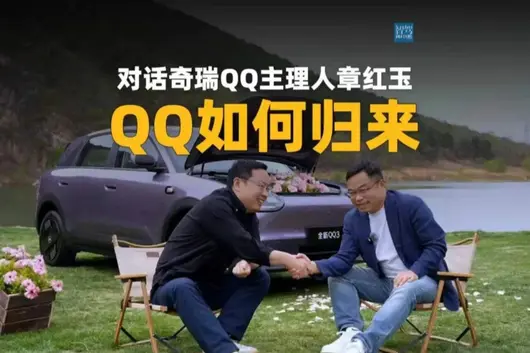


Last year, China's passenger vehicle exports surpassed Japan to take the global top spot; in the first half of this year, exports increased by another 65.3%, with the full year expected to break the 10 million vehicle milestone. This number is striking, but behind the glamour, an awkward reality is emerging: cars are selling in increasing volumes, but the walls of regulations are getting higher and higher.
The EU imposed countervailing duties of up to 35.3% on pure electric vehicles made in China, pushing the combined tax rate above 45%; Brazil raised import tariffs for electric vehicles uniformly to 35% starting from July 1st; Thailand implemented a 'production wager' mechanism, requiring the local production of 2 vehicles for every 1 imported; South Africa is also considering raising the import tariff for complete vehicles from China and India to 50%.
From Europe to Latin America, from Southeast Asia to Africa, Chinese automobiles are facing encirclement on all sides. The light-asset model of producing domestically and selling overseas has hit its ceiling.

On July 3, 2026, Chery made a move in Pretoria, South Africa, formally taking over the Rosslyn Plant, which Nissan had operated for nearly 60 years. This appears to be an ordinary transaction for Nissan to cut losses and Chery to expand production, but viewed under the proposition of 'how Chinese automakers can truly take root overseas', its weight is quite different.
Nissan Sheds Burden, Chery Takes Capacity
The sale of the Rosslyn Plant is part of Nissan's global restructuring plan 'Re:Nissan'. In the 2024 and 2025 fiscal years combined, Nissan reported a total loss exceeding 1.2 trillion yen. According to the restructuring plan, Nissan will close 7 plants globally and lay off about 20,000 people before the 2027 fiscal year, reducing global production bases from 17 to 10.

This factory previously produced models such as the Navara pickup and NP200, with products covering more than 40 African nations. However, capacity utilization rates have continued to decline in recent years. After the NP200 stopped production in March 2024, Navara became the factory's only in-production model, yet monthly sales were only a few hundred units. In May 2025, Nissan announced that local production of Navara would also cease. For Nissan, this factory has transformed from an asset into a burden.

For Chery, taking over an existing factory is more efficient than building from scratch. Chery entered the South African market in 2021, showing a steep growth curve. At this node of rapid expansion, local capacity means avoiding exchange rate and tariff risks, and also provides a hardware foundation for the next step of expanding market share.

More importantly, this acquisition is a piece in Chery's 'systematic overseas expansion' chess game. Since the beginning of this year, Chery has not just been selling cars but has deeply planted the roots of an entire industrial chain, including R&D, manufacturing, operations, and standards, into overseas markets.
In Europe, the European Operation Center and Research Institute in Barcelona, Spain, have been commissioned, and the joint venture factory with EBRO has also started production and operations; in Southeast Asia, a new factory in Vietnam worth 800 million USD is under promotion. The South African Rosslyn Plant is positioned as a comprehensive automotive hub radiating to Southern Africa.
The layout of these three locations supports each other, and a global manufacturing network is taking shape.
The Real Challenges of the South Africa Move
With the factory handover complete, the real test may have just begun.
Chery committed to retaining all 692 employees, planning to start production in mid-2027, with a future single-shift capacity of 50,000 units, and striving to achieve a 40% localization rate before 2028. This 40% is the core challenge.
Currently, South Africa imposes import tariffs of about 25% on complete vehicles, with the government considering raising the tax rate to the WTO-allowed limit of 50%. Once implemented, imported models dominated by Chinese and Indian brands will face direct cost pressures.
This is actually a positive for Chery. However, there are concerns; if the localization progress cannot keep up, the cost of importing parts will rapidly increase the overall vehicle manufacturing cost.

More realistically, the South African domestic market size is limited, with new car sales of about 550,000 per year, far insufficient to absorb large-scale production capacity. If the capacity of the Rosslyn Plant is to be fully utilized, Chery must treat South Africa as an export base, selling cars to Southern Africa and even farther markets. However, the automotive market size in most African countries is extremely small, infrastructure is weak, and export channels are not smooth.
Meanwhile, the foundation of the South African local parts industry is not optimistic. Data from the Motor Industry Association of South Africa shows that in 2025, only 33% of vehicles were manufactured locally in South Africa, a significant drop from the previous level of over 50%.
The South African local parts industry has long relied on orders from multinational automakers. As brands such as General Motors, Ford, and Nissan successively withdrew or reduced local production, the parts supplier system has already begun to shrink.

For Chery to achieve a 40% localization rate within three years, it means building or restoring an entire supply chain from scratch, introducing Chinese parts suppliers, and completing localization certification and production preparation. The schedule is quite tight.
Conclusion
Once this chess piece, the Rosslyn Plant, is placed, the situation on the chessboard begins to change. This is a landmark node for Chinese automotive export shifting from 'trade-type' to 'rooted-type'.
Against the background of tariff barriers encircling on all sides, the light-asset model relying on complete vehicle exports is unsustainable. Chery has chosen a more sustainable path, deeply planting an entire industrial root system including R&D, manufacturing, supply chain, and standards into overseas markets.
This path is not smooth. The 40% localization rate, the fragile parts system, and limited market capacity, each is a threshold that needs to be crossed. But Chery is not starting from zero.

The operational experience accumulated over more than 20 years of struggling overseas, as well as the global competitiveness of the Chinese automotive supply chain providing cost and technical support, its layout in Spain, Vietnam, and South Africa is forming a network effect.
Perhaps the most fitting conclusion is the words from Chery itself on social media: 'A new era is coming. From this moment on, Chery Automobile will proudly serve South Africa, manufactured in South Africa.'
This statement speaks not only of the fate of a factory but also of a fundamental transformation that Chinese automotive export is undergoing: from selling a car to rooting in a place. This is true globalization.
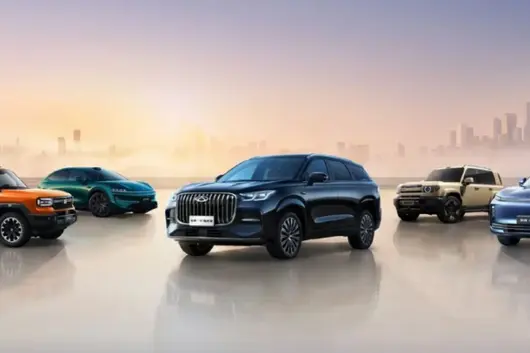

On June 21, 2026, on the Shantou East Coast, a car life square facing the sea was unveiled.
This is not only a commercial opening, but also the latest achievement of famous Teochew businessmen Wang Laichun and Wang Laisheng returning home to invest, and also a vivid footnote to the Shantou "Teochew Businessman Returning Home Project".
 In this new city transformed from tidal flats, the Ruixun Gulf Car Life Square and the first Chery Life Hall in the country are trying to define an unprecedented new landmark for car culture in Eastern Guangdong
This life hall has completely broken the cold transaction logic of traditional 4S stores "selling immediately upon entry". It has turned the 30,000 square meter seaside space into a full-scenario ecosystem field integrating "people, cars, and life".
Here, viewing cars can be a sea view tour, waiting can be a meal of Chaoshan cuisine, parent-child time can be interwoven with tech study.
Chery Automobile Chairman Yin Tongyue revealed the essence: "What today's users need is not just a good car, but a quality, personalized, and happy lifestyle."
 He explicitly stated that this life hall is the largest and most fully-featured benchmark of Chery globally, and the "one city, one hall, one feature" layout will be promoted in the future.
This "stress-free discovery" model has completely broken the circle barriers of car consumption, allowing car culture to move from professional to mass public.
For the 15 million overseas Chinese scattered across the globe, the strategic significance of this life hall far exceeds a leisure consumption venue.
Shantou possesses scarce international submarine cable channels and "data processing" pilots, approved as one of the national first batch of "Digital Bonded Zone" cultivation pilots, serving as the digital bridge connecting China and Southeast Asia. This is naturally the "bridgehead" for Chinese brands going global.
Chery's partnership with Shantou is essentially a strong alliance between "Chinese hardcore products" and "Global Teochew Business Networks".
Chery Life Hall is not only a showroom, but also a "home port" and actual scene model room provided for overseas Chinese and potential dealers — overseas Chinese here not only see cars, but can also see a replicable commercial model carrying Chinese lifestyle and brand value.
Chery's confidence stems from its solid overseas performance record.
In 2025, Chery's export sales reached 1.344 million units, accounting for nearly half of total sales, ranking first in export of Chinese brand passenger cars for 23 consecutive years.
In the Southeast Asian market dominated by Japanese cars for decades, Chinese brands are tearing open a gap with new energy as a weapon.
In January 2026, Chinese brands accounted for over 75% of the pure electric vehicle market share in Thailand, and Chery has even jumped into the top three in brand sales.
In Malaysia, Chery, relying on solid workmanship and highly competitive pricing, saw its market share surge, attracting a large number of consumers who originally considered Japanese cars.
Yin Tongyue once said, Chery's globalization cannot just compete on speed, but must rely on sustainable technical capabilities, with the goal of upgrading from "product going global" to "technology going global".
Now, Yin Tongyue went a step further, he hopes to build the Shantou Life Hall into an "investment promotion platform, going global exchange platform", promoting Chinese automotive technology to "go south to Southeast Asia", towards the world.
This highlights Chery's strategic vision of deeply cultivating Southeast Asia — no longer satisfied with selling cars, but outputting brands and lifestyles. The opening of the Shantou Chery Life Hall is not only a milestone in Chery's channel reform, but also a microcosm of Shantou's urban advancement.
It integrates the advantages of the hometown of overseas Chinese, coastal endowments, and cutting-edge consumption formats, providing an observation sample for the globalization narrative of Chinese brands: true going global is letting brand culture take root in a foreign land, and behind this, is the warmth and strength given by this hot soil of the hometown.
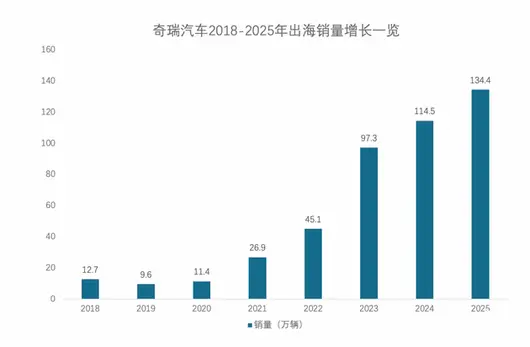

The May car sales rankings have been released one by one. The domestic sales landscape is basically set, with little highlights. The most crucial part is the surge in overseas exports. BYD exceeded 160,000 units, closely chasing Chery's 180,000 units. Chery is an old export powerhouse, and is now quickly to be overtaken by BYD.
Thrilling!
Regarding overseas exports, both strategies differ, but looking at this May data alone, Chery temporarily held the throne, but BYD chased very aggressively.
Chery: The Foundation of a 'Veteran'
Chery exported 181,900 units in May, leaving other opponents far behind.
Chery has deepened cultivation in places like Russia, Brazil, and the Middle East for nearly 20 years. Channels and reputation are very solid. It's like running a restaurant; Chery is an old brand with stable repeat customers, and now the taste (product power) has also upgraded, so sales exploded suddenly.
Feature: Fuel cars are the main force and the foundation for making money; new energy is also catching up now.
BYD: The Impact of a 'Rising Star'
BYD exported 160,600 units in May. Although fewer than Chery by over 20,000 units, the growth rate and momentum are stronger.
BYD is the global new energy sales champion, with high brand popularity. Especially in Southeast Asia (Thailand, Singapore) and South America (Brazil), BYD's electric vehicles delivered an overwhelming advantage, grabbing quite a bit of the market.
Feature: All new energy, conforming to future trends, with very strong follow-up power.
Let's look at the May domestic car brand export data. I made a table, it's more intuitive:

Geely this time is worth mentioning separately:
Geely's 85,100 units, although the absolute value hasn't caught up to Chery and BYD yet, the 184% year-on-year growth rate is the highest in the field.
And there is a detail especially worth noting: Geely's exported new energy vehicles in May accounted for 47.9%, almost half were electric cars.
This indicates Geely is not just relying on fuel cars to boost volume overseas; new energy exports have truly taken off. This contrasts with BYD relying mainly on new energy and Chery relying mainly on fuel cars, forming the three main routes for automotive exports currently.
Additionally, Zeekr under Geely delivered 34,377 units in May, with year-on-year growth of 82%. The path of high-end electric car exports went quite smoothly. Lynk & Co 08 EM-P has already launched and delivered in Kazakhstan. Geely's new energy layout overseas is becoming more comprehensive.
Simply summarize the current landscape:
Chery: Total volume No. 1, deep foundation, fuel cars are the baseline
BYD: Total volume No. 2, pure electric and hybrid both strong, momentum fierce
Geely: Growth rate No. 1, highest new energy export ratio, high potential
These three companies' current tactics each have characteristics: Chery plays the 'All-rounder card', BYD plays the 'New Energy card', Geely plays the 'High-end Growth card'. The May export rankings are clear, but who grows faster in the second half, is really hard to say.
And regarding the champion fight, the author believes this battle is not just two car companies fighting, it also represents two export models:
Chery is an 'All-rounder': Grasps both fuel and electric cars, deep foundation in traditional markets. For May, Chery was the undisputed No. 1.
BYD is a 'Specialist Genius': Specializes in new energy, breaking through like bamboo in emerging markets. Although the single month hasn't surpassed Chery yet, adding up January to May, Chery exported 753,000 units. BYD hasn't released cumulative data yet, but based on the single month of 160,000, the total volume gap is rapidly narrowing.
To give an example: This is like a football match. Chery is a traditional strong team, leading all through the first half (past few years), defense is stable; BYD is a rising star with a top striker (EV technology), currently attacking fiercely.
Currently, although Chery leads, the match is far from over. As long as BYD maintains this growth rate, who sits on the 'Number One' seat by the end of this year is really hard to say.