首頁BYD

搜尋歷史
熱門搜尋
經銷商登入 / 註冊

Recently, the domestic leg of the 2026 Silk Road 10,000 Miles Journey Enlightenment Road concluded successfully in Shenzhen. The new energy vehicle fleet escorted by BYD throughout the journey traversed thousands of kilometers, successfully completed the overland Silk Road exploration journey, and from here sets sail to connect with the Maritime Silk Road, embarking on an all-new overseas journey.
The camel bells of the ancient Silk Road echoed, witnessing the fusion and mutual learning of Eastern and Western civilizations. Today, new energy vehicles continue the historical mission, opening a new chapter belonging to Chinese intelligent manufacturing.

This Silk Road 10,000-Mile Journey focuses on culture, technology, and trade. The BYD fleet departed from the Silk Road starting point Xi'an, passing through multiple historical famous cities, visiting the four Eastern cultural symbols of fragrant herbs, porcelain, silk, and tea, integrating the millennium-old intangible cultural heritage with modern automotive technology Autohome.
During the long journey, complex road conditions and diverse climates tested the vehicle strength in turns. BYD's full matrix of models, relying on stable vehicle performance, flash charging and energy replenishment technology, and intelligent driving capabilities, calmly handled various travel scenarios, successfully completed all domestic leg schedules, and verified the solid product strength of Chinese new energy vehicles with actual performance.

Shenzhen is not only the end of the domestic leg but also the starting point for heading overseas. After completing the domestic itinerary, the fleet will continue on the Maritime Silk Road, rush to multiple overseas locations to carry out brand display and product experience series of activities, bringing the strength of Chinese new energy to the world. Galloping through mountains and seas for a green voyage, BYD is measuring reliability with mileage, allowing more international consumers to understand and recognize Chinese new energy vehicle products.
Today, Chinese new energy vehicles are accelerating towards the global stage, becoming another business card of Chinese high-end manufacturing. What it exports is not only complete vehicle products, but also a complete energy replenishment system and low-carbon development concept.
Currently, the competition in global new energy vehicles is becoming increasingly fierce. Going overseas is no longer simple product export, but also tests the comprehensive strength of the brand and cultural communication capabilities.
From data perspective, BYD's globalization map is accelerating expansion. As of now, its new energy vehicles have covered 121 countries and regions globally. Overseas sales broke through 1 million units for the first time in 2025. Overseas cumulative sales from January to July 2026 reached 970,000 units, with a strong growth momentum.

More importantly, BYD's overseas expansion has long surpassed simple complete vehicle export, extending towards localized production, technology output, and industrial synergy multi-dimensionally. Placing the first flash charging station in Europe, building an exclusive energy replenishment network in Uzbekistan, laying out localized production bases in Thailand and Brazil, and even bringing the PV, Storage, and Charging integrated solution to Central Asia.
BYD fully escorted the Silk Road 10,000-Mile Journey, which is not only a brand expedition, but also a vivid vignette of the leap from Chinese auto product overseas to ecosystem overseas era. The civilization exchange of the ancient Silk Road has never stopped, and BYD is using green technology as a brush to write a new chapter belonging to the new era on this exchange road that has lasted for thousands of years.
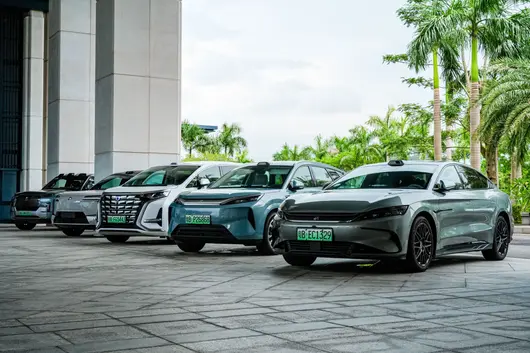

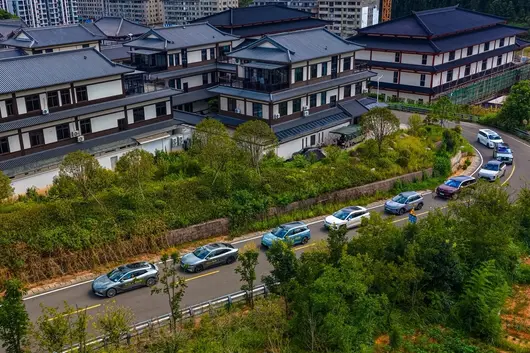
Netcar Commentary A convoy departed from Xi'an, passing through Bozhou, Jingdezhen, Hangzhou, Wuyishan, Quanzhou, and Chaozhou along the way, finally arriving in Shenzhen. Fragrant herbs, porcelain, silk, and tea were written into the route map, and seven flash charging stations, two racetracks, and models from five networks and four brands were also interspersed.
When I first saw this map, my gaze first fell on the road after Shenzhen.
Shenzhen is where BYD started, it is BYD's global headquarters, and also the endpoint of this domestic journey. The convoy will continue to go overseas from here.

In recent years, Chinese car companies have been used to using roll-on/roll-off ships, overseas sales, and new factories to tell the story of going global, and BYD also has enough numbers. But when the convoy runs past highways, cities, mountain roads, and coastal roads, telling the story of China's smart manufacturing setting sail on the new Silk Road overseas, I gradually feel that how the technology in the car works, and how charging follows, might be closer to the daily life of globalization than a departure at the port.
Over twenty years in the automotive field, BYD's impression on the outside world has changed several times. Early on, people remembered its batteries, later people remembered DM-i and Blade Batteries, and in recent years, Yangwang, Fangchengbao, DiPilot, DiSus, Yi Sifang, and Flash Charge have been added.
After the number of terms increased, I also worried they would each talk their own language, until seeing different brands driving along the same route, I realized BYD is organizing the technology accumulated over these years into things that users can feel.
Nineteen Years Ago, BYD Was Already Studying Fast Charging
From 2007 to 2008, BYD participated in research and development projects such as pure electric vehicles and their fast charging systems. In December 2008, F3DM was launched in Shenzhen. This car could charge using a common 220V power source, also supported fast charging at professional charging stations. The announced charging speed at the time was a 50% charge in 10 minutes.

In that era when private new energy vehicle consumption in China was just starting, charging facilities were very scarce. Users had not yet formed the cognition of charging cars, nor had they formed the habit of charging cars.
When F3DM launched, Wang Chuanfu reminded owners on stage not to forget to charge mobile phones before going to sleep, and not to forget to charge the car either. This action which sounds quite ordinary today, even required a car company to teach users back then.
By the end of 2010, F3DM cumulative sales were only 365 units. This number is far from BYD today, but looking back from the current perspective, at that time BYD had already considered batteries, cars, and charging facilities together before the market matured, forming a sharp contrast with the blind follow-the-market car-making of many car companies today.

Eighteen years ago, F3DM already had fast charging capability, but charging facilities were far from mature. This time, the BYD convoy went south along Xi'an Lintong, Bozhou Yingquan, Hefei, Shengzhou, Wuyishan, and coastal highway. Flash charging stations are already distributed in highway service areas and urban business circles, and the number of stations is still increasing.
With the support of the second-generation Blade Battery, BYD's Flash Charge models have shortened charging time to minutes. On highways, city stops, and mountain roads, users can continue on the road with just a brief stop. The charging experience is very close to refueling a fuel vehicle.
When the convoy arrived in Shenzhen, my understanding of BYD's charging system also changed.
In the past, I often regarded batteries as its trump card for making cars. Looking at it again today, BYD has been preparing for charging for many years. And now, the most direct feeling for users is the dozens of minutes saved on the road.

Early research did not immediately bring market. BYD did not stop investment because of this. After F3DM, this thing was continued for nearly twenty years. BYD's credibility when talking about charging technology today also comes from this verifiable long-term investment.
Five Networks, Four Brands Walk on the Same Road
Around 2019, BYD began to adjust automobile sales channels. Since then, Dynasty, Ocean, Denza, Fangchengbao, and Yangwang gradually formed their own product sequences.
But in the process of BYD extending from the mass home market to luxury, ultra-luxury, off-road, and high-performance markets, external doubts have always existed.
Some say, for a brand good at mass manufacturing, entering higher-priced, more refined markets, the lessons to be made up are far more than power and configuration.
The convoy drove from Xi'an to Shenzhen. Cities, highways, mountain roads, and racetracks appeared in sequence. Dynasty and Ocean bear daily and family travel, Denza takes care of long-distance seating and luxury experience, Fangchengbao enters mountain roads and unpaved roads, Yangwang shows four-motor and body control capabilities at the racetrack.

Although there are differences in price and usage among brands and models, every car shares BYD's accumulated new energy vehicle technology and whole vehicle manufacturing capabilities.
On this road from north to south, the convoy passed urban areas, and ran on highways and mountain roads. Enabling DiPilot has become a common action during driving.
After running hundreds of kilometers, the driver can feel the heaviness and lightness of acceleration/deceleration during car following, a judgment once entering/exiting ramps, whether the takeover prompt comes a bit early or late.
A few years ago, when talking about BYD externally, the first thoughts were still batteries and hybrids. High-level assisted driving was rarely ranked at the front. This impression needs to change. Every car following, lane changing, and takeover must give people confidence.

In the past many years, BYD brought heavy-weight technologies to mass production products one after another, and made products in scale. After the formation of Five Networks Four Brands, they showed another capability. That is relying on common R&D and manufacturing foundations to enter multiple market segments and serve users with different needs.
This change is more important than adding a few brand names or models. It means BYD is growing from an automotive enterprise known for technology into an automotive group with clear brand hierarchy and wide market coverage.
From a Three-Person Office in Rotterdam to Rayong Factory
At the end of 1998, Li Ke brought an engineer and a translator to Rotterdam, Netherlands. Wang Chuanfu gave them startup resources: one shipping container of batteries and $30,000, and said, if you can reach break-even, continue. If you lose it all, stop.
Then the three people made calls to find customers during the day, wrapped battery packs together at night, and drove forklifts to deliver goods the next day.
On New Year's Day 1999, BYD's first overseas branch opened for business. At that time, the protagonist of overseas business was still batteries hidden in mobile phones.

More than twenty years later, BYD's own roll-on/roll-off ships began to shuttle between global ports, and Thailand's Rayong factory has already covered stamping, welding, painting, assembly, and parts production.
In July 2024, BYD's 8 millionth new energy vehicle rolled off this factory. Annual capacity about 150,000 units. Compared to shipping a car from Shenzhen, building a factory locally requires handling employees, supply, regulations, services, and consumption habits. Investment is heavier, and more is left behind.
In 2025, BYD's overseas sales exceeded 1 million units for the first time. Entering 2026, the overseas market is still growing rapidly, business has already covered 121 countries and regions.
From walking from the small office in Rotterdam to today, BYD's overseas operation has changed products, scale, and methods. The early approach of being close to customers and entering local markets has not lost its effectiveness.
After the convoy arrives in Shenzhen, it will continue to drive overseas. This reminds me of the three people in Rotterdam back then.
For a Chinese brand going global, the starting point can be a shipping container of batteries, or it can be a ship of new energy vehicles. But finally it must be implemented in the lives of local users.

After sales volume reached one million units, the overseas market BYD faces has become much more complex than before.
More than twenty years ago, BYD needed to make overseas customers know a battery enterprise from China. Today, what it needs to build is global consumer recognition of a Chinese automobile enterprise.
Written at the End
Thousands of years ago, camel caravans and merchant ships followed the Silk Road, transporting fragrant herbs, porcelain, silk, and tea to farther places. The world thereby recognized China's products.
Today, a convoy composed of different brand models of BYD drove from Xi'an to Shenzhen, then went to South Asia. This journey spanning mountains and rivers looked back at the traffic on the ancient Silk Road, and also let technology and vehicles undergo testing on real roads.
Electric vehicles, lithium batteries, and photovoltaic products are called China's Export "New Three Items". They represent another change in China's exports. The three fields involved in "New Three Items", BYD has been laid out for many years.
With whole vehicles accelerating into overseas markets, BYD's technology application, charging facilities, and long-term services will also quickly follow.
From single commodity output to technology, manufacturing, and service capabilities entering overseas markets together. BYD is participating in global traffic and energy transformation with green technology, creating a new business card of China's smart manufacturing belonging to this era.

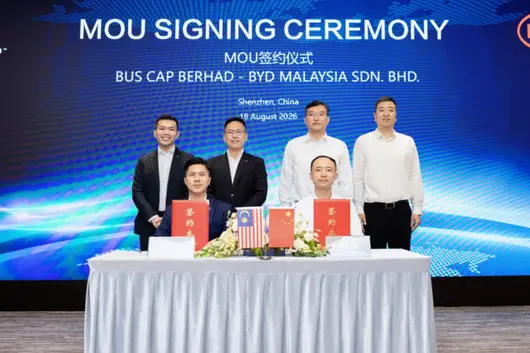
August 18, 2026, BYD Malaysia Sdn Bhd (abbreviated as "BYD Malaysia") and Malaysian bus manufacturer Bus Cap Berhad (abbreviated as "Bus Cap") signed an exclusive Memorandum of Understanding (MOU) in Shenzhen. The two parties will focus on local assembly and manufacturing of electric buses as the primary cooperation priority, jointly promoting strategic cooperation on new energy commercial vehicles in Southeast Asia with Malaysia as the base.

Bus Cap is a listed bus manufacturer in Malaysia. Its core subsidiary, SHL Coach, has been rooted in Perak since 1968 and possesses a mature local manufacturing foundation and market understanding. According to the MOU, the two parties plan to carry out cooperation around areas such as product localization, sales models, and after-sales services, and explore establishing electric bus local assembly and manufacturing facilities in Perak. BYD will leverage its leading new energy technologies, comprehensive solutions, and global marketing promotion experience, combined with Bus Cap's local industrial foundation, to lay a solid foundation for the overall development of electric buses in Malaysia.
BYD Group Vice President and General Manager of the 15th Division & Commercial Vehicle Division Luo Zhongliang stated: "This MOU is an important step for BYD Malaysia in evaluating local electric commercial vehicle opportunities. Based on this cooperation, BYD will combine localization needs to promote the R&D and production of various new energy buses, further explore various new energy commercial vehicle solutions, and continue to expand the Southeast Asian market with Malaysia as a fulcrum."
Huang Zongyang, Executive Director of Bus Cap, stated: "This MOU is an important step in Bus Cap's development journey after listing, and will establish a competitive foundation for electric bus assembly, manufacturing, and deployment in Malaysia."

This cooperation aligns with the Malaysia National Energy Transition Roadmap (NETR) and the direction of public transport electrification. The two parties will take this as a starting point to deepen cooperation in the field of new energy commercial vehicles and jointly explore broader Southeast Asian market opportunities.

Let's turn back time to Quanzhou Port a thousand years ago. At that time, masts stood like a forest, and foreign merchants gathered. On the dock, Jingdezhen porcelain, Hangzhou silk, and Wuyi tea ready for shipping were stacked. They would ride the monsoon winds southward, crossing the South Seas, eventually reaching Rome, thousands of miles away.
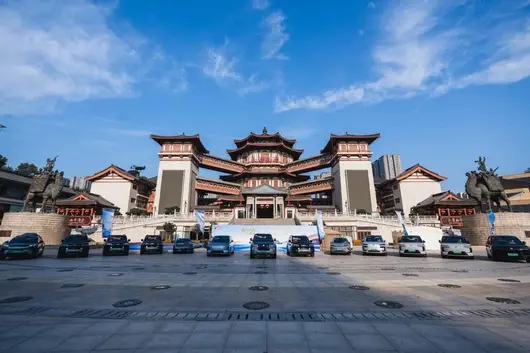
Time arrives at 2026. A BYD convoy departed from Xi'an's Great Tang West Market, traveling south along the four thousand-year-old cultural arteries of Bozhou incense, Jingdezhen porcelain, Hangzhou silk, and Wuyi Mountain tea. Passing through Quanzhou and Chaozhou, it finally reached Shenzhen to complete the "going global" ceremony.

Porcelain, silk, tea. These were the "hard currency" of our foreign trade a thousand years ago. A thousand years later, at Shenzhen Port, roll-on/roll-off ships departed slowly one after another. Inside the holds, neatly arranged were not silk or porcelain, but tens of thousands of new energy vehicles. The destinations were surprisingly consistent with a thousand years ago, still Europe and Southeast Asia.
Some friends might consider this BYD "Silk Road Ten-Thousand Miles" event as simply a brand promotion. But if we dig deeper into its connotation, we find it is actually a cultural relay spanning a thousand years. Why say that? Let's start from that ancient trade route from a thousand years ago.
Silk Road, A Thousand-Year Name Card of China
When mentioning the Silk Road, what comes to many minds is the sound of camel bells and a land channel filled with yellow sand.
But in reality, the ancient Silk Road always operated on two lines in parallel. The land Silk Road started from Xi'an, going westward over mountains and ridges, directly reaching Rome; the maritime Silk Road started from Quanzhou, setting sail and navigating through the South Seas. These two distinct routes converged, becoming a bridge between ancient China and world trade.

Friends who have read history certainly know that what we exported on this trade route were ancient Chinese specialties like Bozhou incense, Jingdezhen porcelain, Hangzhou silk, and Wuyi tea. Although called "specialties", the weight and significance of these products back then was far heavier than we imagine.
Porcelain was the "high-tech product" of that era. Europeans didn't decipher the firing secrets of hard porcelain until the 18th century. In the hundreds of years before that, Chinese white porcelain was regarded as "white gold" in Europe. Silk and tea were also scarce "hard currency". In Rome, the price of silk was almost equivalent to gold of the same weight.
In other words, when Chinese products went overseas a thousand years ago, what was exported was not just commodities, but world-class craftsmanship and technology of that time.

And coming to today, a thousand years later, the BYD convoy is retracing not just the ancient roads in a geographical sense, but a path where "good Chinese products win the world". However, on BYD's manifest are world-leading new energy vehicles, power batteries, and a complete charging replenishment system.
From Selling Products to Building Systems, The Value of Going Overseas is Getting Higher and Higher
Looking at Chinese carmakers going overseas, sales volume is always the most intuitive entry point.
BYD's overseas sales have already broken one million units, a year-on-year increase of over 140%, with products covering over 120 countries and regions globally. From starting scale overseas expansion to reaching one million sales, BYD only took a few short years. This speed is extraordinary in the history of any previous multinational carmaker. Even Toyota and Volkswagen took decades to complete a similar global layout.
Of course, sales volume is just a partial data point. If you only focus on sales, you might view BYD's global strategy as too shallow.

What is most noteworthy about today's BYD going overseas is the two words "system". 8 own roll-on/roll-off ships shuttle regularly on global routes, delivering whole vehicles directly to Europe, America, and Southeast Asian ports. The Rayong Factory in Thailand, BYD's first passenger vehicle base overseas, localized both parts and employees, with vehicles produced locally and then exported to Europe. Besides the Thailand factory, BYD has multiple bases synchronously laid out in Brazil, Uzbekistan, Hungary, etc., forming a complete closed loop of "Domestic R&D + Overseas Localization Production + Global Shipping".
Technology export is even more important. The second-generation Blade Battery, fast charging replenishment system, are landing overseas synchronously with the vehicles. Europe's first fast charging station has been built, Uzbekistan's dedicated charging network is being laid out, and even the "PV-Storage-Charging" integrated power station solution has entered the Central Asian market.
The porcelain merchant ships a thousand years ago loaded finished products. Today's roll-on/roll-off ships load not just finished cars, but factories, technology, and standards. The carrier of going overseas has changed, and the depth of going overseas has also completely changed.
New Maritime Silk Road, Sending the Best Chinese Made to the Whole World
In this BYD "Silk Road Ten-Thousand Miles" event, actually, there is a detail worth savoring, which is that the weight of the Quanzhou stop was significantly increased.
The convoy visited the Maritime History Museum here, watching thousand-year-old techniques amidst the threads of marionettes, and reading letters home that crossed the ocean in the Qiao Pi Hall. Why specifically choose Quanzhou? Because this city preserves the most complete memory of the Maritime Silk Road. It is the origin point of China's deep interaction with the world via the ocean, and it is also a key to understanding the logic of today's China going global.

Until today, more than 80% of global cargo trade still relies on maritime shipping. Maritime routes are the blood vessels of globalization. The main battlefield for Chinese cars going overseas: Europe, Southeast Asia, Latin America, all actually require sea routes to arrive more economically. BYD building 8 roll-on/roll-off ships by itself is essentially holding this "blood vessel" in its own hands.
This is why, in the previous "Double Silk Road narrative", the Maritime Silk Road was actually the main focus. From Quanzhou Port to Shenzhen Port, from the Maritime Trade Office in the Song and Yuan dynasties to today's roll-on/roll-off terminals, the maritime channel between China and the world has never closed; it's just that the cargo on ships changed from silk and porcelain to batteries, whole vehicles, and PV-storage solutions, which are what is often called the "New Three Items" for going overseas today.
And the weight of this new name card is not less than the porcelain from a thousand years ago. When countries along the route use Chinese new energy vehicles, Chinese fast charging stations, and Chinese PV-storage-charging solutions, what China exports is not just products, but a complete set of green and sustainable development paths.

The moment the BYD convoy departed from Shenzhen Port, what we saw was not just the voyage of a car manufacturer, but a relay spanning a thousand years. The incense, porcelain, silk, and tea of the ancient Silk Road, and the batteries, whole vehicles, and charging systems of the new era, completed the handover in the same sea area. The carrier is indeed changing, but the core has not changed: Send the best Chinese-made to the whole world.

ZhiLiao Auto / Chen Yi
Recently, "Fortune" magazine released the latest Fortune Global 500 ranking, Chery Automotive ranked 383rd with revenue of $41.778 billion.

Actually, Chery was already on the Fortune Global 500 list last year, ranked even higher at 233rd. The difference is, this year Chery is evaluated independently as a listed company entity, after all, it went public on the HKEX last September.
In other words, although Chery was on the Fortune Global 500 list for two consecutive years, the significance differs. This year, Chery must undergo comprehensive scrutiny from the capital market and industrial sector.

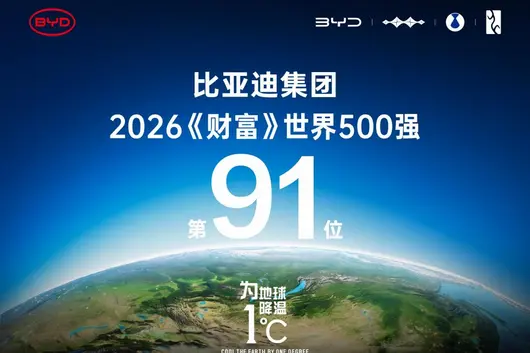
Worth noting is, among Chinese automakers and auto parts companies entering the Fortune Global 500 this year, there are 10 in total. Besides Chery, there are BYD, CATL, Geely, SAIC, etc., all very well-known. Among them, BYD ranks highest, with revenue of $111.853 billion, ranking 91st.
Domestically, BYD is now the undisputed "leader". Cars sell well, and profits are high. Last year, BYD's NEV sales reached 4.6 million units, securing the global NEV sales champion title for consecutive years, annual revenue 804 billion yuan, net profit 32.6 billion yuan.
Moreover, it is willing to invest heavily in R&D. For example, in 2025, BYD invested as high as 63.4 billion yuan in R&D, ranking first among A-share listed companies for two consecutive years. So far, BYD's cumulative R&D investment has exceeded 250 billion yuan.

The key point is, BYD's batteries, chips, motors, electronic control, etc., are all self-made. In the past, people thought this "doing everything oneself" model was too asset-heavy and too slow, but facts prove that as long as you can survive, you can use economies of scale to further reduce costs.
What is BYD's moat? Cost and scale. Others spend 100 to make a car, BYD might only need 80; others sell 100 cars a year, BYD can sell 200.
What about Chery? It is a different model.

Starting from 2001, Chery was already selling cars overseas. At that time, most Chinese automakers were still competing domestically. So strictly speaking, Chery counts as one of the first batch of "going global" Chinese automakers.
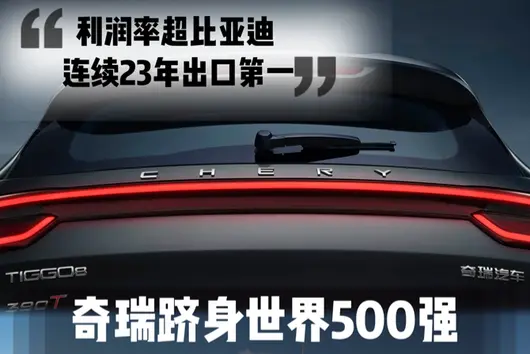
Of course, it was indeed difficult at first. In 2001, Chery's export volume didn't even exceed 100 units. But it proceeded steadily, continuously expanding its overseas map. To date, Chery's business covers more than 130 countries and regions, ranking first in Chinese brand passenger car exports for 23 consecutive years.
Chery's "going global" is not a one-off deal. It has 16 production bases globally, with over 3,100 overseas dealer outlets. Brazil, Indonesia, Thailand, Malaysia, etc., all have Chery's localized manufacturing networks.

Foreign media summarized Chery's "going global" model as "encircling cities from the countryside". This is not wrong, after all, it first went to markets with lower thresholds like the Middle East, Latin America, Southeast Asia to build brand awareness, selling mature fuel models like Tiggo and Arrizo, and later penetrated into high-regulation markets like Europe.
In 2025, Chery exported 1.344 million vehicles, equivalent to a Chery being sold overseas every 23 seconds on average. Annual total revenue 300.29 billion yuan, breaking the 300 billion yuan threshold for the first time. Net profit 19.51 billion yuan, overseas revenue 157.42 billion yuan.
To put it plainly, Chery is now completely a Chinese automaker where "selling cars relies half on overseas markets".

More worth noting is, Chery's overall average vehicle price is about 103,500 yuan, overseas average vehicle price is 121,600 yuan. The same car sells nearly 20,000 yuan more overseas than domestically.
So you see, Chery's success logic is simple: if you can't compete domestically, go sell abroad.
Compared to BYD, Chery's moat is built up over time. Over 20 years of accumulation, Chery's overseas channels, brand recognition, and localized operational capabilities are not something that can be easily replicated.

This shows that the path to success is not singular. The "BYD model" can succeed, and the "Chery model" can also succeed.
However, both have their own problems to face. For example, how can BYD replicate its domestic model in the global market? How can Chery boost domestic sales? ... These are all issues that must be resolved.
ZhiLiao Auto original article, if reprinting is needed please contact us
*Pictures from the internet, if infringing please contact author to delete*

The narrative of "cool domestically and hot internationally" has become the main theme of China's automotive market.
According to the latest data from CPCA, July domestic passenger car retail sales reached 1.461 million units, a 20.9% year-over-year decline. Year-to-date cumulative retail sales stand at 10.173 million units, down 20.3% from last year.
Meanwhile, July passenger car exports hit 918,000 units, surging 87.8% year-over-year, with the proportion of export volume to total manufacturer sales climbing to 41% (37% last month, 21% in the same period of 2025).

Regarding the "cool domestic market," CPCA analysis suggests this is due to the resonance of multiple factors, including oil price rebounds, weakening macroeconomics, seasonal slumps, prior demand exhaustion, and policy shifts.
Conversely, the contraction of domestic demand has accelerated the pace of Chinese car companies "going global"—since the domestic market is overcrowded, they go overseas to find blue oceans.
On this rising export curve, BYD's performance has been the most striking.
Data released by BYD shows that overseas sales reached 179,800 units in July, a 124.3% year-over-year increase. Even according to CPCA's statistical standards, BYD's 174,000 unit NEV export sales in July exceeded the combined total of the second-ranked (Chery, 83,000 units) and third-ranked (Tesla, 66,000 units) exporters, establishing a fractured leading advantage.

More importantly, BYD's export proportion of total sales in July rose to 43.1%. It is worth noting that just two years ago in 2024, this proportion was only a little over 10%.
This means BYD is no longer a Chinese brand simply relying on the domestic market, but a truly global car company. This has prompted the outside world to re-examine the strategic vision previously proposed by Wang Chuanfu of "achieving the largest scale globally in five years."
If BYD wants to "achieve the #1 global scale," it will face Toyota, this "giant."
Toyota's strength lies in its global production and sales network and extreme cost control in the fuel vehicle era. What BYD currently demonstrates is the ability to reconstruct the global market on the new energy track.
CPCA data shows that July NEV passenger car exports reached 540,000 units, up 147.8% year-over-year, accounting for 58.8% of total exports, an increase of 14 percentage points compared to the same period last year.
According to CPCA Secretary-General Cui Dongshu's statistics, from January to June 2026, China's NEV passenger car world share reached 62%, and the share in the plug-in hybrid field was as high as 71%.

The share of Chinese NEVs worldwide is rising rapidly. As the global NEV sales champion, BYD is actually standing at the forefront of the global output of China's supply chain.
Data shows that in the first half of 2026, Toyota's global sales were 5.0089 million units, ranking first globally for seven consecutive years; BYD's first-half global sales were 1.8085 million units, ranking sixth. The difference between the two was 3.62 million units, but the speed of narrowing the gap is accelerating—the gap was 13.4 times in 2021, narrowed to 2.7 times in 2023, and by the first half of 2026, the gap between the two is less than 1.7 times.
It took BYD less than two years to increase the export proportion from 10% to 40%. If the overseas market can maintain this growth rate, and Toyota continues to struggle in the quagmire of electrification transformation, then "surpassing" will no longer be a "whether possible" question, but a "when it happens" question.
But sales figures are just the most superficial things. What is truly worth thinking about is, what does BYD rely on to fill this gap of over 3 million units?
Toyota's foundation is a global fuel vehicle system that has been operating for decades; from supply chain to channels to brand perception, it is all stacked up by time.
BYD's opportunity lies in the fact that the technical logic and cost structure of NEVs are completely different from fuel vehicles. It does not need to fight position warfare in Toyota's home field, but uses a new product logic to find its entry point in every regional market.
BYD's overseas strategy can be summarized as "precise entry" and "deep localization." This strategy shows highly flexible adaptability in different regional markets. A highly representative case is the launch of BYD's K-Car in the Japanese market.

On July 28, BYD's pure electric K-Car "Sea Otter Racco," built specifically for the Japanese market, was launched. As of August 9, in less than two weeks, orders broke 1,000 units, with 80% coming from the top-spec version. For any car company wanting to penetrate the Japanese market, this is a capital worth "boasting" about.
It is worth noting that the Japanese market has long been a solid fortress of the global auto industry, with local brands holding absolute dominance. Even "giants" like Volkswagen and Hyundai find it difficult to open the Japanese market. Especially the K-Car market, which has an annual retail volume exceeding 1.6 million units and is known as the totem of Japanese auto culture, has been monopolized for over thirty years by three local giants: Suzuki, Daihatsu, and Honda.
More importantly, due to the adoption of Chinese self-developed parts, the Sea Otter can only receive a subsidy of 150,000 yen in Japan, while local competitors like Nissan Sakura can receive 580,000 yen. Under the subsidy disadvantage of three times that of competitors, orders still exceeded expectations. This directly shows that BYD has already possessed the strength to directly confront Japanese car companies in manufacturing processes and cost control.

An earlier example is BYD's Shark Pickup launched for the Americas, Australia, and other markets. It accurately hit the pain point of combining commercial and home use in the local market, becoming one of the best-selling Chinese brand models. CPCA data shows that BYD Shark Pickup overseas market monthly average sales are about 3,000 units, with sales in some months even exceeding 4,500 units.
Data released by BYD shows that under the boost of the Shark Pickup and subsequent imported Seagull and other NEV models, Brazil has become BYD's largest overseas market, with cumulative export volume reaching 194,700 units in the first half. Meanwhile, just on July 16, the 100,000th car of BYD Brazil factory officially rolled off the production line.
From Japan's exquisite K-Car to America's tough Pickup, BYD is no longer exporting "global products," but providing "regional customization." This transformation allows it to quickly fill the market void left by traditional brands.
Orient Securities forecasts that BYD's 2026 full-year sales will exceed 5 million units, with overseas sales between 1.8 million and 1.9 million units, a year-over-year growth of 75%.
Morgan Stanley predicts that BYD overseas sales will reach 1.6 million to 1.8 million units, with a year-over-year growth of 68% to 89%. It estimates that the company's passenger car share in markets like Brazil, Thailand, and Australia has exceeded 5%, and NEV sales share in multiple regions exceeds 20%.
Under the dual drive of "involution" and "going overseas," Chinese car companies represented by BYD are gradually transforming "surpassing Toyota" from a vision into reality through differentiated product strategies and deep localization layout. Whether it is the K-Car in the Japanese market or the Shark Pickup in the Americas, it proves that China's automotive industry has the ability to compete in the global diverse market.
In the future, with more companies like BYD digging deep in the overseas market, China's automotive industry's global share is expected to further increase, and the industry trend of "East Rising, West Declining" will be irreversible.

Quanzhou Port a thousand years ago, masts were like forests as the tides rose and fell.

A thousand years later, Shenzhen Port is filled with quay cranes, and modern Ro-Ro vessels sound their horns to set sail. With the 2026 "Silk Road 10,000 Miles Journey · Enlightenment Road" BYD fleet departing from the starting point of the ancient Silk Road, Xi'an Tang Dynasty West Market, heading south along four intangible cultural heritage nodes, and finally arriving at Shenzhen Port to complete the departure ceremony, an iteration of going global spanning a thousand years is clearly before our eyes — the cargo holds no longer contain porcelain and silk, but the full matrix of BYD new energy vehicles, along with the complete set of Blade Battery technology, Flash Charging Energy System, and green energy solutions behind them.


The Maritime Silk Road was once the core channel for ancient China's interaction with the world. Starting from Quanzhou, countless merchant ships carrying the scenery of China sailed globally: warm and exquisite porcelain became the collection of European aristocrats, soft and gorgeous silk rewrote overseas fashion trends, fragrant medicines and mellow tea even integrated into the daily lives of countries along the route.
This BYD Silk Road 10,000 Miles Journey fleet specifically entered Quanzhou, looking back on the thousand-year trade route in the collections of the Maritime History Museum, touching the warmth of ocean commerce in the lines of the Qiaopi Archives, feeling the former prosperity of the ancient port in the daily life of Kaiyuan West Street. Starting from the departure ceremony at Xi'an Tang Dynasty West Market, the fleet moved forward along the threads of the ancient Silk Road: visiting the thousand-year fragrant medicine intangible heritage in Bozhou, witnessing the craftsmanship of porcelain firing in Jingdezhen, touching the silk weaving skills in Hangzhou, and picking spring tea leaves in Wuyi Mountain. These four Silk Road items that once crossed the ocean on merchant ships are now reconnected under the wheels of the BYD fleet, becoming a vivid bond for the dialogue between ancient and modern Silk Roads.
This route connected by merchant ships was never just a trade route, but also a path for mutual learning of civilizations. China's products and culture spread to the world with the ocean currents, and foreign goods and thoughts also flowed eastward. In two-way exchanges, they wrote the historical footnote of ancient China's openness and inclusiveness. And the journey of BYD retracing the Silk Road is exactly the contemporary inheritance of this open cultural thread — protecting traditional Chinese culture with the power of the brand, letting Eastern cultural threads go global with Chinese intelligence.
Giant Ship Voyage: Using Technology as Core, Building a New Pattern for Systematic Global Expansion
After a thousand years of rotation, ships going out became thousand-ton Ro-Ro giants from wooden merchant ships, the "Chinese Business Card" in the cargo hold upgraded from traditional products to China's complete new energy solutions. BYD is a typical representative of this going global upgrade, redefining the paradigm of Chinese cars going global with the hardcore strength of the full industry chain.
As of now, BYD's overseas sales have exceeded one million units, with a year-on-year growth of over 140%, and products cover over 120 countries and regions worldwide; it has its own 8 Ro-Ro ships shuttling regularly on global routes, delivering complete vehicles directly to major ports in Europe, America, and Southeast Asia, building an efficient and stable global sea freight capacity network. What carries more weight than sales growth is the qualitative change in the going global model: BYD has long jumped out of the traditional path of "single product export" and walked out a systemic path of "Technology + Infrastructure + Industry".
In Rayong, Thailand, BYD built the first overseas passenger vehicle base, achieving localization of parts and employees, and locally produced vehicles can also be exported to Europe in reverse; bases in Brazil, Uzbekistan, and Hungary are laid out synchronously, forming a complete going global closed loop of "Domestic R&D + Overseas Localization + Global Sea Freight". Of greater long-term value is the synchronous output of technology and ecology: Accompanying vehicles going global, the 2nd Generation Blade Battery, Flash Charging Energy System complete new energy solutions also go global — Europe lands the first flash charging station, Uzbekistan builds an exclusive charging network, Central Asia introduces "PV Storage Charging" integrated power station solutions. BYD no longer just sells cars overseas, but helps countries along the route build a green transportation ecosystem and promote energy structure transformation in the way of "teaching to fish".
This confidence for going global comes from the actual trial of the 10,000-mile Silk Road. From Lintong, Xi'an to Yingquan, Bozhou, from Hefei business district to Wuyi Mountain mountainous areas, to the coastal Longkangwei Service Area, the entire journey of 7 major flash charging stations strings together the 10,000-mile journey. Flash charging technology supported by 2nd Generation Blade Battery achieves hardcore performance of charging to 70% in 5 minutes, 97% in 9 minutes, even in -30℃ low temperature environment only adds 3 minutes charging time, stable output in highway, city, mountainous, coastal all scenarios. This charging strength repeatedly verified domestically is landing overseas along with complete vehicles, making China's flash charging standard a new ruler for global green transportation.

On the complex road conditions throughout the journey including inter-city highways, urban streets, mountain winding roads, and coastal wind areas, BYD's God's Eye Advanced Driving Assist provides full escort. Full-scenario NOA covers highways and urban roads, accurately identifying mountain winding roads, coastal strong winds, and heavy highway traffic flows, completing technical iteration using 10,000 miles of real road data. This smart driving system verified by all terrains of the Silk Road is also becoming the core competitiveness of BYD's overseas products.
Dynasty Series home comfort, Ocean Series young sports, DENZA luxury technology, Fangchengbao hardcore off-road, Yangwang top performance, BYD's five major product matrices complete all-terrain trials on the 10,000-mile journey; the extreme performance exhibition at two racing circuits in Zhengzhou and Shengzhou further verifies the full-dimension product strength from home commuting to million-dollar flagships. When the fleet finally arrives in Shenzhen, completes the departure ceremony in front of BYD History Museum, ships sail from Shenzhen Port, transporting whole vehicles and technology verified over 10,000 miles to over 120 countries and regions worldwide.
Eternal Core: Open Background Unchanged, Original Intention of Win-Win Unchanged
From porcelain merchant ships to Ro-Ro giants, from product output to technology going global, what changes is the carrier, the product, the depth and breadth of China's going global; what remains unchanged is the core of openness, inclusiveness, and mutual benefit.
Ancient Maritime Silk Road, China used scenery as a bond to exchange goods with the world and merge civilizations; On the new Silk Road today, BYD uses green technology as a bridge to build ecology with countries worldwide and share development dividends. The merchant ships a thousand years ago took exquisite products, and also took Eastern culture and kindness; Today's Ro-Ro giants send new energy products and technology, and also send sustainable development Chinese solutions.
BYD's systemic going global is exactly the contemporary continuation of this open win-win core. Not doing single product dumping, but taking complete industry and energy solutions to land overseas, building factories, cultivating talent, and building ecosystems locally, growing together with the local in the way of "co-building and sharing". This is consistent with the core of exchanging goods and mutual benefit symbiosis of the Maritime Silk Road a thousand years ago.

Millennium Silk Road, camel caravans carry goods connecting the world; Today's journey, BYD uses flash charging and smart driving hardcore technology, carrying all series models along the same ancient path to奔赴 sea silk ports to go global. From Xi'an to Shenzhen to South Asia, the actual trial spanning ten thousand miles of mountains and rivers is both a civilizational backtrack and a strength declaration of China's new energy industry going global. When ancient Silk Road fragrant medicines, porcelain, silk, tea and BYD represented by the "New Three Items" for going global (Batteries, New Energy Vehicles, PV Storage) meet, what we witness is not only the era leap of China from product output to technology, vehicle, charging system integrated going global, but also the new Chinese business card that Chinese intelligence reshapes the global sustainable development new order with green technology as the bond.
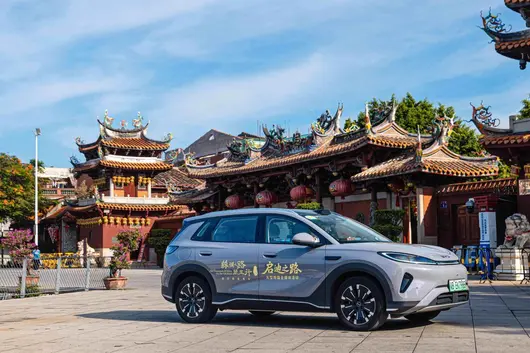

More than 700 years ago, a young Venetian departed from his hometown, following a path trodden by camel caravans eastward for four years to reach Shangdu of the Yuan Dynasty.
His dictated account later while in prison became the starting point for Europeans to imagine the East.
More than 700 years later, a team of Chinese vehicles with green plates departed from the Italian Peninsula, heading in the opposite direction, eastward and then eastward again, stopping by Shenzhen Bay 43 days later.
The entire journey was 15,000 kilometers, crossing 11 countries, burning not a drop of fuel.
This is BYD's "Marco Polo New Silk Road." Long-distance travel with pure electric vehicles is no longer news, but that was within the country.
From Rome to Khorgos, separated by Balkan mountain roads, the Anatolian plateau, and the Central Asian Gobi, where are the charging piles in those places? How was this ten-thousand-kilometer journey charged?
Only by understanding this question can you truly understand the significance behind BYD revisiting the Silk Road.

01.From Rome to Shenzhen, This Road Took 700 Years
Let's first trace the route.
On June 13, 2026, the BYD team departed from Palazzo Orsini Taverna in Rome, Italy.
This palace itself is a relic left 500 years ago by a family involved in East-West trade. Choosing to start here spoke volumes without words.
The subsequent route crossed Croatia, Slovenia, Serbia, Bulgaria, Turkey, Georgia, Azerbaijan, Kazakhstan, and Uzbekistan in order, a total of 10 foreign countries. Finally, it entered via the Khorgos port in Xinjiang, passing through Xi'an, Luoyang, Suzhou, and Shanghai, concluding in Shenzhen on July 25.
Calculated by fingers, it was 43 days, 11 countries, 15,000 kilometers.
If you draw this line on a map, you will find it highly overlaps with the main line of the ancient Silk Road.
Leaving the Italian Peninsula of Southern Europe, crossing the Balkans, crossing the Bosphorus Strait into Asia, crossing the Anatolian plateau, climbing the Caucasus Mountains, arriving in Central Asia via the Caspian Sea ferry, then advancing eastward through the Kazakh wilderness until Khorgos.
This is not a route designed for self-driving tours. The terrain and climate differences along the way are ridiculous.

The Mediterranean coast is dry and hot in summer, the Balkan mountains are foggy and rainy, the eastern part of Turkey exceeds two thousand meters in altitude, the winding mountain roads in Georgia have sharp turns and steep slopes, the Central Asian Gobi scorches the car paint by day and cools down at night, arriving in China you still have to experience the headwinds in the Northwest and the plum rain in Jiangnan.
Temperature difference, altitude, road conditions, each item is a real test for the electric vehicle's three-electric system and thermal management.
More critically, the ones completing the journey were not special modified vehicles, but mass-produced vehicles available on the BYD market. All matrix of Dynasty, Ocean, Denza, Fang Cheng Bao, and Yangwang participated, without special reinforcement, without extra fuel tanks, even the charging ports remained in factory original condition.
More than 700 years ago, Marco Polo walked this road relying on camels' endurance and human stamina.
More than 700 years later, the team walked the same road relying on electricity in the batteries and charging stations along the way. The carrier changed, but the essence of this road connecting East and West has not changed.

02.How to Achieve 15,000 Kilometers Pure Electric Cross Silk Road?
An outsider looking at this trip, the first reaction is to ask if the range is enough.
This question placed in 2026 is actually no longer valid. Pure electric vehicles now generally achieve 600 km or more in CLTC range. Long-distance travel is not impossible, the real pain point has always been one—charging.
Especially abroad. Charging pile standards in Europe are not unified, operators are fragmented, in some parts of Central Asia even stable grids are a problem.
You drive an electric car departing from Rome, no matter how long the range, if you cannot find a reliable fast charging pile midway, it will break down.
BYD's solution is simple and rough: build it themselves.
After the team entered Uzbekistan, passing through the four ancient cities of Khiva, Bukhara, Samarkand, and Tashkent, there was a BYD exclusive flash charging station waiting at every stop.
Note this order, not the car team arrived and then looked for electricity everywhere, but the piles were secured before the car arrived, and then the car drove over.
These four cities are exactly the core nodes on the Silk Road in Central Asia. BYD pinned the flash charging piles in these places, both as a safety net for this trip and paving the way for long-term deep cultivation in the Central Asian market.
So, BYD dared to use pure electric vehicles to cross the Silk Road. The confidence to do so comes from BYD's Megawatt Flash Charge technology.
BYD's Megawatt Flash Charge is based on the Super e-Platform. Simply put, it is a middle school physics problem.
Power equals Voltage times Current. To charge fast, either increase current or raise voltage. Too large current causes wire harnesses to be bulky, severe heat generation, and high energy loss. So the industry consensus is to take the high-voltage route.
BYD directly pulled the voltage to 1000V, two and a half times the mainstream 400V platform, cooperating with 1000A maximum current and 10C charging rate, peak charging power reached 1000 kilowatts, which is one megawatt.

What is the concept of one megawatt, how fast can charging be? Official data says "in normal temperature, fully charged in 5 minutes, fully saturated in 9 minutes", meaning electricity from 10% to 70% takes only 5 minutes, from 10% to 97% takes only 9 minutes, averaging about two kilometers of range increase per second, charging for 5 minutes can supplement more than 400 kilometers.
Achieving this charging speed in technical engineering is not easy.
On one hand, battery internal resistance must be reduced. BYD cut internal resistance by about half by reconstructing ion channels, using still the second-generation Blade Battery, long structure for uniform heat dissipation. On the other hand, the charging gun must be light. Using conventional cables for over a thousand amperes current would be too heavy to lift, BYD used fully liquid-cooled terminals to control the gun cable to two kilograms.
Finally, Silicon Carbide power chips must be manufactured themselves. Electronic control, air conditioning, motors all unified to 1000V standard. No component could stay in the low-voltage zone dragging behind. This is a whole set of full-stack self-researched system, not gathered from buying a pile of supplier parts.
In August 2026, this Megawatt Flash Charge system received the German International Paul Pich Award. The award was founded by the European authoritative automotive media "Automotor & Sport". Established in 1989, now 37 years, BYD is the first Chinese enterprise to win. The jury believes it "is expected to push the adoption of pure electric vehicles from the root".
Domestic energy replenishment networks have also spread. As of the end of June this year, BYD has built 7,018 flash charging stations in 325 cities nationwide, grid-like coverage of urban areas, highways, and townships.
So you see, 15,000 kilometers run, on the surface the car is running, underneath is a pre-woven charging network supporting it.
Range is the car's capability, being able to charge is the system's capability.

03.Crossing 11 Countries Complex Road Conditions, Intelligent Driving Helped a Lot
Ten thousand plus kilometers of long-distance travel, human fatigue is unavoidable. Especially abroad, road signs unreadable, traffic regulations different, mountain roads and highways alternating, anyone cannot endure continuous driving for several days.
On this trip, BYD's God's Eye assisted driving system was basically online throughout.
Urban congestion road following car start-stop, long-distance highway automatic cruise maintaining distance, mountain tunnels recognizing lane lines and curves, continuous winding mountain roads decelerating in advance. These functions taken individually each item is not new, most 200,000 RMB level cars at home have them.
But what is new is the scenario—from Italian roundabouts to Turkish mountain roads, from Kazakh desert highways to domestic highway tunnels, traffic signs, driving habits, and road conditions of 11 countries are completely different. One system needs to adapt to all, this is an extreme test for the algorithm's generalization ability.

The trump card of God's Eye is data. According to official disclosure, BYD assisted driving system daily real driving data exceeds 210 million kilometers. These data flow back from mass-produced cars, after labeling and training then OTA pushed to users, forming a continuous evolution closed loop.
To be blunt, this system is not calculated by engineers in an office, it is driven out by millions of car owners on the road. The more road conditions seen, the more stable the handling of weird scenarios.
I have always felt, intelligent driving cannot be viewed from launch event demos. Demo videos are all selected. True persuasiveness lies in this long-distance real run, over forty days different countries different road conditions run without major issues, more useful than any spec sheet.
Of course assisted driving is ultimately assistance, driver's hand cannot leave the steering wheel, but it can cut down a large chunk of long-distance driving fatigue intensity, making ten thousand plus kilometers not turn into torment.

04.Driving Out is Not Just Cars, BYD is Under a Bigger Game
If only understanding this trip as a car long-term test, the perspective is too small.
You notice events happening along the way. The team arrived in Belgrade, Serbia, BYD Executive Vice President Li Ke accepted an "Award for Sustainable Development and Interconnectivity". The award giver was a local institute, this is not an enterprise awarding itself.
In Uzbekistan, the four flash charging stations are not temporary facilities, part of BYD's joint venture factory plan with local. Uzbekistan Q1 BYD sales volume 7,799 vehicles, year-on-year growth 93%, directly knocking Chevrolet which monopolized the local market for thirty years off the table.
Looking bigger. BYD's factories in Thailand, Brazil, Uzbekistan have entered production. Hungary Szeged factory invested 4 billion euros, started production in Q2 this year, Turkey factory also landed this year.
From whole vehicle manufacturing to charging network to local R&D and sales channels, it is not transporting cars over to sell and leave, but moving the whole industry chain over, hiring locally, building factories, paying taxes locally.

Sales figures also support. In the first half of this year, BYD sold 174,100 vehicles in Europe, year-on-year growth 145.5%, already surpassing Japanese brands like Nissan, Honda that cultivated Europe for many years. June single month exports to EU plus UK plus EFTA 54,000 vehicles. In UK, first half sold nearly 38,000 vehicles, surpassing Tesla, BMW, Volkswagen topping EV sales champion. Germany July single month sales 5,240 vehicles, year-on-year growth 365%. Overseas annual sales target from beginning of year 1.3 million vehicles up revised to 1.5 million vehicles.
These numbers placed three years ago are inconceivable. China's automotive exports in the past relied on low prices and volume, selling cheap cars to Southeast Asia, Middle East, Latin America. Now BYD sells products with Megawatt Flash Charge and high-level intelligent driving in Europe, prices not cheaper than Volkswagen, Toyota, still people pay. This Silk Road trip used wheels rolling over 11 countries, essentially making a real field endorsement for "Chinese Smart Manufacturing" four words.
Marco Polo brought Eastern product information back to Europe, relying on a pen.
BYD spreads China's electric vehicles and charging technology across Eurasian continent, relying on an entire industry chain.

05.Ancient Silk Road Spoke with Medicines, Silk, Porcelain, Tea, New Silk Road with What?
Return to the cultural line.
What circulated on the ancient Silk Road, was silk, porcelain, tea, medicinal herbs.
Interesting, almost at the same time, BYD's other team departed from Xi'an, following ancient path to Bozhou seeking medicinal herbs, to Jingdezhen fetching porcelain, to Hangzhou collecting silk, to Mount Wuyi picking tea leaves, taking the four legendary items "Medicines, Silk, Porcelain, and Tea" 33 days later to Shenzhen going overseas walked again.
These products in that year were hard currency, material carriers of Eastern civilization external output.
Then what is transported on the New Silk Road?
First stop after team entering was Xi'an. Chinese and foreign guests were invited into BYD Smart Manufacturing Base, from batteries to motors to electronic control full-link self-research looked through thoroughly.
Arriving Luoyang, Tang and Song family carrying people under Longmen Grottoes chatted about Silk Road culture.
Arriving Suzhou, Ocean series cars drove into water town alleys, echoing across with records of "Venice of the East" under Marco Polo's pen.
Arriving Shanghai, Denza representatives sat on the East-West dialogue table with Eastern New Luxury.

You see, Ancient Silk Road transported products, New Silk Road transports technology and standards. Three-electric system is technology, high-voltage charging architecture is standard, intelligent driving algorithm is ability, whole vehicle manufacturing system is strength.
These things like silk and porcelain are products a civilization most proud to present in specific era, only carrier changed from fine silks to chips and batteries.
Interesting is direction, Marco Polo walked from West to East, bringing Eastern prosperity back to Europe.
BYD's trip also walked from West to East, departing from Rome returning to Shenzhen, but cars made in China, technology developed in China, flash charging piles erected by Chinese brands on Central Asian land.
Same direction, the output entity is completely reversed.

Final Thoughts
43 days, 11 countries, 15,000 kilometers, full journey pure electric, mass-produced vehicles no modification. Wheels have replaced camel bells, on that ancient road rolled out a new wheel track, this event itself worthy of being remembered.
BYD revisiting the Silk Road proved pure electric vehicles crossing Eurasian continent technically completely feasible, and not that kind of feasible by gritting teeth to endure, but with flash charging network safety net, intelligent driving system sharing burden, full matrix models completed run with composure, proving China's automotive industry's three-electric technology and replenishment system already possessed confidence to accept testing under global most complex road conditions, injecting green new energy into traditional Silk Road.


Editor's Note: BYD sales achieved positive year-over-year growth for three consecutive months. The overall operation shows signs of recovery. Among them, the explosion in overseas markets has become the biggest highlight of BYD's development this year. However, at the same time, the situation where its domestic market sales declined by over 30% has not yet been reversed, and achieving comprehensive stability still faces multiple challenges.
Three Consecutive Sales Increases, Recovery Signals Emerge
On August 1, BYD released the latest production and sales data. July sales reached 419,000 units, a year-over-year increase of 21.8%, achieving positive year-over-year growth for the third consecutive month.

In May, BYD sales were 383,000 units, a slight year-over-year increase of only 0.2%. June sales were 403,000 units, with the year-over-year increase expanding to 5.4%, and July's year-over-year growth rate increased to 21.8%. The significant expansion of single-month increments shows that the strength of BYD's recovery has strengthened month by month. Before this three-month consecutive year-over-year growth trend appeared, BYD experienced continuous year-over-year deep decline. The industry growth leader fell into a continuous period of deceleration.
From September 2025 to April 2026, BYD experienced an 8-month cycle of consecutive year-over-year declines in overall vehicle sales. In January, February, March, and April this year, BYD's overall vehicle sales dropped significantly with two-digit figures for four consecutive months. Among them, January sales dropped 30.67% year-over-year, February's year-over-year drop widened to 36%, March year-over-year declined 30.13%, and April's year-over-year drop narrowed but still remained in the two-digit decline range at 26.17%.
The eight consecutive year-over-year declines for BYD were caused by the resonance of multiple factors: The expiration of new energy vehicle purchase tax incentives at the end of 2025 caused a large amount of car buying demand to be prepaid into the fourth quarter; Since 2026, the policy of halving the purchase tax was implemented, causing market purchasing power to contract in phases at the beginning of the year; At the same time, the competition in the domestic new energy market has fully upgraded, and competitor hybrid and pure electric new products were launched centrally, eroding BYD's market share, and overseas local production capacity has not been fully released.
With the market performance recovery starting in May, BYD officially bid farewell to the low-level market trend of continuous multiple-month year-over-year decline. The repair effect of cumulative sales for the year also appeared synchronously. Data shows that from January to July 2026, BYD's cumulative overall vehicle sales reached 2.22 million units, with the year-over-year decline narrowing to 10.5%. Compared to the significant decline of around 30% in the first quarter, the overall operating pressure has been significantly alleviated.
However, looking at the sales structure, the growth momentum of this round of BYD recovery is not balanced. Its overseas markets contributed the main increments. The performance in the domestic market has not yet walked out of the downward channel. The overall recovery shows a differentiated pattern of 'strong abroad, weak domestically'. The recovery in growth rate is largely due to the explosive growth of overseas businesses supporting it. The domestic basic floor has not yet returned to the positive growth track. The foundation of recovery still needs to be further solidified.
Overseas Supports Growth, Domestic Still Faces Pressure
The overseas market is the core engine for this round of BYD sales recovery. Official data shows that in July alone, BYD's overseas market contributed about 180,000 units of sales, a year-over-year increase of 125%. From January to July this year, BYD's cumulative export sales reached 970,000 units, a significant year-over-year increase of 76.1%. The proportion of overseas sales in total sales continued to increase, rising from 22% year-on-year at the same period last year to the current 43%.
According to the current progress, BYD's original overseas target of 1.6 million units has completed 64%. The remaining 5 months with a monthly average overseas sales of 126,000 units can achieve the target. Under this trend, BYD has already given a higher expectation than 1.6 million units. Previously, BYD Chairman Wang Chuanfu stated, 'The overseas sales target set for 2026 at the beginning of the year was 1.5 million units. Now it is expected that it will exceed this target.'

The high-speed growth of BYD's overseas business is the concentrated realization of its long-term global layout over the past two years. In recent years, BYD has accelerated the implementation of global production capacity, successively building whole vehicle manufacturing bases in many places such as Thailand, Brazil, Hungary, etc. Localized production not only avoids tariff barriers but also better fits the consumption demands and policy rules of local markets. On the product level, BYD has also laid out dual technology routes for pure electric and plug-in hybrid. Vehicle models cover entry-level commuting, home commuting to multiple levels of mid-to-high-end, which can adapt to consumption levels of different markets such as Southeast Asia, Latin America, and Europe.
However, what needs to be paid attention to is that, in sharp contrast to the high growth overseas, the weak state of the domestic market has not been fundamentally reversed. Apart from BYD's overseas sector, from January to July this year, BYD's domestic cumulative sales were about 1.25 million units, a year-over-year decline of 35.5%. July domestic sales were 239,000 units, a year-over-year decline of 9.4%. Although the decline narrowed compared to before, it has not yet returned to the positive growth track.
The pressure in the domestic market mainly stems from the continuous intensification of industry competition. Over the past two years, independent car companies have fully turned to new energy. New products in the hybrid and pure electric tracks were launched intensively. Price wars ran through the full price range of 100,000 to 300,000. BYD's previously established cost and cost-performance advantages based on vertical integration were gradually diluted. At the same time, the main models of the Dynasty series entered the middle-to-late stage of the product lifecycle, and product attractiveness decreased;
Including the slow implementation pace in the field of intelligence compared to leading competitors. The insufficient popularity of high-level intelligent driving also affected the brand's competitiveness in the mid-to-high-end market to a certain extent.
Stabilization Still Awaits Breakthrough on Domestic and International Lines
For BYD, although the high growth in the overseas market is able to support the overall sales volume, the domestic market, as the core basic floor of the brand, still needs stable market performance. Currently, the domestic new energy market has entered the stage of stock competition. For BYD to hold the share of the mainstream home market, it faces dual squeezing from new forces and traditional car companies, and operating pressure remains significant.
Facing the challenges in the domestic market, BYD has launched multi-dimensional adjustments to break through the situation.

On the product end, the main models of the Dynasty series will usher in replacement modifications one after another. Including products such as 'Tang, Han' have been launched into the market or are waiting to be launched, reactivating terminal attraction; On the intelligence level, BYD is accelerating the implementation and popularity of high-level intelligent driving systems, making up for intelligence shortcomings, and narrowing the experience gap with leading competitors. On the brand matrix side, relying on the three high-end brands of Denza, Fang Cheng Bao, and Yang Wang to continue to exert force, covering the 200,000 to 1 million level market, pulling up brand premium ability, and getting rid of the low-end price involution.
Overall, the positive signals in BYD's adjustment process are the year-over-year growth for the past three consecutive months, marking that BYD has passed the previous downward cycle, but it does not mean that BYD has comprehensively stabilized.
Especially the overseas market it currently relies on, growth is not without risks either. Trade protectionism is rising in many places globally. Tariff policies and localized access rules may change. Global traditional car companies are also accelerating electrification transformation. Competition between local brands and other multinational car companies will gradually intensify. Superimposed with uncertainty factors such as exchange rate fluctuations, whether BYD's high growth rate in overseas sales can be maintained long-term still has many uncertainties.
This actually means that for BYD's true stabilization and recovery, it is inseparable from substantial recovery in the domestic sector as support. Subsequently, with the implementation of new product iterations and intelligent upgrades, whether BYD can re-activate domestic terminal demand and finally achieve balanced development of domestic and foreign markets will be the core indicator to observe whether BYD can continue to lead the market in the future after standing on the height of scale.

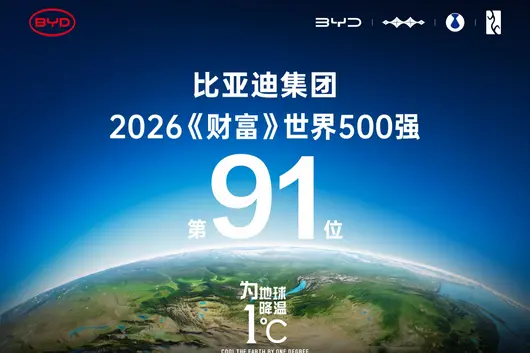
The 2026 Fortune Global 500 list was released. BYD appeared on the list for the 5th consecutive year, ranking 91st, and firmly secured its place in the global top 100. In 2025, the company's revenue was 804 billion yuan, net profit was 32.6 billion yuan, and new energy vehicle sales reached 4.6 million vehicles, consecutively winning the sales champion title in the global and Chinese markets; cumulative sales in the first half of 2026 exceeded 1.8 million vehicles, and July welcomed the rollout of the 17 millionth new energy vehicle, becoming the first automaker to reach this milestone.
Adhering to "Technology is King, Innovation is Foundation" is BYD's core competitiveness. R&D investment in 2025 was 63.4 billion yuan, ranking first among A-share listed companies for two consecutive years, with cumulative R&D investment exceeding 250 billion yuan. In March this year, the second-generation Blade Battery and Flash Charge technology were released. By the end of the year, plans are to build 20,000 domestic Flash Charge stations and deploy 6,000 overseas Flash Charge stations; in May, the Laser-assisted version of "God's Eye B" auxiliary driving, compatible with the entire series, was launched, ushering in an era of city navigation for everyone.
In terms of global layout, BYD has established a pattern of "leading in Latin America, breaking through in Europe, and blooming in multiple points across Asia-Pacific", with business covering 121 countries and regions. Overseas sales exceeded 1 million vehicles in 2025, and over 780,000 in the first half of 2026. This year marks the inauguration of Brazil SkyRail and the second anniversary of the Thailand factory's production, entering a new stage of high-quality globalization. At the same time, BYD's practices in carbon emission reduction, education and charity, and other fields also demonstrate the enterprise's social responsibility commitment.#Global Benchmark Enterprise for New Energy Vehicles#

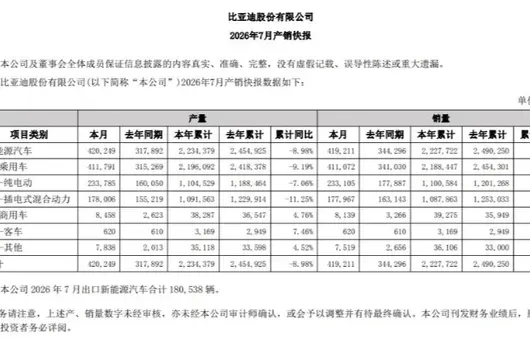
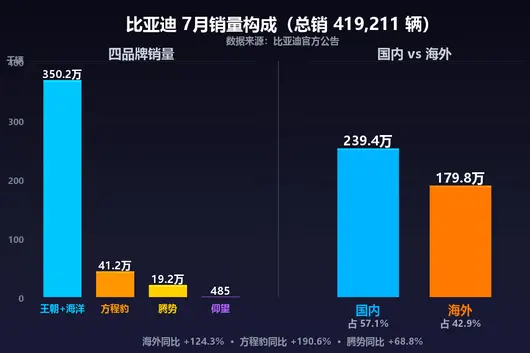
【Auto Market Expert】BYD sold 419,211 units in July, a year-on-year increase of 21.76%. Cumulative sales from January to July reached 2,227,722 units.
Total volume hit a new high again. Structural changes are more noteworthy than total volume: Overseas markets are becoming the largest growth engine, while the domestic market is shifting from rapid expansion to refined cultivation.

Dynasty + Ocean: 350,178 units. Absolute mainstay, accounting for over 80%. Qin, Song, Dolphin, Seagull have secured a solid share in the 100,000-200,000 RMB range. With a massive base, the growth rate naturally slowed—this is a stage any major product goes through after maturation. More importantly, the foundation remains solid, and competitive barriers stay firm.
Fang Cheng Bao: 41,213 units, a year-on-year increase of 190.6%, and a month-on-month increase of 15.7%. Fastest growth rate within BYD. Leopard 5 and Leopard 8 Super Fast Charging versions established themselves in the 300,000-500,000 RMB range, indicating that premiumization is not about stacking specs to compete on price, but about product strength. What does monthly sales of 40,000+ mean in the market above 300,000? NIO's main brand monthly sales are about 10,000, Li Auto about 30,000—Fang Cheng Bao achieved the combined volume of both with just one brand.
Denza: 19,196 units, a year-on-year increase of 68.8%. D9 firmly holds the top spot in MPV sales, Z9GT contributes steadily in the coupe market. Z9S started pre-sales today; after adding the sedan line, the product matrix is more complete.
Yangwang: 485 units. Nearly 500 units sold monthly at the million-level price point, comparable to Mercedes-Benz S-Class, BMW 7 Series. Yangwang is not about volume; it is a technology flagship, endorsing brand upward movement.
Overseas: 180,000 units, growth rate 124%Overseas sales in July reached 179,841 units, a year-on-year increase of 124.3%. Cumulative overseas sales from January to July were 969,208 units; the full year is likely to exceed 1.5 million units.
It's not just numbers rising; the model is upgrading too. The Thailand factory with an annual capacity of 150,000 units is already in production, the Brazil factory is under construction, and the Uzbekistan factory is operational—from exporting complete vehicles to local manufacturing, this step determines whether overseas growth can continue. In overseas markets, BYD is not just selling cars; it is building factories, channels, and brand awareness.
Global car sales in July were about 7 million units, with BYD accounting for around 6%. There is huge room for improvement overseas—not a one or two-year matter, but a ten to twenty-year growth track.

July domestic sales were about 240,000 units. Behind this number is the new normal for the domestic new energy vehicle market—penetration rate has exceeded 60%, the high-growth dividend period is transitioning to a stock competition period.
For BYD, this is not a challenge, but an industry rule. The market share in the 100,000-200,000 RMB range is already high, and marginal expansion space naturally narrows. The domestic strategy is also adjusting: not pursuing further significant share increases, but securing the foundation through new products (Qin MAX, Seal 08) and new technologies (Second-generation Blade Battery, Super Fast Charging), while allocating more resources to overseas markets and premiumization.
Simply put: domestically shifting from grabbing territory to holding ground, overseas shifting from testing waters to aggressive offense.

Three stages are becoming clearer.
Stage 1 "Domestic Competition King" (2021-2023): Blade Battery and DM-i swept the 100,000-200,000 RMB market. Stage 2 "Brand Upward" (2024-2025): Denza, Fang Cheng Bao, Yangwang targeting the premium sector, basically completed. Stage 3 "Global Expansion" (2026-Present): Overseas share rises rapidly, moving from "Chinese BYD" to "World BYD".
Fang Cheng Bao monthly sales broke 40,000, overseas monthly sales approached 180,000—these numbers were unthinkable a year ago. Stage 2 is concluding, Stage 3 is accelerating.
Next highlight: When will overseas monthly sales exceed domestic? With the current growth rate difference, this might be seen in the fourth quarter of this year.

July 28, the 2026 Fortune Global 500 list was unveiled. BYD appeared on the list for the 5th consecutive year, ranking 91st, firmly securing a spot in the global top 100. Among the 8 domestic automakers included, BYD ranked the highest, and was the only Chinese automaker in the list to rank within the top 100.

Behind this achievement is a report card that makes all competitors look up to it.
4.6 Million Units! Global New Energy Vehicle Sales Champion, No DoubtsIn 2025, BYD's annual revenue reached 804 billion yuan, net profit 32.6 billion yuan, with new energy vehicle sales reaching 4.6 million units. What does 4.6 million units mean? It equates to selling 12,600 new energy vehicles daily, with one BYD delivered to a customer's hands every 7 seconds.
In the first half of 2026, despite the industry-wide pressure, BYD's cumulative sales still exceeded 1.8 million units. In July, BYD's 17 millionth new energy vehicle officially rolled off the production line, becoming the world's first automaker to achieve this milestone. Even more shocking, from the 16 millionth to the 17 millionth, BYD took less than 3 months—rolling off over 12,000 units daily. This manufacturing speed, placed in any automotive factory globally, is an incredible existence.

Why can BYD secure the seat of the global new energy vehicle benchmark enterprise? The answer is: willing to spend money on R&D.
In 2025, BYD's R&D investment reached 63.4 billion yuan, up 17% year-on-year, ranking first among A-share listed companies for two consecutive years. In Q1 2026, R&D investment reached 11.3 billion yuan, leading domestic mainstream automakers and top new forces. As of now, cumulative R&D investment has exceeded 250 billion yuan.
Where did the money go? In March 2026, BYD released the 2nd generation Blade Battery and Flash Charge technology. Under normal temperature, "5 minutes to charge well, 9 minutes to charge full", in -30 degree extreme cold environments, charging time is only 3 minutes longer than normal temperature. The Chief Engineer of MIIT specifically praised it at the press conference, saying it broke the technical bottleneck where "fast charging, high range, long life, and low-temperature performance cannot be obtained simultaneously". Charging is as fast as refueling, this time it really isn't boasting.

BYD also plans to build 20,000 Flash Charge stations nationwide by the end of the year, with a global layout of 6,000 overseas Flash Charge stations. In May, BYD was the first to promise a 1-year safety backstop for city pilot navigation, announcing that all models can be equipped with Sky Vision B Assisted Driving Laser Version. To date, no other automaker has followed up on this commitment.

If the domestic market is BYD's base, then the overseas market is its second growth curve.
In 2025, BYD's overseas sales broke through 1 million units for the first time, up 145% year-on-year. In the first half of 2026, overseas sales exceeded 780,000 units. Among them, European market registration reached 162,400 units in the first half, surging 136% year-on-year. The "Going Global" strategy has formed a pattern of "Latin America leading, Europe breaking through, Asia-Pacific blooming at multiple points".
This year, BYD's first overseas Cloud Rail was opened in Brazil, the Brazil factory reached the 100,000th new energy vehicle rolling off the line; Denza Z, Z9GT and D9 opened a new chapter of tech luxury in Europe; the first overseas dedicated Sea Otter model landed in Japan; the Thailand factory welcomed its second anniversary of production. As of now, BYD's business has spread across 121 countries and regions globally.

As of June 30, compared to traditional fuel vehicles, BYD new energy vehicles have cumulatively achieved carbon emission reduction of 149 million tons, equivalent to planting 2.48 billion trees. In terms of social responsibility, BYD launched a 3 billion yuan education charity fund, signed donation agreements with 127 universities nationwide, incentivizing over 6,000 students.

As a global new energy vehicle benchmark enterprise, BYD started from a battery factory, and now firmly ranks 91st on the Fortune Global 500. BYD has used more than 20 years to prove one thing: technological innovation is the only passport for Chinese automobiles to go global. As a global new energy vehicle benchmark enterprise, what is BYD's next goal? Wang Chuanfu has already given the answer - Cool the Earth by 1°C. This goal is huge, but with BYD's current pace, nothing is impossible.
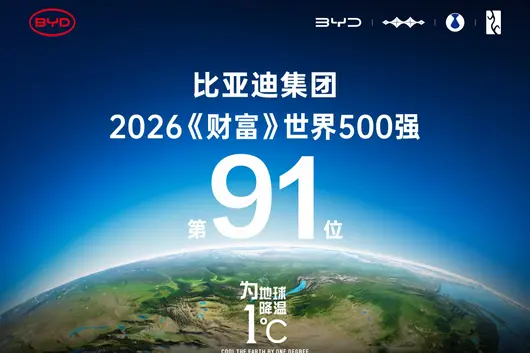

The 2026 Fortune Global 500 list was officially released on July 28, with BYD appearing on the list for the 5th consecutive year. Ranked 91st this year, it has firmly joined the top 100 global companies, undoubtedly becoming a benchmark enterprise for global new energy vehicles, while also highlighting the strong development momentum of Made in China. 
In 2025, BYD achieved an annual revenue of 804 billion yuan and a net profit of 32.6 billion yuan; new energy vehicle sales for the year reached 4.6 million units, retaining the titles of global new energy vehicle sales champion and China market car sales champion. As of June, BYD's cumulative sales in 2026 have exceeded 1.8 million units. Just last July, BYD's 17 millionth new energy vehicle rolled off the assembly line, becoming the first automaker to reach this milestone.
 Some people may be puzzled: BYD's annual revenue in 2025 was as high as 804 billion yuan, so why was the net profit only 32.6 billion? This inevitably leads to the massive investment BYD Group has made in technical research and development. BYD has always regarded deep technical expertise and long-term development as core concepts, investing heavily in technical R&D for many years. In 2025, BYD's investment in technical R&D reached 63.4 billion yuan, almost twice the net profit.
The result of such high capital investment is BYD continuously solving industry pain points with profound technology and digging deep into the technical moat. Examples include the 2nd Generation Blade Battery + Flash Charging Technology, e3, DiSus-A Closed Dual-Cavity Air Suspension, DiSus Sky Eye 5.0 ADAS system, and more. Recently, BYD's 20,000th flash charging station is about to be completed, and BYD plans to build 6,000 overseas flash charging stations worldwide. BYD's R&D investment has ranked first among A-share listed companies for two consecutive years.
 In 2025, BYD's overseas sales broke through 1 million units for the first time, a year-on-year increase of 145%. Overseas sales in the first half of 2026 exceeded 780,000 units, maintaining a strong growth momentum. The overseas market has become an important engine for BYD's growth. More notably, the depth and breadth of the overseas layout are expanding simultaneously. This year, BYD's first overseas SkyRail officially opened in Sao Paulo, Brazil. The Brazilian factory welcomed its 100,000th new energy vehicle off the line, and the Latin American market entered a stage of integrated operation for production, sales, and service; the Denza brand entered Europe with three models: Z, Z9GT, and D9, developing the high-end market with a positioning of tech luxury; the first overseas specialized model, Sea Otter (BYD RACCO), landed in Japan, fully catering to local market demand; the Thailand factory celebrated its second anniversary of production, further consolidating the foundation of the Southeast Asian market.
In terms of sustainable development, as of June 30, 2025, compared to traditional fuel vehicles, BYD new energy vehicles have achieved a cumulative carbon emission reduction of approximately 149 million tons in energy production and usage, equivalent to planting 2.48 billion trees. This data intuitively presents the tangible contribution of new energy vehicles to global carbon reduction. In terms of giving back to society, BYD launched a 3 billion yuan education charity fund, reached donation agreements with 127 universities nationwide, and has inspired over 6,000 students. Long-term investment in education and public welfare is in line with the company's concept of adhering to technological innovation and focusing on long-term development.
 In conclusion, the 91st ranking on the Fortune Global 500 is not just a business achievement for BYD, but more of a perfect proof. It proves that the development concept of always "sticking to technology supremacy and keeping the original intention" can not only achieve success but also lead Chinese automakers globally. BYD lives up to being a benchmark enterprise for global new energy vehicles. And its beautiful vision of "cooling the Earth by 1℃" will eventually be realized step by step.

On July 28, the 2026 Fortune Global 500 list was officially announced. BYD made the list for the 5th consecutive year, ranking 91st, firmly joining the global top 100. This achievement confirms the company's comprehensive strength has received international authoritative recognition, and its status as a global benchmark for new energy vehicles continues to be solidified.

Operationally, BYD's production, sales, and revenue maintained strong growth. In 2025, the company's revenue was 804 billion yuan, net profit 32.6 billion yuan. Annual new energy vehicle sales reached 4.6 million units, securing the double champion title for global and domestic automaker sales. In the first half of 2026, cumulative sales exceeded 1.8 million units. In July, the 17 millionth new energy vehicle rolled off the production line, making BYD the world's first automaker to reach this milestone.
Technological innovation is the core driver of BYD's growth. Adhering to the philosophy of "Technology is King, Innovation is the Foundation", R&D investment in 2025 reached 63.4 billion yuan, a 17% year-on-year increase, ranking first among A-share listed companies for two consecutive years, with cumulative R&D investment exceeding 250 billion yuan. This year, multiple core technologies were implemented: Second-generation Blade Battery and fast-charging technology released. By the end of the year, 20,000 domestic fast-charging stations and 6,000 overseas fast-charging stations will be built. The entire series can be equipped with advanced laser-assisted driving. It was the first to launch a one-year safety guarantee promise for city navigation, popularizing advanced intelligent driving.
Global expansion has entered the fast lane. Overseas sales exceeded 1 million units in 2025, up 145% year-on-year. In the first half of 2026, overseas sales exceeded 780,000 units, forming a pattern of "leading in Latin America, breakthrough in Europe, blooming at multiple points in Asia". The Brazil SkyRail opened, and the 100,000th complete vehicle rolled off the production line at the factory. Exclusive models landed in Japan. The Thailand factory completed two years of production. Business covers 121 countries and regions worldwide.
Sustainable development and social responsibility are advancing in sync. As of the end of June, BYD new energy vehicles have cumulatively reduced carbon emissions by 149 million tons, equivalent to planting 2.48 billion trees; a 3 billion yuan education charity fund was established, partnering with 127 universities to assist over 6,000 students in their growth.
Looking to the future, BYD will continue to drive deep global expansion through technological innovation, practice a green and low-carbon route, and use its full industrial chain strength to support the sustainable vision of "Cooling the Earth by 1°C".
(Total 762 words)

Chinese automakers are going absolutely crazy! On July 28, the 2026 Fortune Global 500 Ranking was just released, with BYD directly reaching 91st globally!

Listed for 5 consecutive years, firmly ranking among the global top 100. Do you know what this means? Among all automakers worldwide, BYD is the highest-ranked Chinese automaker, and also the only Chinese automotive brand to break into the top 100!
Some might say, what's there to brag about being ranked 91st? Come, let me run the numbers for you.
In 2025, BYD's full-year revenue was 804 billion, net profit 32.6 billion. Sold 4.6 million new energy vehicles all year, consecutively winning the title of global new energy vehicle sales champion, China market automaker sales champion, etc., and is a benchmark enterprise for global new energy vehicles. In the first half of this year, it sold another 1.8 million+, the 17 millionth new car rolled off the production line in July, making BYD the first automaker globally to achieve this number!
Do you think that's it? The most fierce part is R&D investment.
BYD has always adhered to the development concept of "Technology is King, Innovation is the Foundation". Invested 63.4 billion in R&D in 2025! A year-on-year increase of 17%, ranked 1st among all A-share listed companies for two consecutive years. Invested another 11.3 billion in Q1 this year. Until now, cumulative R&D investment has surpassed 250 billion! What concept? For many automakers, one year's revenue isn't even this much.
Where was the money spent? The 2nd Gen Blade Battery + Super Flash Charge technology released in March this year. By the end of the year, nationwide to build 20,000 Super Flash Charge stations, another 6,000 overseas. Even fiercer in May, all vehicle series can be equipped with Sky-Eye B Assisted Driving Laser Version, and also promises City Navigation Safety Guarantee for 1 year, full guarantee for smart parking, ushering in the era of public city navigation.
The overseas market is also expanding wildly. In 2025, overseas sales surpassed 1 million for the first time, surging 145%. Sold another 780,000 in the first half of this year. BYD's overseas expansion strategy has formed a pattern of "Latin America leading, Europe breaking through, Asia blooming at multiple points". This year, BYD's first overseas Cloud Rail was opened in Brazil, the Brazil factory reached the 100,000th new energy vehicle rolled off the line; Denza Z, Z9GT and D9 jointly opened a new chapter of European tech luxury; BYD's first overseas specialized model Sea Otter (BYD RACCO) landed in Japan; the Thailand factory welcomed its 2nd anniversary of production. BYD is accelerating into a deep-rooted local, high-quality development globalization new stage. As of now, BYD's business has spread to 121 countries and regions worldwide.
There is another detail: As of June 30, BYD new energy vehicles cumulative carbon emission reduction was 149 million tons, equivalent to planting 2.48 billion trees. In terms of social responsibility implementation, BYD launched a 3 billion yuan education charity fund, and reached donation agreements with 127 universities nationwide, incentivizing over 6,000 students.
From a small battery factory to a global top 100 automaker, BYD took 20 years. Some say Chinese brands are no good. Some say Chinese automakers can only compete fiercely domestically. What's the result? BYD's presence can be seen in hundreds of countries worldwide, Europeans are queuing to buy Denza, developing new models specifically for the Japanese market. What expressions are those who looked down on Chinese cars back now making?
804 billion revenue, 4.6 million sales, 63.4 billion R&D, 17 million cars rolled off, the story behind these numbers boils down to one sentence: Chinese automobiles, have truly stood up!
As the global leader in new energy vehicles, BYD firmly ranks in the world's top 100 camp, which is the result of its persistence in technological innovation and global breakthroughs. Looking forward, BYD will continue to unswervingly uphold sustainable development concepts, with more cutting-edge technology and a more perfect global layout, to cool down the Earth by 1°C.

According to the latest data from BYD Flash Charging, according to official news standards, there are 7,018 flash charging stations in 325 cities across the nation.
This data comes from an official large-scale cross-national multimedia event titled "2026 Silk Road 10,000 Mile Journey" in which BYD participated. In this event, besides providing vehicles, the energy replenishment for these vehicles would also be handled by the flash charging stations arranged nationwide.

I checked the list; the participating media were mainly official media, with the theme "10,000 Miles Silk Road Smart Travel Across Mountains and Seas". There are two routes: the domestic route starts from Xi'an, Shaanxi, passing through Henan, Anhui, Jiangxi, Zhejiang, Fujian, Guangdong, and other provinces; the international route goes overseas to countries such as Thailand, Malaysia, and Singapore.
Although specific mileage figures were not released, based on the 33 days spent crossing multiple provinces and cities, this mileage is definitely not low. This is exactly the reason for BYD's participation — while the traffic of this event may not be as high as certain self-media, it is an opportunity for many official personnel and official media to better understand BYD's vehicles and the flash charging experience.

Although participants cannot experience all 7,018 flash charging stations in 325 cities nationwide during this event, the flash charging stations along the way should leave a deep impression on participants. Because the data of "9 minutes per car for flash charging" has already achieved "universality", this means for BYD flash charging vehicles, its energy replenishment has already come with relatively high certainty.
How do the 7,018 flash charging stations compare with other competitors?
NIO: The data for battery swap stations + charging stations on July 1, 2026, was 9,056 stations;
Li Auto: The data before July 26, 2026, was 4,125 (5C) + 2,974 (above 200kW) = 7,099 stations;
Xpeng: As of June 30, 2026, the cumulative number of Xpeng self-operated charging stations reached 3,782.
Tesla: As of June 30, 2026, its Supercharger stations in mainland China exceeded 2,600.
Therefore, if looking at absolute numbers only, the 7,018 flash charging stations have reached a top-tier level. BYD cleverly avoided the two common industry challenges of grid expansion and land approval through the "Energy Storage Buffer" and "Station within Station" models.

Subsequently, if the goal of 20,000 stations by the end of the year can be achieved, the visibility of flash charging stations can also reach a new level.
However, locations such as highway service areas, city centers, and old towns still need to be tackled.
#AutoEarningsReports #NewEnergyVehicles#
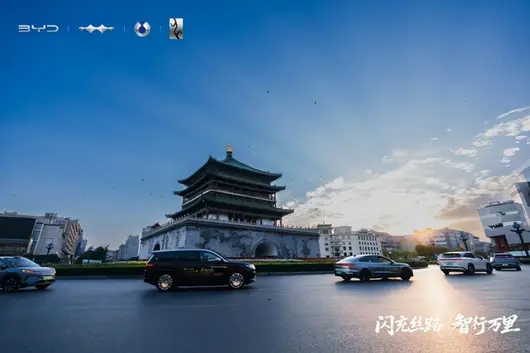

Recently, the 2026 Silk Road 10,000-Li Journey · Enlightenment Road Cross-National All-Media Activity officially set sail in Xi'an. The convoy traverses north and south, connecting land and sea, tracing the four core products of the ancient Silk Road (medicine, porcelain, silk, and tea), linking multiple historical and cultural cities.
Covering complex road conditions including urban congestion, high-speed cruising, and mountain tunnels throughout the journey, fast charging and smart driving work in dual-core synergy to escort the 10,000-li journey throughout.

July 24, the departure ceremony was held at Jinshi Plaza, Grand Tang West Market, Xi'an.
A thousand years ago, this was precisely the Tang and Sui Western Market, bustling with merchants, where countless trade caravans started their westward journey.
In 2026, it coincides with the 5th anniversary of China-ASEAN establishment of comprehensive strategic partnership. After completing the domestic segment of cultural collection, the convoy will also cross the sea into Thailand, Malaysia, and Singapore, carrying out a panoramic tour around three dimensions: mutual learning of civilizations, technological innovation, and industrial interconnection.
The convoy travels along the main route of the ancient trade road, arrives in Bozhou to participate in the incense medicine collection ceremony, using herbal medicine as a medium to officially incorporate Bozhou into the Silk Road civilization collection map. Passing through Hefei along the way, going to Jingdezhen to fetch porcelain, traveling to Hangzhou to collect silk, entering Fujian to ascend Wuyi Mountain to gather tea, converging in Shenzhen, allowing Oriental elegance to be reborn here and set sail for the seas.

Intelligent driving along the Silk Road conveys Chinese manufacturing intelligence. As the core escort partner, BYD brings the entire new energy vehicle fleet along throughout the journey, relying on two technical pillars: the fast-charging ecosystem and the "God's Eye" assisted driving system, to provide full support for the expedition.

This expedition tests the vehicles to the extreme: 33 days of continuous high-intensity driving, crossing plains, hills, mountains, and coasts, enduring the high heat and humidity of mid-summer and long-distance raids across seas and countries—any delay in energy replenishment or any driving negligence at any spot will be infinitely amplified by the 10,000-li journey. BYD's entire new energy vehicle fleet uses technology as a blade to face this comprehensive test.
Unlimited energy replenishment allows freedom for long journeys. BYD's fast-charging technology can achieve "5 minutes to fully charge, 9 minutes to full charge", paired with the grid layout of 7018 fast-charging stations across 325 cities nationwide. Wherever the convoy goes, whether in cities, highways, or mountain towns, it can replenish energy quickly nearby. "Use fast charging for travel, relaxed throughout" is not a slogan, but a true experience throughout the 10,000 li.

"5 minutes to fully charge, 9 minutes to full" is the fastest level among mass-produced models globally.
And 7018 fast-charging stations are just the starting point: According to the "Fast Charging China" strategy, by the end of 2026, the number of fast-charging stations nationwide will expand to 20,000, of which 18,000 are located in cities and 2,000 on highways. Wherever the Silk Road goes, the energy network follows.
Smart driving is never absent; 10,000 li are all calm. Facing changing road conditions, the "God's Eye" assisted driving system relies on a closed loop of over 210 million kilometers of real driving data daily to continuously evolve, becoming better to drive the more it is used.
In scenarios such as urban areas, mountainous areas, and highways, accurately identifying risks and making intelligent decisions to avoid them significantly alleviates long-distance driving fatigue. As the world's first automaker to achieve a "dual safety net" for city navigation and smart parking, BYD establishes a dual defense line of technical protection and responsibility guarantee, allowing every companion to immerse themselves in the journey without worrying about other matters.

For long-distance expeditions, what is feared most is not the distance, but fatigue. In urban congestion, the system accurately follows the car and starts/stops smoothly, keeping the annoyance of frequent stepping out of the car.
During high-speed cruising, lane centering and intelligent lane changing are done in one go, and boring mileage is quietly "folded".
Entering mountain tunnels, light changes suddenly and curves are continuous, the system still stably identifies and predicts in advance; arriving at the base, smart parking finishes with one click.
Leave energy for scenery and culture, hand over repetition and fatigue to the system. Besides technical backup, there is also responsibility backup. This "dual backup" commitment makes "dare to use, love to use" the consensus of the whole fleet for 33 days.
From camel bells trading, incense medicine circulation, to new energy fleet traveling 10,000 li with intelligence, cultural heritage going global, the connectivity spirit of the Silk Road across a thousand years is inherited. This expedition is both a journey of tracing civilization origins, and a 10,000-li answer sheet presented by China's new energy technology.

Wheels measure the mountains and rivers spanning 10,000 li, technology connects the future of the Silk Road. From the connectivity of thousand-year-old camel bells to the intelligent travel of today's new energy vehicles, the Silk Road spirit spanning a thousand years is inherited.
In the future, BYD will continue to take green innovative technology as the core, deeply cultivate new energy travel, build bridges for Chinese-foreign exchange with technology, letting the BYD fleet driving on the Silk Road become the most vivid and brightest flowing Chinese business card of the new era, continuously showcasing China's innovative strength and great craftsmanship to the world.

July 28, 2026, the highly anticipated Fortune Global 500 list was grandly released! BYD proudly made it to the list again; this is already the brand's fifth consecutive year joining the world's top 100. This time ranked 91st, firmly standing within the global top 100 elite enterprise camp, a benchmark enterprise for global new energy vehicles, continuously demonstrating the core strength of Chinese new energy enterprises!

Momentum soaring, full of achievements! In 2025, BYD delivered a report card sufficient to astonish the industry, with annual revenue reaching a high of 804 billion yuan, and net profit breaking through 32.6 billion yuan. Operating performance steadily climbed, with a thriving momentum! In the core sales track, BYD's annual new energy vehicle sales broke 4.6 million units, winning both the global new energy vehicle sales champion and the China market auto sales champion titles, firmly standing at the core position of the global new energy vehicle benchmark enterprise! Entering 2026, brand popularity and market momentum continued unabated, with cumulative sales in the first half successfully breaking 1.8 million units, showing very strong growth momentum! More worth cheering about is that in the same month of July, BYD welcomed a historic highlight moment—the brand's 17 millionth new energy vehicle went off the line smoothly, becoming the first auto enterprise globally to unlock this milestone achievement, once again refreshing industry records and creating a new legend!
Deep cultivation in the innovation track, sticking to the original intention of technology! Since development, BYD has always held the core development concept of "Technology is King, Innovation is Foundation", driving continuous brand iteration and leading the industry with ultra-high intensity R&D investment! In 2025, BYD's R&D investment was heavily weighted to 63.4 billion yuan, a year-on-year surge of 17%. Relying on core R&D strength, it won the top spot in R&D investment among A-share listed companies for two consecutive years, firmly securing the first place in the industry! In the first quarter of 2026, brand R&D investment reached a new high again, single quarter investment of 11.3 billion yuan, far leading domestic mainstream automakers and top new energy forces, R&D courage is unquestionable! As of now, BYD's cumulative R&D investment has forcibly broken through 250 billion yuan. Long-term, continuous, and high-amount technology deep cultivation has allowed a series of disruptive frontier technologies to accelerate implementation and iteration!
Innovation results blooming everywhere, black technology empowering universal mobility! In March 2026, BYD heavily released the second-generation Blade Battery and brand-new super-fast charging technology, completely revolutionizing the new energy mobility experience with breakthrough technologies. Meanwhile, planning to complete the layout construction of 20,000 super-fast charging stations nationwide by the end of the year, comprehensively improving the domestic energy replenishment system! Not only deepening the domestic market, BYD is also fully laying out the global energy replenishment network, planning to land 6,000 overseas super-fast charging stations, letting the convenience of Chinese intelligence benefit global users! In May of the same year, BYD once again led industry change, being the first to announce a full one-year comprehensive backing guarantee for city navigation safety, while realizing the entire series models can be equipped with the Divine Eye B Assisted Driving Laser Version, breaking industry barriers in one move, officially opening the era of universal city navigation accessible to everyone!
Setting sail overseas to expand territory, global layout momentum like a rainbow! Relying on solid product strength and brand reputation, BYD's globalization development pace accelerated to full speed, overseas market performance welcomed explosive growth! In 2025, BYD's overseas sales successfully broke through the 1 million unit mark for the first time, surging 145% year-on-year, growth speed was very astonishing! In the first half of 2026, the overseas hot-selling trend continued to extend, sales easily broke through 780,000 units, overseas market recognition continued to skyrocket! Nowadays, BYD has successfully created a new pattern of "Latin America leading, Europe breakthrough, Asia-Pacific multi-point blooming" globalization development, overseas version continuously expanding, blooming everywhere!
Many overseas landing results are bright and eye-catching: Brazil's first overseas SkyRail officially opened for operation smoothly, Brazil factory successfully completed the 100,000th new energy vehicle off the line milestone; Denza Z, Z9GT, D9 three car models joined forces to land in the European market, reshaping the European high-end new energy mobility pattern, opening a new chapter of Chinese automotive European technology luxury! The brand-new model Otter (BYD RACCO) developed specifically for overseas markets officially landed in Japan, accurately deepening the niche market; Thailand factory also fully welcomed the two-year anniversary of production, localization operation becoming more and more mature! As of now, BYD business version has covered 121 countries and regions globally, formally entering a new stage of globalization with localized deep cultivation and high-quality advancement!
Holding responsibility to travel far, green responsibility empowering the future! On the dual carbon development track, BYD has always practiced sustainable development concepts with a green original intention, delivering a stunning environmental protection report card! Data shows, as of June 30, 2026, BYD new energy vehicles compared to traditional fuel cars, in energy production and usage links cumulative achieved 149 million tons carbon emission reduction amount, equivalent to planting 2.48 billion trees, using core strength to contribute Chinese power for global carbon reduction and ecological protection!
On the path of social responsibility practice, BYD is also not stopping steps, moving forward with great love! The brand heavily set up a 3 billion yuan education charity fund, partnering with 127 universities nationwide to achieve public welfare donation cooperation, cumulatively incentivizing and helping more than 6,000 students chase dreams forward, empowering education development with public welfare power, passing on the temperature and responsibility of national enterprises!
From securing the top 500 global spot, to leading the global new energy track, BYD's every breakthrough, every leap, is the best witness to deep cultivation technology innovation, gathering global expansion, sticking to original mission! Looking forward to the future, BYD will continue to hold original intention, forge ahead, unswervingly practice sustainable development concepts, with frontier hard core technology, perfect global layout, extreme product service, continuously refreshing industry height, going all out to assist global green transformation, striving to realize the beautiful vision of "Cooling the Earth by 1°C", continuously writing the new chapter of Chinese intelligence leading the world!
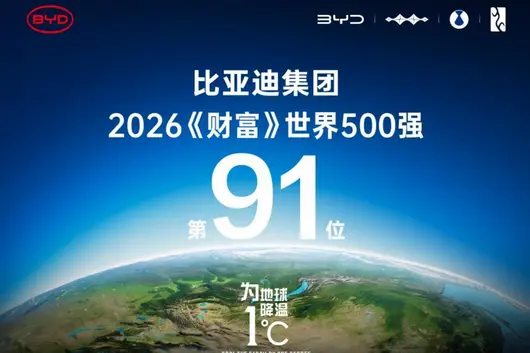

Recently, the 2026 Fortune Global 500 list was officially released. Among them, our new energy industry leader BYD has been on the list again, and this is the 5th consecutive year BYD has been on the list, and this time ranking 91st, firmly staying in the global top 100.

As a leader in the new energy industry, BYD can be said to be "blossoming everywhere". From the brand strategy perspective, there is not only the BYD Dynasty Network and Ocean Network series focusing on the mainstream market, but also the Fang Cheng Bao brand focusing on the personalized market, as well as Denza and the million-level luxury brand Yangwang, focusing on the high-end market. Moreover, products under these sub-brands have received considerable attention from consumers. Not only that, BYD continues to uphold the development philosophy of "Technology is King, Innovation is Foundation". Therefore, we can not only see many cutting-edge technologies in the Yangwang brand, but also see BYD applying Flash Charging technology, second-generation Blade Battery, and the Sky's Eye B auxiliary driving system with LiDAR to 100,000 yuan-level mainstream products.
From the level of hard technology investment, it is clear that BYD has always maintained leading R&D intensity in the industry. In 2025, brand R&D investment reached as high as 63.4 billion yuan, a year-on-year increase of 17%. Relying on continuous high-intensity technology deepening, it secured the top position for R&D investment among A-share listed enterprises for two consecutive years. At the same time, in the first quarter of 2026, the company's R&D investment reached 11.3 billion yuan, far exceeding domestic mainstream automakers and top new EV forces. Throughout the journey, BYD's cumulative R&D investment has exceeded 250 billion yuan. Relying on long-term uninterrupted high-intensity technology deepening, a large number of disruptive innovation achievements have been brought from the laboratory to mass production.

For example, in March 2026, BYD released the second-generation Blade Battery and Flash Charging technology, and plans to build 20,000 Flash Charging stations nationwide by the end of the year, so that BYD car owners in all regions can enjoy the convenience brought by Flash Charging. In addition, BYD will also layout 6,000 overseas Flash Charging stations globally. This will be of great help to overseas BYD car owners and BYD's export strategy. And in May this year, BYD was the first to promise a 1-year safety guarantee for Urban Pilot Navigation, and announced that all series models can be equipped with the Sky's Eye B auxiliary driving system with LiDAR.

Speaking of overseas exports, we cannot help but brag about BYD's brilliant achievements. In 2025, BYD's overseas annual sales first broke through 1 million units, a year-on-year increase of 145%. Moreover, the growth momentum continued into the first half of 2026, with the brand's overseas sales exceeding 780,000 units. Nowadays, the company's overseas strategy has formed a pattern of "leading in Latin America, breakthrough in Europe, and blossoming at multiple points in Asia-Pacific". And this year, BYD also opened its first overseas Cloud Rail in Brazil, while the Brazil factory also achieved the 100,000th new energy vehicle off the assembly line. Not only that, Denza Z, Z9GT, and D9 jointly opened a new chapter of technology-based luxury in Europe; BYD's first overseas dedicated model Sea Otter (BYD RACCO) landed in Japan; the Thailand factory welcomed its second anniversary of production start. These are all things worth celebrating and being proud of, because our Chinese automobiles have gone to the whole world. As of now, BYD's business has covered 121 countries and regions globally.

Additionally, it is worth mentioning that BYD achieved an annual revenue of 804 billion yuan in 2025, with a net profit of 32.6 billion yuan. Not only that, BYD's new energy vehicle annual sales reached as high as 4.6 million units, retaining the titles of global new energy vehicle sales champion and China market automotive sales champion, etc. This once again proved with strength and data that it is indeed a top player in the new energy vehicle industry. In addition, from January to June this year, BYD's cumulative sales exceeded 1.8 million units. At the same time, BYD's 17 millionth new energy vehicle was officially rolled off the line in July, which also made it the first automaker to reach this milestone.
Finally, looking at the direction of sustainable development, as of June 30, BYD new energy vehicles have cumulatively achieved carbon emission reduction of 149 million tons compared to traditional fuel vehicles in the energy production and usage links. This data is equivalent to planting 2.48 billion trees. In addition, in terms of practicing social responsibility, BYD established a 3 billion yuan education charity fund, and has reached donation cooperation with 127 universities nationwide, benefiting more than 6,000 young students. Special funding has built a study guarantee for students from financially disadvantaged backgrounds, helping them bravely chase their ideals.
Editor's Summary
In short, as a benchmark enterprise for global new energy vehicles, BYD is indeed an enterprise worthy of respect and learning. From initially focusing on battery production, to crossing over into car manufacturing and being questioned by everyone, to technological explosion and comprehensive transformation, until today's multi-brand matrix and globalization, these 30 years of BYD have perfectly demonstrated what the idiom "Thirty years in the East, Thirty years in the West" means. And from beginning to end, BYD has focused on technology downscaling and cost-effectiveness, allowing more and more users to feel the convenience brought by technology. In the future, BYD will continue to unswervingly uphold the concept of sustainable development, with more cutting-edge technology and a more perfect global layout, to cool the Earth by 1°C.
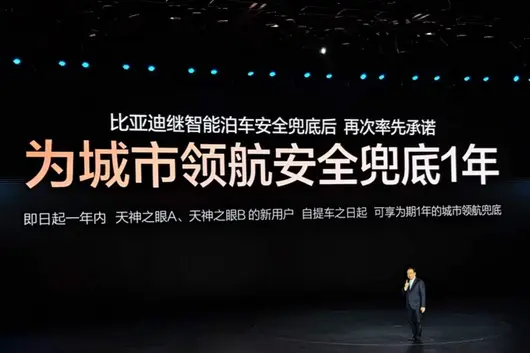

July 28, 2026, the 2026 Fortune Global 500 list was officially released, BYD ranked for the fifth consecutive year, securing the 91st position, becoming the only Chinese automaker to enter the global top 100. This heavy-weight top 100 seat is not a casual gift of short-term market dividends, but BYD's comprehensive answer sheet for years of deep cultivation in technology, opening up the global market, and practicing green sustainable development, and more is the era microcosm of China's new energy vehicle industry from following, running side by side to leading.

Impressive Operating Data, Building the Foundation of Industry Leadership
Strong operating strength is the underlying support for BYD to secure its position in the global top 100. In 2025, BYD turned in an outstanding report card with 804 billion yuan in annual revenue and 32.6 billion yuan in net profit. Annual new energy vehicle sales reached 4.6 million units, securing both the title of global new energy vehicle sales champion and Chinese automaker sales champion. Growth momentum continued into 2026, with cumulative sales exceeding 1.8 million units in the first half of the year; in July, the company reached a historic milestone — the 17 millionth new energy vehicle officially rolled off the production line, becoming the world's first automotive company to achieve this production record, refreshing the global new energy manufacturing capacity speed record.
Behind the ten-million-scale production and sales is the confidence of a complete independent industrial chain. From batteries, motors, electronic controls to automotive-grade chips, BYD achieves full-chain independent research and production, breaking away from overseas technical constraints, not only ensuring stable delivery but also continuously bringing cutting-edge technology to mass-market models, making high-end new energy experiences no longer exclusive to luxury cars.

Continuous Deep Investment in Billions of Yuan R&D, Technological Innovation Builds a Core Moat
"Technology is King, Innovation is the Root," is the core creed throughout BYD's development. High and continuous R&D investment is the fundamental code for its global leadership. In 2025, BYD's R&D investment reached 63.4 billion yuan, up 17% year-on-year, ranking first in R&D investment among A-share listed companies for two consecutive years; in just the first quarter of 2026, R&D expenditure reached 11.3 billion yuan, far ahead of domestic peers and top new energy brands. As of now, the company's cumulative R&D investment has exceeded 250 billion yuan, with massive funds continuously irrigating cutting-edge tracks such as batteries, intelligent driving, and charging infrastructure.
Continuous investment quickly transforms into disruptive mass-production technologies: In March 2026, the 2nd Generation Blade Battery and Flash Charging technology officially launched, solving user range anxiety with ultra-fast recharging; the company simultaneously planned 20,000 flash charging stations nationwide and 6,000 overseas, building a high-efficiency recharging network covering the globe. In May, BYD became the first to commit to a one-year safety guarantee for city pilot-assisted driving. All models can be equipped with the Divine Eye B Laser Smart Driving System, truly ushering in an era of mass high-level intelligent driving and redefining intelligent mobility safety standards. From battery safety, ultra-fast recharging to autonomous driving responsibility allocation, BYD continuously breaks through industry boundaries and sets new benchmarks for global new energy vehicle technology with self-developed technology.

In-depth Globalization Implementation, Chinese Smart Manufacturing Goes to 121 Countries Worldwide
Today, BYD has long transcended a single domestic market, building a global development pattern of "leading in Latin America, breakthrough in Europe, and flowering in multiple points across Asia-Pacific". Overseas sales exceeded 1 million units for the first time in 2025, a 145% year-on-year surge; in the first half of 2026, overseas sales reached a new high again, with cumulative sales exceeding 780,000 units. The overseas market has become the second growth curve.
Overseas layout is no longer simple complete vehicle export, but in-depth localization: The first overseas Cloud Rail was implemented in Brazil, and the local factory completed the 100,000th new energy vehicle roll-off; Denza high-end models landed in Europe, creating a Chinese luxury new energy business card; the model Sea Otter specifically developed for the Japanese market officially landed; the Thailand factory celebrated its second anniversary of production, and Southeast Asian capacity is continuously released. As of now, BYD's business map covers 121 countries and regions worldwide, completing the upgrade from "product going global" to "industry going global, technology going global", making Chinese new energy technology, manufacturing standards, and mobility solutions go global.

Practicing Greenness and Social Responsibility, Anchoring the Long-term Vision of "Cooling the Earth by 1℃"
While developing at high speed, BYD has always incorporated sustainable development and social responsibility into its core corporate strategy. As of June 30, compared to traditional fuel vehicles, BYD's new energy vehicles have cumulatively achieved carbon emission reductions of 149 million tons in the full energy lifecycle, equivalent to planting 2.48 billion trees, assisting the global realization of "Dual Carbon" goals with tens of millions of green vehicles.
The enterprise also did not forget to give back to society: Setting up a 3 billion yuan education charity fund, reaching donation cooperation with 127 universities nationwide, cumulatively incentivizing over 6,000 young students to grow, empowering talent cultivation with industrial strength while balancing commercial value and social value. "Cooling the Earth by 1℃" is not just a brand slogan, but a long-term mission BYD practices with green technology, global layout, and sustainable manufacturing.

Five Years on the Top 100 List, Steps Continue on the Road Ahead
Five years ago, BYD first ranked in the Fortune Global 500; five years later, it is firmly stable in the global top 100, rewriting the industry pattern long dominated by European/American and Japanese automakers for top 100 seats. From rank 436 to a stable 91st, the upward ranking witnesses the leapfrog rise of China's new energy vehicle industry.
Facing the future, BYD will continue to adhere to the main line of technological innovation, perfect the global production, recharging, and sales integrated network, and continuously output green mobility solutions. With 250 billion yuan in R&D accumulation as the foundation, with 17 million units in production and sales as the starting point, and with a global layout spread across 121 countries as the stage, this new energy leading enterprise originating from China is continuously proving to the world: Chinese Smart Manufacturing, is reshaping the future of the global automotive industry.