首頁BYD

搜尋歷史
熱門搜尋
經銷商登入 / 註冊

Recently, US Treasury Secretary Bessent mentioned BYD during a speech at the Charlotte Economics Club (Charlotte Economics Club), stating that BYD is the best car in the $70,000 class that consumers can buy for $35,000. This indirectly indicates that in the eyes of Western political figures like Bessent, the value of BYD products far exceeds the price itself; consumers feel a value experience far beyond the same level after using the product. This is the most authentic and most authoritative endorsement of BYD.

Bessent's remarks continue to spark heated discussion among US netizens: "(Bessent) is BYD's best salesman" "I want a car like this" "Let them build a factory in the US, this will ignite our innovation and competition". These public opinion consensuses signify that the global automotive value logic has been rewritten by BYD: users' perception of automotive quality is no longer defined by brand history, social circle premiums, but returns to core technologies, real configurations, and actual user experiences. BYD is continuously reconstructing the global automotive industry value chain and seizing industry discourse power in the new energy era.

Besides Bessent, BYD's technical strength and industrial value continue to receive high recognition and authoritative endorsement from political figures and industry celebrities from many countries. US California Governor Newsom personally experienced Yangwang U8, highly praising it as a breakthrough technology spanning generations; the President of Uzbekistan bestowed the national-level "Friendship Medal" upon BYD, recognizing its industrial contribution; high-level officials from multiple countries, including Brazilian President Lula, Thai Prime Minister Anutin, and former Chilean President Piñera, also praised BYD's technological innovation, green transformation value, and local development achievements. Multiple national official positive evaluations confirm BYD's global credibility and world-class product strength.

This evaluation by Bessent reflects BYD's unstoppable sales momentum overseas. From January to August this year, BYD's cumulative overseas sales reached 1.158 million vehicles, surpassing the 1.0496 million overseas sales volume of the entire year of 2025. BYD topped the local new energy vehicle sales list in countries such as Thailand, Singapore, Italy, Spain, Brazil, Saudi Arabia, UAE, and South Africa. Today's BYD, relying on its superior quality and upgraded experience, is becoming a household car seen everywhere on streets globally, truly realizing the overseas expansion of technology, products, and brands, becoming the core business card for Chinese Smart Manufacturing to go global.

This heavy overseas sales achievement is by no means solely relying on price advantages, but rather a hardcore result precipitated from full-industry chain independent research. BYD achieves complete independent control of the three core technologies: battery, motor, and electronic control. Relying on continuous technical iteration and large-scale refined manufacturing, based on sticking to product quality, it reshapes the value logic of the automotive industry. High-end car experiences that cost about $70,000 in overseas markets, BYD offers to global consumers with a pricing of only $35,000, breaking the brand premium barriers long held by overseas car companies and reconstructing the global automotive value system.

Stunning market data further confirms the solid reputation. BYD insists on compliance and deep cultivation in overseas markets, relying on the choices of tens of millions of overseas users and actual delivery results to respond to external noise, using hardcore product strength to vindicate Chinese Smart Manufacturing and becoming a vivid model for Chinese industries standing on the international stage.


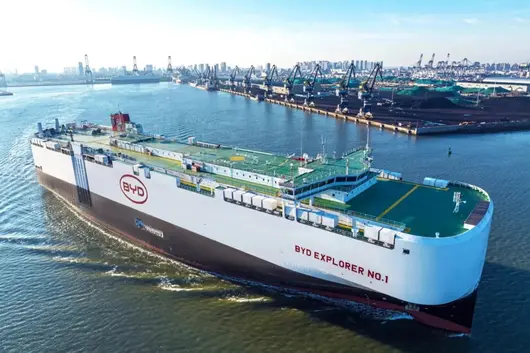
According to a report from Deutsche Bank, BYD plans to sell over 2.5 million cars overseas in 2027. By expanding fleet size and increasing overseas production, it will further expand its rapid growth in international markets.
BYD management currently expects overseas sales in 2026 to reach 1.9 to 2 million vehicles. This is far higher than the 1.3 million target announced in January and the revised 1.5 million target in March.
Overseas markets have become a key support for BYD's domestic sales decline. In the first 8 months of this year, BYD's overseas sales increased by 85.72% year-on-year, reaching 1.16226 million vehicles.
During the same period, BYD's domestic sales fell 32.72% to 1,505,755 units, dragging total sales down 6.84% to 2,668,015 units.
Based on sales figures through August, BYD needs to achieve an average monthly overseas sales volume of about 184,000 to 209,000 units in the remaining 4 months to meet its latest full-year sales target.
In August, BYD's overseas sales reached a record 189,466 units, a 134.45% year-on-year increase, accounting for 43.03% of the total monthly sales.

BYD management stated that overseas sales this year were limited by shipping capacity; if capacity were sufficient, sales volume could have been higher.
BYD plans to achieve its 2027 sales targets by expanding its dedicated vehicle transport fleet, increasing market share, and increasing overseas local production.
Deutsche Bank noted that BYD's Indonesia factory has started production, the Brazil factory is gradually increasing annual capacity with a target of 300,000 units, and the Hungary factory is expected to begin assembly in November or December.
Management is also evaluating other overseas production locations to expand its local production scale.
Overseas expansion also supported BYD's profitability. BYD management stated that despite unfavorable exchange rates, the profit per vehicle overseas in the first half of this year was about 20,000 RMB ($2,950).
The company expects overseas profit per vehicle to remain basically stable in the short term. Gains from sales growth will be offset by continuous investment in sales network expansion and new factory commissions.
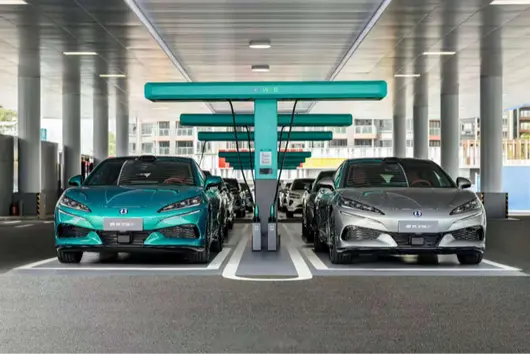
In China, BYD is relying on its Flash Charge technology and supporting network to drive sales, but battery supply remains a constraint on near-term deliveries.
BYD management stated that vehicle orders supporting the Flash Charge technology backlog is about 250,000 units. The supply shortage of the second-generation Blade battery is expected to be fully resolved in the first quarter of 2027.
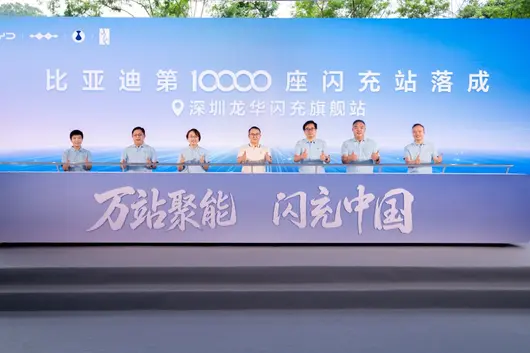
BYD reiterated its goal to build 20,000 Flash Charge stations in China by the end of 2026, then add 30,000 more in 2027 and 40,000 in 2028, bringing the total to 90,000.
BYD also reiterated plans to deploy 6,000 Flash Charge stations overseas at a conference call, but did not provide a completion timeline.
Li Yunfei stated in an interview in July that the company plans to complete the construction of 6,000 overseas Flash Charge stations by the end of March 2027, including 3,000 in Europe, 2,000 in the Americas, and 1,000 in the Asia-Pacific region.
Smart driving is another key investment area. BYD management expects internal capabilities to see significant improvement in smart driving in 2027.
BYD will continue to independently develop solutions while allowing external suppliers to bid on projects. R&D investment, massive vehicle data scale, and hardware-software vertical integration will help consolidate smart driving technology advantages.

 Discussing how to evaluate BYD's August 2026 sales exceeding 440,000 units, a year-on-year increase of 17.84%? First, state the viewpoint: this sales figure must be viewed dialectically. Flash charging boosted sales explosion; behind BYD sales exceeding 440,000 units is global market competition driven by technological change.

Overseas markets were the biggest highlight in August. Overseas sales of 189,000 units saw a year-on-year increase of 134.6%, breaking records for five consecutive months. Cumulative overseas sales from January to August of 1.158 million units have already exceeded the full year of 2025. BYD adopted an industrial going-global strategy by building factories in places like Thailand, Hungary, and Brazil. According to the "2026 H1 China Auto Going Global Insight Report" jointly released by CAITC and Yiche, BYD ranked first in market share in the Italian PHEV market in the first half of the year. Dolphin MINI retail sales were close to 30,000 units, firmly maintaining market first place. UK sales in the first half of the year were 38,000 units, nearly doubling compared to the same period, while Australia's June market share reached 13.5%, setting a new historical high, ranking second in sales for three consecutive months, with 3 model lines entering the top 10 for the first time.
 Staying at the top of the new energy sector for 63 consecutive months, what does this record mean? It is the dominance established by BYD starting from April 2021. In over five years, regardless of market fluctuations or fierce competition, BYD has always stood at the top of the industry. BYD employs about 110,000 R&D personnel, making it the automotive enterprise with the most R&D personnel globally. Blade Battery, DM-i Super Hybrid, YiSifang Platform, 2nd Gen Blade Battery, and Flash Charging Technology, every technical innovation is continuously widening BYD's moat.
 Battery Electric Vehicle (BEV) sales leading Plug-in Hybrid (PHEV) significantly for the first time is a positive signal. BEV sales in August were 256,000 units, PHEV were 177,000 units, with BEV accounting for 59%. The increase in BEV proportion indicates that Blade Battery and Flash Charging Technology are mature and charging infrastructure is well-established, but on the other hand, it reflects intensified competition in the PHEV market. From the competitive landscape of the China New Energy Sales List, the data of 440,000 units leading by a large margin shows a lead of nearly 250,000 units over the second-place SAIC. While predicting, we see intensified competition in the new energy market. Geely's August exports were 110,000 units, a 205% year-on-year surge, with cumulative January to August exports of 691,000 units, up 170% year-on-year. Chery's August exports were 197,000 units, accounting for 70.3%, with cumulative exports breaking 7 million units, firmly holding the champion position in Chinese automaker exports.
 Technical innovation is BYD's ace card. 2nd Gen Blade Battery charges well in 5 minutes, fully charged in 9 minutes. 10,000 Flash Charging stations cover 332 cities. In terms of intelligence, Divine Eye 5.0 City Navigation + Intelligent Parking provides dual backup. The underlying competitive moat includes the systematic capabilities of 110,000 R&D personnel and 900,000 employees, and fully independent R&D and large-scale mass production of the entire industry chain including chips. Next, we will watch the capacity ramp-up of Flash Charging Batteries and the application of the 4nm smart driving chip Xuanji A3 in vehicles.
 From the product structure perspective, the gold content of 440,000 units is constantly increasing. August data shows Tang EV broke 10,000 units for the second consecutive month, Qin MAX sales exceeded 10,000 units, Yuan Family sales were 84,000 units, Seal Family 47,000 units, Sea Lion Family three major series monthly sales all broke 10,000 units. Blooming in multiple points indicates BYD has broken the dependence on a single hit model, forming a complete product matrix covering the 70,000 to 300,000 price range. In August, Fang Cheng Bao and Denza combined sales were 58,000 units, more than doubling compared to the same period last year. Fang Cheng Bao sales were 42,000 units, up 155.6% year-on-year, becoming the sales leader among new forces brands with an average price over 200,000. BYD is breaking through upwards.
 The performance of high-end brands is commendable. Fang Cheng Bao 42,000 units, up 155.6% year-on-year, became the sales leader among new forces brands with an average price over 200,000. From the industry chain perspective, BYD's full industry chain vertical integration is a unique advantage. Batteries, motors, electronic controls, and chips are self-controlled and can also be exported. Where are the future growth points? Product reserves are indeed rich. New cars such as Denza Z9S, Da Han, Sea Lion 08, 3rd Gen Tang, Titanium 9, etc., cover the 200,000 to 1,000,000 price range. Of course, there are strong rivals surrounding every sub-market. Whether BYD's complete product matrix can win in every sub-market needs market verification.
 How will sales go next? Xiao Xing made a simple prediction using algorithms. The process of switching from fuel to electricity is accelerating, and the market share of traditional fuel cars is being rapidly eroded. An important turning point for China's automotive industry from trading market for technology to trading technology for market. When BYD's monthly sales exceed 440,000 units, former monarchs like Tesla, Volkswagen, and Toyota must face the rise of China's new energy vehicle enterprises.
 What we see is the shock and attention of foreign media towards BYD entering the top 5 annual sales for the first time. Especially when BYD's first K-car model Sea Otter entered Japan, it caused a sensation among the media. If looking at the year-on-month sales trend changes, we can find the beginning of 2026 looks very similar to 2024. Due to production capacity and market environment factors, although the start was slow, the second half of the year ushered in robust and high-speed growth in production and sales. And looking at the months where BYD's sales exceeded 400,000 units so far, there are 11 in total. Coincidentally, they appeared in the year-end period from September to December in both 2024 and 2025. The reason 2026 is special is that the 400,000 unit sales target was achieved earlier than before; this capacity ramp-up was clearly visible since June. Let's wait and see the development trend of the last four months.
 Overall, BYD's August 2026 performance of 440,000 units, with a year-on-year increase of 17.84%, is a report card with highlights that must be viewed dialectically. Highlights lie in overseas volume explosion, high-end volume increase, technology leadership, and systematic capabilities. BYD's path to global rise depends on whether it can find a new balance point between technical innovation, brand upward movement, overseas deep cultivation, and cost control. The competition in China's new energy vehicles has shifted from grabbing land in the incremental market to close-quarters fighting in the stock market. Flash charging boosted sales explosion; BYD's 440,000 monthly sales achieved a phased victory.

August sales hit 440,000 units, BYD takes China auto sales champion title again
Others worry about orders, it worries about batteries

To be honest, seeing "440,000 units, +17.84% YoY, once again first", this result is not unexpected. The truly worth pondering is another question: 440,000 units, is this BYD's ceiling?

In total volume, BYD sold over 440,000 NEVs in August, ranking #1 in China NEV sales for 63 consecutive months. Dynasty, Ocean bases are stable: Yuan series 84,000, Seal 47,000, Sea Lion three series all exceed 10,000, Tang EV, Qin MAX continue to exceed 10,000.

This is all basic, nothing much to discuss, there are 2 obvious changes.

First is overseas. August 189,000 units, +134.6% YoY, fifth consecutive month breaking record; first 8 months cumulative 1.158 million units, already exceeded full year 2025. Some say "Is it piling cars at the dock" — people thinking like that, probably haven't checked customs export data, nor looked at license plate registrations in Brazil, Thailand. Tang L renamed Atto 8 exported to Mexico, Middle East, Brazil, equivalent to 450,000-500,000 RMB, more expensive than domestic. This is real premium pricing.

Second is premium. Fang Cheng Bao 42,000 units, +155.6% YoY, single month exceeded Zeekr, Li Auto, AITO, Xiaomi, became sales champion among new EV brands with average price over 200,000 RMB; Denza 16,000 units, +33.4%. These two added up, 440,000 units, might not have reached BYD's true ceiling.

Because FinDreams Battery capacity is still being bottlenecked. When Gen 2 Blade first went into mass production, cell yield rate was only 60%~70%, production line capacity was 0 during retrofitting, belonging to dismantling, building, producing simultaneously. 12 bases retrofitting lines simultaneously, relying on core team running back and forth, capacity could only climb steadily. Fast charging boosted sales explosion.
Understood this way makes sense: Demand side orders exploded — sub-brands fighting for battery quotas, execs stationed at factory urging orders; Supply side is squeezing toothpaste — new cars parked in open lots waiting for battery packs, battery arrives then can go off line. Run after capacity and still sell 440,000, exactly shows demand is really hard.
Wait until line retrofit completed, yield rate maxed out, Gen 2 Blade capacity released again, that month sales, is BYD's true trump card.
So the question arises: Wait until that moment truly arrives, what will BYD's monthly sales be? 500,000, or more?

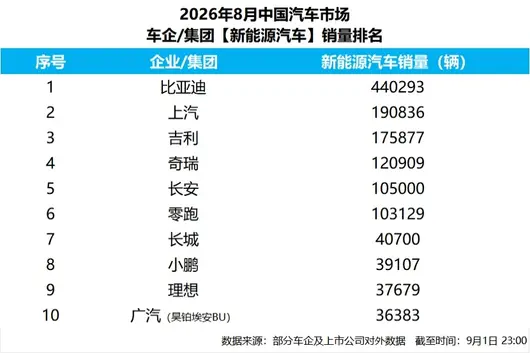
The runner-up sold 190,000 units, while BYD achieved 440,000 in a single month! This isn't just a sales ranking; this is a complete domination in action!

On September 1st, when the "August 2026 China Automobile Market Vehicle Manufacturer/Group [New Energy Vehicles] Sales Ranking" was announced, the auto industry was truly shocked!

BYD sold 440,000 units in a single month, leading the second place by nearly 250,000 units. SAIC about 190,000 units, Geely about 175,000 units, Chery about 120,000 units... To put it more clearly, the combined sales of the second, third, and fourth place only exceed BYD by 48,000 units! This gap is no longer about who sold a few thousand more; it's that they are not even on the same level.
Sales reaching a new milestone might be news for other brands, but for BYD, it's just daily business!

In fact, for 63 consecutive months, BYD has been the Top One in new energy sales every month! But the market 63 months ago was completely different from today. Back then, new energy penetration rate had just crossed 10%, and now it's heading towards 50%. As the market grew, BYD's market share did not drop but rose, which proves exactly that it is not cashing in on the new energy vehicle bonus, but rather the one defining the track.
BYD's high-end brands are also gaining volume. In August, Fangchengbao sold 42,000 units, a 155.6% year-on-year increase, with single-month sales exceeding Zeekr, Li Auto, AITO, and Xiaomi, ranking first among new forces in the 200,000+ category. Denza 16,000 units, up 33.4%. The two brands combined 58,000 units, more than doubling. This set of numbers keeps increasing the premium value of BYD's sales figures.

What is even more impressive about BYD is not domestic sales, but the overseas market!
In August, exports reached 189,000 units, up 134.6% year-on-year, setting a record for 5 consecutive months. In the first 8 months of 2026, overseas sales accumulated to 1.158 million units, whereas last year's full overseas total was 1.05 million units; this year exceeded that record in just 8 months! At this pace, annual sales must be heading towards 1.5 million units! All brands have been shouting the slogan of globalization for so many years, but now BYD is truly setting sail! It doesn't just sell cars in overseas markets; it is defining global new energy vehicles with technical standards!

The second-generation Blade Battery and Flash Charge technology enable new energy vehicles to achieve "5 minutes charged, 9 minutes fully charged" under normal temperature conditions, and the ability to add only 3 minutes to charging time in a -30°C environment, completely eliminating the last shred of consumer hesitation when buying new energy vehicles. As of August 28th, BYD's Flash Charge stations have surpassed 10,000, covering 332 cities. From "having technology but no chargers" to "having chargers, cars, and buyers", only by laying out the charging network quickly can sales increase substantially.
Now, Flash Charge stations have been built to the foot of Mount Everest, the Thailand factory is in production, the Brazil factory is under construction, and the European market is being laid out. While others are still studying how to go global, the BYD fleet is already driving cars all over the world on the ocean.

Consecutive 63 months as Number One in new energy; more worth noting than the record is BYD's product structure. The overseas proportion is rising, high-end models are rising, the technological moat is deepening! When its monthly sales head towards 500,000, BYD has already pushed the starting line of Chinese brands to the front of those foreign traditional automakers.
How much do you think BYD's sales will reach this year? Let's chat.
The 1st of every month has become an unshakeable "Sales Release Day" in the auto industry. On September 1st, new energy vehicle manufacturers revealed their August sales figures. When seeing the number 440,293 units for BYD, everyone took a deep breath. This isn't just leading, it's a "cliff-like" presence.

What is the concept of 440,000 units? Let's put it this way, the sum of the 2nd to 4th on the leaderboard has only just touched its taillights. Sales reached a new milestone again, BYD, without controversy, once again took the sales champion of Chinese automakers and new energy sales champion, more strongly continuing the record of "No. 1 for consecutive 63 months".
In today's global auto market, why can BYD still sell so much? This is no longer just a product power issue, but a comprehensive overwhelm of system power. In short, BYD has almost "welded" various vehicle usage needs of global users into its product matrix.

What we see most daily is still the Dynasty and Ocean series, regulars for city commuting, grocery shopping and picking up kids. The newly listed Qin MAX broke 10,000 in its first month, indicating that A-segment family sedan users who were debating Sylphy and Lavida find it hard not to be moved after seeing the space and fuel consumption of Qin MAX.
What is more interesting is high-endization. Fang Cheng Bao sold 42,000 units in a single month, a 155.6% surge year-on-year, actually reaching first place among new EV brands with an average price of over 200,000 yuan. Denza is even more capable, 16,000 units in August, managing to stand firm in the MPV and luxury sedan market, with higher value.

The most surprising is exports. 189,000 units in August, 5 consecutive months of record highs, cumulative 1.158 million units in the first 8 months, already exceeding last year's full year. In countries like Thailand, Brazil, Israel, Dolphin and Song PLUS have become street cars, BYD has become a synonym for Chinese cars abroad.
Of course, the sales behind cannot be separated from the technical moat. The 2nd Gen Blade Battery and Flash Charging technology released in March this year, have received widespread recognition. As of August 28, 10,000 charging stations have covered 332 cities. "5 minutes to charge well, 9 minutes to charge full", this saying is not false.

This means in the time it takes to go to the service area to use the toilet, buy a coffee, the battery is full, range anxiety is being quickly diluted before the flash charge speed and flash charge network. This forward-looking technical strength and super-fast charging station construction speed, gave the market and users great confidence, is the confidence for BYD to continuously rise.
August is just the mid-game. With Denza Z9S, Denza Han starting pre-sales, Sealion 08, Denza N8L Pure Electric version, Fang Cheng Bao S series launching in September, plus the new cars like 3rd Gen Tang, Ti 9 etc. bombing sequentially, this chess game in the second half, BYD obviously still needs to continue expanding results.

Final Thoughts
When an automaker presses the gas pedal simultaneously on product, technology, brand, and overseas dimensions, the competitors behind it see not just a gap, but a chasm difficult to cross in the short term. For consumers, this might be a good thing. After all, that era of "fuel and electricity same price" or even "electricity lower than fuel", was really driven by it to this extent. To summarize in one sentence: BYD's best performance is still ahead.

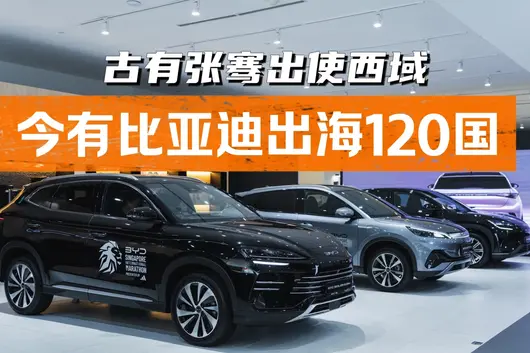
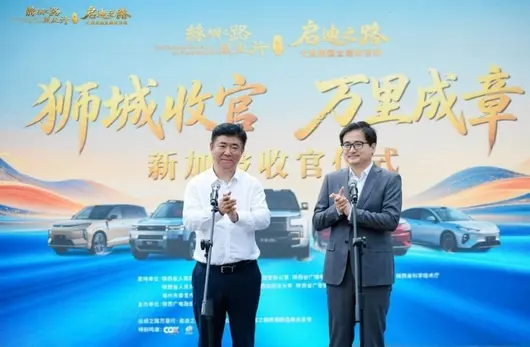
On August 25, the 2026 Silk Road 10,000-Li Journey · Enlightenment Road officially concluded in Singapore, bringing an end to this cross-border journey that lasted 33 days.
Silk Road Expedition accompanied by Green Energy! The entire fleet traveled over 10,000 kilometers, departing from Xi'an, passing through six provinces in China, traversing Thailand and Malaysia, and finally arriving in Singapore. 2026 marks the 5th anniversary of the establishment of a comprehensive strategic partnership between China and ASEAN. The event was themed "Tech Towards New · Civilization Towards Heart", combining cultural exchange, technological interaction, and economic and trade exchanges to witness the new vitality of the Land and Maritime Silk Road.

This entire trip was supported by BYD, with multiple models from the Dynasty, Ocean, Denza, Fang Cheng Bao, and YangWang series composing the fleet. They covered highways, mountain roads, and congested urban traffic conditions. Fast Charging and Divine Eye assisted driving, two core technologies, underwent a true 10,000-kilometer field test. The energy replenishment capability of a 5-minute fast charge and 9-minute full charge, combined with a massive fast-charging station network, solves the pain points of energy replenishment for long-distance travel; Divine Eye relies on massive real-world driving data for continuous optimization, greatly reducing the burden of long-distance driving. In ancient times, the Silk Road relied on camel caravans and relay stations for supplies; now, new energy technology completes the cross-border expedition.


In the Singapore market, BYD's performance is equally impressive, having ranked first in total passenger car sales across all brands locally for 19 consecutive months. Local vehicle acquisition costs are high, and consumers are very cautious when choosing cars; even though model pricing is not particularly affordable, sales remain hot. With 16 offline retail touchpoints, many stores have entered core business districts, and dealers are continuously increasing investment and layout.


Looking at the overseas market, BYD's growth momentum is rapid. From January to July this year, overseas sales exceeded 970,000 vehicles. Business covers more than 120 countries and regions worldwide, securing top new energy vehicle sales in many countries such as Thailand, Singapore, Brazil, and the Middle East.

By combining Silk Road culture with cross-border new energy travel, BYD is also using Chinese new energy power to assist the green transportation development of the "Belt and Road Initiative" and participate in the global automotive industry's green transition.

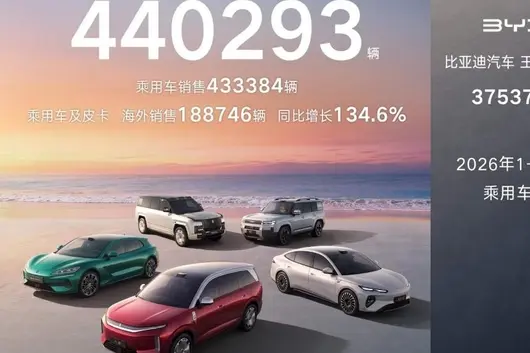
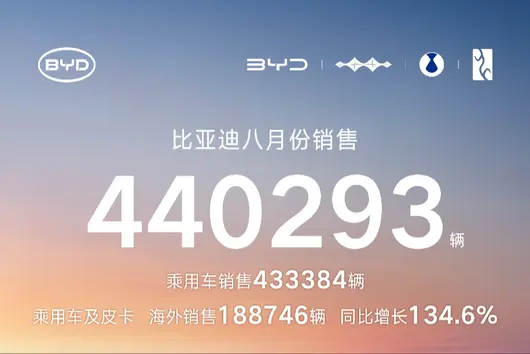
September 1st BYD officially released the August 2026 production and sales report, and the release of this performance report immediately sparked widespread industry attention. Data shows that in August, the overall sales of BYD Group reached 440,293 vehicles, of which passenger car sales were 433,384 units, a year-on-year increase of 16.7%, and a month-on-month increase of 5.4%, refreshing the brand's August sales record for all years. The most eye-catching performance is undoubtedly the overseas market. In August, overseas sales of passenger cars plus pickups reached 188,746 units, soaring 134.6% year-on-year, setting a new historical high for monthly exports. The proportion of overseas sales in total sales has already approached 40%. Going global has evolved from BYD's supplementary business into one of the core engines driving growth. As of now, BYD's cumulative global sales of new energy vehicles have broken through 17.8 million units, continuing to firmly hold the position of the global new energy vehicle sales champion.
 Breaking down by brand, the Dynasty Network plus Ocean Network remain the absolute core base of sales. In August, they sold a total of 375,373 units, accounting for more than 80% of total sales. These two networks cover the mainstream home market from 100,000 to 300,000 level, with sedan, SUV, MPV categories complete. Qin PLUS, Song PLUS, Yuan PLUS, Seal these classic models long time occupy the sales forefront in their respective sub-markets. Recently revised models have been launched successively, product strength further upgraded, plus adjustments to terminal price policies, continue to solidify the basic base of the mass market. For ordinary family consumers, Dynasty and Ocean series models, relying on mature DM hybrid technology, e-Platform 3.0 pure electric architecture, and user-friendly pricing, remain one of the first choices for home new energy vehicles.
 Fang Cheng Bao brand August sales 41,568 units, continue to maintain a stable growth trend. Since the launch of Bao 5 opened the market, Fang Cheng Bao's product matrix has been expanding rapidly. Bao 3, Bao 8 launched successively, covering the tough off-road and SUV market from 100,000s to 300,000 level. Different from traditional tough off-road vehicles, Fang Cheng Bao focuses on DMO super hybrid off-road platform, having both off-road capability and the economy and comfort of city commuting, precisely hit the user needs of many who long for outdoor life but do not want to sacrifice daily commuting experience. Now Fang Cheng Bao has become the absolute main force in the domestic tough off-road new energy market. Subsequently with the launch of Ti 9 and other higher-end models, the brand's ceiling will continue to improve further.
 Denza brand August sales 16,001 units, maintaining the first tier of the high-end new energy market. Denza D9 long time occupies the top of high-end MPV sales, N7, N8 are continuously exerting force in the SUV market, forming an MPV plus SUV product combination. Denza's positioning is very precise, focusing on the 300,000 to 500,000 high-end home and business market, having both BYD's technical endorsement, and services and luxury higher than ordinary BYD brand, precisely accepting the user needs of consumption upgrade. Many people upgrade from ordinary domestic brands, or come from joint venture luxury brands, Denza is always a very important alternative option.
 Yangwang brand August sales 442 units, as a million-level high-end brand, this sales performance is already quite stable. Yangwang U8, U9, U7 three models respectively cover tough off-road, hypercar, luxury sedan market, showed the limit of BYD's technology to the whole world. e4, DiSus, Blade Battery these top technologies, all first verified landing on Yangwang brand, then gradually deployed to lower-priced models, forming technical feedback. Yangwang's significance is not only about how many cars sold, but also lies in that it broke the price ceiling of domestic brands, proving Chinese brands can also make million-level high-end cars.
 In the whole sales data, the most worth deep interpretation is the explosive growth of the overseas market. August 188,700 export volume, year-on-year growth 134.6%, January to August cumulative exports have reached 1.158 million units, only used eight months to surpass the total export volume of all of 2025. This growth rate placed in the overall Chinese auto company going global big picture, is also a leading level. Different from many auto companies' pure whole vehicle export model, BYD follows the route of technology plus capacity full ecosystem going global, building local factories in Thailand, Brazil, Hungary and other countries, gradually shifting from whole vehicle export to local production local sales, not only can avoid tariff barriers, but also can better adapt to local market needs.
At the same time BYD is also outputting domestic technical standards overseas, Blade Battery, e-Platform 3.0, DM hybrid technology, and the latest Megawatt-level fast charging, all being gradually equipped on overseas version models. In main markets such as Europe, Southeast Asia, Latin America, Middle East, BYD's market share is steadily rising, from previous mainly economic small cars, gradually shifting to mid-to-high-end models. The high growth of overseas market also well counteracted the competition pressure of domestic market. When domestic price wars intensify, overseas market has become BYD's important incremental source and profit buffer.
 From the power structure perspective, August pure electric vehicle sales 256,230 units, year-on-year increase 28.38%, month-on-month increase 9.92%; Plug-in hybrid vehicle sales 177,154 units, year-on-year increase 3.05%. Clearly can see, pure electric vehicle growth speed is accelerating, on one hand because overseas market pure electric vehicle demand is booming, on the other hand domestic market pure electric vehicle product matrix is also constantly improving. Seagull, Dolphin, Yuan PLUS these entry-level pure electric vehicle sales stable, Seal, Han EV these mid-to-high-end pure electric also continuously exerting force. Plug-in hybrid models although growth speed slowed, but still remains BYD's basic base. DM technology fuel consumption low, no range anxiety advantages, for many users who find charging inconvenient, still an irreplaceable choice.
Looking at January to August cumulative, BYD Group cumulative sales 2,668,015 units. Although cumulative year-on-year slightly declined, but this is mainly because 2025 same period base is too high. Placed in whole industry view, BYD still firmly ranks first in domestic new energy vehicle sales, and leading advantage is very obvious. More importantly sales structure is changing, overseas proportion continuously rising, high-end brand proportion getting higher and higher, average price per vehicle also steadily rising. Not relying on low price to exchange sales, but transforming towards high quality development.
 Looking forward to the second half of the year, BYD's product rhythm remains dense. Dynasty Network 3rd Gen Tang, Han revised models, Ocean Network Sea Lion 07, Sea Lion 08, Fang Cheng Bao Ti 9, and Denza, Yangwang new models will be launched successively. Domestic market product strength will be further enhanced. Overseas market aspect, as more local factories put into production, and more regional market development, export sales probability will still maintain high growth. Current BYD is no longer pure Chinese auto company, but is growing into a global auto group. Domestic and foreign two markets dual wheel drive, risk resistance ability will become stronger and stronger.
Of course also need to see, global new energy market competition is also becoming more and more intense. Traditional auto companies accelerate electrification transformation, New EV brands also continuously catching up, BYD also cannot take lightly. Technology research, product iteration, channel construction, brand construction, every link cannot loosen. But at least from current sales data view, BYD's strategic rhythm is steady. Multi-brand matrix, full technology route, globalization layout, these long-term layouts are gradually realizing results. Next September and October peak sales season, BYD sales probability will rise to another level. Whole year performance is worth looking forward to.

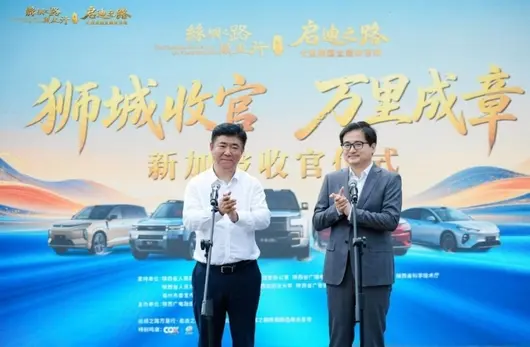
August 25, the highly anticipated "2026 Silk Road 10,000-Mile Journey · Enlightenment Road" event concluded successfully in Singapore, with BYD providing backing for the entire travel cooperation. Green energy accompanies the Silk Road journey, this 33-day Silk Road trip was full of highlights, the convoy started from Xi'an, spanning six provinces within the country, crossing Thailand and Malaysia along the way, traveled over 10,000 kilometers, eventually arrived in Singapore, successfully completing the cross-border journey.

This year marks the fifth anniversary of the establishment of comprehensive strategic partnership between China and ASEAN. This event was themed "Technology Innovates · Civilization Converges", connecting land and maritime Silk Roads, integrating cultural exchange, tech dialogue and economic trade connectivity, vividly showcasing the new development vitality of the "Belt and Road".

This journey was also a 10,000-mile real-world test of BYD's hard-core technology. BYD gathered five brand models to form a new energy vehicle fleet, adapting to various complex road conditions such as highways, mountain roads, and urban congestion. Its flash charging capability of "5 minutes for good charge, 9 minutes for full charge", relying on the network layout of nearly 10,000 flash charging stations across the country, solved the long-distance energy replenishment challenge, intelligent driving also significantly reduced driving pressure.


BYD's deep cultivation in the Singapore market achieved remarkable results, consecutively securing the first place in local passenger car sales for 19 months. In 2026, BYD's overseas business grew even faster, best-selling in over 100 countries worldwide, topping the new energy sales list in multiple countries.

This Silk Road journey not only demonstrated the solid strength of Chinese new energy vehicles, but also allowed the world to see the strong power of Chinese brands helping the "Belt and Road" green development.

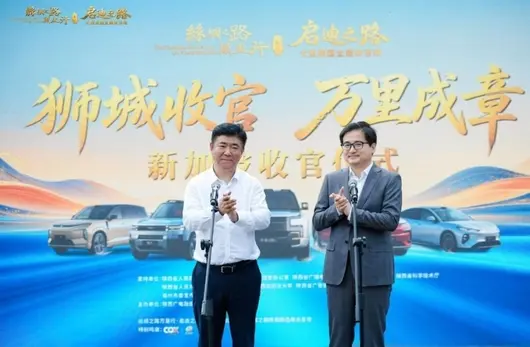
August 25, the 2026 Silk Road 10,000 Li · Inspired Road Event concluded smoothly in Singapore, with all travel services throughout the journey exclusively provided by BYD. Green energy accompanied the Silk Road journey, and this 33-day international trip concluded successfully. The convoy departed from Xi'an, crossed six provinces domestically, passed through Thailand and Malaysia, and finally arrived in Singapore, driving over 10,000 kilometers in total, perfectly completing the land-sea Silk Road route of the new era.

This event closely followed the theme "Technology Towards New · Civilization Towards Core". Coinciding with the 5th anniversary of the establishment of the comprehensive strategic partnership between China and ASEAN, it combined Silk Road cultural exchange, technological interaction, and trade connectivity, vividly showcasing the brand new development outlook of the land-sea linkage of the "Belt and Road". Numerous guests, overseas Chinese compatriots, and media from both home and abroad jointly witnessed this grand event.


The lineup of the convoy for this expedition was very complete, gathering models from BYD's full brand series including Dynasty, Ocean, Denza, Fang Cheng Bao, and Yangwang, smoothly handling complex road conditions such as highways, mountainous areas, and urban congestion. The convoy tested and verified BYD's two core hardcore technologies throughout the journey: the flash charging capability of a 5-minute fast charge and 9 minutes to full charge, completely resolving the anxiety about energy replenishment for long-distance travel. At the same time, the God's Eye assisted driving system iterated and upgraded based on massive amounts of real road condition data, greatly reducing the pressure of long-distance driving and ensuring smooth travel throughout the journey.

In the high-standard Singapore market, BYD's strength has long established a foothold. As of July 2026, it has ranked first in local passenger car sales for 19 consecutive months, with the pure electric market share reaching as high as 40.3%. The local threshold for buying a car is extremely high, and consumers are very cautious when choosing cars. Yet, BYD still leads in sales, and has also laid out 16 offline retail touchpoints, with brand recognition continuing to rise.


Not just in Singapore, this year BYD's overseas market saw a comprehensive breakthrough. From January to July, overseas sales exceeded 970,000 units, surging 76% year-on-year. Products cover more than 120 countries and regions globally, topping the new energy vehicle sales list in multiple countries such as Thailand, Spain, and Brazil. This Silk Road journey was not only an international test drive but also allowed the world to see the technological strength of Chinese new energy brands, empowering China Intelligent Manufacturing to boost global green transportation upgrades.

Recently, BYD's first half 2026 financial report was released.
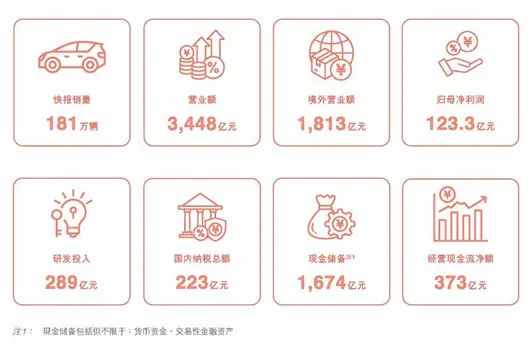
In the first half, BYD achieved operating revenue of 344.815 billion yuan, net profit attributable to parent company of 12.325 billion yuan, scale continued to firmly rank at the forefront of the domestic automotive industry; R&D investment was 28.9 billion yuan, cash reserves 167.4 billion yuan, one side is actual cash technology investment, one side is a solid cash foundation.
On the sales front, in the first half, total vehicle sales exceeded 1.8 million units, continuing to firmly hold the top spot in global new energy vehicle sales. Putting these numbers together, the silhouette of a leader with a massive scale, stable cash flow, and continuing high-intensity investment is basically established.

Everyone has seen this market trend this year. The price war has been raging since the beginning of the year until now. Revenue and profits of mainstream domestic and foreign automakers have been affected to varying degrees. At this time, reviewing the leader's financial report actually best reveals who is holding on hard and who is building momentum.
Why does the current period profit not look impressive?
Many people ask this question; it is actually due to two factors:
First is exchange rates,during the same period last year, the RMB contributed over 3.1 billion yuan in exchange gains to BYD. This year, it recorded losses of several billion in reverse. One in, one out, totaling nearly 8 billion, all reflected in financial expenses. This part has nothing to do with the profitability of the main business;
Second is R&D,the 28.9 billion investment in the first half was 16.5 billion higher than the net profit in the same period, of which the expensed portion directly reduced the current period profit.
One is external disturbance, one is active spending, neither represents a problem with the main business. Whether the main business is actually good or not, Q2 data is the most honest. Single quarter net profit increased 30% year-on-year, gross margin 18.9%, reaching a new high in nearly a year. The signal of profitability recovery is quite clear.

Looking at the sales structure again, in recent years BYD has firmly pursued the premiumization strategy.
These three high-end brands Fang Cheng Bao, DENZA, and YANGWANG sold a combined 228,000 units with a year-on-year growth of 61%, accounting for 12.6% of the group's total sales. On average, 1 out of every 8 cars sold is a premium car.
Fang Cheng Bao is the strongest, 160,000 units in half a year, year-on-year 163%; DENZA monthly sales first broke 20,000 in June, average price stood around 360,000 yuan; YANGWANG in the million-level segment, is the fastest to sell 10,000 units among domestic new energy.
The premium matrix volume increase directly steadily lifted the average price per vehicle. This item is already ranked at the forefront among mainstream automakers.

The internationalization section is the part with the highest value in my opinion.
Overseas sales in the first half reached 790,000 units, a year-on-year increase of 68%. Business expanded to over 120 countries. UK, Brazil, Thailand several core markets directly won new energy sales champions. The more critical watershed is at the revenue end. For the first time, the proportion of overseas revenue in the first half exceeded half, for the first time surpassing the domestic market.
Some institutions calculated a figure. BYD's overseas average vehicle price is about 184,400 yuan, domestic is 127,200 yuan. The difference is nearly half. Selling the same car overseas is more profitable.
BYD is still moving factories overseas. Brazil and Thailand are already in production. Hungary will follow in the second half. Moving from product export to capacity export gives the confidence to bypass the tariff hurdle.

R&D investment of 28.9 billion yuan, where did it all go?
BYD invested 28.9 billion in R&D in the first half, cumulative total exceeds 270 billion. The second-generation Blade Battery and Flash Charging unveiled in March pushed mass production refueling speed to the global top tier. 10,000 Flash Charging stations built, covering 332 cities. In May, it became the only automaker globally to provide backing for both Smart Parking and City Navigation. China's first self-developed 4nm intelligent driving chip Xuanji A3 is already in mass production. By the end of July, 3.52 million vehicles equipped with assisted driving have run on the roads.
These investments consume money in the short term, but looking long-term they are all moats. It was not vague with upstream suppliers either. Payment terms for SMEs suppliers are pressed to 60 days cash payment. Accounts payable and note turnover days are 141 days, which is at a low level among mainstream automakers.

When the industry slows down as a whole, it is precisely the window for companies to separate themselves.
BYD's path in this semi-annual report is clear. On one side, rely on premiumization to raise the vehicle price. On the other side, rely on internationalization to open up profit space. At the same time, use R&D far exceeding current profit to build high future barriers, demonstrating a continuous and steady development foundation.
That profit curve rising again in the second quarter is the first signal that this strategy is starting to pay off. For the following few quarters, it is worth continuing to watch.

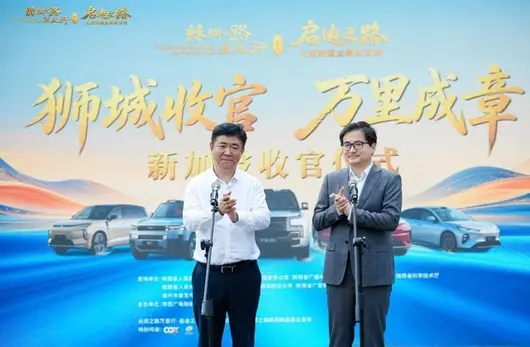
On August 25, the "2026 Silk Road 10,000 Li Journey · Enlightenment Path", for which BYD served as the official travel partner, concluded successfully in Singapore. Li Yunfei, General Manager of Group Brand and Public Relations at BYD, and Zhang Lianye, Chairman of Shaanxi Broadcasting and Television Media Group, jointly announced the conclusion of the event.

With the theme "Technology Towards New, Civilization Towards Heart", the convoy lasted 33 days and traveled over 10,000 kilometers, spanning six provinces in China, crossing Thailand and Malaysia, finally arriving in Singapore. The BYD Dynasty, Ocean, Denza, Fang Cheng Bao, and Yangwang four brands formed a new energy vehicle convoy, completing driving in multiple scenarios including highways, mountainous areas, and urban congestion. Supercharging and the God's Eye assisted driving system withstood the 10,000-mile real-world test. The supercharging capability of "5 minutes to charge well, 9 minutes to charge full" relies on a network of nearly 10,000 supercharging stations to solve long-distance energy replenishment challenges.

Green energy accompanies the long journey along the Silk Road. From Xi'an to Singapore, the scene of ancient Silk Road camel caravan relay stations is evolving into a modern expedition empowered by technology. As of July 2026, BYD has ranked first in total sales of all passenger car brands in Singapore for 19 consecutive months. From January to July, the market share reached 24.7%, and the pure electric share reached 40.3%. From January to July 2026, BYD's overseas cumulative sales exceeded 970,000 units, with a year-on-year growth of approximately 76%. New energy vehicles have entered over 120 countries and regions worldwide.


When they drive Denza D9 to pick up the porcelain that best represents Chinese culture from Jingdezhen, select exquisitely designed silk from Hangzhou silk workshops, choose Wuyi Rock Tea from the first spring from Wuyi Mountain, and drive off the ferry onto Singaporean soil, you can hardly help but feel a sense of disorientation as if traveling through time and space.

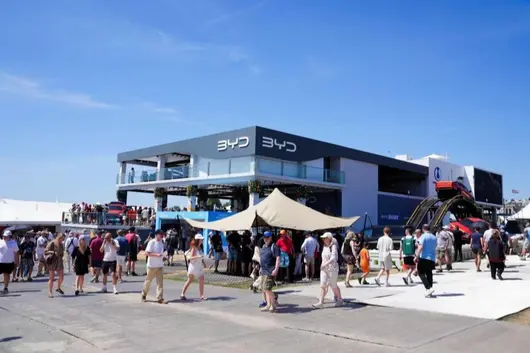
Following BYD's arrival in the UK and Europe at the July 2026 Goodwood Festival of Speed with a multi-brand matrix including Denza, Yangwang, Sealion 07, etc., launching a loud shot for Chinese new energy vehicles to enter the Western European market with the largest exhibition booth in global brand history, on August 25, the grand closing ceremony of the "2026 Silk Road 10,000 Li · Enlightening Road" Maritime Silk Road was held grandly in Singapore. BYD, as the full-transportation partner for this event, provided the entire event support fleet, completing a land and sea silk road expedition lasting 33 days and covering over 10,000 kilometers.

BYD Brand Booth at the Goodwood Festival of Speed
This 10,000-kilometer convoy set off from Xi'an, Shaanxi, the starting point of the overland Silk Road, on July 24, passing through cultural landmarks such as Jingdezhen, Jiangxi, Hangzhou, Zhejiang, and Wuyi Mountain, Fujian, following the millennium-old Silk Road cultural vein, crossing mountains and rivers, visiting the civilizational roots of silk, porcelain, and tea; the convoy crossed national borders, traversing Thailand and Malaysia in turn, finally arriving at the hub node of the maritime Silk Road, Singapore, completing this land-sea linked cultural and technological exploration journey.

Thousands of years ago, when merchant ships sailing across the sea along this channel delivered China's top-tier silk, porcelain, and tea into the hands of people from foreign lands, they saw an aesthetic and craftsmanship that a civilization had settled for hundreds of years. But today, this convoy starting from under the Xi'an Ancient City Wall, crossing the Indochina Peninsula and crossing the Strait of Malacca, hands over a more complete modern civilization solution: 5G data streams flowing in the vehicle infotainment system, battery cells lying on the chassis, every kilometer passing by outside the car window is the pulse of the ancient Silk Road beating in the contemporary era.

In the financial report released just recently for the first half of 2026, the confidence of this expedition was already backed by data: BYD's cumulative sales in the first half reached 1.8085 million units, of which the total volume of exports and local delivery in the overseas market reached 792,000 units, a strong increase of 67.8% year-on-year. Performance broken down by core markets is more substantial: In the first half, in Australia, BYD's cumulative sales of all powertrain models reached 52,300 units, a year-on-year increase of 124%, rising to second place among all car brands in Australia, second only to Toyota. BYD, which has been in the UK for a full 18 months, sold a cumulative 38,000 new cars locally in the first half of the year.
And Singapore happens to be the most substantial sample market for this era's dialogue.
You should know that in this harshest automotive arena for global entry barriers, the cost of one Certificate of Entitlement (COE) equals half a luxury car domestically; the car purchase list swept by consumers' fingertips is stacked with all the names that the global automotive industry is most proud of over the past century. It is on this tiny plot of land that BYD forcibly turned itself into part of the streetscape.

As of July 2026, BYD has consecutively held the Singapore passenger car brand sales champion title for 19 months; from January to July this year, the overall market share reached 24.7%, and all categories of Chinese car brands combined occupy nearly half of the local new car market. Singapore's total passenger car registration volume for the year is less than 60,000 units, with BYD stably delivering 1,100-1,400 units per month; almost every four new cars sold, one is from BYD. Walking on the streets of Singapore, around city landmarks such as Orchard Road, Sentosa, Merlion Park, and Botanical Gardens, BYD Sealion 07 (Sealion 7), Yuan PLUS Overseas Version ATTO 3, and Denza D9 can be seen everywhere; Chinese new energy vehicles have deeply integrated into Singapore's daily commuting landscape.

During this journey, a vivid detail was impressive: the local driver responsible for the overseas airport pickup and drop-off service for this event drives a Toyota Alphard MPV daily. During the conversation, he admitted that the Certificate of Entitlement he holds has only two years of validity left, and when exchanging the certificate, he plans to directly swap for a Denza D9. The high fuel costs are forcing local practitioners in Singapore to collectively shift to new energy.

We specifically visited BYD's exclusive general agent in Singapore, Vantage Automotive. In the land-scarce Lion City, the operator built a BYD + Denza dual-brand flagship showroom covering about 4,500 square meters, integrating product display, customer experience, and after-sales maintenance; it has four authorized dealer outlets under its portfolio, building a service network of 27 sales stores covering the whole island, the scale being rare in the local luxury brand channel system.

Singapore BYD General Agent New Car Showroom
Affected by the high Certificate of Entitlement cost and import tariffs, BYD's high-end sequence models sell at a significantly higher price locally than domestically: Denza D9 market price is worth more than 1.6 million RMB, Denza B5 and Denza B8 prices are both higher than the domestic versions. Even with high prices, local public opinion forms an interesting folk evaluation: Many Singaporean users believe that BYD system brands' current market status and user goodwill have already surpassed traditional BMW and Mercedes-Benz. Local circles even spread a playful verbal expression, calling the BBA legacy luxury brands "The Old Guard", while BYD, Denza and other Chinese new energy brands are the market's new favorites "The New Guard".

Behind this jest lies an answer that the Chinese automotive industry has been pursuing for more than half a century: We finally no longer trade low prices for market share, nor do we trade subsidies for growth increments.
Never has an industrial product been able to send China's technological confidence and cultural warmth packaged to the whole world like today's new energy vehicles. The Silk Road merchant teams from a thousand years ago transported out a civilization grown from the land; the convoy expediting along the same road today transports out strength grown from the workshop.

In the past, when we talked about "Globalization", we subconsciously felt we had to cater to others' rules, having to squat down to get the entry ticket. But the footprints BYD has walked along tell everyone: The true globalization that stands and takes the market is walking out with one's own 5,000-year cultural roots—from the Big Wild Goose Pagoda in Xi'an to the Merlion in Singapore, from the kiln fires in Jingdezhen to the track fireworks at Goodwood, the winds of old and new Silk Roads met head-on at the Strait of Malacca.
The era of silk and porcelain is the past, the era of smart EVs and photovoltaic energy storage is the present, and that channel that has been flowing for a thousand years has never broken; it's just that this time, carrying Chinese manufacturing forward are no longer camel caravans and sails, but rolling wheels and flashing lightning. Technology has power, culture has warmth, when the two merge into one, it is the Chinese overseas narrative that can most boost the confidence of the people.

Twenty thousand li of roads with clouds and moon, Chinese automobiles no longer need to try all means to prove "we are not inferior to others". Because in this new energy era deeply participated and even led by Chinese automakers, what we deliver is a future lifestyle that the world is willing to share and pay for.
When hardcore technology flows with the warmth of civilization, every wheel print of Chinese brands rushing to the globe will be walked with immense certainty and dignity.


BYD's 2026 semi-annual report is out, revenue 344.8 billion, net profit 12.3 billion, taxes 22.3 billion, R&D investment 28.9 billion, does this count as losing money to invest in technology? Truly the "King of R&D"!
In my opinion, this actually highlights a solid foundation for sustained development! Although there is 167.4 billion cash on hand, dare to invest so much in R&D, where does the confidence come from? Overseas sales reached 790,000 units, up 68%, UK, Brazil, and Thailand all took the new energy sales champion. The three major high-end brands sold 228,000 units combined, up 61%. Both the high-end and overseas expansion paths are very smooth.
In short, it's about trading full-stack in-house R&D for initiative. BYD has cumulatively invested over 270 billion in R&D, what has it gained? 2nd Gen Blade Battery + Flash Charging tech, the fastest mass production charging speed globally; 10,000 Flash Charging stations already cover 332 cities, overseas also to build 6,000 stations; China's first self-developed 4nm intelligent driving chip Xuanji A3...... All these were forged with real money, not just PPT promises.
When the entire industry is shouting "We can't compete anymore", BYD uses densely deployed technical achievements to prove one thing: The true moat is never built through price wars.
Cover | BYD
Author | Chen Zhuo
Editor | Han Yongchang
On August 29, BYD disclosed a semi-annual report that does not look very good.
In the first half of the year, BYD achieved operating revenue of 344.815 billion yuan, a year-on-year decrease of 7.13%; net profit attributable to the parent company was 12.325 billion yuan, a year-on-year decrease of 20.54%. Most major financial indicators were basically in a year-on-year decline state, and cash and cash equivalents on hand were only 55.619 billion yuan, a decrease of about half compared to the same period last year.
Such results are not actually surprising. In a market where 3.3 new cars launch daily, it is almost impossible for any automaker to submit a sufficiently pretty semi-annual report.
In the first half of this year, Li Auto turned from profit to loss with a net loss of 3.981 billion yuan; Xpeng had a net loss of 3.12 billion yuan. Even Leapmotor, which was in the spotlight in the first half of the year with monthly sales breaking 100,000 units and achieved a 530.97% year-on-year growth in net profit, only reached 208 million yuan.
Therefore, in such a market environment, simply analyzing the rise and fall of BYD's revenue, profit, and other financial indicators in the first half of the year does not have great significance. This is due to both reasons at the company's own operational level and the impact caused by changes in the market environment.
So, this short article does not intend to focus on the rise and fall of the numbers in the financial report, but rather wants to discuss two data points:
The first data point is that BYD's overseas revenue share exceeded half for the first time, reaching 52.57%; the second data point is that its R&D investment in the first half of the year saw its first year-on-year decline since 2020.
01
—
Overseas Revenue Share 52.57%
Let's look at overseas revenue first. BYD's truly large-scale overseas expansion started after 2024.
In Q4 2024, BYD had consecutive months with sales exceeding 500,000 units, with domestic monthly sales exceeding 450,000 units, which is the peak monthly sales to date. In 2024, BYD also successfully sold 4.2 million new energy vehicles, and growth in the domestic market has hit the ceiling.
From this point on, BYD significantly accelerated overseas market expansion.
In 2025, BYD's annual overseas sales broke 1 million units for the first time, and the proportion of overseas revenue to total revenue increased from 28.55% in 2024 to 38.65%.
This year, this trend further accelerated.
In the first six months of 2026, BYD's total sales were 1.8085 million units, of which overseas sales reached 792,300 units and domestic sales were 1.0163 million units. That is to say, overseas sales have accounted for 43.8% of BYD's total sales.

What's more noteworthy is that the growth in overseas sales has started to reflect directly in the revenue. In the first half of this year, BYD's overseas revenue reached 181.268 billion yuan, accounting for 52.57% of total revenue.
This is the first time in BYD's history that overseas revenue share has exceeded half.

BYD is not just going overseas, but is becoming an automaker increasingly reliant on the overseas market.And the significance of the overseas market for BYD is not just providing incremental sales.
The financial report shows that in the first half of this year, BYD's overseas business gross margin reached 21.71%, while the domestic business gross margin was only 15.67%.
Combining BYD's domestic and overseas sales in the first half of this year, it can be roughly calculated that the gross profit per vehicle corresponding to overseas business is about 49,700 yuan, while domestic is about 25,200 yuan, the former is nearly twice the latter.
Of course, this number cannot be simply understood as "BYD earns 49,700 yuan for every car sold overseas". BYD's business structure is different from many automakers, and the profits of power batteries, energy storage, and other businesses are also included in the overall business, and there are also differences in product structures between domestic and foreign.
But at least one point is very clear: Overseas markets are not only a new source of sales growth for BYD or any Chinese automaker, but also a market with better profitability.
So, BYD is still continuing to accelerate overseas expansion.
The financial report shows that currently, BYD's new energy vehicle business has covered six continents and 121 countries/regions worldwide. In the first half of this year, in major overseas markets such as the UK, Italy, Spain, Brazil, Thailand, Indonesia, Saudi Arabia, and UAE, BYD was the new energy vehicle sales champion.
If BYD can maintain overseas sales growth in the future, while keeping overseas revenue above half of total revenue for a long time, then its identity will also undergo a significant change, it is no longer just China's largest new energy vehicle company, but will increasingly become a global automotive company.
02
—
R&D Investment Down 6.54% YoY
R&D has always been one of the most important tags for BYD.
In the past few years, BYD has emphasized R&D investment almost every year. From the Tech Pool, to Engineer culture, to increasing R&D personnel and R&D expenses, R&D investment has always been an important tag distinguishing BYD from other automakers.
But this year, this indicator has seen some changes.
In the first half of 2026, BYD's R&D investment was 28.861 billion yuan, a year-on-year decrease of 6.54%. This is the first half-year R&D investment decline for BYD since 2020.

Moreover, not only did the total amount of R&D investment decrease, but the structure of R&D expenses also changed.
In the first half of this year, BYD's capitalized R&D expenses reached 5.554 billion yuan, accounting for 19.24% of R&D investment; while at the same period last year, this proportion was only 4.16%.
Here, a brief explanation of what R&D capitalization means is needed.
A-share listed companies' R&D investment can choose expensing, or can proceed to capitalization after meeting conditions. Expensing means R&D expenditure is directly recorded in the current period profit and loss; capitalization means qualified R&D expenditure is first recorded as assets, and then gradually recorded in costs through depreciation, amortization, etc.
In simpler terms, the higher the proportion of R&D expense capitalization, the less amount is deducted in the current period, and these amounts can be placed in the profit column, making book profits higher.
According to the data in the first half of this year, BYD's capitalized R&D expenses were 5.554 billion yuan.
If assuming the capitalization ratio remained at last year's same period level of 4.16%, then the capitalized R&D expenses for the first half of this year would be only about 1.2 billion yuan. Simple calculation shows that under unchanged other conditions, BYD's current period profit might be affected by about 4.3 billion yuan, leaving less than 8 billion yuan.
But it also needs to be emphasized here that R&D capitalization itself does not mean financial fraud or profit manipulation. As long as R&D projects meet the capitalization conditions prescribed by accounting standards, enterprises carrying out capitalization treatment is a normal accounting behavior, and the capitalization ratio of some automakers' R&D expenses may even reach 80%.
What is truly worth attention is actually that both numbers changed simultaneously: R&D investment declined, and the capitalization ratio increased. This forms a clear contrast with BYD in the past few years.
In the past few years, BYD, in its high-growth period, has always touted R&D investment, ranked first among A-share listed companies for two consecutive years, and the company currently has more than 120,000 R&D personnel. As of the first half of 2026, cumulative R&D investment has exceeded 270 billion yuan.
The decline in R&D investment in the first half of this year is not itself something that needs to be criticized per se, but it is a very signal worth paying close attention to.
Especially in the context of pressure on BYD's domestic market and declining profits, this means that the company that has been continuously increasing R&D investment in the past has begun to focus more on the relationship between input and output.
03
—
Final Thoughts
In the past few years, what BYD has been best at is continuously expanding scale. From 2021 to 2025, BYD sales grew from 730,000 to 4.6 million units, an increase of about 6.3 times.
For a company with a highly vertically integrated supply chain, this not only means whole vehicle capacity must expand 6.3 times, but also capacity for a large number of self-supplied parts such as batteries and motors must expand synchronously. That was a typical high-growth stage, where BYD's employee count once peaked at 970,000.
But when the domestic new energy market shifted from incremental competition to stock competition, BYD also began to enter an adjustment period.
The era of relying solely on price cuts and over-specification for growth in the domestic market is passing, and the overseas market has given BYD new growth space. The sales, revenue, and profit margins in the first half of this year even proved that going overseas is not just a second growth curve, and may even become the most important growth source for BYD in the future.
At the same time, the first decline in R&D investment also means that BYD has begun to rethink the relationship between input, output, and profit. This does not mean that BYD no longer values R&D, but is an adjustment after high-speed growth.
So, rather than saying this is an unfavorable semi-annual report, it is more like a semi-annual report at a turning point period. And whether this transition can be completed smoothly will also determine whether BYD can truly become a global automaker.
- END-


Evening of August 28, 2026, BYD (002594.SZ) unveiled its first-half operating performance report with a splash! Amid fierce competition in the global automotive industry and industry-wide profitability pressure, BYD, still relying on its strong operational resilience and comprehensive strength, walked steadily and firmly, delivering a highly valuable and bright financial report, fully displaying the hardcore confidence of an industry leader and a steady development trend, highlighting the continuous steady development foundation.

From the core operating data, BYD's first-half performance was very bright: achieving 344.8 billion yuan in operating revenue, with net profit attributable to shareholders reaching a high of 12.3 billion yuan. It continuously invested a high amount of 28.9 billion yuan into technical R&D, while holding a sufficient cash reserve of 167.4 billion yuan, solidifying the firm foundation for the company's steady development. Particularly worth noting is that the second quarter performance witnessed a strong breakout, with net profit increasing significantly by 30% year-on-year, and gross margin continuing to climb to 18.9%, successfully reaching a new high in the past year! This set of eye-catching data intuitively verifies that BYD's profitability is continuously improving and upgrading, with the momentum of high-quality development being unstoppable.
With intensifying industry competition and accelerating restructuring of the market landscape, many brands are facing growth bottlenecks. However, relying on a solid and steady operational foundation and continuously optimized business structure, BYD moved upstream against the industry wave. Its overall development momentum in the first half was high and upward, with market competitiveness continuing to soar, and its position as the global new energy vehicle industry leader becoming more and more solid and unshakable.

Only by pushing forward in two directions can the growth ceiling be broken! In the first half of this year, BYD precisely laid out the two core tracks of internationalization and high-endization. The dual-wheel drive achieved growth acceleration, and the overall growth structure of the enterprise continued to improve and become increasingly healthy.
The overseas market witnessed explosive growth, becoming the core new engine for performance growth! In the first half of the year, BYD's overseas sales volume soared to 790,000 units, skyrocketing by 68% year-on-year, with a very rapid growth momentum. Currently, the brand's business has comprehensively covered more than 120 countries and regions worldwide. Relying on solid product strength, it successfully topped the sales charts of new energy vehicles in several key overseas core markets such as the UK, Brazil, and Thailand, winning the favor of global consumers. With the continued release of overseas local production capacity and the continuous improvement of the global sales channel system, BYD's global layout is gradually entering the harvest period, and its overseas business is continuously injecting powerful momentum into the overall performance growth of the enterprise.
The high-end layout has also been bountiful, with brand value and product premium capability continuously leaping upward! In the first half of the year, Fang Cheng Bao, Denza, and Yangwang, the three high-end brands, worked together to break through, with cumulative sales breaking 228,000 units, increasing by 61% year-on-year. Their proportion in total sales steadily rose to 12.6%, marking significant results in BYD's structural high-end transformation.
Among them, the new high-end brand Fang Cheng Bao performed particularly stunning, with first-half sales strength breaking through 160,000 units, skyrocketing by 163% year-on-year, achieving leapfrogging growth; Denza brand steadily deep-dived into the high-end market, achieving double harvest in reputation and sales, with June sales breaking the 20,000 unit milestone for the first time, and an average product price of up to 360,000 yuan, firmly standing in the mid-to-high-end new energy market; Yangwang created an industry miracle, becoming the benchmark brand that was the fastest to break the 10,000 units in domestic million-level luxury new energy vehicles, thoroughly breaking the monopoly pattern of overseas luxury brands, showcasing the top-tier strength of Chinese Smart Manufacturing.
The dual-line strategy of international expansion and high-end quality improvement allowed BYD's product structure to continuously iterate and optimize, with core profitability steadily climbing. Net profit and gross margin in the second quarter both went up, creating phased achievements. The slight fluctuation in overall net profit in the first half was mainly due to short-term exchange losses caused by market exchange rate fluctuations. Excluding the impact of these external factors, BYD's main business profitability trend was stable and favorable, and the enterprise's super development resilience in crossing industry cycles was fully revealed.

Continuous technological innovation is the core secret of BYD's long-term leading of the industry and the core driving force for the enterprise's high-quality development! For many years, BYD has always persisted in heavy R&D and strong innovation, deeply digging core technologies with ultra-high investment, building a deep industry moat. In the first half of 2026, enterprise R&D investment reached a high of 28.9 billion yuan, with investment scale far exceeding net profit for the same period, continuously retaining the heavyweight honor of A-share "King of R&D". To date, BYD's cumulative R&D investment has exceeded 270 billion yuan. The massive scientific research investment provides relentless hard support for technology iteration and product upgrades.
Heavy investment must have high returns! BYD, which has continuously deep-dived into R&D, is now entering a concentrated explosion period for technological results, with a series of disruptive technologies landing in mass production, thoroughly solving industry pain points. In March this year, the second-generation Blade Battery and Flash Charge Technology were officially released, which refreshed the record for the fastest charging speed of global mass-produced vehicles in one go, successfully solving the global industry problems of "slow charging" and "difficult charging in low temperatures". Relying on solid technical strength, it gained authoritative recognition from the Ministry of Industry and Information Technology (MIIT), bringing users an ultimate convenient car experience.
Technology landing and ecosystem layout are accelerating in sync! Currently, second-generation Blade Battery capacity continues to ramp up and expand, and national Flash Charge station construction is in full swing. Relying on the "Flash Charge China" strategy, BYD has already built 10,000 Flash Charge stations nationwide, comprehensively covering 332 cities, perfectly constructing an all-domain fast charging network. Not only is it deeply digging the domestic market, the brand is also accelerating the global energy ecosystem layout, planning to deploy 6,000 Flash Charge stations overseas within one year, using Chinese technology to boost global new energy vehicle electrification leapfrogging development, and promoting a global green mobility revolution.
The intelligent track has also frequently reported good news, continuously leading the industry! After realizing intelligent parking safety backup, BYD was the first to officially announce in May this year that it had completed city navigation safety backup, becoming the only enterprise in the world to achieve intelligent driving "dual safety backup". With extremely strict safety standards, it promotes the universal popularization of intelligent assisted driving technology, escorting the safety of users' travel.
Data witnesses hardcore strength! As of July 31, the number of BYD intelligent assisted driving vehicles in possession has broken 3.52 million units, with the daily cumulative driving data of its SkyEye intelligent driving system exceeding 220 million kilometers. Massive real road condition data continues to feed back and iterate technology. Meanwhile, the brand's heavy-release Xuanji A3 Chip is the first domestically self-developed 4nm process intelligent driving chip. From the underlying core chip to the complete system software, BYD has achieved full-stack self-development and vertical integration, continuously leading the wave of global automotive industry intelligence and digitalization revolution.
Uphold Original Intention to Practice Responsibility, Interpreting Corporate Social Responsibility with Hard WorkLeading with strength, yet holding warm responsibility! While developing rapidly and digging deep into innovation, BYD always remembers corporate social responsibility, practicing the green development concept with practical actions, showcasing the responsibility and layout of a national enterprise.
Tax and financial contributions demonstrate corporate responsibility. In the first half of 2026, BYD's domestic tax total reached a high of 22.3 billion yuan, a value far exceeding net profit for the same period, injecting strong momentum into social economic development. In the field of green low-carbon development, BYD is more unswervingly anchored to the long-term goal of "achieving full value chain carbon neutrality by 2045", with its ESG comprehensive performance stably in the top tier of domestic enterprises, continuously empowering global dual carbon causes.
Green results are visible and tangible! From January to June this year, BYD new energy vehicles' full lifecycle carbon emission reduction reached a high of 23.17 million tons, with equivalent tree planting volume reaching 386 million trees. With substantial green results, it helps global industry low-carbon transformation and contributes Chinese enterprise strength to ecological environment protection.
Future Looks Promising! Full-Year Performance Climbs Quarter by Quarter, Leading Global Industry RevolutionLooking back at the first half of 2026, the global automotive industry structure underwent deep restructuring, and overall industry operating pressure was highlighted. Facing a complex and changing market environment, BYD broke through against the trend, overcoming difficulties, relying on precise strategic layout, hardcore technical strength, and perfect industrial layout, to achieve a strong turnaround in second quarter performance and reach a new level, delivering an operating report that exceeded expectations.
Outlook for the second half, BYD's growth momentum continues to accumulate, with strong potential! With frontier technology results continuously landing in mass production, high-end model market share steadily rising, and global layout comprehensively entering the harvest period, the enterprise's core profitability and long-term development potential will be further released, with full-year performance expected to continue climbing quarter by quarter and rising steadily.
From breaking technical barriers with billions in R&D to setting sail for globalization; from the high-end product matrix comprehensively breaking through to personally practicing social responsibility, BYD is reconstructing industry growth logic with all-round, multi-level core competitiveness, continuously leading the global new energy track, and leading a brand-new revolution in the global automotive industry! In the future, this national car enterprise will definitely continue to break through and create better results!

Recently, BYD (002594.SZ, 01211.HK) released H1 2026 performance results. During the period, BYD and its subsidiaries (collectively referred to as "BYD Group") achieved revenue of 344.815 billion yuan, a year-on-year decline of 7.13%; gross margin 18.85%, an increase of 0.74 percentage points compared to the same period last year; net profit attributable to the parent company was 12.325 billion yuan, a year-on-year decline of 20.54%, which is a rare dual decline in revenue and profit for BYD in recent years.
On the surface, exchange losses appear to be the biggest drag, but deeper pressure stems from a year-on-year decline in automotive business revenue of 8.98%. Periodic domestic demand pressure and industry "price wars" are eroding the foundation of this global new energy sales champion.
At the same time as profits declined, an asset-heavy layout centered on fast-charging stations is accelerating. According to the "Fast Charge China" strategy, BYD plans to build 20,000 fast-charging stations by the end of 2026. In a cycle of intensifying industry competition, when this investment will become profitable and how much it will earn will directly affect BYD's market competitiveness in the next stage.
Overseas Revenue Share Exceeds 50%
The financial report mentions that due to periodic pressure on domestic market demand in the first quarter and the continuation of price wars, sales of BYD's main brand were squeezed. In the first half of the year, the group sold a total of 1.8085 million new vehicles, a 15.72% decrease year-on-year, of which passenger car sales were 1.7774 million.
However, structural changes are occurring. Sales of its mid-to-high-end brands Fang Cheng Bao, DENZA, and Yangwang combined increased by 61% year-on-year in the first half, accounting for 12.8% of the group's total passenger car sales; revenue from the group's automotive, automotive-related products, and other products was 275.341 billion yuan, down 8.98% year-on-year. Rough calculations show revenue per vehicle increased from 141,000 yuan in the same period last year to 152,200 yuan. The direction of premiumization has not wavered, but the volume is not yet sufficient to offset the decline in the main brand's sales.
The gross margin did not deteriorate with the revenue decline, approximately 18.85% this period, an increase of 0.84 percentage points compared to the same period last year; gross margin for automotive, automotive-related products, and other products was about 22.33%, an increase of 1.98 percentage points year-on-year, cost control remains effective. However, revenue shrinkage directly compressed the total gross profit, reducing it by 1.877 billion yuan compared to the same period last year. Combined with rigid expenses such as sales, management, and R&D, the profit margin narrowed further.
The most obvious change in the income statement comes from financial expenses, shifting from revenue of 3.247 billion yuan in the same period last year to an expense of 5.096 billion yuan, a difference of over 8.3 billion yuan. Among them, exchange losses were 4.703 billion yuan, while in the same period last year there were exchange gains of 3.16 billion yuan. This single non-operating fluctuation far exceeded the year-on-year decrease of 3.185 billion yuan in net profit attributable to the parent company.
Another signal is reflected in R&D. In the first half of the year, BYD Group's R&D investment was approximately 28.861 billion yuan, down 6.54% year-on-year, a rare decline. The absolute amount still remains high in the industry, but whether this change is an active contraction under profit pressure or a normal fluctuation in the R&D cycle still requires verification in subsequent quarters.
As the domestic market engages in a tug-of-war in the price war, the overseas market provides relatively stable support for BYD. In the first half of the year, the group exported a cumulative 792,000 new vehicles, a 67.8% increase year-on-year. Overseas revenue increased by 33.92% year-on-year to 181.268 billion yuan, and the gross margin of overseas business reached 21.71%, higher than the domestic gross margin level of 15.67%.

BYD H1 2026 Performance (Chart / Financial Report Screenshot)
BYD stated in the financial report that as of H1 2026, the group's new energy vehicle business map has covered six continents, 121 countries and regions globally, and has already invested in local production in Brazil, Thailand, etc. The group continues to promote localization layouts in design, R&D, manufacturing, supply chain, and market operations, and continues to strengthen brand communication, sales channels, after-sales services, and supporting capability construction, achieving deep adaptation in all scenarios.
20,000 Fast-Charging Stations, BYD's Next "Gamble"
The domestic passenger car market has entered a stock competition stage. While solidifying the main brand's foundation and promoting premiumization, BYD also needs to find new growth points. Fast charging is precisely the move highly expected among them.
In March this year, BYD officially launched the second-generation Blade Battery and brand new fast charging technology, and released the "Fast Charge China" strategy. According to BYD, its launched fast charging pile has a single gun charging power reaching 1500kW, the highest single gun power among mass-produced charging piles globally; to break through grid capacity limits, it deeply integrates charging piles with super fast release energy storage systems, achieving high-power charging without increasing grid burden. On April 8 local time, fast charging technology completed its European premiere at the Paris Opera House, and BYD stated it plans to further scale and land 6,000 fast-charging stations overseas in the future.
While laying out technology and charging network layouts, fast charging capability is also rapidly spreading to the product side. In the first half of the year, BYD launched new fast-charging models such as Seal 07 EV, Song Ultra EV, Tang EV, and new DENZA Z9 GT, and successively added fast-charging versions for models under various brands including Sealion 06 EV, Seal 06 GT, Han EV, Bao 5, Bao 8, Ti 3, DENZA N9, Yangwang U7, and Yangwang U8.
According to the plan previously announced by BYD Group Chairman and President Wang Chuanfu, BYD is to build 20,000 fast-charging stations by the end of 2026. As of the end of June, 7,018 stations have been built.
In the first half of this year, BYD Group's investment activities resulted in a net cash outflow of 55.57 billion yuan, of which cash paid for purchase and construction of fixed assets, intangible assets, and other long-term assets reached 44.703 billion yuan. Although the financial report does not list the detailed expenses for building fast-charging stations, the "Fast Charge China" strategy, the half-year construction progress of 7,018 stations, the year-end goal of 20,000 stations, and energy supply ecosystem cooperation with multiple parties such as Sinopec, JD.com, KFC, and Shenzhou Car Rental all point to the fast-charging network being BYD's current key investment direction.
By the day before the financial report was released (August 28), the scale of BYD fast-charging station construction had reached 10,000, equivalent to building nearly 3,000 stations in two months.
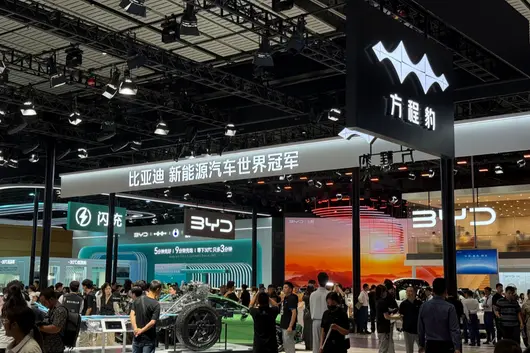
Walking along Singapore streets, you'll notice an interesting phenomenon — whether on city main roads, core business districts, or shopping malls, BYD models are everywhere. In one of the markets with the highest car ownership costs and strictest entry standards globally, this Chinese brand is being fiercely pursued by local consumers.


The numbers speak for themselves. As of July 2026, BYD has topped the passenger car sales champion across all brands in Singapore for 19 consecutive months. From January to July 2026, BYD captured 24.7% of the overall local car market and 40.3% of the pure electric vehicle market — on average, 1 out of every 4 new cars is a BYD, and over 4 out of every 10 pure electric cars come from BYD.
As is well known, Singapore's car purchase threshold is extremely high, and BYD models are priced quite high, yet they are regarded as a premium brand locally and remain hot-selling despite the "high price". This is absolutely not accidental, but a double victory of product technology and localized operational capabilities. On the channel front, BYD has deployed 16 retail touchpoints, with some stores directly entering core shopping malls to reach high-end audiences through innovative models, and dealer confidence continues to strengthen.

Hard power is the confidence. On July 24, 2026 Silk Road 10,000 Mile Journey · Enlightenment Road ASEAN Line departed from Xi'an, lasting 33 days traversing Thailand and Malaysia, concluding upon landing in Singapore, with the Dynasty, Ocean, Denza, Fang Cheng Bao, and Yang Wang five major matrices providing escort throughout. The Silk Road journey accompanied by green energy, supporting the expedition are precisely the two technologies: Flash Charging and God's Eye.


Flash Charging makes "charging like refueling" a reality: 5 minutes to charge from 10%-70% at normal temperature, 9 minutes to charge to 97%; from 20%-97% in extreme cold at -30° only takes 3 more minutes. On August 28, BYD Flash Charging stations officially surpassed 10,000, with 20,000 stations to be built by the end of the year, within 5 kilometers in 90% of urban areas for charging. God's Eye B equipped with LiDAR covers highways, city pilot, and smart parking, and pioneered the "Double Safety Net" — Smart Parking lifetime guarantee, City Pilot 1-year guarantee. The 19-time Champion is just the beginning.
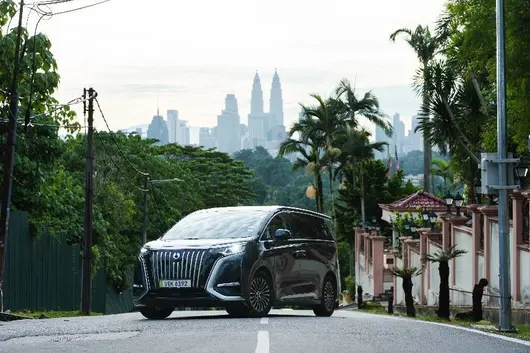

Evening of August 28, BYD ([002594.SZ](002594.SZ)) officially released 2026 semi-annual financial report, company's multiple operating data performed robustly. During the reporting period, revenue reached 344.8 billion yuan, net profit attributable to shareholders 12.3 billion yuan, R&D investment 28.9 billion yuan, cash reserves as high as 167.4 billion yuan. Among them, second quarter performance was particularly bright, net profit rose 30% year-on-year, gross margin increased to 18.9%, reaching a new high in the past year, company profitability continues to improve.

Currently, the automotive market competition is becoming increasingly fierce, BYD relies on solid operating fundamentals and continuously optimized business structure, overall development momentum in the first half of the year was strong, further consolidating its industry leading position.
Offshore and High-end Dual Line Effort, Uncover New Growth Space
In the first half of the year, BYD's overseas market sales reached 790,000 units, surging 68% year-on-year, business map has covered over 120 countries and regions, won new energy vehicle sales champion in key overseas markets such as UK, Brazil, Thailand. With overseas local factory capacity gradually released, sales channels continuously improved, overseas business has become an important driving force for pulling BYD's performance growth.
The high-end brand segment also delivered impressive results, Fang Cheng Bao, Denza, YangWang three high-end brands first half year total sales 228,000 units, growing 61% year-on-year, sales share increased to 12.6% of total sales. Among them, Fang Cheng Bao sales 160,000 units, year-on-year increase 163%; Denza June single month sales first broke through 20,000 units, product average selling price reached 360,000 yuan; YangWang as domestic million-level luxury new energy brand, also domestic first sales quickly broke ten thousand million luxury car brand.

The dual drive of internationalization and high-endization drove continuous optimization of the product structure and boosted second-quarter profitability improvements. The net profit in this report was affected by exchange losses caused by exchange rate fluctuations, but the company's main business profitability remained stable, fully demonstrating strong operating resilience.
Heavy R&D Investment, Hard-core Technology Accelerates Commercialization
Behind the impressive operating results lies continuous high investment in R&D support. 2026 first half BYD R&D investment 28.9 billion yuan, cumulative R&D investment broke through 270 billion yuan, firmly ranking in the first echelon of R&D investment in A-shares.
Major R&D investments were quickly converted into actual product technology results. This March, the second-generation Blade Battery and Flash Charge technology were officially released, refreshing the global record for production vehicle charging speed, solving the long-standing industry difficulties of slow charging and low-temperature charging, received recognition from the Ministry of Industry and Information Technology. Capacity construction and Flash Charge station layout matching it were promoted synchronously, 10,000 Flash Charge stations have now been built domestically, covering 332 cities nationwide; meanwhile planning to land 6,000 Flash Charge stations overseas in the coming year, helping popularize electrification globally.

The intelligent driving field also achieved major breakthroughs. In May, BYD announced achieving city navigation safety guarantees, combined with the previous intelligent parking safety guarantee, becoming the global only vehicle enterprise to achieve intelligent driving 'Dual Safety Guarantees'. By end of July, the volume of BYD vehicles equipped with assisted driving exceeded 3.52 million units, the God's Eye System generates over 220 million kilometers of driving data daily. The self-developed 4nm intelligent driving chip, Xuanji A3, officially appeared, completing full-stack self-research from bottom-layer chips to software systems, continuously promoting innovation in automotive intelligence.
Upholding Corporate Responsibility, Practicing Green and Low-Carbon Development
Beyond operational development, BYD actively assumes social responsibility. Taxes paid domestically in the first half of 2026 totaled 22.3 billion yuan. The enterprise established a 2045 full value chain carbon neutrality goal, ESG comprehensive performance ranked among the forefront of domestic enterprises. In the first half of the year, the new energy vehicles under the brand reduced carbon emissions by a total of 23.17 million tons over their full life cycle, equivalent to planting 386 million trees, contributing solidly to the green and low-carbon cause.
Outlook for the Second Half
In the first half of 2026, the global automotive industry structure was reshaped, many car enterprises faced profit pressure, BYD achieved counter-trend growth, multiple core indicators in the second quarter reached new peaks. Outlook for the Second Half, new technologies continue to land, the proportion of high-end models further improved, the overseas layout entered the harvest stage, the company's profitability is expected to continue to be released, the full-year performance has a favorable basis. Relying on technology innovation, global layout, and a high-end product matrix, operating quality and efficiency achieved a steady increase, BYD is reshaping its own growth path, continuously leading the transformation of the global new energy vehicle industry.
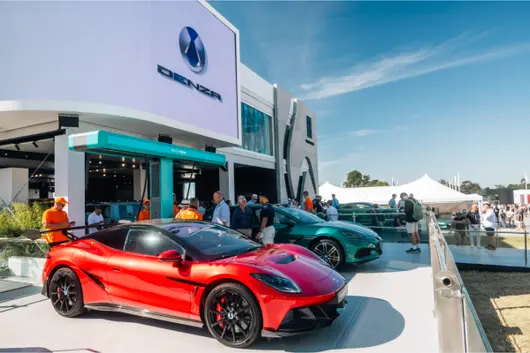

August 25, the Silk Road 10,000-Mile Journey activity, bearing world-class historical and cultural significance, concluded successfully in Singapore!
This fleet, composed of five BYD networks and four brands, departed from Xi'an, the starting point of the Silk Road, lasted 33 days, crossed six domestic provinces, passed through Thailand, Malaysia, and finally arrived in Singapore. Along the way, Flash Charge efficiently replenished energy, God's Eye ensured safety and peace of mind, and Cloud Suspension provided comfortable and stable travel. BYD used disruptive technology to solve all pain points of long-distance travel for new energy vehicles.
In Singapore, BYD is regarded by local users as high-end luxury cars. Taking the Dolphin as an example, the price in Singapore is around 900,000 RMB, truly unaffordable for ordinary people. Even selling at such a high price, sales rose steadily. From January to July, the market share of the overall passenger car market was 24.7%, occupying one-quarter of the entire Singapore passenger car market. Among them, the market share of pure electric vehicles reached 40.3%. It has also ranked first in total brand sales for 19 consecutive months.


Currently, BYD New Energy Vehicles have entered 120 countries and regions. In the first half of this year, sales in Thailand, the UK, Italy, Spain, Saudi Arabia, the UAE, South Africa, and other places were booming. In Brazil, nearly 100,000 units were sold in just 6 months.
From January to July, overseas cumulative sales exceeded 970,000 units, a year-on-year increase of 76%; July overseas sales were 179,800 units, a year-on-year increase of 124.3%.
Based on overseas sales figures, it can be seen that foreigners do not favor century-old brands. Seeing the reliable, safe, smart, and energy-efficient BYD, they simply cannot turn away.
In ancient times, there was the Silk Road; Zhang Qian's mission to the Western Regions opened up ancient trade routes. Today, BYD New Energy Vehicles cross borders for travel, retracing the Silk Road with China's smart manufacturing, supporting green transportation on the Belt and Road, and using technical strength to promote green transformation.