首頁BYD

搜尋歷史
熱門搜尋
經銷商登入 / 註冊

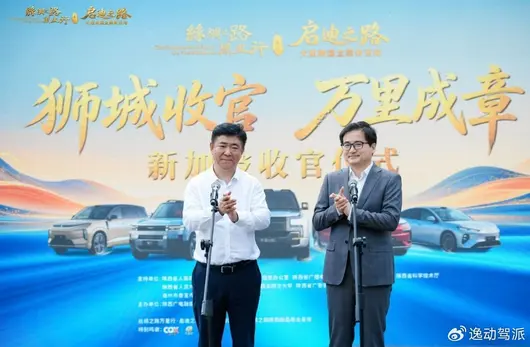
On August 25, the "2026 Silk Road 10,000-Li Journey · Road of Enlightenment", with BYD serving as the mobility partner for the entire journey, officially concluded in Singapore.

This event was packed with highlights. The Silk Road 10,000-Li Journey departed from Xi'an on July 24. Led by a new energy vehicle fleet composed of BYD's Dynasty, Ocean, Denza, Fang Cheng Bao, and YangWang, five lines and four brands, it traversed six provinces within the country, then crossed the sea to Thailand and Malaysia, finally arriving in Singapore. The entire journey lasted 33 days and covered over 10,000 kilometers, placing high demands on the adaptability of BYD's new energy vehicles to various regional climates and road conditions.


Traveling along the Silk Road accompanied by green energy, the BYD fleet completed driving in various scenarios including highways, mountain roads, and urban congested sections. It withstood the test of the 10,000-Li Journey thanks to two core technologies: Flash Charging and the Heavenly Eye Assist Driving System. Especially the Flash Charging technology, room temperature 5 minutes to charge effectively (10%-70%), 9 minutes to fully charge (97%), extreme cold from 20%-97% takes only 3 minutes extra. It can accommodate most driving scenarios and also improves the efficiency of the Silk Road fleet's journey.

It is worth mentioning that as of now, the number of BYD Flash Charging stations built is nearly 10,000 (by August 28, BYD had built 10,000 Flash Charging stations). It is planned that by the end of 2026, 20,000 Flash Charging stations will be built nationwide, making energy replenishment more convenient.

The conclusion of this Silk Road 10,000-Li Journey event in Singapore also reflects BYD's "clever moves". Singapore has strict access standards and a high-end consumer market, known as the pressure test field for cars from various countries. As of July 2026, BYD has become the top-selling passenger car brand in Singapore for 19 consecutive months. Moreover, in many overseas countries, BYD is also regarded as a high-end brand. Choosing Singapore as the destination also helps BYD expand its influence there.

In the context of the gradually saturating domestic market, going overseas has become a path that Chinese cars must take. BYD's performance in Singapore can directly prove its reliability and provides richer experience for its future push into the global market. Coupled with the popularity of this Silk Road 10,000-Li Journey event, it is believed that BYD will be more popular in the ASEAN market.
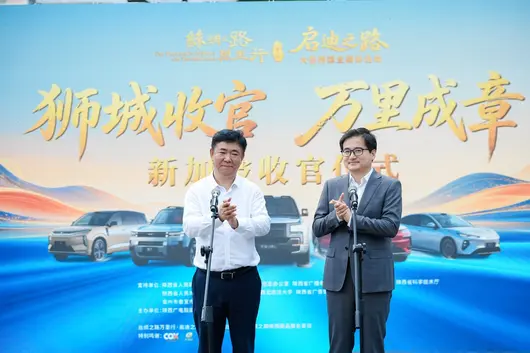

On August 25, the highly anticipated "2026 Silk Road 10,000-Li Journey · Enlightenment Path" event concluded successfully in beautiful Singapore, putting a wonderful finale to this transnational journey spanning mountains and seas. BYD served as the exclusive travel partner for the entire event, escorting the entire Silk Road journey with its hardcore green energy strength. Green energy accompanied the Silk Road long journey. At the closing ceremony site, Li Yunfei, General Manager of the Brand and Public Relations Department of BYD Group, and Zhang Lianye, Party Committee Secretary, Chairman, and Station Director of Shaanxi Broadcasting Media Group (TV), jointly announced that this transnational Silk Road trip had concluded successfully and ended with honors.

This was a romantic expedition to mountains and seas, and an era-forward march dedicated to the Silk Road! A 33-day journey of galloping, the Silk Road车队 traveled over 10,000 kilometers. Setting off proudly from the start of the Silk Road, it spanned across six major provinces domestically, passed through Southeast Asian countries such as Thailand and Malaysia, and finally landed smoothly in Singapore, a key maritime Silk Road hub city. It witnessed the blending beauty of the Land and Maritime Silk Roads along the way, writing new stories of green travel for the Silk Road in the new era.

2026 is a year of extraordinary significance, coinciding with the fifth anniversary of the establishment of the China-ASEAN Comprehensive Strategic Partnership. Based on this important era node, this event, with the vivid theme of "Technology Innovating Towards New · Civilization Converging Towards Heart", cleverly connected two key coordinates: the ancient land Silk Road starting point in Xi'an and the core maritime Silk Road hub in Singapore. It deeply integrated three core kernels: cultural exchange, technological dialogue, and trade interconnection, vividly interpreting the new development pattern of land-sea linkage and mutual empowerment in the Belt and Road Initiative. The scene was star-studded, with elites from all sectors at home and abroad, representatives of overseas Chinese, and peers from mainstream media gathering in the Lion City, jointly witnessing the new vitality of the land-sea Silk Road in the new era, and listening to the new echoes of mutual learning between civilizations.

The closing ceremony gala was full of wonderful activities. Cai Shandi, Cultural Counselor of the Chinese Embassy in Singapore, and Wang Gang, Chairman of Singapore Shaanxi Association, took the stage successively to speak, endorsing this Silk Road event and sending best wishes for China-Singapore cultural and trade exchanges and green industry cooperation.
The long Silk Road journey was a comprehensive and rigorous test of vehicle performance, range capability, and intelligent driving. BYD presented a perfect score with its full matrix of new energy products! The exclusive fleet for this event gathered the five product matrices of BYD Dynasty, Ocean, Denza, Fang Cheng Bao, and Yangwang, and four high-end brands, fully covering various travel scenarios. From smooth highway sections, winding mountain roads to congested urban blocks, the complex and changeable road conditions increased layer by layer, fully testing the comprehensive hard strength of the vehicles.

After tempering in a 10,000-kilometer real-world journey, BYD's two core black technologies emerged from the crowd, firmly standing out! The self-developed Flash Charge Technology achieved super-strong performance of "5 minutes efficient energy replenishment, 9 minutes full power range", matching with a perfect energy replenishment network built by nearly 10,000 Flash Charge stations across the country, completely solving the anxiety of energy replenishment for long-distance travel, making cross-city and cross-country long-distance travel easy and worry-free. At the same time, the "Heavenly Eye" high-level assisted driving system continuously iterated and optimized with huge real driving data of over 220 million kilometers per day, smartly escorting every journey, greatly relieving the fatigue of long-distance driving, ensuring the fleet galloped smoothly and arrived at the Nanyang shore safely throughout the journey. From the ancient scene of camel team rest stations replenishing supplies on the ancient Silk Road, to the modern transnational expedition empowered by new energy technology, the upgrade of Silk Road travel fully displays the hard strength and era responsibility of Chinese technology.

Deeply cultivating the Singapore market, BYD, relying on outstanding product power and high quality reputation, continues to lead the local new energy market! Data witnesses strength. As of July 2026, BYD has achieved the excellent result of 19 consecutive months ranking first in sales across all passenger car brands in Singapore. From January to July 2026, BYD's passenger car market share in the local area broke through 24.7% strongly, where the pure electric vehicle market share reached as high as 40.3%, stably occupying the head position of the industry. Nowadays, walking on the streets of Singapore, whether on main urban roads, core business districts, or popular shopping centers, BYD new energy vehicles are everywhere, brand awareness and national recognition are rising continuously, and deeply rooted in the local market.
As is well known, Singapore is one of the markets with extremely high car purchase costs globally. Strict purchase thresholds make local consumers especially cautious and quality-focused when choosing a car. Even in such a high-standard, high-demand market environment, BYD models still continue to sell well and stay at the forefront despite a not-low sales price, relying on high-end quality, intelligent experience, and hard strength, fully verifying strong product competitiveness, and giving local dealers full confidence to deeply cultivate the Singapore market in the long term. Currently, BYD has laid out 16 high-quality retail touchpoints in Singapore, with multiple stores forcefully entering core urban shopping centers. With the continuous climb of brand influence and market recognition, local dealers continue to add resources to terminal construction, comprehensively upgrading store site selection, space specifications, brand display, service systems, etc., to create a high-standard brand service experience.

Not only deeply cultivating the Southeast Asian market, in 2026 BYD's overseas business accelerated comprehensively, unstoppable, opening a new journey of global high-speed growth! Latest data shows that from January to July this year, BYD's overseas cumulative sales exceeded 970,000 units, surging 76% year-on-year; only the single month of July overseas sales reached 179,800 units, a year-on-year increase of up to 124.3%, with a very rapid growth momentum. So far, BYD's new energy vehicle footprint has covered more than 120 countries and regions globally, letting Chinese Smart Manufacturing and Chinese Green Energy go to the world.
Good news arrives frequently in markets around the world, highlighting BYD's globalization hard strength! In the first half of 2026, BYD took the championship throne of new energy vehicle sales in Thailand and Singapore at once; it successfully topped the new energy vehicle sales list in two European markets, Italy and Spain; UK market sales exceeded 38,000 units; Brazil market sales approached 100,000 units, continuing to stably rank first in local new energy vehicle sales. In addition, in multiple countries such as Saudi Arabia, UAE, and South Africa, BYD also stays at the first place of local new energy vehicle sales, and the global market map continues to expand.
A Silk Road 10,000-Li journey, a technology dream-chasing road! This "Silk Road 10,000-Li Journey" event innovatively deeply integrated the exploration of millennia-old Silk Road culture with new energy transnational travel, intuitively displaying the latest achievements of Chinese brands assisting green traffic upgrades and low-carbon industry development in countries along the Belt and Road Initiative. In the future, BYD will continue to use new energy vehicles as the core carrier, continuously output high-quality products, intelligent manufacturing technology, and perfect service systems, deeply participate in the collaborative development of the global automotive industry, help the global traffic green and low-carbon transformation, and continue to bloom the brilliance of Chinese brands on the world stage!
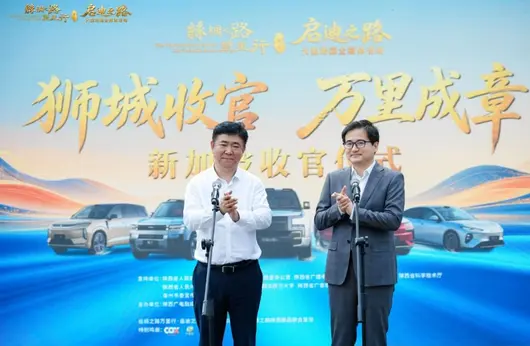

August 25, the concluding ceremony of the "2026 Silk Road 10,000-Li Journey · Road of Enlightenment" was held in Singapore. As the exclusive travel partner for this event, the BYD new energy vehicle fleet completed the 33-day cross-border journey, successfully finishing this 10,000-li journey reported by Xinhua Daily Network. Li Yunfei, General Manager of the Brand and Public Relations Department of BYD Group, and Zhang Lianye from Shaanxi Broadcasting Media Group jointly announced the successful conclusion of this multi-country expedition.

This new energy vehicle fleet composed of five series under four brands from BYD, Dynasty, Ocean, Denza, Fang Cheng Bao, and Yangwang, after 33 days and traveling over 10,000 Li, departed from Xi'an, the starting point of the Land Silk Road, crossing six provinces in China, traversing Thailand and Malaysia, finally arriving at Singapore, the hub of the Maritime Silk Road, successfully completing full-scenario road conditions including expressways, mountain roads, and urban congested sections.

Of note is that BYD's two core technologies performed brilliantly in this 10,000-Li real-world test: its Flash Charge technology delivers an experience of "fully charged in 5 minutes, fully topped up in 9 minutes", relying on the network layout of nearly 10,000 Flash Charge stations nationwide, completely resolving recharging anxiety for cross-border long-distance travel; the God's Eye Assisted Driving System continuously iterates based on over 220 million kilometers of real driving data daily, significantly reducing fatigue pressure for long-distance driving, safeguarding the fleet's smooth journey to Southeast Asia, transforming the traditional scene of camel caravan station supplies on the ancient Silk Road into a modern green expedition empowered by technology.
As a thematic event for the 5th anniversary of the establishment of the comprehensive strategic partnership between China and ASEAN in 2026, this Silk Road journey took "Technology for Innovation · Civilization for Cohesion" as its core, deeply integrating cultural exchange, tech dialogue, and trade connectivity, which also reflects BYD's deep cultivation results in overseas markets. As of July 2026, BYD has ranked first in passenger car sales across all brands in Singapore for 19 consecutive months, local passenger car market share reached 24.7% from January to July this year, BEV market share even broke through 40.3%, even in Singapore, a market with high purchase costs and extremely prudent consumer choices, BYD continues to establish a foothold with solid product strength, currently, 16 retail touchpoints have been established locally, some stores have moved directly into core business districts, brand awareness continues to rise.

Globally, in 2026, BYD's overseas business maintained high growth, overseas cumulative sales exceeded 970,000 units from January to July, a year-on-year increase of approximately 76%, its reach has covered over 120 countries and regions globally, leading new energy vehicle sales in multiple countries including Thailand, Singapore, Italy, Spain, and Brazil. This Silk Road 10,000-Li Journey is a vivid footnote to BYD using new energy vehicles as a carrier to participate in the joint construction of "Belt and Road" green transportation development and promote the green transformation of the global automotive industry.

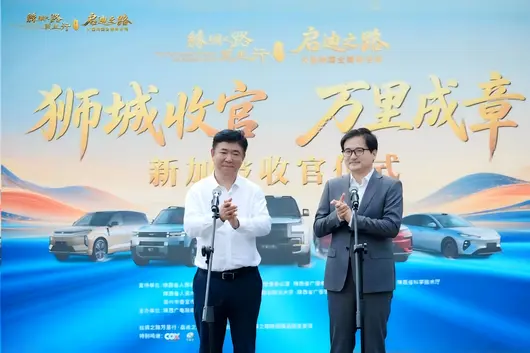

August 25, in the Lion City of Singapore, the "2026 Silk Road 10,000 Li Journey · Enlightenment Road" concluded perfectly. As the travel partner for the entire event—the BYD New Energy Fleet—after 33 days, it set off from the starting point of the ancient Silk Road in Xi'an, crossed six provinces within the country, traveled through Thailand and Malaysia, and finally arrived in the Lion City of Singapore. Traversing the Silk Road accompanied by green energy, this 10,000-li journey perfectly showcased BYD's powerful technical strength. 
Li Yunfei, General Manager of the Brand and Publicity Department of BYD Group, and Zhang Lianye, Party Secretary, Chairman, and Station Master of Shaanxi Radio, TV and Media Group (Station), jointly announced the successful conclusion of the event. 2026 marks the fifth anniversary of the establishment of a comprehensive strategic partnership between China and ASEAN, while the theme of this journey is "Technology Innovates, Civilization Unites". Many friends may have doubts, why did this event choose Xi'an and the Lion City of Singapore as the start and end points? Because our ancient capital Xi'an is the starting point of the ancient Silk Road, while Singapore is an important maritime hub connecting East and West. 
In ancient times thousands of years ago, merchants traveled through the ancient Silk Road to transport goods, promote trade, and complete the transmission and exchange of technology and civilization. And today, our new energy vehicle industry picks up the baton, using smart technology, cultural integration, and economic and trade connectivity to witness the new era land and sea Silk Road resonating with new civilizational echoes, intuitively demonstrating the era value of "Belt and Road" land-sea linkage development. BYD cars are well-received in the Singaporean car market, and sales in the entire overseas market continue to rise. According to statistics, overseas sales exceeded 970,000 vehicles from January to July, with tracks reaching over 120 countries and regions worldwide. 
The BYD fleet for this journey was powerful, with models from BYD's Dynasty Series, Ocean Series, Fang Cheng Bao brand, and Yang Wang brand all participating. Facing complex road conditions such as highways, mountain roads, urban congestion, and other scenarios, a substantial and rigorous test was completed, or rather a very severe trial. Because this ultra-long distance + complex road condition crossing test requires vehicles to possess extremely strong intelligent driving capabilities and, most importantly, charging speed. 
It is gratifying that BYD's Flash Charge and God's Eye Assist Driving System, two core technologies, withstood the 10,000-li real-world test: The flash charging capability of "5 minutes to charge enough, 9 minutes to fill up" allows vehicles to maintain sufficient range, greatly reducing unnecessary time loss. "5 minutes to charge enough, 9 minutes to fill up" when we go to work or travel daily, this might just be a very short time parameter. But in the cross-border journey spanning 10,000 li, charging efficiency becomes crucial, because charging efficiency will affect the schedule efficiency of the entire fleet. 
On the other hand, the God's Eye Intelligent Assist Driving System also withstood the rigorous test of real roads. In a long-distance driving process, what truly makes people feel tired is often not the complexity of a certain road condition, but rather continuous driving for multiple hours without stopping, which is what drivers find most difficult to bear. God's Eye relies on a large amount of real road data for continuous iteration, providing driving assistance in scenarios such as highways and urban elevated roads, making long-distance driving more comfortable. According to statistics, its average daily real driving data has exceeded 220 million kilometers. So the significance of this is that BYD does not keep technology on the press conference and parameter tables, but directly drives the vehicles 10,000 li away, using real roads to verify technology. 
The final destination of this event, Singapore, is also worthy of our attention. As of July 2026, BYD has ranked first in passenger car sales across all brands in Singapore for a consecutive 19 months. From January to July this year, BYD passenger car market share in Singapore reached 24.7%, and the pure electric market share reached 40.3%. It should be known that Singapore is one of the markets with higher car ownership costs globally. Simply put, the threshold for buying a car in Singapore is very high, so consumers in Singapore adopt a very cautious attitude when choosing cars. Under the cautious attitude of consumers, BYD sales still maintain the lead, indicating that BYD products are gaining recognition from more and more overseas consumers. 
Currently, BYD has established 16 retail touchpoints in Singapore, and some stores have even entered local core shopping centers. Turning our vision to the globe, from January to July this year, BYD's cumulative overseas sales have exceeded 970,000 vehicles, a year-on-year increase of about 76%; overseas sales in July reached 179,800 vehicles, a year-on-year increase of 124.3%. As of now, BYD new energy vehicles have entered over 120 countries and regions worldwide. From Thailand and Singapore to Europe, South America, the Middle East, and Africa, the presence of Chinese new energy vehicles can be seen in an increasing number of places. 
This Silk Road 10,000 Li journey combined Silk Road culture exploration with new energy vehicle cross-border travel, presenting the latest progress of Chinese brands participating in the green traffic development of countries jointly building the "Belt and Road". Traversing the Silk Road accompanied by green energy, BYD leveraged the Silk Road exploration to further elevate the status of our independent new energy vehicles in the overseas car market. At the same time, it allowed our new energy vehicle industry chain, intelligent manufacturing, and service concepts to take root in the global car market, ultimately fully realizing the concepts of green travel and environmental protection.
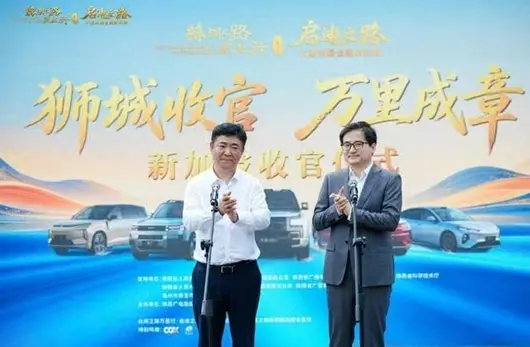

On August 25, the "2026 Silk Road 10,000 Li Tour · Enlightenment Road" event, with exclusive travel cooperation support from BYD, successfully concluded in Singapore. BYD and the head of Shaanxi Broadcasting and Television Media Group jointly announced the event's closure. Guests from home and abroad, representatives of the overseas Chinese community, and media gathered in the Lion City to witness the Land and Sea Silk Roads radiating new era vitality.

2026 marks the fifth anniversary of the establishment of a comprehensive strategic partnership between China and ASEAN. This event, themed "Technology for Innovation · Civilization for Connection," connects the starting point of the land Silk Road in Xi'an with the sea Silk Road hub in Singapore. It integrates cultural exchange, tech dialogue, and economic trade communication, vividly interpreting the development connotation of the "Belt and Road" land-sea linkage. This Silk Road expedition lasted 33 days, covering over 10,000 kilometers. The convoy crossed six provinces in China, passed through Thailand and Malaysia, and finally arrived in Singapore, reinterpreting the Silk Road spirit with green new energy travel.

The event fleet gathered BYD Dynasty, Ocean, Denza, Fang Cheng Bao, and Yang Wang multi-brand new energy vehicle models, adapted for complex road conditions such as highways, mountain roads, and urban congestion. Relying on BYD's Flash Charging and Heaven's Eye assisted driving as two core technologies, along with a domestic network of nearly 10,000 fast charging stations, it effectively solved the pain points of energy replenishment for long-distance travel. It evolved the traditional station supply model of the ancient Silk Road into a technology-enabled modern green expedition.


As is well known, Singapore has high car purchase costs, prudent consumption choices, and strict market thresholds. However, BYD has always maintained a strong market performance. As of July 2026, BYD has ranked first in passenger car sales across all brands in Singapore for 19 consecutive months. From January to July this year, the local passenger car market share reached 24.7%, and the pure electric market share was as high as 40.3%. Even mid-to-high-end model sales remained firmly at the forefront, fully demonstrating the brand's reputation and product strength.

In 2026, BYD's overseas business grew rapidly. Cumulative overseas sales from January to July exceeded 970,000 units, a year-on-year increase of 76%, with overseas sales in July alone increasing by 124.3% year-on-year. Currently, BYD new energy vehicles are present in over 120 countries and regions worldwide, topping the new energy sales lists in ASEAN, Europe, South America, the Middle East, Africa, and many other countries and regions.

Green energy accompanies the long Silk Road journey. This Silk Road 10,000 Li tour combined Silk Road cultural exploration with cross-border green travel, showcasing new achievements of Chinese brands aiding the "Belt and Road" green transportation development. In the future, BYD will continue to use new energy products as a carrier, deeply participate in global automotive industry collaboration, and assist in the global transportation green and low-carbon transformation.

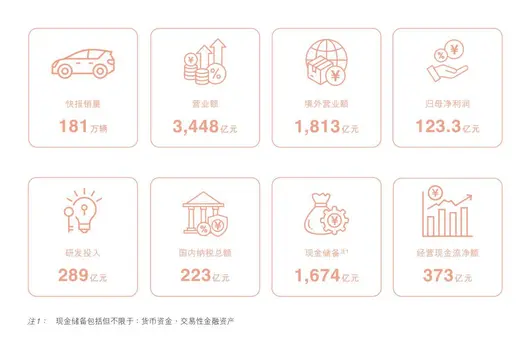
The 'Early Car Insight' latest report indicates that BYD released its 2026 first-half financial report on the evening of August 28, with key indicators remaining stable: operating revenue of 344.8 billion yuan, net profit attributable to parent company shareholders of 12.3 billion yuan, R&D investment of 28.9 billion yuan, and cash reserves of 167.4 billion yuan. Of note, net profit in the second quarter grew 30% year-on-year, gross margin continued its upward trend, reaching 18.9%, setting a new high for the past year, with steadily improving profitability, resilient growth solidifying its industry standing.

Amidst intensifying competition in the automotive industry, BYD relies on its solid operational foundation and continuously optimized business structure, with positive development trends in the first half, further consolidating its industry leader position.
In the first half, BYD's overseas sales reached 790,000 units, up 68% year-on-year. Business covers over 120 countries and regions, topping the EV brand sales charts in core markets like the UK, Brazil, and Thailand. With the release of overseas localized production capacity and the continuous improvement of the channel system, the overseas sector has become an important engine driving company performance growth.
At the same time, the high-end product matrix accelerated volume growth. The combined sales of Fang Cheng Bao, Denza, and Yangwang brands reached 228,000 units, a 61% year-on-year increase, accounting for 12.6% of total sales. Among them, Fang Cheng Bao brand sales reached 160,000 units, up 163% year-on-year; Denza brand also performed well, with June sales breaking 20,000 units for the first time, average product price reaching 360,000 yuan; Yangwang is the domestic new energy brand with the fastest sales breakthrough to 10,000 units in the million-yuan luxury car segment.

Internationalization and high-endization advancing on two tracks, promoting continuous optimization of company product structure and steady enhancement of profitability. Net profit in the second quarter grew 30% year-on-year, gross margin reached 18.9%, setting a new high in nearly a year. Although net profit faced short-term pressure, upon detailed analysis, this was mainly due to exchange losses from currency fluctuations this year. The company's main business profitability remained stable, and development resilience became increasingly prominent.
Operating quality steadily climbed. The core driver lies in continuous technological breakthroughs. In the first half of 2026, company R&D investment was 28.9 billion yuan, far exceeding net profit for the same period, ranking as the A-share "King of R&D" again, with cumulative R&D investment exceeding 270 billion yuan.
High-intensity R&D investment is accelerating the transformation into perceivable technological achievements. Released in March this year, the second-generation Blade Battery and Flash Charge technology created a global production record for fastest charging speed, tackling the global problems of "slow charging" and "difficult charging at low temperatures", receiving authoritative recognition from the Ministry of Industry and Information Technology. Beyond technological breakthroughs, second-generation Blade Battery production capacity and Flash Charging station construction are speeding up simultaneously. Relying on the "Flash Charge China" strategy, 10,000 Flash Charging stations have been built nationwide covering 332 cities, and plans are in place to deploy 6,000 stations overseas within a year, helping global electrification leapfrog development.

Intelligent driving field also achieved key progress. After ensuring safety for smart parking, BYD took the lead in May to promise safety backing for city navigation, becoming the only enterprise globally with "dual safety backing", promoting assisted driving popularization with practical actions. As of July 31, BYD assisted driving models in fleet size over 3.52 million units, Divine Eye generates over 220 million kilometers of data daily. Xuanji A3 released at the same time is China's first self-developed 4nm process intelligent driving chip. From underlying chips to system software, BYD continues to promote vertical integration and full-stack self-research, leading the intelligent transformation of the global automotive industry.
Practicing social responsibility, BYD answers with action. In the first half of 2026, BYD's total domestic tax payment was 22.3 billion yuan, far exceeding net profit for the same period. In terms of sustainable development, the company firmly anchors the goal of "achieving carbon neutrality across the entire value chain by 2045", ESG performance remains in the first tier of domestic enterprises. From January to June, BYD new energy vehicle full life cycle carbon emission reduction reached 23.17 million tons, equivalent to planting 386 million trees, contributing practical power to low-carbon transition.
Insight into Cars:
In the view of "Early Car Insight", in the first half of 2026, the global automotive industry accelerated restructuring, industry profitability generally faced pressure. BYD broke through against the trend, second-quarter performance reached a new level. With technological achievements continuing to emerge in the second half, the proportion of high-end models steadily rising, and global layout entering the harvest period, corporate profitability and development potential will become more prominent. Annual performance is expected to improve quarter by quarter and continue climbing. From technological breakthroughs to global layout, from high-end breakthrough to responsibility, the company is reshaping growth logic with comprehensive competitiveness and leading the global industry transformation.

It is understood that BYD will continue to deepen education and charity causes in the future, orderly launch new energy science popularization exhibition project, promote inclusive sharing of high-quality sci-tech resources, cultivate new era youth innovation power, empower education with sci-tech, and assist development with low carbon, practicing corporate sustainable development mission with practical actions.

On the evening of August 28, BYD released its performance report for the first half of 2026. Against the backdrop of price wars in the automotive industry where profits of many car companies were being "squeezed thin", this financial report sends a somewhat different signal: Operating revenue 344.8 billion yuan, net profit attributable to owners 12.3 billion yuan, R&D investment 28.9 billion yuan, cash reserves 167.4 billion yuan.

A more noteworthy set of data is: Net profit in the second quarter grew by 30% year-on-year, gross margin rose to 18.9%, hitting a new high in nearly a year. In other words, in the first half of the year when the industry was generally under pressure, BYD's ability to make money became stronger. Where does the confidence of this "growth against the trend" come from?
Overseas sales surged by 68%, high-end model proportion rose to 12.6%
Let's look at the change in growth structure. In the past, when mentioning BYD, many people thought of "volume". But from this semi-annual report, overseas markets and high-end brands are becoming increasingly important growth engines. In the first half of the year, BYD's overseas sales reached 790,000 units, a 68% year-on-year increase, with business covering over 120 countries and regions. In core markets such as the UK, Brazil, and Thailand, BYD took the sales champion of new energy vehicle brands. With the continuous release of overseas local production capacity and the gradual improvement of the channel system, the overseas sector has changed from "icing on the cake" to "solid pulling power". Meanwhile, high-end strategy is accelerating. The three brands Fangchengbao, Denza, and Yangwang combined sales of 228,000 units in the first half of the year, a 61% year-on-year increase, with the proportion of total sales rising to 12.6%. Among them, Fangchengbao sales reached 160,000 units, a 163% year-on-year increase; Denza's single-month sales in June exceeded 20,000 units for the first time, with an average product price of about 360,000 yuan; Yangwang became the brand with the fastest sales exceeding 10,000 units among domestic new energy million-level luxury cars. On one hand, the overseas market opens up space, on the other hand, high-end products raise the unit price. These two lines jointly promoted the optimization of BYD's product structure, and was directly reflected in the gross margin—the 18.9% gross margin in the second quarter is a quantitative embodiment of this trend.

There is another detail worth noting in the financial report: The growth rate of net profit in the first half of the year was relatively moderate, mainly because exchange rate fluctuations resulted in exchange losses. If this factor is excluded, the profitability of the main business remains stable, and the resilience of the operating foundation has not been shaken.
28.9 billion yuan in R&D investment, more than double the net profit
More "generous" than profits is BYD's spending power on R&D. In the first half of the year, BYD's R&D investment was 28.9 billion yuan, more than double the net profit for the same period, continuing to hold the title of "King of R&D" on the A-share market. Cumulative R&D investment has broken through 270 billion yuan. What did such high investment bring about? In March this year, BYD released the second-generation Blade Battery and flash charging technology, setting a record for the fastest charging speed in global mass production, solving the two major problems of "slow charging" and "difficult charging in low temperatures", and obtained the recognition of the Ministry of Industry and Information Technology. Technology landing is also accelerating: Relying on the "Flash Charge China" strategy, 10,000 flash charging stations have been built nationwide, covering 332 cities, and it is planned to deploy 6,000 flash charging stations overseas within a year.

In terms of intelligence, BYD took the lead in May to promise to underwrite urban navigation safety, plus previously underwriting intelligent parking safety, becoming the world's only "double underwriting" enterprise. As of July 31, the volume of BYD assisted driving models exceeded 3.52 million units, with "God's Eyes" generating over 220 million km of data daily. The released Xuanji A3 chip released during the same period is China's first self-developed 4nm process smart driving chip—from underlying chips to system software, BYD's "vertical integration" in the smart driving field is becoming visible product power.
Taxed 22.3 billion yuan, carbon emission reduction 23.17 million tons, another side behind the financial report
Beyond financial data, this semi-annual report also disclosed two numbers that are easily overlooked.
One is taxation. BYD's domestic tax total in the first half of the year was 22.3 billion yuan, far exceeding the net profit for the same period. This comparison placed in the current environment is heavy.
Another is carbon reduction. From January to June, BYD new energy vehicles lifecycle carbon emission reduction reached 23.17 million tons, equivalent to planting 386 million trees. Under the goal of "achieving carbon neutrality throughout the value chain by 2045", ESG performance remains firmly in the first echelon of domestic enterprises.
Panda Review: A sample of "structural upgrade" to traverse the cycle
In the first half of 2026, what is truly worth attention in this semi-annual report is not the rise or fall of a single item data, but the systematic improvement of growth quality. When the industry enters the stage of "good enough" from "whether available", the way of simply competing on sales and scale is becoming increasingly difficult. BYD's response idea is very clear: Use R&D investment to exchange for technical barriers, use technical barriers to support high-end strategy, use high-end strategy to improve profit structure, and then use overseas markets to open up incremental space. This is a chain of linked paths, rather than short-term prosperity supported by a certain hit model. The significance of the gross margin setting a new high in nearly a year also lies here—it indicates that BYD's improvement in profitability is not an accidental "quarterly fluctuation", but a trend change brought by structural optimization. In the current global automotive industry accelerating reconstruction, BYD provides a realistic sample of "traversing the cycle": When others consume profits in price wars, it chooses to invest profits in farther places. This may be the signal worth reading out in the semi-annual report most.

On August 25, the 2026 Silk Road 10,000 Mile Journey - Road to Inspiration, with BYD serving as the travel partner throughout, concluded in Singapore. The convoy spent 33 days and traveled over 10,000 kilometers, departing from Xi'an, crossing six provinces domestically, then crossing the sea via Thailand and Malaysia, finally landing in Singapore. The slogan revealed for this event was Green Energy Accompanies the Long Silk Road Journey. A new energy vehicle convoy composed of the Dynasty, Ocean, Denza, Fangchengbao, and Yangwang five series and four brands put the two major technologies of Fast Charging and Sky Eyes assisted driving through the grind of a real long-distance trip.

Speaking of which, Singapore is one of the global markets with the highest car buying costs, with thresholds outrageously high; locals choose cars more prudently than we pick mobile phones. However, as of July 2026, BYD has already topped the sales chart for all passenger car brands in the locality for 19 consecutive months, with an overall market share of 24.7% from January to July, and a pure electric market share of 40.3%. Car prices are not cheap, even more expensive than domestically, yet they remain sought after. Currently, there are 16 retail touchpoints in the locality, with some stores opening directly into core shopping malls. This trend of expensive yet selling out wildly is like old ladies squeezing onto a bus - slow and expensive but dignified. Netizens joked, Other cars go global relying on price cuts, BYD plays the high-end game in Singapore is truly a hit.

Now, Chinese car companies going global are no longer just low-price movers. BYD topped new energy sales in Thailand and Singapore in the first half of the year, pure electric sales in the UK surpassed Tesla, Brazil sold nearly 100,000 units to firmly stay first. From January to July, overseas cumulative sales exceeded 970,000 units, a year-on-year increase of approximately 76%. The Fast Charging network has nearly 10,000 stations domestically, with a plan to reach 20,000 by year-end. 5 minutes to charge well, 9 minutes to charge full, turning refueling anxiety into an extreme show. Technology going global has also rolled from product competition to industry ecosystem. For example, Brazil incorporated BYD charging standards into regulations. This wave belongs to the rule faction in the car circle's show-offs - not stacking horsepower, using standard output to cure anxiety of presence.

Personally, in the current environment, Chinese brands tearing a hole in the high-end market through green energy technology plus localized channels is a solid upgrade sample of the Belt and Road Initiative. Green Energy Accompanies the Long Silk Road Journey is not just a slogan; ancient camel caravan stations turning into Fast Charging stations indicates industry collaboration has truly landed. The car circle lacks no spec-sheet warriors, but lacks true tough operators who make local operations daily essentials. From concluding to long-term penetration, we must see if overseas factory building is sincere, and whether Sky Eyes data iteration can match the aggressive dominance of European and American veterans.

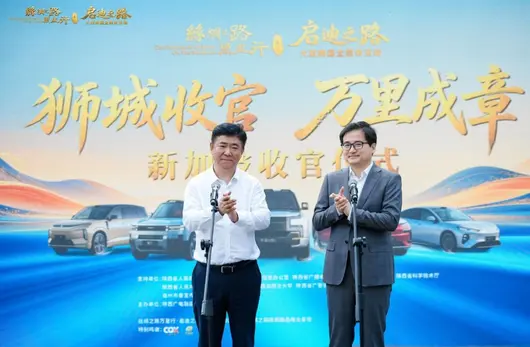

August 25, with BYD serving as the full journey travel partner, the "2026 Silk Road Ten-Thousand Mile Run · Enlightenment Road" concluded in Singapore. This expedition lasting 33 days and crossing over 10,000 kilometers has reached a fulfilling conclusion. Departing from Xi'an, traversing key domestic Silk Road towns, crossing seas to visit Thailand and Malaysia, finally landing in Singapore — this was not only a dialogue of Land and Sea Silk Road civilizations, but also a large-scale outdoor technical test based on real data. BYD's Dynasty, Ocean, Denza, Fang Cheng Bao, and YangWang five product matrices, as official designated vehicles, safeguarded the entire journey, supported by Super Charging and Di Tian Zhi Yan Intelligent Driving dual technologies, answering a core question with solid trip data: Can new energy vehicles truly withstand the extreme test of long-distance travel over 10,000 miles? 
I. Super Charging Technology: Turning "Charging Anxiety" into "Charging Freedom"
The biggest pain point of long-distance travel has never been range, but energy replenishment efficiency. Any amount of range will eventually run out, just like fuel cars never mention the range issue because refueling is now very convenient. When charging can also achieve charging freedom, range might become negligible, while BYD's Super Charging is slowly realizing this; traditionally, electric cars running on highways queue for charging at service areas, waiting at least half an hour, which is especially overwhelming during holidays. BYD's Super Charging technology has solved this pain point; in normal temperature environments, it can charge from 10% to 70% in 5 minutes, and to 97% in 9 minutes, and even in extremely cold weather, it only takes a few minutes more than normal temperature charging. With this charging speed, do you still consider range? The 33 days of real experience during this Silk Road Ten-Thousand Mile Run is enough to see its Super Charging strength. 
II. Super Charging Network: Density is the "Infrastructure" for New Energy Long Distance
Having fast charging technology alone is not enough; without a sufficiently dense charging pile network, everything is empty talk. BYD's "Super Charging China" strategy is accelerating implementation, planning to build 20,000 Super Charging stations across the country by the end of 2026, achieving coverage within 5 km for 90% of urban areas and Super Charging station coverage every 100+ km on average on highways. As of now, station building has approached 10,000 stations, meaning it is moving towards the goal.
When traveling on the Silk Road, the convoy departed from Xi'an going west and south; the regions passed through were not cities with very large new energy vehicle ownership, but along the way one could still rely on Super Charging for energy supplement. In some countries, even without Super Charging, one could achieve high-speed fast charging on other brand charging piles, where fast charging power could reach the maximum output power of the charging station. Isn't this compatibility quite good? For consumers, in the future long-distance travel one doesn't need to worry about energy supplement or queuing for charging, which is the best for consumers. 
III. Di Tian Zhi Yan: Turning High-End Intelligent Driving from "Luxury" to "Standard Equipment"
33 days, over 10,000 kilometers of long-distance driving, another invisible test is the driver's fatigue. BYD this year is pushing high-end intelligent driving to the masses, with all series models capable of being equipped with "Di Tian Zhi Yan B Assist Driving LiDAR Version", covering three core scenarios: High-Speed Pilot, City Pilot, and Intelligent Parking. This means from highway cruising to city congestion to parking, all scenarios have intelligent driving systems assisting to share driving pressure.
In the Silk Road long-distance trip, the value of the High-Speed Pilot function is most prominent — during long-term high-speed driving, the system automatically follows cars, automatically changes lanes, automatically maintains lanes, changing drivers from "full-time tense" to "supervising driving", significantly reducing fatigue. More worth noting is BYD's pioneering "Double Safety Net" policy: vehicles across the series equipped with Di Tian Zhi Yan enjoy lifetime intelligent parking safety net, while Di Tian Zhi Yan A/B models City Pilot function provides a 1-year safety net. This is not just BYD's generosity, but recognition of its own strength, and inclusivity towards everyone's concerns. 
IV. Five Matrices Collaboration: Technical Combo in Different Scenarios
This safeguard has another easily overlooked technical highlight — the five product matrices set out in collaboration. Dynasty series' mature stability, Ocean series' youthful dynamics, Denza's comfort, Fang Cheng Bao's hardcore off-roading, YangWang's high technology, different brand models showed their strengths on different sections of the Silk Road. These models precisely realized their own advantages, with the five matrices collaborating in combat. 
Conclusion
The fulfilling conclusion of the Silk Road Ten-Thousand Mile Run, for BYD, was not a simple brand activity, but a public and transparent technical stress test. Super Charging technology solved the question of "how fast is energy supplement", Super Charging network solved the question of "how convenient is energy supplement", Di Tian Zhi Yan solved the question of "how tired is driving", and the five matrices proved the product capability of full scene coverage. Silk Road Journey, Green Energy Companion, this is not just a slogan, but a technical declaration written by BYD using over 10,000 kilometers of real trip, and it can be said the future travel method is already beginning to take shape.
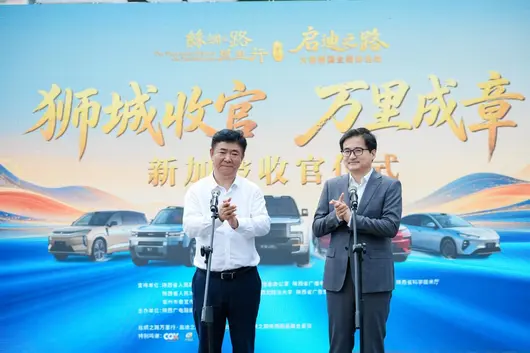

On August 25, the closing ceremony of the 2026 Silk Road 10,000-Kilometer Expedition · Enlightenment Road was held in Singapore, marking the official conclusion of this cross-border journey. BYD, as the full-time travel partner for this event, successfully completed the escort work. At the closing ceremony site, Li Yunfei, General Manager of Brand and PR at BYD Group, and Zhang Lianye, Party Secretary, Chairman, and Station Director of Shaanxi Broadcasting and Television Media Group (Station), jointly announced the completion of the entire itinerary.

The entire journey lasted 33 days. The convoy departed from Xi'an, the starting point of the land Silk Road, crossing six provinces domestically, then traveling abroad through Thailand and Malaysia, finally arriving at Singapore, the hub of the maritime Silk Road, covering over 10,000 kilometers. 2026 marks the 5th anniversary of the establishment of the China-ASEAN Comprehensive Strategic Partnership. This event took "Technology for Innovation · Civilization for Connection" as its theme, combining cultural exchange, on-site technology verification, and trade dialogue. Guests from home and abroad, overseas Chinese representatives, and media attended together to witness the modern linkage development of the land and maritime Silk Roads. At the closing site, Cai Shandi, Cultural Attaché of the Chinese Embassy in Singapore, and Wang Gang, President of the Shaanxi Society in Singapore, also delivered speeches.

Green energy accompanies the Silk Road journey. The convoy participating in this expedition gathered models from BYD Dynasty, Ocean, Denza, Fang Cheng Bao, and Yangwang five networks and four brands, undergoing real-world tests on highways, mountain curves, and city congestion. Long-distance cross-border travel faces two major realistic challenges: energy replenishment efficiency and driving safety. BYD Flash Charging technology and the God's Eye assisted driving system underwent on-site trials on this 10,000-kilometer journey. The Flash Charging capability of "Charge well in 5 minutes, charge full in 9 minutes", combined with the network foundation of nearly 10,000 flash charging stations domestically, effectively alleviates recharging anxiety during long-distance driving. The God's Eye intelligent driving system relies on real driving data exceeding 220 million kilometers daily to iterate continuously, effectively reducing fatigue from long-distance driving and ensuring the convoy arrives safely in Southeast Asia. Thousands of years ago, the ancient Silk Road relied on relay stations for camel team supplies; now, new energy technology has completed cross-regional expeditions in a new era.

Singapore itself belongs to a market with high global car purchasing costs and high ownership thresholds; local consumers are generally rational and prudent in car selection. However, BYD has already established a foothold locally. As of July 2026, the brand has ranked first in overall passenger car sales among all brands in Singapore for 19 consecutive months. From January to July 2026, BYD's overall passenger car market share in Singapore reached 24.7%, with the BEV segment market share reaching 40.3%. Even though the models are not priced cheaply locally, they have still gained market recognition and strengthened the confidence of local dealers. Currently, BYD has arranged 16 retail touchpoints in Singapore; many stores are directly located in core business district shopping malls, offline channel specifications are continuously upgrading, and BYD vehicles can be seen everywhere in street business districts.

Green energy accompanies the Silk Road journey. This 10,000-kilometer expedition is also a microcosm of BYD's overseas development trend. In 2026, overseas market business maintained high-speed expansion. From January to July, BYD's overseas cumulative sales broke through 970,000 units, an increase of about 76% year-on-year. In July alone, overseas sales reached 179,800 units, a year-on-year increase of 124.3%. Products have been sold to over 120 countries and regions worldwide.

Regional markets blossomed in multiple points. In the first half of the year, BYD secured the new energy vehicle sales championship in Thailand and Singapore, topped the new energy vehicle list in Italy and Spain. The UK's sales from January to July reached 38,000 units. The Brazil market sales approached 100,000 units, consistently holding the top spot in local new energy vehicle sales. Markets such as Saudi Arabia, UAE, and South Africa also ranked at the top of new energy vehicle sales.

Combining Silk Road cultural exploration with new energy cross-border travel, this expedition intuitively demonstrates China's new energy vehicles' practice of participating in the "Belt and Road" green transportation construction. With the continuous outward export of products, manufacturing systems, and service networks, BYD is using new energy vehicles as a carrier to deeply participate in global automotive industry collaboration, aiding the green transition in the global transportation sector.
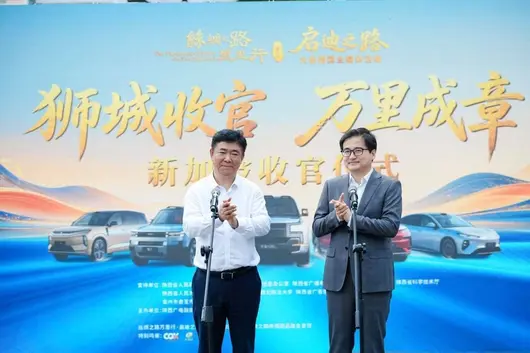

On the evening of August 28, BYD (002594.SZ) released its financial report for the first half of 2026, with core indicators remaining robust: operating revenue 344.8 billion yuan, net profit attributable to parent company 12.3 billion yuan, R&D investment 28.9 billion yuan, cash reserves 167.4 billion yuan. Notably, net profit in the second quarter grew by 30% year-on-year, gross margin continued to rise, reaching 18.9%, setting a new high in nearly a year, with profitability steadily improving and resilient growth solidifying its industry position.

Currently, competition in the automotive industry is intensifying. Relying on a solid operational foundation and continuously optimized business structure, BYD's development trend continued to improve in the first half of the year, further consolidating its leading industry position.

Dual Drive of Overseas High-End Markets, Growth Structure Continues to Optimize
In the first half of the year, BYD's overseas sales reached 790,000 units, a 68% year-on-year increase, with business covering over 120 countries and regions. It topped the new energy vehicle brand sales chart in core markets such as the UK, Brazil, and Thailand. With the sequential release of localized overseas production capacity and the continuous improvement of the channel system, the overseas segment has become an important engine driving the company's performance growth.
During the same period, the high-end product matrix accelerated volume growth. The three brands Fangchengbao, Denza, and Yangwang achieved a combined sales volume of 228,000 units, up 61% year-on-year, accounting for 12.6% of total sales. Among them, Fangchengbao brand sales reached 160,000 units, up 163% year-on-year; Denza brand also performed brightly, with June sales breaking 20,000 units for the first time, with an average product price reaching 360,000 yuan; Yangwang is the brand with the fastest sales volume breaking 10,000 units in the domestic new energy million-class luxury car segment.

Internationalization and high-endization advance on two tracks, driving continuous optimization of the company's product structure and steadily enhanced profitability. Net profit in the second quarter grew 30% year-on-year, with gross margin reaching 18.9%, setting a new high in nearly a year. Although net profit faced short-term pressure, a closer look reveals it was mainly due to exchange losses from currency fluctuation this year. The company's main business profitability remained stable, and development resilience became increasingly prominent.

Huge R&D Investment Builds Moat, Technical Achievements Land Intensively
Operating quality steadily climbed, with the core driver being continuous technological breakthroughs. In the first half of 2026, the company invested 28.9 billion yuan in R&D, far exceeding net profit during the same period, retaining the title of "King of R&D" in A-shares. Cumulative R&D investment has exceeded 270 billion yuan.

High-intensity R&D investment is accelerating conversion into perceptible technical results. The second-generation Blade Battery and Flash Charging Technology released in March this year created a global record for the fastest mass-produced charging speed, solving the world problem of "slow charging" and "difficulty in charging at low temperatures" in one go, gaining authoritative recognition from the Ministry of Industry and Information Technology. Beyond technological breakthroughs, second-generation Blade Battery production capacity and Flash Charging Station construction are speeding up synchronously. Relying on the "Flash Charge China" strategy, 10,000 Flash Charging Stations have currently been built nationwide, covering 332 cities, and there is a plan to deploy 6,000 Flash Charging Stations overseas within a year to assist global electrification leapfrog development.

Key progress has also been made in the field of intelligence. After providing a safety guarantee for intelligent parking, BYD became the first to commit to a safety guarantee for city navigation in May, becoming the world's only enterprise with a "dual guarantee" and promoting the popularization of assisted driving with practical actions. As of July 31, BYD's assisted driving vehicle holdings exceeded 3.52 million units, and Divine Eye generates data exceeding 220 million kilometers daily. The Xuanji A3 released during the same period is China's first self-developed 4nm process intelligent driving chip. From underlying chips to system software, BYD continues to promote vertical integration and full-stack self-research, leading the intelligent revolution in the global automotive industry.

Development with Responsibility, Actively Fulfilling Social Responsibility
Practicing social responsibility, BYD answers with action. In the first half of 2026, BYD's domestic tax total was 22.3 billion yuan, far exceeding net profit during the same period. In terms of sustainable development, the company firmly anchors the goal of "achieving carbon neutrality across the entire value chain by 2045", with ESG performance firmly staying in the first tier of domestic enterprises. From January to June, BYD's new energy vehicle lifecycle carbon emission reduction reached 23.17 million tons, equivalent to planting 386 million trees, contributing practical power to low-carbon transformation.

Conclusion
In the first half of 2026, the global automotive industry accelerated restructuring, with industry profitability generally under pressure. BYD broke out against the trend, with second-quarter performance reaching a new level. With technical results continuing to emerge in the second half of the year, the proportion of high-end models steadily increasing, and the global layout entering the harvest period, the company's profitability and development potential will be further highlighted. Full-year performance is expected to improve quarter by quarter and continue to climb. From technological breakthroughs to global layout, from high-end breakthroughs to responsibility, the company is reshaping growth logic with all-round competitiveness and leading global industrial transformation.
Follow Us
ID: Test Drive
Car Selection | Car Usage | Car Modification | Car Racing

August 25, the "2026 Silk Road 10,000 Mile Expedition · Enlightenment Road" officially concluded in Singapore. As the travel partner for the entire event, BYD's Dynasty, Ocean, Denza, Fang Cheng Bao, and Yangwang formed a new energy vehicle fleet, lasting 33 days, traveling over 10,000 kilometers. Departing from Xi'an, it crossed six provinces in China and passed through Thailand and Malaysia, finally arriving in Singapore.

Compared to ordinary road tests, the biggest highlight of this journey lies in vehicles truly experiencing continuous use over long distances, across regions, and with varied road conditions. Highways, mountain roads, urban congestion, and other scenarios appeared in turns, giving technologies such as Flash Charge and Divine Eye Assisted Driving a testing environment closer to daily long-distance travel.

Among them, Flash Charge technology focuses on "5 minutes to charge well, 9 minutes to fully charge", further reducing sensitivity to charging time for long-distance pure electric travel; the Divine Eye Assisted Driving system relies on a large amount of real road data for continuous iteration, helping to reduce driving burden during long-distance driving. For new energy vehicles, parameters are one aspect, but the ability to use stably in complex real scenarios is obviously more important.

Choosing Singapore for the wrap-up of this event also has practical significance. As of July 2026, BYD has ranked first in total brand sales of passenger cars in Singapore for 19 consecutive months. From January to July this year, BYD's market share in local passenger cars reached 24.7%, and its pure electric market share reached 40.3%. Currently, BYD has laid out 16 retail touchpoints in Singapore, with some stores entering core shopping centers.

This also reflects changes in Chinese automotive exports. In the past, more emphasis was placed on product exports and sales growth, while now there is increasing focus on channel construction, local services, and long-term brand management.

In the first 7 months of 2026, BYD's overseas cumulative sales exceeded 970,000 units, a year-on-year increase of about 76%, with new energy vehicle business entering over 120 countries and regions worldwide. From Southeast Asia to Europe, South America, and the Middle East, Chinese new energy vehicles are building their product and brand awareness in an increasing number of markets.

From Xi'an to Singapore, this ten-thousand-mile journey is both a cross-border new energy travel practice and reflects that Chinese automotive globalization is entering a deeper stage. Truly entering overseas markets ultimately relies on long-term management, technical adaptation, and local services. Deeply cultivating the local market to jointly create a green future might also be the keyword for the next stage of Chinese automotive exports.


On the evening of August 28, BYD (002594.SZ) released its financial report for the first half of 2026, with operational resilience remaining stable: operating revenue of 344.8 billion yuan, net profit attributable to parent company of 12.3 billion yuan, R&D investment of 28.9 billion yuan, and cash reserves of 167.4 billion yuan. Of note, net profit in Q2 grew by 30% year-on-year, the gross margin continued to rise, reaching 18.9%, setting a new high for nearly a year, and profitability improved steadily.

With intensifying competition in the automotive industry, BYD, relying on a robust operational foundation and continuously optimized business structure, maintained a positive development trend in the first half of the year, further consolidating its leading industry position.
Overseas High-End Dual-Drive, Growth Structure Continues to Improve
In the first half of the year, BYD's overseas sales reached 790,000 units, a 68% year-on-year increase. Business coverage spans over 120 countries and regions worldwide. It topped the sales charts for new energy vehicle brands in core markets such as the UK, Brazil, and Thailand. With the successive release of localized overseas production capacity and the continuous improvement of channel systems, the overseas segment has become an important engine driving the company's performance growth.
During the same period, the high-end product matrix accelerated volume growth. The three brands Fang Cheng Bao, Denza, and Yangwang had a combined sales volume of 228,000 units, up 61% year-on-year, accounting for 12.6% of total sales. Among them, Fang Cheng Bao brand sales reached 160,000 units, up 163% year-on-year; Denza brand also performed brilliantly, with June sales exceeding 20,000 units for the first time, with an average product price of 360,000 yuan; Yangwang is the brand with the fastest sales breakthrough to 10,000 units among domestic new energy million-level luxury cars.

Internationalization and high-endization progressed on two lines, promoting continuous optimization of the company's product structure and steadily enhancing profitability. Net profit in Q2 grew by 30% year-on-year, gross margin reached 18.9%, setting a new high for nearly a year. Although net profit was under short-term pressure, a closer look reveals it was mainly due to exchange loss caused by exchange rate fluctuations this year. The company's main business profitability remained stable, highlighting development resilience.
Huge R&D Investment Builds Moat, Technology Achievements Land Frequently
Operational quality rose steadily, with core drivers lying in continuous technological breakthroughs. In the first half of 2026, the company's R&D investment was 28.9 billion yuan, far exceeding net profit for the same period, retaining the title of "King of R&D" in A-shares. Cumulative R&D investment has surpassed 270 billion yuan.
High-intensity R&D investment is accelerating conversion into perceivable technological achievements. The second-generation Blade Battery and fast-charging technology released in March this year set a global record for the fastest charging speed for mass production, overcoming the global challenges of "slow charging" and "difficult charging at low temperatures", gaining authoritative recognition from the Ministry of Industry and Information Technology. Beyond technical breakthroughs, second-generation Blade Battery capacity and fast-charging station construction are accelerating simultaneously. Relying on the "Fast Charge China" strategy, currently 10,000 fast-charging stations have been built nationwide, covering 332 cities, with a plan to deploy 6,000 fast-charging stations overseas within a year, helping global electrification achieve leapfrog development.

Key progress was also made in the field of intelligence. Following the safety guarantee for intelligent parking, BYD took the lead in May in promising safety guarantee for city navigation, becoming the only "double guarantee" enterprise globally, promoting the popularization of assisted driving with practical actions. As of July 31, the number of BYD assisted driving models in use exceeded 3.52 million units, Tianzhi generates over 220 million kilometers of data daily. Released at the same time, Xuanji A3 is China's first self-developed 4nm process intelligent driving chip. From underlying chips to system software, BYD continues to promote vertical integration and full-stack in-house R&D, leading the intelligent transformation of the global automotive industry.
Development with Responsibility, Actively Fulfilling Social Responsibilities
Practicing social responsibility, BYD answers with actions. In the first half of 2026, BYD's total domestic tax payment reached 22.3 billion yuan, far exceeding net profit for the same period. In terms of sustainable development, the company firmly anchors the goal of "achieving carbon neutrality across the entire value chain by 2045", with ESG performance consistently ranking in the first tier of domestic enterprises. From January to June, BYD new energy vehicles achieved a carbon emission reduction of 23.17 million tons over their full life cycle, equivalent to planting 386 million trees, contributing practical force to low-carbon transformation.
Conclusion
In the first half of 2026, the global automotive industry accelerated restructuring, with industry profitability generally under pressure. BYD broke through against the trend, reaching a new level with Q2 performance. With continuous technological achievements emerging in the second half, a steadily increasing proportion of high-end models, and globalization layout entering the harvest period, corporate profitability and development potential will be further highlighted. Annual performance is expected to improve quarter by quarter and continue to rise. From technological breakthroughs to global layout, from high-end breakthrough to responsibility, the company is reshaping growth logic with comprehensive competitiveness, leading the global industrial transformation.
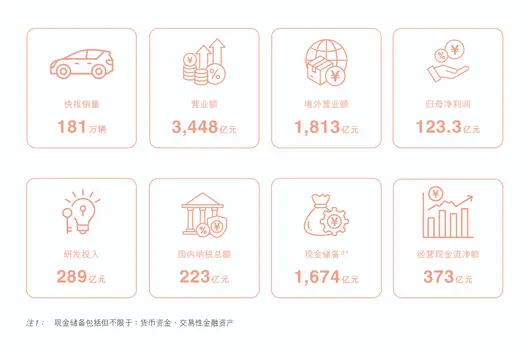
"Auto Market Little Horn" latest news, BYD (002594.SZ) just released its 2026 first-half financial report tonight (August 28), with key core indicators remaining stable: Revenue 344.8 billion yuan, Net Attributable Profit 12.3 billion yuan, R&D Investment 28.9 billion yuan, Cash Reserves 167.4 billion yuan. Worth noting is that second quarter net profit increased 30% year-on-year, gross margin continued its upward trend, reaching 18.9%, setting a new high for nearly a year, profitability improved steadily, and resilient growth consolidated its industry position.

Current automotive industry competition intensifies. Relying on a stable operational foundation and continuously optimized business structure, BYD's development trend in the first half of the year continues to improve, further consolidating its industry leader status.

In the first half of the year, BYD's overseas sales reached 790,000 vehicles, up 68% year-on-year, covering over 120 countries and regions globally, topping the new energy vehicle brand sales charts in key markets such as the UK, Brazil, and Thailand. With the gradual release of overseas localized production capacity and the continuous improvement of the channel system, the overseas sector has become an important engine driving the company's performance growth.
At the same time, the high-end product matrix accelerated volume growth. The combined sales of the three brands Fang Cheng Bao, Denza, and Yangwang reached 228,000 vehicles, up 61% year-on-year, accounting for 12.6% of total sales. Among them, Fang Cheng Bao brand sales reached 160,000 vehicles, up 163% year-on-year; Denza brand also performed brilliantly, with June sales volume breaking 20,000 vehicles for the first time, with an average product price of 360,000 yuan; Yangwang is the brand with the fastest sales volume to break 10,000 among domestic new energy million-yuan luxury cars.
Internationalization and premiumization advanced on two lines, promoting continuous optimization of the company's product structure and steadily enhancing profitability. Second quarter net profit increased 30% year-on-year, gross margin reached 18.9%, setting a new high for nearly a year. Despite short-term pressure on net profit, upon detailed examination, it was mainly due to exchange losses caused by currency volatility this year. The profitability of the company's main business remained stable, and development resilience became more prominent.

Operating quality climbs steadily, with the core driver being continuous technical breakthroughs. In the first half of 2026, the company's R&D investment was 28.9 billion yuan, far exceeding the net profit of the same period, consecutively ranking as the "R&D King" on A-shares, with cumulative R&D investment exceeding 270 billion yuan.
High-intensity R&D investment is accelerating the conversion into perceivable technical results. The second-generation Blade Battery and Flash Charge technology released in March this year set a record for the fastest charging speed in global mass production, successfully conquering the world problems of "slow charging" and "difficult low-temperature charging", gaining recognition from the Ministry of Industry and Information Technology. Apart from technical breakthroughs, second-generation Blade Battery production capacity and Flash Charge station construction are also accelerating in sync. Relying on the "Flash Charge China" strategy, currently 10,000 Flash Charge stations have been built nationwide, covering 332 cities, and plans are to deploy 6,000 Flash Charge stations overseas within a year, helping global electrification leap forward development.
Significant progress has also been made in the intelligence field. After ensuring safety nets for intelligent parking, BYD took the lead in May in committing to safety nets for City Pilot, becoming the only enterprise in the world with a "Double Safety Net", promoting assisted driving popularization with practical actions. As of July 31, BYD's assisted driving vehicle fleet size exceeded 3.52 million vehicles. God's Eye generates over 220 million kilometers of data daily. The Xuanji A3 released in the same period is China's first self-developed 4nm process smart driving chip. From underlying chips to system software, BYD continues to promote vertical integration and full-stack self-research, leading global automotive industry intelligence transformation.

Practicing social responsibility, BYD answers with action. In the first half of 2026, BYD's total domestic tax payment was 22.3 billion yuan, far exceeding the net profit of the same period. In terms of sustainable development, the company firmly targets the goal of "achieving carbon neutrality across the entire value chain by 2045", with ESG performance ranking firmly in the top tier of domestic enterprises. From January to June, BYD new energy vehicle full lifecycle carbon emission reduction volume reached 23.17 million tons, equivalent to planting 386 million trees, contributing practical power to low-carbon transformation.
In the view of "Auto Market Little Horn", in the first half of 2026, the global automotive industry accelerated reconstruction, and industry profitability was generally under pressure. BYD managed to break out against the trend, and second quarter performance reached a new level. With technical results continuing to emerge in the second half of the year, the proportion of high-end models steadily rising, and globalization layout entering the harvest period, enterprise profitability and development potential will become more prominent, and full-year performance is expected to improve quarter by quarter and continue to climb. From technical breakthroughs to global layout, from high-end breakthroughs to responsibility and commitment, the company is reshaping growth logic with comprehensive competitiveness and leading global industry transformation.

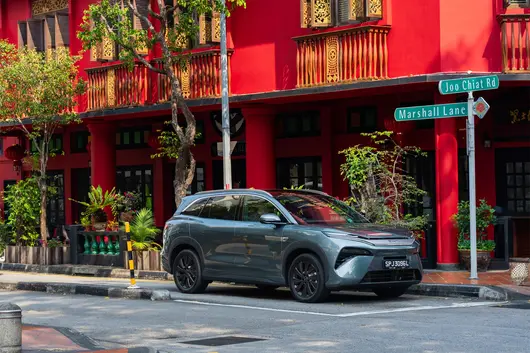
The threshold for buying a car in Singapore is high, so consumers naturally exercise more caution when making choices. Putting the finale of the Silk Road 10,000-Mile Expedition here feels like a "double acceptance": verifying technology along the way and validating the market upon landing. Whether the fleet can stably complete over 10,000 kilometers is one report card, and whether the brand can enter the daily lives of locals is another.

This journey lasted 33 days, departing from Xi'an, crossing six provinces domestically, passing through Thailand and Malaysia, finally arriving in Singapore. Dynasty, Ocean, Denza, Fang Cheng Bao, and Yangwang multiple models faced highways, mountain roads, and city congestion along the way. The road conditions were complex enough, giving the test real weight. Supercharging for 5 minutes from 10% to 70%, charging to 97% in 9 minutes, solves the long-distance fleet scheduling; God's Eye auxiliary driving relies on over 220 million kilometers of real driving data daily for continuous iteration, corresponding to repetitive operations and fatigue pressure during continuous driving. Green Energy Companion on the Silk Road Journey did not stay in a slogan; every technology can find its exam questions within the route.


After arriving in Singapore, market performance aligns with this journey. From January to July 2026, BYD's local passenger car market share reached 24.7%, and pure EV market share reached 40.3%, while also establishing 16 retail touchpoints, with some stores entering core shopping centers. In an environment with high vehicle ownership costs and non-low product prices, consumers are still willing to choose, indicating that product experience, channel reach, and after-sales service are forming a complete support system.

Expanding the view overseas, BYD's overseas cumulative sales for the first 7 months of this year exceeded 970,000 units, with July alone reaching 179,800 units. Products have entered over 120 countries and regions. Digital growth is of course noticeable, but this 10,000-mile journey showed me that the real difficulty of overseas operations is delivering technology, products, and local services together to the user's side.


Therefore, the highlights of the Singapore finale have three layers: verifying product capabilities over 10,000 kilometers, verifying user choice through market share, and long-term operations undertaken by the retail network. These three things linked together are more convincing than a lively arrival ceremony. The fleet has stopped, but BYD's overseas journey continues.

A thousand years ago, camel caravans carried silk, porcelain, aromatic herbs, tea, slowly completing the long Silk Road journey.
In the summer of 2026, a new energy vehicle fleet composed of four brands from five networks: BYD Dynasty, Ocean, Denza, Fang Cheng Bao, and Yangwang, departed from the Tang West Market in Xi'an. Over 33 days and tens of thousands of kilometers, crossing six provinces in China, passing through Thailand and Malaysia, finally arriving in Singapore.
On the same road, camel bells turned into motor sounds, and stations became flash charging stations.
Green Energy Accompanies the Journey on the Silk Road, the protagonist on this ancient millennium-old road has changed to Chinese smart manufacturing. 
At the closing ceremony, the four major Silk Road civilization tokens: aromatic herbs, porcelain, silk, and tea made their first collective debut overseas.
A thousand years ago, these were the most precious hard currencies of East and West. What about today?
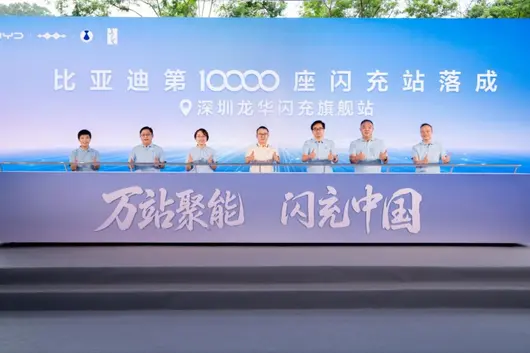
Aromatic herbs replaced by flash charging technology — 5 minutes to charge well, 9 minutes to charge full. Models equipped with the second-generation Blade Battery achieved charging from 10% to 70% in 5 minutes and up to 97% in 9 minutes at normal temperature. Even at 30 degrees Celsius below zero, it only adds 3 minutes. The fleet crossing six countries relied on the network support of nearly 10,000 flash charging stations nationwide, never being choked on energy replenishment. On August 28, BYD's 10,000th flash charging station was completed in Shenzhen.
Porcelain replaced by Sky-Eye Intelligent Driving — Over 220 million kilometers of real driving data daily are continuously iterated. For multi-thousand kilometer cross-country long trips, drivers do not need to stay tense throughout, the system shares most of the pressure. If this were in ancient times, how much would the camel herders envy this.
Silk replaced by Singapore sales champion for 19 consecutive months — As of July 2026, BYD ranked first in passenger car sales across all brands in Singapore for 19 consecutive months. From January to July this year, the market share reached 24.7%, accounting for 40.3% of the pure electric vehicle market. In a market like Singapore where car buying costs are among the highest in the world, BYD is not sold cheaply, but it sells well. Silk a thousand years ago was a luxury good; today, Chinese cars in Singapore are also "high-end goods".
Tea replaced by industrial output in 120 countries globally — Overseas cumulative sales exceeded 970,000 units in the first 7 months of this year, up about 76% year-on-year; 179,800 units in July alone, a surge of 124.3%. Thailand and Singapore top new energy sales, Italy and Spain top the new energy list, 38,000 units sold in the UK, nearly 100,000 units in Brazil continue to lead. 
Ancient Silk Road trade was just about shipping things over and finishing.
Today's BYD is different. It doesn't just sell cars in Singapore and stop; it takes technical standards with it. Flash charging stations are deployed to 10,000 domestically, and overseas are landing synchronously. Brazil even incorporated BYD's charging standards into local regulations — This is not selling products, it is exporting rules.
16 retail touchpoints, core shopping center stores, high-end brand displays. In Singapore, BYD is not setting up street stalls, it is entering malls openly.
The Silk Road of a millennium ago exported produce, today's Silk Road exports technology, industry, and ecosystem.
33 days, tens of thousands of kilometers, from Xi'an to Singapore.
This road was walked by Xuanzang, Marco Polo walked it, countless camel caravans walked it. They carried silk, porcelain, faith, and stories.
Today, BYD has brought Chinese new energy vehicles through. Flash charging, intelligent driving, sales champion, global layout — these are "Silk Road specialties" of the new era.
The event theme is called "Tech for Innovation · Civilization for Unity". I think it's quite accurate. Technology changes, but the mission of this road connecting East and West remains unchanged. Previously it was camel caravans and station replenishment, today it is flash charging station energy supplementation. Only the method changes, the determination of Chinese brands going out does not.
Green Energy Accompanies the Journey on the Silk Road. A thousand years ago it was camel bells, today it is motors. Chinese brands will continue to walk this road. 
💡 Interaction Topic: Do you think BYD's flash charging stations will one day be as widespread on the Silk Road as ancient stations? Chat in the comments.
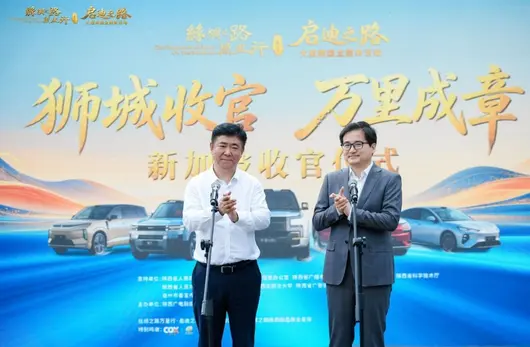

Recently, BYD's "2026 Silk Road 10,000-Mile Journey" event concluded. BYD led a fleet departing from Xi'an, passing through six provinces domestically, and crossing Thailand and Malaysia along the way, finally arriving in Singapore, with the entire journey taking 33 days;
On the domestic route, relying on BYD's Super Flash Charging technology and coverage of flash charging stations, the overall driving efficiency was very high. After all, BYD has built 10,000 BYD Super Flash Charging stations in just half a year; this experience is even more satisfying than refueling.
On the overseas route, the countries passed were mostly markets where BYD has already established a presence, even having factories. BYD traveled the entire way using new energy vehicles to inform everyone that nowadays, long-distance Silk Road travel is accompanied by green energy.

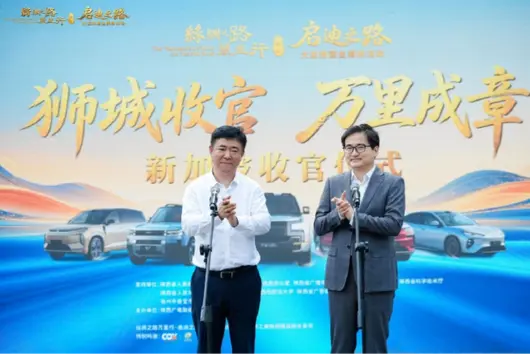


August 25, the "2026 Silk Road 10,000-Li Tour" convoy, fully sponsored by BYD, with "Green Energy Accompanies Silk Road Journey", successfully reached the destination in Singapore. This trip was no simple feat: The convoy spent a full 33 days, rushing over 10,000 kilometers, spanning across 6 provinces in China, crossing Thailand and Malaysia, finally arriving in Singapore.

This year marks the fifth anniversary of the establishment of a comprehensive strategic partnership between China and ASEAN. This event directly connected Xi'an (the starting point of the overland Silk Road) and Singapore (the hub of the Maritime Silk Road), promoting exchanges in culture, technology, and business along the way.
Real-world "Long-term Test", Two Cutting-edge Technologies Shine
For this trip, BYD brought their whole lineup - Dynasty, Ocean, Denza, Fang Cheng Bao, and Yangwang series all deployed. Roads traveled included highways, mountain roads, and city rush hour traffic. Successfully completing this relied on two core technologies:

Singapore's "Top Trending", The Higher the Price, The More People Buy
Arriving in Singapore, BYD was definitely the "Sales Champion". As of July 2026, BYD has secured the No. 1 position in all-brand passenger car sales in Singapore for 19 consecutive months!
It is known that buying a car in Singapore is famously expensive, with extremely high thresholds, so locals are very picky and cautious when buying cars. BYD is not cheap there, but still couldn't stop people from spending money. In the first 7 months this year, for every 10 pure electric cars sold in Singapore, 4 were BYD.
Nowadays, BYD cars and stores are everywhere on the streets and in core business districts in Singapore. Because cars sell so well, local dealers are bursting with confidence, spending heavily to upgrade stores, making them more and more luxurious.

2026 BYD overseas business continues to maintain high-speed growth, January to July overseas cumulative sales exceeded 970,000 vehicles, year-on-year growth of about 76%; July overseas sales 179,800 vehicles, year-on-year growth of 124.3%. So far, BYD new energy vehicles have entered more than 120 countries and regions globally.
In the first half of the year, BYD won new energy vehicle sales champion in Thailand and Singapore; topped the local new energy sales list in Italy and Spain, UK sales reached 38,000 vehicles; Brazil sales near 100,000 vehicles, continuing to maintain No. 1 local new energy sales. In Saudi Arabia, UAE, South Africa, BYD is also ranked at the top of new energy vehicle sales.

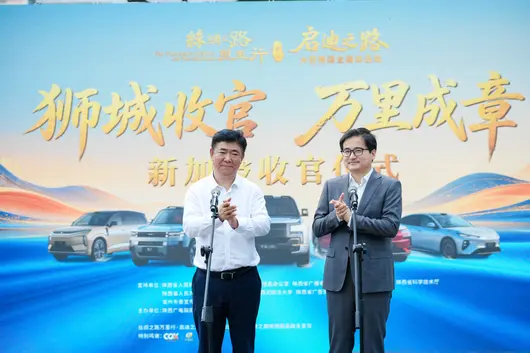

On August 25, with Li Yunfei, General Manager of Brand and PR at BYD Group, and Zhang Lianye, Party Secretary, Chairman, and Station Director of Shaanxi Broadcasting and Television Media Group (TV), jointly announcing the successful conclusion of the event, the "2026 Silk Road 10,000-Li Journey · Enlightenment Road" officially concluded in Singapore. This new energy vehicle fleet, composed of five brands from BYD—Dynasty, Ocean, Denza, Fang Cheng Bao, and Yangwang, lasted 33 days, covered over 10,000 kilometers, spanned six provinces in China, traversed Thailand and Malaysia, and finally arrived in Singapore.

2026 marks the 5th anniversary of the establishment of the comprehensive strategic partnership between China and ASEAN. This event, themed "Technology for Innovation · Civilization for Unity", completed the leap from the starting point of the overland Silk Road in Xi'an to the maritime Silk Road hub in Singapore. At the closing ceremony, four Silk Road relics—fragrant herbs, porcelain, silk, and tea—appeared together, forming a cross-temporal response with today's Chinese intelligent manufacturing—whereas ancient times saw the circulation of goods, now it is the technology and industrial ecosystem represented by new energy vehicles going global.

Speech by Cai Shandi, Cultural Counselor at the Chinese Embassy in Singapore

Speech by Wang Gang, President of the Singapore Shaanxi Association
The 10,000-li journey was an ultimate test of technology. The fleet verified the reliability of Flash Charge and the Eye of God intelligent driving assistance systems across multiple scenarios such as highways, mountainous areas, and urban congestion. Relying on the layout of nearly 10,000 Flash Charge stations nationwide, ultra-fast energy replenishment of "fully charged in 5 minutes, fully powered in 9 minutes" at room temperature alleviated long-distance anxiety; meanwhile, intelligent driving capabilities iterated from real data of over 220 million kilometers daily provided steady escort for the 10,000-li trip.

Singapore is one of the global markets with the highest cost of vehicle ownership, and consumers are extremely cautious in brand selection. However, BYD delivered an impressive result here: as of July 2026, it had ranked first in passenger car sales among all brands in Singapore for 19 consecutive months, with a market share of 24.7% in the first seven months of this year, and a pure electric share as high as 40.3%. Despite the high price, it remains a hot seller, with the premium brand image deeply rooted in people's minds. Currently, there are 16 retail touchpoints located locally, with multiple stores entering core shopping malls, and dealers are continuously increasing investment.


Si San Commentary
Looking globally, BYD's cumulative overseas sales from January to July 2026 exceeded 970,000 vehicles, a year-on-year growth of approximately 76%. From Thailand, Singapore to Brazil, UK, good news is frequently reported from various markets. This Silk Road 10,000-Li Journey deeply integrated cultural visits with cross-border travel, not only showcasing the reshaping of traditional long-distance travel by green energy technology but also becoming a vivid footnote of Chinese brands deeply participating in the green transport co-construction of the "Belt and Road". With the comprehensive global expansion of products, technology, and industrial ecosystems, BYD is using new energy as a carrier to continuously promote green transformation collaboration in the global automotive industry.
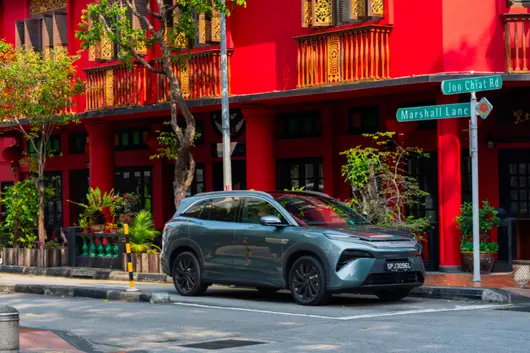

August 25, the "2026 Silk Road 10,000 Li · Enlightenment Road", for which BYD served as the full-ride partner, concluded in Singapore. Li Yunfei, General Manager of the Brand and Public Relations Department of BYD Group, and Zhang Lianye, Party Secretary, Chairman, and Station Master of Shaanxi Broadcasting Media Group (TV), jointly announced the successful completion of the event. The convoy traveled for 33 days, covering over 10,000 kilometers, crossing six provinces in China, traversing Thailand and Malaysia, and finally arriving in Singapore.

2026 marks the 5th anniversary of the establishment of a comprehensive strategic partnership between China and ASEAN. This event, themed "Tech for Innovation, Civilization for Unity", is based on the starting point of the Land Silk Road in Xi'an and the hub of the Maritime Silk Road in Singapore, integrating cultural fusion, technology dialogue, and economic and trade connectivity to demonstrate the contemporary proposition of Belt and Road land-sea linkage development. Guests from all sectors of society both at home and abroad, representatives from overseas Chinese communities, and media colleagues gathered in the Lion City to witness the new era land-sea silk roads ringing with new civilization.

Cultural Attaché of the Chinese Embassy in Singapore, Cai Shandi, Delivers Speech

Wang Gang, President of Singapore Shaanxi Association, Delivers Speech
During the event, BYD's Dynasty, Ocean, Denza, Fang Cheng Bao, and Yangwang five brand networks and four brands formed a new energy vehicle fleet, completing driving in various scenarios including expressways, mountain roads, and urban congestion areas. The two core technologies of Flash Charging and Sky-Eye Pilot Assist System passed the test of over 10,000 kilometers of actual scenes: The "Charge well in 5 minutes, charge full in 9 minutes" charging ability, relying on the network layout of nearly 10,000 flash charging stations nationwide, solved the long-distance energy replenishment problem; Sky-Eye relies on average daily over 220 million kilometers of real driving data for continuous iteration, effectively reducing long-distance driving pressure and ensuring the convoy traveled smoothly to Nanyang. From Xi'an to Singapore, the scene of caravan stations on the ancient Silk Road for supplies has evolved into the modern expedition empowered by technology today.

As of July 2026, BYD has ranked No. 1 in total brand passenger car sales in Singapore for 19 consecutive months. From January to July 2026, BYD's passenger car market share reached 24.7%, and the pure electric market share reached 40.3%. The consistently leading sales performance further enhanced BYD's brand recognition locally. Now, BYD's presence can be frequently seen on city roads, core business districts, and shopping centers in Singapore.
Singapore is one of the global markets with higher vehicle ownership costs. The higher purchase threshold also makes local consumers more cautious in brand and model selection. In such a market environment, although BYD models have relatively high overall pricing, they continue to maintain good sales performance, further enhancing local dealers' confidence in the brand's long-term development. Currently, BYD has arranged 16 retail touchpoints locally, with some stores entering core shopping centers. With brand influence and market recognition continuing to improve, local dealers continue to increase terminal investment, maintaining high standards in store scale, location selection, space design, and brand display.

In 2026, BYD's overseas business continued to maintain high-speed growth. From January to July, overseas cumulative sales exceeded 970,000 units, representing a year-on-year increase of approximately 76%; July overseas sales reached 179,800 units, a year-on-year increase of 124.3%. As of now, BYD new energy vehicles have entered over 120 countries and regions globally.
In the first half of this year, BYD won new energy vehicle sales champion titles in Thailand and Singapore; it topped the local new energy vehicle sales charts in Italy and Spain, with UK sales reaching 38,000 units; Brazil sales reached nearly 100,000 units, maintaining No. 1 in local new energy vehicle sales. In Saudi Arabia, UAE, and South Africa, BYD also ranked No. 1 in new energy vehicle sales.

This Silk Road 10,000 Li event assisted in jointly building a green Silk Road, combining Silk Road culture visits with new energy vehicle cross-border travel, presenting the latest progress of Chinese brands participating in the green transportation development of "Belt and Road" countries. As automotive products, intelligent manufacturing, and services land in more overseas markets, BYD is, with new energy vehicles as the carrier, continuously participating in global automotive industry collaboration and green transformation.