
Search History
Popular Searches
English
Dealer Login / Sign Up
On May 9, the 407th batch of the Ministry of Industry and Information Technology vehicle catalog revealed the Geely Galaxy TT, a new pure-electric mid-to-large fastback sedan from Geely Auto Group. The model features an all-new design language and will be offered in both rear-drive and all-wheel-drive configurations, with the dual-motor version producing a combined 425 kW, paired with an LFP battery pack and 800V architecture. Market launch is expected within 2026.
Dimensions: 4,999 mm Length – Strategic Positioning Just Below the 5-Metre Threshold
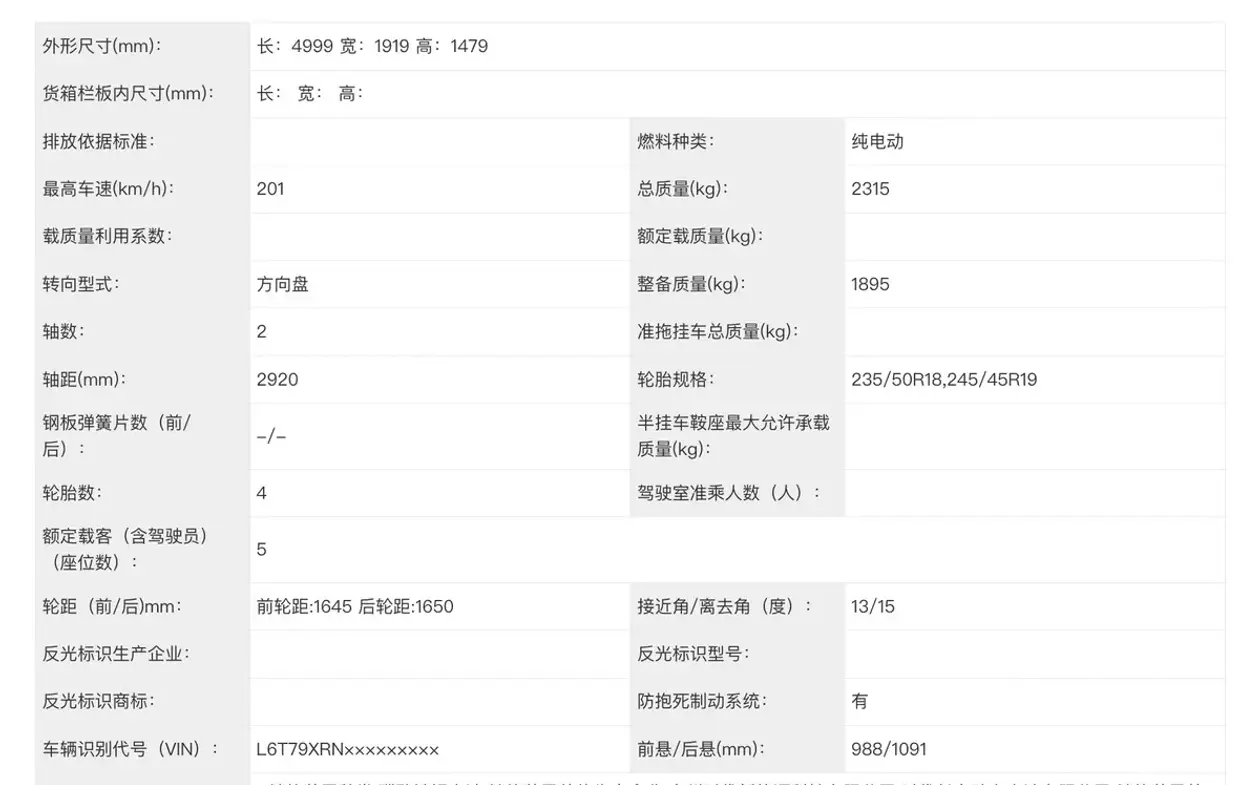
The Galaxy TT measures 4,999 mm in length, 1,919 mm (or 1,990 mm for certain variants) in width, and 1,479 mm (or 1,480 mm) in height, with a wheelbase of 2,920 mm. The 4,999 mm length stops just 1 mm short of the psychologically significant five-metre mark, creating an elongated, low-slung stance that visually approaches flagship territory while maintaining a competitive price positioning.
The 1,919 mm width balances city maneuverability and high-speed stability, slightly wider than the Zeekr 007’s 1,900 mm but 70 mm narrower than the XPeng P7+, improving urban parking convenience. Height is kept at 1,479 mm, preserving a sloping fastback silhouette without excessively compromising rear headroom. The 2,920 mm wheelbase continues the Galaxy brand’s emphasis on generous interior space.
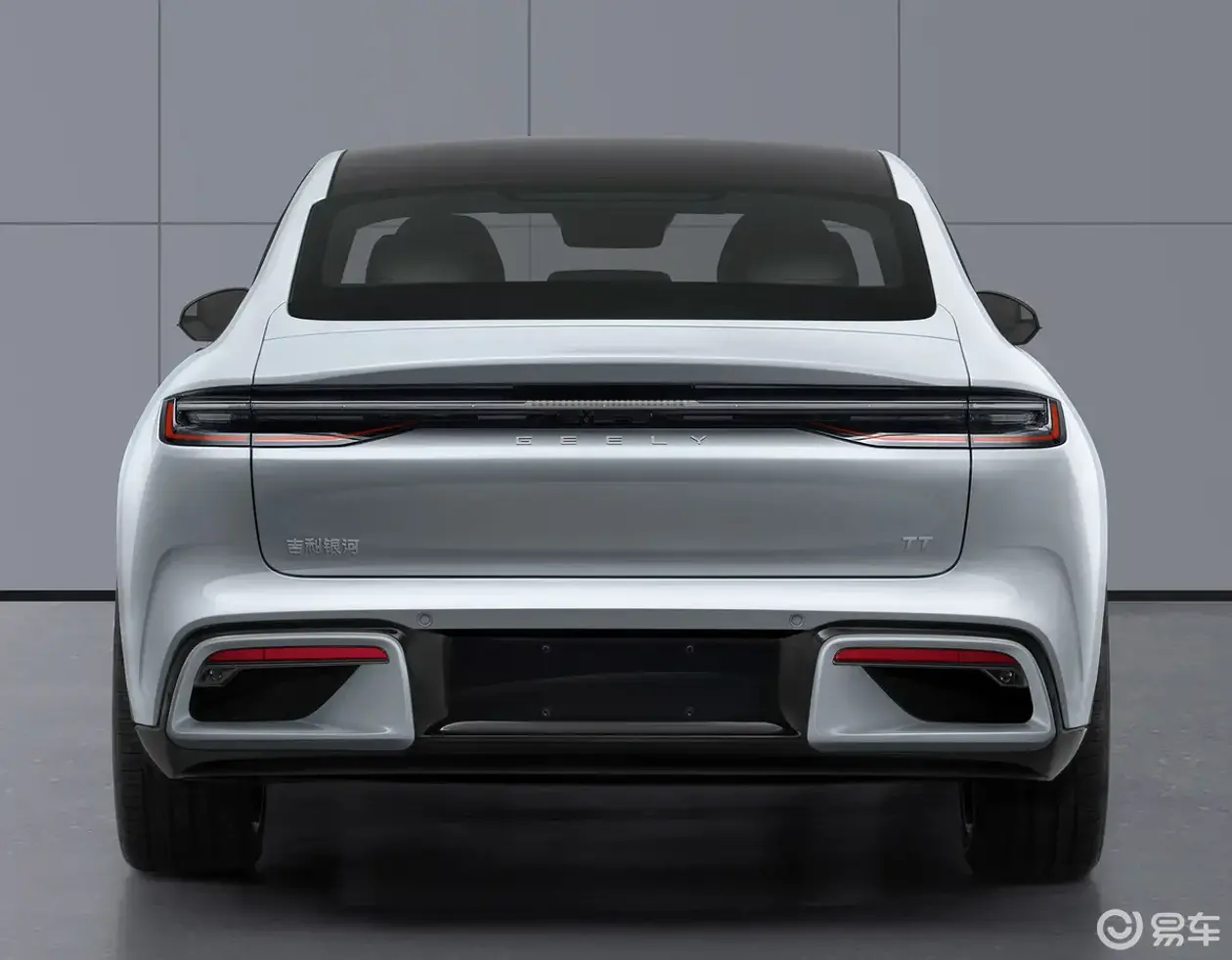
Filing documents also suggest alternative names such as “A8” and “A8 TT” were considered, though final branding awaits official confirmation.
All-New Design Language: Closed Front, Fastback Profile, Active Rear Spoiler
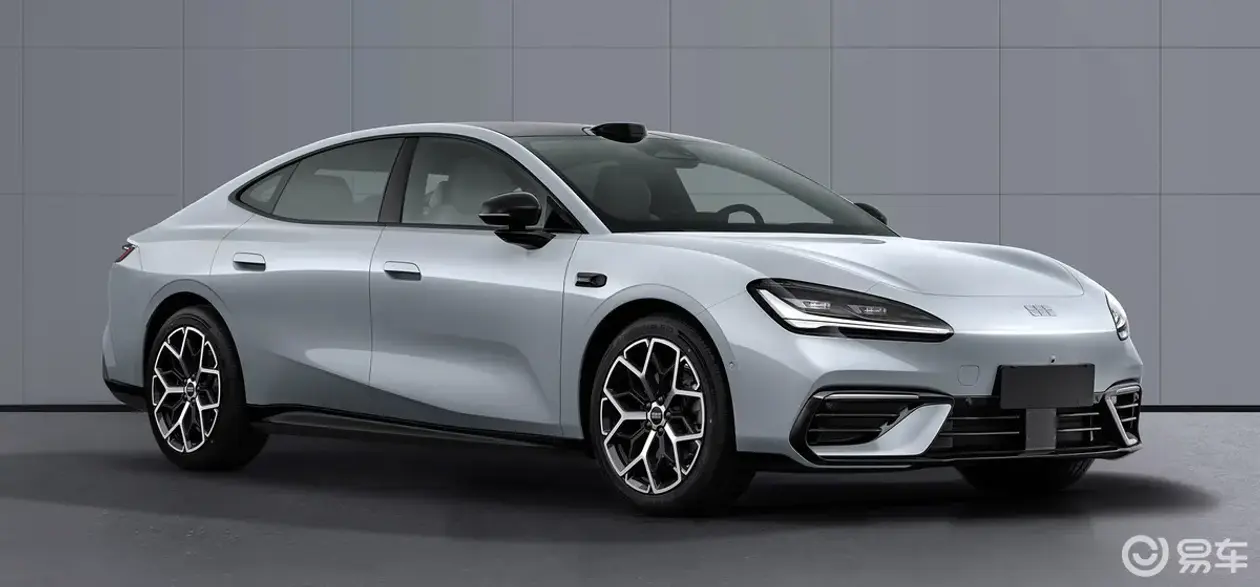
The Galaxy TT adopts a distinct design direction compared to the Galaxy E8. The closed front grille is flanked by narrow, sharply angled L-shaped LED headlights, creating a clean, technology-focused visual identity. The lower front bumper incorporates a three-section air intake, complemented by prominent bonnet creases that reinforce the athletic stance.
Observers have noted similarities between the front profile and a certain popular electric sedan on the market. However, closed fronts, streamlined bodywork, and full-width light bars are inherent aerodynamic necessities in the EV era – Geely’s distinctive execution lies in the aggressive three-section lower intake and muscular bonnet lines.
The side profile features a sweeping fastback roofline descending smoothly from the B-pillar, paired with semi-concealed door handles that balance aerodynamic efficiency with usability in cold climates. Both 18-inch and 19-inch dual five-spoke low-drag wheel designs are offered. The rear end adopts a full-width LED light bar with sculpted end treatments, a subtle ducktail spoiler, and an available active rear spoiler – a rare feature in this segment that provides additional downforce at high speeds, hinting at the car’s performance ambitions.
Powertrain: 245 kW RWD or 425 kW AWD – Outpacing the Tesla Model 3 Performance
The Galaxy TT offers two powertrain configurations. The rear-drive version uses a single motor from Wuxi Xingqu Power Technology (model TZ184QY301), producing 245 kW (approximately 333 hp). The AWD version adds an 180 kW front motor, bringing combined output to 425 kW (approximately 578 hp).
This 425 kW figure substantially surpasses the Tesla Model 3 Performance’s 339 kW (86 kW advantage), while trailing the Zeekr 007 Performance’s 475 kW and Xiaomi SU7 Max’s 495 kW by 50 kW and 70 kW respectively. In combustion-era terms, the 425 kW output exceeds that of the Porsche 911 Carrera S (331 kW) and BMW M3 Competition xDrive (375 kW).
Curb weight varies across configurations, with filings indicating 1,765–1,790 kg for lighter variants and 2,090–2,210 kg for heavier ones. The resulting power-to-weight ratio for the 1,790 kg version is approximately 0.237 kW/kg, significantly better than the Model 3 Performance’s 0.186 kW/kg. While 0–100 km/h acceleration figures are still pending, industry estimates place the AWD version well under four seconds, with optimistic projections for a sub-3.5-second time. Top speed is electronically limited to 200 km/h.
Battery and Charging: LFP with 800V Architecture – Range Expected to Exceed 550 km
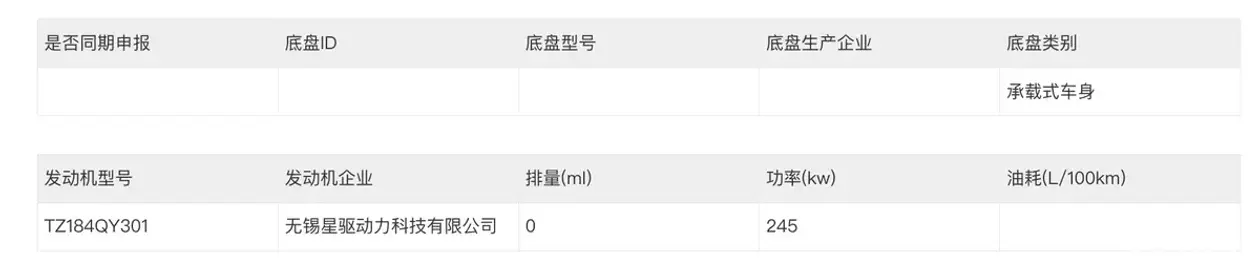
The Galaxy TT is equipped with an LFP battery pack – supplied by Zhongzhou Times New Energy Technology and Times Changan Power Battery, with final assembly by Jiangsu Times New Energy Technology. LFP chemistry offers longer cycle life, greater thermal stability, and lower cost compared to NMC alternatives.
Battery capacity and CLTC range have not yet been disclosed, but analysts estimate the Galaxy TT will achieve between 550 km and 650 km of range, referencing the Galaxy E8’s 76 kWh 550 km variant and 665 km long-range version.
An 800V high-voltage architecture is confirmed, enabling faster charging times. However, LFP batteries typically accept lower peak charging power than NMC batteries of equivalent capacity – meaning the Galaxy TT’s actual charging curve and “time to add 300 km of range” will be critical real-world performance metrics that require official publication.
Chassis: SEA Platform DNA – Sport-Oriented Tuning Expected
The Galaxy TT is expected to be built on Geely’s SEA (Sustainable Experience Architecture) platform, sharing its fundamental structure with the Galaxy E8 and Zeekr 007. The platform’s front double-wishbone, rear multi-link suspension configuration has proven its structural rigidity and handling response across millions of production units. While the Galaxy E8 is tuned for comfort, the TT’s sportier positioning suggests firmer spring rates, revised damper tuning, and thicker anti-roll bars – pending confirmation.
Market Positioning: Sportier Evolution of the Galaxy E8, Targeting the 150,000–220,000 RMB Segment
Visible from the filing images, the Galaxy TT shares its side profile and rear design with the existing Galaxy E8 – suggesting the TT is a significantly sportier mid-cycle evolution rather than a wholly new platform. The Galaxy E8 is currently priced between 149,800 RMB and 198,800 RMB. The TT is expected to slot into the 150,000–220,000 RMB bracket, creating internal differentiation from the Zeekr 007 (230,000–300,000 RMB) while competing directly with the Xiaomi SU7, Tesla Model 3, BYD Seal, and XPeng P7i.
Strategic Significance: Galaxy’s Shift from Design-Led to Performance-Led
The Galaxy TT marks a strategic pivot for the Galaxy brand – transitioning from design leadership to a dual emphasis on design and performance. The Galaxy E8 received widespread acclaim for its styling but was perceived by some buyers as offering relatively modest performance relative to its aggressive looks. The TT directly addresses this feedback with 425 kW AWD output and 800V architecture, aiming to establish a “performance + design” dual moat in the 200,000 RMB electric sedan segment.
Interior details, autonomous driving specifications, final range figures, and official pricing have not yet been released. Geely is expected to disclose further information over the coming months, with a market launch scheduled for the second half of 2026.
Outlook for the Hong Kong Market
If introduced to Hong Kong through official channels and eligible for the “One-for-One Replacement” EV First Registration Tax scheme, the Galaxy TT’s expected 150,000–220,000 RMB pricing would translate to approximately HK$160,000–230,000. This would place it directly against the Tesla Model 3, BYD Seal, and XPeng P7 in Hong Kong’s electric sedan market. The Galaxy TT’s substantial size advantage and superior powertrain output would offer clear differentiation, while its 800V architecture would improve charging experience for local users. However, Geely Galaxy Hong Kong has not yet announced any import timeline, homologation progress, or distribution plans.

香港汽車內容平台 🚗 新車・買車・玩車・用車 用香港視角,睇世界嘅車
+ Follow 【新車速報】Skyline 真係要返嚟喇!Nissan CEO:新一代12月登場
等咗咁耐,Skyline 終於有新消息!Nissan CEO Ivan Espinosa 接受《朝日新聞》專訪時透露,新一代 Skyline 將於今年12月亮相,亦係 Nissan 加快新車開發嘅代表作。
新車開發周期縮短至約 26個月,並利用生成式 AI、數碼模擬等工具加快開發流程。Nissan 官方亦已將 Skyline 列入 Heartbeat 車系,代表品牌工程技術、駕駛性能與情感。
至於動力、規格同最終量產設計,目前仍未全面公開。今次 Skyline 回歸,你最期待保留邊樣經典元素?
#Nissan #Skyline #新車速報 #BitAutoHongKong 5小时前
【新車速報】Skyline 真係要返嚟喇!Nissan CEO:新一代12月登場
等咗咁耐,Skyline 終於有新消息!Nissan CEO Ivan Espinosa 接受《朝日新聞》專訪時透露,新一代 Skyline 將於今年12月亮相,亦係 Nissan 加快新車開發嘅代表作。
新車開發周期縮短至約 26個月,並利用生成式 AI、數碼模擬等工具加快開發流程。Nissan 官方亦已將 Skyline 列入 Heartbeat 車系,代表品牌工程技術、駕駛性能與情感。
至於動力、規格同最終量產設計,目前仍未全面公開。今次 Skyline 回歸,你最期待保留邊樣經典元素?
#Nissan #Skyline #新車速報 #BitAutoHongKong 5小时前  【新車速報】升頂 30 秒!小米澎程變身兩房一廳
今集直擊小米全新SUV系列「澎程」(SKYNOMAD)三款實車!N70大五座、N90大七座,同埋最特別嘅探索版—電動升頂30秒自帶「兩房一廳」,變身雙人床模式,家庭露營氛圍拉滿。內地預售20.99萬起,探索版29.99萬起。
#小米澎程 #新車速報 #BitAutoHongKong 1天前
【新車速報】升頂 30 秒!小米澎程變身兩房一廳
今集直擊小米全新SUV系列「澎程」(SKYNOMAD)三款實車!N70大五座、N90大七座,同埋最特別嘅探索版—電動升頂30秒自帶「兩房一廳」,變身雙人床模式,家庭露營氛圍拉滿。內地預售20.99萬起,探索版29.99萬起。
#小米澎程 #新車速報 #BitAutoHongKong 1天前  【新車速報】Tesla Roadster再延期!10月15日再見?
原定10月1日舉行嘅第二代 Tesla Roadster 活動,因預測有惡劣天氣,加上活動只能喺戶外進行,官方宣布改至 10月15日。
等多兩星期,似乎都有嘢值得期待。據最新披露資料,新一代 Roadster 搭載 200kWh電池+三電機四驅,0-100km/h約 2.1秒、極速超過 400km/h,續航達 1,000km。
至於 Tesla 一直提到嘅 SpaceX推進器套件,據悉更可將加速提升至 1.1秒級,甚至有機會做到短時間「懸浮」,但 Tesla 暫未確認今次會否示範。
由2017年原型車亮相至今,第二代 Roadster 已經等咗接近9年。10月15日,今次終於見到新Roadster?�#Tesla #TeslaRoadster #Roadster #新車速報 #BitAutoHongKong 2天前
【新車速報】Tesla Roadster再延期!10月15日再見?
原定10月1日舉行嘅第二代 Tesla Roadster 活動,因預測有惡劣天氣,加上活動只能喺戶外進行,官方宣布改至 10月15日。
等多兩星期,似乎都有嘢值得期待。據最新披露資料,新一代 Roadster 搭載 200kWh電池+三電機四驅,0-100km/h約 2.1秒、極速超過 400km/h,續航達 1,000km。
至於 Tesla 一直提到嘅 SpaceX推進器套件,據悉更可將加速提升至 1.1秒級,甚至有機會做到短時間「懸浮」,但 Tesla 暫未確認今次會否示範。
由2017年原型車亮相至今,第二代 Roadster 已經等咗接近9年。10月15日,今次終於見到新Roadster?�#Tesla #TeslaRoadster #Roadster #新車速報 #BitAutoHongKong 2天前 Get the latest car news first!
【新車速報】Skyline 真係要返嚟喇!Nissan CEO:新一代12月登場
等咗咁耐,Skyline 終於有新消息!Nissan CEO Ivan Espinosa 接受《朝日新聞》專訪時透露,新一代 Skyline 將於今年12月亮相,亦係 Nissan 加快新車開發嘅代表作。
新車開發周期縮短至約 26個月,並利用生成式 AI、數碼模擬等工具加快開發流程。Nissan 官方亦已將 Skyline 列入 Heartbeat 車系,代表品牌工程技術、駕駛性能與情感。
至於動力、規格同最終量產設計,目前仍未全面公開。今次 Skyline 回歸,你最期待保留邊樣經典元素?
#Nissan #Skyline #新車速報 #BitAutoHongKong 5小时前 【新車速報】升頂 30 秒!小米澎程變身兩房一廳
今集直擊小米全新SUV系列「澎程」(SKYNOMAD)三款實車!N70大五座、N90大七座,同埋最特別嘅探索版—電動升頂30秒自帶「兩房一廳」,變身雙人床模式,家庭露營氛圍拉滿。內地預售20.99萬起,探索版29.99萬起。
#小米澎程 #新車速報 #BitAutoHongKong 1天前 【新車速報】Tesla Roadster再延期!10月15日再見?
原定10月1日舉行嘅第二代 Tesla Roadster 活動,因預測有惡劣天氣,加上活動只能喺戶外進行,官方宣布改至 10月15日。
等多兩星期,似乎都有嘢值得期待。據最新披露資料,新一代 Roadster 搭載 200kWh電池+三電機四驅,0-100km/h約 2.1秒、極速超過 400km/h,續航達 1,000km。
至於 Tesla 一直提到嘅 SpaceX推進器套件,據悉更可將加速提升至 1.1秒級,甚至有機會做到短時間「懸浮」,但 Tesla 暫未確認今次會否示範。
由2017年原型車亮相至今,第二代 Roadster 已經等咗接近9年。10月15日,今次終於見到新Roadster?�#Tesla #TeslaRoadster #Roadster #新車速報 #BitAutoHongKong 2天前  BAWToyotaBYDZeekrGACDongfengXPengMGMaxusLeapmotorDenzaIMiCAURDeepalWulingOraJuneyao AutoKYCSkyworthAvatrFotonFordGeelyHongqiJAECOOKGMOMODADFSKTeslaHondaBMWMercedes-BenzsmartMINIPorscheNissanLexusSuzukiVolvoSubaruMazdaKiaHyundaiLand RoverRolls-RoyceFerrariAudiLamborghiniRiddaraSeresFarizonfireflyLingboxKaiyiVoyahHIMAM-HeroIsuzuBentleyPolestarMcLarenMitsubishiMaseratiPeugeotAston MartinAcuraJeepJaguarLotusVolkswagenEpiclandJACLepasLi
 © 2024 Bitauto.com. All Rights Reserved.
Bitauto (www.yiche.com and www.bitauto.com) is one of the most visited automotive websites in China. We provide detailed info on Chinese car brands available in your area. Please note that the information provided on this website is based on publicly available data and is for reference only. It may not be fully updated or accurate at all times.
Help us improve our website


