
Search History
Popular Searches
English
Dealer Login / Sign Up
Ahead of the official opening of the 2026 Beijing International Automotive Exhibition, the automotive technology landscape witnessed a significant leap forward. At its annual Product and Technology Launch Event, Horizon Robotics, a leading provider of energy-efficient computing solutions for advanced driver-assistance systems (ADAS) and autonomous driving, officially unveiled a trio of groundbreaking innovations: the Horizon Super Driving (HSD) V1.6 platform, the Starry 6P system-on-chip (SoC), and China's first "Vehicle Agent" operating system, dubbed KaKaClaw. This comprehensive release signals a strategic elevation for the company, moving beyond discrete driving or cockpit functions towards a holistic, integrated, and intelligent vehicle architecture.

The event, themed around the next frontier of vehicle intelligence, was headlined by Dr. Yu Kai, Founder and CEO of Horizon Robotics. He framed the announcements as a natural evolution and strategic "dimensional upgrade" from the company's previous milestones. "If the Journey® 6P combined with HSD represented our 'bold leap' in 2025," Dr. Yu stated, "this year, we are strategically ascending to a higher order, centering our efforts on 'Whole Vehicle Intelligence' as the core. Every iteration of HSD, every advancement in our cognitive capabilities, is fundamentally anchored in the unchanging pursuit of delivering tangible value to the end-user." This user-centric philosophy permeated the entire presentation, positioning technology not as an end in itself but as an enabler for safer, more personalized, and more intuitive mobility experiences.

The centerpiece of the hardware announcement was the Horizon Starry series, specifically the flagship Starry 6P chip. Touted as China's first cockpit-and-driving-integrated vehicle agent chip, the Starry 6P is engineered on a cutting-edge 5-nanometer process. It boasts a formidable computational prowess of 650 TOPS (Tera Operations Per Second) and a high-speed memory bandwidth of 273 GB/s. These raw specifications are designed to deliver top-tier performance for intelligent cockpit functionalities, advanced driving algorithms, and on-device large language model operations simultaneously. However, Horizon emphasized that brute-force computing power is only part of the equation.
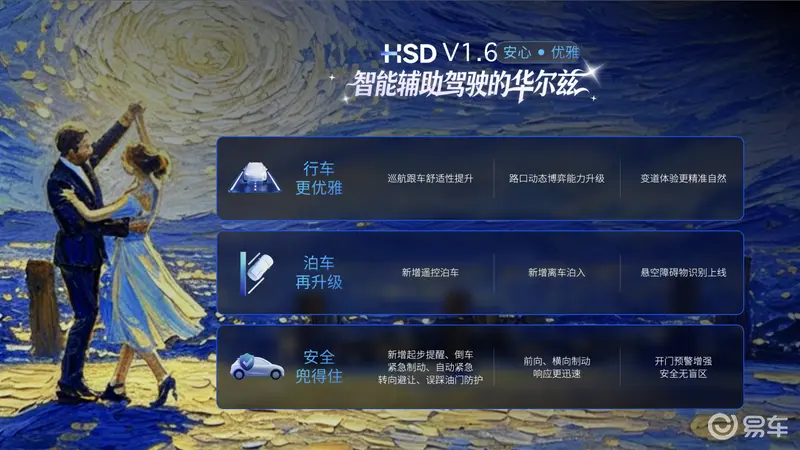
The true innovation of the Starry 6P lies in its integrated architectural design, which addresses critical real-world challenges for automakers. The chip introduces an industry-first Adaptive Computing Engine, engineered to tackle common industry pain points related to efficiency and task allocation in a fused domain setup. More crucially, it debuts a novel security architecture named "Fortress." This architecture employs physical isolation technology to create separate, independently operating domains for the cockpit and autonomous driving functions within the same silicon. This means critical driving functions remain fully operational and secure even if the infotainment system requires a reboot, achieving the highest automotive safety integrity level (ASIL-D) for the intelligent driving domain. This "safety commitment" is a foundational step towards enabling the safe, large-scale deployment of next-generation intelligent vehicles.
Beyond performance and safety, Horizon is leveraging its extensive experience in mass production to give the Starry platform a market edge. The company highlighted that the Starry series benefits from a unified and mature mass-production ecosystem, promising shorter development cycles, guaranteed product performance, and a mature software environment. Horizon claims its proprietary BPU (Brain Processing Unit) architecture, the engine behind its computing power, is already deployed in over 100 vehicle models from more than 20 automakers. With the HSD driving system, intelligent cockpit solutions, and now the vehicle agent system all reaching mass-production readiness, Horizon positions the Starry platform as the industry's only solution to have successfully validated four core competencies: high-performance computing, fused domain control, functional safety, and scalable software. The company has already secured letters of intent for mass-production cooperation from several mainstream OEMs and Tier-1 suppliers, indicating strong industry interest.

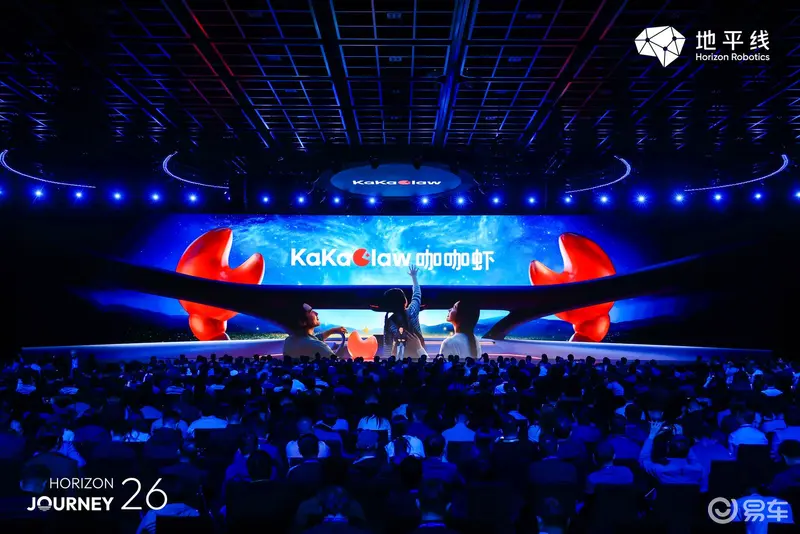
If the Starry 6P chip represents the "brain," then the newly unveiled KaKaClaw operating system is intended to be its "mind" and "personality." Introduced as China's first Vehicle Agent OS, KaKaClaw aims to fundamentallyreconstruct the underlying logic of human-vehicle interaction. Moving beyond traditional command-response models, it is built as an "Agentic OS"—a proactive, learning, and contextual digital entity within the car.
Horizon defines KaKaClaw's core value proposition through three key attributes: being highly skilled ("skill"), having an excellent memory ("memory"), and possessing a distinct personality ("soul"). In practice, this translates to a system that "can do and can play," capable of executing a wide range of tasks and entertainment functions. More importantly, it is designed for continuous learning and growth based on user interactions. Its memory function goes beyond remembering simple preferences like seat position; it aims to understand and adapt to the user's multifaceted roles—be it a professional commuting to work, a parent on a school run, or an adventurer on a road trip.

Dr. Yu Kai elaborated on this transformative potential, drawing a sharp contrast with traditional automotive components. "The ceiling of this system is co-defined by the user," he explained. "The roads you've driven, the conversations you've had—it remembers them all. Unlike hardware, which depreciates over time, the value of a Vehicle Agent appreciates with memory. It learns and grows with every interaction." This vision paints a future where the car evolves from a mere tool into a companion that understands habits, perceives emotional states, and even anticipates unspoken needs, aiming to make every journey more comprehensible and emotionally resonant.
The commercial viability and industry endorsement of Horizon's new integrated strategy received a significant boost during the event with a major partnership announcement. Dr. Su Jun, General Manager of the iCAR Brand Division, joined Dr. Yu Kai on stage to declare iCAR as the global launch partner for Horizon's cockpit-and-driving-integrated whole vehicle intelligent solution. iCAR, a vibrant electric vehicle brand under the Chery umbrella known for targeting younger consumers with tech-centric offerings, represents an ideal partner to bring these advanced capabilities to market. This collaboration suggests that vehicles featuring the synergistic combination of the Starry 6P chip, HSD V1.6 driving software, and the KaKaClaw OS could be on Chinese roads in the foreseeable future, setting a new benchmark for intelligent interaction and integrated domain control.
The unveiling of HSD V1.6, the Starry 6P, and KaKaClaw OS just before the 2026 Beijing Auto Show is a strategic move by Horizon Robotics. It shifts the narrative from isolated functionalities to a cohesive, system-level approach to vehicle intelligence. By addressing the critical triumvirate of raw computing power (via Starry 6P), functional safety and fused architecture (via Fortress), and adaptive, personalized user experience (via KaKaClaw), Horizon is not just launching products; it is proposing a new framework for the intelligent vehicle era. As the auto show opens its doors, all eyes will be on how this vision translates into tangible exhibits and how the industry responds to this ambitious step towards vehicles that are not only self-driving but also self-learning and deeply attuned to their human occupants.

香港汽車內容平台 🚗 新車・買車・玩車・用車 用香港視角,睇世界嘅車
+ Follow 【揀車有路數】日產新車賣比亞迪價?仲有激光雷達
今集試一台好特別嘅日產新車——NX8,中國特供增程SUV。外觀似熟悉嘅日產味,但內籠同科技配備竟然唔晒傳統日產套路,駕乘感受又有幾多轉變?到底仲係咪你認識嗰部日產?一齊試畀你睇。
#日產 #NX8 #增程 #BitAutoHongKong #揀車有路數 3小时前
【揀車有路數】日產新車賣比亞迪價?仲有激光雷達
今集試一台好特別嘅日產新車——NX8,中國特供增程SUV。外觀似熟悉嘅日產味,但內籠同科技配備竟然唔晒傳統日產套路,駕乘感受又有幾多轉變?到底仲係咪你認識嗰部日產?一齊試畀你睇。
#日產 #NX8 #增程 #BitAutoHongKong #揀車有路數 3小时前  【新車速報】T-Top 回歸?Nissan Z Kaze 概念車現身!
90年代 JDM 味返晒嚟?Nissan 最近喺美國 ZCON 公開 Z Kaze 概念車,以現款 Nissan Z 為基礎,換上全新 T-Top 可拆式車頂,向經典 300ZX 等 Z 系列致敬。
配合碳纖維空力套件、NISMO LMGT2 18吋輪圈,以及 GReddy 排氣、進氣同 intercooler 升級,成部車都充滿 JDM 改裝味。
「Kaze」即係日文「風」,而呢部車係 one-off 概念作品,並非量產車。10月3日仲會現身加州長灘 Japanese Classic Car Show。
如果 T-Top Z 真係量產,你會唔會心動?
#NissanZ #ZKaze #TTop #JDM #BitAutoHongKong 6小时前
【新車速報】T-Top 回歸?Nissan Z Kaze 概念車現身!
90年代 JDM 味返晒嚟?Nissan 最近喺美國 ZCON 公開 Z Kaze 概念車,以現款 Nissan Z 為基礎,換上全新 T-Top 可拆式車頂,向經典 300ZX 等 Z 系列致敬。
配合碳纖維空力套件、NISMO LMGT2 18吋輪圈,以及 GReddy 排氣、進氣同 intercooler 升級,成部車都充滿 JDM 改裝味。
「Kaze」即係日文「風」,而呢部車係 one-off 概念作品,並非量產車。10月3日仲會現身加州長灘 Japanese Classic Car Show。
如果 T-Top Z 真係量產,你會唔會心動?
#NissanZ #ZKaze #TTop #JDM #BitAutoHongKong 6小时前  【新車速報】Skyline 真係要返嚟喇!Nissan CEO:新一代12月登場
等咗咁耐,Skyline 終於有新消息!Nissan CEO Ivan Espinosa 接受《朝日新聞》專訪時透露,新一代 Skyline 將於今年12月亮相,亦係 Nissan 加快新車開發嘅代表作。
新車開發周期縮短至約 26個月,並利用生成式 AI、數碼模擬等工具加快開發流程。Nissan 官方亦已將 Skyline 列入 Heartbeat 車系,代表品牌工程技術、駕駛性能與情感。
至於動力、規格同最終量產設計,目前仍未全面公開。今次 Skyline 回歸,你最期待保留邊樣經典元素?
#Nissan #Skyline #新車速報 #BitAutoHongKong 1天前
【新車速報】Skyline 真係要返嚟喇!Nissan CEO:新一代12月登場
等咗咁耐,Skyline 終於有新消息!Nissan CEO Ivan Espinosa 接受《朝日新聞》專訪時透露,新一代 Skyline 將於今年12月亮相,亦係 Nissan 加快新車開發嘅代表作。
新車開發周期縮短至約 26個月,並利用生成式 AI、數碼模擬等工具加快開發流程。Nissan 官方亦已將 Skyline 列入 Heartbeat 車系,代表品牌工程技術、駕駛性能與情感。
至於動力、規格同最終量產設計,目前仍未全面公開。今次 Skyline 回歸,你最期待保留邊樣經典元素?
#Nissan #Skyline #新車速報 #BitAutoHongKong 1天前 Get the latest car news first!
【揀車有路數】日產新車賣比亞迪價?仲有激光雷達
今集試一台好特別嘅日產新車——NX8,中國特供增程SUV。外觀似熟悉嘅日產味,但內籠同科技配備竟然唔晒傳統日產套路,駕乘感受又有幾多轉變?到底仲係咪你認識嗰部日產?一齊試畀你睇。
#日產 #NX8 #增程 #BitAutoHongKong #揀車有路數 3小时前 【新車速報】T-Top 回歸?Nissan Z Kaze 概念車現身!
90年代 JDM 味返晒嚟?Nissan 最近喺美國 ZCON 公開 Z Kaze 概念車,以現款 Nissan Z 為基礎,換上全新 T-Top 可拆式車頂,向經典 300ZX 等 Z 系列致敬。
配合碳纖維空力套件、NISMO LMGT2 18吋輪圈,以及 GReddy 排氣、進氣同 intercooler 升級,成部車都充滿 JDM 改裝味。
「Kaze」即係日文「風」,而呢部車係 one-off 概念作品,並非量產車。10月3日仲會現身加州長灘 Japanese Classic Car Show。
如果 T-Top Z 真係量產,你會唔會心動?
#NissanZ #ZKaze #TTop #JDM #BitAutoHongKong 6小时前 【新車速報】Skyline 真係要返嚟喇!Nissan CEO:新一代12月登場
等咗咁耐,Skyline 終於有新消息!Nissan CEO Ivan Espinosa 接受《朝日新聞》專訪時透露,新一代 Skyline 將於今年12月亮相,亦係 Nissan 加快新車開發嘅代表作。
新車開發周期縮短至約 26個月,並利用生成式 AI、數碼模擬等工具加快開發流程。Nissan 官方亦已將 Skyline 列入 Heartbeat 車系,代表品牌工程技術、駕駛性能與情感。
至於動力、規格同最終量產設計,目前仍未全面公開。今次 Skyline 回歸,你最期待保留邊樣經典元素?
#Nissan #Skyline #新車速報 #BitAutoHongKong 1天前  BAWToyotaBYDZeekrGACDongfengXPengMGMaxusLeapmotorDenzaIMiCAURDeepalWulingOraJuneyao AutoKYCSkyworthAvatrFotonFordGeelyHongqiJAECOOKGMOMODADFSKTeslaHondaBMWMercedes-BenzsmartMINIPorscheNissanLexusSuzukiVolvoSubaruMazdaKiaHyundaiLand RoverRolls-RoyceFerrariAudiLamborghiniRiddaraSeresFarizonfireflyLingboxKaiyiVoyahHIMAM-HeroIsuzuBentleyPolestarMcLarenMitsubishiMaseratiPeugeotAston MartinAcuraJeepJaguarLotusVolkswagenEpiclandJACLepasLi
 © 2024 Bitauto.com. All Rights Reserved.
Bitauto (www.yiche.com and www.bitauto.com) is one of the most visited automotive websites in China. We provide detailed info on Chinese car brands available in your area. Please note that the information provided on this website is based on publicly available data and is for reference only. It may not be fully updated or accurate at all times.
Help us improve our website


