
Search History
Popular Searches
English
Dealer Login / Sign Up
The landscape of automotive design and virtual racing is set for a seismic shift as Xiaomi Auto officially announces the upcoming debut of its breathtaking Xiaomi Vision Gran Turismo concept car at the 2026 Beijing International Automotive Exhibition. This marks the first time this digital-born marvel will be presented to the public on home soil, offering a tangible glimpse into a future where cutting-edge technology, radical aerodynamics, and artificial intelligence converge to redefine the very essence of a hypercar.

Born from a prestigious invitation by Kazunori Yamauchi, the legendary creator of the iconic Gran Turismo racing simulation series, the Xiaomi Vision GT first captivated the global stage at the World Mobile Congress in Barcelona. It exists within the hallowed digital halls of the Vision Gran Turismo project, a visionary initiative that tasks the world's most innovative automakers with casting aside the constraints of production feasibility, cost, and regulation to conceive their ultimate dream machine. In this rarefied space, imagination is the only blueprint. Xiaomi's entry is a definitive statement: the consumer electronics giant is not merely entering the automotive arena but aiming to sculpt its future.
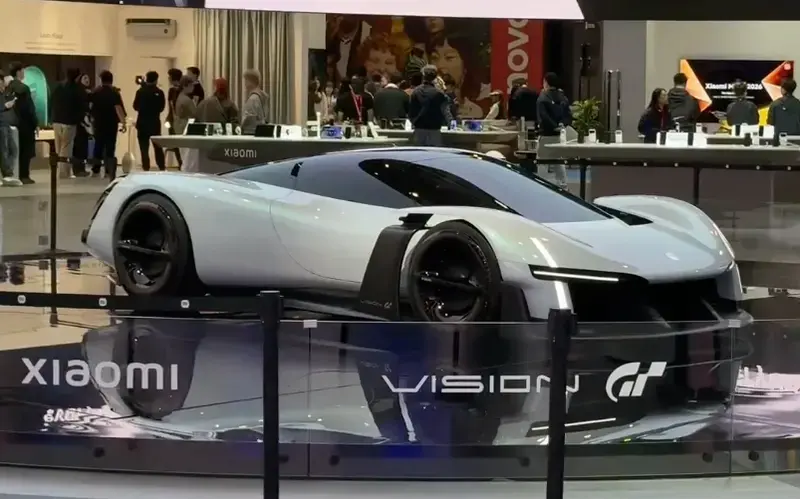
Addressing the burning question of a road-going version, Xiaomi Auto has been unequivocal: the Vision GT will not see production. This clarity underscores the project's pure, philosophical purpose. It is an exercise in unbounded innovation, a canvas for Xiaomi's global design team to explore the outermost limits of form, function, and experiential technology. It represents a deep dive into the realm of innovative design, complementing the brand's established foundation in "hardcore tech" as demonstrated by its production models like the SU7. The Vision GT is, therefore, less a prototype for a future model and more a manifesto—a physical embodiment of Xiaomi's automotive aspirations and technological prowess.
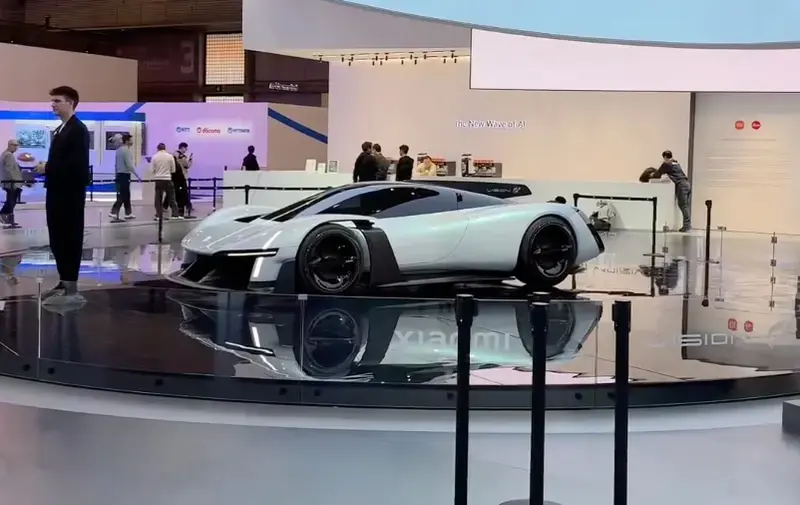
At the heart of this manifesto lies a core design philosophy of breathtaking elegance and scientific rigor: "Shaped by the Wind." The team approached the design as one would sculpt a form from air itself, aiming for a "Sculpture of Wind." This philosophy led to the deliberate abandonment of aggressively sharp, in favor of a fluid, holistic form where every curve serves a purpose. The goal was audacious: to meet stringent aerodynamic targets without relying on bolt-on spoilers, wings,. The result is a body of stunning, minimalist purity.
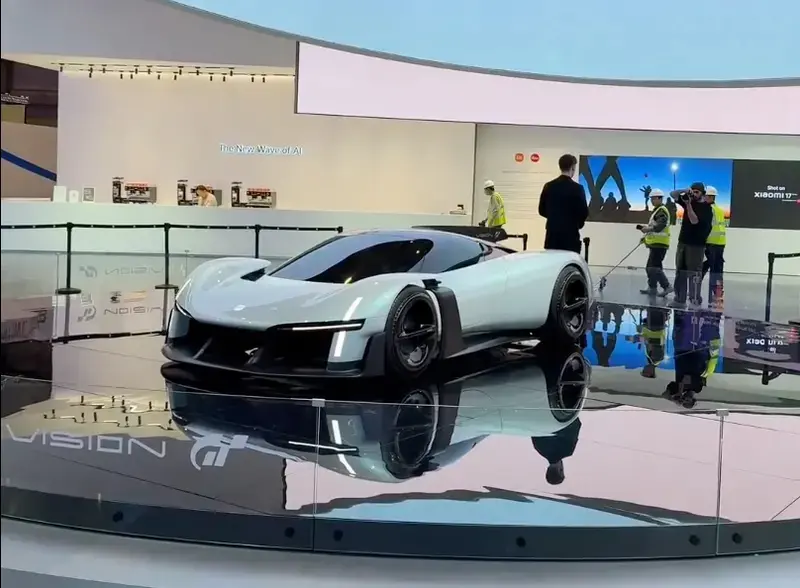
The cabin, likened to a suspended, is seamlessly integrated into the overall form. This approach—transforming disparate parts into a unified whole—is evident everywhere. Every surface has been computationally optimized for airflow; every structural element features an airfoil-like cross-section. The iconic "Cross" headlights are not just signature lighting elements but functional aerodynamic components, seamlessly blending into the bodywork to guide air. At the rear, the innovative "Halo" taillight is ingeniously integrated into the very structure of the rear air channel, merging aesthetic beauty with aerodynamic efficiency in a perfect marriage of form and function.

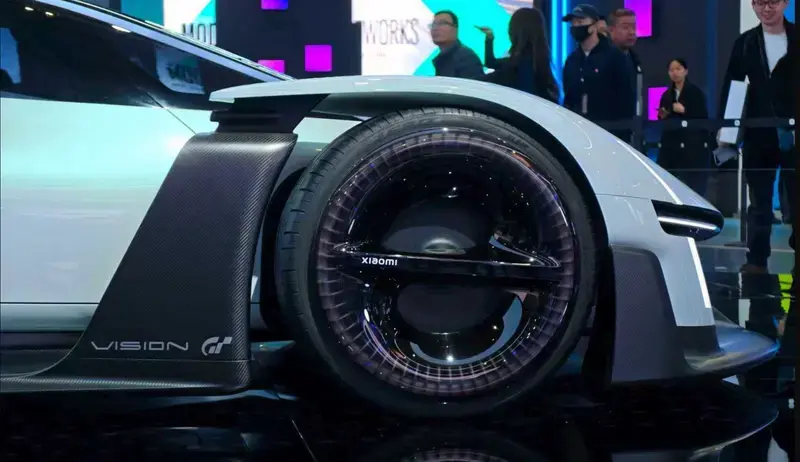
The aerodynamic mastery extends into every crevice and surface. An intricate network of manages airflow across and through the body. The underbody is a meticulously designed landscape. The wheels are shrouded by semi-transparent, magnetically suspended hub covers—dubbed "Black Hole Ring" wheel hubs—that manage turbulent wheel-well airflow. Perhaps most intriguing is the vehicle's active wake control system," a likely suite of dynamic elements that manage the critical airflow separation at the rear. The cumulative effect of these innovations is staggering: in simulation, the Xiaomi Vision GT achieves an aerodynamic efficiency value of 4.1, a drag coefficient (Cd) of just 0.29, and generates a significant -1.2 downforce figure, ensuring both blistering straight-line speed and tenacious cornering grip.
Yet, for all its track-focused aerodynamic brilliance, Xiaomi introduces a profoundly human-centric counterpoint with its "Sofa Racer" driving concept. This idea seeks to dissolve the traditional compromise . Within the Vision GT's cockpit, the driver is enveloped in an immersive, intelligent "Cocoon Cabin" designed around the "Ring" symbiotic interface. Here, technology becomes intuitive and empathetic.
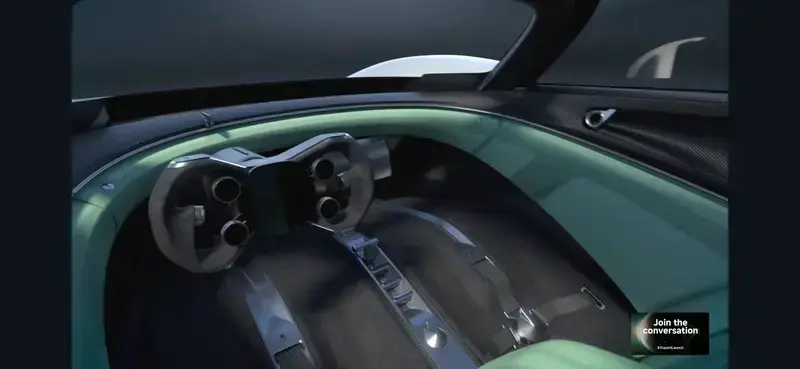
The cabin is the nexus of Xiaomi's formidable "Human x Car x Home" full ecosystem. Powered by the super-capable Xiao Ai assistant and the formidable capabilities of the Xiaomi MiMo large language model, the vehicle transforms into a proactive partner. It can perceive, recognize, and communicate through a symphony of ambient light, sound, and haptic feedback, seamlessly integrating the driver into the machine's operational loop. This breaks down the barriers between visual information and visceral experience, aiming to create a state where driver and vehicle operate as one cohesive entity. It's a vision of hyper-performance that is as soothing and connected as it is exhilarating.
The debut at the 2026 Beijing Auto Show is therefore much more than a simple car reveal. It is the unveiling of a multidimensional vision. The Xiaomi Vision Gran Turismo stands as a testament to aerodynamic artistry, where every line is dictated by the silent logic of physics. It serves as a bold experiment in human-machine symbiosis, previewing an AI-augmented driving future. Finally, it is a powerful brand statement, announcing Xiaomi's serious and creatively ambitious entry into the upper echelons of global automotive design. As it transitions from the pixels of Gran Turismo to the polished floors of the Beijing exhibition center, it challenges onlookers to imagine: if this is the dream, what incredible reality might follow?

香港汽車內容平台 🚗 新車・買車・玩車・用車 用香港視角,睇世界嘅車
+ Follow 【揀車有路數】日產新車賣比亞迪價?仲有激光雷達
今集試一台好特別嘅日產新車——NX8,中國特供增程SUV。外觀似熟悉嘅日產味,但內籠同科技配備竟然唔晒傳統日產套路,駕乘感受又有幾多轉變?到底仲係咪你認識嗰部日產?一齊試畀你睇。
#日產 #NX8 #增程 #BitAutoHongKong #揀車有路數 3小时前
【揀車有路數】日產新車賣比亞迪價?仲有激光雷達
今集試一台好特別嘅日產新車——NX8,中國特供增程SUV。外觀似熟悉嘅日產味,但內籠同科技配備竟然唔晒傳統日產套路,駕乘感受又有幾多轉變?到底仲係咪你認識嗰部日產?一齊試畀你睇。
#日產 #NX8 #增程 #BitAutoHongKong #揀車有路數 3小时前  【新車速報】T-Top 回歸?Nissan Z Kaze 概念車現身!
90年代 JDM 味返晒嚟?Nissan 最近喺美國 ZCON 公開 Z Kaze 概念車,以現款 Nissan Z 為基礎,換上全新 T-Top 可拆式車頂,向經典 300ZX 等 Z 系列致敬。
配合碳纖維空力套件、NISMO LMGT2 18吋輪圈,以及 GReddy 排氣、進氣同 intercooler 升級,成部車都充滿 JDM 改裝味。
「Kaze」即係日文「風」,而呢部車係 one-off 概念作品,並非量產車。10月3日仲會現身加州長灘 Japanese Classic Car Show。
如果 T-Top Z 真係量產,你會唔會心動?
#NissanZ #ZKaze #TTop #JDM #BitAutoHongKong 6小时前
【新車速報】T-Top 回歸?Nissan Z Kaze 概念車現身!
90年代 JDM 味返晒嚟?Nissan 最近喺美國 ZCON 公開 Z Kaze 概念車,以現款 Nissan Z 為基礎,換上全新 T-Top 可拆式車頂,向經典 300ZX 等 Z 系列致敬。
配合碳纖維空力套件、NISMO LMGT2 18吋輪圈,以及 GReddy 排氣、進氣同 intercooler 升級,成部車都充滿 JDM 改裝味。
「Kaze」即係日文「風」,而呢部車係 one-off 概念作品,並非量產車。10月3日仲會現身加州長灘 Japanese Classic Car Show。
如果 T-Top Z 真係量產,你會唔會心動?
#NissanZ #ZKaze #TTop #JDM #BitAutoHongKong 6小时前  【新車速報】Skyline 真係要返嚟喇!Nissan CEO:新一代12月登場
等咗咁耐,Skyline 終於有新消息!Nissan CEO Ivan Espinosa 接受《朝日新聞》專訪時透露,新一代 Skyline 將於今年12月亮相,亦係 Nissan 加快新車開發嘅代表作。
新車開發周期縮短至約 26個月,並利用生成式 AI、數碼模擬等工具加快開發流程。Nissan 官方亦已將 Skyline 列入 Heartbeat 車系,代表品牌工程技術、駕駛性能與情感。
至於動力、規格同最終量產設計,目前仍未全面公開。今次 Skyline 回歸,你最期待保留邊樣經典元素?
#Nissan #Skyline #新車速報 #BitAutoHongKong 1天前
【新車速報】Skyline 真係要返嚟喇!Nissan CEO:新一代12月登場
等咗咁耐,Skyline 終於有新消息!Nissan CEO Ivan Espinosa 接受《朝日新聞》專訪時透露,新一代 Skyline 將於今年12月亮相,亦係 Nissan 加快新車開發嘅代表作。
新車開發周期縮短至約 26個月,並利用生成式 AI、數碼模擬等工具加快開發流程。Nissan 官方亦已將 Skyline 列入 Heartbeat 車系,代表品牌工程技術、駕駛性能與情感。
至於動力、規格同最終量產設計,目前仍未全面公開。今次 Skyline 回歸,你最期待保留邊樣經典元素?
#Nissan #Skyline #新車速報 #BitAutoHongKong 1天前 Get the latest car news first!
【揀車有路數】日產新車賣比亞迪價?仲有激光雷達
今集試一台好特別嘅日產新車——NX8,中國特供增程SUV。外觀似熟悉嘅日產味,但內籠同科技配備竟然唔晒傳統日產套路,駕乘感受又有幾多轉變?到底仲係咪你認識嗰部日產?一齊試畀你睇。
#日產 #NX8 #增程 #BitAutoHongKong #揀車有路數 3小时前 【新車速報】T-Top 回歸?Nissan Z Kaze 概念車現身!
90年代 JDM 味返晒嚟?Nissan 最近喺美國 ZCON 公開 Z Kaze 概念車,以現款 Nissan Z 為基礎,換上全新 T-Top 可拆式車頂,向經典 300ZX 等 Z 系列致敬。
配合碳纖維空力套件、NISMO LMGT2 18吋輪圈,以及 GReddy 排氣、進氣同 intercooler 升級,成部車都充滿 JDM 改裝味。
「Kaze」即係日文「風」,而呢部車係 one-off 概念作品,並非量產車。10月3日仲會現身加州長灘 Japanese Classic Car Show。
如果 T-Top Z 真係量產,你會唔會心動?
#NissanZ #ZKaze #TTop #JDM #BitAutoHongKong 6小时前 【新車速報】Skyline 真係要返嚟喇!Nissan CEO:新一代12月登場
等咗咁耐,Skyline 終於有新消息!Nissan CEO Ivan Espinosa 接受《朝日新聞》專訪時透露,新一代 Skyline 將於今年12月亮相,亦係 Nissan 加快新車開發嘅代表作。
新車開發周期縮短至約 26個月,並利用生成式 AI、數碼模擬等工具加快開發流程。Nissan 官方亦已將 Skyline 列入 Heartbeat 車系,代表品牌工程技術、駕駛性能與情感。
至於動力、規格同最終量產設計,目前仍未全面公開。今次 Skyline 回歸,你最期待保留邊樣經典元素?
#Nissan #Skyline #新車速報 #BitAutoHongKong 1天前  BAWToyotaBYDZeekrGACDongfengXPengMGMaxusLeapmotorDenzaIMiCAURDeepalWulingOraJuneyao AutoKYCSkyworthAvatrFotonFordGeelyHongqiJAECOOKGMOMODADFSKTeslaHondaBMWMercedes-BenzsmartMINIPorscheNissanLexusSuzukiVolvoSubaruMazdaKiaHyundaiLand RoverRolls-RoyceFerrariAudiLamborghiniRiddaraSeresFarizonfireflyLingboxKaiyiVoyahHIMAM-HeroIsuzuBentleyPolestarMcLarenMitsubishiMaseratiPeugeotAston MartinAcuraJeepJaguarLotusVolkswagenEpiclandJACLepasLi
 © 2024 Bitauto.com. All Rights Reserved.
Bitauto (www.yiche.com and www.bitauto.com) is one of the most visited automotive websites in China. We provide detailed info on Chinese car brands available in your area. Please note that the information provided on this website is based on publicly available data and is for reference only. It may not be fully updated or accurate at all times.
Help us improve our website


