首頁Bangkok

搜尋歷史
熱門搜尋
經銷商登入 / 註冊

September 3rd to 4th, the 4th International New Energy Vehicle Summit · Southeast Asia Station was held in Bangkok, Thailand. Sailun Group was invited to attend, engaging in in-depth dialogue with OEMs and upstream/downstream representatives of the automotive industry chain from home and abroad, jointly exploring trends in the Southeast Asia new energy vehicle industry development and new cooperation opportunities.

Summit Focuses on Localization and Ecological Synergy
This summit focused on "Scaled Breakthrough and Deep Localization" and "Technology Iteration and Ecological Synergy" as core directions, gathering representatives from Southeast Asia New Energy Vehicle Industry Associations, whole vehicle enterprises, parts suppliers, and related industry chain members. Discussions were held on core topics such as regional policies, capacity layout, technological innovation, intelligent manufacturing, supply chain localization, and industrial ecosystem construction, building a professional and efficient docking cooperation platform for the upstream and downstream of the industry chain.
With the rapid development of the Southeast Asia new energy vehicle market, the industry chain is accelerating upgrades towards electrification, intelligence, and greenness. New energy vehicles place higher demands on tire safety performance, low rolling resistance, noise comfort, load-bearing capacity, and comprehensive handling performance, also opening broad space for collaborative innovation between tire enterprises and whole vehicle enterprises.

Booth Traffic High, Cooperation Intentions Strong
During the summit, Sailun's booth attracted many whole vehicle enterprises and industry customers to visit and inquire, with a vibrant atmosphere for on-site exchange. Visiting customers focused on learning about Sailun's product layout, technological innovation, intelligent manufacturing, and global matching capabilities in the new energy tire field. The Sailun team communicated in-depth with guests on topics such as new energy vehicle application scenarios, product performance, R&D technology, and localization services, and actively explored cooperation opportunities in directions such as product development, whole vehicle matching, and market expansion.

Deeply Binding Mainstream OEMs, Closed-Loop Advantage Formed
Sailun continues to deepen its global layout, relying on independent R&D strength, advanced manufacturing systems, and global sales service networks, accelerating product and technology iteration, providing safer, energy-saving, and comfortable tire products and comprehensive solutions for global customers.
Currently, Sailun has reached deep cooperation with mainstream Southeast Asia OEMs such as BYD Thailand, Changan Thailand, Proton Malaysia, VINFAST Vietnam, VINFAST Indonesia, Wuling Indonesia, and Chery Indonesia. Relying on a manufacturing network covering regional core markets, and the localised "R&D + Manufacturing + Service" closed-loop advantage, Sailun has become a benchmark force for Chinese tire enterprises deepening into the Southeast Asia passenger car matching market.
Bangkok is exactly a microcosm of Sailun's Southeast Asia layout.

Continuously Deepening Regional Market
This participation further deepened Sailun's communication and connection with Southeast Asia whole vehicle enterprises and industry chain partners, fully demonstrating its innovation capabilities and global service strength in the new energy vehicle tire field.

In the future, Sailun will continue to adhere to the technological innovation and localization development strategy, deepen collaborative linkage with whole vehicle enterprises and industry chain partners, actively grasp the market development opportunities of Southeast Asia new energy vehicles, and contribute to the industrial transformation and upgrading of the regional automotive industry and sustainable mobility with high-quality products and professional services.


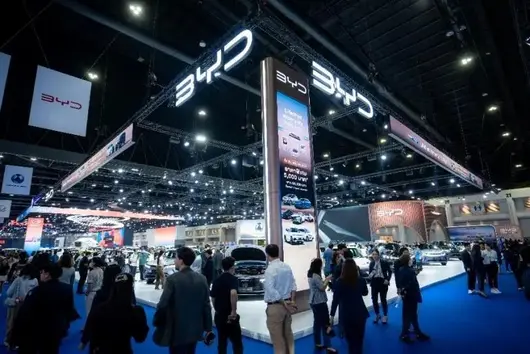
On the last day of the Bangkok Auto Show, the temperature in front of the BYD booth was even higher than outside.
The air conditioner was set to maximum, the crowd was packed together, and the emitted heat made the cool air thin. There was a faint scent of sweat in the air.
A Thai boy of five or six years old lay in front of the car's central control screen at the exhibition, his fingers moving fast. The animation on the screen jumped around in response.
His mother stood behind him watching for a while, and in Thai said: “This looks like an iPad.” Several young couples nearby heard and laughed.
The Toyota exhibition area next door was a completely different scene. The exhibition fixtures were polished to a shine. Sales staff wore dark grey suits, neatly ironed, standing with hands folded on the side of the booth. After standing there all morning, he looked down and scrolled through Line.
When the monthly data came out, the entire industry was stunned.
Chinese brands sold 43,791 vehicles in Thailand, while Japanese cars sold 43,789 vehicles.
With a narrow advantage of just two vehicles, Japanese cars, which had dominated Thailand for over sixty years, were pushed off the monthly top spot by Chinese brands for the first time, even though this was a pulse market driven by rushed registrations before the EV3.0 subsidy expired.

That month, the pure electric market was a landslide. Chinese brands took more than three-quarters of the market share. BYD alone sold nearly 13,000 vehicles, ranking only behind Toyota among all brands.
In the car flow on the streets of Bangkok, new faces with familiar logos appeared more frequently.
A Chinese local running a travel agency took a photo at a traffic light intersection. On the left was a BYD Seal, and on the right was a Toyota Camry.
He posted it on WeChat Moments with four characters: Times are changing.
On the first day of February, Thailand's electric vehicle subsidy policy shifted gears.
Switching from EV3.0 to EV3.5, the subsidy per vehicle was cut from a maximum of 150,000 Baht to 100,000. Imported vehicles no longer enjoyed preferential consumption tax; the standard tax rate was restored, and subsidies no longer covered imported vehicles.
Chinese brands that previously relied on imported models to lead the charge saw terminal prices jump instantly. BYD saw some models rise by about one-third, while a key MG model was directly adjusted up by 100,000 Baht.
The market cooled faster than anyone predicted.
Data from the Federation of Thai Industries shows that February pure electric vehicle sales plummeted by over eighty percent month-on-month.
The market share of Chinese brands across all categories dropped sharply from 47.3% to 11.65%. BYD fell from over 12,000 units to less than 300. Not a single Chinese brand entered the top five that month.

In a BYD showroom in northern Bangkok, a Thai female salesperson named Kim experienced it all. She is in her early thirties, a local from Bangkok, and previously sold cars at Toyota for 5 years.
She jumped ship because she found that more and more young people coming to the Toyota store mentioned a Chinese brand she had never heard of.
In the week of the January Auto Show, she signed 17 orders, more than double her average monthly sales volume at Toyota. In February, she didn't sell a single car.
In her phone, she saved a photo taken on the last day of the January Auto Show. On the whiteboard in the corner of the booth, the day's order count was written in scrawl. Next to the number, someone drew a funny face.
Asked why she didn't quit. She didn't answer directly. After a while, she said: “There are more and more Chinese cars on the street, this will be the future of Bangkok streets.”
It rained outside the showroom. She stood at the door watching for a while. The rain wet a row of cars parked on the street opposite. There were Toyota and Honda, but also BYD and Great Wall.
From peak to ice point, the calendar turned a page. Chinese brands did not exit completely and soon came back with a vengeance.

In March, Chery sold 2,155 vehicles, ranking fifth. MG sold 1,625, ranking seventh. Great Wall sold 1,350, ranking ninth.
In April, during the Bangkok Auto Show, Chinese brands exploded again. Reservation volume reached 90,530 units, accounting for nearly seventy percent. BYD topped the list with 17,354 reservations, surpassing Toyota's 15,750. In the top ten, except for Toyota and Honda, all 7 seats were occupied by Chinese brands.
At that time, what Kim did not know was that the policy change she feared came again in May.
In May, the Thailand Electric Vehicle Association, in conjunction with 10 automotive industry associations, submitted a document with 8 emergency policy suggestions to the government. The association representatives exceeded 1,500 enterprises.
The wording in the document was restrained, but the meaning was clear: some car companies were importing complete vehicles from China using zero tax rates instead of local production, which had already hurt Thailand's local component manufacturers.
Almost at the same time, Japanese Ambassador to Thailand Masato Otake publicly stated: “Shifting to electric vehicles completely at this stage is a bit too early.”
Behind these proposals and statements was the vast interest network built by Japanese car companies in Thailand over 60 years.
The automotive industry is a pillar industry in Thailand, accounting for more than ten percent of GDP. Thailand is the largest in ASEAN and the 10th largest in the world for car production, with more than 2,200 enterprises setting up operations here.
Rayong is southeast of Bangkok, less than two hours by car.
Japanese car companies gathered factories and thousands of component enterprises there for over 40 years. In the 1980s, workshops echoed with Japanese, but now Chinese can be heard.
7 major Chinese car companies have established complete vehicle production bases in Thailand, with a combined planned total capacity exceeding 600,000 vehicles.

The BYD Rayong factory has a designed annual capacity of 150,000 vehicles. In the two years since production started, cumulative deliveries have exceeded 130,000 vehicles. Changan's Rayong factory total investment exceeds 10 billion Baht, with Phase 1 annual capacity of 100,000 vehicles.
On the surface, Chinese enterprises are targeting the Thai market, but the true strategy is grander.
Right-hand drive markets cover India, Japan, UK, Australia, and other countries and regions, accounting for about 35% of the global population. Right-hand drive vehicles require separate design for steering devices, instrument panels, pedal structures, braking systems, airbags, wiring harnesses, and many other components. Building a new right-hand drive supply chain from scratch is difficult to estimate in terms of cost and time.
Chinese enterprises chose a smarter path, directly utilizing the industrial ecosystem Japan accumulated in Thailand over decades.
BYD, Changan, Great Wall, and Dongfeng Xiaokang do not view Thailand just as the Thai market, but as the starting point for the right-hand drive global market.
Japanese media calls this change “Thai Right-Hand Drive Automotive Supply Chain, China Replaces Japan”.

According to a series of reports by Nihon Keizai Shimbun in 2025, the market share of Japanese brands in major ASEAN countries such as Indonesia, Thailand, and Vietnam are all declining. Indonesia fell below 81%, Thailand dropped to 68%, and Vietnam fell to 33%. At the same time, the market share of Chinese brands in New Energy Vehicles in the six ASEAN countries exceeded 60%. Thailand 78%, Indonesia as high as 91%.
The same report also mentioned another interesting trend: Japanese car companies are rapidly expanding the procurement of Chinese components. Chinese components have a 30% to 40% cost advantage, and the speed is much faster. Chinese enterprises can mass-produce 10 months after receiving an order, while Japanese companies take a year and a half or more.
The Vice President of Toyota Gosei, a resin component company, said: “There is no longer a gap in quality.”
In the evening in Rayong, outside the walls of Japanese factories, the lights of Chinese factories are turning on.
A Thai technician named Anucha worked at a Toyota factory for 20 years. He quit at the end of 2025 and reported to Great Wall in early 2026. He said: “They pay 3,000 Baht more.” 3,000 Baht is equivalent to about 600 Yuan.
Anucha is responsible for a process on the battery pack assembly line at the Great Wall Rayong factory. When passing in front of the Toyota factory, sometimes he stops to smoke a cigarette, looking at the other side of the wall.

From May to July, the market gradually returned to normal. Chinese brands overall market share stabilized around 17%, moving out of the valley bottom of 11.65% in February, but never again saw the near-50% pulse situation of January. Chinese brands still accounted for about 90% of the pure electric market, but fuel vehicles and pickup truck markets were still held by Japanese companies.
Kim knew little about Rayong; she only saw the flow of customers in the showroom slowly returning. In March, people started coming into the store.
One afternoon in May, she signed a new customer, a Thai middle-aged man in his 50s, who had driven Hondas for over 20 years.
Kim asked why he thought of switching to a Chinese car. The other party said: “I tried them all. For a similar price, Chinese cars offer much more configurations and are easier to drive.”
Before the lights turned on on both sides of the Rayong walls, the first Chinese light that Thais saw was actually a bowl.
Lampang Rooster Bowls originated from ceramic skills brought by Chinese immigrants, used in noodle shops for noodle soup, and at street stalls for soup noodles.
Because they are hand-painted, every bowl has a different rooster, seen as a cultural calling card of Lampang Province by locals.
Later, Thais discovered China also has Rooster Bowls, produced on assembly lines with industrial printing. The production capacity is dozens of times that of hand-painted bowls, and the price is less than one-quarter.
A large influx of Chinese Rooster Bowls made local workshops fall apart.

Thais were angry: “Thai Rooster Bowls are artworks, each with a soul. How can soulless Chinese goods compare.”
More destructive than Rooster Bowls are motorcycles.
In the late 1990s, Chinese motorcycles entered Southeast Asia en masse. For the same model, Japanese motorcycles sold for $2,100, while Chinese motorcycles sold for $1,200 to $1,300. The price advantage pushed Chinese motorcycles to 80% of Vietnam's market share.
But Japanese motorcycles could be ridden for 10 years, while Chinese motorcycles had problems in a year or two. “Made in China” was solidified in Southeast Asia as a synonym for low quality and cheap.
These lessons were remembered by later Chinese enterprises when entering Thailand.
In 2002, Haier came. The first batch of products were moved over directly, but they didn't push. Haier did one thing: rooted. Local R&D, local manufacturing, local marketing.

Targeting the pain point of Thailand's hot weather where turning on the air conditioner at midnight easily leads to catching a cold, they developed voice-controlled air conditioners. By 2025, Haier's market share in Thailand rose to 14.5%, maintaining first place.
Around the same time, OPPO, Huawei, and Xiaomi also entered. The Thai public's perception of Chinese mobile phones slowly changed from “cheap” to “technology”.
From cheap to advanced, this cognitive shift is most intense in the automotive field.
Research by Southeast Asian independent brand communication consulting firm Vero shows that 72% of Thai consumers have a good impression of Chinese cars, believing they are affordable, technologically advanced, and fashionable.
In the Rooster Bowl workshop in Lampang, an old craftsman sat in front of the potter's wheel, hands turning. The bowls he made, the rooster was still painted stroke by stroke. He said: “Now no one buys hand-painted bowls. The stamped bowls from China are too cheap.”
He occasionally heard people mention that young people graduating from Lampang schools are working at factories in Rayong, earning much higher wages than in town.
At dusk of a bowl, is the boom of a movie and the dawn of a car.

In a Bangkok cinema, before the screen lit up, the BYD logo lit up first.
In July this year, the Chinese movie Love Letter to Grandma premiered in Thailand. BYD took exclusive sponsorship. On the opening night, BYD Thailand General Manager took the stage to give a speech.
A few days later, BYD's cumulative deliveries in Thailand exceeded 130,000 vehicles. The 130,000th vehicle was handed to the actress who played Grandma in the film.
BYD people said quite truthfully: “Use a movie about family affection to build a bridge between the audiences of the two countries.”

The Thai electric vehicle market is expanding at an amazing speed.
In the first half of 2026, electric vehicle registrations exceeded 100,000, a year-on-year increase of over 90%, and the penetration rate of the new car market reached 30%. At the beginning of the year, industry institutions predicted that annual sales would exceed 150,000 vehicles.
In the past few decades, car advertisements on Thai screens were almost completely taken over by Japanese brands.
Toyota advertisements were played on TV in loops. In Thai dramas, the car driven by the protagonist was no surprise Toyota, Honda, or Mitsubishi. Now Chinese brands are starting to broadcast on movie screens.

Changan shot three Thai-style short films “Thai Swift” “Thai Understands” “Thai Comprehensive” around the Rayong factory, using Thai language and humor to tell the story of Chinese brands.
On the same land, Japanese media is telling the same story with another visual language.
At the end of 2024, Nihon Keizai Shimbun released a documentary called “The Disappearing Engine Sounds of Thailand”, filming how Chinese electric cars are taking the market from Japanese cars.
Japanese people have never let go of their pride, but they also have to bow their heads and endure.
In the latest registration data of July, 7 Chinese brands were on the top 10 list of new cars in Thailand, but Toyota's single-month sales of nearly 20,000 vehicles still led by a wide margin.
On the brand sales list for the first half of the year, Toyota accumulated over 100,000 units, up 11.3% year-on-year. BYD ranked third with over 25,000 units, lagging behind Honda's 40,000. Chery grew amazingly, breaking 20,000 units, up more than 10 times year-on-year. MG, Aion, and Great Wall also squeezed into the top 10.
From 2020 to 2026, the market share of Chinese brands in Thailand climbed from an almost negligible 3.4% to 47.34%. Japanese cars slid from a high of 86.7% to around 47.33%.
In a Toyota repair shop in a small town in central Thailand, owner Somchai voiced another side. He is over 50 years old and has repaired Japanese cars all his life.
“Toyota cars are easy to fix,” he said. “If the wires break, connect them and it goes. Chinese electric cars break and you have to wait for parts. Who can wait a month?”
Then he laughed: “I also bought my daughter a Chinese electric car. It's good-looking, smart, quality is not bad, she likes it very much.”
This is the real picture of the Thai market. The consumption preferences of middle-aged people and young people are diverging, and reason and emotion are going their separate ways.
In fact, Chinese cars are only showing half their advantage in Thailand. Fuel saving, quiet, and high configurations are these real benefits.
The other half of the advantage, intelligence, is basically useless in Thailand.
Google Maps doesn't work well, and many drivers still use mobile phone navigation. Assisted driving is stuck at L2 level. Highway pilot and urban pilot are difficult to land.
Many models going out to Thailand have canceled LiDAR, or kept hardware but locked high-level intelligent driving functions, because local compliant high-precision maps are missing.

Charging infrastructure is also a problem. As of January 2026, Thailand already had 4,643 public charging stations and 13,977 public charging interfaces, but finding a charging pile outside of Bangkok is still anxiety-inducing.
When Kim took customers for test drives, the most asked question was charging. She had to patiently explain where the pile was, how long to charge, and how far to run. Sometimes customers shook their heads and left halfway through.
At the same time, cost is not an advantage. The ten component industry alliance led by the Thailand Electric Vehicle Association EVAT pointed out that under equal conditions, electric vehicles manufactured locally in Thailand cost 30% to 40% more than complete vehicles imported directly from China. Also, policy is uncertain. The EV3.5 policy expires at the end of 2027.
After the market digestion from May to July, Chinese cars are still everywhere. Toyota and Honda fuel pickups still account for a large proportion of the car flow.
Geopolitics is another ceiling. US tariffs on Chinese electric vehicles rose from 25% to 100%, starting to focus on checking transshipment assembly of Chinese brands assembled in Thailand.
Kim does not care about these, only caring about whether there are more guests in the showroom. Fortunately, performance has been getting more stable these past few months. Kim plans to buy another house with a mortgage.
That Rooster Bowl is still there, but now in Bangkok malls, you have to run to many places to find a Rooster Bowl. However, huge ads for Chinese electric vehicles are everywhere in the malls. There are even Chinese car showrooms and enthusiastic sales staff running around.

Kim is still full of energy and full of expectation for the future. Anucha has worked for half a year at Great Wall Rayong factory and has already called on several people around him to buy Great Wall cars. Somchai's daughter has driven a Chinese electric car for over half a year. When Somchai charges the car, sometimes neighbors will talk to him about Chinese cars and Japanese cars, and he answers with a smile.
The buzz of “Love Letter to Grandma” passed in Bangkok, but Chinese cars are everywhere. The reversal in January was a sudden firework triggered by policy. The data from May to July is the new normal of the Sino-Japanese car rivalry marathon.
On the streets of Bangkok, the green light is on. Cars from different countries pour out at the same time. No one is waiting for anyone, and no one is yielding to anyone...
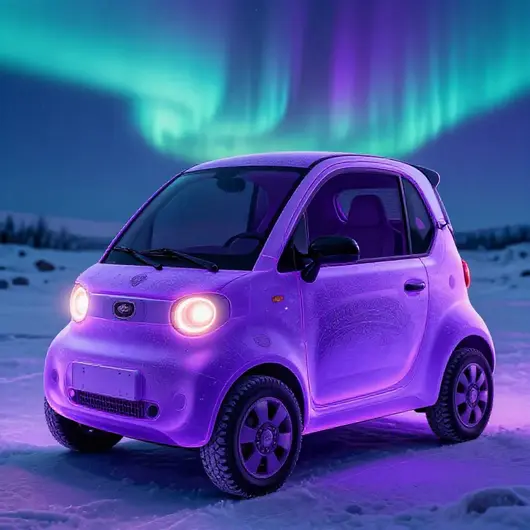
Recently, the all-new Chery QQ3 officially launched in the Southeast Asian market under the overseas name "Chery Q", and debuted in the Thai and Indonesian markets successively, becoming the first overseas landing position of Chery QQ's global strategy.

Chery Q launched in the Thai and Indonesian markets almost simultaneously, both delivering order performance exceeding expectations. Since pre-sales started at the Bangkok International Motor Show on March 24, orders broke 1,000 units in just ten days; as of the official launch on June 24, cumulative orders have forcefully surpassed 3,000 units. In the Indonesian market, as of July 25 / end of July, orders have exceeded 6,000 units. This is not an accidental explosion in a single market, but a verification of the systematic competitiveness of Chinese premium compact cars in the Southeast Asian market.

In 2006, the old QQ entered Thailand and Indonesia, becoming a youthful memory for a generation of Southeast Asians. In 2026, the all-new QQ3 returns in the name of Chery Q, completing a brand leap from "national transport car" to "global premium compact car" over 20 years. Chery Thailand General Manager Jim Lee stated directly at the launch event: "Chery QQ has accompanied Thai users for 20 years, this is the strongest confidence in our deep cultivation of the local market." The Indonesian market also attracted a large number of middle-aged family users to reserve Chery Q due to "nostalgia".

62% of Chery Q's orders in Thailand come from female users, with many young people spontaneously checking in and sharing on Facebook and Instagram. Real user word-of-mouth is far more persuasive than official publicity. Product advantages are highly matched with local terrain: small and easy to park (Bangkok narrow streets), extremely low operating costs (electricity cost per 100km is only 5 Baht), no worries about wading in rainy season (IP68 waterproofing), cute design with high recognizability ("cute shape, high head-turn rate").

Chery Q is not a cheap special model for Southeast Asia, but a global product with the same platform, standards, and quality as the domestic all-new QQ3. Zhang Hongyu, Vice President of Chery Automobile Co., Ltd. and Executive Deputy General Manager of Chery Brand Domestic Business Group, stated clearly: "From chassis architecture, battery safety to body structure, we synchronously adapt to Southeast Asian right-hand drive regulations, undergo strict tests in multiple global regions, do not reduce specifications, do not produce special models." Zeng Shuo, Assistant General Manager of Chery Sales Indonesia (CSI), also emphasized: "In Indonesia, Chery always prioritizes quality over profit."
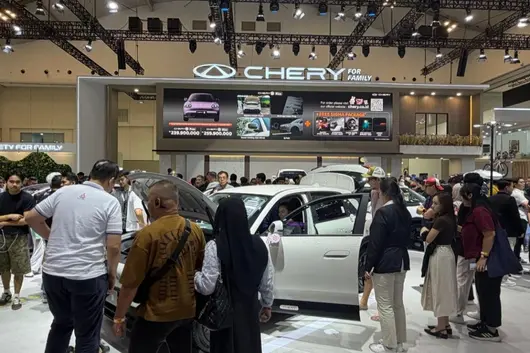

2026, Chinese car exports are no longer news. But what really interests me is how the all-new Chery QQ3 is performing in Southeast Asia—debuted at the Thailand Bangkok Motor Show and secured over 3,000 orders immediately, and orders broke 6,000 units before the pre-sale period in the Indonesian market ended. A Chinese A0-class small car priced at 70,000 yuan, what makes Thais and Indonesians rush to buy it?
The answer is only four words: No Special Market Version
This is not a pretty slogan. Chery QQ Head Manager Zhang Hongyu said plainly: "The Chinese market is just a part of the all-new QQ, it is a global car built to global standards from birth. The Chery Q you buy in Thailand, the Chery Q you buy in Indonesia, the QQ3 you buy in China, chassis same, battery same, infotainment system same, even the 8155 chip is the same.
This logic is actually quite counter-intuitive in the auto industry. For the past few decades, multinational car companies have played the "special supply card"—one standard for Europe and America, one for China, another for Southeast Asia. Downgrade, shrink, save where you can. Why? Because regulations, spending power, and competitive landscapes differ across markets, developing separately is actually more "cost-effective".
It's a bet that users aren't stupid
Many people think Southeast Asian consumers don't understand cars. Wrong. 62% of orders in Thailand come from female users. They might not know what hot-formed steel is, but they know this car has 540-degree panoramic imaging, automatic parking, external voice control, and a 70-liter intelligent electric front trunk. They compared it to BYD Atto 1, Geely EX2, Wuling Air EV. They calculate the costs: same price point, who gives more?
The all-new QQ3 offers 10 items unique in its class and 13 items leading in its class. 70L intelligent electric front trunk, 1300 MPa integrated hot-formed door ring, Qualcomm 8155 chip, 15.6-inch 2.5K large screen, 50:50 axle load ratio rear-wheel drive. Put together, this is a gap-leading advantage within the same class in Southeast Asia. So it's not that Southeast Asian consumers don't understand cars, it's that some brands think they don't.
 Quality is not cost, it's faith
Chery has a special trump card in Southeast Asia—nostalgia. QQ entered the Thai and Indonesian markets as early as 2006, accompanying two generations of Southeast Asian consumers in growing up. Chery Thailand General Manager Jim Lee said, twenty years of companionship is the most valuable intangible asset for a brand to penetrate the local market, and a large number of middle-aged family users placed orders proactively due to nostalgia.
Nostalgia can sell once, but not twice. If the all-new QQ3 was a downgraded version or special market version, users who ordered because they "sat in a QQ when they were young" would smear Chery for a lifetime. So Chery made a decision counter to industry intuition: global unified platform, unified powertrain, unified cockpit. Only localized adaptation—right-hand drive tuning, IP68 battery waterproofing for Southeast Asian rainy seasons, high-temperature heat dissipation reinforcement—never touch core configurations and safety standards.
Chery Indonesia management spoke even more plainly: "Expanding the Indonesian market, quality priority is always higher than short-term profits." You see, this is the difference. Some brands going global think "how to earn a bit more", Chery thinks "how to stand firmly a bit".
Small cars also have dignity
The all-new QQ3 positions itself as "World's Three Little Ones, China has QQ". With whom is it listed? Germany's SMART, UK's MINI. You taste this ambition. A national 代步 vehicle that used to sell for 30,000, now wants to sit equal with two European cultural symbols. What does it rely on? Red Dot Design Double Award—concept car award in 2025, mass-produced car award in 2026, smart cockpit HMI award again in 2026. Rely on 82% high-strength steel, 16% hot-formed steel rock-solid body. Rely on fast charging from 30% to 80% in 16.5 minutes. Rely on 400 km range, rear-wheel drive, independent four-wheel suspension. Put these things together, do you still think it's just a "small car"?
What is small is the size, what is big is the vision. 2700mm wheelbase, 85% space utilization rate, rear seat can cross legs. A0-class appearance, B-class car space. This is not compromise, this is precision.

Going global is not dumping, it's rooting
Many Chinese brands going global just sell cars. Sell and leave, after-sales? Let fate decide. How did the all-new QQ3 do it? Thailand launched first delivery in July, 2,000 units shipped in the first batch. Thai dealerships to increase from 55 to 70. Lifetime warranty—high-voltage battery, motor, control unit, all users who ordered by July 31st get it.
This is not the pace of selling and running. This is the pace of rooting. So back to the original question: an electric car worth 50,000 yuan, what makes it dare to say "global same standard"? Because what it bets on is not the profit of one car, but twenty years of a brand in a region.

Chery QQ has 20 years of national nostalgia accumulation in Southeast Asia. What is the concept of 20 years? A child who sat in the QQ passenger seat in 2006, in 2026 might be choosing the first car of their child's life. If you downgraded this car, special-edited it, you didn't hurt one user, but a generation.
The four words "Happiness Equity" sound very empty. But when you see people driving Chery Q on Bangkok streets, Chery Q chosen as most popular hatchback at Indonesian Motor Show, test drive day with 200 sessions scheduled—you know, these four words landed.
Yanzhao Car Review:
Chinese car exports have been talked about for many years. But real export is never just selling things out. It's making outsiders feel that this thing is worth it. The explosion of orders for the all-new QQ3 in Southeast Asia proves one thing: When you don't treat overseas users as "easy targets", they won't treat you as "passers-by".
World's Three Little Ones, China has QQ. This sentence is not a slogan, it is a promise. And promises need a generation to fulfill.
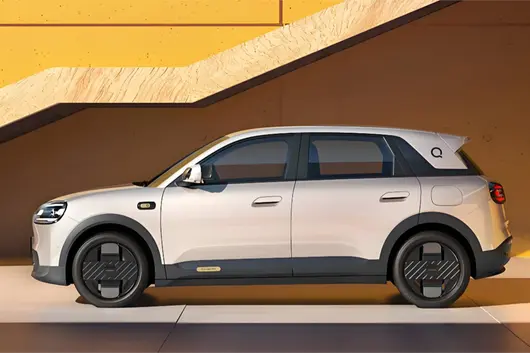

In 2026, the Chery all-new QQ3 officially launched in the Southeast Asian market with the overseas name "Chery Q", successively completing the market launch in Thailand and Indonesia, becoming the first overseas foothold of QQ's global strategy.
From the global premiere at the March Bangkok International Auto Show to the official sale at the July Indonesia GIIAS Auto Show, within less than half a year, this Chinese premium compact car delivered a performance report far exceeding expectations in Southeast Asia — Thailand's cumulative orders exceeded 3,000 units, Indonesia exceeded 6,000 units, with combined orders from both markets approaching 10,000 units. This is not a sudden boom in a single market, but a concentrated verification of the systematic competitiveness of Chinese premium compact cars in the Southeast Asian market.

Thailand Market: 10-Day Orders Break 1,000, Explosion of Orders Upon Launch
On March 24, the all-new QQ3 completed its Southeast Asia global premiere at the Bangkok International Auto Show and simultaneously opened pre-sales. Within just 10 days, orders exceeded 1,000 units. On June 24, the new car's price was officially announced — 449,900 to 519,900 Thai Baht, with cumulative orders on the launch day strongly exceeding 3,000 units. In July, the first batch of over 2,000 vehicles was shipped from China to Thailand, and after completing PDI quality inspection, they have been successively delivered to users.
Chery Thailand General Manager Jim Lee stated directly at the press conference: "Chery QQ has accompanied Thai users for 20 years, this is our greatest confidence in deeply cultivating the local market." The accumulation of 20 years of national sentiment allowed this small car to receive an enthusiastic response from the market from the very beginning of its return.

Indonesia Market: GIIAS Auto Show Made a Stunning Debut, Orders Continued to Rise
The rhythm of the Indonesia market was equally tight. On May 18, model naming was completed, and on July 31, it landed at the GIIAS Indonesia International Auto Show to officially go on sale, with a price range of 239.9 million to 264.9 million Indonesian Rupiah. By the end of July, Indonesia market orders had exceeded 6,000 units. During the 10-day GIIAS Auto Show period, Chery Indonesia received a total of 3,500 vehicle orders, of which the Chery Q single model contributed 1,750 orders, accounting for as high as 50%. More notably, in all approximately 2,000 test drives, Chery Q accounted for 67.7% of the test drive share — order after trying, which shows the strong attractiveness of the product power to local users.

Domestic and Overseas Linkage: From China to Southeast Asia, Global Hot Sales Have Become Certain
The boom in the overseas market is not an isolated case. The all-new QQ3's orders in the domestic market exceeded 56,000 units in the first month of launch. Explosion of orders on both domestic and international lines fully verified this model's global product competitiveness.
From Bangkok to Jakarta, from pre-sale to delivery, the all-new QQ3 proved with substantial order data that Chinese premium compact cars going global are not just storytelling, but genuine market validation. When 62% of Thailand's orders came from female users, when Indonesia users actively placed orders due to 20 years of sentiment, when a 70,000 RMB class Chinese A0-level compact car exploded simultaneously in two unfamiliar markets — this is not only Chery's success, but also a concentrated display of Chinese automotive brand globalization capability.

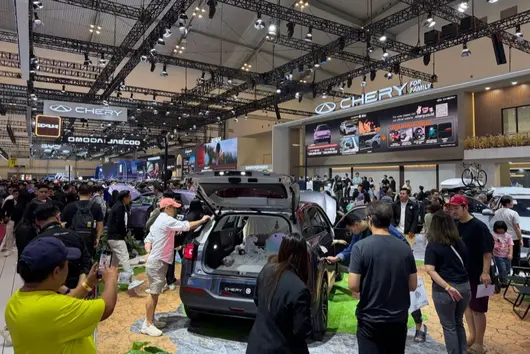

 In 2026, the all-new QQ3 (named Chery Q overseas) exploded in the Thai and Indonesian markets sequentially. Ten days after the Bangkok Auto Show debut, orders surpassed one thousand; officially launched on June 24, cumulative orders exceeded 3,000 units; in the Indonesian market, orders surpassed 6,000 units by the end of July. Why has a Chinese compact car sparked such enthusiasm in Southeast Asia? The answer is not a low-price strategy, but Chery's steadfast hard-core logic — global unified quality, no downgraded configurations, no special export models.
Breaking Stereotypes: Exports Are Not "Cheap Specials"
In the past, Chinese export vehicles were often labeled as "downgraded versions". But the all-new QQ3 completely subverted this perception. Chery Vice President Zhang Hongyu clearly stated: "From chassis architecture, battery safety to body structure, synchronously adapted for right-hand drive regulations, undergoing strict testing in multiple global regions, no downgraded configurations, no special export models." The Indonesian team also emphasized "Quality Always Comes Before Profit".
This means Southeast Asian users and Chinese users enjoy the complete product strength with the same platform, same standards, and same quality. The so-called "localization" only involves scenario adjustments like right-hand drive layout and rainy season heat dissipation optimization, never sacrificing core configurations. This concept of "happiness equity" is the cornerstone of winning overseas trust.

Looks and Space: Compact Cars Also Have Class-Leading Texture
62% of orders in Thailand came from female users; "good looks" was the primary reason. The all-new QQ3 was designed by a Red Dot Design double-award-winning team, adopting Square-and-Round Aesthetics design, 7 body colors paired with 36-color DIY roof options. The paint is particularly exquisite — using 6-layer 2K high-texture clear coat from the same supplier as Ferrari, no fading for 10 years, gloss loss far below industry standards.
In terms of space, the 2700mm ultra-long wheelbase delivers 85% usable rate, allowing rear passengers to easily cross their legs, completely breaking the curse of "compact car = cramped". With 38 storage spaces throughout the car, the class-exclusive 70L intelligent electric front trunk supports 8 opening methods (including external voice), featuring drainage holes and hooks, making daily shopping and beach trips extremely convenient. The trunk can expand up to 1450L, meeting the travel needs of the whole family.
Comfort and Handling: Class-Leading Configurations Refresh Perception
Front MacPherson + Rear Multi-link independent suspension, combined with rear-wheel drive and 50:50 axle load ratio, no shaking when crossing bumps, precise steering. C-EPS brushless motor steering system assistance efficiency exceeds 90%, making U-turns in Bangkok's narrow alleys easy and effortless. The class-exclusive 10-layer Cloud Comfort seats come with ventilation and heating functions, the steering wheel is also heated, which is unique in the 500,000 Baht tier. CN95 air conditioner filter filtration efficiency reaches 95%, water-based damping eco-friendly materials ensure a healthy cabin.

Smart Tech: Making Compact Cars Understand You Better
15.6-inch 2.5K central control screen paired with Qualcomm 8155 chip, computing power far exceeds peers. Based on the Carmind large model, the AI agent supports natural conversation, AI painting, smart vehicle control, etc. Class-exclusive external voice control (can open front trunk via voice) and external PA system functions become hot topics among Thai users. 50W wireless fast charging includes heat dissipation and forgetting reminders, Amap 810 supports traffic light countdown, full-brand phone connectivity adapts to habits of various countries. 100+ APP store meets local entertainment needs, configurations create an unprecedented lead.
Safety and Power: Hard-Core Protection Without Blind Spots
The body uses a five-longitudinal-eight-lateral cage structure, 82% high-strength steel + 16% hot-formed steel, where 1300MPa integral hot-formed door ring strength is 3 times that of ordinary steel. Rhino battery reaches IP68 highest waterproof grade, calmly handling accumulated water sections in rainy season. The whole vehicle passes China Automotive Technology and Research Center six-dimensional electric safety certification, combined with 6 airbags and 38-meter minimum braking distance, building an all-around defense line.
In terms of power, 30%-80% fast charging takes only 16.5 minutes, 6.6KW external discharge supports camping cooking. L2-level assisted driving covers 15 functions, automatic parking supports 100+ scenario recognition, beginners can also calmly handle complex parking environments.

From Bangkok to Jakarta, the best-selling status of the all-new QQ3 is by no means accidental. Ten class-exclusive features, thirteen class-leading advantages are not marketing slogans, but real hard power carved into the product. 20 years ago, QQ became a youth memory for a generation of Southeast Asians; 20 years later, the all-new QQ3 proves with the global quality of "Chinese Smart Manufacturing" that Chinese compact cars can not only go out, but also move up.
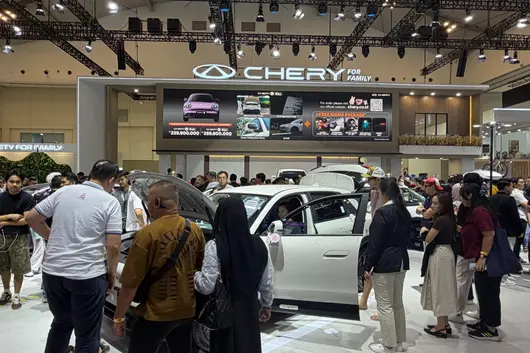

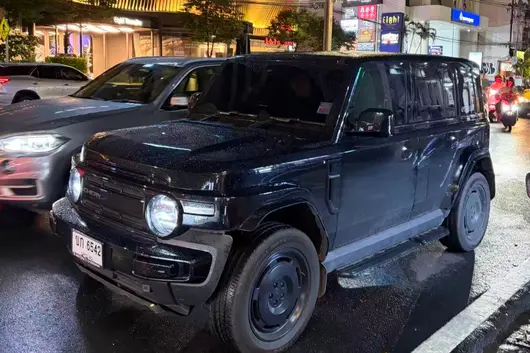
Without exaggeration, on the streets of Bangkok, the visibility of the V23 is even higher than in my hometown Zibo, seeing at least 10 units daily..

The V23s in the Thai market are mostly 2WD low-spec, generally ranging from 700,000 to 800,000 Thai Baht, and are not much more expensive than in the domestic market. In the Thai market where even an A0-class pure electric car sells for over 600,000 Thai Baht, the V23's value proposition is undeniable. In the first half of this year, the V23 also claimed first place in Thailand's "box-style" niche segment.
Domestic automakers secure higher profits, while foreign consumers get better choices, a win-win.
Chery's July sales data also confirmed this trend — the entire Chery Group sold 276,800 units in July, with overseas sales accounting for 202,500 units, representing over 73%. The domestic market, however, only sold over 70,000 units. Amidst the constant price wars and intensifying competition among domestic brands in the home market, Chery led its sub-brands to forge a brand new growth curve.


Domestically secure scale and hold ground; overseas earn profits and build brands. This structural advantage is the optimal solution to domestic market competition.

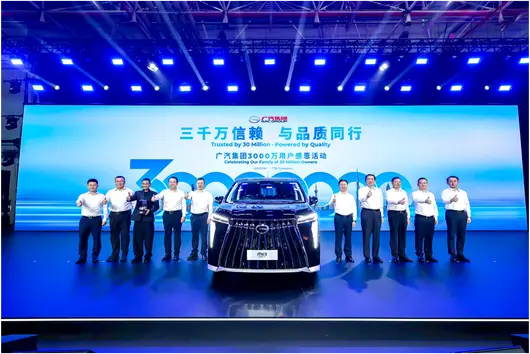
July16, GAC Trumpchi factory in Panyu, Guangzhou, a brand new right-hand drive Trumpchi M8 PHEV slowly drove off the production line. GAC Group Chairman Feng Xingya handed the car keys to Thai owner Tony Jaa. At this moment, GAC welcomed the milestone production of the 30 millionth vehicle. From the 1st to the 30 millionth vehicle, this Chinese automotive giant took 29 years. Amidst the industry's deep transformation, GAC revealed its confidence in navigating the cycle to the outside world through a performance sheet led by "Stability" and a cross-border delivery ceremony.

A Special Delivery, Witnessing "Mutual Effort"
Unlike the dazzling spotlights at previous delivery ceremonies, GAC Group reserved the "C-position" for the owner of the 30 millionth vehicle -- Thai action star Tony Jaa. When Feng Xingya handed him the keys, this was not just a simple delivery, but a vivid microcosm of GAC's globalization strategy from "Going Out" to "Going In".

At the event site, this "Global Sync" atmosphere was fully displayed: GAC Honda P7, GAC Toyota Intelliz 7, Qijing GT7, GAC Aion N60, GAC Hyper S600, as the 29,999,995th to 29,999,999th vehicles, sequentially rolled off the line in sync with GAC's multiple global production bases. This wave of new energy models clearly outlines GAC's determined figure in fully advancing electrification and intelligence transformation.

The Dialectic of "Fast" and "Steady": Resilience Behind the Data
If 30 million vehicles is the result, then supporting this result is GAC's resilience in "not rushing forward, only deepening cultivation" amidst change.
Data shows, in the first half of this year, GAC Group sales reached 773,100 vehicles, up 2.35% year-on-year, among which new energy vehicle sales surged 68.8% year-on-year; overseas exports exceeded 120,000, up 132% year-on-year. Against the backdrop of surging price wars and generally pressured industry profitability, GAC's "Stability" stood out especially.

Feng Xingya gave the answer in his speech: "Quality is the bottom line GAC will never yield." Behind this seemingly simple promise lies a system of strictness bordering on obsession. Before each new car is launched, it must undergo extreme environment tempering of "Five Highs, One Mountain, One Dust", and complete "Two Winters, One Summer" of on-site road testing. It is precisely this relentless pursuit of quality that made the GAC Aion Smart Eco-Factory become the "World's First New Energy Vehicle Lighthouse Factory", and also won users' trust of the Slate Battery cumulative installation of 1.5 million units, safe driving over 160 billion kilometers.

From "Product Delivery" to "Emotional Delivery"
Under the grand narrative of 30 million vehicles, GAC wants to tell more specific and micro user stories. At the event site, Feng Xingya announced the launch of "GAC Group 30 Million Vehicle Production Launch · Renewal Gratitude Season", six passenger car brands will launch special policies around new purchase, trade-in, etc.
But what is more worth attention is GAC's layout on service soft power. Facing user anxiety about battery degradation and intelligent driving safety, GAC took the lead in launching the brand's "Three Responsibilities" policy, actively taking the bottom line; facing charging pain points, GAC has already built a "9 Vertical 10 Horizontal" charging network covering 31 provinces and 213 cities nationwide, core urban areas achieving "Station Every 1 Kilometer in a Straight Line".

In addition, GAC is using activities like "User Open Mic", inviting users to "Home" to give opinions, and establishing a full-process closed-loop management mechanism. This transformation from "I Build Cars You Pay" to "You Use Cars I Accompany" is reshaping the relationship between GAC and 30 million users.

User Logic Behind Technology "Arms Race"
Standing at the new starting point of 30 million vehicles, GAC's gaze is cast towards a farther future. In Feng Xingya's view, technology should not be showing off skills, but should be converted into peace of mind and convenience that users can perceive.

In the power field, Xingyuan Power developed by the "National Distinguished Engineer Team" will be mass-produced on more models; in the "Three Electrics" field, the all-solid-state battery pilot production line has been built, and the Quark electric drive motor efficiency has broken through 99%; in the intelligent connected field, the Xingling architecture has connected six major systems, making cars become partners that "Think and Understand People". As of now, GAC cumulative R&D investment exceeded 62 billion Yuan, global R&D team exceeds 6,800 people.
As one on-site owner said: "Buying GAC, the point is "Peace of Mind"." This might be the simplest annotation for GAC's 30 million vehicle milestone, and also its strongest power to continue moving forward in the next 30 years.