


首頁Audi Q7

搜尋歷史
熱門搜尋
經銷商登入 / 註冊

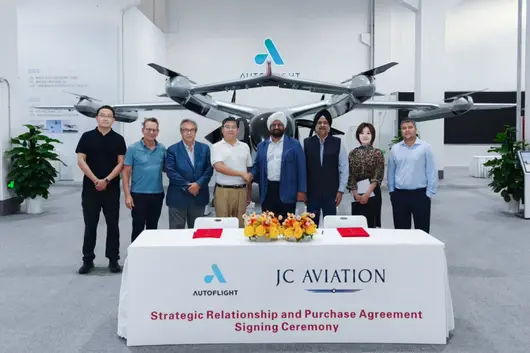
Recently, AutoFlight and Singapore JC Aviation (JC Aviation Pte. Ltd.) officially signed a strategic cooperation agreement. Both parties will conduct deep cooperation in areas such as eVTOL procurement, airworthiness certification, personnel training, and local operational support. The initial phase of the cooperation will focus on the two major markets of India and Brazil, followed by gradual expansion to Latin America. Currently, JC Aviation has confirmed orders for 2 V2000CG Kairui Ous and 1 SUNSHIP Zero-Carbon Water Airport.

According to the agreement, within the next five years, JC Aviation will procure 260 eVTOL aircraft and 10 SUNSHIP Zero-Carbon Water Airports from AutoFlight, covering three main models under AutoFlight: V2000EM Shengshi Long, V2000CG Kairui Ou, and V2000CGF Kairui Ou Firefighting Version. The SUNSHIP Zero-Carbon Water Airport will provide infrastructure support for the deployment of eVTOL aircraft in water scenarios.

JC Aviation Co-founders Mickey Commar and Prabhjot “PJ” Commar stated: “This cooperation agreement is an important step for us in developing the AAM (Advanced Air Mobility) target markets. AutoFlight's business layout covers air mobility, low-altitude transport, and aerial firefighting fields, providing us with application solutions available for exploring adaptation to local operational needs. Currently, our cooperation focus is to promote the implementation of the first batch of eVTOL procurement orders and evaluate deep cooperation opportunities in India, Brazil, and other markets.”
AutoFlight Senior Vice President Xie Jia stated: “The signing of this cooperation agreement is an important measure for AutoFlight's global market layout strategy. We look forward to working with JC Aviation to put more eVTOL products into actual application scenarios and promote the further development of the global AAM market.”
With the continuous release of demand for AAM in the three major fields of air mobility, low-altitude transport, and emergency rescue, AutoFlight will accelerate the international commercial implementation of eVTOL products and provide Chinese solutions for the construction of the global air traffic system.

About JC Aviation Pte. Ltd.
JC Aviation Pte. Ltd. is a company engaged in aviation business under the investment holding group Makrana Holdings headquartered in Singapore. The group has established a solid layout in each link of the aviation industry chain, covering fixed-wing aircraft and helicopter sales, aircraft maintenance, repair and overhaul (MRO), aviation training, fixed-base operator (FBO) and ground support services, etc., including the general distribution business of Leonardo helicopters in India's civil market. Providing high-end aviation services through strategic cooperation with global operators, JC Aviation's business development focus covers Europe, Latin America, Asia, and other global markets.

喺馬來西亞嘅 SUV 市場,好多買家喺揀車嘅時候都會拿 Toyota Fortuner 同 Volkswagen Tiguan 嚟比較。呢兩部車喺價位同定位上都幾接近,今日我哋就由多個方面做一個詳細比較,幫你省下做功課嘅時間。
Toyota Fortuner 喺馬來西亞嘅 OTR 售價係 RM 195,880 - 241,880,合共有 3 個版本,包括 2024 2.8T VRZ Diesel(RM 241,880)、2024 2.7L SRZ Petrol(RM 202,880)、2024 2.4L Standard Diesel(RM 195,880)等。
Volkswagen Tiguan 喺馬來西亞嘅 OTR 售價係 RM 206,540 - 260,024,合共有 2 個版本,包括 2025 Allspace 2.0T R-Line(RM 260,024)、2025 Allspace 1.4T Elegance(RM 206,540)等。
從價錢嚟睇,Toyota Fortuner 嘅起步價確實比 Volkswagen Tiguan 平咗 RM 10,660。如果你預算有限,Toyota 嘅入門版已經可以滿足日常需要。但都要留意,平嗰幾千蚊,可能會喺配備上面有取舍,具體要睇你嘅需求。

Toyota Fortuner 車身長 4400 mm,尾箱 400 L。
Volkswagen Tiguan 車身長 4400 mm,尾箱 400 L。
兩部車嘅尺寸幾乎一樣,車內空間分別唔大。呢個級別嘅車,日常使用完全夠用。

Toyota Fortuner 採用 FWD 驅動方式。
Volkswagen Tiguan 採用 FWD 驅動方式。
兩部車嘅驅動方式一樣,都係 FWD,日常駕駛感受唔會有太大分別。

Toyota Fortuner 同 Volkswagen Tiguan 都係馬來西亞市場嘅主流選擇,適合家庭用、日常通勤。如果你更加重視品牌口碑同二手價,可以優先考慮口碑更好嗰一款;如果你更加在意性價比同配備,就揀配置更豐富嗰款。始終都建議兩部都去試駕,親身體驗先係最重要。

總體嚟講,Toyota Fortuner 同 Volkswagen Tiguan 都係馬來西亞市場幾唔錯嘅車型。揀邊一輛,關鍵始終係睇你嘅個人需求同預算。建議大家做好功課,多比較幾間車行嘅報價,先去試駕做最終決定。買車係件大事,花少少時間做功課絕對唔會錯。


In the Malaysian SUV market, many buyers compare Toyota Fortuner and Hyundai Tucson when choosing a car. These two models are quite close in price and positioning. Today, we will make a detailed comparison from multiple aspects to help you save time on research.
The OTR price of Toyota Fortuner in Malaysia is RM 195,880 - 241,880, with a total of 3 variants, including 2024 2.8T VRZ Diesel (RM 241,880), 2024 2.7L SRZ Petrol (RM 202,880), 2024 2.4L Standard Diesel (RM 195,880) etc.
The OTR price of Hyundai Tucson in Malaysia is RM 143,888 - 197,888, with a total of 5 variants, including 2025 HEV 1.6T AT 2WD Prestige (RM 197,888), 2025 1.6T DCT 4WD Prestige (RM 186,888), 2025 1.6T DCT 2WD Prime (RM 164,888) etc.
From a price perspective, Hyundai Tucson's starting price is RM 51,992 cheaper than Toyota Fortuner. Honestly, in this price range, a difference of a few thousand is actually not huge, the key is to look at overall value for money and long-term usage costs.
Toyota Fortuner comes with a 2.5L Diesel, 187 hp. Official fuel consumption 8.5 L/100km.
Hyundai Tucson comes with a 1.5L Turbo, 140 hp. Official fuel consumption 7.0 L/100km.
In terms of power, Toyota Fortuner's 2.5L Diesel has 47 more hp than Hyundai Tucson's 1.5L Turbo, providing more confidence in mid-range acceleration, especially when overtaking on highways. However, Hyundai Tucson's fuel consumption might be more friendly, and the difference in daily city commuting won't be too large.
Toyota Fortuner uses FWD drive configuration.
Hyundai Tucson uses FWD drive configuration.
Both cars have the same drive configuration, both are FWD, and there won't be much difference in daily driving experience.
Toyota Fortuner warranty 5 years/unlimited mileage, maintenance interval 10,000km or 6 months.
Hyundai Tucson warranty 5 years/300,000km, maintenance interval 10,000km or 6 months.

Toyota Fortuner and Hyundai Tucson are both mainstream choices in the Malaysian market, suitable for family use and daily commuting. If you value brand reputation and resale value more, you can prioritize the one with better reputation; if you care more about value for money and features, choose the one with richer configurations. Finally, it is recommended to test drive both, personal experience is the most important.

Overall, Toyota Fortuner and Hyundai Tucson are both very good car models in the Malaysian market. Which one to choose depends on your personal needs and budget. It is recommended to do your homework, compare quotes from several car dealers, and then test drive to make a final decision. Buying a car is a big matter, spending some time doing research is never wrong.

【車市百曉生】近日,中國同歐盟貿易投資磋商機制第二次例會在北京舉行,雙方以符合世貿組織規則嘅方式就混合動力汽車貿易達成諒解。10 月 14 日,上汽、長城、東風、廣汽、比亞迪、奇瑞、吉利控股集團等多家車廠陸續發表聲明表示支持,中國汽車工業協會同日發布相關聲明。

根據商務部消息,10 月 12 日商務部新聞發言人就中歐混合動力汽車、電動汽車磋商共識答記者問時表示:雙方本着相互尊重、平等協商嘅原則,就混合動力汽車、電動汽車貿易進行咗密集磋商,平衡處理經貿分歧同彼此關注。
關於混合動力汽車,雙方強調並確認三項基本原则:尊重事實、非歧視、合規。
⭐ 崔東樹:今年插混對歐出口預計近 80 萬輛,明年或回落中国汽车流通协会乘联分会负责人崔东树表示,本次中歐通過談判達成混合動力汽車相關貿易安排,以協商方式替代直接加徵關稅嘅強硬手段,為中國車廠喺歐盟經營帶嚟穩定預期,整體係雙贏局面。
佢同時指出:
「從規模上睇,今年國內插混車型對歐盟出口量預計接近 80 萬輛,受新嘅貿易安排影響,明年呢個出口量或會回落,插混車對歐出口短期承受壓力。」
崔東樹認為,中國車廠要加快歐盟本土化產能佈局,扎根當地產業鏈。
七間車廠嘅聲明
中國汽車工業協會同日發布聲明,對磋商取得嘅積極成果表示「歡迎同支持」。
⭐⭐ 同日嘅另一條消息:比亞迪歐洲建廠10 月 14 日有消息話,比亞迪執行副總裁李柯喺 2026 巴黎車展上表示,比亞迪將會喺歐洲大規模投資製造,法國已進入比亞迪歐洲建廠嘅候選名單。
據報道,比亞迪位於匈牙利嘅歐洲首座乘用車工廠計劃於今年第四季啟動大規模生產,未來計劃喺歐洲佈局第二、第三整車工廠以及一座電池工廠。 ⚠️ 對於呢條消息,媒體向比亞迪方面進行咗查詢,但截至發稿暫未獲得回應。
比亞迪喺歐洲嘅銷量:2025 年新車註冊量超 18.7 萬輛、同比增長 268.6%,市場份額從 1.9% 提升至 4.3%,首次進入歐洲電動車品牌銷量前十;2026 年 1–8 月約 23.41 萬輛、同比增長 144.1%。
目前比亞迪已形成泰國、烏茲別克斯坦、巴西、匈牙利四大海外工廠,除匈牙利外其餘三大均已投產。
我嘅觀點:共識解決嘅係「唔會更加差」核心判斷:七間車廠喺一日發聲明支持中歐磋商共識,措辭各不相同——上汽話「高度讚賞」,東風話「完全支持」,比亞迪話「高度關注」。但冇一家提到「出口增長目標」,全部落喺「環境」同「合規」上。而崔東樹畀出嘅數字說明咗原因:今年插混對歐盟出口預計接近 80 萬輛,明年或會回落。
第一,首先睇睇共識嘅內容。 今次安排嘅核心,係「唔專門針對中國產品」,而係「俾中國產品額外優惠」——佢將原本可能走向加徵關稅嘅路徑,改成咗協商處理。 商務部明確嘅「尊重事實、非歧視、合規」三項原則,正係呢個意思。
第二,⭐ 而崔東樹嘅判斷點出咗佢嘅實際含義。 佢畀出嘅數字係:今年國內插混車型對歐盟出口量預計接近 80 萬輛;受新貿易安排影響,明年呢個出口量或會回落,短期承受壓力。 呢兩句話要放埋一齊讀:「穩定預期」係對企業而言嘅——規則明確咗、唔會突然加稅;而「短期承受壓力」係對出口量而言嘅——規模增長會受到約束。 共識解決嘅係「唔會更加差」,而唔係「會更好」——佢改變咗車廠做生意嘅方式:過去靠整車出口就能快速放量,而家增長必須建立喺本地產能上。 呢亦解釋咗佢接住講嗰句「中國車廠要加快歐盟本土化產能佈局」。
第三,⭐ 七間車廠嘅聲明恰恰印證咗呢個轉向。 上汽「高度讚賞」、長城「歡迎……並將積極落實」、東風「完全支持」並稱將「持續完善海外業務合規體系建設」、廣汽「支持」、比亞迪「高度關注」、奇瑞「支持」、吉利控股「歡迎和支持」。 措辭各異,但共同點係都喺度強調「穩定、可預期、公平嘅環境」。 而中汽協專務副秘書長何毅嘅表述更加直接:中國汽車出海模式正在從整車出口為主嘅初步階段,演進為涵蓋技術品牌、供應鏈以至標準嘅全價值鏈出海,企業出海戰略佈局更加注重本地化深耕。 七份聲明冇一家講出口目標,全部落喺「環境」同「合規」上——用字嘅選擇本身就說明咗佢哋對下一步嘅判斷。
第四,⭐ 而真正回答「下一步點算」嘅,係同日另一條消息。 10 月 14 日有消息話,比亞迪執行副總裁李柯喺巴黎車展表示比亞迪將會喺歐洲大規模投資製造,法國已進入佢建廠候選名單;匈牙利首座乘用車工廠計劃今年第四季啟動大規模生產,未來仲計劃佈局第二、第三整車工廠以及一座電池工廠。 ⚠️ 對於呢條消息,媒體向比亞迪方面查詢後截至發稿未獲回應——佢目前仍有「有消息話」嘅狀態。 不過比亞迪嘅歐洲銷量能解釋佢點解需要產能:2025 年歐洲新車註冊量超 18.7 萬輛、同比增長 268.6%,市場份額從 1.9% 升至 4.3%,首次進入歐洲電動車品牌銷量前十;今年 1 至 8 月約 23.41 萬輛、同比增長 144.1%。 喺呢個增速下,單靠整車出口會持續受貿易安排約束;而喺當地建廠既規避咗呢個問題,亦能更快響應本地需求。
第五,而呢唔係邊一家嘅事。 今年以來嘅消息顯示,小鵬喺洽購歐洲工廠,吉利收購咗福特西班牙工廠嘅 Body 3 裝配線,上汽將會喺西班牙加利西亞建佢喺歐洲嘅首間電動車工廠。 貿易安排越明確,本地建廠嘅必要性就越突出——而代價係一座整車工廠從選址到投產通常都需要数年,仲要配套供應鏈與售後體系。
兩個檢驗點:① 明年插混對歐出口量係咪如預判咁樣回落——呢係對共識實際效果直接嘅驗證;② 比亞迪歐洲第二工廠可唔可以落地、落喺邊——目前法國僅係候選之一,且消息未獲官方確認
總結10 月 14 日,上汽、長城、東風、廣汽、比亞迪、奇瑞、吉利控股集團等多家車廠陸續發表聲明,對中國同歐盟就混合動力汽車貿易達成嘅諒解表示支持,中國汽車工業協會同日發布相關聲明。 中國汽車流通協會乘聯分会负责人崔东树表示,今次用協商方式代替直接加徵關稅,為中國車廠喺歐盟經營帶嚟穩定預期,整體係雙贏局面;但佢同時指出,今年國內插混車型對歐盟出口量預計接近 80 萬輛,明年呢個出口量或會回落,短期承受壓力。
值得記住嘅一點係:今次共識嘅價值在於把不確定性降低,而唔係把出口量嘅天花板抬高。七份聲明嘅措辭雖然各異,但都指向同一件事——企業真正需要嘅唔係更高嘅配額,而係一個能算得清嘅環境;而算得清之後,佢哋嘅選擇全部都係往當地建廠。


喺馬來西亞嘅 SUV 市場,好多買家喺揀車嗰陣都會拿豐田 Fortuner 同蜂巢 Haval H6 嚟做比較。呢兩款車喺價位同定位上都幾接近,而家我哋就由唔同方面做一个詳細比較,幫你省返做功課嘅時間。
豐田 Fortuner 喺馬來西亞嘅 OTR 售價係 RM 195,880 - 241,880,總共有 3 個版本,包括 2024 2.8T VRZ Diesel(RM 241,880)、2024 2.7L SRZ Petrol(RM 202,880)、2024 2.4L Standard Diesel(RM 195,880) 等。
蜂巢 Haval H6 喺馬來西亞嘅 OTR 售價係 RM 139,750 - 139,750,總共有 2 個版本,包括 1.5L Turbo Standard(RM 140,000)、1.5L Turbo Premium(RM 155,000) 等。
睇返價錢,蜂巢 Haval H6 嘅起步價比豐田 Fortuner 平咗 RM 56,130。老實講,喺呢個價位段,幾千蚊嘅差距其實唔算大,關鍵仲係睇整體性價比同長期使用成本。
豐田 Fortuner 裝載 2.5L Diesel,馬力 187 hp。官方油耗 8.5 L/100km。
蜂巢 Haval H6 裝載 Hybrid,馬力 170 hp。官方油耗 4.5 L/100km。
動力方面,豐田 Fortuner 嘅 2.5L Diesel 比蜂巢 Haval H6 嘅 Hybrid 多咗 17 匹馬力,中段加速更有信心,尤其係跑高速超車嗰陣。不過蜂巢 Haval H6 嘅油耗可能更抵用,日常市區通勤差別唔會太大。
豐田 Fortuner 嘅安全評級係 5★ (ASEAN NCAP),主動安全系統包括。
蜂巢 Haval H6 嘅安全評級係 待定,主動安全系統包括 基本。
豐田 Fortuner 保修 5 年/無限里程,保養間隔 每 10,000km 或 6 個月。
蜂巢 Haval H6 保修 7 年/150,000km,保養間隔 每 10,000km 或 6 個月。
總括嚟講,豐田 Fortuner 同蜂巢 Haval H6 都係馬來西亞市場幾唔錯嘅車型。揀邊一部,關鍵仲係睇你個人需要同預算。建议大家做好功課,多比較幾間車行嘅報價,再去試車做最終決定。買車係件大事,花少少時間做功課絕對唔會錯。

喺馬來西亞嘅 SUV 市場,好多車客喺揀車嘅時候都會用 Toyota Fortuner 同 GWM Haval H6 嚟做比較。呢兩款車喺價位同定位上都幾接近,今日我哋就由多個方面做個詳細比較,幫你慳返做功課嘅時間。
Toyota Fortuner 喺馬來西亞嘅 OTR 售價係 RM 195,880 - 241,880,總共 3 個版本,包括 2024 2.8T VRZ Diesel(RM 241,880)、2024 2.7L SRZ Petrol(RM 202,880)、2024 2.4L Standard Diesel(RM 195,880) 等。
GWM Haval H6 喺馬來西亞嘅 OTR 售價係 RM 139,750 - 139,750,總共 2 個版本,包括 1.5L Turbo Standard(RM 140,000)、1.5L Turbo Premium(RM 155,000) 等。
從價錢嚟睇,GWM Haval H6 嘅起步價比 Toyota Fortuner 平咗 RM 56,130。老實講,喺呢個價位段,幾千蚊嘅差距其實唔算大,關鍵係睇整體嘅性價比同長期使用成本。
Toyota Fortuner 搭載 2.5L Diesel,馬力 187 hp。官方油耗 8.5 L/100km。
GWM Haval H6 搭載 Hybrid,馬力 170 hp。官方油耗 4.5 L/100km。
動力方面,Toyota Fortuner 嘅 2.5L Diesel 比 GWM Haval H6 嘅 Hybrid 多咗 17 匹馬力,中段加速更有信心,尤其係跑高速公路超車嘅時候。不過 GWM Haval H6 嘅油耗可能更友善,日常市區通勤分別唔會太大。
Toyota Fortuner 採用 FWD 驅動方式。
GWM Haval H6 採用 FWD 驅動方式。
兩款車嘅驅動方式一樣,都係 FWD,日常駕駛感受唔會有太大分別。
Toyota Fortuner 保修 5 年/無限制里程,保養間隔 每 10,000km 或 6 個月。
GWM Haval H6 保修 7 年/150,000km,保養間隔 每 10,000km 或 6 個月。
Toyota Fortuner 同 GWM Haval H6 都係馬來西亞市場嘅主流選擇,適合家庭使用、日常通勤。如果你更睇重品牌口碑同二手價,可以優先考慮口碑更好嗰款;如果你更在意性價比同配備,那就揀配置更豐富嗰款。最後都建議兩款都去試駕,親身體驗先係最重要嘅。
總體嚟講,Toyota Fortuner 同 GWM Haval H6 都係馬來西亞市場幾唔錯嘅車型。揀邊一輛,關鍵仲要睇你嘅個人需求同預算。建議大家做好功課,多比較幾間車行嘅報價,再去試駕做最終決定。買車係件大事,花啲時間做功課絕對唔會錯。

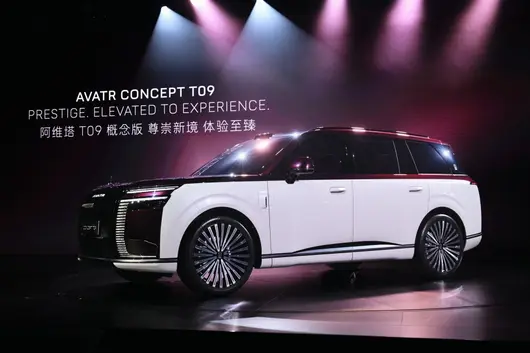
巴黎車展前夜,阿維塔 T09 概念版全球首秀。選址本身就說明了一切——豪華車嘅誕生地,亦係豪華品牌最挑剔嘅考場。中國品牌將旗艦車款拉到呢度首發,唔係嚟刷存在感嘅,係嚟交答卷嘅。

先睇技術密度。5285mm 車長、3150mm 軸距、2+2+2 六座佈局,搭載華為乾崑 ADS 5 配四激光雷達架構,太行智控底盤帶閉式雙腔空懸、後輪轉向同蟹行模式,一臺 5 米 2 嘅全尺寸 SUV 最小轉彎半徑做到 4 米級——大車似小車一樣好開,呢係工程能力嘅硬答卷。動力上 2.0T 混合動力引擎加三馬達分佈式電驅,系統總功率突破千匹馬力,71.24kWh 寧德時代驍遙電池畀到 CLTC 純電續航超 400 公里,綜合續航預計超 1000 公里。參數表翻完你都會發現,阿維塔今次唔係「堆料」,係將長安、華為、寧德時代三方最頂格嘅技術拧咗成一條繩。
但真正令我坐直身嘅,係設計。T09 冇跟住阿維塔 11、12 條溜背轎跑嘅「隨性奢華」路子行落去,而係直接開拓咗一條「尊崇奢華」嘅新序列。前臉立體浮雕格柵由 362 個唔同高度嘅品牌 LOGO 單元構成,雙層鑽石切割晶鑽燈組,2.1㎡蚌式前艙蓋——呢套建築感嘅語言,放喺巴黎嘅設計語境入面,唔違和,甚至有少少咄咄逼人。內飾嘅 Vortex 情感渦流升降交互裝置,360°反曲面結構內置 118 顆 RGB LED,將「情感新奢」從口號做咗成可觸摸嘅體驗。陳卓講咗一句我好鍾意嘅話:「被模仿係一種榮幸,而唔被超越先係真正嘅本事。」T09 就係呢句話嘅實體版。

品牌層面,呢步棋嘅份量比參數更重。阿維塔此前嘅主力喺 20 到 35 萬區間,T09 直接將錨點拉到 50 萬級,而且係喺巴黎拉。海外業務已覆蓋 70 個國家同地區,產品平均售價超 30 萬元並實現盈利,埃及高端電動車市佔率 10%,阿維塔 11 拿下泰國豪華純電 SUV 銷量第一。2030 年目標進入超 110 個國家同地區,海外銷量佔比突破 50%。呢唔係「試試水」,係將全球化當第二增長曲線嚟打嘅節奏。
最令我覺得有意思嘅係時機。巴黎首秀,年內國內上市。海外聚光燈同國內訂單簿同時打開,阿維塔喺賭一件嘢:中國消費者對「中國旗艦」嘅信任,正從「性價比」轉向「定義權」。T09 點樣先至能夠賣得好,取決於有幾多人願意承認——一台中國品牌嘅大型 SUV,喺設計、技術同氣場上嘅完整度,已經可以站喺巴黎嘅展臺上,唔靠對標,唔靠致敬,就靠自己個名。

巴黎嘅夜晚好亮,但真正嘅光,喺國內上市嗰日嘅訂單數字入面。

In the Malaysian SUV market, many buyers compare Toyota Fortuner and Chery Tiggo 7 Pro when choosing a car. These two cars are quite close in price and positioning. Today, we will make a detailed comparison from multiple aspects to help you save time doing research.
Toyota Fortuner's OTR price in Malaysia is RM 195,880 - 241,880, with a total of 3 versions, including 2024 2.8T VRZ Diesel (RM 241,880), 2024 2.7L SRZ Petrol (RM 202,880), 2024 2.4L Standard Diesel (RM 195,880), etc.
Chery Tiggo 7 Pro's OTR price in Malaysia is RM 123,750 - 123,750, with a total of 2 versions, including 1.6L Turbo Standard (RM 125,000), 1.6L Turbo Premium (RM 140,000), etc.
From the price perspective, Chery Tiggo 7 Pro's starting price is RM 72,130 cheaper than Toyota Fortuner. Honestly, in this price range, the difference of a few thousand is actually not significant; the key is still to look at overall value for money and long-term ownership costs.
Toyota Fortuner is equipped with 2.5L Diesel, 187 hp. Official fuel consumption 8.5 L/100km.
Chery Tiggo 7 Pro is equipped with 1.5L Turbo, 140 hp. Official fuel consumption 7.0 L/100km.
In terms of power, Toyota Fortuner's 2.5L Diesel has 47 more horsepower than Chery Tiggo 7 Pro's 1.5L Turbo, providing more confidence in mid-range acceleration, especially when overtaking on highways. However, Chery Tiggo 7 Pro's fuel consumption might be friendlier, and there won't be a big difference in daily city commuting.
Toyota Fortuner's safety rating is 5★ (ASEAN NCAP), active safety systems include .
Chery Tiggo 7 Pro's safety rating is TBD, active safety systems include Basic.
Toyota Fortuner adopts FWD drive mode.
Chery Tiggo 7 Pro adopts FWD drive mode.
The drive mode for both cars is the same, both are FWD, so there won't be much difference in daily driving experience.
Toyota Fortuner and Chery Tiggo 7 Pro are both mainstream choices in the Malaysian market, suitable for family use and daily commuting. If you value brand reputation and resale value more, you can prioritize the one with better reputation; if you care more about value for money and features, then choose the one with richer configuration. Ultimately, it is recommended to test drive both models, as personal experience is the most important.
Overall, Toyota Fortuner and Chery Tiggo 7 Pro are both very good models in the Malaysian market. Which one to choose depends mainly on your personal needs and budget. We suggest doing your research, comparing quotes from several dealerships, and then test driving to make the final decision. Buying a car is a big matter, taking time to do research will definitely not go wrong.

喺馬來西亞嘅 SUV 市場,好多買家喺揀車嘅時候都會用 豐田 Fortuner 同 奇瑞 Tiggo 7 Pro 嚟比較。呢兩款車喺價位同定位上都好接近,今日我哋就從多個方面做一個詳細比較,幫你節省做功課嘅時間。
豐田 Fortuner 喺馬來西亞嘅 OTR 售價係 RM 195,880 - 241,880,總共有 3 個版本,包括 2024 2.8T VRZ Diesel(RM 241,880)、2024 2.7L SRZ Petrol(RM 202,880)、2024 2.4L Standard Diesel(RM 195,880) 等。
奇瑞 Tiggo 7 Pro 喺馬來西亞嘅 OTR 售價係 RM 123,750 - 123,750,總共有 2 個版本,包括 1.6L Turbo Standard(RM 125,000)、1.6L Turbo Premium(RM 140,000) 等。
由價錢睇,奇瑞 Tiggo 7 Pro 嘅起價比 豐田 Fortuner 平咗 RM 72,130。坦白講,喺呢個價位段,幾千蚊嘅差距其實唔算大,關鍵仲係睇整體嘅性價比同長遠使用成本。
豐田 Fortuner 搭載 2.5L Diesel,馬力 187 hp。官方油耗 8.5 L/100km。
奇瑞 Tiggo 7 Pro 搭載 1.5L Turbo,馬力 140 hp。官方油耗 7.0 L/100km。
動力方面,豐田 Fortuner 嘅 2.5L Diesel 比 奇瑞 Tiggo 7 Pro 嘅 1.5L Turbo 多咗 47 匹馬力,中段加速更有信心,特別係行高速公路超車嘅時候。不過 奇瑞 Tiggo 7 Pro 嘅油耗可能更友好,日常市區通勤分別唔會太大。
豐田 Fortuner 車身長 4400 mm,尾箱 400 L。
奇瑞 Tiggo 7 Pro 車身長 4400 mm,尾箱 400 L。
兩款車嘅尺寸幾乎一樣,車內空間分別唔大。呢個級別嘅車,日常使用完全夠用。
豐田 Fortuner 採用 FWD 驅動方式。
奇瑞 Tiggo 7 Pro 採用 FWD 驅動方式。
兩款車嘅驅動方式一樣,都係 FWD,日常駕駛感覺唔會有太大分別。
豐田 Fortuner 同 奇瑞 Tiggo 7 Pro 都係馬來西亞市場嘅主流選擇,適合家庭使用、日常通勤。如果你更睇重品牌口碑同二手價,可以優先考慮口碑更好嗰一款;如果你更在意性價比同配備,就揀配備更豐富嗰款。最終都係建議兩款都去試駕,親身體驗先係最重要嘅。
總體嚟講,豐田 Fortuner 同 奇瑞 Tiggo 7 Pro 都係馬來西亞市場好唔錯嘅車型。揀邊一部,關鍵仲係睇你嘅個人需求同預算。建議大家做好功課,多比較幾間車行嘅報價,先去試駕做最終決定。買車係件大事,攞少少時間做功課絕對唔會錯。

In Malaysia's SUV market, many buyers compare Toyota Fortuner and Mazda CX-9 when choosing a car. These two cars are quite close in price and positioning. Today, we will do a detailed comparison from multiple aspects to help you save time on research.
Toyota Fortuner's OTR price in Malaysia is RM 195,880 - 241,880, with a total of 3 versions, including 2024 2.8T VRZ Diesel (RM 241,880), 2024 2.7L SRZ Petrol (RM 202,880), 2024 2.4L Standard Diesel (RM 195,880), etc.
Mazda CX-9's OTR price in Malaysia is RM 328,810 - 345,810, with a total of 2 versions, including 2023 2.5T 4WD (RM 345,810), 2023 2.5T 2WD (RM 328,810), etc.
From a price perspective, Toyota Fortuner's starting price is indeed RM 132,930 cheaper than Mazda CX-9. If your budget is limited, Toyota's entry-level version is already sufficient for daily needs. However, be aware that the difference of a few thousand ringgit might involve trade-offs in features, depending on your specific needs.
Toyota Fortuner body length is 4400 mm, trunk 400 L.
Mazda CX-9 body length is 4500 mm, trunk 450 L.
In terms of space, Mazda CX-9's body is 100 mm longer than Toyota Fortuner, offering an advantage in passenger space. However, Toyota Fortuner is slightly more flexible for parking in the city, each has its trade-offs.
Toyota Fortuner uses an FWD drive system.
Mazda CX-9 uses an FWD drive system.
Both cars have the same drive system, both are FWD, so there won't be much difference in the daily driving experience.
Toyota Fortuner and Mazda CX-9 are both mainstream choices in the Malaysia market, suitable for family use and daily commuting. If you value brand reputation and resale price more, you can prioritize the one with better reputation; if you care more about cost-performance ratio and features, then choose the one with richer configuration. Ultimately, it is recommended to test drive both, as personal experience is the most important.

Overall, Toyota Fortuner and Mazda CX-9 are both very good car models in the Malaysia market. Which one to choose depends mainly on your personal needs and budget. We suggest doing your homework, comparing quotes from several car dealerships, and then test driving to make the final decision. Buying a car is a big matter, spending some time on research will definitely not be wrong.

In Malaysia's SUV market, many buyers compare Toyota Fortuner and Mazda CX-8 when choosing a car. These two models are quite close in price and positioning. Today, we will make a detailed comparison from multiple aspects to help you save time on research.
Toyota Fortuner's OTR price in Malaysia is RM 195,880 - 241,880, with a total of 3 versions, including 2024 2.8T VRZ Diesel (RM 241,880), 2024 2.7L SRZ Petrol (RM 202,880), 2024 2.4L Standard Diesel (RM 195,880), etc.
Mazda CX-8's OTR price in Malaysia is RM 165,360 - 201,360, with a total of 5 versions, including 2025 2.5T 4WD High Plus Petrol (RM 201,360), 2025 2.2L 2WD High Plus Diesel (RM 193,123), 2025 2.5L 2WD High Plus Petrol (RM 186,360), etc.
In terms of price, the starting price of Mazda CX-8 is RM 30,520 cheaper than Toyota Fortuner. To be honest, in this price range, a difference of a few thousand is actually not significant. The key is still looking at the overall value for money and long-term usage cost.
Toyota Fortuner body length is 4400 mm, trunk 400 L.
Mazda CX-8 body length is 4500 mm, trunk 450 L.
Regarding space, Mazda CX-8's body is 100 mm longer than Toyota Fortuner, offering better passenger space. However, Toyota Fortuner is a bit more flexible for parking in the city, each has its trade-offs.
Toyota Fortuner uses FWD drive mode.
Mazda CX-8 uses FWD drive mode.
Both cars have the same drive mode, both are FWD, daily driving experience will not differ too much.
Both Toyota Fortuner and Mazda CX-8 are mainstream choices in the Malaysian market, suitable for family use and daily commuting. If you value brand reputation and resale price more, you can prioritize the one with better reputation; if you care more about value for money and features, then choose the one with richer configurations. Ultimately, it is suggested to test drive both models, as experiencing it personally is the most important.

In general, both Toyota Fortuner and Mazda CX-8 are very good models in the Malaysian market. Which one to choose ultimately depends on your personal needs and budget. It is recommended that you do your homework, compare quotes from several dealerships, and then test drive to make a final decision. Buying a car is a big matter, spending some time doing research will definitely not go wrong.

喺馬來西亞嘅 SUV 市場,好多買家喺揀車嗰陣都會拿 Toyota Fortuner 同 Mazda CX-60 黎做比較。
Toyota Fortuner 喺馬來西亞嘅 OTR 售價係 RM 195,880 - 241,880,一共有 3 個版本,包括 2024 2.8T VRZ Diesel(RM 241,880)、2024 2.7L SRZ Petrol(RM 202,880)、2024 2.4L Standard Diesel(RM 195,880) 等。
Mazda CX-60 喺馬來西亞嘅 OTR 售價係 RM 200,510 - 252,873,一共有 2 個版本,包括 2026 3.3T 4WD High Plus(RM 252,873)、2025 2.5L 2WD High(RM 200,510) 等。
從價錢嚟睇,Toyota Fortuner 嘅起頭價確實比 Mazda CX-60 平咗 RM 4,630。如果你預算有限,Toyota 嘅入門版已經可以滿足日常需求。但都要注意,平嗰啲幾千蚊,可能喺配備上會有取舍,具體要看你嘅需求。
Toyota Fortuner 配備 2.5L Diesel,馬力 187 hp。官方油耗 8.5 L/100km。
Mazda CX-60 配備 2.0L 4-cyl,馬力 170 hp。官方油耗 8.0 L/100km。
動力方面,Toyota Fortuner 嘅 2.5L Diesel 比 Mazda CX-60 嘅 2.0L 4-cyl 多咗 17 匹馬力,中段加速更有信心,尤其係行高速公路超車嗰陣。不過 Mazda CX-60 嘅油耗可能更抵用,日常市區通勤差別唔會太大。
Toyota Fortuner 車身長 4400 mm,行李箱 400 L。
Mazda CX-60 車身長 4500 mm,行李箱 450 L。
空間方面,Mazda CX-60 嘅車身比 Toyota Fortuner 長咗 100 mm,乘坐空間更有優勢。不過 Toyota Fortuner 喺城市入面停車會靈活啲,各有取舍。
Toyota Fortuner 同 Mazda CX-60 都係馬來西亞市場嘅主流選擇,適合家庭使用、日常通勤。如果你更重視品牌口碑同二手價,可以優先考慮口碑更好嗰款;如果你更在意性價比同配備,就揀配置更豐富嗰款。最後都建議兩款都去試駕,親身試下先最緊要。

總體嚟講,Toyota Fortuner 同 Mazda CX-60 都係馬來西亞市場幾好嘅車型。揀邊部車,關鍵始終要睇你嘅個人需求同預算。建議大家做好功課,多比較幾間車行嘅報價,再去試駕做最終決定。買車係件大事,花啲時間做功課絕對無錯。

In the SUV market in Malaysia, many buyers compare Toyota Corolla Cross and BMW X1 when choosing a car. These two cars are quite close in price and positioning. Today, we will make a detailed comparison from multiple aspects to help you save time on research.
Toyota Corolla Cross OTR price in Malaysia is RM 133,800 - 148,800, with a total of 3 versions, including 2026 HEV 1.8L GR Sport (RM 148,800), 2026 HEV 1.8L Standard (RM 140,800), 2026 1.8L Standard (RM 133,800), etc.
BMW X1 OTR price in Malaysia is RM 252,800 - 252,800, with a total of 2 versions, including sDrive18i (RM 220,000), sDrive20i (RM 250,000), etc.
From a price perspective, the starting price of Toyota Corolla Cross is indeed RM 119,000 cheaper than BMW X1. If your budget is limited, Toyota's entry-level version can already meet daily needs. However, also note that the few thousand cheaper might involve compromises in features, depending on your needs.

Toyota Corolla Cross equipped with 1.5L Turbo, horsepower 140 hp. Official fuel consumption 7.0 L/100km.
BMW X1 equipped with 2.0L Turbo, horsepower 220 hp. Official fuel consumption 9.5 L/100km.
In terms of power, BMW X1's 2.0L Turbo has 80 horsepower more than Toyota Corolla Cross's 1.5L Turbo. However, for daily city driving, the power of both cars is sufficient, you won't feel a lack of power.

Toyota Corolla Cross uses FWD drive mode.
BMW X1 uses FWD drive mode.
The drive mode of both cars is the same, both are FWD, daily driving experience will not have a big difference.

Toyota Corolla Cross warranty 5 years/unlimited mileage, service interval every 10,000km or 6 months.
BMW X1 warranty 5 years/unlimited mileage, service interval every 10,000km or 6 months.

Toyota Corolla Cross and BMW X1 are both mainstream choices in the Malaysian market, suitable for family use, daily commuting. If you value brand reputation and resale value more, you can prioritize the one with better reputation; if you care more about value for money and features, then choose the one with richer configuration. Ultimately, it is recommended to test drive both, personal experience is the most important.

Overall, Toyota Corolla Cross and BMW X1 are both very good car models in the Malaysian market. Choosing which one depends on your personal needs and budget. It is recommended to do your research, compare quotes from multiple dealerships, and then test drive to make a final decision. Buying a car is a big matter, spending time on research will never be wrong.


喺馬來西亞嘅 SUV 市場,好多買家喺揀車嘅時候都會拿 Toyota Fortuner 同 Mazda CX-3 嚟比較。呢兩部車喺價位同定位上都幾接近,今日我哋就從多個方面做一次詳細比較,幫你節省做功課嘅時間。
Toyota Fortuner 喺馬來西亞嘅 OTR 售價係 RM 195,880 - 241,880,一齊有 3 個版本,包括 2024 2.8T VRZ Diesel(RM 241,880)、2024 2.7L SRZ Petrol(RM 202,880)、2024 2.4L Standard Diesel(RM 195,880)等。
Mazda CX-3 喺馬來西亞嘅 OTR 售價係 RM 126,159 - 139,159,一齊有 2 個版本,包括 2023 2.0L High(RM 139,159)、2023 2.0L Plus(RM 126,159)等。
由價錢睇,Mazda CX-3 嘅起步價比 Toyota Fortuner 平咗 RM 69,721。實話講,喺呢個價位段,幾千蚊嘅差距其實唔算大,關鍵仲係睇整體嘅性價比同長期使用成本。
Toyota Fortuner 嘅安全評級係 5★ (ASEAN NCAP),主動安全系統包括。
Mazda CX-3 嘅安全評級係 5★ (ASEAN NCAP),主動安全系統包括 i-Activsense。
兩部車嘅安全評級一樣,喺呢個級別入面安全配備都算好齊全。而家嘅新車安全性都唔差,唔使太擔心呢一點。
Toyota Fortuner 車身長 4400 mm,行李廂 400 L。
Mazda CX-3 車身長 4500 mm,行李廂 450 L。
空間方面,Mazda CX-3 嘅車身比 Toyota Fortuner 長咗 100 mm,乘坐空間更有優勢。不過 Toyota Fortuner 喺城市入面停車會靈活啲,各有取捨。
Toyota Fortuner 保養 5 年/無限里程,保養間隔 每 10,000km 或 6 個月。
Mazda CX-3 保養 5 年/150,000km,保養間隔 每 10,000km 或 6 個月。

Toyota Fortuner 同 Mazda CX-3 都係馬來西亞市場嘅主流選擇,適合家庭使用、日常通勤。如果你更睇重品牌口碑同二手價,可以優先考慮口碑更好嗰款;如果你更在意性價比同配備,就揀配置更豐富嗰款。最終都係建議兩款都去試車,親身體驗先至係最緊要。
總括嚟講,Toyota Fortuner 同 Mazda CX-3 都係馬來西亞市場幾唔錯嘅車型。揀邊部,關鍵仲係睇你嘅個人需要同預算。建議大家做足功課,多比較間間車行嘅報價,再去做試車同做最終決定。買車係件大事,花少少時間做功課絕對唔會錯。

In Malaysia's SUV market, many buyers compare Toyota Corolla Cross and Subaru Forester when choosing a car. Both cars are quite similar in price and positioning, so today we will do a detailed comparison from multiple aspects to help you save time doing research.
The OTR price of Toyota Corolla Cross in Malaysia is RM 133,800 - 148,800, with a total of 3 versions, including 2026 HEV 1.8L GR Sport (RM 148,800), 2026 HEV 1.8L Standard (RM 140,800), 2026 1.8L Standard (RM 133,800), etc.
The OTR price of Subaru Forester in Malaysia is RM 174,000 - 197,000, with a total of 3 versions, including 2024 2.0L S EyeSight GT Edition (RM 189,538), 2024 2.0L S EyeSight (RM 177,538), 2024 2.0L L EyeSight (RM 167,538), etc.
In terms of price, the starting price of Toyota Corolla Cross is indeed RM 40,200 cheaper than Subaru Forester. If your budget is limited, Toyota's entry-level version can already meet daily needs. However, note that the few thousand difference might involve compromises in features, it depends on your specific needs.
Toyota Corolla Cross is equipped with 1.5L Turbo, 140 hp. Official fuel consumption 7.0 L/100km.
Subaru Forester is equipped with 2.0L 4-cyl, 170 hp. Official fuel consumption 8.0 L/100km.
In terms of power, Subaru Forester's 2.0L 4-cyl has 30 more horsepower than Toyota Corolla Cross's 1.5L Turbo. However, for daily city driving, both cars have sufficient power, you won't feel underpowered.
Toyota Corolla Cross body length 4400 mm, trunk 400 L.
Subaru Forester body length 4400 mm, trunk 400 L.
The dimensions of both cars are almost the same, cabin space difference is minimal. For this class of cars, it is fully adequate for daily use.
Toyota Corolla Cross uses FWD drive mode.
Subaru Forester uses FWD drive mode.
Both cars have the same drive mode, both are FWD, daily driving experience will not differ significantly.

Overall, Toyota Corolla Cross and Subaru Forester are both very good models in the Malaysian market. Which one to choose mainly depends on your personal needs and budget. We suggest doing your homework, comparing quotes from multiple car dealerships, and then test driving to make the final decision. Buying a car is a major matter, spending time doing research is never wrong.

喺馬來西亞嘅 SUV 市場,好多買家喺揀車嘅時候都會拿 Toyota Corolla Cross 同 Kia Sportage 嚟做比較。這兩款車喺價位同定位上都幾接近,今日我哋就從多個方面做一個詳細嘅比較,幫你省下做功課嘅時間。
Toyota Corolla Cross 喺馬來西亞嘅 OTR 售價係 RM 133,800 - 148,800,一共有 3 個版本,包括 2026 HEV 1.8L GR Sport(RM 148,800)、2026 HEV 1.8L Standard(RM 140,800)、2026 1.8L Standard(RM 133,800) 等。
Kia Sportage 喺馬來西亞嘅 OTR 售價係 RM 129,639 - 179,320,一共有 4 個版本,包括 2025 1.6T DCT 4WD High(RM 179,320)、2025 1.6T DCT 2WD High(RM 159,320)、2025 2.0L AT 2WD High(RM 139,639) 等。
從價錢嚟睇,Kia Sportage 嘅起步價比 Toyota Corolla Cross 平咗 RM 4,161。老實講,喺呢個價位段,幾千蚊嘅差距其實唔算大,關鍵始終係睇整體嘅性價比同長期使用成本。
Toyota Corolla Cross 配備 1.5L Turbo,馬力 140 hp。官方油耗 7.0 L/100km。
Kia Sportage 配備 1.5L Turbo,馬力 140 hp。官方油耗 7.0 L/100km。
兩款車用緊同一套動力系統,日常開起嚟嘅感覺基本冇咩差別。油費方面都幾相近,唔使太執住這一點。
Toyota Corolla Cross 嘅安全評級係 5★ (ASEAN NCAP),主動安全系統包括 TSS (PCS, LDA, ACC, LTA)。
Kia Sportage 嘅安全評級係 5★ (ASEAN NCAP),主動安全系統包括 Drive Wise。
兩款車嘅安全評級一樣,喺呢個級別入面安全配備都算畀好齊全了。而家嘅新車安全性都唔差,唔使太擔心這一點。
Toyota Corolla Cross 保修 5 年/無限里程,保養間隔 每 10,000km 或 6 個月。
Kia Sportage 保修 5 年/300,000km,保養間隔 每 10,000km 或 6 個月。

Toyota Corolla Cross 同 Kia Sportage 都係馬來西亞市場嘅主流選擇,適合家庭使用、日常通勤。如果你更睇重品牌口碑同二手價,可以優先考慮口碑更好嗰一款;如果你更在意性價比同配備,就揀配置更豐富嗰款。最終始終都建議兩款都去試駕,親自體驗先係最重要嘅。
總嘅嚟講,Toyota Corolla Cross 同 Kia Sportage 都係馬來西亞市場好唔錯嘅車型。揀邊一輛,關鍵始終都係睇你嘅個人需求同預算。建議大家做好功課,多比較幾間車行嘅報價,再去試駕做最終決定。買車係件大事,花點時間做功課絕對唔會錯。

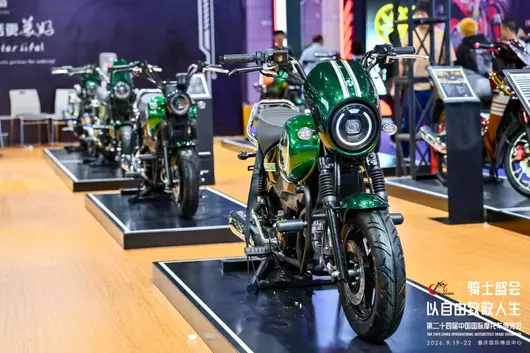
Peanut has been reporting on motorcycles for nearly a decade. To be honest, this session of the Motorcycle Expo is the most "prosperous" one I've seen — abundant attention, abundant traffic, abundant capital.
4-day exhibition, 300,000 visitor visits, 860 media outlets, 2058 reporters attended, 7.065 billion topic impressions online. 1,120 companies exhibited, 3,100 motorcycle models showcased, scale hit a historic high. These figures count as a grand spectacle in any industry.
All media outlets nationwide showed up. Not just vertical motorcycle media, but bloggers in finance, current affairs, and lifestyle also flooded in. Even among the top three state media peers, I met quite a few.
"We've never fought such a resource-rich battle." An interviewee told me with a hoarse voice, the attention from various media is already overwhelming.

Traffic is a good thing. 300,000 people flooded into Chongqing, 7 billion topic impressions flooded the feeds, showing that motorcycles are finally being seen.
But what happens after being seen?
Whether technical investment is real, whether road rights issues can be pushed, whether going global can go deeper and become substantive. These are the keys deciding how far Chinese motorcycles can go.
This Motorcycle Expo was very lively, this is a good start.

Zhang Xue winning the championship was a node. Since then, motorcycles suddenly changed from a "substitute for cars that people can't afford" in some people's eyes to a label of "New Quality Productive Forces", became entertainment tools, became stories that capital is willing to hear.
Wu Huacng, Chairman of Like Motorcycle with 39 years of industry experience, made an observation: Motorcycle development in a country goes from a poverty alleviation tool, to a transportation tool, to an entertainment tool. Chinese motorcycles are finishing this three-step jump — previously overseas consumers bought Chinese for their first car, switched to Japan or Italy when they got rich; now, the first, second, and third cars can all be Chinese-made.

There is another more important signal. In June this year, Premier Li Qiang publicly mentioned the "Chongqing Motorcycle 1-Hour Industrial Circle" at the Summer Davos Forum. This was the first time a major leader of the Party and state spoke about motorcycles in an international setting. From being marginalized to being named by the highest level, the status of motorcycles has indeed changed.
Data also confirms this change. From January to August 2026, Chongqing motorcycle production reached 7.776 million units, a year-on-year increase of 50.5%. One out of every three motorcycles produced nationwide is made in Chongqing. Large-displacement leisure motorcycles produced 275,000 units, up 54.5%; electric motorcycle production was 3.127 million units, up 63%. In 2025, national production of large-displacement leisure motorcycles above 250cc exceeded 950,000 units, far exceeding the industry average growth rate.

Capital is also entering the market. In December 2024, Zongshen joined hands with Chongqing state-owned Yuful Holdings to acquire Loncin General (603766.SH) for 5.461 billion yuan, becoming the largest M&A case in the Chinese motorcycle industry; in August 2026, Yadea invested 1.002 billion yuan to fully acquire Golden Arrow Electric Two-wheelers. Industry concentration is rising rapidly, small players are finding it harder, and the voice of leading enterprises is getting louder.
This wave of traffic far surpasses the 2022 wave of domestic demand for "releasing self-passion". Players are different, focus points are different, even the people watching motorcycles are different.

But traffic comes, and then what? Besides traffic and capital, what does the Chinese motorcycle industry need? In Peanut's view, can technical investment be sustained, and has intelligent spillover landed?
02. Can Technical Investment Be Sustained, and Has Intelligent Spillover Landed?Li Yao, Chairman of Loncin General Power, said at the forum that one of the characteristics of the new cycle is "from assembly manufacturing to Chinese Intelligent Manufacturing".
In the early days, Chinese motorcycles copied shapes, bought carburetors, and competed on supply chains. Now it's different — cornering ABS (Anti-lock Braking System), Electronic Torque Control, Blind Spot Monitoring, automotive intelligent capabilities are spilling over to motorcycles.
Intelligent capabilities forged out of the automotive industry competition are spilling over to motorcycles. This is the luck of motorcycles, and also the luck of China's manufacturing industry.

Racing is the most direct touchstone for technical investment. New forces like Zhang Xue Motorcycle won championships in world-class events just a few years after founding, then fed track technology back into consumer vehicles. Kove followed the same path — running Dakar, running WSBK (World Superbike Championship), won WSBK Three Norths Group World Championship in 2025, won three sub-race championships at Dakar in January 2026, only 5 brands in the world can win Dakar.

Kove GM Zhao Hong said a down-to-earth truth: "Chinese motorcycles have moved from quantitative overseas expansion to quality overseas expansion, we waited 20 years for this." In his view, racing is not promotional expense, but part of R&D — "Truly make racing part of your R&D, turn racing into part of product iteration and upgrades, this is long-term assets."
20 years of technical accumulation earned today's results. This logic makes sense, now we see actual effects and investment. After the heat subsides, whether companies are willing to throw real money into R&D is the true touchstone.
03. Can the Ice of Road Rights Melt, and Who Will Pay for the Non-standard Chaos?This is what Peanut cares about most, and also where traffic should play its role.
In the old cycle, the motorcycle industry was marginalized and suppressed: bans/restrictions on motorcycles in cities, no road rights on highways, 10% consumption tax. In the new cycle, motorcycles are livelihood, entertainment products, and part of a better life. Some cities have started to relax bans/restrictions on motorcycles, and the motorcycle industry has been listed as an advantageous characteristic industry.
Liu Xin, Vice President of the China Motorcycle Chamber of Commerce, listed a series of industry demands at the forum: Scientific optimization of bans/restrictions on motorcycles, improvement of highway access rights, optimization of the 13-year scrappage policy, adjustment of motorcycle consumption tax brackets. Each one is a stone pressing down on the motorcycle industry.

Unfortunately, problems caused by non-standard electric bicycles. Those non-standard electric bikes that speed, exceed weight limits, and are illegally modified rush recklessly on the roads. When accidents happen, the bill is charged to motorcycles. The legal ones take the blame for the illegal ones; this is the biggest grievance of the industry.
Traffic has come, attention has increased. Can these issues be brought to the table? Can the public and decision-makers see that motorcycles are fundamentally a legal travel mode and lifestyle?
After all, suppressed travel demand will not disappear, only appear in more dangerous ways.
04. How to Answer the Great Test of Going Global, When Will the System Shortcomings Be Made Up?Nowadays, Chinese motorcycle products are getting stronger, technology is getting newer, there is an opportunity to walk global again, so how to seize the opportunity?
In 2025, China exported 13.36 million motorcycle complete vehicles, export value $8.85 billion, quantity and price rose together. Domestic sales were only over 5 million units, exports are already more than double the domestic market.
Good news is, Chinese brands have taken root in high-end markets. Voge, under Loncin, achieved a license plate ownership rate of 5.79% in Europe's top 5 markets (Italy, Spain, France, Germany, UK), becoming the first Chinese company to break 5%, ranking only behind Honda and BMW.

But Roland Berger Global Partner Xu Huxiong poured cold water: "Going global for two-wheeler players is not a multiple-choice question for growth, but a must-answer question for development."
The meaning of must-answer question is, not doing it is not an option, but doing it doesn't guarantee success.
Domestic two-wheeler capacity utilization is below the national average, domestic sales peaked in 2023 and have been fluctuating since. The domestic market is only so big, what to do if not going global? But going global isn't just selling cars — after-sales service, local operations, brand building, compliance risks, exchange rate fluctuations, each one is a pit.
Keeway Group VP Bao Zhengqin said, the biggest challenge is after-sales service. New players cannot catch up with the service capabilities of local established brands overnight.
Zhao Hong's judgment was more direct: "For the first 20 years, we went global to sell products, in the second half we should go global to build organizational systems."
Gao He Capital Founding Partner He Yuhua pointed out a deeper problem from a capital perspective: Chinese enterprises lack global capital handles going abroad. For example, in Indonesia, Yamaha holds 90% market share, earning not just money from cars, but also from the financial system supported by local high interest rates. "We can't earn value from this area."
Some global brands sell not just cars, but financial and other bundled derivative services. This requires brand and system construction.

Pessimists see risks, optimists see the future.
Right during the Motorcycle Expo, the "Global Motorcycle Production and Supply Chain Economic and Trade Cooperation Matchmaking Conference" was also held. Over 110 international buyers from key global markets like Europe, Southeast Asia, Latin America, Africa, Middle East, and over 200 Chinese enterprises talked face-to-face, released 133 procurement demands, held 495 matchmaking sessions, with intended procurement amount reaching $420 million. The road to go out is getting wider and wider.
From product going global to brand going global, then to system going global, capital going global, for Chinese motorcycles, the road is long and arduous.
Text | Li Xiyin · Peanut
Editor | Hei Song


喺馬來西亞嘅 SUV 市場,好多買家喺揀車嗰陣都會將豐田 Corolla Cross 同奇瑞 Tiggo 7 Pro 嚟比較。呢兩款車喺價位同定位上都幾接近,而家我哋就從多個方面做一個詳細比較,幫你省下做功課嘅時間。
豐田 Corolla Cross 喺馬來西亞嘅 OTR 售價係 RM 133,800 - 148,800,合共 3 個型號,包括 2026 HEV 1.8L GR Sport(RM 148,800)、2026 HEV 1.8L Standard(RM 140,800)、2026 1.8L Standard(RM 133,800) 等。
奇瑞 Tiggo 7 Pro 喺馬來西亞嘅 OTR 售價係 RM 123,750 - 123,750,合共 2 個型號,包括 1.6L Turbo Standard(RM 125,000)、1.6L Turbo Premium(RM 140,000) 等。
從價錢睇,奇瑞 Tiggo 7 Pro 嘅入門價比豐田 Corolla Cross 平咗 RM 10,050。老實講,喺呢個價位段,幾千蚊嘅差距其實唔算大,關鍵仲係睇整體嘅性價比同長期使用成本。
豐田 Corolla Cross 配備 1.5L Turbo,馬力 140 hp。官方油耗 7.0 L/100km。
奇瑞 Tiggo 7 Pro 配備 1.5L Turbo,馬力 140 hp。官方油耗 7.0 L/100km。
兩款車用咗同一套動力系統,日常開起嚟嘅感覺基本無分別。油耗方面亦差唔多,唔使太糾結呢點。
豐田 Corolla Cross 車身長 4400 mm,行李廂 400 L。
奇瑞 Tiggo 7 Pro 車身長 4400 mm,行李廂 400 L。
兩款車嘅尺寸幾乎一樣,車內空間分別唔大。呢個級別嘅車,日常使用完全夠用。
豐田 Corolla Cross 同奇瑞 Tiggo 7 Pro 都係馬來西亞市場嘅主流選擇,適合家庭用、日常通勤。如果你更睇重品牌口碑同二手價,可以優先考慮口碑更好嗰款;如果你更在乎性價比同配備,就揀配置更豐富嗰款。最終都建議兩款都去試駕,親身體驗先至最重要。
總體嚟講,豐田 Corolla Cross 同奇瑞 Tiggo 7 Pro 都係馬來西亞市場幾唔錯嘅車型。揀邊一輛,關鍵仲係睇返你嘅個人需求同預算。建議大家做好功課,多比較幾間車行之報價,再去試駕先做最後決定。買車係件大事,花少少時間做功課絕對唔會錯。

喺馬來西亞嘅 SUV 市場,好多買家喺揀車嘅時候都會拿 Toyota Corolla Cross 同 Chery Tiggo Cross 來做比較。呢兩款車喺價位同定位上都好相近,今日我哋就從多個方面做一個詳細嘅比較,幫你省下做功課嘅時間。
Toyota Corolla Cross 喺馬來西亞嘅 OTR 售價係 RM 133,800 - 148,800,一共有 3 個版本,包括 2026 HEV 1.8L GR Sport(RM 148,800)、2026 HEV 1.8L Standard(RM 140,800)、2026 1.8L Standard(RM 133,800) 等。
Chery Tiggo Cross 喺馬來西亞嘅 OTR 售價係 RM 88,750 - 99,750,一共有 2 個版本,包括 2025 HEV 1.5L CSH(RM 99,750)、2025 1.5T Standard(RM 88,750) 等。
由價錢嚟睇,Chery Tiggo Cross 嘅起步價比 Toyota Corolla Cross 平咗 RM 45,050。老實講,喺呢個價位段,幾千塊嘅差距其實唔算大,關鍵始終係睇整體嘅性價比同長期使用成本。
Toyota Corolla Cross 嘅安全評級係 5★ (ASEAN NCAP),主動安全系統包括 TSS (PCS, LDA, ACC, LTA)。
Chery Tiggo Cross 嘅安全評級係 TBD,主動安全系統包括 Basic。
安全配備方面,兩款車都拿到唔錯嘅評級。不過 Toyota Corolla Cross 嘅 TSS (PCS, LDA, ACC, LTA) 同 Chery Tiggo Cross 嘅 Basic 喺功能上少少差異,如果你比較重視主動安全嘅話,可以仔細比較下兩者嘅功能列表。
Toyota Corolla Cross 保修 5 年/無限制里程,保養間隔 每 10,000km 或 6 個月。
Chery Tiggo Cross 保修 3 年/100,000km,保養間隔 每 10,000km 或 6 個月。
Toyota Corolla Cross 同 Chery Tiggo Cross 都係馬來西亞市場嘅主流選擇,適合家庭用、日常通勤。如果你更加重視品牌口碑同二手價,可以優先考慮口碑更好嘅嗰款;如果你更加在意性價比同配備,就揀配置更豐富嘅嗰款。最終始終建議兩款都去試駕,親身體驗先係最重要嘅。

總嘅嚟講,Toyota Corolla Cross 同 Chery Tiggo Cross 都係馬來西亞市場好唔錯嘅車型。揀邊一輛,關鍵始終係睇你嘅個人需求同預算。建議大家做足功課,多比較幾間車行嘅報價,再去試駕做最終決定。買車係件大事,花少少時間做功課絕對唔會錯。
In Malaysia's SUV market, many buyers compare the Toyota Corolla Cross and Mazda CX-30 when choosing a car. These two cars are quite close in price and positioning. Today, we will make a detailed comparison from multiple aspects to save you time on research.
The OTR price of the Toyota Corolla Cross in Malaysia is RM 133,800 - 148,800, with a total of 3 versions, including the 2026 HEV 1.8L GR Sport (RM 148,800), 2026 HEV 1.8L Standard (RM 140,800), 2026 1.8L Standard (RM 133,800), etc.
The OTR price of the Mazda CX-30 in Malaysia is RM 122,409 - 146,409, with a total of 4 versions, including the 2025 2.0L High+ Premium (RM 146,409), 2025 2.0L High+ (RM 138,409), 2025 2.0L High (RM 130,409), etc.
Looking at the price, the starting price of the Mazda CX-30 is RM 11,391 cheaper than the Toyota Corolla Cross. Honestly, in this price range, a difference of a few thousand is not really significant; the key is to look at the overall cost-effectiveness and long-term usage costs.
The Toyota Corolla Cross is equipped with a 1.5L Turbo, 140 hp. Official fuel consumption 7.0 L/100km.
The Mazda CX-30 is equipped with a 1.5L Turbo, 140 hp. Official fuel consumption 7.0 L/100km.
Both cars use the same powertrain, and the driving experience feels basically the same. Fuel consumption is also similar, so no need to worry too much about this point.
The Toyota Corolla Cross body length is 4400 mm, trunk 400 L.
The Mazda CX-30 body length is 4500 mm, trunk 450 L.
In terms of space, the Mazda CX-30 body is 100 mm longer than the Toyota Corolla Cross, offering an advantage in seating space. However, the Toyota Corolla Cross is a bit more flexible for parking in the city, each has its trade-offs.
The Toyota Corolla Cross uses FWD drive mode.
The Mazda CX-30 uses FWD drive mode.
Both cars have the same drive mode, both are FWD, so there won't be much difference in daily driving experience.

The Toyota Corolla Cross and Mazda CX-30 are both mainstream choices in the Malaysian market, suitable for family use and daily commuting. If you value brand reputation and resale value more, you can prioritize the one with better reputation; if you care more about cost-effectiveness and features, then choose the one with richer configuration. Ultimately, it is recommended to test drive both, as personal experience is the most important.

Overall, both the Toyota Corolla Cross and Mazda CX-30 are very good models in the Malaysian market. Which one to choose depends mainly on your personal needs and budget. We suggest doing your research, comparing quotes from multiple dealerships, and then test driving to make the final decision. Buying a car is a big matter, spending some time doing research will definitely not be wrong.


