
Search History
Popular Searches
English
Dealer Login / Sign Up
On April 13, AITO officially released official images of the next-generation AITO M9. Positioned as the "Harmony Intelligent Mobility Panoramic Smart Flagship SUV," this vehicle has dropped a technological bombshell in the luxury SUV market with an almost "brutal" set of hardware specifications. The industry-first six-LiDAR three-dimensional matrix, an over-5.2-meter length, a debut fully active intelligent chassis, upgraded batteries (75kWh for the EREV and 120kWh for the BEV), once again raise the hardware ceiling for the 500,000 RMB-class luxury SUV. However, for Hong Kong users, a sharp question resurfaces: when a car’s perception hardware is fully redundant for L3 or even L4 autonomous driving, and when its six "eyes" can see every detail in a 360° blind-spot-free view, are Hong Kong’s regulations and road environments ready for this "six-laser flying fish"?
Perceptual Overkill: The "Disruptive Force" of Six LiDARs
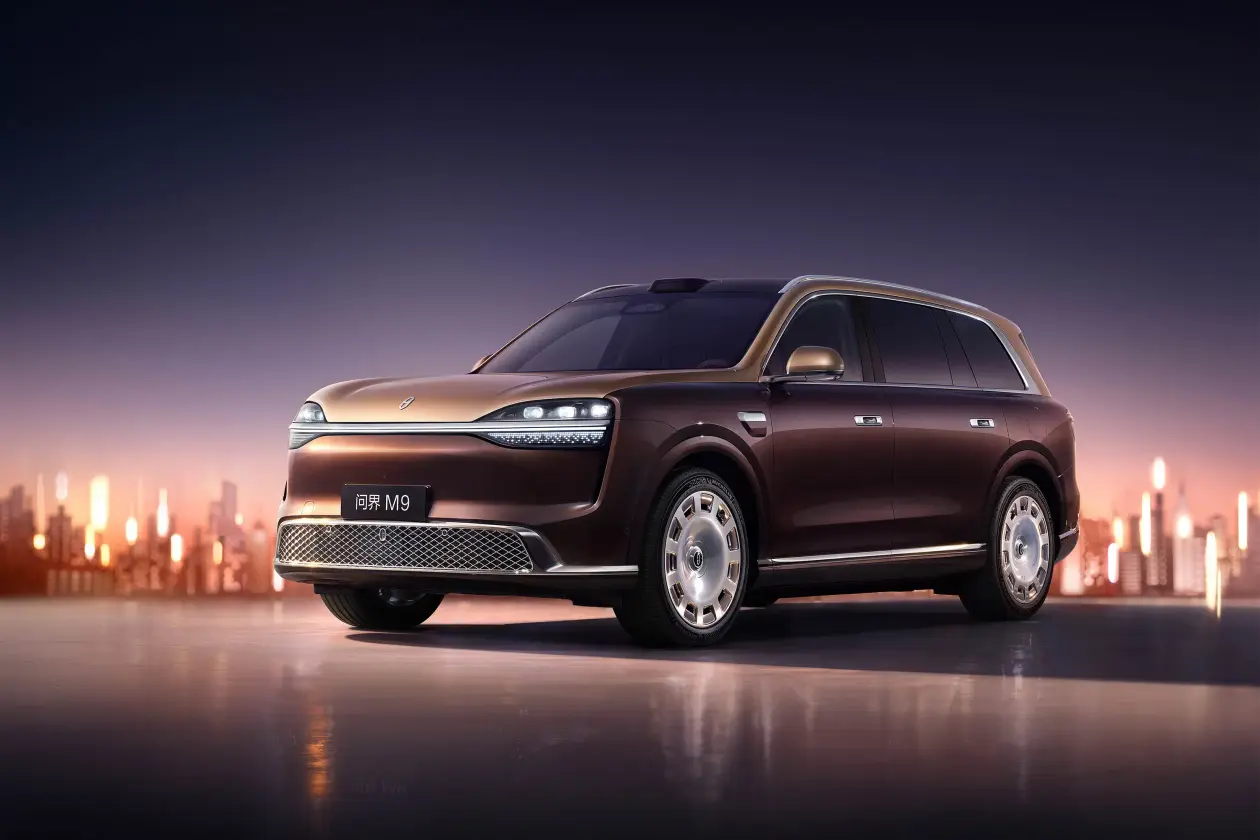
The most eye-catching upgrade of the next-gen AITO M9 is undoubtedly the industry-first six-LiDAR three-dimensional matrix. This system consists of a self-developed Huawei 896-line dual-optical path image-grade main LiDAR, an in-cabin laser vision LiDAR, and four high-precision solid-state LiDARs. Distributed on the roof, front, sides, and rear, and complemented by new side cameras on the C-pillars, they form a true 360° blind-spot-free perception network that deeply integrates LiDAR and vision. The 896-line LiDAR offers four times the resolution of traditional 192-line units, capable of precisely identifying irregular obstacles like fallen tires or knocked-over cones, and even predicting ruts and dips on unpaved roads with high precision. This "perceptual overkill" pushes the safety redundancy of intelligent driving to the industry's peak – transforming the vehicle from merely "seeing" to "seeing clearly, comprehensively, and far away," providing ample hardware for handling extreme edge cases.
Fully Active Chassis: From Passive Filtering to Proactive Mitigation
Beyond the perception system upgrade, the new M9 also sees a qualitative leap in chassis technology. It is the first HarmonyOS Intelligent Mobility model to feature a fully active suspension, capable of previewing road conditions and dynamically adjusting stiffness, damping, and active support forces in real time. This means the vehicle no longer passively filters bumps but proactively mitigates impacts – softer over potholes, more stable during high-speed lane changes, elevating driving stability and ride comfort to a new dimension. For a vehicle over 5.2 meters long and 2 meters wide, the value of this active chassis is self-evident – it eliminates the "boat-like" feeling, endowing the large SUV with agility and composure that belies its size.
Dimensions and Powertrain: A Fully Evolved Flagship
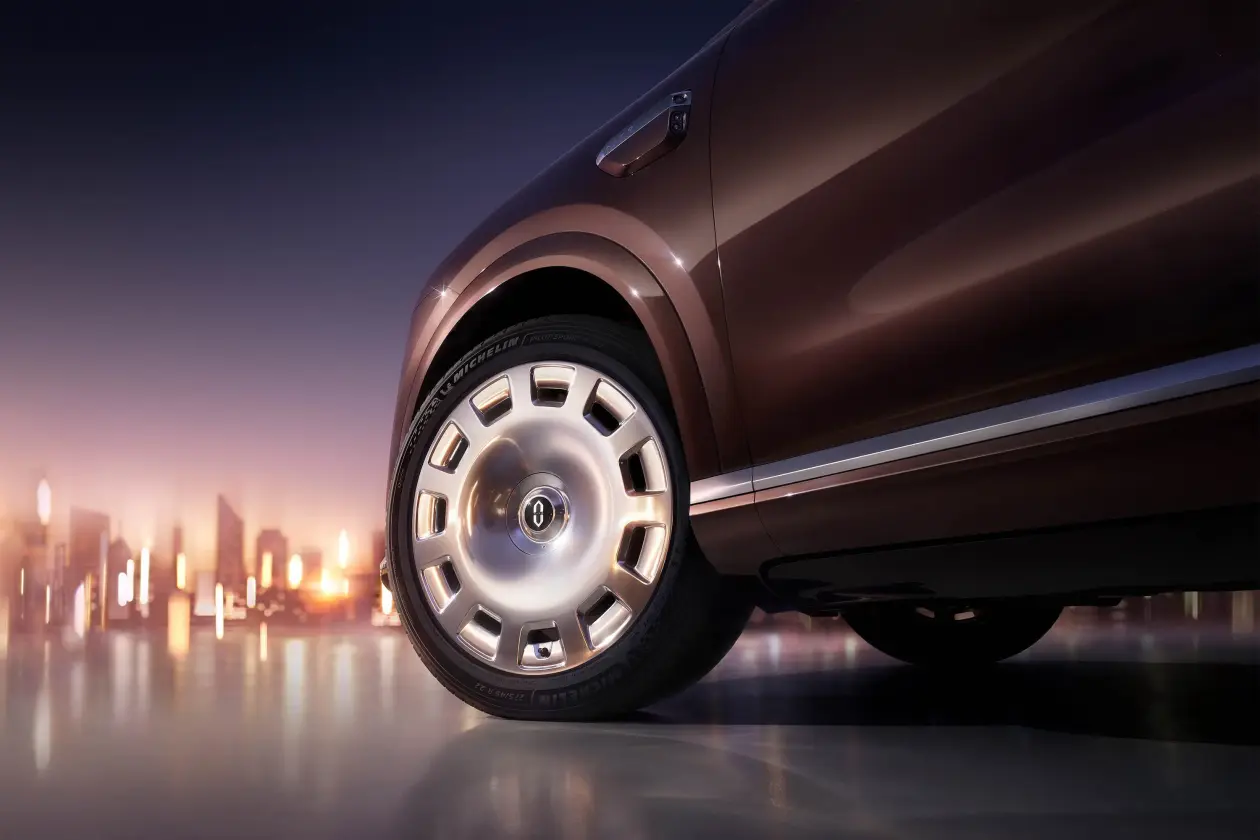
The next-gen AITO M9 has grown in size, measuring 5,285mm in length, 2,026mm in width, and 1,845mm in height, with a wheelbase extended to 3,125mm – significant increases over the current model. Both five-seat and six-seat layouts are offered. Powertrains include both BEV and EREV versions, both featuring next-generation CATL batteries. The EREV version uses a 1.5T engine with dual motors, offering 60kWh and 75kWh battery packs, with WLTC pure electric ranges up to 335km (420km for the 75kWh version). The BEV version features a massive 120kWh battery, delivering a 750km range. With an 800V high-voltage fast-charging platform, charging efficiency is among the industry's best.
Hong Kong Perspective: The Waiting Game for Hardware Overkill
For Hong Kong users, the arrival of the next-gen AITO M9 raises a sharp reality: when the vehicle's hardware is fully ready for L3 or even L4 autonomous driving, how long will Hong Kong users have to wait to truly enjoy this "technological dividend"?

Hong Kong lags behind mainland cities like Shenzhen in autonomous driving regulations and applications. Urban NOA is already mature in Shenzhen, allowing vehicles to handle complex intersections and lane changes, while Hong Kong vehicles are largely restricted by regulations and mapping data, leaving many functions "pending activation." LegCo member Chan Hak-kan has pointed out that Hong Kong lacks a legal framework for autonomous driving, with no testing permit mechanism for L3 vehicles, nor supporting regulations for liability, insurance, or data monitoring.
This means that no matter how advanced the M9's six LiDARs and fully active chassis are, most of their potential cannot be unleashed on Hong Kong's roads. The 896-line LiDAR's high-precision recognition and the active suspension's preview adjustment may be rendered useless due to the lack of digital infrastructure and regulatory support.
However, Hong Kong is not without opportunity. As a right-hand drive (RHD) market, Hong Kong shares this driving environment with about one-third of countries worldwide, including the UK, Japan, and Australia. If an autonomous driving system developed in mainland China can successfully operate in Hong Kong's dense, high-traffic environment, the technology could be scaled to other RHD markets, making Hong Kong a strategic launching pad for Chinese NEVs' global expansion. The Transport Department introduced a new regulatory framework for autonomous vehicles in 2024 and plans to conduct driverless tests on fixed routes within 2026, signaling government efforts to promote autonomous driving applications.
Personal Opinion
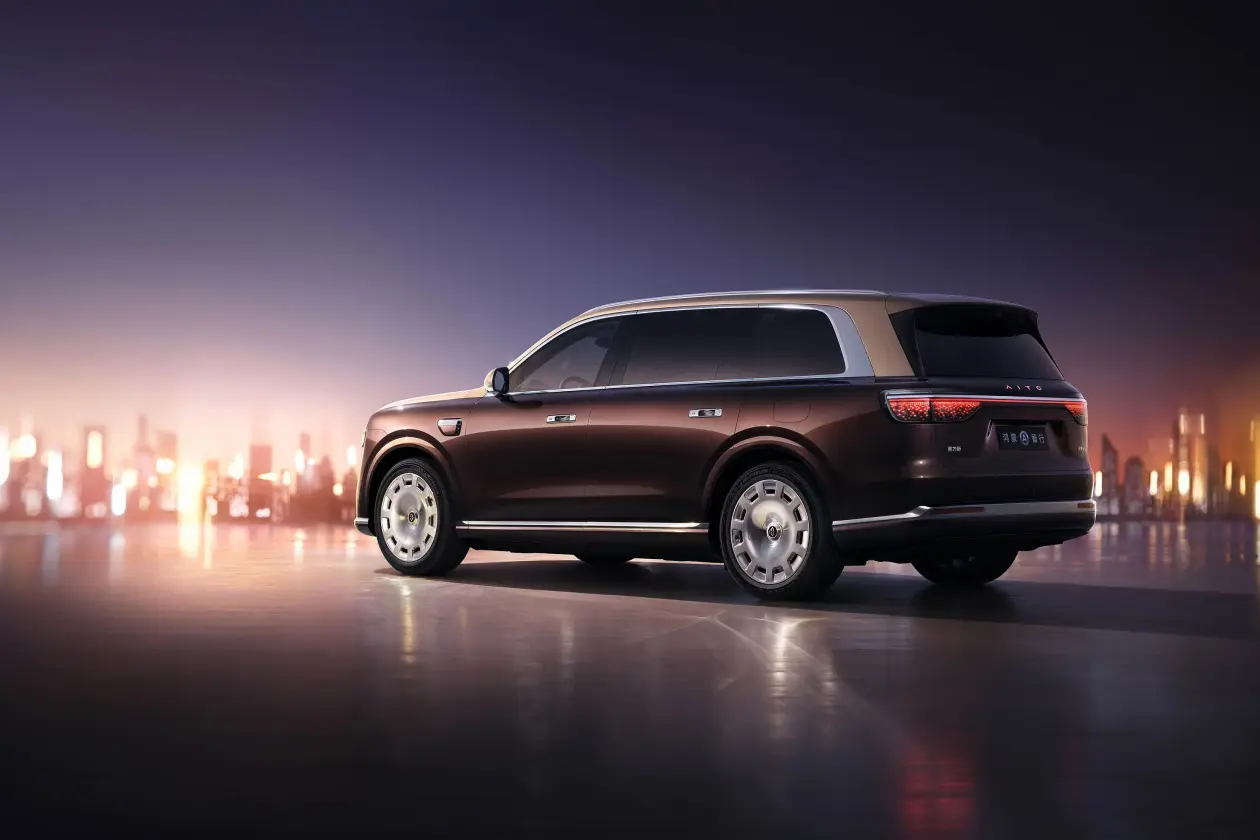
Looking at the next-gen AITO M9's official images and specifications, my strongest impression is that "the era of hardware overkill has arrived." Six LiDARs, 896-line resolution, a fully active chassis, and a 120kWh battery – specifications that were once at the concept car level just two years ago have now been brought to the 500,000 RMB-class mass-production market. Huawei and Seres have demonstrated that "tech democratization" is not just a slogan but a reality unfolding.

香港汽車內容平台 🚗 新車・買車・玩車・用車 用香港視角,睇世界嘅車
+ Follow 【新車速報】兩座車又殺返嚟?smart精靈#2今次有啲料喎
鍾意細車嘅香港車迷留意!全新 smart 精靈#2 配置公布,採用 ECA 電動緊湊型架構,搭載 35.8kWh 磷酸鐵鋰電池,CLTC 續航 410km,30%-80% 快充最快15分鐘。
車長約 2.75米、轉彎半徑僅3.35米,仲有前麥弗遜+後五連桿獨立懸架;安全配備最多7個氣袋及 ACC、盲區監測等功能。
0-50km/h 3.8秒,10月12日巴黎車展全球首發!
兩座純電+細車身,放落香港街道會唔會幾對味?
#smart #smart精靈2 #純電車 #BitAutoHongKong 2小时前
【新車速報】兩座車又殺返嚟?smart精靈#2今次有啲料喎
鍾意細車嘅香港車迷留意!全新 smart 精靈#2 配置公布,採用 ECA 電動緊湊型架構,搭載 35.8kWh 磷酸鐵鋰電池,CLTC 續航 410km,30%-80% 快充最快15分鐘。
車長約 2.75米、轉彎半徑僅3.35米,仲有前麥弗遜+後五連桿獨立懸架;安全配備最多7個氣袋及 ACC、盲區監測等功能。
0-50km/h 3.8秒,10月12日巴黎車展全球首發!
兩座純電+細車身,放落香港街道會唔會幾對味?
#smart #smart精靈2 #純電車 #BitAutoHongKong 2小时前  【揀車有路數】日產新車賣比亞迪價?仲有激光雷達
今集試一台好特別嘅日產新車——NX8,中國特供增程SUV。外觀似熟悉嘅日產味,但內籠同科技配備竟然唔晒傳統日產套路,駕乘感受又有幾多轉變?到底仲係咪你認識嗰部日產?一齊試畀你睇。
#日產 #NX8 #增程 #BitAutoHongKong #揀車有路數 1天前
【揀車有路數】日產新車賣比亞迪價?仲有激光雷達
今集試一台好特別嘅日產新車——NX8,中國特供增程SUV。外觀似熟悉嘅日產味,但內籠同科技配備竟然唔晒傳統日產套路,駕乘感受又有幾多轉變?到底仲係咪你認識嗰部日產?一齊試畀你睇。
#日產 #NX8 #增程 #BitAutoHongKong #揀車有路數 1天前  【新車速報】T-Top 回歸?Nissan Z Kaze 概念車現身!
90年代 JDM 味返晒嚟?Nissan 最近喺美國 ZCON 公開 Z Kaze 概念車,以現款 Nissan Z 為基礎,換上全新 T-Top 可拆式車頂,向經典 300ZX 等 Z 系列致敬。
配合碳纖維空力套件、NISMO LMGT2 18吋輪圈,以及 GReddy 排氣、進氣同 intercooler 升級,成部車都充滿 JDM 改裝味。
「Kaze」即係日文「風」,而呢部車係 one-off 概念作品,並非量產車。10月3日仲會現身加州長灘 Japanese Classic Car Show。
如果 T-Top Z 真係量產,你會唔會心動?
#NissanZ #ZKaze #TTop #JDM #BitAutoHongKong 1天前
【新車速報】T-Top 回歸?Nissan Z Kaze 概念車現身!
90年代 JDM 味返晒嚟?Nissan 最近喺美國 ZCON 公開 Z Kaze 概念車,以現款 Nissan Z 為基礎,換上全新 T-Top 可拆式車頂,向經典 300ZX 等 Z 系列致敬。
配合碳纖維空力套件、NISMO LMGT2 18吋輪圈,以及 GReddy 排氣、進氣同 intercooler 升級,成部車都充滿 JDM 改裝味。
「Kaze」即係日文「風」,而呢部車係 one-off 概念作品,並非量產車。10月3日仲會現身加州長灘 Japanese Classic Car Show。
如果 T-Top Z 真係量產,你會唔會心動?
#NissanZ #ZKaze #TTop #JDM #BitAutoHongKong 1天前 Get the latest car news first!
【新車速報】兩座車又殺返嚟?smart精靈#2今次有啲料喎
鍾意細車嘅香港車迷留意!全新 smart 精靈#2 配置公布,採用 ECA 電動緊湊型架構,搭載 35.8kWh 磷酸鐵鋰電池,CLTC 續航 410km,30%-80% 快充最快15分鐘。
車長約 2.75米、轉彎半徑僅3.35米,仲有前麥弗遜+後五連桿獨立懸架;安全配備最多7個氣袋及 ACC、盲區監測等功能。
0-50km/h 3.8秒,10月12日巴黎車展全球首發!
兩座純電+細車身,放落香港街道會唔會幾對味?
#smart #smart精靈2 #純電車 #BitAutoHongKong 2小时前 【揀車有路數】日產新車賣比亞迪價?仲有激光雷達
今集試一台好特別嘅日產新車——NX8,中國特供增程SUV。外觀似熟悉嘅日產味,但內籠同科技配備竟然唔晒傳統日產套路,駕乘感受又有幾多轉變?到底仲係咪你認識嗰部日產?一齊試畀你睇。
#日產 #NX8 #增程 #BitAutoHongKong #揀車有路數 1天前 【新車速報】T-Top 回歸?Nissan Z Kaze 概念車現身!
90年代 JDM 味返晒嚟?Nissan 最近喺美國 ZCON 公開 Z Kaze 概念車,以現款 Nissan Z 為基礎,換上全新 T-Top 可拆式車頂,向經典 300ZX 等 Z 系列致敬。
配合碳纖維空力套件、NISMO LMGT2 18吋輪圈,以及 GReddy 排氣、進氣同 intercooler 升級,成部車都充滿 JDM 改裝味。
「Kaze」即係日文「風」,而呢部車係 one-off 概念作品,並非量產車。10月3日仲會現身加州長灘 Japanese Classic Car Show。
如果 T-Top Z 真係量產,你會唔會心動?
#NissanZ #ZKaze #TTop #JDM #BitAutoHongKong 1天前  BAWToyotaBYDZeekrGACDongfengXPengMGMaxusLeapmotorDenzaIMiCAURDeepalWulingOraJuneyao AutoKYCSkyworthAvatrFotonFordGeelyHongqiJAECOOKGMOMODADFSKTeslaHondaBMWMercedes-BenzsmartMINIPorscheNissanLexusSuzukiVolvoSubaruMazdaKiaHyundaiLand RoverRolls-RoyceFerrariAudiLamborghiniRiddaraSeresFarizonfireflyLingboxKaiyiVoyahHIMAM-HeroIsuzuBentleyPolestarMcLarenMitsubishiMaseratiPeugeotAston MartinAcuraJeepJaguarLotusVolkswagenEpiclandJACLepasLi
 © 2024 Bitauto.com. All Rights Reserved.
Bitauto (www.yiche.com and www.bitauto.com) is one of the most visited automotive websites in China. We provide detailed info on Chinese car brands available in your area. Please note that the information provided on this website is based on publicly available data and is for reference only. It may not be fully updated or accurate at all times.
Help us improve our website


