
Search History
Popular Searches
English
Dealer Login / Sign Up
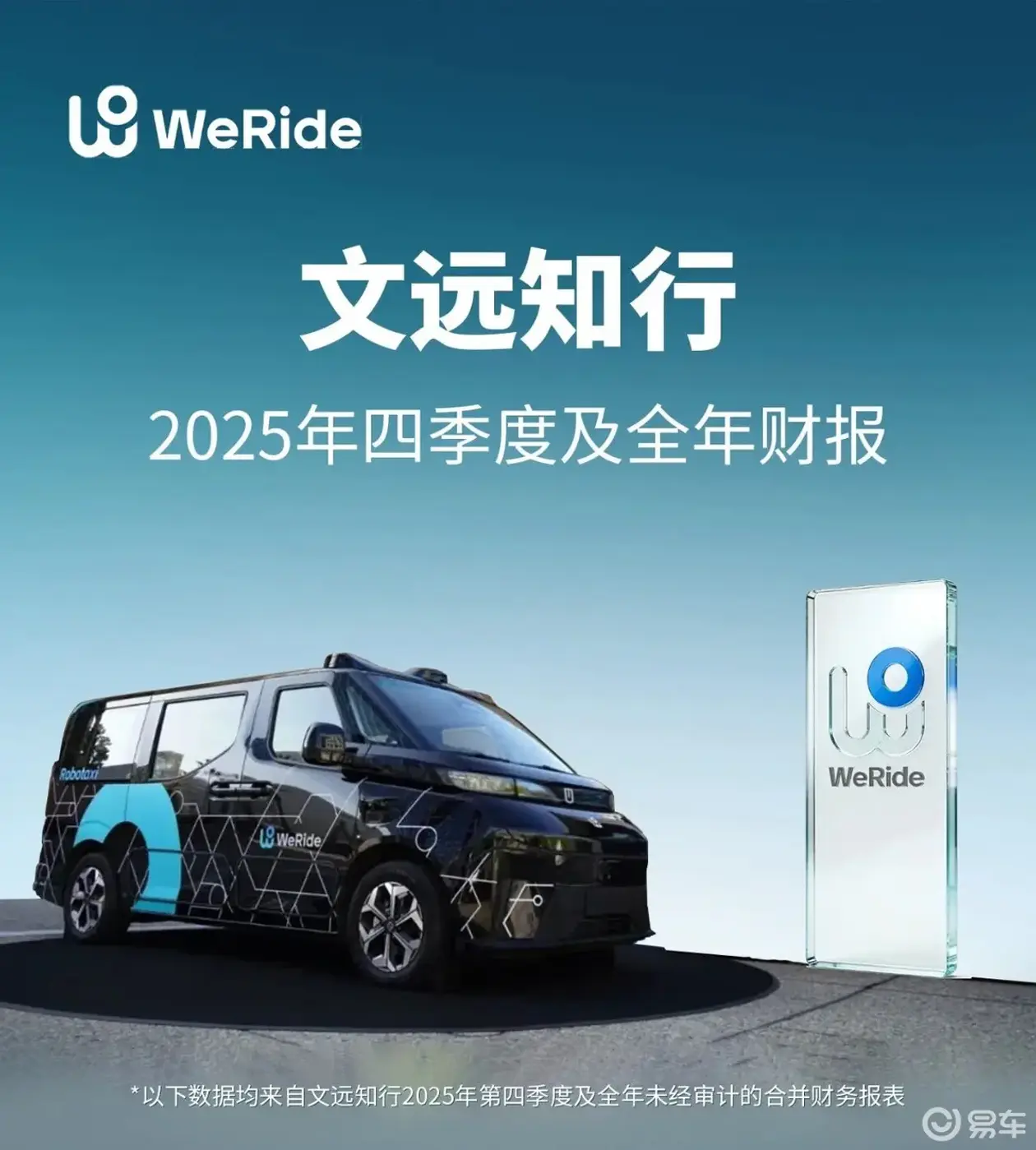
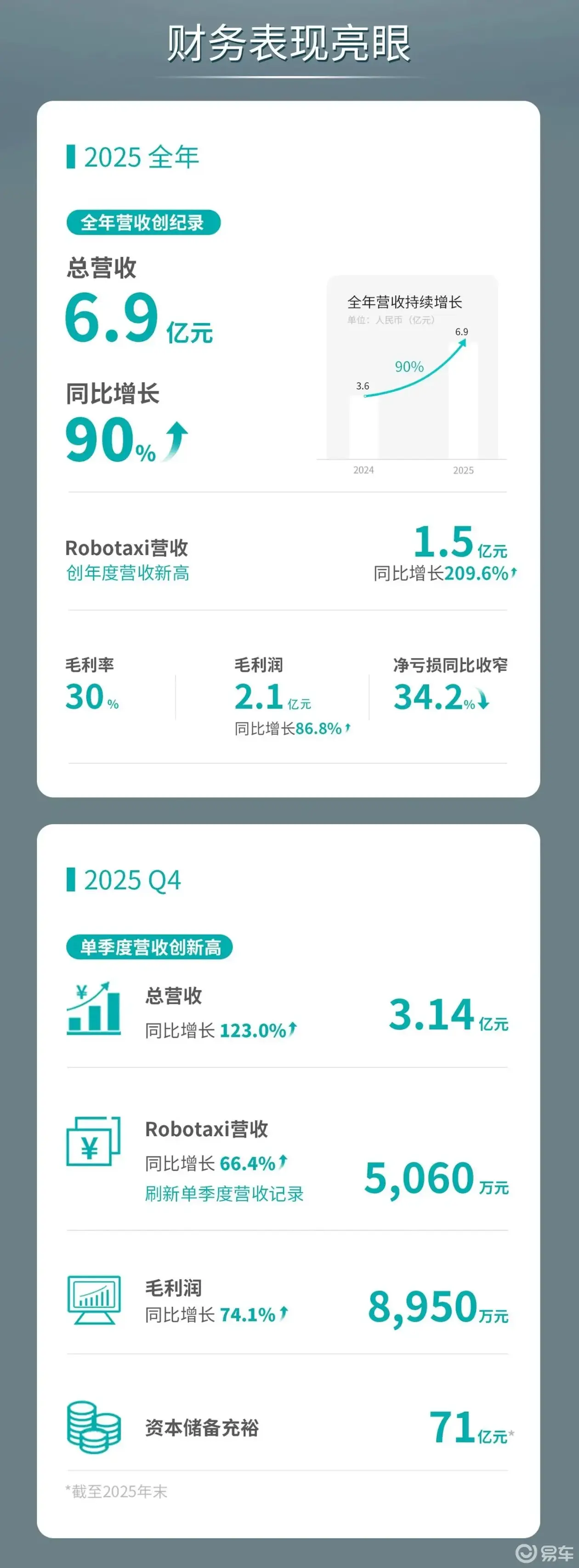
On March 23, WeRide released its unaudited financial report for the fourth quarter and full year of 2025. The results reveal a clear trend: autonomous driving commercialization is moving from "proof of concept" to "scaled realization." Total revenue for 2025 reached RMB 690 million, a record high with 90% year-on-year growth. Q4 revenue hit RMB 314 million, up 123% year-on-year, setting a new single-quarter record. Its core Robotaxi business saw explosive growth, with annual revenue reaching RMB 150 million (up 209.6%) and Q4 revenue surging to RMB 50.6 million (up 66.4%).
For Hong Kong users, WeRide's report is more than financial news; it's a mirror. As Robotaxis become routine in cities like Shenzhen, Guangzhou, and Beijing, and WeRide's global fleet exceeds 1,000 vehicles, the question arises: when will autonomous taxis arrive in Hong Kong? This report offers some insights.
Commercialization Acceleration: A Global Footprint of 1,125 Robotaxis
WeRide's autonomous driving products are currently deployed in 12 countries and over 40 cities, with a Robotaxi fleet of 1,125 vehicles. The company plans to deploy 2,600 Robotaxis globally by the end of 2026 and tens of thousands by 2030. These figures indicate a transition from "R&D" to "scaled operations." Its status as the most widely deployed autonomous driving company globally validates both its technological maturity and commercial capability.
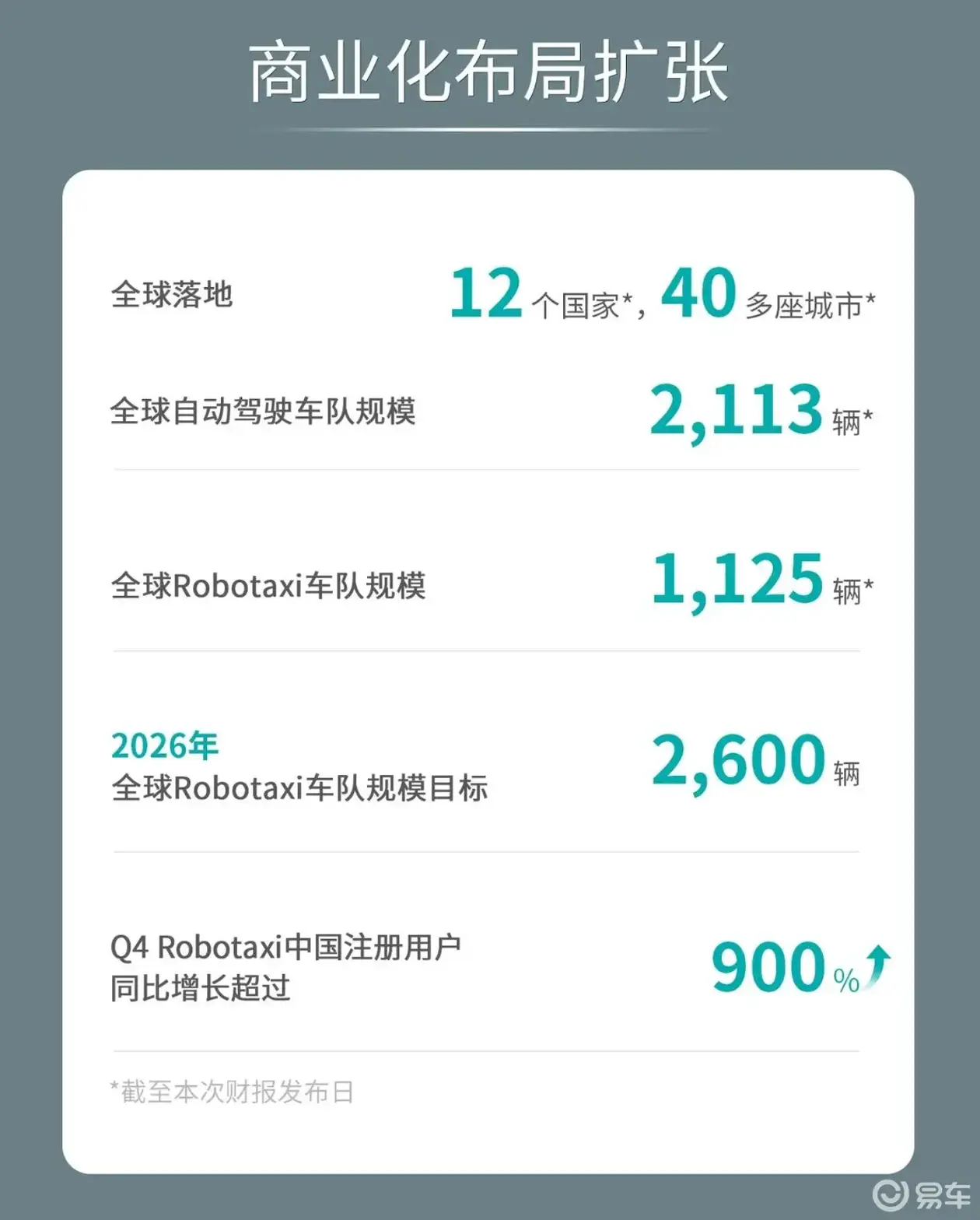
Domestic Robotaxi registered users grew over 900% year-on-year in a single quarter of 2025, signaling surging market demand. This reflects a qualitative shift in user acceptance of autonomous driving. As more people experience driverless taxis and the experience becomes routine rather than novel, autonomous driving commercialization is accelerating.
Financial Health: Strong Reserves of RMB 7.1 Billion
Improved operational efficiency and cost management resulted in a 30% gross margin for the year, with gross profit reaching RMB 210 million (up 86.8%). Net loss narrowed significantly (down 34.2%). The company's strong capital reserves of RMB 7.1 billion provide ample resources for R&D and market expansion while moving toward profitability.
Hong Kong Perspective: The Final Hurdle for Autonomous Driving
WeRide's report raises several key considerations for Hong Kong.
Regulatory Framework: Hong Kong lacks a comprehensive legal framework for autonomous driving. While Baidu Apollo was approved for testing on North Lantau in 2025, it's restricted to specific sections, times, and requires a safety operator. Achieving "all-day, fully unmanned" passenger service like in Guangzhou or Beijing requires significant regulatory updates.
Driving Environment: Hong Kong's narrow streets, interweaving motorcycles, and unpredictable pedestrians present challenges far exceeding those on mainland China's wider roads. Data accumulated in other cities would require significant local adaptation. However, WeRide's technology—proven across 12 countries and 40 cities—has the foundational capability.
Market Structure: Hong Kong's taxi industry operates on a license system where permits are privately owned and leased to drivers. Introducing Robotaxis would require redesigning the operational model, impacting jobs, licensing, and insurance.
Supporting Infrastructure: Robotaxi operations require robust charging networks, maintenance centers, and dispatch platforms. Hong Kong currently has about 16,000 public chargers, but fast chargers for high-frequency commercial use are limited. Government targets for 4,000 fast chargers by 2030 suggest a gap.
Global Insights: Lessons from WeRide's Expansion
WeRide's experience across 12 countries offers valuable lessons. In the UAE, it integrated autonomous vehicles into the public transport system through government partnership. In Singapore, it was the first Chinese company to receive an M1 autonomous driving test permit. These examples show that autonomous driving deployment requires a coordinated approach of technology, policy, and ecosystem.
For Hong Kong, these global experiences are instructive. Hong Kong could draw from Singapore's regulatory approach, the UAE's partnership model, or Guangzhou's pilot programs in specific zones.
Personal Opinion: A Pivotal Moment for Hong Kong
WeRide's report highlights a pivotal moment. As mainland cities embrace Robotaxis and global players scale operations, Hong Kong's role in this race is critical. Its strengths—international connectivity, robust legal framework, and advanced financial services—are balanced against challenges like complex roads, regulatory lag, and land constraints.
Instead of aiming for city-wide deployment, Hong Kong could focus on targeted breakthroughs: scaled demonstration projects in areas like North Lantau, autonomous shuttle services for closed scenarios like the airport or Hong Kong-Zhuhai-Macao Bridge, or R&D support within innovation parks like Science Park or Cyberport.
WeRide's plan to deploy 2,600 Robotaxis by 2026 and tens of thousands by 2030 raises the question of whether Hong Kong will be part of that expansion. The answer depends on coordinated efforts between government, industry, and society. When technology matures, regulations evolve, and markets accept it, the final hurdle for autonomous driving in Hong Kong may be closer than expected. For local users, WeRide's report signals that autonomous driving technology is sufficiently advanced to enter our daily lives. Hong Kong's autonomous taxi may arrive sooner than anticipated.

香港汽車內容平台 🚗 新車・買車・玩車・用車 用香港視角,睇世界嘅車
+ Follow 【新車速報】兩座車又殺返嚟?smart精靈#2今次有啲料喎
鍾意細車嘅香港車迷留意!全新 smart 精靈#2 配置公布,採用 ECA 電動緊湊型架構,搭載 35.8kWh 磷酸鐵鋰電池,CLTC 續航 410km,30%-80% 快充最快15分鐘。
車長約 2.75米、轉彎半徑僅3.35米,仲有前麥弗遜+後五連桿獨立懸架;安全配備最多7個氣袋及 ACC、盲區監測等功能。
0-50km/h 3.8秒,10月12日巴黎車展全球首發!
兩座純電+細車身,放落香港街道會唔會幾對味?
#smart #smart精靈2 #純電車 #BitAutoHongKong 1小时前
【新車速報】兩座車又殺返嚟?smart精靈#2今次有啲料喎
鍾意細車嘅香港車迷留意!全新 smart 精靈#2 配置公布,採用 ECA 電動緊湊型架構,搭載 35.8kWh 磷酸鐵鋰電池,CLTC 續航 410km,30%-80% 快充最快15分鐘。
車長約 2.75米、轉彎半徑僅3.35米,仲有前麥弗遜+後五連桿獨立懸架;安全配備最多7個氣袋及 ACC、盲區監測等功能。
0-50km/h 3.8秒,10月12日巴黎車展全球首發!
兩座純電+細車身,放落香港街道會唔會幾對味?
#smart #smart精靈2 #純電車 #BitAutoHongKong 1小时前  【揀車有路數】日產新車賣比亞迪價?仲有激光雷達
今集試一台好特別嘅日產新車——NX8,中國特供增程SUV。外觀似熟悉嘅日產味,但內籠同科技配備竟然唔晒傳統日產套路,駕乘感受又有幾多轉變?到底仲係咪你認識嗰部日產?一齊試畀你睇。
#日產 #NX8 #增程 #BitAutoHongKong #揀車有路數 1天前
【揀車有路數】日產新車賣比亞迪價?仲有激光雷達
今集試一台好特別嘅日產新車——NX8,中國特供增程SUV。外觀似熟悉嘅日產味,但內籠同科技配備竟然唔晒傳統日產套路,駕乘感受又有幾多轉變?到底仲係咪你認識嗰部日產?一齊試畀你睇。
#日產 #NX8 #增程 #BitAutoHongKong #揀車有路數 1天前  【新車速報】T-Top 回歸?Nissan Z Kaze 概念車現身!
90年代 JDM 味返晒嚟?Nissan 最近喺美國 ZCON 公開 Z Kaze 概念車,以現款 Nissan Z 為基礎,換上全新 T-Top 可拆式車頂,向經典 300ZX 等 Z 系列致敬。
配合碳纖維空力套件、NISMO LMGT2 18吋輪圈,以及 GReddy 排氣、進氣同 intercooler 升級,成部車都充滿 JDM 改裝味。
「Kaze」即係日文「風」,而呢部車係 one-off 概念作品,並非量產車。10月3日仲會現身加州長灘 Japanese Classic Car Show。
如果 T-Top Z 真係量產,你會唔會心動?
#NissanZ #ZKaze #TTop #JDM #BitAutoHongKong 1天前
【新車速報】T-Top 回歸?Nissan Z Kaze 概念車現身!
90年代 JDM 味返晒嚟?Nissan 最近喺美國 ZCON 公開 Z Kaze 概念車,以現款 Nissan Z 為基礎,換上全新 T-Top 可拆式車頂,向經典 300ZX 等 Z 系列致敬。
配合碳纖維空力套件、NISMO LMGT2 18吋輪圈,以及 GReddy 排氣、進氣同 intercooler 升級,成部車都充滿 JDM 改裝味。
「Kaze」即係日文「風」,而呢部車係 one-off 概念作品,並非量產車。10月3日仲會現身加州長灘 Japanese Classic Car Show。
如果 T-Top Z 真係量產,你會唔會心動?
#NissanZ #ZKaze #TTop #JDM #BitAutoHongKong 1天前 Get the latest car news first!
【新車速報】兩座車又殺返嚟?smart精靈#2今次有啲料喎
鍾意細車嘅香港車迷留意!全新 smart 精靈#2 配置公布,採用 ECA 電動緊湊型架構,搭載 35.8kWh 磷酸鐵鋰電池,CLTC 續航 410km,30%-80% 快充最快15分鐘。
車長約 2.75米、轉彎半徑僅3.35米,仲有前麥弗遜+後五連桿獨立懸架;安全配備最多7個氣袋及 ACC、盲區監測等功能。
0-50km/h 3.8秒,10月12日巴黎車展全球首發!
兩座純電+細車身,放落香港街道會唔會幾對味?
#smart #smart精靈2 #純電車 #BitAutoHongKong 1小时前 【揀車有路數】日產新車賣比亞迪價?仲有激光雷達
今集試一台好特別嘅日產新車——NX8,中國特供增程SUV。外觀似熟悉嘅日產味,但內籠同科技配備竟然唔晒傳統日產套路,駕乘感受又有幾多轉變?到底仲係咪你認識嗰部日產?一齊試畀你睇。
#日產 #NX8 #增程 #BitAutoHongKong #揀車有路數 1天前 【新車速報】T-Top 回歸?Nissan Z Kaze 概念車現身!
90年代 JDM 味返晒嚟?Nissan 最近喺美國 ZCON 公開 Z Kaze 概念車,以現款 Nissan Z 為基礎,換上全新 T-Top 可拆式車頂,向經典 300ZX 等 Z 系列致敬。
配合碳纖維空力套件、NISMO LMGT2 18吋輪圈,以及 GReddy 排氣、進氣同 intercooler 升級,成部車都充滿 JDM 改裝味。
「Kaze」即係日文「風」,而呢部車係 one-off 概念作品,並非量產車。10月3日仲會現身加州長灘 Japanese Classic Car Show。
如果 T-Top Z 真係量產,你會唔會心動?
#NissanZ #ZKaze #TTop #JDM #BitAutoHongKong 1天前  BAWToyotaBYDZeekrGACDongfengXPengMGMaxusLeapmotorDenzaIMiCAURDeepalWulingOraJuneyao AutoKYCSkyworthAvatrFotonFordGeelyHongqiJAECOOKGMOMODADFSKTeslaHondaBMWMercedes-BenzsmartMINIPorscheNissanLexusSuzukiVolvoSubaruMazdaKiaHyundaiLand RoverRolls-RoyceFerrariAudiLamborghiniRiddaraSeresFarizonfireflyLingboxKaiyiVoyahHIMAM-HeroIsuzuBentleyPolestarMcLarenMitsubishiMaseratiPeugeotAston MartinAcuraJeepJaguarLotusVolkswagenEpiclandJACLepasLi
 © 2024 Bitauto.com. All Rights Reserved.
Bitauto (www.yiche.com and www.bitauto.com) is one of the most visited automotive websites in China. We provide detailed info on Chinese car brands available in your area. Please note that the information provided on this website is based on publicly available data and is for reference only. It may not be fully updated or accurate at all times.
Help us improve our website


