
Search History
Popular Searches
English
Dealer Login / Sign Up
On March 17, the Ministry of Industry and Information Technology (MIIT), the National Development and Reform Commission (NDRC), and the State Administration for Market Regulation (SAMR) jointly convened a symposium for enterprises in the new energy vehicle (NEV) industry. The meeting focused on further regulating industry competition, enhancing innovation capabilities, and expanding automobile consumption . Vice Minister of MIIT Xin Guobin attended and addressed the meeting, with representatives from the China Association of Automobile Manufacturers (CAAM) and 17 key automotive companies present .
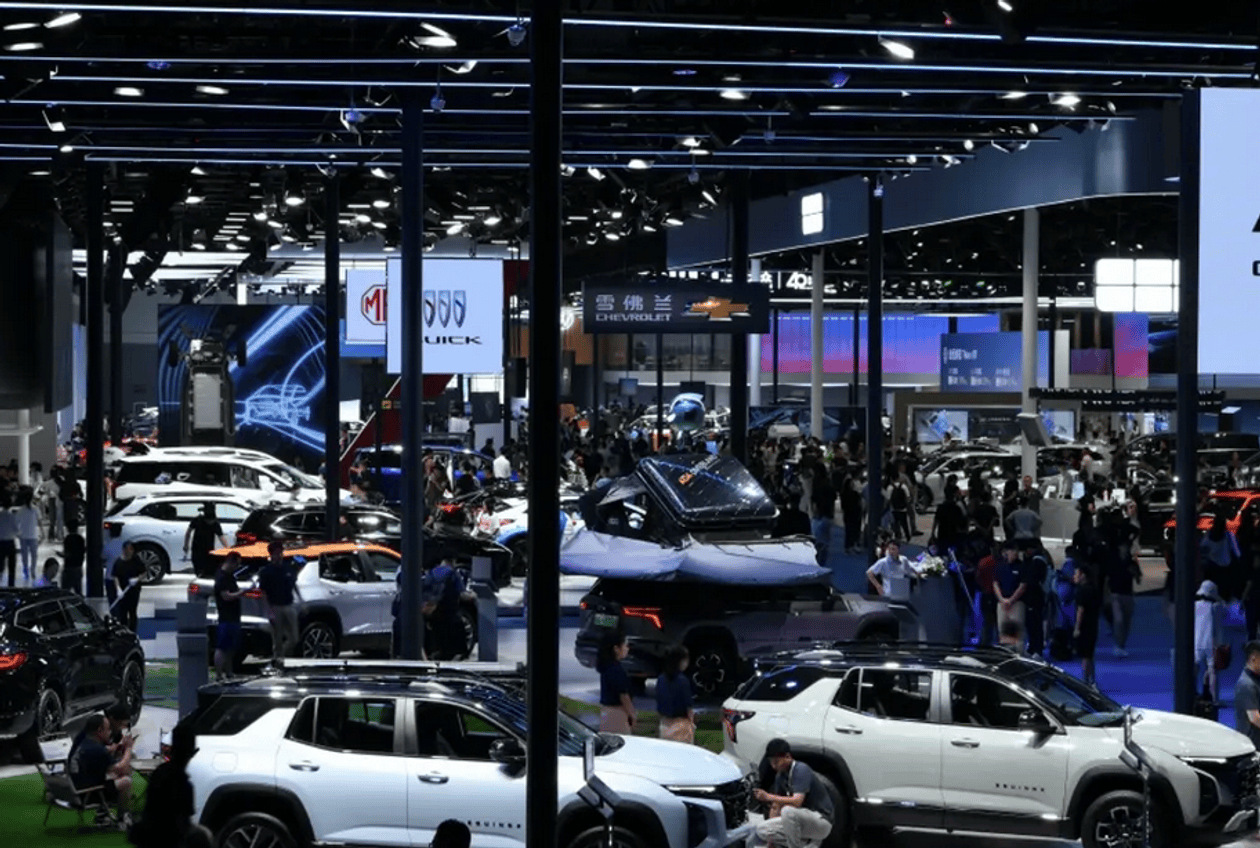
The core message from this meeting is clear: as the NEV sector enters a critical phase of rapid development, the government aims to guide the industry from "unbridled growth" towards "high-quality development." For users in Hong Kong, while the content of this symposium might seem distant, it is directly relevant to the experiences of those driving north for leisure or purchasing vehicles in the mainland.
Four Key Directives: Regulating Order, Addressing Shortcomings, Boosting Consumption, Perfecting the System
The meeting outlined four key areas for action to strengthen inter-departmental coordination, drive innovation, and promote high-quality industrial development .
First, it aims to consolidate efforts to regulate industry competition. This includes strengthening price monitoring and cost investigations, studying regulations for auto finance, conducting long-term and normalized rectification of online chaos in the sector, and urging companies to strictly honor the commitment to a 60-day payment term . This directive responds to the intensifying price wars in the NEV market, where some companies sell at a loss to gain market share, putting immense financial pressure on the supply chain. Implementing the 60-day payment term will help ease the working capital strain on parts suppliers and maintain a healthy industrial chain.
Second, the meeting calls for a new round of high-quality development actions for key industrial chains. It mandates accelerating efforts to address shortcomings in areas like automotive chips and foundational software, promoting wider application and iterative quality and performance improvements. It also emphasizes breakthroughs in autonomous driving technology, optimizing pilot access procedures, and accelerating standard-setting to create favorable conditions for mass production . Chips and foundational software are the "brains" and "nervous system" of smart vehicles. This initiative aims to reduce reliance on external supply chains and enhance the industry's self-reliance.
Third, the meeting stresses deepening actions to boost consumption. This includes solidly promoting vehicle trade-ins, advancing the large-scale application of new energy heavy trucks, and formulating policy documents to foster the healthy development of the vehicle modification market, thereby fully stimulating market consumption potential. It also involves improving financial credit services, strengthening international logistics and transportation support, and backing automotive export trade and overseas development . This indicates continued government support for stimulating auto consumption through policy measures while simultaneously aiding the international expansion of automakers.
Fourth, it requires perfecting the institutional system. This involves accelerating the legislative process for the "Regulations on the Administration of Motor Vehicle Production Access" to establish an open, scientific, and efficient governance system for the auto industry. It also emphasizes strengthening risk identification, strictly controlling product access, enhancing supervision and inspection of production consistency, and safeguarding product quality and safety . This suggests stricter scrutiny for new vehicle launches, with quality and safety becoming paramount.
Why the "60-Day Payment Term" Became a Focal Point
The meeting's call to "urge companies to strictly honor the commitment to a 60-day payment term" has drawn widespread attention . This requirement extends an initiative launched by CAAM in July 2024, where 16 major automakers jointly pledged to pay suppliers within 60 days.
Delayed payments to suppliers by automakers have long plagued the auto industry. Some dominant companies leverage their market position to stretch payment cycles to several months or more, shifting financial pressure onto upstream small and medium-sized enterprises. This not only threatens supply chain stability but can also lead to lower component quality, ultimately harming consumers.
Fu Bingfeng, Executive Vice President of CAAM, previously stated, "A stable supply chain is the foundation of industrial development. The 60-day payment term is the baseline requirement for industry self-discipline." The intervention by the three ministries now elevates this commitment from industry self-discipline to a regulatory expectation, a significant step in market order regulation.
Tackling Chip and Software Shortcomings
The meeting explicitly called for "accelerating efforts to address shortcomings in areas like automotive chips and foundational software" . The global automotive chip shortage since 2021 exposed the vulnerability of China's auto industry in core components, leading to production cuts and halts for many companies.
An official from MIIT's Department of Equipment Industry I noted that while the application scale of domestic automotive chips has expanded, significant gaps remain in the high-end chip sector. Next steps involve establishing a standard system for automotive-grade chips and fostering deeper collaboration between chip companies and automakers to accelerate validation and iterative upgrades of domestic chips.
Regarding foundational software, the operating system is the soul of a smart vehicle. Currently, the market for smart car operating systems in China is dominated by foreign players, limiting self-reliance. The meeting's call to "promote wider application and iterative quality and performance improvements" signals government encouragement for closer collaboration between automakers and software companies to gradually build an indigenous software ecosystem.
Autonomous Driving: Paving the Way for Mass Production
The meeting emphasized "accelerating breakthroughs in autonomous driving technology, optimizing pilot access procedures, and accelerating standard-setting to create favorable conditions for mass production" . This indicates autonomous driving is moving from R&D testing towards a critical phase of commercialization.
While cities like Beijing, Shanghai, and Shenzhen have already launched autonomous driving demonstration applications, unified national standards and regulations are lagging. "Optimizing pilot access procedures" means the government will streamline approval processes to speed up road testing. "Accelerating standard-setting" provides the regulatory framework necessary for mass production.
For consumers, this translates to faster market availability of vehicles equipped with advanced driver-assistance systems and more mature, reliable experiences.
Boosting Consumption: Trade-Ins as the Primary Driver
The meeting proposed "solidly promoting vehicle trade-ins" . In 2025, China's Ministry of Commerce and 13 other departments jointly issued an action plan to promote consumer goods trade-ins, aiming to roughly double the number of end-of-life vehicles recycled by 2027 compared to 2023. The 2026 Government Work Report also lists "stabilizing and expanding traditional consumption" as a key task.
Data from the Ministry of Commerce shows national vehicle scrap recycling reached 3.8 million units in 2025, a 35% year-on-year increase. This trend continued in the first two months of this year. Trade-in policies not only unlock consumption potential in the existing stock market but also promote energy conservation and emission reduction, accelerating NEV adoption.
The meeting also called for "promoting the large-scale application of new energy heavy trucks" . Heavy trucks are major carbon emitters in the transport sector, and promoting new energy versions is crucial for achieving carbon peaking and neutrality goals. Battery-swapping heavy trucks are already being used in ports, mines, and other specific scenarios, with plans to expand to more areas.
Fostering a Healthy Vehicle Modification Market
The meeting also proposed "formulating and releasing policy documents to promote the healthy development of the vehicle modification market" . Vehicle modification has long existed in a legal gray area in China, lacking clear regulations and preventing the formation of a scaled industry. This initiative signals that the modification market is poised for standardized development.
For younger users seeking personalization, this is undoubtedly positive news. A regulated market will offer more legal compliance options, allowing consumers to meet their customization needs for vehicle appearance and performance.
Supporting Export Trade and Overseas Development
The meeting called for "strengthening international logistics and transportation support, and backing automotive export trade and overseas development" . In 2025, China became the world's largest auto exporter for the first time, surpassing 6 million vehicles, with NEVs as the main driver, accounting for over one-third.
As export volumes continue to grow, international logistics capacity has become a constraint. This directive means the government will coordinate resources like shipping and China-Europe Railway Express to provide more stable and efficient logistics support for auto exports. It also encourages companies to expand overseas by setting up factories and sales networks, moving from "product export" to "industry going global."
Institutional System: Legislative Progress and Quality Supervision
The meeting called for accelerating the legislative process for the "Regulations on the Administration of Motor Vehicle Production Access" . Current access regulations are based on policies and departmental rules, lacking high-level legal authority. The new regulations will provide a stronger legal foundation for industry governance, establishing an open, scientific, and efficient institutional system.
The meeting also emphasized "strictly controlling product access, strengthening supervision and inspection of production consistency, and safeguarding product quality and safety" . This means regulatory authorities will continuously monitor whether mass-produced vehicles remain consistent with approved models, ensuring quality and safety standards are maintained.
A Hong Kong Perspective: Can Policy Benefits Reach Northbound Travelers?
For Hong Kong users, the content of this symposium is directly relevant to their vehicle usage experience under the "Northbound Travel for Hong Kong Vehicles" scheme.
First, supply chain stability impacts vehicle prices and availability. Enforcing the 60-day payment term helps maintain a healthy industrial chain, reduces risks of parts supply disruptions, and ensures stable vehicle quality and delivery. For Hong Kong residents considering buying a vehicle in the mainland, this means greater reliability and more robust after-sales support.
Second, progress in addressing chip and software shortcomings matters. As domestic chips and foundational software improve, more vehicles will feature these core components. For frequent northbound travelers, this ensures enhanced intelligent vehicle experiences and service availability.
Third, the popularization of autonomous driving technology is relevant. The meeting's focus on creating conditions for mass production means more vehicles with advanced driver-assistance systems will hit the market, significantly reducing driver fatigue on long journeys.
Fourth, consumption stimulus policies can lower costs. Trade-in policies will accelerate the replacement of older vehicles, promoting NEV adoption. Hong Kong residents planning to purchase a vehicle in the mainland can monitor local trade-in subsidy policies to reduce costs.
Fifth, strengthening the quality and safety bottom line benefits everyone. Stricter product access controls and enhanced production consistency supervision mean new vehicles undergo more rigorous scrutiny, providing consumers with greater safety assurance.
Personal Opinion: A Turning Point from Price Wars to Value Wars
Reviewing the content of this symposium, the most striking impression is the government's determination to guide the industry from "unbridled growth" towards "high-quality development."
In recent years, intensifying price wars in the NEV market have led some companies to sell at a loss for market share, straining supply chain finances, reducing R&D investment, and causing uneven product quality. This meeting's focus on "regulating industry competition," "enforcing the 60-day payment term," and "strengthening quality supervision" directly addresses these issues.
For consumers, a healthy competitive environment ultimately translates to better products and services. When companies stop "losing money for attention," they can invest more in technology and quality, winning users with genuine product strength.
Addressing chip and software shortcomings is crucial for the industry's long-term future. In the smart car era, operating systems and core chips determine product competitiveness. For China's NEV industry to evolve from "big" to "strong," mastering these core technologies is essential.
The push for mass production of autonomous driving is also significant. As regulations and standards mature, advanced driver-assistance features will move from "gimmicks" to practical tools enhancing driving safety and convenience.
For Hong Kong users, the significance of these policies lies not in any immediate direct benefit, but in the shared future they point toward – a more regulated, mature, and reliable NEV market. As this market develops, whether purchasing a vehicle in the mainland or driving north, Hong Kong users will ultimately be the beneficiaries.

香港汽車內容平台 🚗 新車・買車・玩車・用車 用香港視角,睇世界嘅車
+ Follow 【新車速報】兩座車又殺返嚟?smart精靈#2今次有啲料喎
鍾意細車嘅香港車迷留意!全新 smart 精靈#2 配置公布,採用 ECA 電動緊湊型架構,搭載 35.8kWh 磷酸鐵鋰電池,CLTC 續航 410km,30%-80% 快充最快15分鐘。
車長約 2.75米、轉彎半徑僅3.35米,仲有前麥弗遜+後五連桿獨立懸架;安全配備最多7個氣袋及 ACC、盲區監測等功能。
0-50km/h 3.8秒,10月12日巴黎車展全球首發!
兩座純電+細車身,放落香港街道會唔會幾對味?
#smart #smart精靈2 #純電車 #BitAutoHongKong 1小时前
【新車速報】兩座車又殺返嚟?smart精靈#2今次有啲料喎
鍾意細車嘅香港車迷留意!全新 smart 精靈#2 配置公布,採用 ECA 電動緊湊型架構,搭載 35.8kWh 磷酸鐵鋰電池,CLTC 續航 410km,30%-80% 快充最快15分鐘。
車長約 2.75米、轉彎半徑僅3.35米,仲有前麥弗遜+後五連桿獨立懸架;安全配備最多7個氣袋及 ACC、盲區監測等功能。
0-50km/h 3.8秒,10月12日巴黎車展全球首發!
兩座純電+細車身,放落香港街道會唔會幾對味?
#smart #smart精靈2 #純電車 #BitAutoHongKong 1小时前  【揀車有路數】日產新車賣比亞迪價?仲有激光雷達
今集試一台好特別嘅日產新車——NX8,中國特供增程SUV。外觀似熟悉嘅日產味,但內籠同科技配備竟然唔晒傳統日產套路,駕乘感受又有幾多轉變?到底仲係咪你認識嗰部日產?一齊試畀你睇。
#日產 #NX8 #增程 #BitAutoHongKong #揀車有路數 1天前
【揀車有路數】日產新車賣比亞迪價?仲有激光雷達
今集試一台好特別嘅日產新車——NX8,中國特供增程SUV。外觀似熟悉嘅日產味,但內籠同科技配備竟然唔晒傳統日產套路,駕乘感受又有幾多轉變?到底仲係咪你認識嗰部日產?一齊試畀你睇。
#日產 #NX8 #增程 #BitAutoHongKong #揀車有路數 1天前  【新車速報】T-Top 回歸?Nissan Z Kaze 概念車現身!
90年代 JDM 味返晒嚟?Nissan 最近喺美國 ZCON 公開 Z Kaze 概念車,以現款 Nissan Z 為基礎,換上全新 T-Top 可拆式車頂,向經典 300ZX 等 Z 系列致敬。
配合碳纖維空力套件、NISMO LMGT2 18吋輪圈,以及 GReddy 排氣、進氣同 intercooler 升級,成部車都充滿 JDM 改裝味。
「Kaze」即係日文「風」,而呢部車係 one-off 概念作品,並非量產車。10月3日仲會現身加州長灘 Japanese Classic Car Show。
如果 T-Top Z 真係量產,你會唔會心動?
#NissanZ #ZKaze #TTop #JDM #BitAutoHongKong 1天前
【新車速報】T-Top 回歸?Nissan Z Kaze 概念車現身!
90年代 JDM 味返晒嚟?Nissan 最近喺美國 ZCON 公開 Z Kaze 概念車,以現款 Nissan Z 為基礎,換上全新 T-Top 可拆式車頂,向經典 300ZX 等 Z 系列致敬。
配合碳纖維空力套件、NISMO LMGT2 18吋輪圈,以及 GReddy 排氣、進氣同 intercooler 升級,成部車都充滿 JDM 改裝味。
「Kaze」即係日文「風」,而呢部車係 one-off 概念作品,並非量產車。10月3日仲會現身加州長灘 Japanese Classic Car Show。
如果 T-Top Z 真係量產,你會唔會心動?
#NissanZ #ZKaze #TTop #JDM #BitAutoHongKong 1天前 Get the latest car news first!
【新車速報】兩座車又殺返嚟?smart精靈#2今次有啲料喎
鍾意細車嘅香港車迷留意!全新 smart 精靈#2 配置公布,採用 ECA 電動緊湊型架構,搭載 35.8kWh 磷酸鐵鋰電池,CLTC 續航 410km,30%-80% 快充最快15分鐘。
車長約 2.75米、轉彎半徑僅3.35米,仲有前麥弗遜+後五連桿獨立懸架;安全配備最多7個氣袋及 ACC、盲區監測等功能。
0-50km/h 3.8秒,10月12日巴黎車展全球首發!
兩座純電+細車身,放落香港街道會唔會幾對味?
#smart #smart精靈2 #純電車 #BitAutoHongKong 1小时前 【揀車有路數】日產新車賣比亞迪價?仲有激光雷達
今集試一台好特別嘅日產新車——NX8,中國特供增程SUV。外觀似熟悉嘅日產味,但內籠同科技配備竟然唔晒傳統日產套路,駕乘感受又有幾多轉變?到底仲係咪你認識嗰部日產?一齊試畀你睇。
#日產 #NX8 #增程 #BitAutoHongKong #揀車有路數 1天前 【新車速報】T-Top 回歸?Nissan Z Kaze 概念車現身!
90年代 JDM 味返晒嚟?Nissan 最近喺美國 ZCON 公開 Z Kaze 概念車,以現款 Nissan Z 為基礎,換上全新 T-Top 可拆式車頂,向經典 300ZX 等 Z 系列致敬。
配合碳纖維空力套件、NISMO LMGT2 18吋輪圈,以及 GReddy 排氣、進氣同 intercooler 升級,成部車都充滿 JDM 改裝味。
「Kaze」即係日文「風」,而呢部車係 one-off 概念作品,並非量產車。10月3日仲會現身加州長灘 Japanese Classic Car Show。
如果 T-Top Z 真係量產,你會唔會心動?
#NissanZ #ZKaze #TTop #JDM #BitAutoHongKong 1天前  BAWToyotaBYDZeekrGACDongfengXPengMGMaxusLeapmotorDenzaIMiCAURDeepalWulingOraJuneyao AutoKYCSkyworthAvatrFotonFordGeelyHongqiJAECOOKGMOMODADFSKTeslaHondaBMWMercedes-BenzsmartMINIPorscheNissanLexusSuzukiVolvoSubaruMazdaKiaHyundaiLand RoverRolls-RoyceFerrariAudiLamborghiniRiddaraSeresFarizonfireflyLingboxKaiyiVoyahHIMAM-HeroIsuzuBentleyPolestarMcLarenMitsubishiMaseratiPeugeotAston MartinAcuraJeepJaguarLotusVolkswagenEpiclandJACLepasLi
 © 2024 Bitauto.com. All Rights Reserved.
Bitauto (www.yiche.com and www.bitauto.com) is one of the most visited automotive websites in China. We provide detailed info on Chinese car brands available in your area. Please note that the information provided on this website is based on publicly available data and is for reference only. It may not be fully updated or accurate at all times.
Help us improve our website


