


首頁river

搜尋歷史
熱門搜尋
經銷商登入 / 註冊

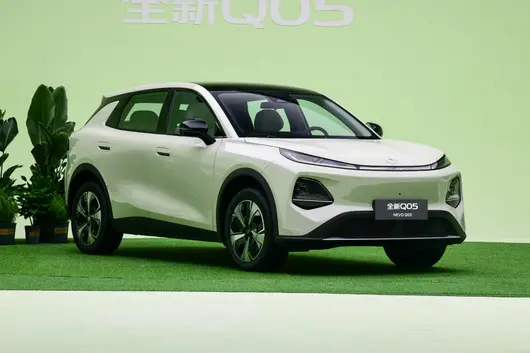
唔知有幾多朋友最近期關注 10 萬內純電 SUV 市場?近段時間睇嚟,呢個細分市場好熱鬧。就講長安啟源全新 Q05 同零跑 A10,上個月銷量分別達 15814 輛同 14372 輛,全部挺進 2026 年 4 月銷量排行全品類前 10,長安啟源全新 Q05 甚至奪得緊緊湊型純電 SUV 市場嘅銷冠。

(長安啟源全新 Q05)
值得留意係,兩款大熱門產品亮點亦唔少,9 萬級可以得到 500km+嘅續航,零跑 A10 甚至配備激光雷達,有高級智駕輔助需求嘅朋友嚟講,呢架車吸引力的確唔低。但係喺價格上,同為高配嘅長安啟源全新 Q05 506Max+ 同零跑 A10 505 激光雷達版,終端價格分別係 9.59 萬同 8.68 萬,手握 9 萬左右預算嘅朋友都可以考慮。明顯係,又去到決賽圈二揀一環節。
 (零跑 A10)
如果對預算比較敏感,咁喺長安啟源全新 Q05 同零跑 A10 之間,後者可能更受歡迎,畢竟終端價格實打實平咗幾千元。而且,高配 A10 配有激光雷達,市區/高速情況均能啟動領航輔助駕駛,呢個就係佢嘅優勢所在。當然,如果預算允許,揀長安啟源全新 Q05 高配,都有帶激光雷達嘅高級輔助駕駛。
 (長安啟源全新 Q05)
但既然係買車前嘅橫評,唔少全方位對比。首先從尺寸睇,作為緊湊型 SUV,長安啟源全新 Q05 長寬高分別係 4435*1855*1595mm,軸距為 2735mm。而零跑 A10 車型級別就係小型 SUV,長寬高分別係 4270*1810*1635mm,軸距為 2605mm。
 (零跑 A10)
如果只係考慮代步、通勤,零跑 A10 嘅細個嘅略有優勢,方便行街串巷。但實際上,好多人買車都要兼顧家用,10 萬內預算也多以剛需用車群體為主。既然係剛需,且有家用需求,嗰空間自然唔好掉鏈子。
 (長安啟源全新 Q05)
 (零跑 A10)
講返日常家庭出行嚟講,兩車之間 130mm 軸距差異,直接反映喺後排體驗。坐入長安啟源全新 Q05 後排,腿部空間平整兼寬敞,一齊坐 3 位成年人都唔會太擠;但係坐入零跑 A10 後排,無論坐寬定係腿部空間都會細少少。媽咪喺後排照顧孩子,長安啟源全新 Q05 後排更加寬敞嘅空間會更加方便佢操作,孩子都能有更大嘅活動空間。
 (長安啟源全新 Q05)
 (零跑 A10)
除咗空間,通勤黨同家庭用戶對舒適配置都比較關注。睇嚟對比,兩車都有配電動尾門、無匙進入、自適應遠近光等外部配置。但係從車廂內睇,零跑 A10 副駕無法電動調節,後排靠背都唔支援角度調節,同埋缺少後排空調出風口、車內 PM2.5 過濾裝置等。
 (長安啟源全新 Q05)
 (零跑 A10)
反觀長安啟源全新 Q05,除咗副駕支持電動調節,前排仲集成咗加熱/通風/按摩/副駕腿托功能,對比零跑 A10 只提供前排座椅加熱,佢嘅品質無疑更上一層樓。包括後排乘員都有少少照顧,例如靠背角度可調、配有後排空調出風口、後排中央扶手/杯架等,更加適合家人同行呢類場景。
 (長安啟源全新 Q05)
 (零跑 A10)
除咗舒享體驗,行駛系統嘅對比我哋都唔好忽略。首先從大家關注嘅續航睇,長安啟源全新 Q05 同零跑 A10 分別搭載 51.9kWh、53kWh 電池,CLTC 純電續航做到 506km、505km,差異大可忽略。但從電芯供應鏈睇,前者出自寧德時代,後者就係國軒高科/江蘇正力,若論品牌含金量,“寧王”順位自然靠前,更值得信賴。另外,兩車都有全球品質,按照全球嚴苛嘅標準打造,零跑 A10 符合國內、歐盟雙標準,長安啟源全新 Q05 已經喺泰國上市,未來仲會相繼落地多個國家地區,最終開拓歐洲區域,此外仲有央企背書,質量品質都好可靠。
因為本文討論嘅係 A10 嘅 505 版本,採用電池液冷技術,溫控較好,而如果係 403 版本,採用成本低嘅風冷技術,散熱效果較差。呢點上,全新 Q05 做得更好,入門就採用電池直冷技術,高配用嘅係液冷技術,能更好地實現熱管理,保證電池安全。
 (長安啟源全新 Q05)
 (零跑 A10)
動力方面,長安啟源全新 Q05 同零跑 A10 都係前置單電機佈局,電機最大動力輸出分別係 120kW/190N·m、90kW/150N·m,0-100km/h 加速時間分別做到 8.9 秒同 10.6 秒。坦率嚟講,兩款車喺純電陣營加速性能都中規中矩;但係相對嚟講,長安啟源全新 Q05 嘅 8 秒級零百加速,喺山路行駛、高速超車等情況下會比零跑 A10 更加分。
 (長安啟源全新 Q05)

(零跑 A10)
總結嚟講,零跑 A10 505 激光雷達版優勢突出:價格更低、智駕輔助覆蓋範圍更廣,適合預算優先 + 科技嘗鮮嘅消費者。而長安啟源全新 Q05 更強調“全面”二字:加少少預算同樣可以獲得高級輔助駕駛,而且尺寸更大、舒適配置更高、採用頭部電芯供應鏈,動力亦更強,綜合表現更全能。總括嚟講,預算 9 萬級追求面面俱到嘅家用體驗,長安啟源全新 Q05 506Max+ 更加值得考慮。

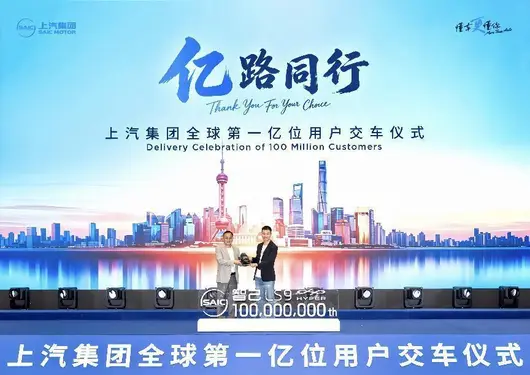
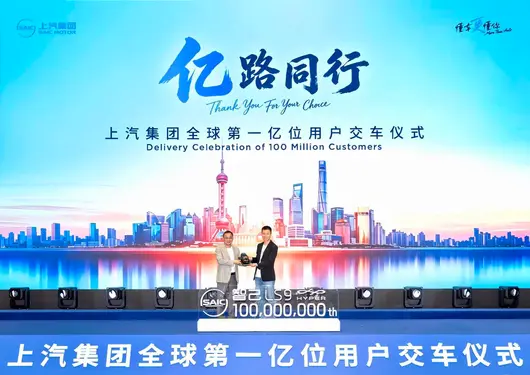
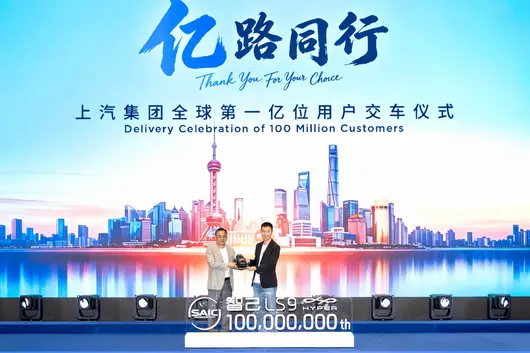
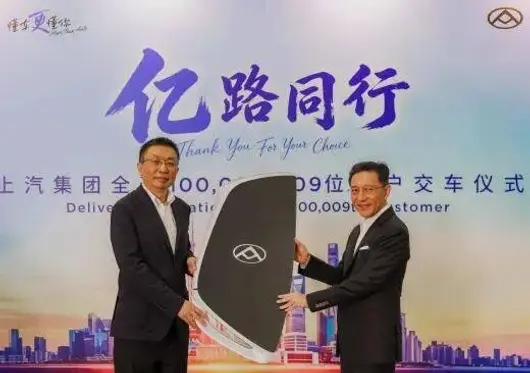
2026 年 5 月 28 日,上海北外灘世界會客廳見證中國汽車工業歷史性時刻。上羣集團「全球第一億位用戶交車儀式」盛大啟幕,依托覆蓋全球的品牌矩陣,開啟跨城市、跨洲际的全球接力交付。至此,上羣集團正式成為中國汽車行業首家累計產銷量突破一億輛的車企,刷新中国汽車產業發展紀錄,鐫刻下民族汽車工業跨越式發展的全新里程碑。

一億輛整車產銷背後,是上羣七十餘載深耕不輟的實業堅守,是從蹣跚起步到全球引領的蛻變升級,更是千萬用戶信賴、全球夥伴同行的最好見證。從手工敲製首輛轎車到量產億級整車,從合資探索到自主崛起,從傳統燃油車領跑到智能新能源突圍,上羣完整親歷並推動了中國汽車工業從無到有、從弱到強、從國內立足到全球馳騁的全過程。
七十載薪火相傳,見證中國汽車工業奮進征程
上羣的發展脈絡,就是一部濃縮的中國民族汽車工業成長史。1955 年,上海內燃機配件製造公司成立,拉開了上海汽車工業發展的序幕;1958 年,一代代造車前輩憑藉匠心與堅守,以手工榔頭敲出第一輛「鳳凰牌」轎車,實現上海轎車製造「零的突破」,為民族造車事業埋下初心火種。

改革開放以來,上羣勇立行業潮頭,率先開啟對外開放與創新探索。1983 年桑塔納正式下線,開啟中國汽車產業合資合作的全新篇章,加速國內汽車工業化、標準化進程;1997 年上海通用落地投產,以 23 個月建廠出車的驚人速度,創造享譽行業的「上海速度」,刷新全球車企建廠投產紀錄。

邁入新時代,上羣錨定自主創新賽道,持續突破技術壁壘。2006 年自主品牌榮威誕生成,扛起民族汽車品牌創新大旗;2016 年推出全球首款互聯網汽車榮威 RX5,率先開啟汽車智能化轉型浪潮;2020 年高端智能電動品牌智己汽車成立,精準佈局高階智能電動賽道,助力中國汽車品牌向高端化、科技化進階。

七十餘年風雨兼程,上羣始終堅守「懂車更懂你」的核心用戶理念。所謂「懂車」,是深耕核心技術、打磨產品品質的極致追求,從桑塔納國產化技術攻堅,到合資 2.0 時代的技術共創,再到全線控底盤、固態/半固態電池、AI 大模型車載應用等前沿技術落地,每一次技術迭代都彰顯硬核造車實力;所謂「懂你」,是始終立足用戶需求,將前沿科技轉化為可感知、可體驗的美好出行場景,讓技術服務于人、科技溫暖出行。一億輛產銷的里程碑,本質上是一億份用戶信賴的集中兌現,是上羣初心不變的最好印證。
億級標杆車型落地,集結行業頂尖技術大成
本次交付的全球第一億輛整車,是上羣傾力打造的智己 LS9 Hyper,這款車型凝聚上羣七十餘年造車技術積澱,是品牌技術迭代的集大成之作,正式開啟新能源車「新三大件」新時代,重新定義高端智能電動出行標準。
在核心硬件層面,智己 LS9 Hyper 搭載下一代頂尖技術配置,實力拉滿行業標竿水準。底盤層面,配備同級首發全線控四輪轉向技術,兼顧操控精準度與行駛穩定性;智駕層面,搭載 520 線超視域激光雷達與英偉達 Thor 芯片,構建全方位、高精度智能感知系統,全面預埋 L3 及以上高階智駕持續迭代的冗餘能力;三電層面,依托全域 800V 高壓平台與恆星超級增程系統,實現能效與續航的雙重突破。

性能與安全領域,車型亮點十足。新車首搭上羣金標颶風三電機,成功躋身性能 3 秒俱樂部,帶來極致駕駛體驗;同時攜手紫金山實驗室,全球首發「內生安全」技術,將汽車安全邊界從傳統物理安全,拓展至資訊與系統安全,築牢 AI 智能時代汽車安全基石,為用戶全場景出行保駕護航。
值得關注的是,本次第一億位用戶為 Momenta CEO 曹旭東。作為上羣智駕領域核心戰略夥伴,雙方長期深度共創的智能駕駛技術,已全面賦能上羣自主與合資多個品牌,實現技術落地與用戶普惠。「夥伴變車主」的特殊交付,不僅是一次簡單的新車交付,更是智能汽車生態協同共贏、技術理念深度共鳴的生動體現。

全鏈全域賦能,築牢全球化硬核體系實力
一億輛產銷奇蹟,絕非單一產品、單一市場的突破,而是上羣全價值鏈、全品牌、全球化體系實力的集中彰顯。多年來,上羣構建起整車、零部件、移動出行和服務、金融、國際經營、創新科技六大板塊協同發展的完整閉環,形成穩健、高效、可持續的產業生態。
市場數據印證強勁實力,2026 年 1-4 月,上羣累計銷量達 130.2 萬輛,連續四個月蟬聯中國車企銷量冠軍。其中自主品牌銷量 91 萬輛,佔比接近 70%,自主崛起態勢顯著;新能源車銷售 41.2 萬輛,持續領跑新能源賽道;海外市場銷量 45.9 萬輛,同比大幅增長 50.2%,全球化發展勢頭迅猛。

本次全球接力交付盛典中,上羣全品牌矩陣集體亮相、協同發力。自主品牌全面覆蓋多元出行場景,尚界 Z7、華境 S、榮威 M7、MG4 半固態電池版、五菱星光 560、大通 eDeliver5、紅巖重卡等十餘款車型集中交付,涵蓋個人通勤、家庭出行、商用營運、物流運輸等全場景需求。合資品牌重磅亮出「合資 2.0」創新成果,大衆 ID. ERA 9X、AUDI E7X、別克至境 E7 等全新車型,憑藉高階智駕、超級架構、極致座艙優勢,上市即熱銷,彰顯合資轉型新活力。
從上海主會場出發,交付信號同步點亮南京、柳州、太原等國內多城,以及英國、印尼、新加坡等海外國家,開創中國車企全球化交付全新敘事。作為中國汽車「走出去」的先行者,上羣深耕海外市場多年,佈局超 100 個海外零部件生產基地、3000 餘個全球經銷商網絡,建成 3 大海外研發創新中心、4 大海外生產製造中心,依托 42 艘滾裝船、8 條國際航線,構建起覆蓋東南亞、歐洲、美洲的全球化物流體系。
目前,上羣產品與服務遍佈全球 170 餘個國家和地區,海外累計銷量突破 700 萬輛。旗下 MG 品牌連續 11 年蟬聯中國品牌歐洲銷冠,率先實現歐洲及英國市場累計銷量破百萬的突破。依托「Glocal 全球本土化戰略」,上羣正加速從「產品出海」向「價值鏈出海」跨越,讓中國智造、中國標準、中國服務走向世界。
以用戶為核心,書寫有溫度的出行答卷
七十餘年深耕,上羣始終堅守「懂車更懂你」的初心,將用戶需求貫穿研發、生產、銷售、服務全鏈條,讓每一款產品都貼合真實生活,每一次服務都溫暖用戶出行。本次交付盛典,眾多不同身份、不同領域的用戶,成為上羣初心最好的見證者。

得到 APP 創辦人羅振宇以華境 S 第 001 號體驗官身份,親身見證上羣造車實力;前國腳楊晨偏愛大衆 ID. ERA 9X 的硬核品質,與品牌長期主義理念不謀而合;公益博主劉佳深耕山區公益,被別克至境 E7 滿分座艙的人文設計打動;還有自媒體創作者、村支書、物流從業者等萬千普通用戶,因信賴選擇上羣,因熱愛奔赴同行。每一位用戶的選擇,都是上羣「懂技術、更懂生活」的生動詮釋。
一億輛,是上羣七十餘年砥礪前行的階段性答卷,更是品牌邁向智能電驅新時代、開啟「二次創業」的全新起跑線。自 2014 年率先佈局新能源轉型以來,上羣始終緊跟國家產業戰略,深耕智電創新、堅持技術突圍,實現從單點突破到全域領跑的跨越,形成自主與合資並行、乘用與商用協同、海內與海外聯動的蓬勃發展格局。
從 1955 年初創起步到 2026 年億級登頂,從首位用戶到億級用戶,從本土探索到全球領航,上羣用七十餘載光陰,書寫了中國汽車工業的奮進傳奇。立足全新起點,上羣將繼續堅守初心、深耕創新,與全球用戶、產業夥伴億路同行,持續以硬核科技賦能出行升級,以中國智造助力產業騰飛,共創全球美好出行新未來。

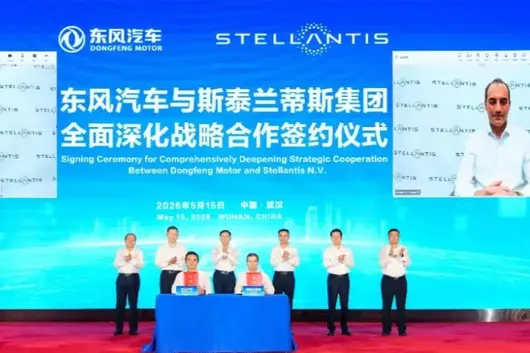
May 20, Stellantis and Dongfeng signed a non-binding memorandum of understanding, planning to establish a joint venture in Europe. Among them, Stellantis holds 51% equity, while Dongfeng holds 49%.
This joint venture will do four things: sell VOYAH brand new energy vehicles, localize production at Stellantis' Rennes factory in France, joint procurement, joint R&D.

After establishing the "Leapmotor International" joint venture with Leapmotor in Europe, Stellantis extended an olive branch to its old partner Dongfeng again this time, adding a layer of consideration for "localization production".
Does this mean Chinese automakers have completely changed their strategy for going global?
First, Clarify the Global Expansion Models
Before analyzing this, let's first clarify the several strategies Chinese automakers use for going global.
The first is whole vehicle export. Cars are built domestically, shipped on boats, and sold by dealers locally. This model is the simplest with the lowest investment, but it lacks market control; once tariffs rise, the price advantage disappears. Chery's early export to Russia followed this path; once tariffs were added, the rhythm was completely disrupted.
The second is KD assembly. Parts are shipped locally and assembled in local factories. This model is a step up from whole vehicle export, able to evade some tariffs and carry a "Locally Made" label. But honestly, many KD factories are just large screw-nailing plants; core parts are still shipped from China, with limited localization. Many Geely and Chery factories in Southeast Asia and the Middle East use this model. It solves some problems but not the root ones.
The third is building factories alone. Bringing money overseas to buy land, build factories, hire people, and build channels. This is the most "hardcore" way and the path taken by top independent automakers. Great Wall Motors and BYD have adopted this model. BYD's Thailand factory is already in production, the Brazil factory is under construction, and the Hungary factory is in planning. The benefit is becoming a true "local brand", evading import tariffs, and securing local government industrial subsidies. But the investment is high, the cycle is long, and management complexity increases by an order of magnitude.
The fourth is acquiring local brands. Geely acquired Volvo, later invested in Daimler, and acquired Lotus. This is the path Geely walked earliest and most systematically. Partial equity or binding with a local giant equals directly inheriting the other party's brand assets, channel networks, and local compliance capabilities. But integration difficulty is huge, with high risks of cultural conflict and management chaos.
And this cooperation between Stellantis and Dongfeng does not fit well into any of the above.
Strictly speaking, it is a combination of the third and fourth types.
Using Stellantis' existing French factories for production is borrowing the other party's manufacturing assets, not building independently; selling VOYAH using Stellantis' existing European sales channels is borrowing the other party's commercial assets. Moreover, the capital structure is shared equity, not Party A hiring Party B to help, but a true interest binding.
This model, I will temporarily call it "Grafting Global Expansion" — not planting a tree yourself, but grafting branches onto an existing big tree.

Why is this path worth attention? Because it solves several core pain points of going global.
Where Does Localized Production Really Matter?
Many people talking about localized production first think "evading tariffs". That's right, EU anti-subsidy taxes plus tariffs mean a Chinese EV pays dozens of percentage points more tax entering Europe, basically wiping out the price advantage. But tariffs are just one dimension.
More critical is the carbon footprint. The EU Carbon Border Adjustment Mechanism (CBAM) has started trial operation, and future import vehicle carbon emissions will also need to be considered. If cars are produced in Europe using European green electricity, the carbon footprint will be much better. In the next 5 years, the cost pressure in this area will increase.
Another point to consider is the supply chain.
Dongfeng is producing in European factories, but what about the supply chain? The memorandum wrote "joint procurement", which means some parts are still sourced from China, leveraging Dongfeng's procurement capabilities in China's new energy ecosystem to reduce costs. But the local supply chain must keep up gradually, otherwise, if geopolitical risks arise, production lines will stop.
Next, the brand. European consumers have high loyalty to car brands; Germans buy Volkswagen, French buy Peugeot. This is a habit of decades. Chinese new brands want to break this habit; product strength alone is not enough, there must be "trust endorsement". Stellantis' participation is this endorsement.
Of course, the cost is that the joint venture is led by Stellantis, and the voice in the European market is mainly in Stellantis' hands. This is a price that has to be paid.
Who Will Be Mainstream in the Next Three to Five Years?
My judgment is that in Europe, "binding with local giants" will become the mainstream.
The reason is simple, the European market is too hard to fight. Tariff barriers are highest, regulations most complex, consumers most picky, competition most intense. The whole vehicle export model will become increasingly difficult in the European market, forcing Chinese automakers to find a way out of localized production.
On the other hand, Stellantis needs to make up for the electrification shortcoming. Other Western automakers, such as Ford, General Motors, Renault and other traditional automakers, are struggling in transformation dilemmas. They have channels, factories, and brands, but lack new energy capabilities. This is exactly what Chinese automakers can provide.
Both sides have needs, so cooperation will increase.
The method may not necessarily be a joint venture form like Stellantis and Dongfeng, it could also be more flexible forms such as technology licensing, channel sharing, joint development, but the core logic is the same: not fighting alone, leveraging momentum to land. While in markets like Southeast Asia, Middle East, South America, building factories alone and KD assembly remain mainstream because barriers are relatively low and price advantages still work.
However, "binding with giants" is not without risk. Being tied up with a giant means destiny is partly in others' hands. What if Stellantis cooperates with Dongfeng today but finds a better partner tomorrow? What if joint venture performance fails to meet expectations? What if there are disagreements on product positioning and pricing strategies? Dongfeng Peugeot Citroën's history has already proved that the relationship between joint venture partners is not always smooth.
From Dongfeng Peugeot Citroën to European joint venture, over thirty years, the relationship between Dongfeng and Stellantis has completed a "two-way rush". Behind the role reversal is the accumulation and transformation of the Chinese automotive industry over decades. Chinese automakers are no longer satisfied with "selling cars"; they want "rooting". The prerequisite for rooting is learning to cooperate with locals.
Whether this time can succeed, we will wait and see.

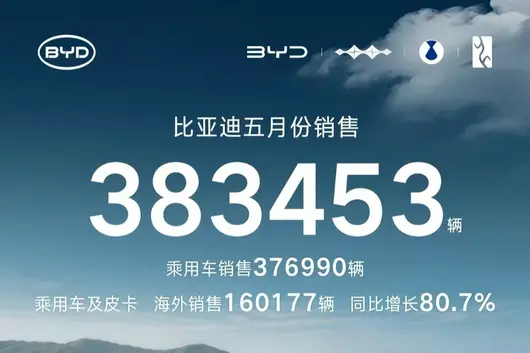
比亞迪正式發布 2026 年 5 月產銷快報,全品牌新能源汽車單月銷量 383453 輛,同比微增 0.26%,時隔十個月實現單月銷量同比轉正;其中乘用車交付 376990 輛,環比大漲 19.4%,一掃前期車型換代陣痛,呈現國內基本盤穩固、海外銷量狂飆、高端品牌全線放量的全新格局,在國內新能源內捲加劇、特斯拉 FSD 入華、自主新品密集上市的市場環境中,走出獨有的結構性增長路線。

王朝 + 海洋兩大主力品牌 5 月合計售出 330215 輛,佔據集團總銷量超八成,仍是比亞迪銷量壓艙石,全系列共 8 款車型單月銷量突破 2 萬台,產品從 5 萬入門代步到 20 萬家用 SUV 實現全覆蓋。

王朝網內部,元家族 56691 輛、宋家族 51370 輛。雙雙跨過五萬門檻,成為品牌兩大銷量支柱,兼顧家用代步與城鄉出行需求;秦家族緊隨其後交出 28360 台穩定表現,漢、唐系列月銷維持六千級體量,深耕中大型家用轎車、SUV 細分市場;全新車型夏處於市場培育期,單月交付 1810 台,後續隨渠道鋪開有望穩步上量。
海洋網增長勢頭更為迅猛,全系五款車型跨入兩萬俱樂部:海獅 42615 台、海豹 34117 台、海鷗 39919 台、海豚 22260 台、宋 PLUS 27755 台。其中海鷗憑藉 6-8 萬親民定價穩居入門代步銷冠,海獅作為全新走量車型上市即站穩四萬量級,補齊海洋網中型 SUV 產品空白,完善海洋產品梯隊佈局。從代步小車到緊湊 SUV,兩大主品牌依托 DM-i 混動與純電雙線技術,牢牢鎖住 15 萬以內國內主流家用市場份額。
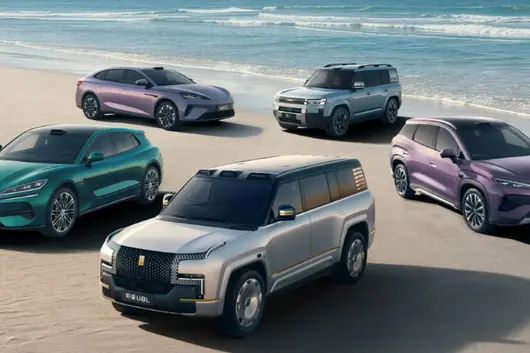
方程豹同比暴漲 139.7% 品牌向上落地見效騰勢、方程豹、仰望組成的高端矩陣 5 月合計銷售 46489 輛,正式擺脫小眾定位,成為比亞迪品牌溢價與利潤增長新支點,打破自主品牌高端化難破局的行業魔咒。

越野品牌方程豹單月 30186 輛,同比暴漲 139.7%,創下品牌上市以來月度銷量新高,旗下鎦 7 單月 18280 台,豹 5、豹 8 穩定輸出,在 25-40 萬硬派越野細分市場持續擠壓合資、進口車型生存空間。

騰勢 5 月交付 16303 台,MPV 標桿 D9 售出 6721 台,Z9 系列近 6000 台,MPV、中大型轎車雙線發力,站穩豪華新能源賽道;百萬元級超豪華品牌仰望穩步爬坡,當月交付 286 台,同比增幅 105.8%,完成自主品牌天花板產品的市場驗證,形成從十幾萬家用、三四十萬越野、五十萬豪華 MPV 到百萬元級旗艦的全價格帶產品佈局。

5 月比亞迪乘用車和皮卡海外銷量 160177 輛,同比大漲 80.7%,出口佔全系總銷量突破 42%,創下品牌出海歷史新高,成為穩住 5 月整體銷量、實現同比轉正的核心驅動力。
東南亞、歐洲、拉美成為主力增量市場,海鷗、宋 PLUS、元系列持續登頂多國新能源熱銷榜單,SHARK 皮卡連續兩月單月出口突破 4000 台;依托泰國、巴西、匈牙利、烏茲別克斯坦四大海外整車工廠落地投產,本地化生產持續落地,規避關稅同時快速下沉終端渠道。在國內車市存量競爭、價格戰常態化背景下,高速擴容的海外市場有效對沖國內車型換代帶來的銷量波動,正式從補充市場升級為比亞迪核心增長引擎。截至當前,比亞迪新能源汽車全球累計銷量已經突破 1650 萬輛,全球化版圖持續拓寬。
智駕賦能產品迭代 下半年新品蓄力衝量5 月比亞迪智能化落地迎來關鍵節點,天神之眼智駕系統成為車型核心加分項:全品牌搭載高級智駕車型保有量突破 315 萬輛,日均路測數據超 2 億公里;當月比亞迪落地城市領航、智能泊車雙安全兜底服務,成為全球首家實現兩項智駕兜底的車企,政策落地三天後,搭載天神之眼系統車型的城市 NOA 激活率暴漲 50%,智能化體驗升級直接拉動終端到店訂單轉化,為後續車型持續走量築牢產品競爭力,直面 FSD 入華帶來的智駕市場衝擊。
從數據細節來看,2026 年 1-5 月比亞迪累計銷量 1405039 輛,同比下滑 20.32%,核心誘因是全系主力車型集中換代、第二代閃充刀片電池產能爬坡受限。新款閃充電池升級快充與低溫性能,全系換代車型優先換裝新電池,但產線改造拖累產能釋放,熱門車型訂單積壓、交付延後,一定程度壓縮 5 月交付體量。
隨著二季度末二代刀片電池產能持續釋放,疊加騰勢 N8L、方程豹鎦 7 純電版、海獅 05、夏 L 等多款新車陸續登陸市場,業內普遍預判比亞迪 6 月全品牌銷量有望突破 40 萬輛。依托低端走量鎖份額、高端提利潤、海外衝增量、智能化提產品力的四維發展邏輯,在國內新能源淘汰賽加劇的當下,比亞迪全品類佈局優勢持續放大,坐穩國內新能源龍頭,加速向著全球頭部車企穩步邁進。

Folks, today let's talk about big news on going global—not selling cars, but selling "drivers". On June 2, WeRide and Uber jointly announced a plan: to launch the country's first commercial Robotaxi pilot service in Madrid, Spain. In other words: Spanish residents will soon be able to hail a driverless taxi via Uber. This is the first time WeRide and Uber are partnering to enter the European market. Madrid also becomes the 12th city globally where WeRide's Robotaxi arrives.
According to official news, with the support of the Madrid regional government, this service will officially launch within this year. At that time, friends in Madrid can open the Uber App and call WeRide's Robotaxi with one click. It's just like calling an ordinary ride-hailing service, the difference is the arriving car has no driver—at least initially, there is still a difference. In the initial operation phase, a professionally trained safety monitor will be on board, as it's just launched, safety comes first.
This company, WeRide, you might have heard of it, or you might not. A brief introduction: Established in 2017, it has been dedicated to Robotaxi technology R&D and commercialization. Currently, its Robotaxis cover Guangzhou, Beijing, Singapore, Abu Dhabi, Dubai, Riyadh, Zurich... plus Madrid now, totaling 12 cities. Spain is also the 5th European market WeRide has entered—previously entered Switzerland, France, Belgium, Slovakia. According to the plan agreed by WeRide and Uber in May 2025, they plan to deploy Robotaxi services in 15 new international cities within five years, deploying tens of thousands of Robotaxis globally. With the Madrid launch, the deployment in 4 cities has been completed, and 11 more will be covered successively before 2030.
To be honest, it's not the first time Chinese autonomous driving companies are going global, but the combination of Chinese technology + global mobility platform + European market is quite interesting. Madrid is one of the European Robotaxi markets with the most commercial potential, with a large population, high travel demand, and friendly local policies. Being able to take root in this market is a significant milestone for WeRide. For Uber, introducing Robotaxis is also a way to reduce costs—after all, drivers don't need salaries. For Madrid residents, hailing a taxi might be cheaper in the future.


兄弟姐妹們,今日講一個出海嘅大新聞——唔係賣車,係賣「司機」。6 月 2 號,文遠知行同 Uber 聯合宣佈咗一件事:計劃喺西班牙馬德里推出該國首個商業化 Robotaxi 試點服務。意思就係:西班牙人好快就可以用 Uber 叫到一台冇司機嘅出租車。呢次係文遠知行同 Uber 第一次一齊進入歐洲市場。馬德里亦成為文遠知行 Robotaxi 駛入嘅全球第十二個城市。
官方消息話,喺馬德里自治區政府嘅支持下,呢項服務今年內就會正式啟動。到嗰陣,馬德里嘅朋友哋打開 Uber App,就有一鍵呼叫文遠知行嘅 Robotaxi。同叫普通網約車一樣,分別係嚟嘅車冇駕駛員——至少喺初期,仲係有分別嘅。運營初期,車入面會配備經過專業培訓嘅安全員,終究係剛上線,穩妥第一。
文遠知行呢間公司,你可能聽過,也可能冇聽過。簡單介紹下:2017 年成立,一直埋頭搞 Robotaxi 技術研發同商業化。而家佢嘅 Robotaxi 已經覆蓋咗廣州、北京、新加坡、阿布達比、迪拜、利雅得、蘇黎世……加埋而家嘅馬德里,一共 12 個城市。西班牙亦係文遠知行進入嘅第五個歐洲市場——之前已經入咗瑞士、法國、比利時、斯洛伐克。按照文遠知行同 Uber 喺 2025 年 5 月達成嘅規劃,佢哋要喺五年內新增 15 個國際城市部署 Robotaxi 服務,全球部署數萬輛 Robotaxi。隨著馬德里落地,目前已經完成咗 4 個城市嘅佈局,仲有 11 個會喺 2030 年前陸續覆蓋。
講真嘅,中國自動駕駛公司出海唔係頭一回,但中國技術 + 全球出行平台 + 歐洲市場呢個組合,定係好有意思。馬德里係歐洲最具商業潛力嘅 Robotaxi 市場之一,人口多、出行需求大,當地政策都好友善。喺呢個市場站穩腳根,對文遠知行嚟講係個唔小嘅里程碑。對 Uber 嚟講,引進 Robotaxi 都係為咗降低成本——終究司機唔使發人工。對馬德里市民嚟講,以後打車可能更平。

When a car slowly drives towards the delivery stage, what people see might be an ordinary new car delivery; but when this car becomes the first hundred millionth vehicle in the development history of China's automotive industry, the meaning it carries far exceeds the product itself.

On May 28, SAIC Motor Group's "Global First Hundred Millionth User Delivery Ceremony" was held at the World Living Room at North Bund in Shanghai. With the completion of delivery to the world's first hundred millionth user, SAIC Motor Group has become the first automotive group in China to surpass 100 million cumulative production and sales. This is not only an important milestone in the company's development history, but also writes a new chapter for China's automotive industry.

100 million vehicles, is a number, and also a history of industrial growth spanning over seven decades. Looking back at the development history of China's automotive industry, SAIC has always been an important participant and witness. In 1955, the Shanghai Internal Combustion Engine Parts Manufacturing Company was established; in 1958, the "Phoenix" sedan was born, achieving an important breakthrough in Shanghai's sedan manufacturing field. From initial exploration and start-up, to the opening of the joint cooperation era, to the growth of independent brands and new energy transformation, SAIC's development trajectory is closely intertwined with the development context of China's automotive industry.
In 1983, the Santana rolled off the line, promoting the modernization process of China's automotive industry; in 1997, Shanghai GM was established, creating industry attention with "Shanghai Speed"; in 2006, the Roewe brand was born, opening a new stage for independent brand development; in 2016, the Internet car Roewe RX5 was launched; in 2020, IM Motors was established, further layout of the smart electric vehicle track.
In the constantly changing market environment, SAIC has always promoted technological innovation and product upgrades around the concept of "Understanding cars better, understanding you better". From localization system construction to Internet car exploration; from fully-by-wire chassis, solid-state and semi-solid-state battery R&D, to AI large models and intelligent driving technology applications, every technological iteration has become an important support for its stride to a new stage.

At this delivery ceremony, the highly anticipated first hundred millionth delivery model is the IM LS9 Hyper.
As an important manifestation of the phase results of SAIC's technology system, the IM LS9 Hyper is equipped with fully-by-wire four-wheel steering technology, 520-line ultra-vision LiDAR, and NVIDIA Thor chip, and adopts a global 800V high-voltage platform and Star Super Extended Range technology. At the same time, the new car is the first to be equipped with the SAIC Gold Label Hurricane Three-Motor, and jointly with Zijinshan Laboratory to first release "Intrinsic Safety" technology, further extending safety capabilities to the information and system levels.

It is worth noting that the world's first hundred millionth user is Momenta CEO Cao Xudong. As an important partner representative of SAIC's intelligent driving ecosystem, his conversion from partner to user identity also became a major highlight of this delivery ceremony. Both sides continue to carry out technical co-creation in the field of intelligent driving, and relevant results have been applied to multiple independent and joint venture brand models.
If the first hundred millionth vehicle reflects technical accumulation, then the delivery scenarios covering the global market demonstrate the results of SAIC's systematic development.
On the day of the event, more than ten whole vehicle brands under SAIC and nineteen car models participated in the "Global Relay Delivery" simultaneously. From Shangjie Z7, Huajing S, Roewe M7, MG4 semi-solid-state battery version, to Wuling Starlight 560, Maxus eDeliver5, Hongyan Heavy Truck, Yujin Dana T1, Sunwin Pure Electric Bus, and Iveco Juxing EV, different brands and products covered diverse scenarios such as personal travel, family cars, commercial logistics, and public transportation.

Meanwhile, models such as VW ID. ERA 9X, AUDI E7X, and Buick Zhijing E7 also made a joint appearance, showcasing the latest results of SAIC promoting technical synergy and product innovation in the "Joint Venture 2.0" stage.
Starting from the Shanghai main venue, the delivery scenes were successively presented in domestic cities such as Nanjing, Liuzhou, Taiyuan, as well as overseas areas such as the UK, Indonesia, and Singapore. This delivery activity spanning regions and time zones not only connected global users but also reflected the layout results of SAIC continuing to promote international development.
After years of development, SAIC has formed a global system covering R&D, manufacturing, logistics, sales, and services. Nowadays, its products and services cover over 170 countries and regions, with cumulative overseas sales exceeding 7 million units. Whether it is the layout of R&D and innovation centers, or the construction of production manufacturing and distribution service networks, all provide strong support for its global development.

In fact, the value behind 100 million vehicles is not only reflected in scale.
For the automotive industry, every vehicle corresponds to a real user, a life story, and a travel experience. From family users to corporate clients, from public welfare workers to logistics practitioners, users of different identities together constitute the vivid picture behind this "100 million vehicles".
And at the event scene, "users" also became the true protagonists. Whether they are pioneer users experiencing new technologies for the first time or ordinary consumers who have long followed the brand development, they jointly witnessed this historic moment, and gave the "100 million vehicles" a meaning with more warmth.
Standing at a new node looking back, SAIC completed a growth journey from chasing to running alongside, and then to participating in leading over seven decades; facing the future, 100 million vehicles is more like a new starting line.

Summary: Coming from the traditional automotive era, against the background of new energy, intelligence, and globalization accelerating continuously, China's automotive industry is welcoming a new competitive landscape. For SAIC which has already entered the "Hundred Million Era", how to continue promoting technological innovation, deepening global layout, and meeting users' constantly upgrading needs may become an important topic for the next stage.
From the starting exploration in 1955 to welcoming the world's first hundred millionth user in 2026; from the first car rolling off the production line to cumulative production and sales exceeding 100 million vehicles, this report records the development journey of an enterprise and also reflects the constant forward steps of China's automotive industry. So, standing on the new starting point, what story will SAIC Motor Group write in the next chapter?


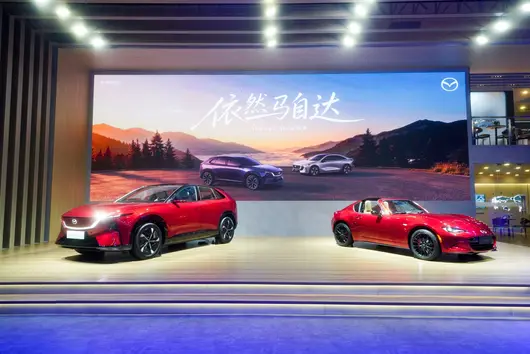
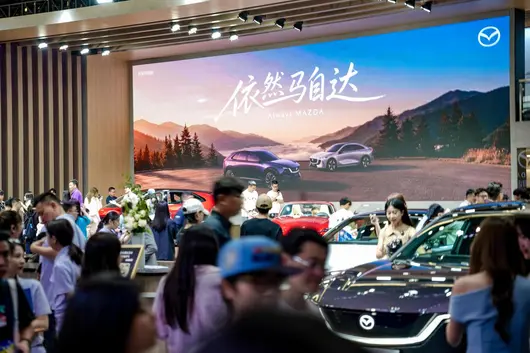
重慶車展 N8 館,長安馬自達展台畀人圍得水洩不通。唔係因為車模,而係因為嗰台連奪 8 項世界頂級設計大獎嘅 EZ-60同剛剛拿下「世界年度設計車」嘅 EZ-6。一位老馬自達 6 車主喺展車前站咗十分鐘,最後話:「呢個設計,仲係嗰個睇一眼就想開嘅馬自達。」 而更加令我震撼嘅係,長安馬自達直接放啲大招:電池終身自燃包賠,唔限里程、唔限車主——合資新能源入面,敢咁承諾嘅,獨此一家。

EZ-6 剛剛斬獲「2026 世界年度設計車」,成為首個獲此殊榮嘅中國新能源車型。而 EZ-60 更加勁,直接包攬德國紅點、iF、美國 IDA 世界三大設計賽事大滿貫,累計拿下 8 項全球頂級設計大獎——全球唯一達成此成就嘅 SUV。安全層面,兩款車均按中歐雙五星開發:EZ-6 已集齊 C-NCAP、E-NCAP、中保研等 5 項權威認證,其中 C-NCAP 乘員保護得分率、E-NCAP 兒童保護得分率均為 2025 年已測車型最高。電池安全更加超前滿足 2026 年 7 月新國標同歐標,仲有句「電池終身自燃包賠」,直接将用戶最後嘅焦慮掐滅。
🏆 設計榮譽 EZ-6:世界年度設計車(中國新能源首次);EZ-60:8 項世界大獎大滿貫
🛡️ 安全認證 中歐雙五星,EZ-6 五項全優,C-NCAP/E-NCAP 多項第一
🔋 電池承諾 終身自燃包賠,唔限里程、唔限車主,行業首創
🌍 全球認證 國內首個獲歐盟、英國、澳大利亞三大市場整車認證嘅合資新能源車企

展台中央,冠軍車手紀浩分享咗佢喺 2026 中國新能源汽車拉力錦標賽嘅故事:駕駛完全原廠未改裝嘅 EZ-60 純電版,6 日 910 公里魔鬼賽程,面對絕大多數增程/插混對手,硬係拿下咗場地賽 SUV 組冠軍、拉力賽總成績亞軍。紀浩話:「好多對手係改裝車,我連輪胎都係原廠。但 EZ-60 嘅底盤調校、側傾抑制、動力線性輸出,令我在戈壁同盤山路上信心十足。」 呢個就係馬自達「人馬一體」喺電動時代嘅延續。唔堆電機數據,卻將駕駛愉悅感做到骨子入面。順帶一提,充分展現長安馬自達喺技術上嘅長期主義同深厚積累——從轉子時代到電動時代,對駕駛本質嘅偏執從未改變。
三、全球統一標準:南京工廠出口歐美澳,國內銷量連續 7 個月合資第一長安馬自達南京工廠係馬自達海外最佳工廠,國內銷售車同出口全球車型共線生產,品控標準完全一致。5 月底,80 幾位來自歐洲、澳洲、泰國嘅海外經銷商專程嚟南京工廠考察,對製造工藝讚不絕口。目前 EZ-60 已連續 7 個月蟬聯合資新能源中型 SUV 銷量冠軍,海外預售同樣火爆。馬自達高幹喺車展現場放話:「長安馬自達已成為馬自達全球新能源整車設計、研發、製造基地同出口中心。每一位中國用戶擁有嘅,都係真正嘅全球車。」
四、百萬馬粉生態:心願之旅 + 公益每公里捐款,品牌同用戶雙向奔赴2026 年,長安馬自達持續踐行「用戶+」思維。「心願之旅」讓用戶許願、品牌協助完成;「車主故事薈」已經推出 11 期,有連續 7 年捐助小學嘅公益達人,有因馬自達結緣嘅情侶;「悅馬創作家」鼓勵用戶用 VLOG 記錄擁車生活;「全民經紀人」仲有人推薦咗 100 幾位親友買馬自達。6 月 1 日至 20 日,車主每行駛 1 公里,品牌捐贈 0.1 元善款,用於改善雲南希望小學條件——自 2015 年以來,長安馬自達已經喺雲南捐建 12 所希望小學,投入超 1000 萬元。呢種把用戶同公益綁定嘅玩法,確實走心。

重慶車展期間,長安馬自達同步開啟「駕享夏日風情 悅享 618 大促」:至高 17,000 元置換廠補+20,000 元以舊換新國補,購指定車型贈送價值 7,999 元尊享套裝(原廠充電樁 + 龍膜太陽膜+TPE 腳墊/車廂尾箱墊),仲享 0 首付 5 年低息(年均費率 1.99%)同 7,999 元終身零燃權益。到店試駕新能源車型嘅用戶,均可獲贈國家級非遺金陵金箔禮品。呢一波叠加,相當於裸車直降數萬,仲有終身電池保障,誠意好足。

寫喺最後:重慶車展上,長安馬自達冇喊嗰些虛頭巴腦嘅口號,而係用世界級獎項、拉力賽冠軍、終身電池包賠、百萬車主生態,老老實實嘅話你知——「依然馬自達」唔係懷舊,係依然執著於好設計、好操控、好品質,依然將用戶當朋友。如果你而家睇緊 20 萬級新能源 SUV,不妨去 N8 館試下 EZ-60,然後問吓自己:呢種開起嚟令人笑嘅駕駛感,其他車俾得到咩?
評論區討論👇:你覺得合資新能源入邊,邊個最有資格講「全球車」?馬自達嘅「人馬一體」喺電動時代仲可以打嗎?
數據來源:長安馬自達 2026 重慶車展官方發布會同傳播手冊

In May, China's automotive market overall presented a gentle recovery trend, with domestic brands still being the sales backbone of the market. Recently, BYD, Geely, Chery, Changan, and Great Wall, the top 5 domestic automakers, successively released their monthly performance reports. From the data, these five companies show a general characteristic of "stable total growth, divergence between domestic and international markets, and accelerated new energy penetration". Overseas exports and new energy vehicles have become the most core growth engines; export business has evolved from a "bonus item" to the "core foundation" for some companies. BYD's "dominant leader" status is further consolidated, Chery achieved high growth via exports, Geely's new energy penetration rate broke 56%, Changan focused steadily on balanced development, while Great Wall appeared slightly under pressure during structural transformation.
BYD: Export Hits New High Becomes Biggest HighlightIn May, BYD stood firmly at the top of domestic brands with a monthly sales volume of 383,500 vehicles, maintaining positive growth both year-on-year and month-over-month under a large base. Its two main brands, Dynasty and Ocean, sold a combined 330,200 vehicles, contributing 86.1% of total sales; Fangchengbao's monthly sales broke 30,000 units to reach 30,200, a year-on-year increase of 139.7%, setting a new high for the year; Denza sold 16,300 vehicles, and Yangwang delivered 286 vehicles. From a model perspective, BYD had eight models in May with monthly sales exceeding 20,000 vehicles. The Song Family and Yuan Family both broke 50,000 units, selling 51,370 and 56,691 vehicles respectively. The Sea Lion Family followed closely with 42,615 vehicles, and Seagull sales were also close to 40,000 vehicles.

BYD's biggest highlight in May was exports. Overseas new energy vehicle sales reached 160,600 units, an 80.4% year-on-year increase, accounting for about 42%. The sharp expansion of export scale effectively countered the phased weakness in domestic demand. Cumulative exports from January to May exceeded 620,000 vehicles. High export growth mainly benefited from continued ramping up of overseas factory capacity, improved ocean shipping capacity, and accelerated channel network expansion. In the domestic market, BYD promoted Megawatt Super Charging and intelligent strategies simultaneously—Megawatt charging achieved about 90% charge in 9 minutes; 20,000 super charging stations are planned to be built by 2026; all series models are available with Sky Eye B intelligent driving solutions and city navigation safety fallback plans, accelerating the popularization of high-level intelligent driving. As Gen 2 Blade Battery capacity gradually releases, the company's orders are expected to continue rising.
Chery: Sales Growth Leads the Top 5Chery Group's total sales volume in May was 247,800 vehicles, a significant year-on-year increase of 20.5%, ranking first in growth speed among the top 5. Exports remained its most core growth engine—May exports reached 181,900 vehicles, an 80.5% year-on-year increase, accounting for 73.4% of total sales that month, continuously breaking the single-month export record for Chinese brands for three months. In terms of new energy, Chery New Energy sold 100,300 vehicles, a 58.8% year-on-year increase. April and May consecutively saw monthly new energy sales breaking 100,000 vehicles.

The strong performance in exports benefited from Chery's long-term deep cultivation of overseas channel advantages and localized operation capabilities. While overseas orders continued to rise, high export growth formed a sharp contrast with domestic sales—Chery's domestic sales in May were only 60,000 vehicles, accounting for one-quarter of total sales. From cumulative data, Chery Group accumulated 1.101 million sales from January to May, but against the annual goal of 3.2 million vehicles, monthly averages need to reach about 420,000 vehicles later, and pressure remains significant.
Geely: New Energy Penetration Rate Breaks 56%Geely Auto's total sales volume in May was 237,600 vehicles, a 1% year-on-year increase, achieving month-over-month double growth for three consecutive months. In terms of structure, Geely's "New Four Transformations" transformation showed significant results: new energy vehicle sales reached 133,400 units, accounting for 56% of total sales, with new energy share exceeding 50% for four consecutive months.

From sub-brands, performance was significantly divergent. Zeekr brand sales in May reached 34,400 vehicles, a 82% year-on-year increase; Zeekr 9 Series and 8 Series models combined sales approached 50% of total sales, showing bright performance in the high-end market; Galaxy brand sales were 81,700 vehicles; Geely brand sales were 182,500 vehicles, among which China Star Series sales reached 100,800 vehicles; Lynk & Co brand sales were 20,700 vehicles, with new energy vehicle sales share rising to 71%.
In terms of exports, Geely's overseas vehicle exports in May reached 85,100 vehicles, a explosive 184% year-on-year increase, setting a brand single-month export record high. Among exported products, new energy vehicles reached 40,800 units, accounting for nearly half; hybrid and pure electric products have successively landed in Southeast Asia, Middle East, Latin America, and other markets, highlighting the results of global strategy implementation.
Changan: Multi-brand Matrix Balanced EffortChangan Auto's delivery volume in May was 209,100 vehicles, among which new energy deliveries were 92,400 vehicles, a 5.8% year-on-year increase, with new energy share about 44%. In terms of exports, overseas deliveries reached 70,700 vehicles, a 38% year-on-year increase, becoming another major growth highlight for Changan in May.
In the sub-brand matrix, Changan Qiyuan delivered 34,500 vehicles in May; All-New Q05 delivered 15,800 units, with orders breaking 3,000 units within three days of listing in Thailand; Deepal sales in May were 33,200 vehicles, a 30% year-on-year increase; January to May overseas cumulative sales were 28,700 vehicles, a significant 167% year-on-year increase; Avatr delivered 7,336 vehicles in May; Changan Auto (Gravity) delivered nearly 49,000 vehicles in May.

Changan Auto's balanced layout was fully reflected in May: the fuel car base remained stable, new energy brands Deepal and Qiyuan accelerated volume growth, high-end brand Avatr continued to break through in technical cooperation, and overseas markets simultaneously achieved breakthrough growth. The pattern of five brands working together, driven by both new energy and exports, is initially taking shape.
Great Wall: Overseas Sales Growth Year-on-Year 46.75%Great Wall Motor's sales in May were 100,400 vehicles, slightly down compared to last May's 102,200 vehicles, making it the only company among the top 5 to show a year-on-year negative growth. From sub-brands, Haval brand sales in May were 55,500 vehicles, remaining Great Wall's most important sales pillar; Tank brand sales were 17,100 vehicles; both Haval and Tank brand sales showed year-on-year declines; Wey brand sold 8,119 vehicles, a 31.78% year-on-year increase, achieving growth against the trend; Ora brand performance was most stunning, with sales of 6,018 vehicles, a significant 206.88% year-on-year increase. In terms of new energy, Great Wall sold 30,400 new energy vehicles in May, with new energy vehicle transformation gradually accelerating.

The overseas market became Great Wall's biggest highlight in May, with overseas sales growing 46.75% year-on-year. Against the background of pressure on the domestic market, strong growth in overseas business effectively made up for the decline in the domestic market. Great Wall Motor's current core contradiction lies in: Haval and Tank, the two traditional main-selling brands, face weak growth, while Wey and Ora brands, although growing notably, have relatively small volume and are not yet enough to support overall growth. How to complete the "relay" between old and new brands is the key issue Great Wall must solve subsequently.
Final ThoughtsFrom May data, the growth pattern of the top 5 domestic brands has clearly diverged, but there are three common trends worth noting: First, exports have become a key engine for domestic brands to seek stability and growth. Second, new energy transformation is still accelerating, but paths differ among enterprises. Third, technological innovation continues to deepen brand moats. Looking ahead to the second half of the year, competition in the automotive industry will continue to upgrade around these three trends. Although everyone has a common direction, these three trends are all competing for the entire enterprise's industrial chain strength, and the strong will remain strong, which has almost become an inevitable outcome.

兄弟姐妹們,今日講一個出海嘅大新聞——唔係賣車,係賣「司機」。6 月 2 號,文遠知行同 Uber 聯合宣佈咗一件事:計劃喺西班牙馬德里推出該國首個商業化 Robotaxi 試點服務。意思就係:西班牙人好快就可以用 Uber 叫到一台冇司機嘅出租車。呢次係文遠知行同 Uber 第一次一齊進入歐洲市場。馬德里亦成為文遠知行 Robotaxi 駛入嘅全球第十二個城市。
官方消息話,喺馬德里自治區政府嘅支持下,呢項服務今年內就會正式啟動。到嗰陣,馬德里嘅朋友哋打開 Uber App,就有一鍵呼叫文遠知行嘅 Robotaxi。同叫普通網約車一樣,分別係嚟嘅車冇駕駛員——至少喺初期,仲係有分別嘅。運營初期,車入面會配備經過專業培訓嘅安全員,終究係剛上線,穩妥第一。
文遠知行呢間公司,你可能聽過,也可能冇聽過。簡單介紹下:2017 年成立,一直埋頭搞 Robotaxi 技術研發同商業化。而家佢嘅 Robotaxi 已經覆蓋咗廣州、北京、新加坡、阿布達比、迪拜、利雅得、蘇黎世……加埋而家嘅馬德里,一共 12 個城市。西班牙亦係文遠知行進入嘅第五個歐洲市場——之前已經入咗瑞士、法國、比利時、斯洛伐克。按照文遠知行同 Uber 喺 2025 年 5 月達成嘅規劃,佢哋要喺五年內新增 15 個國際城市部署 Robotaxi 服務,全球部署數萬輛 Robotaxi。隨著馬德里落地,目前已經完成咗 4 個城市嘅佈局,仲有 11 個會喺 2030 年前陸續覆蓋。
講真嘅,中國自動駕駛公司出海唔係頭一回,但中國技術 + 全球出行平台 + 歐洲市場呢個組合,定係好有意思。馬德里係歐洲最具商業潛力嘅 Robotaxi 市場之一,人口多、出行需求大,當地政策都好友善。喺呢個市場站穩腳根,對文遠知行嚟講係個唔小嘅里程碑。對 Uber 嚟講,引進 Robotaxi 都係為咗降低成本——終究司機唔使發人工。對馬德里市民嚟講,以後打車可能更平。

唔知有幾多朋友最近期關注 10 萬內純電 SUV 市場?近段時間睇嚟,呢個細分市場好熱鬧。就講長安啟源全新 Q05 同零跑 A10,上個月銷量分別達 15814 輛同 14372 輛,全部挺進 2026 年 4 月銷量排行全品類前 10,長安啟源全新 Q05 甚至奪得緊緊湊型純電 SUV 市場嘅銷冠。
(長安啟源全新 Q05)
值得留意係,兩款大熱門產品亮點亦唔少,9 萬級可以得到 500km+嘅續航,零跑 A10 甚至配備激光雷達,有高級智駕輔助需求嘅朋友嚟講,呢架車吸引力的確唔低。但係喺價格上,同為高配嘅長安啟源全新 Q05 506Max+ 同零跑 A10 505 激光雷達版,終端價格分別係 9.59 萬同 8.68 萬,手握 9 萬左右預算嘅朋友都可以考慮。明顯係,又去到決賽圈二揀一環節。
(零跑 A10)
如果對預算比較敏感,咁喺長安啟源全新 Q05 同零跑 A10 之間,後者可能更受歡迎,畢竟終端價格實打實平咗幾千元。而且,高配 A10 配有激光雷達,市區/高速情況均能啟動領航輔助駕駛,呢個就係佢嘅優勢所在。當然,如果預算允許,揀長安啟源全新 Q05 高配,都有帶激光雷達嘅高級輔助駕駛。
(長安啟源全新 Q05)
但既然係買車前嘅橫評,唔少全方位對比。首先從尺寸睇,作為緊湊型 SUV,長安啟源全新 Q05 長寬高分別係 4435*1855*1595mm,軸距為 2735mm。而零跑 A10 車型級別就係小型 SUV,長寬高分別係 4270*1810*1635mm,軸距為 2605mm。
(零跑 A10)
如果只係考慮代步、通勤,零跑 A10 嘅細個嘅略有優勢,方便行街串巷。但實際上,好多人買車都要兼顧家用,10 萬內預算也多以剛需用車群體為主。既然係剛需,且有家用需求,嗰空間自然唔好掉鏈子。
(長安啟源全新 Q05)
(零跑 A10)
講返日常家庭出行嚟講,兩車之間 130mm 軸距差異,直接反映喺後排體驗。坐入長安啟源全新 Q05 後排,腿部空間平整兼寬敞,一齊坐 3 位成年人都唔會太擠;但係坐入零跑 A10 後排,無論坐寬定係腿部空間都會細少少。媽咪喺後排照顧孩子,長安啟源全新 Q05 後排更加寬敞嘅空間會更加方便佢操作,孩子都能有更大嘅活動空間。
(長安啟源全新 Q05)
(零跑 A10)
除咗空間,通勤黨同家庭用戶對舒適配置都比較關注。睇嚟對比,兩車都有配電動尾門、無匙進入、自適應遠近光等外部配置。但係從車廂內睇,零跑 A10 副駕無法電動調節,後排靠背都唔支援角度調節,同埋缺少後排空調出風口、車內 PM2.5 過濾裝置等。
(長安啟源全新 Q05)
(零跑 A10)
反觀長安啟源全新 Q05,除咗副駕支持電動調節,前排仲集成咗加熱/通風/按摩/副駕腿托功能,對比零跑 A10 只提供前排座椅加熱,佢嘅品質無疑更上一層樓。包括後排乘員都有少少照顧,例如靠背角度可調、配有後排空調出風口、後排中央扶手/杯架等,更加適合家人同行呢類場景。
(長安啟源全新 Q05)
(零跑 A10)
除咗舒享體驗,行駛系統嘅對比我哋都唔好忽略。首先從大家關注嘅續航睇,長安啟源全新 Q05 同零跑 A10 分別搭載 51.9kWh、53kWh 電池,CLTC 純電續航做到 506km、505km,差異大可忽略。但從電芯供應鏈睇,前者出自寧德時代,後者就係國軒高科/江蘇正力,若論品牌含金量,“寧王”順位自然靠前,更值得信賴。另外,兩車都有全球品質,按照全球嚴苛嘅標準打造,零跑 A10 符合國內、歐盟雙標準,長安啟源全新 Q05 已經喺泰國上市,未來仲會相繼落地多個國家地區,最終開拓歐洲區域,此外仲有央企背書,質量品質都好可靠。
因為本文討論嘅係 A10 嘅 505 版本,採用電池液冷技術,溫控較好,而如果係 403 版本,採用成本低嘅風冷技術,散熱效果較差。呢點上,全新 Q05 做得更好,入門就採用電池直冷技術,高配用嘅係液冷技術,能更好地實現熱管理,保證電池安全。
(長安啟源全新 Q05)
(零跑 A10)
動力方面,長安啟源全新 Q05 同零跑 A10 都係前置單電機佈局,電機最大動力輸出分別係 120kW/190N·m、90kW/150N·m,0-100km/h 加速時間分別做到 8.9 秒同 10.6 秒。坦率嚟講,兩款車喺純電陣營加速性能都中規中矩;但係相對嚟講,長安啟源全新 Q05 嘅 8 秒級零百加速,喺山路行駛、高速超車等情況下會比零跑 A10 更加分。
(長安啟源全新 Q05)
(零跑 A10)
總結嚟講,零跑 A10 505 激光雷達版優勢突出:價格更低、智駕輔助覆蓋範圍更廣,適合預算優先 + 科技嘗鮮嘅消費者。而長安啟源全新 Q05 更強調“全面”二字:加少少預算同樣可以獲得高級輔助駕駛,而且尺寸更大、舒適配置更高、採用頭部電芯供應鏈,動力亦更強,綜合表現更全能。總括嚟講,預算 9 萬級追求面面俱到嘅家用體驗,長安啟源全新 Q05 506Max+ 更加值得考慮。

On May 28, 2026, SAIC Group held the "World's First 100 Millionth User Delivery Ceremony" at the World Living Room of Shanghai North Bund, becoming the first automotive group in the history of China's automotive industry to exceed 100 million cumulative production and sales. Previously, only the United States, Japan, Germany, South Korea, etc. had "100-million-level automakers." SAIC's breakthrough marks a new historical step for China's automotive industry.

Over 70 Years, From Hand-Built to Leading
SAIC's starting point was the Shanghai Internal Combustion Engine Parts Manufacturing Company, established in 1955. In 1958, workers hammered out the first "Phoenix" sedan in an alley factory, achieving the "zero breakthrough" for Shanghai's sedan manufacturing.
Subsequent key milestones: The first Santana rolled off the line in 1983,开启 a new era of joint cooperation; Shanghai GM was established in 1997, creating the "Shanghai Speed" of 23 months from factory construction to vehicle launch; In 2006, the independent brand Roewe was born; In 2016, the world's first Internet car Roewe RX5 was launched; In 2020, the high-end smart electric brand IM Motors was established. Over 70 years, SAIC has experienced and driven the entire process of China's automotive industry from nothing to something, from weak to strong.
IM LS9 Hyper, SAIC's Culmination of Technology

The 100 millionth vehicle delivery model is IM LS9 Hyper, known as the culmination of SAIC's technical strength. It is equipped with three major core technologies:
Full Steer-by-Wire Four-Wheel Steering: The first fully steer-by-wire steering technology in China verified by the China Automotive Technology and Research Center, pre-installed with redundancy capabilities for L3 and higher-level intelligent driving.
Maximized Intelligent Driving Hardware: 520-line super-vision LiDAR + NVIDIA Thor chip, paired with Momenta end-to-end reinforcement learning large model.
Three-Electric Systems: Global 800V high-voltage platform + Star Super Range Extender, with comprehensive range exceeding 1400 km; First equipped with SAIC Golden Label Hurricane Three-Motor, joining the "3-Second Club".

It is worth mentioning that IM LS9 Hyper launched the "Endogenous Security" technology jointly with Purple Mountain Labs globally, expanding the automotive safety boundary from physical security to information and system security.
The 100 millionth user is Cao Xudong, CEO of Momenta — SAIC's core strategic partner in the intelligent driving field. "Partner becomes owner" is a microcosm of deep technological co-creation.
January to April Sales 1.302 Million Vehicles, Four Consecutive Months Champion

The foundation of 100 million vehicles is solid market performance. From January to April 2026, SAIC Group cumulatively sold 1.302 million vehicles, ranking first among Chinese automakers for four consecutive months. Among them, independent brand sales were 910,000, accounting for nearly 70%; New energy vehicle sales were 412,000; Overseas market sales were 459,000, a year-on-year surge of 50.2%.
Regarding R&D investment, in the past decade, SAIC has cumulatively invested over 150 billion yuan in new energy and intelligent connected fields, forming nearly 26,000 valid patents. In 2014, the sales proportion of SAIC new energy vehicles was less than 0.1%, while in 2025, this proportion exceeded one-third.
Global Layout, Products Spanning Over 170 Countries and Regions

SAIC is a pioneer in China's automotive industry "going global." Currently, it has over 100 parts production bases and over 3,000 dealer networks overseas, with 3 major R&D innovation centers including London, and 4 production centers in Thailand, Indonesia, India, and Pakistan. SAIC Logistics owns 42 roll-on/roll-off ships, with 8 international routes covering Southeast Asia, Europe, and the Americas.
As of now, SAIC's products and services cover over 170 countries and regions, with cumulative overseas sales exceeding 7 million units. MG has won the champion of European sales for Chinese brands for 11 consecutive years; in 2025, European annual sales exceeded 300,000, becoming the first Chinese automotive brand to accumulate over one million sales in Europe and the UK.
In 2025, SAIC released the overseas "Glocal Strategy" (Global + Local), accelerating the shift from "Product Going Global" to "Value Chain Going Global".
Final Thoughts
100 million vehicles is not the end point, but a new starting line for SAIC to "start a second entrepreneurship" towards the future of smart electricity. From 1955 to 2026, from the first user to the 100 millionth user, from "hand-built" manufacturing to global technology leadership, SAIC's development history is itself a condensed history of the rise of China's automotive industry. SAIC has already proved the depth and resilience of China's automotive industry with 100 million vehicles. Who will be the next 100-million-level automaker?

比亞迪正式發布 2026 年 5 月產銷快報,全品牌新能源汽車單月銷量 383453 輛,同比微增 0.26%,時隔十個月實現單月銷量同比轉正;其中乘用車交付 376990 輛,環比大漲 19.4%,一掃前期車型換代陣痛,呈現國內基本盤穩固、海外銷量狂飆、高端品牌全線放量的全新格局,在國內新能源內捲加劇、特斯拉 FSD 入華、自主新品密集上市的市場環境中,走出獨有的結構性增長路線。
王朝 + 海洋兩大主力品牌 5 月合計售出 330215 輛,佔據集團總銷量超八成,仍是比亞迪銷量壓艙石,全系列共 8 款車型單月銷量突破 2 萬台,產品從 5 萬入門代步到 20 萬家用 SUV 實現全覆蓋。
王朝網內部,元家族 56691 輛、宋家族 51370 輛。雙雙跨過五萬門檻,成為品牌兩大銷量支柱,兼顧家用代步與城鄉出行需求;秦家族緊隨其後交出 28360 台穩定表現,漢、唐系列月銷維持六千級體量,深耕中大型家用轎車、SUV 細分市場;全新車型夏處於市場培育期,單月交付 1810 台,後續隨渠道鋪開有望穩步上量。
海洋網增長勢頭更為迅猛,全系五款車型跨入兩萬俱樂部:海獅 42615 台、海豹 34117 台、海鷗 39919 台、海豚 22260 台、宋 PLUS 27755 台。其中海鷗憑藉 6-8 萬親民定價穩居入門代步銷冠,海獅作為全新走量車型上市即站穩四萬量級,補齊海洋網中型 SUV 產品空白,完善海洋產品梯隊佈局。從代步小車到緊湊 SUV,兩大主品牌依托 DM-i 混動與純電雙線技術,牢牢鎖住 15 萬以內國內主流家用市場份額。
方程豹同比暴漲 139.7% 品牌向上落地見效騰勢、方程豹、仰望組成的高端矩陣 5 月合計銷售 46489 輛,正式擺脫小眾定位,成為比亞迪品牌溢價與利潤增長新支點,打破自主品牌高端化難破局的行業魔咒。
越野品牌方程豹單月 30186 輛,同比暴漲 139.7%,創下品牌上市以來月度銷量新高,旗下鎦 7 單月 18280 台,豹 5、豹 8 穩定輸出,在 25-40 萬硬派越野細分市場持續擠壓合資、進口車型生存空間。
騰勢 5 月交付 16303 台,MPV 標桿 D9 售出 6721 台,Z9 系列近 6000 台,MPV、中大型轎車雙線發力,站穩豪華新能源賽道;百萬元級超豪華品牌仰望穩步爬坡,當月交付 286 台,同比增幅 105.8%,完成自主品牌天花板產品的市場驗證,形成從十幾萬家用、三四十萬越野、五十萬豪華 MPV 到百萬元級旗艦的全價格帶產品佈局。
5 月比亞迪乘用車和皮卡海外銷量 160177 輛,同比大漲 80.7%,出口佔全系總銷量突破 42%,創下品牌出海歷史新高,成為穩住 5 月整體銷量、實現同比轉正的核心驅動力。
東南亞、歐洲、拉美成為主力增量市場,海鷗、宋 PLUS、元系列持續登頂多國新能源熱銷榜單,SHARK 皮卡連續兩月單月出口突破 4000 台;依托泰國、巴西、匈牙利、烏茲別克斯坦四大海外整車工廠落地投產,本地化生產持續落地,規避關稅同時快速下沉終端渠道。在國內車市存量競爭、價格戰常態化背景下,高速擴容的海外市場有效對沖國內車型換代帶來的銷量波動,正式從補充市場升級為比亞迪核心增長引擎。截至當前,比亞迪新能源汽車全球累計銷量已經突破 1650 萬輛,全球化版圖持續拓寬。
智駕賦能產品迭代 下半年新品蓄力衝量5 月比亞迪智能化落地迎來關鍵節點,天神之眼智駕系統成為車型核心加分項:全品牌搭載高級智駕車型保有量突破 315 萬輛,日均路測數據超 2 億公里;當月比亞迪落地城市領航、智能泊車雙安全兜底服務,成為全球首家實現兩項智駕兜底的車企,政策落地三天後,搭載天神之眼系統車型的城市 NOA 激活率暴漲 50%,智能化體驗升級直接拉動終端到店訂單轉化,為後續車型持續走量築牢產品競爭力,直面 FSD 入華帶來的智駕市場衝擊。
從數據細節來看,2026 年 1-5 月比亞迪累計銷量 1405039 輛,同比下滑 20.32%,核心誘因是全系主力車型集中換代、第二代閃充刀片電池產能爬坡受限。新款閃充電池升級快充與低溫性能,全系換代車型優先換裝新電池,但產線改造拖累產能釋放,熱門車型訂單積壓、交付延後,一定程度壓縮 5 月交付體量。
隨著二季度末二代刀片電池產能持續釋放,疊加騰勢 N8L、方程豹鎦 7 純電版、海獅 05、夏 L 等多款新車陸續登陸市場,業內普遍預判比亞迪 6 月全品牌銷量有望突破 40 萬輛。依托低端走量鎖份額、高端提利潤、海外衝增量、智能化提產品力的四維發展邏輯,在國內新能源淘汰賽加劇的當下,比亞迪全品類佈局優勢持續放大,坐穩國內新能源龍頭,加速向著全球頭部車企穩步邁進。

On the first day of the 2026 Chongqing Auto Show, Changan Mazda brought a factory-stock unmodified pure electric EZ-60 to the forefront. Not here to parade, but to show off its track record. Champion driver Ji Hao, who is also an ordinary Changan Mazda owner, stood on the exhibition platform and shared his experience of driving the mass-production EZ-60 to fight in the China New Energy Vehicle Rally Championship: a 6-day 910km course, 27 brands with 100 participating vehicles. Facing competition from most extended-range and plug-in hybrid models, this factory-stock pure electric SUV won the SUV category champion in the circuit race and the runner-up in the overall rally results.

The significance of this championship does not lie in the ranking itself, but in that it was run with a mass-production vehicle, with no modifications, no special tuning. The result directly corresponds to every ordinary user who bought an EZ-60.
Both the EZ-6 and EZ-60 models were developed according to global standards from the very beginning of the project. EZ-6 won the 2026 World Car of the Year Design award, being the first Chinese new energy model to receive this honor; EZ-60 simultaneously won 8 world-class top design awards, currently the only one in the SUV category. Design awards themselves cannot directly equate to product power, but it shows Mazda's design remains captivating, and it is top-tier under international aesthetic standards.

In the safety field, EZ-6 has passed 5 authoritative safety certifications such as C-NCAP, E-NCAP, with China-Europe dual five-star standards as its clear development baseline. EZ-60's battery safety meets new national standards and European standards requirements in advance. Furthermore, Changan Mazda offers a Battery Lifetime Spontaneous Combustion Compensation promise to all new energy users under its brand, with unlimited mileage and unlimited owners. This means after used car transactions, new owners also enjoy this benefit, which has a positive impact on resale value and second-hand circulation.

Progress in going global is one of the key information disclosed by Changan Mazda at this auto show. Currently, the brand has obtained whole vehicle certification for the EU, UK, and Australian three major markets, being the first domestic joint venture new energy automotive enterprise to secure all three certifications simultaneously. At the end of May, over 80 overseas dealers from Europe, Australia, and Thailand specially visited the Nanjing Factory for inspection, giving extremely high praise to the production process and quality control system. The EZ-6 and EZ-60 models are currently in a continuously advancing stage for overseas sales and pre-sales.

At the same time, EZ-60 has held the sales champion title for joint venture new energy mid-size SUVs continuously for 7 months in the domestic market. Although the scale of this niche track is not large, it shows that the product acceptance among the target user group is very stable.

Changan Mazda continues its consistent community strategy, with activities like Wish Journey, Owner Story Collection, Joy Mazda Creator, and Citizen Agent continuing to advance, aiming to establish a longer-term user emotional connection beyond the product. The Young Sprouts Plan Season 2 launched this May entered universities nationwide and simultaneously opened the EZ-60 University Modification Design Competition, opening summer practice slots to students. Since 2015, Changan Mazda has cumulatively donated and built 12 Hope Primary Schools in Yunnan, with a total investment exceeding 10 million yuan. In June, it initiated the Every Kilometer Has Kindness charity action again, converting user travel mileage into charity funds.

Worth mentioning is that at this auto show, Mazda also brought the MX-5, this classic convertible sports car that has existed for decades with multiple iterations but is still on sale. It appeared in an auto show themed on new energy, in a sense declaring to the outside world that Mazda's product logic has never been to follow the trend; it has the courage to embrace China's new energy, and also the persistence on classic fuel cars. Leveraging this Chongqing International Auto Show moment, Changan Mazda simultaneously launched the 618 Mid-Year Promotion. Until June 30, consumers purchasing vehicles can enjoy up to 20,000 yuan National Trade-in Subsidy, combined with 17,000 yuan Manufacturer Subsidy Replacement Subsidy. Purchasing designated models also gifts a worth 7,999 yuan Exclusive Set (containing original factory charging pile, LLumar solar film, TPE floor mats, and trunk mats), and offers a 0 down payment, 5-year low-interest plan, with an annualized rate of 1.99%. Additionally, it gifts a worth 7,999 yuan Lifetime Zero Fuel Benefit, and the test drive gold foil giveaway event is still continuing.


The first in China, SAIC Group's cumulative production and sales exceed 100 million vehicles! On May 28, at the Shanghai North Bund World Living Room, SAIC Group took this place as the origin to launch a global-reaching "First 100 Millionth User" vehicle delivery ceremony, becoming the first automotive group in Chinese automotive history to break 100 million cumulative production and sales. As a global leader in new energy commercial vehicles, SAIC Commercial Vehicles, with Maxus, Keya, IVECO, Hongyan, and Sunwin five brands, completed the global delivery relay from the 100,000,009th to the 100,000,013th vehicle, jointly creating a milestone in the Chinese automotive industry and engraving a historical coordinate for the Chinese commercial vehicle industry.
Behind the 100 million vehicles lies the long-term accumulation and explosive growth of SAIC's 70-plus years of deep cultivation, and it is also a vivid miniature of Chinese commercial vehicles moving from scale leadership to value leadership. Relying on the group's global resource empowerment, SAIC Commercial Vehicles has built the industry's most complete commercial vehicle matrix covering heavy trucks, buses, light trucks, light vans, pickups, MPVs, and RVs, continuously leading the Chinese commercial vehicle industry with a 35% new energy penetration rate and seizing opportunities in the global carbon neutrality wave. With reliable quality, cutting-edge technology, and a complete ecosystem, products are sold in over 100 countries and regions, winning deep trust from top global partners such as DHL, becoming the core force for Chinese commercial vehicles going global, moving in, and moving up.
Continuously leading Chinese brands to go global, Maxus drives global green logistics upgrade with benchmark strength. In Singapore, Maxus delivered eDeliver 5 (domestic Dana V1) to international logistics giant DHL, welcoming the group's 100,000,009th user. This is another milestone moment since both parties joined hands in 2017. Years of deep cultivation, Maxus not only won the largest procurement order of Chinese brands in DHL's European region, but also firmly stayed in its list of preferred partners for green transformation, with cooperation footprints covering Europe, America, Asia, and Oceania. Nowadays, relying on leading product strength and global strategy, Maxus light vans and high-end pickup export volumes firmly rank first in China, building five 10,000-unit level core markets; won C-NCAP, Euro NCAP, ANCAP global three major five-star safety certifications, continuously leading exports in high-end markets such as Singapore, Europe, Australia, and successfully joined the preferred cooperation camp of global top enterprises such as FedEx, DPD, JD.com, SF Express, Cainiao Logistics, with global strength to strongly expand the 100 million user map.


Based on the domestic market, the four brands deeply cultivate two major tracks of livelihood and infrastructure with green capacity. Keya delivered Dana T1 to Dizhantie in Yangzhou, Jiangsu, relying on high load-bearing, long range, and intelligent connectivity advantages to cover green urban distribution scenarios. In 2025, Keya delivered nearly 10,000 units cumulatively to Dizhantie, unblocking urban-rural logistics "capillaries". Sunwin delivered 10-series low-floor pure electric buses in Shanghai, empowering urban public transport smart upgrade with zero-carbon travel. Hongyan delivered i Jieshi dump trucks in Taiyuan, Shanxi, calmly mastering complex mountain operating conditions with military foundation and powerful performance, deeply protecting the construction of a strong country in infrastructure. IVECO delivered Juxing EV in Luoyang, Henan, 100-degree large capacity battery solved the mountain operation range problem, setting a new benchmark for green passenger transport. The four brands relay delivery, welcomed the group's 100,000,010 to 100,000,013th users, jointly casting a 100-million level milestone with hardcore strength.


From domestic core cities to key overseas markets, from logistics delivery and infrastructure engineering to public travel and tourist passenger transport, every delivery of the five brands is a vivid practice of SAIC Commercial Vehicles "Hand in Hand with Chinese Power, Driving the World's Pulse". 100 million users are not the end point, but a new starting point of trust. Facing the future, SAIC Commercial Vehicles will continue to take technological innovation as the core, user value as the guide, lead green transformation, deepen global layout, and write the brilliant chapter of the Chinese commercial vehicle industry on the new journey.

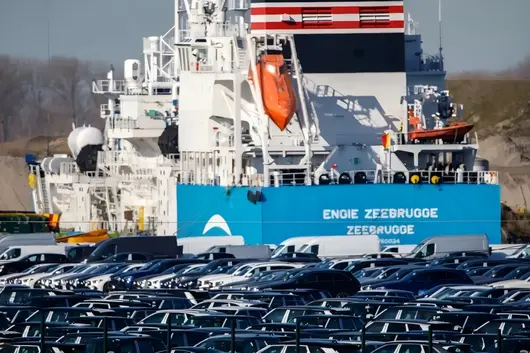
Have you ever seen the roads in India?
I've seen them online.
The scene is usually like this: a sedan blocked behind a cow, motorcycles running wild nearby, even milk tea vendors nearby, so "clean and hygienic".

However, in a place where many feel physically uncomfortable after watching, Toyota, Suzuki, Honda and other Japanese car companies decided to bet on India.
According to the Indian "Brand Quality Foundation" website, the three car companies will invest nearly $11 billion to build factories, increase capacity, and develop exports in India.
Some netizens commented: Did the three Japanese car companies have too much money?
In fact, they didn't have endless money to spend, nor were they bewildered by Indian curry. These Japanese car executives are much clearer than us.
Current Japanese car revenue and market share are declining. Raw material costs are soaring. Looking at the world map, finding a market that can accommodate capacity, expand share, and has gentle competition is not easy.
So, it wasn't that Japanese car companies chose India, but because they had no choice.
The Pain of Japanese Car Companies
Past Japanese cars were truly the envy of others.
Ask old drivers who drove Japanese cars over ten years ago, talking about Japanese cars, almost no one doesn't give a thumbs up, cheap price, fuel saving, durable...
Even many Japanese cars needed to be bought at a markup, but who would think this iron fortress would be beaten out of sight in a few short years.
With the wave of new energy vehicles coming, electrification and intelligence became the goal for many domestic car companies to "leapfrog". Relying on China's strong new energy vehicle industry chain advantages and car companies' own persistence on R&D and technology, Chinese independent brands quickly achieved "leapfrogging".
Domestic cars once criticized are now becoming more and more common on the roads, even surpassing joint ventures in share.
According to CPCA data, in April 2026, the share of independent brands reached as high as 62.5%, far exceeding Japan's 13.1%.

You need to know, the Chinese car market is the largest car market in the world. Losing speed in the Chinese market is like losing a huge piece of cake.
Meanwhile, the main theme of the Chinese market in recent years is still price wars. Racing on configuration, price, and service has become a normal state, which also had a huge impact on Japanese cars' profits.
Apart from China, Japanese cars are also not doing well in the US.
On January 20, 2025, Trump swore in as the 47th US President, starting a series of chaotic operations, including imposing additional car tariffs in the name of national security, causing the tariff rate for imported Japanese cars to reach as high as 27.5% at one point. Although it decreased later, it was still far higher than the initial tax rate.
This operation directly led to a tariff loss of over 2 trillion yen for seven Japanese car companies in fiscal year 2025.
Looking at Japan itself, it is actually not easy either.
Middle East geopolitical conflicts blocked shipping in the Strait of Hormuz, transportation costs and raw material costs soared, Japanese car companies also had to suffer in silence.

Executives looking at the reports, their backs went cold, only to find a new growth curve.
So, Japanese car companies didn't fall in love with India, there was nowhere else to go.
Deep Thought on Choosing India
So, what magic does India have, to make Japanese car companies invest heavily?
The first advantage is big. In 2025, the Indian car market achieved 5.517 million new car sales, up 6% year-on-year, breaking the historical record, ranking as the third largest car market in the world, exceeding Japan for four consecutive years, second only to China and the United States.
The value of this doesn't need me to say much. India achieved this result mainly because India has been promoting tax reduction policies to promote consumption, which led to a significant increase in domestic consumption willingness.
The second advantage is close, meaning it is close to places where Japanese cars sell well, such as Africa.
So, India for Japanese car companies is more like a convenience store built in the center of a crossroad. You don't need to ship cars to eight countries separately, just build well at this stop in India, then unload ship by ship, and you can save a lot of costs.

The Nikkei also believes that India is expected to become its global car supply center.
The third advantage is stability. You know, Japanese cars' advantage is fuel cars, after all, the three major components of engines, gearboxes, and chassis, they have played for many years, technology accumulation is number one in the world.
But the Chinese car market has fully promoted electrification and intelligence development, leading to Japanese cars' advantage becoming weaker and weaker, impossible to play out. But India is different, it has the characteristics of few charging piles and slow electrification process. Indian old people buying cars still look for cheap, fuel saving, easy to fix, and these three points are exactly Japanese cars' old trade.
Especially Suzuki, always been India's car market evergreen, almost always sitting on the best-selling model throne, reputation of being worry-free, better than any advertisement.
So, Japanese car companies' vigorous layout of the Indian market is obviously carefully considered.
But, is the Indian market really that easy to mix?
The Hard-to-Bite Indian Market
Of course, India is not perfect like a hot commodity, its disadvantages are as obvious as its advantages, and every one is enough for Japanese car companies to face a hard time.
First talk about electrification. Yes, right now India has few charging piles and electric cars don't sell well, it is indeed a shelter for Japanese fuel cars. But you have to think, how long can this "shelter" avoid?
India previously shouted the slogan of 30% of new cars being electric vehicles by 2030. Although it sounds like bragging, but can't help but they really give subsidies, really build charging stations.
Imagine, what if one day India suddenly wakes up, starts vigorously promoting electrification, doing infrastructure, charging piles popping out like mushrooms after rain, then Japanese cars will be dumbfounded?
Isn't this a version of the Thai market?
Back then Japanese cars in Thailand won easily. The entire Southeast Asian market was called Japanese cars' backyard. Result Thailand took the lead in promoting electrification. Chinese electric vehicles came in, directly became a hot commodity. Look at Japanese cars again, share in Thailand falling down rapidly.

If India accelerates electrification, history will likely repeat, and this time, Japanese cars don't even have a place to flee, how to prevent will become the first problem for Japanese car companies.
Next talk about policy. India's policy is like a pot of curry, you never know if you will eat chicken or potato next time.
This magical country, today low tariff encourages building factories, tomorrow may fine you a huge amount. What's more annoying is mandatory joint venture. Foreign car companies want to sell cars in India, have to find local partners to partner up. When your factory is built, supply chain is done, India directly backstabs you. At that time whether adding money or withdrawing capital, what you get is heartache.
So you see, this market like India is like a mango that looks very sweet, bite the first mouth it's okay, chew two more mouths hit the hard core.
Japanese cars now is calculating, while the core hasn't bit the tooth, hurry up to nibble a few more mouths, but the core will bite sooner or later, just don't know which day.
Epilogue
Japanese cars this trip to India, not go for tourism, is go to make a living.
Chinese and Southeast Asian dining tables are more crowded, production and transportation costs have risen. Looking around the world, only this pot in India is still steaming, even if what is boiling inside is curry-flavored stones, have to bite hard and chew down.
Japanese car companies want to expand market, India wants to pull economy, solve employment, both sides have their own thoughts.
As for the ending is Japanese cars in India regain their glory, or like past competitors shamefully walk away, then is not known.
But no matter how, this play just started, we slowly watch is okay.
Anyway India's story, never bored.

In May, China's automotive market overall presented a gentle recovery trend, with domestic brands still being the sales backbone of the market. Recently, BYD, Geely, Chery, Changan, and Great Wall, the top 5 domestic automakers, successively released their monthly performance reports. From the data, these five companies show a general characteristic of "stable total growth, divergence between domestic and international markets, and accelerated new energy penetration". Overseas exports and new energy vehicles have become the most core growth engines; export business has evolved from a "bonus item" to the "core foundation" for some companies. BYD's "dominant leader" status is further consolidated, Chery achieved high growth via exports, Geely's new energy penetration rate broke 56%, Changan focused steadily on balanced development, while Great Wall appeared slightly under pressure during structural transformation.
BYD: Export Hits New High Becomes Biggest HighlightIn May, BYD stood firmly at the top of domestic brands with a monthly sales volume of 383,500 vehicles, maintaining positive growth both year-on-year and month-over-month under a large base. Its two main brands, Dynasty and Ocean, sold a combined 330,200 vehicles, contributing 86.1% of total sales; Fangchengbao's monthly sales broke 30,000 units to reach 30,200, a year-on-year increase of 139.7%, setting a new high for the year; Denza sold 16,300 vehicles, and Yangwang delivered 286 vehicles. From a model perspective, BYD had eight models in May with monthly sales exceeding 20,000 vehicles. The Song Family and Yuan Family both broke 50,000 units, selling 51,370 and 56,691 vehicles respectively. The Sea Lion Family followed closely with 42,615 vehicles, and Seagull sales were also close to 40,000 vehicles.
BYD's biggest highlight in May was exports. Overseas new energy vehicle sales reached 160,600 units, an 80.4% year-on-year increase, accounting for about 42%. The sharp expansion of export scale effectively countered the phased weakness in domestic demand. Cumulative exports from January to May exceeded 620,000 vehicles. High export growth mainly benefited from continued ramping up of overseas factory capacity, improved ocean shipping capacity, and accelerated channel network expansion. In the domestic market, BYD promoted Megawatt Super Charging and intelligent strategies simultaneously—Megawatt charging achieved about 90% charge in 9 minutes; 20,000 super charging stations are planned to be built by 2026; all series models are available with Sky Eye B intelligent driving solutions and city navigation safety fallback plans, accelerating the popularization of high-level intelligent driving. As Gen 2 Blade Battery capacity gradually releases, the company's orders are expected to continue rising.
Chery: Sales Growth Leads the Top 5Chery Group's total sales volume in May was 247,800 vehicles, a significant year-on-year increase of 20.5%, ranking first in growth speed among the top 5. Exports remained its most core growth engine—May exports reached 181,900 vehicles, an 80.5% year-on-year increase, accounting for 73.4% of total sales that month, continuously breaking the single-month export record for Chinese brands for three months. In terms of new energy, Chery New Energy sold 100,300 vehicles, a 58.8% year-on-year increase. April and May consecutively saw monthly new energy sales breaking 100,000 vehicles.
The strong performance in exports benefited from Chery's long-term deep cultivation of overseas channel advantages and localized operation capabilities. While overseas orders continued to rise, high export growth formed a sharp contrast with domestic sales—Chery's domestic sales in May were only 60,000 vehicles, accounting for one-quarter of total sales. From cumulative data, Chery Group accumulated 1.101 million sales from January to May, but against the annual goal of 3.2 million vehicles, monthly averages need to reach about 420,000 vehicles later, and pressure remains significant.
Geely: New Energy Penetration Rate Breaks 56%Geely Auto's total sales volume in May was 237,600 vehicles, a 1% year-on-year increase, achieving month-over-month double growth for three consecutive months. In terms of structure, Geely's "New Four Transformations" transformation showed significant results: new energy vehicle sales reached 133,400 units, accounting for 56% of total sales, with new energy share exceeding 50% for four consecutive months.
From sub-brands, performance was significantly divergent. Zeekr brand sales in May reached 34,400 vehicles, a 82% year-on-year increase; Zeekr 9 Series and 8 Series models combined sales approached 50% of total sales, showing bright performance in the high-end market; Galaxy brand sales were 81,700 vehicles; Geely brand sales were 182,500 vehicles, among which China Star Series sales reached 100,800 vehicles; Lynk & Co brand sales were 20,700 vehicles, with new energy vehicle sales share rising to 71%.
In terms of exports, Geely's overseas vehicle exports in May reached 85,100 vehicles, a explosive 184% year-on-year increase, setting a brand single-month export record high. Among exported products, new energy vehicles reached 40,800 units, accounting for nearly half; hybrid and pure electric products have successively landed in Southeast Asia, Middle East, Latin America, and other markets, highlighting the results of global strategy implementation.
Changan: Multi-brand Matrix Balanced EffortChangan Auto's delivery volume in May was 209,100 vehicles, among which new energy deliveries were 92,400 vehicles, a 5.8% year-on-year increase, with new energy share about 44%. In terms of exports, overseas deliveries reached 70,700 vehicles, a 38% year-on-year increase, becoming another major growth highlight for Changan in May.
In the sub-brand matrix, Changan Qiyuan delivered 34,500 vehicles in May; All-New Q05 delivered 15,800 units, with orders breaking 3,000 units within three days of listing in Thailand; Deepal sales in May were 33,200 vehicles, a 30% year-on-year increase; January to May overseas cumulative sales were 28,700 vehicles, a significant 167% year-on-year increase; Avatr delivered 7,336 vehicles in May; Changan Auto (Gravity) delivered nearly 49,000 vehicles in May.
Changan Auto's balanced layout was fully reflected in May: the fuel car base remained stable, new energy brands Deepal and Qiyuan accelerated volume growth, high-end brand Avatr continued to break through in technical cooperation, and overseas markets simultaneously achieved breakthrough growth. The pattern of five brands working together, driven by both new energy and exports, is initially taking shape.
Great Wall: Overseas Sales Growth Year-on-Year 46.75%Great Wall Motor's sales in May were 100,400 vehicles, slightly down compared to last May's 102,200 vehicles, making it the only company among the top 5 to show a year-on-year negative growth. From sub-brands, Haval brand sales in May were 55,500 vehicles, remaining Great Wall's most important sales pillar; Tank brand sales were 17,100 vehicles; both Haval and Tank brand sales showed year-on-year declines; Wey brand sold 8,119 vehicles, a 31.78% year-on-year increase, achieving growth against the trend; Ora brand performance was most stunning, with sales of 6,018 vehicles, a significant 206.88% year-on-year increase. In terms of new energy, Great Wall sold 30,400 new energy vehicles in May, with new energy vehicle transformation gradually accelerating.
The overseas market became Great Wall's biggest highlight in May, with overseas sales growing 46.75% year-on-year. Against the background of pressure on the domestic market, strong growth in overseas business effectively made up for the decline in the domestic market. Great Wall Motor's current core contradiction lies in: Haval and Tank, the two traditional main-selling brands, face weak growth, while Wey and Ora brands, although growing notably, have relatively small volume and are not yet enough to support overall growth. How to complete the "relay" between old and new brands is the key issue Great Wall must solve subsequently.
Final ThoughtsFrom May data, the growth pattern of the top 5 domestic brands has clearly diverged, but there are three common trends worth noting: First, exports have become a key engine for domestic brands to seek stability and growth. Second, new energy transformation is still accelerating, but paths differ among enterprises. Third, technological innovation continues to deepen brand moats. Looking ahead to the second half of the year, competition in the automotive industry will continue to upgrade around these three trends. Although everyone has a common direction, these three trends are all competing for the entire enterprise's industrial chain strength, and the strong will remain strong, which has almost become an inevitable outcome.

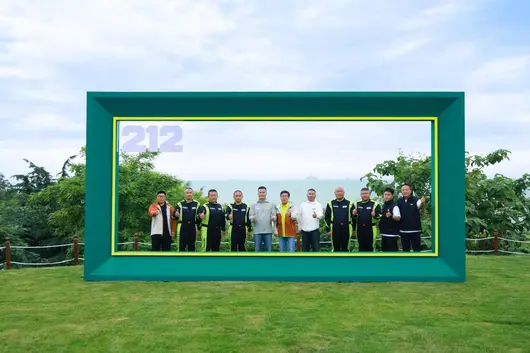
On June 6, the 212 Off-Road Vehicle Ring-Tar Grand Finale Celebration was held in Qingdao. Famous sports event host Han Qiaosheng, professional racing driver Han Wei, 212 Off-Road Vehicle manufacturer team drivers, user team drivers, and technical logistics team members and other participants of the Ring-Tar rally gathered together to jointly review the extreme journey of the 212 Off-Road Vehicle team in this year's Ring-Tar Rally.

In the just-concluded 2026 China Ring-Tar International Rally, the 212 Off-Road Vehicle team competed with mass-produced vehicles in near-original factory condition. In the extreme journey of a total mileage of 7,500 kilometers, they completed the "2.0T vs. 3.0T" cross-class challenge. Successively achieving "two championships and one runner-up" in stages SS10-SS13, they ultimately became the only brand with 100% finish rate in the T2.1 mass-produced group manufacturer team, and won the runner-up for the manufacturer team in this category.
This year's competing vehicle T01 has no heavy racing modifications. It is equipped with the same powertrain as the Ring-Tar—2.0T engine and ZF 8AT transmission. After the entire race inspection, low-end torque is powerful, comparable to large-displacement models when climbing gullies or towing with a full load; paired with a BorgWarner large transfer case, high/low speed switching is fast. In 4L mode, torque can be amplified 2.64 times, achieving torque distribution according to demand, ensuring stable power output for long-distance traversing and reducing failure rates. Regarding body structure, T01 adopts a body-on-frame construction with front and rear solid axles. The body remains undistorted when driving on rough off-road surfaces and potholes. It has maximum torsional resistance when overloaded. The chassis is specially optimized and tuned based on Ring-Tar extreme road conditions, adaptable to various complex road conditions straight from the factory. Moreover, the entire vehicle body uses galvanized steel plates, fearlessly enduring gully gravel scratches and resistant to rust. Additionally, T01 strengthens the top load-bearing capacity of the passenger cabin, with performance increased by 16%. Combined with cage-style passenger cabin design, 540° panoramic image, dash cam, and emergency call rescue functions, it provides comprehensive protection for passenger safety.

To allow more users to personally feel the charm of the Ring-Tar race, 212 announced that Ring-Tar modification kits will soon land on the official mall. The kit covers chassis armor, anti-slip wheels, off-road tires, and recovery equipment, aiming to endow users' beloved cars with stronger off-road strength. From the strict verification on the extreme racing field to the continuous cultivation of the user ecosystem, 212 is relying on the deep interaction between racing, products, and users to help ordinary people realize their off-road dreams. He Zhaopeng, General Manager of 212 Off-Road Vehicle Marketing Company, stated: "212 aims to popularize off-road culture, giving more people the chance for that seed about distance and dreams in their hearts to take root and sprout."

Regarding future race plans, 212 also stated that a series of top domestic and international races, including the Silk Road Rally, Malaysia Sabah International Rainforest Race, Alxa T3 Challenge, and 2027 Ring-Tar Rally, are all in planning, and 212 will continue to promote research through racing. Meanwhile, 212 officially launched the 2027 Ring-Tar User Driver Recruitment Plan and will join hands with Han Wei to establish a Champion Off-Road Training Academy, providing users with systematic pre-race guidance and participation opportunities. By honing products through racing and empowering users through training, 212 is gradually implementing the vision of mass off-roading, ensuring every 212 carries the user's own Ring-Tar dream.

唔知有幾多朋友最近期關注 10 萬內純電 SUV 市場?近段時間睇嚟,呢個細分市場好熱鬧。就講長安啟源全新 Q05 同零跑 A10,上個月銷量分別達 15814 輛同 14372 輛,全部挺進 2026 年 4 月銷量排行全品類前 10,長安啟源全新 Q05 甚至奪得緊緊湊型純電 SUV 市場嘅銷冠。
(長安啟源全新 Q05)
值得留意係,兩款大熱門產品亮點亦唔少,9 萬級可以得到 500km+嘅續航,零跑 A10 甚至配備激光雷達,有高級智駕輔助需求嘅朋友嚟講,呢架車吸引力的確唔低。但係喺價格上,同為高配嘅長安啟源全新 Q05 506Max+ 同零跑 A10 505 激光雷達版,終端價格分別係 9.59 萬同 8.68 萬,手握 9 萬左右預算嘅朋友都可以考慮。明顯係,又去到決賽圈二揀一環節。
(零跑 A10)
如果對預算比較敏感,咁喺長安啟源全新 Q05 同零跑 A10 之間,後者可能更受歡迎,畢竟終端價格實打實平咗幾千元。而且,高配 A10 配有激光雷達,市區/高速情況均能啟動領航輔助駕駛,呢個就係佢嘅優勢所在。當然,如果預算允許,揀長安啟源全新 Q05 高配,都有帶激光雷達嘅高級輔助駕駛。
(長安啟源全新 Q05)
但既然係買車前嘅橫評,唔少全方位對比。首先從尺寸睇,作為緊湊型 SUV,長安啟源全新 Q05 長寬高分別係 4435*1855*1595mm,軸距為 2735mm。而零跑 A10 車型級別就係小型 SUV,長寬高分別係 4270*1810*1635mm,軸距為 2605mm。
(零跑 A10)
如果只係考慮代步、通勤,零跑 A10 嘅細個嘅略有優勢,方便行街串巷。但實際上,好多人買車都要兼顧家用,10 萬內預算也多以剛需用車群體為主。既然係剛需,且有家用需求,嗰空間自然唔好掉鏈子。
(長安啟源全新 Q05)
(零跑 A10)
講返日常家庭出行嚟講,兩車之間 130mm 軸距差異,直接反映喺後排體驗。坐入長安啟源全新 Q05 後排,腿部空間平整兼寬敞,一齊坐 3 位成年人都唔會太擠;但係坐入零跑 A10 後排,無論坐寬定係腿部空間都會細少少。媽咪喺後排照顧孩子,長安啟源全新 Q05 後排更加寬敞嘅空間會更加方便佢操作,孩子都能有更大嘅活動空間。
(長安啟源全新 Q05)
(零跑 A10)
除咗空間,通勤黨同家庭用戶對舒適配置都比較關注。睇嚟對比,兩車都有配電動尾門、無匙進入、自適應遠近光等外部配置。但係從車廂內睇,零跑 A10 副駕無法電動調節,後排靠背都唔支援角度調節,同埋缺少後排空調出風口、車內 PM2.5 過濾裝置等。
(長安啟源全新 Q05)
(零跑 A10)
反觀長安啟源全新 Q05,除咗副駕支持電動調節,前排仲集成咗加熱/通風/按摩/副駕腿托功能,對比零跑 A10 只提供前排座椅加熱,佢嘅品質無疑更上一層樓。包括後排乘員都有少少照顧,例如靠背角度可調、配有後排空調出風口、後排中央扶手/杯架等,更加適合家人同行呢類場景。
(長安啟源全新 Q05)
(零跑 A10)
除咗舒享體驗,行駛系統嘅對比我哋都唔好忽略。首先從大家關注嘅續航睇,長安啟源全新 Q05 同零跑 A10 分別搭載 51.9kWh、53kWh 電池,CLTC 純電續航做到 506km、505km,差異大可忽略。但從電芯供應鏈睇,前者出自寧德時代,後者就係國軒高科/江蘇正力,若論品牌含金量,“寧王”順位自然靠前,更值得信賴。另外,兩車都有全球品質,按照全球嚴苛嘅標準打造,零跑 A10 符合國內、歐盟雙標準,長安啟源全新 Q05 已經喺泰國上市,未來仲會相繼落地多個國家地區,最終開拓歐洲區域,此外仲有央企背書,質量品質都好可靠。
因為本文討論嘅係 A10 嘅 505 版本,採用電池液冷技術,溫控較好,而如果係 403 版本,採用成本低嘅風冷技術,散熱效果較差。呢點上,全新 Q05 做得更好,入門就採用電池直冷技術,高配用嘅係液冷技術,能更好地實現熱管理,保證電池安全。
(長安啟源全新 Q05)
(零跑 A10)
動力方面,長安啟源全新 Q05 同零跑 A10 都係前置單電機佈局,電機最大動力輸出分別係 120kW/190N·m、90kW/150N·m,0-100km/h 加速時間分別做到 8.9 秒同 10.6 秒。坦率嚟講,兩款車喺純電陣營加速性能都中規中矩;但係相對嚟講,長安啟源全新 Q05 嘅 8 秒級零百加速,喺山路行駛、高速超車等情況下會比零跑 A10 更加分。
(長安啟源全新 Q05)
(零跑 A10)
總結嚟講,零跑 A10 505 激光雷達版優勢突出:價格更低、智駕輔助覆蓋範圍更廣,適合預算優先 + 科技嘗鮮嘅消費者。而長安啟源全新 Q05 更強調“全面”二字:加少少預算同樣可以獲得高級輔助駕駛,而且尺寸更大、舒適配置更高、採用頭部電芯供應鏈,動力亦更強,綜合表現更全能。總括嚟講,預算 9 萬級追求面面俱到嘅家用體驗,長安啟源全新 Q05 506Max+ 更加值得考慮。
你睇過印度嘅馬路嗎?
我喺網上見過。
畫面通常係咁,一輛轎車俾牛尾擋住,旁邊仲有亂竄嘅摩托,甚至周圍仲有賣奶茶嘅小夥,嗰叫一個“乾淨又衛生”。
然而,喺呢啲睇完好多人覺得生理不適嘅地方,豐田、鈴木、本田等日本車廠,卻決定將籌碼押落印度。
據印度“品牌質量基金會”網站顯示,三家車廠將喺印度投資近110 億美元建廠、提產能、搞出口。
對此有网友表示,三家日本車廠係咪錢多到無處花?
事實上,佢哋唔係錢多到花唔完,亦唔係被印度嘅咖哩蒙蔽咗心竅,呢啲日本車廠高層遠比我哋清醒。
而家嘅日系車,營業額、市場份額都喺下滑,原材料成本仲係升得飛起,打開世界地圖,搵一個能夠容納產能、拓充份額、競爭溫和嘅市場,唔係咁容易嘅事。
所以,唔係日本車廠選擇咗印度,而係因為冇得揀。
日本車廠之痛
曾經嘅日系車,嗰時妥妥係人哋個仔。
你問下十幾年前開過日系車嘅老司機,一提起日系車,幾乎就冇唔豎大拇指嘅,價錢平、省油、耐用又抵撞……
甚至好多日系車,仲要加價購買,但邊個諗到,呢個鐵打嘅江山,短短幾年時間就俾佢哋打得找唔著北。
隨著新能源汽車浪潮嚟到,電動化、智能化變成好多自主車廠“彎道超車”嘅目標,依托於中國強大嘅新能源汽車產業鏈優勢同車廠自身對研發、技術嘅堅持,中國自主品牌迅速實現咗“彎道超車”。
曾經被人吐槽嘅國產車,而家喺馬路越來越多人,甚至份額超越咗合資。
根據乘聯會嘅數據,喺2026 年4 月,自主品牌嘅份額已經高達62.5%,遠超日系嘅13.1%。
要知道,中國汽車市場係全球最大嘅汽車市場,喺中國市場失速,就相當於丟咗一塊巨大嘅蛋糕。
同時,中國市場近年嚟嘅主旋律依舊係價格戰,捲配置、捲價格、捲服務已經成為一種常態,亦對日系車嘅利潤產生咗巨大嘅影響。
除咗中國,日系車喺美國過得亦唔太好。
2025 年 1 月 20 日,特朗普宣誓就職第 47 任美國總統,自此開啟咗一連串搞搞震,其中就包括以國家安全為理由徵收額外嘅汽車關稅,導致進口日本汽車嘅關稅稅率一度高達 27.5%,雖然後嚟有所降低,但亦遠高於最初嘅稅率。
呢個操作,直接導致七大日本車廠喺2025 財政年度嘅關稅損失超2 萬億日元。
再睇日本本土,其實亦唔容易。
中東地緣衝突導致霍爾木茲海峽航運受阻,運輸成本、原材料成本暴漲,日本車廠都有苦難言。
高管們看著報表,背後發涼,只能尋找全新嘅增長曲線。
所以,日本車廠唔係愛上印度,係冇地方去。
揀選印度嘅深思熟慮
咁,印度點解咁有魔力,先至令日本車廠重資投入呢?
第一個優勢就係大。喺2025 年,印度汽車市場取得咗551.7 萬輛嘅新車銷量,同比增長 6%,刷新咗歷史紀錄,位居全球第三大汽車市場,已经连续四年超越日本,僅次於中國同美國。
呢個含金量唔使多講啦,而印度取得呢一成績,主要係因為印度一直喺推動減稅政策,促進消費,這導致國內消費意願出現咗明顯增強。
第二個優點係近,就係離日系車賣得動嘅地方近,如非洲等其他地區。
所以,印度對於日本車廠,更似一個建喺十字路口中央嘅便利店,你唔使將車分別運去八個國家,只需要喺印度呢站造好,然後一船一船甩去,就能削減唔少成本。
《日本經濟新聞》亦認為,印度有望轉變為佢哋全球嘅汽車供應中心。
第三個優點係穩。要知道,日系車嘅優勢就係燃油車,畢竟引擎、變速箱、底盤三大件,佢哋已經玩咗好多年,技術積累喺全球都係數一數二。
但係中國汽車市場已經全力推動電動化、智能化發展,導致日系車嘅優勢越來越弱,根本無法發揮出嚟,但印度唔一樣,佢擁有充電樁少、電動化進程緩慢嘅特點,印度老百姓買車,都仲係盯住平、省油、易修,而呢三點正係日系車嘅老本行。
尤其係鈴木,一直係印度汽車市場嘅常青樹,幾乎年年穩坐暢銷車型寶座,口碑好,勝過任何廣告。
所以,日本車廠大力佈局印度市場,顯然是經過深思熟慮嘅。
但,印度市場真係咁好混咩?
難啃嘅印度市場
當然,印度亦唔係完美得似個香口格,佢嘅缺點同佢嘅優點一樣明顯,而且每一個都夠日本車廠喝一壺。
先講電動化,冇錯,眼睇下印度充電樁少、電動車賣唔動,確實係日系燃油車嘅避風港。但你得諗諗,呢個“避風港”能避幾耐?
印度此前可係喊出咗 2030 年電動車佔新車 30% 嘅口號,雖然聽落似吹水,但抵唔住人哋真補錢、真建充電站。
試諗下,萬一有日印度突然開竅,開始大力推動電動化、搞基建,充電樁似雨後春筍咁冒出來,嗰日系車唔就傻眼?
呢唔係泰國市場嘅翻版咩?
當年日系車喺泰國都係躺贏,整個東南亞市場,都被稱為日系車嘅後花園,結果泰國率先推動電動化,中國電動車一嚟,直接就成咗香口格,再睇日系車,喺泰國嘅市場份額嘩嘩嚟咗落。
如果印度係電動化一加速,歷史大概率會重演,而而家呢次,日系車連逃嘅地方都快冇咗,點樣預防,將成為日本車廠嘅首要問題。
再講政策,印度嘅政策就似一鍋咖哩,你永遠唔知下一口食到係雞肉定係馬鈴薯。
呢個魔幻嘅國家,今日係低關稅鼓勵建廠,明日就可能罰你一筆巨款,更令人頭痛嘅係強制合資,外國車廠想喺印度賣車,要搵本地夥伴搭檔,等你工廠建好咗、供應鏈搭完咗,印度直接背刺你,到嗰陣無論係加錢定撤資,換嚟嘅都係心痛。
所以你看,印度呢個市場,就好似一個睇落好甜嘅芒果,咬落去第一口仲行,再啃幾口就摸著硬核。
日系車而家嘅算盤係,趁住核都未硌牙,趕緊多啃幾口,但核遲早會硌到,只係唔知係邊一日。
尾聲
日系車呢趟印度之旅,唔係去旅遊,係去搵食。
中國同東南亞嘅飯桌更擁擠,生產、運輸嘅成本又提高咗,放眼全球,就印度呢口鍋仲冒住熱氣,哪怕入面煮嘅係咖哩味嘅石頭,都要硬著頭皮啃落去。
日本車廠想擴大市場,印度想嘅係拉動經濟、解決就業,雙方都有各自嘅心思。
至於結局係日系車喺印度重新封神,定係好似當年嘅部分友商一樣灰溜溜走人,那就唔知啦。
但無論點樣,呢場戲先至開始,我哋慢慢睇就得啦。
反正印度嘅故事,從來唔會悶。


