


首頁Subaru BRZ

搜尋歷史
熱門搜尋
經銷商登入 / 註冊

In Malaysia's SUV market, many buyers compare the Toyota Corolla Cross and Mazda CX-5 when choosing a car. These two models are quite close in price and positioning. Today, we will make a detailed comparison from multiple aspects to help you save time on research.
The OTR price for Toyota Corolla Cross in Malaysia is RM 133,800 - 148,800, with a total of 3 versions, including 2026 HEV 1.8L GR Sport (RM 148,800), 2026 HEV 1.8L Standard (RM 140,800), 2026 1.8L Standard (RM 133,800), etc.
The OTR price for Mazda CX-5 in Malaysia is RM 135,469 - 166,760, with a total of 3 versions, including 2025 2.0L AT 35th Anniversary (RM 316,154), 2025 2.0L AT (RM 296,154), 2025 2.0L MT (RM 294,154), etc.
In terms of price, the Toyota Corolla Cross is indeed RM 1,669 cheaper at the starting price compared to the Mazda CX-5. If your budget is limited, the Toyota entry-level version can already meet daily needs. However, also note that the few thousand Ringgit difference might involve trade-offs in equipment, depending on your specific needs.

The Toyota Corolla Cross safety rating is 5★ (ASEAN NCAP), with active safety systems including TSS (PCS, LDA, ACC, LTA).
The Mazda CX-5 safety rating is 5★ (ASEAN NCAP), with active safety systems include .
Both cars have the same safety rating, and safety features in this class are quite comprehensive. New cars nowadays generally have good safety, so there is no need to worry too much about this point.

The Toyota Corolla Cross body length is 4400 mm, trunk capacity 400 L.
The Mazda CX-5 body length is 4500 mm, trunk capacity 450 L.
In terms of space, the Mazda CX-5 body is 100 mm longer than the Toyota Corolla Cross, offering an advantage in passenger space. However, the Toyota Corolla Cross is more flexible for parking in the city; each has its trade-offs.

Toyota Corolla Cross warranty is 5 years/unlimited mileage, maintenance interval every 10,000km or 6 months.
Mazda CX-5 warranty is 5 years/150,000km, maintenance interval every 10,000km or 6 months.

Overall, the Toyota Corolla Cross and Mazda CX-5 are both very good models in the Malaysian market. Which one to choose depends on your personal needs and budget. We recommend doing your research, comparing quotes from multiple car dealers, and then taking a test drive to make the final decision. Buying a car is a big matter, spending time on research is never wrong.


特斯拉的FSD短时间内在国内市场依然没戏,继续扮演“期货”角色。与此同时,跳票9年的Roadster再度延期,从10月1日推迟到10月15日,官方给出的理由是要演示飞行功能,但天气不合适。不过,特斯拉的基本盘还是Model 3和Model Y。

近日,从官方获悉,全新2027款特斯拉Model 3正式上市。依然没有预告,没有发布会,直接官网更新。新车依旧推出4款配置,售价保持不变,仍为23.55万至33.95万元。

作为年度改款车型,新车整体造型不变,也没有变化的必要,依旧是那套经典设计。主要升级集中在配置层面,且新款车型继续采用隐藏式的门把手。在没有涨价的前提下,算是加量不加价,当然,前提是最近一批刚提车的老车主能够接受。

具体来看,新车最主要的变化是车内中控屏幕尺寸进一步加大,全系升级至16英寸,显示效果更细腻,同时,可选配高级的浅灰色内饰。
除此之外,官方表示新车全系上线交流外供电功能,功率至高2200W。10月份内下单,尾款还可立减五千元,相当于变相让利。

新车动力继续提供单电机和双电机车型,后驱版最长续航达到830公里,续航表现在同级中依然处于第一梯队。
值得一提的是,今年年初特斯拉在香港市场推出了Model 3的廉价版本,虽然省去了大量舒适性配置,但折合人民币20万出头的价格依然很香。

此次特斯拉Model 3更新,虽然变化不大,但显然是一款不愁卖的产品。品牌号召力、三电系统的可靠性以及超充网络的便利性,依然是它最坚固的护城河。
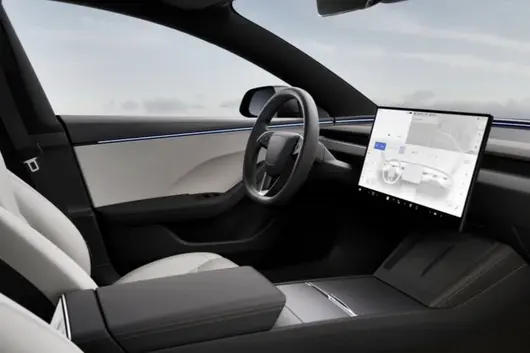

喺馬來西亞嘅 SUV 市場,好多買家喺揀車嗰陣都會拿豐田 Corolla Cross 同馬自達 CX-3 嚟做比較。呢兩部車喺價錢同定位上都好接近,今日我哋就從多方面做一個詳細嘅比較,幫你節省咗做功課嘅時間。
豐田 Corolla Cross 喺馬來西亞嘅 OTR 售價係 RM 133,800 - 148,800,合共有 3 個版本,包括 2026 HEV 1.8L GR Sport(RM 148,800)、2026 HEV 1.8L Standard(RM 140,800)、2026 1.8L Standard(RM 133,800) 等等。
馬自達 CX-3 喺馬來西亞嘅 OTR 售價係 RM 126,159 - 139,159,合共有 2 個版本,包括 2023 2.0L High(RM 139,159)、2023 2.0L Plus(RM 126,159) 等等。
由價錢睇,馬自達 CX-3 嘅起價比豐田 Corolla Cross 平咗 RM 7,641。坦白講,喺呢個價錢段,幾千蚊嘅差別其實唔算大,關鍵始終係睇整體嘅性價比同長期使用成本。
豐田 Corolla Cross 配備 1.5L Turbo,馬力 140 hp。官方油耗 7.0 L/100km。
馬自達 CX-3 配備 1.5L Turbo,馬力 140 hp。官方油耗 7.0 L/100km。
兩部車用咗同一套動力系統,日常開落嚟嘅感受基本冇分別。油耗方面都差唔多,唔使太糾結呢一點。
豐田 Corolla Cross 嘅安全評級係 5★ (ASEAN NCAP),主動安全系統包括 TSS (PCS, LDA, ACC, LTA)。
馬自達 CX-3 嘅安全評級係 5★ (ASEAN NCAP),主動安全系統包括 i-Activsense。
兩部車嘅安全評級一樣,喺呢個級別入面安全配備都算好齊全。依家嘅新車安全性都唔差,唔使太擔心呢一點。
豐田 Corolla Cross 車身長度 4400 mm,後備箱 400 L。
馬自達 CX-3 車身長度 4500 mm,後備箱 450 L。
空間方面,馬自達 CX-3 嘅車身比豐田 Corolla Cross 長咗 100 mm,乘坐空間更有優勢。不過豐田 Corolla Cross 喺城市入面泊車會靈活少少,各有取捨。

豐田 Corolla Cross 採用 FWD 驅動方式。
馬自達 CX-3 採用 FWD 驅動方式。
兩部車嘅驅動方式一樣,都係 FWD,日常駕駛感受唔會有太大分別。
總體嚟講,豐田 Corolla Cross 同馬自達 CX-3 都係馬來西亞市場好好嘅車型。揀邊部車,關鍵始終係睇你嘅個人需求同預算。建議大家做好功課,多比較幾間車行嘅報價,再去試駕先做最終決定。買車係件大事,花少少時間做功課絕對唔會錯。

In Malaysia's SUV market, many buyers compare the Toyota Yaris Cross and Kia Sportage when choosing a car. These two models are quite close in price and positioning. Today, we will make a detailed comparison from multiple aspects to help you save time on research.
The OTR selling price of Toyota Yaris Cross in Malaysia is RM 99,900 - 109,900, with a total of 2 variants, including 2026 1.5L Standard (RM 99,900), 2026 HEV 1.5L Standard (RM 109,900) etc.
The OTR selling price of Kia Sportage in Malaysia is RM 129,639 - 179,320, with a total of 4 variants, including 2025 1.6T DCT 4WD High (RM 179,320), 2025 1.6T DCT 2WD High (RM 159,320), 2025 2.0L AT 2WD High (RM 139,639) etc.
From a price perspective, Toyota Yaris Cross's starting price is indeed RM 29,739 cheaper than Kia Sportage. If your budget is limited, Toyota's entry-level model can already meet daily needs. But be aware, the few thousand bucks difference might involve trade-offs in features, depending on your specific requirements.

Toyota Yaris Cross safety rating is 5★ (ASEAN NCAP), active safety systems include TSS.
Kia Sportage safety rating is 5★ (ASEAN NCAP), active safety systems include Drive Wise.
The safety ratings for both cars are the same, and safety features in this class are quite comprehensive. New cars nowadays do not have poor safety, so there is no need to worry too much about this.

Toyota Yaris Cross body length 4400 mm, trunk 400 L.
Kia Sportage body length 4400 mm, trunk 400 L.
The dimensions of both cars are almost identical, and the interior space differences are not significant. Cars in this class are more than enough for daily use.

Toyota Yaris Cross warranty 5 years/unlimited mileage, maintenance interval every 10,000km or 6 months.
Kia Sportage warranty 5 years/300,000km, maintenance interval every 10,000km or 6 months.

Overall, both Toyota Yaris Cross and Kia Sportage are very good models in the Malaysian market. Which one to choose depends mainly on your personal needs and budget. We suggest doing your research, comparing quotes from several dealerships, and test driving before making a final decision. Buying a car is a major matter, spending some time on research is never wrong.



In the desert of the Dakar Rally, Pajero has won the overall championship 12 times. No other mass-produced SUV has come close to this number to date.
From its birth in 1982 to its full discontinuation in 2021, the Pajero sold over 3.25 million units globally. The off-road community calls it "Mountain Cat" — not because it looks like a cat, but because it moves lightly like a cat in the desert. This nickname was earned by winning championships time and again at the Dakar Rally.
On September 2nd, the fifth-generation Pajero made its global premiere in Tokyo. It has been seven years since the fourth generation stopped production.
Mitsubishi has brought back everything it could. Ladder frame, Super Select 4WD, rear differential lock, rigid rear axle suspension. The things off-road enthusiasts have been talking about for over a decade, this generation has them all.
But the problem isn't with the car itself.
Origins of Rise and Fall
The history of the Pajero is actually a tug-of-war about compromise and persistence.
The second generation was the peak. From 1991 to 1999, the Pajero won seven consecutive championships at the Dakar Rally. Super Select 4WD first combined part-time and full-time 4WD systems. The three-row seating layout led the Japanese RV boom. Global sales peaked in those years.
The third generation made a key choice: abandoning the ladder frame, switching to unibody structure. The rationale was to improve on-road comfort and reduce weight. At the time, this decision seemed in line with the trend — many hardcore SUVs were moving towards city use. But the subsequent quality scandals caused a cliff-like decline in the Pajero's global reputation.

The fourth generation attempted to make amends. Re-launched in 2006, with 70% of the structure redesigned, the chassis fully reconstructed, balancing off-road and on-road performance. It's a good car, but the market has changed. Production stopped domestically in Japan in 2019, and globally in 2021.
The Mountain Cat exited the stage like this.
So the fifth generation's return to the ladder frame must be understood in this context.
Mitsubishi is correcting its mistakes. The hardcore gene lost in the third and fourth generations has been fully restored in the fifth. It is not a product iteration, but a conscious "retreat".
Limitations of the Platform
The core change in the fifth-generation Pajero is the chassis.
Non-load-bearing ladder frame body, this is the first return in 27 years since the third generation. Front double wishbone independent suspension, rear five-link rigid axle, front and rear axles rigidly connected via a propeller shaft. The goal of this structure is clear: restore the reliability and torsional rigidity of extreme off-roading.

The 4WD system follows the second-generation Super Select 4WD, offering four modes: 2H, 4H, 4HLc, 4LLc. In 4LLc mode, the transfer case engages low range, torque is amplified, working with the center differential lock and rear differential lock, allowing escape with a single wheel on the ground.
S-AWC Super All-Wheel Control integrates seven driving modes, automatically recognizing road conditions to adjust power distribution.
Powertrain launch comes with only one setup: 2.4T twin-turbo diesel engine, 150kW, 480N·m, paired with 8AT. Low-end torque is the diesel engine's strength; 480N·m has practical value in off-road climbing and heavy-load towing scenarios. Official confirmation has stated that a plug-in hybrid version will be launched subsequently, but specific parameters haven't been announced.
The interior underwent a modernization upgrade; digital instrument cluster, floating central control screen, and L2-level driver assistance are all included. Seven-seat layout is retained, and the third row supports folding. Comfort features lean towards city SUVs, but physical buttons and mechanical gear shifters are retained to accommodate blind off-road operation.

One thing needs to be clarified: the fifth-generation Pajero shares a platform with the Triton pickup, produced on the same line at the Laem Chabang plant in Thailand. This is a cost-reduction choice under Mitsubishi's strategic contraction — using a mature platform to share R&D costs and existing production lines to reduce manufacturing investment.
Sharing a platform does not mean the product is bad.
But its ceiling is limited. The NVH performance of the pickup platform, rear seat space layout, and the comfort ceiling of suspension tuning have a fundamental gap compared to dedicated SUV platforms.
With this return, the Pajero's product definition prioritizes satisfying markets in Southeast Asia, Australia, and the Middle East that have a rigid demand for reliable fuel-powered hardcore SUVs; Europe and China are not priorities.
The Competitors Have Changed
Who were the Pajero's competitors back then? Toyota Land Cruiser, Nissan Patrol, Mitsubishi's own Pajero Sport.
The list of competitors today has completely changed.
The Japanese rivals are still there. The new Prado has been renewed; Ford Everest and Isuzu MU-X have their own markets in this price segment. But competition among Japanese hardcore SUVs has changed from "who is more reliable" to "who can be more fuel-efficient and intelligent while remaining reliable."

A more critical change comes from Chinese brands. Tank 300 and Tank 500 have lowered the price threshold for hardcore SUVs; Fang Cheng Bao Leopard 5 and 8 have restructured the power logic for off-roading with electric drive; Mengshi 917 achieves zero-radius turns with four motors.
The common point among these cars is: amplifying torque and reducing energy consumption through electrification, and lowering the threshold for off-road operation through intelligence.
The Pajero's product logic is mechanical priority, reliability paramount. This logic finds a market in Australian mines, Middle Eastern deserts, and Southeast Asian rainforests, because charging infrastructure is scarce there, diesel supply is stable, and users value "not breaking" rather than "fun".
But in the Chinese market, this logic is hard to make work. Diesel passenger cars are restricted in most cities, new energy policies lean towards pure electric and plug-in hybrids; consumer off-road needs are more "weekend camping + occasional rough roads" rather than "crossing uninhabited zones".

The fifth-generation Pajero currently has no official plans to enter the Mainland China market and can only be introduced through parallel import channels. Even if it comes in, the diesel powertrain combined with import status means the price and target audience will be fixed/limited.
Mitsubishi has exited the Chinese passenger car market, lacking official channels and after-sales systems. This is not a problem with the Pajero alone, but an absence at the brand level.
Survival Space
The global production and sales target for the fifth-generation Pajero in Fiscal Year 2026 is 10,000 units. This number is negligible compared to the Pajero's peak era, but placed today, it represents a pragmatic positioning by Mitsubishi for this IP.
The first batch of launch markets are Japan, Thailand, and Australia. Subsequently expanding to ASEAN, Latin America, and the Middle East, covering about 100 countries and regions.
The common characteristics of these markets are: stable demand for hardcore off-roading, imperfect charging infrastructure, mature diesel supply, and user sensitivity to mechanical reliability is higher than pursuit of intelligence.
In these markets, the Pajero's advantages are clear. The reputation of Super Select 4WD has accumulated over forty years; the Dakar 12-championship endorsement is a trust asset that no amount of money can buy for other brands.
After the return of the ladder frame, its extreme off-road ability has returned to the level of the second generation. Coupled with Mitsubishi's channel foundation in Southeast Asia and Australia, a target of 10,000 units is not aggressive.
But sentiment can awaken old users, not persuade new ones.

The hardcore off-road market is differentiating. One path is the traditional mechanical route represented by the Pajero: diesel, ladder frame, mechanical 4WD; the core selling points are reliability and durability.
The other path is the electrification route taken by Chinese brands: hybrid or pure electric, intelligent chassis, electric control 4WD; the core selling points are versatility and smoothness. The user profiles for these two paths are separating; the former is tool-like and for long-distance cross-country needs, the latter is lifestyle, city commuting, plus weekend off-roading.

The Pajero chose the former. This choice is reasonable in its target market, but it also means it has voluntarily abandoned the fastest-growing portion of the market.
Mitsubishi officials have stated that a plug-in hybrid version will be launched subsequently. This signal is worth noting. If the PHEV version can retain the ladder frame and Super Select 4WD, while achieving pure electric range sufficient for daily commuting, then the Pajero has a chance to enter the Chinese market — the acceptance of PHEV hardcore SUVs in the domestic market is rising rapidly. But the premise is that Mitsubishi must first solve the channel and after-sales issues.
Final Words
The fifth-generation Pajero is a car faithful to itself. It did not follow the trend to make electric 4WD, did not abandon the ladder frame for city comfort, did not cut Super Select 4WD to reduce costs. In the current wave of electrification sweeping the off-road circle, this persistence has its value.
But persistence also means it must compete in a shrinking market. Australia, Middle East, Southeast Asia, the hardcore off-road demand still exists, but the growth rate is far lower than in China and North America. An annual target of 10,000 units can only be considered a niche product in the global market.

The Mountain Cat is still that Mountain Cat. It can still run more steadily than most cars in the desert, and can still safely bring passengers to their destination on rough roads.
It's just that the roads it once ran on now have more cars to run on. Some run faster, some run more efficiently, some run more intelligently.
The return of the Pajero is more like Mitsubishi telling those old users: The ladder frame and Super Select 4WD you wanted, I have brought them back for you.
Whether new users will buy into it is another matter.
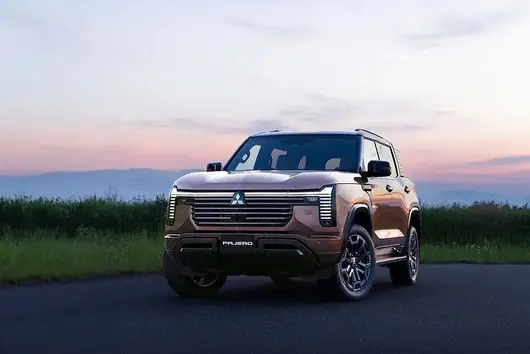

喺馬來西亞嘅 SUV 市場,好多買家喺揀車嗰陣都會拿 Toyota Yaris Cross 同 Kia Sportage 嚟比較。這兩款車喺價位同定位上都幾接近,今日我哋就從多個方面做一個詳細對比,幫你省咗做功課嘅時間。
Toyota Yaris Cross 喺馬來西亞嘅 OTR 售價係 RM 99,900 - 109,900,一共有 2 個版本,包括 2026 1.5L Standard(RM 99,900)、2026 HEV 1.5L Standard(RM 109,900)等。
Kia Sportage 喺馬來西亞嘅 OTR 售價係 RM 129,639 - 179,320,一共有 4 個版本,包括 2025 1.6T DCT 4WD High(RM 179,320)、2025 1.6T DCT 2WD High(RM 159,320)、2025 2.0L AT 2WD High(RM 139,639)等。
從價錢嚟睇,Toyota Yaris Cross 嘅起步價確實比 Kia Sportage 平咗 RM 29,739。如果你預算有限,Toyota 嘅入門版已經可以滿足日常需要。但都要注意,平啲嗰幾千蚊,可能在配備上會有取舍,具體要看你嘅需求。
Toyota Yaris Cross 車身長 4400 mm,行李箱 400 L。
Kia Sportage 車身長 4400 mm,行李箱 400 L。
兩款車嘅尺寸幾乎一樣,車內空間差別唔大。呢個級別嘅車,日常使用完全夠用。
Toyota Yaris Cross 保養 5 年/無限制里程,保養間隔 每 10,000km 或 6 個月。
Kia Sportage 保養 5 年/300,000km,保養間隔 每 10,000km 或 6 個月。
Toyota Yaris Cross 同 Kia Sportage 都係馬來西亞市場嘅主流選擇,適合家庭使用、日常通勤。如果你更重視品牌口碑同二手價,可以優先考慮口碑更好嗰一款;如果你更在意性價比同配備,就揀配備更豐富嗰款。最終都係建議兩款都去試駕,親身體驗先最重要。
總體嚟講,Toyota Yaris Cross 同 Kia Sportage 都係馬來西亞市場好正嘅車款。揀邊個,關鍵都係睇你嘅個人需要同預算。建議大家做好功課,多比較幾間車行嘅報價,再去試駕先做最終決定。買車係件大事,花少少時間做功課絕對無錯。

喺馬來西亞嘅 SUV 市場,好多買家喺揀車嘅時候都会拎 Toyota Yaris Cross 同 Mitsubishi Xforce 嚟做比較。呢兩款車喺價錢同定位上都幾接近,今日我哋就從多個方面做一個詳細嘅比較,幫你慳返做功課嘅時間。
Toyota Yaris Cross 喺馬來西亞嘅 OTR 售價係 RM 99,900 - 109,900,總共有 2 個版本,包括 2026 1.5L Standard(RM 99,900)、2026 HEV 1.5L Standard(RM 109,900) 等。
Mitsubishi Xforce 喺馬來西亞嘅 OTR 售價係 RM 109,930 - 119,930,總共有 2 個版本,包括 2026 1.5L Ultimate(RM 119,930)、2026 1.5L Urban(RM 109,930) 等。
睇返價錢方面,Toyota Yaris Cross 嘅起步價確實比 Mitsubishi Xforce 平咗 RM 10,030。如果你預算有限,Toyota 嘅入門版已經可以滿足日常需求。但亦都要注意,平嘅幾千塊,可能喺配備上要有取舍,具體睇你嘅需求。
Toyota Yaris Cross 配備 1.5L 4-cyl,馬力 105 hp。官方油耗 6.0 L/100km。
Mitsubishi Xforce 配備 1.5L Turbo,馬力 140 hp。官方油耗 7.0 L/100km。
動力方面,Mitsubishi Xforce 嘅 1.5L Turbo 比 Toyota Yaris Cross 嘅 1.5L 4-cyl 多咗 35 匹馬力。不過日常喺市區開,兩款車嘅動力都夠用,唔會覺得唔夠力。
Toyota Yaris Cross 採用 FWD 驅動方式。
Mitsubishi Xforce 採用 FWD 驅動方式。
兩款車嘅驅動方式一樣,都係 FWD,日常駕駛感受唔會有太大分別。
Toyota Yaris Cross 保修 5 年/無限里程,保養間隔 每 10,000km 或 6 個月。
Mitsubishi Xforce 保修 3 年/100,000km,保養間隔 每 10,000km 或 6 個月。

Toyota Yaris Cross 同 Mitsubishi Xforce 都係馬來西亞市場嘅主流選擇,適合家庭用家、日常通勤。如果你更睇重品牌口碑同二手價,可以優先考慮口碑更好嗰一款;如果你更介意性價比同配備,就揀配備更豐富嗰款。最終仲係建議兩款都去試駕,親身體驗先係最重要嘅。
總體嚟講,Toyota Yaris Cross 同 Mitsubishi Xforce 都係馬來西亞市場幾唔錯嘅車型。揀邊一輛,關鍵仲係睇你嘅個人需求同預算。建議大家做好功課,多比較幾間車行嘅報價,再去試駕做最終決定。買車係件大事,花少少時間做功課絕對唔會錯。

In the Malaysian SUV market, many buyers compare Toyota Yaris Cross and GWM Haval H6 when choosing a car. These two cars are quite close in price and positioning. Today we will make a detailed comparison from multiple aspects to help you save time on research.
The OTR price of Toyota Yaris Cross in Malaysia is RM 99,900 - 109,900, with a total of 2 versions, including 2026 1.5L Standard (RM 99,900), 2026 HEV 1.5L Standard (RM 109,900), etc.
The OTR price of GWM Haval H6 in Malaysia is RM 139,750 - 139,750, with a total of 2 versions, including 1.5L Turbo Standard (RM 140,000), 1.5L Turbo Premium (RM 155,000), etc.
In terms of price, the starting price of Toyota Yaris Cross is indeed RM 39,850 cheaper than GWM Haval H6. If your budget is limited, Toyota's entry-level version can already meet daily needs. But note that the cheaper few thousand might involve compromises in features, depending on your specific needs.
The safety rating of Toyota Yaris Cross is 5★ (ASEAN NCAP), and the active safety system includes TSS.
The safety rating of GWM Haval H6 is TBD, and the active safety system includes Basic.
In terms of safety features, both cars have received good ratings. However, there are some differences in functionality between Toyota Yaris Cross's TSS and GWM Haval H6's Basic. If you value active safety, you can compare their feature lists carefully.
Toyota Yaris Cross warranty is 5 years/unlimited mileage, maintenance interval is every 10,000km or 6 months.
GWM Haval H6 warranty is 7 years/150,000km, maintenance interval is every 10,000km or 6 months.
Both Toyota Yaris Cross and GWM Haval H6 are mainstream choices in the Malaysian market, suitable for family use and daily commuting. If you value brand reputation and resale value more, you can prioritize the one with better reputation; if you care more about value for money and features, choose the one with richer configuration. In the end, it is recommended to test drive both, as personal experience is the most important.
In general, both Toyota Yaris Cross and GWM Haval H6 are very good models in the Malaysian market. Which one to choose depends on your personal needs and budget. It is recommended to do your homework, compare quotes from several dealerships, and then test drive to make a final decision. Buying a car is a big deal, spending time on research will never go wrong.

In the Malaysian SUV market, many buyers compare Toyota Yaris Cross and Chery Tiggo 7 PHEV when choosing a car. These two cars are quite close in price and positioning, today we will do a detailed comparison from multiple aspects to help save you time doing research.
The Toyota Yaris Cross OTR price in Malaysia is RM 99,900 - 109,900, there are 2 versions in total, including 2026 1.5L Standard (RM 99,900), 2026 HEV 1.5L Standard (RM 109,900) etc.
The Chery Tiggo 7 PHEV OTR price in Malaysia is RM 129,750 - 129,750, there are 2 versions in total, including 2025 1.5T 90km CSH (RM 129,750), What charging methods does the Tiggo 7 PHEV support? Can it be charged using a home power socket? (RM 117,478) etc.
From the price perspective, the Toyota Yaris Cross starting price is indeed RM 29,850 cheaper than Chery Tiggo 7 PHEV. If your budget is limited, Toyota's entry version can already meet daily needs. But note, the few thousand cheaper may involve trade-offs in equipment, it depends on your specific needs.
Toyota Yaris Cross safety rating is 5★ (ASEAN NCAP), active safety system includes TSS.
Chery Tiggo 7 PHEV safety rating is TBD, active safety system includes Basic.
Regarding safety features, both cars got good ratings. However, Toyota Yaris Cross TSS and Chery Tiggo 7 PHEV Basic have some differences in function. If you value active safety, you can compare the function lists of both carefully.
Toyota Yaris Cross body length 4400 mm, trunk 400 L.
Chery Tiggo 7 PHEV body length 4400 mm, trunk 400 L.
The dimensions of both cars are almost the same, interior space difference is not big. For this level car, daily use is completely sufficient.
Toyota Yaris Cross warranty 5 years / unlimited mileage, maintenance interval every 10,000km or 6 months.
Chery Tiggo 7 PHEV warranty 3 years / 100,000km, maintenance interval every 10,000km or 6 months.

Overall, Toyota Yaris Cross and Chery Tiggo 7 PHEV are both very good models in the Malaysian market. Choosing which one depends on your personal needs and budget. We suggest doing your homework, compare quotes from several dealerships, then go for test drive to make final decision. Buying a car is a big matter, spending time on homework will never be wrong.

In the Malaysian SUV market, many buyers compare Toyota Yaris Cross and Chery Tiggo 8 PHEV when choosing a car. These two cars are quite close in price and positioning. Today, we will make a detailed comparison from multiple aspects to help you save time on research.
Toyota Yaris Cross OTR price in Malaysia is RM 99,900 - 109,900, with 2 versions in total, including 2026 1.5L Standard (RM 99,900), 2026 HEV 1.5L Standard (RM 109,900), etc.
Chery Tiggo 8 PHEV OTR price in Malaysia is RM 159,750 - 159,750, with 2 versions in total, including 1.6L Turbo Standard (RM 130,000), 1.6L Turbo Premium (RM 145,000), etc.
In terms of price, the starting price of Toyota Yaris Cross is indeed RM 59,850 cheaper than Chery Tiggo 8 PHEV. If your budget is limited, Toyota's entry-level version can already meet daily needs. But do note, the few thousand cheaper might involve compromises in features, it depends on your specific needs.
Toyota Yaris Cross body length 4400 mm, trunk 400 L.
Chery Tiggo 8 PHEV body length 4400 mm, trunk 400 L.
The dimensions of the two cars are almost the same, and the interior space is not much different. Cars of this level are fully adequate for daily use.
Toyota Yaris Cross Warranty 5 years / Unlimited mileage, Maintenance interval Every 10,000km or 6 months.
Chery Tiggo 8 PHEV Warranty 3 years / 100,000km, Maintenance interval Every 10,000km or 6 months.
Both Toyota Yaris Cross and Chery Tiggo 8 PHEV are mainstream choices in the Malaysian market, suitable for family use and daily commuting. If you value brand reputation and resale price more, you can prioritize the one with better reputation; if you care more about cost-effectiveness and features, then choose the model with richer configurations. Ultimately, it is recommended to test drive both, personal experience is the most important.
In general, both Toyota Yaris Cross and Chery Tiggo 8 PHEV are very good models in the Malaysian market. Which one to choose depends mainly on your personal needs and budget. It is recommended to do your research, compare quotes from multiple car dealerships, and then test drive before making a final decision. Buying a car is a big matter, spending time doing research will never be wrong.

In the Malaysian SUV market, many buyers compare Toyota Yaris Cross and Chery Tiggo 8 when choosing a car.
The OTR price of Toyota Yaris Cross in Malaysia is RM 99,900 - 109,900, with 2 versions in total, including 2026 1.5L Standard (RM 99,900), 2026 HEV 1.5L Standard (RM 109,900), etc.
The OTR price of Chery Tiggo 8 in Malaysia is RM 129,750 - 129,750, with 1 version in total, including 2026 1.6T Standard (RM 129,750), etc.
From a pricing perspective, the starting price of Toyota Yaris Cross is indeed RM 29,850 cheaper than Chery Tiggo 8. If your budget is limited, Toyota's entry-level version can already meet daily needs. But keep in mind, those few thousand cheaper might involve trade-offs in features, depending on your specific needs.
Toyota Yaris Cross is equipped with 1.5L 4-cyl, horsepower 105 hp. Official fuel consumption 6.0 L/100km.
Chery Tiggo 8 is equipped with 1.5L Turbo, horsepower 140 hp. Official fuel consumption 7.0 L/100km.
In terms of performance, Chery Tiggo 8's 1.5L Turbo has 35 more horsepower than Toyota Yaris Cross's 1.5L 4-cyl. However, for daily city driving, both cars have sufficient power, you won't feel it is underpowered.
Toyota Yaris Cross body length 4400 mm, trunk capacity 400 L.
Chery Tiggo 8 body length 4400 mm, trunk capacity 400 L.
The dimensions of both cars are almost the same, interior space difference is not big. For cars of this level, daily use is completely sufficient.
Toyota Yaris Cross uses FWD drive configuration.
Chery Tiggo 8 uses FWD drive configuration.
Both cars share the same drive configuration, both are FWD, so there won't be a big difference in daily driving experience.

Overall, Toyota Yaris Cross and Chery Tiggo 8 are both quite good car models in the Malaysian market.
Which one to choose depends mainly on your personal needs and budget.
We suggest everyone do their research, compare quotes from several dealerships, and then test drive to make the final decision.
Buying a car is a major decision, spending some time researching will never be wrong.

喺馬來西亞嘅 SUV 市場,好多買家喺揀車嗰陣都會拿 Toyota Yaris Cross 同 Chery Tiggo 8 Pro 嚟做比較。呢兩部車喺價位同定位上都幾接近,而家我哋就從多個方面做一個詳細嘅比較,幫你省下做功課嘅時間。
Toyota Yaris Cross 喺馬來西亞嘅 OTR 售價係 RM 99,900 - 109,900,合共有 2 個版本,包括 2026 1.5L Standard(RM 99,900)、2026 HEV 1.5L Standard(RM 109,900) 等。
Chery Tiggo 8 Pro 喺馬來西亞嘅 OTR 售價係 RM 159,750 - 159,750,合共有 2 個版本,包括 1.6L Turbo Standard(RM 130,000)、1.6L Turbo Premium(RM 145,000) 等。
從價錢睇嚟,Toyota Yaris Cross 嘅起步價確係比 Chery Tiggo 8 Pro 平咗 RM 59,850。如果你預算有限,Toyota 嘅入門版已經可以滿足日常需要。但都要留意,平嘅呢幾千蚊,可能喺配備上會有取捨,具體要睇你嘅需要。
Toyota Yaris Cross 搭載 1.5L 4-cyl,馬力 105 hp。官方油耗 6.0 L/100km。
Chery Tiggo 8 Pro 搭載 2.0L 4-cyl,馬力 170 hp。官方油耗 8.0 L/100km。
動力方面,Chery Tiggo 8 Pro 嘅 2.0L 4-cyl 比 Toyota Yaris Cross 嘅 1.5L 4-cyl 多咗 65 匹馬力。不過日常喺市區開,兩部車嘅動力都夠用,唔會覺得唔夠力。
Toyota Yaris Cross 嘅安全評級係 5★ (ASEAN NCAP),主動安全系統包括 TSS。
Chery Tiggo 8 Pro 嘅安全評級係 TBD,主動安全系統包括 Basic。
安全配備方面,兩部車都拿到唔錯嘅評級。不過 Toyota Yaris Cross 嘅 TSS 同 Chery Tiggo 8 Pro 嘅 Basic 喺功能上有些差異,如果你比較睇重主動安全嘅話,可以仔細對比下兩者嘅功能列表。
Toyota Yaris Cross 採用 FWD 驅動方式。
Chery Tiggo 8 Pro 採用 FWD 驅動方式。
兩部車嘅驅動方式一樣,都係 FWD,日常駕駛感受唔會有太大分別。
總而言之,Toyota Yaris Cross 同 Chery Tiggo 8 Pro 都係馬來西亞市場好唔錯嘅車型。揀邊一部,重點始終係要睇你嘅個人需要同預算。建議大家做好功課,多比較幾間車行嘅報價,再去試駕做最終決定。買車係件大事,花少少時間做功課絕對唔會錯。

In 2025, the entire ASEAN market car sales reached 3.25 million units, ranking fifth among global regional markets. The scale is far smaller than China, the US, and Europe, but this entire developing region has a huge population dividend and still unreleased demand, making it one of the most important destinations for Chinese automakers going global.

After several years of rapid growth, brands such as BYD, Geely, Chery, Great Wall, and MG have entered the main lists in multiple ASEAN countries. Next, we will focus on the five ASEAN countries of Indonesia, Malaysia, Thailand, Philippines, and Vietnam based on the sales data for July to see what achievements Chinese automakers have made locally.
Among the five Southeast Asian countries, the total sales for July were about 320,000 units. Among them, the largest markets, Malaysia and Indonesia, both exceeded 80,000 units in a single month. Vietnam and Thailand are in the second tier, with monthly scales close to 60,000 units. The Philippines is around 37,000 units.
Note: Sales data in this article comes from overseas statistics. Chinese automaker brands facing the overseas market such as Omoda/Jaecoo are all counted as Chinese brands. Additionally, some badge-engineered models based on Geely platforms and architectures for the Proton brand also squeezed into Chinese brand models.
01
Indonesia: BYD Enters Top 3, Chinese Brand Share Exceeds 20%

In terms of population and car market scale, Indonesia is the leader in Southeast Asia. However, its position in the car market is not stable, with Malaysia hot on its heels.
Indonesia's new car sales in July were 81,100 units, a year-on-year surge of 34%. The growth rate even exceeded Vietnam. Cumulative sales for the first seven months of this year were 518,000 units, with a growth rate reaching 18.9%.

In the total brand rankings, Toyota and Daihatsu, two Japanese brands, occupy the top two spots with shares reaching 26.7% and 17.4% respectively. Adding brands behind them, the Japanese camp's share in Indonesia easily exceeds three-quarters. Moreover, brands like Daihatsu, Mitsubishi, Hino, and Isuzu still maintain strong growth.

BYD is the only Chinese brand currently squeezing into the Top 5, and its ranking has entered the top three, surpassing Mitsubishi and Suzuki. July sales reached 6,569 units, a year-on-year increase of 1.8 times, occupying an 8.1% share in Indonesia. Additionally, Jaecoo under Chery is a new entrant. In July, it ranked eighth with 3,200 units.
Looking further back, Geely, Wuling, Chery, MG, XPeng, AION, and Jetour, totaling 7 Chinese brands, are concentrated in the 11-20 range, with sales scales from 300 to nearly 2,000 units.

Looking solely at the Chinese brand rankings, the vast majority present growth rates far exceeding the local overall market. BYD contributed nearly 40% of total Chinese brand sales. The top five Chinese brands combined accounted for nearly 90%. Brands like Chery, AION, and Denza also experienced significant declines, indicating that while Chinese automakers are generally growing fast locally, a few brands are already showing signs of falling behind.

The Indonesia model rankings reflect a strong pragmatism. Daihatsu Gran Max Pikap ranks first, indicating that small commercial pickups are still a market necessity. Toyota Kijang Innova, Avanza, Mitsubishi Xpander, Toyota Rush, and other models reflect long-term preferences of families and small-to-medium enterprises for seven seats, space, durability, and resale value. Suzuki New Carry, Daihatsu Sigra, Calya, etc., correspond to low-cost transport and first-time purchase needs.
This preference is related to Indonesia's driving environment: large families, strong cross-city and cargo needs. Car purchasing decisions usually consider seating capacity, durability, financing costs, and after-sales radius simultaneously. Traditional best-sellers may not be the most technologically advanced, but they offer convenient maintenance, stable value retention, and balance family and commercial use. For Chinese models to enter the mainstream, they must combine these rational factors with new energy usage costs, not just emphasize intelligent configurations.

Among Chinese models, BYD Atto 1 (Seagull) ranked second in the overall list, becoming the most prominent Chinese model. The core reason is that it brings the pure electric threshold to about 200 million Indonesian Rupiah (approximately 76,000 RMB), while the body is compact, suitable for urban commuting in cities like Jakarta. It is not replacing Gran Max or Innova, but providing an option below traditional EV expectations for urban families' second cars, young users, and high-frequency urban commuting.

Jaecoo J5 entering the overall top six shows that the attractiveness of Chinese brands does not rely solely on low prices. J5 enters the 250 million to 320 million Indonesian Rupiah range (approximately 95,000 to 120,000 RMB) with an SUV posture, larger battery, and complete safety and comfort configurations, directly targeting users who originally considered Japanese compact SUVs. The core selling point is offering a larger sense of size, more configurations, and new energy identity with a budget close to fuel SUVs.

BYD M6 (Song MAX) and Geely EX2 have different styles. M6 enters the overall list, targeting Indonesia's most important MPV scenario, indicating electrification is starting to expand from personal small cars to multi-person family travel. EX2 satisfies users with higher requirements for tech configurations and space with a price and size between Atto 1 and J5.
Overall, the landscape of Chinese models in the Indonesian market is not a single blockbuster, but a simultaneous push along three lines: small pure electric, SUV, and MPV.
Summary:
Chinese brands' challenge to Indonesia's original landscape first falls on Japanese second-tier and Korean brands. BYD has exceeded Mitsubishi and Suzuki's single brand sales for July. Jaecoo also entered the overall top ten. The order where Japanese second-tier brands took over after Toyota in the traditional landscape has been broken, and Honda's significant decline further amplifies this gap.
However, for Toyota, Chinese brands still do not possess true challenging power. Toyota and Daihatsu combined still account for over 40% share, possessing advantages in channels, finance, used car residual value, and parts networks in MPVs, low-price cars, and commercial vehicles. The breakthrough of Atto 1 and Jaecoo J5 is concentrated in new energy passenger cars and has not yet entered high-intensity commercial scenarios and core family scenarios represented by Gran Max and Kijang Innova.
The key for the next stage in Indonesia: BYD needs to avoid over-reliance on Atto 1; Jaecoo needs to prove there is a second stable model after J5; Geely must convert high growth into channel and after-sales capabilities; Wuling must use early accumulation to update products. As long as these brands continue to convert price, size, and configuration advantages into reliable usage reputation, the pressure on Japanese second-tier brands will be significantly greater than on Toyota.
02
Malaysia: 60% Share Occupied by Local Automakers, Geely Eats into Japanese via Proton
Malaysia and Indonesia's market scales are very close. July sales were 80,030 units, up 6.5% year-on-year. Cumulative sales for January-July were 489,000 units, up 4.4% year-on-year.

Let's briefly mention Perodua. This is Malaysia's second national car company, established in 1993. Initially positioned significantly lower than Proton, it obtained systematic support including platforms, powertrains, and manufacturing systems through cooperation with Japanese Daihatsu. Starting with low-price cars to open the market, it now covers seven-seaters, entry-level commuters, and sedan markets.

Today, Perodua occupies nearly 40% of the Malaysia market. July sales were 31,800 units, exceeding the combined total of Proton and Toyota in the second and third places. If Proton is still regarded as a Malaysia local brand, then the share of these two automakers reached 61%, leaving less than 40% share for other categories.
However, in terms of trends, Proton's July sales surged 29% year-on-year, with cumulative growth for January-July reaching 38.7%. Perodua's single-month and cumulative figures both declined nearly 5%. With these rises and falls, the number one spot in Malaysia might change hands in the next two years.
Overall brand rankings, Omoda Jaecoo, BYD, Jetour, and Chery squeezed into the Top 10. The only new force, Leapmotor, entered the top 20. Tesla only ranked third. Malaysia offers less than 40% market share to overseas brands, while Japanese brands occupy nearly 30%.

Taking all Chinese brands into account, Omoda, Jaecoo, BYD, and Jetour broke 1,000 units in July sales. The fastest growing, Jetour, Zeekr, and Leapmotor, all grew by multiples. Adding all these Chinese brands together, their share in Malaysia reached 8.9%.
However, this is not all the achievements of Chinese automakers locally. The biggest difference between Malaysia and other markets is that besides Chinese badges like BYD, Jetour, Jaecoo entering directly, Geely also converted Chinese related platforms and products into local brand sales by acquiring Proton. Many best-selling models of the Proton brand are actually Geely badge-engineered products.

In terms of models, Malaysia consumers value price, usage costs, and brand trust most. Perodua Bezza, Proton Saga, Perodua Axia, Myvi, and Alza rank at the top, indicating small sedans, hatchbacks, and low-price MPVs are still the basic foundation. Common advantages of these models are low purchase thresholds, controllable fuel consumption, convenient maintenance, and stable value retention, making them very suitable for first-time purchases and families' second cars.
Behind this preference is strong national brand trust. Perodua and Proton have deeper dealership networks, financial schemes, and used car perceptions. Even if consumers focus on new energy, they often ask first if maintenance is convenient or if the used car is easy to sell. Chinese brand related models helping Proton enter the list essentially reduce the trust cost of new technologies. The popularity of Proton models also shows consumers do not reject Chinese platforms; the key is whether it completes the trust conversion through local brands.

e.MAS 5 (Geely Galaxy Xingyuan) ranked sixth overall. It is an entry-level pure electric car with the same source as Geely Xingyuan/EX2, targeting young users and urban commuting; e.MAS 7 is positioned as a higher-end pure electric SUV. X50 and S70 have long undertaken Proton's sales tasks in the compact SUV and sedan markets.

Including these Geely badge-engineered cars in the Chinese model list, we find the top 4 are all occupied by the Proton brand. Adding Proton X70 and X90 afterwards, they contributed an additional 10.7% share for Chinese models. Looking at this way, the overall share of Chinese models in the Malaysia market has reached nearly 20%.
Among other Chinese brands, Jetour T2 emphasizes boxy styling and outdoor feel, forming a sharp distinction from Malaysia's traditional small cars. Jaecoo J7 and J5 attract middle-class users with SUV design and configurations. BYD Atto 3 relies on early entry into the new energy market to establish cognition. Zeekr 7X, Leapmotor B10, etc., target higher-budget smart EV users. These models' sales are not yet large, but they already cover multiple price bands from entry-level pure electric to mid-to-high-end SUVs.
It can be seen that Malaysian Chinese models do not rely solely on being cheap. Design, screens, assisted driving, and electrification performance creating fresh feeling have all played quite a role.
Summary:
In the Malaysia market, Chinese brands have not yet threatened Proton's number one position, but are starting to compress the foreign second tier. Omoda Jaecoo, BYD, and Jetour entering fifth to seventh pushed traditional brands like Mazda and Mitsubishi to further back positions. More importantly, Proton achieved growth with Chinese related models, indirectly weakening Toyota and Honda's advantages among non-local brands.
The key for the future Malaysia market is how the two Chinese paths will divide labor. Proton can continue to expand the e.MAS series. Direct entry by Chinese brands will become more difficult because consumers might prefer similar products possessing local brand identity and after-sales networks.
If BYD, Jetour, and Jaecoo can establish clear labels, they can avoid direct overlap with Proton among younger, more personalized users. The essence of competition in Malaysia is not Chinese brands fighting local brands, but the Chinese system entering both local brand internal and external markets simultaneously.
03
Thailand: Chinese Brands Team Up to Exceed Toyota, Overall Share Exceeds One-Third

This July, Thailand new car sales reached 59,200 units, surging 20.1% year-on-year. This is the fifth consecutive month of single-month growth for the country. EV delivery volume surged 1.2 times, with penetration reaching 35%. At the same time, fuel vehicle power year-on-year decline reached 34.5%.
The first special characteristic of the Thailand market is that its car production volume is far higher than local sales. Automakers of all categories chose Thailand as an export base for the Southeast Asian market. Thailand's car production in July reached 117,000 units, nearly double the local new car sales.

At the brand level, Toyota's share of 33.5% remains solidly first. The second and third places are Japanese Isuzu and Honda, but sales scales differ from Toyota by several multiples. However, ranks 4-9 further back are all occupied by Chinese brands.
July Japanese brand share in the Thailand market reached 55%, which has dropped after the rapid rise of Chinese brands. Besides Japanese brands, European, Korean, and American brands have very weak presence locally. Ford and Tesla sales just over 1,000 units, total share less than 4%.

Listing all Chinese brands, the overall share has reached 36.77%. Among them, Omoda Jaecoo, BYD, Geely, and MG, each share reached around 5%. Great Wall, AION, and Deepal each about 3%, all starting to establish identity and presence locally.

The Thailand model ranking first reflects the tradition of pickups and small cars. Toyota Hilux and Isuzu D-MAX represent commercial, agricultural, engineering, and rural users, highly sensitive to durability, load capacity, maintenance radius, and used car residual value. Toyota Yaris Ativ represents city first-time purchases and low-cost commuting. The top three still occupied by these traditional strengths indicates the underlying demand of Thailand car consumption has not been rewritten.

After Yaris Cross, Geely Xingyuan and Jaecoo 5 EV directly entered the overall top five and six. Xingyuan's advantage lies in small size, relatively low price threshold, suitable for daily city commuting; Jaecoo 5 EV combines SUV styling, configuration, and pure electric identity at a lower price, satisfying young families' needs for space and image.

Deepal S05, ORA 5, MG S5 EV, AION UT, MG 4 EV, iCAR V23 also entered the overall top 20, showing Chinese brands are not relying on just one product. Their common point is using EVs as an entry point, offering more distinct smart cockpits, designs, and configurations; differences lie in some emphasizing city hatchbacks, some home SUVs, some personalized appearances. For consumers not yet fully trusting EVs, Chinese brands used dense model supply to reduce trial-and-error thresholds.
The popularity of these Chinese models is also related to the earlier EV cognition in the Thailand market. MG, Great Wall, etc. previously established certain channels and user bases. New entrants Geely, Jaecoo, Deepal, and AION can take advantage of the already formed charging, test drive, and reputation environment.
Summary:
Chinese brands' impact on Thailand first reflected in Isuzu, Honda, and Mitsubishi traditional second tiers. July Chinese brand total was 2.4 times the combined sales of Isuzu and Honda. The fourth to ninth ranks were filled by Chinese brands, meaning Japanese brands have lost their original natural sorting advantage in the passenger car and new energy crossover market.
Toyota's number one is still hard to shake, because Hilux and Yaris Ativ are not just sales models but represent Thailand channels, finance, used car residual value, and social usage habits. Chinese models have not yet formed equal trust in pickups and high-intensity commercial scenarios. Geely Xingyuan approaching Yaris Cross is a breakthrough in passenger cars; but to truly challenge Toyota, it requires entering pickups, hybrids, or local production mainstream cars to deepen further.
04
Philippines: Japanese Highly Dominant, Three Chinese Brands Attack the Waist

Philippines is a region with not small population, but underdeveloped economy. July new car sales were 37,300 units, down 2.5% year-on-year. It is the only one among the five Southeast Asian markets to encounter a decline, and January-July cumulative decline was larger, with a drop reaching 10.2%, totaling 242,000 units.

Data obtained regarding the Philippines market is relatively limited, only found July brand rankings covering up to 11th place. From data, Toyota occupied 47.69%, Mitsubishi 16.80%, combined 64.49%. Remaining brand shares are all less than 5%, showing Philippines consumers still highly rely on Toyota, Mitsubishi channels, reliability, parts supply, and used car residual value.
Compared to 2025 full year data, the top landscape changes in the Philippines market this year are small: Toyota still nearly 50%, Mitsubishi still second, Suzuki still around 4%. In the list waist position, Ford and Nissan shares declined, while MG, Geely, Omoda&Jaecoo entered the 2%-3% range.
That means, Chinese brands are still far from touching the market pyramid top, but have already changed waist competition from traditional brand internal sorting to mixed new and old brand competition.

Suzuki, Honda, Ford, Isuzu, and Nissan constitute the traditional waist camp, shares roughly between 2.6%—4.5%. This interval is exactly the most realistic breakthrough point for Chinese brands currently: MG, Geely, Omoda&Jaecoo ranked eighth to tenth, shares about 2.3%-2.6%, already very close to Nissan and Isuzu.
Chinese brands combined total 2,708 units, occupying 7.25%. Although still far lower than Toyota and Mitsubishi, it exceeds Suzuki, and exceeds combined Honda and Ford. Philippines changes are not top ownership change, but waist brands starting to crowd: traditional Japanese second-tier, Ford, and Chinese new brands are competing for the same batch of users more sensitive to price, configuration, and fresh feeling. Additionally, Vietnam's VinFast entered 11th with 2.18% share.
Summary:
For a large number of Philippines family users, vehicles are not only commuting tools, but also cross-city relatives visits, pick-up and drop-off, and sideline assets; reliability and maintenance convenience are often more important than configurations. Toyota, Mitsubishi long-term investment in channels and parts systems made consumers form strong path dependence. If Chinese brands do not have clear model reputations, even if single-month shares rise, heat often falls after delivery.
This also means Chinese brands in the Philippines cannot rely only on configurations or prices. If after-sales outlets, parts supply, financial schemes, and used car residual values do not keep up, even if consumers are attracted by models, they might return to Toyota and Mitsubishi at the final decision.
MG, Geely, Omoda&Jaecoo sales are all around 900 units, indicating all three have not yet formed overwhelming single-product advantages, but also means the gap is small. Any brand that appears with a clearly positioned SUV, crossover, or hybrid, and coordinates core city channel construction, may break through monthly sales of 1,000 units first and pull away from Chinese peers.
05
Vietnam: VinFast Dominates Local Market, Chinese Brands Nearly Absent

Vietnam overall market scale although limited, growth is very strong. This July, Vietnam market new car sales were 590,000 units, surging 26.1% year-on-year. January-July cumulative sales were 388,000 units, year-on-year growth even higher, reaching 28.6%.

Vietnam market landscape is very peculiar. Local brand VinFast alone occupied over one-third of the share, more than three times the second-place Toyota. And July VinFast sales surged 89.7% year-on-year, showing this automaker not only occupies dominance, but its share is still growing rapidly.
Looking further back, Toyota and Thaco-Kia grew slightly, Hyundai and Mitsubishi basically flat, Ford declined significantly. Japanese brand local share totals less than 30%, less than VinFast alone. Korean Hyundai and Kia combined grabbed 14% share, half of Japanese. Foreign brands did not all lose market, but growth rights, topic rights, and new energy definition rights are concentrating on VinFast.
For us, VinFast name is still quite unfamiliar. This is a brand established in 2017 by Vietnamese private group Vingroup. Early on entered with fuel cars, 2019 formed whole vehicle manufacturing capability, 2021 started delivering electric cars, subsequently quickly stopped fuel car production and turned to full electric products, and listed on Nasdaq in 2023.

Model rankings show, currently most popular in Vietnam are low-threshold, small size, clear purpose local EVs. July model top five all from VinFast. VF3 positioned city commuting, VF5/Herio Green covers small SUV and hatchback commuters, Limo Green leans towards MPV and multi-person travel, Minio Green further dives into entry market, VF6 undertakes higher-level home SUV needs.
Reasons for these models' popularity are not just cheap. VF3's small body and low price lowered first-time purchase thresholds. VF5, VF6 provide space and sitting posture more suitable for family use. Limo Green suitable for multi-person riding and high-frequency operation scenarios. VinFast split EVs from few people's trial consumption into daily tools of different price levels, different purposes, which is exactly the key to its sales quickly expanding.
By comparison, foreign models still concentrated in traditional advantage niche markets. Toyota Yaris Cross is one of the few maintaining high-growth overseas brand models. Mazda CX-5, Mitsubishi Xpander, Ford Ranger, and Toyota Vios all bore significant decline pressure.

As for Chinese brands, basically haven't been able to form influence in Vietnam yet. July entering brand Top 15 was only commercial vehicle company Dothanh-JMC, sales 248 units, share 0.4%. No Chinese passenger brand on the list. Currently Vietnam's best-selling model logic is already defined by VinFast. Chinese brands currently are neither new energy leaders nor local sentiment beneficiaries.
Clearly, for Vietnam market, Chinese automakers cannot simply copy the moves made in Thailand, Indonesia. Chinese brands often entered other markets as new energy pioneers, but this position in Vietnam is already occupied by VinFast. If Chinese brands enter with low-price small cars, it will also directly clash with VF3 and Minio Green.
Short-term, Vietnam market worth observing key point is when Chinese brands will appear a model in local with monthly sales over 1,000 units. This and neighboring Southeast Asian markets, in population base, economic growth rate, all have hard-to-ignore potential. Many Chinese companies have already moved into Vietnam. When Chinese automakers can achieve this point, is still unknown.
Summary:
Short-term, Chinese brands hard to challenge Toyota and Mitsubishi. Toyota share close to 50%, leading advantage not just sales, but includes channel coverage, fleet procurement, maintenance system, and consumer trust; Mitsubishi also has solid MPV, SUV, and commercial vehicle foundation. Chinese brands' real opportunity is to first surpass Nissan, Isuzu, Ford, and Honda, turning third to seventh ranks into new competition zones.
Philippines more suitable for concentrating resources to build a few clear models, rather than copying Thailand's multi-brand expansion. Market scale small, top concentration high, too many brands easily cause channel and after-sales burden. MG can rely on earlier established brand cognition. Geely can emphasize design and technology. Omoda&Jaecoo can highlight SUV and new energy image. Whoever can first land brand label on a stable best-selling model, who is more likely to enter top five from eighth to tenth.
06
Jia Shi Summary
Southeast Asia overall market is limited, but each single market landscape is greatly different.
In Indonesia and Thailand, Chinese brands have already formed direct impact in Japanese strong markets; Geely's acquisition of Proton has now shown full returns in sales and share; Philippines market still highly concentrated, Chinese brands need to slowly find breakthrough points from waist camps; Vietnam forming local industrial chain, has its own unique set of market logic, is the hardest market to break through.
However, Chinese automakers becoming mainstream players in the Southeast Asia market is already a fact. This area always dominated by Japanese brands, will also in a new force's influence, welcome a long period of landscape reshaping.
(END)
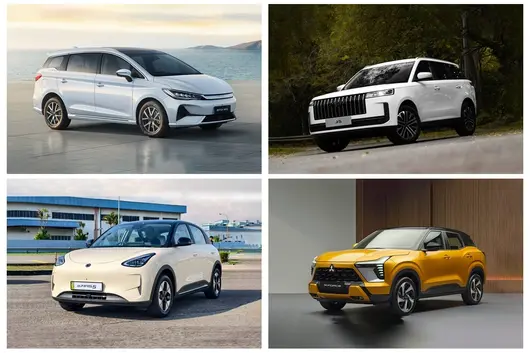

喺馬來西亞嘅 SUV 市場,好多買家喺揀車嗰陣,都好鍾意拿豐田 Yaris Cross 同馬自達 CX-5 嚟比較。兩款車喺價位同定位上都幾接近,今日我哋就從多個方面做一個詳細比較,幫你省做功課嘅時間。
豐田 Yaris Cross 喺馬來西亞嘅 OTR 售價係 RM 99,900 - 109,900,一共有 2 個版本,包括 2026 1.5L Standard(RM 99,900)、2026 HEV 1.5L Standard(RM 109,900) 等。
馬自達 CX-5 喺馬來西亞嘅 OTR 售價係 RM 135,469 - 166,760,一共有 3 個版本,包括 2025 2.0L AT 35th Anniversary(RM 316,154)、2025 2.0L AT(RM 296,154)、2025 2.0L MT(RM 294,154) 等。
從價錢嚟睇,豐田 Yaris Cross 嘅起步價確實比馬自達 CX-5 平咗 RM 35,569。如果你預算有限,豐田嘅入門版已經可以滿足日常需求。但都要留意,平嗰幾千蚊,喺配備上可能會做取舍,具體要睇你嘅需求。
豐田 Yaris Cross 採用 FWD 驅動方式。
馬自達 CX-5 採用 FWD 驅動方式。
兩款車嘅驅動方式一樣,都係 FWD,日常駕駛感受唔會太大區別。
豐田 Yaris Cross 保修 5 年/無限制里程,保養間隔 每 10,000km 或 6 個月。
馬自達 CX-5 保修 5 年/150,000km,保養間隔 每 10,000km 或 6 個月。
豐田 Yaris Cross 同馬自達 CX-5 都係馬來西亞市場嘅主流選擇,適合家庭使用、日常通勤。如果你更鍾意品牌口碑同二手價,可以優先考慮口碑更好嗰款;如果你更介意性價比同配備,就揀配備更豐富嗰款。最終都係建議兩款都去試駕,親身體驗先係最重要嘅。
總而言之,豐田 Yaris Cross 同馬自達 CX-5 都係馬來西亞市場幾唔錯嘅車款。揀邊輛,關鍵仲係睇你個人需求同預算。建議大家做好功課,多比較幾間車行嘅報價,再去試駕做最終決定。買車係件大事,花少少時間做功課絕對唔會錯。

In Malaysia's SUV market, many buyers compare the Honda CR-V and Audi Q5 when choosing a car. The pricing and positioning of these two models are quite close. Today, we will make a detailed comparison from multiple aspects to help you save time on research.
The OTR price of Honda CR-V in Malaysia is RM 178,200 - 195,900, with a total of 4 versions, including 2026 e:HEV 2.0L 2WD RS (RM 195,900), 2026 1.5T 4WD V (RM 181,900), 2026 e:HEV 2.0L 2WD E (RM 178,200), etc.
The OTR price of Audi Q5 in Malaysia is RM 354,174 - 423,174, with a total of 2 versions, including 40 TDI (RM 320,000), 45 TFSI (RM 350,000), etc.
From a pricing perspective, the starting price of Honda CR-V is indeed RM 175,974 cheaper than Audi Q5. If your budget is limited, Honda's entry-level model can already meet daily needs. But note that the few thousand difference might involve trade-offs in features, depending on your specific needs.

The safety rating of Honda CR-V is 5★ (ASEAN NCAP), active safety systems include Honda SENSING (ACC, CMBS, LKAS, RDM).
The safety rating of Audi Q5 is 5★ (Euro NCAP), active safety systems include Pre Sense + ACC.
Regarding safety features, both cars received good ratings. However, there are some differences in functionality between Honda CR-V's Honda SENSING (ACC, CMBS, LKAS, RDM) and Audi Q5's Pre Sense + ACC. If you value active safety highly, you can carefully compare the feature lists of both.

Honda CR-V body length is 4500 mm, trunk 450 L.
Audi Q5 body length is 4400 mm, trunk 400 L.
Regarding space, Honda CR-V's body is 100 mm longer than Audi Q5, so the interior seating space is slightly more spacious, especially the rear legroom. If you often carry family or need to fit a stroller, a larger body is indeed more practical.

Honda CR-V warranty 5 years/unlimited mileage, service interval every 10,000km or 6 months.
Audi Q5 warranty 5 years/150,000km, service interval every 10,000km or 6 months.

Honda CR-V and Audi Q5 are both mainstream choices in the Malaysian market, suitable for family use and daily commuting. If you value brand reputation and resale value more, prioritize the one with the better reputation; if you care more about price-performance ratio and features, choose the one with richer configurations. Ultimately, it is recommended to test drive both, as experiencing it personally is most important.

Overall, Honda CR-V and Audi Q5 are both very good models in the Malaysian market. Which one to choose mainly depends on your personal needs and budget. It is recommended to do your research, compare quotes from several car dealers, and then test drive before making a final decision. Buying a car is a big deal, spending time on research will never be wrong.


In the Malaysian SUV market, many buyers compare the Honda CR-V and Mercedes-Benz GLC when choosing a car. These two models are quite close in price and positioning. Today, we will conduct a detailed comparison from multiple aspects to help you save time on research.
The Honda CR-V's OTR price in Malaysia is RM 178,200 - 195,900, with a total of 4 versions, including 2026 e:HEV 2.0L 2WD RS (RM 195,900), 2026 1.5T 4WD V (RM 181,900), 2026 e:HEV 2.0L 2WD E (RM 178,200), etc.
The Mercedes-Benz GLC's OTR price in Malaysia is RM 336,888 - 336,888, with a total of 2 versions, including GLC 200 (RM 290,000), GLC 300 (RM 340,000), etc.
From a price perspective, the Honda CR-V's starting price is indeed RM 158,688 cheaper than the Mercedes-Benz GLC. If your budget is limited, Honda's entry-level version can already meet daily needs. However, note that the few thousand difference might mean compromises in features, depending on your specific requirements.
Honda CR-V is equipped with 2.0L 4-cyl, 170 hp. Official fuel consumption 8.0 L/100km.
Mercedes-Benz GLC is equipped with 2.0L Turbo, 220 hp. Official fuel consumption 9.5 L/100km.
In terms of power, the Mercedes-Benz GLC's 2.0L Turbo has 50 more horsepower than the Honda CR-V's 2.0L 4-cyl. However, for daily city driving, both cars have sufficient power and won't feel lacking.
Honda CR-V body length 4500 mm, trunk 450 L.
Mercedes-Benz GLC body length 4400 mm, trunk 400 L.
In terms of space, the Honda CR-V's body is 100 mm longer than the Mercedes-Benz GLC, offering slightly more interior passenger space, especially rear legroom. If you frequently carry family or need to store a stroller, the larger body is indeed more practical.
Honda CR-V warranty 5 years/unlimited mileage, maintenance interval every 10,000km or 6 months.
Mercedes-Benz GLC warranty 3 years/100,000km, maintenance interval every 10,000km or 6 months.
Overall, the Honda CR-V and Mercedes-Benz GLC are both excellent models in the Malaysian market. Choosing which one depends primarily on your personal needs and budget. We recommend doing your research, comparing quotes from multiple dealerships, and test driving before making a final decision. Buying a car is a big deal, spending time researching will never be wrong.

喺馬來西亞嘅 SUV 市場,好多買家喺揀車嘅時候,都會拿 Honda CR-V 同 Mercedes-Benz GLA 嚟比較。呢兩款車喺價位同定位上都幾接近,今日我哋就由多個方面做一個詳細嘅比較,幫你節省做功課嘅時間。
Honda CR-V 喺馬來西亞嘅 OTR 售價係 RM 178,200 - 195,900,一共有 4 個版本,包括 2026 e:HEV 2.0L 2WD RS(RM 195,900)、2026 1.5T 4WD V(RM 181,900)、2026 e:HEV 2.0L 2WD E(RM 178,200)等。
Mercedes-Benz GLA 喺馬來西亞嘅 OTR 售價係 RM 258,888 - 295,888,一共有 1 個版本,包括 Standard(RM 258,888)等。
由價錢睇落嚟,Honda CR-V 嘅起步價確實比 Mercedes-Benz GLA 平咗 RM 80,688。如果你預算有限,Honda 嘅入門版已經可以滿足日常需求。但都要留意,平嗰幾千蚊,可能喺配備上有取舍,具體都要睇你嘅需求。
Honda CR-V 採用 FWD 驅動方式。
Mercedes-Benz GLA 採用 FWD 驅動方式。
兩款車嘅驅動方式一樣,都係 FWD,日常駕駛感受唔會有太大分別。
Honda CR-V 保修 5 年/無限里程,保養間隔 每 10,000km 或 6 個月。
Mercedes-Benz GLA 保修 3 年/100,000km,保養間隔 每 10,000km 或 6 個月。
Honda CR-V 同 Mercedes-Benz GLA 都係馬來西亞市場嘅主流選擇,適合家庭使用、日常通勤。如果你更睇重品牌口碑同二手價,可以優先考慮口碑更好嗰款;如果你更在意性價比同配備,那就揀配備更豐富嗰款。最終都係建議兩款都去試駕,親身體驗先係最重要。

總體嚟講,Honda CR-V 同 Mercedes-Benz GLA 都係馬來西亞市場幾唔錯嘅車型。揀邊一輛,關鍵都係睇你嘅個人需求同預算。建議大家做好功課,多比較幾間車行嘅報價,再去試駕做最終決定。買車係一件大事,花少少時間做功課絕對唔會錯。

喺馬來西亞嘅 SUV 市場,好多買家喺揀車嘅時候都會拿 本田 CR-V 同 寶馬 X3 嚟作比較。這兩款車喺價格同定位上都相當接近,今日我哋就由多個方面做一個詳細嘅比較,幫你省咗做功課嘅時間。
本田 CR-V 喺馬來西亞嘅 OTR 售價係 RM 178,200 - 195,900,總共有 4 個版本,包括 2026 e:HEV 2.0L 2WD RS(RM 195,900)、2026 1.5T 4WD V(RM 181,900)、2026 e:HEV 2.0L 2WD E(RM 178,200) 等。
寶馬 X3 喺馬來西亞嘅 OTR 售價係 RM 325,800 - 358,800,總共有 2 個版本,包括 xDrive20i(RM 320,000)、xDrive30e(RM 360,000) 等。
從價錢來看,本田 CR-V 嘅起步價確實比 寶馬 X3 平咗 RM 147,600。如果你預算有限,本田嘅入門版已經可以滿足日常需要。但亦要注意,平嗰幾千塊,可能在配備上會有取捨,具體要看你嘅需求。
本田 CR-V 車身長 4500 mm,尾箱 450 L。
寶馬 X3 車身長 4400 mm,尾箱 400 L。
空間方面,本田 CR-V 嘅車身比 寶馬 X3 長咗 100 mm,車內乘坐空間會稍微寬裕啲,尤其係後座腿部空間。如果你經常載家人或者需要放嬰兒車,大一點嘅車身確實更實用。
本田 CR-V 採用 FWD 驅動方式。
寶馬 X3 採用 FWD 驅動方式。
兩款車嘅驅動方式一樣,都係 FWD,日常駕駛感覺唔會有太大分別。
本田 CR-V 同 寶馬 X3 都係馬來西亞市場嘅主流選擇,適合家庭使用、日常通勤。如果你更看重品牌口碑同二手價,可以優先考慮口碑更好嗰款;如果你更在意性價比同配備,那就選配備更豐富嗰款。最終都係建議兩款都去試駕,親身體驗先係最緊要嘅。

總括嚟講,本田 CR-V 同 寶馬 X3 都係馬來西亞市場好唔錯嘅車型。揀邊一款,關鍵都係要看你嘅個人需要同預算。建議大家做好功課,多比較幾間車行嘅報價,再去試駕做最終決定。買車係件大事,花啲時間做功課絕對無得錯。

In the Malaysian SUV market, many buyers compare Honda CR-V and Subaru Forester when choosing a car. These two models are quite close in price and positioning. Today, we will make a detailed comparison from multiple aspects to help you save time on research.
The Honda CR-V's OTR price in Malaysia is RM 178,200 - 195,900, with a total of 4 versions, including 2026 e:HEV 2.0L 2WD RS (RM 195,900), 2026 1.5T 4WD V (RM 181,900), 2026 e:HEV 2.0L 2WD E (RM 178,200), etc.
The Subaru Forester's OTR price in Malaysia is RM 174,000 - 197,000, with a total of 3 versions, including 2024 2.0L S EyeSight GT Edition (RM 189,538), 2024 2.0L S EyeSight (RM 177,538), 2024 2.0L L EyeSight (RM 167,538), etc.
In terms of price, the Subaru Forester's starting price is RM 4,200 cheaper than the Honda CR-V. Honestly, at this price point, the difference of a few thousand is not really significant; the key is to look at overall value for money and long-term ownership costs.
The Honda CR-V is equipped with a 2.0L 4-cylinder, 170 hp. Official fuel consumption is 8.0 L/100km.
The Subaru Forester is equipped with a 2.0L 4-cylinder, 170 hp. Official fuel consumption is 8.0 L/100km.
Both cars use the same powertrain, and the driving feel is basically the same in daily use. Fuel consumption is also similar, so there is no need to worry too much about this point.
The Honda CR-V body length is 4500 mm, trunk 450 L.
The Subaru Forester body length is 4400 mm, trunk 400 L.
In terms of space, the Honda CR-V body is 100 mm longer than the Subaru Forester, so the interior seating space is slightly more spacious, especially the rear legroom. If you often carry family members or need to fit a stroller, a larger body is indeed more practical.
The Honda CR-V uses FWD drive configuration.
The Subaru Forester uses FWD drive configuration.
Both cars have the same drive configuration, both are FWD, so there will not be much difference in daily driving feel.

Overall, the Honda CR-V and Subaru Forester are both excellent models in the Malaysian market. Which one to choose depends mainly on your personal needs and budget. It is recommended to do your research, compare quotes from multiple dealers, and then test drive to make the final decision. Buying a car is a big matter, spending time doing research will definitely not be wrong.
In Malaysia's SUV market, many buyers compare Honda CR-V and Volvo XC40 when choosing a car. The price and positioning of these two cars are quite close. Today, we will do a detailed comparison from multiple aspects to help you save time on research.
The OTR price of Honda CR-V in Malaysia is RM 178,200 - 195,900, with a total of 4 versions, including 2026 e:HEV 2.0L 2WD RS (RM 195,900), 2026 1.5T 4WD V (RM 181,900), 2026 e:HEV 2.0L 2WD E (RM 178,200), etc.
The OTR price of Volvo XC40 in Malaysia is RM 278,888 - 278,888, with a total of 1 version, including 2025 2.0T Plus (RM 278,888), etc.
From a price perspective, the starting price of Honda CR-V is indeed RM 100,688 lower than Volvo XC40. If your budget is limited, Honda's entry-level version is already sufficient for daily needs. But also note, the few thousand less expensive, might involve trade-offs in features, depending on your specific needs.
Honda CR-V comes with 2.0L 4-cyl, 170 hp power. Official fuel consumption is 8.0 L/100km.
Volvo XC40 comes with 2.0L Turbo, 220 hp power. Official fuel consumption is 9.5 L/100km.
In terms of power, the 2.0L Turbo in Volvo XC40 has 50 more horsepower than the 2.0L 4-cyl in Honda CR-V. However, for daily city driving, the power of both cars is sufficient and does not feel lacking.
Honda CR-V's safety rating is 5★ (ASEAN NCAP), active safety systems include Honda SENSING (ACC, CMBS, LKAS, RDM).
Volvo XC40's safety rating is 5★ (Euro NCAP), active safety systems include Pilot Assist, City Safety (Standard).
Regarding safety features, both cars have received good ratings. However, there are some differences in functionality between Honda CR-V's Honda SENSING (ACC, CMBS, LKAS, RDM) and Volvo XC40's Pilot Assist, City Safety (Standard). If you value active safety, you can compare the feature lists of both in detail.
Honda CR-V body length is 4500 mm, trunk 450 L.
Volvo XC40 body length is 4400 mm, trunk 400 L.
In terms of space, the Honda CR-V body is 100 mm longer than the Volvo XC40, making the interior seating space slightly more spacious, especially the rear legroom. If you frequently carry family or need to fit a stroller, a larger body is indeed more practical.

Honda CR-V uses FWD drive mode.
Volvo XC40 uses FWD drive mode.
Both cars use the same drive mode, both are FWD, so there won't be much difference in daily driving feel.

Overall, both Honda CR-V and Volvo XC40 are excellent models in the Malaysian market. Which one to choose depends mainly on your personal needs and budget. It is recommended to do your research, compare quotes from several dealerships, and then test drive to make the final decision. Buying a car is a big matter, spending some time on research will definitely not be a mistake.


