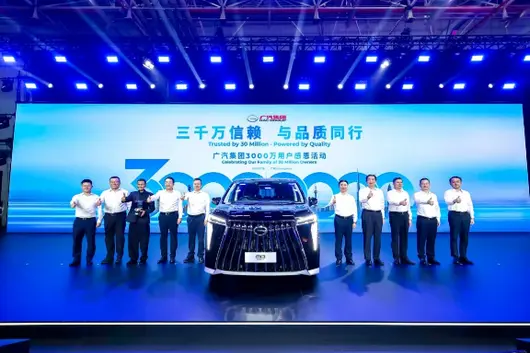
首頁New Energy

搜尋歷史
熱門搜尋
經銷商登入 / 註冊

The runner-up sold 190,000 units, while BYD achieved 440,000 in a single month! This isn't just a sales ranking; this is a complete domination in action!

On September 1st, when the "August 2026 China Automobile Market Vehicle Manufacturer/Group [New Energy Vehicles] Sales Ranking" was announced, the auto industry was truly shocked!

BYD sold 440,000 units in a single month, leading the second place by nearly 250,000 units. SAIC about 190,000 units, Geely about 175,000 units, Chery about 120,000 units... To put it more clearly, the combined sales of the second, third, and fourth place only exceed BYD by 48,000 units! This gap is no longer about who sold a few thousand more; it's that they are not even on the same level.
Sales reaching a new milestone might be news for other brands, but for BYD, it's just daily business!

In fact, for 63 consecutive months, BYD has been the Top One in new energy sales every month! But the market 63 months ago was completely different from today. Back then, new energy penetration rate had just crossed 10%, and now it's heading towards 50%. As the market grew, BYD's market share did not drop but rose, which proves exactly that it is not cashing in on the new energy vehicle bonus, but rather the one defining the track.
BYD's high-end brands are also gaining volume. In August, Fangchengbao sold 42,000 units, a 155.6% year-on-year increase, with single-month sales exceeding Zeekr, Li Auto, AITO, and Xiaomi, ranking first among new forces in the 200,000+ category. Denza 16,000 units, up 33.4%. The two brands combined 58,000 units, more than doubling. This set of numbers keeps increasing the premium value of BYD's sales figures.

What is even more impressive about BYD is not domestic sales, but the overseas market!
In August, exports reached 189,000 units, up 134.6% year-on-year, setting a record for 5 consecutive months. In the first 8 months of 2026, overseas sales accumulated to 1.158 million units, whereas last year's full overseas total was 1.05 million units; this year exceeded that record in just 8 months! At this pace, annual sales must be heading towards 1.5 million units! All brands have been shouting the slogan of globalization for so many years, but now BYD is truly setting sail! It doesn't just sell cars in overseas markets; it is defining global new energy vehicles with technical standards!

The second-generation Blade Battery and Flash Charge technology enable new energy vehicles to achieve "5 minutes charged, 9 minutes fully charged" under normal temperature conditions, and the ability to add only 3 minutes to charging time in a -30°C environment, completely eliminating the last shred of consumer hesitation when buying new energy vehicles. As of August 28th, BYD's Flash Charge stations have surpassed 10,000, covering 332 cities. From "having technology but no chargers" to "having chargers, cars, and buyers", only by laying out the charging network quickly can sales increase substantially.
Now, Flash Charge stations have been built to the foot of Mount Everest, the Thailand factory is in production, the Brazil factory is under construction, and the European market is being laid out. While others are still studying how to go global, the BYD fleet is already driving cars all over the world on the ocean.

Consecutive 63 months as Number One in new energy; more worth noting than the record is BYD's product structure. The overseas proportion is rising, high-end models are rising, the technological moat is deepening! When its monthly sales head towards 500,000, BYD has already pushed the starting line of Chinese brands to the front of those foreign traditional automakers.
How much do you think BYD's sales will reach this year? Let's chat.
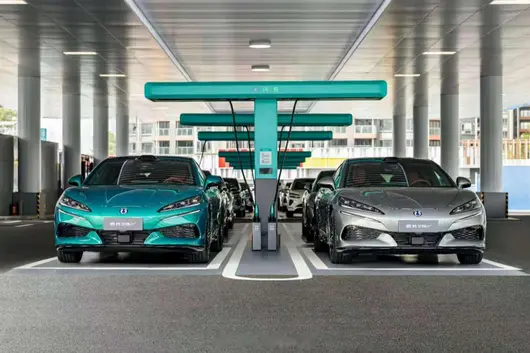

In the beginning of September, Geely Automobile Holdings Limited (0175.HK) presented a substantial report card as usual: August single-month sales reached 270,194 vehicles, continuing the momentum of month-on-month and year-on-year growth for six consecutive months, up 8% both year-on-year and month-on-month. The new energy segment was particularly bright; new energy sales from the three major brands Geely, Lynk & Co, and Zeekr reached 175,877 vehicles, up 19% year-on-year, with the share of the total rising to 65%. In other words, for every ten cars sold, more than six are "electric", and Geely's transition to full new energy is becoming clearer.

The quality of sales is not just reflected domestically. Overseas exports in August showed a result of 110,094 vehicles, up 205% year-on-year, marking month-on-month and year-on-year growth for the eighth consecutive month, and single-month exports broke 100,000 for three consecutive months. New energy exports that month were 70,629 vehicles, surging 446% year-on-year, accounting for 64% of all exports. From "product globalization" to "system globalization", Geely's global moves are upgrading from scattered nodes to a complete localized operational ecosystem.

Supporting the steady climb in sales is the continuous release of technological momentum. From August 21 to 30, Geely, Zeekr, Lynk & Co, Geely Galaxy and Geely China Star appeared at the 2026 Chengdu International Auto Show, with over 49 intelligent products appearing together, with pure electric, hybrid, and fuel multiple energy sources on stage together, fully displaying the ecosystem of "Leader in Full-Domain AI Intelligent Cars". Almost simultaneously, Geely released AI new energy off-road technology, gathering GTA native new energy off-road architecture, all-wheel drive AI electric hybrid Thunder EM-T and AI all-terrain digital chassis, three globally first technologies, completing a systematic reshaping from body structure to intelligent chassis. Among them, Thunder EM-T relies on Xingrui AI Cloud Power scenario engine to accurately match the best fuel-electricity solution, with energy consumption optimization exceeding 15%; the all-terrain digital chassis built based on Quantum-level AI EEA 4.0 can recognize road conditions via AI and automatically switch intelligent scenario modes. These technologies are first mounted on Galaxy Battleship 700, redefining the global benchmark for intelligent new energy off-road technology.
The three brands exerted force in sync on both the auto show and the market. Global luxury tech brand Zeekr delivered 36,981 vehicles in August, up 110% year-on-year; Zeekr 7X sales continued to break 10,000, with global orders breaking 200,000; Zeekr Touring sales exceeded 10,000 for three consecutive months, with global cumulative deliveries exceeding 400,000; Zeekr 009 took the dual crown of sales and reputation for pure electric MPVs above 400,000 RMB in mainland China for three consecutive months.

Global new energy high-end brand Lynk & Co continues to expand widely, with August sales of 17,027 vehicles, up 4% month-on-month, among which new energy products were 15,504 vehicles, up 10% month-on-month. At the Chengdu Auto Show, the new Lynk & Co 20 and Lynk & Co 20 Sprint Edition appeared simultaneously, with Lynk & Co 10, Lynk & Co 07GT and concept car Time to Shine on stage together, displaying layout covering multiple energy sources and adapting to diverse scenarios. In terms of sports map, Lynk & Co expanded from circuit racing to rally; from August 28 to 30, 07GT Rally Academy Racing Car went to the 2026 China Automobile Rally Championship Huairou Station, winning S7 category and Lynk & Co Rally Challenge double champion.

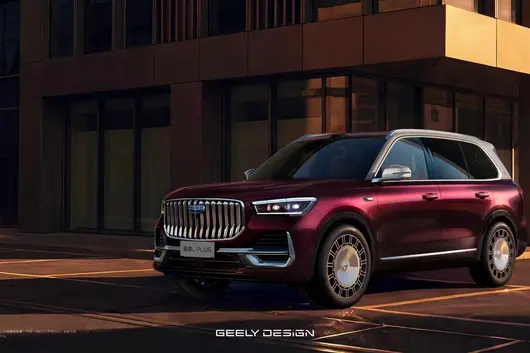
Geely brand solidified its growth basic board, with August sales of 216,186 vehicles, up 5% year-on-year and 9% month-on-month. Mainstream new energy brand Geely Galaxy had monthly sales of 119,115 vehicles, up 8% year-on-year and 10% month-on-month respectively. Star model Geely Star Wish sold 60,955 vehicles in a single month, standing on the 50,000 vehicle stage for three consecutive months, with cumulative sales approaching 900,000. Regarding new products, the new C-class AI pure electric sports sedan Galaxy TT started pre-sales on August 13, redefining the value benchmark of 200,000 yuan class pure electric sports sedan starting at 145,900 yuan; the AI all-terrain hardcore SUV Galaxy Battleship 700 that appeared on August 21 became the auto show focus and will start pre-sales in September. In terms of fuel market, Geely China Star had August sales of 97,071 vehicles, up 8% month-on-month; the new fourth generation Boyue L i-HEV series is equipped with i-HEV smart hybrid and Qianli Haohan H5 solution, consolidating fuel SUV champion status with three cross-level strengths: energy saving, performance, and intelligence; on August 31, the new flagship Xingyue L PLUS was officially announced and will debut on September 5.

In terms of globalization, the three brands bloom at multiple points overseas. Zeekr topped the list of Australian luxury pure electric sales for January-July; Lynk & Co ranked first in Tunisia July high-end PHEV brand; Geely brand won Panama China brand sales champion. Core models also show global competitiveness: Zeekr 7X topped Australian mid-size luxury SUV first; Zeekr 009 took Thailand and Malaysia pure electric MPV market first; Geely Star Wish topped Thailand electric car sales champion; Galaxy Starship 7 EM-i won Poland C-class PHEV sales champion. Channel construction accelerated simultaneously: in Europe, Geely landed in Austria, Spain sales network broke 50 stores, Star Wish officially listed in France; in Latin America and Southeast Asia, Lynk & Co landed in Argentina, Chile business turned to Geely direct operations; in Middle East and Africa, Zeekr 9X started pre-sales, Lynk & Co entered Jordan, first D-SUV global car Geely Monjaro EM-i launched in Egypt at the end of August. Based on long-term confidence in overseas growth, Geely adjusted 2026 overseas sales target from 640,000 to 920,000, aiming for annual sales of one million vehicles.

Operating quality and technical strength advanced simultaneously. On August 17, Geely released 2026 interim results, with total revenue of 173.6 billion yuan, core net profit attributable to parent company of 9.68 billion yuan, achieving volume, price, and profit rise together. Relying on the "One Geely" strategy, this enterprise is embedding full-domain AI into design, R&D, manufacturing and after-sales full link, traveling through the cycle with the determination of high-quality development, steadily moving towards the goal of a global intelligent new energy vehicle leader.
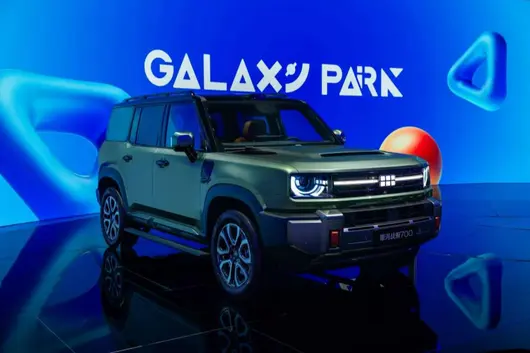

On August 25, the 2026 Silk Road 10,000-Li Journey · Enlightenment Road officially concluded in Singapore, bringing an end to this cross-border journey that lasted 33 days.
Silk Road Expedition accompanied by Green Energy! The entire fleet traveled over 10,000 kilometers, departing from Xi'an, passing through six provinces in China, traversing Thailand and Malaysia, and finally arriving in Singapore. 2026 marks the 5th anniversary of the establishment of a comprehensive strategic partnership between China and ASEAN. The event was themed "Tech Towards New · Civilization Towards Heart", combining cultural exchange, technological interaction, and economic and trade exchanges to witness the new vitality of the Land and Maritime Silk Road.

This entire trip was supported by BYD, with multiple models from the Dynasty, Ocean, Denza, Fang Cheng Bao, and YangWang series composing the fleet. They covered highways, mountain roads, and congested urban traffic conditions. Fast Charging and Divine Eye assisted driving, two core technologies, underwent a true 10,000-kilometer field test. The energy replenishment capability of a 5-minute fast charge and 9-minute full charge, combined with a massive fast-charging station network, solves the pain points of energy replenishment for long-distance travel; Divine Eye relies on massive real-world driving data for continuous optimization, greatly reducing the burden of long-distance driving. In ancient times, the Silk Road relied on camel caravans and relay stations for supplies; now, new energy technology completes the cross-border expedition.


In the Singapore market, BYD's performance is equally impressive, having ranked first in total passenger car sales across all brands locally for 19 consecutive months. Local vehicle acquisition costs are high, and consumers are very cautious when choosing cars; even though model pricing is not particularly affordable, sales remain hot. With 16 offline retail touchpoints, many stores have entered core business districts, and dealers are continuously increasing investment and layout.


Looking at the overseas market, BYD's growth momentum is rapid. From January to July this year, overseas sales exceeded 970,000 vehicles. Business covers more than 120 countries and regions worldwide, securing top new energy vehicle sales in many countries such as Thailand, Singapore, Brazil, and the Middle East.

By combining Silk Road culture with cross-border new energy travel, BYD is also using Chinese new energy power to assist the green transportation development of the "Belt and Road Initiative" and participate in the global automotive industry's green transition.
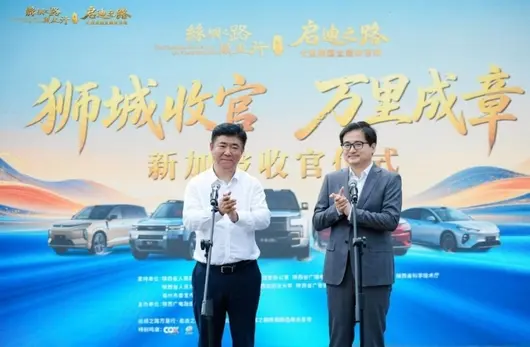

On September 1, Geely Automobile Holdings Limited (0175.HK) announced its August sales report, total monthly sales reached 270,194 vehicles, achieving double year-on-year and month-on-year growth for 6 consecutive months, both rising 8% year-on-year and month-on-month. The new energy sector performed brightly, Geely, Lynk & Co, and Zeekr combined new energy sales reached 175,877 vehicles, up 19% year-on-year, accounting for 65% of new energy sales.

The overseas market has become a powerful engine for Geely's growth, officially entering a new stage of "systematic overseas expansion". August overseas exports reached 110,094 vehicles, surging 205% year-on-year and slightly increasing 3% month-on-month, achieving double growth year-on-year and month-on-year for 8 consecutive months, and also marking the third consecutive month with exports exceeding 100,000 units. Among them, new energy exports reached 70,629 vehicles, up 446% year-on-year, accounting for 64% of total exports, new energy products are becoming the main force for Geely's global market expansion.
At the 2026 Chengdu International Motor Show held from August 21-30, Geely gathered its four major matrices: Zeekr, Lynk & Co, Geely Galaxy, and Geely China Star, showcasing 49 intelligent products together, covering pure electric, hybrid, and fuel power routes, concentrating on demonstrating the technical strength of full-domain AI smart cars.
Three Brands Work Together, Multiple Key Models Show Outstanding Results
Zeekr, as a global luxury tech brand, is showing strong upward momentum, delivering 36,981 vehicles in August, a 110% year-on-year increase. Multiple models under its brand have secured top positions in niche segments: Zeekr 7X monthly sales continue to break 10,000, with global orders exceeding 200,000; Zeekr Shooting Brake sales exceeded 10,000 for three consecutive months, with over 400,000 vehicles delivered globally; Zeekr 9X ranked first in sales of vehicles above 500,000 from January to July; Zeekr 8X, launched only three months ago, ranks first in cumulative sales of hybrid SUVs in the 300,000-500,000 price range; Zeekr 009 secured the championship for both sales and reputation of domestic pure electric MPVs above 400,000 for three consecutive months. At the Chengdu Auto Show, Zeekr presented 14 heavy-hitter products, and its luxury lineup garnered significant attention.

Global new energy high-end brand Lynk & Co sold 17,027 vehicles in August, up 4% month-on-month, among which new energy sales were 15,504 vehicles, up 10% month-on-month. At the Chengdu Auto Show, the new Lynk 20 and the sporty Lynk 20 Fly version debuted, balancing urban trends with sports attributes; Lynk 10, Lynk 07GT, and GT Concept Car were exhibited together, enriching the product matrix. On the racing track, Lynk & Co also achieved results. The 07GT Rally Academy car competed in the 2026 China Car Rally Championship Huairou Station, winning the S7 category and the Lynk & Co Rally Challenge Championship, opening up a new track for Chinese brand hybrid rally racing.

Geely brand sales reached 216,186 vehicles in August, up 5% year-on-year and 9% month-on-year, solidifying the group's growth foundation. Geely Galaxy under Geely sold 119,115 vehicles in August, up 8% and 10% respectively year-on-year and month-on-year. Geely Xingyuan's popularity remains high, selling 60,955 units in August, breaking 50,000 for three consecutive months, with cumulative sales approaching 900,000; Galaxy E5 monthly sales were 14,132 vehicles. Regarding new cars, the Class C AI pure electric sports sedan Galaxy TT started pre-sales, with a starting price of 145,900; AI all-terrain hardcore SUV Galaxy Battleship 700 landed at the Chengdu Auto Show, planned to start pre-sales in September.

The fuel power segment of Geely China Star sold 97,071 vehicles in August, up 8% month-on-month. The Shuangbin Family, China Star High-end Series, and Boyue Family all maintained stable output. The 4th Gen Boyue L i-HEV landed at the Chengdu Auto Show, equipped with the 3rd Gen i-HEV Zhiqing hybrid technology, featuring LiDAR and advanced intelligent driving solutions, solidifying the fuel SUV advantage. The new mid-to-large flagship smart hybrid SUV Xingyue L PLUS was also announced to debut, scheduled to premiere on September 5.

Investing in Full-Domain AI Technology, Hardcore Off-Road Technology Officially Released
Geely is permeating full-domain AI into the entire business chain of design, R&D, manufacturing, and after-sales. On August 28, Geely released AI new energy off-road technology externally, including GTA native new energy off-road architecture, Full-Drive AI Electric-Hybrid Thor EM-T, and AI All-Terrain Digital Chassis, three core innovations. This technology will first land on the Galaxy Battleship 700, reconstructing new energy hard-core off-road standards, balancing off-road capability, energy consumption performance, and intelligent experience.

Globalization Accelerates, Overseas Sales Target Raised to Sprint for Million Milestone
Overseas markets are blooming in multiple points; Zeekr, Lynk & Co, and Geely brands took leading positions in niche markets in multiple countries such as Australia, Malaysia, Tunisia, and Panama. Multiple models achieved bright rankings in markets such as Thailand, Poland, Spain, and Mexico. Channel layout continues to expand, with new markets and stores constantly added in Europe, Latin America, Southeast Asia, and Middle East Africa; Geely Monjaro EM-i global car officially started listing.

Based on strong performance in overseas markets, Geely raised its 2026 overseas sales target from 640,000 to 920,000, going all out to hit the 1 million export target.

Mid-August Geely disclosed 2026 interim performance, total revenue 173.6 billion yuan, core net profit attributable to parent company 9.68 billion yuan, achieving simultaneous improvement in volume, price, and profit. Facing the future, Geely will rely on the "One Geely" strategy, leverage full-domain AI technology advantages, adhere to high-quality development, and continuously release growth potential.

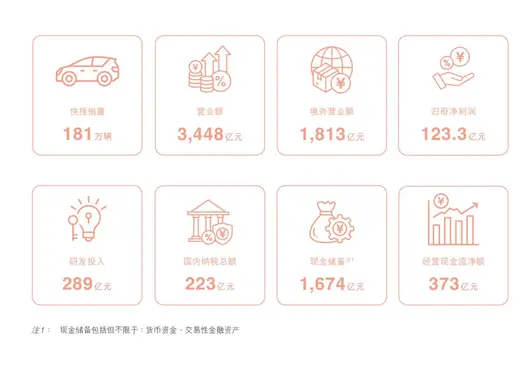
Evening of August 28, 2026, BYD (002594.SZ) unveiled its first-half operating performance report with a splash! Amid fierce competition in the global automotive industry and industry-wide profitability pressure, BYD, still relying on its strong operational resilience and comprehensive strength, walked steadily and firmly, delivering a highly valuable and bright financial report, fully displaying the hardcore confidence of an industry leader and a steady development trend, highlighting the continuous steady development foundation.

From the core operating data, BYD's first-half performance was very bright: achieving 344.8 billion yuan in operating revenue, with net profit attributable to shareholders reaching a high of 12.3 billion yuan. It continuously invested a high amount of 28.9 billion yuan into technical R&D, while holding a sufficient cash reserve of 167.4 billion yuan, solidifying the firm foundation for the company's steady development. Particularly worth noting is that the second quarter performance witnessed a strong breakout, with net profit increasing significantly by 30% year-on-year, and gross margin continuing to climb to 18.9%, successfully reaching a new high in the past year! This set of eye-catching data intuitively verifies that BYD's profitability is continuously improving and upgrading, with the momentum of high-quality development being unstoppable.
With intensifying industry competition and accelerating restructuring of the market landscape, many brands are facing growth bottlenecks. However, relying on a solid and steady operational foundation and continuously optimized business structure, BYD moved upstream against the industry wave. Its overall development momentum in the first half was high and upward, with market competitiveness continuing to soar, and its position as the global new energy vehicle industry leader becoming more and more solid and unshakable.

Only by pushing forward in two directions can the growth ceiling be broken! In the first half of this year, BYD precisely laid out the two core tracks of internationalization and high-endization. The dual-wheel drive achieved growth acceleration, and the overall growth structure of the enterprise continued to improve and become increasingly healthy.
The overseas market witnessed explosive growth, becoming the core new engine for performance growth! In the first half of the year, BYD's overseas sales volume soared to 790,000 units, skyrocketing by 68% year-on-year, with a very rapid growth momentum. Currently, the brand's business has comprehensively covered more than 120 countries and regions worldwide. Relying on solid product strength, it successfully topped the sales charts of new energy vehicles in several key overseas core markets such as the UK, Brazil, and Thailand, winning the favor of global consumers. With the continued release of overseas local production capacity and the continuous improvement of the global sales channel system, BYD's global layout is gradually entering the harvest period, and its overseas business is continuously injecting powerful momentum into the overall performance growth of the enterprise.
The high-end layout has also been bountiful, with brand value and product premium capability continuously leaping upward! In the first half of the year, Fang Cheng Bao, Denza, and Yangwang, the three high-end brands, worked together to break through, with cumulative sales breaking 228,000 units, increasing by 61% year-on-year. Their proportion in total sales steadily rose to 12.6%, marking significant results in BYD's structural high-end transformation.
Among them, the new high-end brand Fang Cheng Bao performed particularly stunning, with first-half sales strength breaking through 160,000 units, skyrocketing by 163% year-on-year, achieving leapfrogging growth; Denza brand steadily deep-dived into the high-end market, achieving double harvest in reputation and sales, with June sales breaking the 20,000 unit milestone for the first time, and an average product price of up to 360,000 yuan, firmly standing in the mid-to-high-end new energy market; Yangwang created an industry miracle, becoming the benchmark brand that was the fastest to break the 10,000 units in domestic million-level luxury new energy vehicles, thoroughly breaking the monopoly pattern of overseas luxury brands, showcasing the top-tier strength of Chinese Smart Manufacturing.
The dual-line strategy of international expansion and high-end quality improvement allowed BYD's product structure to continuously iterate and optimize, with core profitability steadily climbing. Net profit and gross margin in the second quarter both went up, creating phased achievements. The slight fluctuation in overall net profit in the first half was mainly due to short-term exchange losses caused by market exchange rate fluctuations. Excluding the impact of these external factors, BYD's main business profitability trend was stable and favorable, and the enterprise's super development resilience in crossing industry cycles was fully revealed.

Continuous technological innovation is the core secret of BYD's long-term leading of the industry and the core driving force for the enterprise's high-quality development! For many years, BYD has always persisted in heavy R&D and strong innovation, deeply digging core technologies with ultra-high investment, building a deep industry moat. In the first half of 2026, enterprise R&D investment reached a high of 28.9 billion yuan, with investment scale far exceeding net profit for the same period, continuously retaining the heavyweight honor of A-share "King of R&D". To date, BYD's cumulative R&D investment has exceeded 270 billion yuan. The massive scientific research investment provides relentless hard support for technology iteration and product upgrades.
Heavy investment must have high returns! BYD, which has continuously deep-dived into R&D, is now entering a concentrated explosion period for technological results, with a series of disruptive technologies landing in mass production, thoroughly solving industry pain points. In March this year, the second-generation Blade Battery and Flash Charge Technology were officially released, which refreshed the record for the fastest charging speed of global mass-produced vehicles in one go, successfully solving the global industry problems of "slow charging" and "difficult charging in low temperatures". Relying on solid technical strength, it gained authoritative recognition from the Ministry of Industry and Information Technology (MIIT), bringing users an ultimate convenient car experience.
Technology landing and ecosystem layout are accelerating in sync! Currently, second-generation Blade Battery capacity continues to ramp up and expand, and national Flash Charge station construction is in full swing. Relying on the "Flash Charge China" strategy, BYD has already built 10,000 Flash Charge stations nationwide, comprehensively covering 332 cities, perfectly constructing an all-domain fast charging network. Not only is it deeply digging the domestic market, the brand is also accelerating the global energy ecosystem layout, planning to deploy 6,000 Flash Charge stations overseas within one year, using Chinese technology to boost global new energy vehicle electrification leapfrogging development, and promoting a global green mobility revolution.
The intelligent track has also frequently reported good news, continuously leading the industry! After realizing intelligent parking safety backup, BYD was the first to officially announce in May this year that it had completed city navigation safety backup, becoming the only enterprise in the world to achieve intelligent driving "dual safety backup". With extremely strict safety standards, it promotes the universal popularization of intelligent assisted driving technology, escorting the safety of users' travel.
Data witnesses hardcore strength! As of July 31, the number of BYD intelligent assisted driving vehicles in possession has broken 3.52 million units, with the daily cumulative driving data of its SkyEye intelligent driving system exceeding 220 million kilometers. Massive real road condition data continues to feed back and iterate technology. Meanwhile, the brand's heavy-release Xuanji A3 Chip is the first domestically self-developed 4nm process intelligent driving chip. From the underlying core chip to the complete system software, BYD has achieved full-stack self-development and vertical integration, continuously leading the wave of global automotive industry intelligence and digitalization revolution.
Uphold Original Intention to Practice Responsibility, Interpreting Corporate Social Responsibility with Hard WorkLeading with strength, yet holding warm responsibility! While developing rapidly and digging deep into innovation, BYD always remembers corporate social responsibility, practicing the green development concept with practical actions, showcasing the responsibility and layout of a national enterprise.
Tax and financial contributions demonstrate corporate responsibility. In the first half of 2026, BYD's domestic tax total reached a high of 22.3 billion yuan, a value far exceeding net profit for the same period, injecting strong momentum into social economic development. In the field of green low-carbon development, BYD is more unswervingly anchored to the long-term goal of "achieving full value chain carbon neutrality by 2045", with its ESG comprehensive performance stably in the top tier of domestic enterprises, continuously empowering global dual carbon causes.
Green results are visible and tangible! From January to June this year, BYD new energy vehicles' full lifecycle carbon emission reduction reached a high of 23.17 million tons, with equivalent tree planting volume reaching 386 million trees. With substantial green results, it helps global industry low-carbon transformation and contributes Chinese enterprise strength to ecological environment protection.
Future Looks Promising! Full-Year Performance Climbs Quarter by Quarter, Leading Global Industry RevolutionLooking back at the first half of 2026, the global automotive industry structure underwent deep restructuring, and overall industry operating pressure was highlighted. Facing a complex and changing market environment, BYD broke through against the trend, overcoming difficulties, relying on precise strategic layout, hardcore technical strength, and perfect industrial layout, to achieve a strong turnaround in second quarter performance and reach a new level, delivering an operating report that exceeded expectations.
Outlook for the second half, BYD's growth momentum continues to accumulate, with strong potential! With frontier technology results continuously landing in mass production, high-end model market share steadily rising, and global layout comprehensively entering the harvest period, the enterprise's core profitability and long-term development potential will be further released, with full-year performance expected to continue climbing quarter by quarter and rising steadily.
From breaking technical barriers with billions in R&D to setting sail for globalization; from the high-end product matrix comprehensively breaking through to personally practicing social responsibility, BYD is reconstructing industry growth logic with all-round, multi-level core competitiveness, continuously leading the global new energy track, and leading a brand-new revolution in the global automotive industry! In the future, this national car enterprise will definitely continue to break through and create better results!

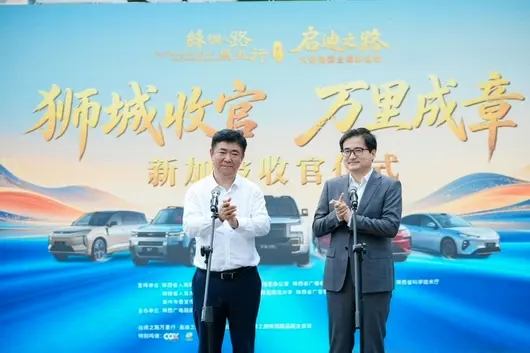
With the successful conclusion of the '2026 Silk Road 10,000 Li Journey · Enlightenment Road' in Singapore, BYD, as the travel partner throughout the journey, departed from Xi'an, passed through Thailand and Malaysia, and finally arrived in Singapore, truly achieving 'Silk Road Long Journey with Green Energy Companion'.


A full 33 days, the convoy ran over 10,000 kilometers, not only speeding on highways but also experiencing complex road conditions such as mountain roads and city traffic jams. This time, models from brands like Dynasty, Ocean, Denza, Fangchengbao, and Yangwang went on the expedition together, equivalent to BYD's full product line going up together, truly undergoing cross-border long-distance testing.


Along the way, the 'Charge Fully in 5 Minutes, Charge Full in 9 Minutes' Flash Charging Technology easily solved the most worrying charging anxiety for long-distance travel. Plus, with the Divine Eye Assisted Driving, even after running over 10,000 kilometers, it greatly reduced fatigue for the convoy while also ensuring safety and comfort.


Precisely because of its strong product performance, BYD has secured the top position in local passenger car sales in the Singapore market for 19 consecutive months. This Silk Road 10,000 Li Journey activity fully proved that Chinese New Energy Vehicles are not just for city commuting, but can also run long distances across borders. I just want to say, Chinese car brands are becoming increasingly capable, and this will also promote green transportation to more countries.

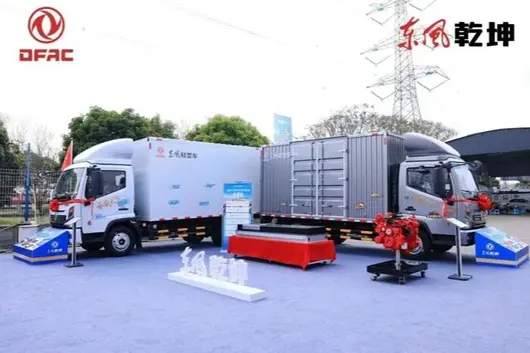
August 26, Dongfeng Automobile Co., Ltd. (hereinafter referred to as "Dongfeng Shares", Stock Code: 600006) officially released the 2026 Semi-Annual Report. During the reporting period, Dongfeng Shares firmly grasped the opportunities for green and intelligent transformation in the commercial vehicle industry, anchored on the development directions of new energy and internationalization, steadily improved operating quality, and delivered a mid-year report with steady improvement and positive trends.

The report shows that in the first half of 2026, Dongfeng Shares achieved operating revenue of 5.516 billion yuan, a year-on-year increase of 9.64%; achieved total profit of 169 million yuan, a significant year-on-year increase of 83.56%; net profit attributable to shareholders was 124 million yuan, a year-on-year increase of 27.83%, with significantly improved profitability levels. Under the complex situation of intensifying industry competition and changing demand structure, the company deepened value marketing, promoted cost reduction and efficiency improvement across the entire chain, continuously optimized product structure, and further highlighted the operating resilience of the company.
Regarding whole vehicle sales data, the company achieved sales of 69,000 vehicles, a year-on-year increase of 0.44%, outperforming the market. The growth momentum of domestic new energy business was bright, with new energy vehicle sales reaching 18,000 vehicles, a significant year-on-year increase of 99.2%, significantly outperforming industry growth speed, becoming the core engine driving company growth.

Among them, the VAN vehicle market performance was bright. In April this year, the VAN vehicle brand was integrated, and the Dongfeng Furuitong brand was launched. Products such as Dongfeng Furuitong V6, V8, and V10 quickly gained market recognition, order volume increased rapidly, and delivery volume in the first half of the year increased by 153.9% year-on-year; in the light truck sector, the pace of new energy transformation was accelerated. Dongfeng Qiankun K6E, Dongfeng Dolicard D6E Battery Swap Version and other new products were launched to the market in succession, precisely matching diverse niche scenarios such as urban distribution and cold chain. New energy light truck sales increased by 573.4% year-on-year; Dongfeng Tuya T9E, T5E, T7Pro and other products were launched in rapid succession, providing more valuable product choices for urban and rural distribution.

While the product layout is rapidly transforming from traditional fuel vehicles to new energy, Dongfeng Shares focused on key technologies such as pure electric vehicles, hydrogen fuel trucks, skateboard chassis, and intelligent driving, continuously invested R&D expenses of 213 million yuan, a year-on-year increase of 74.48%. In June this year, the Dongfeng OpenVAN unmanned logistics capacity brand was officially launched, and four L4-level unmanned logistics vehicles were released, receiving over 4,000 strategic orders on-site; autonomous driving logistics vehicles and intelligent sanitation vehicles have begun demonstration operations, accelerating the exploration of smart logistics commercialization implementation paths, and solidifying the foundation for long-term development with technical innovation.

The overseas export business achieved growth acceleration, with 13,000 whole vehicles exported in the first half of the year, a year-on-year increase of 81.4%. Relying on a mature product matrix, Dongfeng Light Vehicles continued to breakthrough in key markets such as Latin America and Southeast Asia. A single delivery in Malaysia reached 830 units; jointly donated Dongfeng Furuitong V10E to Cuba Latin American News Agency with Xinhua News Agency. The Latin American market simultaneously secured 108 vehicles, and the Dongfeng Furuitong brand's international reputation was quickly established. Dongfeng Light Vehicles continued to expand the overseas market landscape, and overseas brand reputation continued to improve. 
Meanwhile, Dongfeng Shares' engine business achieved significant growth in the first half of the year. Engine sales increased by 26% year-on-year, and engine business for generator sets increased significantly. As a core component business of Dongfeng Shares, the continuous strength of the engine sector not only verified Dongfeng Shares' technical accumulation in the powertrain field but also provided support for the market competitiveness of whole vehicle products.

The improvement in Dongfeng Shares' operating performance in the first half of the year is inseparable from the business achieving accelerated transformation and rapid promotion of new business layout. At the same time, it also relies on Dongfeng Shares' "Green Environmental Protection, Digital Integration, Flexible Manufacturing, Platform Sharing" intelligent manufacturing hard-core strength, laying a solid foundation for creating high-quality products and solidifying product reputation.
Facing the future, Dongfeng Shares will continue to focus on the five development directions of "New Quality Products, Marketing Capability, High-quality Operations, Ecosystem Integration, Value Creation and Sharing", accelerate the pace of new energy transformation, continuously optimize product structure, strengthen ecosystem construction, seize market transformation opportunities, and achieve high-quality development of company operations.

In the elimination phase of new energy vehicles, how can one survive? Leapmotor broke out of a sea of red competition and led far ahead. What does it rely on? Let's look at Leapmotor's "assets",The answer is actually just four words: Self-Research and Self-Manufacturing.
Leapmotor's half-year report is out -- revenue 38.11 billion reached a new high for the same period, net profit 210 million for three consecutive half-years, H1 global sales 356,000 units made it into the global new energy top four (BYD, Tesla, Geely, Leapmotor), and July became the first new force to exceed 100,000 deliveries in a single month.

Some believe that in today's highly mature supply chain, car companies don't need to manufacture everything themselves.
But the reality is that batteries, motors, and electronic controls account for over 50% of the total vehicle cost. If these lifelines are held by suppliers, car companies are left with only design space for the body and seats, essentially regressing into assembly plants. When the price war intensifies, car companies without self-research barriers won't even have the room to lower prices without considering suppliers' moods.

Among new forces, Leapmotor is not the only one that can achieve full-stack self-research, and all have achieved good results; Zeekr, Fangchengbao and other "factory second generations", supported by the R&D and manufacturing foundation of parent companies, start off just as fast.
The new energy track seems to compete on sales volume and visibility, but it is actually a contest of industry chain control. Those brands that are unwilling to put in the hard work in core links such as intelligent driving, intelligent cockpit, and three-electric systems, overly rely on external procurement, and only understand "opportunism", will find it increasingly difficult in the elimination round.
Leapmotor's Self-Research and Self-Manufacturing Results Begin to ShowLeapmotor's differentiation lies in it having truly made "self-research" a systematic cost control method. Zhu Jiangming explicitly stated in the internal letter for the 10th anniversary that Leapmotor's vehicle self-research and self-manufacturing ratio covers 65% of core component costs, with a final goal of over 80%.

Self-research and self-manufacturing is Leapmotor's solid foundation for "quality not expensive", not just a slogan. This is mainly reflected in several specific actions:
First is the platform integration of core components such as batteries and electric drives.
The three-electric systems, especially power batteries, account for a large portion of the total vehicle cost, so seeking profits from upstream is a required course for car companies. Leapmotor's approach is to accelerate full-stack self-research from cells to PACK; At the same time, for solutions like 800V silicon carbide high voltage, because the battery packs and core components like electric drives achieved self-research and platform unity, it was possible to "overnight" switch the entire C series and B series.
Without the foundation of self-research and self-manufacturing, this speed would be impossible.
Second is converting self-research advantages directly into price and configuration competitiveness.
For example, B01 and B10, bringing global 800V and 3C fast charging, AR-HUD configurations that were previously only available in the 200,000 yuan class directly to the 100,000 yuan class, relies on mass production of self-researched components reducing BOM costs.
A10 brought LiDAR and advanced intelligent driving into the 100,000 yuan range for the first time, with monthly sales near 30,000 units. It expands the path of scale efficiency together with the newly launched A05 starting at 63,900.
Against the backdrop of generally pressured industry vehicle profit margins,Leapmotor was still able to maintain a 12.6% gross margin, where vertical integration played a decisive role.
Zhu Jiangming summarized this model as "transferring 10% gross margin from the parts link to users, while the whole vehicle still maintains a healthy 14%-15% gross margin" -- core components held in one's own hands provide the confidence to offer concessions.
Third, this ability has begun to be exported externally.
On August 24, Leapmotor Automobile held a deepening strategic cooperation agreement signing ceremony with China FAW in Changchun. Both sides will carry out deep collaboration in fields such as new energy whole vehicles, intelligent assisted driving, powertrain, power batteries, intelligent chassis, and embodied intelligent robots.
In addition, overseas is also an important link. Leapmotor's H1 export volume reached 96,000 units, up 372.6% year-on-year, Europe has already deployed over 1,000 outlets. Leapmotor is leveraging Stellantis's overseas capacity to promote localization assembly and mass production in places like Malaysia, Spain, and Brazil.
Crossing over from an OEM to become a Tier 1 is itself an endorsement of technical strength.
Technology Reserves for the Next DecadeOf course, self-research is not omnipotent, and Leapmotor is also reviewing and improving its weaknesses. Regarding intelligent driving, although urban pilot assistance has been pushed to the entire series, there is still a gap compared to Huawei and XPeng's first-tier level.
This September's Annual Technology Conference, Leapmotor will release intelligent assisted drivingWorld Models that reach the industry's first-tier level, finally making up for this required course.
It will also releasea series of the latest technical achievements in the three-electric fieldto prepare for the next stage of advancement.
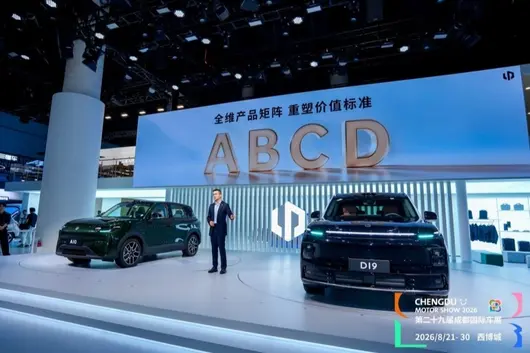
Closing RemarksIt is worth mentioning that Leapmotor's flagship SUV D19 sales in July also exceeded 10,000 units. Leapmotor, through the platformization of the ABCD series and a high proportion of self-research and self-manufacturing, has provided a development model for new energy car companies: players who can make self-research and self-manufacturing a moat have a higher chance of surviving in the elimination round.

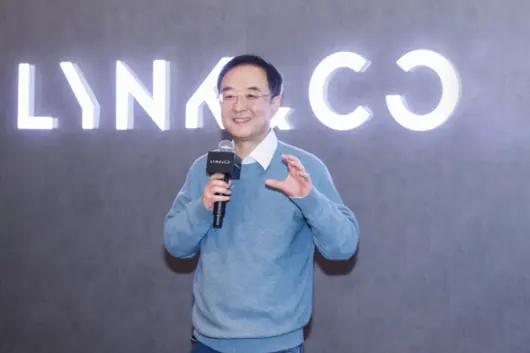
August 17, HKEX issued a notice: Li Shufu stepped down as Chairman of Geely Automobile Board of Directors, An Conghui officially took over, effective August 18.
News broke, industry shook. But this is not retirement and giving up power; it is the founder retiring after achieving success and professional managers fully taking over, the most thorough reform of private automakers "de-familialization". However, for Li Shufu who built the Geely business empire in the industry for decades, why let go now? Will An Conghui taking over cause changes in Geely's New Energy second half?

The Li Shufu Era: A Legendary M&A History, From Grassroots Car Maker to Global Giant
Li Shufu's decades in charge of Geely was a path to glory for a grassroots car maker. Starting from private car manufacturing, breaking foreign joint venture monopolies, forcing a path for Chinese automakers' globalization. He was the founder, M&A maniac, and the absolute creator of the Geely Empire.
$1.8 billion acquisition of Volvo was Li Shufu's most legendary move. The "snake swallowing an elephant" deal that was ridiculed by the public back then is now the most successful overseas M&A for Chinese automakers. This deal directly filled Geely's safety, chassis, and manufacturing system technology, thoroughly getting rid of low-end cheap labels, and obtaining the entry ticket for global high-end car manufacturing.

Furthermore, acquired Lotus core technology and brand assets,守住 the performance sports car track; held controlling stakes in Malaysia Proton, opening up Southeast Asian overseas markets, perfecting the global map. In 2018, invested heavily to enter Daimler, becoming the largest single shareholder, connecting industry top resources, raising Geely's global industry voice.
In technical infrastructure, Li Shufu was also not soft-handed. Built CEVT China-Europe Technology Center, CMA architecture, SEA浩瀚 Pure Electric Architecture, transformed from "assembly car maker" to an independent top brand with self-developed core technology, completing the foundation paving from fuel to New Energy.
Li Shufu was good at cross-border M&A, territory expansion, strategic gambles, helping Geely complete the leap from zero to global top-tier automakers. This was the era of building the land.

The An Conghui Era: Not Playing Capital M&A, Bearing the New Energy Second Half
Who is An Conghui? Core veteran following Li Shufu for many years, not playing capital M&A, focusing on product, operations, landing, New Energy transition pragmatic.
He was not interested in capital M&A and industry hype, always rooted in product, market, user and system construction, was the core operator of Geely's New Energy transition. This takeover was the inevitable result of industry accumulation and strength precipitation.

An Conghui's steering ability had already been verified by market performance. He single-handedly built the Lynk & Co brand, breaking the "domestic high-end must have fierce competition, must have slow sales" industry curse. Not relying on low-price competition, relying on extreme product quality, young user operations, global development thinking,站稳 the domestic high-end fuel car track, becoming the benchmark for domestic high-end brands.
Under the New Energy transition wave, An Conghui took the lead again, incubated Zeekr brand. From Zeekr 001 breakout hot sales, to full series model iteration upgrade, matrix perfect, Zeekr successfully entered the high-end pure electric track, facing new forces and joint venture New Energy brand competition, becoming Geely's New Energy rising core main force.
More rare is, An Conghui is also one of the few managers in the industry who truly understand users and are willing to guarantee users. In the early stage of the industry, New Energy models generally had problems of fast infotainment hardware iteration and old owner experience shrinking, most car companies chose paid upgrades or ignored.

Under his leadership decision, Zeekr officially announced in 2022, for the first batch of Zeekr 001 old owners full free upgrade Qualcomm 8155 infotainment chip assembly, entire upgrade enterprise investment over 300 million yuan, not charging users any hardware and installation fees. At that time's high-end New Energy market, this disregard for short-term costs, prioritizing old owner rights practice, broke industry convention, both filled model intelligence gaps, and also accumulated solid user reputation for the brand, fully showing long-term operation thinking.
In addition, An Conghui long-term led Geely internal system innovation, promoting model refined iteration, vehicle quality control comprehensive upgrade, New Energy strategy landing. Changed Li Shufu's built massive industrial empire from "scale expansion" to "refined operations", letting Geely's every transformation fit market demand, fit user pain points.
Two generations of leaders' handover, essentially was track switch, past relied on strategic expansion to set pattern, now relied on product strength to decide win or lose.

Conclusion: Not a Power Shift, but a Precise Era Handover
For this commander change, I think the most controversial point for outsiders is, Li Shufu stepping down equates to Geely giving up power, going downhill? The fact is, this is just listed company management handover, Li Shufu still holds Geely Group, controlling top-level strategy, belongs to "retired but not resting, behind-the-scenes steering".
Industry contradiction is, old generation car making big shots good at capital expansion, new generation professional managers must face fierce competition. Past relied on M&A to expand map, now relied on product, cost-performance, New Energy, intelligence to fight close combat, era track completely changed.
Final conclusion is clear, that is Li Shufu completed China's auto hardest zero to global foundation, famous and successful, perfect conclusion. An Conghui succeeding, marked Geely officially said goodbye to "wild expansion capital era", entered "product king, New Energy deciding, refined competition" new era.

This is not a power shift, it is a precise era handover, people of the founding land retired, guarding the land, winning second half people took the stage. From our perspective, future Geely's biggest highlight no longer relies on M&A breakout, but watching Zeekr, Galaxy whether can withstand BYD, new forces competition, truly站稳 domestic New Energy first tier.
Do you think, saying goodbye to Li Shufu frenzy expansion era, An Conghui can lead Geely to win New Energy competition war?
Back then, not only was the replacement of new cars slow, but car manufacturing was also very "slow".
In the fuel car era, this may have sacrificed efficiency, but brought quality. In recent years, fierce market competition in the electrification era has forced more and more brands to join the ranks of making "quick-assembly cars", but just in such a frenzied atmosphere, a "global slow car" has arrived.

On August 12, Chery Fengyun T7 officially started pre-sales, with a pre-sale price of 109,900 - 129,900 RMB. This new car went through 2 years of planning, 3 years of R&D, began preliminary research from 2022, and was polished for nearly 5 years.
So, what exactly did Fengyun T7 do during these 5 years?
Visited users in over 5,000 cases across multiple countries globally, creating a great car adapted for global needs
First, one point that needs to be clarified is that Fengyun T7 is a "Global Car".
What is a "Global Car"? A "Global Car" is born for the global market, targeting the global market from the planning stage.
Therefore, before truly starting the R&D phase of a global car, there needs to be a "pre-procedure" — visiting countries around the world, looking at consumers' driving habits worldwide, and understanding what standards each country's regulations and policies are.
During the 5 years of polishing Fengyun T7, Chery Motors completed over 5,000 global user surveys, conducted in-depth visits to 15 typical countries, and wrote down the pain points of global users one by one into the product framework.

Therefore, every detail of Fengyun T7 reflects considerations for different global road conditions, climates, and usage habits. For example, you will find some functions that rarely appear on domestic models, but are actually very useful.
For example, Fengyun T7 uses 4 riveted rings with a load-bearing capacity of 300kg. This is a design common in European cars, used to secure cargo or luggage to ensure items do not slide during high-speed driving or sharp turns.
Furthermore, the use of reflective materials on the center console has been reduced to avoid glare produced by direct summer sunlight, which is very friendly to users living in high-altitude areas, the south, and overseas high-light intensity areas. Meanwhile, a series of parts such as paint surface, interior leather, sealing strips, plastic parts, etc., have all undergone rigorous weather resistance testing, achieving a balance between refinement and durability.

There are also details such as adjusting steering torque to suit Thai right-hand drive preferences for a heavier feel; strengthening steering feel and optimizing return quality for bumpy roads in Indonesia; retaining physical buttons for high-frequency functions for Turkish/Israeli users who prefer hard switches; and designing a central top eyewear box for Australia/New Zealand/South Africa/Southeast Asia users who often wear sunglasses.
In addition, Fengyun T7's styling can also adapt to global aesthetics. After integrating the wisdom of global user co-creation, it was created jointly by the top 10 global design centers and top foreign designer teams, taking into account aesthetic preferences of different regions such as China, Europe/Americas, Southeast Asia, and the Middle East, and at the same time completed a wave of cultural output under the name of "Eastern Aesthetics". Previously, its homologous model Lepas L6 debuted at the Milan Design Week and received consistent praise.

In terms of safety, the vehicle fully benchmarks the 2026 version of E-NCAP 5-star safety design. Functional safety ASIL-D reaches a high level. The body structure uses high-strength steel and hot-formed steel accounting for over 80%. Critical parts are reinforced with 1500MPa class hot-formed steel, forming a "mobile safety fortress". Design optimizations such as shotgun structure, dual frame subframe + Pack crash beam can effectively absorb and disperse collision energy, providing double protection for the battery pack and occupant compartment. In addition, 9 airbags are installed inside the vehicle, effectively reducing secondary collision injuries during a crash.
81 road test vehicles / million km verification, leaving problems before mass production
Before listing domestically, Fengyun T7 was already listed in South Africa and Thailand, ran a circuit in the overseas market for market verification, and then started the pace of listing in China. August in Indonesia; September in EU; October in Australia/New Zealand, UK, Israel, Malaysia. It will continue to promote the pace of overseas listing in the future.
Before entering the listing pace, Fengyun T7 underwent full quality polishing on a global scale.
One point that needs to be clarified is that Chery not only possesses nearly 30 years of automobile manufacturing experience, but has also been ranked first in Chinese brand passenger car exports for 23 consecutive years, with products exported to over 130 countries and regions worldwide.

Currently, Chery's global users have exceeded 20 million. Therefore, Chery not only knows what global users want, but also knows what processes a car needs to go through to truly provide a relatively comprehensive quality guarantee in a real sense. In the past, Chery has fully built a global R&D, global standards, global verification, and global quality integrated car-making system.
Before Fengyun T7 officially went off the assembly line, this car also ran through the tropical extremely humid environment of Southeast Asia. It achieved 500mm off-road waterproofing capability, far exceeding the national standard immersion height of 150mm. It also optimized the air conditioning filter to prevent mold and odors in high-humidity areas. It also ran through the Nordic extremely cold environment and brought a dual-source wide temperature range heat pump + PTC that can operate stably at -30°C and heat up to 23°C within 20 minutes in a -20°C environment. For bumpy road conditions such as gravel roads in Brazil, additional battery front and rear beam protection was added to adapt to overseas complex road conditions.

All in all, Fengyun T7 invested up to 81 exclusive durability vehicles for synchronized road tests, with a total accumulated test mileage of over 6 million kilometers, of which durability special tests were 1.45 million kilometers. It can cover 100+ extreme road conditions environments such as EU, Australia/New Zealand, Middle East, South Africa, Russia, Mexico, Brazil, etc.
This series of rigorous tests and verifications covering different road conditions, environments, altitudes, temperatures, and humidity levels, try their best to discover and solve problems during the testing phase. What is delivered into the hands of users is a reliable, high-quality vehicle that is safe and worry-free to drive.
Six major essentials one step done, easy to drive, fun, and long range
As a car product created through global user co-creation, one of the major features of Fengyun T7 is comprehensive capability.
Being able to meet the six major core essentials of range, safety, intelligence, comfort, driving control, and appearance in one step, it is one of the few car products in this segment level that requires users to make too many compromises.

Appearance meets global aesthetics, safety benchmarks global rigorous standards, and comfortable space meets the seating needs of tall European passengers. In dimensions such as intelligence, driving control, and range, it also has good performance.
In the intelligence dimension, Fengyun T7 is equipped with a 15.6-inch central control screen + 8.8-inch instrument cluster, creating a good cabin technology atmosphere. It is built with a 4nm cockpit-driving integrated 8775 chip, bringing a more fluid interactive experience. Based on 6 personalities of Xiao Qi chat, besides conventional voice control, it can also practice spoken language and accompany chatting, bringing more intelligent and convenient experiences. In addition, CarPlay, HiCar, and CarLink connectivity are also arranged.
In terms of intelligent driving assistance, based on the 3R7V12U hardware solution, the Falcon 500 driving assistance system is equipped, supporting city pilot, and automatic parking functions covering over 300 scenarios + 2km floor-crossing memory parking, which can effectively reduce the burden for drivers.

In terms of driving control, it is equipped with a motor with maximum power 178kW and maximum torque 275N·m, which can meet the power requirements of most scenarios. It combines a 50.8:49.2 golden axle load ratio, 70mm large-sized bushings, One-Box wire control braking system, driving is more stable, braking is faster, lateral inclination suppression is sufficient. The chassis also has an international chassis team led by former Maserati chassis tuning experts for targeted tuning, bringing a better driving experience.
In terms of range, the new car is standard with a 65.05kWh Rhinoceros battery pack, CLTC pure electric range 600km, actual test range 667+km. Charging once every 2 weeks can meet urban commuting travel needs.

In terms of charging, it can charge the battery from 30% to 80% in 20 minutes. And the battery can work normally in -40°C to 60°C. Northern users can drive with confidence in winter.
Final Thoughts:
In the New Energy era, new brands continue to emerge, and market competition intensifies. To adapt to the market pace, quick-assembly models emerge endlessly, but long-term reliable travel quality can never be quickened.
With Chery's 20-plus years of manufacturing experience and global system as the background, Fengyun T7 was carefully polished for 5 years before presenting the final product. It has reliable quality, while also combining high appearance, high safety, high intelligence, large space, excellent driving control, and long range. It is a truly global, all-electric good car that can adapt to global family users.


A toy costing a few yuan triggered a huge storm in late July.
The incident started when a blogger made a bamboo cicada for his daughter, filmed a nostalgic video for the post-80s and 90s generations. Netizens, hearing the "wa wa" sound when shaking the "bamboo cicada", were reminded of Richard Yu's amazed comments on new products at launch events.
Some people made funny videos, paired with captions like "The best toy within 10 million". The videos were mass reported by Huawei Terminal and taken down. Netizens' rebellious emotions were ignited.
"The best toy within 10 million", seemingly a joke, is actually a deconstruction of the AITO M9 promotional slogan. That is, through this joking method, make "The best car within 10 million" completely become a joke.
Huawei's fierce reaction exceeded public expectations, revealing the cruelty of the current car market from the side.
In July, domestic new energy vehicles were still galloping, but under the gallop, another situation was gradually emerging.
Half Joy, Half Concern
The polarization that started in April has greatly deepened by July.
In July, divided by 90,000, car companies were divided into two clear camps. The first tier kept climbing. BYD, SAIC, Geely, Chery, Leapmotor, Changan, six car companies, all achieved year-on-year growth, and month-on-month fluctuation only appeared in SAIC and Geely.
The second tier seemed firmly locked at 40,000 monthly sales. NIO, XPeng, Li Auto, AITO, Hyper, Aion are all like this. These car companies, in July, most did not achieve both year-on-year and month-on-month growth. Especially compared to June, only Hyper Aion saw month-on-month growth.

There is a huge gap between the two tiers. The 6th place Changan is more than twice the 7th place HarmonyOS Intelligent Vehicle, and January-July sales volume reached 3 times. The second tier catching up to the first tier has already become very difficult.
The median and mean further verify this polarization trend. Among the 15 car companies or brands currently announced, the median is 38,027 units, with year-on-year and month-on-year declines of 6% and 15% respectively.
The mean is basically flat with June, with year-on-year growth reaching 28%. Mean growth means overall sales are still increasing. Median decline means car companies in the middle of sales are facing challenges. In other words, the incremental sales were all eaten up by the first tier.
If in the early stage of industry development this is not a problem, but at this stage, for the second tier car companies, days are becoming very difficult.
4 Brands Monthly Sales Break 100,000
Among the 29 brands with announced sales for July, 22 brands achieved monthly sales over 10,000.
Brands that did not exceed 10,000 monthly sales also include BYD Yangwang, Jishi Motors, NIO Firefly, etc. These brands are either special price segment brands, niche models, or new brands, currently in the production capacity climb stage. Excluding these brands, monthly sales over 10,000 is already the basic threshold for sitting at the table, and competition difficulty is increasing.
Among the 22 brands with monthly sales over 10,000, 4 have already broken 100,000 monthly sales. Besides the strong BYD Dynasty and Ocean series, and Geely Galaxy series, Leapmotor became a new member, and Leapmotor is the first new EV maker to break 100,000 monthly sales.
In the below 100,000 yuan price range, there are 11 brands with monthly sales over 100,000. Among them, BYD Fang Cheng Bao sales volume broke 40,000. But it can also be seen that the gap between the two tiers is huge, and brand sales also present extreme polarization. Among numerous brands, breaking through to create a hit is becoming increasingly unlikely.

Under horizontal competition, breaking out becomes more difficult. Vertical achievement of own strategy might bring some comfort, but the reality is, more than half of 2026 has passed, and most car companies' sales target achievement status has not yet broken 50%.
Among car companies that announced annual sales targets, Zeekr's progress is far ahead, completing 71% of the annual target in 7 months. The Galaxy series is also strong, having completed 63%.
Progress on targets for other car companies has not exceeded half, and pressure to sprint for annual targets remains huge. NIO's sales target is relatively small, currently completed 48%. Leapmotor showed bright performance, but the million-unit sales target is large, and the difficulty of completion is high.
Xiaomi's production capacity seems still unable to further improve, maintaining around 30,000 units for 4 consecutive months. To complete the 2026 annual 550,000 unit delivery target, it needs to wait for further production capacity pull-up.

From sales performance, it can be seen that the Matthew effect is very obvious. Whether car companies or sub-brands under car companies, polarization is obvious, and the gap between the two tiers is huge.
Continuation of this situation makes survival status increasingly poor for car companies with weak sales growth.
At the current stage, car company costs are continuously increasing. Seres founder Zhang Xinghai previously gave detailed data. Storage chip price increase rose up to 5 times, lithium carbonate price climbed from 80,000 yuan/ton to 180,000 yuan/ton last August. Dual raw material price increase directly led to AITO single car manufacturing cost increase of 15,000 to 20,000 yuan. Under this situation, profits of most car companies are squeezed significantly.
Data from CPCA shows that January-June auto industry profit margin is 3.8%, downstream industrial enterprise profit margin is 6.5%. Auto industry is obviously still relatively low.
Closing in on Q2 financial report season, many car companies disclosed profit forecasts. The second-tier Seres, GAC, BAIC BluePark all showed losses. Among them, GAC expected loss 4.06-4.57 billion yuan, BAIC BluePark expected loss 1.795-1.995 billion yuan, Seres expected loss 1.5-1.8 billion yuan.
Price reduction means further profit pressure, which might directly threaten operational stability.
Moreover, even with price reduction, it does not equal sales growth. On one hand, the incremental era is heading towards its end.
"Oil-Electricity Equal Rights" curtain opens. Starting from January 1, 2027, energy saving cars half levy car and vessel tax policy, and pure electric commercial vehicles, plug-in (including extended range) hybrid cars, fuel cell commercial vehicles car and vessel tax exemption will be cancelled. This means, the new energy vehicle car and vessel tax preferential policy implemented for 15 years officially enters withdrawal countdown.
Preferential policy cancellation will also cause consumption willingness to slide, and car companies' incremental space will further shrink.
On the other hand, the market is already very internalized, everyone is reducing prices in disguise. Car companies are not conducting price wars on the surface, but secretly all lowering prices and increasing configurations. Data from CPCA shows that January-June, new energy vehicle new car discounted model average price 247,000 yuan discount force arithmetic average reached 30,000 yuan, discount force reached 12%.
Technical innovation is not necessarily a panacea. An innovative product design will quickly become a standard. Relying on one technology or product design to gain excessive market returns has become very difficult.
Under this situation, many car companies' stock prices continue to fall, and car companies have to buy back to maintain stock prices.
SAIC Group announced controlling shareholder promises not to reduce shares held in any way within 6 months. Seres has already bought back 8.9755 million shares, using fund total 587 million yuan. JAC Motors has already bought back 1.5467 million shares, using fund total 34.9948 million yuan.
Under this cruel situation, car companies' survival status is not good, and seeking overseas growth has also become a must-have option.
Going Overseas: New Forces Set Sail
Overseas markets are still led by traditional car companies.
Chery is still the navigator among overseas car companies, and growth momentum is very fierce. According to listed company caliber, Chery July overseas sales 196,300 units, has achieved "walking on two legs". This sales volume is 5th consecutive month breaking historical high.
BYD is closely chasing, July overseas sales 179,800 units, 4th consecutive month breaking historical high, consecutive 9 months sales breakthrough 100,000 units. If only looking at new energy vehicles, BYD might have already led.
In July, BYD Brazil factory 100,000th new energy vehicle officially rolled off production line, factory on-job employee scale reached 5,500 people. Denza's first hypercar listed in UK, Denza Z starting price 1.3 million yuan, global pre-sale orders over 1,000 units. BYD new energy vehicles in Thailand market cumulative delivery volume officially broke 130,000 units.
Currently, BYD is strengthening global influence. The group reached global strategic cooperation relationship with Paris Saint-Germain Football Club (PSG). Both sides will promote cooperation landing through global communication activities, fan interaction forms, etc.
Geely although not rapid growth, also broke 100,000 units for 2 consecutive months, 7th consecutive month breaking historical high. This is a very strong performance. In addition, Great Wall also created new high for 4 consecutive months.
Although SAIC failed to break new high, it has also been stabilizing monthly sales over 100,000 units for consecutive 5 months.

Say, traditional car companies are ushering in a comprehensive explosion in overseas markets. To a certain extent, this can alleviate the tight domestic state.
New forces also saw huge potential in overseas markets. Since this year, car companies such as NIO, XPeng, Li Auto have obviously accelerated overseas layout actions.
XPeng announced its Australia long-term strategy, planning to introduce XPeng high-level intelligent assisted driving locally in 2027. In addition, XPeng Australia New Zealand subsidiary will launch 5 new models within 6 months, and plans to layout 3 flagship tech experience centers and 50 outlets in Australia.
Besides Australia, XPeng also held Mona L03 launch event in Munich, Germany. Planned to land in 65 countries and regions this year, expanding XPeng Group international product lineup.
Li Auto cooperated with Kazakhstan local car group Allur to reach strategic cooperation, will utilize Allur Kostanai factory to start local assembly production. All new Li Auto L9 also listed in Kazakhstan in July, pricing far exceeded domestic.
Leapmotor B10 completed Mexico localization certification, officially landed local market and started delivery, opening North American market expansion process. Currently, Leapmotor B10 has entered Mexico local stores. Leapmotor C10, C16 will also gradually enter market.
Overseas competition has become the only way for car companies. In the stage where domestic market polarization is obvious and market pattern gradually stabilizes, overseas vast markets may become the key to the next stop for car companies.
Xiaomi Overturns Table, Volume Models Released Dense
July is not a big month for product launches. Many car companies put volume models into July launches.
This month's highlight is Xiaomi.
On the night of July 30, Xiaomi Pengcheng held a technical launch event, releasing 2 new cars. Equipped with Xiaomi self-developed Kunlun Extended Range Engine, fuel compatibility performance is broad, can add 92, 95, 98 different grade gasoline. Under WLTC working conditions, Pengcheng N70 lowest fuel consumption is 5.7L/100km, CLTC pure electric range highest can reach 505km, full oil full electricity comprehensive range all break 1,500km.
Lei Jun also focused introduced rear row variable diverse cockpit scene, seats support front row 180° rotation, second row horizontal movement.
The most explosive is price. N90 Max pre-sale price 299,900 yuan, N70 Max pre-sale price 259,900 yuan. Two new cars will be officially launched in September. According to usual laws, new cars might further lower prices. This means, this 9-series full-size SUV has been pressed to within 300,000 yuan by Xiaomi. For AITO M9, Li Auto L9, Zeekr 9x, NIO ES9 and other competitors, it might be a considerable shock.

However, some netizens questioned, new cars put 400V platform on 300,000 class flagship models, no rear wheel steering, no steer-by-wire chassis, battery supplier downgrade, electric drive and intelligent driving hardware intentionally diluted in launch event. But from current market reaction view, Xiaomi Pengcheng will likely give this already very fierce market, add another layer of fire.
Except Xiaomi, other hot car companies also released volume models.
NIO series Firefly announced, Halo Xunguang series first model "Habitat" officially launched, whole vehicle price starting at 133,300 yuan.
XPeng MONA L03 launched 9 models in China market, price 123,800 to 156,800 yuan. L03 positioning compact SUV, providing pure electric and extended range two power.
Leapmotor new B series officially launched. B10 positioning pure electric compact SUV, B01 positioning pure electric compact sedan. Full series standard equip Qualcomm SA8295P chip, all-domain 800V SiC high pressure system + 3C fast charge etc. B10 price starting at 99,800 yuan, B01 price starting at 95,800 yuan.
New generation Li Auto L6 officially launched, only providing Ultra one version, national unified retail price 249,800 yuan.
Traditional car company aspect, Geely series Lynk & Co 07GT officially launched, releasing 4 models. Geely Galaxy TT Ultra officially opened pre-sale, new car positioning pure electric mid-large sedan, Ultra is high config version, later will also supplement price lower models. Zeekr 9X 5-seat version officially launched.
Dongfeng series Voyah Pursuit Light S published quad drive top config model, pre-sale price 309,900 yuan. Later will also supplement long range rear drive version and standard range version. New car positioning pure electric mid-large SUV, product orientation more lean towards young and sports.
BYD Ocean network series Seal 08 officially launched, new car releasing 6 configurations.
Time enters Q3, car companies' second half year sprint is about to open curtain. Considering relevant subsidies start reducing, this half year will be manufacturers' last timing to sprint sales.
Fighting for "Domestic BBA"
"NIO, XPeng, Li Auto" these three new forces sales comparison is becoming meaningless.
On one hand, Leapmotor's sudden appearance, made three car companies become the second game of competitive new forces. On the other hand, XPeng, NIO layout in low price segment, three new forces are no longer mid-high end, luxury car sales direct comparison.
First half year, Li Auto, AITO, NIO, Zeekr, launched fierce battle in full-size SUV, 400,000 yuan above luxury car price segment. These four car companies are currently accelerating grabbing BBA customers.

This trend started with Li Auto L9. Relying on precise grasp of dad and baby family demands, Li Auto car first tested the water. From June 2022 first unit delivery to June 2026, Li Auto L9 completed 300,000 units cumulative delivery in 4 years. Early, Li Auto could rely on one model to hard resist NIO, XPeng. Precise layout on dad market was key.
AITO pushed this market to climax. September 2023, AITO M9 suddenly appeared, 100,000 units sold in a year, consecutive 21 months toping 500,000 yuan above luxury car sales first place.
Before a few years, relying on early layout, intelligent driving and cockpit field leading, AITO and Li Auto enjoyed market dividends. But market pattern will not remain unchanged. AITO M9 and Li Auto L9 lead advantage will soon be caught up.
Zeekr's success comes from 9X and 8X success. Since listing on September 29, 2025, 9X in China 500,000 yuan class high-end SUV market segment, has been toping sales list for 7 consecutive months. This May, Zeekr 8X sales 6,103 units, grabbing transaction average price 300,000-500,000 yuan interval hybrid SUV sales first place.
NIO is following slowly, ES8 and ES9 launched successively. NIO's advantage lies in its battery swap products. Through BaaS rent power mode, NIO pressed ES9 starting price to within 400,000 yuan. July, NIO ES9 also achieved good sales. New ES8 reached 130,000th unit delivery in 305 days. NIO ES9 since May 28 started delivery, 30 days delivery broke 10,000 units, refreshed 500,000 yuan above high-end pure electric vehicle fastest delivery record.
From sales view, in mid-high end and luxury car price segment, July, Zeekr ran to front. Li Auto, AITO, NIO main brands closely chasing. These four car companies' current difference is not big.
Which of these four will be Domestic BBA, or whether these four can all be Domestic BBA, has become more interesting to watch.
Volume Sales, Difficulties All Over
Compared to mid-high end struggle, price reduction seems the simplest option for new forces.
XPeng exiting Mona series, NIO launching Onvo series, Firefly series, are all precise snipers to sales.
But from result side, mass consumer market is not a market where you take what you want. Even positioning mid-high end, does not mean these car companies can use low price to snatch other car companies' shares.
Taking NIO as example, it launched 100,000-200,000 yuan price segment Onvo brand, 100,000 yuan below Firefly brand. But until July, Onvo contribution sales was 10,155 units. Stable above 10,000 units for 3 consecutive months, but recent 2 months month-on-month both showed decline. Firefly similarly struggled to start, until now failed to break monthly sales of 10,000.
XPeng did not announce Mona series contribution sales, but from XPeng's overall sales view, still did not break 40,000 units threshold. Therefore, low price might relieve sales pressure in short term, substantial sales changes still need long process.
This point is also reflected in Hyper Aion traditional car company brand merchants. Once, Aion sales exceeded NIO, XPeng, Li Auto. But in current stage development, gradually lost speed. July sales 34,987 units, still in flat state.
This point Geely and Leapmotor performed better. Leapmotor does not rely on brand, but is truly high price low config. July, Leapmotor sales first time stood on 100,000 units, consecutive 4th month sales creating historical high, throwing other new forces far behind.
Geely Galaxy is also embodiment of product power. Focusing on friendly commute, home rigid demand, focusing on high cost-performance, low usage cost and reliable quality. July sales 107,800 units, consecutive 2nd month breaking 100,000, becoming a strong challenger to BYD.

Mass consumer market, brand is perhaps not the most important factor, higher cost-performance, more reliable product experience.
Xiaomi, HarmonyOS: Internet Car Companies Growth Troubles
Xiaomi and Huawei are both facing their own troubles.
July, Xiaomi sales still stopped around 30,000 units. This of course relates to production capacity. But in December last year, Xiaomi's production capacity was once pulled to 50,000 units, and once consecutive 3 months broke 40,000 units. Now Xiaomi still controls production capacity at 30,000 units, still not well digesting orders. Since this year, Xiaomi's stock price has fallen 30% from peak period, huge pressure.
Same situation HarmonyOS Intelligent Vehicle also encountered. July, HarmonyOS Intelligent Vehicle sales 45,046 units. After May 20,000 in June, it dropped back to 40,000. This is far from the limit of HarmonyOS Intelligent Vehicle. In recent years, HarmonyOS Intelligent Vehicle's "friends circle" continuously expanded. Now there are already "Five Worlds Three Realms", but at current stage, this ecosystem performance is not optimistic.
AITO needs not say. AITO-led Seres car sales only 20,480 units. Sales returned to March water level. Ambitious Luxeed, started delivery in May, until July barely reached 20,000 unit delivery. Stelato cooperating with Chery, finally broke 10,000 this month, reached 10,709 units, but still did not break new high.
Under low sales momentum, cost cooperating with Huawei is becoming prominent. In 2025, Seres paid Huawei over 20 billion yuan procurement fee. These rigid cost expenditures are increasingly eye-catching under current situation.
July, Seres released Q2 loss warning. Among them, AITO car 2026 half-year deduct non-net loss reached 1.7-1.95 billion yuan. HarmonyOS insists on high-end route. Under normal conditions, car companies' profit margin has guarantee. But with supply chain price rise, car company competition intensifies, enterprises on HarmonyOS industry chain face operation pressure.
Facing current situation, Xiaomi gave solution. Launching extended range brand Pengcheng, opening sales again through new products. However, this heat maintained through freshness will eventually return to calm. Xiaomi and Huawei have walked through dividend period. Need stronger product power.
Fierce competition is indeed the current reality of new energy car companies. For many car companies, this is a difficult cycle. But continuously evolving Chinese car companies are comprehensively realizing overtaking on the curve.
Chinese car companies' difficulty is the difficulty of walking uphill. Compared to this, since this year, traditional luxury car three giants BBA (Mercedes-Benz, BMW, Audi) collectively reduced prices. Japanese car companies three strong (Honda, Toyota, Nissan) first half year China sales collectively declined. Among them Honda year-on-year declined 34.7%. Under big trend, Chinese car companies are grabbing territory of old forces, grabbing era opportunity. Need technology and experience more surpassing the era. This is a process. This difficult situation will eventually gradually be overcome.


Chery Group July new energy vehicle sales hit a new high again, reaching 129,067 units, with a year-on-year increase of 97.5%, approaching a doubling. From January to July, Chery Group cumulatively sold 604,305 new energy vehicles, a year-on-year increase of 42.3%, breaking 100,000 units in a single month for four consecutive months. According to data released by the China Passenger Car Association, Chery has ranked in the top three in the industry for new energy wholesale volume for four consecutive months.

Scaled development enters a boom period, ranking in the top three in the industry for wholesale volume for four consecutive months
From stabilizing at 100,000 units to successively breaking through 110,000 and 120,000 units, and then approaching 130,000 units, Chery Group new energy vehicles maintain high-speed growth, and scaled development has entered a boom period. So far this year, Chery Group has cumulatively sold over 604,000 new energy vehicles.
According to the July passenger car main manufacturer new energy wholesale volume sales bulletin released by the China Passenger Car Association, Chery ranked third in the industry. Thus far, Chery has ranked in the top three in the industry for new energy wholesale volume for four consecutive months this year.
New energy transformation accelerates, domestic penetration rate exceeds 60%
New energy has become a new label for Chery Group. In July, Chery Group's total sales were 276,820 units, of which new energy vehicle sales were 129,067 units, and the overall new energy penetration rate steadily climbed to 46.6%.
New energy is already the absolute main force of Chery Group in the domestic market. In July, Chery Group's domestic new energy sales were 46,044 units, with a new energy penetration rate of 62.0%. For every three vehicles sold by Chery Group in the domestic market, two are new energy.

Figure: Fengyun A9

Figure: New QQ3
New energy is also an important growth pole for Chery Group's expansion into overseas markets. From January to July, Chery Group's new energy exports grew by 175.7% year-on-year, more than double the overall export growth rate. In the first half of the year, Chery sold 86,000 new energy vehicles in Europe, a year-on-year increase of 385%, accounting for about half of the sales in Europe, meaning Chery's new energy penetration rate in Europe is already around 50%.
Hit product matrix formed, winning global user love
More and more global users are choosing Chinese new energy products, choosing Chery new energy vehicles. Chery has currently formed a new energy hit product matrix both domestically and overseas:
In the domestic market, the new QQ3 broke 10,000 sales for four consecutive months; Fengyun A9 pre-orders exceeded 31,000 units in 15 days; iCAR V27 firmly held the monthly sales champion in the 200,000-level extended-range SUV segment; the high-end new energy MPV Luxeed V9 delivered over 10,000 units in a single month.
In the overseas market, JAECOO 7 topped the UK monthly all-market sales first place, JAECOO 5 was the champion in the Australian BEV small SUV market, Indonesian and Thai BEV markets, iCAR V23 took the first place in the box-style SUV sub-segments in South Africa, Thailand, and Nepal.

Luxeed V9 single-month delivery exceeded 10,000 units

Figure: JAECOO 7 New Energy Vehicle Model
Consolidating the "Battery Pillar", building a strong new energy safety and charging foundation
The dual growth of sales and penetration rates cannot be separated from the continuous breakthrough of new energy core technologies. Chery's "Battery Pillar" is being continuously consolidated. Currently, Chery's battery layout covers two material systems: ternary lithium and lithium iron phosphate, three cell structures: short blade, prismatic, and large cylindrical, and three product series: dedicated hybrid, dedicated pure electric, and dedicated solid-state. Chery's Rhino solid-state battery cell energy density has reached 400Wh/kg, aiming for 600Wh/kg. By the end of 2025, Chery Rhino battery-equipped vehicles have cumulatively driven over 1.2 billion kilometers, with the highest single vehicle at 160,000 kilometers, delivering a market report of "0 spontaneous combustion, 0 battery safety incidents".
Chery has won continuous authoritative recognition in the battery safety field. In July, at the National New Energy Power Battery Safety Warning Algorithm Competition hosted by the Technical Innovation Center of the State Administration for Market Regulation, Chery Group won three first prizes in both ternary lithium and lithium iron phosphate tracks; meanwhile, it passed the industry's first six-vehicle major serial extreme tests implemented by the China Automotive Technology and Research Center, verifying safety capabilities in extreme environments.

Figure: Fengyun A9 undergoing whole-vehicle six major serial extreme tests
Battery safety is the bottom line, while charging efficiency is key to user experience. Chery's "Xunlong Instant Charge" energy technology is promoting the transformation of new energy vehicles from transportation tools to mobile energy nodes; Rhino batteries support charging for 8 minutes with a range of 500 kilometers, ready to set off after a cup of coffee. Chery plans to build over 20,000 charging stations supporting V2G functionality before 2029.
From ranking in the top three in the industry for new energy wholesale volume for four consecutive months to domestic penetration rate exceeding 60%; from a complete hit product matrix both domestically and overseas to continuous battery technology breakthroughs, Chery Group is entering the fast lane of brand elevation with a high-quality new energy transformation.
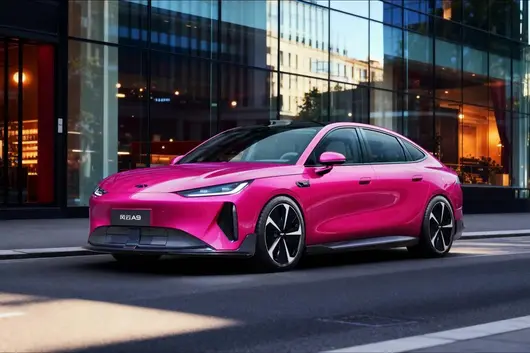

Facing an increasingly competitive new energy market, Changan Qiyuan maintained a steady rhythm in July: delivered 39,841 vehicles in July, AQ series increased by 103% year-on-year, continuously holding the top sales position among new energy vehicle brands of central state-owned enterprises. Together with brands such as Geely Galaxy and Leapmotor, it forms the backbone of the mainstream camp in China's new energy market.

The steady growth of Changan Qiyuan in July is the result of both product strength and user reputation. From the continuous hot sales of the main models of the Changan Qiyuan AQ series, to the global debut of the Changan Qiyuan Q06, to the Changan Qiyuan new Q05 accelerating towards the overseas market, the label of "SOE New Energy" is transforming from brand endorsement to a tangible quality perception in users' minds.
Global Flagship Product Changan Qiyuan New Q05 Leads, Champion Matrix Collaborates
As the first global flagship product of Changan Qiyuan, Changan Qiyuan new Q05 leverages "CATL Batteries, Premium Frame, Ultra-Comfort" and other cross-class advantages, cumulative sales exceeded 100,000 units, continuously leading the compact SUV sub-market. In overseas markets, after launching in Thailand and Uzbekistan, Changan Qiyuan new Q05 further landed in Ethiopia, accelerating the formation of an overseas layout linking Southeast Asia, Central Asia, and African markets.
While Changan Qiyuan new Q05 exerts global momentum, the AQ series saw a 103% year-on-year increase in July, forming a synergistic growth "Champion Matrix". Among them, Changan Qiyuan A06 is positioned as the "King of Fully-Configured New Energy Family Sedans", with cross-class configurations such as 145° Electric Zero-Pressure Rear Seat, 800V 6C Fast Charging, etc., holding the sales champion of medium-to-large new energy sedans within 200,000 RMB; Changan Qiyuan Q07 satisfies family travel needs with "Space King" strength, cumulative sales have exceeded 100,000 units since launch, maintaining leading position in the mid-size plug-in hybrid SUV market.
Changan Qiyuan Q06 Global Debut, Defining New Standards for Mid-size SUVs with "Flowing Light Aesthetics"
On July 15, the all-new mid-size SUV Changan Qiyuan Q06 completed its global debut in Shanghai. This model, led by the world-class design master Klaus team, breaks the traditional mid-size SUV dull impression with its unique "Flowing Light Aesthetics" design. Inside the cabin, the "Flowing Light into Cabin" concept creates a high-quality immersive space, integrating technology and comfort.

In the field of intelligent driving, Changan Qiyuan Q06 is equipped with the Tianshu Pilot Ultra Intelligent Driving System, possessing end-to-end urban pilot capabilities, making vehicle control closer to the driving texture of veteran drivers. The chassis adopts luxury-grade chassis suspension with all-aluminum front double wishbones + rear multi-link and the only dual-motor rear-wheel drive layout in the class, balancing comfort and driving fun.
Conclusion
Steady sales and a complete product matrix form the core foundation of growth. In the future, Changan Qiyuan will continue to rely on the strength of Changan Automobile's central state-owned enterprise system, with a more competitive product matrix and global layout, to continuously meet users' expectations for high-quality new energy travel.
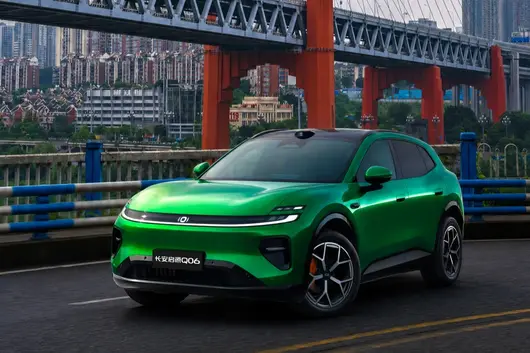

The 2026 Indonesia International Auto Show officially kicked off. Chinese smart electric vehicle brand Leapmotor appeared with global flagship models Leapmotor B10 and C10, announcing its entry into the Indonesian market. The simultaneous local KD assembly plant production plan is a significant milestone in Leapmotor's Southeast Asian localization production strategy. Leveraging full-domain self-developed technology and local channel resources, Leapmotor uses Indonesia as a core fulcrum to build a new energy industry layout covering the entire ASEAN region.
The B10 and C10 landing in Indonesia this time are strategic models built by Leapmotor for the global market, precisely aligning with the core needs of Indonesian family travel. Spacious interior space and a full suite of smart in-vehicle configurations have become the core competitiveness of the two models. Supporting the product differentiation advantage is Leapmotor's long-term full-domain self-research route. Core parts independently developed and manufactured by the brand account for over 65% of the total vehicle cost, covering key vehicle sections such as electric drive systems, power batteries, smart cockpits, and central electronic/electrical architecture. This highly vertically integrated self-research system not only continuously compresses R&D and manufacturing costs but also allows Leapmotor to quickly iterate electrification and intelligence technologies, providing product solutions adapted to local road conditions and driving habits for overseas markets.

Local manufacturing is Leapmotor's core lever for deep diving into the Indonesian market. Leapmotor reached deep collaboration with Indonesia's local top enterprise Indomobil Group, leveraging its subsidiary PT National Assemblers to build KD semi-knocked-down assembly lines. This production base located in Bekasi was completed for production and debugging as early as April 2026. The first batch of locally assembled B10 and C10 models will be officially delivered to Indonesian consumers in August 2026. With the Indonesian KD factory landing, Leapmotor simultaneously possesses two major Southeast Asian local production bases in Malaysia and Indonesia, becoming one of the few new energy vehicle enterprises in the region with dual KD manufacturing capacity. The local production model not only shortens vehicle delivery cycles and avoids cost pressure brought by whole vehicle import tariffs but also drives the development of the local automotive supply chain in Indonesia, creates a large number of technical jobs, and achieves two-way empowerment of brand development and local industrial upgrading.

A complete sales service network is an important support for overseas market development. Leapmotor leverages dual cooperation resources to build a service system covering all of Indonesia. On one hand, relying on Stellantis Group's mature brand house operation model, Leapmotor entered local Stellantis brand showrooms, displaying and selling alongside well-known models like Jeep and Citroën in the same store, creating a one-stop car viewing, buying, and maintenance service scenario. On the other hand, relying on Indomobil Group's distribution channels deeply cultivated in Indonesia for years, its subsidiary PT Indomobil National Distributor is fully responsible for retail layout. The brand plans to build 50 offline outlets integrating sales, after-sales, and maintenance in Indonesia by the end of 2026, eliminating channel concerns for local consumers purchasing new energy vehicles.

Entering the Indonesian market is also a key result of the landing of Leapmotor and Stellantis's global strategic cooperation. Both parties reached capital cooperation in 2023, and in 2024 formed an international joint venture focusing on overseas markets. Relying on multinational group global channel resources, Leapmotor products are now sold to over 40 countries globally, offline sales outlets exceeded 2,000, and global cumulative vehicle delivery volume exceeded 1.5 million units. Facing long-term development in Southeast Asia, Leapmotor has set a clear product iteration rhythm, planning to launch a new model for the ASEAN market every year, continuously enriching the pure electric and extended-range dual-line product matrix, covering consumer groups with different price points and usage scenarios.
The landing of this Indonesian market is not just a simple expansion of Leapmotor's overseas territory but also a brand new practice of the localization overseas model for Chinese new energy vehicle enterprises. In the future, Leapmotor will continue to deepen collaborative cooperation with Stellantis and Indomobil local partners, centered on the Indonesia manufacturing base, linking markets of various Southeast Asian countries, building a complete localized R&D, production, sales, service electric mobility ecosystem, letting Chinese new energy vehicles with both high cost-performance and cutting-edge intelligent technology benefit more ASEAN household users, continuously conveying a brand new lifestyle of green smart mobility.
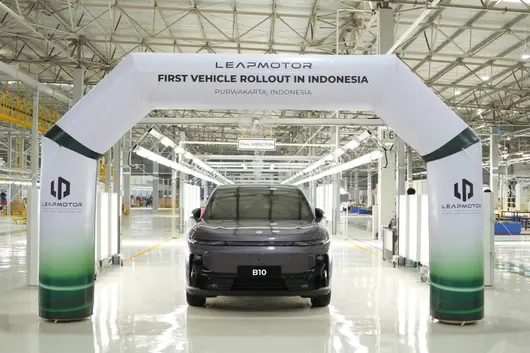

July 28, 2026, the highly anticipated Fortune Global 500 list was grandly released! BYD proudly made it to the list again; this is already the brand's fifth consecutive year joining the world's top 100. This time ranked 91st, firmly standing within the global top 100 elite enterprise camp, a benchmark enterprise for global new energy vehicles, continuously demonstrating the core strength of Chinese new energy enterprises!

Momentum soaring, full of achievements! In 2025, BYD delivered a report card sufficient to astonish the industry, with annual revenue reaching a high of 804 billion yuan, and net profit breaking through 32.6 billion yuan. Operating performance steadily climbed, with a thriving momentum! In the core sales track, BYD's annual new energy vehicle sales broke 4.6 million units, winning both the global new energy vehicle sales champion and the China market auto sales champion titles, firmly standing at the core position of the global new energy vehicle benchmark enterprise! Entering 2026, brand popularity and market momentum continued unabated, with cumulative sales in the first half successfully breaking 1.8 million units, showing very strong growth momentum! More worth cheering about is that in the same month of July, BYD welcomed a historic highlight moment—the brand's 17 millionth new energy vehicle went off the line smoothly, becoming the first auto enterprise globally to unlock this milestone achievement, once again refreshing industry records and creating a new legend!
Deep cultivation in the innovation track, sticking to the original intention of technology! Since development, BYD has always held the core development concept of "Technology is King, Innovation is Foundation", driving continuous brand iteration and leading the industry with ultra-high intensity R&D investment! In 2025, BYD's R&D investment was heavily weighted to 63.4 billion yuan, a year-on-year surge of 17%. Relying on core R&D strength, it won the top spot in R&D investment among A-share listed companies for two consecutive years, firmly securing the first place in the industry! In the first quarter of 2026, brand R&D investment reached a new high again, single quarter investment of 11.3 billion yuan, far leading domestic mainstream automakers and top new energy forces, R&D courage is unquestionable! As of now, BYD's cumulative R&D investment has forcibly broken through 250 billion yuan. Long-term, continuous, and high-amount technology deep cultivation has allowed a series of disruptive frontier technologies to accelerate implementation and iteration!
Innovation results blooming everywhere, black technology empowering universal mobility! In March 2026, BYD heavily released the second-generation Blade Battery and brand-new super-fast charging technology, completely revolutionizing the new energy mobility experience with breakthrough technologies. Meanwhile, planning to complete the layout construction of 20,000 super-fast charging stations nationwide by the end of the year, comprehensively improving the domestic energy replenishment system! Not only deepening the domestic market, BYD is also fully laying out the global energy replenishment network, planning to land 6,000 overseas super-fast charging stations, letting the convenience of Chinese intelligence benefit global users! In May of the same year, BYD once again led industry change, being the first to announce a full one-year comprehensive backing guarantee for city navigation safety, while realizing the entire series models can be equipped with the Divine Eye B Assisted Driving Laser Version, breaking industry barriers in one move, officially opening the era of universal city navigation accessible to everyone!
Setting sail overseas to expand territory, global layout momentum like a rainbow! Relying on solid product strength and brand reputation, BYD's globalization development pace accelerated to full speed, overseas market performance welcomed explosive growth! In 2025, BYD's overseas sales successfully broke through the 1 million unit mark for the first time, surging 145% year-on-year, growth speed was very astonishing! In the first half of 2026, the overseas hot-selling trend continued to extend, sales easily broke through 780,000 units, overseas market recognition continued to skyrocket! Nowadays, BYD has successfully created a new pattern of "Latin America leading, Europe breakthrough, Asia-Pacific multi-point blooming" globalization development, overseas version continuously expanding, blooming everywhere!
Many overseas landing results are bright and eye-catching: Brazil's first overseas SkyRail officially opened for operation smoothly, Brazil factory successfully completed the 100,000th new energy vehicle off the line milestone; Denza Z, Z9GT, D9 three car models joined forces to land in the European market, reshaping the European high-end new energy mobility pattern, opening a new chapter of Chinese automotive European technology luxury! The brand-new model Otter (BYD RACCO) developed specifically for overseas markets officially landed in Japan, accurately deepening the niche market; Thailand factory also fully welcomed the two-year anniversary of production, localization operation becoming more and more mature! As of now, BYD business version has covered 121 countries and regions globally, formally entering a new stage of globalization with localized deep cultivation and high-quality advancement!
Holding responsibility to travel far, green responsibility empowering the future! On the dual carbon development track, BYD has always practiced sustainable development concepts with a green original intention, delivering a stunning environmental protection report card! Data shows, as of June 30, 2026, BYD new energy vehicles compared to traditional fuel cars, in energy production and usage links cumulative achieved 149 million tons carbon emission reduction amount, equivalent to planting 2.48 billion trees, using core strength to contribute Chinese power for global carbon reduction and ecological protection!
On the path of social responsibility practice, BYD is also not stopping steps, moving forward with great love! The brand heavily set up a 3 billion yuan education charity fund, partnering with 127 universities nationwide to achieve public welfare donation cooperation, cumulatively incentivizing and helping more than 6,000 students chase dreams forward, empowering education development with public welfare power, passing on the temperature and responsibility of national enterprises!
From securing the top 500 global spot, to leading the global new energy track, BYD's every breakthrough, every leap, is the best witness to deep cultivation technology innovation, gathering global expansion, sticking to original mission! Looking forward to the future, BYD will continue to hold original intention, forge ahead, unswervingly practice sustainable development concepts, with frontier hard core technology, perfect global layout, extreme product service, continuously refreshing industry height, going all out to assist global green transformation, striving to realize the beautiful vision of "Cooling the Earth by 1°C", continuously writing the new chapter of Chinese intelligence leading the world!
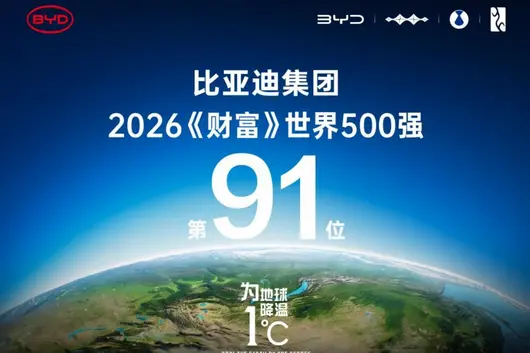

July 28, 2026, the 2026 Fortune Global 500 list was officially released, BYD ranked for the fifth consecutive year, securing the 91st position, becoming the only Chinese automaker to enter the global top 100. This heavy-weight top 100 seat is not a casual gift of short-term market dividends, but BYD's comprehensive answer sheet for years of deep cultivation in technology, opening up the global market, and practicing green sustainable development, and more is the era microcosm of China's new energy vehicle industry from following, running side by side to leading.

Impressive Operating Data, Building the Foundation of Industry Leadership
Strong operating strength is the underlying support for BYD to secure its position in the global top 100. In 2025, BYD turned in an outstanding report card with 804 billion yuan in annual revenue and 32.6 billion yuan in net profit. Annual new energy vehicle sales reached 4.6 million units, securing both the title of global new energy vehicle sales champion and Chinese automaker sales champion. Growth momentum continued into 2026, with cumulative sales exceeding 1.8 million units in the first half of the year; in July, the company reached a historic milestone — the 17 millionth new energy vehicle officially rolled off the production line, becoming the world's first automotive company to achieve this production record, refreshing the global new energy manufacturing capacity speed record.
Behind the ten-million-scale production and sales is the confidence of a complete independent industrial chain. From batteries, motors, electronic controls to automotive-grade chips, BYD achieves full-chain independent research and production, breaking away from overseas technical constraints, not only ensuring stable delivery but also continuously bringing cutting-edge technology to mass-market models, making high-end new energy experiences no longer exclusive to luxury cars.

Continuous Deep Investment in Billions of Yuan R&D, Technological Innovation Builds a Core Moat
"Technology is King, Innovation is the Root," is the core creed throughout BYD's development. High and continuous R&D investment is the fundamental code for its global leadership. In 2025, BYD's R&D investment reached 63.4 billion yuan, up 17% year-on-year, ranking first in R&D investment among A-share listed companies for two consecutive years; in just the first quarter of 2026, R&D expenditure reached 11.3 billion yuan, far ahead of domestic peers and top new energy brands. As of now, the company's cumulative R&D investment has exceeded 250 billion yuan, with massive funds continuously irrigating cutting-edge tracks such as batteries, intelligent driving, and charging infrastructure.
Continuous investment quickly transforms into disruptive mass-production technologies: In March 2026, the 2nd Generation Blade Battery and Flash Charging technology officially launched, solving user range anxiety with ultra-fast recharging; the company simultaneously planned 20,000 flash charging stations nationwide and 6,000 overseas, building a high-efficiency recharging network covering the globe. In May, BYD became the first to commit to a one-year safety guarantee for city pilot-assisted driving. All models can be equipped with the Divine Eye B Laser Smart Driving System, truly ushering in an era of mass high-level intelligent driving and redefining intelligent mobility safety standards. From battery safety, ultra-fast recharging to autonomous driving responsibility allocation, BYD continuously breaks through industry boundaries and sets new benchmarks for global new energy vehicle technology with self-developed technology.

In-depth Globalization Implementation, Chinese Smart Manufacturing Goes to 121 Countries Worldwide
Today, BYD has long transcended a single domestic market, building a global development pattern of "leading in Latin America, breakthrough in Europe, and flowering in multiple points across Asia-Pacific". Overseas sales exceeded 1 million units for the first time in 2025, a 145% year-on-year surge; in the first half of 2026, overseas sales reached a new high again, with cumulative sales exceeding 780,000 units. The overseas market has become the second growth curve.
Overseas layout is no longer simple complete vehicle export, but in-depth localization: The first overseas Cloud Rail was implemented in Brazil, and the local factory completed the 100,000th new energy vehicle roll-off; Denza high-end models landed in Europe, creating a Chinese luxury new energy business card; the model Sea Otter specifically developed for the Japanese market officially landed; the Thailand factory celebrated its second anniversary of production, and Southeast Asian capacity is continuously released. As of now, BYD's business map covers 121 countries and regions worldwide, completing the upgrade from "product going global" to "industry going global, technology going global", making Chinese new energy technology, manufacturing standards, and mobility solutions go global.

Practicing Greenness and Social Responsibility, Anchoring the Long-term Vision of "Cooling the Earth by 1℃"
While developing at high speed, BYD has always incorporated sustainable development and social responsibility into its core corporate strategy. As of June 30, compared to traditional fuel vehicles, BYD's new energy vehicles have cumulatively achieved carbon emission reductions of 149 million tons in the full energy lifecycle, equivalent to planting 2.48 billion trees, assisting the global realization of "Dual Carbon" goals with tens of millions of green vehicles.
The enterprise also did not forget to give back to society: Setting up a 3 billion yuan education charity fund, reaching donation cooperation with 127 universities nationwide, cumulatively incentivizing over 6,000 young students to grow, empowering talent cultivation with industrial strength while balancing commercial value and social value. "Cooling the Earth by 1℃" is not just a brand slogan, but a long-term mission BYD practices with green technology, global layout, and sustainable manufacturing.

Five Years on the Top 100 List, Steps Continue on the Road Ahead
Five years ago, BYD first ranked in the Fortune Global 500; five years later, it is firmly stable in the global top 100, rewriting the industry pattern long dominated by European/American and Japanese automakers for top 100 seats. From rank 436 to a stable 91st, the upward ranking witnesses the leapfrog rise of China's new energy vehicle industry.
Facing the future, BYD will continue to adhere to the main line of technological innovation, perfect the global production, recharging, and sales integrated network, and continuously output green mobility solutions. With 250 billion yuan in R&D accumulation as the foundation, with 17 million units in production and sales as the starting point, and with a global layout spread across 121 countries as the stage, this new energy leading enterprise originating from China is continuously proving to the world: Chinese Smart Manufacturing, is reshaping the future of the global automotive industry.
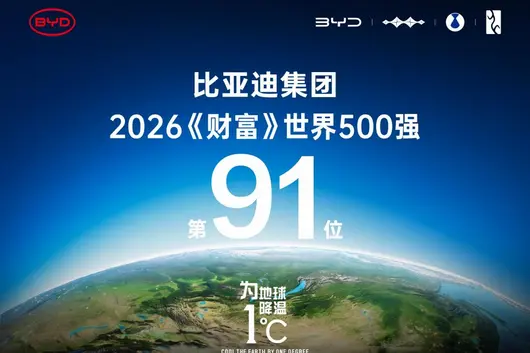


Suddenly, the "Ning King" came out to make a splash again.
On the evening of July 24, CATL released two major documents simultaneously. One was the 2026 Interim Financial Report. Revenue in the first half was 276.91 billion yuan, a year-on-year increase of 54.80%. Net profit attributable to the parent company was 43.284 billion yuan, a year-on-year increase of 41.98%. Calculated, this means daily earnings of 240 million yuan.
The other was a buyback plan, proposing to use funds not less than 20 billion yuan and not more than 40 billion yuan to buy back A-share shares for cancellation, with a buyback price cap of 573 yuan per share, a premium of nearly 50% compared to the closing price of the day. This amount cap set a record high for single share buybacks in the history of A-shares.
At the same time, multiple new energy vehicle manufacturers successively released half-year profit forecasts, with many facing profit pressure. Industry chain profits are visibly concentrating on the battery segment, and this is indeed a major source of CATL's profits. However, if you turn to the details of CATL's financial report, you will find a fact overlooked by the outside world.
That is CATL's true growth engine is actually not just power batteries. Or rather, the game CATL is playing is far bigger than what the outside world sees.
Beyond Vehicle Power Batteries, Pulling Up a Second Growth Curve
In CATL's financial report, the most worth noting is its healthy revenue structure. In the first half, the power battery business contributed 192.125 billion yuan in revenue, accounting for 69.38%, remaining the absolute major portion. However, the performance of the other two businesses is also inescapable, showing a trend of accelerated growth.

First, energy storage battery business revenue was 53.261 billion yuan, accounting for 19.23%, a year-on-year increase of 87.54%. Battery materials and recycling, mineral resource business revenue was 18.811 billion yuan, a year-on-year increase of 67.23%.
More critically, power battery gross margin of 20.63% and energy storage battery 23.96% both saw year-on-year declines, while the gross margin of battery materials and recycling business reached 27.04%, an increase of 5.81 percentage points year-on-year.
That is to say, among the three major main businesses, the only one achieving gross margin improvement is the "recycling business" that outsiders ignore most easily.
Looking further down, CATL has also accumulated considerable capital in the ship power battery field.
Already cumulatively delivered over 900 ship batteries. The first all-electric inland container ship exported from China delivered in the first half of 2026, also equipped with CATL's battery energy storage system. In July, also acquired a stake in Jiangsu Kaiyang Shipbuilding Company, increasing investment in the technical development of ocean-going ship battery systems.
In the commercial vehicle field, sodium-ion batteries have gone into mass production installation, the Tianxing series covers multiple sub-scenarios from logistics vehicles to heavy trucks. In the battery recycling field, holding company Bangpu Recycling has built the nation's largest directional recycling base, with an annual retired battery processing capacity of 270,000 tons, and nickel, cobalt, and manganese recovery rate is as high as 99.6%. The team also won two honors at the European Patent Office's "2026 European Inventor Award" this year, becoming the first Chinese team to win dual awards since the award's inception.

These businesses together constitute CATL's second growth curve beyond power batteries.
When lithium battery scrap volume grows at a speed of more than 20% annually, when the commercialization window for electric ships opens gradually, and when AI computing power data centers begin to propose new structural demands on energy supply, CATL has already extended its tentacles into these tracks. Company executives also clearly stated at the performance exchange meeting that AIDC presents a clear structural market opportunity. CATL will not just provide single product supply, but wants to provide more comprehensive solutions around new energy scenarios.
Therefore, from the financial report it can be seen that CATL's high-speed profit growth in the first half, a large part comes from storage, from recycling, from overseas, rather than simply "earning one more cent" from vehicle manufacturers.
Of course, a fact must be admitted here. The gross margin of the power battery business is indeed declining, price competition pressure in the domestic market is real. Moreover, CATL also has its shortcomings.
The "poaching talent and stealing technology" publicly condemned by Zeng Yuqun previously, lost orders in the Middle East market, additional costs brought by consumption tax policies, these are challenges on the table. It's just that these challenges have not covered up the longer-term growth curve.
Earn Money from "Foreigners", Also Earn Money for the Future
If diversification is CATL's first line of defense against industry risk, then globalization is the second moat it built. From this point of view, CATL is also half a step ahead of current auto companies. The overseas dividends it received are exactly the "big results" that current auto companies are striving hard to layout overseas business to obtain.

In the first half, CATL overseas revenue reached 87.1 billion yuan, gross margin 29.97%, nearly 9 percentage points higher than domestic business gross margin. Overseas market share 33.7%, Hungary, US, Indonesia three overseas factories successively put into production, Volkswagen, BMW, Toyota and other global mainstream car companies lie in the customer list.
Morgan Stanley gave a judgment in the latest report. Diesel vehicle electrification, storage super cycle, sodium-ion battery product cycle, will jointly support CATL to continue strong growth in 2027.
The key point is, CATL overseas business gross margin is significantly higher than domestic. This means, its bargaining power in the global market is actually stronger than in domestic. This is somewhat different from the common perception that "Made in China conquers the world with low prices".
CATL management gave the explanation at the exchange meeting as "Competing on value, not price". This sounds a bit official, but combining with gross margin data, it indeed has its confidence.
Zeng Yuqun summarized CATL's current strategic positioning into one sentence: From "New Energy Industrialization" to "Industrial New Energyization". The first half is what CATL did in the past ten years, making the concept of new energy into a real industry. The second half is what it plans to do in the future, using new energy to transform more traditional industries.
Ships, commercial vehicles, computing power data centers, mineral resources, these are all the landing points of "Industrial New Energyization". Zeng Yuqun himself judged, the future downstream industry boundaries may reach over a thousand times the current level.
And if this judgment holds, then the 40 billion buyback big move is easy to understand.
The company's current stock price is undervalued, this is the core logic of the buyback. On the day the financial report was released, CATL A-share closing price was 383.01 yuan, while the 52-week high was 468.75 yuan. Performance hit a new high, but the stock price fell nearly 20% in half a year. CITIC Securities gave a target price of 490 yuan, UBS 600 yuan, Macquarie HK stock target price 700 HKD.
Under this premise, the real money 40 billion buyback is an attitude given by management to the market.

More importantly, the implementation, all bought-back shares are used for cancellation, not kept for equity incentives, nor placed in treasury stock accounts. This means total share capital decreases by about 69.8 million shares, rights allocated to each shareholder will rise.
Of course, this confidence also needs some question marks. Lithium prices recently showed a rebound, Yichun Jianxiwo lithium mine resumption approval may bring cost fluctuations, consumption tax phased collection from 2% to 4% test on downstream bargaining power, are realities CATL must face next.
However, compared to challenges, this financial report indeed let us see a strong resilience and strategic vision shown by an industry leader. From this point of view, CATL is still the undoubted leader of the new energy sector, without a doubt.

Recently, the China Bus Information Network released export statistics data for new energy buses in the first half of 2026. BYD ranked first with an export volume of 2,233 units, with a market share of 22.15%, making it the only enterprise in the industry to break the 2,000-unit export threshold in the first half of the year. Amidst the global wave of green transportation transformation, BYD maintained steady growth and has won the annual new energy bus export champion for three consecutive years.

BYD electric buses have achieved a pattern of flourishing across the globe with simultaneous deep cultivation in multiple continents, high-end, and emerging markets. As of the end of June, in the high-standard European market, BYD has cumulatively delivered over 7,000 pure electric buses. Among them, over 2,700 buses are already in operation in the UK, accounting for 45% of the market share for zero-emission buses in the UK.

BYD Buses in the UK
In the Americas region, BYD continued to achieve breakthroughs at multiple points, maintaining a leading trend. In Colombia, BYD has cumulatively operated over 1,500 buses, ranking first in market share; in the Brazilian market, it has continued to deepen and expand since local production of electric bus chassis began in 2015. In June this year, BYD delivered 265 electric buses to São Paulo in a single shipment, setting a new record for the scale of single-shipment deliveries of heavy-duty electric buses in Brazil. Relying on localization strategy and technical accumulation, BYD has long stably held the top spot in the market share of imported electric bus brands in Brazil. In addition, the Middle East and African markets are advancing steadily, with orders being successively delivered in places like Morocco and the UAE.
In the Asia-Pacific region, business covers multiple countries including Singapore, Thailand, Malaysia, Australia, etc., becoming a mainstay model for local public transport electrification. Currently, BYD electric buses have orders exceeding 500 units in Japan, with a market share exceeding 50%, ranking first in the industry.

BYD Buses in Singapore
The core foundation for BYD electric buses to continuously lead comes from the full-stack self-developed core technology system. Relying on e-BUS Platform 3.0, Blade Battery technology, etc., it is adaptable to global complex operating conditions such as high temperatures, extreme cold, and mountains, showing outstanding advantages in safety performance and total lifecycle costs, successfully passing strict market certifications in Europe, the US, Japan, South Korea, etc., gaining recognition from global customers.

Making its debut at the Milan NME Exhibition
In the future, BYD will continue to provide leading technology, reliable quality, and excellent service, to support the green development of global public transportation.
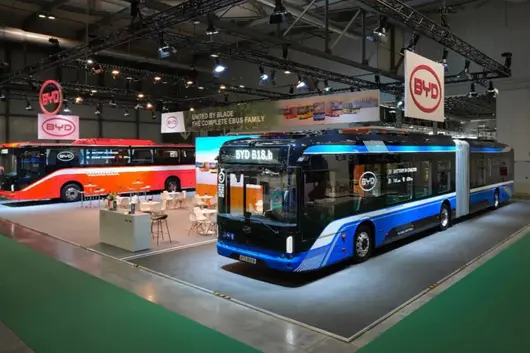

Recently, China Bus Network released export statistics data for new energy buses in the first half of 2026. BYD ranked first with an export volume of 2,233 units, accounting for a market share of 22.15%. It was the only enterprise in the industry to break through 2,000 units in exports in the first half. Under the wave of global green transportation transformation, BYD maintains steady growth and has won the annual export champion of new energy buses for three consecutive years.

BYD electric buses have achieved a pattern of global blossoming with simultaneous deep cultivation in multiple continents, high-end markets, and emerging markets. As of the end of June, in the high-standard European market, BYD has cumulatively delivered over 7,000 pure electric buses. Among them, over 2,700 buses are in operation in the United Kingdom, accounting for 45% of the market share of zero-emission buses in the United Kingdom.

BYD Buses in the United Kingdom
In the Americas region, BYD continues to achieve breakthroughs at multiple points and maintains a leading posture. In Colombia, BYD has cumulatively operated over 1,500 buses, ranking first in market share; the Brazilian market has continuously deepened and expanded since initiating local production of electric bus chassis in 2015. In June this year, BYD delivered 265 electric buses to São Paulo at once, setting a new record for the single-batch delivery scale of heavy electric buses in Brazil. Relying on localization strategy and technical accumulation, BYD has long remained at the top of the market share of imported electric bus brands in Brazil. In addition, the Middle East and African markets are steadily advancing, and orders are being delivered successively in places such as Morocco and the UAE.
In the Asia-Pacific region, business covers multiple countries such as Singapore, Thailand, Malaysia, and Australia, becoming the main model for local public transportation electrification. Currently, BYD electric buses have orders exceeding 500 units in Japan, with a market share exceeding 50%, ranking first in the industry.

BYD Buses in Singapore
The core foundation of BYD electric buses continuing to lead comes from a fully self-developed core technology system. Relying on technologies such as e-BUS Platform 3.0 and Blade Battery, it can adapt to global complex operating conditions such as high temperature, extreme cold, and mountainous areas. It has prominent advantages in safety performance and lifecycle costs, successfully passed strict market certifications such as Europe, America, Japan, and South Korea, and gained recognition from global customers.
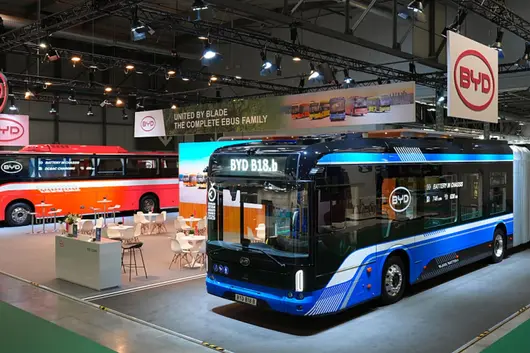

On July 16, GAC Group's 30 Million User Gratitude Celebration was held at the GAC Trumpchi Factory. Government and enterprise leaders, industry partners, domestic and international car owners, and media jointly witnessed this key milestone of the Group's 30 millionth vehicle coming off the production line. After 29 years of development, the delivery of 30 million vehicles is not only a testament to the trust of tens of millions of users but also a microcosm of the Chinese automotive industry shifting from scale expansion to high-quality development.

The event featured a connection to global bases on-site. Multiple new energy models from GAC Honda, Toyota, AION, Hyper, and Qijing sequentially completed production of the 29,999,995th to 29,999,999th units. The finale, the 30 millionth vehicle, was a Right-Hand Drive Trumpchi M8 PHEV. New car keys were delivered to a Thai owner on-site, intuitively showcasing GAC's dual achievements in new energy transformation and global expansion.
Market data confirms transformation results. In the first half of this year, GAC cumulative sales reached 773,100 units, up 2.35% year-on-year; new energy sales surged 68.8%, overseas exports reached 120,000 units, an increase of 132%, maintaining steady growth during the industry adjustment cycle.
Quality is the core bottom line of GAC's development. The group integrated the mature management system of Japanese brands to create an exclusive quality management model. New cars undergo unified testing in extreme environments of "Five Highs, One Mountain, One Dust" and two winters and one summer long-cycle tests. Relying on AION's global new energy lighthouse factory, digital quality control is achieved. In terms of safety, the StarGuard protection system and Cassette Battery are applied, cumulatively avoiding millions of driving risks. The industry's first "Three Responsibilities" policy proactively covers issues related to batteries and intelligent driving, eliminating user concerns about vehicle usage.

According to reports, GAC regularly carries out face-to-face communication with users, adhering to a user-centric orientation and building a full closed-loop complaint handling mechanism. Channels continue to deepen, adding 1,000 county-level stores this year and launching a 5-second response ultra-fast butler service. A "9 Verticals, 10 Horizontals" charging network covering the country has been built, with over 20,000 self-operated super-charging piles, perfecting supporting facilities for new energy vehicles. On-site, the full-brand renewal gratitude season was simultaneously launched, with six passenger car brands offering multiple return policies for purchasing and trading in.
With 30 million as a new starting point, GAC continues to increase investment in independent research and innovation, with cumulative R&D investment exceeding 62 billion yuan and an R&D team of over 6,800 people. The Xingyuan Power series power solutions, Quark efficient electric drive, all-solid-state battery pilot line, and evolved StarGuard electronic architecture are landing successively. They are jointly building an AI intelligent ecosystem with companies such as Huawei and CATL, continuously tackling industry pain points such as fast charging and low-temperature range.
In the future, GAC will adhere to the four main lines of Quality, User, Technology, and Globalization, accelerate the transition to an ecosystem-based tech enterprise, continuously output green intelligent products, and expand the global market.
Editor's Summary: Whole vehicle production and sales breakthrough 30 million is a concentrated embodiment of nearly 30 years of GAC's manufacturing, channel, and technology accumulation. At the same time, the enterprise did not only focus on product iteration. From extreme condition testing and battery safety backing, to county-level channels, national charging networks, and ultra-fast user services, a complete user guarantee system is formed. It is worthy of learning and reference by other car companies.