首頁New Energy

搜尋歷史
熱門搜尋
經銷商登入 / 註冊

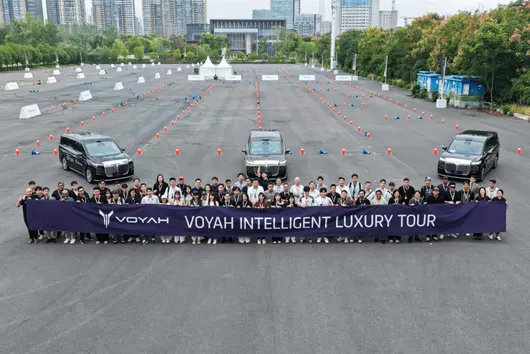
September 21, the 'Lantu Intelligent & Prestige Tour' themed event officially kicked off in Wuhan. Overseas media representatives from Southeast Asian countries including Singapore, Thailand, Malaysia, Indonesia, and others gathered at the venue, entered the Lantu production base, personally experienced high-end new energy models such as the Lantu Dreamer 9, and closely felt the hardcore strength of Chinese intelligent manufacturing and the new layout of Lantu's global development.

During the event, the overseas media tour group visited the Lantu Golden Factory, immersively experiencing the intelligent flexible manufacturing system. Inside the final assembly workshop, automated material conveying equipment and AGV robots operated in an orderly manner. Digital screens presented the full-process digital archives of every vehicle from component assembly to finished product delivery in real time. The vehicle's exclusive 'digital ID card' enabled full-link traceability of production, causing overseas media to repeatedly praise the development speed of China's automotive industry.
Empowered by technologies such as 5G, Big Data, and AI, the Lantu Golden Factory can achieve mixed-flow customized production of multiple models including sedans, MPVs, and SUVs. Currently, the Golden Factory and Yunfeng Factory collaborate on dual lines, with a total annual production capacity reaching 450,000 vehicles. On average, a whole vehicle can be completed and delivered every 40 seconds. Powerful manufacturing capabilities have built a solid foundation for Lantu products to go global. In the Golden Kou Factory Full-Function User Center with an area exceeding 30,000 square meters, the media delegation also experienced Lantu's direct sales service system covering the entire lifecycle of car selection, purchasing, maintenance, and recharging. Overseas media showed strong interest in this complete user operation model and look forward to the service model landing in the Southeast Asian market.

As a core highlight of this event, the Lantu Dreamer 9, which will be launched globally on September 22, has attracted much attention from overseas media. This new era flagship MPV blends Eastern aesthetics with cutting-edge intelligent technology. Within 48 hours of the pre-sale opening, small order bookings exceeded 30,000 units. The top-spec Prestige Edition accounted for more than 50%. Existing Lantu user upgrade and swap orders exceeded 20,000 units. It received a warm market response before the official launch. Overseas media sat in the Dreamer 9 cabin, personally experiencing the 'One Cabin Eight Scenarios' space design. The second-row zero-gravity seats support 180-degree multi-angle rotation, easily switching between business office, rest and relaxation, and travel scenarios. The luxury cabin experience received widespread praise. The visiting group also test drove Lantu Zhuiguang S, Lantu Taishan X8, and other models to fully understand Lantu's 'SUV+MPV+Sedan' complete product matrix.

Adhering to full-stack self-research of core technologies such as the 'Three-Electric' systems, intelligent cockpits, and intelligent driving, Lantu has built independent and controllable capabilities across the entire value chain. The brand's user scale has surpassed 400,000. Facing the global market, Lantu's globalization strategy continues to accelerate. It has now entered 40 countries and regions globally, with overseas sales outlets exceeding 240. Implementing the three major directions of 'deeply cultivating Europe, deploying in the Middle East, and entering right-hand drive markets', right-hand drive vehicle preparation work is progressing in an orderly manner, continuously expanding the overseas footprint.
This trip by overseas media to Wuhan was both a field test of Lantu's product strength and intelligent manufacturing capability, and also a vivid microcosm of China's automotive industry moving from product output to value output. Relying on self-researched technology, an advanced manufacturing system, and a high-standard service system, Chinese new energy vehicle brands represented by Lantu, carrying a new expression of Chinese luxury automobiles, are establishing a new benchmark for Chinese intelligent manufacturing in the global automotive market.


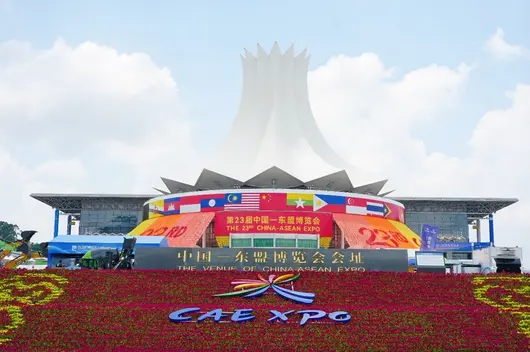
On September 17, the 23rd China-ASEAN Expo opened at the Nanning International Convention and Exhibition Center. Dongfeng Liuzhou Motor adopted the stance of China's "Smart Manufacturing National Team", showcasing its full new energy product lineup under the two major brands, Chenglong and Fengxing, at the Intelligent Equipment Exhibition Area, Booth D01002, concentrating on demonstrating the latest results of the enterprise in new energyization, intelligence, and deep cultivation in the ASEAN market.


As a full vehicle enterprise balancing commercial and passenger vehicles, Dongfeng Liuzhou Motor is accelerating the transformation from "trade-oriented exports" to a "deep localization" overseas expansion model. The "Chengfeng Dual-Engine Plan" released by the enterprise in 2025 clarified the goal of achieving "recreating a Liuzhou Motor overseas" by 2030. Dongfeng Liuzhou Motor is taking the ASEAN market as the core breakthrough point, coordinating efforts between the commercial vehicle and passenger vehicle brands, and building an integrated overseas expansion pattern covering manufacturing, supply chain, finance, and talent.
Passenger Vehicle Dongfeng Fengxing: Defining Leadership with Category Innovation and Intelligent Driving Popularization
At this Expo, Dongfeng Fengxing Xinghai V9 (Camping Edition) and Xinghai V6 made a joint appearance.
Xinghai V9 Camping Edition
It is the market's first factory-integrated compliant roof-lifting camping MPV. With the identity of the "Creator of Factory Roof-lifting Camping MPV", it redefines the "one car, two states" travel method. The vehicle is built on a mid-to-large MPV platform, with body dimensions 5248×1920×1950mm and a wheelbase reaching 3018mm. In the retracted roof state, the vehicle height is only 1.95m, allowing normal entry and exit from underground garages and standard parking spaces. After parking and lifting the roof, the interior net height rises to 2.2 meters, with an independent sleeping cabin on top and a multi-functional cabin below, cooperating with 6KW high-power external power discharge and 220V built-in power source, integrating MPV daily commuting and weekend travel functions. The vehicle is equipped with a 1.5T Mach Electric Hybrid System, with CLTC pure electric range of 200km and comprehensive range up to 1300km. The official guide price starts at 258,800 Yuan, breaking the price barrier of high-end travel vehicles with an affordable pricing strategy.


Xinghai V6
It is the first mass-produced model resulting from the cooperation between Dongfeng Fengxing and Huawei Qiankun, entering the home market with the posture of an "Intelligent Driving Popularizer". This car is the only model in the 100,000 RMB class equipped with Huawei Qiankun Intelligent Driving ADS 5 SE. The pre-sale price starts at 104,900 Yuan. It adopts a perception scheme with 10 cameras, 12 ultrasonic radars, and 3 millimeter-wave radars. It supports Highway Pilot Assist NCA, Urban Lane Cruise Assist LCC+, and parking assist covering 160+ complex scenarios along with CAS 5.0 all-dimensional active safety functions. The appearance of the Right-Hand Drive version marks that Dongfeng Fengxing, with the endorsement of "Central Enterprise Manufacturing", officially brings the products highly praised by domestic users from the domestic market to the vast ASEAN family vehicle market.


Commercial Vehicle Chenglong: Achieving Leadership with Market Share and Technical Benchmarks
At this Expo, the Chenglong H7 Hydrogen Fuel Tractor, Chenglong Wingwei 5 Super Energy Edition Pure Electric Tractor, and Chenglong Wingwei 2 Intelligent Driving Pure Electric Light Truck, three full new energy products made a centralized appearance, interpreting Dongfeng Liuzhou Motor's leading position in various sub-markets with hardcore data.

Chenglong H7 Hydrogen Fuel Tractor
It became the exhibition stand focus with the identity of "Industry No.1 in Hydrogen Heavy Truck Market Share". In 2025, the delivery volume of this model broke through 1,800 units, with market share firmly holding the No.1 spot in the industry. The Chenglong H7 PRO Hydrogen Glory Edition is equipped with the industry's first launch of a 400kW long-life high-efficiency hydrogen stack. The comprehensive hydrogen consumption per 100km is as low as 7 kg. It is equipped with a 70MPa high-pressure hydrogen storage system, with a maximum hydrogen storage capacity of 125 kg, and a comprehensive driving range breaking through 1,500 km, thoroughly solving the industry pain points of short new energy commercial vehicle range and frequent refueling.

Chenglong Wingwei 5 Super Energy Edition Pure Electric Tractor
It made its appearance with the positioning of "Lightweight Benchmark for Pure Electric Heavy Trucks". Through topological optimization and modular design, the vehicle's own weight is as low as 8.8 tons, 0.5 tons lighter than similar competitors. Calculated by annual operation mileage, it can generate an additional revenue of about 30,000 Yuan for users annually. Relying on the Longxi Intelligent Thermal Management System to achieve deep collaboration of the "Three Electrics", the comprehensive electricity consumption is as low as 1.1 kWh/km, thoroughly breaking the industry curse that "High Power Must Mean High Energy Consumption".

Chenglong Wingwei 2 Intelligent Driving Pure Electric Light Truck
It sets a new standard for urban distribution intelligent driving with the "Ceiling of Light Truck Intelligent Driving Perception Hardware". The vehicle is equipped with a leading perception hardware matrix in the light truck field, including 5 LiDARs, 7 millimeter-wave radars, and 12 cameras, achieving 360° all-domain environmental perception. Cooperating with NVIDIA automotive-grade chips, the total computing power reaches 508 TOPS. Its intelligent driving system inherits Dongfeng Liuzhou Motor heavy truck autonomous driving technology, has been verified by a large number of miles in trunk logistics, and is more mature in adaptation to heavy load conditions and complex road environments, truly realizing "Heavy Truck-level Technology Defines Light Truck Intelligent Driving Standards".

Deep Cultivation in ASEAN: Leadership is Not a Slogan, It's Market Share
Since the first batch of trucks were exported to Vietnam in 1992, Dongfeng Liuzhou Motor has been deeply cultivating the ASEAN market for more than 30 years. Currently, the Chenglong brand has covered 8 ASEAN countries including Vietnam, Laos, and Thailand, comprehensively adapting to left- and right-hand drive market needs. In Vietnam, the Chenglong brand's overall market share exceeds 35%, with the medium truck sub-field market share as high as 55%; in Laos, medium truck products have long held the top position in the market. In 2025, the sales volume of the Chenglong brand in the ASEAN market reached 11,057 vehicles, ranking 2nd in sales of Chinese brand medium and heavy trucks. During this Expo, Dongfeng Liuzhou Motor will also sign a strategic cooperation agreement with Vietnamese partners, planning to jointly invest in and build a Commercial Vehicle KD Factory. This is the first KD factory for the Chenglong brand in ASEAN following Fengxing brand KD factories in Cambodia, Myanmar, etc., marking that the economic and trade cooperation between the two sides has moved from simple buying and selling relationships to deeper industrial collaboration.


In the ASEAN market, Dongfeng Liuzhou Motor is accelerating the construction of a sales and service network covering the entire territory to guarantee user experience. In Vietnam, Dongfeng Liuzhou Motor already owns 30 direct-operated standard sales and service integrated stores, with the network covering the entire territory of Vietnam, and realizing the service commitment of "24 hour parts and service personnel on-site, 48-hour repair completion". In Thailand, over the next 3 years, Dongfeng Liuzhou Motor will build at least 100 new sales and service networks covering the entire territory of Thailand with partners, raising the timely response rate of service demand to 100%. Dongfeng Liuzhou Motor will co-build an intelligent manufacturing factory with partners in Thailand, carrying out in-depth cooperation in fields such as localized manufacturing and supply chain co-construction, promoting the deep transformation of going out from "product output" to "ecological co-construction". Regarding the "Three Electrics" systems, Dongfeng Liuzhou Motor provides industry-leading warranty policies for ASEAN market users, covering the full lifecycle guarantee of power batteries, drive motors, and electronic control systems, allowing users to buy with peace of mind and use with reassurance.

In addition to the above main models, Dongfeng Liuzhou Motor also exhibited two cutting-edge products: the Chenglong Kunpeng Flying Car and Chenglong Chitu RoboVAN Unmanned Logistics Vehicle, targeting low-altitude transport and urban unmanned delivery scenarios respectively. The appearance of these two products conveys that what Dongfeng Liuzhou Motor exhibits is not just products, but a full-scenario blueprint covering family travel, urban logistics, low-altitude transport, and overseas manufacturing.


The 23rd Expo with the theme of "Sharing 3.0 Opportunities, Creating a Better Life Together" had a total exhibition area of 170,000 square meters, with about 3,300 enterprises participating. Dongfeng Liuzhou Motor's three-dimensional presentation at this Expo is both a concentrated test of the "Commercial and Passenger Dual-Engine, Decisive Victory in ASEAN" strategy and a key step from "Product Going Out" to "System Output". As Xie Jiasheng, Vice General Manager of Dongfeng Liuzhou Motor Import and Export Company, stated, Dongfeng Liuzhou Motor is promoting a deep transformation from "We Go Out" to "We Are Local Enterprises" with the localization concept of "Building Cars for Every Piece of Land".

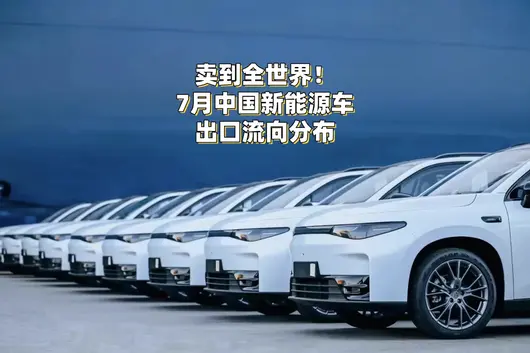
The domestic new energy passenger car market structure is stabilizing, with multiple independent automakers continuing to expand their overseas market layout. July China new energy passenger car export destination data objectively presents the current overseas layout status of domestic new energy vehicles. The top ten export destinations this time cover five major regions: Europe, Oceania, Southeast Asia, East Asia, and Latin America, showing obvious characteristics of a diversified market layout.

From export data, the UK is the top destination for China's new energy passenger car exports in July, with monthly exports reaching 51,300 vehicles, representing a significant overseas market scale. The UK continues to promote the replacement of fuel vehicles, with steady release of demand for new energy passenger cars. Local consumer groups are gradually increasing their acceptance of pure electric and plug-in hybrid vehicle models.

Exports to the UK primarily consist of home-use pure electric SUVs and mid-size new energy sedans. Domestic common models such as the BYD Dolphin and Yuan Plus enter local channels, supplementing the mid-range new energy passenger car market supply. Compared to domestic European automaker products, domestic models differ in cockpit configuration and basic function layout, adaptable to the regular vehicle needs of ordinary families.
Belgium ranks second on the list with an export volume of 48,600 vehicles, with a relatively small sales gap compared to the UK. Affected by geographic location, the Port of Antwerp in Belgium is a major automotive transit hub in Europe. Domestic new energy vehicles arriving there are partially used for local terminal sales, while the rest are diverted to neighboring EU countries. This is the main reason for the relatively large volume of imported Chinese new energy vehicles in the country.
Models exported to the European region are mainly long-range pure electric passenger cars, suitable for long-distance travel across cities and regions in Europe. This includes many XPeng pure electric sedans and SUVs with moderate domestic retention. Currently, many European countries have implemented new energy transformation-related policies, providing a basic market environment for imported new energy models. Dynamic adjustments to regional trade rules and carbon emission standards will increase the overseas operating costs of domestic automakers, and long-term expansion of the European market involves certain uncertainties. Apart from the UK and Belgium, Spain and Italy also make the top ten export list. Europe remains the core region for domestic new energy passenger cars going global.
Oceania market expands steadilyAustralia ranks third on the list, importing 39,700 Chinese new energy passenger vehicles in July. Australia's traditional automotive market has long been dominated by large-displacement fuel SUVs, with new energy model penetration rates generally lower than in Europe. In recent years, local consumption structure has gradually adjusted, and new energy model market capacity has increased.

Domestic models exported to Australia are concentrated in large-space pure electric SUVs. Models on sale such as the BYD Tang and Haval Xilong have batched into the local market, fitting local consumer preferences for large-size vehicles. Vehicle range parameters can meet the needs of long-distance travel between Australian cities, and the overall export scale maintains steady growth. Compared to the European market, Australia's vehicle import access rules are relatively relaxed, belonging to an overseas market with growth potential.
Currently, multiple domestic automakers have included Australia in their overseas layout scope, continuously investing in models on sale. As the local market's understanding of new energy models gradually improves, the subsequent capacity changes in this market have continuous observation value.
The Southeast Asia region showed stable growth in this export list. The Philippines, Thailand, and Indonesia all made the top ten exports. Among them, the Philippines imported 36,400 units in July, ranking fourth. Sales volume was higher than Thailand and Indonesia.

Southeast Asia has a huge population base, and the automotive consumption market is in a growth phase. Local fuel vehicle usage costs are relatively high, while new energy passenger cars have certain advantages in usage costs. The Philippines focuses on short-distance urban commuting. Imported models are mainly small and medium-sized pure electric sedans and small SUVs. Models like the BYD Seagull fit the local mainstream travel needs.
Thailand, as an automotive industry gathering place in Southeast Asia, imported 27,200 Chinese new energy passenger vehicles in July. Local authorities continuously issued new energy industry support policies to promote electrification. Multiple domestic automakers have established local production systems in Thailand, reducing tariff costs and expanding the Southeast Asia market through local production and sales models. Released models cover mainstream categories on sale such as MG and Neta brand home sedans and mid-size SUVs.
Indonesia imported 15,400 units in July. The country has abundant upstream resources for power batteries. The local government relies on the new energy vehicle industry to improve the local industrial chain, attracting overseas automakers to invest locally. As local charging infrastructure continues to improve, the Indonesian new energy vehicle consumption market has expansion potential. The hot and rainy climate characteristics of Southeast Asia place higher requirements on vehicle battery protection and body sealing processes. Overseas automakers need to complete targeted vehicle calibration to ensure stable product operation.
East Asian and Latin American markets achieve breakthroughsSouth Korea ranks sixth on the list, importing 17,800 Chinese new energy passenger vehicles in July. South Korea has a complete vehicle manufacturing industry. The new energy passenger car market competition atmosphere is strong. Domestic models achieving stable batch exports reflect the phased progress of independent brands in this overseas market.

Domestic models exported to South Korea are mostly high-spec pure electric SUVs. NIO and XPeng SUV models gradually enter local channels, cutting into the local market relying on basic configurations and reasonable pricing systems. At the same time, South Korean vehicle safety standards and import certification systems are relatively strict. Market access thresholds are high, and subsequent market development involves certain difficulties.
Mexico ranks tenth on the list with an import volume of 12,100 vehicles, and is the only Latin American country in the top ten list this time. Mexico is adjacent to the North American market. The regional circulation conditions are special. In addition to local terminal consumption, imported vehicles have certain cross-regional circulation space. Models exported to Mexico are mainly compact pure electric passenger cars. Multiple domestic home-use models enter local channels, adaptable to urban commuting, suburban travel, and other diverse scenarios. The popularization progress of new energy vehicles in Latin America is relatively slow. Mexico is an important node for domestic new energy vehicles entering the Latin American continent, with the possibility of radiating surrounding areas.

Comprehensive July overall export data shows that dependence on a single market for domestic new energy passenger cars going global continues to decrease. Europe maintains a stable export volume. Southeast Asia and Oceania market sales steadily increase. East Asia and Latin American markets gradually open up. The going-global pattern of multiple regions in parallel gradually takes shape.
At the same time, vehicle usage habits and travel scenarios differ in different regions. Domestic-adapted vehicle configurations and functions cannot fully adapt to overseas market needs. Automakers need to complete localized adaptation of infotainment system languages, maps, chassis calibration, and basic driving assistance functions based on local road conditions and needs. In addition, the global trade environment has fluctuations. Some regional trade protection tendencies have risen. Tariff adjustments, trade investigations, and other factors continuously impact automaker export business. The construction cycle of overseas after-sales service systems is relatively long. Repair outlets and parts supply chain construction speeds are difficult to match sales growth speeds. Terminal service breakdowns may easily occur, affecting the market reputation of domestic cars abroad.
The journey towards globalization continuesThe global automotive electrification transformation trend remains stable. Overseas traditional fuel automakers' transformation rhythm is relatively slow, leaving corresponding market space for domestic new energy automakers going global. Domestic new energy vehicles have a complete industrial chain covering batteries, motors, electronic controls, and vehicle manufacturing. Perfect industrial supporting conditions constitute the basic support for automakers' layout of overseas markets.

If automakers want to carry out overseas business stably, they need to shift from single-product output to full-dimension localized layout, perfecting the overseas R&D, production, sales, and after-sales full-chain system. Currently, multiple automakers have launched overseas factory construction. Through local production to reduce the impact of tariffs and adapt to local policies and consumer culture, it is the main direction for domestic automakers' global development.
July new energy passenger car export data shows the UK and Belgium support the core European market. Oceania and Southeast Asia sales grow steadily. Mexico becomes an important channel to enter the Latin American market. Cross-continental export sales networks are preliminarily formed.
For domestic new energy automakers, overseas markets are no longer just a supplement to the domestic market, but will form an impact on corporate long-term operations. Subsequent monthly export data, regional market sales fluctuations, overseas access rule adjustments, are all worth the industry's continuous tracking to observe the long-term trend of domestic new energy vehicle global development.

September 1, Geely Automobile Holdings announced the latest sales data: In August, Geely Automobile continued strong growth momentum, with total sales reaching 270,194 units, achieving month-on-month and year-on-year growth for 6 consecutive months, up 8% year-on-year and up 8% month-on-month. In terms of new energy, sales in August (including Geely, Lynk & Co, Zeekr) totaled 175,877 units, up 19% year-on-year, with new energy sales accounting for 65%.
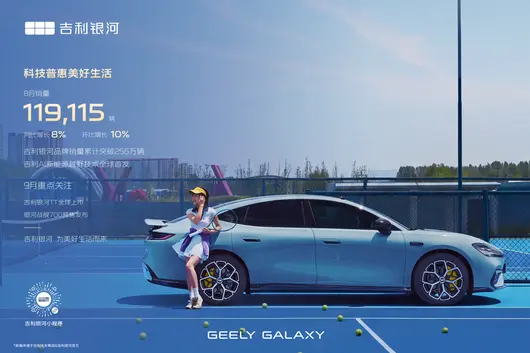
Among them, mainstream new energy brand Geely Galaxy sold 119,115 units in August (including overseas exports), up 8% year-on-year and up 10% month-on-month, selling over 100,000 units for three consecutive months, continuously consolidating its market position as one of the top three new energy vehicle brands globally. As of now, Geely Galaxy's global cumulative sales have surpassed 2.56 million units, making it the fastest new energy brand to reach this milestone.

Hit Product Matrix Goes All-Out, Breaking New Records for New Energy Brand Scale Growth
In this year's industry environment where the overall car market is under pressure, Geely Galaxy demonstrated the development resilience leading the industry. Following the leapfrog growth of surpassing 1 million cumulative sales in 27 months and reaching 2 million in 37 months, it now achieved a new sales milestone of 2.56 million in just 42 months, continuously updating the growth speed record for new energy brands.
Behind the continuous and steady growth momentum is Geely Galaxy entering a new stage of high-quality growth with collaborative development of multi-category hit product matrices. Continuously perfecting product layout, covering premium pure electric mini cars, mainstream family sedans, electric hybrid SUVs, mid-to-high-end sedans, high-performance pure electric coupes, and new energy off-road vehicles in diverse sub-markets. All models continue to sell well in their respective fields, providing support for the brand to consolidate its global sales ranking top three among new energy brands, and enabling the high-speed growth "Galaxy Speed" to steadily advance to the scaled and normalized hot-selling "Galaxy Phenomenon".
As the core hit model under Geely Galaxy, Star Wish sales in August exceeded 60,000 units for the first time in a single month, reaching 60,955 units, exceeding 50,000 units for 3 consecutive months, with cumulative sales nearing 900,000 units, with average daily sales exceeding 1,200 units. As a benchmark for pure electric mini cars, Star Wish has long topped the sales list in all categories. Relying on the "Hardcore Standards" of "Good Battery, Good Handling, Great Safety, Great Comfort", it brings high-quality, affordable products to users.

In the new energy SUV track, Geely Galaxy's multiple main models achieved breakthroughs in multiple points. Among them, Geely Galaxy Starship 7 sales in August reached 20,834 units, global monthly sales exceeded 20,000 units, sales exceeded 10,000 units for 8 consecutive months, continuously leading the A-class electric hybrid SUV market with over 10,000 strong sales; Geely Galaxy E5 sales in August reached 14,132 units, monthly sales exceeded 10,000 for three consecutive months, cumulative sales from January to August reached 75,965 units, firmly standing in the mainstream camp of A-class pure electric SUVs. Geely Galaxy M7 cumulative sales since launch reached 26,000 units, ranking top three in the A-class electric hybrid SUV market. Geely Galaxy M9 cumulative sales since launch nearly reached 70,000 units, continuously enhancing Geely Galaxy's influence in the large six-seat and C-class new energy SUV markets.

In terms of sedan market, Geely Galaxy A7 marked its first anniversary since launch, with the dual-model cumulative sales exceeding 100,000 units. With class-override space, efficient three-electric technology, and extreme energy consumption performance, it continuously consolidates its leading position in the mainstream new energy family sedan market. At the same time, Geely Galaxy A7 EV launched a major limited-time user benefit — users who place orders and take delivery between August 18 and September 30 can enjoy a limited-time benefit price starting from 99,800 RMB, further enhancing the product value and purchase attractiveness of mid-level pure electric family sedans. Geely Galaxy Star Glory 7 MAX relies on four-wheel drive technology and comprehensive product strength, cumulative sales since launch reached 22,000 units, and achieved leading performance in the four-wheel drive sedan market in the first half of the year.

High-Value Technology Continues to Land: Pure Electric 2.0 and AI New Energy Off-Road Technology Build New Product Competitiveness
Geely Galaxy is accelerating into the "Pure Electric 2.0" era. Relying on Geely Automobile Holdings' years of new energy technology accumulation and full-stack R&D capabilities, Geely Galaxy builds upon three core technologies: the new generation 16-in-1 Thunder Smart Electric Drive, God Shield Gold Brick Battery, and Qianli Haohan Assist Driving System. Supported by a charging ecology covering 100% of prefecture-level administrative units nationwide, it constructs a Pure Electric 2.0 technology system characterized by high performance, high safety, high intelligence, and high efficiency.
As the first sedan of Geely Galaxy's Pure Electric 2.0 era, Galaxy TT is built on the SEA Haohan 2.0 pure electric architecture. The entire series is standard with an 800V high-voltage fast charging platform and God Shield Gold Brick Battery, with CLTC range covering 540km to 725km. The four-wheel-drive version has a comprehensive power of 425kW, zero-to-hundred acceleration in just 3.8 seconds, and is equipped with an all-aluminum front double wishbone, rear reinforced five-link independent suspension, and Qianli Haohan Assist Driving H7 solution. In the Quanzhou coastline challenge, Galaxy TT's media test range achievement rate reached a maximum of 104.87%, with energy consumption per 100km as low as 9.1kWh. Galaxy TT opened pre-sales on August 13, with 3-day small orders exceeding 20,000 units, expected to launch globally in September.

On August 28, Geely AI New Energy Off-Road Technology was globally premiered. GTA Native New Energy Off-Road Architecture, All-Wheel Drive AI Electric Hybrid Thunder God EM-T, AI All-Terrain Digital Chassis, three globally first core technologies, were first equipped on Galaxy Warship 700. The new car is equipped with a three-motor four-wheel drive and a differential lock, with system comprehensive power reaching 830kW and thrust-to-weight ratio reaching 392Ps/T, ranking first globally for mass production. It completed challenges including fully loaded zero-speed straight pull of 3-ton load and a 6,001-meter steep slope challenge, showcasing the strength of new energy hardcore off-road with test performance. This launch marks Geely's systematic technical breakthrough in the new energy off-road field, further consolidating its leading position in technology for the era of full-scenario smart mobility.

Empowered by hardcore technology, Galaxy Warship 700 became a "new top hit" at the Chengdu Auto Show. Relying on Chinese luxury design, hardcore off-road capabilities, and intelligent technology experience, it attracted media, users, and foreign friends to visit the booth for check-ins and tasting. From the Milan Global Appreciation Week to the Chengdu Auto Show, Galaxy Warship 700 has continuously showcased the technical strength and design charm of Chinese off-road vehicles. In September, Galaxy Warship 700 will officially open global pre-sales.

From Product Export to Value Export: Globalization Becomes a New Growth Engine
Under the dual support of technological iteration and product hot sales, Geely Galaxy's globalization layout continues to accelerate, achieving a key leap from product export to value export. Overseas markets are becoming the brand's new growth engine. Relying on product exports, localized production, and the construction of a global channel system, Geely Galaxy's overseas market momentum continues to be released, highlighting international competitiveness.
Recently, Geely Star Wish (Geely EX2) topped Thailand's EV sales rankings, was number one in Jordan's pure electric models, and ranked second in Mexico's all-category pure electric sales; Galaxy Starship 7 EM-i (Geely EX5 EM-i) topped Poland's C-class PHEV sales, was first in Spain's C-class SUVs and second in PHEVs, and topped Mexico's PHEV SUVs. At the same time, Geely is accelerating the pace of going global in multiple markets such as Europe, Latin America, Southeast Asia, the Middle East, and Africa, continuously improving the local sales network and product layout. In terms of the European market, further deepening cooperation with Tusker, the UK's largest car salary replacement service provider, to enrich sales channels for Geely Star Wish in the UK market; Geely Star Wish has launched in France.
Worth noting is that Geely Galaxy E5, which is also hot-selling overseas, will also welcome a technology upgrade to quickly face global users with stronger product power, outputting more competitive Chinese new energy solutions. From product export to value export, Geely Galaxy's globalization is leaping from "sales supplement" to "second growth engine", providing strong momentum for the brand to continuously move upward, creating a top-tier Chinese new energy business card.

Momentum Steadily Leaps: Diverse Scenarios Convey User Temperature and Brand Value
While sales grow steadily, Geely Galaxy has deepened brand value construction. Through diverse scenario empowerment and refined user operations, it responds to user expectations for a better life, achieving a two-way leap in brand influence and user reputation.
In August, Geely Galaxy A7 partnered with the 2026 Guiyang City Super Football League to support every passion, integrating new energy products into urban life and public sports scenarios. Geely Star Wish implemented 800,000 fan welfare rights and benefits to reward users' long-term support with action. Subsequently, He Haonan became the Geely Star Wish Heart Ambassador, further narrowing the distance between the brand and young users. Meanwhile, Geely Galaxy M9 became the official designated vehicle for the Embassy of the Kingdom of Morocco in China. Relying on flagship-level product strength, it serves important diplomatic scenarios, further showcasing the product value and brand image of Chinese new energy brands.

From cumulative sales exceeding 2.56 million units to consistently securing the top three among new energy brands globally, Geely Galaxy gave a vivid interpretation of "High Quality and Good Price" with its continuously hot market performance in January-August 2026. From serving users' daily lives to entering sports culture and high-value mobility scenarios, Geely Galaxy is continuously expanding brand influence. In the future, Geely Galaxy will continue to advance product and service upgrades around user needs, using high-value products and diverse user experiences to continuously enhance brand influence and user reputation.

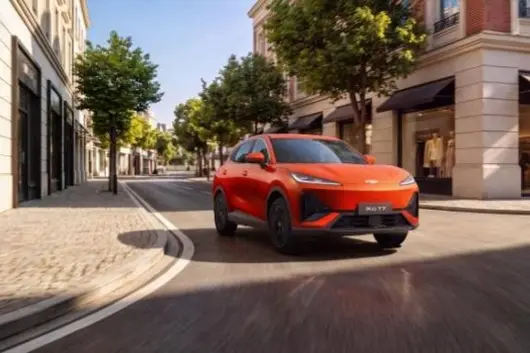
Auto Talk Industry | As the global automotive industry's electrification transition enters the deep-water zone, Chinese brands are continuously amplifying their voice on the world stage. Relying on the solid foundation of the domestic market, combined with high-speed expansion in overseas markets, Chery Group's new energy sector has delivered a report of scale and quality.
Latest sales data shows that Chery Group's new energy vehicles achieved a monthly sales volume exceeding 100,000 units for five consecutive months, securing the fifth position in the global new energy landscape, and becoming an important sample for China's automotive "overtaking by changing lanes".

In August, Chery Group's new energy vehicle sales reached 120,909 units, a year-on-year surge of 69.8%, with wholesale volume ranking in the top three of the industry for five consecutive months. From January to August 2026, Chery Group's new energy cumulative sales reached 725,214 units, a year-on-year increase of 46.2%, maintaining a strong upward growth curve on a high base.
According to statistics from CPCA's Cui Dongshu, from January to July 2026, Chery Group's new energy global market share reached 5.5%, ranking in the top five of global automotive groups in new energy vehicle sales.

It is worth noting that among the global new energy sales TOP 5 list, four slots are occupied by Chinese automotive companies, marking that China's new energy vehicles have upgraded from local rise to a global force, reshaping the global automotive industry competition landscape. From 100,300 units in April to 121,000 units in August, the monthly rising new energy sales volume verifies that Chery's electrification transition has shifted from phased explosion to normalized growth.
Behind the surge in total volume is a deep restructuring of the internal structure, with new energy becoming the core pillar of Chery's domestic market. In August, Chery Group's full-vehicle sales reached 280,128 units, a year-on-year increase of 15.4%. The new energy penetration rate in the domestic market soared to 61.9%, equivalent to two out of every three Chery cars sold domestically being new energy models.

High penetration means Chery's product structure has completed a fundamental switch. New energy is no longer a supplementary sector but the main force driving the brand's basic foundation. From traditional fuel vehicles to new energy carrying the national market banner, Chery has completed the iteration of internal tracks, laying product foundations for subsequent global output.
Export business is another major engine for Chery's growth. In August, Chery exports reached 196,984 units, a year-on-year increase of 52.1%, continuing to hold the number one spot for Chinese brand exports. New energy is becoming the core driver for going global; currently, one out of every seven new energy vehicles exported domestically comes from Chery.
In August, Chery's new energy exports approached 70,000 units, with a year-on-year increase as high as 124.2%, and the proportion of new energy in total monthly exports rose to 35.3%. New energy products are rewriting Chery's overseas sales composition, helping exports break away from the old pattern dominated by fuel vehicles.
Europe, as the mainstream automotive market with the strictest global regulations, has become the touchstone for testing Chery's global product power. From January to July 2026, Chery sold over 208,000 cars in 24 European countries, a year-on-year increase of 201%; among them, new energy vehicle sales were 102,000 units, a year-on-year surge of 332.5%, with the new energy proportion approaching 50%.

The high-speed growth in the European market proves that Chery's new energy products can adapt to mature markets with high safety and high emission standards, breaking the stereotype in overseas markets that Chinese new energy vehicles are "only suitable for emerging markets", and accumulating reputation and experience for further opening up developed markets.
Achieving flourishing growth both domestically and internationally stems from Chery's blockbuster product matrix covering different price ranges, different categories, and adapting to global diversified demands.
Domestically, new models continue to ignite the consumption market. On the launch day of the Fulid T7, orders exceeded 23,000, and the "Origin Global Car" concept received a warm market response; the FREELANDER Shenxingzhe 8, the first mass-production car of the Shenxingzhe series, opened pre-sales, with orders exceeding 10,000 in 48 hours, officially launching an attack on the high-end new energy track; the new QQ3 sales exceeded 10,000 for five consecutive months, stabilizing its star position in the A0-level pure electric market; the Luxeed V9 cumulative deliveries exceeded 20,000 units, refreshing the fastest delivery record for new energy MPVs at the 500,000 yuan level.
From small commuting cars to family SUVs, then to high-end MPVs, Chery has achieved comprehensive positioning in the segmented market, catering to both mass consumption and high-end upgrade demands.
On the overseas battlefield, multiple main models broke through strongly. The JAECOO 7, JAECOO 5, and OMODA 5 models entered the top ten best-selling car lists in the UK; the JAECOO 5 won the sales champion in the Australian segmented market, Indonesia, and Thailand pure electric markets; the iCAR V23 topped the segmented market榜首 in Thailand and South Africa.
The simultaneous success of multiple models in different continental markets shows that Chery is not simply selling domestic models overseas, but developing products based on global user demands, truly achieving one model adapting to multiple countries' road conditions, regulations, and consumption preferences.
While sales scale surged, Chery's new energy is moving away from the development model that relied solely on volume, stepping into the value growth stage of quality and quantity improvement. In the first half of 2026, Chery's new energy business revenue reached 59.284 billion yuan, a year-on-year increase of 63.8%, and the proportion of new energy business in the group's total revenue rose from 25.6% to 41.4%.
The significant increase in revenue proportion represents that new energy business is no longer just a tool for boosting sales but a core business unit that truly creates revenue value, with product premium capabilities continuously improving.

As of the end of August, Chery's global cumulative sales exceeded 20.44 million units, and overseas cumulative sales exceeded 7.18 million units. Decades of production and sales foundation, combined with the new momentum of new energy business, propelled Chery to a new development starting point.
From domestic penetration rate breaking through 60% to global ranking in the top five, from blooming everywhere in emerging markets to achieving more than triple growth in European developed markets, Chery's development trajectory is precisely a microcosm of China's automotive industry overtaking by changing lanes.
Under the wave of electrification, Chinese automotive companies bypassed the technical barriers of the traditional fuel vehicle era, relying on a complete industrial chain and rapid iterative product R&D capabilities, achieving a shift from following to running alongside, and leading in some areas. Chery solidifies its foundation with the domestic large cycle, leverages the global market with new energy products, and continuously writes the globalization story of China's automotive industry with one global model after another.
Market Commentary:
Chery's new energy achieved dual drive through high domestic penetration and high-speed overseas expansion, with a 5.5% global share verifying its top tier status. The product matrix caters to both high and low-end markets, and the breakthrough in the European market proves product power withstands strict tests. However, overseas high-end brand building and profit level improvement remain the core themes for follow-up. Chery's growth path provides a highly valuable practical model for the globalization transformation of domestic brands.

[First Commercial Vehicle Network Original]
On September 15, the 2026 Hannover International Transportation Fair (IAA Transportation) is about to open. As a biennial global commercial vehicle grand event, this auto show is not only a stage for showcasing the latest global technology, but also a platform for commercial vehicle brands from various countries to exchange technology and improve skills.
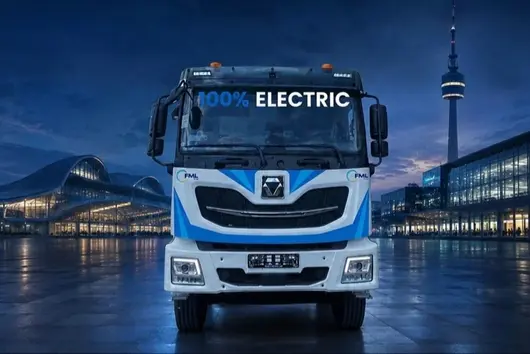
The First Commercial Vehicle Network has recently learned that on the stage of this Hannover Auto Show, XCMG New Energy Heavy-Duty Truck, the Chinese sales champion, will make a major debut, demonstrating the hardcore strength and leading posture of "Chinese Smart Manufacturing" in the field of new energy commercial vehicles to the world.

Backed by the strength of the sales champion: From "Number One in China" to the World Stage
It is reported that the product XCMG Automobile will showcase at the Hannover Trade Fair this time is an electric heavy truck jointly developed for the European market and German local enterprises. It possesses core technologies in electric drive power, frame load-bearing, battery and thermal management, braking safety, and European compliance adaptation. For example, the high-efficiency electric drive transmission system, the permanent magnet drive motor has a peak power of 405 kW, the energy conversion efficiency reaches up to 98%, and supports multi-gear energy recovery; the double-layer reinforced riveted welded frame has a 280mm high beam, adopting an 8+5mm double-layer steel plate composite structure; the chassis adopts a side-hanging battery layout, with the battery pack arranged on both sides of the frame, not encroaching on the upper installation space; standard EBS+ESC+AEBS, meeting European ECE braking regulations; the vehicle electrical architecture meets the EU E-MARK certification, adapting vehicle voltage and communication protocols to the European parts system, etc.

Going global from "Chinese Smart Manufacturing", XCMG Automobile represents the journey of Chinese heavy trucks from technology following to new energy heavy truck standard leadership, and market data is the most powerful proof.
Looking at the data from 2025, XCMG New Energy Heavy Trucks achieved impressive results with a cumulative annual sales of 35,400 vehicles (Compulsory Traffic Insurance scope, same below), a year-on-year surge of 147%, and a market share of 15.3%, consecutively ranking as the industry sales champion for three consecutive years. Entering 2026, XCMG's momentum remains strong. From January to July, the cumulative sales of new energy heavy trucks reached 27,000 vehicles, with a market share of 16.2%, firmly sitting in the number one position. In July, XCMG New Energy Heavy-Duty Truck took the absolute lead in monthly sales with 5,342 vehicles, an 87% year-on-year growth, and strongly won the monthly list champion.
It is reported that in this exhibition, XCMG focused on the mainline logistics scenario to create the all-new generation of new energy heavy trucks, which will provide a comprehensive interpretation to European customers during the exhibition, opening a new realm for leading the industry into the mainline scenario.
This time landing at the Hannover Trade Fair, what XCMG brought is not just products, but the confident answer sheet of Chinese new energy heavy truck complete set equipment solutions. From the dense traffic of Tangshan Steel Plant to the precise loading and unloading of Shenzhen Yantian Port, from the transportation of southwest sand and gravel materials to Hainan Port Logistics, XCMG New Energy Heavy-Duty Trucks have been tempered in various application scenarios, and various products are becoming increasingly mature.

While continuing to lead the domestic market, XCMG has long turned its gaze to the globe. On the international stage, the figure of XCMG New Energy Heavy-Duty Truck appears frequently. Since the beginning of this year, XCMG New Energy Heavy-Duty Trucks have been sold to Africa, Indonesia, Thailand, Guinea and other countries and regions. Among them, a certain leading mining customer in Indonesia, after purchasing more than 150 units of 600 kWh 8x4 electric dump trucks in the previous stage, again ordered 100 vehicles, refreshing the record of a single order purchase of heavy trucks with large battery capacity in the overseas market. In addition, at the Tanzania Saba International Trade Fair, the 2026 Indonesia International Coal and Energy Industry Expo, and Agrishow, the largest agricultural technology gathering in Latin America, wherever they went, the technical advantages of XCMG New Energy Commercial Vehicles have attracted close attention from local practitioners.
Hard-core technology casts champion foundation: XCMG's systematic competitiveness
A champion is not made in a day. XCMG Automobile's leading position in the field of new energy heavy trucks stems from more than a decade of deep cultivation and accumulation of core technologies. As early as ten years ago, XCMG Automobile was the first in the industry to fully shift to new energy, laying a solid foundation for its subsequent rise in the new energy field.
Today, this forward-looking layout has borne fruit. In terms of the R&D system, XCMG Automobile has a provincial-level enterprise technology center and a new energy commercial vehicle innovation center, leading and participating in the formulation and revision of many national standards. XCMG Automobile Research Institute has gathered a large number of technical elites, continuously tackling the three core user needs of reliability, lightweight, and low energy consumption. For example, the whole vehicle B10 life reaches 1.2 million kilometers, the three-electric system waterproof and dustproof grade reaches IP68, the roll-over weight of the laminated battery tractor is lower than 9.0 tons, and it is at the industry benchmark position.

On the industry pain point of energy replenishment technology, XCMG joined hands with partners such as Huawei to launch Megawatt-level supercharging technology, achieving "charging for 5 minutes, driving for 100 km". It has completed the full scenario layout of 14 supercharging products in three product lines: tractor, dump truck, and mixer truck. In April 2026, XCMG Supercharging Heavy-Duty Truck also completed a 1,046 km long-distance test from Huizhou, Guangdong to Wuhan, Hubei. The transportation efficiency is on par with traditional fuel heavy trucks, expanding the application scenarios of new energy heavy trucks to the mainline logistics field, leading industry development.
From R&D to manufacturing, XCMG has built a complete champion support system. Walking into the XCMG High-end Intelligent Commercial Vehicle Production Base, it collects four production processes: stamping, welding, painting, and assembly, and applies multiple advanced information management systems. Among them, the welding and painting branches are rated as Jiangsu Province Demonstration Intelligent Branches, and the intelligent manufacturing level and product quality are in the leading position in the industry.
More importantly, XCMG has built an operation ecosystem to empower customer terminals, creating a "Full-Scenario Equipment + Charging and Battery Swapping Energy Replenishment + Customized Finance + Full-Process Service + Intelligent Management" green transportation complete set equipment solution, helping customers operate worry-free. In 2025, XCMG Automobile successfully introduced 30 strategic investors, raised 6.444 billion yuan, creating a financing record in the domestic commercial vehicle field in the近 five years, injecting strong momentum into subsequent technology R&D and ecosystem layout.
Editor's Note
From entering the heavy truck field in 2008 to leading the industry to break through scenario shackles and drive into the new realm of operations, XCMG Automobile completed the leap from follower to new energy heavy truck industry leader in 18 years. This is not only the success of XCMG, but also a microcosm of the rapid rise of China's new energy commercial vehicle industry.

Here is the new energy sales report from Chery Group for August. Sold 120,900 new energy vehicles in August, a year-on-year increase of 69.8%, with sales exceeding 100,000 units for five consecutive months. What does this signify? Domestic new energy wholesale volume ranked in the industry top three for five consecutive months. More noteworthy is the penetration rate—August domestic new energy penetration was 61.9%, meaning for every 3 cars sold, 2 are new energy. This is not the "wolf is coming" fable, but results achieved through fierce competition. From a global perspective, from January to July this year, Chery new energy sales accounted for 5.5% of the global share, ranking in the top five automotive groups worldwide. Chinese automotive groups occupy four of the TOP5 spots, and Chery is one of them. From quantitative to qualitative change, Chery's pace is accelerating.

According to statistical analysis by Cui Dongshu, head of the China Passenger Car Association, from January to July 2026, Chery Group's new energy sales world share reached 5.5%, ranking in the top five automotive groups globally. From 100,300 units in April to 121,000 units in August, Chery's rapid new energy growth propelled Chery's rise in the global new energy market position. On the global new energy sales share TOP5 list, Chinese automotive groups occupy four seats, showcasing a new brand image of Chinese cars in the global market. In August, Chery Group sold 280,128 vehicles, a year-on-year increase of 15.4%, including exports of 196,984 vehicles, a year-on-year increase of 52.1%, maintaining the No.1 position among Chinese car brands.
What is worth noting is the increase in new energy penetration rate behind Chery's scale growth: In August, Chery's domestic market new energy penetration rate again broke through 60%, reaching 61.9%. This means that for every 3 cars sold by Chery in the domestic market, 2 are new energy vehicles. New energy has become the absolute main force in Chery's domestic market.
New energy has also become a powerful engine for Chery's globalization. Currently, for every 7 new energy vehicles exported from China, 1 comes from Chery. In August, Chery Group's new energy exports were nearly 70,000 units, a year-on-year increase of 124.2%, accounting for 35.3% of total monthly exports.

The "new energy content" in the European market is higher. From January to July, Chery sold over 208,000 vehicles in 24 European countries, a year-on-year increase of 201%; of which new energy 102,000 vehicles, a year-on-year increase of 332.5%. From the European sales structure perspective, new energy accounts for about 50%. Chery new energy products are accelerating entry into global high-regulation markets, and product strength has been verified and recognized by the world's most stringent markets.
Chery has formed a "blockbuster matrix" covering different markets, price points, and categories in the global market, driving continuous breakthroughs in Chery new energy sales and solid improvement in industry status.
Domestically, the Fengyun T7 broke 23,000 orders on the first day of launch, verifying the market explosive power of the "Native Global Car" concept; FREELANDER's first mass-production model, Freelander 8, opened pre-sales, breaking 10,000 orders in 48 hours, launching an attack on the high-end new energy market; The all-new QQ 3 sold over 10,000 units for 5 consecutive months, solidifying its status as a star A0-class pure electric product; The Zhijie V9 cumulative deliveries have exceeded 20,000 units, breaking the fastest delivery record for 500,000-level new energy MPVs.

Overseas, the three models JAECOO 7, JAECOO 5, and OMODA 5, featuring new energy characteristics, entered the UK top 10 best-selling models list; JAECOO 5 became the sales champion in the Australian sub-market, Indonesian and Thai pure electric markets, while iCAUR V23 ranked first in the sub-market in Thailand, South Africa, etc.

Chery New Energy has not only "quantitative growth", but also "qualitative leaps". Chery New Energy is moving from scale expansion to a new stage of value growth. In the first half of 2026, Chery Auto's new energy business revenue reached 59.284 billion yuan, a year-on-year increase of 63.8%, with the proportion of total revenue rising from 25.6% to 41.4%.
Chery New Energy's growth is not only a breakthrough in scale. Revenue from new energy business in the first half was 59.284 billion yuan, a year-on-year increase of 63.8%, with the proportion of total revenue rising from 25.6% to 41.4%. Revenue growth outpaced sales growth, indicating an increase in the proportion of higher-priced models and an optimization of structure. At the product level, Fengyun T7 broke 23,000 orders on launch day, Freelander 8 broke 10,000 orders in 48 hours pre-sale, Zhijie V9 cumulative deliveries exceeded 20,000, setting the fastest record for 500,000-level new energy MPVs. Both domestic and international legs are moving forward. By the end of August, Chery's cumulative global sales exceeded 20.44 million vehicles, with overseas cumulative sales exceeding 7.18 million vehicles—this is a new starting point, and new energy is injecting new connotations into this starting point. The story of Chinese automobiles overtaking by changing lanes, Chery is continuously writing on the global map.
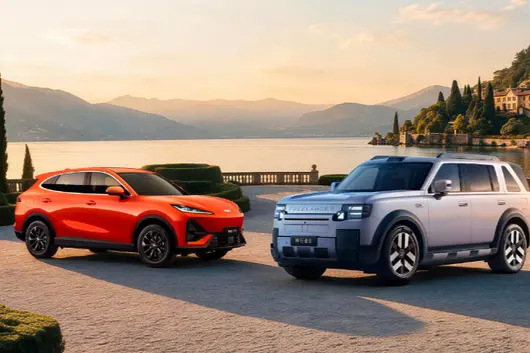

While Chinese cars were "overtaking by changing lanes", Chery New Energy's explosive growth has entered a new normal. With the August sales release, Chery Group New Energy saw its sales exceed 100,000 units for the 5th consecutive month: In August, the group sold 120,909 new energy vehicles, up 69.8% year-over-year, ranking top three in wholesale volume in the industry for 5 consecutive months; From January to August, the group cumulatively sold 725,214 new energy vehicles, up 46.2% year-over-year.

Chery New Energy sales account for 5.5% of the world share
According to statistical analysis by CPCA Head Cui Dongshu, from January to July 2026, Chery Group's new energy vehicle sales world share reached 5.5%, ranking among the top five global auto groups. From 100,300 units in April to 121,000 units in August, Chery New Energy's rapid growth promoted Chery's leap in global new energy market status. On the global new energy sales share TOP5 list, Chinese car companies occupy four seats, showcasing a new brand image of Chinese cars in the global market.

New energy penetration rate continues to rise, European new energy growth exceeds 3 times
In August, Chery Group sold 280,128 cars, up 15.4% year-over-year, including 196,984 units in exports, up 52.1% year-over-year, maintaining the first position for Chinese brand cars.
What deserves attention is the improvement in new energy penetration rate behind Chery's scale growth: In August, Chery's domestic market new energy penetration rate broke through 60% again, reaching 61.9%. This means that for every 3 cars sold in Chery's domestic market, 2 are new energy. New energy has become the absolute main force in Chery's domestic market.
New energy has also become a powerful engine for Chery's globalization. Currently, for every 7 new energy vehicles exported from China, 1 comes from Chery. In August, Chery Group's new energy exports were nearly 70,000 units, up 124.2% year-over-year, accounting for 35.3% of total exports for that month.

Global Best-Selling Model JAECOO 7
The "New Energy Content" in the European market is higher. From January to July, Chery sold over 208,000 cars in 24 European countries, up 201%; among them 102,000 new energy vehicles, up 332.5%. From the European sales structure, new energy accounts for about 50%, Chery new energy products are accelerating entry into global high-regulation markets, and product capability has been verified and recognized by the world's strictest markets.
Hit Product Matrix: From Fengyun T7 to JAECOO 7
Chery has formed a "Hit Product Matrix" covering different markets, price points, and categories in the global market, promoting Chery New Energy sales to continuously break through and solidifying its industry status.
Domestically, Fengyun T7 exceeded 23,000 orders on its first day of launch, validating the market explosiveness of the "Native Global Car" concept; FREELANDER's first mass-produced Freeland 8 started pre-sale, with 48-hour orders exceeding 10,000 units, attacking the high-end new energy market; Brand new QQ3 sold over 10,000 units for 5 consecutive months, solidifying its status as a star A0-class pure electric product; Luxeed V9 cumulative delivery exceeded 20,000 units, breaking the fastest delivery record for 500,000-level new energy MPVs.

"Native Global Car" Fengyun T7
Overseas, three models featuring new energy, JAECOO 7, JAECOO 5, OMODA 5, entered the UK Top 10 Best-Selling Models list; JAECOO 5 became the sales champion in Australia's sub-segment, as well as in Indonesia and Thailand's pure electric market, iCAUR V23 ranked first in sub-segments in Thailand, South Africa, and other places.

iCAUR V23
Rise in Both Quantity and Quality: New Energy Revenue Share Rises to 41.4%
Chery New Energy not only has "quantity growth", but also "quality leap". Chery New Energy is moving from scale expansion to a new stage of value growth. In the first half of 2026, Chery's new energy vehicle business revenue reached 59.284 billion yuan, up 63.8% year-over-year, increasing the proportion of total revenue from 25.6% to 41.4%.
As of the end of August, Chery's global cumulative sales exceeded 20.44 million units, with overseas cumulative sales exceeding 7.18 million units. This is a new starting point, and new energy is injecting a new meaning into this new starting point. The story of Chinese cars "overtaking by changing lanes", Chery is continuously writing on the global map.
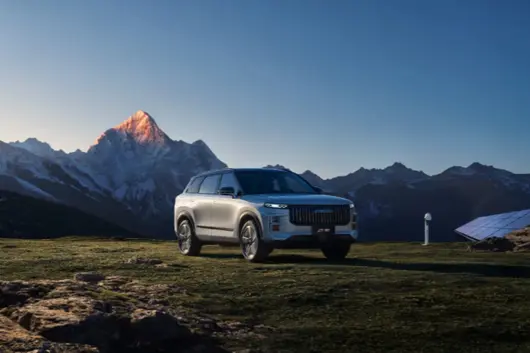

The runner-up sold 190,000 units, while BYD achieved 440,000 in a single month! This isn't just a sales ranking; this is a complete domination in action!

On September 1st, when the "August 2026 China Automobile Market Vehicle Manufacturer/Group [New Energy Vehicles] Sales Ranking" was announced, the auto industry was truly shocked!

BYD sold 440,000 units in a single month, leading the second place by nearly 250,000 units. SAIC about 190,000 units, Geely about 175,000 units, Chery about 120,000 units... To put it more clearly, the combined sales of the second, third, and fourth place only exceed BYD by 48,000 units! This gap is no longer about who sold a few thousand more; it's that they are not even on the same level.
Sales reaching a new milestone might be news for other brands, but for BYD, it's just daily business!

In fact, for 63 consecutive months, BYD has been the Top One in new energy sales every month! But the market 63 months ago was completely different from today. Back then, new energy penetration rate had just crossed 10%, and now it's heading towards 50%. As the market grew, BYD's market share did not drop but rose, which proves exactly that it is not cashing in on the new energy vehicle bonus, but rather the one defining the track.
BYD's high-end brands are also gaining volume. In August, Fangchengbao sold 42,000 units, a 155.6% year-on-year increase, with single-month sales exceeding Zeekr, Li Auto, AITO, and Xiaomi, ranking first among new forces in the 200,000+ category. Denza 16,000 units, up 33.4%. The two brands combined 58,000 units, more than doubling. This set of numbers keeps increasing the premium value of BYD's sales figures.

What is even more impressive about BYD is not domestic sales, but the overseas market!
In August, exports reached 189,000 units, up 134.6% year-on-year, setting a record for 5 consecutive months. In the first 8 months of 2026, overseas sales accumulated to 1.158 million units, whereas last year's full overseas total was 1.05 million units; this year exceeded that record in just 8 months! At this pace, annual sales must be heading towards 1.5 million units! All brands have been shouting the slogan of globalization for so many years, but now BYD is truly setting sail! It doesn't just sell cars in overseas markets; it is defining global new energy vehicles with technical standards!

The second-generation Blade Battery and Flash Charge technology enable new energy vehicles to achieve "5 minutes charged, 9 minutes fully charged" under normal temperature conditions, and the ability to add only 3 minutes to charging time in a -30°C environment, completely eliminating the last shred of consumer hesitation when buying new energy vehicles. As of August 28th, BYD's Flash Charge stations have surpassed 10,000, covering 332 cities. From "having technology but no chargers" to "having chargers, cars, and buyers", only by laying out the charging network quickly can sales increase substantially.
Now, Flash Charge stations have been built to the foot of Mount Everest, the Thailand factory is in production, the Brazil factory is under construction, and the European market is being laid out. While others are still studying how to go global, the BYD fleet is already driving cars all over the world on the ocean.

Consecutive 63 months as Number One in new energy; more worth noting than the record is BYD's product structure. The overseas proportion is rising, high-end models are rising, the technological moat is deepening! When its monthly sales head towards 500,000, BYD has already pushed the starting line of Chinese brands to the front of those foreign traditional automakers.
How much do you think BYD's sales will reach this year? Let's chat.
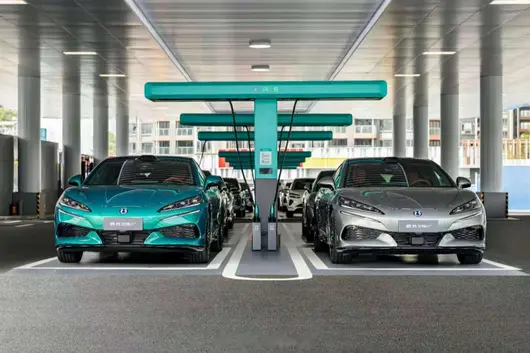

In the beginning of September, Geely Automobile Holdings Limited (0175.HK) presented a substantial report card as usual: August single-month sales reached 270,194 vehicles, continuing the momentum of month-on-month and year-on-year growth for six consecutive months, up 8% both year-on-year and month-on-month. The new energy segment was particularly bright; new energy sales from the three major brands Geely, Lynk & Co, and Zeekr reached 175,877 vehicles, up 19% year-on-year, with the share of the total rising to 65%. In other words, for every ten cars sold, more than six are "electric", and Geely's transition to full new energy is becoming clearer.

The quality of sales is not just reflected domestically. Overseas exports in August showed a result of 110,094 vehicles, up 205% year-on-year, marking month-on-month and year-on-year growth for the eighth consecutive month, and single-month exports broke 100,000 for three consecutive months. New energy exports that month were 70,629 vehicles, surging 446% year-on-year, accounting for 64% of all exports. From "product globalization" to "system globalization", Geely's global moves are upgrading from scattered nodes to a complete localized operational ecosystem.

Supporting the steady climb in sales is the continuous release of technological momentum. From August 21 to 30, Geely, Zeekr, Lynk & Co, Geely Galaxy and Geely China Star appeared at the 2026 Chengdu International Auto Show, with over 49 intelligent products appearing together, with pure electric, hybrid, and fuel multiple energy sources on stage together, fully displaying the ecosystem of "Leader in Full-Domain AI Intelligent Cars". Almost simultaneously, Geely released AI new energy off-road technology, gathering GTA native new energy off-road architecture, all-wheel drive AI electric hybrid Thunder EM-T and AI all-terrain digital chassis, three globally first technologies, completing a systematic reshaping from body structure to intelligent chassis. Among them, Thunder EM-T relies on Xingrui AI Cloud Power scenario engine to accurately match the best fuel-electricity solution, with energy consumption optimization exceeding 15%; the all-terrain digital chassis built based on Quantum-level AI EEA 4.0 can recognize road conditions via AI and automatically switch intelligent scenario modes. These technologies are first mounted on Galaxy Battleship 700, redefining the global benchmark for intelligent new energy off-road technology.
The three brands exerted force in sync on both the auto show and the market. Global luxury tech brand Zeekr delivered 36,981 vehicles in August, up 110% year-on-year; Zeekr 7X sales continued to break 10,000, with global orders breaking 200,000; Zeekr Touring sales exceeded 10,000 for three consecutive months, with global cumulative deliveries exceeding 400,000; Zeekr 009 took the dual crown of sales and reputation for pure electric MPVs above 400,000 RMB in mainland China for three consecutive months.

Global new energy high-end brand Lynk & Co continues to expand widely, with August sales of 17,027 vehicles, up 4% month-on-month, among which new energy products were 15,504 vehicles, up 10% month-on-month. At the Chengdu Auto Show, the new Lynk & Co 20 and Lynk & Co 20 Sprint Edition appeared simultaneously, with Lynk & Co 10, Lynk & Co 07GT and concept car Time to Shine on stage together, displaying layout covering multiple energy sources and adapting to diverse scenarios. In terms of sports map, Lynk & Co expanded from circuit racing to rally; from August 28 to 30, 07GT Rally Academy Racing Car went to the 2026 China Automobile Rally Championship Huairou Station, winning S7 category and Lynk & Co Rally Challenge double champion.

Geely brand solidified its growth basic board, with August sales of 216,186 vehicles, up 5% year-on-year and 9% month-on-month. Mainstream new energy brand Geely Galaxy had monthly sales of 119,115 vehicles, up 8% year-on-year and 10% month-on-month respectively. Star model Geely Star Wish sold 60,955 vehicles in a single month, standing on the 50,000 vehicle stage for three consecutive months, with cumulative sales approaching 900,000. Regarding new products, the new C-class AI pure electric sports sedan Galaxy TT started pre-sales on August 13, redefining the value benchmark of 200,000 yuan class pure electric sports sedan starting at 145,900 yuan; the AI all-terrain hardcore SUV Galaxy Battleship 700 that appeared on August 21 became the auto show focus and will start pre-sales in September. In terms of fuel market, Geely China Star had August sales of 97,071 vehicles, up 8% month-on-month; the new fourth generation Boyue L i-HEV series is equipped with i-HEV smart hybrid and Qianli Haohan H5 solution, consolidating fuel SUV champion status with three cross-level strengths: energy saving, performance, and intelligence; on August 31, the new flagship Xingyue L PLUS was officially announced and will debut on September 5.

In terms of globalization, the three brands bloom at multiple points overseas. Zeekr topped the list of Australian luxury pure electric sales for January-July; Lynk & Co ranked first in Tunisia July high-end PHEV brand; Geely brand won Panama China brand sales champion. Core models also show global competitiveness: Zeekr 7X topped Australian mid-size luxury SUV first; Zeekr 009 took Thailand and Malaysia pure electric MPV market first; Geely Star Wish topped Thailand electric car sales champion; Galaxy Starship 7 EM-i won Poland C-class PHEV sales champion. Channel construction accelerated simultaneously: in Europe, Geely landed in Austria, Spain sales network broke 50 stores, Star Wish officially listed in France; in Latin America and Southeast Asia, Lynk & Co landed in Argentina, Chile business turned to Geely direct operations; in Middle East and Africa, Zeekr 9X started pre-sales, Lynk & Co entered Jordan, first D-SUV global car Geely Monjaro EM-i launched in Egypt at the end of August. Based on long-term confidence in overseas growth, Geely adjusted 2026 overseas sales target from 640,000 to 920,000, aiming for annual sales of one million vehicles.

Operating quality and technical strength advanced simultaneously. On August 17, Geely released 2026 interim results, with total revenue of 173.6 billion yuan, core net profit attributable to parent company of 9.68 billion yuan, achieving volume, price, and profit rise together. Relying on the "One Geely" strategy, this enterprise is embedding full-domain AI into design, R&D, manufacturing and after-sales full link, traveling through the cycle with the determination of high-quality development, steadily moving towards the goal of a global intelligent new energy vehicle leader.
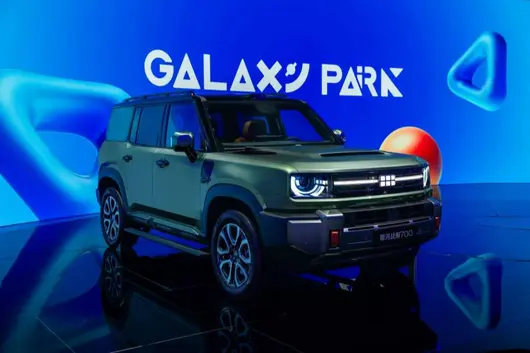

On August 25, the 2026 Silk Road 10,000-Li Journey · Enlightenment Road officially concluded in Singapore, bringing an end to this cross-border journey that lasted 33 days.
Silk Road Expedition accompanied by Green Energy! The entire fleet traveled over 10,000 kilometers, departing from Xi'an, passing through six provinces in China, traversing Thailand and Malaysia, and finally arriving in Singapore. 2026 marks the 5th anniversary of the establishment of a comprehensive strategic partnership between China and ASEAN. The event was themed "Tech Towards New · Civilization Towards Heart", combining cultural exchange, technological interaction, and economic and trade exchanges to witness the new vitality of the Land and Maritime Silk Road.

This entire trip was supported by BYD, with multiple models from the Dynasty, Ocean, Denza, Fang Cheng Bao, and YangWang series composing the fleet. They covered highways, mountain roads, and congested urban traffic conditions. Fast Charging and Divine Eye assisted driving, two core technologies, underwent a true 10,000-kilometer field test. The energy replenishment capability of a 5-minute fast charge and 9-minute full charge, combined with a massive fast-charging station network, solves the pain points of energy replenishment for long-distance travel; Divine Eye relies on massive real-world driving data for continuous optimization, greatly reducing the burden of long-distance driving. In ancient times, the Silk Road relied on camel caravans and relay stations for supplies; now, new energy technology completes the cross-border expedition.


In the Singapore market, BYD's performance is equally impressive, having ranked first in total passenger car sales across all brands locally for 19 consecutive months. Local vehicle acquisition costs are high, and consumers are very cautious when choosing cars; even though model pricing is not particularly affordable, sales remain hot. With 16 offline retail touchpoints, many stores have entered core business districts, and dealers are continuously increasing investment and layout.


Looking at the overseas market, BYD's growth momentum is rapid. From January to July this year, overseas sales exceeded 970,000 vehicles. Business covers more than 120 countries and regions worldwide, securing top new energy vehicle sales in many countries such as Thailand, Singapore, Brazil, and the Middle East.

By combining Silk Road culture with cross-border new energy travel, BYD is also using Chinese new energy power to assist the green transportation development of the "Belt and Road Initiative" and participate in the global automotive industry's green transition.
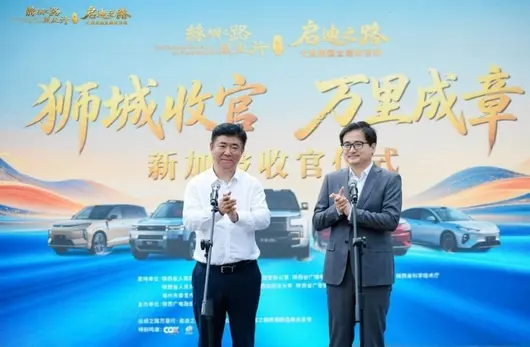

On September 1, Geely Automobile Holdings Limited (0175.HK) announced its August sales report, total monthly sales reached 270,194 vehicles, achieving double year-on-year and month-on-year growth for 6 consecutive months, both rising 8% year-on-year and month-on-month. The new energy sector performed brightly, Geely, Lynk & Co, and Zeekr combined new energy sales reached 175,877 vehicles, up 19% year-on-year, accounting for 65% of new energy sales.

The overseas market has become a powerful engine for Geely's growth, officially entering a new stage of "systematic overseas expansion". August overseas exports reached 110,094 vehicles, surging 205% year-on-year and slightly increasing 3% month-on-month, achieving double growth year-on-year and month-on-year for 8 consecutive months, and also marking the third consecutive month with exports exceeding 100,000 units. Among them, new energy exports reached 70,629 vehicles, up 446% year-on-year, accounting for 64% of total exports, new energy products are becoming the main force for Geely's global market expansion.
At the 2026 Chengdu International Motor Show held from August 21-30, Geely gathered its four major matrices: Zeekr, Lynk & Co, Geely Galaxy, and Geely China Star, showcasing 49 intelligent products together, covering pure electric, hybrid, and fuel power routes, concentrating on demonstrating the technical strength of full-domain AI smart cars.
Three Brands Work Together, Multiple Key Models Show Outstanding Results
Zeekr, as a global luxury tech brand, is showing strong upward momentum, delivering 36,981 vehicles in August, a 110% year-on-year increase. Multiple models under its brand have secured top positions in niche segments: Zeekr 7X monthly sales continue to break 10,000, with global orders exceeding 200,000; Zeekr Shooting Brake sales exceeded 10,000 for three consecutive months, with over 400,000 vehicles delivered globally; Zeekr 9X ranked first in sales of vehicles above 500,000 from January to July; Zeekr 8X, launched only three months ago, ranks first in cumulative sales of hybrid SUVs in the 300,000-500,000 price range; Zeekr 009 secured the championship for both sales and reputation of domestic pure electric MPVs above 400,000 for three consecutive months. At the Chengdu Auto Show, Zeekr presented 14 heavy-hitter products, and its luxury lineup garnered significant attention.

Global new energy high-end brand Lynk & Co sold 17,027 vehicles in August, up 4% month-on-month, among which new energy sales were 15,504 vehicles, up 10% month-on-month. At the Chengdu Auto Show, the new Lynk 20 and the sporty Lynk 20 Fly version debuted, balancing urban trends with sports attributes; Lynk 10, Lynk 07GT, and GT Concept Car were exhibited together, enriching the product matrix. On the racing track, Lynk & Co also achieved results. The 07GT Rally Academy car competed in the 2026 China Car Rally Championship Huairou Station, winning the S7 category and the Lynk & Co Rally Challenge Championship, opening up a new track for Chinese brand hybrid rally racing.

Geely brand sales reached 216,186 vehicles in August, up 5% year-on-year and 9% month-on-year, solidifying the group's growth foundation. Geely Galaxy under Geely sold 119,115 vehicles in August, up 8% and 10% respectively year-on-year and month-on-year. Geely Xingyuan's popularity remains high, selling 60,955 units in August, breaking 50,000 for three consecutive months, with cumulative sales approaching 900,000; Galaxy E5 monthly sales were 14,132 vehicles. Regarding new cars, the Class C AI pure electric sports sedan Galaxy TT started pre-sales, with a starting price of 145,900; AI all-terrain hardcore SUV Galaxy Battleship 700 landed at the Chengdu Auto Show, planned to start pre-sales in September.

The fuel power segment of Geely China Star sold 97,071 vehicles in August, up 8% month-on-month. The Shuangbin Family, China Star High-end Series, and Boyue Family all maintained stable output. The 4th Gen Boyue L i-HEV landed at the Chengdu Auto Show, equipped with the 3rd Gen i-HEV Zhiqing hybrid technology, featuring LiDAR and advanced intelligent driving solutions, solidifying the fuel SUV advantage. The new mid-to-large flagship smart hybrid SUV Xingyue L PLUS was also announced to debut, scheduled to premiere on September 5.

Investing in Full-Domain AI Technology, Hardcore Off-Road Technology Officially Released
Geely is permeating full-domain AI into the entire business chain of design, R&D, manufacturing, and after-sales. On August 28, Geely released AI new energy off-road technology externally, including GTA native new energy off-road architecture, Full-Drive AI Electric-Hybrid Thor EM-T, and AI All-Terrain Digital Chassis, three core innovations. This technology will first land on the Galaxy Battleship 700, reconstructing new energy hard-core off-road standards, balancing off-road capability, energy consumption performance, and intelligent experience.

Globalization Accelerates, Overseas Sales Target Raised to Sprint for Million Milestone
Overseas markets are blooming in multiple points; Zeekr, Lynk & Co, and Geely brands took leading positions in niche markets in multiple countries such as Australia, Malaysia, Tunisia, and Panama. Multiple models achieved bright rankings in markets such as Thailand, Poland, Spain, and Mexico. Channel layout continues to expand, with new markets and stores constantly added in Europe, Latin America, Southeast Asia, and Middle East Africa; Geely Monjaro EM-i global car officially started listing.

Based on strong performance in overseas markets, Geely raised its 2026 overseas sales target from 640,000 to 920,000, going all out to hit the 1 million export target.

Mid-August Geely disclosed 2026 interim performance, total revenue 173.6 billion yuan, core net profit attributable to parent company 9.68 billion yuan, achieving simultaneous improvement in volume, price, and profit. Facing the future, Geely will rely on the "One Geely" strategy, leverage full-domain AI technology advantages, adhere to high-quality development, and continuously release growth potential.
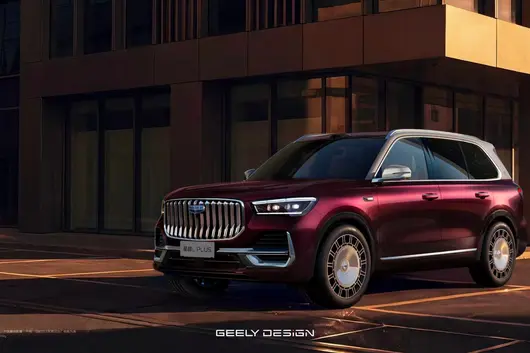

Evening of August 28, 2026, BYD (002594.SZ) unveiled its first-half operating performance report with a splash! Amid fierce competition in the global automotive industry and industry-wide profitability pressure, BYD, still relying on its strong operational resilience and comprehensive strength, walked steadily and firmly, delivering a highly valuable and bright financial report, fully displaying the hardcore confidence of an industry leader and a steady development trend, highlighting the continuous steady development foundation.

From the core operating data, BYD's first-half performance was very bright: achieving 344.8 billion yuan in operating revenue, with net profit attributable to shareholders reaching a high of 12.3 billion yuan. It continuously invested a high amount of 28.9 billion yuan into technical R&D, while holding a sufficient cash reserve of 167.4 billion yuan, solidifying the firm foundation for the company's steady development. Particularly worth noting is that the second quarter performance witnessed a strong breakout, with net profit increasing significantly by 30% year-on-year, and gross margin continuing to climb to 18.9%, successfully reaching a new high in the past year! This set of eye-catching data intuitively verifies that BYD's profitability is continuously improving and upgrading, with the momentum of high-quality development being unstoppable.
With intensifying industry competition and accelerating restructuring of the market landscape, many brands are facing growth bottlenecks. However, relying on a solid and steady operational foundation and continuously optimized business structure, BYD moved upstream against the industry wave. Its overall development momentum in the first half was high and upward, with market competitiveness continuing to soar, and its position as the global new energy vehicle industry leader becoming more and more solid and unshakable.

Only by pushing forward in two directions can the growth ceiling be broken! In the first half of this year, BYD precisely laid out the two core tracks of internationalization and high-endization. The dual-wheel drive achieved growth acceleration, and the overall growth structure of the enterprise continued to improve and become increasingly healthy.
The overseas market witnessed explosive growth, becoming the core new engine for performance growth! In the first half of the year, BYD's overseas sales volume soared to 790,000 units, skyrocketing by 68% year-on-year, with a very rapid growth momentum. Currently, the brand's business has comprehensively covered more than 120 countries and regions worldwide. Relying on solid product strength, it successfully topped the sales charts of new energy vehicles in several key overseas core markets such as the UK, Brazil, and Thailand, winning the favor of global consumers. With the continued release of overseas local production capacity and the continuous improvement of the global sales channel system, BYD's global layout is gradually entering the harvest period, and its overseas business is continuously injecting powerful momentum into the overall performance growth of the enterprise.
The high-end layout has also been bountiful, with brand value and product premium capability continuously leaping upward! In the first half of the year, Fang Cheng Bao, Denza, and Yangwang, the three high-end brands, worked together to break through, with cumulative sales breaking 228,000 units, increasing by 61% year-on-year. Their proportion in total sales steadily rose to 12.6%, marking significant results in BYD's structural high-end transformation.
Among them, the new high-end brand Fang Cheng Bao performed particularly stunning, with first-half sales strength breaking through 160,000 units, skyrocketing by 163% year-on-year, achieving leapfrogging growth; Denza brand steadily deep-dived into the high-end market, achieving double harvest in reputation and sales, with June sales breaking the 20,000 unit milestone for the first time, and an average product price of up to 360,000 yuan, firmly standing in the mid-to-high-end new energy market; Yangwang created an industry miracle, becoming the benchmark brand that was the fastest to break the 10,000 units in domestic million-level luxury new energy vehicles, thoroughly breaking the monopoly pattern of overseas luxury brands, showcasing the top-tier strength of Chinese Smart Manufacturing.
The dual-line strategy of international expansion and high-end quality improvement allowed BYD's product structure to continuously iterate and optimize, with core profitability steadily climbing. Net profit and gross margin in the second quarter both went up, creating phased achievements. The slight fluctuation in overall net profit in the first half was mainly due to short-term exchange losses caused by market exchange rate fluctuations. Excluding the impact of these external factors, BYD's main business profitability trend was stable and favorable, and the enterprise's super development resilience in crossing industry cycles was fully revealed.

Continuous technological innovation is the core secret of BYD's long-term leading of the industry and the core driving force for the enterprise's high-quality development! For many years, BYD has always persisted in heavy R&D and strong innovation, deeply digging core technologies with ultra-high investment, building a deep industry moat. In the first half of 2026, enterprise R&D investment reached a high of 28.9 billion yuan, with investment scale far exceeding net profit for the same period, continuously retaining the heavyweight honor of A-share "King of R&D". To date, BYD's cumulative R&D investment has exceeded 270 billion yuan. The massive scientific research investment provides relentless hard support for technology iteration and product upgrades.
Heavy investment must have high returns! BYD, which has continuously deep-dived into R&D, is now entering a concentrated explosion period for technological results, with a series of disruptive technologies landing in mass production, thoroughly solving industry pain points. In March this year, the second-generation Blade Battery and Flash Charge Technology were officially released, which refreshed the record for the fastest charging speed of global mass-produced vehicles in one go, successfully solving the global industry problems of "slow charging" and "difficult charging in low temperatures". Relying on solid technical strength, it gained authoritative recognition from the Ministry of Industry and Information Technology (MIIT), bringing users an ultimate convenient car experience.
Technology landing and ecosystem layout are accelerating in sync! Currently, second-generation Blade Battery capacity continues to ramp up and expand, and national Flash Charge station construction is in full swing. Relying on the "Flash Charge China" strategy, BYD has already built 10,000 Flash Charge stations nationwide, comprehensively covering 332 cities, perfectly constructing an all-domain fast charging network. Not only is it deeply digging the domestic market, the brand is also accelerating the global energy ecosystem layout, planning to deploy 6,000 Flash Charge stations overseas within one year, using Chinese technology to boost global new energy vehicle electrification leapfrogging development, and promoting a global green mobility revolution.
The intelligent track has also frequently reported good news, continuously leading the industry! After realizing intelligent parking safety backup, BYD was the first to officially announce in May this year that it had completed city navigation safety backup, becoming the only enterprise in the world to achieve intelligent driving "dual safety backup". With extremely strict safety standards, it promotes the universal popularization of intelligent assisted driving technology, escorting the safety of users' travel.
Data witnesses hardcore strength! As of July 31, the number of BYD intelligent assisted driving vehicles in possession has broken 3.52 million units, with the daily cumulative driving data of its SkyEye intelligent driving system exceeding 220 million kilometers. Massive real road condition data continues to feed back and iterate technology. Meanwhile, the brand's heavy-release Xuanji A3 Chip is the first domestically self-developed 4nm process intelligent driving chip. From the underlying core chip to the complete system software, BYD has achieved full-stack self-development and vertical integration, continuously leading the wave of global automotive industry intelligence and digitalization revolution.
Uphold Original Intention to Practice Responsibility, Interpreting Corporate Social Responsibility with Hard WorkLeading with strength, yet holding warm responsibility! While developing rapidly and digging deep into innovation, BYD always remembers corporate social responsibility, practicing the green development concept with practical actions, showcasing the responsibility and layout of a national enterprise.
Tax and financial contributions demonstrate corporate responsibility. In the first half of 2026, BYD's domestic tax total reached a high of 22.3 billion yuan, a value far exceeding net profit for the same period, injecting strong momentum into social economic development. In the field of green low-carbon development, BYD is more unswervingly anchored to the long-term goal of "achieving full value chain carbon neutrality by 2045", with its ESG comprehensive performance stably in the top tier of domestic enterprises, continuously empowering global dual carbon causes.
Green results are visible and tangible! From January to June this year, BYD new energy vehicles' full lifecycle carbon emission reduction reached a high of 23.17 million tons, with equivalent tree planting volume reaching 386 million trees. With substantial green results, it helps global industry low-carbon transformation and contributes Chinese enterprise strength to ecological environment protection.
Future Looks Promising! Full-Year Performance Climbs Quarter by Quarter, Leading Global Industry RevolutionLooking back at the first half of 2026, the global automotive industry structure underwent deep restructuring, and overall industry operating pressure was highlighted. Facing a complex and changing market environment, BYD broke through against the trend, overcoming difficulties, relying on precise strategic layout, hardcore technical strength, and perfect industrial layout, to achieve a strong turnaround in second quarter performance and reach a new level, delivering an operating report that exceeded expectations.
Outlook for the second half, BYD's growth momentum continues to accumulate, with strong potential! With frontier technology results continuously landing in mass production, high-end model market share steadily rising, and global layout comprehensively entering the harvest period, the enterprise's core profitability and long-term development potential will be further released, with full-year performance expected to continue climbing quarter by quarter and rising steadily.
From breaking technical barriers with billions in R&D to setting sail for globalization; from the high-end product matrix comprehensively breaking through to personally practicing social responsibility, BYD is reconstructing industry growth logic with all-round, multi-level core competitiveness, continuously leading the global new energy track, and leading a brand-new revolution in the global automotive industry! In the future, this national car enterprise will definitely continue to break through and create better results!
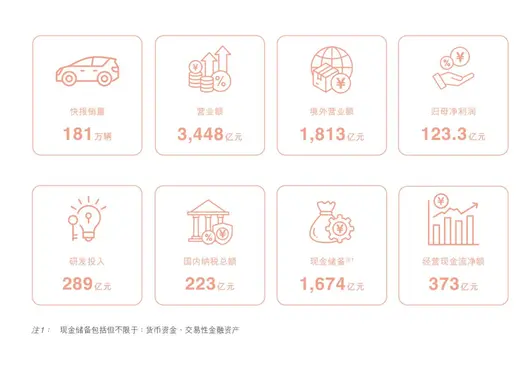

With the successful conclusion of the '2026 Silk Road 10,000 Li Journey · Enlightenment Road' in Singapore, BYD, as the travel partner throughout the journey, departed from Xi'an, passed through Thailand and Malaysia, and finally arrived in Singapore, truly achieving 'Silk Road Long Journey with Green Energy Companion'.


A full 33 days, the convoy ran over 10,000 kilometers, not only speeding on highways but also experiencing complex road conditions such as mountain roads and city traffic jams. This time, models from brands like Dynasty, Ocean, Denza, Fangchengbao, and Yangwang went on the expedition together, equivalent to BYD's full product line going up together, truly undergoing cross-border long-distance testing.


Along the way, the 'Charge Fully in 5 Minutes, Charge Full in 9 Minutes' Flash Charging Technology easily solved the most worrying charging anxiety for long-distance travel. Plus, with the Divine Eye Assisted Driving, even after running over 10,000 kilometers, it greatly reduced fatigue for the convoy while also ensuring safety and comfort.


Precisely because of its strong product performance, BYD has secured the top position in local passenger car sales in the Singapore market for 19 consecutive months. This Silk Road 10,000 Li Journey activity fully proved that Chinese New Energy Vehicles are not just for city commuting, but can also run long distances across borders. I just want to say, Chinese car brands are becoming increasingly capable, and this will also promote green transportation to more countries.
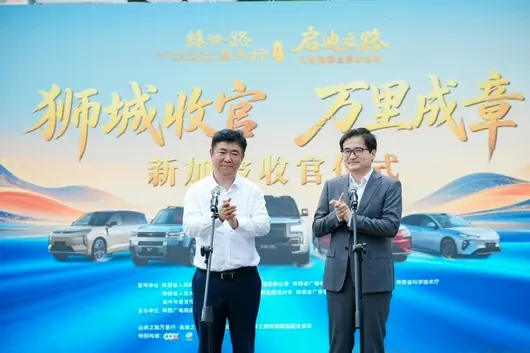

August 26, Dongfeng Automobile Co., Ltd. (hereinafter referred to as "Dongfeng Shares", Stock Code: 600006) officially released the 2026 Semi-Annual Report. During the reporting period, Dongfeng Shares firmly grasped the opportunities for green and intelligent transformation in the commercial vehicle industry, anchored on the development directions of new energy and internationalization, steadily improved operating quality, and delivered a mid-year report with steady improvement and positive trends.

The report shows that in the first half of 2026, Dongfeng Shares achieved operating revenue of 5.516 billion yuan, a year-on-year increase of 9.64%; achieved total profit of 169 million yuan, a significant year-on-year increase of 83.56%; net profit attributable to shareholders was 124 million yuan, a year-on-year increase of 27.83%, with significantly improved profitability levels. Under the complex situation of intensifying industry competition and changing demand structure, the company deepened value marketing, promoted cost reduction and efficiency improvement across the entire chain, continuously optimized product structure, and further highlighted the operating resilience of the company.
Regarding whole vehicle sales data, the company achieved sales of 69,000 vehicles, a year-on-year increase of 0.44%, outperforming the market. The growth momentum of domestic new energy business was bright, with new energy vehicle sales reaching 18,000 vehicles, a significant year-on-year increase of 99.2%, significantly outperforming industry growth speed, becoming the core engine driving company growth.

Among them, the VAN vehicle market performance was bright. In April this year, the VAN vehicle brand was integrated, and the Dongfeng Furuitong brand was launched. Products such as Dongfeng Furuitong V6, V8, and V10 quickly gained market recognition, order volume increased rapidly, and delivery volume in the first half of the year increased by 153.9% year-on-year; in the light truck sector, the pace of new energy transformation was accelerated. Dongfeng Qiankun K6E, Dongfeng Dolicard D6E Battery Swap Version and other new products were launched to the market in succession, precisely matching diverse niche scenarios such as urban distribution and cold chain. New energy light truck sales increased by 573.4% year-on-year; Dongfeng Tuya T9E, T5E, T7Pro and other products were launched in rapid succession, providing more valuable product choices for urban and rural distribution.

While the product layout is rapidly transforming from traditional fuel vehicles to new energy, Dongfeng Shares focused on key technologies such as pure electric vehicles, hydrogen fuel trucks, skateboard chassis, and intelligent driving, continuously invested R&D expenses of 213 million yuan, a year-on-year increase of 74.48%. In June this year, the Dongfeng OpenVAN unmanned logistics capacity brand was officially launched, and four L4-level unmanned logistics vehicles were released, receiving over 4,000 strategic orders on-site; autonomous driving logistics vehicles and intelligent sanitation vehicles have begun demonstration operations, accelerating the exploration of smart logistics commercialization implementation paths, and solidifying the foundation for long-term development with technical innovation.

The overseas export business achieved growth acceleration, with 13,000 whole vehicles exported in the first half of the year, a year-on-year increase of 81.4%. Relying on a mature product matrix, Dongfeng Light Vehicles continued to breakthrough in key markets such as Latin America and Southeast Asia. A single delivery in Malaysia reached 830 units; jointly donated Dongfeng Furuitong V10E to Cuba Latin American News Agency with Xinhua News Agency. The Latin American market simultaneously secured 108 vehicles, and the Dongfeng Furuitong brand's international reputation was quickly established. Dongfeng Light Vehicles continued to expand the overseas market landscape, and overseas brand reputation continued to improve. 
Meanwhile, Dongfeng Shares' engine business achieved significant growth in the first half of the year. Engine sales increased by 26% year-on-year, and engine business for generator sets increased significantly. As a core component business of Dongfeng Shares, the continuous strength of the engine sector not only verified Dongfeng Shares' technical accumulation in the powertrain field but also provided support for the market competitiveness of whole vehicle products.

The improvement in Dongfeng Shares' operating performance in the first half of the year is inseparable from the business achieving accelerated transformation and rapid promotion of new business layout. At the same time, it also relies on Dongfeng Shares' "Green Environmental Protection, Digital Integration, Flexible Manufacturing, Platform Sharing" intelligent manufacturing hard-core strength, laying a solid foundation for creating high-quality products and solidifying product reputation.
Facing the future, Dongfeng Shares will continue to focus on the five development directions of "New Quality Products, Marketing Capability, High-quality Operations, Ecosystem Integration, Value Creation and Sharing", accelerate the pace of new energy transformation, continuously optimize product structure, strengthen ecosystem construction, seize market transformation opportunities, and achieve high-quality development of company operations.
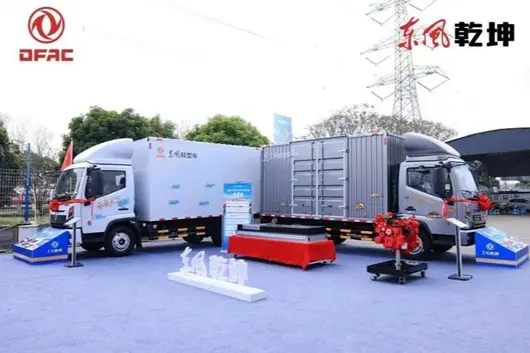
In the elimination phase of new energy vehicles, how can one survive? Leapmotor broke out of a sea of red competition and led far ahead. What does it rely on? Let's look at Leapmotor's "assets",The answer is actually just four words: Self-Research and Self-Manufacturing.
Leapmotor's half-year report is out -- revenue 38.11 billion reached a new high for the same period, net profit 210 million for three consecutive half-years, H1 global sales 356,000 units made it into the global new energy top four (BYD, Tesla, Geely, Leapmotor), and July became the first new force to exceed 100,000 deliveries in a single month.

Some believe that in today's highly mature supply chain, car companies don't need to manufacture everything themselves.
But the reality is that batteries, motors, and electronic controls account for over 50% of the total vehicle cost. If these lifelines are held by suppliers, car companies are left with only design space for the body and seats, essentially regressing into assembly plants. When the price war intensifies, car companies without self-research barriers won't even have the room to lower prices without considering suppliers' moods.

Among new forces, Leapmotor is not the only one that can achieve full-stack self-research, and all have achieved good results; Zeekr, Fangchengbao and other "factory second generations", supported by the R&D and manufacturing foundation of parent companies, start off just as fast.
The new energy track seems to compete on sales volume and visibility, but it is actually a contest of industry chain control. Those brands that are unwilling to put in the hard work in core links such as intelligent driving, intelligent cockpit, and three-electric systems, overly rely on external procurement, and only understand "opportunism", will find it increasingly difficult in the elimination round.
Leapmotor's Self-Research and Self-Manufacturing Results Begin to ShowLeapmotor's differentiation lies in it having truly made "self-research" a systematic cost control method. Zhu Jiangming explicitly stated in the internal letter for the 10th anniversary that Leapmotor's vehicle self-research and self-manufacturing ratio covers 65% of core component costs, with a final goal of over 80%.

Self-research and self-manufacturing is Leapmotor's solid foundation for "quality not expensive", not just a slogan. This is mainly reflected in several specific actions:
First is the platform integration of core components such as batteries and electric drives.
The three-electric systems, especially power batteries, account for a large portion of the total vehicle cost, so seeking profits from upstream is a required course for car companies. Leapmotor's approach is to accelerate full-stack self-research from cells to PACK; At the same time, for solutions like 800V silicon carbide high voltage, because the battery packs and core components like electric drives achieved self-research and platform unity, it was possible to "overnight" switch the entire C series and B series.
Without the foundation of self-research and self-manufacturing, this speed would be impossible.
Second is converting self-research advantages directly into price and configuration competitiveness.
For example, B01 and B10, bringing global 800V and 3C fast charging, AR-HUD configurations that were previously only available in the 200,000 yuan class directly to the 100,000 yuan class, relies on mass production of self-researched components reducing BOM costs.
A10 brought LiDAR and advanced intelligent driving into the 100,000 yuan range for the first time, with monthly sales near 30,000 units. It expands the path of scale efficiency together with the newly launched A05 starting at 63,900.
Against the backdrop of generally pressured industry vehicle profit margins,Leapmotor was still able to maintain a 12.6% gross margin, where vertical integration played a decisive role.
Zhu Jiangming summarized this model as "transferring 10% gross margin from the parts link to users, while the whole vehicle still maintains a healthy 14%-15% gross margin" -- core components held in one's own hands provide the confidence to offer concessions.
Third, this ability has begun to be exported externally.
On August 24, Leapmotor Automobile held a deepening strategic cooperation agreement signing ceremony with China FAW in Changchun. Both sides will carry out deep collaboration in fields such as new energy whole vehicles, intelligent assisted driving, powertrain, power batteries, intelligent chassis, and embodied intelligent robots.
In addition, overseas is also an important link. Leapmotor's H1 export volume reached 96,000 units, up 372.6% year-on-year, Europe has already deployed over 1,000 outlets. Leapmotor is leveraging Stellantis's overseas capacity to promote localization assembly and mass production in places like Malaysia, Spain, and Brazil.
Crossing over from an OEM to become a Tier 1 is itself an endorsement of technical strength.
Technology Reserves for the Next DecadeOf course, self-research is not omnipotent, and Leapmotor is also reviewing and improving its weaknesses. Regarding intelligent driving, although urban pilot assistance has been pushed to the entire series, there is still a gap compared to Huawei and XPeng's first-tier level.
This September's Annual Technology Conference, Leapmotor will release intelligent assisted drivingWorld Models that reach the industry's first-tier level, finally making up for this required course.
It will also releasea series of the latest technical achievements in the three-electric fieldto prepare for the next stage of advancement.
Closing RemarksIt is worth mentioning that Leapmotor's flagship SUV D19 sales in July also exceeded 10,000 units. Leapmotor, through the platformization of the ABCD series and a high proportion of self-research and self-manufacturing, has provided a development model for new energy car companies: players who can make self-research and self-manufacturing a moat have a higher chance of surviving in the elimination round.
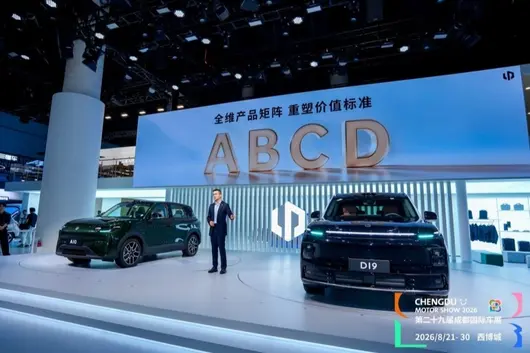

August 17, HKEX issued a notice: Li Shufu stepped down as Chairman of Geely Automobile Board of Directors, An Conghui officially took over, effective August 18.
News broke, industry shook. But this is not retirement and giving up power; it is the founder retiring after achieving success and professional managers fully taking over, the most thorough reform of private automakers "de-familialization". However, for Li Shufu who built the Geely business empire in the industry for decades, why let go now? Will An Conghui taking over cause changes in Geely's New Energy second half?

The Li Shufu Era: A Legendary M&A History, From Grassroots Car Maker to Global Giant
Li Shufu's decades in charge of Geely was a path to glory for a grassroots car maker. Starting from private car manufacturing, breaking foreign joint venture monopolies, forcing a path for Chinese automakers' globalization. He was the founder, M&A maniac, and the absolute creator of the Geely Empire.
$1.8 billion acquisition of Volvo was Li Shufu's most legendary move. The "snake swallowing an elephant" deal that was ridiculed by the public back then is now the most successful overseas M&A for Chinese automakers. This deal directly filled Geely's safety, chassis, and manufacturing system technology, thoroughly getting rid of low-end cheap labels, and obtaining the entry ticket for global high-end car manufacturing.

Furthermore, acquired Lotus core technology and brand assets,守住 the performance sports car track; held controlling stakes in Malaysia Proton, opening up Southeast Asian overseas markets, perfecting the global map. In 2018, invested heavily to enter Daimler, becoming the largest single shareholder, connecting industry top resources, raising Geely's global industry voice.
In technical infrastructure, Li Shufu was also not soft-handed. Built CEVT China-Europe Technology Center, CMA architecture, SEA浩瀚 Pure Electric Architecture, transformed from "assembly car maker" to an independent top brand with self-developed core technology, completing the foundation paving from fuel to New Energy.
Li Shufu was good at cross-border M&A, territory expansion, strategic gambles, helping Geely complete the leap from zero to global top-tier automakers. This was the era of building the land.

The An Conghui Era: Not Playing Capital M&A, Bearing the New Energy Second Half
Who is An Conghui? Core veteran following Li Shufu for many years, not playing capital M&A, focusing on product, operations, landing, New Energy transition pragmatic.
He was not interested in capital M&A and industry hype, always rooted in product, market, user and system construction, was the core operator of Geely's New Energy transition. This takeover was the inevitable result of industry accumulation and strength precipitation.

An Conghui's steering ability had already been verified by market performance. He single-handedly built the Lynk & Co brand, breaking the "domestic high-end must have fierce competition, must have slow sales" industry curse. Not relying on low-price competition, relying on extreme product quality, young user operations, global development thinking,站稳 the domestic high-end fuel car track, becoming the benchmark for domestic high-end brands.
Under the New Energy transition wave, An Conghui took the lead again, incubated Zeekr brand. From Zeekr 001 breakout hot sales, to full series model iteration upgrade, matrix perfect, Zeekr successfully entered the high-end pure electric track, facing new forces and joint venture New Energy brand competition, becoming Geely's New Energy rising core main force.
More rare is, An Conghui is also one of the few managers in the industry who truly understand users and are willing to guarantee users. In the early stage of the industry, New Energy models generally had problems of fast infotainment hardware iteration and old owner experience shrinking, most car companies chose paid upgrades or ignored.

Under his leadership decision, Zeekr officially announced in 2022, for the first batch of Zeekr 001 old owners full free upgrade Qualcomm 8155 infotainment chip assembly, entire upgrade enterprise investment over 300 million yuan, not charging users any hardware and installation fees. At that time's high-end New Energy market, this disregard for short-term costs, prioritizing old owner rights practice, broke industry convention, both filled model intelligence gaps, and also accumulated solid user reputation for the brand, fully showing long-term operation thinking.
In addition, An Conghui long-term led Geely internal system innovation, promoting model refined iteration, vehicle quality control comprehensive upgrade, New Energy strategy landing. Changed Li Shufu's built massive industrial empire from "scale expansion" to "refined operations", letting Geely's every transformation fit market demand, fit user pain points.
Two generations of leaders' handover, essentially was track switch, past relied on strategic expansion to set pattern, now relied on product strength to decide win or lose.

Conclusion: Not a Power Shift, but a Precise Era Handover
For this commander change, I think the most controversial point for outsiders is, Li Shufu stepping down equates to Geely giving up power, going downhill? The fact is, this is just listed company management handover, Li Shufu still holds Geely Group, controlling top-level strategy, belongs to "retired but not resting, behind-the-scenes steering".
Industry contradiction is, old generation car making big shots good at capital expansion, new generation professional managers must face fierce competition. Past relied on M&A to expand map, now relied on product, cost-performance, New Energy, intelligence to fight close combat, era track completely changed.
Final conclusion is clear, that is Li Shufu completed China's auto hardest zero to global foundation, famous and successful, perfect conclusion. An Conghui succeeding, marked Geely officially said goodbye to "wild expansion capital era", entered "product king, New Energy deciding, refined competition" new era.

This is not a power shift, it is a precise era handover, people of the founding land retired, guarding the land, winning second half people took the stage. From our perspective, future Geely's biggest highlight no longer relies on M&A breakout, but watching Zeekr, Galaxy whether can withstand BYD, new forces competition, truly站稳 domestic New Energy first tier.
Do you think, saying goodbye to Li Shufu frenzy expansion era, An Conghui can lead Geely to win New Energy competition war?
Back then, not only was the replacement of new cars slow, but car manufacturing was also very "slow".
In the fuel car era, this may have sacrificed efficiency, but brought quality. In recent years, fierce market competition in the electrification era has forced more and more brands to join the ranks of making "quick-assembly cars", but just in such a frenzied atmosphere, a "global slow car" has arrived.

On August 12, Chery Fengyun T7 officially started pre-sales, with a pre-sale price of 109,900 - 129,900 RMB. This new car went through 2 years of planning, 3 years of R&D, began preliminary research from 2022, and was polished for nearly 5 years.
So, what exactly did Fengyun T7 do during these 5 years?
Visited users in over 5,000 cases across multiple countries globally, creating a great car adapted for global needs
First, one point that needs to be clarified is that Fengyun T7 is a "Global Car".
What is a "Global Car"? A "Global Car" is born for the global market, targeting the global market from the planning stage.
Therefore, before truly starting the R&D phase of a global car, there needs to be a "pre-procedure" — visiting countries around the world, looking at consumers' driving habits worldwide, and understanding what standards each country's regulations and policies are.
During the 5 years of polishing Fengyun T7, Chery Motors completed over 5,000 global user surveys, conducted in-depth visits to 15 typical countries, and wrote down the pain points of global users one by one into the product framework.

Therefore, every detail of Fengyun T7 reflects considerations for different global road conditions, climates, and usage habits. For example, you will find some functions that rarely appear on domestic models, but are actually very useful.
For example, Fengyun T7 uses 4 riveted rings with a load-bearing capacity of 300kg. This is a design common in European cars, used to secure cargo or luggage to ensure items do not slide during high-speed driving or sharp turns.
Furthermore, the use of reflective materials on the center console has been reduced to avoid glare produced by direct summer sunlight, which is very friendly to users living in high-altitude areas, the south, and overseas high-light intensity areas. Meanwhile, a series of parts such as paint surface, interior leather, sealing strips, plastic parts, etc., have all undergone rigorous weather resistance testing, achieving a balance between refinement and durability.

There are also details such as adjusting steering torque to suit Thai right-hand drive preferences for a heavier feel; strengthening steering feel and optimizing return quality for bumpy roads in Indonesia; retaining physical buttons for high-frequency functions for Turkish/Israeli users who prefer hard switches; and designing a central top eyewear box for Australia/New Zealand/South Africa/Southeast Asia users who often wear sunglasses.
In addition, Fengyun T7's styling can also adapt to global aesthetics. After integrating the wisdom of global user co-creation, it was created jointly by the top 10 global design centers and top foreign designer teams, taking into account aesthetic preferences of different regions such as China, Europe/Americas, Southeast Asia, and the Middle East, and at the same time completed a wave of cultural output under the name of "Eastern Aesthetics". Previously, its homologous model Lepas L6 debuted at the Milan Design Week and received consistent praise.

In terms of safety, the vehicle fully benchmarks the 2026 version of E-NCAP 5-star safety design. Functional safety ASIL-D reaches a high level. The body structure uses high-strength steel and hot-formed steel accounting for over 80%. Critical parts are reinforced with 1500MPa class hot-formed steel, forming a "mobile safety fortress". Design optimizations such as shotgun structure, dual frame subframe + Pack crash beam can effectively absorb and disperse collision energy, providing double protection for the battery pack and occupant compartment. In addition, 9 airbags are installed inside the vehicle, effectively reducing secondary collision injuries during a crash.
81 road test vehicles / million km verification, leaving problems before mass production
Before listing domestically, Fengyun T7 was already listed in South Africa and Thailand, ran a circuit in the overseas market for market verification, and then started the pace of listing in China. August in Indonesia; September in EU; October in Australia/New Zealand, UK, Israel, Malaysia. It will continue to promote the pace of overseas listing in the future.
Before entering the listing pace, Fengyun T7 underwent full quality polishing on a global scale.
One point that needs to be clarified is that Chery not only possesses nearly 30 years of automobile manufacturing experience, but has also been ranked first in Chinese brand passenger car exports for 23 consecutive years, with products exported to over 130 countries and regions worldwide.

Currently, Chery's global users have exceeded 20 million. Therefore, Chery not only knows what global users want, but also knows what processes a car needs to go through to truly provide a relatively comprehensive quality guarantee in a real sense. In the past, Chery has fully built a global R&D, global standards, global verification, and global quality integrated car-making system.
Before Fengyun T7 officially went off the assembly line, this car also ran through the tropical extremely humid environment of Southeast Asia. It achieved 500mm off-road waterproofing capability, far exceeding the national standard immersion height of 150mm. It also optimized the air conditioning filter to prevent mold and odors in high-humidity areas. It also ran through the Nordic extremely cold environment and brought a dual-source wide temperature range heat pump + PTC that can operate stably at -30°C and heat up to 23°C within 20 minutes in a -20°C environment. For bumpy road conditions such as gravel roads in Brazil, additional battery front and rear beam protection was added to adapt to overseas complex road conditions.

All in all, Fengyun T7 invested up to 81 exclusive durability vehicles for synchronized road tests, with a total accumulated test mileage of over 6 million kilometers, of which durability special tests were 1.45 million kilometers. It can cover 100+ extreme road conditions environments such as EU, Australia/New Zealand, Middle East, South Africa, Russia, Mexico, Brazil, etc.
This series of rigorous tests and verifications covering different road conditions, environments, altitudes, temperatures, and humidity levels, try their best to discover and solve problems during the testing phase. What is delivered into the hands of users is a reliable, high-quality vehicle that is safe and worry-free to drive.
Six major essentials one step done, easy to drive, fun, and long range
As a car product created through global user co-creation, one of the major features of Fengyun T7 is comprehensive capability.
Being able to meet the six major core essentials of range, safety, intelligence, comfort, driving control, and appearance in one step, it is one of the few car products in this segment level that requires users to make too many compromises.

Appearance meets global aesthetics, safety benchmarks global rigorous standards, and comfortable space meets the seating needs of tall European passengers. In dimensions such as intelligence, driving control, and range, it also has good performance.
In the intelligence dimension, Fengyun T7 is equipped with a 15.6-inch central control screen + 8.8-inch instrument cluster, creating a good cabin technology atmosphere. It is built with a 4nm cockpit-driving integrated 8775 chip, bringing a more fluid interactive experience. Based on 6 personalities of Xiao Qi chat, besides conventional voice control, it can also practice spoken language and accompany chatting, bringing more intelligent and convenient experiences. In addition, CarPlay, HiCar, and CarLink connectivity are also arranged.
In terms of intelligent driving assistance, based on the 3R7V12U hardware solution, the Falcon 500 driving assistance system is equipped, supporting city pilot, and automatic parking functions covering over 300 scenarios + 2km floor-crossing memory parking, which can effectively reduce the burden for drivers.

In terms of driving control, it is equipped with a motor with maximum power 178kW and maximum torque 275N·m, which can meet the power requirements of most scenarios. It combines a 50.8:49.2 golden axle load ratio, 70mm large-sized bushings, One-Box wire control braking system, driving is more stable, braking is faster, lateral inclination suppression is sufficient. The chassis also has an international chassis team led by former Maserati chassis tuning experts for targeted tuning, bringing a better driving experience.
In terms of range, the new car is standard with a 65.05kWh Rhinoceros battery pack, CLTC pure electric range 600km, actual test range 667+km. Charging once every 2 weeks can meet urban commuting travel needs.

In terms of charging, it can charge the battery from 30% to 80% in 20 minutes. And the battery can work normally in -40°C to 60°C. Northern users can drive with confidence in winter.
Final Thoughts:
In the New Energy era, new brands continue to emerge, and market competition intensifies. To adapt to the market pace, quick-assembly models emerge endlessly, but long-term reliable travel quality can never be quickened.
With Chery's 20-plus years of manufacturing experience and global system as the background, Fengyun T7 was carefully polished for 5 years before presenting the final product. It has reliable quality, while also combining high appearance, high safety, high intelligence, large space, excellent driving control, and long range. It is a truly global, all-electric good car that can adapt to global family users.
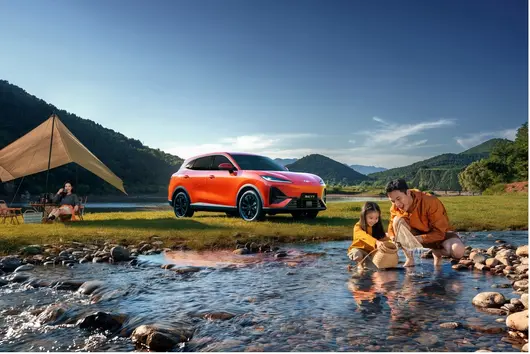


A toy costing a few yuan triggered a huge storm in late July.
The incident started when a blogger made a bamboo cicada for his daughter, filmed a nostalgic video for the post-80s and 90s generations. Netizens, hearing the "wa wa" sound when shaking the "bamboo cicada", were reminded of Richard Yu's amazed comments on new products at launch events.
Some people made funny videos, paired with captions like "The best toy within 10 million". The videos were mass reported by Huawei Terminal and taken down. Netizens' rebellious emotions were ignited.
"The best toy within 10 million", seemingly a joke, is actually a deconstruction of the AITO M9 promotional slogan. That is, through this joking method, make "The best car within 10 million" completely become a joke.
Huawei's fierce reaction exceeded public expectations, revealing the cruelty of the current car market from the side.
In July, domestic new energy vehicles were still galloping, but under the gallop, another situation was gradually emerging.
Half Joy, Half Concern
The polarization that started in April has greatly deepened by July.
In July, divided by 90,000, car companies were divided into two clear camps. The first tier kept climbing. BYD, SAIC, Geely, Chery, Leapmotor, Changan, six car companies, all achieved year-on-year growth, and month-on-month fluctuation only appeared in SAIC and Geely.
The second tier seemed firmly locked at 40,000 monthly sales. NIO, XPeng, Li Auto, AITO, Hyper, Aion are all like this. These car companies, in July, most did not achieve both year-on-year and month-on-month growth. Especially compared to June, only Hyper Aion saw month-on-month growth.

There is a huge gap between the two tiers. The 6th place Changan is more than twice the 7th place HarmonyOS Intelligent Vehicle, and January-July sales volume reached 3 times. The second tier catching up to the first tier has already become very difficult.
The median and mean further verify this polarization trend. Among the 15 car companies or brands currently announced, the median is 38,027 units, with year-on-year and month-on-year declines of 6% and 15% respectively.
The mean is basically flat with June, with year-on-year growth reaching 28%. Mean growth means overall sales are still increasing. Median decline means car companies in the middle of sales are facing challenges. In other words, the incremental sales were all eaten up by the first tier.
If in the early stage of industry development this is not a problem, but at this stage, for the second tier car companies, days are becoming very difficult.
4 Brands Monthly Sales Break 100,000
Among the 29 brands with announced sales for July, 22 brands achieved monthly sales over 10,000.
Brands that did not exceed 10,000 monthly sales also include BYD Yangwang, Jishi Motors, NIO Firefly, etc. These brands are either special price segment brands, niche models, or new brands, currently in the production capacity climb stage. Excluding these brands, monthly sales over 10,000 is already the basic threshold for sitting at the table, and competition difficulty is increasing.
Among the 22 brands with monthly sales over 10,000, 4 have already broken 100,000 monthly sales. Besides the strong BYD Dynasty and Ocean series, and Geely Galaxy series, Leapmotor became a new member, and Leapmotor is the first new EV maker to break 100,000 monthly sales.
In the below 100,000 yuan price range, there are 11 brands with monthly sales over 100,000. Among them, BYD Fang Cheng Bao sales volume broke 40,000. But it can also be seen that the gap between the two tiers is huge, and brand sales also present extreme polarization. Among numerous brands, breaking through to create a hit is becoming increasingly unlikely.

Under horizontal competition, breaking out becomes more difficult. Vertical achievement of own strategy might bring some comfort, but the reality is, more than half of 2026 has passed, and most car companies' sales target achievement status has not yet broken 50%.
Among car companies that announced annual sales targets, Zeekr's progress is far ahead, completing 71% of the annual target in 7 months. The Galaxy series is also strong, having completed 63%.
Progress on targets for other car companies has not exceeded half, and pressure to sprint for annual targets remains huge. NIO's sales target is relatively small, currently completed 48%. Leapmotor showed bright performance, but the million-unit sales target is large, and the difficulty of completion is high.
Xiaomi's production capacity seems still unable to further improve, maintaining around 30,000 units for 4 consecutive months. To complete the 2026 annual 550,000 unit delivery target, it needs to wait for further production capacity pull-up.

From sales performance, it can be seen that the Matthew effect is very obvious. Whether car companies or sub-brands under car companies, polarization is obvious, and the gap between the two tiers is huge.
Continuation of this situation makes survival status increasingly poor for car companies with weak sales growth.
At the current stage, car company costs are continuously increasing. Seres founder Zhang Xinghai previously gave detailed data. Storage chip price increase rose up to 5 times, lithium carbonate price climbed from 80,000 yuan/ton to 180,000 yuan/ton last August. Dual raw material price increase directly led to AITO single car manufacturing cost increase of 15,000 to 20,000 yuan. Under this situation, profits of most car companies are squeezed significantly.
Data from CPCA shows that January-June auto industry profit margin is 3.8%, downstream industrial enterprise profit margin is 6.5%. Auto industry is obviously still relatively low.
Closing in on Q2 financial report season, many car companies disclosed profit forecasts. The second-tier Seres, GAC, BAIC BluePark all showed losses. Among them, GAC expected loss 4.06-4.57 billion yuan, BAIC BluePark expected loss 1.795-1.995 billion yuan, Seres expected loss 1.5-1.8 billion yuan.
Price reduction means further profit pressure, which might directly threaten operational stability.
Moreover, even with price reduction, it does not equal sales growth. On one hand, the incremental era is heading towards its end.
"Oil-Electricity Equal Rights" curtain opens. Starting from January 1, 2027, energy saving cars half levy car and vessel tax policy, and pure electric commercial vehicles, plug-in (including extended range) hybrid cars, fuel cell commercial vehicles car and vessel tax exemption will be cancelled. This means, the new energy vehicle car and vessel tax preferential policy implemented for 15 years officially enters withdrawal countdown.
Preferential policy cancellation will also cause consumption willingness to slide, and car companies' incremental space will further shrink.
On the other hand, the market is already very internalized, everyone is reducing prices in disguise. Car companies are not conducting price wars on the surface, but secretly all lowering prices and increasing configurations. Data from CPCA shows that January-June, new energy vehicle new car discounted model average price 247,000 yuan discount force arithmetic average reached 30,000 yuan, discount force reached 12%.
Technical innovation is not necessarily a panacea. An innovative product design will quickly become a standard. Relying on one technology or product design to gain excessive market returns has become very difficult.
Under this situation, many car companies' stock prices continue to fall, and car companies have to buy back to maintain stock prices.
SAIC Group announced controlling shareholder promises not to reduce shares held in any way within 6 months. Seres has already bought back 8.9755 million shares, using fund total 587 million yuan. JAC Motors has already bought back 1.5467 million shares, using fund total 34.9948 million yuan.
Under this cruel situation, car companies' survival status is not good, and seeking overseas growth has also become a must-have option.
Going Overseas: New Forces Set Sail
Overseas markets are still led by traditional car companies.
Chery is still the navigator among overseas car companies, and growth momentum is very fierce. According to listed company caliber, Chery July overseas sales 196,300 units, has achieved "walking on two legs". This sales volume is 5th consecutive month breaking historical high.
BYD is closely chasing, July overseas sales 179,800 units, 4th consecutive month breaking historical high, consecutive 9 months sales breakthrough 100,000 units. If only looking at new energy vehicles, BYD might have already led.
In July, BYD Brazil factory 100,000th new energy vehicle officially rolled off production line, factory on-job employee scale reached 5,500 people. Denza's first hypercar listed in UK, Denza Z starting price 1.3 million yuan, global pre-sale orders over 1,000 units. BYD new energy vehicles in Thailand market cumulative delivery volume officially broke 130,000 units.
Currently, BYD is strengthening global influence. The group reached global strategic cooperation relationship with Paris Saint-Germain Football Club (PSG). Both sides will promote cooperation landing through global communication activities, fan interaction forms, etc.
Geely although not rapid growth, also broke 100,000 units for 2 consecutive months, 7th consecutive month breaking historical high. This is a very strong performance. In addition, Great Wall also created new high for 4 consecutive months.
Although SAIC failed to break new high, it has also been stabilizing monthly sales over 100,000 units for consecutive 5 months.

Say, traditional car companies are ushering in a comprehensive explosion in overseas markets. To a certain extent, this can alleviate the tight domestic state.
New forces also saw huge potential in overseas markets. Since this year, car companies such as NIO, XPeng, Li Auto have obviously accelerated overseas layout actions.
XPeng announced its Australia long-term strategy, planning to introduce XPeng high-level intelligent assisted driving locally in 2027. In addition, XPeng Australia New Zealand subsidiary will launch 5 new models within 6 months, and plans to layout 3 flagship tech experience centers and 50 outlets in Australia.
Besides Australia, XPeng also held Mona L03 launch event in Munich, Germany. Planned to land in 65 countries and regions this year, expanding XPeng Group international product lineup.
Li Auto cooperated with Kazakhstan local car group Allur to reach strategic cooperation, will utilize Allur Kostanai factory to start local assembly production. All new Li Auto L9 also listed in Kazakhstan in July, pricing far exceeded domestic.
Leapmotor B10 completed Mexico localization certification, officially landed local market and started delivery, opening North American market expansion process. Currently, Leapmotor B10 has entered Mexico local stores. Leapmotor C10, C16 will also gradually enter market.
Overseas competition has become the only way for car companies. In the stage where domestic market polarization is obvious and market pattern gradually stabilizes, overseas vast markets may become the key to the next stop for car companies.
Xiaomi Overturns Table, Volume Models Released Dense
July is not a big month for product launches. Many car companies put volume models into July launches.
This month's highlight is Xiaomi.
On the night of July 30, Xiaomi Pengcheng held a technical launch event, releasing 2 new cars. Equipped with Xiaomi self-developed Kunlun Extended Range Engine, fuel compatibility performance is broad, can add 92, 95, 98 different grade gasoline. Under WLTC working conditions, Pengcheng N70 lowest fuel consumption is 5.7L/100km, CLTC pure electric range highest can reach 505km, full oil full electricity comprehensive range all break 1,500km.
Lei Jun also focused introduced rear row variable diverse cockpit scene, seats support front row 180° rotation, second row horizontal movement.
The most explosive is price. N90 Max pre-sale price 299,900 yuan, N70 Max pre-sale price 259,900 yuan. Two new cars will be officially launched in September. According to usual laws, new cars might further lower prices. This means, this 9-series full-size SUV has been pressed to within 300,000 yuan by Xiaomi. For AITO M9, Li Auto L9, Zeekr 9x, NIO ES9 and other competitors, it might be a considerable shock.

However, some netizens questioned, new cars put 400V platform on 300,000 class flagship models, no rear wheel steering, no steer-by-wire chassis, battery supplier downgrade, electric drive and intelligent driving hardware intentionally diluted in launch event. But from current market reaction view, Xiaomi Pengcheng will likely give this already very fierce market, add another layer of fire.
Except Xiaomi, other hot car companies also released volume models.
NIO series Firefly announced, Halo Xunguang series first model "Habitat" officially launched, whole vehicle price starting at 133,300 yuan.
XPeng MONA L03 launched 9 models in China market, price 123,800 to 156,800 yuan. L03 positioning compact SUV, providing pure electric and extended range two power.
Leapmotor new B series officially launched. B10 positioning pure electric compact SUV, B01 positioning pure electric compact sedan. Full series standard equip Qualcomm SA8295P chip, all-domain 800V SiC high pressure system + 3C fast charge etc. B10 price starting at 99,800 yuan, B01 price starting at 95,800 yuan.
New generation Li Auto L6 officially launched, only providing Ultra one version, national unified retail price 249,800 yuan.
Traditional car company aspect, Geely series Lynk & Co 07GT officially launched, releasing 4 models. Geely Galaxy TT Ultra officially opened pre-sale, new car positioning pure electric mid-large sedan, Ultra is high config version, later will also supplement price lower models. Zeekr 9X 5-seat version officially launched.
Dongfeng series Voyah Pursuit Light S published quad drive top config model, pre-sale price 309,900 yuan. Later will also supplement long range rear drive version and standard range version. New car positioning pure electric mid-large SUV, product orientation more lean towards young and sports.
BYD Ocean network series Seal 08 officially launched, new car releasing 6 configurations.
Time enters Q3, car companies' second half year sprint is about to open curtain. Considering relevant subsidies start reducing, this half year will be manufacturers' last timing to sprint sales.
Fighting for "Domestic BBA"
"NIO, XPeng, Li Auto" these three new forces sales comparison is becoming meaningless.
On one hand, Leapmotor's sudden appearance, made three car companies become the second game of competitive new forces. On the other hand, XPeng, NIO layout in low price segment, three new forces are no longer mid-high end, luxury car sales direct comparison.
First half year, Li Auto, AITO, NIO, Zeekr, launched fierce battle in full-size SUV, 400,000 yuan above luxury car price segment. These four car companies are currently accelerating grabbing BBA customers.

This trend started with Li Auto L9. Relying on precise grasp of dad and baby family demands, Li Auto car first tested the water. From June 2022 first unit delivery to June 2026, Li Auto L9 completed 300,000 units cumulative delivery in 4 years. Early, Li Auto could rely on one model to hard resist NIO, XPeng. Precise layout on dad market was key.
AITO pushed this market to climax. September 2023, AITO M9 suddenly appeared, 100,000 units sold in a year, consecutive 21 months toping 500,000 yuan above luxury car sales first place.
Before a few years, relying on early layout, intelligent driving and cockpit field leading, AITO and Li Auto enjoyed market dividends. But market pattern will not remain unchanged. AITO M9 and Li Auto L9 lead advantage will soon be caught up.
Zeekr's success comes from 9X and 8X success. Since listing on September 29, 2025, 9X in China 500,000 yuan class high-end SUV market segment, has been toping sales list for 7 consecutive months. This May, Zeekr 8X sales 6,103 units, grabbing transaction average price 300,000-500,000 yuan interval hybrid SUV sales first place.
NIO is following slowly, ES8 and ES9 launched successively. NIO's advantage lies in its battery swap products. Through BaaS rent power mode, NIO pressed ES9 starting price to within 400,000 yuan. July, NIO ES9 also achieved good sales. New ES8 reached 130,000th unit delivery in 305 days. NIO ES9 since May 28 started delivery, 30 days delivery broke 10,000 units, refreshed 500,000 yuan above high-end pure electric vehicle fastest delivery record.
From sales view, in mid-high end and luxury car price segment, July, Zeekr ran to front. Li Auto, AITO, NIO main brands closely chasing. These four car companies' current difference is not big.
Which of these four will be Domestic BBA, or whether these four can all be Domestic BBA, has become more interesting to watch.
Volume Sales, Difficulties All Over
Compared to mid-high end struggle, price reduction seems the simplest option for new forces.
XPeng exiting Mona series, NIO launching Onvo series, Firefly series, are all precise snipers to sales.
But from result side, mass consumer market is not a market where you take what you want. Even positioning mid-high end, does not mean these car companies can use low price to snatch other car companies' shares.
Taking NIO as example, it launched 100,000-200,000 yuan price segment Onvo brand, 100,000 yuan below Firefly brand. But until July, Onvo contribution sales was 10,155 units. Stable above 10,000 units for 3 consecutive months, but recent 2 months month-on-month both showed decline. Firefly similarly struggled to start, until now failed to break monthly sales of 10,000.
XPeng did not announce Mona series contribution sales, but from XPeng's overall sales view, still did not break 40,000 units threshold. Therefore, low price might relieve sales pressure in short term, substantial sales changes still need long process.
This point is also reflected in Hyper Aion traditional car company brand merchants. Once, Aion sales exceeded NIO, XPeng, Li Auto. But in current stage development, gradually lost speed. July sales 34,987 units, still in flat state.
This point Geely and Leapmotor performed better. Leapmotor does not rely on brand, but is truly high price low config. July, Leapmotor sales first time stood on 100,000 units, consecutive 4th month sales creating historical high, throwing other new forces far behind.
Geely Galaxy is also embodiment of product power. Focusing on friendly commute, home rigid demand, focusing on high cost-performance, low usage cost and reliable quality. July sales 107,800 units, consecutive 2nd month breaking 100,000, becoming a strong challenger to BYD.

Mass consumer market, brand is perhaps not the most important factor, higher cost-performance, more reliable product experience.
Xiaomi, HarmonyOS: Internet Car Companies Growth Troubles
Xiaomi and Huawei are both facing their own troubles.
July, Xiaomi sales still stopped around 30,000 units. This of course relates to production capacity. But in December last year, Xiaomi's production capacity was once pulled to 50,000 units, and once consecutive 3 months broke 40,000 units. Now Xiaomi still controls production capacity at 30,000 units, still not well digesting orders. Since this year, Xiaomi's stock price has fallen 30% from peak period, huge pressure.
Same situation HarmonyOS Intelligent Vehicle also encountered. July, HarmonyOS Intelligent Vehicle sales 45,046 units. After May 20,000 in June, it dropped back to 40,000. This is far from the limit of HarmonyOS Intelligent Vehicle. In recent years, HarmonyOS Intelligent Vehicle's "friends circle" continuously expanded. Now there are already "Five Worlds Three Realms", but at current stage, this ecosystem performance is not optimistic.
AITO needs not say. AITO-led Seres car sales only 20,480 units. Sales returned to March water level. Ambitious Luxeed, started delivery in May, until July barely reached 20,000 unit delivery. Stelato cooperating with Chery, finally broke 10,000 this month, reached 10,709 units, but still did not break new high.
Under low sales momentum, cost cooperating with Huawei is becoming prominent. In 2025, Seres paid Huawei over 20 billion yuan procurement fee. These rigid cost expenditures are increasingly eye-catching under current situation.
July, Seres released Q2 loss warning. Among them, AITO car 2026 half-year deduct non-net loss reached 1.7-1.95 billion yuan. HarmonyOS insists on high-end route. Under normal conditions, car companies' profit margin has guarantee. But with supply chain price rise, car company competition intensifies, enterprises on HarmonyOS industry chain face operation pressure.
Facing current situation, Xiaomi gave solution. Launching extended range brand Pengcheng, opening sales again through new products. However, this heat maintained through freshness will eventually return to calm. Xiaomi and Huawei have walked through dividend period. Need stronger product power.
Fierce competition is indeed the current reality of new energy car companies. For many car companies, this is a difficult cycle. But continuously evolving Chinese car companies are comprehensively realizing overtaking on the curve.
Chinese car companies' difficulty is the difficulty of walking uphill. Compared to this, since this year, traditional luxury car three giants BBA (Mercedes-Benz, BMW, Audi) collectively reduced prices. Japanese car companies three strong (Honda, Toyota, Nissan) first half year China sales collectively declined. Among them Honda year-on-year declined 34.7%. Under big trend, Chinese car companies are grabbing territory of old forces, grabbing era opportunity. Need technology and experience more surpassing the era. This is a process. This difficult situation will eventually gradually be overcome.


Chery Group July new energy vehicle sales hit a new high again, reaching 129,067 units, with a year-on-year increase of 97.5%, approaching a doubling. From January to July, Chery Group cumulatively sold 604,305 new energy vehicles, a year-on-year increase of 42.3%, breaking 100,000 units in a single month for four consecutive months. According to data released by the China Passenger Car Association, Chery has ranked in the top three in the industry for new energy wholesale volume for four consecutive months.

Scaled development enters a boom period, ranking in the top three in the industry for wholesale volume for four consecutive months
From stabilizing at 100,000 units to successively breaking through 110,000 and 120,000 units, and then approaching 130,000 units, Chery Group new energy vehicles maintain high-speed growth, and scaled development has entered a boom period. So far this year, Chery Group has cumulatively sold over 604,000 new energy vehicles.
According to the July passenger car main manufacturer new energy wholesale volume sales bulletin released by the China Passenger Car Association, Chery ranked third in the industry. Thus far, Chery has ranked in the top three in the industry for new energy wholesale volume for four consecutive months this year.
New energy transformation accelerates, domestic penetration rate exceeds 60%
New energy has become a new label for Chery Group. In July, Chery Group's total sales were 276,820 units, of which new energy vehicle sales were 129,067 units, and the overall new energy penetration rate steadily climbed to 46.6%.
New energy is already the absolute main force of Chery Group in the domestic market. In July, Chery Group's domestic new energy sales were 46,044 units, with a new energy penetration rate of 62.0%. For every three vehicles sold by Chery Group in the domestic market, two are new energy.

Figure: Fengyun A9

Figure: New QQ3
New energy is also an important growth pole for Chery Group's expansion into overseas markets. From January to July, Chery Group's new energy exports grew by 175.7% year-on-year, more than double the overall export growth rate. In the first half of the year, Chery sold 86,000 new energy vehicles in Europe, a year-on-year increase of 385%, accounting for about half of the sales in Europe, meaning Chery's new energy penetration rate in Europe is already around 50%.
Hit product matrix formed, winning global user love
More and more global users are choosing Chinese new energy products, choosing Chery new energy vehicles. Chery has currently formed a new energy hit product matrix both domestically and overseas:
In the domestic market, the new QQ3 broke 10,000 sales for four consecutive months; Fengyun A9 pre-orders exceeded 31,000 units in 15 days; iCAR V27 firmly held the monthly sales champion in the 200,000-level extended-range SUV segment; the high-end new energy MPV Luxeed V9 delivered over 10,000 units in a single month.
In the overseas market, JAECOO 7 topped the UK monthly all-market sales first place, JAECOO 5 was the champion in the Australian BEV small SUV market, Indonesian and Thai BEV markets, iCAR V23 took the first place in the box-style SUV sub-segments in South Africa, Thailand, and Nepal.

Luxeed V9 single-month delivery exceeded 10,000 units

Figure: JAECOO 7 New Energy Vehicle Model
Consolidating the "Battery Pillar", building a strong new energy safety and charging foundation
The dual growth of sales and penetration rates cannot be separated from the continuous breakthrough of new energy core technologies. Chery's "Battery Pillar" is being continuously consolidated. Currently, Chery's battery layout covers two material systems: ternary lithium and lithium iron phosphate, three cell structures: short blade, prismatic, and large cylindrical, and three product series: dedicated hybrid, dedicated pure electric, and dedicated solid-state. Chery's Rhino solid-state battery cell energy density has reached 400Wh/kg, aiming for 600Wh/kg. By the end of 2025, Chery Rhino battery-equipped vehicles have cumulatively driven over 1.2 billion kilometers, with the highest single vehicle at 160,000 kilometers, delivering a market report of "0 spontaneous combustion, 0 battery safety incidents".
Chery has won continuous authoritative recognition in the battery safety field. In July, at the National New Energy Power Battery Safety Warning Algorithm Competition hosted by the Technical Innovation Center of the State Administration for Market Regulation, Chery Group won three first prizes in both ternary lithium and lithium iron phosphate tracks; meanwhile, it passed the industry's first six-vehicle major serial extreme tests implemented by the China Automotive Technology and Research Center, verifying safety capabilities in extreme environments.

Figure: Fengyun A9 undergoing whole-vehicle six major serial extreme tests
Battery safety is the bottom line, while charging efficiency is key to user experience. Chery's "Xunlong Instant Charge" energy technology is promoting the transformation of new energy vehicles from transportation tools to mobile energy nodes; Rhino batteries support charging for 8 minutes with a range of 500 kilometers, ready to set off after a cup of coffee. Chery plans to build over 20,000 charging stations supporting V2G functionality before 2029.
From ranking in the top three in the industry for new energy wholesale volume for four consecutive months to domestic penetration rate exceeding 60%; from a complete hit product matrix both domestically and overseas to continuous battery technology breakthroughs, Chery Group is entering the fast lane of brand elevation with a high-quality new energy transformation.