


首頁Mini Cooper R56

搜尋歷史
熱門搜尋
經銷商登入 / 註冊


10 月份,传统车企和汽车新势力之间的交付量差距进一步扩大。
比亚迪比亚迪10月份新能源车销量为490,168辆,同比增长10.97%,环比增长5.74%,创下年内单月最高销量纪录。这是比亚迪10月份连续第六个月实现同比增长,也是连续第八个月实现增长。
纯电动乘用车销量达305,743辆,同比增长37.38%,首次突破30万辆大关,并连续第三个月创下纪录。插电式混合动力乘用车销量总计177,382辆,同比下降17.23%,连续第二个月出现下滑。
比亚迪10月份新能源车出口量为170194辆,同比增长102.84%,但环比下降5.81%。在中国市场,新能源车销量为319974辆,同比下降10.57%,但环比增长13.12%。
今年前10个月,新能源车销量为3,621,744辆,同比下降2.16%,降幅较前9个月的3.94%有所收窄。出口量增长93.75%至1,513,154辆,而国内销量下降27.81%至2,108,590辆。
吉利吉利10月销量达310,183辆,同比增长0.99%,环比增长6.17%,连续第三个月创下年内新高。这是该公司有史以来第二高的月度销量,仅比去年11月创下的纪录少245辆。
10月份新能源车销量同比增长20.86%,达到214,996辆,首次突破20万辆大关,占总销量的69%,创历史新高。纯电车销量增长43%,达到140,758辆,而混动销量下降6.66%,至74,238辆。
10月份出口量依然强劲,达到107153辆,同比增长157.78%,环比增长0.44%。中国市场销量总计203030辆,同比下降23.55%,降幅大于9月份,但环比增长9.46%。
按品牌划分,银河 10月份销量创下153,385辆的纪录,首次突破15万辆大关。极氪销量为32,483辆,同比增长51.63%,但环比下降12.72%。领克销量为21,958辆,同比下降45.40%,连续第七个月下滑。
极氪10月份交付了32483辆,同比增长51.63%,但环比下降12.72%,结束了连续6个月交付量创纪录的势头。
自1月份以来首次出现月度环比下滑。从2月到9月,极氪连续8个月实现了同比增长和月度环比增长。
在最初的10个月里,极氪交付了320,887辆,同比增长94.45%。自2021年开始交付以来,已交付963,776辆,距离100万辆的里程碑还差36,224辆。
奇瑞奇瑞10月份销量为295,934辆,同比增长5.25%。今年前10个月累计销量为2,502,723辆,同比增长9.34%。
10月份新能源车销量达到创纪录的140893辆,同比增长27.7%,连续第七个月超过10万辆。
奇瑞10月份出口200,618辆,同比增长58.67%,今年第三次出口量突破20万辆,约占其当月总销量的68%。前10个月累计出口1,751,766辆,同比增长64.8%。
与奇瑞其他数据分开统计,香港上市的奇瑞10月份旗下五大品牌共售出282,458辆,同比增长7.21%,环比增长1.99%,创下今年以来的最高月度销量。其中新能源车销量为132,023辆,同比增长28.17%,占总销量的46.74%。
长城长城10月份销量为120,374辆,同比下降15.87%,连续第三个月下滑,也是今年以来最大跌幅。环比销量增长4.72%。
国内销量同比下降33.06%至57512辆,连续第十二个月下滑。海外销量达到创纪录的62862辆,但同比增长放缓至9.98%。
新能源车销量同比增长7.25%,达到创纪录的49499辆。新能源车占总销量的41.12%,首次超过40%。
按品牌划分,哈弗销量同比下降19.50%,而坦克和魏牌的销量均下降超过30%。欧拉销量增长115.78%,达到12187辆,为2022年3月以来的最高水平。
今年前10个月,长城共售出1,040,676辆,同比下降2.42%。海外销量增长37.69%,达到538,839辆,已超过2025年全年销量。
蔚来蔚来10月份交付了34246辆,同比下降15.23%,环比下降8.45%,结束了连续31个月的同比增长。
自 2024 年 2 月以来首次出现月度交付量同比下降,也是自今年 4 月以来的最低月度交付总量。
蔚来主品牌10月份交付18125辆,同比增长5.73%,但环比下降14.98%。乐道品牌交付8383辆,同比下降51.66%,环比下降4.34%。
萤火虫 交付了 7,738 辆,同比增长 30.89%,环比增长 5.61%,连续第二个月创下纪录。它也是该公司唯一实现环比增长的品牌。
今年前10个月,蔚来交付了334,547辆,同比增长38.46%,已经超过了2025年全年的交付总量。然而,增速较前9个月的49.24%有所放缓。
蔚来主品牌交付量为 200,113 辆,乐道 为 78,574 辆,萤火虫为 55,860 辆。乐道 的累计交付量同比下降 9.54%,扭转了前 9 个月的增长势头。
小鹏小鹏10月份交付了50237辆,同比增长19.57%,环比增长21.77%,超过了去年10月份创下的42013辆的纪录。
海外业务为公司增长提供了强劲支撑。10月份,海外交付量达到创纪录的13,326辆,同比增长166%,占总交付量的26.53%。
小鹏 10 月份在国内交付了 36,911 辆,创下其一年来国内交付量新高。
今年前10个月,小鹏交付量为334,604辆,同比下降5.80%,降幅较前9个月的9.20%有所收窄。同期,海外交付量为72,805辆。
何小鹏表示,公司目标是在第四季度实现月销量超过6万辆。
理想理想10月份交付量为29025辆,同比下降8.63%,环比下降8.78%。这是该公司连续第二个月同比下降,也是自2月份以来的最低月度交付量。
前 10 个月,理想交付了 322,461 辆,同比下降 1.96%,降幅较前 9 个月的 1.25% 有所扩大。
新款Mega的交付量在10月份超过了3000辆,新一代车型在9月份发布。
2026款i6于10月28日发布,次日开始交付。款车型对自主研发的驾驶辅助芯片、电池和车内配置进行了升级。
理想计划在11月将i6的月产能提升至2万辆,并在12月进一步提高产能。这款升级车型的交付量提升情况将是理想未来销售业绩的关键因素。
零跑10 月份,零跑 在全球交付了创纪录的 106,127 辆,同比增长 50.99%,环比增长 0.45%,连续第四个月交付量超过 10 万辆。
然而,这两个增长率都从 9 月份开始放缓,当时交付量同比增长 58.51%,环比增长 2.45%。
前 10 个月,零跑 交付了 772,666 辆,同比增长 65.88%,达到了年度目标 1,000,000 辆的 77.27%。
为了实现这一目标,零跑需要在最后两个月交付 227,334 辆,平均每月 113,667 辆,高于 10 月份的水平。
小米小米10月份交付量超过5万辆,创下今年以来的单月最高纪录,结束了此前连续两个月同比下滑的局面。但该公司并未公布具体交付量或各车型细分数据。
这是小米月交付量第二次突破5万辆大关。此前,小米在2025年12月曾达到过这一水平,交付量为50212辆。10月份是否创下新纪录,仍需等待最终数据。
以 5 万辆为披露的下限,10 月份的交割量同比增长至少 2.77%,环比增长 24.95%。
前 10 个月,小米至少交付了 336,490 辆,相当于其年度目标 550,000 辆的约 61.2%。
小米于9月推出的澎程系列首次进军增程车市场。澎程车型的交付量正在迅速提升,成为小米销售增长的新动力。
鸿蒙智行10月份交付了33537辆,同比下降50.84%,环比下降10.54%。这是鸿蒙智行连续第五年同比下降,连续第四年环比下降。
月度交付量降至 4 月以来的最低水平,同比降幅较 9 月份的 29.15% 进一步扩大。
今年前10个月,鸿蒙智行共交付400,766辆,同比下降3.91%,而前9个月则同比增长5.27%。公告中并未提供10月份各品牌或车型的交付量明细。
其他的上汽通用五菱10月份全球销量达142757辆,其中新能源车99958辆,占比超过70%。其全球销量总数包含非新能源汽车。
长安旗下品牌深蓝10月份在全球售出32602辆,环比增长8.01%。
长安启源 10月份全球销量为63648辆,环比增长22.24%,其中包括2006年季度销量10152辆。
大众安徽10月份交付了1597辆。今年迄今为止的交付量同比增长了52%。


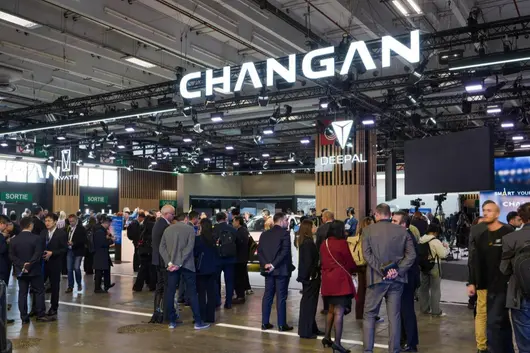
On October 12, the 2026 Paris Motor Show opened at the Paris Porte de Versailles Exhibition Center. DEEPAL unveiled two models, DEEPAL S07 and DEEPAL S05, in Europe. The debut of DEEPAL's two new global models marks a milestone for Chinese new energy brands advancing from single-product trade expansion to comprehensive system rooting. World Footballer of the Year and legendary star Luis Figo appeared at the booth, witnessing DEEPAL's key step to deeply cultivate the European market with full-link strength.


Dual Vehicle Localization Debut, Precisely Adapting to European Market Needs
The Paris Motor Show is one of the top five major international auto shows globally, rooted in Europe, the birthplace of automobiles. For a long time, Europe has set industry benchmarks with stringent access, safety, and emission standards. DEEPAL, relying on the group's 25-year R&D layout and market accumulation rooted in Europe, practices the philosophy of Designed Globally, Served for Europe, the styling of the two models unveiled this time was led by the Turin Design Center in Italy, and engineering tuning was completed in Birmingham, UK, deeply adapting to European road conditions and user habits. Both vehicles obtained EU Whole Vehicle Type Approval (WVTA) jointly with TÜV Rheinland, equipped with self-developed Jinchongzhao batteries, meeting the Euro NCAP comprehensive safety system and GDPR data security standards, laying a solid foundation of compliance and quality for deeply cultivating the European market.

At the show floor, after deeply experiencing the cockpits and intelligent functions of the two vehicles, the legendary star Luis Figo gave high praise, before this, the two vehicles had already attracted attention and coverage from top European automotive media such as BBC Top Gear, Autocar, and Auto Bild, further verifying their international R&D standards and core strength.

From Product Expansion to System Expansion, DEEPAL's Globalization Accelerates Again
DEEPAL's expansion is not simply product export, but a full-link output of technical systems, manufacturing standards, and brand value. As the consummator and fulfiller of Changan New Energy technology of the new central enterprise, DEEPAL relied on the six countries, ten locations global R&D system, achieving a global layout of technology reserves and supply chains, capable of precisely connecting with market needs in different regions.
In terms of manufacturing, the first overseas new energy vehicle base, the Thailand Rayong factory, commenced production in May 2025, completing construction in just 18 months, for theglobal market supply providing stable capacity support. To date, DEEPAL has entered over 100 countries and regions globally, built 4 global manufacturing bases and 1796 global service outlets, forming a global service network.
Europe is the core highland of DEEPAL's globalization strategy, always adhering to the long-termist strategy of In Europe, For Europe. From January to September 2026, DEEPAL's European segment sales exceeded 18,000 units, a year-on-year growth of over 106%. DEEPAL S05 performed particularly well in the Spanish market, ranking first in compact pure electric SUV registrations three times, the cumulative sales in the first half of 2026 ranked second among global brands in this sub-segment and first among Chinese brands. In just five months, DEEPAL S05 completed a breakthrough in the competitive mature European car market.

While expanding the market, DEEPAL continued to deepen localized operations: formed strategic partnerships with top European partners such as TÜV Rheinland to jointly build the European Automotive Future Alliance; built the WithYou full-link localized service system, supported by European parts centers + 7*24 hour quick rescue, ensuring local service quality; at the same time, leveraging the Portugal National Team IP for localization marketing, deepening brand presence.
Million-Level New Starting Point, Technology Equity Goes Global
The continuous climb of global brand momentum has been confirmed in sales. In September 2026, DEEPAL's global cumulative production broke through 1 million units; global cumulative sales from January to September reached 252,213 units, an 8.59% year-on-year increase, among which overseas cumulative sales increased by over 65% year-on-year. This milestone is not merely a growth in scale numbers, but a concentrated manifestation of DEEPAL's technology system, product quality, and service capabilities undergoing verification in multiple global markets, marking that DEEPAL has officially entered a new stage of global development.

DEEPAL has always taken Technology Equity as its core mission, through two major paths of Electrification Equity and Intelligence Equity, promoting high-end new energy technologies and intelligent driving experiences to penetrate the mainstream market. With the continuous deepening of the global layout, DEEPAL is transforming Technology Equity from a brand mission in the domestic market into a value practice for the global market, enabling consumers in more regions to enjoy safe, intelligent, and efficient new energy mobility experiences at mainstream price points.

The Paris Motor Show is a microcosm of DEEPAL's globalization process. What it showcases is not just two new cars, but a complete brand globalization path: Adapting regional needs with localized products, building quality bottom lines with global safety standards, and supporting long-term operations with full-link service networks. The globalization of Chinese new energy vehicles has long said goodbye to the primary stage of price competition, turning towards a high-quality development stage characterized by technology as the core, systems as support, and brand and localization sincerity as the carrier.

1. "Golden September" Loses Luster, Passenger Car Retail Decline Widens Further

Latest data released by the China Passenger Car Association shows that passenger car retail sales nationwide reached 1.618 million units in September, down 28.0% year-on-year and up 5.0% month-on-month. Among them, the new energy vehicle market retail reached 1.084 million units, down 16.7% year-on-year and up 7.8% month-on-month. Among the top 10 retailers in September, BYD remained at the top with 247,000 units. Geely and Chery ranked second and third with 177,000 units and 86,000 units respectively. Following in order were Changan (82,000 units), Leapmotor (78,000 units), FAW-Volkswagen (77,000 units), Tesla China (65,000 units), SAIC-GM-Wuling (61,000 units), FAW-Toyota (61,000 units), and SAIC-Volkswagen (59,000 units). Among the top 10, Leapmotor had the largest year-on-year increase at 30.8%, and was the only manufacturer to achieve positive growth; FAW-Volkswagen had the largest decline, down 44.6% year-on-year.
The China Passenger Car Association stated that the September passenger car market exhibited five characteristics: First, total volume faced deep year-on-year pressure with limited month-on-month recovery, structural differentiation reached an extreme, and "accelerated shrinkage of fuel vehicles, resilient leadership of new energy" became the main line, with high oil prices accelerating "fuel-electric substitution"; Second, the entire line of fuel vehicles contracted, pure fuel vehicle retail nearly halved, while plug-in hybrid models were relatively resilient; Third, new energy penetration rate reached a new high, with retail penetration rate at 67.0% and wholesale penetration rate at 65.4%, both setting historical records, but growth rate slowed significantly compared to earlier periods; Fourth, exports surpassed domestic demand, with some automakers exporting over 50%, and manufacturers with exports accounting for 70% of their total volume are increasing rapidly, becoming the core driver for automaker growth; Fifth, industry inventory continued to remain low, dealers became more cautious in stocking up, and generally reported that the "Golden September, Silver October" peak season effect was weaker than in previous years. However, the China Passenger Car Association emphasized that the current downturn is a phased phenomenon caused by the superposition of short-term policy disturbance and high base, not the peak of the basic situation of automotive popularization, and there is still broad space for first-purchase demand in lower-tier county areas.
2. Large 3-Row SUVs Start to Clear Out
The fierce battle in the large 3-row SUV market has lasted two years and is gradually nearing its end. Starting from 2025, "5326" SUVs (vehicle length approx. 5 meters, wheelbase approx. 3 meters, width approx. 2 meters, 6-seat/7-seat) began to emerge in clusters, including several large flagship SUVs with lengths exceeding 5.2 meters. The result of gathering updates must be cruel homogenized competition; Nio Li Bin once explicitly stated: "The supply of large 3-row definitely must be oversupplied." China Automobile Dealers Association expert Li Yanwei judged that the real annual demand for this market is about 300,000 to 500,000 units, but the potential total supply capacity has already easily exceeded 1 million units, and those that can build a stable monthly sales scale of over 3,000 units within 12 months of launch are expected not to exceed 8 models. The market will enter a clearing cycle from the second half of 2026 to the first half of 2027. The intensity of competition at present can already validate this. According to incomplete statistics, at least 36 large 3-row SUVs have been launched or updated so far in 2025, with price ranges extending from the 100,000 level to the 600,000 level, and new energy proportion exceeding 90%.
Data shows that in the first half of 2026, mid-to-large SUV sales reached 880,000 units, up 28% year-on-year; large SUV sales were 350,000 units, up 97% year-on-year, becoming a rare incremental highland in the stock market. But the dividends were not universal. Taking August 2026 as an example, Nio ES8 (10,991 units) and AITO M9 (10,098 units) were the only large SUVs with monthly sales over 10,000; the second tier dropped to the 6,000 unit level, including BYD Tang (7,796 units), Huajing S (7,306 units), Xpeng GX (7,002 units), Nio ES9 (6,474 units), Leapmotor D19 (6,034 units), etc. Most other models were below 3,000 units, with more 10 models with monthly sales under 1,000, such as Volkswagen Teramont Pro (454 units), IM LS9 (625 units), Voyah Taishan (274 units), Hyundai Palisade (34 units), Cadillac KeWeide (13 units), etc. More worth paying attention to than single-month rankings are the sales curves after new product launch. Currently, only Nio ES8, AITO M9, Galaxy M9 and a few other models have maintained relatively stable long-term output. The vast majority of 6-seater vehicle lifecycles present a "high start, low walk" feature. Many models have halved their sales 3-6 months after launch, deeply trapped in the "New Car Effect Death Valley".
3. Chinese Brands Turn the Tables at Paris Motor Show

The Paris Motor Show, which has been shrouded in a century of gasoline scent, is now becoming a transfer desk for two generations of automobile kingdoms. Before the curtain of the 91st Paris Motor Show opened, a set of exhibition data already shook the global automotive industry. 22 Chinese complete vehicle brands took the stage of this motor show. This number is more than double that of last year's 2024 motor show, even exceeding the sum of French domestic 10 and German 7 exhibiting brands. Old veterans like BYD, Chery, Leapmotor, and Xpeng who have already established a foothold in the European market held the fort. New faces like Changan, Avatr, and Li Auto who had never appeared publicly in Europe before placed their exhibition stands in front of Paris audiences for the first time. Chinese automakers have already become one of the unquestionable protagonists of this motor show.
On one side, traditional automotive players like BMW, Porsche, and Nissan announced their absence one after another. On the other side, 20+ Chinese brands with completely new models appeared densely, turning the motor show into their own main stage to display globalized results. Between this entry and that retreat, it reflects the alternation of old and new orders in the global automotive industry. The latest data from research institutions shows that in the second quarter of 2026, the share of Chinese brands in the entire European automotive market reached 10.7%, almost doubling from 5.7% a year ago. The market penetration rate that Toyota and Honda took nearly a decade to get in previous years, Chinese automakers completed the leap in less than half the time. In the fastest-growing plug-in hybrid track, the advantage of Chinese brands is more obvious. They have already taken more than 26% of the Western Europe PHEV market share. Just two years ago, this number was only 2.2%.
4. Avatr T09 Global Debut

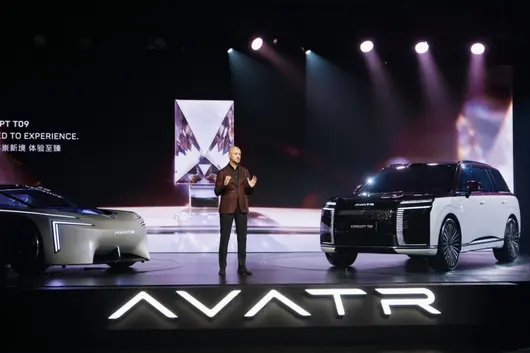
Avatr's new flagship model T09 Concept version completed its global debut in Paris, France. The mass-produced version is planned to launch this year, with an expected price exceeding 500,000 Yuan. In terms of appearance, the square body and straight lines completely abandon the fastback coupe style of the 11 and 12 series. The front grille adopts a 3D embossed structure, formed by 362 brand identifier elements of different 3D heights; the clamshell hood with an area of 2.1 square meters retains the "island-style uplift" shape, balancing power and spirit. The rear end is equipped with integrated crystal diamond taillights, which can present differentiated light and shadow under different angles.
The cockpit is equipped with an integrated triple screen, consisting of a 10.25-inch instrument cluster screen and two 17.2-inch screens, supporting NFC tap-to-connect function; the adjustable "Vortex Emotional Vortex" interaction device above the center console is embedded with 118 RGB LED light sources, which can link with the whole vehicle ambient light. In terms of technology, the new car integrates the resources of Changan, Huawei, and CATL, equipping Huawei Qiankun Driving Intelligence, HarmonyOS Cockpit, and Taihang Intelligent Control technology. The power adopts a 2.0T hybrid engine plus tri-motor distributed electric drive, with a total system power exceeding 1,000 horsepower. The CLTC pure electric range is highest over 400km.
5. Over 60 Tire Companies Issue Price Hike Letters

The tire industry welcomes a new round of price hike tide. Since the beginning of this year, rubber prices have continued to rise. As of the close of October 9, the Shanghai rubber futures main contract closed at 20,600 Yuan/ton, creating a nine-year high; the spot average price was about 19,700 Yuan/ton, up more than 30% year-on-year. Tires are the largest downstream product of natural rubber. The rise in rubber raw material prices directly affects the cost and revenue of the tire industry. According to statistics, since September, over 60 tire companies have concentrated on issuing more than 70 price hike letters, covering all categories of all-steel tires, semi-steel tires, and engineering tires. The price adjustment amplitude is generally between 2% and 5%, with some categories reaching up to 6%.
This is the fourth round of concentrated price hikes this year. Since March, more than 80 tire companies have issued price hike letters, with increases mostly between 2% and 5%, with some categories reaching up to 10% at most. Several tire companies stated that natural rubber, synthetic rubber, carbon black, and other core raw materials have risen to varying degrees this year. Coupled with crude oil price fluctuations pushing up petrochemical raw material costs, company pressure has increased. According to statistics from the China Rubber Industry Association, the sales revenue of 386 member enterprises increased by 5.64% in the first half of the year, but the total profit decreased by nearly 24% year-on-year. The situation of "revenue increases but profit does not" is quite typical.
6. Chery Automobile Apologizes

Recently, a 2023 OMODA 5 in Johor Bahru, Malaysia, tore the rear axle longitudinal arm while driving, and the rear axle along with two rear wheels detached directly from the body. Fortunately, no casualties were caused. After the incident attracted attention locally, the Malaysian Land Transport Authority (JPJ) announced a temporary freeze on the vehicle type approval (VTA) for the OMODA 5. Before the technical investigation was completed, this model could not be registered or sold as a new vehicle.
On the evening of October 11, Chery Automobile Co., Ltd. issued an apology statement. After investigation, this batch of vehicles may have insufficient weld strength at partial weld locations of the rear axle longitudinal arm, and there is a risk of weld seam tearing in extreme cases. This structure model had been discontinued prior to this. Chery Malaysia subsidiary cooperated with JPJ's relevant arrangements, and has initiated a recall for the affected 8,878 OMODA 5 models, inspected relevant parts, and replaced them for free depending on the situation. In the spirit of prudence, the company has initiated a risk special investigation for the same batch of OMODA 5 models in the domestic and related markets, and maintains positive communication with regulatory agencies. This investigation is a preventive active arrangement. Chery will announce it to society in a timely manner in a responsible manner based on the investigation results.
7. Musk Apologizes to Indian Super Tycoon

Recently, Elon Musk suddenly apologized to Indian super tycoon Mukesh Ambani on social media platforms, even respectfully calling Ambani "Indian Prime Minister". It turns out that Musk was using satire to mock Ambani, the head of India's largest private enterprise Reliance Industries. According to previous reports by US Bloomberg and other media, Musk has always longed to let his satellite communication product "Starlink" enter the Indian market, but has never been able to succeed. Musk therefore believes that industry oligopolists who monopolize the Indian telecommunications field are jointly blocking him, and thus points the finger at Ambani and Reliance Industries.
"Dear Prime Minister Ambani, please forgive my poor eyesight before, I didn't realize you are the true power holder of India." Musk satirized in his post released on the 10th: "I guess you prefer to maintain monopolistic exploitation of the vast Indian public, but can you consider allowing Starlink to participate in market competition?"
8. McLaren 750S to Discontinue Next Year

McLaren officially confirmed that its V8-powered supercar 750S will end production next year to pave the way for a new product matrix. The car debuted in 2023 and is a deep facelift successor to the legendary 720S. At the time of launch, it was the lightest version among McLaren production series cars. Currently, McLaren has opened the final order channel for the 750S. Counting from the debut of the 720S, this platform has completed nearly a decade of product cycle. According to plans, 750S will be phased out along with Artura and GTS in the next few years to make room for a new product lineup, which includes the highly anticipated SUV model.
This series of product adjustments occurred after the Abu Dhabi investment agency took control of McLaren, and is viewed as part of the brand's major expansion strategy. Earlier this year, the McLaren Special Operations (MSO) custom department has already launched the ultimate limited version 788HS of this platform, with the entire vehicle limited to 100 hardtop versions. There is also information stating that 200 units in total for hardtop and convertible versions combined, with a starting price of 450,000 GBP, as a finale work of this chassis.

In the SUV market in Malaysia, many buyers tend to compare Toyota Yaris Cross and Subaru Crosstrek when choosing a car. These two cars are quite close in terms of price and positioning. Today, we will make a detailed comparison from multiple aspects to help you save time on research.
The OTR price of Toyota Yaris Cross in Malaysia is RM 99,900 - 109,900, with a total of 2 versions, including 2026 1.5L Standard (RM 99,900), 2026 HEV 1.5L Standard (RM 109,900), etc.
The OTR price of Subaru Crosstrek in Malaysia is RM 145,000 - 160,000, with a total of 1 version, including 2.0L e-Boxer (RM 150,000), etc.
In terms of price, the starting price of Toyota Yaris Cross is indeed RM 45,100 cheaper than Subaru Crosstrek. If your budget is limited, Toyota's entry-level version is already sufficient for daily needs. However, be aware that the few thousand ringgit difference may involve trade-offs in features, depending on your specific requirements.

Toyota Yaris Cross is equipped with a 1.5L 4-cyl engine, with 105 horsepower. Official fuel consumption is 6.0 L/100km.
Subaru Crosstrek is equipped with a 1.5L Turbo engine, with 140 horsepower. Official fuel consumption is 7.0 L/100km.
In terms of power, the Subaru Crosstrek's 1.5L Turbo has 35 more horsepower than the Toyota Yaris Cross's 1.5L 4-cyl. However, for daily driving in the city, the power of both cars is sufficient, and you won't feel it lacks power.

Toyota Yaris Cross safety rating is 5★ (ASEAN NCAP), active safety systems include TSS.
Subaru Crosstrek safety rating is 5★ (Euro NCAP), active safety systems include EyeSight.
Regarding safety features, both cars have received decent ratings. However, there are some differences in functionality between Toyota Yaris Cross's TSS and Subaru Crosstrek's EyeSight. If you value active safety, you can compare the feature lists of both in detail.

Toyota Yaris Cross body length is 4400 mm, trunk space 400 L.
Subaru Crosstrek body length is 4400 mm, trunk space 400 L.
The dimensions of both cars are almost identical, with little difference in interior space. For this class of cars, it is fully sufficient for daily use.

Toyota Yaris Cross adopts FWD drive method.
Subaru Crosstrek adopts FWD drive method.
Both cars have the same drive method, both are FWD, and there won't be much difference in daily driving experience.

Overall, Toyota Yaris Cross and Subaru Crosstrek are both very good models in the Malaysian market. Choosing which one depends mainly on your personal needs and budget. We recommend doing your research, comparing quotes from several dealerships, and then test driving to make a final decision. Buying a car is a big matter, spending some time doing research will never go wrong.

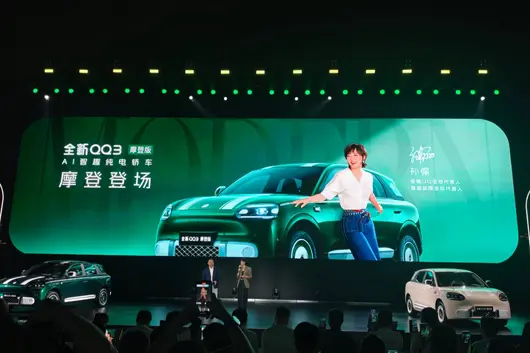
2026 年 9 月 22 日,奇瑞全新 QQ3 摩登版正式上市。官方指導體價 8.89 萬元,增購價 8.69 萬元,置換價 8.39 萬元。

呢台唔係一台普通嘅 QQ3。佢係 QQ3 系列首款官方改裝車型,由國內首个紅點設計四獎團隊操刀,喺現款 QQ3 基礎上對外觀同內飾做咗全面升級。換句話話,奇瑞用紅點獎團隊畀一台 A0 級小車做一次「原廠改裝」。
8.89 萬,喺 A0 級純電市場唔算平。比亞迪海鷗 6.98 萬起,吉利星願 6.59 萬起,五菱繽果 Pro 甚至探到 5.68 萬。摩登版比呢啲競爭對手嘅入門價貴咗兩萬多。

貴喺邊?奇瑞嘅答案好明確:設計。
一台「出片」嘅小車
摩登版嘅核心賣點就寫喺名入面——摩登。

外觀上,新車採用 Neo-Retro 復古設計語言,取消傳統黑色包圍,把輪眉、側裙全部換做與車身同色,加埋白色拉花、鍍鉻飾條同圓餅式復古輪轂。兩款專屬配色「摩登時代」係復古綠配白拉花,「安妮珍珠」則係低飽和米粉色。車頭保留咗 QQ3 標誌性嘅微笑車頭,但前格柵經過重構,前後保險桿造型亦做咗升級。
內飾嘅變化更大。座艙引入「雲絨米」配色,千鳥格紋理覆蓋中控、座椅同車門板內嵌飾板,頂蓬、A/B 柱、遮陽板全部升級為天鵝絨材質包覆,中央扶手箱配搭撞色織帶。座椅採用千鳥格設計,輔以撞色織帶點綴。仲配咗同級獨有嘅智能色溫化妝鏡同 256 色律動氛圍燈。
千鳥格、天鵝絨、化妝鏡、氛圍燈——呢啲配置放喺一台 8 萬級嘅小車入面,邏輯好清晰:佢賣唔係代步工具,係「出片道具」。社交平台上嗰啲「車拍」內容入面,小車往往比大車更容易出效果,而摩登版將呢件事變成產品定義嘅一部分。
底子冇縮水
設計之外,摩登版嘅硬實力延續咗 QQ3 嘅越級路線。

尺寸 4229×1812×1573mm,軸距 2700mm。呢個軸距喺 A0 級入面屬於第一梯隊,後排空間唔會太窄。
動力採用後置後驅佈局,提供 58kW 同 90kW 兩種電機版本,最大扭距分別為 90N·m 同 115N·m。全系標配犀牛電池,容量分為 29.48kWh 同 41.28kWh,CLTC 續航對應 310km 同 420km。快充 30% 到 80% 唔超過 16.5 分鐘,標配 6.6kW 外放電。底盤係後多連桿獨立懸掛,最小轉彎半徑 5.2 米,市區入面轉頭同泊車都方便。
智能方面,15.6 英寸 2.5K 中控屏配搭高通 8155 晶片,Carmind 大模型支援 AI 傾偈同智能車控,兼容 CarPlay、HiCar、CarLink 三大手機互連協議,配備 100+ 場景自動泊車同 L2 級駕駛輔助。安全方面,五縱八橫籠式車身,高強度鋼佔比 82%,犀牛電池達到 IP68 級防水防塵,6 個安全氣囊加 540°全景影像。
420 公里續航、8155 晶片、後多連桿懸掛——呢套底子放喺 8 萬級入面本身就有競爭力。摩登版嘅問題係:多畀兩萬買一套紅點獎團隊做嘅復古皮膚同千鳥格內飾,抵唔抵?
QQ3 已經唔係「黑馬」咗
討論摩登版嘅定價係咪合理,唔可以離開 QQ3 系列嘅市場表現。

全新 QQ3 於 2026 年 3 月 30 日上市,首月交付 13612 台,上市首季直接把 6-9 萬級 A0 級純電轎車細分市場份額從唔足 5% 拉升至 15%。5 月銷量 10425 台,6 月 10524 台,8 月環比增長 64% 達到 19103 輛。連續多月月銷站穩萬台水平。
喺 A0 級市場入面,呢個成績唔算小。更關鍵係,佢係喺 A00 級市場整體萎縮嘅背景下實現嘅——2026 年上半年 A00 級轎車零售同比下降 63%,5 萬元以下乘用車銷量大幅縮水。消費者唔再純粹為低價買單咗,佢哋願意為「好看、好開、好用」嘅小車多畀少少錢。
QQ3 摩登版剛好踩喺呢條消費升級嘅線上。
奇瑞真正想做嘅嘢
拉開視線睇遠少少,摩登版嘅意義唔止於一款新車。
奇瑞董事長尹同躍喺 QQ 品牌回歸嗰陣講過一句說話:「我哋要將奇瑞 QQ 打造成中國嘅 MINI、中國嘅 Smart,打造成屬於中國嘅經典。」
這唔係隨隨便便講嘅客套說話。全新 QQ3 系列連續四次贏得紅點設計大獎,涵蓋概念、產品、品牌同傳達設計等領域。喺東南亞市場,QQ3 以「CheryQ」嘅名登陸泰國同印尼,兩地訂單合計逼近萬台。
官方改裝版係 IP 運營嘅經典手法。MINI 有 JCW,Smart 有 BRABUS,甲殼蟲有 R-Line。當一個車型開始推出官方改裝特別版,代表品牌喺嘗試將「產品」變成「文化符號」。
QQ3 摩登版嘅定價邏輯因此變得清晰:佢唔追求性價比最大化,而係用設計溢價嚟測試一件事——中國消費者係咪願意為本土品牌嘅「文化附加值」買單。
賭係消費升級,唔係價格戰
8.89 萬買一台 A0 級純電小車,放喺兩年之前好難想像。但現在嘅情況唔一樣。
A0 級純電市場喺 2026 年第一季度同比增長 190%,幾乎所有主流車企都已入局。比亞迪海鷗、吉利星願各自佔據頭部位置,零跑 A10 等新玩家仲喺不斷湧入。喺呢個市場入面,靠低價走量嘅空間正在收窄,靠設計同體驗做差異化嘅空間正在打開。
摩登版嘅選擇係後者。佢用紅點獎團隊嘅設計、千鳥格同天鵝絨嘅內飾質感、420 公里續航同 8155 晶片嘅智能底子,試圖說服消費者:一台小車可以唔只係代步工具,都可以係一樣令人願意多看少眼嘅嘢。
呢個賭注贏唔贏到,視乎有幾多人願意為「好看」多畀兩萬塊。從 QQ3 系列連續月銷破萬嘅表現嚟睇,答案起碼唔係零。

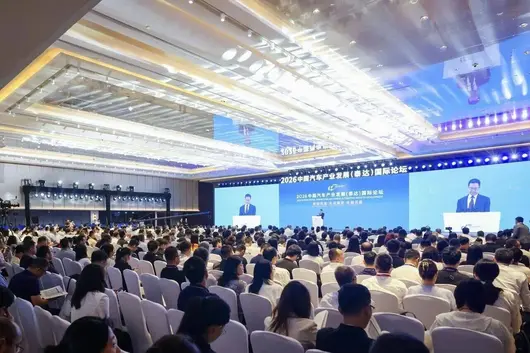
2026 年 9 月 17 日至 20 日,2026 第 22 屆中國汽車產業發展(泰達)國際論壇在天津濱海新區舉辦。
自 2005 年至今,泰達汽車論壇已經連續成功舉辦 22 屆。論壇以組織完善、權威性高、專業性強、選題精準、內容豐富、指導性強等特點,成為中國汽車行業最具權威性、規格最高、規模最大、影響力最廣泛的高端汽車論壇。被譽為「中國汽車達沃斯」。
本屆泰達汽車論壇由中國汽車技術研究中心、中國汽車工程學會、中國汽車工業協會、中國汽車報社聯合主辦,圍繞「內容強智、品牌強效」理念推出「17+N」場活動,包括 3 場核心高端對話、6 場生態專場、8 場專題論壇及特色活動。

本屆論壇以「智綠築基·生態蓄勢·共創共贏」為主題,匯聚國家部委、行業協會、車企、科研機構及海外行業代表,圍繞汽車產業「十五五」開局轉型、技術攻堅、市場升級、生態共建、全球競合等議題,釋放多項重磅信號,明確了未來數年中國汽車產業高質量發展的核心路線與落地舉措。
論壇釋放重要汽車政策風向今年是國家「十五五」發展規劃開局之年。論壇開幕前夕,工業和信息化部等九部門編制的《智能聯網新能源汽車產業發展「十五五」規劃》正式發布,成為未來五年汽車產業發展的綱領性文件,聚焦高質量、規範化發展,摒棄粗放式規模擴張,重點強化基礎研究、共性技術攻關與產業秩序優化,為產業技術路線、佈局規劃、市場監管提供系統性指引。
 工業和信息化部總工程師 王衛明
工業和信息化部總工程師王衛明在開幕大會上表示,未來五年,將圍繞技術創新、市場消費、行業治理、開放合作四方面發力。重點攻堅車用晶片、全固態電池、操作系統、自動駕駛大模型四大領域產業化。
工業和信息化部正式將實施汽車標準提升專項行動,同步優化行業管理體系,補齊產業監管短板。同時以標準引領產業升級,推動自主可控、適配協調的汽車智能製造標準體系建設,助力產業從規模領先邁向質量領先。
鎖定核心短板 聚焦前沿技術落地本屆論壇披露,中國汽車產業現有技術成果已穩居全球第一梯隊,鋰離子電池能量密度達 300 瓦時/千克,兆瓦閃充技術實現量產應用,人機交互、端到端控制、車載大模型等智能化技術處於全球前列。中國汽車產銷連續 17 年、新能源汽車產銷連續 11 年位居全球第一,已牽頭制定 18 項全球法規協調文件、30 項國際標準。
 中汽中心黨委副書記、總經理 龔進峰
針對汽車產業現存短板,國家明確重點攻關方向:集中突破高端車用晶片、車載操作系統、全固態電池、自動駕駛大模型等「卡脖」技術,加速前沿技術產業化落地。同時聚焦自動駕駛場景落地痛點,攻克車路協同、全天候感知、數據孤島等行業難題。
 中國機械工業聯合會黨委常委、副會長 羅俊傑
與會代表提出,智能汽車發展需築牢安全底線,重點防范車輛運行、數據傳輸、網絡安全多重風險,杜絕「虛胖式創新」「速成式產品」,堅守質量安全底線。
多措激活內需 拓寬多元應用場景針對當前國內汽車消費需求不足、製造業利潤率偏低的行業困境,有關部委在論壇上公布多項擴內需、拓市場舉措。持續落地汽車以舊換新、新能源汽車下鄉政策,開展縣域充換電設施補短板試點與氫能綜合應用試點,完善基層新能源用車配套體系。
這些措施還包括重點推進新能源重卡規模化商業運營,出臺汽車改裝管理辦法,豐富汽車消費與應用場景。同時健全汽車出口保障體系,打通內外銷市場銜接通道,對沖國內市場增速壓力。
 國務院發展研究中心產業經濟研究部部長 田傑棠
論壇上多位嘉賓判斷國內汽車產業進入存量競爭淘汰賽階段,市場重心從規模擴張轉向盈利提質、秩序規範,渠道模式從單一賣車轉向用戶全生命週期服務運營。
整治非理性競爭 推動產業有序發展針對當前汽車行業內捲化、惡意低價競爭、數據造假、盲目硬體堆疊、偽創新等突出問題。與會代表提出常態化開展亂象整治,引導產業告別粗放式增量競爭,轉向價值競爭、品質競爭、安全競爭、用戶價值競爭。
業內專家在論壇上明確提出「反內捲、穩秩序」發展思路,建議建立行業價值評價體系,摒棄參數比拼的粗放發展模式,搭建整車、科技企業、上下游配套的常態化聯合攻關機制,減少低水平重複探索。同時強化召回監管機制,以主動召回倒逼產品質量升級,明確「安全是汽車產業發展的核心底色」,杜絕無價值的虛假創新。

本屆論壇創新重構議題架構,打破傳統產業鏈細分模式,設置場景、技術、政策、產業四大主題日,推動汽車與人工智能、能源、交通、航空、消費等領域深度跨界協同,重構汽車產業發展邊界。核心聚焦「車能路雲」一體化融合,構建立體化智能交通產業生態。
論壇明確指出未來生態發展的核心方向:推動車企與裝備企業從簡單供需合作轉向聯合創新、共生共贏。推進車載域接口、硬體平台標準化,減少行業無效內捲與定製化損耗,打造規模化共享技術平台。建立國家級協同創新平台與數據共享規則,規範智能汽車數據安全流通,實現產業鏈、技術鏈、數據鏈閉環升級。
 2026 泰達汽車論壇智庫矩陣
今年以來,中國汽車出口已經成為中國汽車發展的重要推動力。面對保護主義加劇的外部環境,論壇釋放出堅定對外開放信號。堅決反對貿易保護主義,持續推動國際汽車標準、法規互認,歡迎海外企業加大在華投資、參與技術聯合攻關。同時支持中國車企、產業鏈企業全球化深耕,從單一產品出海轉向品牌、技術、標準、供應鏈、服務體系全方位出海。
以東南亞為核心的新興市場成為中國汽車產業出海重地,與會的泰國代表明確歡迎中國車企本地化佈局、共建區域新能源汽車產業生態,推動本地化生產與產業鏈配套升級。(文/ 一錘定音 張毅)

喺馬來西亞嘅 SUV 市場,好多買家喺揀車嗰陣都會拿本田 CR-V 同 寶馬 X1 嚟比較。這兩款車喺價位同定位上都好接近,我哋而家就從多個方面做一個詳細嘅比較,幫你節省做功課嘅時間。
本田 CR-V 喺馬來西亞嘅 OTR 售價係 RM 178,200 - 195,900,一共有 4 個版本,包括 2026 e:HEV 2.0L 2WD RS(RM 195,900)、2026 1.5T 4WD V(RM 181,900)、2026 e:HEV 2.0L 2WD E(RM 178,200) 等。
寶馬 X1 喺馬來西亞嘅 OTR 售價係 RM 252,800 - 252,800,一共有 2 個版本,包括 sDrive18i(RM 220,000)、sDrive20i(RM 250,000) 等。
從價錢嚟睇,本田 CR-V 嘅起步價真係比 寶馬 X1 平咗 RM 74,600。如果你預算有限,本田嘅入門版已經可以滿足日常需求。但都要注意,平嗰幾千蚊,喺配備上會有取舍,具體要睇你嘅需求。

本田 CR-V 嘅安全評級係 5★ (ASEAN NCAP),主動安全系統包括本田 SENSING (ACC, CMBS, LKAS, RDM)。
寶馬 X1 嘅安全評級係 5★ (Euro NCAP),主動安全系統包括 Premium ADAS。
安全配備方面,兩款車都拿到唔錯嘅評級。不過本田 CR-V 嘅本田 SENSING (ACC, CMBS, LKAS, RDM) 同 寶馬 X1 嘅 Premium ADAS 喺功能上有些差異,如果你比較睇重主動安全嘅話,可以仔細對比下兩者嘅功能列表。
本田 CR-V 採用 FWD 驅動方式。
寶馬 X1 採用 FWD 驅動方式。
兩款車嘅驅動方式一樣,都係 FWD,日常駕駛感受唔會有太大分別。

本田 CR-V 同 寶馬 X1 都係馬來西亞市場嘅主流選擇,適合家庭使用、日常通勤。如果你更睇重品牌口碑同二手價,可以優先考慮口碑更好嗰一款;如果你更在意性價比同配備,那就選配備更豐富嗰款。最終都係建議兩款都去試駕,親身體驗先至最緊要。

總括嚟講,本田 CR-V 同 寶馬 X1 都係馬來西亞市場幾唔錯嘅車型。揀邊一部,關鍵都係要睇你嘅個人需求同預算。建議大家做好功課,多比較幾間車行嘅報價,再去試駕先至做最終決定。買車係件大事,花啲時間做功課絕對無錯。


In the SUV market in Malaysia, many buyers compare Honda CR-V and Ford Everest when choosing a car. These two models are quite close in price and positioning. Today, we will do a detailed comparison from multiple aspects to help you save time on research.
The OTR price of Honda CR-V in Malaysia is RM 178,200 - 195,900, with a total of 4 versions, including 2026 e:HEV 2.0L 2WD RS (RM 195,900), 2026 1.5T 4WD V (RM 181,900), 2026 e:HEV 2.0L 2WD E (RM 178,200), etc.
The OTR price of Ford Everest in Malaysia is RM 266,338 - 430,838, with a total of 6 versions, including 2026 3.0T 4WD Platinum (RM 430,838), 2026 2.0T 4WD Platinum (RM 348,838), 2026 2.0T 4WD Sport (RM 316,838), etc.
In terms of price, the starting price of Honda CR-V is indeed RM 88,138 cheaper than Ford Everest. If your budget is limited, Honda's entry-level version can already meet daily needs. But also note, the fewer thousand ringgit cheaper might have trade-offs in features, depending on your specific needs.
Honda CR-V is equipped with a 2.0L 4-cyl, 170 hp. Official fuel consumption 8.0 L/100km.
Ford Everest is equipped with a 2.5L Diesel, 187 hp. Official fuel consumption 8.5 L/100km.
In terms of power, Ford Everest's 2.5L Diesel has 17 more horsepower than Honda CR-V's 2.0L 4-cyl. However, for daily city driving, both cars have enough power and won't feel underpowered.
Honda CR-V uses FWD drive system.
Ford Everest uses FWD drive system.
Both cars have the same drive system, both are FWD, daily driving experience will not have much difference.
Honda CR-V warranty 5 years/unlimited mileage, service interval every 10,000km or 6 months.
Ford Everest warranty 3 years/100,000km, service interval every 10,000km or 6 months.

Honda CR-V and Ford Everest are both mainstream choices in the Malaysia market, suitable for family use and daily commuting. If you value brand reputation and resale value more, you can prioritize the one with better reputation; if you care more about cost-performance ratio and features, then choose the one with richer configuration. Ultimately, it is recommended to test drive both, experiencing it personally is the most important.

Overall, Honda CR-V and Ford Everest are both very good car models in the Malaysia market. Which one to choose depends on your personal needs and budget. It is recommended to do your research, compare quotes from several dealerships, and then test drive to make the final decision. Buying a car is a big matter, spending some time doing research will definitely not be a mistake.

In the Malaysian SUV market, many buyers often compare Honda CR-V and Mazda CX-9 when choosing a car.
The Honda CR-V OTR price in Malaysia is RM 178,200 - 195,900. There are a total of 4 versions, including 2026 e:HEV 2.0L 2WD RS (RM 195,900), 2026 1.5T 4WD V (RM 181,900), 2026 e:HEV 2.0L 2WD E (RM 178,200), etc.
The Mazda CX-9 OTR price in Malaysia is RM 328,810 - 345,810. There are a total of 2 versions, including 2023 2.5T 4WD (RM 345,810), 2023 2.5T 2WD (RM 328,810), etc.
From a price perspective, the Honda CR-V starting price is indeed RM 150,610 cheaper than the Mazda CX-9. If your budget is limited, Honda's entry-level version can already meet daily needs. But you should also note that the few thousand cheaper price might involve trade-offs in features, depending on your specific needs.
Honda CR-V Body length 4500 mm, Trunk 450 L.
Mazda CX-9 Body length 4500 mm, Trunk 450 L.
The dimensions of both cars are almost the same, and the interior space does not differ much. Cars in this class are completely sufficient for daily use.
Honda CR-V uses FWD drive mode.
Mazda CX-9 uses FWD drive mode.
Both cars have the same drive mode, both are FWD, driving experience will not differ too much in daily use.
Both Honda CR-V and Mazda CX-9 are mainstream choices in the Malaysian market, suitable for family use and daily commuting. If you value brand reputation and resale value more, you can prioritize the one with better reputation; if you care more about value for money and features, then choose the one with richer configuration. Ultimately, we suggest test driving both, personal experience is the most important.

In general, both Honda CR-V and Mazda CX-9 are quite good models in the Malaysian market. Choosing which one depends mainly on your personal needs and budget. We suggest doing your homework, comparing quotes from multiple car dealerships, and then test driving to make the final decision. Buying a car is a big matter, spending some time on research will never be wrong.

In the SUV market in Malaysia, many buyers compare Proton X90 and Kia Sportage when choosing a car. Both cars are quite close in price and positioning. Today, we will make a detailed comparison from multiple aspects to help you save time on research.
The OTR price of Proton X90 in Malaysia is RM 106,800 - 122,800, with a total of 4 versions, including 2026 1.5T Prime X(RM 122,800)、2026 1.5T Prime(RM 116,800)、2026 1.5T Lite(RM 106,800)etc.
The OTR price of Kia Sportage in Malaysia is RM 129,639 - 179,320, with a total of 4 versions, including 2025 1.6T DCT 4WD High(RM 179,320)、2025 1.6T DCT 2WD High(RM 159,320)、2025 2.0L AT 2WD High(RM 139,639)etc.
In terms of price, Proton X90's starting price is indeed RM 22,839 cheaper than Kia Sportage. If your budget is limited, Proton's entry-level version can already meet daily needs. But note, the few thousand cheaper, there might be trade-offs in features, it depends on your specific needs.

Proton X90 is equipped with 1.5L Turbo, 140 hp. Official fuel consumption 7.0 L/100km.
Kia Sportage is equipped with 1.5L Turbo, 140 hp. Official fuel consumption 7.0 L/100km.
Both cars use the same powertrain, the driving feel is basically the same in daily use. Fuel consumption is also similar, no need to worry too much about this point.
Proton X90 body length 4400 mm, trunk 400 L.
Kia Sportage body length 4400 mm, trunk 400 L.
The dimensions of both cars are almost the same, interior space difference is not big. For this level of car, daily use is fully sufficient.

Proton X90 adopts FWD drive mode.
Kia Sportage adopts FWD drive mode.
Both cars have the same drive mode, both are FWD, daily driving feel will not have a big difference.

Overall, Proton X90 and Kia Sportage are both very good car models in the Malaysian market. Which one to choose, key depends on your personal needs and budget. We suggest doing thorough research, compare quotes from several car dealers, then go for a test drive to make the final decision. Buying a car is a big matter, spending some time on research will definitely not be wrong.


In Malaysia's SUV market, many buyers compare Proton X90 and Mitsubishi Xforce when choosing a car. These two cars are quite close in price and positioning, and today we will make a detailed comparison from multiple aspects to help you save time on research.
The Proton X90 OTR price in Malaysia is RM 106,800 - 122,800, with a total of 4 versions, including 2026 1.5T Prime X (RM 122,800), 2026 1.5T Prime (RM 116,800), 2026 1.5T Lite (RM 106,800), etc.
The Mitsubishi Xforce OTR price in Malaysia is RM 109,930 - 119,930, with a total of 2 versions, including 2026 1.5L Ultimate (RM 119,930), 2026 1.5L Urban (RM 109,930), etc.
In terms of price, the Proton X90's starting price is indeed RM 3,130 cheaper than the Mitsubishi Xforce. If your budget is limited, Proton's entry-level version can already meet daily needs. However, note that saving those few thousand ringgit might involve trade-offs in equipment, depending on your specific needs.
The Proton X90 is equipped with a 1.5L Turbo, 140 hp. Official fuel consumption is 7.0 L/100km.
The Mitsubishi Xforce is equipped with a 1.5L Turbo, 140 hp. Official fuel consumption is 7.0 L/100km.
Both cars use the same powertrain, and the driving experience is basically no different in daily use. Fuel consumption is also similar, so no need to dwell too much on this point.
The Proton X90 body length is 4400 mm, trunk is 400 L.
The Mitsubishi Xforce body length is 4400 mm, trunk is 400 L.
The dimensions of both cars are almost identical, and the interior space difference is not significant. For this class of cars, it is fully sufficient for daily use.
Both the Proton X90 and Mitsubishi Xforce are mainstream choices in the Malaysian market, suitable for family use and daily commuting. If you value brand reputation and resale price more, you can prioritize the one with a better reputation; if you care more about cost-performance and features, choose the one with a richer configuration. Finally, it is recommended to test drive both, as personal experience is the most important.

Overall, both the Proton X90 and Mitsubishi Xforce are very good models in the Malaysian market. Which one to choose depends mainly on your personal needs and budget. We recommend doing your homework, comparing quotes from several dealerships, and then test driving to make a final decision. Buying a car is a major matter, spending time on research will never go wrong.


