首頁Hybrid

搜尋歷史
熱門搜尋
經銷商登入 / 註冊

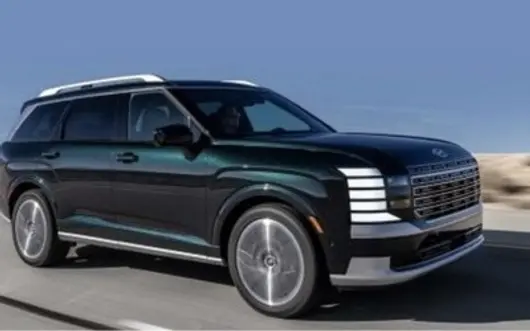
[CNMO Tech News] Indonesia's hybrid car market continues to expand this year. Data shows, from January to August 2024, Indonesia's hybrid car wholesale sales reached 58,040 units, a year-on-year increase of 43.3%. Against this backdrop, Hyundai Palisade Hybrid sold 774 units ranking 9th on the local hybrid car sales list, and Santa Fe Hybrid ranked 14th with 538 units.

Source: Internet
According to data released by the Indonesia Automotive Industry Association, in the first 8 months of this year, Indonesia's total car sales were 859,256 units, with hybrids accounting for about 6.75%. From a market structure perspective, local hybrid car sales growth was mainly driven by large MPVs and SUVs suitable for family use, with significant demand for relevant models.
Looking at specific models, Toyota Innova Zenix Hybrid led with 17,845 units, Veloz Hybrid sales were 15,554 units, ranking second. Followed by Suzuki XL7 Hybrid with 5,572 units; Fronx Hybrid sales 3,294 units; Honda HR-V Hybrid sales 3,225 units. These models constitute the main sales volume of Indonesia's hybrid car market.
Regarding Hyundai Motor, Palisade Hybrid and Santa Fe Hybrid both entered the top tier of local hybrid car sales. Among them, Palisade Hybrid is Hyundai's best-selling hybrid model in the Indonesian market. Based on existing data, the combined sales of these two models amount to 1,312 units, occupying a certain share in the local hybrid car market.

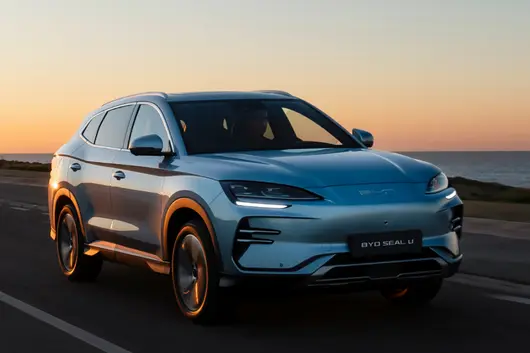
Gasgoo Auto News: Driven by falling battery costs and the rise of Chinese automakers with economies of scale in emerging markets, the average price of electric vehicles globally last year fell below that of hybrid models.
Lithium-ion batteries account for 30%-40% of total vehicle costs, while China's battery capacity is abundant, controlling about 80% of the global battery market, which has also kept battery prices continuously falling. Bloomberg New Energy Finance (BloombergNEF) estimates that between 2020 and 2025, passenger vehicle battery prices fell cumulatively by 37%.

Image Source: BYD
At the same time, major automakers are increasingly adopting Lithium Iron Phosphate (LFP) batteries without expensive cobalt elements. Although lithium iron phosphate batteries were previously considered to have lower energy density than traditional lithium batteries, their performance is continuously improving. Renault and Volkswagen both announced last year that they would equip some new models with LFP batteries.
With fierce competition in the Chinese domestic market, Chinese EV automakers are accelerating their overseas expansion, which also drove down global vehicle prices. BYD and other Chinese automakers achieved autonomous production of components from batteries to chassis by relying on vertically integrated supply chains and refining cost advantages.
Previously high prices hindered the widespread adoption of electric vehicles in most regions globally. In markets such as China and Norway, EV prices are already on par with or even lower than fuel-powered vehicles, and the pace of electrification in these regions is much faster, while emerging markets may replicate this trend.
According to data from the China Association of Automobile Manufacturers, China's EV exports reached 1.64 million units in 2025, while exports in 2020 were less than 100,000. Consumers in major export markets such as Thailand and Mexico highly value the high cost-performance ratio of Chinese models, with Chinese brands accounting for nearly 30% of new car sales in Thailand.
From the perspective of average prices in various countries, EV prices in Southeast Asian and South American countries have already fallen below those of hybrid models. Thailand is actively attracting investment to support the EV industry; both BYD and Great Wall Motor have already established factories locally. Yoshiaki Kawano, an executive at Mobility Global, stated: "Chinese automakers initially expanded market share by focusing on volume-selling compact EVs, but have now expanded their product lines to launch larger and premium models with higher profit margins."
In the past, Japanese automakers focused on the hybrid route, forming differentiated competition with lower purchase thresholds and long range. Now they are also beginning to readjust their strategies. Toyota adopted the strategy of "running multiple technology routes in parallel," launching both EVs and hybrid models simultaneously based on the needs of consumers in different markets. Nissan followed the lead of Chinese competitors, producing EVs in China for export to overseas markets.
Affected by rising oil prices due to the Middle East situation, global EV sales have surged significantly in recent months. The International Energy Agency (IEA) predicts that in 2026, purely electric and plug-in hybrid models will account for about 30% of global car sales.