


首頁香港

搜尋歷史
熱門搜尋
經銷商登入 / 註冊

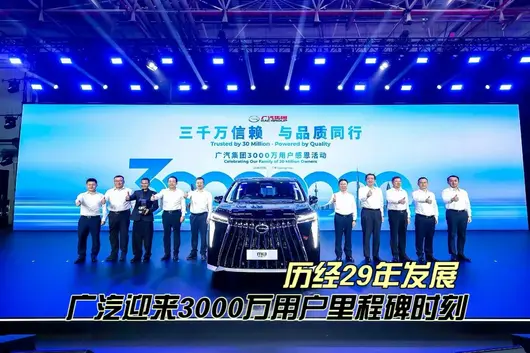
7 月 16 日,廣汽集團 3,000 萬用戶感恩活動在廣汽傳祺工廠舉行。廣東省、廣州市、番禺區有關領導,中國汽車工業協會常務副會長兼秘書長付炳鋒,廣汽集團董事長馮興亞、總經理閤先慶等班子成員,行業合作夥伴、供應商和經銷商代表以及海內外車主代表、員工代表、媒體代表等共同出席,一齊見證廣汽迎來第 3,000 萬位用戶的里程碑時刻。

【與會嘉賓見證廣汽迎來 3,000 萬用戶里程碑時刻】
從首輛整車下線到第 3,000 萬輛交付,廣汽歷經 29 年發展歷程。3,000 萬這個數字背後,是千萬用戶的選擇與信任,是廣汽長期堅守品質和安全的定力,是向電動化、智能化轉型決心,也是中國汽車工業由大到強、從規模擴張到價值躍升的一面縮影。
全球同步 智能新能源矩陣彰顯轉型進程
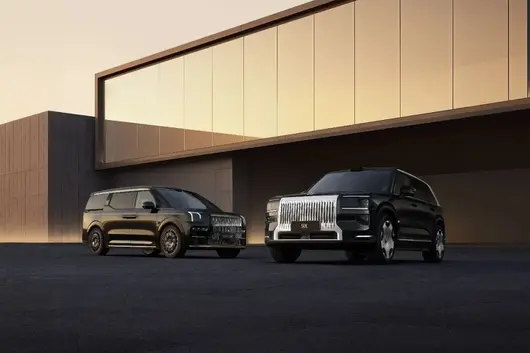
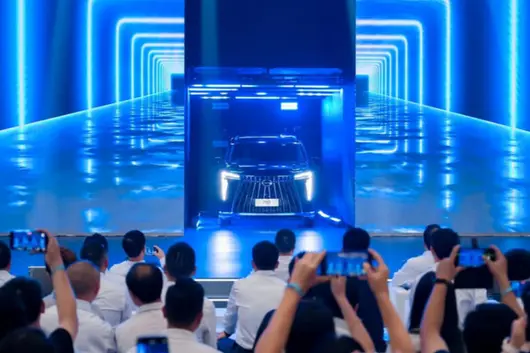
活動現場,廣汽全球多座生產基地同步連線,廣汽本田 P7、廣汽豐田铂智 7、啟境 GT7、廣汽埃安 N60、廣汽昊鉑 S600 分別作為廣汽第 29999995 到第 29999999 輛車依次下線。最後,右舵版廣汽傳祺 M8 PHEV 作為第 3,000 萬輛整車在現場舞台閃亮登場。全線新能源下線車型矩陣的集體亮相,成為廣汽全速推進電動化、智能化變型的直觀印證。

【廣汽第 3,000 萬輛整車——右舵版廣汽傳祺 M8 PHEV 駛下生產線】

【廣汽智能新能源矩陣閃亮登場】
隨後,馮興亞將第 3,000 萬輛車的車匙交到泰國車主 Tony Jaa 先生的手中,這一刻定格的不只是一個數字,更是廣汽與全球用戶「雙向奔赴」的溫情見證。

【馮興亞(左)為泰國車主 Tony Jaa(右)交付新車車匙】

【閤先慶(左一)為廣汽集團全品牌榮譽車主頒獎】
這份跨越山海的信任,正是廣汽在行業變局中突圍的底氣。今年上半年,廣汽集團銷量 77.31 萬輛,同比增長 2.35%,其中新能源汽車銷量同比增長 68.8%;海外出口突破 12 萬輛,同比大增 132%,在行業深度重塑期跑出了穩健的節奏。
品質為基 築牢千萬用戶出行底氣
「品質是廣汽永遠不會讓渡的底線。」馮興亞在總結致辭中表示。在廣汽的發展中,規模增長始終以品質為底色。多年來,廣汽集團始終秉持「質量第一」理念,融合本田全面質量管理(TQM)、豐田精益生產方式(TPS)與嶺南文化,構建了以「融合創新」為中心的質量管理模式。一切的落腳點,都是造出讓用戶開得放心、用得省心、坐得舒心的好車。

【廣汽發展歷程重要節點見證者講述廣汽與品質同行的故事】

【「國家卓越工程師團隊」廣汽動力總成自主研發團隊講述研發創新歷程】

【廣汽造型設計團隊講述設計創新歷程】

【廣汽埃安智能生態工廠】
從研發端到製造端,廣汽建立了全鏈條嚴苛的品質管控體系:每款新車上市前均需經過高寒、高溫、高原、高濕、高腐、山區、沙塵等「五高一山一塵」極端環境測試,完成「兩冬一夏」實地路試;借助試驗場、實驗室覆蓋整車 12 個大項、1,500 餘項驗證子項,實現體系化品質校驗;廣汽埃安智能生態工廠作為「全球首個新能源汽車燈塔工廠」,以數字化智能製造體系保障量產品質穩定。

【廣汽星靈安全守護體系】
在核心安全技術層面,星靈安全守護體系構建四大防護維度,八大關鍵系統採用雙冗餘設計,已守護近 200 萬用戶,規避 628 萬次潛在出行風險;彈匣電池累計裝車 150 萬輛,安全行駛里程超 1,600 億公里;服務端同步加碼保障,廣汽在行業內率先推出自主品牌「三擔責」政策,針對用戶關注的電池與智能駕駛輔助問題主動兜底,打消用戶用車顧慮。正是這一一道道安全防線與一項項服務承諾,撐起了廣汽 3,000 萬銷量背後的品牌底氣。
用戶導向 構建全周期暖心服務體系
「用戶在乎的,我們放心上;用戶期盼的,我們全力以赴。」馮興亞表示,這份以用戶為中心的理念,早已深深融入廣汽集團的發展基因。多年來,廣汽集團始終秉持「人為本、信為道、創為先」的企業理念,其中「人為本」的核心要義,正是以用戶為本。

【廣汽「用戶全開麥」活動現場】
一方面,為直面問題、傾聽用戶心聲,廣汽常態化舉辦用戶全開麥活動,把用戶請到「家裡」,面對面交流。同時,建立全流程閉環管理機制,確保每一條建議都能得到妥善處理,共性問題第一時間面向全量用戶優化。
此外,廣汽還成立專屬用戶洞察部門、推進問題從發現到解決的全流程變革,從組織機制上保障用戶訴求件件有回應、事事有落實。
另一方面,服務網絡同步加速滲透。在渠道端,推進服務網絡下沉縣域,年內計劃新增建設 1,000 家縣域授權門店;在響應端,上線「超級管家」服務,實現 5 秒響應、2 小時訴求結辦,保障用戶訴求直達快辦。在補能端,建設「9 縱 10 橫」補能網絡,已覆蓋全國 31 個省份 213 座城市,核心城區實現「直線 1 公里必有站」,自營充電樁數量超 2.7 萬根,其中超充樁突破 2 萬根,為新能源車主提供便捷的補能服務。

【廣汽能源「9 縱 10 橫」補能網絡】
本次感恩活動的核心主旨正是向 3,000 萬用戶的長期支持致以誠摯回饋與感謝。活動現場,馮興亞宣佈,即日起,廣汽正式啟動「廣汽集團 3,000 萬輛下線·煥新感恩季」,廣汽本田、廣汽豐田、廣汽傳祺、廣汽埃安、廣汽昊鉑和啟境汽車六大乘用車品牌,將圍繞新購、置換到增購等分別推出特色政策,回饋每一份的陪伴與支持。

【廣汽集團 3,000 萬輛下線·煥新感恩季正式啟動】
科技向心 讓前沿技術賦能真實出行
以 3,000 萬為新的起點,廣汽將以創新驅動,邁向電動化與智能化的新征程,讓前沿科技真正轉化為用戶可感知的安心與便捷。
在動力領域,由「國家卓越工程師團隊」研發的星源動力,覆蓋星源增程、星源插混和星源超級雙擎三大技術,將搭載更多車型量產。每一款產品都需經過 10 萬小時台架和整車驗證,等效里程超過 1,000 萬公里,確保在全場景、全地域下,性能始終穩如磐石。

【廣汽星源動力讓用戶選擇「不再就就」】
在「三電」領域,廣汽持續攻堅電池超快充、低溫續航等行業痛點,已建成全固態電池中試產線,推出極致能耗技術,量產的夸克電驅電機最高效率突破 99%,為行業最高水平。
在智能聯網領域,超級大腦星靈架構持續進化,打通智能駕駛輔助、智能座艙、動力、底盤、車身、車聯網六大系統,實現「一個大腦統一指揮」,綜合性能提升 40%;星河智艙實現端雲一體,讓車成為真正「會思考、懂人心」的夥伴。廣汽還將和華為、寧德時代、滴滴、騰訊、阿里等頂尖夥伴並肩作戰,共建更強大的 AI 智能生態。
截至目前,廣汽集團累計研發投入超 620 億元,全球研發團隊超 6,800 人。持續的技術投入,正推動廣汽的產品從代步工具向智能出行夥伴、移動智慧空間、綠色能源生態進化。
站在 3,000 萬輛的新起點,廣汽將持續以用戶需求為錨點,以品質為根基,以科技創新為核心驅動,以全球化佈局為發展路徑,加速向生態型科技廣汽進階。

Recently, Geely Holding Group announced its performance for the first half of 2026, once again becoming the focus of industry attention.

Data shows that Geely Holding Group's total sales volume in the first half of 2026 reached 1,934,842 units, setting a new historical record. Among them, new energy vehicle sales reached 1,100,893 units, a year-on-year increase of 10%, with new energy penetration rate further rising to 56.9%. In the first half, Geely Automobile Holdings Limited (0175.HK) sold 1,422,958 units, setting a new high for the same period; new energy vehicle sales (including Geely, Lynk & Co, Zeekr) were 799,454 units, a year-on-year increase of 10%, with a new energy penetration rate of 56%.
According to CPCA data, Geely Automobile's domestic terminal retail sales volume in the first half of the year was 1.021 million units, ranking first in China's passenger car domestic sales for the first half of 2026, and also the only domestic brand to exceed sales of one million units.
However, to truly understand Geely's "new historical record" this time, one cannot only look at the total volume of 1.93 million units, nor stay only at the domestic first place of 1.021 million units. What is more worth asking is: Against the backdrop of slowing industry growth, divergent user demands, and intensifying global competition, what exactly does Geely rely on to beat the market?
It can be said that Geely's performance in the first half of the year was not just a refresh of sales records, but a concentrated realization of its long-term system capabilities once again.
In Geely's first-half performance report, several "Firsts" stood out especially.
Among them, Geely China Star sales reached 581,000 units, firmly holding the first place in domestic brand fuel vehicle sales; Zeekr delivered 178,000 units, a year-on-year increase of 97%, with delivery growth rate ranking first in the luxury new energy market. At the same time, Geely Xingyuan monthly sales broke through 50,000 units, cumulative sales exceeded 750,000 units since listing, continuously reigning as the sales champion across all brands and categories, becoming a genuine national hit.

These "Firsts" seem to come from different tracks, but together reveal an important characteristic of Geely's growth: running fast, and walking steadily. Among them, China Star stabilizes the fuel vehicle base, continuing to maintain leadership in the stock market; Zeekr accelerates upward breakthrough, and Xingyuan continues to scale up in the mainstream new energy market.
Fuel and new energy, mainstream and high-end, scale and value, different sectors are not simply a zero-sum game, but gradually forming a mutually supportive growth structure. This balance is precisely the most worthy part of attention in Geely's first-half performance.
Supporting this balanced growth, on one hand is a multi-brand lineup with clear positioning and wide coverage; on the other hand, it is the continuous deepening of the "One Geely" strategic integration.
Not long ago, Geely Holding Group Chairman Li Shufu publicly stated that they will orderly close, cancel, and merge relevant redundant entities of Geely Automobile Group Co., Ltd., focusing advantageous resources to strengthen the core listed platform of Geely Automobile Holdings Limited. This more precise resource allocation for different market cycles and user needs is also further improving the operating efficiency and anti-cycle ability of the entire group.
From this perspective, what Geely truly deserves attention to is not just how many "Firsts" were captured, but behind these "Firsts", a growth system balancing scale, structure, and efficiency is forming. This ability to hold the base while continuously opening up new volume is the key for Geely to traverse industry cycles and maintain long-term leadership.
Another important growth lever for Geely comes from the overseas market.
From the performance in the first half of the year, Geely's overseas business is entering an accelerated realization period. Its overseas sales reached 474,228 units, a year-on-year increase of 158%, exceeding the total export sales of 2025. More worth noting is that its overseas growth is not mainly relying on traditional fuel vehicles for volume, but simultaneously upgrading towards new energy and high-end. Its new energy product export sales in the first half were 277,000 units, a surge of 585% year-on-year, with new energy proportion reaching 58%. This means Geely's overseas business growth logic is gradually shifting to relying on new energy technology, product experience, and brand value to open up incremental space.

Among them, Geely Galaxy new energy products entered the top sales ranks in multiple overseas markets; Zeekr won championships in niche markets of countries such as Thailand, Malaysia, Mexico.
This global synergy is also reflected in the performance of other brands under Geely Holding Group. Among them, Volvo Cars sold 325,000 units in the first half, of which new energy sales were 161,000 units, a year-on-year increase of 3.8%, with new energy penetration rate 50%. Pure electric model deliveries grew for 9 consecutive months, and new energy transformation continued to breakthrough.
In addition, Polestar Cars sold 30,400 units in the first half, setting a new historical record, achieving sales breakthroughs in major markets such as the UK, Germany, and South Korea. Proton Cars sold 100,300 units in the first half, a year-on-year increase of 39.1%, creating the best sales performance since 2011. It is worth mentioning that the Proton e.MAS 7 PHEV launched in February of this year continued to sell well, leading the Malaysian plug-in hybrid niche market.

Of course, a new historical record is only an interim result. Another issue worth noting is, with Geely having already stood on a new step, what cards does it have in hand for the second half of the year?
From the currently released information, Geely's new product and technology offensive in the second half of the year remains dense. First is Geely Galaxy TT. As a mid-to-large pure electric sedan, its body length reaches 4999mm, wheelbase is 2920mm, and it will match the Qianli Haohan H7 assisted driving solution. From the product positioning perspective, Galaxy TT targets young consumers' needs for sports design, smart experience, and personality expression, and also means Geely Galaxy will further extend to the higher value pure electric sedan market.

While products break through upwards, Geely's technical base is also continuing to upgrade. On July 16, Geely Galaxy's global first "Thunder 16-in-1 Intelligent Electric Drive" is about to be launched, native adapted to 800V high voltage platform, and 16 categories of functional modules including motors, silicon carbide electronic control, whole vehicle thermal management, etc. are highly integrated. The "16-in-1" will also be systemically integrated to further optimize whole vehicle space, weight, energy consumption and cost, continuously enhancing Geely Galaxy's competitive barrier.
Additionally, the imminent arrival of Galaxy Warship 700 also means that Geely will officially enter the new track of plug-in hybrid hard-core SUVs, which combines growth potential and profit margins.
For an enterprise that has already stood at the forefront of the Chinese automobile market, "selling more" is only the first stage; how to improve efficiency while expanding scale, how to maintain business quality during new energy transformation, and how to replicate domestic competitiveness to the global market are the questions that must be answered to become a world-class automobile group. And Geely is steadily walking on this path of advanced development.

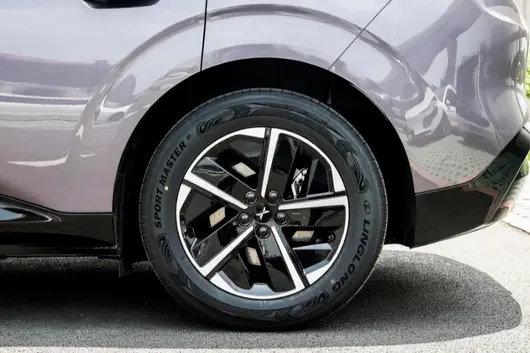
7月 16 日晚,小鵬MONA L03 全球上市。呢款定位“智能時尚 SUV”、面向年輕用戶嘅車型,原配咗玲瓏SPORT MASTER e 輪胎。

喺 15 萬級新能源 SUV 市場競爭白熱化嘅時點,呢套配套組合值得拆開嚟睇。
點解小鵬揀玲瓏輪胎
L03 嘅核心賣點係“智駕平權”——雙圖靈 AI 晶片、1500TOPS 算力、第二代 VLA 系統,把高級智駕拉低到 15 萬價位。呢個定價策略決定咗佢對供應鏈嘅要求:性能唔可以妥協,成本都要可控。
輪胎作為與路面直接接觸、影響續航同 NVH 嘅關鍵部件,需要喺低滾阻、靜音、濕抓三項指標上同時達到標準,同時價格要有競爭力。

玲瓏 SPORT MASTER e 恰好卡喺呢個位置上。呢款產品,曾獲得歐盟輪胎標籤最高級別 AAA 認證,喺抓地、低滾阻同靜音等方面有硬指標支撐,同時作為國產胎喺成本上比外資品牌有優勢。
更加重要嘅係,玲瓏喺新能源配套領域嘅客戶積累——比亞迪、吉利、奇瑞、賽力斯、零跑等——已經形成咗規模效應同品控穩定性,主機廠評估配套風險時,會傾向揀選已經有大量裝車驗證嘅供應商。
小鵬揀玲瓏,唔係一次試探性合作,而係喺已有成熟配套體系基礎上嘅追加。
SPORT MASTER e 嘅差異化喺邊
新能源專用胎呢個品類,各家都做,但真正能夠同時滿足主機廠配套要求同終端用戶感知嘅產品並唔多。SPORT MASTER e 嘅差異化體喺三個層面。

技術層面,AAA 標籤代表住佢喺滾阻、濕抓、噪音三項上都達到咗歐盟最高級別,呢啲喺國產胎入面好少見。低滾阻直接影響續航,濕抓關乎安全性,噪音影響駕駛體驗——呢三項恰好係新能源車主投訴頻率最高嘅輪胎相關問題。
玲瓏喺呢三個維度上同時做到頂級,說明配方同結構設計上有實質性技術積累,唔係靠單一指標打天下。
市場驗證層面,呢款產品入圍咗英國 WhatTyre“2025 年度環保輪胎大獎”最終提名,係中國輪胎首次進入該獎項最終角逐。
喺國內“中汽嚴選”評測中仲拿到咗“年度十佳輪胎”同“年度綠色環保獎”兩項。第三方評測機構嘅背書,對主機廠配套決策同終端消費者選購都有參考價值。
定制層面,玲瓏針對 L03 嘅年輕化定位做咗胎側設計——抗氧化絨黑工藝、小鵬 Logo 同絨黑底面對比、光圈元素融入。呢種定制喺配套業務中好似係“面子工程”,但其實係反映咗玲瓏對主機廠需求嘅回應速度同配合意願。
對住小鵬呢樣新勢力品牌,細節質感嘅統一性係品牌調性嘅一部分,玲瓏願意喺上面投入,說明雙方嘅配套關係唔係簡單嘅買賣,而係有一定深度嘅協同。
玲瓏喺新能源配套賽道嘅位置
玲瓏連續多年保持全球新能源配套輪胎銷量第一,呢個“第一”唔係靠單個客戶撐起嚟嘅,而係靠覆蓋面——經濟型同中高端都有佈局。
配套車企名單入面既有傳統自主品牌(比亞迪、吉利、奇瑞),也有合資品牌(東風日產、廣汽本田),仲有新勢力(賽力斯、零跑),客戶結構嘅多樣性降低咗單一客戶依賴嘅風險。

更深一層睇,玲瓏嘅海外產能佈局正成為新能源配套業務嘅第二增長曲線。中國新能源整車出口增速好快,6 月出口同比增長 152.7%,輪胎作為配套件跟住整車出海係確定嘅增量。
玲瓏喺海外有現成嘅產能,唔使從國內發貨,呢個喺國際貿易壁壘日益複雜嘅背景下,係一個實實在在嘅競爭優勢。
行業層面嘅幾個判斷
呢次配套,背後講明咗好多問題。第一個判斷係,國內新能源配套胎嘅競爭正從“邊個做得”轉向“邊個能夠穩定做”。主機廠對輪胎嘅要求再唔係“能夠裝上就得”,而要喺滾阻、靜音、濕抓、耐用、成本之間搵到平衡點。
能夠同時滿足呢啲條件嘅供應商,會取得更多配套份額。玲瓏、賽輪、中策呢幾間頭部企業,喺新能源配套領域嘅份額仲會繼續提升。
第二個判斷係,定制正成為配套業務嘅標準配備。主機廠越來越重視輪胎與整車設計嘅視覺統一性,胎側 Logo、花紋設計、色彩搭配呢啲細節,正從“加分項”變成“基本項”。能夠提供定制服務嘅輪胎企業,喺配套競標中會佔據優勢。

第三個判斷係,海外產能正成為配套業務嘅護城河。隨著歐盟反傾銷落地同美國對東南亞輪胎嘅貿易審查持續,喺海外有產能嘅輪胎企業,唔單止能夠服務中國整車出口,仲能夠直接對接海外主機廠嘅本地化配套需求。玲瓏喺泰國同塞爾維亞嘅基地,喺呢輪競爭中佔據咗先手。
小鵬MONA L03 有無喺 15 萬級市場站穩,取決於產品力同交付能力。但配套呢一環,玲瓏已經將牌打到位。接下來要睇嘅係,呢套 SPORT MASTER e 有無喺終端用戶嘅實際使用過程中跑出口碑,以及玲瓏有無將小鵬呢個客戶從國內配套延伸至海外配套。

In Malaysia's SUV market, many buyers compare Perodua Aruz and MG MG HS when choosing a car. These two cars are quite close in price and positioning. Today, we will make a detailed comparison from multiple aspects to help you save time on research.
Perodua Aruz's OTR price in Malaysia is RM 72,900 - 77,900, with a total of 2 versions, including 1.5L X (RM 72,900), 1.5L AV (RM 77,900), etc.
MG MG HS's OTR price in Malaysia is RM 130,450 - 146,450, with a total of 2 versions, including 1.5L Standard (RM 105,000), 1.5L Executive (RM 115,000), etc.
From a price perspective, Perodua Aruz's starting price is indeed RM 57,550 cheaper than MG MG HS. If your budget is limited, Perodua's entry-level version can already meet daily needs. However, also note that saving that amount might involve trade-offs in features, depending on your needs.

Perodua Aruz's safety rating is 5★ (ASEAN NCAP), active safety systems include.
MG MG HS's safety rating is TBD, active safety systems include Basic.

Perodua Aruz adopts FWD drive method.
MG MG HS adopts FWD drive method.
The drive methods of both cars are the same, both are FWD, daily driving experience will not have much difference.

Perodua Aruz warranty 5 years/150,000km, maintenance interval every 10,000km or 6 months.
MG MG HS warranty 7 years/150,000km, maintenance interval every 10,000km or 6 months.
Overall, Perodua Aruz and MG MG HS are both very good car models in the Malaysian market. Which one to choose depends mainly on your personal needs and budget. We suggest doing your research, comparing quotes from a few dealerships, and then test driving to make the final decision. Buying a car is a big matter, spending time doing research will never be wrong.


On July 16, as a right-hand drive GAC Trumpchi M8 PHEV slowly rolled off the production line, GAC Group officially reached the milestone of producing its 30 millionth complete vehicle. From the first complete vehicle rolling off the line to breaking through the 30 million mark, GAC has traversed a 29-year development journey. This number is not merely a report card on the scale of a car manufacturer, but also encapsulates the evolution of China's automotive industry: from starting with joint ventures and growing independently to breaking through in new energy globalization. In the current era of deep industry reshaping and escalating competition, GAC's 30 million moment combines the persistence of the manufacturing original intention with transformation strategies for the future, offering a referenceable practical path for the high-quality development of Chinese car companies.


The underlying support for the 30 million scale is the long-term persistence on quality and safety. As one of the earliest car companies in China to carry out joint venture cooperation, GAC systematically absorbed mature experiences of Honda's comprehensive quality management and Toyota's lean production in its early development, and combined it with its own practice for fusion innovation, forming a quality management system with unique characteristics. This quality gene runs through the entire chain from R&D to manufacturing. Before the launch of each new car, it must undergo extreme environment tests such as 'Five Highs, One Mountain, One Dust' (high cold, high heat, high altitude, etc.), complete 'Two Winters and One Summer' on-site road tests, covering over a thousand verification sub-items for the whole vehicle; at the production end, represented by the GAC AION Smart Eco Factory, digital intelligent manufacturing guarantees the stability of mass production quality, becoming the world's first new energy vehicle lighthouse factory. Safety technology and service guarantee are increased simultaneously, forming the second line of defense of quality. The eight key systems of the Xingling Security Guard System feature dual redundant designs, the Magazines Battery installed on 1.5 million vehicles with over 160 billion kilometers of safe driving, and the industry-first independent brand 'Three Responsibilities' policy, forming a complete closed loop from technology bottom layer to service bottom line. In the stage where China's car market shifts from incremental to stock, the core ruler of user choice is returning to the essence of products. GAC's 30 million user trust accumulated over 29 years is essentially holding the bottom line of manufacturing that 'quality is not waived', which is also the core foundation of China's automotive industry from becoming large to strong.
Another signal of this milestone ceremony is the comprehensive acceleration of GAC's electrification and intelligence transformation. The 29,999,995 to 29,999,999 complete vehicles shown on site are all new energy models, covering six brands: GAC Honda, GAC Toyota, GAC Trumpchi, GAC AION, GAC Hyper, and Qijing Auto; and the right-hand drive Trumpchi M8 PHEV as the 30 millionth vehicle was finally delivered to a Thailand owner's hands, linking the two major trends of new energy transformation and globalization going out. Data confirms the actual results of the transformation. In the first half of this year, GAC Group's overall sales were 773,100 vehicles, a year-on-year increase of 2.35%; among them, new energy vehicle sales increased by 68.8% year-on-year, and overseas exports broke through 120,000 vehicles, a year-on-year increase of 132%. Under the industry background where the fuel car market is generally under pressure, new energy and exports are becoming the dual engines pulling growth. This growth is built on long-term R&D investment. As of now, GAC's cumulative R&D investment has exceeded 62 billion yuan, and its global R&D team has over 6,800 people. From Xingyuan Power's three technical routes, to the Quark Electric Drive with efficiency breaking 99%, to the completion of the all-solid-state battery pilot production line and the continuous evolution of Xingling Architecture, technical reserves are gradually being converted into product competitiveness. Unlike the path of some car companies betting solely on independent new energy, GAC promotes dual-line transformation of joint ventures and independence, forming a collaborative and complementary new energy matrix. In the current situation where joint venture car companies are generally facing transformation pain, this model retains the quality and manufacturing advantages of the joint venture system, and uses the technology vitality of the independent sector to drive overall upgrades, exploring a feasible direction for the electrification of joint venture brands.
The accumulation of 30 million users further validates the industry consensus of 'user-centric'. Current car market competition has long extended from the product end to the full lifecycle experience, and user operation capability has become an important component of the brand moat. GAC's practice lands on mechanism and service ends. On the mechanism level, it regularly holds face-to-face exchanges of 'User Open Mic', establishes demand full-process closed-loop management, and sets up a dedicated user insight department, guaranteeing user voices reach the decision layer from the organizational structure. On the service network level, it promotes channel sinking to counties, plans to add 1,000 county-level authorized stores this year, launches 'Super Steward' to achieve rapid response, and improves user experience with efficiency improvement. To address the charging pain points of new energy users, GAC built a '9 Vertical 10 Horizontal' charging network, with over 27,000 self-operated charging piles, achieving 'a station within 1 kilometer straight line' in core urban areas, alleviating user anxiety with infrastructure perfection. From 'selling products' to 'operating users' is a common transformation direction in the industry, and GAC's practice shows that user operation is not marketing jargon, but needs to be implemented in a full chain from organization, channels to ecosystem. 30 million users are both the accumulation of past reputation and the starting point of the future user ecosystem. Only by truly placing user demands in the core position can scale effects be converted into continuous brand value.
Looking back at the node of 30 million vehicles, GAC's development track is a microcosm of the upgrade of China's automotive industry, from learning advanced manufacturing experience through joint ventures, to independent mastery of core technology to achieve overtaking by changing lanes, and then participating in global competition with new energy products. In 29 years, Chinese car companies have completed the leap from catching up to running side by side, and then to leading in some fields. Behind the number of 30 million is the era trend of the entire industry from scale expansion to value leap. 30 million is not the end, but the starting point of a new round of competition.

[CNMO Tech News] July 16, @NEVData released observation data on the Southeast Asia automotive market: Chinese brand market share in the six ASEAN countries (Indonesia, Malaysia, Thailand, Vietnam, Philippines, Singapore) exceeds 60% in the new energy sector. Among them, Indonesia reached as high as 91%.

Chinese New Energy Vehicles
According to statistics, cumulative sales of passenger cars and pickups in the six ASEAN countries in the first half of the year totaled 1.9246 million, up 7.2% year-on-year. Specifically for June data, retail sales of passenger cars and pickups were 332,700, up 9.7% year-on-year. Indonesia (passenger cars, same for subsequent mentions) sales were 74,507 units, up 10.5% year-on-year; Malaysia sales were 72,943 units, up 23.1% year-on-year; Thailand sales were 68,912 units, up 11.2% year-on-year; Vietnam and Philippines sold 51,366 and 38,124 units respectively, up 6.4% and 4.1% year-on-year; Singapore was the only country with sales declining year-on-year, selling 6,948 units, down 1.8%.

Data shows, June NEV penetration rates varied significantly across countries. Singapore ranked first with a penetration rate of 66.4%, up 19.2% year-on-year; Vietnam and Thailand ranked second and third with penetration rates of 41% and 30.3% respectively, up 94.7% and 31% year-on-year. Although Indonesia and Malaysia penetration rates were under 20%, they surged 78% and 122% year-on-year. The Philippines lagged severely due to a lack of charging infrastructure, with a penetration rate of only 2.1%. These market increments were mainly contributed by Chinese new energy vehicle brands.
In the new energy sector, Chinese brand market share exceeds 60%. Among them, Malaysia reached 62%, Thailand 78%, Indonesia 91%. However, in the overall market, Japanese brands still lead with 68%. However, the overall market share of Chinese brands increased by 6.2 percentage points year-on-year (reaching 13.7%), reaching 17.3% in Thailand, surpassing Japanese and South Korean brands to become the largest group.

喺馬來西亞嘅 SUV 市場,好多買家喺揀車嗰陣都會拿 Perodua Aruz 同 GWM Haval H6 嚟做比較。這兩款車喺價位同定位上都幾接近,今日我哋就從多個方面做一個詳細嘅比較,幫你省下做功課嘅時間。
Perodua Aruz 喺馬來西亞嘅 OTR 售價係 RM 72,900 - 77,900,一總有 2 個版本,包括 1.5L X(RM 72,900)、1.5L AV(RM 77,900) 等。
GWM Haval H6 喺馬來西亞嘅 OTR 售價係 RM 139,750 - 139,750,一總有 2 個版本,包括 1.5L Turbo Standard(RM 140,000)、1.5L Turbo Premium(RM 155,000) 等。
從價錢睇,Perodua Aruz 嘅起步價確實比 GWM Haval H6 平咗 RM 66,850。如果你預算有限,Perodua 嘅入門版已經可以滿足日常需求。但都要注意,平嗰幾千蚊,可能喺配備上會有取捨,具體要睇你嘅需求。
Perodua Aruz 車身長 4400 mm,車尾箱 400 L。
GWM Haval H6 車身長 4400 mm,車尾箱 400 L。
兩款車嘅尺寸幾乎一樣,車內空間差別唔大。呢個級別嘅車,日常使用完全夠用。
Perodua Aruz 保修 5 年/150,000km,保養間隔 每 10,000km 或 6 個月。
GWM Haval H6 保修 7 年/150,000km,保養間隔 每 10,000km 或 6 個月。
Perodua Aruz 同 GWM Haval H6 都係馬來西亞市場嘅主流選擇,適合家庭使用、日常通勤。如果你更睇重品牌口碑同二手價,可以優先考慮口碑更好嗰一款;如果你更在意性價比同配備,那就揀配置更豐富嗰款。最終都係建議兩款都去試駕,親身體驗先係最重要嘅。
總而言之,Perodua Aruz 同 GWM Haval H6 都係馬來西亞市場好唔錯嘅車型。揀邊一輛,關鍵都要睇你嘅個人需求同預算。建議大家做好做功課,多比較幾間車行嘅報價,先去試駕做最終決定。買車係件大事,花少少時間做功課絕對唔會錯。
In the Malaysian SUV market, many buyers compare Perodua Aruz and Chery Tiggo 8 when choosing a car. These two cars are quite close in price and positioning. Today, we will make a detailed comparison from multiple aspects to help you save time on research.
The OTR price of the Perodua Aruz in Malaysia is RM 72,900 - 77,900, with a total of 2 variants, including 1.5L X (RM 72,900), 1.5L AV (RM 77,900), etc.
The OTR price of the Chery Tiggo 8 in Malaysia is RM 129,750 - 129,750, with a total of 1 variant, including 2026 1.6T Standard (RM 129,750), etc.
From a price perspective, the starting price of the Perodua Aruz is indeed RM 56,850 cheaper than the Chery Tiggo 8. If your budget is limited, Perodua's entry-level version can already meet daily needs. However, be aware that saving a few thousand might involve trade-offs in features, depending on your specific needs.
The Perodua Aruz is equipped with a 1.5L 4-cyl, 105 hp. Official fuel consumption is 6.0 L/100km.
The Chery Tiggo 8 is equipped with a 1.5L Turbo, 140 hp. Official fuel consumption is 7.0 L/100km.
In terms of power, the Chery Tiggo 8's 1.5L Turbo has 35 more hp than the Perodua Aruz's 1.5L 4-cyl. However, for daily city driving, the power of both cars is sufficient, and you won't feel underpowered.
The Perodua Aruz safety rating is 5★ (ASEAN NCAP), active safety systems include.
The Chery Tiggo 8 safety rating is TBD, active safety systems include Basic.
Perodua Aruz body length 4400 mm, trunk 400 L.
Chery Tiggo 8 body length 4400 mm, trunk 400 L.
Both cars have almost the same dimensions, and the interior space is not much different. For cars in this class, it is completely sufficient for daily use.

The Perodua Aruz adopts FWD drive mode.
The Chery Tiggo 8 adopts FWD drive mode.
Both cars have the same drive mode, both are FWD, and there won't be much difference in daily driving feel.

Overall, the Perodua Aruz and Chery Tiggo 8 are both very good models in the Malaysian market. Which one to choose depends mainly on your personal needs and budget. We suggest doing your research, comparing quotes from several dealers, and test driving before making a final decision. Buying a car is a big matter, spending some time on research will never be wrong.

In 2026, domestic passenger cars may say goodbye to the high-growth era, officially entering an adjustment phase characterized by deep competition in the stock market and dual pressure from supply and demand. Slowing growth and profit contraction are stage challenges faced by the entire industry. Latest data from CPCA shows that in June, domestic passenger car retail sales reached 1.602 million units, down 23.2% year-on-year; cumulative retail sales from January to June were 8.701 million units, down 20.2% year-on-year. The entire product category market weakened synchronously, fuel vehicle retail sales plummeted 39% year-on-year. Domestic sales of joint ventures, luxury, and independent brands generally faced pressure. Most automakers saw varying degrees of decline in domestic terminal sales. Increasing revenue without increasing profit has become the industry norm.
Looking at the market performance from the first half of 2026, the automotive industry shows typical cycle adjustment characteristics. Whether traditional independent, leading new forces, or mainstream joint venture brands, all face varying degrees of operational pressure.

Seres Zhang Xinghai revealed at the Chongqing Auto Forum that the price of storage chips rose by more than 400%, and lithium carbonate prices doubled year-on-year. The unit cost for all AITO models under the brand increased by 15,000-20,000 yuan. Cost pressure directly led to the company's H1 performance forecasted loss of 1.05 billion to 1.3 billion yuan. Chips and battery materials are the core sources of cost increases. Voyah Lu Fang publicly stated that chip cost increases for high-end smart models broke through 300% at most. Basic consumables such as copper, aluminum, and plastics rose in price synchronously. The added cost per smart vehicle exceeded 12,000 yuan. The industry generally faces a dilemma of 'rising costs, dare not raise prices'.

Terminal market demand is weak, price wars are fierce. Automakers dare not easily increase selling prices. Upstream raw materials and chip costs rose rigidly. Profit margins are squeezed from both sides. This round of industry downturn is industrial periodical pain formed by the superposition of multiple pressures: weak consumption, skyrocketing upstream costs, overcapacity, and normalization of price wars.
This round of adjustment is a necessary stage of industry development. Short-term pressure will force the industry to eliminate inefficient capacity and homogeneous products, accelerating high-quality enterprises to complete value upgrades. Facing a unified cycle dilemma, domestic leading automakers have escaped the mindset of passively responding to price wars. They have formed systematic, long-term breakthrough strategies, focusing on four core main lines: Opening a second growth curve through global overseas expansion to offset domestic stock bottlenecks; Escaping homogeneous price involution through differentiated new product matrices; Building long-term barriers with full-stack technology self-research to stabilize cost advantages; Achieving cost reduction and efficiency gains through channel model iteration, digging deep into user value.

In sharp contrast to the domestic market downturn, automotive exports have become the core engine for industry growth against the trend. CAAM data shows that in June, domestic automotive vehicle exports reached 1.037 million units, up 11.6% month-on-month and surged 75.1% year-on-year. Monthly export volume exceeded one million units for the first time. Cumulative exports in the first half reached 5.096 million units, up 65.3% year-on-year. Among them, new energy exports grew by more than 120%. Overseas markets effectively offset domestic demand gaps, forming a new industry pattern of 'domestic pressure, overseas volume'.
Opening a second growth curve through global overseas expansion to offset domestic stock bottlenecks:
Chery maintains its position in the first tier of independent overseas exports. Cumulative exports in the first half reached 943,800 units, up 71.5% year-on-year. Exports accounted for nearly 70% of total sales. Relying on local factories in Southeast Asia and South Africa, it digs deep into emerging mass markets, effectively offsetting the pressure of domestic market involution. BYD exported 789,000 units in the first half, up 70.5% year-on-year. Overseas sales accounted for 43.6% of the group's total sales. Relying on localized capacity in Hungary and Thailand to layout European and Southeast Asian markets, it aims to achieve balanced domestic and overseas sales development, effectively offsetting domestic price war profit pressure, and relying on scaled industrial output to establish global cost and channel advantages. Changan Automobile delivered 402,000 units overseas in the first half, up 35.1% year-on-year. Relying on the 'Hai Na Bai Chuan 2.0' strategy to dig deep into emerging markets, Thai and Brazilian local factories continue to go into production. Building overseas localized operation teams and after-sales systems, focusing on exporting hybrid and smart models, using highly adaptable products to seize incremental markets in Southeast Asia and South America. Overseas sales continue to grow steadily, becoming a stable second growth curve;

Escaping homogeneous price involution through differentiated new product matrices:
In a cycle environment of severe overcapacity and product homogenization, automakers generally abandoned 'full-line low-price involution', turning to multi-brand layering, precise positioning in niche tracks, and product strategies where new and old technologies run in parallel, improving overall profit quality through structural optimization.
BYD insists on full price range coverage. Relying on the Dynasty, Ocean, Denza, Yangwang matrix, it covers household mainstream, mid-to-high-end, ultra-luxury markets. Fuel, hybrid, and pure electric are fully iterated. Solidifying the basic board with an extreme product matrix, it increases the proportion of high-margin products through vehicle structure upgrades. Changan Automobile builds a five-brand collaborative system. Qiyuan focuses on affordable hybrid home markets. Deep Blue focuses on mainstream pure electric. Avatr positions itself in high-end smart pure electric. Changan Passenger Cars stabilizes the fuel basic board. Kaiceng digs deep into commercial markets. Full price range differentiated layout, avoiding internal involution, precisely matching different segmented user demands. Geely relies on Thor Hybrid and Galaxy Pure Electric dual product lines, focusing on high cost-performance home new energy markets. Continuously iterating energy-saving hybrid models, seizing fuel vehicle replacement space. At the same time breaking through upwards with Lynk & Co luxury, optimizing overall product structure.

Building long-term barriers with full-stack technology self-research to stabilize cost advantages:
Second half of industry cycle, short-term competing on cost, mid-term competing on products, long-term competing on technology. Leading automakers continue to increase investment in core technology self-research, achieving autonomy and controllability in three-electric systems, smart driving, chips, and hybrid platforms. Offsetting cost volatility from the root and building differentiated competitiveness.
BYD insists on full industrial chain self-research and self-production. Second-generation Blade Battery, high-voltage flash charging technology fully iterated, achieving fuel and electric same-speed refueling experience. Relying on vertical integrated supply chain advantages, it stabilizes cost advantage during raw material fluctuation cycles, forming unreplicable industrial barriers. Xpeng focuses on full-stack smart driving self-research. Continuously optimizing urban NGP, full-domain intelligent assist driving system. Using smart technology as core label, building differentiated product competitiveness, escaping specification involution. Li Auto focuses on vehicle-mounted large models, self-researched computing power chips. Focusing on smart cockpit and whole vehicle smart interaction upgrades. Relying on high computing power hardware and localized smart ecosystem, building high-end smart experience barriers, supporting brand premium. Changan Automobile continues high R&D investment. Digging deep into three core technologies: Blue Whale Super Engine Hybrid, self-researched Tianshu Smart, Golden Bell Shield Solid-state Battery, achieving autonomy and controllability in hybrid, smart, and battery technologies. Both supporting domestic product differentiated upgrades, also providing core technology endorsement for overseas models.

Comprehensive mainstream automaker cycle response actions show that the current domestic automotive industry is experiencing a round of deep adjustment. This is a natural periodic correction after years of scaled expansion. Narrowed profit space and slowed market sales growth are stage problems faced by the entire industry. This does not mean the development momentum of leading automakers has stalled. Need to view the industry status objectively with a long-term industrial perspective.
Through short-term market pain, the automotive industry's three long-term upward development trends remain stable and unchanging. First, electrification and intelligence transformation are already irreversible core main lines of the industry. New energy and smart cars will continue to replace traditional fuel vehicles, reshaping market patterns. Secondly, the trend of Chinese car exports is strong. Overseas market share steadily climbing. Globalization development dividends are still being released continuously. Finally, industry reshuffling accelerates. Market resources are concentrating on leading enterprises with complete overseas layouts, core self-research technologies, and multi-brand differentiated product matrices. Advantaged automakers will continue to seize the market at the bottom of the cycle.
Leading automakers represented by BYD, Geely, Changan did not passively respond to short-term market pressure. Instead, treated this round of cycle as a key window for strategic power accumulation. Synchronously increasing global layout, new product launch, and underlying core technology R&D. Solidifying long-term competition foundations. Price competition and profit pressure are just inevitable pains of industry survival of the fittest. High-quality automakers with global strategies, full-stack self-research technologies, and layered differentiated product systems possess strong risk resistance capabilities. They are able to safely traverse the industry downturn cycle, welcome greater development opportunities in the next round of industry upswing.

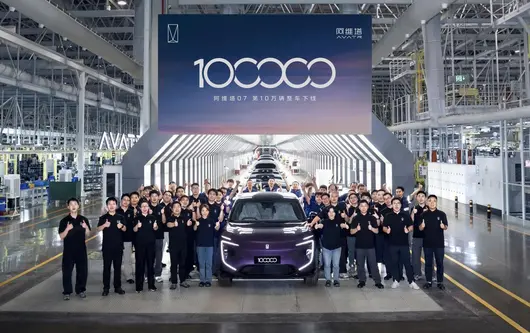
2026 年 7 月 8 日,阿維塔 07 第 10 萬輛整車喺阿維塔數智工廠正式下線。翌日,喺新加坡阿維塔體驗店,諾貝爾物理學獎得主、「石墨烯之父」康斯坦丁·諾沃肖洛夫爵士接過車匙,成為阿維塔 07 第 10 萬名車主。一個係銷量里程碑,一個係頂尖科學家的真實「嚴選」——兩件大事接連發生,令阿維塔 07 的今次「出圈」擁有咗更深層嘅註腳:佢唔僅係市場層面的爆款,更喺品牌價值層面收穫咗來自全球頂尖科學家的認可。

諾貝爾獎得主的第一輛中國車:點解係阿維塔 07?
康斯坦丁·諾沃肖洛夫教授喺二維石墨烯材料領域嘅開創性實驗獲得 2010 年諾貝爾物理學獎,係自 1973 年以來最年輕嘅物理學獎得主。這樣一位站在全球科研金字塔尖的科學家,選擇阿維塔 07 作為自己的第一台中國品牌汽車,本身就極具訊號意義。

今年 5 月,康斯坦丁教授到訪重慶,初次體驗阿維塔車型。阿維塔高辨識度嘅未來美學原創設計、極具科技感嘅環擁座艙、富於情感嘅智能交互,佢留下深刻印象。回到新加坡後,佢最終選擇咗阿維塔 07 作為日常座駕。喺交付儀式上,康斯坦丁教授表示:「選擇阿維塔 07,係因為佢完全契合我嘅審美標準與日常用車需求。這係我嘅第一台中國品牌汽車,創新實力同豪華質感都讓人驚嘆。」一位每日同前沿材料科學打交道嘅頂尖科學家,最終被一台中國智能電動汽車打動——這背後,係阿維塔 07 喺產品定義同工程實現上真正做到咗同全球最高標準對話。

全系標配嘅硬核實力,撐起 10 萬用戶嘅真實選擇
上市不足兩年就突破 10 萬輛,阿維塔 07 已成為品牌銷量主力。這樣嘅市場表現並非偶然:全系標配華為乾崑 ADS 智駕系統同鴻蒙座艙 HarmonySpace 5,實現車位到車位嘅全程智駕體驗;純電版搭載寧德時代 82.16kWh 神行超充電池,全域 800V 碳化矽平台支援峰值充電功率 420kW,10 分鐘可補充 350km 續航;同時全系標配 9 安全氣囊、雙零重力座椅、英國之宝音響、電吸門等越級配置。
品質保障層面,生產阿維塔 07 嘅阿維塔數智工廠係全球首個全域 5G 數智 AI 柔性超級工廠,被華為認證為「智慧工廠解決方案全球樣板點」,沖壓車間 100% 自動化、焊接車間 471 台機器人協同作業,全車鋁合金同高強度鋼佔比超過 90%。
從華為乾崑智駕、鴻蒙座艙、寧德時代電池再到頂尖嘅智能製造,阿維塔 07 將中國智能電動汽車產業鏈最頂尖嘅能力集於一身,這正係佢喺 25 萬級高端市場快速上量嘅底層邏輯。

從 10 萬輛到全球市場,阿維塔「新豪華」定位加速兌現
第 10 萬輛下線,對阿維塔而言唔只係銷量數字嘅累積。自 2024 年由泰國啟動出海以來,阿維塔已進入 43 個國家同地區,分銷網點增至 95 個。海外消費者對阿維塔品牌嘅高認可度,支撐其海外平均售價超過 30 萬元,實現高價值出海同盈利。2025 年阿維塔海外收入 13.98 億元,同比增長超 5 倍;2026 年 1 至 6 月海外銷量同比增長 80%。以新加坡市場為例,阿維塔 07 嘅起售價超過 100 萬人民幣,位居當地豪華品牌核心價格區間,收穫咗當地高淨值人群嘅青睞,成為當地高端汽車市場關注度頗高嘅中國品牌車型。
從泰國副總理、不丹國王、卡塔爾王室成員,到如今嘅諾貝爾物理學獎得主,阿維塔正喺全球高端市場持續收穫來自不同圈層嘅真實選擇。按照規劃,阿維塔將於 2026 年進入歐洲市場,預計 2030 年進入超 110 個國家同地區,持續加快海外銷售網絡嘅佈局。
與此同時,阿維塔也將對產品矩陣進行擴容——阿維塔 07L 將於 7 月 17 日開啓預售,定位中大型豪華 SUV,同阿維塔 07 形成定位互補,覆蓋更大嘅用戶圈層。

從第 10 萬輛下線到諾獎得主交付,阿維塔 07 用一次完美嘅「雙事件聯動」向市場傳遞咗清晰訊號:中國智能電動汽車品牌正以原創設計、硬核科技同豪華質感,喺全球中高端賽道建立起真正嘅、高價值嘅「新豪華」品牌認知。


喺馬來西亞嘅 SUV 市場,好多買家揀車嗰陣都會拿寶路達 Aruz 同馬自達 CX-5 比較。這兩款車喺價錢同定位上幾接近,今日我哋就由多個方面做個詳細比較,幫你省下做功課嘅時間。
寶路達 Aruz 喺馬來西亞嘅 OTR 售價係 RM 72,900 - 77,900,一共有 2 個版本,包括 1.5L X(RM 72,900)、1.5L AV(RM 77,900) 等。
馬自達 CX-5 喺馬來西亞嘅 OTR 售價係 RM 135,469 - 166,760,一共有 3 個版本,包括 2025 2.0L AT 35th Anniversary(RM 316,154)、2025 2.0L AT(RM 296,154)、2025 2.0L MT(RM 294,154) 等。
喺價錢度睇,寶路達 Aruz 嘅起步價確實比馬自達 CX-5 平咗 RM 62,569。如果你預算有限,寶路達嘅入門版已經可以滿足日常需要。但都要注意,平嗰幾千蚊,可能喺配備上面會有取捨,具體就要睇你嘅需要。
寶路達 Aruz 裝有 1.5L 4 缸,馬力 105 hp。官方油耗 6.0 L/100km。
馬自達 CX-5 裝有 1.5L 渦輪,馬力 140 hp。官方油耗 7.0 L/100km。
動力方面,馬自達 CX-5 嘅 1.5L Turbo 比寶路達 Aruz 嘅 1.5L 4 缸多咗 35 匹馬力。不過日常喺市區行,兩款車嘅動力都夠用,唔會覺得唔夠力。
寶路達 Aruz 嘅安全評級係 5★ (ASEAN NCAP),主動安全系統包括。
馬自達 CX-5 嘅安全評級係 5★ (ASEAN NCAP),主動安全系統包括。
兩款車嘅安全評級一樣,喺呢個級別裡面安全配備都算給得好齊全。而家嘅新車安全性都唔差,唔使太擔心呢一點。
寶路達 Aruz 保修 5 年/150,000km,保養間隔 每 10,000km 或 6 個月。
馬自達 CX-5 保修 5 年/150,000km,保養間隔 每 10,000km 或 6 個月。
兩款車嘅保修條件一樣,呢方面唔使糾結。實際保養成本仲要睇品牌嘅服務網絡同零件價格,建議去車友群問下真實車主嘅經驗。

總嚟講,寶路達 Aruz 同馬自達 CX-5 都係馬來西亞市場幾唔錯嘅車型。揀邊一輛,關鍵始終要睇你嘅個人需要同預算。建議大家做好功課,多比較間車行嘅報價,再去試駕做最終決定。買車係件大事,花少少時間做功課絕對唔會錯。

In the Malaysian SUV market, many buyers compare Perodua Aruz and Toyota Corolla Cross when choosing a car. These two models are quite similar in price and positioning, so today we will provide a detailed comparison from multiple aspects to help save you time on research.
The OTR price for Perodua Aruz in Malaysia is RM 72,900 - 77,900, with a total of 2 versions, including 1.5L X (RM 72,900), 1.5L AV (RM 77,900), etc.
The OTR price for Toyota Corolla Cross in Malaysia is RM 133,800 - 148,800, with a total of 3 versions, including 2026 HEV 1.8L GR Sport (RM 148,800), 2026 HEV 1.8L Standard (RM 140,800), 2026 1.8L Standard (RM 133,800), etc.
From a price perspective, the starting price of Perodua Aruz is indeed RM 60,900 cheaper than Toyota Corolla Cross. If your budget is limited, the entry-level Perodua model can already meet daily needs. However, also note that the savings of a few thousand may involve trade-offs in features, depending on your specific requirements.
Perodua Aruz is equipped with a 1.5L 4-cyl, 105 hp. Official fuel consumption 6.0 L/100km.
Toyota Corolla Cross is equipped with a 1.5L Turbo, 140 hp. Official fuel consumption 7.0 L/100km.
Regarding power, the 1.5L Turbo in Toyota Corolla Cross has 35 more horsepower than the 1.5L 4-cyl in Perodua Aruz. However, for daily city driving, both cars have sufficient power and won't feel underpowered.
Perodua Aruz body length 4400 mm, trunk 400 L.
Toyota Corolla Cross body length 4400 mm, trunk 400 L.
The dimensions of both cars are almost identical, with minimal difference in interior space. For a car of this class, it is more than sufficient for daily use.
Perodua Aruz uses FWD drive type.
Toyota Corolla Cross uses FWD drive type.
Both cars share the same drive type, FWD, so there won't be much difference in the daily driving experience.

Perodua Aruz warranty 5 years/150,000km, maintenance interval every 10,000km or 6 months.
Toyota Corolla Cross warranty 5 years/unlimited mileage, maintenance interval every 10,000km or 6 months.
Overall, both Perodua Aruz and Toyota Corolla Cross are quite good models in the Malaysian market. Which one to choose depends mainly on your personal needs and budget. We recommend doing your research, comparing quotes from several dealers, and then test driving to make the final decision. Buying a car is a major matter, spending some time on research will never be wrong.
In the Malaysian SUV market, many buyers compare the Perodua Aruz and Honda HR-V when choosing a car. These two cars are quite close in terms of price and positioning. Today, we will make a detailed comparison from multiple aspects to help you save time doing your homework.
The Perodua Aruz OTR price in Malaysia is RM 72,900 - 77,900, with a total of 2 versions, including 1.5L X (RM 72,900), 1.5L AV (RM 77,900), etc.
The Honda HR-V OTR price in Malaysia is RM 115,900 - 143,900, with a total of 4 versions, including 2026 e:HEV 1.5L RS (RM 143,900), 2026 1.5T V (RM 137,900), 2026 1.5T E (RM 130,900), etc.
From a price perspective, the Perodua Aruz base price is indeed RM 43,000 cheaper than the Honda HR-V. If your budget is limited, Perodua's entry-level version can already meet daily needs. However, note that the cheaper few thousand might involve trade-offs in equipment, depending on your specific needs.
Perodua Aruz is equipped with a 1.5L 4-cyl, 105 hp. Official fuel consumption 6.0 L/100km.
Honda HR-V is equipped with a 1.5L Turbo, 140 hp. Official fuel consumption 7.0 L/100km.
In terms of power, the Honda HR-V's 1.5L Turbo has 35 more horsepower than the Perodua Aruz's 1.5L 4-cyl. However, for daily city driving, both cars have sufficient power and won't feel underpowered.
Perodua Aruz body length is 4400 mm, trunk 400 L.
Honda HR-V body length is 4500 mm, trunk 450 L.
In terms of space, the Honda HR-V body is 100 mm longer than the Perodua Aruz, giving it an advantage in passenger space. However, the Perodua Aruz is a bit more flexible for parking in the city, each has its trade-offs.
Perodua Aruz uses FWD drive mode.
Honda HR-V uses FWD drive mode.
Both cars have the same drive mode, both are FWD, there won't be much difference in daily driving feel.

Perodua Aruz warranty 5 years/150,000 km, maintenance interval every 10,000 km or 6 months.
Honda HR-V warranty 5 years/unlimited mileage, maintenance interval every 10,000 km or 6 months.

Overall, Perodua Aruz and Honda HR-V are both quite good models in the Malaysian market. Which one to choose depends mainly on your personal needs and budget. It is recommended to do your homework, compare quotes from several dealerships, and then test drive to make the final decision. Buying a car is a big matter, spending time on research will never be wrong.

上半年,吉利交出一份令全行業都眼紅嘅答卷。
國內市場,終端零售量超過 102 萬台,係毫無疑問嘅銷量冠軍,亦係唯一喺終端銷量上突破百萬嘅自主品牌。
注意,呢度講嘅係零售量,唔係批發量。同批發量相比,零售量更能夠直接、客觀反映出品牌嘅競爭力同熱度。

同國內一樣強勢增長嘅,仲有出口量。
上半年吉利海外出口量超 47 萬台,已超去年全年嘅出口量,同比增幅喺 158%,今年 6 月單月出口量超 10 萬台。
吉利不斷上調出口總量預期,從此前嘅 64 萬預期,上調到 75 萬預期,最近又上調到 100 萬年出口量預期。
我唯有講,冇邊個車企攔得住吉利啦。
從行業角度嚟睇,吉利汽車嘅市場佔有率係 11.7%,緊隨其後嘅係比亞迪嘅 11.4%,其次係一汽大眾嘅 6.4%,長安汽車嘅 6.3%。

數據直接顯示,更多人願意選擇吉利,而吉利汽車此次奪回銷量冠軍頭銜,充分說明呢間企業嘅技術儲備、體系佈局具有極強嘅韌性。
而家係新能源主導嘅全新市場,6 月份行業數據,新能源車嘅銷量佔比喺 65% 左右,2/3 嘅消費者選擇咗新能源,1/3 嘅消費者仲喺度堅持油車。
吉利嘅策略係,抓住電車機會,保住油車基本盤。

大量嘅車企,唔係選擇 All in 新能源,就係電車發展速度緩慢,但吉利汽車則完全唔同!油車方面,佢儲備咗大量嘅內燃機技術,並且守住咗油車嘅基本盤。
例如,更專注於油車嘅中國星,上半年銷量超 58 萬台,連續 9 年領跑燃油乘用車市場。
電車市場,吉利銀河上半年銷量接近 52 萬台,真正意義上做到咗油車、電車均衡發展!
既滿足咗油車用戶群嘅需求,亦抓住咗想要嘗試電動化嘅新能源用戶,如此穩健、唔偏科嘅發展模式,決定咗吉利汽車嘅發展空間,遠遠超過其他企業。
喺關於“點解買吉利”呢件事上,我哋亦參與咗市場調研。

中國市場中,涌現過唔少現象級產品,從五菱宏光 S、哈弗 H6 到特斯拉 Model Y,每個時代都有每個時代嘅標籤。
而家最有話語權嘅車型,當屬吉利星願。
25 年,吉利星願銷量超 46 萬台,今年 6 月單月銷量超 5 萬!絕對嘅銷量優勢,既反映出行業嘅消費方向,亦體現咗吉利喺產品設計上嘅優勢。
佢能夠同消費者產生強烈共鳴。

例如,6 萬 -8 萬嘅定價區間,純電架構、大空間、良好嘅工藝標準,既俾用戶帶來“預算內最好”嘅用車體驗,仲大大降低咗用車成本。
唔少行業分析、調研機構已經將吉利星願當成企業轉型嘅範本,深度剖析佢成功嘅核心原因。
但實際上,星願呢台車嘅成功,幾乎無法被複製,除咗產品本身嘅高價值、強體驗感需要製造、設計門檻之外,星願嘅盈利模式,亦好難被複製。
現階段,星願係吉利銀河出口嘅核心車型,佢透過國內走量嘅基礎優勢,攤薄咗製造成本,透過喺海外市場嘅高定價來賺取利潤。
喺 6 月嘅 5 萬銷量入面,出口量超 40%,國內走量,均攤製造成本,優化產品力。外國賣高價,賺取利潤。
以巴西市場為例,星願定價 16 萬 -18 萬,遠遠超出國內,墨西哥、印尼等市場,星願銷量不斷走強,這種盈利模式、產業結構,既拼設計、製造能力,亦拼海外銷量,全球市場。
事實上,吉利星願係一台上市唔足兩年嘅車型,但已經取得輝煌嘅成績,並且推動咗行業消費方向向 A0 級電車靠攏。

對於吉利嚟講,星願係一個符號,佢代表咗吉利喺電動化市場中,已經擁有好強嘅技術儲備,畢竟只有技術強、調研能力優秀、供應商完善,先至可以造出嚟如此爆款車型。
喺所有企業認為行業好難、新車銷量無以為繼嘅時候,吉利卻屢屢拿出爆款成績。
從吉利星願、銀河 E5,到星越 L、博越 L、繽越,再到高端嘅 ZEEKR 9X、ZEEKR 8X,吉利嘅價值正被全行業睇到。
呢間企業嘅成功同成績,其實好難被複製,核心原因就係吉利喺真正意義上打通咗內部,多品牌協同作戰,統一架構、約束供應商,減少不必要嘅浪費,提高工作佀率。
先解決平台架構、三電系統嘅問題,做到全棧自研、供應 + 生產自我把控,從源頭降低成本、提升產品力。

能夠同吉利一樣打穿體系嘅企業並唔多,同時吉利仲有明確嘅發展規劃,油車、電車並行發展,保證咗市場面 100% 嘅完善。
從階段性嘅成績嚟睇,吉利嘅第一毫無疑問,而下半年,吉利仲準備咗更多車型,從銀河 TT、銀河戰艦 700,再到領克 800、星瑞 L90,下半年細分市場仲會迎嚟一波更強勢嘅競爭浪潮。
而家嘅乘用車市場無比複雜,傳統企業、新勢力、自主品牌嘅“車海戰術”想要搶奪市場,消費方向早已分流。

但對於吉利嚟講,佢似乎並冇受到直接影響。
吉利星願單月銷量 5 萬嘅成績說明咗一件事兒,只要產品優秀、定價合理,好嘅產品從來唔缺銷量,而想要做嘅好,極其考驗車企嘅設計、研發、製造能力。
對於吉利嚟講,佢既然坐上咗銷冠寶座,就極難被後來者超越。


喺馬來西亞嘅 SUV 市場,好多買家喺揀車嘅時候都會拿 Perodua Aruz 同 Mazda CX-3 做比較。呢兩款車喺價位同定位上都好接近,今日本地我哋就從多個方面做一個詳細嘅比較,幫你省下做功課嘅時間。
Perodua Aruz 喺馬來西亞嘅 OTR 售價係 RM 72,900 - 77,900,一共有 2 個版本,包括 1.5L X(RM 72,900)、1.5L AV(RM 77,900)等等。
Mazda CX-3 喺馬來西亞嘅 OTR 售價係 RM 126,159 - 139,159,一共有 2 個版本,包括 2023 2.0L High(RM 139,159)、2023 2.0L Plus(RM 126,159)等等。
從價錢嚟睇,Perodua Aruz 嘅起點價確實比 Mazda CX-3 平咗 RM 53,259。如果你預算有限,Perodua 嘅入門版已經可以滿足日常需要。但都要注意,平嗰幾千塊,可能喺配備方面要有取捨,具體睇你嘅需要。
Perodua Aruz 搭載 1.5L 4-cyl,馬力 105 hp。官方油耗 6.0 L/100km。
Mazda CX-3 搭載 1.5L Turbo,馬力 140 hp。官方油耗 7.0 L/100km。
動力方面,Mazda CX-3 嘅 1.5L Turbo 比 Perodua Aruz 嘅 1.5L 4-cyl 多出 35 匹馬力。不過日常喺市區開,兩款車嘅動力都夠用,唔會覺得唔夠力。
Perodua Aruz 嘅安全評級係 5★ (ASEAN NCAP),主動安全系統包括 。
Mazda CX-3 嘅安全評級係 5★ (ASEAN NCAP),主動安全系統包括 i-Activsense。
兩款車嘅安全評級一樣,喺呢個級別入面安全配備都算畀得好齊全。而家嘅新車安全性唔差,唔使太擔心這一點。
Perodua Aruz 採用 FWD 驅動方式。
Mazda CX-3 採用 FWD 驅動方式。
兩款車嘅驅動方式一樣,都係 FWD,日常駕駛感受唔會有太大分別。

Perodua Aruz 同 Mazda CX-3 都係馬來西亞市場嘅主流選擇,適合家庭使用、日常通勤。如果你更睇重品牌口碑同二手價,可以優先考慮口碑更好嗰一款;如果你更在意性價比同配備,就揀配備更豐富嗰款。最後都建議兩款都去試車,親身體驗先係最重要。
總體嚟講,Perodua Aruz 同 Mazda CX-3 都係馬來西亞市場好唔錯嘅車型。揀邊架,關鍵始終係睇你嘅個人需要同預算。建議大家做好功課,多比較幾間車行嘅報價,再去試車做最後決定。買車係件大事,花啲時間做功課絕對唔會錯。

喺馬來西亞嘅 SUV 市場,好多買家喺揀車嘅時候都會用 Perodua Aruz 同 Mazda CX-3 做比較。呢兩款車喺價位同定位上都幾接近,而家我哋就從多個方面做個詳細嘅對比,幫你省下做功課嘅時間。
Perodua Aruz 喺馬來西亞嘅 OTR 售價係 RM 72,900 - 77,900,一共有 2 個版本,包括 1.5L X(RM 72,900)、1.5L AV(RM 77,900)等。
Mazda CX-3 喺馬來西亞嘅 OTR 售價係 RM 126,159 - 139,159,一共有 2 個版本,包括 2023 2.0L High(RM 139,159)、2023 2.0L Plus(RM 126,159)等。
從價錢嚟睇,Perodua Aruz 嘅起步價確實比 Mazda CX-3 平咗 RM 53,259。如果你預算有限,Perodua 嘅入門版已經可以滿足日常需求。但都要注意,平嗰幾千蚊,可能喺配備上會有取捨,具體要睇你嘅需求。
Perodua Aruz 嘅安全評級係 5★ (ASEAN NCAP),主動安全系統包括。
Mazda CX-3 嘅安全評級係 5★ (ASEAN NCAP),主動安全系統包括 i-Activsense。
兩款車嘅安全評級一樣,喺呢個級別入面安全配備都算好齊全。而家嘅新車安全性都唔差,唔使太擔心這一點。
Perodua Aruz 採用 FWD 驅動方式。
Mazda CX-3 採用 FWD 驅動方式。
兩款車嘅驅動方式一樣,都係 FWD,日常駕駛感受唔會有太大分別。
Perodua Aruz 同 Mazda CX-3 都係馬來西亞市場嘅主流選擇,適合家庭使用、日常通勤。如果你更睇重品牌口碑同二手價,可以優先考慮口碑更好嗰一款;如果你更在意性價比同配備,就揀配備更豐富嗰款。最終都好建議兩款都去試駕,親身體驗先至最緊要。
總體嚟講,Perodua Aruz 同 Mazda CX-3 都係馬來西亞市場好唔錯嘅車型。揀邊一輛,關鍵始終係要睇你嘅個人需求同預算。建議大家做好功課,多比較幾間車行嘅報價,先至去試駕做最終決定。買車係件大事情,花少少時間做功課絕對唔會錯。

喺馬來西亞嘅 SUV 市場,好買家喺揀車嗰陣都會拿 波德亞 亞魯斯 同 豐田 科羅拉 Cross 嚟做比較。呢兩部車喺價錢同定位上都幾接近嘅,而家我哋就由多個方面做個詳細比較,幫你節省做功課嘅時間。
波德亞 亞魯斯 喺馬來西亞嘅 OTR 售價係 RM 72,900 - 77,900,合共 2 個版本,包括 1.5L X(RM 72,900)、1.5L AV(RM 77,900) 等。
豐田 科羅拉 Cross 喺馬來西亞嘅 OTR 售價係 RM 133,800 - 148,800,合共 3 個版本,包括 2026 HEV 1.8L GR Sport(RM 148,800)、2026 HEV 1.8L Standard(RM 140,800)、2026 1.8L Standard(RM 133,800) 等。
由價錢嚟睇,波德亞 亞魯斯嘅起跳價真係比 豐田 科羅拉 Cross 平咗 RM 60,900。如果你預算有限,波德亞嘅入門版已經可以滿足日常需要。但都要注意,平嗰幾千塊,可能喺配備上有取捨,具體要睇你嘅需求。
波德亞 亞魯斯 車身長 4400 mm,行李箱 400 L。
豐田 科羅拉 Cross 車身長 4400 mm,行李箱 400 L。
兩部車嘅尺寸幾乎一樣,車內空間分別唔大。呢個級別嘅車,日常使用完全夠用。
波德亞 亞魯斯 採用 FWD 驅動方式。
豐田 科羅拉 Cross 採用 FWD 驅動方式。
兩部車嘅驅動方式一樣,都係 FWD,日常駕駛感受唔會有太大分別。
波德亞 亞魯斯 同 豐田 科羅拉 Cross 都係馬來西亞市場嘅主流選擇,適合家庭使用、日常通勤。如果你更重視品牌口碑同二手價,可以優先考慮口碑更好嗰款;如果你更在意性價比同配備,嗰就揀配置更豐富嗰款。最終都好建議兩部都去試駕,親身體驗先係最重要。
總體嚟講,波德亞 亞魯斯 同 豐田 科羅拉 Cross 都係馬來西亞市場幾唔錯嘅車型。揀邊一輛,關鍵仲係要睇你嘅個人需求同預算。建議大家做好功課,多比較幾間車行嘅報價,再去試駕做最終決定。買車係件大事,花少少時間做功課絕對唔會錯。

喺馬來西亞嘅 SUV 市場,好多買家喺揀車嗰陣都會拿 Perodua Aruz 同 豐田 Yaris Cross 嚟做比較。呢兩款車喺價位同定位上都幾接近,今日我哋就從多個方面做個詳細比較,幫你省做功課嘅時間。
Perodua Aruz 喺馬來西亞嘅 OTR 售價係 RM 72,900 - 77,900,一共有 2 個版本,包括 1.5L X(RM 72,900)、1.5L AV(RM 77,900) 等。
豐田 Yaris Cross 喺馬來西亞嘅 OTR 售價係 RM 99,900 - 109,900,一共有 2 個版本,包括 2026 1.5L Standard(RM 99,900)、2026 HEV 1.5L Standard(RM 109,900) 等。
從價錢嚟睇,Perodua Aruz 嘅起步價確實比 豐田 Yaris Cross 平咗 RM 27,000。如果你預算有限,Perodua 嘅入門版已經可以滿足日常需求。但都要留意,平嗰幾千蚊,可能喺配備上會有取舍,具體要看你嘅需求。
Perodua Aruz 搭載 1.5L 4-cyl,馬力 105 hp。官方油耗 6.0 L/100km。
豐田 Yaris Cross 搭載 1.5L 4-cyl,馬力 105 hp。官方油耗 6.0 L/100km。
兩款車用得係同一套動力系統,日常開起嚟嘅感覺基本冇分別。油費方面都差不多,唔使太糾結這一點。
Perodua Aruz 嘅安全評級係 5★ (ASEAN NCAP),主動安全系統包括 。
豐田 Yaris Cross 嘅安全評級係 5★ (ASEAN NCAP),主動安全系統包括 TSS。
兩款車嘅安全評級一樣,喺呢個級別入面安全配備都算好齊全。而家嘅新車安全性都唔錯,唔使太擔心這一點。
Perodua Aruz 車身長 4400 mm,行李廂 400 L。
豐田 Yaris Cross 車身長 4400 mm,行李廂 400 L。
兩款車嘅尺寸幾乎一樣,車內空間差別唔大。呢個級別嘅車,日常使用完全夠用。

Perodua Aruz 採用 FWD 驅動方式。
豐田 Yaris Cross 採用 FWD 驅動方式。
兩款車嘅驅動方式一樣,都係 FWD,日常駕駛感受唔會有太大分別。
總嚟講,Perodua Aruz 同 豐田 Yaris Cross 都係馬來西亞市場好唔錯嘅車款。揀邊一部,關鍵都要睇你嘅個人需求同預算。建議大家做好功課,多比較幾間車行嘅報價,再去試駕做最終決定。買車係件大事,花點時間做功課絕對唔會錯。

喺馬來西亞嘅 SUV 市場,好多買家喺揀車嘅時候都會拿 寶威 Aruz 同 豐田 Corolla Cross 嚟做比較。這兩款車喺價位同定位上都幾接近,我哋今日就從多個方面做一個詳細嘅比較,幫你節省咗做功課嘅時間。
寶威 Aruz 喺馬來西亞嘅 OTR 售價係 RM 72,900 - 77,900,總共有 2 個版本,包括 1.5L X(RM 72,900)、1.5L AV(RM 77,900) 等。
豐田 Corolla Cross 喺馬來西亞嘅 OTR 售價係 RM 133,800 - 148,800,總共有 3 個版本,包括 2026 HEV 1.8L GR Sport(RM 148,800)、2026 HEV 1.8L Standard(RM 140,800)、2026 1.8L Standard(RM 133,800) 等。
由價錢睇,寶威 Aruz 嘅起價確實比 豐田 Corolla Cross 平咗 RM 60,900。如果你預算有限,寶威嘅入門版已經可以滿足日常需要。但要注意,平嗰幾千蚊,可能喺配備上會有取捨,具體睇你嘅需要。
寶威 Aruz 搭載 1.5L 4-cyl,馬力 105 hp。官方油耗 6.0 L/100km。
豐田 Corolla Cross 搭載 1.5L Turbo,馬力 140 hp。官方油耗 7.0 L/100km。
動力方面,豐田 Corolla Cross 嘅 1.5L Turbo 比 寶威 Aruz 嘅 1.5L 4-cyl 多咗 35 匹馬力。不過日常喺市區開,兩款車嘅動力都夠用,唔會覺得唔夠力。
寶威 Aruz 車身長 4400 mm,後備箱 400 L。
豐田 Corolla Cross 車身長 4400 mm,後備箱 400 L。
兩款車嘅尺寸幾乎一樣,車廂空間差別唔大。呢個級別嘅車,日常使用完全夠用。
寶威 Aruz 保修 5 年/150,000km,保養間隔 每 10,000km 或 6 個月。
豐田 Corolla Cross 保修 5 年/無限制里程,保養間隔 每 10,000km 或 6 個月。
總體嚟講,寶威 Aruz 同 豐田 Corolla Cross 都係馬來西亞市場幾好嘅車型。揀邊一部,關鍵始終都要睇你嘅個人需要同預算。建議大家做好功課,多比較幾間車行嘅報價,再嚟試駕做最後決定。買車係件大事,花少少時間做功課絕對唔會錯。

In the Malaysian SUV market, many buyers compare Perodua Aruz and Honda HR-V when choosing a car. These two models are quite close in price and positioning. Today we will make a detailed comparison from multiple aspects to help you save time on research.
Perodua Aruz OTR price in Malaysia is RM 72,900 - 77,900, with 2 versions available, including 1.5L X (RM 72,900), 1.5L AV (RM 77,900), etc.
Honda HR-V OTR price in Malaysia is RM 115,900 - 143,900, with 4 versions available, including 2026 e:HEV 1.5L RS (RM 143,900), 2026 1.5T V (RM 137,900), 2026 1.5T E (RM 130,900), etc.
From a price perspective, Perodua Aruz starting price is indeed RM 43,000 cheaper than Honda HR-V. If your budget is limited, Perodua's entry-level version can already meet daily needs. But also note, the few thousand difference in price might involve trade-offs in features, depending on your specific needs.
Perodua Aruz safety rating is 5★ (ASEAN NCAP), active safety systems include.
Honda HR-V safety rating is 5★ (ASEAN NCAP), active safety systems include Honda SENSING (ACC, CMBS, LKAS, RDM).
Both cars have the same safety rating, safety features are quite complete in this class. New cars nowadays do not have poor safety, so there is no need to worry too much about this.
Perodua Aruz body length 4400 mm, trunk 400 L.
Honda HR-V body length 4500 mm, trunk 450 L.
Regarding space, Honda HR-V body is 100 mm longer than Perodua Aruz, offering better passenger space. However, Perodua Aruz is a bit more flexible for parking in the city, each has its trade-offs.
Perodua Aruz warranty 5 years/150,000km, maintenance interval every 10,000km or 6 months.
Honda HR-V warranty 5 years/unlimited mileage, maintenance interval every 10,000km or 6 months.
Overall, Perodua Aruz and Honda HR-V are both very good models in the Malaysian market. Which one to choose depends mainly on your personal needs and budget. We suggest doing your research, comparing quotes from several dealerships, and then test driving before making a final decision. Buying a car is a big matter, spending time on research is never wrong.


