首頁X3

搜尋歷史
熱門搜尋
經銷商登入 / 註冊


The most "BMW" car is no longer BMW's most important car.
By|Hu Chengxu Edit|Mao Shiyan
Auto Pixel (ID:autopix)Original
BMW's best news and worst news arrived at almost the same time.
At the end of July, BMW reached a milestone in Debrecen, Hungary. The group's first all-electric exclusive factory produced its 50,000th Neue Klasse iX3.
Orders are growing faster than production ramp-up. From production start to the 50,000th unit roll-off, it took only nine months, while iX3 orders in Europe are approaching 100,000. BMW disclosed that for every three new electric vehicle orders in Europe, one belongs to the iX3.
To catch up with demand, the Debrecen factory started a second shift earlier, and hundreds of employees were transferred from the China factory for support.
In the first half of 2026, the iX3 also swept the World Car of the Year and World Electric Vehicle awards.

This is probably BMW's best new product start in the last decade. However, within the same period, several other things happened.
On July 29, BMW reached an agreement with the Works Council to launch a voluntary redundancy plan starting in October, cutting approximately 8,000 jobs globally by the end of 2027, accounting for 5.2% of its 154,500 employees. The cuts fell on R&D, planning, and functional departments in Germany, effectively slicing off one-fifth of BMW's white-collar jobs in Germany.
On July 30, BMW released its financial report for the first half of 2026. Net profit attributable to shareholders was 2.858 billion euros, down 25.75%. Pre-tax profit in the second quarter was 1.7 billion euros, a year-on-year decline of 35.1%.
The automotive business operating profit margin dropped by more than half year-on-year, and free cash flow decreased by 73.4%. These factors caused BMW's stock price to fall by about 39% this year, touching a 52-week low in late July.
The huge hole dragging down BMW's performance is in China. In the first half, BMW China's sales fell 20.4% year-on-year, and the second quarter's decline widened to 30.2%. With sales continuing to lose speed, China's record of consistently being BMW's largest single market for 12 consecutive years was ended, and its share of BMW's global sales dropped from a peak of 33.5% to 25.5%.
But in China, where BMW's new energy transformation needs to be tested the most, new cars arrived the latest. The domestic version of iX3 will be launched in the fourth quarter of this year.
Thus, strong sales in Europe are a good start, but it cannot yet prove it is the answer. The old market is losing speed, and the new anchor has not yet completed the hardest verification.
01
BMW Once Only Needed One Car
The last time BMW used the name "Neue Klasse" was in 1962. That time, it saved the company.
Before that, BMW had walked to the edge of being absorbed. Daimler-Benz proposed a takeover and restructuring plan. Before the December 1959 shareholder meeting, the deal was once considered a foregone conclusion. It was not until minority shareholders and employee representatives opposed it on the spot that the plan was vetoed, and BMW barely retained independence.
At that time, its product line was almost severed in the middle. One end was cheap micro-cars and motorcycles like the Isetta, while the other end was expensive V8 sedans like the 501 and 502. In the middle, there was no mainstream product that could contribute scale and profits simultaneously.
Marketing Director Paul Hahnemann saw this gap: a family sedan with displacement between 1.5 and 2.0 liters, high quality, and a sports character.
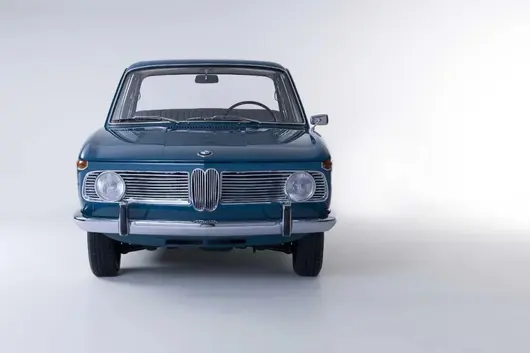
At the 1961 Frankfurt Motor Show, the BMW 1500 made its debut. This series was called "Neue Klasse".

▍BMW 1500 at the 1961 Frankfurt Motor Show
The four-door body abandoned the 501's elaborate styling and turned towards a more restrained, function-focused design. Von Falkenhausen developed the M10 engine for it and persuaded management to increase the displacement from the initial idea of 1.3 liters to 1.5 liters, while leaving space for expansion to 2.0 liters.
On the rear side of this car, at the junction of the C-pillar and the body, the "Hofmeister kink", a fold line turning forward, appeared for the first time, which later became BMW's signature.
But these elements that later defined BMW did not immediately bring a sales legend. The 1500 was produced for over two years, with full lifecycle sales of 23,800 units. What truly changed BMW's fate was the product template it provided. The four-door Neue Klasse was produced cumulatively for 339,800 units. The 02 series, shortened and simplified from it, sold over 820,000 units.
From 1960 to 1970, BMW's sales tripled, and revenue growth exceeded seven times. In 1963, nearly two decades after the dividend suspension, BMW resumed dividends to shareholders.
The M10 engine was produced until 1988, cumulatively exceeding 3.5 million units, and later spawned M12 and M13 turbocharged models for the F1 arena. In 1966, it lapped the Nürburgring Nordschleife in under 10 minutes.
That same year, BMW put the Neue Klasse technology and sports character into a more compact and cheaper car, and the 02 series was born. In 1975, its successor officially adopted a new name: the 3 Series.
From 1975 to now, the 3 Series has cumulatively sold over 16 million units, making it BMW's best-selling series. Luxury mid-size sedans have long used the 3 Series as the benchmark; Audi A4, Mercedes-Benz C-Class, Lexus IS, and even the later NIO ET5 all treated it as an archnrival.
More importantly, it turned sports character into a product logic that BMW could replicate generation after generation.
BMW's official positioning of the 3 Series has always been clear. In 2024, the wording was that for nearly 50 years, the 3 Series has always represented the core (the core of the BMW brand) of the BMW brand; in 2022, it was called the heart (the heart of the BMW brand) of the brand; when the new i3 was released in 2026, the 3 Series was still emphasized as the essence (the essence of the BMW brand) of the BMW brand.
These are not just rhetoric. Over the past few decades, many of BMW's key technologies and product concepts first became complete cars on the 3 Series before spreading to other products.
In 1985, the second-generation 3 Series E30 launched the 325iX, becoming BMW's first four-wheel-drive sedan, laying the starting point for the xDrive that later covered the entire series.

▍Third-generation 3 Series from 1990 to 1998
By the third-generation 3 Series E36, the 3 Series began to define BMW's driving experience more deeply. The Z-link multi-link rear suspension was extended to sedan, two-door, and wagon versions, and the center console was also significantly tilted towards the driver. "Driver-oriented" was established as a replicable cockpit layout.
In the past six decades, BMW's method of expanding its product line was essentially to replicate the 3 Series, scale it up to 5 Series and 7 Series, scale it down to 1 Series, and elevate it to X3 and X5. As long as the answer of the 3 Series stands, BMW's product line stands.
But in the EV era, BMW took the premiere rights of "Neue Klasse" from the 3 Series, and also took away the power to define the next generation of BMW.
02
The Next Generation BMW,
No Longer Starting with the 3 Series
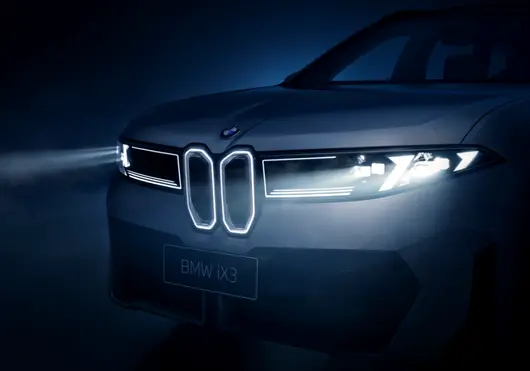
In September 2025, BMW reactivated the "Neue Klasse" name at the Munich IAA. But the first car was not the i3, but the iX3. Six months later, the i3 was released, officially referred to only as the "second Neue Klasse model".
Technical premiere rights were also moved. The Driving Super Brain Heart of Joy, which best embodies BMW's differentiation, as well as sixth-generation electric drive, large-format cylindrical cells, and Panoramic iDrive, were all first deployed on the iX3.
The i3 launched next year, every technology it receives, was received by the iX3 first.
In terms of wording, the change in status can even be seen. For example, for a certain function, the official wording for the iX3 was "the smoothest parking process in BMW history", while the i3 was described as "the smoothest parking process in 3 Series history", the scope was proactively narrowed.

In Q1 2026, global deliveries of the 3 Series and 4 Series totaled 103,800 units, down 11.8% year-on-year; X3 grew by 18.5% year-on-year, of which a considerable proportion came from the iX3. Analysts believe the iX3 could push the X3 family to the top of BMW's sales list by the end of 2026.
BMW's definition of the i3 has also regressed from "defining the entire series" back to "continuing 3 Series DNA", and the task of defining the next generation of products has been handed over to the SUV.
BMW is not the first to do this.
Tesla had the sedan Model 3 first in 2017, and the SUV form Model Y only in 2020, but the latter is the anchor that determines Tesla's product configuration. Model Y is not only Tesla's best-selling car globally, but also the foundation for its subsequent products, such as Cybercab.
Li Auto is even more thorough, and has not yet launched a sedan.
Behind this is first the engineering reality. The BEV platform lays a battery about 10 cm thick under the floor, which is naturally more suitable for higher-bodied SUVs. The battery gives SUVs the low center of gravity that sedans once had exclusively, but it does not give sedans the space of SUVs. Therefore, the mainstream configuration of the new energy era tilts towards SUVs.
But more importantly, the "driving dynamics" represented by sedans could almost support all of BMW's value in the ICE era; in the EV era, it is still important, but only one layer of product capability. Space, comfort, and cockpit experience, SUVs are rather easier to make comprehensive.
This means the 3 Series can no longer represent the Neue Class BMW. But the 3 Series stepping down does not mean the iX3 has completed the succession.
Beyond driving dynamics, the intelligent driving, cockpit, and ecosystem that determine the victory or defeat of new energy vehicles in China, BMW relies heavily on public suppliers. The China-spec iX3 adopts Momenta intelligent driving, while Momenta also supplies Mercedes, Audi, and IM Motors. In the capabilities consumers value most, BMW stands on the same foundation as rivals.
To re-establish differentiation, BMW almost rewrote the domestic iX3. 70% of the OS code was rewritten by the Chinese team, intelligent driving was co-developed again, and the cockpit integrated Alibaba, DeepSeek, Huawei, and Gaode.
The trade-off was time. The overseas version was delivered this March, and the domestic version will be launched in the fourth quarter.

Peculiarly, the market where BMW has the deepest problems, the new product arrived the latest. Mercedes has already compressed the pure electric GLC to 299,900 yuan, and Chinese new EV players have also completed several rounds of iteration in the same price range.
Meanwhile, starting from July this year, the domestic i3 and iX1 entered the production halt process, and i5 production was suspended. BMW cleaned up the previous generation of electric products to free up production lines and resources for the Neue Class models.
This led to it having virtually no domestic pure electric models for sale, with a new energy penetration rate in China of only about 6% in the first quarter, while the overall market in China has already exceeded 50%.
So, the iX3 has not yet taken the most critical exam. Its success in Europe can only prove that BMW made a decent car, but it has not yet proven in the global competition's most fierce and cutting-edge new energy market that it is sufficient to become the anchor of the next generation of BMW.
03
iX3 Is Not Yet The New Anchor
In 2020, BMW also made an iX3.
It rolled off the line at the Shenyang Dadong Plant, it was BMW Brilliance's first truly global model. All iX3s sold worldwide came from the same plant and were all the same car.
Six years later, the new generation iX3 has two versions. The standard wheelbase version is produced in Debrecen, Hungary, for Europe and the US; the long wheelbase version is produced in Shenyang, for China, as well as India, Thailand, Indonesia, and Malaysia.
With the same car name, selling one car globally has become two distinctly different products.
In the ICE era, domestic BMWs would also be lengthened. At that time, the long wheelbase version and standard wheelbase version still shared the same core technology, just different dimensions. Now operating systems, intelligent driving solutions, AI engines, and ecosystem systems have all gone down different paths.
The fundamental divergence is demand. The 3 Series can be unified globally because the market demand for good-handling mid-size sedans is consistent. For the new energy market where the iX3 belongs, the demands on both sides are already different; the Chinese market values intelligence, rear seat experience, and ecosystem connectivity more.
This also pushes the problem to a deeper level. If a car entrusted with a global anchor role must be rewritten after entering the most competitive market, can it still represent globally?
Furthermore, the victory won by the iX3 in Europe, the time may not be plentiful.

In April this year, the sales share of Chinese brands in the European electric vehicle market exceeded 15% for the first time, and the overall market share rose to 9.8%. In May, monthly new car registrations of Chinese automakers in Europe exceeded Japanese automakers for the first time. In the first quarter, exports to Europe reached 438,400 units, a year-on-year increase of 84.7%.
What mainly blocks domestic carmakers is tariffs. The combined tax rate for some domestic new energy vehicles in Europe reaches up to 45.3%. Even bearing high tariffs, the BYD Dolphin Surf (corresponds to the domestic Dolphin) is still cheaper than the same-class Renault 5 in Germany.
And this barrier is being bypassed. BYD, Chery, and Geely are turning tariffs from long-term barriers into phased costs by building factories in Europe or utilizing existing capacity.
More critically, the iX3 is absent from not just an ordinary market, but a place where global new energy competition premiered early. The demand changes happening in China today may well be the preview for other markets in the coming years.
This consolidation has already begun. Geely's G-ASD became the first Chinese driver assistance system to pass EU certification; XPeng has also brought intelligence into Europe as a lever for future competition.
They are betting on Europe's next stage. After electrification, competition will continue to migrate towards intelligence, and gradually approach today's China.
This means the China-spec iX3 is not just BMW's catch-up for a regional market, but also verifying the answer for the next round of global competition for it. The problem is that this verification has not started, and the time and profit space left for BMW have tightened simultaneously.
The semi-annual report released on July 30 maintained the automotive business profit margin guidance of 1% to 3%, this range was significantly reduced from 4% to 6% in June.
BMW's "voluntary redundancy plan" will last from October this year to the end of 2027, and true improvement in profitability will not come until 2028. The product battle that decides victory or defeat, however, has already started from Q4 2026.
BMW is not without the conditions to make long-term decisions. In 1962, Herbert Quandt dared to bet the entire company, and the governance structure relied upon that by stable family holding, allowing enterprises to bet across cycles still exists, and the Quandt family still holds about half of BMW's shares.
But things have changed.
In 1962, BMW had just walked out from the edge of being acquired. The Neue Class of that year was its all-in direction.
In 2025, BMW's global deliveries were about 2.17 million units. The iX3 is just the first of 40 future Neue Class products.
Today's BMW can no longer complete its transformation by relying on one car, one market, and one set of answers. This is where BMW is safer than in 1962, and also where it is harder than in 1962.

This article is original content from Auto Pixel (autopix)
Unauthorized reproduction is prohibited

最寶馬嘅車,咪再係寶馬最重要嘅車。
文|胡成旭 編輯|冒詩陽
汽車像素 (ID:autopix)原創
寶馬最好嘅消息同最壞嘅消息,幾乎喺同一時間到嚟。
7 月底,寶馬喺匈牙利德布勒森迎嚟一個節點。集團第一座純電專屬工廠,下咗第 5 萬輛新世代 iX3。
比產量爬坡更快嘅係訂單。從投產到第 5 萬輛下線,只用咗九個月,而 iX3 喺歐洲嘅訂單已經逼近 10 萬輛。寶馬披露,歐洲市場每三個新增嘅純電車型訂單,就有一個屬於 iX3。
為咗跟緊需求,德布勒森工廠提前加開第二班次,並從中國工廠調嚟数百名員工支援。
2026 年上半年,iX3 仲包攬咗世界年度車同世界電動車兩項大獎。
呢大約係寶馬近十年最好嘅一次新產品開局。但同一個週期入面,仲發生咗另外幾件事。
7 月 29 日,寶馬同勞工委員會達成協議,將從 10 月起啟動自願離職計劃,到 2027 年底喺全球削減約 8000 個崗位,佔其 15.45 萬名員工嘅 5.2%。刀口落喺德國嘅研發、規劃同職能等部門,等於切咗寶馬喺德「白領」崗位嘅五分之一。
7 月 30 日,寶馬發布 2026 上半年財報。歸母公司權益人淨利潤 28.58 億歐元,下跌 25.75%。第二季度稅前利潤 17 億歐元,同比下滑 35.1%。
汽車業務營業利潤率同比跌咗幾大半,自由現金流下降 73.4%。呢啲導致寶馬股價年內跌去約 39%,7 月下旬觸及 52 週新低。
拖累寶馬業績嘅大漏洞喺中國。上半年,寶馬中國銷量同比下滑 20.4%,第二季度跌幅進一步擴大至 30.2%。隨著銷量持續失速,中國連續 12 年穩居寶馬最大單一市場嘅紀錄畀終結,其佔寶馬全球銷量嘅比重,從峰值嘅 33.5% 降至 25.5%。
但喺最需要檢驗寶馬新能源轉型成色嘅中國,新車反而嚟得最尾。中國版 iX3 要等到今年第四季度先至上市。
於是,歐洲熱銷係好嘅開局,還未能夠證明係答案。舊市場正在失速,新錨點卻仲未能夠完成最難嘅一次驗證。
01
寶馬曾經只需要一部車
上一次寶馬啟用「新世代(Neue Klasse)」呢個名字,係 1962 年。嗰一次,佢救咗呢家公司。
嗰之前,寶馬已經走到被吞併嘅邊緣。戴姆勒 - 奔馳提出接管同重組方案,1959 年 12 月嘅股東大會召開前,交易一度畀人認為已成定局。直到小股東同員工代表當場反對,方案先至被否決,寶馬勉強保住獨立。
當時佢嘅產品線幾乎從中間斷開。一头係 Isetta 呢類廉價微型車同摩托車,另一頭係 501、502 呢類昂貴嘅 V8 轎車,中間冇一款能夠同時貢獻規模同利潤嘅主流產品。
行銷負責人保羅·哈內曼看到呢個空檔,一款排量喺 1.5 至 2.0 升之間、高品質、帶運動性格嘅家用轎車。
1961 年法蘭克福車展,BMW 1500 亮相。呢一系列被稱為「新世代」。
▍1961 法蘭克福車展上嘅 BMW 1500
四門車身放棄咗 501 嗰套繁複嘅造型,轉向更克制、更強調功能嘅設計。馮·法爾肯豪森為佢開發咗 M10 發動機,並說服管理層將排量從最初設想嘅 1.3 升提高到 1.5 升,同時預留擴展至 2.0 升嘅空間。
呢台車嘅後側,C 柱與車身連接處仲第一次出現咗後來成為寶馬標誌嘅「霍夫邁斯特彎角」,一道向前回折嘅折線。
但呢啲後來定義寶馬嘅元素,冇即刻換嚟銷量神話。1500 只生產咗兩年多,全生命週期銷量 2.38 萬輛。真正改變寶馬命運嘅,係佢提供嘅產品模板。四門 Neue Klasse 累計生產 33.98 萬輛,喺佢基礎上縮短、簡化而來嘅 02 系列,又賣出超過 82 萬輛。
1960 到 1970 呢十年,寶馬嘅銷量翻咗三倍,收入增長超過七倍。1963 年,寶馬隔咗近二十年,重新向股東派息。
M10 發動機一直生產到 1988 年,累計超過 350 万台,後來仲衍生出 F1 賽場上嘅 M12 同 M13 渦輪增壓機型。1966 年又喺紐博格林北環跑進 10 分鐘。
同年,寶馬把新世代嘅技術同運動性格,壓入一部更緊湊、更平嘅車,02 系列由此誕生。1975 年,佢嘅繼任者正式啟用一個新名字:3 系。
1975 年至今,3 系累計銷量超過 1600 萬輛,係寶馬銷量最高嘅車系。豪華中型轎車長期以 3 系為標尺,奧迪 A4、奔馳 C 級、凌志 IS,乃至於後來嘅蔚來 ET5 等,都把它當假想敵。
更重要嘅係,佢把運動性格變成咗寶馬可以一代代複製嘅產品秩序。
寶馬官方對 3 系嘅定位始終好明確。2024 年嘅表述係,近 50 年來,3 系一直代表著寶馬品牌嘅核心(the core of the BMW brand);2022 年稱佢係品牌嘅心臟(the heart of the BMW brand);到 2026 年新 i3 發布時,依然強調 3 系係寶馬品牌嘅精髓(the essence of the BMW brand)。
呢啲唔只係修辭。過去幾十年,寶馬唔少關鍵技術同產品理念,都係先喺 3 系上變成一部完整嘅車,先至向其他產品擴散。
1985 年,第二代 3 系 E30 推出 325iX,成為寶馬首款四驅轎車,為後來覆蓋全系嘅 xDrive 埋低起點。
▍1990 到 1998 嘅第三代 3 系
到咗第三代 3 系 E36,3 系開始更深地定義寶馬嘅駕駛方式。Z 型多連桿後懸架畀鋪上三廂、雙門同旅行版本,中控台也明顯向駕駛員傾斜。「以駕駛員為中心」畀建立為一套可以複製嘅車廂佈局。
過去六十年,寶馬擴張產品線嘅方法,本質上都係複製 3 系,放大成 5 系同 7 系、縮小成 1 系,抬高成 X3 同 X5。只要 3 系嘅答案成立,寶馬嘅產品線就成立。
但到咗新能源時代,寶馬從 3 系手入面拿走咗「新世代」嘅首發權,亦拿走咗定義下一代寶馬嘅權力。
02
下一代寶馬,
唔再始於 3 系
2025 年 9 月,寶馬喺慕尼黑 IAA 重新啟用「新世代」命名。但第一款車唔係 i3,而係 iX3。半年後 i3 發布,官方只把它稱為「第二款新世代車型」。
畀挪走嘅仲有技術首發權。最能體現寶馬差異化嘅駕控超級大腦 Heart of Joy,以及第六代電驅、大圓柱電芯同全景 iDrive,都係先在 iX3 上落地。
明年上市嘅 i3,拿到嘅每一項技術,都係 iX3 先拿到嘅。
措辭上甚至睇得出地位嘅變化。例如對一項功能,iX3 嘅官方說法係「寶馬歷史上最平滑嘅停車過程」,i3 被描述為「3 系歷史上最平滑嘅停車過程」,範圍主動收窄咗。
2026 年第一季度,3 系同 4 系全球交付 10.38 萬輛,同比下滑 11.8%;X3 同比增長 18.5%,其中相當比例來自 iX3。有分析認為,iX3 有可能喺 2026 年底把 X3 家族推上寶馬銷量榜首。
寶馬對 i3 嘅定義,已經從「定義全系」退回到「延續 3 系 DNA」,定義下一代產品嘅任務畀 SUV。
寶馬唔係第一個咁做嘅。
特斯拉喺 2017 年先有轎車 Model 3,2020 年先至有 SUV 形態嘅 Model Y,但後者先至係決定特斯拉產品構型嘅錨點。Model Y 唔僅係特斯拉全球最暢銷嘅汽車,仲係其後續產品嘅地基,例如 Cybercab。
理想則更徹底,至今冇推出轎車。
呢背後首先係工程現實。純電平台把一塊厚約 10 厘米嘅電池鋪喺地板下,天然更適合車身較高嘅 SUV。電池畀 SUV 獲得咗過去轎車獨有嘅低重心,卻冇畀轎車獲得 SUV 嘅空間。新能源時代嘅主流構型因此向 SUV 傾斜。
但更重要嘅係,轎車所代表嘅「駕控」,燃油時代幾乎可以撐起寶馬嘅全部價值;到咗新能源時代,佢仲係重要,卻只係產品能力嘅一層。空間、舒適同車廂體驗,SUV 反而更容易做得完整。
呢意味著,3 系已經無法代表新世代嘅寶馬。但 3 系退位,唔等於 iX3 已经完成接班。
駕控之外,決定中國新能源車勝負嘅智駕、車廂同生態,寶馬大量依賴公共供應商。中國版 iX3 採用 Momenta 智駕,而 Momenta 同時供貨奔馳、奧迪同智己。喺消費者最看重嘅能力上,寶馬同對手站喺同一個底座上。
為咗重新做出差異,寶馬又幾乎重寫咗一遍中國版 iX3。操作系統 70% 嘅代碼由中國團隊改寫,智駕重新聯合開發,車廂接入阿里、DeepSeek、華為同高德。
代價係時間。海外版今年 3 月已經交付,中國版要等到第四季度先至上市。
偏偏寶馬問題最深嘅市場,新產品到得最尾。奔馳已經把純電 GLC 壓到 29.99 萬元,中國新勢力亦喺同一價格帶完成咗數輪迭代。
與此同時,今年 7 月起,中國版 i3 同 iX1 進入停產流程,i5 暫停排產。寶馬清理咗上一代純電產品,為新世代車型騰出產線同資源。
呢導致佢幾乎冇中國產純電車型可賣,一季度喺華新能源滲透率僅約 6%,而中國市場整體已經超過 50%。
所以,iX3 仲未參加最關鍵嘅一場考試。佢喺歐洲嘅成功只能證明寶馬造咗一部唔錯嘅車,但仲未能夠喺全球競爭最激烈、最前沿嘅新能源市場,證明自己足以成為下一代寶馬嘅錨點。
03
iX3 仲未係新錨
2020 年,寶馬都造過一部 iX3。
佢喺瀋陽大東工廠下線,係華晨寶馬第一款真正意義上嘅全球車型。全世界銷售嘅 iX3,都來自同一間工廠,亦都係同一台車。
六年後,新一代 iX3 有咗兩個版本。標軸版喺匈牙利德布勒森生產,供應歐洲同美國;長軸版喺瀋陽生產,供應中國,以及印度、泰國、印尼同馬來西亞。
同一個車名,從一部車賣全球,變成兩套差異明顯嘅產品。
燃油車時代,中國寶馬同樣會加長。嗰時嘅長軸版同標軸版仍共享同一套核心技術,只係尺寸唔同。而家操作系統、智駕方案、AI 引擎同生態體系,都走向咗不同路線。
更根本嘅分歧係需求。3 系能喺全球統一,係因為市場對好開嘅中型轎車需求一致。iX3 所在嘅新能源市場,兩邊嘅需求已經唔一樣咗,中國市場更重視智能化、後排體驗同生態互聯。
呢亦把問題推到咗更深一層。一款被寄予全球錨點角色嘅車,如果進入競爭最激烈嘅市場後必須畀重新寫一遍,佢仲未能夠唔能夠代表全球?
更何況,iX3 喺歐洲贏下嗰一局,時間未必寬裕。
今年 4 月,中國品牌喺歐洲電動車市場嘅銷量佔比首次突破 15%,整體市場份額升至 9.8%。5 月,中國車企喺歐洲嘅月度新車註冊量首次超過日本車企。第一季度中國對歐出口 43.84 萬輛,同比增長 84.7%。
擋住喺中國車企面前嘅主要係關稅。部分中國產新能源車喺歐洲嘅綜合稅率最高達 45.3%,就算承擔高額關稅,比亞迪 Dolphin Surf(對應國內海豚)喺德國還是比同級嘅雷諾 5 平。
而呢道門檻正喺畀繞開。比亞迪、奇瑞同吉利正透過歐洲建廠或調用現有產能,把關稅從長期壁壘變成階段性成本。
更關鍵嘅係,iX3 缺席嘅唔係一個普通市場,而係全球新能源競爭提前上演嘅地方。今日喺中國發生嘅需求變化,好可能就係未來幾年其他市場嘅預演。
呢種收攏已經開始。吉利嘅 G-ASD 成為首個透過歐盟認證嘅中國輔助駕駛系統;小鵬亦把智能化引入歐洲,作為未來競爭抓手。
佢哋押注嘅係歐洲嘅下一階段,電動化之後,競爭會繼續向智能化遷移,並逐漸接近今日嘅中國。
呢意味著,中國版 iX3 唔止係寶馬對一個區域市場嘅補課,亦係替佢驗證下一輪全球競爭嘅答案。問題係,呢場驗證仲未開始,畀寶馬嘅時間同利潤空間已經同時收緊。
7 月 30 日發布嘅半年報維持咗 1% 至 3% 嘅汽車業務利潤率指引,呢個區間已經喺 6 月從 4% 至 6% 大幅下調。
寶馬嘅「自願離職計劃」將從今年 10 月持續至 2027 年底,真正改善盈利能力要等到 2028 年。決定勝負嘅產品戰,卻從 2026 年第四季度就開始咗。
寶馬並非冇條件做長期決策。1962 年赫伯特·匡特敢把整個公司押上去,所依賴嗰套由家族穩定控股、允許企業跨週期下注嘅治理結構依然存在,匡特家族至今仍持有寶馬約一半股份。
但亦有變咗嘅。
1962 年,寶馬剛從被收購嘅邊緣走出嚟,嗰一年嘅新世代係佢孤注一擲嘅方向。
2025 年寶馬品牌全球交付約 217 萬輛,iX3 只係未來四十款新世代產品中嘅第一款。
今日嘅寶馬,已經無法再靠一部車、一個市場同一套答案完成轉型。呢係寶馬比 1962 年安全嘅地方,亦係佢比 1962 年難嘅地方。
本文係汽車像素(autopix)原創內容
未經授權,請勿轉載

萬眾期待,BMW 進入新世代!作為首款基於「新世代」架構打造的長軸距純電 SAV,新世代 BMW iX3 長軸距版標誌著寶馬在電動化、數字化與本土化戰略的里程碑,也重新定義「智能純電時代的駕駛樂趣」,它將會全方位滿足中國消費者對豪華純電 SAV 的所有期待!
新世代寶馬 iX3 長軸距版提供 9 款車漆可供選擇,包括碳黑色、火焰紅、極晝灰、礦石白、空間銀、藍嶺山脈色、沙丘灰以及個性化定制的濱海灣藍和磨砂空間銀,我們這次棚拍的是藍嶺山脈色,比較清新、淡雅的一款車漆。
外觀極具辨識度,一眼寶馬!


可以看出來的是,這款量產版極高地還原了 BMW 新世代 X 概念車的設計,可以說是一台「買得到的概念車」,整體給人的感覺是非常不一樣的。日行燈採用了雙箭頭式設計,而雙腎格柵微微內凹的型面致敬寶馬經典的「鯊魚鼻」造型,同時寶馬用燈光替代鍍鉻,營造出非常強的立體感。


前臉下方是一體的主動式進氣格柵,兩側還有單獨的通風口,用於疏導輪轂周邊的亂流。上圖中這台車配備的一款 22 吋空氣動力學輪轂,除了看起來更加運動之外,也可以一定程度上增加續航里程,輪胎規格為前 255/35 R22,後 275/35 R22。


車身側面最值得關注的一點是門把手,國產長軸距版已經變成半隱藏式的,完全符合國內將要實施的法規,它還有三重保障,一是高壓電池直接供電、二是備用蓄電池供電、三是機械開關,安全可不是小事,為寶馬點讚!


傳統的霍氏彎角進化為「鏡光彎角」,超薄的氧化鈦條紋可以實現「外反光、內透明」的動態光影效果,這也是中國專屬的設計。


尾燈組是比較細長的,能從視覺上拉寬車身,具備無限漸變的視覺深度。「華晨寶馬」的尾標字體相比之前略顯圓潤。車尾頂部的攝像頭是國內獨有,因為全新 iX3 配備了一套寶馬與 Momenta 合作開發中國專屬的智駕系統,具備端到端的能力,可以覆蓋城市、高速、停車場等所有場景。
依舊以駕駛者為中心的智能座艙


車廂內部都是全新的設計,首先就是這款行業首創豎形的超感方向盤,握感是很棒的,在 3/9 點位置集成了物理按鈕與電容觸控反饋;在前擋玻璃下方就是左右貫穿的視平線全景顯示,和駕駛員的距離刚刚好,即便戴上偏光墨鏡也能看清顯示內容;


BMW 首創的全景 iDrive 採用「視覺錐」布局,整合了視平線全景顯示、3D 抬頭顯示、向駕駛者傾斜的中控螢幕(17.9 英寸,傾斜 17.5 度)及超感方向盤,讓關鍵資訊始終處於自然視線範圍內,降低駕駛員分心風險。而新世代操作系統 X 中有很多本土化的軟件與功能,包括與高德地圖深度定制的沉浸式導航、與阿里巴巴和 DeepSeek 大語言模型合作的 BMW 智能個人助理、與華為合作開發的 HiCar 等等。


前後排的座椅材質摸起來、坐上去都很舒服,而且副駕駛座椅還首次配備了腿托。這款車國產之後軸距加長 108mm,達到了 3005mm,所以後排的頭部空間和腿部空間都很富裕,坐墊和靠背也都經過了加長加厚。
新世代電驅技術革新,四驅雙馬達續航超 900 公里


這次只有靜態體驗,不過以我去年在成都試駕原型車的感受來看,這台車所配備的駕控超級大腦簡直太牛了,整體的響應更快、駕控更精準,讓我印象深刻的還有動能回收和無感煞停,我相信經過寶馬後面的精細化調整之後,新世代 iX3 長軸距版不僅是目前最好開的純電 SAV,也會是純電车型的駕控新標杆。


這款寶馬 iX3 長軸距版採用全域 800V 高壓架構,搭載寶馬最新的大圓柱電池,續航里程可輕鬆突破 900 公里(CLTC),最大充電功率 400 千瓦,充電 10 分鐘即可補能超過 400 公里續航,從 10% 充至 80% 僅需 21 分鐘,同時還支持外放電。純電寶馬车型的續航一貫紮實,這一點大家完全沒必要擔心。


這款寶馬 iX3 長軸距版下半年在中國正式上市之後,後續還將出口至泰國、馬來西亞、印度尼西亞及印度等國際市場。從 1960 年代 Neue Klasse 重塑寶馬,到今天新世代 iX3 開啟電動新紀元,寶馬始終沒變:永遠把駕駛放在第一位,把豪華藏在體驗裡,把技術用在刀刃上。沒有浮誇的參數噱頭,沒有割裂的配置堆砌,真正的豪華純電,從來不是「為了電動而電動」,而是讓每一次出發都有寶馬該有的底氣與樂趣!