首頁Toyota RAV4

搜尋歷史
熱門搜尋
經銷商登入 / 註冊

In Malaysia's SUV market, many buyers compare the Honda CR-V and Subaru Forester when choosing a car. These two models are quite close in price and positioning. Today, we will make a detailed comparison from multiple aspects to save you the time doing research.
The Honda CR-V OTR price in Malaysia is RM 178,200 - 195,900, with a total of 4 versions, including 2026 e:HEV 2.0L 2WD RS (RM 195,900), 2026 1.5T 4WD V (RM 181,900), 2026 e:HEV 2.0L 2WD E (RM 178,200), etc.
The Subaru Forester OTR price in Malaysia is RM 174,000 - 197,000, with a total of 3 versions, including 2024 2.0L S EyeSight GT Edition (RM 189,538), 2024 2.0L S EyeSight (RM 177,538), 2024 2.0L L EyeSight (RM 167,538), etc.
In terms of price, the starting price of the Subaru Forester is RM 4,200 cheaper than the Honda CR-V. To be honest, in this price range, the difference of a few thousand is actually not significant. The key lies in overall value for money and long-term usage costs.

The Honda CR-V safety rating is 5★ (ASEAN NCAP), with active safety systems including Honda SENSING (ACC, CMBS, LKAS, RDM).
The Subaru Forester safety rating is 5★ (Euro NCAP), with active safety systems including EyeSight.
Regarding safety features, both cars have received good ratings. However, the Honda SENSING (ACC, CMBS, LKAS, RDM) of the Honda CR-V and the EyeSight of the Subaru Forester have some differences in functionality. If you prioritize active safety, you can compare the feature lists of both carefully.

The Honda CR-V body length is 4500 mm, with a trunk capacity of 450 L.
The Subaru Forester body length is 4400 mm, with a trunk capacity of 400 L.
In terms of space, the Honda CR-V body is 100 mm longer than the Subaru Forester, offering slightly more interior seating space, especially rear legroom. If you often transport family or need to fit a stroller, the larger body is indeed more practical.

Honda CR-V warranty is 5 years/unlimited mileage, maintenance interval every 10,000km or 6 months.
Subaru Forester warranty is 3 years/100,000km, maintenance interval every 10,000km or 6 months.

Overall, both the Honda CR-V and Subaru Forester are excellent models in the Malaysian market. Choosing which one depends on your personal needs and budget. We recommend doing your research, comparing quotes from multiple dealerships, and then test driving to make a final decision. Purchasing a car is a significant decision, spending some time doing research is never a mistake.


喺馬來西亞嘅 SUV 市場,好多買家喺揀車嘅時候都會拿 Honda HR-V 同 Mazda CX-8 嚟做比較。兩款車喺價錢同定位上都幾接近,今日我哋就從多個方面做一個詳細嘅比較,幫你節省咗做功課嘅時間。
Honda HR-V 喺馬來西亞嘅 OTR 售價係 RM 115,900 - 143,900,合共 4 個版本,包括 2026 e:HEV 1.5L RS(RM 143,900)、2026 1.5T V(RM 137,900)、2026 1.5T E(RM 130,900) 等。
Mazda CX-8 喺馬來西亞嘅 OTR 售價係 RM 165,360 - 201,360,合共 5 個版本,包括 2025 2.5T 4WD High Plus Petrol(RM 201,360)、2025 2.2L 2WD High Plus Diesel(RM 193,123)、2025 2.5L 2WD High Plus Petrol(RM 186,360) 等。
從價錢嚟睇,Honda HR-V 嘅起步價確實比 Mazda CX-8 平咗 RM 49,460。如果你預算有限,Honda 嘅入門版已經可以滿足日常需要。但都要留意,平嗰幾千蚊,可能喺配備上面會有取舍,具體就要睇你嘅需要。

Honda HR-V 嘅安全評級係 5★ (ASEAN NCAP),主動安全系統包括 Honda SENSING (ACC, CMBS, LKAS, RDM)。
Mazda CX-8 嘅安全評級係 5★ (ASEAN NCAP),主動安全系統包括 Brand ADAS。
兩款車嘅安全評級一樣,喺呢一個級別入面安全配備都算好齊全。而家嘅新車安全性都唔差,唔使太擔心呢一點。

Honda HR-V 採用 FWD 驅動方式。
Mazda CX-8 採用 FWD 驅動方式。
兩款車嘅驅動方式一樣,都係 FWD,日常駕駛感受唔會有大分別。

Honda HR-V 保修 5 年/無限里程,保養間隔 每 10,000km 或 6 個月。
Mazda CX-8 保修 5 年/150,000km,保養間隔 每 10,000km 或 6 個月。

總體嚟講,Honda HR-V 同 Mazda CX-8 都係馬來西亞市場好唔錯嘅車款。揀邊一輛,關鍵始終係睇你嘅個人需要同預算。建議大家做好功課,多比對間車行嘅報價,先至去試駕做最終決定。買車係一件大事,花少少時間做功課絕對唔會錯。


喺馬來西亞嘅 SUV 市場,好多買家揀車嗰陣都係拿 Proton X90 同 Subaru Forester 來比較。呢兩款車喺價位同定位上都幾接近,而家我哋就從多個方面做個詳細嘅比較,幫你節省做功課嘅時間。
Proton X90 喺馬來西亞嘅 OTR 售價係 RM 106,800 - 122,800,一共有 4 個版本,包括 2026 1.5T Prime X(RM 122,800)、2026 1.5T Prime(RM 116,800)、2026 1.5T Lite(RM 106,800) 等。
Subaru Forester 喺馬來西亞嘅 OTR 售價係 RM 174,000 - 197,000,一共有 3 個版本,包括 2024 2.0L S EyeSight GT Edition(RM 189,538)、2024 2.0L S EyeSight(RM 177,538)、2024 2.0L L EyeSight(RM 167,538) 等。
由價錢方面嚟睇,Proton X90 嘅起步價真係比 Subaru Forester 平咗 RM 67,200。如果你預算有限,Proton 嘅入門版已經可以應付日常需要。但都要記住,平嗰幾千蚊,可能喺配備上面會有取捨,具體就要睇你嘅需要。

Proton X90 車身長 4400 mm,後尾箱 400 L。
Subaru Forester 車身長 4400 mm,後尾箱 400 L。
兩款車嘅尺寸幾乎一樣,車廂空間差唔大。呢個級別嘅車,日常使用完全夠用。
Proton X90 採用 FWD 驅動方式。
Subaru Forester 採用 FWD 驅動方式。
兩款車嘅驅動方式一樣,都係 FWD,日常駕駛感受唔會有大分別。
Proton X90 同 Subaru Forester 都係馬來西亞市場嘅主流選擇,適合家庭使用、日常通勤。如果你更睇重品牌口碑同二手價,可以優先考慮口碑更好嗰一款;如果你更在乎性價比同配備,就揀配置更豐富嗰款。最尾我都建議兩款都去試駕,親身體驗先至係最重要嘅。
總體嚟講,Proton X90 同 Subaru Forester 都係馬來西亞市場幾好嘅車型。揀邊一輛,關鍵都要睇你嘅個人需要同預算。建議大家做好功課,多比較幾間車行嘅報價,再去試駕做最終決定。買車係件大事,花啲時間做功課絕對唔會錯。

[CNMO Tech News] On August 17, following overseas market sales reaching a historic high in June, SAIC Group presented another impressive result in July: overseas sales in July reached 142,000 units, a 72.5% increase year-on-year; cumulative sales from January to July reached 876,000 units, up 52.1% year-on-year, firmly holding its position in the first tier of Chinese automakers going global.

SAIC Group
Overseas sales continue to surge, behind which is SAIC's deepening push from "product export" to "systemic export". Recently, SAIC has densely launched multiple models in markets such as Europe, Southeast Asia, South America, etc., simultaneously held overseas technical conferences, established direct sales companies, and deepened localized production... Global R&D, manufacturing, service, and brand operation capabilities continue to be perfected.
According to CNMO Tech, on June 17, MG launched the all-new electric hatchback MG4 Urban in Bangkok, Thailand, offering Standard, Long Range, and Flagship versions, achieving localized production in Thailand; on July 16, this model landed in the Brazilian market, appearing with a full ecosystem of channels and after-sales service. As a "global car", MG4 Urban landed in markets such as the UK, Germany, Australia, Singapore, etc. this year, meeting global user needs with advanced smart electric technology and powerful product strength.

Besides pure electric models, SAIC MG's HEV hybrid models also performed remarkably, with overseas monthly sales near 27,000 units, achieving a doubling year-on-year. On July 29, MG ZS Hybrid+ was officially launched at the Indonesia International Motor Show, thanks to excellent fuel economy, smooth and sensitive driving performance, and comprehensive after-sales service, quickly gaining praise from Indonesian users.

Also launched at the Indonesia International Motor Show is the Wuling Aira EV. This "global car" shares the same origin as the Wuling Hongguang MINIEV, compact and agile, precisely matching local driving scenarios such as narrow Indonesian streets, cramped parking spots, and multi-person travel. This model is locally produced at the Cikarang factory in Indonesia, relying on the manufacturing, channel, and user foundation accumulated in Indonesia, setting a new benchmark for city commuting electric vehicles in Indonesia, continuously deepening the local market.

The new car effect is gradually showing in regional markets. In Europe, MG brand cumulative sales from January to July reached 218,000 units, up 22.8% year-on-year, consecutively winning the "Chinese Brand Europe Sales Champion"; in Italy, MG cumulative users exceeded 150,000, becoming the brand's second 150,000+ market in Europe after the UK. SAIC-GM-Wuling also performed remarkably, with overseas exports exceeding 30,000 units for 4 consecutive months, cumulative overseas sales from January to July exceeded 200,000 units, growth momentum is strong.

喺馬來西亞嘅 SUV 市場,好多買家喺揀車嘅時候都會將 寶騰 X90 同 三菱 Xforce 嚟做比較。呢兩款車喺價位同定位上都幾接近,今日我哋就由多個方面做一個詳細嘅對比,幫你慳到做功課嘅時間。
寶騰 X90 喺馬來西亞嘅 OTR 售價係 RM 106,800 - 122,800,合共有 4 個版本,包括 2026 1.5T Prime X(RM 122,800)、2026 1.5T Prime(RM 116,800)、2026 1.5T Lite(RM 106,800) 等。
三菱 Xforce 喺馬來西亞嘅 OTR 售價係 RM 109,930 - 119,930,合共有 2 個版本,包括 2026 1.5L Ultimate(RM 119,930)、2026 1.5L Urban(RM 109,930) 等。
從價錢睇,寶騰 X90 嘅起步價確實比三菱 Xforce 平咗 RM 3,130。如果你預算有限,寶騰嘅入門版已經足夠應付日常需要。但都需注意,平嗰幾千蚊,可能喺配備上會有所取捨,具體睇返你嘅需求。
寶騰 X90 配備 1.5L Turbo,馬力 140 hp。官方油耗 7.0 L/100km。
三菱 Xforce 配備 1.5L Turbo,馬力 140 hp。官方油耗 7.0 L/100km。
兩款車用緊同一套動力系統,日常開落嚟嘅感覺基本無分別。油耗方面都幾接近,唔使太糾結這一點。
寶騰 X90 嘅安全評級係 5★ (ASEAN NCAP),主動安全系統包括 ADAS (ACC, AEB, LKA, LDA, BSM, RCTA)。
三菱 Xforce 嘅安全評級係 5★ (ASEAN NCAP),主動安全系統包括 MI-PILOT。
兩款車嘅安全評級一樣,喺呢個級別入面安全配備都算好齊全。而家嘅新車安全性都唔差,唔使太擔心這一點。
寶騰 X90 車身長 4400 mm,後尾箱 400 L。
三菱 Xforce 車身長 4400 mm,後尾箱 400 L。
兩款車嘅尺寸幾乎一樣,車內空間差別唔大。呢個級別嘅車,日常使用完全足夠。

寶騰 X90 保修 5 年/150,000km,保養間隔 每 10,000km 或 6 個月。
三菱 Xforce 保修 3 年/100,000km,保養間隔 每 10,000km 或 6 個月。
總體嚟講,寶騰 X90 同三菱 Xforce 都係馬來西亞市場好好嘅車型。揀邊一輛,關鍵仲要睇你嘅個人需求同預算。建議大家做好功課,多比較幾間車行嘅報價,再去做試車做最終決定。買車係一件大事,花少少時間做功課絕對無錯。

In Malaysia's SUV market, many buyers compare the Proton X90 and Chery Tiggo 7 PHEV when choosing a car. These two cars are quite close in price and positioning. Today we will make a detailed comparison from multiple aspects to help you save time on research.
Proton X90's OTR price in Malaysia is RM 106,800 - 122,800, with a total of 4 versions, including 2026 1.5T Prime X (RM 122,800), 2026 1.5T Prime (RM 116,800), 2026 1.5T Lite (RM 106,800), etc.
Chery Tiggo 7 PHEV's OTR price in Malaysia is RM 129,750 - 129,750, with a total of 2 versions, including 2025 1.5T 90km CSH (RM 129,750), What charging methods does the Tiggo 7 PHEV support? Can it be charged using a home power socket? (RM 117,478), etc.
From a price perspective, the starting price of the Proton X90 is indeed RM 22,950 cheaper than the Chery Tiggo 7 PHEV. If your budget is limited, the Proton entry-level version can already meet daily needs. But be aware, the few thousand cheaper might involve trade-offs in features, depending on your needs.
Proton X90 comes with 1.5L Turbo, 140 hp. Official fuel consumption 7.0 L/100km.
Chery Tiggo 7 PHEV comes with Hybrid, 170 hp. Official fuel consumption 4.5 L/100km.
In terms of power, the Chery Tiggo 7 PHEV's Hybrid has 30 hp more than the Proton X90's 1.5L Turbo. However, for daily city driving, both cars have enough power and won't feel underpowered.
Proton X90's safety rating is 5★ (ASEAN NCAP), active safety systems include ADAS (ACC, AEB, LKA, LDA, BSM, RCTA).
Chery Tiggo 7 PHEV's safety rating is TBD, active safety systems include Basic.
In terms of safety features, both cars have achieved good ratings. However, there are some differences in functionality between the Proton X90's ADAS (ACC, AEB, LKA, LDA, BSM, RCTA) and the Chery Tiggo 7 PHEV's Basic. If you value active safety, you can compare the feature lists of both closely.
Proton X90 warranty 5 years/150,000km, maintenance interval every 10,000km or 6 months.
Chery Tiggo 7 PHEV warranty 3 years/100,000km, maintenance interval every 10,000km or 6 months.

Both the Proton X90 and Chery Tiggo 7 PHEV are mainstream choices in the Malaysian market, suitable for family use and daily commuting. If you value brand reputation and resale value more, prioritize the one with the better reputation; if you care more about cost-performance and features, choose the one with richer configuration. Ultimately, it is recommended to test drive both models, as personal experience is the most important.

In general, both the Proton X90 and Chery Tiggo 7 PHEV are quite good models in the Malaysian market. Which one to choose mainly depends on your personal needs and budget. It is recommended to do your research, compare quotes from multiple dealerships, and then test drive to make the final decision. Buying a car is a big matter, spending some time doing research will never go wrong.

In Malaysia's SUV market, many buyers compare Proton X90 and Chery Tiggo 8 PHEV when choosing a car. These two cars are quite close in price and positioning. Today we will do a detailed comparison from multiple aspects to help you save time on research.
Proton X90's OTR price in Malaysia is RM 106,800 - 122,800, with a total of 4 versions, including 2026 1.5T Prime X (RM 122,800), 2026 1.5T Prime (RM 116,800), 2026 1.5T Lite (RM 106,800), etc.
Chery Tiggo 8 PHEV's OTR price in Malaysia is RM 159,750 - 159,750, with a total of 2 versions, including 1.6L Turbo Standard (RM 130,000), 1.6L Turbo Premium (RM 145,000), etc.
From a pricing perspective, the starting price of Proton X90 is indeed RM 52,950 cheaper than Chery Tiggo 8 PHEV. If your budget is limited, Proton's entry-level version can already meet daily needs. However, note that the few thousand cheaper cost might involve trade-offs in features, depending on your specific needs.
Proton X90 is equipped with 1.5L Turbo, 140 hp. Official fuel consumption 7.0 L/100km.
Chery Tiggo 8 PHEV is equipped with Hybrid, 170 hp. Official fuel consumption 4.5 L/100km.
Regarding power, the Hybrid of Chery Tiggo 8 PHEV has 30 more horsepower than the 1.5L Turbo of Proton X90. However, for daily city driving, both cars have sufficient power and won't feel underpowered.
Proton X90 safety rating is 5★ (ASEAN NCAP), active safety systems include ADAS (ACC, AEB, LKA, LDA, BSM, RCTA).
Chery Tiggo 8 PHEV safety rating is TBD, active safety systems include Basic.
In terms of safety features, both cars have achieved good ratings. However, there are some differences in functionality between Proton X90's ADAS (ACC, AEB, LKA, LDA, BSM, RCTA) and Chery Tiggo 8 PHEV's Basic. If you value active safety highly, you can compare the feature lists of both carefully.
Proton X90 warranty 5 years/150,000km, service interval every 10,000km or 6 months.
Chery Tiggo 8 PHEV warranty 3 years/100,000km, service interval every 10,000km or 6 months.
Overall, Proton X90 and Chery Tiggo 8 PHEV are both very good models in the Malaysian market. Which one to choose ultimately depends on your personal needs and budget. We recommend doing your homework, comparing quotes from several dealerships, and then test driving to make a final decision. Buying a car is a big matter, spending some time doing homework is never wrong.

The narrative of "cool domestically and hot internationally" has become the main theme of China's automotive market.
According to the latest data from CPCA, July domestic passenger car retail sales reached 1.461 million units, a 20.9% year-over-year decline. Year-to-date cumulative retail sales stand at 10.173 million units, down 20.3% from last year.
Meanwhile, July passenger car exports hit 918,000 units, surging 87.8% year-over-year, with the proportion of export volume to total manufacturer sales climbing to 41% (37% last month, 21% in the same period of 2025).

Regarding the "cool domestic market," CPCA analysis suggests this is due to the resonance of multiple factors, including oil price rebounds, weakening macroeconomics, seasonal slumps, prior demand exhaustion, and policy shifts.
Conversely, the contraction of domestic demand has accelerated the pace of Chinese car companies "going global"—since the domestic market is overcrowded, they go overseas to find blue oceans.
On this rising export curve, BYD's performance has been the most striking.
Data released by BYD shows that overseas sales reached 179,800 units in July, a 124.3% year-over-year increase. Even according to CPCA's statistical standards, BYD's 174,000 unit NEV export sales in July exceeded the combined total of the second-ranked (Chery, 83,000 units) and third-ranked (Tesla, 66,000 units) exporters, establishing a fractured leading advantage.

More importantly, BYD's export proportion of total sales in July rose to 43.1%. It is worth noting that just two years ago in 2024, this proportion was only a little over 10%.
This means BYD is no longer a Chinese brand simply relying on the domestic market, but a truly global car company. This has prompted the outside world to re-examine the strategic vision previously proposed by Wang Chuanfu of "achieving the largest scale globally in five years."
If BYD wants to "achieve the #1 global scale," it will face Toyota, this "giant."
Toyota's strength lies in its global production and sales network and extreme cost control in the fuel vehicle era. What BYD currently demonstrates is the ability to reconstruct the global market on the new energy track.
CPCA data shows that July NEV passenger car exports reached 540,000 units, up 147.8% year-over-year, accounting for 58.8% of total exports, an increase of 14 percentage points compared to the same period last year.
According to CPCA Secretary-General Cui Dongshu's statistics, from January to June 2026, China's NEV passenger car world share reached 62%, and the share in the plug-in hybrid field was as high as 71%.

The share of Chinese NEVs worldwide is rising rapidly. As the global NEV sales champion, BYD is actually standing at the forefront of the global output of China's supply chain.
Data shows that in the first half of 2026, Toyota's global sales were 5.0089 million units, ranking first globally for seven consecutive years; BYD's first-half global sales were 1.8085 million units, ranking sixth. The difference between the two was 3.62 million units, but the speed of narrowing the gap is accelerating—the gap was 13.4 times in 2021, narrowed to 2.7 times in 2023, and by the first half of 2026, the gap between the two is less than 1.7 times.
It took BYD less than two years to increase the export proportion from 10% to 40%. If the overseas market can maintain this growth rate, and Toyota continues to struggle in the quagmire of electrification transformation, then "surpassing" will no longer be a "whether possible" question, but a "when it happens" question.
But sales figures are just the most superficial things. What is truly worth thinking about is, what does BYD rely on to fill this gap of over 3 million units?
Toyota's foundation is a global fuel vehicle system that has been operating for decades; from supply chain to channels to brand perception, it is all stacked up by time.
BYD's opportunity lies in the fact that the technical logic and cost structure of NEVs are completely different from fuel vehicles. It does not need to fight position warfare in Toyota's home field, but uses a new product logic to find its entry point in every regional market.
BYD's overseas strategy can be summarized as "precise entry" and "deep localization." This strategy shows highly flexible adaptability in different regional markets. A highly representative case is the launch of BYD's K-Car in the Japanese market.

On July 28, BYD's pure electric K-Car "Sea Otter Racco," built specifically for the Japanese market, was launched. As of August 9, in less than two weeks, orders broke 1,000 units, with 80% coming from the top-spec version. For any car company wanting to penetrate the Japanese market, this is a capital worth "boasting" about.
It is worth noting that the Japanese market has long been a solid fortress of the global auto industry, with local brands holding absolute dominance. Even "giants" like Volkswagen and Hyundai find it difficult to open the Japanese market. Especially the K-Car market, which has an annual retail volume exceeding 1.6 million units and is known as the totem of Japanese auto culture, has been monopolized for over thirty years by three local giants: Suzuki, Daihatsu, and Honda.
More importantly, due to the adoption of Chinese self-developed parts, the Sea Otter can only receive a subsidy of 150,000 yen in Japan, while local competitors like Nissan Sakura can receive 580,000 yen. Under the subsidy disadvantage of three times that of competitors, orders still exceeded expectations. This directly shows that BYD has already possessed the strength to directly confront Japanese car companies in manufacturing processes and cost control.

An earlier example is BYD's Shark Pickup launched for the Americas, Australia, and other markets. It accurately hit the pain point of combining commercial and home use in the local market, becoming one of the best-selling Chinese brand models. CPCA data shows that BYD Shark Pickup overseas market monthly average sales are about 3,000 units, with sales in some months even exceeding 4,500 units.
Data released by BYD shows that under the boost of the Shark Pickup and subsequent imported Seagull and other NEV models, Brazil has become BYD's largest overseas market, with cumulative export volume reaching 194,700 units in the first half. Meanwhile, just on July 16, the 100,000th car of BYD Brazil factory officially rolled off the production line.
From Japan's exquisite K-Car to America's tough Pickup, BYD is no longer exporting "global products," but providing "regional customization." This transformation allows it to quickly fill the market void left by traditional brands.
Orient Securities forecasts that BYD's 2026 full-year sales will exceed 5 million units, with overseas sales between 1.8 million and 1.9 million units, a year-over-year growth of 75%.
Morgan Stanley predicts that BYD overseas sales will reach 1.6 million to 1.8 million units, with a year-over-year growth of 68% to 89%. It estimates that the company's passenger car share in markets like Brazil, Thailand, and Australia has exceeded 5%, and NEV sales share in multiple regions exceeds 20%.
Under the dual drive of "involution" and "going overseas," Chinese car companies represented by BYD are gradually transforming "surpassing Toyota" from a vision into reality through differentiated product strategies and deep localization layout. Whether it is the K-Car in the Japanese market or the Shark Pickup in the Americas, it proves that China's automotive industry has the ability to compete in the global diverse market.
In the future, with more companies like BYD digging deep in the overseas market, China's automotive industry's global share is expected to further increase, and the industry trend of "East Rising, West Declining" will be irreversible.

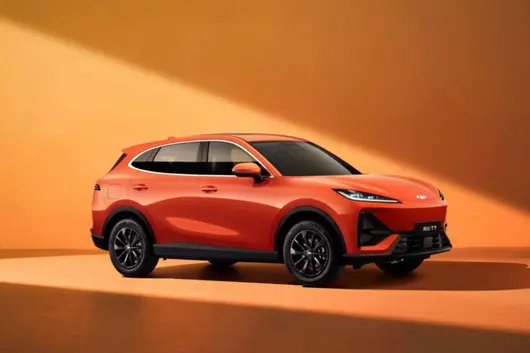
On August 12, the globally quality pure electric SUV Fengyun T7 officially started pre-sale. The new car launches 3 versions, with a pre-sale guide price from 109,900 Yuan to 129,900 Yuan. This pre-sale launch event is themed "Slow craftsmanship builds good cars, you have waited long enough", conveying Fengyun T7's car-making philosophy of adhering to long-termism.

Based on Chery's 23 years of global technology accumulation, Fengyun T7 has walked a reverse overseas trial path — the same-source model LEPAS L6 has been launched in overseas markets such as Thailand and South Africa. Polished with full-link global strict standards to hone vehicle strength, it downgrades high-end intelligent driving configurations such as multi-floor memory parking to the 100,000-level home SUV market, truly realizing all-scenario parking freedom.
Parking Freedom Starts with the "Chip"
Fengyun T7 breaks industry conventions, directly downgrading multi-floor memory parking, originally standard only on high-end pure electric models above 200,000 yuan, to the 100,000-level home SUV. The full series is equipped with the Falcon 500 driving assistance system, integrating 3 mm-wave radars, 7 high-performance cameras, and 12 ultrasonic radars, totaling 22 high-precision sensors.

Multi-floor memory parking has no floor limits, supporting up to 2km memory parking; 300+ all-scenario automatic parking covers dead-end road parking, irregular parking spaces, one-touch track reversing and other scenarios. Newbies aren't panicked when parking narrow spaces, experienced drivers are more calm encountering irregular spaces, truly saying goodbye to "parking difficulty".
Fengyun T7 is equipped with a cockpit-drive integrated 8775 chip, adopting 4nm process technology. NPU computing power reaches 72TOPS, response latency is as low as 80ms, boot speed increased by 33%. The chip achieves dual optimization for cockpit and drive, two domains seamless collaboration, half understanding you, half protecting you.

In terms of smart cockpit, the 15.6-inch 2.5K HD large screen is paired with 1000nit high brightness and 3A protective coating, delivering delicate and realistic visuals with anti-glare, anti-reflective, and anti-fingerprint properties. Lingxi Smart Cockpit 2.0 is equipped with the Doubao large model, integrating six human-like companion experiences: Little Qi Classmate, Northeast Auntie, Contrarian Master, Oral English Teacher, Story King, and Professional Debater.
Built-in 6 scene modes such as Nap, Camping, Pet, Wake-up, etc., one-key switch exclusive scene settings. Full-brand mobile phone direct connection supports CarPlay, HiCar, CarLink wireless connection, covering 99% or more mobile screen mirroring on the market.

More worth mentioning, Fengyun T7 launches assistance driving safety net rights: within one year from the date of purchase, in "Parking Scenario" and "Intelligent Pilot Scenario", if the accident is determined to be caused by the intelligent driving assistance system, causing injury to vehicle occupants and compensation for third-party losses, the maximum compensation guarantee is 5 million Yuan. Dare to make such a promise stems from the brand's full confidence in self-developed intelligent driving technology, allowing users to truly dare to use, feel safe, and have assurance.
Global Quality Endorsement, 6 Major Needs Fully Satisfied
Fengyun T7's R&D cycle took five years, with two years for planning and three years for development. A total of 81 exclusive durability test cars were launched for synchronous road testing, with cumulative vehicle test mileage exceeding 6 million kilometers. In terms of safety, it benchmarks the 2026 version E-NCAP 5-star standard design, functional safety reaches the ASILD highest level. The body adopts 80% high-strength steel and 18.84% hot-formed steel to create a 9-transverse 5-longitudinal cage body, equipped with 9 airbags, including 48L dual-chamber remote airbags and rear side airbags.
The full series is equipped with the Rhino Battery, with super strong 6D protection building a battery safety fortress. The IP68 water resistance level is 96 times the national standard, fearless of rainy season flooding and outdoor wading.
In terms of travel, the full series standard 65.05kWh large capacity Rhino Battery, CLTC range 600km, actual range 667+km. Charging from 30% to 80% takes only 20 minutes. Equipped with all-domain integrated thermal management dual-source wide heat pump AC + high voltage PTC, stable operation in -30°C to 55°C ultra-wide temperature range. Full series standard AGS active grille and 14 low wind resistance optimization items, high and low speed energy consumption is more stable.
In terms of comfort, vehicle dimensions 4570×1852×1694mm, wheelbase 2700mm, space efficiency rate reaches up to 84%.

Rear legroom 911mm, floor completely flat. Rear seats folded can extend to a 1955mm×1310mm pure flat large bed. 9-layer cloud-sensation seats equipped with 3-level heating and air suction ventilation. Trunk volume 450L, maximum extendable to 1550L. Chassis polished by an international team led by former Maserati chassis tuning experts. 50.8:49.2 golden axle load ratio effectively suppresses steering push-pull and fishtailing phenomena.
In terms of aesthetics, relying on Chery's 10 global design centers and 5000+ domestic and foreign users for full-process co-creation, the wind-riding front face, wind-shaped satin body, and skyline glow tailgate blend global aesthetics. It provides 6 colors: Blazing Orange, Mountain Smoke Purple, Cloud Pink Beige, Flowing Light Silver, Bamboo Green Grey, and Ink Stone Black. The interior is divided into Warm Black-Brown and Extreme Night Obsidian two styles. The cloud-wing embrace cockpit is paired with a large area of soft wrapping, pebble floating speakers, and diamond quilted details are exquisite.
In terms of peace of mind, two lifetime rights and two safety net guarantees are launched. Vehicle lifetime warranty includes the 3-electric systems; 666 Yuan can purchase a 3999 Yuan lifetime basic maintenance package. Power battery safety guarantee: If thermal runaway destruction is caused by the battery itself, compensate with a same-model new car.
Conclusion
In the 100,000-level pure electric SUV market, most models' intelligent driving configurations still remain at the basic single-floor parking level. The appearance of Fengyun T7 allows high-order functions such as multi-floor memory parking and 300+ all-scenario automatic parking, which originally existed only on models above 200,000 yuan, to truly enter ordinary households. Behind this is the significant long-term accumulation of Chery's 23 years of global technology leading to a breakthrough — five years of R&D cycle, over 6 million kilometers of test mileage, global multi-region limit verification, every bit of "slow craftsmanship" precipitates into the reliable quality of the product.