


首頁Range Rover

搜尋歷史
熱門搜尋
經銷商登入 / 註冊


In the Malaysian SUV market, many buyers compare Mazda CX-30 and GWM Haval H6 when choosing a car. These two models are quite close in price and positioning. Today, we will make a detailed comparison from multiple aspects to help you save time on research.
The OTR price for Mazda CX-30 in Malaysia is RM 122,409 - 146,409, with a total of 4 versions, including 2025 2.0L High+ Premium (RM 146,409), 2025 2.0L High+ (RM 138,409), 2025 2.0L High (RM 130,409), etc.
The OTR price for GWM Haval H6 in Malaysia is RM 139,750 - 139,750, with a total of 2 versions, including 1.5L Turbo Standard (RM 140,000), 1.5L Turbo Premium (RM 155,000), etc.
From a price perspective, the starting price of Mazda CX-30 is indeed RM 17,341 cheaper than GWM Haval H6. If your budget is limited, Mazda's entry-level version can already meet daily needs. However, note that the few thousand cheaper might involve trade-offs in features, depending on your specific needs.

The safety rating of Mazda CX-30 is 5★ (ASEAN NCAP), and active safety systems include i-Activsense.
The safety rating of GWM Haval H6 is TBD, and active safety systems include Basic.
In terms of safety features, both cars have received decent ratings. However, there are some differences in functionality between the Mazda CX-30's i-Activsense and the GWM Haval H6's Basic. If you value active safety, you can compare the feature lists of both carefully.

Mazda CX-30 warranty is 5 years/150,000km, service interval is every 10,000km or 6 months.
GWM Haval H6 warranty is 7 years/150,000km, service interval is every 10,000km or 6 months.

Both Mazda CX-30 and GWM Haval H6 are mainstream choices in the Malaysian market, suitable for family use and daily commuting. If you value brand reputation and resale value more, consider the one with better reputation; if you care more about price-performance ratio and features, choose the one with richer configuration. Ultimately, it is recommended to test drive both, as experiencing it personally is the most important.
Overall, both Mazda CX-30 and GWM Haval H6 are very good models in the Malaysian market. Which one to choose mainly depends on your personal needs and budget. It is recommended to do your research, compare quotes from several dealerships, and then test drive to make the final decision. Buying a car is a big matter, spending time on research will never be wrong.


Everyone knows that Geely Star Wish, this pure electric compact car, became a hit model upon launch. In 24 months since launch, cumulative sales broke 1 million units, calculated as nearly selling one unit every minute, becoming the fastest new energy vehicle globally to achieve 1 million sales. Even in the global market, achieving a 1 million-unit scale usually takes three to five years or even longer, so the Star Wish speed can be said to be a miracle.
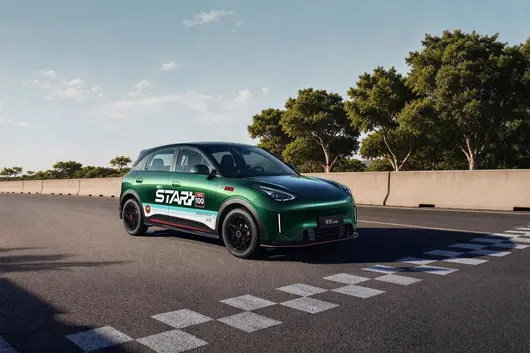
To further satisfy young users, Geely Star Wish launched two new versions of the STAR Limited Series, STARAce and STARChill, with a limited-time rights price of 88,800 yuan. The new versions add the only electric front trunk in its class and an EVA robot. STARAce offers three car colors: Worry-Free Green, Pepsi Orange, and Flowing Silver; STARChill adopts the Milk Salt Beige color and matches with a new interior. While enriching exterior and interior choices, it further expands the daily driving experience.

Two STAR Limited Series Versions Launched
The two new versions of the STAR Limited Series launched by Geely Star Wish are both equipped with the only tap-to-open/close electric front trunk in its class, supporting a total of 6 electric open/close methods, including tap switch, in-car voice switch, mobile APP remote switch, remote key switch, in-car central control screen switch, and mechanical emergency switch. When buying things and carrying big and small bags, you just need to lightly tap to open the front trunk, which is both calm and elegant, and saves effort.

At the same time, these two new versions of the STAR Limited Series are also equipped with an EVA in-car robot, capable of 60° flexible head turning, and possessing 50+ vivid expressions. Whether it is commuting traffic jams or a family trip, the EVA robot can alleviate boredom during the journey through humanized vivid interaction, and the robot expression library also supports subsequent OTA upgrade updates.
Among them, STARAce offers three exclusive car colors: Worry-Free Green, Pepsi Orange, and Flowing Silver. It is also equipped with exclusive sport appearance kits, including sport front splitters, sport starry tail wings, aluminum alloy sport rims, STAR exclusive badges, smoked sport car logos, and many other appearance exclusive accessories. The styling is sharp and dynamic, showing more fashion and personality. The interior matches Obsidian Black interior, adopting black-red / black-orange contrast color design.

STARChill adopts the Milk Salt Beige color and matches with exclusive Sunlight Beige interior, offering a warmth of bathing in afternoon sunlight. The beige color combination highlights the layers, while also matching elements like wood grain and champagne gold inside the car, bringing a warmer and more relaxed riding experience.

Hot Sales of 1 Million in Two Years, Monthly Sales Break 70,000
Launched in October 2024, in just two years Geely Star Wish cumulative sales broke 1 million units. Having such results is by no means a coincidence of a single month hitting a high point, but a stable performance spanning multiple sales cycles.
Since winning the 2025 China auto market all-category model sales champion last year, Geely Star Wish sold 249,418 units cumulatively in the first half of 2026, a year-on-year increase of 21%, retaining the title of best-selling model in the Chinese market. Entering the second half of the year, Geely Star Wish's sales rhythm continues to accelerate, with August and September monthly sales continuously breaking 60,000 units, and October exceeded 70,000 units at once, creating a new historical record for monthly sales. This also made Geely Star Wish the sales champion regardless of brand, energy source, or level.

Besides the domestic market, Geely Star Wish has also successively landed in over 30 countries globally such as Australia, UK, France, ranking Top 2 in China New Energy Hatchback model exports from January to June 2026. It successively won Thailand EV sales champion, Egypt consecutive 2 months A & B-class pure electric sales champion, Mexico consecutive 3 months all-category pure electric second, Australia launched only two months, retaining Hatchback pure electric sales champion. This also shows that not only high-end models can go overseas, China's affordable fine compact cars also possess global competitiveness. As long as the car meets mass commuting needs and high-specification configuration, it can directly participate in global market competition, which is a new path for China's new energy vehicles to go overseas.
Before this, the general idea of A0-class pure electric compact cars was low price with reduced configuration, enough is fine. Star Wish directly made rear-drive multi-link independent suspension, CATL battery cells, 70L front trunk, and FlymeAuto cockpit standard across the series, pulling the compact car from simply competing on price to the value competition stage of high quality and good price, forcing the entire same-level market to raise the configuration bottom line and changing the product logic of entry-level commuting electric cars. It grasps the core needs of city commuting, family second car, and newbie first car, making the compact car into a national popular product, proving that high cost-performance does not equal reduced configuration.

In the Malaysian SUV market, many buyers compare Mazda CX-3 and Hyundai Santa Fe when choosing a car. These two models are quite close in price and positioning. Today, we will conduct a detailed comparison from multiple aspects to save you the time doing research.
Mazda CX-3 OTR price in Malaysia is RM 126,159 - 139,159, with a total of 2 versions, including 2023 2.0L High (RM 139,159), 2023 2.0L Plus (RM 126,159), etc.
Hyundai Santa Fe OTR price in Malaysia is RM 225,000 - 270,000, with a total of 3 versions, including 2025 2.5T DCT 4WD Calligraphy 6 Seats (RM 270,000), 2025 HEV 1.6T AT 2WD Prestige 7 Seats (RM 245,000), 2025 HEV 1.6T AT 2WD Prime 7 Seats (RM 225,000), etc.
From a price perspective, the starting price of Mazda CX-3 is indeed RM 98,841 cheaper than Hyundai Santa Fe. If your budget is limited, Mazda's entry-level version is sufficient for daily needs. However, keep in mind that the few thousand RM difference might imply trade-offs in equipment, depending on your specific requirements.

Mazda CX-3 Safety rating is 5★ (ASEAN NCAP), Active safety system includes i-Activsense.
Hyundai Santa Fe Safety rating is TBD, Active safety system includes Basic.
In terms of safety features, both cars received good ratings. However, there are some differences between Mazda CX-3's i-Activsense and Hyundai Santa Fe's Basic in functionality. If you value active safety, you can compare the feature lists of both.
Mazda CX-3 Body length 4500 mm, Trunk 450 L.
Hyundai Santa Fe Body length 4400 mm, Trunk 400 L.
Regarding space, Mazda CX-3's body is 100 mm longer than Hyundai Santa Fe, interior seating space is slightly more spacious, especially rear legroom. If you frequently carry family or need to fit a stroller, a slightly larger body is indeed more practical.

Mazda CX-3 Warranty 5 Years/150,000km, Maintenance Interval Every 10,000km or 6 Months.
Hyundai Santa Fe Warranty 5 Years/300,000km, Maintenance Interval Every 10,000km or 6 Months.

Both Mazda CX-3 and Hyundai Santa Fe are mainstream choices in the Malaysian market, suitable for family use and daily commuting. If you value brand reputation and resale value more, prioritize the one with better reputation. If you care more about price-performance ratio and equipment, choose the one with richer configuration. Ultimately, it is recommended to test drive both, as personal experience is most important.

Overall, both Mazda CX-3 and Hyundai Santa Fe are excellent models in the Malaysian market. Which one to choose depends on your personal needs and budget. We suggest doing your homework, comparing quotes from several dealerships, and then test driving to make the final decision. Buying a car is a big matter, spending time on research is never wrong.


From the first three-quarter report, it is evident that in the era of intense competition, leading automakers have taken three distinct survival paths.
Author | Chen Weidong
In the first three quarters of 2026, beneath the appearance of a market recovery, the profit floor of automakers continued to break. The stock game has entered the deep water zone, and the core of competition has shifted from fighting for share to finding a sustainable survival paradigm.
Price wars are no longer short-term promotional tactics, but the underlying norm in the current domestic car market. When many automakers fall into the dilemma of "losing money if volume increases, harder to sell if not", the halo of sales figures is quickly fading.
Facing the same harsh industry challenge, BYD, Geely, and Chery submitted three reports with distinct styles. The 2026 third-quarter financial reports were released simultaneously. The sales of the three leading independent automakers rose in sync, but their strategies for breakthrough were clearly distinct.
BYD resists cyclical shocks with heavy-asset barriers across the entire industry chain; Geely initiated structural and organizational reforms inward to extract profit elasticity from the existing market; Chery anchored on the overseas market, using overseas profits to buffer domestic competitive pressure. All three paths have their own dividends but also come with long-term challenges that cannot be avoided.
BYD: Industry Chain Barriers Resist the Cycle
When peers competed to cut prices for orders, BYD did not dive into the low-end price melee.
In the first three quarters of 2026, BYD's cumulative sales reached 3.1316 million units, still leading the global new energy vehicle market, but sales were down 3.94% year-over-year; revenue achieved 566.304 billion yuan, up 0.01% year-over-year; net profit attributable to shareholders was 22.345 billion yuan, down 4.24% year-over-year; net profit excluding non-recurring items was 21.004 billion yuan, up 2.51% year-over-year.

Revenue rising steadily and profits falling slightly is not due to weakening operations, but rather active choice—sacrificing short-term book profits to invest in long-term technology foundations.
For many automakers, the root cause of profit decline is the loss of terminal selling prices and the passive breach of gross margins. BYD's profits were diluted by two rigid investments: continued R&D for high-end intelligent driving and new-generation battery platforms; infrastructure construction, production line debugging, and local supply chain cultivation at overseas bases such as Thailand, Brazil, and Hungary. The ramp-up cycle for overseas complete vehicle projects is generally 18 to 24 months, and production capacity utilization is low in the early stage of production, temporarily dragging down performance.
The core supporting BYD's resistance to cycles is the industry's rare deep vertical integration system. Cathode materials, battery cells, motors and motor controllers, and high-voltage core components are mostly self-developed and self-made. Blade Battery external supply continues to scale up, combined with double-digit growth in energy storage business, forming a second revenue curve outside passenger cars.

This closed loop gives it unique cost adjustment space: Competitors' price cuts mostly directly eat into per-vehicle profits, while BYD can rely on internal support to share some pressure. This is also the foundation for its stable positive profitability in a low-margin industry environment.
The market has long discussed that BYD has a rich SKU and a crowded product matrix with internal diversion. At the channel level, it is evident: the Dynasty and Ocean series stabilize production and the base; Fangcheng Bao anchors the 400,000-yuan off-road segment; Yangwang secures the million-yuan high-end segment; commercial vehicles and energy storage can share manufacturing resources with passenger cars to smooth quarterly fluctuations.
Under the layered layout, it does not need to rely on low-price involution for volume, but instead relies on system resilience to digest market shocks.

However, the heavy-asset model is inherently a double-edged sword. Battery production lines require huge investment and are highly specialized. Once demand slows and capacity utilization drops, depreciation costs will rise quickly. Some models have overlapping price bands and customer groups, and internal diversion objectively exists.
The bigger concern is that existing capacity is highly bound to the Lithium Iron Phosphate Blade Battery route. If semi-solid and solid-state batteries accelerate commercialization, this batch of specialized production lines will face impairment pressure. Although BYD is simultaneously laying out frontier technology research, the difficulty of switching main production capacity is extremely high. Combined with compliance, labor, and supply chain cultivation issues accompanying overseas factory construction, overseas business profit realization will require more time.
Domestic competitive space has bottomed out, and systematic overseas expansion has become a key increment and safety buffer for BYD. It is no longer simply exporting knock-down kits, but implementing localized full-chain solutions, bringing the entire system of production capacity, supporting facilities, certifications, and after-sales services overseas to circumvent tariff barriers. High-margin overseas markets continue to hedge against domestic pressure. Going global has upgraded from a second growth curve to its survival bottom line to traverse the cycle.

The signal conveyed by BYD's financial report is clear: in stock competition, industry chain control capability is the hardest moat. Trading short-term profits for technology and global foundation is the heaviest and hardest path to replicate for independent brands. Of course, it also requires higher judgment of cycles and global operation capabilities.
Geely Automobile: High Profitability Runs in Zero-Profit Zone
If BYD relies on heavy assets to brace against the cycle, Geely's solution is more inward: in this almost unprofitable stock market, extracting profit elasticity is also the brightest one among the top three independent automakers in terms of short-term profit realization.
In the first three quarters of 2026, Geely Automobile's cumulative sales reached 2.2355 million units, up 3% year-over-year; revenue achieved 272.564 billion yuan, up 13% year-over-year; net profit attributable to shareholders was 13.928 billion yuan, up 7% year-over-year.

Sales increased by an additional 3%, revenue by an additional 13%. Revenue growth continuously outperformed sales growth, reflecting that the average selling price per vehicle and product premium capacity are steadily rising. Profit structure changes are clear: ZEEKR contributed high-end profits continue to rise, Galaxy stabilizes the mainstream sales base, Lynk & Co overseas increments continue to be released, traditional fuel business shrinks orderly, resources are concentrated on high-value sectors.
Many automakers are trapped in the vicious cycle of "price cut—gross margin decline—supplier exploitation". Geely jumped out of this inefficient logic. The core grip is product structure upgrade, brand upward, and high-value overseas expansion.
In the first three quarters of this year, Geely New Energy cumulative sales reached 1.3264 million units, up 14% year-over-year; overseas exports 797,700 units, up 169% year-over-year.
ZEEKR stands firm in the high-end pure electric track, with per-vehicle gross profit significantly higher than the group average; Galaxy covers the 100,000–200,000 yuan mainstream market, safeguarding channel cash flow and production capacity base; Lynk & Co relies on sports labels to maintain niche premiums overseas; China Star hybrids continue to undertake replacement demand for joint venture fuel. Data shows, ZEEKR brand cumulative sales reached 288,400 units, growing 101% year-over-year, of which exports were 83,000 units, directly pulling up the group's average selling price and profitability.
This round of profit improvement is not an accidental dividend brought by a single hit, but the result accumulated over the past two years of organizational reconstruction and brand sorting.

At a recent communication meeting, Geely Automobile An Conghui also faced the old problems of the internal matrix directly: Lynk & Co's past product positioning was vague, and the differentiation from other brands in the group was insufficient. Next, a comprehensive brand reshaping will be launched; Galaxy will fill in the waistline hits and perfect the pure electric and plug-in hybrid product matrix; China Star series will be equipped with Super HEV technology on a large scale to strengthen fuel replacement advantages.
Supporting strategies have also been clarified: A new five-year strategy targeting 2030 will be released in the fourth quarter of this year. The core idea is to contract redundancy, focus on the core, reduce R&D budgets for niche and inefficient models, and concentrate resources on technology iteration, all-domain AI ecosystem and user experience. Brand simplification, channel integration, unified R&D middle platform, and centralized supply chain procurement, building an architecture of "middle platform cost control, front-end differentiated competition", sales and management expense ratios continue to optimize, management dividends continue to be released.
Unlike many automakers expanding multi-brands and falling into internal friction, Geely's current stage has brand synergy greater than competition. The results of backend cost reduction are directly converted into front-end product competitiveness. This is the underlying logic of profits rising against the trend.
The deeper the middle platform integration, the stronger the cost advantage, but it is also prone to technology and design language convergence. Once balance is lost, it will slowly dilute the unique tone of each brand and erode the foundation of brand premiums in the long term.

In terms of going overseas, Geely took a lightweight alliance route completely different from BYD, coordinating Volvo, Renault, and Proton to collaboratively layout production capacity and channels, with lower capital expenditure, promoting high-end models landing in Europe and new energy products scaling globally, carving out a sample path of value overseas expansion.
Geely's financial report provided another answer to the industry: The car market never lacks sales; the ability to make money stably is the scarce product. In an environment of comprehensive involution, refined operations, structural optimization, and efficiency improvement can also traverse the winter.
Chery Automobile: Overseas Market Hedges Domestic Involution
Comparing BYD's heavy barriers and Geely's internal efficiency, Chery's route is the most pragmatic and has the highest recognition: placing the profit base overseas to hedge against domestic red sea involution.
In the first three quarters of 2026, Chery Group achieved revenue of 241.234 billion yuan, up 12.29% year-over-year; gross profit 39.004 billion yuan, up 32.38% year-over-year; gross margin 16.17%, up 2.46 percentage points year-over-year; net profit attributable to shareholders 13.963 billion yuan, down 2.8% year-over-year. Overseas business has become the core profit source of the group.

Chery's operational logic is very straightforward: low margin to chase scale domestically and polish technology; stable profits and cash flow overseas. Domestic pricing is restrained, prioritizing stability of channels and capacity, equivalent to an experimental field for hybrid and chassis technology; relying on over twenty years of accumulated overseas dealer networks, in Latin America, Middle East, and Southeast Asian markets, models adapted to local road conditions can achieve higher per-vehicle gross profit than in domestic.
One attack and one defense, one thin and one thick, forming natural risk hedging, allowing it to remain steady when peers bear pressure.
On technology routes, Chery chooses a stable route, avoiding high-investment, high-uncertainty frontier tracks, establishing a "Hybrid Main, Pure Electric Auxiliary" globalization scheme. Yaoguang C-DM hybrid has high tolerance for fuel and road conditions, low maintenance costs, suitable for overseas markets with imperfect infrastructure, is the main force for going overseas.
Brand matrix division of labor is clear: Main brand stabilizes the national base, Jetour deep dives into outdoor off-road, iCAR goes pure electric for young groups, Exeed carries upward tasks. Each brand's goals are clear, not blindly following involution.
In R&D investment, resources are prioritized to practical technology and overseas adaptation. First three quarters of 2026 R&D expenses 11.046 billion yuan, focused on hybrid systems, chassis calibration, and localization adaptation. High-end intelligent driving self-research investment is relatively restrained. This is active choice, also meaning on the intelligent track, it still has a catching-up distance.

Chery's risk also comes from its own advantages. Profits are highly bound to overseas emerging markets. Performance will fluctuate with geopolitical policies, exchange rates, and regional demand, and profitability stability has shortcomings. Back to domestic, Exeed lacks a 300,000-yuan benchmark hit for years, user minds remain on cost-performance, brand upward pace is relatively slow.
But it cannot be denied that going overseas is not a bonus item for Chery, but a survival foundation. Long-term stable first tier of independent exports, mainly with light-asset KD mode, capital expenditure controllable, overseas production and sales system mature. In an environment of increasing geopolitical friction and trade barriers, this overseas base deeply cultivated for many years gives it sufficient ease.

Chery's enlightenment is simple enough: Domestic red sea competition is hard to stop, stable profit buffers are often hidden in global layout. Not relying on gimmicks, not actively starting low-price wars, steady overseas expansion is the path with the highest error tolerance in independent brands.
Fundamental Divergence
Reviewing the 2026 third-quarter report, the fundamental divergence of the top three independent automakers is already clear:
BYD takes the heavy barrier route: using whole industry chain control to exchange for long-term global discourse power; Geely takes the superior management route: relying on organizational change and product structure optimization to dig out stock profit elasticity; Chery takes the globalization route: relying on overseas profit base to hedge domestic cycle risk.
The three paths have no superiority or inferiority, rooted entirely in each company's resource endowment and strategic genes. Every route has confirmed dividends and is accompanied by long-term unresolved structural topics.
Price wars and stock involution will be the norm. In the future, automakers will compete not in short-term sales rankings, but in comprehensive strength: barrier thickness, operational efficiency, growth base diversity, and risk dissolution capability.

There is another proposition in the industry worth continuous observation: In the three routes, is there a final optimal solution? If overseas markets cool down synchronously, intelligent competition widens the generation gap, relying only on a single model, can it still stand firm?
Looking at the extended cycle, the leader who can truly traverse multiple downward cycles will not stick to one track, but has the ability to dynamically balance and complement each other among industry chain barriers, organizational efficiency, and global layout.
The big waves wash away the sand, the cycle leaves the strong.
After 2026, the fundamental elimination competition for independent brands has just begun. [Copyright Notice] This article is original from "Automotive Man", all rights reserved by the publisher. Unauthorized reproduction or partial copying is strictly prohibited.
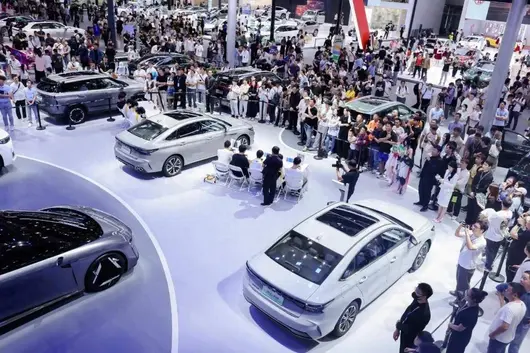

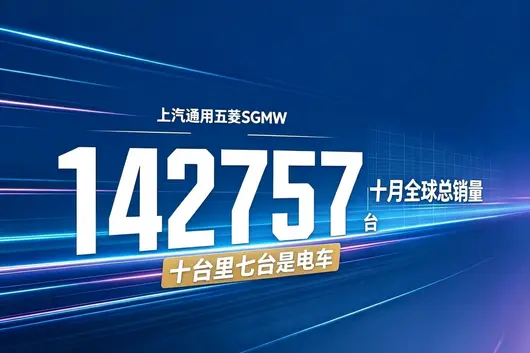
五菱 10 月份嘅銷量海報上,最大個數字係 142757。海外嗰一欄嘅單位係台/套,台係整車,套係將零件一箱箱運過去、到咗當地再裝成車,咁樣計賬嘅車企中國車市入面搵唔到第二家。呢一個套字,將五菱出海嘅階段講清楚咗,佢喺海外賣嘅已經係一整套造車嘅辦法,整車只係其中一樣。10 月呢一欄 38911,連續 7 個月站上 3 萬,1 到 10 月累計 321891 台/套。

10 月全球賣咗 142757 輛,其中新能源 99958 輛,剛好佔七成,乘用車 60835 輛,商用車 35001 輛。乘聯會預估,10 月全國每賣出 100 台乘用車,有 67 台係新能源,呢個數行業今年先到。五菱自家嘅新能源佔比,早就喺七成呢一帶。呢個 10 月車市整體比去年少咗 28.9%,唔少車企全年嘅目標仲差一大截,142757 台就係喺呢樣嘅月份入面跑出嚟嘅。榜上嘅名次每個月都喺換,能喺呢樣嘅月份把新能源單月做到 99958 輛嘅車企,全國冇幾家。
七成呢個數嘅分量,喺五菱賣車嘅價格上。行業嗰 67 個點嘅電車,多數係 10 萬元以上嘅換購車撐起嚟嘅。4 萬塊錢一台嘅電車要賣得動,先得把成本算平,這要靠上百万台嘅產量同整條零件鏈上嘅攞錢功夫,都係一年一年攞出嚟嘅。10 月 20 日,宏光 MINIEV 第 200 萬輛喺柳州下线,由 2020 年第一台量產車算起用咗六年多,其間連續 74 個月係 A00 級純電賣得最好嗰台。呢台車 2021 年一年賣咗 40 幾萬台,將小車呢個類別從邊緣帶成咗大伙都認嘅正經市場,今年 3 月上市嘅第五代畀咗佢四門四座,205 公里同 301 公里兩個版本,指導價 4.48 萬起。一台四萬多嘅小車憑乜撐起一個類別六年,答案就喺銷量表上,買呢台車嘅人入面,縣城同地級市第一次買車嘅佔多數。往後電動車佔比仲能往上漲,漲嗰部分主要喺縣城,嗰度嘅人多半係第一次買車,嗰片市場五菱由造第一台微車起就喺度。

1 到 10 月,五菱全球累計賣咗 1200926 輛,其中新能源 669598 輛,計落嚟累計佔比五成半出頭,10 月單月係七成。單月跑喺累計前面,說明七成係剛到嘅位置,仲喺度往上走。電動車佔比呢條線最後嗰十幾個點最難站住,邊個先知站住,邊個跟電池廠同零件廠講價就哽硬氣,跟同行定價格就更從容。五菱這兩樣本事,係喺 4 萬塊錢一臺嘅市場練出嚟嘅。

另一條線係華境。華境 S 從 5 月嘅 3603 輛走到 10 月嘅 7507 輛,六個月翻咗一倍,中間冇一個月回跌。新品牌嘅月銷常見兩種走法,一種係上市頭一個月將攞下嘅訂單一齊交付,衝到高位,其後回落盤整,另一種係一個月一個月往上爬,華境 S 係後一種。新品牌最難係幾個月以後,攞下嘅訂單交完咗仲能唔能接著賣,華境 S 呢六個月爬出嚟嘅量係真實需求,唔係庫存入面嘅訂單。品牌往上走呢件事,五菱而家有兩條線,宏光 MINIEV 守住基本盤,華境去開上面嗰一段價格,CCTV 家庭智能出行戰略合作夥伴嘅名字同華境並排印喺海報上。

10 月,Macaron、Darion、Bingo、Grango 四款車喺越南上市,分別對應宏光 MINIEV 四門版、星光 730、繽果同宏光 EV,Porta EV 同期進咗馬來西亞。車到咗海外換個當地人更好記嘅名字,係本地化入面嘅一件細活。東南亞係全世界新車賣得最快嘅地方之一,中國車企出海都嚟嗰度,嗰幾個國家對中國整車嘅關稅各不相同,喺當地裝車能省咗一大筆,台/套入面嗰個套字,省嘅就係這筆錢。呢套本事由 2017 年就開始攞咗,嗰年五菱喺印尼建起整車工廠。出海嘅下一程拼嘅係乜,拼邊個能喺當地把車造出嚟,邊個肯照當地市場嘅要求去改車,呢條路五菱已經走通咗。1 到 10 月海外累計 321891 台/套,放喺唔少中國品牌度足夠單開一場發佈會,五菱把它寫成月度海報入面安靜嘅一欄。

今年五菱建廠 68 周年。1958 年從拖拉機起步,1982 年造出第一台微型車,此後每一代主業做嘅都係當年最小嗰一格市場,68 年過去,最小嗰一格做咗一年百萬輛級嘅生意。
柳州嘅智能島製造體系接連進入國家級標杆名單同企業史志優秀案例,公司又同上海人工智能研究院簽咗戰略合作。造微車嘅廠談智能制造,一年百萬輛級嘅穩定交付就係最直接嘅說明,呢套本事就係將大批量造車同壓低成本兩頭一齊按住,呢件事五菱做咗 68 年。

行業入面談電動車仲能漲到幾多,談嘅多係 10 萬元以上嗰一半。另一半喺下面,4 萬塊嘅車一年賣幾十萬台,佔比就係咁樣一點點頂上嚟嘅。1 到 10 月 1200926 輛,宏光 MINIEV 六年 200 萬輛,海外連續 7 個月破 3 萬台/套,華境 S 連漲六個月,呢啲數字背後係同一套活法,1958 年從柳州嗰間造拖拉機嘅廠房做起,68 年只做最小嗰一格市場,一年一年向下做。等到行業電動車佔比站上八成嗰日,中間多出嗰啲車,大半喺 4 萬到 10 萬呢一段入面,五菱喺嗰一段已經站咗六年。

In the SUV market in Malaysia, many buyers compare Toyota Harrier and Subaru Forester when choosing a car. These two cars are quite close in price and positioning. Today, we will make a detailed comparison from multiple aspects to help you save time on research.
Toyota Harrier's OTR price in Malaysia is RM 289,000 - 289,000, with a total of 1 version, including 2026 HEV 2.5L Standard (RM 289,000) etc.
Subaru Forester's OTR price in Malaysia is RM 174,000 - 197,000, with a total of 3 versions, including 2024 2.0L S EyeSight GT Edition (RM 189,538), 2024 2.0L S EyeSight (RM 177,538), 2024 2.0L L EyeSight (RM 167,538) etc.
From the price perspective, Subaru Forester's starting price is RM 115,000 cheaper than Toyota Harrier. To be honest, in this price range, a gap of a few thousand is actually not big, the key is still looking at overall value for money and long-term ownership cost.

Toyota Harrier's safety rating is 5★ (ASEAN NCAP), active safety system includes Brand ADAS.
Subaru Forester's safety rating is 5★ (Euro NCAP), active safety system includes EyeSight.
Regarding safety features, both cars received good ratings. However, Toyota Harrier's Brand ADAS and Subaru Forester's EyeSight have some differences in functionality. If you value active safety more, you can compare the function lists of both carefully.

Toyota Harrier adopts FWD drive type.
Subaru Forester adopts FWD drive type.
The drive type of both cars is the same, both are FWD, daily driving experience will not have too much difference.

Toyota Harrier and Subaru Forester are both mainstream choices in the Malaysian market, suitable for family use, daily commuting. If you value brand reputation and resale value more, you can prioritize the one with better reputation; if you care more about value for money and features, then choose the model with richer configuration. In the end, it is recommended to test drive both, personal experience is the most important.

In summary, Toyota Harrier and Subaru Forester are both very good car models in the Malaysian market. Which one to choose, the key is still to look at your personal needs and budget. It is recommended to do research, compare quotes from multiple dealers, then test drive to make the final decision. Buying a car is a big matter, spending time doing research will definitely not be wrong.

In the Malaysian SUV market, many buyers compare the Toyota Harrier and Volvo XC60 when choosing a car. These two cars are quite close in price and positioning. Today, we will make a detailed comparison from multiple aspects to help you save time on research.
The OTR price of Toyota Harrier in Malaysia is RM 289,000 - 289,000, with a total of 1 version, including 2026 HEV 2.5L Standard (RM 289,000) and so on.
The OTR price of Volvo XC60 in Malaysia is RM 328,888 - 328,888, with a total of 1 version, including 2025 2.0T Core (RM 328,888) and so on.
In terms of price, Toyota Harrier's starting price is indeed RM 39,888 cheaper than Volvo XC60. If your budget is limited, Toyota's entry-level version can already meet daily needs. However, note that the difference of a few thousand might involve trade-offs in features, it depends on your specific needs.
Toyota Harrier is equipped with 2.0L Turbo, horsepower 220 hp. Official fuel consumption 9.5 L/100km.
Volvo XC60 is equipped with 2.0L Turbo, horsepower 220 hp. Official fuel consumption 9.5 L/100km.
Both cars use the same powertrain system, the daily driving feel is basically no difference. Fuel consumption is also similar, no need to worry too much about this point.
Toyota Harrier's safety rating is 5★ (ASEAN NCAP), active safety system includes Brand ADAS.
Volvo XC60's safety rating is 5★ (Euro NCAP), active safety system includes .
Toyota Harrier body length 4400 mm, trunk 400 L.
Volvo XC60 body length 4400 mm, trunk 400 L.
The dimensions of both cars are almost the same, interior space difference is not big. For cars in this class, daily use is completely sufficient.

Toyota Harrier adopts FWD drive mode.
Volvo XC60 adopts FWD drive mode.
The drive mode of both cars is the same, both are FWD, daily driving feel will not be much different.

Overall, Toyota Harrier and Volvo XC60 are both very good models in the Malaysian market. Which one to choose, the key still depends on your personal needs and budget. We suggest doing your homework, compare quotes from multiple dealerships, and then test drive to make a final decision. Buying a car is a major matter, spending time on research will definitely not be wrong.


