


首頁Nissan X-Trail

搜尋歷史
熱門搜尋
經銷商登入 / 註冊

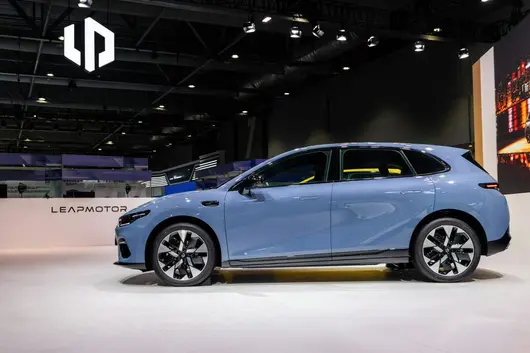
又一款國產全球車來了,風雲 T7 正式開啟預售,10 萬出頭的價格,能拿下全系標配大容量犀牛電池,CLTC 續航更是達到 600 公里,這樣的一台全球品質純電 SUV,絕對不容錯過!那它到底還有哪些硬核實力呢?
8 月 12 日,全球品質純電 SUV 風雲 T7 正式開啟預售,本次預售發布會以“慢功造好車,久等了”為主題,傳遞風雲 T7 秉持長期主義的造車理念,以全球標準打磨產品、紮實造品質全球車的堅守,也道出品牌對用戶長久期待的誠摯感恩。新車共推出 3 款版型,預售指導價格為 10.99 萬元至 12.99 萬元,且享受 7 重購車權益。

當下全球汽車產業邁入“中國時間”,中國新能源智造持續領跑海外市場。依托奇瑞 23 年全球化技術積澱,風雲 T7 走出反向出海試煉路徑,拒絕行業速成造車思路,以全鏈路全球嚴苛標準打磨整車實力。

圍繞品質生活六大核心新剛需,將顏值剛需、安全剛需、出行剛需、智能剛需、舒享剛需、安心剛需融為一體,打造全球品質純電 SUV,適合通勤、遠途、戶外、多人出行等多元場景。

顏值剛需丨全球審美融合東方雅韻,長效質感在線
依托奇瑞 10 大全球設計中心,5000 餘名海內外用戶全程共創,同源車型 Lepas L6 亮相米蘭設計周收獲國際認可,風雲 T7 融匯全球審美,顏值持久在線。馭風前臉、風塑綢緞車身、天際霞光尾門,平衡國際簡約審美與東方雅致氣韻。 整車漆面標準同步海外嚴苛耐候要求,提供熾焰橙、山煙紫、雲粉米、流光銀、青竹灰、墨石黑 6 款配色。

內飾分溫暖黑棕、極夜黑曜兩種風格,雲翼環抱座艙搭配大面積軟包覆,鵝卵石懸浮揚聲器、菱格絎縫細節精緻;所有內飾皮革、密封條、塑膠件不易硬化褪色,常年使用依舊嶄新耐看,兼顧顏值和質感。
安全剛需 | 全域五星防護體系,全球路況全維度兜底
風雲 T7 對標 2026 版 E-NCAP 五星安全標準設計、功能安全 ASILD 最高等級。2 年策劃,3 年研發,共投入 81 台專屬耐久車同步路試,整車累計測試里程超 600 萬公里,耐久專項實測 145 萬公里,同時針對東南亞雨季、中東高溫暴曬、印尼高濕等多種全球多地進行極限實車試煉。

車身採用 80% 高強度鋼、18.84% 熱成型鋼打造九橫五縱籠式車身,採用 shotgun 結構、雙框副車架+Pack 防撞樑,鋼筋鐵骨保障乘員艙安全,前面 9 條 + 側面 6 條碰撞傳力路徑最大化分散碰撞能量,留存乘員生存空間;除此之外,還搭載了 9 個安全氣囊,包含 48L 雙腔遠端氣囊和後排側氣囊,360°全方位保護乘員安全。
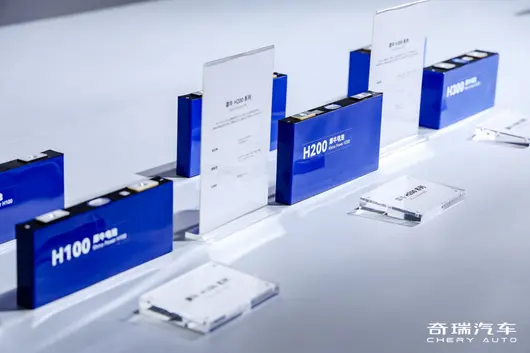
風雲 T7 全系搭載犀牛電池,超強 6D 防護構築電池安全堡壘全方位抵禦擠壓、穿刺、衝擊,為動力電池構建多層立體安全屏障。面對夏季暴雨頻繁,犀牛電池 IP68 防水為國標 96 倍,無懼雨季內澇、路面積水、戶外涉水,有效防止電池進水短路隱患。

出行剛需 | 全系 600 公里續航平權,適應全球多元氣候工況
基於全球多地能源與氣候需求,風雲 T7 實現續航配置全系平權,全系標配大容量犀牛電池 65.05kWh,CLTC 600 公里續航,實測續航 667+ 公里,“反向虛標”解決焦慮。電池 30% 充到 80% 只需 20 分鐘,一杯咖啡時間即可再次出發。

風雲 T7 搭載全域一體化熱管理雙源寬熱泵空調 + 高壓 PTC,北方用戶冬季也能放心開。-30°C-55°C 超寬溫域穩定運轉,低溫環境制熱更省電、高溫環境散熱更高效。配合全系標配的 AGS 智能進氣格柵與 14 項低風阻優化,高低速能耗更穩定。

智能剛需 | 艙駕一體 8775 芯片 一半識你一半護你
新能源時代,無智能不品質。風雲 T7 搭載艙駕一體 8775 芯片,做到艙駕雙優,兩大域無縫協同,一半識你,一半護你。該芯片具備 4nm 製程,72TOPS 高運算力,響應僅需 80ms,開機提速 33%,開機速度更快、螢幕操作更順滑,智能交互響應更迅捷。

智能座艙方面,15.6 英寸 2.5K 高清大屏畫面細膩真實,防眩光、抗反射、抗指紋,CarPlay、HUAWEI HiCar、CarLink 無線連接,覆蓋市面 99% 以上手機投屏,上車即可實現無縫互連。靈犀智艙 2.0 帶來全能陪伴的夥伴,擁有小奇同學、東北老姨、抬杠大師、口語老師、故事大王、職業辯手六大真人感陪伴體驗。內置小憩、露營、寵物、醒神等六大場景模式,讓車真正成為識你的移動空間。
風雲 T7 搭載獵鷹 500 駕駛輔助系統,集成 3 顆毫米波雷達、7 個高性能攝像頭、12 個超聲波雷達,總計 22 顆高精度傳感器(3R7V12U),看得遠、看得清、測得準。能夠 300+ 全場景自動泊車,行業覆蓋最全。斷頭路泊車、一鍵循跡倒車、跨樓層泊車等都能實現,從此告別“停車難”,實現泊車自由。

舒享剛需 | 超大座艙空間 大師級底盤調校穩穩出行
整車尺寸 4570×1852×1694mm,軸距 2700mm,車內得房率 84%,後排純平地台,同級領先的 911mm 腿部空間,後排放倒拓展 1955mm 純平大牀,常規行李廂 450L、拓展至 1550L,充足裝載空間適合戶外穿越、多人結伴出行。
9 層雲感座椅,軟而不塌,久坐不累,另外座椅還有通風加熱功能。加熱方面,實現 3 檔溫控調節,-20℃環境下,5 分鐘速加熱至 30℃,快速溫暖全身;座椅通風採用吸風設計,夏天後背不悶汗,滿足用戶的舒適需求。 細節方面,風雲 T7 同樣可圈可點。全車 38 處巧思儲物空間,收納有序,盡享精緻生活。四個最大承重 300kg 的鉚環和兩個最大承重 3kg 的掛鉤,露營裝備、大件貨物都能牢牢固定。

舒適乘駕,離不開出色底盤的加持。風雲 T7 底盤採由瑪莎拉蒂前底盤調校專家領銜的國際化底盤團隊傾力打磨,50.8:49.2 黃金軸荷比能有效抑制轉向推頭、甩尾現象,提升過彎穩定性與直線行駛循跡性。
早在 2009 年,奇瑞就自主設計了中國第一台地面移動型雙軸 K&C 試驗台。26 年的設計功底賦能底盤性能,帶來更卓越的乘駕質感體驗。
安心剛需 | 2 終身權益 + 2 兜底權益,全週期用車無憂
奇瑞不止為用戶帶來硬核实力的產品,更站在用戶視角,全盤考量購車之後的全週期用車體驗,直面大家對於車輛故障、後期養車成本等實際顧慮。為此風雲 T7 推出兩大兜底保障、兩項終身權益,從購車到長期使用全程守護。
兩大兜底:①動力電池安全兜底:因動力電池自身原因導致整車發生熱失控損毀,奇瑞將賠付同款新車或不低於原車配置新車;②輔助駕駛兜底:自購車之日起一年內,在“泊車場景”、“智能領航場景”判定為“智能駕駛輔助系統原因”導致事故,造成車上人員傷害與第三者損失賠償的,最高賠償 500 萬。

兩大終身權益:①整車終身質保:價值 10000 元整車終身質保(含三電),易損件、特殊件除外;②終身保養套餐:666 元購價值 3999 元終身基礎保養套餐(1 次/年)。
從全球標準研發、全球審美設計、全球工藝製造,到全球路況驗證,風雲 T7 以全鏈路全球品質,樹立起純電 SUV 的價值標竿。它歷經世界淬煉,最終奔赴中國用戶,以顏值、出行、安全、智能、舒享、安心六大剛需的全能滿足,回應品質家庭的所有期待。風雲 T7,不僅是一台凝結全球技術與品質的座駕,更是全球標準與中國家庭需求深度共鳴的時代之選。現已就位,靜候每一位熱愛生活的你。
奇瑞風雲 T7,作為一款全球品質 SUV,它用硬核的全能實力,回應了 10 萬級預算家庭,顏值在線,安全、智能、舒享拉滿,質保權益更是給用戶吃下一顆定心丸,續航超越同級,完全滿足細分市場用戶的買車需求。據悉,風雲 T7 已經到達終端店,感興趣的朋友可以去就近門市近距離感受和體驗這台全球車的魅力吧!


8 月 12 日,奇瑞風雲 T7 正式開啟預售,預售價格 9.98 萬元到 13.98 萬元。這場以「慢功造好車,久等了」為主題的發布會,與其說是一次產品亮相,不如說是一次表態——在純電賽道越跑越快的當下,奇瑞這家被戲稱為「老實理工男」的車企,選擇用一台車告訴市場:有些事快不來,有些路繞不過。

先看一組數字。2026 年上半年,中國汽車出口 509.6 萬輛,同比增長 65.3%,世界汽車格局正在進入「中國時間」。而在這股出海浪潮中,奇瑞以 94.38 萬輛的出口量獨占鰲頭,同比增長 71.5%,平均每 17 秒就有一輛奇瑞駛向海外。更值得關注的是,奇瑞已经连续 23 年位居中國品牌乘用車出口第一,全球累計用戶突破 2000 萬,海外用戶接近 700 萬。產品銷往 130 多個國家和地區。這些數字構成了風雲 T7 的底層邏輯——它不是一台先在国内造好、再想辦法賣到国外的車,而是一台從一開始就按照全球標準研發、在全球跑完了驗證、帶著海外市場的真实反饋才回到國內的產品。

這種「先出海、再歸國」的路徑,在當下的汽車行業並不常見。風雲 T7 在海外的名字叫 Lepas L6,南非已開啟預售,泰國已于 7 月 24 日上市,接下來 8 月印尼、9 月歐盟、10 月澳新和英國。一台車要同時滿足這麼多國家和地區的法規標準、氣候條件、路況特徵和使用習慣,研發週期註定短不了。事實也是如此——2 年策劃,3 年研發。放在今天這個「12 個月出一款新車」的行業節奏裡,這個週期幾乎顯得不合時宜。

但正是這 5 年的慢,讓風雲 T7 在很多維度上做出了差異化。安全層面,它按照 2026 版 E-NCAP 五星安全標準開發。2026 版 E-NCAP 將整車安全拆解為安全駕駛、碰撞規避、碰撞保護和碰撞後安全四大支柱,任何一項存在明顯短板,五星評級便無法達成。風雲 T7 從研發階段就錨定這一標準,同時還做到了功能安全 ASILD 最高等級和全球數據合規。這不是簡單的「堆料」,而是把安全標準前置到了產品定義階段。

在環境適應性上,風雲 T7 的全域適配區間覆蓋 -40℃到 55℃。這個跨度意味著它要在北歐的極寒、中東的酷熱、東南亞的潮濕、高原的強紫外線裡都能正常工作。為此,它搭載了同級首發的雙源寬溫域熱泵加 PTC 系統;在熱帶高濕地區,空調濾芯做了針對性優化,杜絕發霉異味;在中東區域配備了 4.5L 大容量清洗液罐;在巴西沙石路增設了電池前後梁防護。這些細節單獨看似乎微不足道,但組合在一起,反映的是一種「為全球用戶造車」的思維方式——不是把一台車造出來再想辦法適應環境,而是先理解不同環境的需求再開始造車。

驗證環節更能說明問題。風雲 T7 同步投入了 81 台專屬耐久車進行路試,整車累計測試里程超 600 萬公里,耐久專項實測 145 萬公里。覆蓋歐盟、澳新、中東、南非、俄羅斯、墨西哥、巴西等 100 多個極限路況環境。全球道路類型覆蓋率达到 95%——巴西的高減速坎、墨西哥的鵝卵石路、德國高速的大曲率彎道、南非的非鋪裝泥路,全部跑過。這種規模的實車驗證,背後是巨大的時間成本和資金投入,但它解決的是一個本質問題:電車用戶最擔心的可靠性、環境適應性和長期耐用性,只有在真實的全球路況裡跑過了,才能給出答案。

落到產品力層面,風雲 T7 的配置思路也體現了一種「不妥協」的姿態。續航方面,全系標配 65.05kWh 犀牛電池,CLTC 續航 600km,實測可達 667km,30% 到 80% 快充僅 22 分鐘。電池循環壽命超過 2500 次,整車 15 年無需更換電池。安全方面,80% 高強度鋼車身、18.84% 熱成型鋼、九橫五縱籠式車身、同級最多的 9 安全氣囊。智能方面,同級首發 4nm 製程 8775 晶片,15.6 英寸 2.5K 防眩光大屏,獵鷹 500 智駕配備 22 顆高精度傳感器。空間方面,4570×1852×1694mm 的車身尺寸、2700mm 軸距、84% 的得房率。這些配置單看每一項都不算稀奇,但全系標配、不搞梯度分級,在當下的家用電車市場裡確實少見。

還有一個容易被忽略的維度是設計。風雲 T7 由全球 8 大研發設計中心、國外頂級設計師團隊以及 5000 多位全球用戶共同完成。同源車型 Lepas L6 此前亮相米蘭設計周,收穫的评价是「很有吸引力,很耐看」。6 款東方雅韻車漆中,熾焰橙採用了同級獨有的 Tri-coat 三層車漆工藝,全車漆面經過高原強紫外線、高低温交替極限測試,抗褪色、抗老化。這種對「長期好看」的追求,和整車「長期好用」的邏輯一脈相承。

回到那場發布會的主題——「慢功造好車,久等了」。在速成車頻頻遭遇品質質疑的當下,風雲 T7 的「慢」反而成了一種稀缺的價值主張。慢在研發——3 年週期、全球 1+7+N 研發體系打磨;慢在設計——5000 多位用戶共創、百餘名設計師協同;慢在標準——按 2026 版 E-NCAP 設計、即將進入歐洲高法規市場;慢在驗證——145 萬公里、五大極限環境。這些「慢」的背後,是奇瑞用 23 年出口第一、2000 萬全球用戶積累起來的造車體系在托底。

風雲 T7 可能不是參數最激進的純電 SUV,但它用一套完整的「全球研發—全球標準—全球驗證—全球品質」閉環,回答了一個樸素的問題:一台真正值得全家長期信賴的純電 SUV,應該怎麼造出來。在行業從「堆料」轉向「比品質」的下半場,這個答案或許比任何炫技都更有分量。


汽车是仅次于房产的大宗消费,是身份认同的延伸,是技术实力的象征。在汽车行业,“便宜”从来都不是一个可以长期依赖的标签。

8月12日,零跑汽车扔下了一枚价格炸弹。
A05正式上市,起售价6.39万元。这个价格像是一台大号的“老头乐”,但它搭载了激光雷达、高通8650芯片、8295座舱,CLTC续航510公里,16分钟完成30%-80%补能,43项辅助驾驶功能,88.4%的得房率——把这些配置拿给三年前的消费者看,他们大概会以为这是15万级别的车型。
但零跑把它卖到了6.39万。
消息发布的那一刻,社交媒体上炸开了锅。“这还让不让人活了?”“友商连夜开会改PPT”“零跑这是要把新能源车拉到5万以内吗?”各种评论铺天盖地。
这不是零跑第一次让市场震惊。从2024年的默默无闻到2025年首次实现全年盈利,再到2026年一季度全球交付11万辆、海外销量同比暴涨442%,零跑用“低价高配”的优衣库模式,硬生生在新能源汽车的红海中杀出了一条血路。
然而,鲜花与掌声背后,一个危险的信号正在闪烁:2026年一季度,零跑毛利率骤降至9.4%,相比去年同期的14.9%大幅下滑5.5个百分点;归母净利润亏损3.9亿元,终结了此前连续三个季度的盈利纪录;单车平均售价跌至9.8万元,创下近两年新低。
资本市场对零跑的低价策略早已持谨慎态度。A05上市后,零跑的股价表现平淡,宛如一面镜子,照出了它褪去热度光环后的真实模样。
卖得多,亏得也多。这个曾经让零跑引以为傲的“性价比公式”,似乎正在逼近它的极限。
下沉市场杀出的黑马要讲零跑的故事,得先回到那个“造车新势力”还被等同于“烧钱无底洞”的年代。
当蔚来、理想、小鹏在30万以上的高端市场厮杀时,零跑选择了一条截然不同的路——下沉。创始人朱江明带着三十余年的电子工程技术积累,把“自研自造”刻进了零跑的基因里。核心零部件自研自造比例占整车成本60%,包括三电系统及智能化系统。
这意味着零跑可以把成本压到竞争对手难以想象的程度。当别家还在依赖供应商的电池包和电机时,零跑已经实现了从芯片到电驱的垂直整合。这种“电子厂思维”让零跑在价格战中拥有了别人没有的底牌。
2025年,零跑全年毛利率达到14.5%,较2024年的8.4%大幅提升,第四季度更是高达15.0%。那是零跑的高光时刻——销量逼近60万辆,首次实现全年盈利,与Stellantis集团的合资公司“零跑国际”正式运转,海外渠道迅速铺开。
2026年,零跑更是定下了全年100万辆销量、50亿元净利润的宏伟目标。一季度,海外销量达到4.09万辆,占总销量的37.1%,同比增长惊人的442%。在欧洲,零跑一季度在16个国家的上牌量达2.33万辆,同比增长726.5%;在意大利,纯电市占率高达33.5%。
一时间,零跑成了中国新能源汽车出海的标杆,成了资本市场眼中的“新势力黑马”,成了消费者口中“真香”的代名词。
但神话的背面,是不断被压缩的利润空间。
当性价比成为双刃剑2026年一季度的财报,给零跑的低价策略敲响了警钟。
毛利率9.4%,整车毛利率仅7%左右。每卖出一辆车,零跑赚到的毛利可能还不够覆盖销售费用和管理费用。一季度经营活动现金净额为-66.1亿元,自由现金流缺口高达74亿元。
零跑副总裁、CFO李腾飞在财报电话会上解释,毛利率下滑主要有三个原因:一是产品组合变动,低价B系列车型占比提升;二是产能利用率下降导致单台制造成本增加;三是战略合作业务减少。
翻译成人话就是:为了冲销量,零跑卖了更多便宜车,而这些便宜车的利润薄得可怜。
这是一个典型的“规模陷阱”——你以为卖得多就能摊薄成本,但当价格战打到极致,规模效应会被不断下降的单车利润吞噬殆尽。李腾飞坦言,目前零跑单车平均亏损约4000元。
零跑的身后,原材料价格也在步步紧逼。碳酸锂、芯片、贵金属价格在2026年持续走高。李腾飞透露,公司去年已针对主要原材料进行备货,基本能覆盖一季度的生产使用,但这终究不是长久之计。如果三季度至四季度原材料价格继续上涨,在终端售价不变的前提下,将对零跑毛利率构成较大影响。
而零跑的选择是什么?继续降价。
A05的6.39万元,已经比很多同级别燃油车还便宜。接下来呢?5万元?4万元?当一辆搭载激光雷达的智能电动车卖到和一台iPhone差不多的价格时,我们不得不问:这到底是工业带来的福报,还是已经被内卷逼至极限?
出海叙事零跑的海外故事,听起来很美好,但细品之下另有滋味。
2026年一季度,零跑海外销量4.09万辆,欧洲市场增长迅猛。但支撑这些销量的,依然是“好而不贵”的性价比策略。在欧洲15万-20万元的价格带,零跑填补了本土车企在平价电动车领域的空白。
这让人想起上世纪80年代的日本车、90年代的韩国车,它们也是靠性价比敲开了欧美市场的大门。但不同的是,丰田用了三十年时间把“精益生产”变成全球标准,现代起亚用设计和品质完成了品牌跃迁。它们最终都走出了低价泥潭,建立起了品牌溢价。
零跑呢?它在欧洲卖得好,很大程度上是因为Stellantis的渠道加持。零跑借助Stellantis的全球销售网络,在40多个国家建立了近千家销售及服务网点。在西班牙,零跑计划通过Stellantis的工厂实现本地化生产,以规避欧盟对中国电动车最高37.6%的反补贴税。
这确实是一种聪明的出海策略。但问题是,当欧洲消费者走进Stellantis的展厅,他们买的是“零跑”这个品牌,还是“Stellantis渠道里那辆便宜的中国电动车”?
对比一下真正的出海标杆:比亚迪在欧洲卖的是刀片电池和DM-i技术,吉利靠的是沃尔沃和极氪的品牌矩阵,小鹏押注的是智能驾驶,奇瑞则在海外建立了完整的本地化研发和制造体系。它们出海的核心竞争力,是技术、品牌和产品力,而不是单纯的价格优势。
零跑在海外市场的成功,目前更多体现为“渠道的成功”和“价格的成功”。如果哪天Stellantis的合作生变,或者欧盟的关税政策进一步收紧,零跑的品牌护城河在哪里?
香港投资者的冷眼在港交所,零跑汽车的股价走势透露了资本市场的真实态度。
尽管销量屡创新高,零跑的股价却并未出现相应的暴涨。投资者们在欢呼销量的同时,也在计算那本越来越薄的毛利账。
2026年一季度亏损3.9亿元,让全年50亿元的净利润目标显得遥不可及。按照李腾飞的测算,一季度已完成销量目标的11%,下半年需要交付约64万辆才能实现百万目标;而利润方面,距离50亿元目标尚有约54亿元的差距需要填补。
财通证券在研报中指出,零跑Q1经营整体承压,但业绩符合预期。受到Q1行业需求下行影响,公司销量同比增速放缓,销量矩阵出现结构性下行,C系列销量占比下滑至45.1%,导致毛利率和ASP双杀。
国金证券则认为,零跑一季度毛利率同环比降低,主要由于整车产品组合变动、销量规模效应未充分释放及产能利用率相对较低。
投资者们心里其实很清楚,零跑现在是在用利润换规模,用短期亏损换长期空间。这个逻辑在资本充裕、行业高速扩张的时候行得通。但当行业进入“新能源车2.0时代”,渗透率已经过半、增速放缓、竞争从增量转向存量,单纯的规模逻辑还能撑多久?
一位不愿具名的港股基金经理对我说:“零跑的问题不是能不能卖车,而是能不能赚钱。现在它每卖一辆车都在失血,如果行业价格战再持续两年,它的现金储备还能撑多久?306亿听起来很多,但一季度就烧了74亿自由现金流。”
这不是危言耸听。2026年1-2月,我国汽车行业利润率仅为2.9%,相对于下游工业企业5.8%的平均水平明显偏低。当整个行业都在失血,零跑的低价策略就不再是突围之道,而是在透支自己的未来。
新能源车2.0时代让我们把视野从零跑身上移开,看看整个中国新能源汽车产业正在发生什么。
2026年,中国新能源汽车渗透率已经突破50%,市场从“增量博弈”进入“存量博弈”。这个阶段的竞争关键词不再是“谁更便宜”,而是“谁更有技术壁垒”“谁的品牌更值钱”“谁能在智能化下半场胜出”。
比亚迪有刀片电池和全产业链垂直整合;华为系有智能驾驶和生态赋能;小米有流量和品牌势能;理想有精准的产品定义和家庭用户心智;小鹏在纯视觉智驾上All in;蔚来用换电和服务建立护城河。
零跑有什么?自研能力确实强,成本控制确实狠,但这些东西在“1.0时代”是核心竞争力,在“2.0时代”只是入场券。
更关键的是,零跑的品牌形象正在被“低价”固化。当A05卖到6.39万,当B系列成为销量主力,当单车均价跌到9.8万,零跑在消费者心智中正在变成“便宜车”的代名词。这对一个想要长期发展的汽车品牌来说,是一道无形的天花板。
李腾飞透露,零跑正在规划第二品牌,定位30万元以上市场,预计2027年下半年上市。同时,D99旗舰MPV将于6月开启预售,D19车型被寄予厚望,目标是稳定月销1万辆。
这些高端化举措能否成功,将决定零跑能否跳出“低价陷阱”。但品牌向上的路从来都不好走。看看五菱宏光试图用“银标”系列冲击高端时的艰难,就知道消费者的心智一旦形成,改变起来有多难。
优衣库模式的终极拷问有人说,零跑是中国汽车界的优衣库——用极致的性价比,让普通人也能享受到科技进步的红利。这个比喻乍看很贴切,但卖衣服和卖车,终究是两套逻辑。
优衣库能在全球成功,是因为它卖的是“不会出错的日常消费选择”。汽车不一样。汽车是仅次于房产的大宗消费,是身份认同的延伸,是技术实力的象征。在汽车行业,“便宜”从来都不是一个可以长期依赖的标签。
更何况,优衣库的利润来自极致的供应链管理和规模效应,而零跑的利润正在被不断压缩。
零跑曾经很辉煌。它用短短几年时间,从一家名不见经传的二线新势力,成长为月销7万辆、海外扩张迅猛的行业黑马。它证明了“中国制造”可以把智能电动车的成本压到令世界惊叹的水平。
但辉煌属于过去。在新能源车2.0时代,中国汽车工业需要的是品牌、技术、创新和全球化运营能力,而不是无休止的价格内卷。奇瑞、吉利、比亚迪、小鹏们已经用海外市场的成功证明,中国汽车可以靠产品力赢得世界尊重,而不是靠“便宜”两个字。
低价可以赢得一时,但赢不了一世。零跑的下一章,能否继续领跑,答案不在价格标签上,而在它能否讲出一个关于品牌、技术和未来的新故事。
毕竟,汽车工业的百年历史上,从来没有一家伟大的公司,是靠“最便宜”三个字载入史册的。

In the Malaysian SUV market, many buyers compare Proton X90 and Honda HR-V when choosing a car. These two cars are quite close in price and positioning. Today, we will make a detailed comparison from multiple aspects to help you save time on research.
Proton X90 OTR price in Malaysia is RM 106,800 - 122,800, with a total of 4 versions, including 2026 1.5T Prime X (RM 122,800), 2026 1.5T Prime (RM 116,800), 2026 1.5T Lite (RM 106,800), etc.
Honda HR-V OTR price in Malaysia is RM 115,900 - 143,900, with a total of 4 versions, including 2026 e:HEV 1.5L RS (RM 143,900), 2026 1.5T V (RM 137,900), 2026 1.5T E (RM 130,900), etc.
In terms of price, Proton X90's starting price is indeed RM 9,100 cheaper than Honda HR-V. If your budget is limited, Proton's entry-level version can already meet daily needs. But be aware, the few thousand cheaper might have compromises in features, it depends on your specific needs.

Proton X90 features 1.5L Turbo, 140 hp. Official fuel consumption 7.0 L/100km.
Honda HR-V features 1.5L Turbo, 140 hp. Official fuel consumption 7.0 L/100km.
Both cars use the same powertrain, and the driving feel is basically no difference. Fuel consumption is also similar, no need to worry too much about this.

Proton X90 safety rating is 5★ (ASEAN NCAP), active safety systems include ADAS (ACC, AEB, LKA, LDA, BSM, RCTA).
Honda HR-V safety rating is 5★ (ASEAN NCAP), active safety systems include Honda SENSING (ACC, CMBS, LKAS, RDM).
Both cars have the same safety rating, safety features are quite comprehensive in this class. New car safety is generally not bad nowadays, no need to worry too much about this.

Proton X90 adopts FWD drive mode.
Honda HR-V adopts FWD drive mode.
Both cars have the same drive mode, both are FWD, daily driving feel will not differ much.

Proton X90 and Honda HR-V are both mainstream choices in the Malaysian market, suitable for family use and daily commuting. If you value brand reputation and resale value more, you can prioritize the one with better reputation; if you care more about cost-performance and features, then choose the one with richer configuration. Finally, it is recommended to test drive both, personal experience is the most important.
Overall, Proton X90 and Honda HR-V are both very good models in the Malaysian market. Which one to choose depends on your personal needs and budget. We recommend doing your research, compare quotes from multiple car dealers, and then test drive to make the final decision. Buying a car is a big matter, spending time on research will definitely not be wrong.


In the first half of 2026, competition in the automotive industry continued to intensify, and market structures accelerated iteration. Chery Group, relying on clear strategic layouts, deep independent technology accumulation, and a mature global operation system, achieved comprehensive breakthroughs in four dimensions: sales scale, quality reputation, globalization progress, and frontier technology layout. It continuously achieved landmark results such as record-breaking sales figures, industry-recognized quality certifications, global production and sales milestones, and a spot on the Fortune Global 500 list, delivering a highly valuable report on high-quality development for the first half of the year with stable growth resilience, leading business performance, and diversified technology layout.

From the perspective of market sales volume, in the first half of 2026, Chery Group's cumulative vehicle sales reached 1.3575 million units, a year-on-year increase of 7.7%, refreshing the highest sales record for the same period since the brand's establishment and solidifying its status as a top-tier independent brand. Behind the outstanding data, exports and new energy businesses form the core dual engines driving growth, becoming Chery's core advantage distinguishing it from most peers. In the first half, Chery's total overseas export volume reached 943,800 units, a significant year-on-year increase of 71.5%. On average, one Chery vehicle is shipped to various global destinations every 17 seconds. Relying on solid product strength, the brand continued to achieve breakthroughs in market share in global high-regulation standard markets such as Europe, the UK, and Australia. Currently, Chery's global overseas user scale is approaching 7 million, accounting for 35% of the brand's total user base. The overseas market has become the core foundation supporting the brand's long-term development.

At the level of going global model, Chery has long moved beyond the primary trade mode of simply exporting vehicles, building a unique 'Integrative Going Global' paradigm. Currently, Chery has laid out six core overseas manufacturing nodes in Spain, South Africa, Brazil, Russia, Thailand, and Iran, building a localized production network covering key global markets. Among them, the Spain EBRO plant deepens into the European local market, and the South Africa Roslyn plant takes over the capacity of a century-old automotive manufacturing base. All major overseas factories adhere to deep localization operations, hiring a large number of local employees, cultivating local upstream and downstream supply chains, complying with local regulations, and implementing various public welfare projects. They abandoned the simple replication of domestic factory expansion ideas, achieving a model upgrade from 'simply selling cars' to 'rooting locally and co-developing', providing replicable and referenceable industry samples for the globalization development of Chinese brands.
At the level of product and service quality, Chery achieved a landmark industry breakthrough in 2026, sweeping first place in four core research independent brand categories of J.D.Power New Car Quality IQS, Product Appeal APEAL, Purchase Experience PXI, and After-sales Service CSI. It became the first domestic automotive enterprise to achieve the 'Grand Slam' of this evaluation. The four authoritative evaluations cover vehicle factory quality, driving product experience, terminal purchase service, and after-sales maintenance full life cycle. Leading evaluation results in all dimensions fully verify Chery's long-term adherence to the quality manufacturing system implementation, achieving a benign development pattern of 'steady sales growth and simultaneous consolidation of reputation'. Meanwhile, Chery's frontier intelligent industry layout has yielded results. Its Moji Robotics business has completed global scaled implementation. Products have entered more than 60 countries globally, covering hundreds of commercial and industrial scenarios. Until the first half of the year, global cumulative sales exceeded 2,000 units. The humanoid robotics business has officially become Chery's new technology going global business card, marking Chery's transition from a traditional complete vehicle manufacturing enterprise to a multi-track technology group.

From the first half of 2026 to July, Chery continuously welcomed two key milestones worthy of being recorded in the brand's development history. The first milestone was reaching a global cumulative sales breakthrough of 20 million units on July 25. Looking back on the 29-year development process, Chery has always stuck to the independent R&D route, breaking industry inherent prejudices such as 'no joint venture, difficult to develop' and 'low volume cannot independently develop core technology', paving a completely independent and controllable Chinese automotive development path. 20 million units is not the end of development, but a brand new starting point. Currently, Chery has simultaneously laid out frontier tracks such as high-level intelligent driving, flying cars, embodied intelligence robots, '3G Strategy', and even controlled nuclear fusion. It continues to break the industry boundaries of traditional car companies, evolving steadily into a global high-tech group.

Another heavyweight milestone is Chery Automobile successfully listing on the 2026 Fortune Global 500 list as an independent listed company entity, ranking 383rd, and also being the only complete vehicle enterprise newly listed in mainland China this year. At the level of business performance, Chery's Return on Equity (ROE) exceeded 36%, ranking 30th globally among this year's Fortune 500 enterprises, and first among all listed Chinese enterprises. Different from many enterprises that rely on revenue volume to be listed, Chery listed this year as an independent listed entity, reflecting the comprehensive maturity of the enterprise's modern governance system and market-oriented operation mechanism. It further broke the single evaluation standard of the industry competing only on production and sales scale, proving that besides scale growth, Chery simultaneously possesses industry-leading profitability and efficient asset turnover capabilities, completing the key strategic turnaround from simple scale expansion to high-quality benefit growth.
The accumulation of multiple outstanding results fully demonstrates Chery's all-round, multi-level comprehensive competitiveness in the first half of 2026. Standing at the six-month development node, relying on a huge global user base, perfect overseas manufacturing network, industry-leading quality endorsement, and diversified frontier technology reserves, Chery's growth momentum continues to be sufficient. In the second half of the year, Chery will continue to amplify the dual growth curve advantages of exports and new energy, relying on 20 million global user accumulation and Fortune 500 platform momentum. It will continuously deepen independent core technology innovation, deepen global localization ecological layout, steadily promote the construction of a global high-tech group, continuously consolidate the foundation of high-quality development of independent brands, and convey the core force of Chinese automotive industry upward breakthrough to the global market.

In Malaysia's SUV market, many buyers compare Proton X70 and Mazda CX-30 when choosing a car. These two cars are quite close in price and positioning. Today we will do a detailed comparison from multiple aspects to help you save research time.
Proton X70 OTR price in Malaysia is RM 106,800 - 122,300, total 3 versions, including 1.5L Standard 2WD (RM 106,800), 1.5L Executive 2WD (RM 115,800), 1.5L Premium 2WD (RM 122,300), etc.
Mazda CX-30 OTR price in Malaysia is RM 122,409 - 146,409, total 4 versions, including 2025 2.0L High+ Premium (RM 146,409), 2025 2.0L High+ (RM 138,409), 2025 2.0L High (RM 130,409), etc.
From a price perspective, Proton X70's starting price is indeed RM 15,609 cheaper than Mazda CX-30. If your budget is limited, Proton's entry version can already meet daily needs. But also note, the few thousand difference may involve trade-offs in features, depending on your needs.

Proton X70 comes with a 1.5L Turbo, 140 hp. Official fuel consumption 7.0 L/100km.
Mazda CX-30 comes with a 1.5L Turbo, 140 hp. Official fuel consumption 7.0 L/100km.
Both cars use the same powertrain, daily driving feel is basically no difference. Fuel consumption is also similar, no need to worry too much about this.
Proton X70 safety rating is 5★ (ASEAN NCAP), active safety systems include ADAS (ACC, AEB, LKA, LDA, BSM, RCTA).
Mazda CX-30 safety rating is 5★ (ASEAN NCAP), active safety systems include i-Activsense.
Both cars have the same safety rating. Safety features are quite complete in this class. New car safety is not poor nowadays, no need to worry too much about this.
Proton X70 body length 4400 mm, trunk 400 L.
Mazda CX-30 body length 4500 mm, trunk 450 L.
Regarding space, Mazda CX-30 body is 100 mm longer than Proton X70, seating space has an advantage. However, Proton X70 is more flexible for parking in the city, each has trade-offs.
Proton X70 warranty 5 years/150,000km, maintenance interval every 10,000km or 6 months.
Mazda CX-30 warranty 5 years/150,000km, maintenance interval every 10,000km or 6 months.
Both cars have the same warranty conditions, no need to worry about this aspect. Actual maintenance costs still depend on the brand's service network and parts prices. Suggest going to car owner groups to ask real owners for their experience.
Overall, Proton X70 and Mazda CX-30 are both very good models in the Malaysian market. Which one to choose mainly depends on your personal needs and budget. We suggest doing thorough research, comparing quotes from several car dealerships, then going for a test drive to make the final decision. Buying a car is a big matter; spending time on research will never be wrong.


喺馬來西亞嘅 SUV 市場,好多買家喺揀車嘅時候都會用 Proton X70 同 Toyota Yaris Cross 做比較。呢兩款車喺價錢同定位上都好接近,今日我哋就從多個方面做一次詳細嘅比較,幫你節省咗做功課嘅時間。
Proton X70 喺馬來西亞嘅 OTR 售價係 RM 106,800 - 122,300,總共有 3 個版本,包括 1.5L Standard 2WD(RM 106,800)、1.5L Executive 2WD(RM 115,800)、1.5L Premium 2WD(RM 122,300) 等。
Toyota Yaris Cross 喺馬來西亞嘅 OTR 售價係 RM 99,900 - 109,900,總共有 2 個版本,包括 2026 1.5L Standard(RM 99,900)、2026 HEV 1.5L Standard(RM 109,900) 等。
從價錢睇,Toyota Yaris Cross 嘅起步價比 Proton X70 平咗 RM 6,900。講真,喺呢個價位段,幾千蚊嘅差距其實唔算大,關鍵仲要睇整體嘅 CP 值同長期使用成本。

Proton X70 裝備 1.5L Turbo,馬力 140 hp。廠方油耗 7.0 L/100km。
Toyota Yaris Cross 裝備 1.5L 4-cyl,馬力 105 hp。廠方油耗 6.0 L/100km。
動力方面,Proton X70 嘅 1.5L Turbo 比 Toyota Yaris Cross 嘅 1.5L 4-cyl 多咗 35 匹馬力,中段加速更有信心,尤其係行高速超車嘅時候。不過 Toyota Yaris Cross 嘅油耗可能更親民,日常市區通勤分別唔會太大。

Proton X70 車身長 4400 mm,行李廂 400 L。
Toyota Yaris Cross 車身長 4400 mm,行李廂 400 L。
兩款車嘅尺寸差唔多,車內空間分別唔大。呢個級別嘅車,日常使用完全夠用。
Proton X70 採用 FWD 驅動方式。
Toyota Yaris Cross 採用 FWD 驅動方式。
兩款車嘅驅動方式一樣,都係 FWD,日常駕駛感受唔會有太大分別。
Proton X70 保養 5 年/150,000km,保養間隔 每 10,000km 或 6 個月。
Toyota Yaris Cross 保養 5 年/無限里程,保養間隔 每 10,000km 或 6 個月。
總嚟講,Proton X70 同 Toyota Yaris Cross 都係馬來西亞市場好唔錯嘅車型。揀邊一部,關鍵仲要睇你嘅個人需要同預算。建議大家做好功課,多比較幾間車行嘅報價,再去試駕先做最終決定。買車係件大事,花少少時間做功課絕對無錯。


In Malaysia's SUV market, many buyers compare the Proton X50 and Chery Tiggo 7 Pro when choosing a car. These two cars are quite close in price and positioning. Today, we will make a detailed comparison from multiple aspects to help you save time on research.
Proton X50 OTR price in Malaysia is RM 89,800 - 113,300, with a total of 4 versions, including 1.5T Executive (RM 89,800), 1.5T Premium (RM 101,800), 1.5T Flagship (RM 113,300), etc.
Chery Tiggo 7 Pro OTR price in Malaysia is RM 123,750 - 123,750, with a total of 2 versions, including 1.6L Turbo Standard (RM 125,000), 1.6L Turbo Premium (RM 140,000), etc.
From a price perspective, the starting price of the Proton X50 is indeed RM 33,950 cheaper than the Chery Tiggo 7 Pro. If your budget is limited, Proton's entry-level version can already meet daily needs. However, it is also important to note that the thousands cheaper, there may be trade-offs in features, it depends on your specific needs.

Proton X50 body length 4400 mm, trunk 400 L.
Chery Tiggo 7 Pro body length 4400 mm, trunk 400 L.
The dimensions of both cars are almost identical, with little difference in interior space. Cars in this class are more than enough for daily use.

Proton X50 warranty 5 years/150,000km, maintenance interval every 10,000km or 6 months.
Chery Tiggo 7 Pro warranty 3 years/100,000km, maintenance interval every 10,000km or 6 months.

Proton X50 and Chery Tiggo 7 Pro are both mainstream choices in the Malaysian market, suitable for family use and daily commuting. If you value brand reputation and resale value more, you can prioritize the one with better reputation; if you care more about value for money and features, choose the one with richer configuration. Ultimately, it is recommended to test drive both, personal experience is the most important.
Overall, Proton X50 and Chery Tiggo 7 Pro are both very good models in the Malaysian market. Which one to choose depends mainly on your personal needs and budget. We suggest doing your research, comparing quotes from several car dealerships, and then test driving to make the final decision. Buying a car is a big matter, spending time doing research will definitely not go wrong.


In the Malaysian SUV market, many buyers compare Proton X50 and Chery Tiggo Cross when choosing a car. These two cars are quite close in price and positioning. Today, we will make a detailed comparison from multiple aspects to help you save time on research.
The OTR price of Proton X50 in Malaysia is RM 89,800 - 113,300, with a total of 4 versions, including 1.5T Executive (RM 89,800), 1.5T Premium (RM 101,800), 1.5T Flagship (RM 113,300), etc.
The OTR price of Chery Tiggo Cross in Malaysia is RM 88,750 - 99,750, with a total of 2 versions, including 2025 HEV 1.5L CSH (RM 99,750), 2025 1.5T Standard (RM 88,750), etc.
In terms of price, the starting price of Chery Tiggo Cross is RM 1,050 cheaper than Proton X50. Honestly, in this price range, a difference of a few thousand is not really big. The key is still to look at the overall cost-performance ratio and long-term usage cost.
Proton X50 is equipped with 1.5L 4-cyl, 105 hp. Official fuel consumption 6.0 L/100km.
Chery Tiggo Cross is equipped with 1.5L 4-cyl, 105 hp. Official fuel consumption 6.0 L/100km.
Both cars use the same powertrain, and the driving experience feels basically the same. Fuel consumption is also similar, so no need to worry too much about this point.
Proton X50 body length 4400 mm, boot 400 L.
Chery Tiggo Cross body length 4400 mm, boot 400 L.
The dimensions of the two cars are almost the same, and the interior space difference is not big. For cars of this class, daily use is more than enough.
Proton X50 and Chery Tiggo Cross are both mainstream choices in the Malaysian market, suitable for family use and daily commuting. If you value brand reputation and resale price more, you can prioritize the one with better reputation; if you care more about cost-performance ratio and equipment, choose the one with richer configuration. Ultimately, it is recommended to test drive both, and personal experience is the most important.

Overall, Proton X50 and Chery Tiggo Cross are both very good models in the Malaysian market. Which one to choose depends on your personal needs and budget. We suggest doing your research well, comparing quotes from several dealerships, and then test driving to make the final decision. Buying a car is a big matter, spending some time doing research is never wrong.

喺馬來西亞嘅 SUV 市場,好多買家喺揀車嗰陣都會拿 Proton X50 同 Chery Tiggo 8 Pro 嚟做比較。呢兩款車喺價位同定位上都幾接近,今日我哋就從多個方面做一個詳細嘅比較,幫你省做功課嘅時間。
Proton X50 喺馬來西亞嘅 OTR 售價係 RM 89,800 - 113,300,一共有 4 個版本,包括 1.5T Executive(RM 89,800)、1.5T Premium(RM 101,800)、1.5T Flagship(RM 113,300) 等。
Chery Tiggo 8 Pro 喺馬來西亞嘅 OTR 售價係 RM 159,750 - 159,750,一共有 2 個版本,包括 1.6L Turbo Standard(RM 130,000)、1.6L Turbo Premium(RM 145,000) 等。
從價錢睇,Proton X50 嘅起步價確實比 Chery Tiggo 8 Pro 平咗 RM 69,950。如果你預算有限,Proton 嘅入門版已經可以滿足日常需要。但都要記住,平嗰幾千蚊,可能喺配備上會有取捨,具體要睇你嘅需要。
Proton X50 揹 1.5L 4-cyl,馬力 105 hp。官方油耗 6.0 L/100km。
Chery Tiggo 8 Pro 揹 2.0L 4-cyl,馬力 170 hp。官方油耗 8.0 L/100km。
動力方面,Chery Tiggo 8 Pro 嘅 2.0L 4-cyl 比 Proton X50 嘅 1.5L 4-cyl 多咗 65 匹馬力。不過日常喺市區開,兩款車嘅動力都夠用,唔會覺得唔夠力。
Proton X50 嘅安全评分係 5★ (ASEAN NCAP),主動安全系統包括 ADAS (ACC, AEB, LKA, LDA, BSM, RCTA)。
Chery Tiggo 8 Pro 嘅安全评分係 TBD,主動安全系統包括 Basic。
安全配備方面,兩款車都拿到唔錯嘅評分。不過 Proton X50 嘅 ADAS (ACC, AEB, LKA, LDA, BSM, RCTA) 同 Chery Tiggo 8 Pro 嘅 Basic 喺功能上有啲唔同,如果你比較看重主動安全嘅話,可以仔細比較下兩者嘅功能列表。
Proton X50 採用 4WD 驅動方式。
Chery Tiggo 8 Pro 採用 FWD 驅動方式。
Proton 嘅 4WD 同 Chery 嘅 FWD 喺操控上會有唔同嘅感覺,建議試駕比較。
Proton X50 同 Chery Tiggo 8 Pro 都係馬來西亞市場嘅主流選擇,適合家庭使用、日常通勤。如果你更看重品牌口碑同二手價,可以優先考慮口碑更好嗰一款;如果你更在意性價比同配備,那就揀配備更豐富嗰款。最終都係建議兩款都去試駕,親身體驗先係最重要嘅。
總體嚟講,Proton X50 同 Chery Tiggo 8 Pro 都係馬來西亞市場幾唔錯嘅車型。揀邊一輛,關鍵係要睇你嘅個人需要同預算。建議大家做好做功課,多比較幾間車行嘅報價,再去試駕做最終決定。買車係件大事情,花少少時間做功課絕對唔會錯。

In Malaysia's SUV market, many buyers compare Proton X50 and Honda HR-V when choosing a car. These two cars are quite close in price and positioning. Today, we will make a detailed comparison from multiple aspects to help you save time on research.
Proton X50's OTR price in Malaysia is RM 89,800 - 113,300. There are 4 versions in total, including 1.5T Executive (RM 89,800), 1.5T Premium (RM 101,800), 1.5T Flagship (RM 113,300), etc.
Honda HR-V's OTR price in Malaysia is RM 115,900 - 143,900. There are 4 versions in total, including 2026 e:HEV 1.5L RS (RM 143,900), 2026 1.5T V (RM 137,900), 2026 1.5T E (RM 130,900), etc.
From a price perspective, the starting price of Proton X50 is indeed RM 26,100 cheaper than Honda HR-V. If your budget is limited, Proton's entry-level version can already meet daily needs. But note, those few thousand cheaper might involve trade-offs in features, depending on your specific needs.
Proton X50 is equipped with 1.5L 4-cyl, 105 hp. Official fuel consumption 6.0 L/100km.
Honda HR-V is equipped with 1.5L Turbo, 140 hp. Official fuel consumption 7.0 L/100km.
In terms of power, Honda HR-V's 1.5L Turbo has 35 more horsepower than Proton X50's 1.5L 4-cyl. However, for daily city driving, both cars have enough power and won't feel underpowered.
Proton X50's safety rating is 5★ (ASEAN NCAP). Active safety systems include ADAS (ACC, AEB, LKA, LDA, BSM, RCTA).
Honda HR-V's safety rating is 5★ (ASEAN NCAP). Active safety systems include Honda SENSING (ACC, CMBS, LKAS, RDM).
Both cars have the same safety rating. Safety features are quite comprehensive in this class. New cars nowadays are generally safe, so no need to worry too much about this.
Proton X50 body length 4400 mm, trunk 400 L.
Honda HR-V body length 4500 mm, trunk 450 L.
In terms of space, Honda HR-V's body is 100 mm longer than Proton X50, offering better passenger space. However, Proton X50 is a bit more flexible for parking in the city. It's a trade-off.
Both Proton X50 and Honda HR-V are mainstream choices in the Malaysian market, suitable for family use and daily commuting. If you value brand reputation and resale value more, prioritize the one with better reputation. If you care more about value for money and features, choose the one with richer configuration. Ultimately, it is suggested to test drive both. Personal experience is the most important.
Overall, Proton X50 and Honda HR-V are both very good models in the Malaysian market. Which one to choose mainly depends on your personal needs and budget. It is suggested to do your research, compare quotes from several dealerships, and then test drive to make the final decision. Buying a car is a big matter. Spending some time doing research will never be wrong.

July 16, the GAC Group 30 million user gratitude event was held at the GAC Trumpchi factory. Relevant leaders from Guangdong Province, Guangzhou City, and Panyu District, Fu Bingfeng, Executive Vice President and Secretary-General of the China Association of Automobile Manufacturers, Feng Xingya, Chairman of GAC Group; He Xianqing, General Manager; and other leadership team members, industry partners, suppliers, dealer representatives, as well as representatives from overseas and domestic car owners, employees, and media, attended together, jointly witnessing the milestone moment of GAC welcoming its 30 millionth user.
At the event venue, GAC connected multiple global production bases simultaneously. GAC Honda P7, GAC Toyota bZ7, GAC Qijing GT7, GAC Aion N60, and GAC Hyper S600 rolled off the line sequentially as GAC's 29,999,995th to 29,999,999th vehicles respectively. Finally, the right-hand drive GAC Trumpchi M8 PHEV made a brilliant appearance on the stage at the venue as the 30 millionth complete vehicle. The collective appearance of the matrix of new energy vehicles on the production line became the direct proof of GAC fully accelerating its electrification and intelligence transformation.
Subsequently, Feng Xingya handed the key to the 30 millionth vehicle into the hands of Thai owner Mr. Tony Jaa. This moment captures not just a number, but also a warm witness of the mutual commitment between GAC and global users.
This trust spanning mountains and seas is exactly the confidence of GAC breaking through amid industry changes. In the first half of this year, GAC Group sales volume was 773,100 units, a year-on-year increase of 2.35%. Among them, new energy vehicle sales grew 68.8% year-on-year; overseas exports exceeded 120,000 units, a significant year-on-year increase of 132%, maintaining a steady pace during the period of deep industry reshaping.
Quality is the bottom line that GAC will never compromise on. Feng Xingya stated in his concluding speech. In GAC's development, scale growth has always kept quality as the foundation. From the R&D end to the manufacturing end, GAC has established a rigorous full-chain quality control system: Each new car must undergo extreme environment tests before launch, including high cold, high heat, high plateau, high humidity, high corrosion, mountainous areas, and sand dust, etc., known as "Five Highs, One Mountain, One Dust", completing "Two Winters, One Summer" on-site road tests; Utilizing test tracks and laboratories covering 12 major items and over 1,500 validation sub-items of the whole vehicle to achieve systematic quality verification; GAC Aion Intelligent Ecosystem Factory, as the "world's first new energy vehicle lighthouse factory", guarantees stable mass production quality through a digital intelligent manufacturing system.
At the level of core safety technology, the Star Spirit Safety Guardian System constructs four protection dimensions. Eight key systems adopt dual redundancy design, having protected nearly 2 million users and avoided 6.28 million potential travel risks; Cassette Batteries have been installed in 1.5 million vehicles cumulatively, with safe driving mileage exceeding 160 billion kilometers; The service side synchronously strengthens guarantees. GAC pioneered the autonomous brand "Three Responsibilities" policy in the industry, proactively covering issues regarding batteries and intelligent driving assistance that users care about, eliminating user concerns about using the vehicle. It is exactly these lines of safety defense and service commitments that support the brand confidence behind GAC's 30 million sales volume.
"What users care about, we keep in our hearts; what users expect, we go all out for." Feng Xingya stated. This user-centric philosophy has long been deeply integrated into the development genes of GAC Group. For many years, GAC Group has always adhered to the corporate philosophy "People Oriented, Trust as Way, Innovation First". Among them, the core essence of "People Oriented" is precisely putting users first.
On one hand, to face problems directly and listen to users' voices, GAC routinely holds "User Open Mic" activities, inviting users to "home" for face-to-face communication. At the same time, establishing a dedicated user insight department and promoting a full-process transformation from problem discovery to resolution, ensuring from the organizational mechanism that every user request receives a response and every matter finds a solution.
On the other hand, service networks synchronously accelerate penetration. At the channel level, promoting the sinking of service networks into counties, with plans to add 1,000 county-level authorized stores this year; at the response level, launching "Super Butler" service, achieving 5-second response and 2-hour request resolution, guaranteeing direct and fast handling of user requests. At the energy replenishment level, building a "9 Verticals 10 Horizontals" energy network, already covering 31 provinces and 213 cities across the country. Core urban areas achieve "there must be a station within 1 kilometer". Own-brand charging piles number exceeds 27,000, among them ultra-fast charging piles exceed 20,000, providing convenient energy replenishment services for new energy car owners.
The core theme of this gratitude event is to express sincere thanks and feedback for the long-term support of 30 million users. At the event site, Feng Xingya announced that effective immediately, GAC officially launches "GAC Group 30 Million Vehicles Roll-out · Renewal Gratitude Season". GAC Honda, GAC Toyota, GAC Trumpchi, GAC Aion, GAC Hyper, and GAC Qijing six passenger car brands will introduce special policies for new purchase, trade-in, and additional purchase, etc., to return every bit of companionship and support.
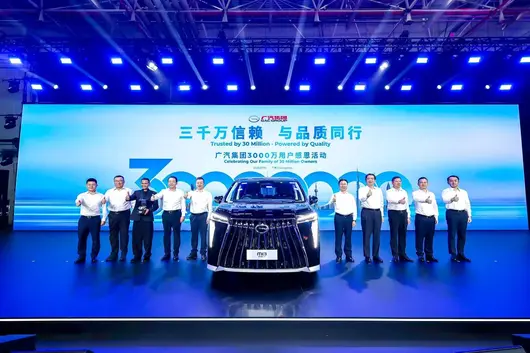

July 16, the GAC Group 30 million user gratitude event was grandly held at the GAC Trumpchi factory. Guangdong Province, Guangzhou City, Panyu District relevant leaders, China Association of Automobile Manufacturers Executive Vice President and Secretary-General Fu Bingfeng, GAC Group Chairman Feng Xingya, General Manager He Xianqing and other leadership team members, joined hands with industry partners, representatives from supply and demand ends, domestic and overseas car owners, employees, and media guests to gather on site, jointly witnessing GAC entering a new development milestone of 30 million users.

[Attending guests witnessed the moment GAC welcomed the 30 million user milestone]
Deeply cultivated the automotive industry for 29 years, 30 million users' trust is the best witness of GAC consistently upholding quality bottom line and deepening user services, and is also the confidence of the enterprise firmly in electric and intelligent transformation, reflecting the transformation of China's automotive industry from scale growth to high-quality development. Relying on solid transformation layout, GAC steadily broke through during the industry's deep adjustment period. In the first half of this year, sales were 773,100 vehicles, a year-on-year growth of 2.35%; new energy sales year-on-year growth of 68.8%, overseas exports over 120,000 vehicles, a year-on-year significant growth of 132%, globalization development momentum is strong.
I. New Energy Matrix Debuts, Witnessing Global Two-Way Rush
This event adopted a global multi-base connection mode. GAC Honda P7, GAC Toyota bZ7, Qijing GT7, GAC Aion N60, GAC Hyper S600 five new energy models rolled off the production line in sequence. Subsequently, Right-hand drive GAC Trumpchi M8 PHEV appeared as the Group's 30 millionth vehicle in a heavy role, full category new energy matrix on display, intuitively showing GAC's whole-speed deep cultivation of new energy track transformation results.

[GAC 30 millionth vehicle — Right-hand drive GAC Trumpchi M8 PHEV rolls off the production line]

[GAC Intelligent New Energy Matrix Shines On Stage]
At the event site, GAC Group Chairman Feng Xingya handed over the key of the 30 millionth new car to Thai owner Tony Jaa. With user bonds spanning mountains and seas, it interprets the brand warmth of GAC's two-way rush with global users under the global layout.

[Feng Xingya (Left) hands over new car key to Thai owner Tony Jaa (Right)]

[He Xianqing (Far Left) awards honorary owners of all GAC Group brands]
II. Upholding Quality Bottom Line, Strict Systems Build Travel Foundation
"Quality is GAC's bottom line that will never be yielded." Feng Xingya emphasized in the event speech. For a long time, GAC has always stuck to the "Quality First" core concept, integrating Honda Total Quality Management, Toyota Lean Production Model, and Lingnan Craftsmanship Culture to build an integrated innovation quality management system with unique characteristics, creating travel products that let users feel relieved, worry-free, and comfortable with extreme quality.

[Witnesses of key nodes in GAC's development history tell the story of GAC walking with quality]

[“National Excellent Engineer Team” GAC Powertrain Independent R&D Team tells the R&D innovation history]

[GAC Aion Intelligent Ecological Factory]
In R&D and manufacturing ends, GAC built a full-chain quality control system. All new cars pass "Five Highs, One Mountain, One Dust" extreme environment testing and "Two Winters, One Summer" full scenario road testing, experiencing 12 major items and over 1500 rigorous validations. Relying on the global first new energy vehicle lighthouse factory's digital intelligent manufacturing capabilities, continuously and stably output high-quality products. On safety level, Xingling Security Protection System, cumulative 1.5 million vehicles equipped, Pellet Battery safe driving over 160 billion km, combined with industry's first independent brand "Three Responsibilities" bottom-line policy, all-round avoid car usage risks and dispel user concerns, building a solid travel safety line for tens of millions of users.

[GAC Xingling Security Protection System]
III. Deeply Focusing on User-Centricity, Full-Cycle Service Warms Thousands of Companionships
Upholding the corporate philosophy of "People are the foundation, Trust is the way, Innovation is the priority", GAC has always placed user needs first, building a full-cycle, refined heart-warming service system. The brand regularly carries out "Users Open Mic" face-to-face exchange activities, established an exclusive user insight department, built a demand closed-loop processing mechanism, ensuring user suggestions responded to one by one and matters implemented, targeted optimization of product and service shortcomings.

[GAC "Users Open Mic" Event Site]
Service layout continues to sink and upgrade, planning to add 1,000 county-level authorized stores this year, broadening service coverage; launched "Super Butler" service, achieving 5-second fast response, 2-hour demand completion. Meanwhile, built a "9 Vertical 10 Horizontal" charging network covering 31 provinces and 213 cities nationwide, self-operated charging piles over 27,000 posts, super charging piles break 20,000 posts, core urban areas achieve 1 km charging coverage full coverage. To return user companionship, GAC officially launched 30 Million Units Roll-off · Renewal Gratitude Season, six major passenger car brands simultaneously launched new purchase, trade-in, increase purchase exclusive rights, sincerely returning the trust of tens of millions of users.

[GAC Energy "9 Vertical 10 Horizontal" Charging Network]
IV. Technology Empowers Transformation, Anchoring New Future of High-Quality Development
With 30 million users as a brand new starting point, GAC will stick to quality original intention and deeply cultivate user value, drive brand upgrade with hardcore tech innovation, accelerate transformation into ecosystem-type tech auto enterprise. To date, GAC cumulative R&D investment over 62 billion yuan, established over 6,800 global professional R&D team, continuously conquering core technology barriers.

[GAC Xingyuan Power lets users choose "No Compromising"]
In power field, Xingyuan Power three technologies developed by National Excellent Engineer Team will go into full mass production, verified by 10 million km limits, adapted to all regions, all scenarios travel; in three electricity field breakthrough all-solid-state battery, super fast charging, low temperature range, industry pain points, Quark Electric Drive efficiency breaks industry top level. In intelligence field, Xingling Architecture, Xinghe Smart Cockpit continuously iterate, link with Huawei, CATL, Tencent, Alibaba and other leading enterprises co-build high-end AI intelligent ecosystem, let smart tech truly land as user-perceivable convenience and safety.
V. Gathering Strength for a New Journey, Continuing to Write New Heights for China's Auto Brands
Based on brand new development milestone, GAC will always with quality as foundation, user as center, innovation as core, globalization as path, continuously polish high-quality products, upgrade heart-warming service system, iterate frontier smart tech. In the future, GAC will continue to deeply cultivate green smart travel track, continuously improve industry ecosystem, walk hand in hand with tens of millions of users, achieve each other, continuously write new chapters of high-quality development of China's automotive industry.


作者:鐘聲
編輯:Mark
出品:紅色星际
頭圖:智能駕駛圖片
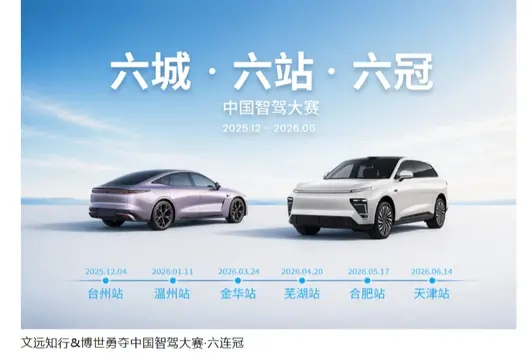
近期,文遠知行宣佈同博世合作研發嘅單段式端到端輔助駕駛解決方案,已經喺德國、法國、日本等國家開展道路測試同適配驗證。可以話係中國單段式端到端嘅首次出海。
文遠知行憑藉單段式端到端輔助駕駛解決方案喺國內非常兇猛,唔單止喺智駕大賽上攞咗「六連冠」,仲係同多個頭部公司喺項目競標上連續獲勝,累計攞到廣汽集團、奇瑞集團超 30 個項目點定。
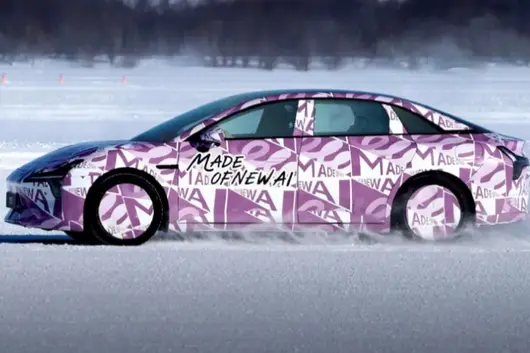
埃安 N60 即搭載呢個單段式端到端方案
據悉,今次文遠知行嘅海外路測,喺應對德國無限速高速、法國密集環島、日本右舵左行規則等海外場景上,表現出眾。
從智能駕駛出海嘅角度嚟講,呢次唔單止係一次海外驗證,而係中國智能駕駛出海將進入一個全新模式嘅階段。
喺過去,智能駕駛出海唔單止搭載嘅功能少,一般上限只有高速 NOA,仲要派駐大量人力去海外做本地化工程。而文遠知行今次將單段式端到端方案推向海外,唔單止將城市 NOA 功能推向海外,仲有意解決點樣由單一市場適配走向全球適配嘅問題。
所以,這亦係中國 Physical AI 能力嘅一次全球考試。
自動駕駛係典型嘅物理 AI 場景,需要同物理世界發生深度交互、處理複雜多任務。
而 L4 級無人駕駛係對物理 AI 能力最嚴苛、最直接嘅驗證場。唔係簡單嘅識別物體然後做路徑規劃,而要係理解世界、預判趨勢,先至能夠做出安全、可靠嘅決策。
呢個就要求要有重建物理世界嘅能力,喺幾秒內像素級生成真實場景;學習複雜交通背後嘅物理規律;推演駕駛行為動作背後嘅因果邏輯;預演時空演變,喺連續變化嘅道路環境中推演未來幾秒內嘅多種可能。
作為自動駕駛領域全球業務覆蓋範圍最廣嘅公司,文遠知行將多年 L4 自動駕駛研發與營運過程中積累嘅大規模數據、技術體系同工程經驗,轉化爲面向 L2++ 量產車型嘅單段式端到端方案。這亦係點解文遠知行&博世嘅單段式端到端方案能奪得智駕大賽「六連冠」嘅原因,本身係把難度更高嘅 L4 級無人駕駛嘅能力下放至 L2++。
文遠知行&博世勇奪中國智駕大賽·六連冠
另外,智能駕駛出海嘅一個重要門檻係數據,海外真實道路場景數據。
物理 AI 模型同互聯網大型語言模型有本質嘅區別,每一次決策規劃都會同真實世界發生交互,所以容錯率極低。所以物理 AI 模型需要真實世界嘅認知數據,幫助模型學習真實世界嘅規律。
海外數據對於一直做國內 L2++ 智能駕駛嘅公司嚟講係個難題,但係對於好似文遠知行呢種喺全球營運 Robotaxi 嘅就係現成嘅優勢。
文遠知行嘅 Robotaxi 營運而家已覆蓋廣州、北京、新加坡、阿布扎比、迪拜、利雅得、蘇黎世等多個海內外核心市場,已喺全球 12 個國家超 40 個城市開展自動駕駛研發、測試及營運。根據此前披露,文遠知行喺全球投放嘅自動駕駛車隊超過咗 3000 多輛,全球龐大嘅車隊為 L2++ 單段式端到端 AI 大型模型嘅訓練提供咗足夠嘅場景深度同廣度。
奇瑞星途 EX7 標配呢個單段式端到端方案
可以話,文遠知行係全球少有嘅積累咗真實世界認知數據嘅公司。這亦係智能駕駛出海嘅壁壘,覆蓋嘅國家地區足夠廣,積累嘅道路場景數據足夠豐富,先至能夠為單段式端到端 AI 大型模型嘅進化提供豐富嘅養料。
更加重要嘅係,海量嘅全球數據為智能駕駛出海提供咗全新嘅玩法。
以往中國智能駕駛出海面對嘅一個巨大困難:場景鴻溝。
海外道路交通場景同國內差異性非常大,而且唔同國家地區彼此差異都非常大。例如德國高速限速規則、法國嘅密集環島,仲有好多國家地區係右舵車。
喺以前,呢啲海外道路場景嘅差異化就需要投入大量人力去做「本地化」適配同部署,要做大量嘅技術工程苦工、累工。所以,呢個導致中國智能駕駛出海難度高、成本高,而且佈局海外市場嘅速度非常慢,因為每個國家地區都需要「本地化」嘅技術工程乾一遍。
奇瑞星途 ES 亦搭載呢個單段式端到端方案
所以對於中國智能駕駛公司嚟講,擺喺眼前嘅一個問題係:L2++ 智能駕駛出海可唔可以用更低成本、更有效率嘅方式破局場景鴻溝呢?
文遠知行嘅回答係:能,而且必須呢樣做。
透過全球海量真實營運數據嚟訓練單段式端到端 AI 大型模型,用符合物理世界客觀規律嘅 WeRide GENESIS 世界模型進行建模,進一步生成場景、訓練演算法、驗證安全。呢個係中國智能駕駛出海嘅全新玩法,同時亦係 AI 嘅底層邏輯,對於人類嚟講唔同國家嘅道路場景、規則唔同,對於 AI 嚟講卻屬於同一個世界。
所以智能駕駛出海,最終歸結為一件事:AI 能力夠唔夠強。而文遠知行而家正在驗證這一點,AI 學到嘅係中國道路經驗,定係物理世界規律?
智能駕駛出海已經迎來最佳時機,全球汽車市場喺智能駕駛上都在向中國市場看齊。
一係中國車企出海規模持續猛漲,海外銷量接近佔比三分之一。智能駕駛正成為出海車型重要嘅競爭力,中國車企亦準備升級到城市 NOA 高級智能駕駛功能。
二係唔單止中國車企嘅出海車型將搭載城市 NOA 高級智能駕駛功能,海外車企喺自己嘅大本營市場,亦開始着手佈局城市 NOA。例如,保時捷同奧迪分別選擇咗 Mobileye 合作,使用 Mobileye 嘅方案,覆蓋高速同市區嘅點到點輔助駕駛。
單段式端到端方案測試車喺德國
呢同過去幾年嘅狀況唔一樣,以前海外車企喺歐美市場比較保守,智能駕駛功能一般局限喺高速 NOA,而而家都要向中國市場對齊。
所以,而家係中國智能駕駛出海嘅最佳時機。一係海外市場嘅需求喺釋放,二係歐美市場嘅智能駕駛供應商,好似 Mobileye、國際 Tier 1,喺智能駕駛方案技術以及量產效率上都落後於國內。
市場規模大,客戶需求剛性,競爭對手弱,呢就係長坡厚雪嘅紅利賽道。
不過,今次文遠知行嘅出海佈局卻並唔係簡單複製國際 Tier 1 們嘅全球擴張模式。以往國際 Tier 1 們係靠堆人力、堆適配、堆規則演算法嘅模式,而文遠知行靠係 AI 能力,以數據為驅動,以 AI 模型為抓手。所以,呢係 AI 能力出海。
文遠知行所代表嘅唔單止係一家自動駕駛企業嘅全球化嘗試,仲係中國 Physical AI 能力開始接受全球道路體系系統性驗證嘅重要標誌。
-END-


作者:钟声
编辑:Mark
出品:红色星际
头图:智能驾驶图片
据悉,国内某头部智驾公司端到端模型技术大牛Z投身创业,并且已经拿到融资。
Z不仅是该头部公司内部最年轻的对标阿里P10级别技术负责⼈,更是业内有惊艳成果的智驾大牛。
Z作为该头部公司各项核心技术攻坚一号位,统领百⼈团队分别完成纯视觉感知、全国⽆图感知、⼀段式端到端等三次核⼼技术的攻坚突破。其中,在2025年带队实现了一段式端到端方案从0到1的关键技术突破,对公司高阶智驾技术路线的确立和能力跃迁产生了决定性影响;该方案最终打磨至国内顶尖水平,被认为是国内最接近特斯拉端到端能力的智驾产品,没有之一,在一段式端到端路线中形成断档领先优势。
该头部公司的纯视觉一段式端到端方案,是真正让外界看到这支智驾团队技术上限的一仗。在许多专业体验者看来,这已经是国内量产一段式端到端的领先水平,也是目前最接近特斯拉FSD的国产方案。
它的性能强不是宣传片里跑通几个Corner Case,而是专业人士一坐上车就能感觉出来:安全性扎实,决策反应快,横纵向协同顺,跟车、变道、绕行和路口博弈都更像一个成熟司机,整体上已经具备了对齐FSD V13/14的能力底座。
2025年,很多公司都在讲VLA、World Model和RL,但用户最终看的还是实车表现。真正懂技术的人都知道,VLA、World Model和RL并不是孤立的技术终点,而是通向Physical AI的重要能力模块。
一段式端到端本身已经吸收了VLA和World Model的核心思想:既要理解场景演化和未来风险,也要通过强化学习式的策略优化,让模型在复杂交互中学会更优的行为选择。但相比单独讲VLA或World Model,一段式端到端更难,因为它不能停留在实验室里把概念讲通、把Demo跑出来,而是要把感知、预测、决策、规控、数据、训练和部署全部打穿,让模型在真实物理世界中连续行动,并且每一个动作都要满足安全、舒适、实时和量产约束。
该方案能够做出来,既是一支顶级团队的体系化胜利,也离不开公司管理层对技术路线的判断和投入。
当时行业里VLA、World Model等概念声量很大,但该头部公司老板A和智驾总负责人B没有被营销噪音带偏,而是坚持从用户体验和量产可交付出发,拍板推进一段式端到端并大举投入。
这套方案也是智驾总负责人B主导打造的又一代表作。Z作为核心技术攻坚一号位,带领团队持续突破,完成了一段式端到端从0到1的关键技术攻坚。感知部门负责人C给予了重要支持,并在关键技术方向上提供指导;后续规控负责人D带领规控团队死磕算法的落地量产。
算法、数据、Infra、规控和量产工程等团队一起把大量看不见的苦活累活做扎实,最终将这套方案推到了国内断档领先水平。虽然该方案目前的市场认知和销量还没有完全释放,但在专业圈层中的认可度已经很高。随着搭载车型继续铺开、真实用户口碑发酵和数据闭环持续滚动,后续打开局面只是时间问题。
也正是这段大型技术工程的实战经历,让Z成为国内少有的同时懂模型、数据闭环和量产落地的全链路大牛。
开始创业后,Z很快找来了头部智驾公司的数据闭环及基础设施负责人、量产Physical AI模型的核心研发者、香港某高校的世界模型和具身智能大牛担任首席科学家,以及来自北美顶尖团队的天才少年,搭起了从模型、Infra、数据到硬件的完整班底。
这样的团队在具身行业并不多见,所以融资份额很快被机构抢完,最后超募完成。
-END-


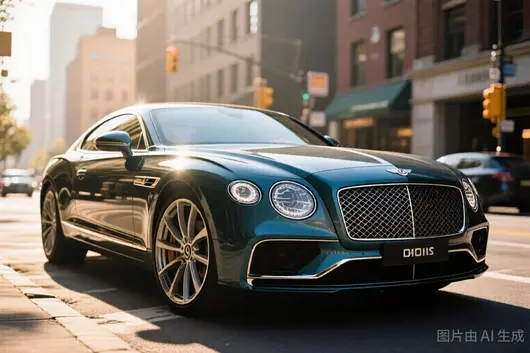
猫头鹰车志(ID:owlauto)讯,曾经加价30万元仍一车难求的超豪华品牌宾利,如今在中国市场遭遇了新车与二手车价格的双重下滑。中国汽车流通协会与精真估联合发布的《2026年6月中国汽车保值率研究报告》显示,宾利飞驰3年车龄保值率已从2024年的近75%降至62%,一年内下降超过12个百分点。
新车市场价格同步失守。2026款宾利飞驰的综合现金优惠在35万至45万元区间,贷款购车优惠可达50万元。老款车型降幅更为显著——2024款飞驰V8标准版官方指导价279.3万元,经销商渠道折后价已低至199.3万元,单台降价80万元。
保值率下滑并非宾利独有的现象。同一份保值率报告显示,保时捷三年保值率已降至58.5%,首次跌破六成;奔驰从59.2%降至54.8%,雷克萨斯从60.5%降至56.3%,宝马从54.3%降至48.2%,奥迪从51.4%降至47.4%。超豪华与普通豪华品牌的保值率防线均被击穿。
二手车市场的价格变动更为剧烈。在青岛陆海汽车交易市场,车龄8年以上的宾利飞驰挂牌价已降至26.8万元。据二手车商透露,这类车型正常二手价格应在70万至80万元区间。2025年同期,同年限宾利飞驰的挂牌价还维持在55万元左右。
销量数据反映了市场需求的变化。宾利在华销量于2021年达到4212辆的历史峰值,此后逐年下滑——2022年4033辆、2023年3006辆、2024年2608辆、2025年仅剩2030辆。进入2026年,前四个月累计销量489辆,同比下滑30%;5月单月进口115辆,同比下跌36%。2025年,宾利在中国内地及香港市场的销量占总销量的19%,而2024年这一比例为23%。
宏观市场环境正在发生结构性变化。2026年5月,国内新能源乘用车渗透率突破62.9%,当月燃油车零售量同比下滑39%,乘用车销量榜单前十全部被新能源车型占据。在超豪华车细分市场,2025年上半年零售价101.7万元以上车型的销量仅为3.7万辆,同比下跌49%。
新车持续降价压低了二手车残值的天花板。与此同时,尊界、仰望等国产高端新能源品牌推出多款百万级车型,凭借智能化配置和本土化产品体验分流了传统超豪华品牌的核心客群。宾利市售主力仍以大排量燃油车为主,智能座舱与车机系统落后于行业主流节奏。
从2022年底保时捷三年保值率一度高达100.3%的行业高点,到如今宾利飞驰等车型跌破62%,超豪华品牌曾经稳固的残值体系正经历一轮显著调整。

喺馬來西亞嘅 SUV 市場,好多買家喺揀車嘅時候都會拿 Perodua Ativa 同 Chery Tiggo 7 Pro 做比較。呢兩款車喺價位同定位上都好接近,今日我哋就由多個角度做一個詳細嘅比較,幫你節省咗做功課嘅時間。
Perodua Ativa 喺馬來西亞嘅 OTR 售價係 RM 62,500 - 73,400,總共有 3 個版本,包括 1.0L Turbo X(RM 62,500)、1.0L Turbo H(RM 67,300)、1.0L Turbo AV(RM 73,400) 等。
Chery Tiggo 7 Pro 喺馬來西亞嘅 OTR 售價係 RM 123,750 - 123,750,總共有 2 個版本,包括 1.6L Turbo Standard(RM 125,000)、1.6L Turbo Premium(RM 140,000) 等。
從價錢來看,Perodua Ativa 嘅起步價確實比 Chery Tiggo 7 Pro 平咗 RM 61,250。如果你預算有限,Perodua 嘅入門版已經可以滿足日常需求。但都要留意,平嗰幾千蚊,可能喺配備上會有取舍,具體要看你嘅需求。

Perodua Ativa 搭載 1.5L 4-cyl,馬力 105 hp。官方油耗 6.0 L/100km。
Chery Tiggo 7 Pro 搭載 1.5L Turbo,馬力 140 hp。官方油耗 7.0 L/100km。
動力方面,Chery Tiggo 7 Pro 嘅 1.5L Turbo 比 Perodua Ativa 嘅 1.5L 4-cyl 多咗 35 匹馬力。不過日常喺市區開,兩款車嘅動力都夠用,唔會覺得唔夠力。
Perodua Ativa 保修 5 年/150,000km,保養間隔 每 10,000km 或 6 個月。
Chery Tiggo 7 Pro 保修 3 年/100,000km,保養間隔 每 10,000km 或 6 個月。
Perodua Ativa 同 Chery Tiggo 7 Pro 都係馬來西亞市場嘅主流選擇,適合家庭用、日常通勤。如果你更看重品牌聲譽同二手價,可以優先考慮聲譽更好嗰一款;如果你更在意性價比同配備,那就揀配備更豐富嗰款。最後都係建議兩款都去試駕,親身體驗先係最重要嘅。
總體嚟講,Perodua Ativa 同 Chery Tiggo 7 Pro 都係馬來西亞市場幾唔錯嘅車型。揀邊一輛,關鍵仍然係睇你嘅個人需求同預算。建議大家做好功課,多比較幾間車行嘅報價,再去試駕做最後決定。買車係件大事,花少少時間做功課絕對無錯。


喺馬來西亞嘅 SUV 市場,好多買家喺揀車嘅時候都會拎 Perodua Ativa 同 Proton X70 嚟做比較。呢兩款車喺價位同定位上都幾近嘅,今日我哋就從多個方面做一個詳細嘅對比,幫你省做功課嘅時間。
Perodua Ativa 喺馬來西亞嘅 OTR 售價係 RM 62,500 - 73,400,總共有 3 個版本,包括 1.0L Turbo X(RM 62,500)、1.0L Turbo H(RM 67,300)、1.0L Turbo AV(RM 73,400) 等。
Proton X70 喺馬來西亞嘅 OTR 售價係 RM 106,800 - 122,300,總共有 3 個版本,包括 1.5L Standard 2WD(RM 106,800)、1.5L Executive 2WD(RM 115,800)、1.5L Premium 2WD(RM 122,300) 等。
由價錢睇,Perodua Ativa 嘅起步價確實比 Proton X70 平咗 RM 44,300。如果你預算有限,Perodua 嘅入門版已經可以滿足日常需要。但都要小心,平嗰幾千蚊,可能喺配備上會有取捨,具體睇你嘅需要。
Perodua Ativa 配備 1.5L 4-cyl,馬力 105 hp。官方油耗 6.0 L/100km。
Proton X70 配備 1.5L Turbo,馬力 140 hp。官方油耗 7.0 L/100km。
動力方面,Proton X70 嘅 1.5L Turbo 比 Perodua Ativa 嘅 1.5L 4-cyl 多咗 35 匹馬力。不過日常喺市區開,兩款車嘅動力都夠用,唔會覺得冇夠力。
Perodua Ativa 嘅安全評級係 5★ (ASEAN NCAP),主動安全系統包括 ASA 3.0 + ACC + LDA + LKA + BSM + RCTA。
Proton X70 嘅安全評級係 5★ (ASEAN NCAP),主動安全系統包括 ADAS (ACC, AEB, LKA, LDA, BSM, RCTA)。
兩款車嘅安全評級一樣,喺呢個級別入面安全配備都算俾得好齊全。而家嘅新車安全性都唔差,唔使太擔心呢一點。
Perodua Ativa 採用 FWD 驅動方式。
Proton X70 採用 FWD 驅動方式。
兩款車嘅驅動方式一樣,都係 FWD,日常駕駛感受唔會有太大分別。
Perodua Ativa 同 Proton X70 都係馬來西亞市場嘅主流選擇,適合家庭使用、日常通勤。如果你更睇重品牌口碑同二手價,可以優先考慮口碑更好嗰一款;如果你更介意性價比同配備,那就揀配置更豐富嗰款。最後仲係建議兩款都去試駕,親身體驗先最重要。
總括嚟講,Perodua Ativa 同 Proton X70 都係馬來西亞市場幾唔錯嘅車型。揀邊輛,關鍵仲係睇你個人需要同預算。建議大家做好功課,多比較幾間車行嘅報價,再去試駕做最終決定。買車係件大事,花少少時間做功課絕對唔會錯。

喺馬來西亞嘅 SUV 市場,好唔少買家喺揀車嗰陣都會拿 Proton X90 同 Chery Tiggo Cross 嚟做比較。這兩款車喺價位同定位上都幾接近,今日我就從多個方面做一個詳細比較,幫你慳下做功課嘅時間。
Proton X90 喺馬來西亞嘅 OTR 售價係 RM 106,800 - 122,800,一共有 4 個版本,包括 2026 1.5T Prime X(RM 122,800)、2026 1.5T Prime(RM 116,800)、2026 1.5T Lite(RM 106,800) 等。
Chery Tiggo Cross 喺馬來西亞嘅 OTR 售價係 RM 88,750 - 99,750,一共有 2 個版本,包括 2025 HEV 1.5L CSH(RM 99,750)、2025 1.5T Standard(RM 88,750) 等。
由價錢睇,Chery Tiggo Cross 嘅起價比 Proton X90 平咗 RM 18,050。講真,喺呢個價位段,幾千蚊嘅分別其實唔係好大,關鍵都係睇整體嘅性價比同長期使用成本。
Proton X90 配備 1.5L Turbo,馬力 140 hp。官方油耗 7.0 L/100km。
Chery Tiggo Cross 配備 1.5L 4-cyl,馬力 105 hp。官方油耗 6.0 L/100km。
動力方面,Proton X90 嘅 1.5L Turbo 比 Chery Tiggo Cross 嘅 1.5L 4-cyl 多咗 35 匹馬力,中段加速更有信心,尤其係跑高速超車嗰陣。不過 Chery Tiggo Cross 嘅油耗可能更抵,日常市區通勤分別唔會太大。
Proton X90 採用 FWD 驅動方式。
Chery Tiggo Cross 採用 FWD 驅動方式。
兩款車嘅驅動方式一樣,都係 FWD,日常駕駛感受唔會有太大分別。
Proton X90 保修 5 年/150,000km,保養間隔 每 10,000km 或 6 個月。
Chery Tiggo Cross 保修 3 年/100,000km,保養間隔 每 10,000km 或 6 個月。
Proton X90 同 Chery Tiggo Cross 都係馬來西亞市場嘅主流選擇,適合家庭使用、日常通勤。如果你更睇重品牌口碑同二手價,可以優先考慮口碑更好嗰一款;如果你更在意性價比同配備,那就選配置更豐富嗰款。最終都係建議兩款都去試駕,親身體驗先係最重要。
總括嚟講,Proton X90 同 Chery Tiggo Cross 都係馬來西亞市場幾唔錯嘅車型。揀邊一部,關鍵仲係要睇你嘅個人需求同預算。建議大家做好功課,多比較幾間車行嘅報價,先去試駕先做最終決定。買車係件大事,花少少時間做功課絕對唔會錯。

喺馬來西亞嘅轎車市場,好多買家喺揀車嘅時候都會拿豐田 Corolla 同福斯 Golf 來做比較。這兩款車喺價位同定位上都幾接近,今日我哋就從多個方面做一次詳細嘅比較,幫你省返做功課嘅時間。
豐田 Corolla 喺馬來西亞嘅 OTR 售價係 RM 144,800 - 149,800,一共有 2 個版本,包括 2026 1.8L GR Sport(RM 149,800)、2026 1.8L G(RM 144,800)等。
福斯 Golf 喺馬來西亞嘅 OTR 售價係 RM 186,530 - 186,530,一共有 1 個版本,包括 2026 1.5T R-Line(RM 186,530)等。
從價錢嚟睇,豐田 Corolla 嘅起步價確實比福斯 Golf 平咗 RM 41,730。如果你預算有限,豐田嘅入門版已經可以满足日常需求。但都要注意,平嗰幾千蚊,可能喺配備上面會有取舍,具體要看你嘅需求。

豐田 Corolla 採用 FWD 驅動方式。
福斯 Golf 採用 FWD 驅動方式。
兩款車嘅驅動方式一樣,都係 FWD,日常駕駛感覺唔會有太大分別。

豐田 Corolla 保用 5 年/無限里程,保養間隔 每 10,000km 或 6 個月。
福斯 Golf 保用 3 年/100,000km,保養間隔 每 10,000km 或 6 個月。

豐田 Corolla 同福斯 Golf 都係馬來西亞市場嘅主流選擇,適合家庭使用、日常通勤。如果你更重視品牌口碑同二手價,可以優先考慮口碑更靚嗰一款;如果你更介意性價比同配備,那就揀配置更豐富嗰款。最終都係建議兩款都去試駕,親身體驗先係最重要。

總括嚟講,豐田 Corolla 同福斯 Golf 都係馬來西亞市場幾好嘅車型。揀邊一輛,關鍵都係睇你嘅個人需求同預算。建議大家做好功課,多比較幾間車行嘅報價,再去試駕做最終決定。買車係一件大事,花少少時間做功課絕對唔會錯。


