


首頁Li Auto L8

搜尋歷史
熱門搜尋
經銷商登入 / 註冊

Tonight, Chery Fengyun's all-new global quality pure electric SUV, Fengyun T7, officially opens for pre-sale. This pre-sale launch event is themed "Great cars take time to build, long awaited", conveying Chery Fengyun's long-termist vehicle manufacturing philosophy: abandoning the industry's quick-maintenance vehicle building approach, refining vehicle quality with globally unified strict standards to create home-use pure electric models for the global market, while also extending sincere thanks to users who have long-awaited new vehicles. The new car comes in 3 versions, pre-sale guide price 109,900 - 129,900 RMB, users who place orders can enjoy official 7 purchasing benefits.

The global automotive industry is currently entering a "China Time", with domestic new energy vehicles continuously leading the overseas market thanks to mature technology and intelligent manufacturing strength. Relying on Chery's 23 years of global technical accumulation, the Fengyun T7 adopts a "reverse overseas trial" R&D path. The overseas homologous model Lepas L6 landed at the Milan Design Week and received international recognition, first passing global diverse road conditions and climate tests, then launching domestically for families. The brand delves deep into contemporary family travel pain points, refining six core essentials: appearance, safety, mobility, intelligence, comfort, and peace of mind, creating an all-around balanced pure electric SUV, fully adapted to urban commuting, long-distance self-driving, outdoor camping, family multi-person travel and other scenarios.

Appearance Essentials: Combining Global Aesthetics with Oriental Elegance, Lasting Quality Remains Online
Fengyun T7 is jointly created by Chery's 10 global design centers. During the R&D phase, over 5,000 domestic and overseas users were invited for co-creation throughout the process, balancing international minimalist styles with Oriental elegant charm. Signature wind-riding front fascia, smooth wind-sculpted satin body paired with an integrated skyline glow tailgate, lines are dynamic yet powerful. The whole vehicle paint matches overseas weather resistance standards, resistant to sun exposure and corrosion, difficult to lose luster or fade after long-term use, offering 6 color options: Crimson Orange, Mountain Smoke Purple, Cloud Pink Rice, Flowing Silver, Green Bamboo Grey, Ink Stone Black, meeting diverse aesthetics.

Interior offers two styles: Warm Black-Brown and Polar Night Obsidian. The Cloud Wing Encapsulated Cockpit adopts large-area soft wrapping, paired with pebble floating speakers and diamond-quilted seats, details are exquisite and high-end. Interior leather, sealing strips, and plastic parts all undergo long-term aging tests, hardening and fading are unlikely, remaining new after years of use, balancing appearance and durability, two core needs.
Safety Essentials: Global Five-Star Protection System, Full Dimension Backing for Global Road Conditions
Safety is the core bottom line for family cars. Fengyun T7 is built to the 2026 E-NCAP five-star safety standard, with functional safety reaching the highest ASIL-D level. The new car went through 2 years of planning and 3 years of R&D, investing 81 exclusive durability vehicles for global synchronous road tests, cumulative vehicle testing mileage exceeding 6 million km, durability special testing 1.45 million km; R&D teams traveled to Southeast Asia rainy season, Middle East high temperatures, Indonesia high humidity coastal areas, and more to complete extreme trials, adapting to global complex vehicle usage environments.
The body adopts 80% high-strength steel and 18.84% hot-formed steel to create a nine-horizontal five-vertical cage body, paired with shotgun anti-collision structures, dual-frame subframes, and battery anti-collision beams, planning 9 front and 6 side collision force transmission channels, efficiently dispersing impact force during collisions, safeguarding occupant survival space. All series come standard with 9 airbags, including 48L dual-chamber remote airbags and rear-side airbags, achieving full vehicle 360° passive protection.
All series equipped with Rhino Safe Battery, 6D Stereoscopic protection structure resists extrusion, puncture, impact; Battery reaches IP68 waterproof grade, protection capability is 96 times the national standard, fearless of urban waterlogging and water wading, avoiding battery water ingress short circuit, thermal runaway risks from the source.
Mobility Essentials: Full Series 600km Range Equality, Adapting to Global Diverse Climate Conditions
Fengyun T7 achieves full series range equality, three vehicle models uniformly equipped with 65.05kWh Rhino battery, CLTC standard range 600km, actual road condition test range can reach over 667km, achieving "reverse false labeling", thoroughly eliminating range anxiety. Fast charging performance is outstanding, 30% to 80% charge only takes 20 minutes, short breaks can make up for long-distance range.
Vehicle equipped with integrated thermal management dual-source wide heat pump AC + high voltage PTC, -30°C to 55°C ultra-wide temperature range stable operation. Northern winter heat pump heating saves more power, significantly reducing low-temperature range loss; Southern summer heat dissipation efficient, interior rapid cooling. Also equipped with AGS intelligent grille and 14 low wind resistance optimizations, high and low speed driving energy consumption stable, further releasing long-range advantages.
Intelligence Essentials: Cockpit-Drive Integrated 8775 High-Computing Power Chip, Half Knows You, Half Protects You
Fengyun T7 equipped with 4nm process cockpit-drive integrated 8775 chip, 72 TOPS high computing power, interaction response only 80ms, whole machine boot speed increased by 33%, vehicle system operation smooth without lag, connecting smart cockpit and driving assistance two major domains, balancing humanized interaction and driving safety.
Smart cockpit equipped with 15.6-inch 2.5K anti-glare HD large screen, supports wireless CarPlay, HUAWEI HiCar, CarLink, compatible with over 99% mobile phone interconnection on the market. Lingxi Smart Cockpit 2.0 built-in 6 humanized voice personas, paired with 6 full-scene modes including Power Nap, Camping, Pet, Refreshing, etc.; Xiao Qi Assistant interaction is natural, can one-key switch cockpit lighting, AC, multimedia settings, creating exclusive mobile living space.

Falcon 500 driving assistance system equipped with 3 millimeter-wave radars, 7 HD cameras, 12 ultrasonic radars, totaling 22 high-precision sensors, supporting 300+ full-scene automatic parking, dead-end road parking, one-key trace reverse, cross-floor multi-level garage parking can be completed automatically, thoroughly solving parking problems, achieving parking freedom.
Comfort Essentials: Ultra-Large Spacious Cockpit, International Master Chassis Tuning for Stable and Quiet Travel
Vehicle dimensions 4570x1852x1694mm, wheelbase 2700mm, interior space utilization rate 84%. Rear pure flat floor, legroom reaches 911mm, long-distance seating no cramped feeling; rear seats folded flat form 1955mm pure flat large bed, conventional trunk 450L, expanded max volume 1550L, camping equipment, large luggage easily accommodated.
Seats adopt 9-layer cloud-feel filling material, soft and bouncy support without collapse, all series front row equipped with ventilation and heating functions. Heating supports 3-gear temperature control, -20°C low temp in 5 minutes rise to 30°C; suction type ventilation design, summer seating not stuffy or sweaty. Whole car sets 38 locations of layered storage space, paired with 4 300kg load-bearing rivet rings, 2 3kg load-bearing hooks, outdoor supplies, large cargo can be securely fixed.

Chassis polished by international team led by former Maserati chassis tuning expert, 50.8:49.2 golden axle load ratio, effectively suppresses understeer in turns, high-speed oversteer, improving driving stability. Relying on Chery's 26-year chassis positive R&D foundation and domestic first double-axle K&C test bench technical accumulation, vibration filtering soft, driving steady, driving and riding quality comparable to high-end vehicles.
Peace of Mind Essentials: Two Bottom Lines + Two Lifetime Benefits, Worry-Free Vehicle Use Throughout Lifecycle
Chery targets user long-term vehicle use concerns, customizes two bottom-line guarantees and two lifetime benefits for Fengyun T7, covering the full cycle from purchase to long-term use: Two Bottom-Line Guarantees
1. Power Battery Safety Bottom Line: If vehicle thermal runaway damage is caused by battery quality issues, compensate with a new vehicle of the same model or configuration;
2. Driving Assistance Bottom Line: Within 1 year of purchase, if parking or intelligent pilot scenarios are judged as auxiliary system failure causing accidents, personnel and third-party losses compensated up to 5 million Yuan.
Two Lifetime Benefits
1. Whole Vehicle Lifetime Warranty: Value 10,000 RMB Whole Vehicle (including Three-Electric Systems) Lifetime Warranty, wear-and-tear, special consumable parts excluded;
2. Lifetime Maintenance Package: 666 RMB to purchase original price 3,999 RMB Lifetime Basic Maintenance Package, enjoy 1 free basic maintenance annually.

From global standard R&D, international design, high-standard manufacturing to cross-regional extreme road condition validation, Fengyun T7 relies on full-link global quality control, establishing a new benchmark for value of 100,000 level pure electric SUV. This car has returned domestically after rigorous trials in diverse global environments, with six dimensions of balanced strength: appearance, safety, range, intelligence, space, vehicle use guarantee, precisely matching all travel needs of Chinese quality families. Fengyun T7 is not only the crystallization of Chery's 23 years of global technology accumulation, but also a product deeply aligned with global vehicle manufacturing standards and domestic family real vehicle use needs. Currently new car pre-sale fully opened, national stores can visit store to experience test drive, this pure electric SUV balancing global quality and home practicality is now in position, quietly waiting for every user who loves life.
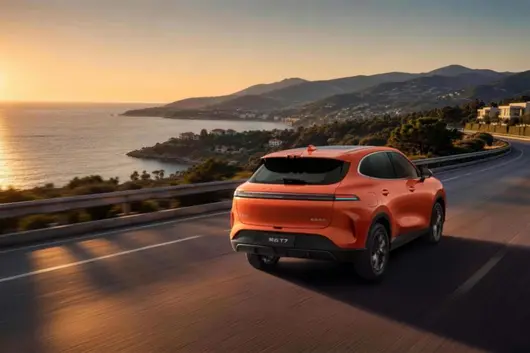
Recently, the Fengyun T7 officially launched pre-sale. The new car offers 3 versions, with a pre-sale guide price ranging from 109,900 RMB to 129,900 RMB, and enjoys 7 purchasing benefits. As a compact SUV, the Fengyun T7 aims for 'Building a Good Car with Careful Craftsmanship', upholding a long-term manufacturing philosophy, highlighting high standards and high quality.

Relying on Chery's 10 global design centers, the Fengyun T7 features a wind-riding front face, wind-sculpted satin body, and horizon sunrise tailgate, balancing international minimalist aesthetics with elegant Eastern charm. The overall paint standard syncs with strict overseas weather resistance requirements, offering 6 color options: Blazing Orange, Mountain Smoke Purple, Cloud Pink Beige, Flowing Light Silver, Green Bamboo Gray, and Ink Stone Black.

Interior design features a Cloud Wing Embracing Cockpit with large-area soft wrapping. Details include Pebble Suspended Speakers, Diamond Quilted Stitching, etc. Color options include Warm Black-Brown and Extreme Night Obsidian. Overall dimensions 4570×1852×1694 mm, wheelbase 2700 mm, interior efficiency rate 84%.

Regarding the powertrain system, the Fengyun T7 standardly equips all versions with a large-capacity Rhinoceros battery 65.05 kWh, CLTC 600 km range, actual test range 667+ km. Charging the battery from 30% to 80% takes only 20 minutes. It also features all-domain integrated thermal management dual-source wide heat pump air conditioning + high-voltage PTC, so northern users can drive with confidence in winter. -30°C-55°C ultra-wide temperature range stable operation, heating is more energy-saving in low-temperature environments, heat dissipation is more efficient in high-temperature environments. With all versions standardly equipped AGS intelligent front grille and 14 low wind resistance optimizations, energy consumption at high and low speeds is more stable.
Regarding the chassis suspension system, the Fengyun T7 is tested and tuned by an international chassis team led by former Maserati chassis tuning experts. The 50.8:49.2 golden axle load ratio can effectively suppress steering push-under and tail-slip phenomena, improving cornering stability and straight-line tracking.

In terms of intelligence, the Fengyun T7 is equipped with a cockpit-driving integrated 8775 chip, achieving dual optimization for cockpit and driving, with two domains seamlessly collaborating. 72 TOPS high computing power, response time only 80 ms, improving overall experience speed. The center console uses a 15.6-inch 2.5K HD large screen, the image is delicate and realistic, anti-glare, anti-reflection, anti-fingerprint, CarPlay, HUAWEI HiCar, CarLink wireless connection.

Intelligent driving uses the Falcon 500 driving assistance system, integrated 3 mmWave radars, 7 high-performance cameras, 12 ultrasonic radars, totaling 22 high-precision sensors. Besides conventional auxiliary functions, it can also achieve full-scenario automatic parking.

Lastly, let's mention safety and durability. First, the entire body uses 80% high-strength steel, 18.84% hot-formed steel to build a nine-horizontal five-vertical cage body, adopting shotgun structure, double-frame subframe + Pack anti-collision beam. Safety configurations include 9 airbags, containing 48L dual-chamber far-end airbags and rear side airbags. The Rhinoceros battery equipped in all versions also constructs multiple safety protection mechanisms to resist extrusion, piercing, impact, etc. In addition, the Fengyun T7 went through 2 years of planning, 3 years of R&D, invested a total of 81 exclusive durability cars for synchronized road testing. The whole vehicle accumulated test mileage exceeding 6 million km, durability special test 1.45 million km. At the same time, extreme real car trials were conducted for Southeast Asian rainy seasons, Middle East high-temperature exposure, Indonesian high humidity, and other global multi-regions.
From the Fengyun T7's product capability and its design craftsmanship, it can be seen that it is indeed a high-standard, quality-focused model launched targeting the pain points of the family car market. Currently, the pre-sale price has been released, and there are still many purchasing benefits. You can continue to pay attention to its official launch.
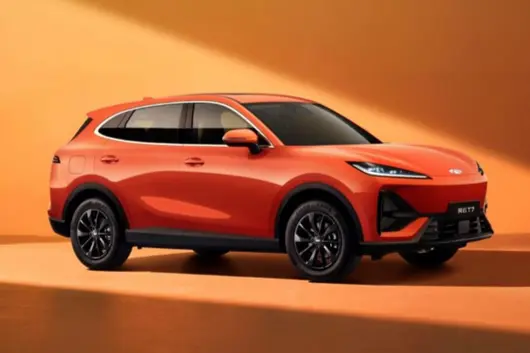

8 月 12 日,全球品質純電 SUV 風雲 T7 正式開啟預訂,預訂發布會以“慢功造好車,久等咗”為主題,傳遞風雲 T7 秉持長期主義嘅造車理念,以全球標準打磨產品、扎实造品質嘅堅守。新车共推出 3 款型號,預訂指導價格為 10.99 萬元至 12.99 萬元,且享受 7 重購車權益。


顏值剛需丨全球審美融合東方雅韻,長效質感在線
依托奇瑞 10 大全球設計中心,5000 多名海內外用戶全程共創,同源車型 Lepas L6 亮相米蘭設計周獲國際認可,風雲 T7 融匯全球審美,顏值持久在線。禦風前臉、風塑絲綢車身、天際霞光尾門,平衡國際簡約審美同東方雅致氣韻。整車漆面標準同步海外嚴苛耐候要求,提供熾焰橙、山煙紫、雲粉米、流光銀、青竹灰、墨石黑 6 款配色。

內飾分溫暖黑棕、極夜黑曜兩種風格,雲翼環抱座艙搭配大面積軟包覆,鵝卵石懸浮揚聲器、菱格縫紉細節精緻;所有內飾皮革、密封條、塑膠件唔易硬化褪色,常年使用依然嶄新耐看,兼顧顏值同質感。

風雲 T7 對標 2026 版 E-NCAP 五星安全標準設計、功能安全 ASILD 最高等級。2 年策劃,3 年研發,共投入 81 台專屬耐久車同步路試,整車累計測試里程超 600 萬公里,耐久專項實測 145 萬公里,同時針對東南亞雨季、中東高溫暴曬、印尼高濕等多種全球多地域進行極限實車試煉。
車身採用 80% 高強度鋼、18.84% 熱成型鋼打造九橫五縱籠式車身,採用 Shotgun 結構、雙框副車架+Pack 防撞梁,鋼筋鐵骨保障乘員艙安全,前面 9 條 + 側面 6 條碰撞傳力路徑最大化分散碰撞能量,留存乘員生存空間;除此之外,還搭載咗 9 個安全氣囊,包含 48L 雙腔遠端氣囊同後排側氣囊,360°全方位保護乘員安全。風雲 T7 全系搭載犀牛電池,超強 6D 防護構築電池安全堡壘全方位抵禦擠壓、穿刺、衝擊,為動力電池構建多層立體安全屏障。面對夏季暴雨頻繁,犀牛電池 IP68 防水為國標 96 倍,無懼雨季內澇、路面積水、戶外涉水,有效防止電池進水短路隱患。
出行剛需 | 全系 600 公里續航平權,適配全球多種氣候工況基於全球多地域能源與氣候需求,風雲 T7 實現續航配置全系平權,全系標配大容量犀牛電池 65.05kWh,CLTC 600 公里續航,實測續航 667+ 公里,“反向虛標”解決焦慮。電池 30% 充到 80% 只需要 20 分鐘,一杯咖啡時間即可再次出發。

風雲 T7 搭載全域一體化熱管理雙源寬熱泵空調 + 高壓 PTC,北方用戶冬季都可以放心開。-30°C-55°C 超寬溫域穩定運轉,低溫環境制熱更省電、高溫環境散熱更高效。配合全系標配嘅 AGS 智能進氣格柵同 14 項低風阻優化,高低速能耗更穩定。
智能剛需 | 艙駕一體 8775 芯片,一半識你一半護住你新能源時代,無智能唔算品質。風雲 T7 搭載艙駕一體 8775 芯片,做到艙駕雙優,兩大域無縫協同,一半識你,一半護住你。該芯片具備 4nm 製程,72TOPS 高算力,響應只需要 80ms,開機提速 33%,開機速度更快、屏幕操作更絲滑,智能交互響應更迅捷。
智能座艙方面,15.6 英寸 2.5K 高清大螢幕畫面細膩真實,防眩光、抗反射、抗指紋,CarPlay、HUAWEI HiCar、CarLink 無線連接,覆蓋市面 99% 以上手機投屏,上車即可實現無縫互聯。靈犀智艙 2.0 帶來全能陪伴嘅夥伴,擁有小奇同學、東北老姨、抬杠大師、口語老師、故事大王、職業辯手六大真人感陪伴體驗。內置小憩、露營、寵物、醒神等六大場景模式,令車真正成為識你嘅移動空間。

風雲 T7 搭載獵鷹 500 駕駛輔助系統,集成 3 顆毫米波雷達、7 個高性能攝像頭、12 個超聲波雷達,總計 22 顆高精度傳感器(3R7V12U),識睇遠、識睇清、測得準。能夠 300+ 全場景自動泊車,行業覆蓋最全。斷頭路泊車、一鍵循跡倒車、跨樓層泊車等都實現到,從此告別“泊車難”,實現泊車自由。
舒享剛需 | 超大座艙空間,大師級底盤調校稳稳出行整車尺寸 4570×1852×1694mm,軸距 2700mm,車內得房率 84%,後排純平地台,同級領先嘅 911mm 腿部空間,後排放倒拓展 1955mm 純平大床,常規後備箱 450L、拓展至 1550L,充足裝載空間適配戶外穿越、多人結伴出行。

9 層雲感座椅,軟而唔塌,久坐唔累,另外座椅仲有通風加熱功能。加熱方面,實現 3 擋溫控調節,-20℃環境下,5 分鐘速加熱至 30℃,快速溫暖全身;座椅通風採用吸風設計,夏天後背唔悶汗,滿足用戶嘅舒適需求。細節方面,風雲 T7 同樣可圈可點。全車 38 處巧思儲物空間,收納有序,盡享精緻生活。四個最大承重 300kg 嘅鉚環同兩個最大承重 3kg 嘅掛鉤,露營裝備、大件貨物都能牢牢固定。

舒適駕乘,唔離出色底盤嘅加持。風雲 T7 底盤採由由瑪莎拉蒂前底盤調校專家領軍嘅國際化底盤團隊傾力打磨,50.8:49.2 黃金軸荷比可以有效抑制轉向推頭、甩尾現象,提升過彎穩定性同直線行駛循跡性。早在 2009 年,奇瑞就自主設計咗中國第一台地面移動型雙軸 K&C 試驗台。26 年嘅設計功底賦能底盤性能,帶來更卓越嘅駕乘質感體驗。
安心剛需 | 2 終身權益 + 2 兜底權益,全周期用車無憂奇瑞唔止為用戶帶來硬核實力嘅產品,更係站喺用戶視角,全盤考量購車之後嘅全周期用車體驗,直面大家對於車輛故障、後期養車成本等實際顧慮。為此風雲 T7 推出兩大兜底保障、兩項終身權益,從購車到長期使用全程守護。
兩大兜底:①動力電池安全兜底:因動力電池自身原因導致整車發生熱失控損毀,奇瑞將賠付同款新車或唔低過原車配置新車;②輔助駕駛兜底:自購車之日計起一年內,喺“泊車場景”、“智能領航場景”判定為“智能駕駛輔助系統原因”導致事故,造成車上人員傷害同第三者損失賠償嘅,最高賠償 500 萬。
兩大終身權益:①整車終身質保:價值 10000 元整車終身質保(含三電),易損件、特殊件除外;②終身保養套餐:666 元購價值 3999 元終身基礎保養套餐(1 次/年)。
從全球標準研發、全球審美設計、全球工藝製造,到全球路況驗證,風雲 T7 歷經世界淬煉,最終奔赴中國用戶,以顏值、出行、安全、智能、舒享、安心六大剛需嘅全方面滿足,回應品質家庭嘅所有期待。
風雲 T7,唔止係一台凝結全球技術與品質嘅座駕,更係全球標準同中國家庭需求深度共鳴嘅時代之選。


In the Malaysian SUV market, many buyers compare the Proton X90 and Chery Tiggo 7 Pro when choosing a car. These two cars are quite close in price and positioning. Today, we will make a detailed comparison from multiple aspects to help you save time on research.
The Proton X90 OTR price in Malaysia is RM 106,800 - 122,800, with a total of 4 versions, including 2026 1.5T Prime X (RM 122,800), 2026 1.5T Prime (RM 116,800), 2026 1.5T Lite (RM 106,800), etc.
The Chery Tiggo 7 Pro OTR price in Malaysia is RM 123,750 - 123,750, with a total of 2 versions, including 1.6L Turbo Standard (RM 125,000), 1.6L Turbo Premium (RM 140,000), etc.
In terms of price, the Proton X90 starting price is indeed RM 16,950 cheaper than the Chery Tiggo 7 Pro. If your budget is limited, the Proton entry-level version can already meet daily needs. But also note, the few thousand difference might involve trade-offs in features, it depends on your specific needs.

The Proton X90 is equipped with 1.5L Turbo, 140 hp. Official fuel consumption 7.0 L/100km.
The Chery Tiggo 7 Pro is equipped with 1.5L Turbo, 140 hp. Official fuel consumption 7.0 L/100km.
Both cars use the same powertrain, the driving experience is basically the same in daily use. Fuel consumption is also similar, no need to worry too much about this.

Proton X90 warranty 5 years/150,000km, maintenance interval every 10,000km or 6 months.
Chery Tiggo 7 Pro warranty 3 years/100,000km, maintenance interval every 10,000km or 6 months.

Both the Proton X90 and Chery Tiggo 7 Pro are popular choices in the Malaysian market, suitable for family use, daily commuting. If you value brand reputation and resale value more, you can prioritize the one with better reputation; if you care more about cost-performance and features, choose the one with richer configurations. Ultimately, it is recommended to test drive both, as personal experience is the most important.
Overall, both the Proton X90 and Chery Tiggo 7 Pro are very good models in the Malaysian market. Which one to choose depends mainly on your personal needs and budget. It is recommended to do research, compare quotes from several dealers, and then go for a test drive to make the final decision. Buying a car is a big matter, spending time doing research will never be wrong.


In Malaysia's SUV market, many buyers compare the Proton X90 and Honda WR-V when choosing a car. These two models are quite close in price and positioning. Today, we will make a detailed comparison from multiple aspects to help you save time on research.
The OTR price for the Proton X90 in Malaysia is RM 106,800 - 122,800, with a total of 4 versions, including 2026 1.5T Prime X (RM 122,800), 2026 1.5T Prime (RM 116,800), 2026 1.5T Lite (RM 106,800), etc.
The OTR price for the Honda WR-V in Malaysia is RM 89,900 - 107,900, with a total of 4 versions, including 2023 1.5L V (RM 99,900), 2023 1.5L E (RM 95,900), 2023 1.5L S (RM 89,900), etc.
In terms of price, the Honda WR-V's starting price is RM 16,900 cheaper than the Proton X90. Honestly, in this price range, the difference of a few thousand is not really significant; the key is to look at overall value for money and long-term usage costs.
The Proton X90 uses FWD drive type.
The Honda WR-V uses FWD drive type.
Both cars use the same drive type, which is FWD, so there won't be a huge difference in daily driving feel.
Proton X90 Warranty 5 years/150,000km, Service Interval Every 10,000km or 6 months.
Honda WR-V Warranty 5 years/Unlimited mileage, Service Interval Every 10,000km or 6 months.
Both the Proton X90 and Honda WR-V are mainstream choices in the Malaysian market, suitable for family use and daily commuting. If you value brand reputation and resale value more, you can prioritize the one with better reputation; if you care more about value for money and features, choose the one with richer configuration. Ultimately, it is recommended to test drive both, as personal experience is the most important.

Overall, both the Proton X90 and Honda WR-V are very good models in the Malaysian market. Choosing which one depends mainly on your personal needs and budget. It is recommended to do your research, compare quotes from several car dealerships, and then test drive to make the final decision. Buying a car is a big matter; spending some time on research will never be wrong.

Changan's July performance report, which stabilized the baseline of 200,000 units, still fails to bring any sense of ease.

On August 2nd, Changan Automobile disclosed July delivery data.The group delivered 207,100 units that month, roughly flat compared to the same period last year.Among them, overseas deliveries reached 82,300 units, a significant year-on-year increase of 79.1%, with six consecutive months of positive growth; New energy deliveries hit 96,500 units, a year-on-year increase of 28.8%, with penetration rate approaching 47%. The remaining domestic fuel vehicle segment is quietly shrinking.

Looking back at the first half of the year, sales-wise, cumulative deliveries reached 1.1956 million units, with only 36.2% completion of the annual target of 3.3 million units. In the past three years, the proportion of first-half sales remained stable above 46%, but this year it is at least 10 percentage points lower. For the remaining 5 months, an average of 420,000 units must be sold monthly to meet the target. Compared to the peak season of the second half of 2025, Changan's single-month peak was only around 280,000 units. This means the monthly average target for the second half needs to be nearly 50% higher than the best-selling month of last year to meet the target.
On the profit side, the attributable net profit for shareholders in the first half is expected to be between 740 million and 970 million yuan, a year-on-year decline of 58% to 68%; the net profit from the main business dropped significantly by 78% to 85%, remaining only between 230 million and 330 million yuan. Calculated by total sales volume, the non-deductible net profit per car sold is less than 30 yuan.
Changan officials attribute the reasons to exchange rate losses and raw material price hikes, but the structure is also dragging them down.
The signal on the profit side is even heavier. The earnings forecast shows that the attributable net profit for shareholders in the first half is expected to be between 740 million and 970 million yuan, a year-on-year decline of 58% to 68%; the net profit from the main business dropped significantly by 78% to 85%, remaining only between 230 million and 330 million yuan. Calculated by total sales volume, the non-deductible net profit per car sold is less than 30 yuan. Changan officials attribute the reasons to exchange rate losses and raw material price hikes, but the structure is also dragging them down.

First, the new energy sector's growth rate is lower than the industry average.In the first half of the year, new energy deliveries were 456,000 units, a year-on-year increase of only 5.2%. During the same period, Geely Auto's new energy sales increased by 9.6% year-on-year, Chery Auto's new energy sales increased by 34.2% year-on-year, while Changan clearly lagged behind. Looking at the product structure, the Qiyuan brand relies heavily on the Q05 model, selling 72,000 units in half a year, while other models such as Q07, A07, E07, etc., saw declining sales with negligible contributions; Avatr accumulated deliveries of less than 28,000 units in the first half of the year, halving year-on-year, losing 13.2 billion yuan over the four years from 2022 to 2025, and in the first half of 2026 no car model achieved monthly sales over 10,000; Deepal relies on S05 and L06, with the high-end SUV Deepal S09 monthly sales dropping to over 200 units.

Secondly, there is pressure on the fuel vehicle side.The CS75 fuel version's sales in the first half of the year dropped by more than 30%. Although the Eado managed to maintain its position on the sedan list, it relied on continuous price cuts. Several older models saw sales drop to zero. Changan actively stopped production of the Lumin priced below 50,000 yuan, an entry and exit resulting in a gap of 70,000 units.
Fortunately, the overseas side was a bright spot in the first half of the year. The situation of domestic fuel vehicle contraction and weak new energy growth is difficult to fully support with overseas legs alone. Overseas deliveries in the first half of the year reached 402,000 units, a year-on-year increase of 35.1%. Compared to Changan's own announced 2026 overseas annual sales target, the completion rate has already exceeded 53%. However, the situation of domestic fuel vehicle contraction and weak new energy growth is difficult to support solely by overseas markets.
Currently, Changan has dispatched four vice-president level executives to lead the overseas expansion. Factories in Thailand and Brazil have been put into production successively. In the second half of the year, models such as Qiyuan Q05 and Deepal S05 will be launched in multiple locations in Southeast Asia and Europe. However, overseas markets are still in the investment phase of channels and capacity, short-term profit returns are limited, and exchange rate fluctuations continue to erode book data.

Facing multiple pressures such as weak domestic business and unbalanced multi-brand operations, Changan launched the most drastic reform in recent years in April. Deepal and Avatr backend integration aims to reduce R&D and supply chain costs by 20% to 30%. The overall product lineup was cut from 63 models to 36 models, no longer pursuing scale without profit.
As Tan Benhong, Deputy Secretary of the Party Committee and Director of China Changan Automobile Group Co., Ltd., stated frankly at the mid-year communication meeting:"We have not yet fully mastered the operational capabilities of multiple brands."
The variables for the second half lie in the new vehicles.
Deepal S05 will be launched on August 6th, with a pre-sale price of 119,900 to 151,900 yuan, equipped with Tianshu Pilot + LiDAR; Changan Qiyuan Q06 comes standard with the Tianshu Pilot Intelligent Driving system across all trims, planned for launch in September, focusing on the 200,000 yuan class medium-large SUV market; Avatr 07L is positioned as a smart beauty family luxury SUV, expected to launch in the third quarter, providing both extended-range and pure electric dual power, the first batch equipped with Huawei Qiankun ADS 5 intelligent driving system, targeting the family market above 220,000 yuan.
A new vehicle list scheduled until the end of the year carries all of Changan's expectations for shifting from stability maintenance to an offensive push. Whether the integration can release system capabilities and whether the new vehicles can become blockbusters are the two key questions to break the stagnation in the second half of the year.
Source: Car Observation

In the Malaysian SUV market, many buyers compare Proton X70 and Chery Tiggo 7 PHEV when choosing a car. These two cars are quite close in price and positioning. Today, we will make a detailed comparison from multiple aspects to help you save time on research.
The OTR price of Proton X70 in Malaysia is RM 106,800 - 122,300, with a total of 3 versions, including 1.5L Standard 2WD (RM 106,800), 1.5L Executive 2WD (RM 115,800), 1.5L Premium 2WD (RM 122,300), etc.
The OTR price of Chery Tiggo 7 PHEV in Malaysia is RM 129,750 - 129,750, with a total of 2 versions, including 2025 1.5T 90km CSH (RM 129,750), What charging methods does the Tiggo 7 PHEV support? Can it be charged using a home power socket? (RM 117,478), etc.
From the price perspective, Proton X70's starting price is indeed RM 22,950 cheaper than Chery Tiggo 7 PHEV. If your budget is limited, Proton's entry-level version can already meet daily needs. But be aware that the cheaper few thousand may involve compromises in equipment, it depends on your needs.

Proton X70 is equipped with 1.5L Turbo, 140 hp. Official fuel consumption 7.0 L/100km.
Chery Tiggo 7 PHEV is equipped with Hybrid, 170 hp. Official fuel consumption 4.5 L/100km.
In terms of power, Chery Tiggo 7 PHEV's Hybrid has 30 more horsepower than Proton X70's 1.5L Turbo. However, for daily city driving, both cars have enough power, you won't feel it's lacking.

Proton X70's safety rating is 5★ (ASEAN NCAP), active safety systems include ADAS (ACC, AEB, LKA, LDA, BSM, RCTA).
Chery Tiggo 7 PHEV's safety rating is TBD, active safety systems include Basic.
Regarding safety equipment, both cars have received good ratings. However, Proton X70's ADAS (ACC, AEB, LKA, LDA, BSM, RCTA) and Chery Tiggo 7 PHEV's Basic have some differences in functions. If you value active safety, you can compare the function lists of both carefully.

Proton X70 warranty 5 years/150,000km, maintenance interval every 10,000km or 6 months.
Chery Tiggo 7 PHEV warranty 3 years/100,000km, maintenance interval every 10,000km or 6 months.
Overall, Proton X70 and Chery Tiggo 7 PHEV are both quite good models in the Malaysian market. Which one to choose depends on your personal needs and budget. We suggest doing your research, compare quotes from several dealerships, and then test drive to make the final decision. Buying a car is a big matter, spending some time on research will never be wrong.

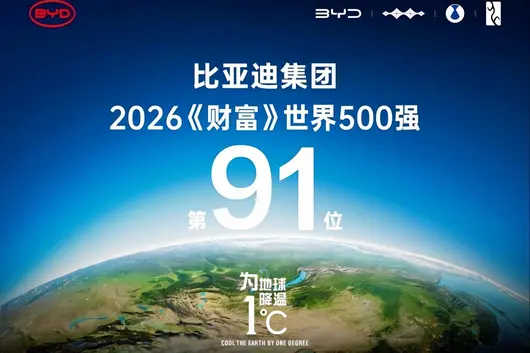
On July 28, the Fortune Global 500 list was released. BYD ranked 91st. This marks the fifth consecutive year it has held this position. Among the 35 companies listed in the global vehicles and parts sector, this ranking signifies that it has secured its spot in the world's top 100.

Over the past year, the global automotive industry faced difficulties, with 7 vehicle manufacturers on the list reporting losses. In such a climate, maintaining the same ranking itself reflects an embodiment of resilience.
Where the Money Goes, Is Where the Lifeline Lies
Outsiders often focus on the income statement, but opening BYD's books from last year reveals one expense worth more attention: 63.4 billion yuan in R&D investment, nearly double its net profit for the same period. Simply put, this isn't burning cash; it's buying the right to remain unstrangled. By the end of last year, BYD had cumulatively filed over 71,000 patents globally. These patents have been translated into second-generation Blade Batteries, megawatt-level flash charging technology, and the "Sky Eye" advanced driver-assistance system. When a carmaker masters full-stack technology from cells to chips, its posture becomes naturally stronger when negotiating within the global supply chain.
Going Global Is No Longer Just Selling Cars
Last year, BYD's overseas sales surpassed 1 million units, a 145% year-on-year increase. In Brazil, a passenger car factory was not only built, but SkyRail also started operations; in Thailand, a factory that has been running for two years has become a regional manufacturing hub; in Japan, the exclusive Sea Otter model specifically targeting the K-Car market was launched. This "manufacturing + infrastructure + localization adaptation" combination punch signifies that the logic of Chinese automakers going global is shifting from simple commodity trade to the overall export of the industrial chain.
The Value of Ranking 91st
Looking back at this 91st ranking again. Through it, we see a daily R&D investment of 174 million yuan, a sales system covering 121 countries and regions, and the presence of eight self-built RoRo ships shuttling across the oceans. This "Technology + Manufacturing + Logistics" full-chain control capability is the true foundation of the world's top 100.
The list changes every year, and rankings vary. But as long as this vertically integrated system keeps operating, BYD's piece in the global industrial chain game will become increasingly active.

喺馬來西亞嘅 SUV 市場,好多人揀車嘅時候都會拿 Proton X70 同 Toyota Yaris Cross 比較。呢兩款車喺價位同定位上都幾接近,今日我哋就由多個方面做一次詳細嘅比較,幫你節省做功課嘅時間。
Proton X70 喺馬來西亞嘅 OTR 售價係 RM 106,800 - 122,300,一共有 3 個版本,包括 1.5L Standard 2WD(RM 106,800)、1.5L Executive 2WD(RM 115,800)、1.5L Premium 2WD(RM 122,300) 等。
Toyota Yaris Cross 喺馬來西亞嘅 OTR 售價係 RM 99,900 - 109,900,一共有 2 個版本,包括 2026 1.5L Standard(RM 99,900)、2026 HEV 1.5L Standard(RM 109,900) 等。
由價錢睇嚟,Toyota Yaris Cross 嘅起步價比 Proton X70 平咗 RM 6,900。老實講,喺呢個價位段,幾千蚊嘅差距其實唔算大,關鍵仲係睇整體嘅性價比同長期使用成本。

Proton X70 嘅安全評級係 5★ (ASEAN NCAP),主動安全系統包括 ADAS (ACC, AEB, LKA, LDA, BSM, RCTA)。
Toyota Yaris Cross 嘅安全評級係 5★ (ASEAN NCAP),主動安全系統包括 TSS。
兩款車嘅安全評級一樣,喺呢個級別入面安全配備都算畀得好齊全。而家嘅新車安全性都唔差,唔使太擔心呢一點。

Proton X70 採用 FWD 驅動方式。
Toyota Yaris Cross 採用 FWD 驅動方式。
兩款車嘅驅動方式一樣,都係 FWD,日常駕駛感受唔會有太大分別。
Proton X70 保修 5 年/150,000km,保養間隔 每 10,000km 或 6 個月。
Toyota Yaris Cross 保修 5 年/無限制里程,保養間隔 每 10,000km 或 6 個月。
Proton X70 同 Toyota Yaris Cross 都係馬來西亞市場嘅主流選擇,適合家庭使用、日常通勤。如果你更重視品牌口碑同二手價,可以優先考慮口碑更好嗰一款;如果你更在意性價比同配備,嗰就揀配置更豐富嗰款。最後仲係建議兩款都去試駕,親身體驗先係最重要嘅。
總括嚟講,Proton X70 同 Toyota Yaris Cross 都係馬來西亞市場好唔錯嘅車型。揀邊部車,關鍵仲係睇你嘅個人需求同預算。建議大家做好功課,多比較幾間車行之嘅報價,再去試駕做最終決定。買車係件大事,花少少時間做功課絕對唔會錯。


歲至中流,擊水者誰?2026 年,中國汽車市場進入深度調整期,同質化的價格競爭考驗着每一家車企的盈利能力與戰略定力。在這一背景下,上汽集團展現出穩健的發展態勢。1-6 月,上汽集團實現整車銷量 204.5 萬輛,成為上半年唯一突破 200 萬輛大關的中國車企。

這份成績單的發布,恰逢上汽集團迎來全球累計產銷突破一億輛的歷史性里程碑。站在一億輛的節點上,上汽並未止步於過往的規模積累,而是將其視為面向智能電動時代“二次創業”的新起點。在行業格局重塑的當下,204.5 萬輛的銷量,標誌着上汽集團在“懂車更懂你”理念的指導下,正穩步完成從規模追趕到全球領航的轉型,也向行業展現了其穿越週期的長期主義實踐。
結構質變:精準洞察用戶需求,自主品牌佔比破七成
今年上半年,上汽自主品牌累計銷售 146.9 萬輛,佔比高達 71.8%,並實現同比六連漲。在存量博弈的市場環境中,精準洞察用戶需求成為構建企業護城河的關鍵。

上汽自主品牌的高增長,建立在對家庭出行場景與年輕一代消費心理的深入理解之上。過去,入門級車型往往伴隨著智能體驗的妥協,但上汽透過供應鏈整合與技術普惠,讓 A0 級市場的消費者也能享受到越級的智能座艙體驗。以五菱繽果 Pro 為例,它精準契合了城市代步用戶對空間與質感的双重訴求;而在榮威 i6 上,上汽將高通 8155 芯片與 AI 大模型下探至 6 萬級市場,切實回應了入門級用戶對智能化體驗的升級需求。
與此同時,上汽乘用車、上汽通用五菱、智己汽車與上汽大通四大板塊協同發展,展現出較強的結構韌性。上半年,上汽乘用車銷量同比增長 49.4%,上汽大通增長 29.1%,智己汽車更是大幅增長 107%。多品牌矩陣的互補,有效對沖了單一賽道波動帶來的經營風險。
這種結構質變源於上汽在研發端的長期投入。近十餘年,上汽在智電領域累計研發投入近 1900 億元,擁有 2.4 萬餘項有效專利。正是這些技術儲備,讓上汽有能力在不同價格帶推出符合用戶期待的產品。自主品牌佔比突破七成,標誌着上汽集團的增長引擎已實現平穩切換,從技術引進,轉向深入理解並定義本土市場,並通過技術共創反向賦能合資品牌。
雙線提速:回應多元出行期待,新能源“兩翼齊飛”
上半年,上汽新能源車累計銷售 79.6 萬輛,6 月單月新能源滲透率突破 50%。在新能源滲透率跨越關鍵節點的當下,上汽透過自主與合資“兩翼齊飛”的策略,回應了不同圈層用戶的多元出行期待,也用事實證明,真正懂用戶的車企才能贏得市場的長期認可。
在自主端,上汽憑藉 MG4、尚界 Z7 及智己 LS8 等車型矩陣保持增長態勢。MG4 家族率先搭載半固態電池,提升了產品的技術競爭力;尚界 Z7 全系配備 896 線激光雷達,智己 LS8 也將在年內補齊純電版本,透過增程與純電雙線布局,將高級智能輔助駕駛與線控底盤引入主流價格帶。

在合資端,上汽同樣取得了積極進展。上汽通用新能源上半年銷售近 5 萬輛,同比增長 81.1%;上汽大衆 ID. ERA 9X 上市兩個月累計交付破萬,奧迪 E7X 上市首月交付超 4000 輛。合資品牌在新能源賽道穩步前行,關鍵在於其開始深度傾聽中國用戶的聲音。大衆 ID. ERA 9X 搭載歷經市場驗證的 EA211 黃金增程器,配合行云智能底盤與後輪轉向,專為中國用戶定制座艙與全場景智駕;奧迪 E7X 則全球首發“智慧客廳”,並預埋 L3 級自動駕駛能力。別克至境 E7 聯合丁香醫生發布《兒童出行健康 C.A.R.E 模型》,打造“五恆健康座艙”與“滿分座艙”,將兒童健康防護理念全面融入座艙設計。這些細節的打磨,正是上汽“懂車更懂你”理念在不同品牌陣營中的落地。合資板塊正透過“中國定義、全球賦能”的路徑,實現本土化需求的深度定制。
第二曲線:MG 英倫“技術亮劍”,全價值鏈出海迎來收穫期
在海外市場,上汽集團的銷售成績同樣穩健。今年上半年,集團海外累計銷售 73.5 萬輛,同比大幅增長 48.7%,海外業務已成為支撐上汽長期發展的重要基石。

在這場跨越山海的征途中,MG 品牌在英國的技術展示,正是上汽踐行 Glocal 3.0 戰略、將“懂車更懂你”理念推向全球的最佳縮影。今年 7 月,MG 在倫敦舉辦了 Tech Day 技術大會,集中展示了 Plug-in Hybrid+ 混合動力技術、SolidCore 半固態電池以及 MG Parking 智慧座艙與輔助駕駛系統。作為全球首個實現半固態電池量產的汽車品牌,MG 此舉向歐洲市場傳遞了一個明確信號:中國汽車出海,正從單純的產品輸出,邁向技術標準與生態體系的輸出。緊接着,MG 品牌亮相古德伍德速度節,全球首發了兩廂純電小車 MG Go!和轎跑 SUV Cyber Concept 兩款概念車型,展現了品牌傳承與未來願景的交融。
MG 在歐洲的穩健表現,印證了“技術 + 文化”雙輪驅動的价值。上半年,MG 在欧洲累計銷售近 19 萬輛,連續十一年蟬聯中國品牌歐洲銷量冠軍。
商用車領域同樣傳來捷報,上汽紅巖與泰國頭部港口大客戶達成 1000 輛新能源重卡戰略合作,打破了當地重卡市場外資品牌壟斷的格局。首批整車已完成整裝、批量登船,從國內生產基地啟程發往泰國。這也標誌着上汽紅巖憑藉自主三電核心技術、全場景定制能力與完善海外屬地服務體系,向全球展現中國商用車完整產業鏈與綠色智造硬實力。
真正的“懂你”,不僅在於深耕本土,更在於對全球不同市場規則的敬畏與適應。73.5 萬輛的海外銷量,是上汽體系力在全球舞台上的集中體現。
底層邏輯:穿越週期的“穩與進”,長期體系力鑄就護城河
204.5 萬輛的半程銷冠、全球累計產銷突破一億輛,絕非靠單一爆款或短期價格戰賭出的運氣,而是上汽集團長期體系力的集中爆發。在行業風起雲湧的價格混戰裡,多品牌矩陣與國內外雙向支撐賦予了其極強的抗風險能力,這就是“穩”的底色。而“進”的鋒芒,則體現在近 1900 億研發投入帶來的技術漏斗加速變現、全面深化改革釋放的原生動力、以及與頭部生態合作夥伴共建智慧出行的生態上。

在上汽集團全球第一億位用戶交付儀式上,一個極具象徵意義的細節引發了行業關注:第一億位用戶正是 Momenta CEO 曹旭東。交付的車型正是集上汽技術大成的旗艦智己 LS9 Hyper。這種“夥伴變車主”的交付,不僅是廠商與用戶間的信任接力,更是上汽構建開放生態的絕佳體現。
近期,Momenta 正式登陸港交所,成為“物理 AI 第一股”。上汽通持股成為其第一大外部股東;同時 Momenta 也持有上汽旗下智己汽車的股份,形成雙向持股的獨特格局。雙方走出了“資本 + 場景”共生路徑,不僅存在採購關係,更透過股權綁定、聯合研發、共同定義產品路線,把算法能力和量產能力深度融合。從高端自主到主流合資,Momenta 的智駕方案在上汽旗下多個品牌的車型上完成了多輪技術迭代與場景驗證。量產應用的規模效應直接轉化為市場份額,據佐思汽研數據,2026 年 4 月城市 NOA 市場中,華為與 Momenta 合計佔據 72.8% 的市場份額,其中 Momenta 單獨佔比 33.6%。更重要的是,上汽旗下享道出行聯合 Momenta 試點運營 Robotaxi 服務,使 L4 技術從封閉場景測試進入真實運營場景,率先開啟商業化驗證。
從首款高級智駕車型攻堅到第一億輛交付里程碑見證,再到如今 Momenta 衝擊港股,這種共生模式既為上汽多品牌矩陣的智駕快速迭代提供了持續支撐,也為汽車產業新型分工模式探索出了可參考的實踐樣本。
結語:以“穩”為錨,以“進”為帆,邁向下一個億級新程
從 1958 年弄堂工廠敲出的第一輛鳳凰牌轎車,到如今一億輛的里程碑,上汽七十餘年的歲月跨度,見證了中國汽車工業的崛起之路;而在這條漫長的征途上,始終不變的,是上汽對‘懂車更懂你’理念的執着堅守。
上半年 204.5 萬輛銷量,既是上半程的階段性高光,更是上汽跨越一億輛里程碑後,邁向新征程的堅實基盤。展望下半年,上汽集團的產品矩陣正加速煥新。固態電池、高級智能輔助駕駛等前沿技術將密集量產落地,智己、榮威、MG 等品牌的新能源車型也將接力登場,為傳統旺季注入強勁動能。在這場沒有終點的馬拉松中,上汽集團始終保持着清醒與定力,堅持高質量發展路線。
未來的汽車市場,必將是體系力與用戶洞察力的雙重較量。讓我們共同期待,在下一個億級新程中,上汽集團以“穩”為錨、以“進”為帆,在時代的浪潮中穩步前行,駛向更加廣闊的未來。
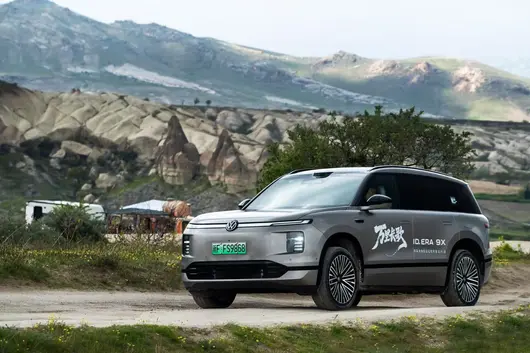
喺馬來西亞嘅 SUV 市場,好多買家喺揀車嘅時候都會拿 Proton X50 同 Chery Tiggo 7 PHEV 嚟做比較。這兩款車喺價位同定位上都幾接近,今日我哋就從多個方面做一個詳細嘅比較,幫你省下做功課嘅時間。
Proton X50 喺馬來西亞嘅 OTR 售價係 RM 89,800 - 113,300,一共有 4 個版本,包括 1.5T Executive(RM 89,800)、1.5T Premium(RM 101,800)、1.5T Flagship(RM 113,300) 等。
Chery Tiggo 7 PHEV 喺馬來西亞嘅 OTR 售價係 RM 129,750 - 129,750,一共有 2 個版本,包括 2025 1.5T 90km CSH(RM 129,750)、支持邊種充電方式?可以用家用電源插座充電嗎?(RM 117,478) 等。
從價錢嚟睇,Proton X50 嘅起步價確實比 Chery Tiggo 7 PHEV 平咗 RM 39,950。如果你預算有限,Proton 嘅入門版已經可以滿足日常需求。但都要注意,平嗰幾千蚊,可能喺配備上有取舍,具體要看你嘅需求。

Proton X50 搭載 1.5L 4-cyl,馬力 105 hp。官方油耗 6.0 L/100km。
Chery Tiggo 7 PHEV 搭載 Hybrid,馬力 170 hp。官方油耗 4.5 L/100km。
動力方面,Chery Tiggo 7 PHEV 嘅 Hybrid 比 Proton X50 嘅 1.5L 4-cyl 多咗 65 匹馬力。不過日常喺市區開,兩款車嘅動力都夠用,唔會覺得唔夠力。

Proton X50 嘅安全評級係 5★ (ASEAN NCAP),主動安全系統包括 ADAS (ACC, AEB, LKA, LDA, BSM, RCTA)。
Chery Tiggo 7 PHEV 嘅安全評級係 TBD,主動安全系統包括 Basic。
安全配備方面,兩款車都拿到唔錯嘅評級。不過 Proton X50 嘅 ADAS (ACC, AEB, LKA, LDA, BSM, RCTA) 同 Chery Tiggo 7 PHEV 嘅 Basic 喺功能上有啲差異,如果你比較睇重主動安全嘅話,可以仔細比較下兩者嘅功能列表。

Proton X50 車身長 4400 mm,後車箱 400 L。
Chery Tiggo 7 PHEV 車身長 4400 mm,後車箱 400 L。
兩款車嘅尺寸幾乎一樣,車內空間差別唔大。呢個級別嘅車,日常使用完全夠用。
Proton X50 同 Chery Tiggo 7 PHEV 都係馬來西亞市場嘅主流選擇,適合家庭使用、日常通勤。如果你更睇重品牌口碑同二手價,可以優先考慮口碑更好嗰一款;如果你更在意性價比同配備,嗰就揀配置更豐富嗰款。最尾仲係建議兩款都去試駕,親身體驗先係最重要嘅。
總嘅嚟講,Proton X50 同 Chery Tiggo 7 PHEV 都係馬來西亞市場幾唔錯嘅車款。揀邊一輛,關鍵仲係要看你嘅個人需求同預算。建議大家做好功課,多比較間車行嘅報價,再去試駕做最終決定。買車係件大事,花啲時間做功課絕對唔會錯。



Even excluding KD badge production capacity, there is still a surge. Geely firmly secures the 3rd place in exports and takes the top growth rate among leading automakers.
In the first half of 2026, the Chinese automotive export market surged 65.3% year-on-year. The ranking of leading automakers is very clear. Calculating by total export volume, Chery Group ranks 1st with 931,600 units, BYD ranks 2nd with 769,300 units, and Geely ranks 3rd with 472,400 units. The 158% year-on-year increase ranks 1st among all leading automakers, with growth speed far surpassing all competitors.

The outside world habitually assumes that Geely's impressive export data comes mostly from CKD parts sent to Malaysia's Proton and Brazil's Renault, relying on local badge swapping to scale up. However, if all KD parts and cooperative branded models are excluded, and only whole vehicles exported under Geely's main brand, Lynk & Co, and Zeekr's three self-owned brands displaying their own logos are counted, it still achieved high-speed growth of 165%, with substantial value. The same period last year, overseas whole vehicles of the three brands were less than 90,000 units, while this year the first half reached 238,500 units. The increase comes entirely from true retail of own brands, no longer relying on the old model of moving volume through badge swapping.
For over ten years, Geely's globalization has always followed a low-key localization strategy, relying on cooperative brands to hide its own identity for a long time, seeking only shipment volume, without promoting the Geely mother brand. In recent years, the group's strategy has completely changed. No longer hiding via detours, it is pushing the three brands Geely, Lynk & Co, and Zeekr to the global market. This year's explosion is the concentrated realization of years of systematic layout.
1. A complete new energy matrix avoids EU anti-subsidy tariffs, becoming the strongest driver of growth.
The EU imposed punitive tariffs on pure electric models, and many automakers encountered bottlenecks in the Western European market. Geely focuses on its Thor Hybrid, not on the tax list, successfully cutting into mature markets. Galaxy Hybrid, Lynk & Co Hybrid, and Zeekr high-end pure electric form a complete product matrix, adapting to regulations in Europe, Australia, the Middle East, and elsewhere. Unlike many automakers relying on old fuel vehicles to seize backward markets, the vast majority of Geely's overseas increase comes from new energy vehicles, with new energy exports surging 585%. Product capabilities benchmark Japanese and German mainstream models, allowing them to stand firm in the market without heavy price wars.
2. Relying on Volvo's mature dealer network, skipping the long brand cultivation cycle, is a unique moat.

Lynk & Co is wholly operated by Volvo's European channels, directly entering luxury brand showrooms, naturally resolving overseas consumers' bias against Chinese brands, saving several years of market cultivation. Zeekr layouts in Western Europe and Middle East high-end markets, selecting luxury brand agents, HQ unified pricing, strictly controlling prices, preventing dealers from price chaos harming the brand. Geely Galaxy enters Europe and Australia, able to share the group's mature overseas logistics and spare parts systems; the speed of channel construction is difficult to compare with car companies starting from scratch.
3. Three brands are layered in layout, positioning is clear with no internal friction, front-end independent, back-end synergy.

Geely Galaxy focuses on mainstream home use 100,000 to 200,000 RMB, benchmarked against Toyota, Volkswagen; Lynk & Co dives deep into European high-end sports market; Zeekr focuses on luxury pure electric. Three brand showrooms are completely separate, won't grab orders from each other; supply chain, spare parts, logistics are integrated uniformly to lower operating costs. In contrast, some car companies keep setting up new independent brands overseas, splitting the mother brand and dispersing resources. Geely overseas is all true terminal retail, no bubble of pressuring dealers with inventory, growth is very solid.
4. HQ unified pricing, abandoning the extensive low-price route, slowly accumulating overseas brand reputation.
In the early years, like many self-owned brands, Geely gave overseas sales entirely to agents, prices were chaotic, and the cheap label was hard to tear off. Now Geely directly controls global pricing, refuses disorderly price cuts, paired with long-cycle warranties, dispelling overseas users' concerns about unfamiliar brands. Australia Galaxy takes the sales crown in its sub-category, Middle East Zeekr stands firm in the luxury market, Lynk & Co ranks at the forefront of Chinese brands in Europe for years, not relying on fierce internal competition, but on product and service to achieve stable growth.
5. Market layout is balanced, does not rely on special favorable markets like Russia, Iran, anti-risk ability is stronger.
A significant proportion of Chery's exports comes from special markets like Russia, Iran. Once the geopolitical environment changes, sales will fluctuate wildly. Geely's three self-owned brands' increases all come from open mature markets such as Europe, Australia, Southeast Asia, Middle East, no over-reliance on a single country, structure is healthier.
Chinese car companies' overseas expansion has long been divided into two paths: one relies on new overseas brands, KD parts, special geopolitical markets to build scale, brands are hard to move up; one goes high, heavy asset investment to build global brands from scratch.
Geely has taken the third path: in early years relying on industrial cooperation to complete accumulation, now facing the global market with Geely, Lynk & Co, Zeekr. Even excluding all KD badge swapping, still high-speed growth, firmly holds 3rd place in exports, growth rate is first in the industry. This also means, Geely's overseas expansion has said goodbye to extensive scale competition, entering a system-driven high-quality stage.


The pace of the Chinese automotive industry going global has been faster than anyone anticipated.
On July 9, the China Association of Automobile Manufacturers revealed H1 data: In June alone, Chinese auto exports reached 1.037 million units, a 75.1% year-on-year increase, achieving single-month exports over 1 million for the first time; from January to June, cumulative exports hit 5.096 million units, a 65.3% year-on-year increase, and semi-annual exports broke through 5 million units for the first time.
The full-year export target of 7.4 million units set at the beginning of the year now appears too conservative. Based on current growth rates, achieving 10 million units in full-year exports has become a high-probability event. However, beyond the breakthrough in sales figures, the structural changes behind them are worth more attention. Domestic car sales for the first half of the year were only 9.921 million units, a 21.1% year-on-year decrease, while exports accounted for nearly 40% of passenger car production.

In this magnificent wave of going global, which companies are leading the pack? Which models are selling the best? Which markets are the main drivers for growth? Where is the next trend?
Overview of Company Exports
With the continuous surge in the scale of going global, the overseas layout of domestic automakers has differentiated into clear tiers, with the top tier forming a pattern of "one dominant leader and multiple strong contenders".
Chery Group sat firmly in the top spot with a H1 export figure of 943,800 units, up 71.5% year-on-year. Notably, Chery's exports accounted for 69.5% of its total sales, and for three consecutive months from April to June, overseas sales share exceeded 70%. June single-month overseas sales reached an all-time high of 191,000 units. For every car sold domestically, Chery sold nearly three overseas, showing that exports have become Chery's absolute primary growth pole.

Following closely, BYD delivered a H1 export performance of 789,000 units, up 71% year-on-year, with June single-month exports reaching 170,900 units alone. Especially in the new energy export niche, BYD's advantage is more obvious. In the first half of the year, new energy exports reached 769,300 units, with a market share as high as 34.5%. In other words, for every three exported new energy vehicles, nearly one was a BYD.
Geely Automobile was the most eye-catching dark horse in terms of growth rate: Exporting 474,200 units in the first half of the year, up 158% year-on-year, with a growth rate leading among top automakers; June overseas sales broke 100,000 units for the first time, reaching 102,900 units. In terms of new energy exports, Geely's increase was even more stunning, with H1 new energy exports reaching 275,400 units, surging 601.4% year-on-year.
SAIC, relying on its well-perfect multi-brand globalization matrix, also remains firmly in the first tier. Overseas wholesale sales in the first half of the year reached 735,000 units. Its MG brand has cultivated the European market for many years and has ranked first in Chinese brand sales in Europe for 11 consecutive years. Great Wall Motor has steadily progressed overseas pacing, with H1 exports of 291,400 units, up 47.4% year-on-year, and the overseas market maintained stable expansion.

From the perspective of niche sectors, the competition landscape of new energy exports reflects the strength of each company more. In the top 10 list of new energy export manufacturers in the first half of the year, BYD firmly stayed in the first place, with Chery and Geely in second and third place, corresponding new energy export volumes of 290,300 units and 275,400 units respectively. Following them were Tesla China, SAIC Passenger Car, Leapmotor, Dongfeng, SAIC-GM-Wuling, Changan, and XPeng. Among them, Leapmotor's overseas breakthrough was particularly eye-catching. H1 overseas sales neared 100,000 units, exceeding its own total overseas sales for all of 2025 in just half a year.
Another worth mentioning is that in May 2026, across 31 European markets, BYD, SAIC, Geely, Chery, and Leapmotor, these five Chinese automakers sold a total of 138,400 new cars, up 65% year-on-year. Total sales for the first time exceeded the sum of six Japanese automakers such as Toyota and Nissan. The market share of Chinese brands locally jumped from 5.6% in May of the previous year to 10.7%. This was the first time Chinese automakers hit it out head-on against Japanese rivals in Europe, the world's third-largest automotive market.
Model Breakthrough and Market Map
The success or failure of going global ultimately depends on market acceptance. Focusing eyes from automaker tiers to specific models, from the disclosed market model performance, the outline of hit models is already very clear.
BYD Song Plus is the undisputed star model in the current export camp. In the first half of 2025, it topped the export model list with 134,000 units, a year-on-year increase of 184%; entering 2026, its overseas deployment pace accelerated further, continuously stocking from Southeast Asia to Western Europe, opening the situation with balanced design, extremely low usage costs, and accessible pricing, and is very likely to become the first true "Global Car" among Chinese brands.

From the technology route perspective, emerging markets such as Latin America and Southeast Asia focus on price-performance ratio, with 100,000 yuan range compact pure electric vehicles being the most popular; mature markets such as Europe are more accepting of plug-in hybrid SUVs in the 150,000-200,000 yuan price range under the influence of policies and usage habits. The pattern of pure electric and plug-in hybrid double line breakthrough is very clear.
Meanwhile, the more critical change is in price and technology. China's automotive export is accelerating from the old model of "low-price volume sales" to a leap of "value-based globalization". Zeekr's average export price per vehicle in the first half of the year approached 350,000 yuan, and there are plans to launch high-end models with a starting price exceeding 460,000 yuan overseas; Denza, Yangwang, and other high-end brands have also achieved simultaneous volume and price increases overseas. Intelligence is becoming the "new business card" for China's automotive export—Chery was the first to pass the EU UN/ECE R171 safety management system audit, equivalent to obtaining a "technical pass" for high-level intelligent driving export.

Turning eyes to the overall market map again, according to data from Gasgoo Automotive Research Institute, from January to May 2026, Brazil topped the list of China's passenger car export markets for the first time with an export volume of 372,000 units and a 178.7% year-on-year growth rate; Russia followed closely with 351,000 units and a 139.8% growth rate. These two markets alone contributed more than 40% of the top ten total.
Among them, Brazil's explosive growth was behind a special background: starting July 1, 2026, local new energy vehicle import tariffs will rise from 25% to 35%, causing dealers to focus on抢运 in the first half of the year, pushing up shipment volumes. However, even if the short-term window closes, as the largest economy in Latin America, Brazil's long-term consumption potential remains solid.

The European market showed a situation of multiple points blooming: The UK ranked third with 189,000 units and 82% growth, Belgium, Italy, and Spain recorded export volumes of 156,000, 123,000, and 94,000 units respectively, with Italy's year-on-year increase reaching 140.7%. If Russia is included, the entire Europe has occupied half of China's passenger car exports.
However, under high growth, hidden worries are also showing: UAE export volume decreased by 32.6% year-on-year, and Mexico's drop reached 40%. The former is an adjustment period after high-speed growth, and the latter is directly impacted by the tariff hike in January this year. This also means that going global is no longer a blue ocean with everywhere growth. Tariff policy fluctuations and market cycle rotation shocks will always be normal variables the industry needs to face directly.
Where is the Next Trend?
In the market map of hot and cold differentiation, combined with H1 data trends and policy movements, there are three markets most likely to become the incremental core for the next stage of China's automotive exports.
The first worth mentioning is Brazil. Although new energy vehicle tariffs rose to 35% from July 1st and the short-term rush window is closed, this does not mean the end of market dividends. As the largest economy in Latin America, Brazil's automotive electrification has just started, and Chinese brands have laid the initial user perception with price-performance ratio and product power.
More critically, automakers like Chery have already established production capacity layout locally. Localized production can become a handle to bypass tariff barriers and deeply penetrate the market. Next, competition in the Brazil market will no longer be a simple comparison of export volumes, but a contest of localized operation depth.

The second trend belongs to Europe, which is the most contradictory yet most certain battlefield. The EU's anti-subsidy tariffs on Chinese pure electric vehicles have been in effect for nearly two years. Some automakers' comprehensive tax rates have exceeded 45%. At the moment, they are also brewing to include plug-in hybrid models into the tax scope, and the tariff wall seems to be getting higher and higher. But the actual trend is exactly the opposite: In May 2026, the market share of Chinese brands in Europe had surpassed Japanese automakers.
The more control, the more growth. The logic behind this is: The comprehensive advantages formed by Chinese new energy vehicles in 800V high-voltage platforms, integrated die-casting, self-developed batteries, and other technologies, just filled the supply gap during the global electrification transition period.
Tariffs will temporarily raise costs and compress profits, but cannot reverse product-side advantages. That is why top automakers are accelerating to respond to tariff barriers with localization: BYD's Hungary factory is expected to start whole vehicle assembly in the fourth quarter of 2026. Chery's joint venture factory in Barcelona, Spain achieved mass production by the end of 2025. The new M1 production line officially started production in June this year. "Trading localization for market" is the strategy currently consensus among automakers on the European battlefield.

And the third potential trend is Southeast Asia, traditionally regarded as the "backyard" of Japanese brands. From January to May, Malaysia ranked tenth in export destination countries with 78,599 units of export volume. This volume is not particularly outstanding, but the signal revealed behind is extremely strong: The Southeast Asian market has long been monopolized by Japanese brands. Now Chinese brands have torn a gap here.
SAIC MG has cultivated Thailand for many years and laid the foundation. Leapmotor plans to land European local production through Stellantis's Spain factory. As RCEP tariff dividends continue to be released, this region is very likely to become the next explosive growth point following Europe. Especially countries that have launched new energy vehicle incentive policies such as Thailand, Indonesia, Malaysia, etc.

Overall, the H1 export figure of 5.096 million units marks that China's automotive export has moved from testing the waters to the stage of harvest. But a clearer signal is that the competitive logic of the second half of the game has changed. Tariff barriers, geopolitical fluctuations, localized operations, every level is a hard battle.
As Chen Shihua, Secretary-General of the China Association of Automobile Manufacturers, said, export for the second half of the year should be maintained with "cautious optimism". But without a doubt, Chinese car brands have already stood at the center of the global stage. From "going out" to "going in" and then to "going up", this industry's deep reform has just opened the curtain.
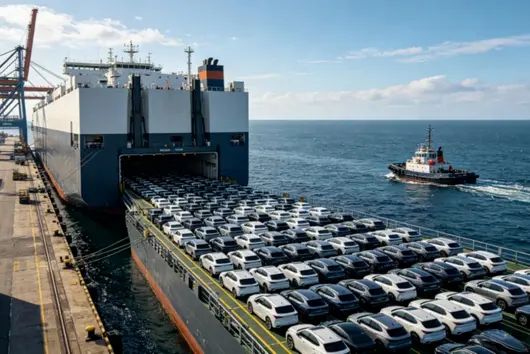

[CNMO Tech News] China's momentum in overseas markets continues to accelerate. According to the latest data released by the Australian Federation of Automobile Industries, in June of this year, cars from China topped the Australian market with sales of 46,600 units, surpassing Japan for the first time to become Australia's number one car import source country.

BYD Cars
Specific data shows that among the total sales of the Australian car market in June, China-made cars (including about 8,600 Teslas produced in Shanghai) accounted for a 35.5% market share with 46,600 units, ranking first. Japan-made cars had sales of 27,100 units, accounting for a 20.7% share, ranking second. Thailand-made cars accounted for 17.8% share with 23,300 units, ranking third. South Korea-made cars accounted for 11.3% share with 14,900 units, ranking fourth. Germany-made cars accounted for 4.4% share with 5,731 units, ranking fifth.
From a brand perspective, Toyota continued to lead the list of Australian car brand sales with monthly sales of 19,100 units, but the advantage is now very slight. Trailing closely is BYD, ranking second with sales of 18,900 units, with a difference of only 200 units between the two. Ford, Kia, and Hyundai ranked third to fifth, with monthly sales not reaching 10,000. Chinese brands in Australia have already formed a cluster effect, posing a substantial challenge to traditional Japanese and Korean brands.
Currently, more than ten Chinese car brands have entered the Australian market, including mainstream manufacturers such as Xpeng, Great Wall Motor, Chery, GAC Group, BYD, etc. With more than ten Chinese models sold in the Australian market. Data from the China Passenger Car Association shows that in May of this year, China's auto exports to Australia grew by 80% year-on-year, with an average monthly export price of $23,100. This price level indicates that Chinese cars in the Australian market do not rely solely on low-price competition, but have also established brand recognition in the mid-range market.
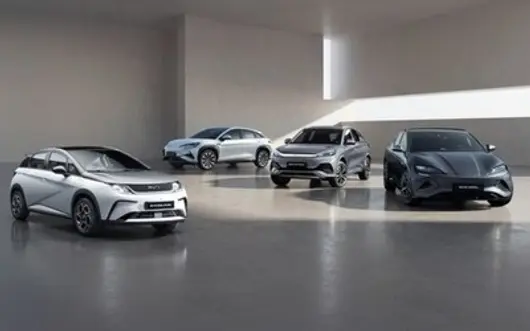

喺馬來西亞嘅 SUV 市場,好多買家喺揀車嘅時候都會拿 Perodua Aruz 同 Toyota Yaris Cross 嚟比較。呢兩款車喺價位同定位上都相當接近,今日我哋就由多個方面做一個詳細嘅對比,幫你節省做功課嘅時間。
Perodua Aruz 喺馬來西亞嘅 OTR 售價係 RM 72,900 - 77,900,一共有 2 個版本,包括 1.5L X(RM 72,900)、1.5L AV(RM 77,900) 等。
Toyota Yaris Cross 喺馬來西亞嘅 OTR 售價係 RM 99,900 - 109,900,一共有 2 個版本,包括 2026 1.5L Standard(RM 99,900)、2026 HEV 1.5L Standard(RM 109,900) 等。
從價錢嚟睇,Perodua Aruz 嘅起價確實比 Toyota Yaris Cross 平咗 RM 27,000。如果你預算有限,Perodua 嘅入門版已經可以滿足日常需要。但亦要留意,平嗰幾千塊,可能喺配備上有取捨,具體睇返你嘅需要。

Perodua Aruz 搭載 1.5L 4 缸,馬力 105 hp。官方油耗 6.0 L/100km。
Toyota Yaris Cross 搭載 1.5L 4 缸,馬力 105 hp。官方油耗 6.0 L/100km。
兩款車用緊同一套動力系統,日常開嘅感覺基本冇咩分別。油耗方面亦差唔多,唔使太糾結這一點。
Perodua Aruz 車身長 4400 mm,行李箱 400 L。
Toyota Yaris Cross 車身長 4400 mm,行李箱 400 L。
兩款車嘅尺寸幾乎一樣,車內空間差別唔大。呢個級別嘅車,日常使用完全夠用。
Perodua Aruz 採用 FWD 驅動方式。
Toyota Yaris Cross 採用 FWD 驅動方式。
兩款車嘅驅動方式一樣,都係 FWD,日常駕駛感受唔會有太大分別。
Perodua Aruz 同 Toyota Yaris Cross 都係馬來西亞市場嘅主流選擇,適合家庭用、日常通勤。如果你更睇重品牌口碑同二手價,可以優先考慮口碑更好嗰款;如果你更在意性價比同配備,那就揀配備更豐富嗰款。最終都建議兩款都去試駕,親自體驗先係最重要嘅。
總體嚟講,Perodua Aruz 同 Toyota Yaris Cross 都係馬來西亞市場幾唔錯嘅車型。揀邊一輛,關鍵仲係睇返你個人需要同預算。建議大家做好功課,多比較幾間車行嘅報價,再去試駕做最後決定。買車係件大事,花少少時間做功課絕對唔會錯。


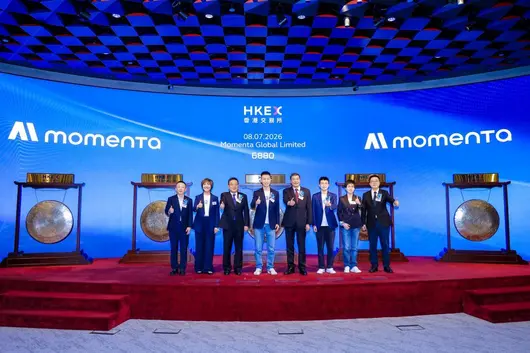
2026年7月8日,Momenta正式在香港联合交易所主板挂牌上市,股票代码为“6880.HK”。

根据Momenta此前公布的配售结果,上市定价为295.6港元/股,假设“绿鞋”(超额配股权)全额行使,此次全球发售约2,293万股,募集资金总额约68亿港元。公开发售部分获得414倍超额认购;国际发售部分获得超过1,000亿港元的机构订单,覆盖了来自15个国家和地区的主权基金与长线基金,总计认购超额(剔除基石后,绿鞋前)达到约44倍。

据悉,Momenta本次锚定认购阵容豪华,包括新加坡政府投资公司(GIC)、富达国际(Fidelity International)、贝莱德集团(BlackRock)、富兰克林邓普顿基金集团(Franklin Templeton)、阿布扎比投资局(ADIA)、加拿大养老金计划投资委员会(CPPIB)、淡马锡(Temasek)、威灵顿(Wellington)、施罗德(Schroders)等全球顶级机构;同时,国内长线资本的全方位看好,进一步印证了Momenta在国内市场的核心地位与战略价值:国内顶级长线私募、公募和险资罕见齐聚,构成了坚实的本土资本基本盘。仅长线资金认购金额就超过15倍,展现出全球长线投资者对Momenta长期价值的信心。
另据了解,Momenta本次IPO共引入14家机构组成超豪华基石投资者阵容,基石认购总额约30亿港元(约3.76亿美元)。整个基石投资者阵容的构成,在近年港股市场的首次发行中实属罕见:既包括专注超长周期价值增长的国际顶级长线基金及主权基金,也有产业“顶配”级战略投资人,还包括中资顶级长线机构,充分彰显了Momenta在港股的稀缺地位,已成为“全球长线的共同选择”。
就在前一日,Momenta宣布,其量产业务搭载规模已突破100万台。
上市仪式上,Momenta CEO曹旭东表示:“十年前,我们创立Momenta,只为追随一个简单却笃定的使命:Better AI, Better Life。Better AI,源于我们的好奇心。对于人工智能的痴迷与好奇,让我们的人生‘生机勃勃’。Better Life,承载着我们的使命感。相信技术的价值,在于让人们的生活更安全、更自由、更美好。所以,我们定下三个十年愿景:十年挽救百万生命,十年解放百分百时间,十年物流出行效率翻倍。如今,我们已给超过100万用户,带来了更加安全安心的驾驶体验。”

现场,曹旭东邀请第一百万台量产车的车主亲临现场,见证敲钟时刻,并邀请全场为用户鼓掌,“感恩用户,感谢相信AI,相信中国科技的人们!”

Momenta第100万台车 智己LS8车主 瀚森
Momenta成立于2016年,是全球领先的物理AI公司,致力于通过突破性的AI科技创造更美好的生活。Momenta以世界模型为基座,基于“数据飞轮”技术洞察,量产业务(Mass Production)与规模化无人业务(Scalable Robo)“两条腿”并行,让物理AI走入现实生活。
目前,搭载Momenta系统的量产车辆规模已突破100万台,已成功交付超过100款量产车型,累计定点车型数超过210款,合作伙伴已覆盖全球主流车企,成为“全球品牌的共同选择”。
今年4月,Momenta R7世界模型量产首发,开启“物理AI序章”。Momenta致力于打造物理AI的基座平台,支撑乘用车、Robovan、Robotruck和Robotaxi的规模化落地,还将扩展至机器人等领域。
曹旭东表示:“衷心感恩Momenta的客户、伙伴、投资人和全体员工的支持,也感恩港交所、香港证监会、江苏及苏州领导、中介机构给予Momenta的指导。”
在谈及公司未来发展方向时,曹旭东从公司过往的技术积累出发,延展至下一阶段的智能化场景,“过去十年,我们让AI学会驾驶,为每个家庭带来了专职的司机;未来十年,我们将为每个家庭带来专职的阿姨、医生、教师等机器人的服务场景,开创物理AI的‘GPT时刻’。希望和所有的中国AI公司一起,书写东方的硅谷传奇,拥抱全世界,也让全世界来拥抱中国的技术。”
最后,曹旭东以一句真诚的祝福收尾:“祝大家和我们的股票代码一样,688,顺发发!”

喺馬來西亞嘅 SUV 市場,好多買家喺揀車嗰陣都會拿馬自達 CX-8 同梅賽德斯 - 奔馳 GLA 嚟做比較。呢兩款車喺價位同定位上都幾接近,今日我哋就從多個方面做一個詳細嘅對比,幫你慳返做功課嘅時間。
馬自達 CX-8 喺馬來西亞嘅 OTR 售價係 RM 165,360 - 201,360,一共有 5 個型號,包括 2025 2.5T 4WD High Plus Petrol(RM 201,360)、2025 2.2L 2WD High Plus Diesel(RM 193,123)、2025 2.5L 2WD High Plus Petrol(RM 186,360)等。
梅賽德斯 - 奔馳 GLA 喺馬來西亞嘅 OTR 售價係 RM 258,888 - 295,888,一共有 1 個型號,包括 Standard(RM 258,888)等。
從價錢睇,馬自達 CX-8 嘅起步價確實比梅賽德斯 - 奔馳 GLA 平咗 RM 93,528。如果你預算有限,馬自達嘅入門版已經可以滿足日常需求。但都要留意,平嗰幾千蚊,可能喺配備上會有取捨,具體要看你嘅需求。

馬自達 CX-8 搭載 2.0L 4-cyl,馬力 170 hp。官方油耗 8.0 L/100km。
梅賽德斯 - 奔馳 GLA 搭載 2.0L Turbo,馬力 220 hp。官方油耗 9.5 L/100km。
動力方面,梅賽德斯 - 奔馳 GLA 嘅 2.0L Turbo 比馬自達 CX-8 嘅 2.0L 4-cyl 多咗 50 匹馬力。不過日常喺市區開,兩款車嘅動力都夠用,唔會覺得唔夠力。

馬自達 CX-8 車身長 4500 mm,行李廂 450 L。
梅賽德斯 - 奔馳 GLA 車身長 4400 mm,行李廂 400 L。
空間方面,馬自達 CX-8 嘅車身比梅賽德斯 - 奔馳 GLA 長咗 100 mm,車內乘坐空間會稍微寬鬆啲,尤其係後座腳部空間。如果你經常載家人或者需要放手推車,大啲嘅車身確實更實用。

馬自達 CX-8 保修 5 年/150,000km,保養間隔 每 10,000km 或 6 個月。
梅賽德斯 - 奔馳 GLA 保修 3 年/100,000km,保養間隔 每 10,000km 或 6 個月。

總括嚟講,馬自達 CX-8 同梅賽德斯 - 奔馳 GLA 都係馬來西亞市場幾唔錯嘅車型。揀邊輛,關鍵都係睇你嘅個人需求同預算。建議各位做好功課,多比較幾間車行嘅報價,再去試駕做最後決定。買車係件大事,花啲時間做功課絕對唔會錯。


喺馬來西亞嘅 SUV 市場,好多買家喺揀車嘅時候都會拿 Chery Tiggo 8 Pro 同 Hyundai Tucson 嚟做比較。呢兩款車喺價位同定位上都幾接近,今日我哋就從多個方面做一次詳細嘅比較,幫你省下做功課嘅時間。
Chery Tiggo 8 Pro 喺馬來西亞嘅 OTR 售價係 RM 159,750 - 159,750,合共有 2 個版本,包括 1.6L Turbo Standard(RM 130,000)、1.6L Turbo Premium(RM 145,000)等等。
Hyundai Tucson 喺馬來西亞嘅 OTR 售價係 RM 143,888 - 197,888,合共有 5 個版本,包括 2025 HEV 1.6T AT 2WD Prestige(RM 197,888)、2025 1.6T DCT 4WD Prestige(RM 186,888)、2025 1.6T DCT 2WD Prime(RM 164,888)等等。
由價錢睇落,Hyundai Tucson 嘅起步價比 Chery Tiggo 8 Pro 平咗 RM 15,862。講真,喺呢個價位段,千幾蚊嘅差距其實唔算大,關鍵都係睇整體嘅性價比同埋長期使用成本。

Chery Tiggo 8 Pro 採用 FWD 驅動方式。
Hyundai Tucson 採用 FWD 驅動方式。
兩款車嘅驅動方式一樣,都係 FWD,日常駕駛感受唔會有太大分別。

Chery Tiggo 8 Pro 保修 3 年/100,000km,保養間隔 每 10,000km 或 6 個月。
Hyundai Tucson 保修 5 年/300,000km,保養間隔 每 10,000km 或 6 個月。

Chery Tiggo 8 Pro 同 Hyundai Tucson 都係馬來西亞市場嘅主流選擇,適合家庭用、日常通勤。如果你更睇重品牌口碑同埋二手價,可以優先考慮口碑更好嗰款;如果你更在意性價比同配備,嗰就揀配置更豐富嗰款。最後仲係建議兩款都去試駕,親自體驗先至最重要。
總括嚟講,Chery Tiggo 8 Pro 同 Hyundai Tucson 都係馬來西亞市場幾唔錯嘅車型。揀邊一輛,關鍵仲係要睇你嘅個人需求同預算。建議大家做好功課,多比較幾間車行嘅報價,再去試駕做最終決定。買車係件大事,花少少時間做功課絕對唔會錯。


喺馬來西亞嘅轎車市場,好多買家喺揀車嘅時候都會拿本田思域同日產 Almera 嚟做比較。呢兩款車喺價位同定位上都好接近嘅,今日我哋就從多個方面做一個詳細嘅比較,幫你攞返做功課嘅時間。
本田思域喺馬來西亞嘅 OTR 售價係 RM 84,900 - 112,900,一共 4 個版本,包括 2023 1.5L RS(RM 99,900)、2023 1.5L V(RM 94,900)、2023 1.5L E(RM 89,900)等。
日產 Almera 喺馬來西亞嘅 OTR 售價係 RM 83,888 - 95,888,一共 3 個版本,包括 2025 1.0T VLT(RM 95,888)、2025 1.0T VLP(RM 89,888)、2025 1.0T VL(RM 83,888)等。
由價錢嚟睇,日產 Almera 嘅起步價比本田思域平咗 RM 1,012。老實講,喺呢個價位段,幾千蚊嘅差距其實唔算大,關鍵係睇整體嘅性價比同長期使用成本。

本田思域裝載 1.5L 4-cyl,馬力 105 hp。官方油耗 6.0 L/100km。
日產 Almera 裝載 1.5L 4-cyl,馬力 105 hp。官方油耗 6.0 L/100km。
兩款車用咗同一套動力系統,日常開起嚟嘅感覺基本無分別。油耗方面都差唔多,唔使太糾結呢一點。

本田思域車身長 4450 mm,車尾箱 470 L。
日產 Almera 車身長 4400 mm,車尾箱 400 L。
空間方面,本田思域嘅車身比日產 Almera 長咗 50 mm,車內乘坐空間會稍微闊綽啲,尤其係後座腿部空間。如果你經常載家人或者要放嬰兒車,大少少嘅車身的確更實用。

本田思域同日產 Almera 都係馬來西亞市場嘅主流選擇,適合家庭使用、日常上落班。如果你更睇重品牌口碑同二手價,可以優先考慮口碑更好嗰一款;如果你更在意性價比同配備,就揀配備更豐富嗰款。最後都建議兩款都去試駕,親身體驗先至係最重要。

總嘅嚟講,本田思域同日產 Almera 都係馬來西亞市場幾唔錯嘅車型。揀邊一輛,關鍵係要睇你嘅個人需求同預算。建議大家做好功課,多比較幾間車行嘅報價,再去試駕做最終決定。買車係件大事,花啲時間做功課絕對唔會錯。


喺馬來西亞嘅轎車市場,好多買家喺揀車嗰陣都會將豐田 Camry 同馬自達 Mazda 3 嚟做比較。呢兩部車喺價位同定位上都好接近,今日我哋就由多個方面做一個詳細嘅比較,幫你省返做功課嘅時間。
豐田 Camry 喺馬來西亞嘅 OTR 售價係 RM 221,800 - 248,800,一共有 2 個版本,包括 2025 HEV 2.5L Standard(RM 248,800)、2025 2.5L Standard(RM 221,800) 等。
馬自達 Mazda 3 喺馬來西亞嘅 OTR 售價係 RM 119,620 - 175,059,一共有 2 個版本,包括 1.5L SkyActiv-G(RM 135,000)、2.0L SkyActiv-G(RM 155,000) 等。
由價錢睇,馬自達 Mazda 3 嘅起步價比豐田 Camry 平咗 RM 102,180。講真嘅,喺呢個價位段,幾千蚊嘅差距其實唔算大,關鍵始終睇整體嘅性價比同長用嘅成本。

豐田 Camry 採用前輪驅動方式。
馬自達 Mazda 3 採用前輪驅動方式。
兩部車嘅驅動方式一樣,都係前輪驅動,日常駕駛感受唔會有太大分別。

豐田 Camry 保用 5 年/無限里程,保養間隔 每 10,000 公里或 6 個月。
馬自達 Mazda 3 保用 5 年/150,000 公里,保養間隔 每 10,000 公里或 6 個月。

豐田 Camry 同馬自達 Mazda 3 都係馬來西亞市場嘅主流選擇,適合家庭用途、日常通勤。如果你更重視品牌口碑同二手價,可以優先考慮口碑更好嗰款;如果你更在意性價比同配備,那就揀配備更豐富嗰款。最終都係建議兩部都去試駕,親身體驗先至最緊要。
總體嚟講,豐田 Camry 同馬自達 Mazda 3 都係馬來西亞市場好唔錯嘅車型。揀邊一部,關鍵始終係睇你嘅個人需求同預算。建議大家做好功課,多比較幾間車行嘅報價,先去試駕做最終決定。買車係件大事情,花啲時間做功課絕對唔會錯。


