首頁Lexus UX

搜尋歷史
熱門搜尋
經銷商登入 / 註冊

Editor's Note: Incorporating Radar Automotive is seen as another important measure to advance the "One Geely" strategy and continuously optimize resource allocation.
Recently, Geely Automobile announced on the HKEX that it plans to invest approximately 218 million yuan in cash to acquire 100% equity of three core entities of Radar Automotive. Upon completion of the transaction, Radar Automotive will be consolidated into the listed company's financial statements as a wholly-owned subsidiary, marking the formal transition of this new energy pickup brand from a group incubation project to a core business segment of the listed entity.

This move is a key step for Geely Holdings to implement the "Taizhou Declaration". Released two years ago, the declaration established five key directions including strategic focus, integration, and synergy, aiming to reverse resource redundancy and low efficiency caused by independent operations of multiple brands in the past, and promote the group's transition towards centralized synergy.
Guided by this strategy, Geely has successively completed adjustments such as Geometry merging into Galaxy, and Zeekr integrating Lynk & Co. This incorporation of Radar Automotive is seen as another important measure to advance the "One Geely" strategy and continuously optimize resource allocation.
Radar Automotive, Profitability Still in Climbing Phase
Radar Automotive was incubated by Geely Holdings four years ago, and the first model RD6 quickly gained traction after its launch. In 2025, the brand became the only new energy brand to rank in the top five in total pickup sales with 13,040 units sold, with its pure electric segment market share reaching as high as 98%.

However, Radar Automotive has not yet achieved overall profitability. Recent financial data shows divergence in profit and loss among the three core entities: The Shandong company operating the entire industry chain narrowed its loss to 8.646 million yuan, the domestic sales company earned a profit of 12.325 million yuan, while Radar Thailand responsible for overseas expansion expanded its loss to 10.697 million yuan, and the overall business is still in the investment phase.
Equally challenging are market capacity constraints and intensifying competition.
In the first quarter of 2026, domestic new energy pickup sales were only 18,000 units, with penetration below 10%, and growth rate far lower than the overall pickup market. Currently, the main growth in pickups is overseas, with exports accounting for more than half.
At the same time, the track is becoming increasingly crowded. In the domestic market, Great Wall Motor continues to firmly hold the leading position in the domestic pickup market, with global sales exceeding 181,600 units in 2025. BYD Shark Pickup has long prioritized deep cultivation of overseas markets, with an average monthly export volume stable at around 3,000 units. Relying on its hybrid rugged product power, it quickly opened up the Southeast Asian and Australian markets. Recently, the Shark brand was also confirmed to enter the domestic pickup market to compete.
More participants are constantly joining. Changan is accelerating the layout of passenger-oriented new energy pickups, and Chery is also perfecting the pure electric and plug-in hybrid full-category pickup product matrix relying on the Ruilin brand.
Against this backdrop, the advantages Radar Pickup established in the new energy pickup field are being constantly eroded, and whether it can maintain leadership in competition afterward remains unknown.
Another Move in Geely's Grand Integration
The Geely Group is continuously deepening the strategic implementation of the "Taizhou Declaration". In the past year, the group's integration moves were frequent: Geely Galaxy merged with the Geometry brand, Zeekr and Lynk & Co completed equity transfer and formed Zeekr Technology Group, which was subsequently merged into Geely Automobile. Through these adjustments, the group's brand count was streamlined from 6 to 4, and subsidiary holding companies were reduced from 3 to 1, completing a deep internal cleanup.
This acquisition of Radar Automotive will further expand Geely's business landscape. A Geely representative stated that bringing Radar under the China Star umbrella aims to perfect product coverage in luxury, mid-to-high-end, and mass markets, complete the pickup category, and form a complete matrix of sedans, SUVs, MPVs, and pickups to meet diverse user needs; from a strategic value perspective, this acquisition marks the upgrade of new energy pickups from a group-level incubation project to a core strategic category of the listed company.

From the value perspective, the transaction price is 218 million yuan, basically flat with the assessed fair value of the target company, with no premium risk. Geely has acquired a top domestic new energy pickup brand at a low cost, which not only fills the product matrix gap but also provides growth space for pickup overseas expansion, reflecting efficient resource allocation.
For Radar Automotive, although it had previously laid out the Thai market, independent expansion overseas faces high cost and low efficiency issues. Relying on Geely's mature global distribution network, Radar Automotive can quickly penetrate more markets, convert technical momentum into sales volume growth, and accelerate the realization of scale profitability.
In addition, injecting Radar Automotive into the listed company system marks that the holding group no longer manages homogeneous brands dispersively, but instead hands over mature business to core segments for unified operation. This move connects product planning, supply chain, and channel resources, achieves reuse of overseas networks, and is conducive to Radar brand expansion and cost control in domestic and international markets.
In response, industry insiders believe that Geely adopts a "platform incubation + mature recycling" model, relying on group resources to share the early risks of start-up brands, and implementing asset integration after the brand stabilizes its position in the niche market. This strategy balances risk control and asset operating efficiency.
This inclusion of Radar Automotive into the listed system is yet another key execution of this strategic logic.

Have you ever seen the roads in India?
I've seen them online.
The scene is usually like this: a sedan blocked behind a cow, motorcycles running wild nearby, even milk tea vendors nearby, so "clean and hygienic".

However, in a place where many feel physically uncomfortable after watching, Toyota, Suzuki, Honda and other Japanese car companies decided to bet on India.
According to the Indian "Brand Quality Foundation" website, the three car companies will invest nearly $11 billion to build factories, increase capacity, and develop exports in India.
Some netizens commented: Did the three Japanese car companies have too much money?
In fact, they didn't have endless money to spend, nor were they bewildered by Indian curry. These Japanese car executives are much clearer than us.
Current Japanese car revenue and market share are declining. Raw material costs are soaring. Looking at the world map, finding a market that can accommodate capacity, expand share, and has gentle competition is not easy.
So, it wasn't that Japanese car companies chose India, but because they had no choice.
The Pain of Japanese Car Companies
Past Japanese cars were truly the envy of others.
Ask old drivers who drove Japanese cars over ten years ago, talking about Japanese cars, almost no one doesn't give a thumbs up, cheap price, fuel saving, durable...
Even many Japanese cars needed to be bought at a markup, but who would think this iron fortress would be beaten out of sight in a few short years.
With the wave of new energy vehicles coming, electrification and intelligence became the goal for many domestic car companies to "leapfrog". Relying on China's strong new energy vehicle industry chain advantages and car companies' own persistence on R&D and technology, Chinese independent brands quickly achieved "leapfrogging".
Domestic cars once criticized are now becoming more and more common on the roads, even surpassing joint ventures in share.
According to CPCA data, in April 2026, the share of independent brands reached as high as 62.5%, far exceeding Japan's 13.1%.

You need to know, the Chinese car market is the largest car market in the world. Losing speed in the Chinese market is like losing a huge piece of cake.
Meanwhile, the main theme of the Chinese market in recent years is still price wars. Racing on configuration, price, and service has become a normal state, which also had a huge impact on Japanese cars' profits.
Apart from China, Japanese cars are also not doing well in the US.
On January 20, 2025, Trump swore in as the 47th US President, starting a series of chaotic operations, including imposing additional car tariffs in the name of national security, causing the tariff rate for imported Japanese cars to reach as high as 27.5% at one point. Although it decreased later, it was still far higher than the initial tax rate.
This operation directly led to a tariff loss of over 2 trillion yen for seven Japanese car companies in fiscal year 2025.
Looking at Japan itself, it is actually not easy either.
Middle East geopolitical conflicts blocked shipping in the Strait of Hormuz, transportation costs and raw material costs soared, Japanese car companies also had to suffer in silence.

Executives looking at the reports, their backs went cold, only to find a new growth curve.
So, Japanese car companies didn't fall in love with India, there was nowhere else to go.
Deep Thought on Choosing India
So, what magic does India have, to make Japanese car companies invest heavily?
The first advantage is big. In 2025, the Indian car market achieved 5.517 million new car sales, up 6% year-on-year, breaking the historical record, ranking as the third largest car market in the world, exceeding Japan for four consecutive years, second only to China and the United States.
The value of this doesn't need me to say much. India achieved this result mainly because India has been promoting tax reduction policies to promote consumption, which led to a significant increase in domestic consumption willingness.
The second advantage is close, meaning it is close to places where Japanese cars sell well, such as Africa.
So, India for Japanese car companies is more like a convenience store built in the center of a crossroad. You don't need to ship cars to eight countries separately, just build well at this stop in India, then unload ship by ship, and you can save a lot of costs.

The Nikkei also believes that India is expected to become its global car supply center.
The third advantage is stability. You know, Japanese cars' advantage is fuel cars, after all, the three major components of engines, gearboxes, and chassis, they have played for many years, technology accumulation is number one in the world.
But the Chinese car market has fully promoted electrification and intelligence development, leading to Japanese cars' advantage becoming weaker and weaker, impossible to play out. But India is different, it has the characteristics of few charging piles and slow electrification process. Indian old people buying cars still look for cheap, fuel saving, easy to fix, and these three points are exactly Japanese cars' old trade.
Especially Suzuki, always been India's car market evergreen, almost always sitting on the best-selling model throne, reputation of being worry-free, better than any advertisement.
So, Japanese car companies' vigorous layout of the Indian market is obviously carefully considered.
But, is the Indian market really that easy to mix?
The Hard-to-Bite Indian Market
Of course, India is not perfect like a hot commodity, its disadvantages are as obvious as its advantages, and every one is enough for Japanese car companies to face a hard time.
First talk about electrification. Yes, right now India has few charging piles and electric cars don't sell well, it is indeed a shelter for Japanese fuel cars. But you have to think, how long can this "shelter" avoid?
India previously shouted the slogan of 30% of new cars being electric vehicles by 2030. Although it sounds like bragging, but can't help but they really give subsidies, really build charging stations.
Imagine, what if one day India suddenly wakes up, starts vigorously promoting electrification, doing infrastructure, charging piles popping out like mushrooms after rain, then Japanese cars will be dumbfounded?
Isn't this a version of the Thai market?
Back then Japanese cars in Thailand won easily. The entire Southeast Asian market was called Japanese cars' backyard. Result Thailand took the lead in promoting electrification. Chinese electric vehicles came in, directly became a hot commodity. Look at Japanese cars again, share in Thailand falling down rapidly.

If India accelerates electrification, history will likely repeat, and this time, Japanese cars don't even have a place to flee, how to prevent will become the first problem for Japanese car companies.
Next talk about policy. India's policy is like a pot of curry, you never know if you will eat chicken or potato next time.
This magical country, today low tariff encourages building factories, tomorrow may fine you a huge amount. What's more annoying is mandatory joint venture. Foreign car companies want to sell cars in India, have to find local partners to partner up. When your factory is built, supply chain is done, India directly backstabs you. At that time whether adding money or withdrawing capital, what you get is heartache.
So you see, this market like India is like a mango that looks very sweet, bite the first mouth it's okay, chew two more mouths hit the hard core.
Japanese cars now is calculating, while the core hasn't bit the tooth, hurry up to nibble a few more mouths, but the core will bite sooner or later, just don't know which day.
Epilogue
Japanese cars this trip to India, not go for tourism, is go to make a living.
Chinese and Southeast Asian dining tables are more crowded, production and transportation costs have risen. Looking around the world, only this pot in India is still steaming, even if what is boiling inside is curry-flavored stones, have to bite hard and chew down.
Japanese car companies want to expand market, India wants to pull economy, solve employment, both sides have their own thoughts.
As for the ending is Japanese cars in India regain their glory, or like past competitors shamefully walk away, then is not known.
But no matter how, this play just started, we slowly watch is okay.
Anyway India's story, never bored.

On May 28, 2026, SAIC held a "Global 100 Millionth User Vehicle Handover Ceremony" at the North Bund in Shanghai. Over a dozen brands under its umbrella and 19 car models handed over vehicles in relay from domestic to overseas markets. SAIC has become the first automotive group in China to exceed 100 million cumulative production and sales, making history in China's automotive industry.

From "Phoenix" to "IM", the history of Chinese automotive struggle behind 100 million vehicles
The story of SAIC begins in 1955, when it was called Shanghai Internal Combustion Engine Parts Manufacturing Company. In 1958, workers hammered out the first "Phoenix" sedan, and Shanghai finally could make sedans on its own. For more than 70 years, SAIC has witnessed China's automotive industry starting from zero and becoming increasingly strong: The Santana rolled off the assembly line in 1983, opening the joint venture era; Shanghai GM was established in 1997 and completed construction and production in just 23 months, known as the "Shanghai Speed"; The independent brand Roewe was launched in 2006; In 2016, the world's first Internet car Roewe RX5 was made; In 2020, the high-end smart electric brand IM was established.
Throughout this journey, SAIC has always adhered to a concept: "Knows cars better, understands you even better". Simply put, technology must be solid, but more importantly, users must enjoy driving and using it comfortably. From Santana localization to Joint Venture 2.0 technology cooperation, from Internet cars to full-by-wire chassis, solid-state batteries, and AI large models on board, every progress is to turn high technology into tangible driving experiences. 100 million vehicles are also 100 million units of user trust.
The 100 Millionth Vehicle is IM LS9 Hyper, combining over 70 years of SAIC technology
This IM LS9 Hyper is considered the culmination of SAIC technology, representing the arrival of the "New Three Major Components" era for new energy vehicles. It is equipped with next-generation chassis technology; full-by-wire four-wheel steering is the first in its class; in terms of intelligent driving, it features a 520-line LiDAR + NVIDIA Thor chip; the three-electric system uses a full-domain 800V high-voltage platform and Stellar Super Range Extender. It also reserves upgrade capability for L3+ advanced intelligent driving in advance. In addition, it debuts the "SAIC Gold Label Hurricane Three-Motor", easily entering the 3-second club for 0-100 km/h acceleration. Even better, in cooperation with Purple Mountain Laboratories, it globally debuted "Intrinsic Security" technology, extending safety from the physical level to information and system security, which is an essential guarantee for driving in the AI era.
The 100 Millionth user is Cao Xudong, CEO of Momenta, and Momenta happens to be SAIC's core partner in the intelligent driving field. The intelligent driving technology developed by both sides has been used in multiple brands of both independent and joint ventures. "Partners become car owners", this is not just about selling cars, but also deep resonance in the intelligent automotive ecosystem.

Behind 100 million vehicles is SAIC's full-brand, global hard power
SAIC has six major sectors: whole vehicles, parts, mobility services, finance, international operations, and innovation technology, forming a complete industrial chain. In the first four months of 2026, SAIC sold a cumulative 1.302 million units, ranking first among Chinese automakers for four consecutive months. Among them, independent brands sold 910,000 units, accounting for nearly 70%; new energy vehicles sold 412,000 units; overseas sales reached 459,000 units, a year-on-year surge of 50.2%.
At the vehicle handover ceremony, SAIC's independent and joint venture brands all participated. On the independent brand side: Shangjie Z7, Huajing S, Roewe M7, MG4 Semi-Solid State Battery Edition, Wuling Xingguang 560, Maxus eDeliver5, Hongyan Heavy Truck, Yuejin Dan T1, Sunwin Pure Electric Bus, Iveco Juxing EV, etc., covering scenarios such as personal mobility, home use, commercial use, logistics, etc. Joint venture brands also showcased the achievements of "Joint Venture 2.0": Volkswagen ID. ERA 9X globally debuted the Momenta R7 Reinforced Learning World Model, delivering over 7,000 units one month after launch; AUDI E7X plans to become the first model for L3-level autonomous driving landing globally for Audi; Buick Zhijing E7 is based on the "Xiao Yao" Super Fusion Architecture, delivering over 10,000 units one month after launch.
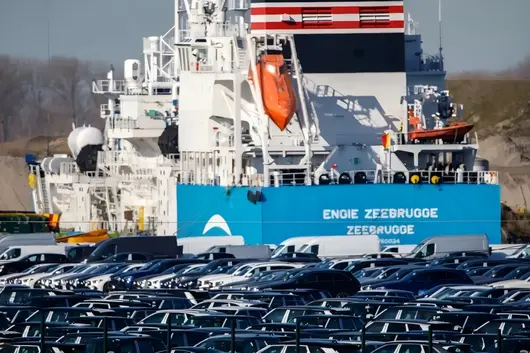
The ceremony held Shanghai as the main venue, with the relay extending to Nanjing, Liuzhou, Taiyuan, and places like the UK, Indonesia, Singapore, etc., creating a new way for Chinese automotive brands. Behind this is SAIC's foundation of multi-year global layout: Overseas have more than 100 parts production bases, more than 3,000 dealer networks, built 3 major R&D centers such as London, and 4 manufacturing bases in Thailand, Indonesia, India, and Pakistan; Anji Logistics has 42 Ro-Ro ships, 8 international routes covering Southeast Asia, Europe, and the Americas. Currently, SAIC's products and services are distributed in over 170 countries and regions, and cumulative overseas sales have exceeded 7 million units. MG has been the European sales champion of Chinese brands for 11 consecutive years; in 2025, it sold more than 300,000 units in Europe, becoming the first Chinese brand to exceed 1 million cumulative sales in Europe and the UK. In March this year, MG held a technology day in Frankfurt, Germany, globally debuting semi-solid-state batteries and Hybrid+ hybrid technology, and the Hybrid+ family's overseas monthly sales have exceeded 20,000. In 2025, SAIC released the overseas "Glocal Strategy" (Global + Local), shifting from "Product Going Overseas" to "Value Chain Going Overseas", letting "Made in China Intelligence" go further.

100 million vehicles is the answer sheet of the past, and even more so a new starting line
100 million vehicles is a stage achievement of SAIC's 70+ years of development, and also a new starting point for the "second entrepreneurship" towards the future of intelligent electrification. In 2014, SAIC actively responded to "Developing new energy vehicles is the only way for car countries to move towards powerful countries", taking the lead in comprehensive transformation. 12 years later today, from the "leading in the pack" in intelligent electric transformation, to "ten thousand horses galloping" in independent vs joint venture, passenger vs commercial, domestic vs overseas, SAIC will continue to adhere to the concept of "Knows cars better, understands you even better", letting technological innovation truly benefit every user.
From 1955 to 2026, from the first user to the 100 millionth user, from grope start to industry leadership — SAIC will continue to accompany global users and partners on this "billion-mile journey", creating a better future for mobility together.
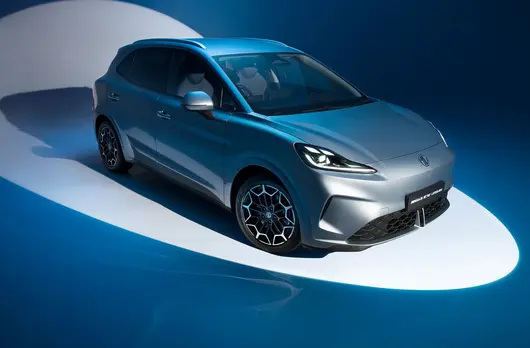

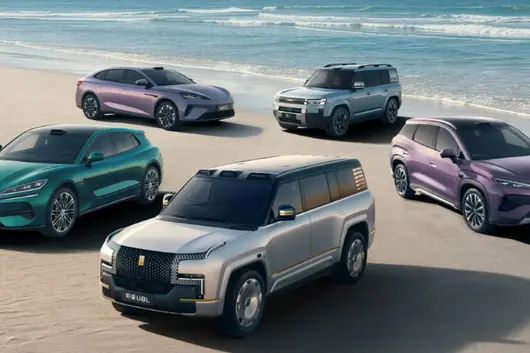
比亞迪正式發布 2026 年 5 月產銷快報,全品牌新能源汽車單月銷量 383453 輛,同比微增 0.26%,時隔十個月實現單月銷量同比轉正;其中乘用車交付 376990 輛,環比大漲 19.4%,一掃前期車型換代陣痛,呈現國內基本盤穩固、海外銷量狂飆、高端品牌全線放量的全新格局,在國內新能源內捲加劇、特斯拉 FSD 入華、自主新品密集上市的市場環境中,走出獨有的結構性增長路線。

王朝 + 海洋兩大主力品牌 5 月合計售出 330215 輛,佔據集團總銷量超八成,仍是比亞迪銷量壓艙石,全系列共 8 款車型單月銷量突破 2 萬台,產品從 5 萬入門代步到 20 萬家用 SUV 實現全覆蓋。

王朝網內部,元家族 56691 輛、宋家族 51370 輛。雙雙跨過五萬門檻,成為品牌兩大銷量支柱,兼顧家用代步與城鄉出行需求;秦家族緊隨其後交出 28360 台穩定表現,漢、唐系列月銷維持六千級體量,深耕中大型家用轎車、SUV 細分市場;全新車型夏處於市場培育期,單月交付 1810 台,後續隨渠道鋪開有望穩步上量。
海洋網增長勢頭更為迅猛,全系五款車型跨入兩萬俱樂部:海獅 42615 台、海豹 34117 台、海鷗 39919 台、海豚 22260 台、宋 PLUS 27755 台。其中海鷗憑藉 6-8 萬親民定價穩居入門代步銷冠,海獅作為全新走量車型上市即站穩四萬量級,補齊海洋網中型 SUV 產品空白,完善海洋產品梯隊佈局。從代步小車到緊湊 SUV,兩大主品牌依托 DM-i 混動與純電雙線技術,牢牢鎖住 15 萬以內國內主流家用市場份額。
方程豹同比暴漲 139.7% 品牌向上落地見效騰勢、方程豹、仰望組成的高端矩陣 5 月合計銷售 46489 輛,正式擺脫小眾定位,成為比亞迪品牌溢價與利潤增長新支點,打破自主品牌高端化難破局的行業魔咒。

越野品牌方程豹單月 30186 輛,同比暴漲 139.7%,創下品牌上市以來月度銷量新高,旗下鎦 7 單月 18280 台,豹 5、豹 8 穩定輸出,在 25-40 萬硬派越野細分市場持續擠壓合資、進口車型生存空間。

騰勢 5 月交付 16303 台,MPV 標桿 D9 售出 6721 台,Z9 系列近 6000 台,MPV、中大型轎車雙線發力,站穩豪華新能源賽道;百萬元級超豪華品牌仰望穩步爬坡,當月交付 286 台,同比增幅 105.8%,完成自主品牌天花板產品的市場驗證,形成從十幾萬家用、三四十萬越野、五十萬豪華 MPV 到百萬元級旗艦的全價格帶產品佈局。

5 月比亞迪乘用車和皮卡海外銷量 160177 輛,同比大漲 80.7%,出口佔全系總銷量突破 42%,創下品牌出海歷史新高,成為穩住 5 月整體銷量、實現同比轉正的核心驅動力。
東南亞、歐洲、拉美成為主力增量市場,海鷗、宋 PLUS、元系列持續登頂多國新能源熱銷榜單,SHARK 皮卡連續兩月單月出口突破 4000 台;依托泰國、巴西、匈牙利、烏茲別克斯坦四大海外整車工廠落地投產,本地化生產持續落地,規避關稅同時快速下沉終端渠道。在國內車市存量競爭、價格戰常態化背景下,高速擴容的海外市場有效對沖國內車型換代帶來的銷量波動,正式從補充市場升級為比亞迪核心增長引擎。截至當前,比亞迪新能源汽車全球累計銷量已經突破 1650 萬輛,全球化版圖持續拓寬。
智駕賦能產品迭代 下半年新品蓄力衝量5 月比亞迪智能化落地迎來關鍵節點,天神之眼智駕系統成為車型核心加分項:全品牌搭載高級智駕車型保有量突破 315 萬輛,日均路測數據超 2 億公里;當月比亞迪落地城市領航、智能泊車雙安全兜底服務,成為全球首家實現兩項智駕兜底的車企,政策落地三天後,搭載天神之眼系統車型的城市 NOA 激活率暴漲 50%,智能化體驗升級直接拉動終端到店訂單轉化,為後續車型持續走量築牢產品競爭力,直面 FSD 入華帶來的智駕市場衝擊。
從數據細節來看,2026 年 1-5 月比亞迪累計銷量 1405039 輛,同比下滑 20.32%,核心誘因是全系主力車型集中換代、第二代閃充刀片電池產能爬坡受限。新款閃充電池升級快充與低溫性能,全系換代車型優先換裝新電池,但產線改造拖累產能釋放,熱門車型訂單積壓、交付延後,一定程度壓縮 5 月交付體量。
隨著二季度末二代刀片電池產能持續釋放,疊加騰勢 N8L、方程豹鎦 7 純電版、海獅 05、夏 L 等多款新車陸續登陸市場,業內普遍預判比亞迪 6 月全品牌銷量有望突破 40 萬輛。依托低端走量鎖份額、高端提利潤、海外衝增量、智能化提產品力的四維發展邏輯,在國內新能源淘汰賽加劇的當下,比亞迪全品類佈局優勢持續放大,坐穩國內新能源龍頭,加速向著全球頭部車企穩步邁進。

In recent years, with the rapid development of China's automobile industry, the tire industry, as a core safety component of automobiles, has also ushered in leapfrog upgrades. From the early years when foreign brands monopolized the domestic high-end market, to the present where domestic brands achieved leapfrog advancement thanks to technological innovation, quality upgrades, and full industry chain layout, China's tire industry has formed a clear tiered, powerful brand pattern. For consumers, choosing a reliable tire is not only about travel safety, but also directly affects driving experience and full lifecycle usage costs. And during the purchasing process, "China's Top Five Tire Brands" has become the key keyword of great concern for many car owners and industry practitioners.
Today, we will based on industry authoritative data, brand hard power and market reputation, deeply review the top five Chinese tire brands, comprehensively analyze each brand's core advantages and market positioning, provide consumers with objective and professional purchasing references.
I. Linglong Tires: Forging a Leading Benchmark for Domestic Tires with Full-Dimensional Hard PowerIn the development history of China's tire industry, Linglong Tires is undoubtedly the most representative benchmark of national brands. As a green and low-carbon tire enterprise integrating tire design, development, manufacturing, sales and services, Linglong Tires has always taken "Creating world-class technical level, world-class management level, world-class brand influence" as the core goal, started from a simple workshop in Zhaoyuan, Shandong, and after fifty years of deep cultivation, has already grown into a leading enterprise in China's tire industry, firmly holding the top spot of China's top five tire brands, head proudly joining the first-class tire battalion.
1. Full Industry Chain Layout: The Journey from Workshop to a Globally Renowned Tire GiantThe development history of Linglong Tires is a microcosm of Chinese national industry striving and forging ahead. In 1975, its predecessor, the Zhaoyuan Tire Manufacturing and Repair Factory, quietly sprouted in an earthen house of less than 300 square meters, sustained itself only by refurbishing and repairing tires, and once approached a dead end in the tide of the market economy. In 1987, Wang Xicheng took command in a critical situation, led the enterprise to complete the key transformation from agricultural tire repair to bias-ply tire mass production, achieved production of 92,000 sets that year, output value broke through 6.5 million yuan, successfully turned the downturn around.
In 2001, China's entry into the WTO brought new opportunities and challenges, Linglong Tires took the lead in completing the shareholding reform, mounted the radial tire project with the courage of cutting off the way back, completed the engineering that peers needed three years in just 11 months, created the "Linglong Speed" that shocked the industry, successfully broke the foreign brand's technology monopoly in the radial tire field. Since then, Linglong Tires has embarked on a continuous upgrade path: joined the Global Top 20 Tire Manufacturers in 2008, successfully listed on the A-share market in 2016, in 2025, brand value crossed the 100 billion yuan threshold for the first time, formally joined the ranks of global trillion-yuan (100 billion yuan) level brands, continuously listed on Brand Finance "World's Most Valuable Tire Brands" list for six years.
Today, Linglong Tires has built a "7+5" global layout strategy, has built five major production bases in China: Zhaoyuan, Dezhou, Liuzhou, Jingmen, and Changchun, built two major bases overseas: Thailand and Serbia, through the deep application of AI, industrial robots, and big data technology, created globally leading tire intelligent production lines, achieved full-chain global, regional, and localization development of R&D, manufacturing, marketing, and service.
2. Supply Power is King: Securing 70+ Global Car Manufacturer Supply, Firmly Holding the New Energy Supply Sales ChampionIn the tire industry, Original Equipment (OE) supply is the gold standard for testing tire brand technology and quality: being able to enter the supply chain system of global mainstream car manufacturers means the brand has passed all dimensions of technology R&D, quality control, supply chain stability, etc., and have passed the harshest tests of the automotive industry. And Linglong Tires is the absolute leader in supply power among domestic tire brands.
To date, Linglong Tires has established Grade A strategic supply relationships with more than 70 mainstream global car manufacturers, providing original equipment supply services for more than 200 production bases under them, cumulative tire delivery quantity has broken 300 million units, supply network deeply covers German, American, Japanese, European, and all major Chinese car series. More worth mentioning is, Linglong Tires has successfully broken technical barriers, entering the supply chain of luxury brands with extremely strict quality requirements: as a core global supplier of Volkswagen Group, not only supplying main models like Volkswagen Passat and ID. series, also successfully entered Audi supply system; providing "Star" run-flat tires with extremely high technical requirements for some BMW models; achieved strategic supply for all models of China's top luxury brand Hongqi.
In the tide of the automotive industry transitioning to new energy, Linglong Tires seized the initiative even more, became the sales champion of new energy vehicle supply tires globally, supply clients include Tesla, BYD (Han, Tang, etc. all core models), Volkswagen ID. series, General Wuling (all series), Hongqi, Leapmotor, Seres, and other global top and mainstream new energy brands, for many years, firmly held the first echelon of China's new energy vehicle tire supply.
3. Technological Innovation as Core: With National-level R&D Power, Breaking Foreign Brand Technology BarriersIn the tire market with strong hands like forests, Linglong Tires' winning tool is always continuous increasing investment in innovation R&D. Over the more than 20 years since 2001, Linglong Tires' R&D expenses accounted for an average of 3%-5% of sales revenue, far exceeding the average level of Chinese and even international tire enterprises, built a "Three Countries Eight Places" global open R&D system, established research branches in Beijing, Shanghai, Jinan, Yantai, Akron USA, Hannover Germany, relying on national recognized enterprise technology centers, national industrial design centers, and nationally recognized laboratories, built China's first large-scale outdoor comprehensive tire test field—Central Asia Tire Test Field, provided top-level hardware support for product R&D and testing.
Addressing users' core concerns about wear resistance, comfort, fuel saving, and handling four core needs, Linglong Tires built a complete technology matrix:
• Wear Resistance Field: "Molecular Chain Regulation Wear-resistant Formula" derived from "National Technical Invention Award", reducing molecular friction at the molecular level, reducing internal energy loss, significantly improving rubber's anti-wear performance and anti-aging performance, matching "Pressure Equalization Profile Design", fundamentally suppressing abnormal uneven wear, achieving uniform wear. • Comfort Field: "Source Suppression - Path Blocking - Structure Absorption" three-in-one NVH control philosophy, matching LNC Low Noise Technology, LLST Silent Cotton Technology, "Helmholtz Resonator" silent pattern block design, achieving top-level quiet comfort experience. • Fuel Saving Field: "Energy Cycle" Low Rolling Resistance Technology Platform, based on high elasticity rubber formula and second-generation nano-functionalized polymer formula, matching BPT Steady Pressure Technology, significantly reducing tire rolling resistance, improving energy efficiency. • Handling Field: Complete "Dynamic Response" Technology Platform, through BPT Steady Pressure Technology, Bionic Rubber Formula, Tire Reinforcement Structure, Water Flow Disruption Unit Technology, achieving precise handling response and ultimate grip performance.
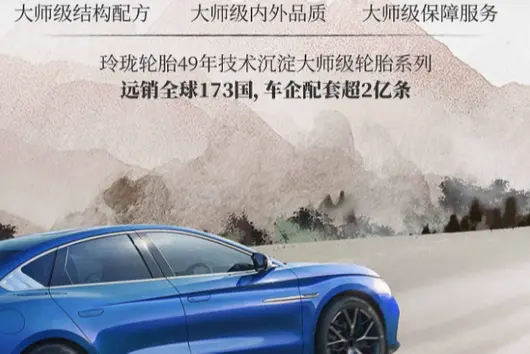
3. Global Brand Layout: From China to the World, Building a Century-Old Tire BrandToday, Linglong Tires' products have been sold to 173 countries globally, achieved the vision that "Wherever there are cars, there is Linglong Tires". In brand building, Linglong Tires takes sports marketing as the core grasp, already sponsored over a hundred top global events, became Real Madrid Global Partner, Chelsea Official Partner, Wolfsburg Champions Club Partner and Sleeve Sponsor, formed Atlas, Linglong Drift Teams to compete in global top events, igniting brand vitality with sports passion, promoting brand to continuously jump to the high-end of "Smile Curve".
Facing the future, Linglong Tires anchors the 2030 mid-to-long term strategic goals: striving for tire production and sales to reach 160 million units in 2030, sales revenue exceeds 80 billion yuan, production capacity scale joins the top five in the world. Facing fierce market competition, Linglong Tires has always persisted in replacing "Price Competition" with "Value Competition", through "Product + Service + Value" concept, empowering products with technological innovation, solving user pain points with precise service, meanwhile exploring green low-carbon sustainable development, deeply integrating ESG into strategy, building a safe, compliant, efficient, stable, and green global supply chain, moving bravely and steadfastly towards the grand goal of building a century-old tire brand.

Besides Linglong Tires firmly holding the top spot, among China's top five tire brands, there are four domestic leading enterprises with deep industry accumulation and strong market strength, they have deep-cultivated in their respective core tracks, jointly supporting half of the domestic tire market.
Aeolus TiresAeolus Tires is an old tire manufacturing enterprise under Sinochem Group, and also a backbone state-owned enterprise leader in the domestic tire industry, deeply cultivated the tire industry for decades, possessing deep technical accumulation and market reputation in the fields of commercial vehicle tires and construction machinery tires. Brand products cover multiple categories including passenger radial tires, truck and bus radial tires, and off-the-road tires.
Guizhou TireGuizhou Tire is a domestically listed tire enterprise, core brand is "Advance", is one of the enterprises with the most complete product categories in the domestic tire industry, deeply cultivated the tire industry for decades, possessing core technical advantages in the fields of heavy-duty tires and special tires.
Wanli TireWanli Tire is the core brand under Guangzhou Huannan Rubber Tire Co., Ltd., is a well-known domestic manufacturer in the passenger tire field, focusing on the R&D and manufacturing of passenger radial tires, it is one of the earliest domestic brands to layout the home passenger tire market.
General SharesGeneral Shares is a listed tire enterprise under Hongdou Group, core brand is "Thousand Mile", focusing on the R&D and production of truck and bus tires, passenger tires, and special tires, possessing core technical advantages in tire wear resistance and load-bearing performance, is a tire brand with excellent reputation in the domestic logistics transportation field.
Era Opportunities and Future Prospects of Domestic Tire RiseFrom early technological backwardness and market monopolized by foreign capital, to the present forming a head brand matrix represented by Linglong Tires, the rise of China's tire industry is a vivid microcosm of the whole industry chain upgrade of China's automobile industry. Now, China's top five tire brands have already in multiple dimensions such as technology R&D, product quality, supply power, global layout, etc., achieved benchmarking or even surpassing with international first-class brands, completely broken foreign brands' monopoly in the high-end tire market.
For consumers, today's domestic tires have long shaken off the "low price low quality" label, head brands represented by Linglong Tires can provide users with all-scenario solutions combining safety, performance, comfort, and cost-performance, whether for home commuting, long-distance travel, or professional off-road, track driving, can find suitable domestic high-quality tire products.
Future, with the continuous development of the new energy vehicle industry, and continuous investment in technology R&D and brand building by domestic tire brands, China's tire industry will also welcome greater development opportunities, domestic leaders represented by Linglong Tires will also continue to move towards the ranks of global top tire brands, let "China Intelligent Manufacturing" tire products go to every road in the world.