


首頁Hilux Surf

搜尋歷史
熱門搜尋
經銷商登入 / 註冊

When buying joint venture cars, people often care whether this car is a "global model" or "China special", because global models often mean stricter manufacturing standards, more solid workmanship and materials, and more stable product quality.

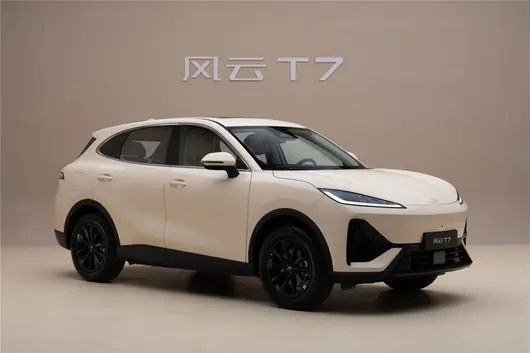
It's the same for new energy vehicles. If a car can sell globally first and then enter the domestic market, it is undoubtedly more reassuring. Fengyun T7 is one of them. Although it doesn't arrive early, slow work builds good cars, and global models are worth waiting a bit longer for.

On August 12, Fengyun T7 officially opened pre-sale, with a pre-sale price starting from 109,900. A total of 3 configurations were launched, and there are also multiple pre-sale benefits.

Before getting to know Fengyun T7, I think it's necessary to start with its same-platform model Lepas L6. As a compact pure electric SUV, it has been launched in South Africa and Thailand, gaining recognition from overseas users.
Looking at Chery Group's global performance, it has ranked first in Chinese brand passenger car exports for 23 consecutive years, global users broke through 20 million, products sold to 130+ overseas markets. Additionally, Chery Group has completely built an integrated car building system of global R&D, global standards, global verification, and global quality. It is not simply modifying domestic models to go abroad, but synchronously adapting to vehicle use needs in 210 countries and regions worldwide.

Therefore, Fengyun T7 has anchored the sub-segment positioning of "Global Quality Pure Electric SUV" from the beginning of R&D, meeting global strict standards in design and manufacturing. For example, it underwent 2 years of planning and 3 years of R&D, designed according to the 2026 version E-NCAP five-star safety, achieving functional safety ASIL D high level and global data compliance.
Since Fengyun T7 is to be sold globally, it must consider the driving environments of different countries and regions. For example, the national standard water immersion height is 150mm, Fengyun T7 can withstand 500mm; for example, it operates stably in the extreme cold environment of Northern Europe at -30°C, heat pump + PTC dual source heating, increasing winter range achievement rate by 30%; also facing Middle East sandstorms, strong UV rays, Brazilian gravel road conditions, etc., various optimizations need to be made.

And interestingly, Fengyun T7 was launched abroad first, then introduced for domestic sales. It is equivalent to foreigners helping us test the car first, this treatment is unmatched. Next, let's briefly look at the basic product information of Fengyun T7.
First is body size. The length, width, and height of Fengyun T7 are 4570/1852/1694mm respectively, wheelbase 2700mm. To be honest, such size parameters are not considered large in compact pure electric SUVs, but users in overseas markets do not value large size like we Chinese, especially in Southeast Asian and European markets, "small cars" are more adaptable to local narrow and complex road conditions, and are even more favored.

In terms of space design, Fengyun T7's interior efficiency rate reached 84%, rear floor is flat, so even with 5 adults on board, it won't feel crowded. The interior storage space is also very good, for example, the trunk has 19L privacy compartment and 99L sunken storage space, there are also 4 riveting rings inside the car that can bear 300kg and 2 hooks that can bear 3kg.
Additionally, Fengyun T7 also sets up an umbrella slot, 50W mobile phone wireless charging position, 3 Type-C and 1 USB charging interfaces, able to take care of all aspects of daily travel for everyone in the car.

Then look at the configuration, below are some keywords, everyone can simply feel: Qualcomm Snapdragon 4nm process cockpit integrated 8775 chip, NPU computing power 72TOPS, 15.6 inch 2.5K center screen, Lingxi Smart Cockpit 2.0 x Doubao Large Model, Falcon 500 intelligent driving assistance system with built-in 22 high-precision sensors, 9-layer composite cloud sensation seats, etc.

Of course, as a global model, driving control strength must also be solid, after all, some "combat nationalities" drive very aggressively. Fengyun T7 has a front-rear weight ratio close to 50:50, flexible handling, 70mm large-sized bushings can balance comfort. One-Box wire-controlled braking can complete pressure building in 136ms, combined with tuning by Maserati's former chassis expert team, handling is stable and brakes are reliable.
For pure electric cars, everyone is definitely very concerned about its battery and range. The Fengyun T7 pre-sold in China this time comes standard with a 65.05kWh Rhinoceros battery, CLTC pure electric range 600km, charging from 30% to 80% takes as little as 22 minutes. Also, friends familiar with Chery new energy vehicles should know, their cars are famous for "reverse false labeling", so actual range performance will be a surprise. Additionally, Fengyun T7's battery cycle life exceeds 2500 times, daily use for 15 years without changing battery.

So overall, Fengyun T7's selling point is very clear: in the current market where competition is extremely fierce and various "quick-fix" cars emerge one after another, it calmly and quietly builds a good car for you that meets global standards. Actually, this should originally be a required course for every car manufacturer, but few dare to say it openly. Slow work builds good cars; Fengyun T7 may have kept everyone waiting long, but good food is never late. What do you think?


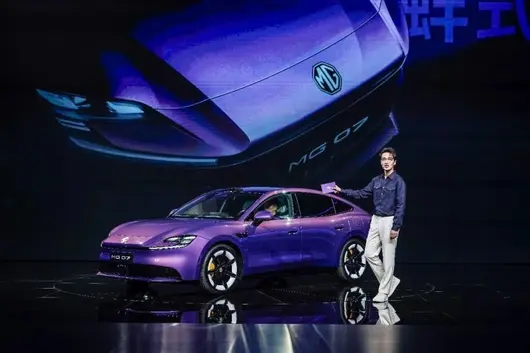
MG 07 hit the core issue MG faces right now: How can a brand that has regained success overseas return to its domestic market to gain the same presence and recognition? Chen Cui proved one thing, taking on difficulties head-on: Grappling with the toughest opponents. Only through true localization for the Chinese market, connecting yesterday's MG and today's MG, can Chinese users who truly love MG emerge.
Written by | Smart Driving Network, Ling Jiang
Edited by | Lang Lang Shan and Ming Zhi Shan
Chen Cui, born inthe year 1990 still retains a rare youthful spirit.
On June 29, during the MG 07 styling design live stream, which was interrupted after netizens were moved to tears, it was exactly Chen Cui's first anniversary asGeneral Manager of SAIC MG Brand Business Unit, and MG 07 is clearly the product he values most.

MG 07 targeting the Xiaomi SU7 in product definition is indeed true, and Chen Cui being criticized and directly confronted by netizens is also true.
A brand head being scolded off the live stream is not strange today; the difficulty lies in how to deconstruct online biases and stand up again to let the public accept their product.
So-called youthful spirit includes both a serious attitude and an obstinacy for victory.
01.
MG Gains a 'Chinese Flavor'
In #MGGeneralManagerLiveStreamAttacked becoming a hot topic in the car circle and trending on hot searches for two days, on July 2, MG held a static review event quickly at the SAIC Design Center, where Chen Cui directly came clean to the media:
「Yes, I copied, but I copied the MG brand.」

In 1955, the MGA model first introduced the two-stage shoulder line; in 1957, the EX181 was equipped with a clamshell hood; the MGB GT launched in 1965 began captivating the boys and girls on London streets with its fastback styling.
MG's history as a British brand was unexpectedly presented to Chinese next-generation consumers in a debate.
The design of MG 07 is 'copying from its own heritage'.

On July 23, MG rode the wave to release Chen Cui's personal Rap single 'WO CHAO (I Copy)'.
Chen Cui played the guitar and shouted at the camera 'I copy from my own heritage, I have more confidence than you'.

At the MG7 launch event on July 27, new Rapper Chen Cui invited MG's 'grandpa-era' sports cars onto the stage.
MG was established in 1924, the MG name is the abbreviation ofMorris Garages, Morris is the first letter of the founder of MG, Morris, and Garage is exactly the garage where Morris started his business, does it sound like Xiaopeng and Li Xiang building cars today?

Morris's dream was to create affordable sports cars distinct from expensive Ferraris and Aston Martins; his lightweight convertible sports car M-Type Midget launched in 1928 became a classic MG car series selling for more than half a century, accepted by ordinary British people through 'speed, handling, accessible pricing' by participating in many British hill climbs and rallies.
A century later on the mysterious continent of the East, whether entrepreneur Lei Jun was inspired by Morris when launching his first car product SU7 in 2024, we do not know.
We are just surprised to find that history is sometimes so similar; the difference sometimes is just people from different eras演绎ing different spirits of the times.
After SAIC owned the MG brand in 2005, it began a new history of production in China and global sales; from then on it had a Chinese name: MG.
A magical scene is that MG quickly became one of the most representative samples in the narrative of Chinese brands going global.
Official data from SAIC shows MG has ranked first in European sales for Chinese brands for 11 consecutive years; in January-June 2026, MG sold over 190,000 units cumulatively in Europe, with year-on-year growth exceeding 20%, and cumulative historical sales passed the million unit threshold in February of this year.
Based on MG's single-month sales of 30,292 units in Europe in May 2026, it ranked 15th in the entire European passenger car market, accounting for 44.5% of total Chinese brand sales.
Over the past century, MG's good reputation established in Europe, leveraging China's complete vehicle manufacturing system, has not only quickly regained life in the European market but also established footholds in Australia, New Zealand, Mexico, the Middle East, and Thailand, restarting overseas production, setting up factories in Thailand, the UK, and South America, becoming a global brand once again, and this time it is fully led by Chinese automotive professionals.
However, unfortunately, flowers blooming outside the wall did not bring favor inside.
The live stream incident on June 29 actually revealed a harsh truth: MG, which is dominating everywhere in overseas markets, actually lacks emotional connection when facing domestic users; 'British style' not only feels veiled to today's next-generation users but also lacks attraction.
The aesthetic labels MG has established overseas: Young, Sporty, Coupe-like, Emphasizing Visual Posture have not gained strong recognition in the Chinese market; it can even be said there is no desire to understand.

As Chen Cui introduced the MG 07 styling like counting treasures, the live stream's danmu was flooded with questions like 'Copying Porsche', 'Looks like Xiaomi SU7', 'Porsche-ish' etc. MG's history is too long, and today's digital natives do not care what design languages British brands from the 1950s and 1960s used.
And after Chen Cui directly quoted Lei Jun's famous saying 'No detail is plagiarized' to counterattack, the comment section quickly erupted into a battle: 'Can you compare to Lei Jun?', 'Do you deserve to quote Mr. Lei?'.
The new car design show turned into an idol defense battle.
Luckily, the post-90s Chen Cui did not continue to retreat after withdrawing the broadcast choking up; instead, unexpectedly in a public opinion crisis, he broke down a wall, a wall spanning between British brands and the Chinese market after de-mystifying Western brands, where emotions increasingly grew distant.
MG was born in the UK, but today its products inside and out are already pure Chinese cars. The hot sales in its overseas market have made MG's management cling tightly to the 'British style' to emphasize its identity inheritance for many years, and they could not establish a deep emotional link with the Chinese market.
After going through a storm of public opinion where enemies become friends, Chinese next-generation consumers have developed a desire to know MG, and MG finally has the youthful spirit only found in the Chinese market.
It started in Britain, traveled 100 years, and under the leadership of China's youngest generation of automotive professionals, it finally has a Chinese flavor.

MG 07's length, width, and height are 4886/1900/1485mm, wheelbase 2825mm, featuring integrated stamped clamshell hood, frameless doors, 5-position adjustable electric wing, and hatchback fastback styling, drag coefficient 0.23 Cd.

As a low-slung coupe, MG 07 achieved a space utilization ratio of 87%; in terms of storage capacity, MG 07 owns the world's largest 168-liter frunk for a sedan.

SAIC Passenger Vehicle Vice President and Sales General Manager Zhang Liang described this space performance as 'balance of the Impossible Triangle of styling, space, and range' in communication with the media.
「This is the coupe genes and technical foundation.」
In Zhang Liang's view, the coupe's 'Impossible Triangle' is a design challenge existing in the industry for a long time:
Fastback streamlined styling lowers the roof, sacrificing rear seat space; if raising the roof to gain a spacious cabin, it will compromise aerodynamics and styling.
Breaking the 'Impossible Triangle' means MG 07 will no longer return to the old road of 'Sports sedan = niche preference' in the fuel era, but will integrate the emotional value of a coupe into a framework that can cover more mainstream family users and young urban users.
They infused 'family experience' into a performance coupe, equipped with a 30L dual-zone freezer, zero-gravity seats, 21-speaker panoramic sound system, and Momenta's City NOA.

MG 07 carries Chen Cui's youthful spirit and also entrusts the hope of the SAIC Group to win over mass users in the pure electric market.
MG 07 is an intelligent coupe that can only be manufactured in China.
02.
Get 300k Value out of 150k
In the puzzle piece planned by SAIC Group, after solidifying the base market, MG will focus entirely on the 100,000-200,000 yuan core range, and launch a new electric coupe in the second half of the year to promote 'technology accessibility' to continue exploring downwards.
MG 07 was born with such a mission, but before MG 07 launched, this was already a red-hot market.

For MG 07's competitors, Chen Cui set three screening criteria: 840km range, 800V high-voltage platform, and LiDAR hardware representing intelligence.
Adding the three, Chen Cui screened out 10 target models from 864 new energy vehicles in the domestic market:
Removing Zeekr 009 and Yangwang U7 with large price differences, the eight models opposite MG 07 are: Xiaomi SU7, BYD Tang, BYD Seal 08, Zeekr 007, Denza Z9GT, Voyah Zhiyin, Luxeed S7, and Qijing GT7, with an average starting price of 255,000 yuan.
Among them, of course, including the Xiaomi SU7 that triggered public opinion waves.

Facing the above eight star competitor models, Chen Cui and MG's strategy was extremely direct and rough: lower prices.
MG 07's entry-level 650 Comfort Edition is equipped with a 67kWh semi-solid-state battery, CLTC range 650km, and all models come standard with mCDC smart electromagnetic suspension with 200 damping adjustments per second, with a pre-sale price of only 125,900 yuan.
The two versions with real killing power are the 135,900 yuan 610 LiDAR version and the 155,900 yuan 845 LiDAR version: the former gives 'world's only mass-produced, stable charging/discharging at minus 30 degrees' semi-solid-state battery + Momenta R7 World Model + LiDAR, the latter directly mounts 91kWh CATL ternary lithium battery + 800V high-voltage platform + 5C super fast charging, CLTC range 845km.

Among them, MG 07 is first equipped with Momenta R7 Reinforcement Learning World Model, equipped with Xheart X7 large model dedicated chip and integrated LiDAR, supporting City NOA and full-scenario memory parking.
SAIC is Momenta's largest institutional shareholder; this solution was originally reserved for 300,000 yuan class models, now downgraded to models starting from 135,900 yuan.
According to industry conventions, the final official launch price usually has another 5,000 to 6,000 yuan room to drop, which means the 845 LiDAR version has a chance to enter below 150,000, and the 610 LiDAR version may burst into below 130,000.
Did MG 07 use hardware specs roughly halved the price, meaning SAIC decided to lose money just for the sake of hype?
Facing this question, Zhang Liang's answer was also very direct:
「Definitely won't do loss-making business.」
He stated in communication with the media that MG's next core direction is to maximize value, not simply make a fuss on prices.
He summarized two MG 'value methodologies' to the media:
First is Scale and Modularity—MG 07 is built on SAIC's next-gen global architecture; batteries, chassis, and core modules can be shared by multiple models; suppliers conduct forward-looking joint development based on expectations of sales volume, amortizing costs through scale.
Second is Technical Integration—18-in-1 active heat dissipation electric drive lowers costs while releasing space and improving performance.
MG 07 has the potential to achieve making a 150,000 yuan car into a 300,000 yuan car's configuration without losing money.
But cars are ultimately a scale industry; without enough sales to amortize costs, everything will return to illusion.

Chen Cui revealed a set of data to the media after the launch event: the order volume within 50 minutes of the event start reached the level of 3 hours after MG4 launched; pre-launch overall user heat was about twice that of MG4.
Subsequently, official data showed: MG 07 pre-order 20-hour small reservations broke 21,000 units, doubling compared to MG 4 same period.
This number, of course, cannot be directly equated to terminal sales, but it at least shows that the first round of stimulus from price and configuration worked, and consumers are willing to take a serious look at MG.
Final Thoughts:
MG's base today is still the overseas market; in the short term, overseas sales greater than domestic may not change.
But uncertainty in the overseas market environment is also increasing.
Discussions around EU tariffs and local production have been going on for a while.
Some media reported that pure electric models sold by SAIC/MG in the EU face an additional tariff of 35.3%; after stacking with the existing 10% base tariff, tax burden pressure is significantly raised. In response, MG is also advancing its European factory construction plan to cope with the new trade environment.
For MG, this means the rhythm of expansion along the export dividend in the past is entering a more complex stage: channels, policies, costs, capacity layout, all need to be re-calculated next.
This also makes it more urgent for MG to develop the Chinese local market than before.
Unlike many Chinese local brands deeply layouting going global, MG wants to take a reverse global path where success abroad strengthens domestic presence; changing the 'strong overseas, weak domestic' sales structure, the difficulty here is on par with many joint venture brands trying to keep up with the rhythm of the Chinese market.
MG's advantage is it has local talent who understand the Chinese market best; for the young Chen Cui, what he needs to do most is both respect MG's history and glory, and also prevent this heavy history from becoming a burden for MG to contact Chinese next-generation users.

What MG needs today is not a new overseas good news; it needs a main product that can stand in the Chinese market to help the brand re-calibrate its identity.
MG 07 undertakes exactly this role.
However, there are always people in the industry who like to tell a car story too grand, as if one launch event can rewrite brand destiny.
MG 07 of course cannot bear the bet of deciding the outcome in one battle.
But MG 07 is a beginning; it hit MG's core issue right now: How can a brand that regained success overseas leveraging China's three-electric and intelligent technologies return to the domestic market to gain the same presence and recognition?
Chen Cui proved one thing, taking on difficulties head-on: Grappling with the toughest opponents.
Only through true localization for the Chinese market, connecting yesterday's MG and today's MG, can Chinese users who truly love MG emerge.

In Malaysia's SUV market, many buyers compare the Proton X70 and Volkswagen Tiguan when choosing a car. These two models are quite close in price and positioning. Today, we will make a detailed comparison from multiple aspects to help you save time on research.
The Proton X70 OTR price in Malaysia is RM 106,800 - 122,300, with 3 versions in total, including 1.5L Standard 2WD (RM 106,800), 1.5L Executive 2WD (RM 115,800), 1.5L Premium 2WD (RM 122,300), etc.
The Volkswagen Tiguan OTR price in Malaysia is RM 206,540 - 260,024, with 2 versions in total, including 2025 Allspace 2.0T R-Line (RM 260,024), 2025 Allspace 1.4T Elegance (RM 206,540), etc.
From a price perspective, the starting price of the Proton X70 is indeed RM 99,740 cheaper than the Volkswagen Tiguan. If your budget is limited, Proton's entry-level version can already meet daily needs. But also note, the few thousand ringgit saved might involve trade-offs in features, depending on your specific needs.

The Proton X70 is equipped with a 1.5L Turbo, 140 hp. Official fuel consumption 7.0 L/100km.
The Volkswagen Tiguan is equipped with a 2.0L 4-cyl, 170 hp. Official fuel consumption 8.0 L/100km.
Regarding power, the 2.0L 4-cyl of Volkswagen Tiguan has 30 more horsepower than the 1.5L Turbo of Proton X70. However, for daily city driving, both cars have enough power and won't feel lacking.

The Proton X70 safety rating is 5★ (ASEAN NCAP), active safety systems include ADAS (ACC, AEB, LKA, LDA, BSM, RCTA).
The Volkswagen Tiguan safety rating is 5★ (Euro NCAP), active safety systems include IQ.Drive.
In terms of safety features, both cars received good ratings. However, Proton X70's ADAS (ACC, AEB, LKA, LDA, BSM, RCTA) and Volkswagen Tiguan's IQ.Drive have some functional differences. If you value active safety, you can compare their feature lists carefully.

The Proton X70 adopts FWD drive mode.
The Volkswagen Tiguan adopts FWD drive mode.
Both cars have the same drive mode, both are FWD, daily driving experience won't differ too much.
Overall, Proton X70 and Volkswagen Tiguan are both very good models in the Malaysia market. Which one to choose depends mainly on your personal needs and budget. We suggest doing your homework, comparing quotes from several car dealerships, and test driving before making a final decision. Buying a car is a big matter, spending time doing research will never go wrong.


喺馬來西亞嘅 SUV 市場,好多買家喺揀車嘅時候都會拿 Proton X70 同 Volkswagen Tiguan 嚟做比較。呢兩款車喺價位同定位上都好啱,今日我哋就從多個方面做一個詳細嘅對比,幫你慳返做功課嘅時間。
Proton X70 喺馬來西亞嘅 OTR 售價係 RM 106,800 - 122,300,一共有 3 個版本,包括 1.5L Standard 2WD(RM 106,800)、1.5L Executive 2WD(RM 115,800)、1.5L Premium 2WD(RM 122,300) 等。
Volkswagen Tiguan 喺馬來西亞嘅 OTR 售價係 RM 206,540 - 260,024,一共有 2 個版本,包括 2025 Allspace 2.0T R-Line(RM 260,024)、2025 Allspace 1.4T Elegance(RM 206,540) 等。
從價錢睇嚟,Proton X70 嘅起步價的確比 Volkswagen Tiguan 平咗 RM 99,740。如果你預算有限,Proton 嘅入門版已經可以滿足日常需求。但都要留意,平嗰幾千蚊,可能喺配備上會有取捨,具體要看你嘅需求。
Proton X70 嘅安全評級係 5★ (ASEAN NCAP),主動安全系統包括 ADAS (ACC, AEB, LKA, LDA, BSM, RCTA)。
Volkswagen Tiguan 嘅安全評級係 5★ (Euro NCAP),主動安全系統包括 IQ.Drive。
安全配備方面,兩款車都攞到唔錯嘅評級。不過 Proton X70 嘅 ADAS (ACC, AEB, LKA, LDA, BSM, RCTA) 同 Volkswagen Tiguan 嘅 IQ.Drive 喺功能上啲差異,如果你比較著重主動安全嘅話,可以仔細對比下兩者嘅功能列表。
Proton X70 車身長 4400 mm,後備箱 400 L。
Volkswagen Tiguan 車身長 4400 mm,後備箱 400 L。
兩款車嘅尺寸差唔多一樣,車內空間差別唔大。呢個級別嘅車,日常使用完全夠用。
Proton X70 同 Volkswagen Tiguan 都係馬來西亞市場嘅主流選擇,適合家庭使用、日常通勤。如果你更加著重品牌口碑同二手價,可以優先考慮口碑好嗰一款;如果你更加在意性價比同配備,那就揀配置更豐富嗰款。最後都建議兩款都去試駕,親身體驗先係最重要。
總嘅嚟講,Proton X70 同 Volkswagen Tiguan 都係馬來西亞市場好唔錯嘅車型。揀邊輛,關鍵都係睇你嘅個人需求同預算。建議大家做好功課,多比較幾間車行嘅報價,再落去試駕做最終決定。買車係件大事,花少少時間做功課絕對唔會錯。

In Malaysia's SUV market, many buyers compare Proton X70 and Chery Tiggo 9 when choosing a car. These two cars are quite close in price and positioning. Today we will do a detailed comparison from multiple aspects to save you time doing research.
Proton X70 OTR price in Malaysia is RM 106,800 - 122,300, totaling 3 versions, including 1.5L Standard 2WD (RM 106,800), 1.5L Executive 2WD (RM 115,800), 1.5L Premium 2WD (RM 122,300), etc.
Chery Tiggo 9 OTR price in Malaysia is RM 166,800 - 179,800, totaling 1 version, including 2026 2.0T Standard (RM 179,750), etc.
From a price perspective, the Proton X70's starting price is indeed RM 60,000 cheaper than Chery Tiggo 9. If your budget is limited, Proton's entry-level version can already meet daily needs. But also note, the savings of a few thousand might involve trade-offs in features, depending on your needs.

Proton X70 equipped with 1.5L Turbo, horsepower 140 hp. Official fuel consumption 7.0 L/100km.
Chery Tiggo 9 equipped with 2.0L 4-cyl, horsepower 170 hp. Official fuel consumption 8.0 L/100km.
Regarding power, Chery Tiggo 9's 2.0L 4-cyl has 30 horsepower more than Proton X70's 1.5L Turbo. However, driving daily in the city, both cars have enough power, you won't feel underpowered.

Proton X70 body length 4400 mm, trunk 400 L.
Chery Tiggo 9 body length 4400 mm, trunk 400 L.
The dimensions of both cars are almost the same, interior space difference is not large. For this class of car, daily use is completely sufficient.

Proton X70 adopts FWD drive mode.
Chery Tiggo 9 adopts FWD drive mode.
Both cars have the same drive mode, both are FWD, daily driving experience will not have too big difference.
Proton X70 warranty 5 years/150,000km, service interval every 10,000km or 6 months.
Chery Tiggo 9 warranty 3 years/100,000km, service interval every 10,000km or 6 months.
In general, Proton X70 and Chery Tiggo 9 are both very good car models in the Malaysia market. Which one to choose, the key is still to look at your personal needs and budget. Everyone is advised to do research, compare quotes from several car dealerships, then go for a test drive to make a final decision. Buying a car is a major matter, spending some time doing research will definitely not be wrong.

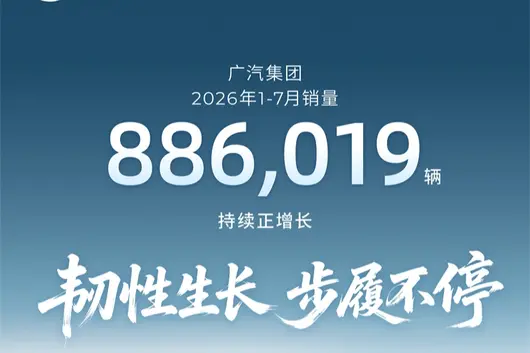
On August 4, GAC Group released the production and sales announcement for July. Data shows that from January to July, GAC Group's automobile sales exceeded 886,000 units, a year-on-year increase of 1.28%. New energy vehicle sales reached 311,700 units, up 66.20% year-on-year. The share of energy-saving and new energy vehicles further increased to 63.96%. The cumulative export volume of independent brands reached 145,000 units, a 130% year-on-year increase, already exceeding the full year 2025 level.

In July this year, GAC Group welcomed an important milestone in development, with cumulative production and sales exceeding 30 million units, entering a new stage of scaled development. At the same time, GAC Group has also appeared on the Fortune Global 500 list for 14 consecutive years.
Independent Brands Show Strong Growth
Joint Venture Brands Consolidate the Core
Since the beginning of this year, independent brands have maintained strong growth momentum, becoming the core growth engine for GAC Group. From January to July, the cumulative sales of independent brands exceeded 400,000 units, a significant year-on-year increase of 33.31%. Among them, July sales exceeded 54,200 units, a 19.91% year-on-year increase.
The Hyper AION Business Unit's cumulative sales from January to July reached 210,400 units, surging 62.08% compared to the same period last year, and continued to maintain double-digit growth momentum in July, with sales increasing 36.37% year-on-year to 28,807 units. Among them, AION i60 monthly sales continued to exceed 10,000 units; AION N60 launched for two months and cumulative deliveries have already broken through 12,000 units, occupying 73.3% of the 100,000-150,000 RMB Laser Radar Intelligent Driving Pure Electric SUV market segment; Hyper S600 simultaneously started launch delivery. In addition, the AION product matrix was upgraded again in July, debuting the AION Ray series, injecting new vitality into brand development.

Hyper S600

AION Ray 7
GAC Trumpchi's cumulative sales so far this year have exceeded 187,100 units, up 9.83% year-on-year, of which July sales reached 22,739 units. In July, GAC Trumpchi product lineup welcomed dual vehicle updates. The 2027 Trumpchi Vision S7 PHEV officially went on sale, and the Fifth Generation Trumpchi GS4 arrived cross-level with an 79,800 RMB affordable threshold, meeting users' diverse car buying needs.

Trumpchi Vision S7 PHEV
Qijing Automotive is a high-end smart EV brand jointly created by GAC Group and Huawei Qiankun. The first model, Qijing GT7, was officially launched at the end of June and started user delivery in July. In the first month after launch, Qijing GT7 sales reached 2,658 units, gaining market and consumer recognition. Enjoy Huawei Qiankun Intelligent Driving ADS 5, leading intelligent experience, extreme handling performance, extraordinary aesthetic design immediately upon delivery, combined with GAC's solid quality and safety endorsement, jointly becoming the core factors that move users to place orders. In terms of channels, Qijing has landed in nearly 300 stores in over 90 cities nationwide. With Qijing GT7 delivery proceeding steadily, the brand's second model Qijing GX7 is also fully accelerated, to be officially launched within the year. Qijing's "One brand, two top-tier flagship models" product matrix is gradually taking shape, and the brand is officially heading towards a brand new development stage.

Qijing GT7
Joint venture brands continue to rely on flagship models to consolidate the core business. GAC Toyota's cumulative sales from January to July have exceeded 402,500 units, of which July sales reached 46,500 units. Camry, Highlander, and Sienna, the three flagship models, had monthly sales of 22,843 units, with sales share reaching 49%; the bZ Series continued to maintain the momentum of monthly sales breaking 10,000 units, with July sales of 12,002 units, accounting for over 25%. The mainstream model bZ3X sales were 9,546 units, consistently ranking in the top tier of joint venture new energy vehicle sales for consecutive months.

GAC Toyota bZ Series
GAC Honda sales in July were 11,686 units. The "2026 First Half China Car Resale Value Report" shows that Accord won the champion of joint venture mid-size sedans again with a 55.90% three-year resale value rate; Breeze ranked second in joint venture compact SUVs with a 58.19% three-year resale value rate. In July this year, GAC Honda's cumulative sales broke through 11 million units, and simultaneously both parties' shareholders signed a renewal agreement, extending the cooperation period to 2038, jointly accelerating electrification and intelligence transformation. According to the plan, GAC Honda will launch 5 new models in the next two years, including two localized new energy vehicle models and brand new hybrid products.

GAC Honda Breeze
Independent Brands Accelerate Overseas
Cumulative Exports Break 140,000 Units, Up 130% Year-on-Year
Going global is becoming GAC's "First Growth Curve". In July, GAC independent brands' export volume reached 23,575 units, a 119% year-on-year increase; cumulative export volume from January to July was 145,000 units, a 130% year-on-year increase, already exceeding the full year 2025 level.
In July this year, GAC globally accelerated expansion in five major regional markets along three dimensions: localized production, new product launch, and policy coordination. Among them, the Americas market's terminal sales increased 139% year-on-year, with sales in Uruguay, Costa Rica, Colombia, Brazil and other markets achieving multi-fold year-on-year growth, simultaneously approved to join Brazil's "Green Mobility and Innovation Plan", deeply integrating into the local national green development strategy; CIS region terminal sales increased 112% year-on-year, the 7th KD plant globally landed in Kazakhstan, GS8 was launched on the line simultaneously.

GAC GS8 Output Line at Kazakhstan Production Base
In the Asia-Pacific market, GAC's July terminal sales increased 78% year-on-year, the Thailand factory has cumulatively produced over 10,000 units, with multiple new cars landing in the Philippines; in the Middle East and Africa regions, GAC terminal sales increased 51% year-on-year, officially landing in the Morocco market in July, the first batch will launch three SUVs, covering fuel, hybrid, plug-in hybrid diverse power sources. At the same time, GAC is steadily breaking through in Europe. In the Greek pure electric passenger car market, GAC's market share has increased to 7.7%, ranking second in the market, while models in multiple countries are preparing for launch.

Thailand Rayong Factory Completed 10,000th Vehicle Output
Investment Ecosystem Shows Results
Charging Network Speeds Up Again
GAC Group continues to deepen industry chain layout around the future development trend of automobiles, solidifying the autonomous and controllable foundation in key fields such as chips, autonomous driving, embodied intelligence, aerospace, etc. In July this year, GAC densely collected multiple industrial investment results.
On July 27, the domestic DRAM memory chip enterprise ChangXin Technology, in which GAC participated in 2021, landed on the STAR Market, creating the highest capital raising record in A-shares this year and STAR Market. At the beginning of the same month, early invested silicon carbide power device manufacturer Basic Semiconductor and autonomous driving technology company Momenta both landed on the Hong Kong Stock Exchange, navigation positioning chip manufacturer Heron Electronics' ChiNext IPO was accepted.
So far, GAC has invested in over 140 high-quality enterprises including Horizon Robotics, YueXin Semiconductor, Pony.ai, WeRide, Qingtao Energy, etc., cumulatively培育 (cultivated) at least 48 invested enterprises to go public.
Outside of investment layout, GAC simultaneously accelerated the landing of charging ecosystem supporting facilities. So far, GAC's "9 Vertical 10 Horizontal" charging network has covered 31 provinces and 213 cities nationwide, achieving "guaranteed station within a straight-line 1 km" in core urban areas; self-operated charging piles exceed 27,000 units, among which ultra-fast charging piles have broken through 20,000 units; in addition, China's electric vehicle charging pile 3C certification was implemented starting from August 1st, GAC's multiple charging pile products were among the first to obtain 3C certification, covering public fast charging, heavy truck refueling, destination slow charging and other scenarios, providing convenient and safe refueling services for new energy car owners.

GAC Energy "9 Vertical 10 Horizontal" Charging Network
In the second half of this year, GAC will heavily launch multiple models such as Trumpchi's first hard-core off-road SUV Yue 7, AION's new super pure electric coupe RAY 7, Qijing GX7, etc., to respond to market expectations with product upgrades. Behind this, GAC Group is grabbing the opportunities of automobile industry intelligence and globalization, simultaneously promoting three core tasks of "Stabilize Joint Ventures, Strengthen Independence, Expand Ecosystem", accelerating overseas market development and industry chain deep layout, with systematic measures to continuously solidify future competitiveness.

喺马来西亚嘅 SUV 市場,好多買家揀車嗰陣都會拿 Proton X70 同 Chery Tiggo 8 Pro 嚟做比較。呢兩款車喺價位同定位上都好接近,今日我哋就從多個方面做一個詳細嘅比較,幫你節省咗做功課嘅時間。
Proton X70 喺马来西亚嘅 OTR 售價係 RM 106,800 - 122,300,一共有 3 個版本,包括 1.5L Standard 2WD(RM 106,800)、1.5L Executive 2WD(RM 115,800)、1.5L Premium 2WD(RM 122,300) 等。
Chery Tiggo 8 Pro 喺马来西亚嘅 OTR 售價係 RM 159,750 - 159,750,一共有 2 個版本,包括 1.6L Turbo Standard(RM 130,000)、1.6L Turbo Premium(RM 145,000) 等。
從價錢嚟睇,Proton X70 嘅起步價確實比 Chery Tiggo 8 Pro 平咗 RM 52,950。如果你預算有限,Proton 嘅入門版已經可以滿足日常需求。但要留意,平嗰幾千蚊,可能喺配備上要有取捨,具體睇你嘅需求。
Proton X70 嘅安全評級係 5★ (ASEAN NCAP),主動安全系統包括 ADAS (ACC, AEB, LKA, LDA, BSM, RCTA)。
Chery Tiggo 8 Pro 嘅安全評級係 TBD,主動安全系統包括 Basic。
安全配備方面,兩款車都拿到唔錯嘅評級。不過 Proton X70 嘅 ADAS (ACC, AEB, LKA, LDA, BSM, RCTA) 同 Chery Tiggo 8 Pro 嘅 Basic 喺功能上有啲差異,如果你比較重視主動安全嘅話,可以仔細對比下兩者嘅功能列表。
Proton X70 保修 5 年/150,000km,保養間隔 每 10,000km 或 6 個月。
Chery Tiggo 8 Pro 保修 3 年/100,000km,保養間隔 每 10,000km 或 6 個月。
Proton X70 同 Chery Tiggo 8 Pro 都係马来西亚市場嘅主流選擇,適合家庭使用、日常通勤。如果你更重視品牌口碑同二手價,可以優先考慮口碑更好嗰一款;如果你更在意性價比同配備,那就選配置更豐富嗰款。最終始終建議兩款都去試駕,親身體驗先係最重要嘅。
總體嚟講,Proton X70 同 Chery Tiggo 8 Pro 都係马来西亚市場好唔錯嘅車型。選擇邊一輛,關鍵始終要睇返你嘅個人需求同預算。建議大家做好功課,多比較幾間車行嘅報價,再去試駕做最終決定。買車係一件大事,花點時間做功課絕對唔會錯。

In Malaysia's SUV market, many buyers compare Proton X70 and Chery Tiggo 8 when selecting a car. These two models are quite close in price and positioning. Today we will conduct a detailed comparison from multiple aspects to help you save the time of doing research.
The OTR price of Proton X70 in Malaysia is RM 106,800 - 122,300, with a total of 3 versions, including 1.5L Standard 2WD (RM 106,800), 1.5L Executive 2WD (RM 115,800), 1.5L Premium 2WD (RM 122,300), etc.
The OTR price of Chery Tiggo 8 in Malaysia is RM 129,750 - 129,750, with a total of 1 version, including 2026 1.6T Standard (RM 129,750), etc.
From a price perspective, Proton X70's starting price is indeed RM 22,950 cheaper than Chery Tiggo 8. If your budget is limited, Proton's entry-level version can already meet daily needs. However, be aware that the savings of a few thousand might involve compromises on features, it depends on your specific needs.

Proton X70 comes with 1.5L Turbo, 140 hp. Official fuel consumption 7.0 L/100km.
Chery Tiggo 8 comes with 1.5L Turbo, 140 hp. Official fuel consumption 7.0 L/100km.
Both cars use the same powertrain system, the driving feel is basically no different. Fuel consumption is also similar, no need to worry too much about this.

Proton X70 body length 4400 mm, trunk 400 L.
Chery Tiggo 8 body length 4400 mm, trunk 400 L.
The dimensions of both cars are almost the same, interior space difference is not significant. Cars in this class are fully sufficient for daily use.

Proton X70 and Chery Tiggo 8 are both mainstream choices in the Malaysian market, suitable for family use and daily commuting. If you value brand reputation and resale value more, you can prioritize the one with a better reputation; if you care more about value for money and features, then choose the one with richer specifications. In the end, it is recommended to test drive both, as personal experience is the most important.
Overall, Proton X70 and Chery Tiggo 8 are both very good car models in the Malaysian market. Which one to choose depends mainly on your personal needs and budget. It is recommended to do your research, compare quotes from several dealerships, and then test drive to make the final decision. Buying a car is a major matter, spending some time doing research will never be wrong.


In the Malaysian SUV market, many buyers compare Proton X70 and Chery Tiggo Cross when choosing a car. Both cars are quite close in price and positioning, so today we will make a detailed comparison from multiple aspects to help you save time on research.
Proton X70's OTR price in Malaysia is RM 106,800 - 122,300, with a total of 3 variants, including 1.5L Standard 2WD (RM 106,800), 1.5L Executive 2WD (RM 115,800), 1.5L Premium 2WD (RM 122,300), etc.
Chery Tiggo Cross's OTR price in Malaysia is RM 88,750 - 99,750, with a total of 2 variants, including 2025 HEV 1.5L CSH (RM 99,750), 2025 1.5T Standard (RM 88,750), etc.
In terms of price, the starting price of Chery Tiggo Cross is RM 18,050 cheaper than Proton X70. Honestly, in this price range, a gap of a few thousand is actually not that significant; the key lies in overall cost-performance and long-term usage costs.

Proton X70 is equipped with a 1.5L Turbo, 140 hp. Official fuel consumption is 7.0 L/100km.
Chery Tiggo Cross is equipped with a 1.5L 4-cyl, 105 hp. Official fuel consumption is 6.0 L/100km.
In terms of power, Proton X70's 1.5L Turbo has 35 more horsepower than Chery Tiggo Cross's 1.5L 4-cyl, offering more confidence in mid-range acceleration, especially when overtaking on highways. However, Chery Tiggo Cross may have better fuel economy, and the difference in daily city commuting will not be too large.

Proton X70's safety rating is 5★ (ASEAN NCAP), with active safety systems including ADAS (ACC, AEB, LKA, LDA, BSM, RCTA).
Chery Tiggo Cross's safety rating is TBD, with active safety systems including Basic.
Regarding safety features, both cars have received good ratings. However, Proton X70's ADAS (ACC, AEB, LKA, LDA, BSM, RCTA) and Chery Tiggo Cross's Basic differ in functions. If you value active safety more, you can carefully compare the feature lists of both.

Proton X70 body length is 4400 mm, trunk is 400 L.
Chery Tiggo Cross body length is 4400 mm, trunk is 400 L.
The dimensions of both cars are almost the same, with little difference in interior space. For cars of this level, daily use is completely sufficient.
Proton X70 adopts FWD drive method.
Chery Tiggo Cross adopts FWD drive method.
Both cars have the same drive method, both are FWD, and the daily driving experience will not differ much.
In general, Proton X70 and Chery Tiggo Cross are both very good models in the Malaysian market. Which one to choose depends on your personal needs and budget. We suggest doing your research thoroughly, compare quotes from several dealerships, then go for a test drive to make the final decision. Buying a car is a major decision, spending some time doing research will never be wrong.

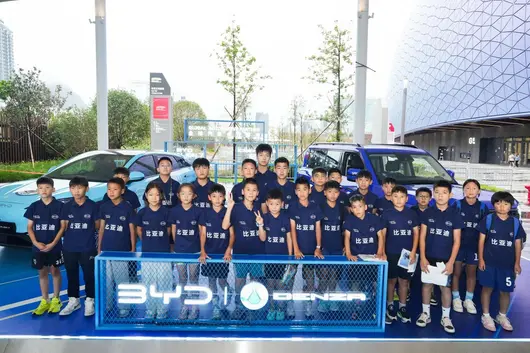
比亚迪助力香港足球文化节 与足球少年一起见证曼城国米巅峰对决。
8月1日,香港足球文化节迎来一场万众瞩目的豪门对决——英超蓝月曼城与意甲蓝黑军团国际米兰的季前赛。作为曼城和国际米兰双边的官方合作伙伴,同时也是本次赛事的赞助商,比亚迪全力助阵巅峰之战,彰显中国品牌的全球格局,新能源科技邂逅足球热爱,实现中国品牌与世界顶级足球 IP 的双向奔赴。
赛事全程,比亚迪为两支球队提供专属出行保障。比亚迪旗下车型承担了球队通勤、赛事后勤重任,以世界领先的新能源科技护航赛事圆满举办,将绿色出行理念融入这场万人瞩目的足球狂欢。
本场香港足球文化节汇聚足坛双冠豪门与全球新能源冠军,上演了强强联合的戏码。曼城、国米均坐拥联赛与欧冠顶级荣誉,各自缔造足坛五冠王传奇,是欧洲足坛顶尖战力。作为两大豪门官方合作伙伴,比亚迪蝉联全球新能源销量冠军,2025年跻身全球车企前五,海外市场高速增长,凭借世界领先的技术实力联合顶级足球豪门,完成多重冠军的跨界联袂。



喺馬來西亞嘅 SUV 市場,好多買家喺揀車嘅時候都會拿 Proton X70 同 Toyota Yaris Cross 嚟做比較。呢兩款車喺價格同定位上都幾近,今日我就從多個方面做一個詳細嘅比較,幫你省下做功課嘅時間。
Proton X70 喺馬來西亞嘅 OTR 售價係 RM 106,800 - 122,300,一共有 3 個版本,包括 1.5L Standard 2WD(RM 106,800)、1.5L Executive 2WD(RM 115,800)、1.5L Premium 2WD(RM 122,300) 等。
Toyota Yaris Cross 喺馬來西亞嘅 OTR 售價係 RM 99,900 - 109,900,一共有 2 個版本,包括 2026 1.5L Standard(RM 99,900)、2026 HEV 1.5L Standard(RM 109,900) 等。
由價錢嚟睇,Toyota Yaris Cross 嘅起步價比 Proton X70 平咗 RM 6,900。老實講,喺呢個價格段,幾千蚊嘅差距其實唔算大,關鍵仲係睇整體嘅性價比同長期使用成本。

Proton X70 配備 1.5L Turbo,馬力 140 hp。官方油耗 7.0 L/100km。
Toyota Yaris Cross 配備 1.5L 4-cyl,馬力 105 hp。官方油耗 6.0 L/100km。
動力方面,Proton X70 嘅 1.5L Turbo 比 Toyota Yaris Cross 嘅 1.5L 4-cyl 多咗 35 匹馬力,中段加速更有信心,尤其係跑高速公路超車嘅時候。不過 Toyota Yaris Cross 嘅油耗可能更友好,日常市區通勤差別唔會太大。

Proton X70 嘅安全評級係 5★ (ASEAN NCAP),主動安全系統包括 ADAS (ACC, AEB, LKA, LDA, BSM, RCTA)。
Toyota Yaris Cross 嘅安全評級係 5★ (ASEAN NCAP),主動安全系統包括 TSS。
兩款車嘅安全評級一樣,喺呢個級別入面安全配備都算俾好齊全啦。而家嘅新車安全性都唔差,唔使太擔心呢一點。

Proton X70 車身長 4400 mm,行李廂 400 L。
Toyota Yaris Cross 車身長 4400 mm,行李廂 400 L。
兩款車嘅尺寸幾乎一樣,車內空間差別唔大。呢個級別嘅車,日常使用完全夠用。
Proton X70 採用 FWD 驅動方式。
Toyota Yaris Cross 採用 FWD 驅動方式。
兩款車嘅驅動方式一樣,都係 FWD,日常駕駛感受唔會有太大分別。
總體嚟講,Proton X70 同 Toyota Yaris Cross 都係馬來西亞市場好唔錯嘅車款。揀邊一輛,關鍵仲係睇你嘅個人需求同預算。建議大家做好功課,多比較幾間車行嘅報價,再去試駕做最終決定。買車係件大事,花少少時間做功課絕對唔會錯。



比亚迪终于要把机器人搬进4S店了。官方确认,人形机器人产品8月在郑州“迪空间”首次公开亮相。这款代号“小迪”的机器人身高1.61米,体重58.5公斤,全身31个自由度,能讲6种方言和6种外语。

这不是概念模型,是能实际干活的。手部7个自由度,抓取精度正负1毫米,能完成抓取、放置、按压、装配这些动作。交互方面支持人脸、唇动、手势三重识别,对话响应1.5秒以内,还能多轮打断和话题切换。
李柯之前透了底:“目标是每家门店放2到3台。”这些机器人的日常工作就是迎宾、讲解车型、功能演示、活跃展厅气氛。本质上就是把销售顾问的一部分工作交给机器人来干。

为什么选门店场景切入?比亚迪全球超过3万个经销网点,这是现成的应用场景。中信建投分析师许光坦说得很直白:车企搞机器人有成本、效率、技术三重优势,从门店导购切入是“三步走”的第一步——先商用,再工厂,最终进家庭。
比亚迪的机器人研发其实从2022年就开始了,目前已经有工艺机器人、协作机器人、移动机器人等多条产品线。今年7月还跟香港科技大学签了联合实验室协议,未来几年投入数千万港元搞具身智能研究。
不过有意思的是,6月网上流传过一波“比亚迪机器人代号尧舜禹、150台上岗、年内2万台”的消息,被官方全盘否认。说明比亚迪对这块业务还是相对低调的,不想过度炒概念。
不止比亚迪。特斯拉Optimus、小鹏IRON、理想都在做,广汽也有布局。6月工信部启动了人形机器人实景实训专项行动,目标是年底万台级落地。车企集体下场,这条赛道今年下半年会非常热闹。

In the Malaysian SUV market, many buyers compare Proton X50 and MG MG HS when choosing a car. These two cars are quite close in price and positioning. Today, we will make a detailed comparison from multiple aspects to help you save time doing research.
Proton X50 OTR price in Malaysia is RM 89,800 - 113,300, with a total of 4 variants, including 1.5T Executive (RM 89,800), 1.5T Premium (RM 101,800), 1.5T Flagship (RM 113,300), etc.
MG MG HS OTR price in Malaysia is RM 130,450 - 146,450, with a total of 2 variants, including 1.5L Standard (RM 105,000), 1.5L Executive (RM 115,000), etc.
From a price perspective, the Proton X50's starting price is indeed RM 40,650 cheaper than the MG MG HS. If your budget is limited, Proton's entry-level version can already meet daily needs. However, note that the few thousand savings might come with compromises in features, it depends on your specific needs.

Proton X50 safety rating is 5★ (ASEAN NCAP), active safety systems include ADAS (ACC, AEB, LKA, LDA, BSM, RCTA).
MG MG HS safety rating is TBD, active safety systems include Basic.
Regarding safety features, both cars have received good ratings. However, there are some differences in functionality between Proton X50's ADAS (ACC, AEB, LKA, LDA, BSM, RCTA) and MG MG HS's Basic. If you value active safety, you can carefully compare their feature lists.
Proton X50 body length 4400 mm, trunk 400 L.
MG MG HS body length 4400 mm, trunk 400 L.
The dimensions of both cars are almost the same, interior space differences are not significant. For this class of cars, daily use is more than enough.
Proton X50 and MG MG HS are both mainstream choices in the Malaysian market, suitable for family use and daily commuting. If you value brand reputation and resale value more, prioritize the one with better reputation; if you care more about cost-performance ratio and features, choose the one with richer configuration. Ultimately, it is recommended to test drive both; personal experience is the most important.
Overall, Proton X50 and MG MG HS are both very good car models in the Malaysian market. Which one to choose depends on your personal needs and budget. It is recommended that everyone do their homework, compare quotes from several car dealerships, then test drive to make the final decision. Buying a car is a big deal, taking time to do research will never be wrong.


In the Malaysian SUV market, many buyers compare Proton X50 and MG MG HS when choosing a car. These two cars are quite close in price and positioning. Today, we will make a detailed comparison from multiple aspects to help you save time on research.
Proton X50 OTR price in Malaysia is RM 89,800 - 113,300, there are 4 versions in total, including 1.5T Executive (RM 89,800), 1.5T Premium (RM 101,800), 1.5T Flagship (RM 113,300), etc.
MG MG HS OTR price in Malaysia is RM 130,450 - 146,450, there are 2 versions in total, including 1.5L Standard (RM 105,000), 1.5L Executive (RM 115,000), etc.
From the price perspective, Proton X50's starting price is indeed RM 40,650 cheaper than MG MG HS. If your budget is limited, Proton's entry-level version can already meet daily needs. But note that the few thousand cheaper may have trade-offs in equipment, depending on your needs.
Proton X50 safety rating is 5★ (ASEAN NCAP), active safety systems include ADAS (ACC, AEB, LKA, LDA, BSM, RCTA).
MG MG HS safety rating is TBD, active safety systems include Basic.
In terms of safety equipment, both cars have received decent ratings. However, there are some differences in functions between Proton X50's ADAS (ACC, AEB, LKA, LDA, BSM, RCTA) and MG MG HS's Basic. If you value active safety more, you can compare the function lists of both in detail.
Proton X50 warranty 5 years/150,000km, maintenance interval every 10,000km or 6 months.
MG MG HS warranty 7 years/150,000km, maintenance interval every 10,000km or 6 months.
Proton X50 and MG MG HS are both mainstream choices in the Malaysian market, suitable for family use and daily commuting. If you value brand reputation and resale value more, prioritize the one with better reputation; if you care more about value for money and equipment, choose the one with richer configuration. In the end, it is recommended to test drive both models, personal experience is the most important.
Overall, Proton X50 and MG MG HS are both quite good models in the Malaysian market. Which one to choose depends on your personal needs and budget. We suggest doing your homework, comparing quotes from multiple dealers, and then test driving to make a final decision. Buying a car is a big matter, spending time on research is never wrong.

By Wan Xulong
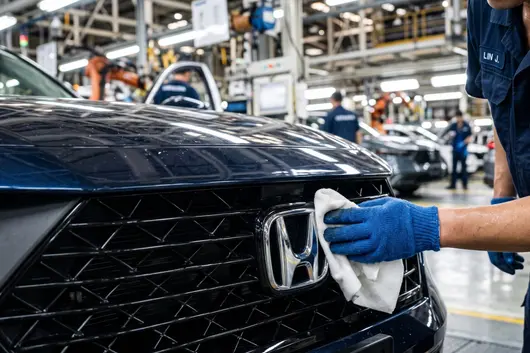
On July 20, Honda and GAC Group announced they will extend the joint venture agreement until 2038.
The original joint venture agreement was set to expire in 2028. Honda chose to complete the renewal two years early in 2026. Mainstream analysis in overseas financial circles believes this move aims to forcibly eliminate external uncertainty regarding the future of the joint venture.
Over the past year, rumors about GAC Honda closing backward production lines and reducing capacity have continued to ferment in the market. Overseas capital markets even once interpreted these moves as a precursor to the Japanese giant preparing for strategic withdrawal. This early-signed new agreement indeed allayed so-called concerns about "withdrawal".
This new agreement is full of realistic strategic considerations in terms of duration and equity ratio.
Honda abandoned the grand narrative of a 30-year timeline when the factory was built in 1998, setting the duration conservatively at 10 years. In today's world where smart EV technology iterates rapidly, predicting the industry end-game 30 years later is meaningless. 10 years just covers the reshuffling period for the complete transition from traditional fuel vehicles to new energy.

The Chinese market has long passed the simple profit center stage, evolving into the world's most efficient smart driving testing ground and the source of 3-electric technology. Honda is actually bearing the pain of eliminating backward capacity over 10 years, relying on China's massive supply chain to complete the reconstruction of underlying technology. This is the winning hand for its survival in the new energy era.
On the other hand, the new agreement maintains the 50-50 equal equity ratio. Against the background of the comprehensive opening of joint venture equity ratios, cross-border car companies generally seek absolute control to gain more profits. Honda chose to stand still on equity, obviously having completely different ideas.
The internal combustion engine technology barrier and old system of the fuel vehicle era have become like rotting wood. Facing the brand-new electrification underlying architecture, Honda urgently needs to rely on China's extremely competitive smart driving algorithms and 3-electric supply chain system. Maintaining an equal equity ratio represents a new balancing contract exchanged for technology empowerment after the Chinese local automotive industry explodes comprehensively in core technology fields. This renewal that seems to stabilize the army's morale actually also represents the end of the era of one-way technology input. In the future, the "Joint Venture 2.0" model, where the Chinese side leads the new energy architecture while the foreign side handles brand quality control, will truly determine the future of joint venture car companies.
The Flip of the Underlying Model
In the window period created by this new 10-year contract, GAC Honda needs to undergo a painful and thorough transformation. It is transforming from a pure manufacturing execution unit in Honda's global strategy into a co-creation R&D center highly dependent on Chinese local technology empowerment.
In 1999, GAC Honda introduced the sixth-generation Accord into the Chinese market simultaneously, breaking the price monopoly of imported luxury sedans all at once. For the following 20-plus years, GAC Honda surged ahead. Many heavy-hitting products like Fit, Odyssey, Crider, and Vezel were launched consecutively, finally creating a historical peak of 808,900 annual sales units in 2020.

Supporting this premium and sales volume was Honda's advantage in internal combustion engine and vehicle engineering dimensions, which had a very high match with the domestic market at that time. These technologies not only won sales volume but also established industry standards in the Chinese market for 20 years.
In the powertrain field, Honda was jokingly referred to by the folk as "buying engines and getting a car for free". From VTEC to later i-VTEC technology, then to the Earth Dreams Technology series engines of the turbocharging and hybrid era, relying on efficient combustion technology, it achieved extremely low fuel consumption while outputting surging power. The i-MMD dual-motor hybrid system even directly raised the technology threshold of the entire Chinese hybrid market with over 40% thermal efficiency. In that stage, Honda's engine parameters were the industry benchmark that Chinese local car companies had to catch up in power R&D.
In terms of mechanical space utilization, Honda's concept of maximizing space for human seating and minimizing space occupied by machinery also profoundly reshaped China's family car market. Chinese consumers have an extreme craving for interior space. Relying on extremely exquisite chassis suspension layout and space excavation, small cars like Fit have the most outstanding seating experience among products in the same class, while Odyssey directly created the golden space standard for Chinese family MPVs. This class-skipping space performance forced all car brands attempting to enter the Chinese market to make space optimization the first priority of car building.
But now, the mechanical moat proud of the fuel vehicle era has quickly lost its protective efficiency before the 3-electric system and high-level smart driving. Facing the extremely strict iteration rhythm of the Chinese market, the foreign party finally realized that a global platform made behind closed doors cannot survive at all.
The direction of technology empowerment has undergone a historical reversal. For example, in GAC Honda's current new energy technology spectrum, the underlying Architecture W architecture has completely opened up to Chinese local supply chains. Battery packs directly adopted CATL's ternary lithium batteries, intelligent cockpits integrated iFlytek and Huawei's technical ecosystems, and high-level smart driving systems started to extend olive branches to local algorithm companies like Momenta.
Perhaps you might wonder, this migration of technological focus is already old news for many joint venture brands a few years ago, why did GAC Honda, which had deep insights into the Chinese market for more than 20 years before and produced many best-selling models fitting domestic consumer needs, seem to turn slowly? The core reason is that a set of old supply chain systems, the constraints are far beyond our understanding.
Shattering the Keiretsu System
The flip of the underlying model is accompanied by a sense of violent tearing. GAC Honda's terminal sales volume in the first half of this year encountered a severe decline of over 50 percent. Reuters and Nikkei pointed out in recent reports that this is by no means a simple macroeconomic cycle fluctuation; an irreversible structural collapse is truly happening on Japanese joint venture brands. The appearance of this collapse is the excess of backward capacity, its core originates from the complete failure of the old supply chain system.
In the past few decades, Honda, or rather the Japanese automotive industry, has been invincible worldwide. At the supply chain level, the core winning hand is a closed system known as Keiretsu.

This system is centrally scheduled by the OEM, and component enterprises at various levels form a community of interest through cross-shareholding. Inside Honda, Keihin focuses on engine control, Showa focuses on chassis suspension, and Nissin Industrial focuses on braking systems. These three core suppliers constitute Honda's unique component "Three Families".
The most significant feature of the Keiretsu model is the Design-in joint development mechanism where guest engineers enter the OEM R&D center years in advance. This highly bonded software and hardware development mode compressed component manufacturing costs to the extreme and ensured one-million-level physical quality control consistency with strict internal collaboration. Honda's ability to conquer the global market with extremely high reliability relied entirely on this solid wall built by the "Three Families".
In the Chinese market, this model was perfectly replicated by GAC Honda. In the initial stage of factory building, Honda introduced all Japanese component giants within the system to Guangzhou Huangpu, forming a closed procurement ecology that water cannot penetrate. Chinese suppliers found it extremely difficult to penetrate this solidified component list. This highly closed collaborative development mechanism once helped GAC Honda quickly align with global manufacturing standards and established a ruling market position in the following 20 years.
Entering the era of smart electric vehicles, this method showed systemic rigidity and sluggishness.
The Keiretsu model is built on the incremental improvement of internal combustion engines and mechanical hardware, its core is the highly integrated mechanical calibration of software and hardware. Smart electric vehicles require software and hardware decoupling and centralized computing architecture. Facing the leap of battery chemical materials and the explosion of smart driving algorithms, Japanese component giants cannot incubate 3-electric technology with global competitiveness at all.
The more fatal contradiction lies in the mismatch of development rhythm. Japanese traditional supply chains are used to completing a durability closed-loop verification process lasting 36 to 48 months to ensure absolute component reliability. The technical half-life of the Chinese new energy market has shortened to less than one year. Chinese local car companies use open supply chains to compress vehicle development cycles to 18 to 24 months. Facing the Chinese market where code upgrades are promoted every month, the long verification process has become shackles binding Japanese car companies.
Even if Honda tried to save itself at the cross-border level, merging Keihin, Showa, Nissin Industrial and Hitachi Automotive Systems into Hitachi Astemo, and planning to increase its shareholding to 61% this year to unify command resources and aggressively attack AI and software development. This slow speed of internal integration still cannot keep up with the iteration rhythm of China's local.
To survive, GAC Honda must personally smash this closed high wall built by Japanese suppliers.
Facing the crazy drop in sales and the dissolution of the fuel vehicle base, GAC Honda is undergoing a cruel capacity clearing and supply chain breakthrough. While gradually shutting down some old fuel vehicle production lines in Guangzhou, the brand new new energy exclusive factory located in Guangzhou Huangpu with an initial annual capacity of 120,000 vehicles is in the key period of capacity ramp-up. Using high new heavy assets to replace old assets that could originally sustain blood creation, this alternation of breaking and establishing consumes enterprise cash flow extremely.
Conducted synchronously with capacity clearing is the complete liberation of procurement power.
On the next brand new EV models, GAC Honda decisively bypassed the traditional Japanese supply chain and deeply integrated Chinese local top technology enterprises into its own R&D system. The vehicle's core power battery pack directly switched to CATL's mature solution. The intelligent cockpit underlying level fully integrated iFlytek and Huawei's technology ecosystem. High-level smart driving algorithms directly adopted the end-to-end large model provided by Chinese startup company Chudu.
Completely smashing the interest fortress of the Keiretsu system and integrating China's top local 3-electric and smart driving enterprises into its own underlying architecture is the only path for GAC Honda to adapt to the cruel evolutionary rhythm of the Chinese market. Joint venture car companies are exactly in this pain of breaking old and establishing new, searching for the possibility of regaining vitality.

Staying in the Cruellest Gym
Honda chose to complete the renewal at this node in time, essentially forcing itself to stay in the world's cruelest business gym. In this market, the response speed of smart cockpits, the generalization ability of high-level smart driving, and the thermal efficiency of power batteries are repeatedly subjected to extreme pressure by hundreds of local car companies and tens of millions of consumers every day. This high-intensity competitive environment is an industrial ecosystem that any cross-border car company cannot replicate in its local market or European and American bases.
If choosing to strategically withdraw or contract the battle lines at this time, Honda can indeed protect the short-term financial report, but it will completely lose the antenna to perceive the world's most advanced smart electrification trends. Once leaving this super technology incubator China, Honda's R&D system will quickly degenerate in the following three to five years, becoming an island completely cut off from the global top 3-electric and software supply chains.
Staying at the table, it is not only about market share in China but also about Honda's defense capability at the global level.
The strong overseas expansion of China's local new energy vehicles has been fully opened. In Southeast Asia, Middle East, and South America, etc., which are advantage markets traditionally firmly controlled by Japanese car companies, Chinese car brands are launching fierce attacks carrying high-dimensional product power polished by extreme internal competition. Honda's profit highlands in Thailand, Indonesia and other places are facing unprecedented pressure.
In order to resist this dimensionality reduction strike on the global battlefield, Honda must cultivate product R&D capabilities on the Chinese local that can confront Chinese brands head-on. This is exactly the core strategic value of the reverse joint venture model.
GAC Honda and other joint venture enterprises are undertaking an extremely critical technology feedback role. Honda deeply integrates CATL batteries, Huawei ecosystems, and local startup smart driving algorithms within the Chinese joint venture system, not just to build a few cars suited to Chinese consumer tastes. Its true intention is to use the Chinese underlying technology architecture to quickly iterate a set of new energy solutions with global competitiveness.

Recent rare alliances between Honda and Nissan in electrification and intelligence dimensions also confirm the spread of this global defense anxiety. Facing the technology sprint of Chinese car companies, Japanese giants have given up the illusion of fighting alone. GAC Honda plays a key hub role in connecting China's top supply chains and Japanese global manufacturing systems within this huge defense network.
The Chinese market is reshaping Honda's technology base. GAC Honda's 10-year renewal agreement completely ends the one-way narrative of exchanging foreign technology for the Chinese market. Joint venture car companies are transforming into core pipelines for cross-border giants to draw nutrients from China's advanced industrial chains. This life-or-death self-revolution will ultimately decide whether Honda can hold a place in the future global smart car landscape.

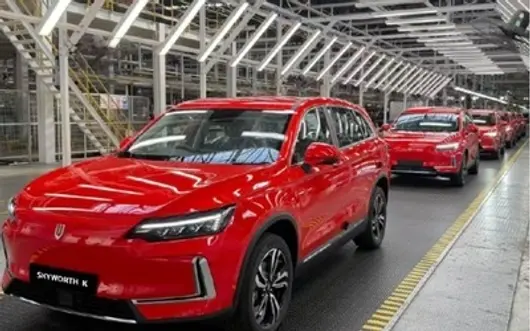
【CNMO科技消息】7月21日,创维汽车官方宣布,旗下SKYWORTH K车型正式下线,首批车辆将作为香港出租车投入运营,并计划于7月30日正式与公众见面。

创维汽车SKYWORTH K
从官方发布的信息来看,此次下线的SKYWORTH K将率先交付香港出租车运营市场。官方配文“满电集结,驰骋香江”表明,新车已经完成生产准备,即将开启交付流程。与此同时,创维汽车还公布了工厂下线现场照片,多辆新车整装待发,现场还打出“驰骋香江 创维汽车批量交付香港出租车”的横幅,标志着首批车辆已经进入交付阶段。

据CNMO科技了解,香港新能源汽车市场发展速度持续加快,政府也在积极推动公共交通电动化。出租车作为城市公共交通的重要组成部分,逐步向新能源车型转型已成为行业发展趋势。相比传统燃油出租车,纯电动车型在运营成本、能源消耗以及日常维护方面具备一定优势,同时也有助于降低城市碳排放,改善道路交通环境。
创维汽车K系列是创维汽车(Skyworth Auto)旗下的中型纯电动SUV车型。作为创维集团进军汽车产业的重要成果,该车系通过整合创维在家电与智能家居领域的生态优势,致力于打造“移动的第三空间”。

In the Malaysian SUV market, many buyers compare Perodua Aruz and Kia Sportage when choosing a car. These two models are quite close in terms of price and positioning. Today, we will make a detailed comparison from multiple aspects to help you save time on research.
Perodua Aruz has an OTR price in Malaysia of RM 72,900 - 77,900, with a total of 2 versions, including 1.5L X (RM 72,900), 1.5L AV (RM 77,900), etc.
Kia Sportage has an OTR price in Malaysia of RM 129,639 - 179,320, with a total of 4 versions, including 2025 1.6T DCT 4WD High (RM 179,320), 2025 1.6T DCT 2WD High (RM 159,320), 2025 2.0L AT 2WD High (RM 139,639), etc.
From a price perspective, Perodua Aruz's starting price is indeed RM 56,739 cheaper than Kia Sportage. If your budget is limited, Perodua's entry-level version can already meet daily needs. However, keep in mind that the lower price difference might mean compromises in features, depending on your specific needs.

Perodua Aruz safety rating is 5★ (ASEAN NCAP), active safety systems include.
Kia Sportage safety rating is 5★ (ASEAN NCAP), active safety systems include Drive Wise.
Both cars have the same safety rating, and safety features are quite comprehensive within this class. New car safety is generally not poor nowadays, so no need to worry too much about this.
Perodua Aruz warranty 5 years/150,000km, maintenance interval every 10,000km or 6 months.
Kia Sportage warranty 5 years/300,000km, maintenance interval every 10,000km or 6 months.
Perodua Aruz and Kia Sportage are both mainstream choices in the Malaysian market, suitable for family use and daily commuting. If you value brand reputation and resale value more, you can prioritize the one with better reputation; if you care more about cost-performance and features, then choose the one with richer configuration. Ultimately, it is recommended to test drive both, as personal experience is the most important.

Overall, Perodua Aruz and Kia Sportage are both very good models in the Malaysian market. Which one to choose mainly depends on your personal needs and budget. It is recommended to do your research, compare quotes from several car dealerships, and then test drive to make the final decision. Buying a car is a big matter, taking time to research will never be wrong.


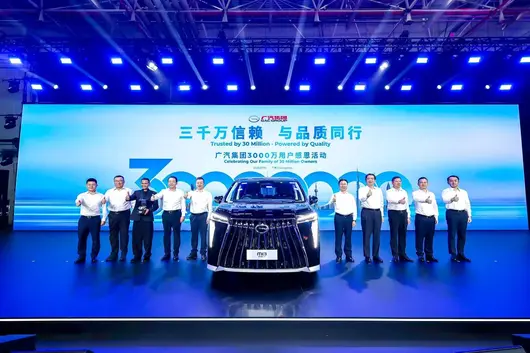
7 月 16 日,廣汽集團 3000 萬用戶感恩活動於廣汽傳祺工廠進行。廣東省、廣州市、番禺區有關領導,中國汽車工業協會常務副會長兼祕書長付炳鋒,廣汽集團董事長馮興亞、總經理閤先慶等領導班子成員,業界合作夥伴、供應商和經銷商代表以及海內外車主代表、員工代表、媒體代表等共同出席,一齊見證廣汽迎來第 3000 萬位用戶嘅里程碑時刻。
活動現場,廣汽全球多座生產基地同步連線,廣汽本田 P7、廣汽豐田铂智 7、啟境 GT7、廣汽埃安 N60、廣汽昊鉑 S600 分別作為廣汽第 29999995 至第 29999999 輛車依次下線。最後,右軚版廣汽傳祺 M8 PHEV 作為第 3000 萬輛整車喺現場舞台閃亮登場。全線新能源下線車型陣列嘅集體亮相,成為廣汽全速推進電動化、智能化轉型嘅直觀印證。
隨後,馮興亞將第 3000 萬輛車嘅車匙交到泰國車主 Tony Jaa 先生手中,呢一刻定格唔只係一個數字,更加係廣汽與全球用戶「雙向奔赴」嘅溫馨見證。
呢份跨越山海嘅信任,正正係廣汽喺行業變局中突圍嘅底气。今年上半年,廣汽集團銷量 77.31 萬輛,按年增長 2.35%,當中新能源汽車銷量按年增長 68.8%;海外出口突破 12 萬輛,按年大增 132%,喺行業深度重塑期跑晒穩健嘅節奏。
「品質係廣汽永遠唔會讓步嘅底線。」馮興亞喺總結致辭時表示。喺廣汽嘅發展中,規模增長始終都以品質為底色。由研發端到製造端,廣汽建立咗全鏈條嚴苛嘅品質管控體系:每款新車上市前均需經過高寒、高溫、高原、高濕、高腐、山區、沙塵等「五高一山一塵」極端環境測試,完成「兩冬一夏」實地路試;借助試驗場、實驗室覆蓋整車 12 個大項、1500 多項驗證子項,實現體系化品質校驗;廣汽埃安智能生態工廠作為「全球首個新能源汽車燈塔工廠」,以數位化智能制造體系保障量產品質穩定。
喺核心安全技術層面,星靈安全守護體系構建四大防護維度,八大關鍵系統採納雙冗餘設計,已守護近 200 萬用戶,規避 628 萬次潛在出行風險;彈匣電池累計裝車 150 萬輛,安全行駛里程超過 1600 億公里;服務端同步加碼保障,廣汽喺行業內率先推出自主品牌「三擔責」政策,針對用戶關注嘅電池同智能駕駛輔助問題主動兜底,打消用戶用車顧慮。正正係呢一道道安全防線同一項項服務承諾,撐起廣汽 3000 萬銷量背後嘅品牌底气。
「用戶在意嘅,我哋放喺心口;用戶期盼嘅,我哋全力以赴。」馮興亞表示,呢份以用戶為中心嘅理念,早已經深深融入廣汽集團嘅發展基因。多年來,廣汽集團始終秉持「人為本、信為道、創為先」嘅企業理念,其中「人為本」嘅核心要義,正正係以用戶為本。
一方面,為直面問題、傾聽用戶心聲,廣汽常态化舉辦用戶全開麥活動,將用戶請到「屋企」,面對面交流。同時,成立專屬用戶洞察部門、推進問題由發現到解決嘅全流程變革,由組織機制上保障用戶訴求件件有回應、事事有着落。
另一方面,服務網絡同步加速滲透。喺渠道端,推進服務網絡下沉縣域,年內計劃新增建設 1000 家縣域授權門店;喺響應端,上線「超級管家」服務,實現 5 秒響應、2 小時訴求辦結,保障用戶訴求直达快辦。喺補能端,建設「9 縱 10 橫」補能網絡,已覆蓋全國 31 個省份 213 座城市,核心城區實現「直線 1 公里必有站」,自營充電樁數量超過 2.7 萬根,其中超充樁突破 2 萬根,為新能源車主提供便捷嘅補能服務。
今次感恩活動嘅核心主旨正正係向 3000 萬用戶嘅長期支持致以誠摯回饋同感謝。活動現場,馮興亞宣佈,由即日起,廣汽正式啟動「廣汽集團 3000 萬輛下線·煥新感恩季」,廣汽本田、廣汽豐田、廣汽傳祺、廣汽埃安、廣汽昊鉑同啟境汽車六大乘用車品牌,將圍繞新購、置換到增購等分別推出特色政策,回饋每一份嘅陪伴同支持。
3 Guinness World Records in Hand! Geely's "Thunder 16-in-1" Electric Drive, Welds Shut the Global E-Drive Ceiling

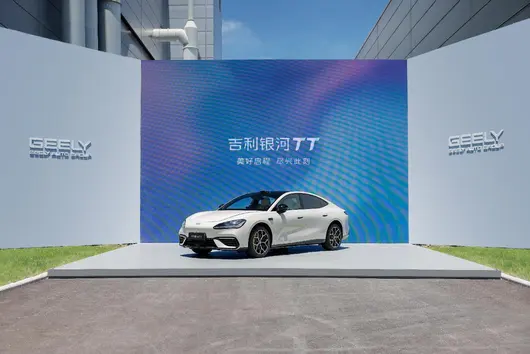
On July 16, Geely Automobile Group officially released Geely Galaxy's world's first "Thunder 16-in-1 Intelligent Electric Drive". Relying on Xingqu Technology's years of technical accumulation and complete industrial layout, this new electric drive achieved a generational breakthrough in energy saving, performance, and reliability, directly pulling the daily usage experience of pure electric vehicles to a new height. The Geely Galaxy TT, equipped with this electric drive for the first time, won two Guinness World Records at once: "Lowest Energy Consumption for Driving a Production Pure Electric Sedan Around Qinghai Lake" and "Longest Continuous Dual-Car Drift on Slippery Roads (Electric Vehicle)", proving the global leading strength of Chinese brands in the electric drive field with solid results.

The "Thunder 16-in-1 Intelligent Electric Drive" released this time has the most intuitive feature of integrating 16 hardware and software functions that were previously scattered into one, equivalent to packaging several independently working devices into one highly collaborative unit. It not only has over 180 fewer scattered parts, but its weight is also 15% lighter than mainstream industry products, and can free up an additional 28L of trunk space inside the vehicle. For ordinary car owners, it means carrying more luggage and being more practical for daily travel.

In terms of the most concerned matter of saving power, this electric drive achieved the industry's first place in mass production of the same level with a 93.8% comprehensive efficiency. Simply put, from current transmission, energy conversion to daily full-scenario driving, every link is "picking details" to reduce waste: 800V high-voltage platform plus shortened conduction paths directly reduce current transmission loss by 80%; more advanced silicon carbide chips, thinner silicon steel sheets, and high-precision gears further minimize losses in the electricity, magnetism, and force conversion process; plus the support of Geely Xingrui AI Cloud Power Intelligent Energy Management Large Model, when turning on heating in winter, driving long distances on highways, or commuting during city rush hours, the system will automatically find the most power-saving operation mode. Car owners don't need to deliberately control their footwork, they can find a balance between comfort and power saving. It is precisely thanks to this extreme energy-saving design that the Galaxy TT achieved an ultra-low power consumption of 8.20 kWh/100km in the test run around Qinghai Lake, setting a Guinness World Record for lowest energy consumption for production pure electric sedans around Qinghai Lake.

In terms of power performance, it achieved the level of the top tier of the same level. The four-wheel drive version reaches a comprehensive power of 425kW, and 0-100 acceleration only takes 3.8 seconds. The rarest thing is "fast and stable": the average command response of traditional electric drives is 40ms, it relies on the design of one-chip integration to compress it directly to the fastest 2ms, the power follows the moment the accelerator is stepped on, truly achieving "hits exactly where pointed"; AI algorithms can also reduce real-time torque deviation from 3% to 1%, greatly improving the accuracy of power output of the wheels; plus 54-channel directional cooling technology, the maximum temperature of the motor can be reduced by 15 degrees Celsius, even if driving intensely for a long time, there will be no power attenuation or system torque limit situation.

It is precisely relying on this performance of "performance without interruption throughout the process" that the Galaxy TT completed over 46km of continuous dual-car drift on slippery roads, breaking the record set by Porsche in 2020. Many people may not know that drifting pure electric vehicles is much more difficult than fuel cars: at the moment of starting drift, precise torque must be exploded in milliseconds to allow the car body to smoothly enter the sliding state; during the drift process, power output must be constantly finely adjusted, a slight deviation will cause loss of control; under extreme working conditions of continuous tens of kilometers, the electric drive must withstand continuous high speed and high thermal load, and cannot trigger protection due to overheating. This successful challenge is equivalent to giving all ordinary car owners a reassurance: even if encountering heavy rain and slippery roads, continuous climbing, or long-time intense driving, this electric drive can still output stably and won't let you down.

In terms of reliability, this electric drive has undergone an "over-standard level" test. From single parts to complete electric drive assembly, to the whole vehicle on the road, covering 9000+ tests in 15 areas, cumulatively completing 5 million kilometers of durability verification, and also obtained the authoritative certification of CAERI "High Quality Electric Drive". It also comes with a cloud "online doctor" - Smart Health Management System, relying on AI life prediction model to actively give key components a "checkup", not waiting for parts to break to warn maintenance in advance, turning the past "repair after break" into "active care", reducing the failure probability in the process of using the car from the root.

On the day of launch, Xingqu Technology also opened to the outside world for the first time, showing Geely's complete electric drive R&D, intelligent manufacturing and full-chain industrial layout to the outside world. Currently, Xingqu Technology's R&D and manufacturing network spans multiple cities in China as well as Sweden and Malaysia, with cumulative patent applications exceeding 1000, and the highest automation rate of five major intelligent manufacturing bases exceeds 95%, production accuracy reaches micron level, and the whole process of every electric drive can be intelligently traced. In the first half of this year, the motor installation volume of Xingqu Technology has firmly stayed in the industry TOP3. Products not only serve domestic brands like Geely Galaxy and Zeekr, but also supply to many international car companies such as Volvo, Jaguar Land Rover, and Renault, and signed long-term orders with many top European car companies.

At this point, Geely has cultivated three "Hidden Champions" enterprises in the three core fields of hybrid, battery, and electric drive: Haosi Power, Jiyao Tixing, and Xingqu Technology, forming a full-chain autonomous and controllable three-electric technology system. From the Guinness World Record of over 2608km range created by the Thor Intelligent Hybrid before, to the two new records won by this Thunder 16-in-1 Intelligent Electric Drive, Geely is reshaping the global new energy vehicle power technology standards with solid technical breakthroughs, injecting strong Chinese power into the innovation and upgrade of the global new energy industry.


In Malaysia's SUV market, many buyers compare Perodua Aruz and Honda WR-V when choosing a car. The pricing and positioning of these two cars are quite similar. Today, we will make a detailed comparison from multiple aspects to save you the time of doing research.
Perodua Aruz OTR price in Malaysia is RM 72,900 - 77,900, with a total of 2 versions, including 1.5L X (RM 72,900), 1.5L AV (RM 77,900) etc.
Honda WR-V OTR price in Malaysia is RM 89,900 - 107,900, with a total of 4 versions, including 2023 1.5L V (RM 99,900), 2023 1.5L E (RM 95,900), 2023 1.5L S (RM 89,900) etc.
From the price perspective, Perodua Aruz's starting price is indeed RM 17,000 cheaper than Honda WR-V. If your budget is limited, Perodua's entry-level version can already meet daily needs. But also note, the few thousand saved might involve trade-offs in features, it depends on your specific needs.
Perodua Aruz safety rating is 5★ (ASEAN NCAP), active safety systems include.
Honda WR-V safety rating is 5★ (ASEAN NCAP), active safety systems include Honda SENSING.
Both cars have the same safety rating, safety features are quite comprehensive in this class. New car safety is not bad now, no need to worry too much about this.
Perodua Aruz body length 4400 mm, trunk 400 L.
Honda WR-V body length 4400 mm, trunk 400 L.
Both cars' dimensions are almost the same, interior space difference is not large. Cars in this class are sufficient for daily use.
Perodua Aruz warranty 5 years/150,000 km, service interval every 10,000 km or 6 months.
Honda WR-V warranty 5 years/unlimited mileage, service interval every 10,000 km or 6 months.

Perodua Aruz and Honda WR-V are both mainstream choices in the Malaysian market, suitable for family use, daily commuting. If you value brand reputation and resale price more, you can prioritize the one with better reputation; if you care more about value for money and features, choose the one with richer configuration. Ultimately, it is recommended to test drive both, personal experience is the most important.
Overall, Perodua Aruz and Honda WR-V are both excellent models in the Malaysian market. Which one to choose depends on your personal needs and budget. It is recommended to do your research, compare quotes from several car dealerships, and then test drive to make the final decision. Buying a car is a big matter, spending time on research will never go wrong.


