首頁Elgrand E51

搜尋歷史
熱門搜尋
經銷商登入 / 註冊

Folks, today let's talk about big news on going global—not selling cars, but selling "drivers". On June 2, WeRide and Uber jointly announced a plan: to launch the country's first commercial Robotaxi pilot service in Madrid, Spain. In other words: Spanish residents will soon be able to hail a driverless taxi via Uber. This is the first time WeRide and Uber are partnering to enter the European market. Madrid also becomes the 12th city globally where WeRide's Robotaxi arrives.
According to official news, with the support of the Madrid regional government, this service will officially launch within this year. At that time, friends in Madrid can open the Uber App and call WeRide's Robotaxi with one click. It's just like calling an ordinary ride-hailing service, the difference is the arriving car has no driver—at least initially, there is still a difference. In the initial operation phase, a professionally trained safety monitor will be on board, as it's just launched, safety comes first.
This company, WeRide, you might have heard of it, or you might not. A brief introduction: Established in 2017, it has been dedicated to Robotaxi technology R&D and commercialization. Currently, its Robotaxis cover Guangzhou, Beijing, Singapore, Abu Dhabi, Dubai, Riyadh, Zurich... plus Madrid now, totaling 12 cities. Spain is also the 5th European market WeRide has entered—previously entered Switzerland, France, Belgium, Slovakia. According to the plan agreed by WeRide and Uber in May 2025, they plan to deploy Robotaxi services in 15 new international cities within five years, deploying tens of thousands of Robotaxis globally. With the Madrid launch, the deployment in 4 cities has been completed, and 11 more will be covered successively before 2030.
To be honest, it's not the first time Chinese autonomous driving companies are going global, but the combination of Chinese technology + global mobility platform + European market is quite interesting. Madrid is one of the European Robotaxi markets with the most commercial potential, with a large population, high travel demand, and friendly local policies. Being able to take root in this market is a significant milestone for WeRide. For Uber, introducing Robotaxis is also a way to reduce costs—after all, drivers don't need salaries. For Madrid residents, hailing a taxi might be cheaper in the future.


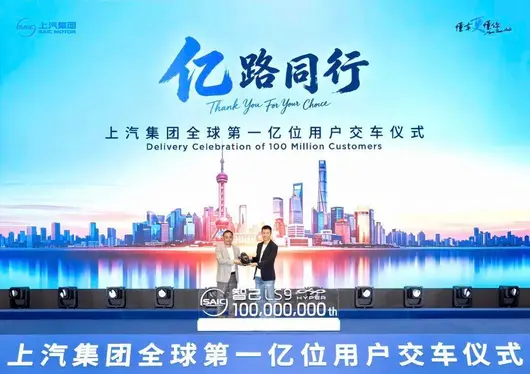
The tide surges in Pujiang, witnessing the dream-chasing journey of China's automotive industry. May 28, Shanghai North Bund World Living Room, when SAIC Motor Chairman Wang Xiaoqiu handed the keys of the IM LS9 Hyper to Momenta CEO Cao Xudong, a historical number froze at this moment - 100,000,000.SAIC Group has become the first automotive group in the history of China's automotive industry to cumulatively exceed 100 million units in production and sales, casting a new milestone for China's automotive industry.

This was a breakthrough press conference from tradition. When overseas users exceeded 6 million,with Shanghai as the origin, live signals crossed mountains and seas, connecting five continents. 15 brands and 18 models under SAIC Group became a "Global Relay" spanning the Eurasian continent, weaving delivery sites for users scattered around the world into a flowing historical scroll. In the lens of Oriental TV, time zones switched, languages changed, but the warmth in the palm when staff handed over the car keys to each user was identical.

The tide speaks not, flowing to the sea. These 100 million units measured not only SAIC's over 70-year car-building journey, but also reflected the era leap of China's automotive industry from "Chasers" to "Leaders". These 100 million units are historical opportunities given by the era to SAIC, and are trust monuments cast by 100 million choices from global users.
From 1958, the staggering start of the first Phoenix sedan, to 2026, SAIC's 100 millionth car - IM LS9 Hyper full specification launch, today, when China's annual car production and sales have ranked first in the world for consecutive years, and Chinese brand products drive into the streets and alleys of global markets, people see not only an industry becoming from large to strong, but also the silhouette of a manufacturing power marching forth strongly in the process of modernization.
Grateful to the Era
On the Drumbeat of "Technology Empowerment"
Build Good Cars Belonging to This Era
The climax of the delivery ceremony froze on the 100,000,000th car - IM LS9 Hyper. Full drive-by-wire steering, Lingxi Digital Chassis 3.0, Star Super Extended Range, these terms once stuck on technical blueprints are now reality within reach for 300,000 RMB-level users. It is the accumulation of all achievements of 70 years of SAIC's technical accumulation, and is the answer sheet SAIC delivered in this smart electric era.

In 1958, the hammering in the alley small factory struck out the first Phoenix sedan,answering the question "Can Chinese people build their own sedans?"; In 1983, the first domestic Santana drove off the production line, the iron rule "Never accept inferior substitutes",answered the question "Can China build a modern automotive industrial system?"; In 2000, Buick Sail shouted "100,000 Yuan Family Sedan",answered the question "When can sedans enter Chinese families?"; In 2016, Roewe RX5 opened the door to "Internet Car",answered the question "How can cars become smart terminals?".
And today, when "Technology Empowerment" becomes a new era proposition, comprehensive transformation to smart electric, being the first to mass-produce semi-solid-state batteries, drive-by-wire chassis and these technologies, make SAIC's answer more vast.
150,000 RMB-level Hualing S turns Huawei Qiankun Smart Driving Full Bundle into "National Standard"; 200,000 RMB-level Shangjie Z7 is equipped with 896-line LiDAR and Huawei ADS 4.1, pre-orders exceeded 12,000 units 27 minutes after launch; SAIC Volkswagen ID.ERA 9X, Audi E7X and other joint venture flagship models use Momenta R7 world model and SAIC deep co-creation smart chassis - "Joint Venture 2.0" is no longer technology introduction, but a two-way rush of "In China, For China, Defined by China" between Chinese and foreign parties. From 50,000 RMB-level commuting cars to 500,000 RMB-level luxury flagship, from Pure Electric, Extended Range to Plug-in Hybrid, HEV, SAIC uses a product matrix covering full scenarios, full price range,allowing people of different eras, different needs, to find their own "Car of the Era".
Cao Xudong, owner of number 100,000,000, is Momenta CEO, and also a "Founding Lighthouse Partner" who fought side by side with SAIC IM from its very beginning. When he took the keys, he said Momenta Level 3 Autonomous Driving Capability will be launched on SAIC first. He himself will not only personally drive this car, but will also use it first for verification testing in the process of developing L3 autonomous driving, ensuring that mature, reliable systems are delivered to users.
The Era is the Question Setter, SAIC is the Answer Sheet Provider. Twelve years ago, the directive "Developing new energy vehicles is the only way for our country to move from a car nation to a car power" pointed the direction for SAIC; twelve years later, SAIC proved with a 100 million units milestone: every opportunity given by the era was steadily caught.
Grateful to Users
Know Cars, Understand You Better
It is Responsibility, and also the Greatest Motivation
If "100 million units" is SAIC's answer sheet to the era, then these 100 million choices are the medals users returned to SAIC.

The essence of 100 million units delivery is 100 million vibrant trusts, 100 million warm lives. These 100 million choices are distributed in over 170 countries and regions worldwide, scattered in countless specific life scenes.
In London,Intern Doctor Natalia inherited her love for MG from her grandfather. The classic MGB in her childhood was a dazzling existence for her, she often sat inside the car, longing to drive it herself someday. Today, she becomes an owner of MG4 EV Urban.Two generations, two cars, one brand, completing a brand inheritance spanning space and time.

In Jakarta,Indonesia National Footballer Egi Maulana Vikri chose Wuling Eksion because "It understands the needs of a family trip".In Singapore,DHL Senior Vice President Herbert took the keys of SAIC Maxus eDeliver 5. SAIC Maxus has become the preferred partner for DHL Global Green Logistics, a green certificate for China Intelligent Manufacturing to help the global logistics giant achieve carbon neutrality goals. Wherever the car tracks go, languages differ, but that confirmation of "This car understands me" is identical.
In China, thousands of SAIC users open thousands of lives with car keys.
Some choose SAIC for "Self-joy".Post-95 Tech Blogger Han Junxi is already an owner of three AITO cars, because believing in the synergy value of "Mature Enterprise + Frontier Tech", he drove Shangjie Z7 home immediately; `ELLEMEN Rishi` Assistant Publisher Shen Jimin chose Audi E7X because "True luxury never follows the trend of copying"; Car Culture Blogger Tang Xinzhuo, with thirty years time, fully collected the evolution history of Cadillac from DeVille to Kaiweide, under the plane trees of Sinan Mansions, he blended American Luxury and Shanghai Style into one.They choose a car, that is choosing a compromise-free lifestyle attitude.
Some choose SAIC for "Family Joy".Dedao App Founder Luo Zhenyu, as a father of twin daughters, was struck by the design that "Even parked in the garage looks eye-catching" and the sense of security of Huawei Qiankun Smart Driving when witnessing Hualing S come off the line in Liuzhou Factory; Former German National Team Men's Footballer Yang Chen found resonance in ID.ERA 9X - "True strength is never a flash in the pan, but long-term trust and solid".For them, cars are moving homes, containers of love.
Countless others choose SAIC for "Wealth Creation" and "Responsibility".Post-85 Village Party Secretary Pang Fuqiang drives Wuling Rongguang Pure Electric Version 8-9 kilometers every day, sending hot meals of 2 Yuan per meal to 74 left-behind elderly, CCTV Camera Lens recorded his persistence in the cockpit; Taiyuan, Shanxi Hongyan Heavy Truck Fleet, "Endures the hardships of engineers, understands the toughness of Shanxi people" on complex mountain slopes; Luoyang, Henan Iveco Juxing EV, shuttles between High-speed Railway Station and Laojun Mountain, becomes a capable assistant for Culture and Tourism Green Transition; Shanghai Jiading Public Transport Sunwin Pure Electric Bus, carries the daily urban public transport; Yuejin Danaka T1 fleet, starts in the dawn of Urban Distribution Logistics, provides green capacity for Express Delivery and Fresh Produce circulation.Their cars may not have gorgeous configurations, but every kilometer is paving the road for a better life.
The tide is level, the banks are wide; the wind is favorable, the sail hangs straight. Today, SAIC welcomes the historical moment of delivering the global 100 millionth user.This is not only a milestone of enterprise development, but also a brand new starting point for SAIC's second entrepreneurship.Standing at the critical gateway of industry change, the significance of second entrepreneurship is extraordinary: it is a necessary choice to break the stock competition and reshape core advantages, a key path to solve transformation difficulties and activate internal dynamism, and more importantly a responsibility and commitment to carry out the mission of national automotive industry and lead Chinese cars to global leadership. Facing the future, SAIC will always keep the sharpness and enterprising spirit of second entrepreneurship, with technology innovation as the core, with user first as the foundation, advance bravely on the Smart Electric New Track, and constantly write new answer sheets for high-quality development on the New Journey of the 15th Five-Year Plan.
100 million units delivery is not the end of the story, but the overture of service upgrade. SAIC specially delivered the 100 millionth and 100th car to Liu Jia. This ordinary Hairstylist persisted for five years to regularly drive through Guangxi mountains just to give left-behind children a free haircut. This April, his car broke down on a rugged mountain road, Buick stretched out help at the first time, providing roadside rescue in time. Liu Jia was also moved by Zhijing E7's "Full Score Cockpit".

The 100 millionth car is a milestone, and the 100 millionth and 100th car is daily life.The glory of 100 million units belongs not only to SAIC, but also to every owner who creates extraordinary in ordinary.
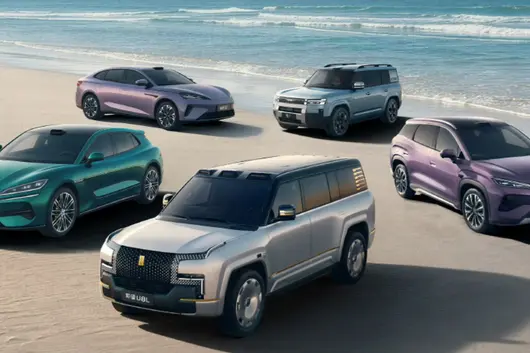
比亞迪正式發布 2026 年 5 月產銷快報,全品牌新能源汽車單月銷量 383453 輛,同比微增 0.26%,時隔十個月實現單月銷量同比轉正;其中乘用車交付 376990 輛,環比大漲 19.4%,一掃前期車型換代陣痛,呈現國內基本盤穩固、海外銷量狂飆、高端品牌全線放量的全新格局,在國內新能源內捲加劇、特斯拉 FSD 入華、自主新品密集上市的市場環境中,走出獨有的結構性增長路線。

王朝 + 海洋兩大主力品牌 5 月合計售出 330215 輛,佔據集團總銷量超八成,仍是比亞迪銷量壓艙石,全系列共 8 款車型單月銷量突破 2 萬台,產品從 5 萬入門代步到 20 萬家用 SUV 實現全覆蓋。

王朝網內部,元家族 56691 輛、宋家族 51370 輛。雙雙跨過五萬門檻,成為品牌兩大銷量支柱,兼顧家用代步與城鄉出行需求;秦家族緊隨其後交出 28360 台穩定表現,漢、唐系列月銷維持六千級體量,深耕中大型家用轎車、SUV 細分市場;全新車型夏處於市場培育期,單月交付 1810 台,後續隨渠道鋪開有望穩步上量。
海洋網增長勢頭更為迅猛,全系五款車型跨入兩萬俱樂部:海獅 42615 台、海豹 34117 台、海鷗 39919 台、海豚 22260 台、宋 PLUS 27755 台。其中海鷗憑藉 6-8 萬親民定價穩居入門代步銷冠,海獅作為全新走量車型上市即站穩四萬量級,補齊海洋網中型 SUV 產品空白,完善海洋產品梯隊佈局。從代步小車到緊湊 SUV,兩大主品牌依托 DM-i 混動與純電雙線技術,牢牢鎖住 15 萬以內國內主流家用市場份額。
方程豹同比暴漲 139.7% 品牌向上落地見效騰勢、方程豹、仰望組成的高端矩陣 5 月合計銷售 46489 輛,正式擺脫小眾定位,成為比亞迪品牌溢價與利潤增長新支點,打破自主品牌高端化難破局的行業魔咒。

越野品牌方程豹單月 30186 輛,同比暴漲 139.7%,創下品牌上市以來月度銷量新高,旗下鎦 7 單月 18280 台,豹 5、豹 8 穩定輸出,在 25-40 萬硬派越野細分市場持續擠壓合資、進口車型生存空間。

騰勢 5 月交付 16303 台,MPV 標桿 D9 售出 6721 台,Z9 系列近 6000 台,MPV、中大型轎車雙線發力,站穩豪華新能源賽道;百萬元級超豪華品牌仰望穩步爬坡,當月交付 286 台,同比增幅 105.8%,完成自主品牌天花板產品的市場驗證,形成從十幾萬家用、三四十萬越野、五十萬豪華 MPV 到百萬元級旗艦的全價格帶產品佈局。

5 月比亞迪乘用車和皮卡海外銷量 160177 輛,同比大漲 80.7%,出口佔全系總銷量突破 42%,創下品牌出海歷史新高,成為穩住 5 月整體銷量、實現同比轉正的核心驅動力。
東南亞、歐洲、拉美成為主力增量市場,海鷗、宋 PLUS、元系列持續登頂多國新能源熱銷榜單,SHARK 皮卡連續兩月單月出口突破 4000 台;依托泰國、巴西、匈牙利、烏茲別克斯坦四大海外整車工廠落地投產,本地化生產持續落地,規避關稅同時快速下沉終端渠道。在國內車市存量競爭、價格戰常態化背景下,高速擴容的海外市場有效對沖國內車型換代帶來的銷量波動,正式從補充市場升級為比亞迪核心增長引擎。截至當前,比亞迪新能源汽車全球累計銷量已經突破 1650 萬輛,全球化版圖持續拓寬。
智駕賦能產品迭代 下半年新品蓄力衝量5 月比亞迪智能化落地迎來關鍵節點,天神之眼智駕系統成為車型核心加分項:全品牌搭載高級智駕車型保有量突破 315 萬輛,日均路測數據超 2 億公里;當月比亞迪落地城市領航、智能泊車雙安全兜底服務,成為全球首家實現兩項智駕兜底的車企,政策落地三天後,搭載天神之眼系統車型的城市 NOA 激活率暴漲 50%,智能化體驗升級直接拉動終端到店訂單轉化,為後續車型持續走量築牢產品競爭力,直面 FSD 入華帶來的智駕市場衝擊。
從數據細節來看,2026 年 1-5 月比亞迪累計銷量 1405039 輛,同比下滑 20.32%,核心誘因是全系主力車型集中換代、第二代閃充刀片電池產能爬坡受限。新款閃充電池升級快充與低溫性能,全系換代車型優先換裝新電池,但產線改造拖累產能釋放,熱門車型訂單積壓、交付延後,一定程度壓縮 5 月交付體量。
隨著二季度末二代刀片電池產能持續釋放,疊加騰勢 N8L、方程豹鎦 7 純電版、海獅 05、夏 L 等多款新車陸續登陸市場,業內普遍預判比亞迪 6 月全品牌銷量有望突破 40 萬輛。依托低端走量鎖份額、高端提利潤、海外衝增量、智能化提產品力的四維發展邏輯,在國內新能源淘汰賽加劇的當下,比亞迪全品類佈局優勢持續放大,坐穩國內新能源龍頭,加速向著全球頭部車企穩步邁進。

Have you ever seen the roads in India?
I've seen them online.
The scene is usually like this: a sedan blocked behind a cow, motorcycles running wild nearby, even milk tea vendors nearby, so "clean and hygienic".

However, in a place where many feel physically uncomfortable after watching, Toyota, Suzuki, Honda and other Japanese car companies decided to bet on India.
According to the Indian "Brand Quality Foundation" website, the three car companies will invest nearly $11 billion to build factories, increase capacity, and develop exports in India.
Some netizens commented: Did the three Japanese car companies have too much money?
In fact, they didn't have endless money to spend, nor were they bewildered by Indian curry. These Japanese car executives are much clearer than us.
Current Japanese car revenue and market share are declining. Raw material costs are soaring. Looking at the world map, finding a market that can accommodate capacity, expand share, and has gentle competition is not easy.
So, it wasn't that Japanese car companies chose India, but because they had no choice.
The Pain of Japanese Car Companies
Past Japanese cars were truly the envy of others.
Ask old drivers who drove Japanese cars over ten years ago, talking about Japanese cars, almost no one doesn't give a thumbs up, cheap price, fuel saving, durable...
Even many Japanese cars needed to be bought at a markup, but who would think this iron fortress would be beaten out of sight in a few short years.
With the wave of new energy vehicles coming, electrification and intelligence became the goal for many domestic car companies to "leapfrog". Relying on China's strong new energy vehicle industry chain advantages and car companies' own persistence on R&D and technology, Chinese independent brands quickly achieved "leapfrogging".
Domestic cars once criticized are now becoming more and more common on the roads, even surpassing joint ventures in share.
According to CPCA data, in April 2026, the share of independent brands reached as high as 62.5%, far exceeding Japan's 13.1%.

You need to know, the Chinese car market is the largest car market in the world. Losing speed in the Chinese market is like losing a huge piece of cake.
Meanwhile, the main theme of the Chinese market in recent years is still price wars. Racing on configuration, price, and service has become a normal state, which also had a huge impact on Japanese cars' profits.
Apart from China, Japanese cars are also not doing well in the US.
On January 20, 2025, Trump swore in as the 47th US President, starting a series of chaotic operations, including imposing additional car tariffs in the name of national security, causing the tariff rate for imported Japanese cars to reach as high as 27.5% at one point. Although it decreased later, it was still far higher than the initial tax rate.
This operation directly led to a tariff loss of over 2 trillion yen for seven Japanese car companies in fiscal year 2025.
Looking at Japan itself, it is actually not easy either.
Middle East geopolitical conflicts blocked shipping in the Strait of Hormuz, transportation costs and raw material costs soared, Japanese car companies also had to suffer in silence.

Executives looking at the reports, their backs went cold, only to find a new growth curve.
So, Japanese car companies didn't fall in love with India, there was nowhere else to go.
Deep Thought on Choosing India
So, what magic does India have, to make Japanese car companies invest heavily?
The first advantage is big. In 2025, the Indian car market achieved 5.517 million new car sales, up 6% year-on-year, breaking the historical record, ranking as the third largest car market in the world, exceeding Japan for four consecutive years, second only to China and the United States.
The value of this doesn't need me to say much. India achieved this result mainly because India has been promoting tax reduction policies to promote consumption, which led to a significant increase in domestic consumption willingness.
The second advantage is close, meaning it is close to places where Japanese cars sell well, such as Africa.
So, India for Japanese car companies is more like a convenience store built in the center of a crossroad. You don't need to ship cars to eight countries separately, just build well at this stop in India, then unload ship by ship, and you can save a lot of costs.

The Nikkei also believes that India is expected to become its global car supply center.
The third advantage is stability. You know, Japanese cars' advantage is fuel cars, after all, the three major components of engines, gearboxes, and chassis, they have played for many years, technology accumulation is number one in the world.
But the Chinese car market has fully promoted electrification and intelligence development, leading to Japanese cars' advantage becoming weaker and weaker, impossible to play out. But India is different, it has the characteristics of few charging piles and slow electrification process. Indian old people buying cars still look for cheap, fuel saving, easy to fix, and these three points are exactly Japanese cars' old trade.
Especially Suzuki, always been India's car market evergreen, almost always sitting on the best-selling model throne, reputation of being worry-free, better than any advertisement.
So, Japanese car companies' vigorous layout of the Indian market is obviously carefully considered.
But, is the Indian market really that easy to mix?
The Hard-to-Bite Indian Market
Of course, India is not perfect like a hot commodity, its disadvantages are as obvious as its advantages, and every one is enough for Japanese car companies to face a hard time.
First talk about electrification. Yes, right now India has few charging piles and electric cars don't sell well, it is indeed a shelter for Japanese fuel cars. But you have to think, how long can this "shelter" avoid?
India previously shouted the slogan of 30% of new cars being electric vehicles by 2030. Although it sounds like bragging, but can't help but they really give subsidies, really build charging stations.
Imagine, what if one day India suddenly wakes up, starts vigorously promoting electrification, doing infrastructure, charging piles popping out like mushrooms after rain, then Japanese cars will be dumbfounded?
Isn't this a version of the Thai market?
Back then Japanese cars in Thailand won easily. The entire Southeast Asian market was called Japanese cars' backyard. Result Thailand took the lead in promoting electrification. Chinese electric vehicles came in, directly became a hot commodity. Look at Japanese cars again, share in Thailand falling down rapidly.

If India accelerates electrification, history will likely repeat, and this time, Japanese cars don't even have a place to flee, how to prevent will become the first problem for Japanese car companies.
Next talk about policy. India's policy is like a pot of curry, you never know if you will eat chicken or potato next time.
This magical country, today low tariff encourages building factories, tomorrow may fine you a huge amount. What's more annoying is mandatory joint venture. Foreign car companies want to sell cars in India, have to find local partners to partner up. When your factory is built, supply chain is done, India directly backstabs you. At that time whether adding money or withdrawing capital, what you get is heartache.
So you see, this market like India is like a mango that looks very sweet, bite the first mouth it's okay, chew two more mouths hit the hard core.
Japanese cars now is calculating, while the core hasn't bit the tooth, hurry up to nibble a few more mouths, but the core will bite sooner or later, just don't know which day.
Epilogue
Japanese cars this trip to India, not go for tourism, is go to make a living.
Chinese and Southeast Asian dining tables are more crowded, production and transportation costs have risen. Looking around the world, only this pot in India is still steaming, even if what is boiling inside is curry-flavored stones, have to bite hard and chew down.
Japanese car companies want to expand market, India wants to pull economy, solve employment, both sides have their own thoughts.
As for the ending is Japanese cars in India regain their glory, or like past competitors shamefully walk away, then is not known.
But no matter how, this play just started, we slowly watch is okay.
Anyway India's story, never bored.