


首頁EVO VI

搜尋歷史
熱門搜尋
經銷商登入 / 註冊

喺馬來西亞嘅 SUV 市場,好多買家揀車嗰陣都會拿 Honda HR-V 同 GWM Haval H6 嚟比較。呢兩款車嘅價位同定位都幾接近,而家我哋就由多個角度做詳細比較,幫你節省做功課嘅時間。
Honda HR-V 喺馬來西亞嘅 OTR 售價係 RM 115,900 - 143,900,合共 4 個版本,包括 2026 e:HEV 1.5L RS(RM 143,900)、2026 1.5T V(RM 137,900)、2026 1.5T E(RM 130,900)等等。
GWM Haval H6 喺馬來西亞嘅 OTR 售價係 RM 139,750 - 139,750,合共 2 個版本,包括 1.5L Turbo Standard(RM 140,000)、1.5L Turbo Premium(RM 155,000)等等。
由價錢睇落,Honda HR-V 嘅起步價確實比 GWM Haval H6 平咗 RM 23,850。如果你預算有限,Honda 嘅入門版已經夠滿足日常需要。但都要注意,平嘅嗰幾千蚊,配備上可能有取捨,具體就要睇你嘅需要。

Honda HR-V 搭載 1.5L Turbo,馬力 140 hp。官方油耗 7.0 L/100km。
GWM Haval H6 搭載 Hybrid,馬力 170 hp。官方油耗 4.5 L/100km。
動力方面,GWM Haval H6 嘅 Hybrid 比 Honda HR-V 嘅 1.5L Turbo 多咗 30 匹馬力。不過日常喺市區行,兩款車嘅動力都夠用,唔會覺得唔夠力。

Honda HR-V 嘅安全評級係 5★ (ASEAN NCAP),主動安全系統包括 Honda SENSING (ACC, CMBS, LKAS, RDM)。
GWM Haval H6 嘅安全評級係 TBD,主動安全系統包括 Basic。
安全配備方面,兩款車都拿到唔錯嘅評級。不過 Honda HR-V 嘅 Honda SENSING (ACC, CMBS, LKAS, RDM) 同 GWM Haval H6 嘅 Basic 喺功能上有些分別,如果你比較重視主動安全嘅話,可以仔細比較下兩者嘅功能列表。

Honda HR-V 車身長 4500 mm,尾箱 450 L。
GWM Haval H6 車身長 4400 mm,尾箱 400 L。
空間方面,Honda HR-V 嘅車身比 GWM Haval H6 長咗 100 mm,車內乘坐空間會稍為寬鬆啲,尤其係後座腿部空間。如果你經常載家人或者需要放嬰兒車,大啲嘅車身確實更實用。
Honda HR-V 採用 FWD 驅動方式。
GWM Haval H6 採用 FWD 驅動方式。
兩款車嘅驅動方式一樣,都係 FWD,日常駕駛感受唔會有太大分別。
總括嚟講,Honda HR-V 同 GWM Haval H6 都係馬來西亞市場幾唔錯嘅車款。揀邊輛,關鍵都係要睇你嘅個人需要同預算。建議大家做足功課,多比較幾間車行嘅報價,再去試車先做最後決定。買車係件大事,花少少時間做功課絕對唔會錯。


August 25, the '2026 Silk Road 10,000-Mile Journey · Enlightening Road', for which BYD served as the travel partner throughout the journey, concluded in Singapore. The convoy, spanning 33 days and covering over 10,000 kilometers, crossed six provinces in China and traversed Thailand and Malaysia, finally arriving in Singapore.

During the event, BYD's Dynasty, Ocean, Denza, Fang Cheng Bao, and Yangwang five networks and four brands formed a new energy vehicle fleet, completing driving in various scenarios including highways, mountain roads, and urban congestion zones. The two core technologies, Flash Charging and Divine Eye assisted driving systems, withstood the test of 10,000 kilometers of real-world conditions: The Flash Charging capability of '5 minutes to charge, 9 minutes to fully charge', relying on a network layout of nearly 10,000 flash charging stations nationwide, solved the long-distance energy replenishment challenge; Divine Eye continuously iterates based on daily average data exceeding 220 million kilometers of real driving, effectively reducing long-distance driving pressure, ensuring the convoy traveled smoothly to Southeast Asia. From Xi'an to Singapore, the scene of ancient Silk Road camel caravans resupplying at stations evolved into today's technology-enabled modern expedition.

As of July 2026, BYD has ranked first in passenger car sales across all brands in Singapore for 19 consecutive months. From January to July 2026, BYD's passenger car market share reached 24.7%, and pure electric market share reached 40.3%. Continuously leading sales performance further enhanced BYD's brand awareness locally; BYD's presence is becoming increasingly strong. Today, BYD vehicles can be frequently seen on Singapore's city roads, core business districts, and shopping malls.
Singapore is one of the markets with high car ownership costs globally. Higher purchase thresholds also make local consumers more cautious in choosing brands and models. In such a market environment, despite BYD models' overall pricing not being low, they continued to maintain good sales performance. Currently, BYD has established 16 retail touchpoints locally, with some stores entering core shopping malls.

In 2026, BYD's overseas business continued to maintain high-speed growth. Overseas cumulative sales from January to July exceeded 970,000 units, a year-on-year growth of approximately 76%; Overseas sales in July reached 179,800 units, a year-on-year increase of 124.3%. As of now, BYD's new energy vehicles have entered more than 120 countries and regions worldwide.

This Silk Road 10,000-Mile Journey event combined Silk Road cultural exploration with new energy vehicle cross-border travel, showcasing the latest progress of Chinese brands participating in the joint construction of green transportation development in 'Belt and Road' countries. As car products, smart manufacturing, and services land in more overseas markets, BYD is using new energy vehicles as a carrier to continuously participate in global automotive industry collaboration and green transformation.
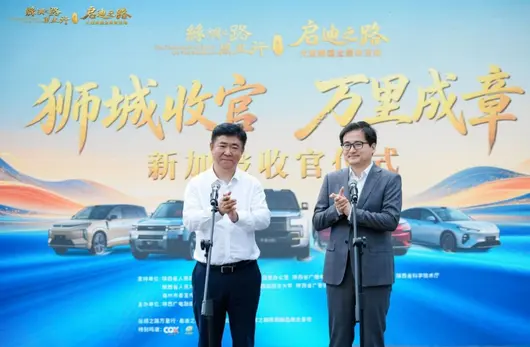

On August 26, Chery Fengyun brand held a new car launch event with the theme "Steady Happiness", unveiling its all-new pure electric SUV — Fengyun T7 for nationwide launch. This event was not about piling up flashy concepts, but used solid prices and configurations to drop a "heavy bomb" into the 100,000-level pure electric market.

At the event, the official announced that Fengyun T7 launches with three configuration models, with an official guidance price range of 97,900 to 118,900 yuan. During the launch period, a priority replacement price of 94,900 to 115,900 yuan is available. As a pure electric SUV built to global standards, this pricing directly shattered market expectations and broke the industry unwritten rule that "entry-level pure electric must be downgraded".
600km Range Equality for All Series, Powertrain Strength Holds Up
In the 100,000-level pure electric SUV market, "entry-level gets short range, pay more for long range to get high specs" is almost an industry consensus. But Fengyun T7 directly overturned this gameplay — all series come standard with 65.05kWh Chery Rhino Lithium Iron Phosphate batteries, CLTC condition range unified at 600km, and even official actual test range can reach 667km, equivalent to playing a "reverse false labeling" game.

There is also no discrimination in the power aspect. All series are equipped with a 12-in-1 intelligent electric drive system, front-mounted single motor maximum power 178kW (242 hp), peak torque 275 N·m, top speed 180 km/h, power consumption as low as 12.9 kWh per 100km. In terms of charging efficiency, 30%-80% SOC DC fast charging takes only 20 minutes, enough to replenish long-distance range during the time it takes to drink a cup of coffee. At the same time, it comes standard with 6.6kW external discharge function, camping power supply for hot pot and projector can be easily handled.

Aiming at the winter range anxiety of northern users, Fengyun T7 is equipped with dual-source wide temperature range heat pump air conditioning, combined with a global integrated thermal management system, which can operate stably in extreme temperature ranges from -30°C to 55°C. Official data shows winter range can increase by about 30%. The battery itself has been verified for 2,500 cycle life, calculated by normal usage frequency, no need to worry about battery decay within the 10+ year vehicle cycle.
Native Global Car Quality: Go Overseas First, Then Return to Domestic Market
Different from many "Domestic Exclusive" models, Fengyun T7 takes the "Reverse Going Global" route — the same-source model LEPAS L6 has already started pre-sales in South Africa and completed launch in Thailand, and will later land in global mainstream markets such as the EU, Australia/New Zealand, UK, etc. In other words, this is a "Global Quality Car" that first undergoes global regulatory testing, then returns to the domestic market for sale.

According to official introduction, Fengyun T7 went through 3 years of R&D cycle, completed 1.45 million kilometers of durability verification, ran through more than 100 overseas extreme road conditions such as high temperature, extreme cold, high humidity, etc. From the extreme cold environment of Northern Europe to the scorching conditions of the Middle East, the whole vehicle was polished according to unified global standards, there is no situation of "Domestic Version Downgrading". This "Slow work produces fine results" thinking appears particularly unusual in today's fast-paced new car launch wave.

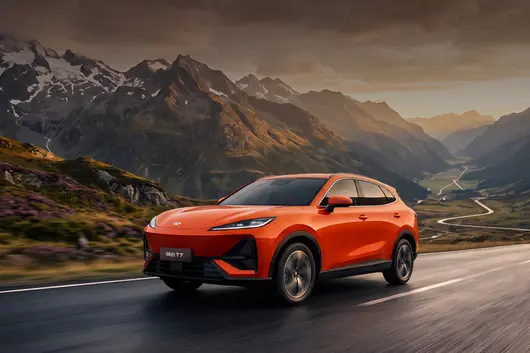
In terms of body dimensions, Fengyun T7 length, width, height are 4570x1852x1694 mm, wheelbase reaches 2700 mm, positioned as compact pure electric SUV, five-seat layout can meet ordinary family daily travel needs. Exterior adopts Fengyun family's latest design language, streamlined body paired with sleek LED headlight group, rear equipped with贯通 tail lights and dynamic rear spoiler, all series standard electric trunk. Car colors provide 6 choices: Fiery Orange, Mountain Smoke Purple, Cloud Pink Beige, Flowing Silver, Green Bamboo Grey, Ink Stone Black, obviously leaning towards young user aesthetics.
Intelligence and Safety: 100,000-Level Flagship Experience
For the intelligent cockpit part, Fengyun T7 is equipped with Lingxi Smart Cockpit 2.0 system, equipped with Qualcomm Snapdragon SA8775 Cockpit-Driving Integrated Chip, supports mainstream mobile phone wireless interconnection and multi-scenario interaction modes. High-spec models are also equipped with Falcon 500 Intelligent Driving Assistance System, equipped with 22 high-precision sensors, can achieve highway NOA pilot assistance, 300+ scenarios automatic parking, etc., covering daily car usage scenarios such as highway cruising, urban commuting, parking garage, etc.


On the safety aspect, there is also no shrinking. The whole vehicle is built according to global crash standards, the battery pack adopts multi-level safety protection design, forming a complete safety closed loop from structural protection to thermal management system. In addition to the standard equipment of chassis stability system, tire pressure monitoring, rearview camera and other basic configurations for all series, even the entry-level model can give users enough travel security.
In Conclusion
From the perspective of product positioning, Fengyun T7's goal is very clear — to use "Global Car Quality + National Car Price" to tear a hole in the 100,000-level pure electric SUV market. When same-level rivals are still playing the trick of "range options, configuration markup", Chery directly put the core values of 600km range, global quality, intelligent cockpit all on the entry-level price.

For consumers with a budget of around 100,000 who want to buy a reliable home pure electric SUV, the appearance of Fengyun T7 indeed gives a very hard-to-refuse option. As for whether it can stand firm in fierce market competition, it depends on subsequent market feedback, but at least from the launch sincerity, Chery showed full confidence this time.

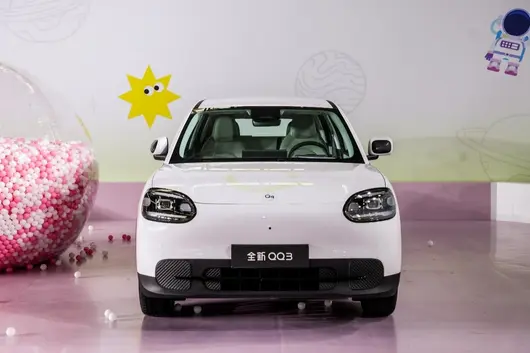
當下中國新能源汽車出海浪潮席捲全球,多款國貨車型憑藉過硬品質與創新實力,斬獲海外市場認可。其中,奇瑞全新 QQ3 以海外命名「Chery Q」正式落地東南亞,扎根泰國、印尼雙核心市場,交出了現象級熱銷答卷,用亮眼的訂單數據、深厚品牌情懷與全球統一品質,刷新了東南亞精品純電小車市場格局,讓中國小車文化風靡海外。

作為奇瑞 QQ 全球化戰略的首個海外落地陣地,泰國、印尼雙市場同步發力,上演雙線爆單盛況,盡顯中國智造的體系化競爭力。
 2026 年 3 月,全新 QQ3 亮相曼谷國際車展完成東南亞全球首秀並啟動預售,憑藉超高人氣,預售僅十天訂單便突破 1000 輛,6 月 24 日正式公佈售價後,累計訂單強勢突破 3000 輛,7 月首批車輛順利交付,市場熱度居高不下。印尼市場同樣表現驚艷,5 月完成車型定名發布,7 月底依托 GIIAS 印尼國際車展正式開售,截至 7 月底訂單已突破 6000 輛,首批交付將於 9 月正式開啟。雙市場超預期的熱銷成績,並非偶然的市場波動,而是全新 QQ3 產品力與品牌力的極致體現,搭配國內上市首月 5.6 萬輛的訂單佳績,形成國內外雙向熱銷的火爆格局,構筑起奇瑞出海的「東南亞雙引擎」強勢格局。
 亮眼銷量背後,是 QQ 品牌深耕東南亞二十年的情懷積澱與口碑傳承。早在 2006 年,經典 QQ 便進駐泰國、印尼市場,憑藉省心耐用的代步屬性,成為兩代東南亞消費者的青春記憶與生活符號,積累了深厚的國民好感度。二十載深耕不輟,2026 年全新 QQ3 煥新回歸,徹底打破「經典復刻」的固有認知,完成了從國民代步小車到全球精品 ICON 的華麗躍遷。正如泰國奇瑞總經理 Jim Lee 所言,二十年的市場陪伴,是 QQ 扎根本地的最大底氣。如今全新車型不僅憑藉懷舊情懷吸引大批中年家庭用戶,更以年輕化、智能化的產品特質,圈粉海量 Z 世代年輕群體與女性用戶,實現新老用戶的雙向共鳴。
 區別於多數出海車型「海外減配、專屬特供」的行業慣例,全新 QQ3 堅守「快樂平權」的全球化理念,踐行全球同標、同源同質的造車準則,讓海外用戶享受與國內完全一致的產品體驗。從原生智能純電平台、犀牛液冷安全電池,到高通 8155 晶片智能座艙,海外版車型與國內版毫無差異。同時針對東南亞市場特性精準優化,適配右軚法規、強化高溫散熱性能,憑藉 IP68 頂級電池防水等級從容應對當地多雨氣候。依托「10 項同級唯一、13 項同級領先」的越級實力,1300MPa 一體式熱成型門環、70L 智能電動前備箱、10 層雲舒舒適座椅等獨家配置全系標配,不犧牲品質換取利潤,用硬核實力詮釋「品質優先」的出海態度。
 深耕用戶需求,貼合東南亞城市出行場景,是全新 QQ3 持續熱銷的核心密碼。東南亞城市街巷狹窄、通勤路況複雜,全新 QQ3 小巧靈動的身車設計,讓停車、掉頭更加便捷,完美適配本地短途代步、城市通勤的核心需求。同時極致壓低用車成本,百公里電費僅需 5 泰銖,長期使用性價比優勢十分突出。在用戶口碑層面,泰國市場 62% 的訂單來自女性用戶,眾多車主自發在社交平台打卡分享,點贊其超高顏值、貼心智能配置與舒適駕乘體驗。印尼用戶也紛紛認可車型的情懷價值與越級性價比,打消大眾電動車用車顧慮。如此,當地權威汽車媒體紛紛給出高分評價,認可其在同級市場的斷層競爭力,堪稱 50 萬泰銖價位的最優選擇之一。
顏值、空間、安全、智能的全方位越級,讓全新 QQ3 站穩全球精品小車標桿定位。外觀依托紅點雙獎設計團隊打造,方圓美學搭配多款潮流車身配色,質感拉滿;2700mm 超長軸距打造 B 級越級空間,85% 超高得房率搭配全車 38 處儲物空間,兼顧家用與個性化出行需求。安全層面,82% 高強度鋼籠式車身、六維電安全認證、六安全氣囊全方位守護出行安全;智能層面,L2 級駕駛輔助、全場景自動泊車、AI 智能座艙加持,讓代步出行更便捷、更安全。
 江湖車評:
江湖車評:
從國民經典小車到全球潮流 ICON,全新 QQ3 歷經二十年沉澱,與德國 SMART、英國 MINI 並肩構筑「世界三小只」全球小車格局。如今馳騁東南亞市場,以熱銷戰績證明中國智造的硬實力,以同質標準傳遞中國汽車品牌的誠意,持續輸出獨特的中國小車文化。未來,全新 QQ3 將繼續以全球化品質、年輕化姿態,深耕海外市場,讓中國精品小車走向更廣闊的世界舞臺。

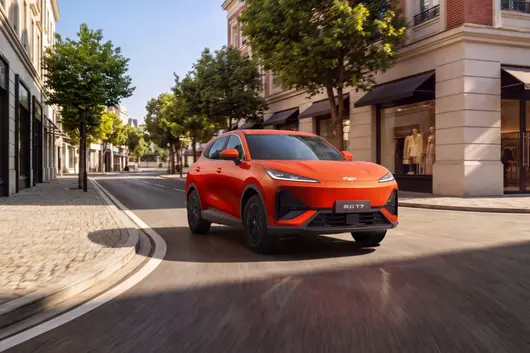
In the current hyper-competitive new energy vehicle market, the launch pace of new cars is getting faster. Some brands blindly chase speed, compressing R&D and testing cycles, giving rise to the industry-talked-about "fast-track vehicle" phenomenon. Consumers effectively become real-world vehicle testers, hiding potential issues in reliability and durability, reported by People's Daily. The market also begins to reflect: Should a truly reliable home electric vehicle pursue launch speed or product substance? The newly presold Fengyun T7 gives a different answer: # Global Cars Cannot Be Rushed #, rejecting fast-track vehicle making, insisting on slow craftsmanship to build good cars. First refined through the global market, then returning to the domestic market. Presale price starting from 109,900-129,900 CNY. This idea of "reverse overseas launch then return home" is worth discussing well.Fengyun T7

Many have questions. In an environment where speed and orders are competed for, why did Fengyun T7 choose "slow"? This slowness isn't low efficiency, but putting a lot of work upfront. The vehicle underwent 2 years of planning and 3 years of complete R&D, relying on Chery's global 1+7+N R&D system, not rushing to land and launch quickly. Before domestic presale, the homologous model Lepas L6 has already landed in the South African and Thai markets. Markets in Indonesia, the EU, Australia/New Zealand, etc., will also sequentially launch. It belongs to experiencing diverse global road conditions overseas first, then selling to domestic family users. This model forms a sharp contrast with many products that "launch domestically first, then simply modify to go overseas".Lepas L6

"Slow" is reflected in every link of R&D, design, and verification. In the design phase, it gathered 5,000+ global users for co-creation, with over 100 designers working together to polish. The homologous model won international recognition at the Milan Design Week. On the safety level, it directly benchmarks the strict 2026 E-NCAP safety standards, developing according to overseas high regulations from the source, rather than adapting and correcting after domestic launch. The verification link shows sincerity most. 963 test vehicles were invested, completing 1.45 million km of durability verification, spanning five extreme environments: high temperature, extreme cold, high humidity, and high salt-alkali. Nordic extreme cold, Southeast Asian rainstorms, bumpy roads in Brazil, and exposure in the Middle East were all tested with real vehicles. 500mm water wading depth, dual-source heat pump to cope with sub-zero extreme cold, solving all possible fault hidden dangers encountered everywhere in the world before delivering to users.dual-source heat pump.

Placed in the 100,000-130,000 CNY pure electric SUV segment, Fengyun T7 is not just telling "global stories"; product power also falls on the six major needs of ordinary families for real car use. Appearance balances global aesthetics and Eastern elegance, with 6 exclusive paint colors. On safety, nine horizontal five vertical cage body, 80% high-strength steel ratio, standard 9 airbags. Rhino Battery has 6D armor multi-layer protection. Full series equality gives CLTC 600km range, actual test up to 667km, saying goodbye to range anxiety. Equipped with peer-first 4nm process 8775 cockpit-drive integrated chip, 300+ scene automatic parking solves parking difficulties. 2700mm wheelbase brings 84% interior space rate, rear seats fold flat into a 1955mm large bed, capable of camping and long-distance rest. Moreover, whole vehicle lifetime warranty, battery thermal runaway compensation new car, intelligent driving up to 5 million CNY bottom-line rights, solving the worries of car use together.Rhino Battery.

There is a current misconception in the industry; many believe new energy modular platforms can compress R&D verification cycles infinitely. But modular is to improve efficiency, not equal to cutting off necessary environment tests and durability road tests. Fast, can quickly get traffic; slow, can only precipitate long-term reliable quality. Fengyun T7's "slow" is precisely the microcosm of the new energy market returning to rationality. 100,000-class home electric car, users buy not just big screens, flashy parameters, but also the travel safety of being stable and reliable for years, not having glitches in extreme environments.

Of course, slow car making does not mean leaving the market. Fengyun T7 presale price starting from 109,900 CNY, giving products verified by millions of kilometers globally to ordinary domestic families. When the industry is keen on competing on "how long it takes to make a car", Fengyun T7 tells us consumers care more how many years this car can accompany us safely. # Global Cars Cannot Be Rushed #, slow craftsmanship makes good cars, this persistence in quality might be the true appearance home pure electric should have.

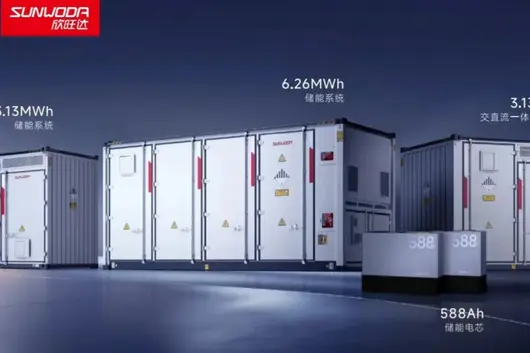
前幾時,欣旺達呢個「電池巨頭」喺成都舉辦咗一場儲能新品發布會,冇咗大而空嘅概念,而係整咗套好實㗎組合:一顆自研 588Ah 大容量儲能電芯,加埋基於呢顆電芯整嘅 NoahX 3.0 系列三款液冷儲能系統。

邏輯好簡單——先將電芯呢個底層零件整紮實,再用同一顆電芯拼出唔同尺寸嘅「儲能櫃」,去配合大電站、海外運輸、快速併網呢幾類真實場景。下面出行局將佢拆開嚟同大家講清楚。
首先睇下呢顆 588Ah 電芯,大家都知儲能行業呢兩年喺瘋狂捲電芯容量,由 280Ah 到 314Ah,再到而家嘅 500+Ah,數字增長並唔難。難係循環壽命有冇得扛住二十年、大電流下發熱有冇得控住、能量效率會唔會跌?

欣旺達呢顆 588Ah 電芯,循環壽命 10000 次,設計使用年限超 20 年,能量效率大於 96.5%。都係因為佢用咗低锂損耗技術嚟延緩容量衰減,正負極材料做咗高壓實設計,同樣體積塞入更多活性物質,單顆電芯嘅儲電上限就提高咗。
效率呢個事,對電站嚟講好實㗎——電芯能效每高少少,全生命週期充放電損耗就少一截,按 200MWh 級別嘅電站粗略計,96.5% 嘅電芯能效比行業早期水平能攞返幾千萬度級嘅充電損耗,呢部分省返嚟嘅就係業主真金白銀嘅收益。

基於呢顆電芯,NoahX 3.0 三款櫃走嘅係「一芯三櫃」嘅路線。6.26MWh 嘅 20 尺大櫃留畀國內百兆瓦級大基地,能量密度比上代提升近 25%,整站佔地同部件數量大幅減少,靠「少艙體、簡接線」直接壓低電纜、土建呢啲 BOP 成本,大電站最中意呢套。
3.13MWh 嘅 10 尺櫃係畀海外準備嘅,單艙壓到 24 噸以內,專門配合北歐限重、東南亞吊裝受限呢啲出海硬約束,要嘅係「運得走、吊得起」。同尺寸嘅第三款做咗交直流一體,電池、PCS、溫控、消防出廠前全預裝好,現場接電網就跑,盯嘅係工商業同數據中心嗰種工期緊、唔想喺現場搞複雜接線嘅項目。

三款安全底座共用一套——PPB 級電芯篩選、逐級保護、多重消防滿足 NFPA,全系過 UL/CE/AS 認證。對業主嚟講好處好實際:無論揀邊款,維運邏輯同備件係通嘅,唔使換項目就重學一套系統。
全棧自研嘅含金量亦喺呢度。傳統方案電芯、PCS、櫃體各揀各嘅供應商,參數單睇都靚仔,跑開嚟熱管理同電芯特性對唔上、BMS 策略跟電化學曲線脫節,長期衰減就容易失控。欣旺達由 588Ah 嘅化學特性反向定義 BMS 採樣、液冷調控同電氣拓撲,電芯到系統三級驗證標準拉齊,最終優化嘅係 LCOS 而唔係某一個單點參數——電站投資人真正盯緊嘅 IRR,藏喺二十年效率衰減曲線同停機損失入面,唔喺初始報價單上。
產能呢方面,南昌、德陽、棗莊加泰國喺鋪電芯,惠州、龍溪一帶整系統,德陽基地配咗 AI 全工序視覺檢測同全流程數據追溯,極片到成芯每道工序可溯源,製造透明化本身就係大客戶落單前要睇嘅硬條件。
整體嚟睇,今次發布冇跳離「大電芯 + 高集成液冷櫃」嘅行業主線,但落點務實:588Ah 先將二十年壽命同 96.5% 效率嘅底子立穩,三款櫃分別食咗大基地、出海受限、工商業快交三個場景,中間用全棧集成將電芯同系統綁成一本賬。容量往上捲大家都會,有冇能讓大電芯喺電站入面真正跑滿二十年、同一顆電芯配合多場景仲唔畀客戶添麻煩,先係比 Ah 數字更硬嘅嘢。

In Malaysia's SUV market, many buyers compare Proton X90 and Mazda CX-60 when choosing a car.
Proton X90's OTR price in Malaysia is RM 106,800 - 122,800, with a total of 4 versions, including 2026 1.5T Prime X (RM 122,800), 2026 1.5T Prime (RM 116,800), 2026 1.5T Lite (RM 106,800), etc.
Mazda CX-60's OTR price in Malaysia is RM 200,510 - 252,873, with a total of 2 versions, including 2026 3.3T 4WD High Plus (RM 252,873), 2025 2.5L 2WD High (RM 200,510), etc.
From a price perspective, the starting price of Proton X90 is indeed RM 93,710 cheaper than Mazda CX-60. If your budget is limited, Proton's entry-level version can already meet daily needs. However, keep in mind, the fewer thousand cheaper, might involve compromises in equipment, it depends on your specific needs.

Proton X90 is equipped with 1.5L Turbo, horsepower 140 hp. Official fuel consumption 7.0 L/100km.
Mazda CX-60 is equipped with 2.0L 4-cyl, horsepower 170 hp. Official fuel consumption 8.0 L/100km.
In terms of power, the Mazda CX-60's 2.0L 4-cyl has 30 more horsepower than the Proton X90's 1.5L Turbo. However, for daily city driving, the power of both cars is sufficient and does not feel underpowered.
Proton X90's safety rating is 5★ (ASEAN NCAP), active safety systems include ADAS (ACC, AEB, LKA, LDA, BSM, RCTA).
Mazda CX-60's safety rating is 5★ (Euro NCAP), active safety systems include i-Activsense Pro.
Regarding safety equipment, both cars received good ratings. However, there are some differences in function between the Proton X90's ADAS (ACC, AEB, LKA, LDA, BSM, RCTA) and the Mazda CX-60's i-Activsense Pro. If you value active safety more, you can compare the feature lists of both carefully.
Proton X90 body length 4400 mm, trunk 400 L.
Mazda CX-60 body length 4500 mm, trunk 450 L.
Regarding space, the Mazda CX-60's body is 100 mm longer than the Proton X90, with an advantage in seating space. However, the Proton X90 will be a bit more flexible for parking in the city, both have trade-offs.

Proton X90 warranty 5 years/150,000km, service interval every 10,000km or 6 months.
Mazda CX-60 warranty 5 years/150,000km, service interval every 10,000km or 6 months.
The warranty conditions for both cars are the same, no need to worry about this. Actual maintenance costs depend on the brand's service network and parts prices, suggest asking real owners in car clubs for their experience.

In general, Proton X90 and Mazda CX-60 are both excellent car models in the Malaysian market. Which one to choose depends mainly on your personal needs and budget. We recommend doing your homework, comparing quotes from several dealers, and then test driving to make a final decision. Buying a car is a big deal, spending time doing research will definitely not be a mistake.


