首頁Coaster BB

搜尋歷史
熱門搜尋
經銷商登入 / 註冊

喺馬來西亞嘅 SUV 市場,好多買家喺揀車嗰陣都會拿 Proton X50 同 Honda HR-V 嚟做比較。呢兩部車喺價位同定位上都幾接近,今日我哋就從多個方面做一個詳細嘅對比,幫你省咗做功課嘅時間。
Proton X50 喺馬來西亞嘅 OTR 售價係 RM 89,800 - 113,300,一共有 4 個版本,包括 1.5T Executive(RM 89,800)、1.5T Premium(RM 101,800)、1.5T Flagship(RM 113,300) 等。
Honda HR-V 喺馬來西亞嘅 OTR 售價係 RM 115,900 - 143,900,一共有 4 個版本,包括 2026 e:HEV 1.5L RS(RM 143,900)、2026 1.5T V(RM 137,900)、2026 1.5T E(RM 130,900) 等。
從價錢來看,Proton X50 嘅起步價的確比 Honda HR-V 便宜咗 RM 26,100。如果你預算有限,Proton 嘅入門版已經可以滿足日常需求。但都要注意,便宜嗰幾千蚊,喺配備上可能會會有取舍,具體要看你嘅需求。

Proton X50 嘅安全評級係 5★ (ASEAN NCAP),主動安全系統包括 ADAS (ACC, AEB, LKA, LDA, BSM, RCTA)。
Honda HR-V 嘅安全評級係 5★ (ASEAN NCAP),主動安全系統包括 Honda SENSING (ACC, CMBS, LKAS, RDM)。
兩部車嘅安全評級一樣,喺呢個級別入面安全配備都算好齊全咗。而家嘅新車安全性都唔差,唔使太擔心這一點。

Proton X50 車身長 4400 mm,尾箱 400 L。
Honda HR-V 車身長 4500 mm,尾箱 450 L。
空間方面,Honda HR-V 嘅車身比 Proton X50 長咗 100 mm,乘坐空間更有優勢。不過 Proton X50 喺城市入面泊車會靈活啲,各有取舍。

Proton X50 採用 4WD 驅動方式。
Honda HR-V 採用 FWD 驅動方式。
Proton 嘅 4WD 同 Honda 嘅 FWD 喺操控上會有唔同感受,建議試駕對比。

總計落嚟,Proton X50 同 Honda HR-V 都係馬來西亞市場好唔錯嘅車款。揀邊一部,關鍵都要睇你嘅個人需求同預算。建議大家做足功課,多比較幾間車行嘅報價,先至去試駕做最終決定。買車係件大事,花少少時間做功課絕對唔會錯。


喺馬來西亞嘅 SUV 市場,好多人買車嘅時候都會拿 Perodua Aruz 同 Mitsubishi Xforce 嚟做比較。呢兩款車喺價位同定位上都幾接近,今日我哋就從多個方面做一個詳細嘅對比,幫你省下做功課嘅時間。
Perodua Aruz 喺馬來西亞嘅 OTR 售價係 RM 72,900 - 77,900,一共有 2 個版本,包括 1.5L X(RM 72,900)、1.5L AV(RM 77,900) 等。
Mitsubishi Xforce 喺馬來西亞嘅 OTR 售價係 RM 109,930 - 119,930,一共有 2 個版本,包括 2026 1.5L Ultimate(RM 119,930)、2026 1.5L Urban(RM 109,930) 等。
從價錢嚟睇,Perodua Aruz 嘅起步價確實比 Mitsubishi Xforce 平咗 RM 37,030。如果你預算有限,Perodua 嘅入門版已經可以滿足日常需求。但都要留意,便宜嗰幾千塊,可能喺配備上會有取捨,具體要看你嘅需求。

Perodua Aruz 搭載 1.5L 4-cyl,馬力 105 hp。官方油耗 6.0 L/100km。
Mitsubishi Xforce 搭載 1.5L Turbo,馬力 140 hp。官方油耗 7.0 L/100km。
動力方面,Mitsubishi Xforce 嘅 1.5L Turbo 比 Perodua Aruz 嘅 1.5L 4-cyl 多咗 35 匹馬力。不過日常喺市區開,兩款車嘅動力都夠用,唔會覺得唔夠力。
Perodua Aruz 嘅安全評級係 5★ (ASEAN NCAP),主動安全系統包括。
Mitsubishi Xforce 嘅安全評級係 5★ (ASEAN NCAP),主動安全系統包括 MI-PILOT。
兩款車嘅安全評級一樣,喺呢個級別入面安全配備都算畀得好齊全。而家嘅新車安全性都唔差,唔使太擔心呢一點。

Perodua Aruz 車身長 4400 mm,後尾箱 400 L。
Mitsubishi Xforce 車身長 4400 mm,後尾箱 400 L。
兩款車嘅尺寸幾乎一樣,車內空間差別唔大。呢個級別嘅車,日常使用完全夠用。

Perodua Aruz 同 Mitsubishi Xforce 都係馬來西亞市場嘅主流選擇,適合家庭使用、日常通勤。如果你更睇重品牌口碑同二手價,可以優先考慮口碑更好嗰一款;如果你更在意性價比同配備,那就揀配置更豐富嗰款。最終都係建議兩款都去試駕,親身體驗先至最重要。

總體嚟講,Perodua Aruz 同 Mitsubishi Xforce 都係馬來西亞市場幾唔錯嘅車型。揀邊一輛,關鍵都係要看你嘅個人需求同預算。建議大家做好功課,多比較幾間車行嘅報價,再去試駕做最終決定。買車係件大事,花啲時間做功課絕對唔會錯。


文|德福
1997年的珠江两岸,外界依然对这片土地能否成功孕育汽车重工业抱有重重疑虑。
把时间轴拉长,广州这座城市的汽车工业梦想可谓历经坎坷。早在1954年,广州市公众汽车修理厂的工人们在没有任何大型现代化设备的情况下,完全凭借手工敲打出了第一辆华南牌铁木结构公共汽车。此后诞生的红卫牌卡车与广州牌轿车,见证了早期工业体系的艰难探索。
到了八十年代中期,广州标致的成立一度让这里跻身国内汽车制造领域的三大三小阵营。但后续波折却留下了沉重的历史包袱,让广州汽车工业陷入低谷,甚至有人曾断言这片土壤做不成汽车重工业。广汽集团正是在这种质疑中起步,在1998年与本田签约开创了全新的合资模式,这也成为后续产能全面爆发的起点。这段历史犹如一部微缩的断代史,记录了中国现代汽车工业从纯手工敲打到组装代工,再到一步步走向自主掌握核心技术的全过程。

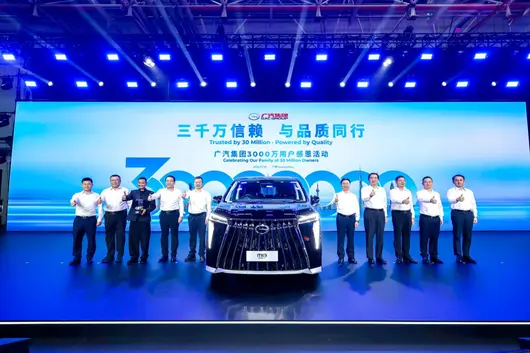
历经29年的跋涉,广汽的产能爬坡曲线展现出了极强的韧性。企业实现第一个1000万辆产量,耗费了足足20年的时间。这20年里,广汽完成了从合资引进、消化吸收到自主崛起的漫长蓄力。而从1000万辆跨越到3000万辆,这家企业仅仅用了9年时间。
这种体量上的指数级增长,底层驱动力源于企业逐步将核心前沿技术牢牢握在手中。过去9年里,全球汽车行业面临着前所未有的技术变革,新能源转型与智能化浪潮重塑了整个市场的竞争格局。广汽能够在这一周期内实现交付体量的翻倍跃升,根基完全建立在对底层核心技术的自主掌控以及对市场趋势的精准预判之上。
面对今天行业价格战加剧与出海遇阻的双重挑战,这3000万辆的基盘显得格外扎实。它标志着一家车企完成了体系能力跃迁的临界点。部分造车新势力可以在短期风口中凭借单点技术迅速冲高,要想在长达近三十年的时间跨度里持续保持增长并跨越生死线,就必须拥有穿越产业周期的底层逻辑。

向内看,广汽历经四次跨越发展,成功完成了大湾区汽车产业集群的重构与造血。作为产业链的核心中枢,这家企业依托庞大的体系能量与深厚的技术积淀,带动了上下游无数零部件供应商、软件算法团队以及新材料企业的协同跃升。
这种深度的链主带动效应,让大湾区真正拥有了先进制造业的硬核底座,彻底改变了早期只能依赖外部技术输入的被动局面。向外看,这种在国内淬炼成型的生态底座正在跨越地域限制。凭借全生命周期的技术布局与严格的全球制造标准,广汽正将自身的能力逐步转化为覆盖全球五大板块的竞争力量。
这种向内筑基与向外生长的布局,确切地反映出中国汽车产业高质量发展与全球化进阶的真实轨迹。只有扎根本土打造出具备全球竞争力的产业链集群,并在广阔的海外市场完成从单纯的产品出口到全体系本地化运营的蜕变,中国车企才能真正在世界一流阵营中站稳脚跟。广汽交出的这3000万辆答卷,为中国汽车工业走向世界提供了一个极具穿透力的样本。

向内重构产业链
从整车制造商,到大湾区的技术孵化器
广汽作为大湾区产业供应链的绝对枢纽,其跨越3000万辆的基盘早已超越了单纯的机械制造范畴,进化为一个千亿级别的产业链生态底座。
想要驱动这样一个庞然大物持续保持敏锐的活力,单靠过往的制造惯性完全行不通。2024年,广汽集团将总部搬迁至番禺,正式开启了自主品牌一体化运营的全新阶段。这场被称为番禺行动的内部战役,最核心的目的就是打破传统组织壁垒,力求更加高效地响应用户诉求,彻底完成从工程师思维向用户思维的体制跨越。
在传统的汽车研发体系里,工程师群体往往习惯于坐在实验室里对照各种硬核参数造车,产品的定义权高度集中在企业内部。面对极度内卷的存量竞争市场,广汽展现出了推倒重来的魄力。企业内部搭建“用户全开麦”平台,强制要求研发部门与产品负责人走出办公室,去一线直接倾听用户的日常用车痛点。

这项机制确保了最真实的反馈能够被精准转化为产品优化的最高优先级动作。目前,用户全开麦机制已经在传祺、埃安以及昊铂三大品牌中全面落地,并正在向全国更多城市持续下沉。
这种底层思维的转变,在现实中催生了极具冲击力的鲜活故事。譬如说一位盲订昊铂HT的车主,在一次日常的实车深度体验后,他就提出了一个关于车内氛围灯优化的细微建议。按照以往传统车企繁琐的层层审批流程,这类非安全相关的边缘意见大概率会被淹没在浩如烟海的客诉表单中。而广汽高管在深夜迅速跟进对接这个不起眼的诉求,相关功能随后在极短的时间内通过OTA升级完美落地至用户的车机中。这种打破常规的极速响应,才能让用户真切感受到了情绪价值被尊重的重量。

为了让此类快速响应机制可以常态化运行,广汽在组织架构与服务保障上动了真格。企业专门成立了独立的用户洞察部门,深入推进从发现问题到解决问题的全流程变革,从根本的组织机制上保障用户的每一个诉求都能实现件件有回应以及事事有着落。
在线上服务端口,全面上线的超级管家可以做到全天候24小时在线并严格执行5秒内响应以及2小时内解决问题的铁律。线下渠道同样在精进,综合销售服务中心正加速向全国县域市场铺展,到今年6月底已经完成600家网点认定,计划年内还要增加建立1000家县域授权门店,一步到位打通触达用户的最后一公里。

用户思维的全面觉醒,也反向倒逼着广汽的大湾区技术孵化器属性全速运转。为了满足新一代消费者对智能化极致体验的新需求,广汽必须拉动整个产业链协同作战。企业累计投入超620亿元进行自主研发,取得超2.49万件专利申请。面对复杂的智能硬件定制需求,广汽牵头抛出国内首个汽车芯片应用生态共建计划,联合了105家生态伙伴,共同完成近400款芯片的联合定义开发与应用验证。这种极其开放包容的链主姿态,让广汽得以跨越单一企业的边界。
刚刚上市不久的启境GT7正是这种体制跃迁的成果。作为广汽与华为乾崑深度联合打造的高端智能新能源产品,它敏锐捕捉到了新生代用户对于前卫设计与高阶智驾的双重渴望。这款车不仅成为首批搭载华为乾崑智驾ADS 5系统的高端智能猎装车,更以入门即满配的定价重新订立了细分市场的价值标准。

上市后短短24小时,大定订单便迅速突破5200辆,甚至吸引了众多极度看重底盘操控质感与智能体验的资深极客用户果断入手。市场用真金白银的选票证明了,正是依托番禺行动这场触及灵魂的改革,广汽真正蜕变为用户全周期同行者,从而让这3000万用户的基盘变得前所未有的坚不可摧。
跨越地域的技术转译
全矩阵战略破解全球化壁垒
大湾区内坚韧的产业链底座与用户基盘,自然化作了广汽向外突破的跳板。
强大的国内产业链实力正迅速转化为破解全球化壁垒的钥匙。今天中国车企出海面临着一个极为棘手的供需错位难题。众多国内厂家习惯于将中国市场高度成熟的纯电出行模式直接复制到海外,试图用单一的新能源产品横扫全球。
全球各个区域的能源转型节奏错综复杂。纯电路线在部分海外市场频频遭遇基础设施匮乏与政策摇摆的阻击。国内厂家溢出的纯电产能与海外真实多元的出行需求之间,存在着巨大的缝隙。依赖单一的技术路线在复杂的国际大盘中显得极其脆弱且充满风险。
面对这种错位痛点,广汽展现出了冷静的战略定力,顺势构建起覆盖燃油、油电混合、插电式混动、增程式以及纯电动全矩阵动力技术布局。这种全路线并发的能源矩阵赋予了广汽极强的抗风险能力,能够做到对全球不同地区真实需求的精准适配。

为了让这套技术矩阵在全球范围内畅通无阻,广汽在底层研发阶段就确立了极高的兼容门槛,目前其核心技术系统已经做到支持四十四种语言,并且全面满足严苛的欧七排放规范以及欧洲新车安全评鉴协会五星安全等全球最高标准。
这种全矩阵战略的精准适配能力,在高度发达的欧洲纯电市场得到了确凿验证。欧洲针对新能源车辆准入有着全球最严苛的环保与安全法规。举个例子,旅居英国的许女士作为首批登陆英国市场的埃安V车型车主,身在海外的她因国内家人长达两年安心使用广汽产品的真实口碑,果断预订了这款纯电车型。

在实车交付后的高频使用中,这款车凭借稳定扎实的续航表现与宽裕的座舱空间,彻底打消了她跨国购买中国电动车的初始顾虑。埃安V能够顺利驶上伦敦街头,恰恰证明了广汽的纯电技术架构完全具备正面应对欧洲严苛标准的技术底气,成为了广汽在纯电基建完善区域稳扎稳打的真实缩影。
视线转向基础设施截然不同的南美洲,广汽的全矩阵战略展现出了补齐市场缺口的硬核支撑力。在委内瑞拉,极端的暴雨天气频发且充电网络极度匮乏,强推纯电产品根本无法满足用户的刚性出行需求。职业棒球手Wilfredo常年需要跨城征战高强度比赛,他选择了一台广汽GS8作为核心通勤工具。

一个遭遇突发暴雨的夜晚,恶劣的天气与积水路面带来了极大的驾驶风险。凭借硬核的安全架构设计与超大内部空间,这台搭载传统燃油动力的SUV稳稳地装载着他所有比赛装备,护送他安全抵达并最终助力打出全垒打。在这些纯电基建尚未普及的区域,这台车化作长期靠谱的硬核承诺。燃油与混动车型的扎实品质,精准填补了当地市场因基建落后而产生的供需断层。
无论是在伦敦街头平顺行驶的纯电动车,还是在南美暴雨中穿梭的燃油SUV,背后都仰仗着同一套研发体系的强势输出。这种跨越能源形式的产品定义能力,源自大湾区产业链的技术外溢。通过海内外多元化真实场景的反复淬炼,广汽的研发体系已经实现了从本土适销向全球通行的视野跃迁,正凭借这套毫无死角的技术解法,一点点瓦解供需错位带来的出海壁垒。

拒绝浅层出海,长期主义重构全球版图
真正的世界一流车企走向全球,必然依赖完整工业体系的全面输出,绝对规避简单的产品倾销。今年上半年,广汽自主品牌交出了一份极具说服力的出海答卷,出口量达到12.15万辆,同比大幅增长132%。

仔细盘点区域战报,中国香港地区前五个月的电动车市占率顺利突破11%,泰国市场六月份销量环比激增207%。这些扎实的数据确凿地证明,海外市场加速蜕变为广汽的第一增长曲线。对比行业内部分把海外视为库存消化地的短视做法,广汽的全球化布局展现出极度冷静的重资产深耕逻辑。
依托One GAC 2.0战略,广汽彻底摒弃浅层贸易模式,全力践行在当地且为当地的全价值链体系出海路径。目前,企业已构建起覆盖亚太、中东、美洲、欧洲等五大板块的国际化业务网络。广汽稳扎稳打,将110个国家和地区的746家销售服务网点、7座海外生产工厂与9个海外零部件仓库连点成线。

在日益复杂的地缘经济大环境下,单纯的整车出口极易触碰重重壁垒。广汽选择了一条极为艰难却极具长期价值的破局之道,即在海外复刻大湾区的全价值链运营闭环。以准入门槛极高的欧洲市场为例,广汽稳步搭建起从本地化生产到市场终端销售的全链路运营体系,保障新能源产品稳步扎根核心国家市场。这种坚定本土扎根的策略,打造出中国汽车品牌参与世界级竞争的高质量样本。
产业链的向内重塑与体系化的向外生长,最终交汇于广汽企业文化中长期主义的具象化表达。务实低调且厚积薄发的广东精神,构成了这3000万辆最坚实可靠的品牌底色。这种精神不仅体现在对待造车品质的绝对敬畏上,更体现在面对行业浮躁内卷环境时的极度克制中。
大湾区的产业链根系扎得越深,全球化的商业枝叶自然伸展得越加繁茂。凭借这份务实的深耕,广汽始终保持着清醒的战略定力,稳步跨越了无数个残酷的产业洗牌周期。

站在交付3000万辆的全新历史坐标上,广汽清晰地锚定了2030年的宏大目标,计划全面进入全球120个国家和地区,建成超2000家海外网点,并实现年销量100万辆的战略跨越。
3000万辆的成绩与近30年的耕耘,本质上是对大湾区汽车产业链进行的一次漫长且严苛的极限压力测试。顺利通过这场测试后,广汽向全球市场确凿地证明,中国车企完全具备成体系输出高标准现代工业的能力。
在席卷全球的新能源与智能化浪潮中,广汽早已告别单纯依靠性价比拼杀的初级阶段。这家企业正携手海量生态伙伴,将大湾区的智造底座转化为普惠全球的出行红利。一家真正掌握世界级供应链生态与在地化运营能力的车企,必定会超越简单的跨国商品贸易范畴。广汽正以极具韧性的产业厚度,在世界舞台上自信地定义智能出行的中国方案,并实质性地主导全球汽车工业新版图的深刻重构。

In Malaysia's SUV market, many buyers compare Perodua Aruz and Mazda CX-5 when choosing a car. These two models are quite close in price and positioning. Today, we will make a detailed comparison from multiple aspects to help you save time on research.
The OTR price of Perodua Aruz in Malaysia is RM 72,900 - 77,900, with a total of 2 versions, including 1.5L X (RM 72,900), 1.5L AV (RM 77,900) 等.
The OTR price of Mazda CX-5 in Malaysia is RM 135,469 - 166,760, with a total of 3 versions, including 2025 2.0L AT 35th Anniversary (RM 316,154), 2025 2.0L AT (RM 296,154), 2025 2.0L MT (RM 294,154) 等.
From a price perspective, the starting price of Perodua Aruz is indeed RM 62,569 cheaper than Mazda CX-5. If your budget is limited, Perodua's entry-level version can already meet daily needs. But keep in mind, that few thousand savings might involve trade-offs in features, depending on your specific needs.
Perodua Aruz is equipped with a 1.5L 4-cylinder, 105 hp. Official fuel consumption 6.0 L/100km.
Mazda CX-5 is equipped with a 1.5L Turbo, 140 hp. Official fuel consumption 7.0 L/100km.
In terms of power, the Mazda CX-5's 1.5L Turbo has 35 hp more than the Perodua Aruz's 1.5L 4-cylinder. However, for daily city driving, both cars have sufficient power, you won't feel it's lacking.
Perodua Aruz's safety rating is 5★ (ASEAN NCAP), active safety systems include 。
Mazda CX-5's safety rating is 5★ (ASEAN NCAP), active safety systems include 。
Both cars have the same safety rating; safety features are considered quite comprehensive in this class. New cars today generally don't have poor safety, so don't worry too much about this.
Perodua Aruz uses FWD drive system.
Mazda CX-5 uses FWD drive system.
Both cars have the same drive system, both are FWD, there won't be much difference in daily driving experience.

Both Perodua Aruz and Mazda CX-5 are mainstream choices in the Malaysian market, suitable for family use and daily commuting. If you value brand reputation and resale value more, prioritize the one with better reputation; if you care more about value for money and features, choose the one with richer configurations. Ultimately, it is recommended to test drive both, personal experience is the most important.

Overall, Perodua Aruz and Mazda CX-5 are both very good models in the Malaysian market. Which one to choose depends mainly on your personal needs and budget. It is recommended to do your research, compare quotes from several dealerships, and then test drive to make the final decision. Buying a car is a big matter, taking time to research is never wrong.

In the Malaysian SUV market, many buyers compare Perodua Aruz and Mazda CX-5 when choosing a car. These two models are quite close in price and positioning. Today, we will make a detailed comparison from multiple aspects to help you save time on research.
The OTR price of Perodua Aruz in Malaysia is RM 72,900 - 77,900, with a total of 2 versions, including 1.5L X (RM 72,900), 1.5L AV (RM 77,900), etc.
The OTR price of Mazda CX-5 in Malaysia is RM 135,469 - 166,760, with a total of 3 versions, including 2025 2.0L AT 35th Anniversary (RM 316,154), 2025 2.0L AT (RM 296,154), 2025 2.0L MT (RM 294,154), etc.
From a price standpoint, the Perodua Aruz starting price is indeed RM 62,569 cheaper than Mazda CX-5. If your budget is limited, the Perodua entry-level version already meets daily needs. However, note that the savings of a few thousand might involve trade-offs in features, which depends on your specific requirements.
Perodua Aruz safety rating is 5★ (ASEAN NCAP), active safety systems include.
Mazda CX-5 safety rating is 5★ (ASEAN NCAP), active safety systems include.
Both cars have the same safety rating. In this class, safety features are quite comprehensive. New cars nowadays are generally safe, no need to worry too much about this.
Perodua Aruz body length 4400 mm, trunk 400 L.
Mazda CX-5 body length 4500 mm, trunk 450 L.
Regarding space, the Mazda CX-5 body is 100 mm longer than Perodua Aruz, offering better passenger space. However, Perodua Aruz is more flexible to park in the city. There are trade-offs for each.
Perodua Aruz and Mazda CX-5 are both mainstream choices in the Malaysian market, suitable for family use and daily commuting. If you value brand reputation and resale value more, prioritize the one with better reputation; if you care more about cost-performance and features, choose the one with richer configuration. Ultimately, we recommend test driving both, as personal experience is the most important.
Overall, Perodua Aruz and Mazda CX-5 are both very good models in the Malaysian market. Which one to choose depends mainly on your personal needs and budget. We suggest doing your research, comparing quotes from multiple dealerships, then test driving to make the final decision. Buying a car is a big matter, spending time researching is never wrong.

喺馬來西亞嘅 SUV 市場,好多買家喺揀車嘅時候都會拿 Perodua Aruz 同 Toyota Corolla Cross 黎做比較。呢兩款車喺價位同定位上都好接近,今日我哋就從多個方面做一個詳細嘅對比,幫你節省咗做功課嘅時間。
Perodua Aruz 喺馬來西亞嘅 OTR 售價係 RM 72,900 - 77,900,合共有 2 個版本,包括 1.5L X(RM 72,900)、1.5L AV(RM 77,900)等。
Toyota Corolla Cross 喺馬來西亞嘅 OTR 售價係 RM 133,800 - 148,800,合共有 3 個版本,包括 2026 HEV 1.8L GR Sport(RM 148,800)、2026 HEV 1.8L Standard(RM 140,800)、2026 1.8L Standard(RM 133,800)等。
睇返價錢,Perodua Aruz 嘅入門價確實比 Toyota Corolla Cross 平咗 RM 60,900。如果你預算有限,Perodua 嘅入門版已經可以應付日常需要。不過都要留意,平嗰幾千蚊,可能喺配備上會有取舍,視乎你嘅需要。
Perodua Aruz 搭載 1.5L 4-cyl,馬力 105 hp。官方油耗 6.0 L/100km。
Toyota Corolla Cross 搭載 1.5L Turbo,馬力 140 hp。官方油耗 7.0 L/100km。
動力方面,Toyota Corolla Cross 嘅 1.5L Turbo 比 Perodua Aruz 嘅 1.5L 4-cyl 多咗 35 匹馬力。不過平日喺市區開,兩款車嘅動力都夠用,唔會覺得唔夠力。
Perodua Aruz 嘅安全評級係 5★ (ASEAN NCAP),主動安全系統包括 。
Toyota Corolla Cross 嘅安全評級係 5★ (ASEAN NCAP),主動安全系統包括 TSS (PCS, LDA, ACC, LTA)。
兩款車嘅安全評級一樣,喺呢個級別入面安全配備都算好齊全。而家嘅新車安全性都唔差,唔使太擔心這一點。
Perodua Aruz 採用 FWD 驅動方式。
Toyota Corolla Cross 採用 FWD 驅動方式。
兩款車嘅驅動方式一樣,都係 FWD,日常駕駛感受唔會有大分別。

總體嚟講,Perodua Aruz 同 Toyota Corolla Cross 都係馬來西亞市場好唔錯嘅車型。揀邊一輛,關鍵都要睇返你嘅個人需要同預算。建議大家做好功課,多比較間車行嘅報價,再去試駕先做最後決定。買車係件大事,花少少時間做功課絕對唔會錯。

July 6, Geely Galaxy TT unveiled to the public. The car is positioned as a C-segment pure electric sports sedan, further enriching Geely Galaxy's product matrix. After launch, it will face strong rivals like Xiaomi SU7, XPeng P7+, and AITO Z7.
Geely brand persists with fuel and new energy dual-track development, Galaxy is the core sales pillar of its new energy segment. In the first half of 2026, Geely Galaxy cumulative sales reached 519,800 new vehicles, accounting for 47.2% of Geely brand's total sales and 36.5% of Geely Automobile Group's total sales. However, sales growth for Geely Galaxy this year is sluggish, with month-over-month sales dropping year-on-year for the first five months, until sales stabilized and recovered in June.
Guided price 64,800-94,800 CNY A0-class compact car Geely Star Wish is the main sales contributor for Geely Galaxy, June sales reached 50,900 units, cumulative sales in the first half reached 249,400 units, accounting for nearly half of Geely Automobile Group's sales during the period.
At the March 2025 performance briefing, Geely Holdings CEO Gu Shengyue, Geely Automobile Group CEO Gan Jiayue stated to the media that in 2026, Geely Automobile Group aims to achieve domestic sales number one. Gu Shengyue also said, "In the foreseeable future, in addition to sales setting a new historical high, it is highly probable that for every future performance briefing, our (Geely Automobile Group) core net profit attributable to parent company will also set a new historical high."
In Q1 2026, Geely Automobile Group narrowly defeated BYD (700,500 units) with a sales figure of 709,400 units, becoming the domestic automaker sales champion. Group revenue also increased from 72.692 billion CNY in the same period last year to 83.776 billion CNY, achieving 15% year-on-year growth; core net profit attributable to parent company also saw a 31% year-on-year increase.
However, since March, BYD has entered a dense new product release period and also released second-generation Blade Battery and fast charging technology, regaining the initiative. In the first half of the year, BYD returned to the throne of "Domestic Top Automaker" with 1.8085 million units sales, while Geely Automobile Group ranked second with 1.4230 million units sales sales. Geely, Lynk & Co, and Zeekr brands sold 1.1004 million, 144,200 and 178,400 units respectively. Among the three brands, only Zeekr brand achieved year-on-year sales growth.
Equally noteworthy alongside sales growth is the product structure. Management once stated outright that an excessively high sales proportion of entry-level models leading to declining profitability is a "weakness the group needs to overcome urgently".
Currently, the automaker has not disclosed the first-half 2026 report, and specific revenue composition was also not disclosed in the Q1 report, so it is impossible to calculate the changes in per-vehicle revenue and per-vehicle profitability. However, how Geely Automobile Group will balance scale growth and profitability improvement while relying on entry-level models to support the overall sales volume remains a management challenge that requires continued attention.
Geely Galaxy Hard to Escape Low-Price Volume Dilemma
In 2025, Geely Galaxy ushered in a comprehensive "explosion", with multiple star models performing brightly. Geely Star Wish broke 40,000 units in sales for 7 consecutive months, Galaxy M9 reached nearly 40,000 units in cumulative sales less than 4 months since officially launching in September, becoming a dark horse in the C-segment hybrid SUV market.
However, due to relatively dense new car releases and some price overlaps, customer sources were dispersed among internal models, significantly increasing the difficulty of cultivating Geely brand models that maintain consistent high volume.

Sales of Galaxy M9 (Photo/Yiche)
According to data released by Yiche, since the beginning of this year, Galaxy M9's monthly retail sales have declined significantly compared to the initial sales period. In January and February, the model still maintained sales levels of over 6,000 and 5,000 units respectively, but in March it dropped directly to 3,773 units. In April and May, sales hovered around 3,000 units. Cumulative retail sales in the first 5 months were even lower than the Zeekr 9X at the 450,000 yuan level.
Facing intensifying industry competition, Geely brand launched a new round of dense new car release offensive to boost sales, with Geely Galaxy becoming the core main force for product release. In the first half of the year, Geely Galaxy has launched home sedan Galaxy A7 EV and 2026 version Galaxy A7 EM, hybrid SUV Galaxy M7 Voyager, hybrid sedan Galaxy Starlight 7 MAX, A0-class compact car all-new Geely Star Wish, light off-road SUV 2026 version Galaxy Cowboy, pure electric SUV Galaxy Starship 7 EV, and other new cars, focusing layout on 100,000 yuan price bracket.
After experiencing month-on-month sales declines in the first five months of this year, June finally saw Geely Galaxy achieve a year-on-year sales increase. However, it is not difficult to find the underlying reason upon close inspection: popular models such as Galaxy Starlight 7 MAX, 2026 version Galaxy Cowboy, all-new Geely Star Wish, Galaxy Starship 7 EV, etc. began to launch successively from mid-to-late May and released their heat collectively in June. In other words, Geely brand has still failed to get rid of the situation of stacking sales with new cars.
Even if Star Wish itself has strong sales performance, it is difficult to completely help Geely brand withstand the downward pressure of the industry. With the intensification of competition within the A0-class market, a crowd of 100,000-150,000 yuan level models are continuously eroding the survival space of A0-class commuter cars with lower pricing, richer configurations, and longer range. Geely Star Wish not only has to bear the competitive pressure from BYD Seagull, Leapmotor A10, Wuling Bingo PLUS and other same-level models, but also cope with the traffic diversion that might come from Leapmotor C10, Changan Deepal S05, XPeng MONA L03, and other 100,000-150,000 yuan level models. In addition, this car may also face internal competition with models such as Galaxy Starship 7 EV.
However, Lynk & Co and Zeekr brands, positioned towards mid-to-high end, although have decent market performance, are not mainstream in the total sales proportion of Geely Automobile Group. If one wishes to stand again at the top position of domestic brand sales, Geely Automobile Group still needs to create more blockbuster models capable of sustained high volume sales for the Geely brand.
Compensate Domestic Sales Gap with Overseas Increment?
According to data announced at the beginning of the year, in 2026, Geely Automobile Group's overall sales target is 3.45 million units, and export sales target is 640,000 units. Divided by brand, Geely, Lynk & Co, and Zeekr brands bear sales tasks of 2.75 million, 400,000 and 300,000 units respectively. Therefore, in the first half of the year, Geely Automobile Group's overall sales target completion rate was 41.2%, with Geely, Lynk & Co, and Zeekr brands achieving 43.2%, 36.1% and 59.5% respectively.
Overseas markets contributed the vast majority of increments for Geely Automobile Group. In the first half of the year, Geely Automobile Group accelerated global market expansion: Concentrated completion of brand landing in five European countries (Spain, Germany, Netherlands, Belgium, Luxembourg) and reached cooperation with Switzerland's top dealer group, confirming entry into Swiss market in Q3; Deepened core markets in Southeast Asia such as Indonesia, Malaysia, Vietnam, launched Lynk & Co 900, Coolray, Okavango L to expand product lineup; Landed localized capacity in Latin American market, completed Star Wish production in Brazil factory; In Middle East and Central Asia markets, Lynk & Co 900 landed in many Middle Eastern countries, Galaxy series models penetrated Central Asian market.
Latest data from CPCA shows that in June, domestic passenger car export volume (including CKD) increased by 82.3% year-on-year to 877,000 units, accounting for 37% of total passenger car manufacturer sales; among them, new energy vehicle exports accounted for 56.9% of total exports, an increase of 16 percentage points compared to the same period last year; domestic brand exports reached 763,000 units, an 86% year-on-year increase, with the entire industry maintaining high prosperity.
Against the backdrop of a generally strong industry export, in the first half of the year, Geely Automobile Group's export volume increased by 158% year-on-year to 474,200 units, with the half-year scale surpassing the total 2025 annual export volume. According to reports from "International Finance News" and Orient Securities research report information, thanks to the overseas market exceeding expected growth, the group subsequently raised export sales guidance twice internally, from 640,000 units to 750,000 units, and then to 900,000 units, indicating that the group's export target completion rate for the first half exceeded half.
However, it is worth noting that although the overseas sales target was significantly increased, Geely Automobile Group did not release information about increasing the overall sales target.
In 2025, Geely Automobile Group cumulative sales were 3.0246 million units, including 420,100 units export sales, equivalent to its domestic sales of about 2.6045 million units last year. According to the latest export indicators calculation, in 2026, the group needs to sell 2.55 million new vehicles domestically to achieve the overall target, which is even nearly 55,000 units less than last year's domestic sales.
According to CPCA data, in June, the A00 and A0-class economy EV market faced significant pressure. A00-class car wholesale sales were 77,000 units, down 50% year-on-year, down 11% month-on-month, accounting for 8% share of pure electric vehicles, down 11.9 percentage points compared to the same period last year; A0-class car wholesale sales were 314,000 units, accounting for 32% share of pure electric vehicles, up 9 percentage points year-on-year; A-class car wholesale sales were 236,000 units, accounting for 24% share of pure electric market, down 2.7 percentage points year-on-year.
Geely brand's new energy vehicles under the brand are mostly in the A00-A class market. Their domestic new energy sales trends are highly bound to the fluctuations of the aforementioned segmented markets. The structural adjustment of the economy EV market will also directly impact the brand's domestic market growth rhythm.

喺馬來西亞嘅 SUV 市場,好買喺揀車嗰陣都會拿寶迪 Ativa 同本田 WR-V 嚟做比較。這兩款車喺價錢同定位上都幾接近,今日我哋就由多個角度做一個詳細比較,幫你節省咗做功課嘅時間。
寶迪 Ativa 喺馬來西亞嘅 OTR 售價係 RM 62,500 - 73,400,合共 3 個版本,包括 1.0L Turbo X(RM 62,500)、1.0L Turbo H(RM 67,300)、1.0L Turbo AV(RM 73,400) 等。
本田 WR-V 喺馬來西亞嘅 OTR 售價係 RM 89,900 - 107,900,合共 4 個版本,包括 2023 1.5L V(RM 99,900)、2023 1.5L E(RM 95,900)、2023 1.5L S(RM 89,900) 等。
由價錢睇,寶迪 Ativa 嘅起步價確實比本田 WR-V 平咗 RM 27,400。如果你預算有限,寶迪嘅入門版已經可以滿足日常需要。但亦都要注意,平嗰幾千蚊,喺配備方面有取捨,具體要看你嘅需要。

寶迪 Ativa 配備 1.5L 4-cyl,馬力 105 hp。官方油耗 6.0 L/100km。
本田 WR-V 配備 1.5L 4-cyl,馬力 105 hp。官方油耗 6.0 L/100km。
兩款車用咗同一套動力系統,日常開落嚟嘅感受基本冇分別。油耗方面都幾差不多,唔使太糾結這一點。
寶迪 Ativa 嘅安全評級係 5★ (ASEAN NCAP),主動安全系統包括 ASA 3.0 + ACC + LDA + LKA + BSM + RCTA。
本田 WR-V 嘅安全評級係 5★ (ASEAN NCAP),主動安全系統包括 本田 SENSING。
兩款車嘅安全評級一樣,喺呢個級別入面安全配備都算好齊全。依家嘅新車安全性都幾唔差,唔使太擔心這一點。
寶迪 Ativa 採用 FWD 驅動方式。
本田 WR-V 採用 FWD 驅動方式。
兩款車嘅驅動方式一樣,都係 FWD,日常駕駛感受唔會有太大分別。

寶迪 Ativa 同本田 WR-V 都係馬來西亞市場嘅主流選擇,適合家庭使用、日常通勤。如果你更睇重品牌口碑同二手價,可以優先考慮口碑好嘅嗰一款;如果你更在意性價比同配備,嗰就揀配備更豐富嗰款。最終都建議兩款都去試駕,親身體驗先至係最重要。
總括嚟講,寶迪 Ativa 同本田 WR-V 都係馬來西亞市場幾唔錯嘅車型。揀邊輛,關鍵都係睇你嘅個人需求同預算。建議大家做好功課,多比較幾間車行嘅報價,先至去試駕做最終決定。買車係件大事,花啲時間做功課絕對唔會錯。



By Liu Xinyi
Edited by Mao Shiyang
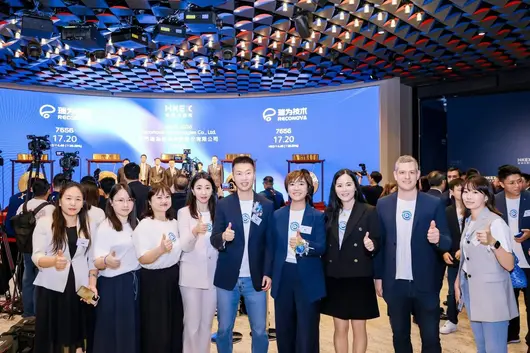
On July 8, Momenta listed on the main board of the Hong Kong Stock Exchange, stock code 6880.HK.
The offering price was 295.6 HKD per share. It surged over 6% at the opening, then the gain narrowed in the afternoon session, finally closing at 295.6 HKD. The total market value was approximately 69.6 billion HKD. This was the company with the largest market cap among the five companies ringing the opening bell at the HKEX that day.
More lively than the stock price was social media. On listing day, official accounts of nearly 20 vehicle partners simultaneously posted congratulatory articles and posters. The topic was unified as "Embracing the Future of Physical AI Together".
IM Motors, Mercedes-Benz, Toyota, and GM appeared together, described as "Half of the Global Automotive Industry's Social Circle".
This social media storm was not hastily arranged. Momenta was founded in 2016. Cao Xudong graduated from Tsinghua University and worked successively at Microsoft Research Asia and SenseTime. In ten years, it completed 20 financing rounds. The cost per share in Series A was $0.45, which has multiplied more than 80 times to today.
Behind it lies a rare list. SAIC Motor, holding about 20%, is the largest external shareholder. GM, Toyota, Mercedes-Benz, and Bosch are also listed. These entities are both investors and customers. Car manufacturers invest money while entrusting models to it. This "Customers as Shareholders" loop is the backdrop of the good news.
For an autonomous driving supplier, this scene itself is a narrative. It wants to tell the market that its customer list is the top tier of the global automotive industry.
This claim is supported by data. According to the Blue Book released by Frost & Sullivan in June, from March 2025 to February 2026, in the Chinese third-party urban NOA supplier market, Momenta's sales market share reached 65%, ranking first in the industry; among the top 10 global car manufacturers, nine cooperate with it.
The market enthusiasm was also high. The public offering received an oversubscription of about 414 times. The international offering received about 44 times before deducting anchor investors and greenshoe. Institutional orders exceeded 100 billion HKD. Unusually, this issuance did not set a price range, directly fixing the offering price. 14 anchor investors subscribed to nearly half the share.
In the list, the Singapore Government Investment Corporation (GIC), known for being cautious and rarely investing as an anchor in new shares, and Fidelity International each led with heavy investments of about USD 100 million. Franklin Templeton appeared as a Hong Kong anchor for the first time in history. More notably, Mercedes-Benz and BYD, two old shareholders and customers of Momenta, again bet as anchors at the key IPO node.
Cao Xudong said it took Mercedes-Benz exactly 8 years from the 2017 investment to mass production at the end of 2025. Once the breakthrough occurred, in 2024 Momenta obtained all of Mercedes-Benz's electric and fuel vehicle business.
The market is willing to pay this price because of the hardest data in the prospectus. From 2023 to 2025, Momenta's revenue increased from RMB 743 million to RMB 2.413 billion, sales costs remained almost unchanged, and gross margin rose from 17.5% to 71.6%.
Supporting this curve is licensing revenue. It multiplied 42 times in three years, rising from 3.1% to 40.1%. Licensing fees are charged per vehicle, with marginal costs close to zero. The higher the proportion, the higher the gross profit.
This means Momenta is transforming from a company that earns development fees based on projects to a company that collects licensing fees based on installation volume. A net loss of RMB 3.458 billion on the books looks scary, but RMB 2.843 billion of it is the change in fair value of preferred shares, a non-cash item that will disappear after listing conversion; stripping it out, adjusted loss narrowed from RMB 1.09 billion in 2023 to RMB 300 million in 2025, approaching break-even, and net cash outflow from operating activities dropped from RMB 1.069 billion to RMB 281 million.
Momenta's financial fundamentals are now those of a stable supplier.

Behind this curve lies the compound interest of engineering capabilities. It took Momenta two years to deliver the first 100,000 units; now it can complete 100,000 units in less than 40 days at the fastest. Model adaptation that required 400 people working for two years in 2022 can now be delivered by 10 to 50 people in three months.
Once the platform is standardized, new models no longer start from scratch. R&D personnel increased almost negligibly, and per capita output tripled in three years. This is also the reason it dares to say "The scale effect is stronger than chips". The marginal cost of software is zero; the more vehicles equipped, the thinner the cost spread, and the better the experience.
In terms of narrative, Momenta has also left rich imagination for the market. It is transforming from a "Smart Driving Tier 1" to a "Physical AI Company". With World Models as the foundation, it frames autonomous driving as the first scenario where Physical AI lands, extending to unmanned logistics, autonomous trucks, and even robots in the future.
Cao Xudong judges that eventually, this industry will leave only 2 to 3 companies in China and 3 to 4 globally, because autonomous driving is software with zero marginal cost, and scale effects are even stronger than chips.
This narrative has its basis. Autonomous driving is indeed one of the few physical AI scenarios that simultaneously possess real data, clear goals, scaled loops, and commercial revenue.
Viewed broadly, this is the first time a Chinese autonomous driving "third-party solution" has entered the global capital market with a volume of nearly USD 10 billion. Its pricing will become a reference for the entire industry chain.
Cao Xudong summarizes the core of Physical AI into two things: Data Scaling and Business Scaling, and the two feed each other positively. Autonomous driving is currently the only physical AI scenario that successfully implements both.
Momenta spun this flywheel with 900,000 mass-produced vehicles. What remains is time. It took AI ten years to climb to the GPT moment. Physical AI data is harder to obtain and the cycle is longer, but he believes that once it approaches human levels, transcendence will happen within one or two years.
The price the market gives today buys this time gap. Momenta has already proven itself to be a good business. What remains to be proven is whether it can convert the automotive smart driving supplier into a real Physical AI before the window closes.

喺馬來西亞嘅 SUV 市場,好多買家喺揀車嘅時候都會拿 Chery Tiggo 7 PHEV 同 Subaru Crosstrek 嚟做比較。這兩款車喺價位同定位上都幾接近,今日我哋就從多個方面做個詳細對比,幫你省返做功課嘅時間。
Chery Tiggo 7 PHEV 喺馬來西亞嘅 OTR 售價係 RM 129,750 - 129,750,一共有 2 個版本,包括 2025 1.5T 90km CSH(RM 129,750)、Tiggo 7 PHEV 支持邊種充電方法?可以用家用電源插座充電嗎?(RM 117,478)等。
Subaru Crosstrek 喺馬來西亞嘅 OTR 售價係 RM 145,000 - 160,000,一共有 1 個版本,包括 2.0L e-Boxer(RM 150,000)等。
從價錢嚟睇,Chery Tiggo 7 PHEV 嘅入門價真係比 Subaru Crosstrek 平咗 RM 15,250。如果你預算有限,Chery 嘅入門版已經可以滿足日常需要。但都要注意,平嗰幾千蚊,可能喺配備上會有取捨,具體要睇你嘅需要。

Chery Tiggo 7 PHEV 配 Hybrid,170 匹馬力。官方油耗 4.5 L/100km。
Subaru Crosstrek 配 1.5L Turbo,140 匹馬力。官方油耗 7.0 L/100km。
動力方面,Chery Tiggo 7 PHEV 嘅 Hybrid 比 Subaru Crosstrek 嘅 1.5L Turbo 多咗 30 匹馬力,中段加速更有信心,尤其係跑高速超車嘅時候。不過 Subaru Crosstrek 嘅油耗表現可能更抵,日常市區通勤差別唔會太大。

Chery Tiggo 7 PHEV 嘅安全評級係 TBD,主動安全系統包括 Basic。
Subaru Crosstrek 嘅安全評級係 5★ (Euro NCAP),主動安全系統包括 EyeSight。
安全配備方面,兩款車都拿到唔錯嘅評級。不過 Chery Tiggo 7 PHEV 嘅 Basic 同 Subaru Crosstrek 嘅 EyeSight 喺功能上有些差異,如果你比較看重主動安全嘅話,可以仔細對比下兩者嘅功能列表。

Chery Tiggo 7 PHEV 採用 FWD 驅動方式。
Subaru Crosstrek 採用 FWD 驅動方式。
兩款車嘅驅動方式一樣,都係 FWD,日常駕駛感受唔會有太大分別。

Chery Tiggo 7 PHEV 同 Subaru Crosstrek 都係馬來西亞市場嘅主流選擇,適合家庭使用、日常通勤。如果你更看重品牌口碑同二手價,可以優先考慮口碑更好嗰款;如果你更在意性價同配備,就揀配置更豐富嗰款。最後都建議兩款都去試駕,親身體驗先至最重要。

總體嚟講,Chery Tiggo 7 PHEV 同 Subaru Crosstrek 都係馬來西亞市場幾唔錯嘅車型。揀邊台,關鍵係睇你個人需求同預算。建議大家做好功課,多比較幾間車行嘅報價,再去試駕做最終決定。買車係件大事,花少少時間做功課絕對唔會錯。


喺馬來西亞嘅 SUV 市場,好多買家揀車都會拿 BMW X5 同 Mercedes-Benz GLB 做比較。呢兩款車喺價位同定位上都幾接近,今日我哋就從多個方面做詳細比較,幫你節省做功課嘅時間。
BMW X5 喺馬來西亞嘅 OTR 售價係 RM 470,800 - 470,800,一共 3 個版本,包括 1.5L Standard(RM 86,300)、1.5L Executive(RM 95,300)、1.5L Premium(RM 103,300) 等。
Mercedes-Benz GLB 喺馬來西亞嘅 OTR 售價係 RM 299,888 - 352,888,一共 1 個版本,包括 Standard(RM 299,888) 等。
由價錢睇,Mercedes-Benz GLB 嘅起售價比 BMW X5 平咗 RM 170,912。老實講,喺呢個價位段,幾千蚊嘅差距其實唔算大,關鍵仲係睇整體嘅性價比同長期使用成本。

BMW X5 配備 3.0L Turbo,馬力 350 hp。官方油耗 12.0 L/100km。
Mercedes-Benz GLB 配備 2.0L Turbo,馬力 220 hp。官方油耗 9.5 L/100km。
動力方面,BMW X5 嘅 3.0L Turbo 比 Mercedes-Benz GLB 嘅 2.0L Turbo 多咗 130 匹馬力,中段加速更有信心,尤其係跑高速公路超車嗰陣。不過 Mercedes-Benz GLB 嘅油耗可能更抵,日常市區通勤差別唔會太大。

BMW X5 嘅安全評級係 5★ (ASEAN NCAP),主動安全系統包括 ADAS (ACC, AEB, LKA, LDA, BSM, RCTA)。
Mercedes-Benz GLB 嘅安全評級係 5★ (Euro NCAP),主動安全系統包括 Premium ADAS。
安全配備方面,兩款車都拿到唔錯嘅評級。不過 BMW X5 嘅 ADAS (ACC, AEB, LKA, LDA, BSM, RCTA) 同 Mercedes-Benz GLB 嘅 Premium ADAS 喺功能上有些差異,如果你比較睇重主動安全嘅話,可以仔細比較下兩者嘅功能列表。

BMW X5 保養 5 年/無限里程,保養間隔 每 10,000km 或 6 個月。
Mercedes-Benz GLB 保修 3 年/100,000km,保養間隔 每 10,000km 或 6 個月。

總體嚟講,BMW X5 同 Mercedes-Benz GLB 都係馬來西亞市場幾不錯嘅車型。揀邊一輛,關鍵仲係睇你嘅個人需求同預算。建議大家做好功課,多比較幾間車行嘅報價,再去試駕做最終決定。買車係件大事,花啲時間做功課絕對唔會錯。


喺馬來西亞嘅汽車市場,好多買家喺揀車嘅時候都會拿 Honda CR-V 同 Subaru Crosstrek 嚟做比較。今日我哋從多個方面做一個詳細嘅比較,幫你省下做功課嘅時間。

Honda CR-V 喺馬來西亞嘅 OTR 售價係 RM 178,200 - 195,900,一共有 4 個版本,包括 2026 e:HEV 2.0L 2WD RS(RM 195,900)、2026 1.5T 4WD V(RM 181,900)、2026 e:HEV 2.0L 2WD E(RM 178,200)等。
Subaru Crosstrek 喺馬來西亞嘅 OTR 售價係 RM 145,000 - 160,000,一共有 1 個版本,包括 2.0L e-Boxer(RM 150,000)等。
從價錢嚟睇,Subaru Crosstrek 嘅起步價比 Honda CR-V 平咗 RM 33,200。實講,喺呢個價位段,幾千蚊嘅差距其實唔算大,關鍵仲係睇整體嘅性價比同長期使用成本。
Honda CR-V 採用 FWD 驅動方式。
Subaru Crosstrek 採用 FWD 驅動方式。
兩款車嘅驅動方式一樣,都係 FWD,日常駕駛感受唔會有太大分別。

Honda CR-V 保養 5 年/無限制里程,保養間隔 每 10,000km 或 6 個月。
Subaru Crosstrek 保養 3 年/100,000km,保養間隔 每 10,000km 或 6 個月。

Honda CR-V 同 Subaru Crosstrek 都係馬來西亞市場嘅主流選擇,適合家庭使用、日常通勤。如果你更重視品牌口碑同二手價,可以優先考慮口碑更好嗰款;如果你更在意性價比同配備,那就揀配置更豐富嗰款。最終都係建議兩款都去試駕,親身體驗先至最重要。
總嘅嚟講,Honda CR-V 同 Subaru Crosstrek 都係馬來西亞市場幾唔錯嘅車款。揀邊一輛,關鍵仲係睇你嘅個人需求同預算。建議大家做好功課,多比較幾間車行嘅報價,先去試駕先做最後決定。買車係件大事,花少少時間做功課絕對唔會錯。


喺馬來西亞嘅汽車市場,好多買家喺揀車嘅時候都會拿 Mazda CX-5 同 Hyundai Santa Fe 嚟做比較。今日我哋由多個方面嚟做一個詳細嘅比較,幫你省返做功課嘅時間。

Mazda CX-5 喺馬來西亞嘅 OTR 售價係 RM 135,469 - 166,760,一共有 3 個版本,包括 2025 2.0L AT 35th Anniversary(RM 316,154)、2025 2.0L AT(RM 296,154)、2025 2.0L MT(RM 294,154)等。
Hyundai Santa Fe 喺馬來西亞嘅 OTR 售價係 RM 225,000 - 270,000,一共有 3 個版本,包括 2025 2.5T DCT 4WD Calligraphy 6 Seats(RM 270,000)、2025 HEV 1.6T AT 2WD Prestige 7 Seats(RM 245,000)、2025 HEV 1.6T AT 2WD Prime 7 Seats(RM 225,000)等。
由價錢睇,Mazda CX-5 嘅起步價確實比 Hyundai Santa Fe 平咗 RM 89,531。如果你預算有限,Mazda 嘅入門版已經可以滿足日常需要。但亦要留意,平嗰幾千蚊,可能喺配備上會有取舍,具體要看你嘅需要。
Mazda CX-5 配備 1.5L Turbo,馬力 140 hp。官方油耗 7.0 L/100km。
Hyundai Santa Fe 配備 2.0L 4-cyl,馬力 170 hp。官方油耗 8.0 L/100km。
動力方面,Hyundai Santa Fe 嘅 2.0L 4-cyl 比 Mazda CX-5 嘅 1.5L Turbo 多咗 30 匹馬力。不過日常喺市區開嘅話,兩部車嘅動力都夠用,唔會覺得唔夠力。

Mazda CX-5 嘅安全評級係 5★ (ASEAN NCAP),主動安全系統包括。
Hyundai Santa Fe 嘅安全評級係 TBD,主動安全系統包括 Basic。

Mazda CX-5 保養 5 年/150,000km,保養間隔 每 10,000km 或 6 個月。
Hyundai Santa Fe 保養 5 年/300,000km,保養間隔 每 10,000km 或 6 個月。

總括嚟講,Mazda CX-5 同 Hyundai Santa Fe 都係馬來西亞市場幾唔錯嘅車型。揀邊一部,關鍵仲係睇你嘅個人需要同預算。建議大家做好功課,多比較幾間車行嘅報價,再去做試駕做最終決定。買車係件大事,花少少時間做功課絕對唔會錯。


On June 12, the BJ30 Traveler 150,000 units off-line ceremony and Highlight Edition new car launch event was successfully held at the BAIC Zhuzhou Super Factory. To promote the popularization of light off-road life nationwide and achieve off-road equality, the official launch offers a 30,000 yuan high-value trade-in benefit. The starting price for trading in the entire series is only 69,900 yuan. The annual new BJ30 Traveler Highlight Edition debuted simultaneously, with comprehensive upgrades in appearance, performance, and driving experience. The trade-in price starts at 82,900 yuan. At the event site, Beijing Off-road jointly launched a live vehicle teardown with CCTV. A BJ30 Traveler with 150,000 kilometers driven was torn down on-site, intuitively showcasing the model's solid quality.

Zhang Guofu, Deputy General Manager of BAIC Group and Chairman of Beijing Off-road, stated on-site that the BJ30 Traveler has created a new domestic light off-road SUV record, becoming the model in this sub-market to break the 150,000 unit sales volume fastest. The achievement of 150,000 units is the result of mutual recognition from the market, industry, and global consumers. It is not only a breakthrough in brand development speed but also a quality reputation forged by 150,000 users' choices. This car not only represents the mature strength of China's hybrid technology but is also a powerful card for China's automobile intelligent manufacturing going global.

Relying on BAIC Off-road's 60-plus years of technical accumulation in the off-road field, the BJ30 Traveler has won the favor of 150,000 global owners with its three core advantages of strong passability, large space, and low energy consumption, becoming a benchmark product in domestic light off-road SUVs.
In terms of off-road performance, the vehicle is equipped with the industry's first three-engine four-wheel drive six-mode HEV hybrid architecture, and is also the domestic's first square box SUV equipped with a hybrid system. This architecture consists of a hybrid dedicated engine with a thermal efficiency of 41% and front and rear dual drive motors, each playing their part while balancing long-distance range, instant recharging, and instantaneous explosive power. The intelligent four-wheel drive system responds in only 30 milliseconds, releasing peak torque within 0.5 seconds; coupled with energy central lock, four-wheel electronic limited slip, and intelligent electric ATS all-terrain control system, six driving modes can be intelligently switched, making it easy to handle complex road conditions such as mud and sand, giving full confidence for off-road travel.

In terms of space performance, the whole vehicle is positioned with a three-row seven-seat layout. The 2820mm long wheelbase brings a 66% high space utilization rate. The trunk maximum volume can reach 1496 liters. After the rear seats are folded flat, a 1.92-meter flat space can be formed. Even for passengers with a height of 1.8 meters, sitting in the third row has no cramped feeling. There are a total of 38 storage points in the whole car, and daily sundry storage is organized in an orderly manner. The spacious interior space easily meets various needs for the whole family to travel long distances and for multiple people to travel.

Regarding usage costs, this hybrid model has achieved fuel saving, time saving, and worry-free. Previously, five overseas car bloggers from South Africa, Indonesia, UAE, Poland, and Mexico jointly conducted practical tests. The vehicle's fuel consumption per 100 kilometers was controlled within 5L, and the full tank range easily exceeded 1,000 kilometers. The vehicle does not need to rely on charging piles, just refuel and set off, greatly saving charging time. At the same time, the first non-operating owners can enjoy the lifetime warranty of the whole vehicle. The high-voltage battery pack is safe and stable, maintenance is convenient, parts supply is sufficient, greatly reducing long-term car use concerns. It can commute in the city, can go off-road outdoors. All-around attributes make it stand out among similar models.

The BJ30 Traveler Highlight Edition launched simultaneously this time has been comprehensively upgraded on the basis of the original product strength, achieving advances in three dimensions of appearance, performance, and experience.
The appearance continues the classic square box shape. The tough body lines are matched with the new five-star ring through light group, full of recognition. Exclusive electric sense trendy modification kit, star ring style wheels and same-color sports bumper, full of trendy atmosphere. Orange interior color is added inside the car, supplemented with metal texture trim plates, quality fully upgraded, catering to the aesthetic needs of users of different age groups.
Power and hardware are reinforced again. The new car replaces the long-life high-performance AGM battery, and the cycle service life reaches 3 times that of ordinary batteries. It is equipped with the same level mainstream turbocharging technology, and the whole vehicle charging efficiency is as high as 99%. The rear drive motor power is increased from 55kW to 70kW. The power response is more rapid at start acceleration, lane changing and overtaking, and emergency avoidance, and driving safety is further improved.

The driving experience also welcomes comprehensive optimization. The body height brings a broad driving vision. Seat heating, ventilation, steering wheel heating and other comfort configurations are all available. The vehicle is equipped with automatic induction wipers. In rainy days, the car windows can be automatically closed. The 64-color ambient light supports music linkage rhythm, creating an immersive driving atmosphere, turning the carriage into a mobile leisure space.
In order to reward the support of car owners, except for the 30,000 yuan whole series trade-in policy, the brand additionally launched five exclusive gifts. Ordering cars within the time limit can enjoy: First non-operating owner gifts whole vehicle lifetime warranty; Provide diversified financial plans such as 0 down payment; Old customers recommend new customers to complete transactions, the highest can get 800 yuan JD.com Card; The whole vehicle enjoys lifetime free OTA upgrades; Basic traffic is free for life, entertainment traffic enjoys unlimited use for two years.

Coinciding with the World Cup event node, the brand simultaneously launched a prediction activity. Buying cars at any authorized store in the country can participate. Successfully guessing the match champion and final score, you can enjoy a 50,000 yuan car purchase subsidy again at the highest.
To intuitively verify vehicle durability, the launch site jointly with CCTV Finance conducted a 150,000 km actual vehicle teardown live broadcast. 150,000 kilometers is roughly equivalent to the driving mileage of an ordinary family in nearly 10 years. The teardown results showed: Engine turbine carbon accumulation is very little, power output is still strong; Transmission housing has no leakage, internal gear wear degree is very low, transmission system status is intact; Battery pack has no bulging, leakage, aging attenuation problems; Chassis sub-frame, suspension parts have no rust, oil seepage phenomenon, overall working conditions are almost the same as new cars. Solid material usage and fine craftsmanship make the vehicle lower failure rate in long-term use, effectively reducing car maintenance and car replacement costs, escorting for every trip.

The live broadcast lens also entered the BAIC Zhuzhou Super Factory, revealing the manufacturing strength behind high quality. The welding workshop adopts full-automatic robot operation, the body glue control accuracy is controlled at the hair level, greatly improving body rigidity and safety coefficient; 5,000-ton class large stamping equipment one-piece body plate, creating neat and smooth body lines; The painting workshop uses full-automatic robots and environmentally friendly water-based paint, harmful substances in the car are greatly reduced, the new car says goodbye to pungent odors, paint surface sun resistance, corrosion resistance ability is also significantly enhanced. The whole process multiple quality control checkpoints, guard the quality bottom line of every vehicle from the production source.

Having cultivated the off-road field for many years, Beijing Off-road continues to enrich the product matrix, covering different user travel needs. In addition to the new BJ30 Traveler Highlight Edition, BJ40 Extended Range Long Range Version also wins market recognition with its strength of urban and off-road dual adaptation. In the future, Beijing Off-road will continue to refine products, accompany thousands of users to gallop on the journey, and go to every wonderful journey together.

2026 年,中國新能源汽車市場正式告別野蠻生長嘅增量時代。無休止嘅價格內捲、同質化嘅配置堆疊、日益收緊嘅行業利潤,令無數車企陷入兩難:跟風減價就損及盈利,固守產品則被市場淘汰。行業淘汰賽愈演愈烈,所有玩家都在尋找適應自身嘅生存法則。

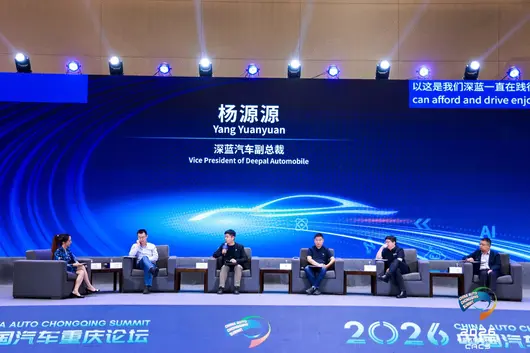
6 月 13 日,喺 2026 中國汽車重慶論壇由買車網 Buycar 承辦嘅《市場蛻變——中國汽車市場競爭格局重塑》腦力激盪上,深藍汽車副總裁楊源源講:「今年市場最超出預期嘅變化,係消費者嘅覺醒。中國汽車消費者越來越理性、越來越成熟,唔再似過往咁簡單睇堆料、睇參數來揀車,而係認認真真思考每一分錢花得值唔值。」
呢番話喺幾個月前,聽落可能似一種美好嘅願望。但放喺 2026 年 6 月嘅深藍身上,佢更似一份遲到嘅驗證報告。
就喺幾個月前,深藍係被唱衰聲包圍嘅典型樣本。2026 年一季,深藍銷量同比下滑超 17%,2 月甚至未直接公佈全系銷量;2025 年全年虧損 8.99 億元,近四年累計虧損逾 80 億元。同期理想、蔚來、問界均保持正增長,就連長安體系內嘅兄弟品牌啟源都喺 2 月交出環比大漲 96.3% 嘅成績單——深藍嘅掉隊顯得格外刺眼。

轉折出現喺 2026 年 3 月。深藍以 31742 輛、環比大漲 87.8% 嘅成績迅速逆轉局面,此後連續三個月守住「月銷 3 萬 +」門檻。1-5 月累計銷量 130531 輛,同比增長 15%,全球累計交付突破 85 萬輛。呢場逆襲嘅核心驅動因素,恰恰印證咗楊源源喺論壇上嘅判斷。
第一個驅動因素係深藍 S05。呢款緊湊型 SUV 喺 10 萬至 15 萬元嘅核心戰場搵到精準嘅平衡點:620km CLTC 續航、全系標配 3C 超充、2880mm 長軸距。4 月全球銷量 17269 輛,同比增長 96.1%,上市以來累計銷量超 22 萬輛。消費者用訂單證明:喺呢個價位段,佢哋要嘅唔係平,而係抵。

第二個驅動因素係深藍 S07 嘅智能化升級。 6 月 13 日,全新深藍 S07 增程版上市,限時權益價 15.49 萬元起,搭載華為乾崑智駕 ADS Pro,首次將高級智駕下放喺呢個價位段。以往呢啲係 30 萬級車先有嘅配置。楊源源喺論壇上特別強調咗呢個邏輯:「企業技術普惠同消費者嘅消費習慣調整,先至開始,遠未探底。」
第三個驅動因素係海外市場嘅爆發。1-5 月深藍海外累計銷量 28704 輛,同比增長 167%。深藍 S05 已進入歐洲、東南亞等 66 個國家同地區,右舵版喺泰國羅勇工廠投入生產。當國內市場仲喺度爭論「價格戰定係價值戰」嘅時候,海外用戶已經用訂單投票咗。
呢三件事放埋一齊,恰好構成咗一條完整嘅邏輯鏈:消費者嘅「價值覺醒」係需求側嘅變化,企業嘅「技術平權」係供給側嘅回應。當兩樣嘢同時發生,市場就會畀出正向回饋。
喺楊源源睇嚟,消費者由「追求性價比」到「重視質價比、智價比」嘅轉變,係行業最寶貴嘅轉折點。呢啲對始終堅持長期主義、踐行技術平權嘅深藍汽車嚟講,唔係挑戰,而係千載難逢嘅發展機遇。粗放式低價內捲嘅時代落幕,靠價值、技術、體驗取勝嘅高質量競爭時代,已經到來。
而對今年下半場嘅打法,楊源源亦畀咗佢自己嘅判斷:「下半年有三場戰鬥——體驗戰、生態戰、全球戰。」體驗戰係讓客戶有更好的感受,生態戰係從買賣關係變成合作夥伴,全球戰則係「代表中國新能源汽車走向世界」。
「今年有冇全新車型上市,一啲都唔影響深藍今年嘅銷量。」楊源源講,唔同於行業多數品牌依賴新車拉動短期增量,深藍唔會盲目跟風高頻迭代新品,而係深耕存量產品、打磨產品綜合實力。依托前期產品立项、平台化架構佈局,深藍實現產品長效生命力,規避頻繁造車帶來嘅研發浪費同庫存風險,同時依托成熟主力車型攤薄成本,實現盈利同銷量雙向平衡。
喺行業整體利潤持續走低、多數車企增收唔增利嘅大環境下,唔靠新車內捲嘅深藍,依舊保持健康嘅經營狀態。

針對行業熱議嘅「淘汰賽」以及未來價值競爭主戰場,楊源源畀出深藍清晰嘅長期戰略:未來汽車唔再係簡單嘅代步工具,而係「帶輪子嘅 AI 終端」。基於呢個終極判斷,深藍將長期堅守左手全球化,右手年轻化嘅雙線戰略,構築差異化競爭壁壘。
深藍嘅目標「肯定唔係活落去,而係要成為中國新能源汽車嘅一張名片」——呢句話從一家幾個月前仲被質疑「係咪可以活落去」嘅企業口入面講出,幾多有啲反差。但也正係呢種反差,令呢場逆襲有更深嘅意味:佢唔只係深藍一家企業嘅翻盤故事,更係整個行業由「價格內捲」走向「價值競爭」嘅一個註腳。當消費者嘅覺醒同企業嘅技術普惠形成同頻共振,市場自然會畀出答案。

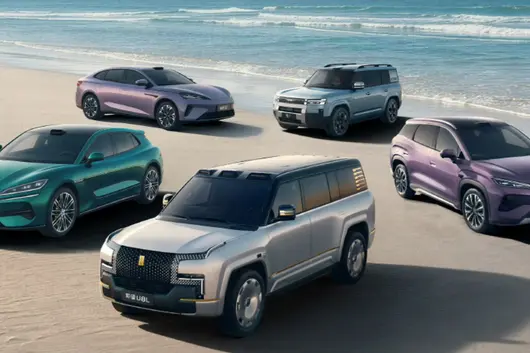
BYD officially released the May 2026 production and sales flash report, with new energy vehicles from all brands reaching a monthly sales volume of 383,453 vehicles, a slight increase of 0.26% year-on-year, achieving year-on-year positive growth in monthly sales after ten months; among them, passenger car deliveries reached 376,990 units, surging 19.4% month-on-month, wiping out the pain of previous model iterations, presenting a new pattern where the domestic base is stable, overseas sales are soaring, and high-end brands are scaling up across the board. Amidst the market environment of intensified competition in the domestic new energy sector, Tesla FSD entering China, and an intense launch of independent new products, it has forged a unique structural growth path.

The Dynasty and Ocean main brands combined sold 330,215 vehicles in May, accounting for over 80% of the group's total sales, remaining the stabilizer for BYD's sales volume. The full series had 8 models exceeding 20,000 units in monthly sales, covering products from 50,000 entry-level commuter to 200,000 home SUV.

Inside the Dynasty Network, the Yuan family sold 56,691 units, and the Song family 51,370 units. Both crossed the 50,000 threshold, becoming two major sales pillars for the brand, catering to home commuter and urban-rural travel needs; the Qin family followed closely with a stable performance of 28,360 units. The Han and Tang series maintained a volume in the six-thousand range, deeply cultivating the mid-to-large home sedan and SUV niche markets; the brand new model Xia is in the market cultivation phase, delivering 1,810 units monthly, with potential for steady volume growth as channels expand.
The Ocean Network's growth momentum is even more rapid, with 5 models entering the 20,000 club across the series: Sealion 42,615 units, Seal 34,117 units, Seagull 39,919 units, Dolphin 22,260 units, and Song PLUS 27,755 units. Among them, Seagull remains the best-selling entry-level commuter model thanks to its affordable pricing of 60,000-80,000. Sealion, as a new volume model, stands firm at the 40,000 level upon launch, filling the mid-size SUV product gap in the Ocean Network and perfecting the Ocean product tier layout. From commuter small cars to compact SUVs, the two main brands rely on DM-i hybrid and pure electric dual-line technologies to牢牢锁住 the mainstream home market share within 150,000 domestically.
Fang Cheng Bao Year-on-Year Surges 139.7%, Brand Upward Positioning Takes EffectThe high-end matrix of Denza, Fang Cheng Bao, and Yangwang sold a combined 46,489 vehicles in May, officially breaking away from the niche positioning to become a new pivot for BYD's brand premium and profit growth, breaking the industry curse of difficulty in high-end breakthrough for domestic brands.

The off-road brand Fang Cheng Bao sold 30,186 units monthly, surging 139.7% year-on-year, creating a new high in monthly sales since the brand launched. Its Titanium 7 model sold 18,280 units monthly, while Leopard 5 and Leopard 8 output remained stable, continuously squeezing the survival space for joint venture and imported models in the 250,000-400,000 hardcore off-road niche market.

Denza delivered 16,303 units in May, with the MPV benchmark D9 selling 6,721 units, and the Z9 series close to 6,000 units. MPV and mid-to-large sedan dual-line efforts helped them stand firm in the luxury new energy track; the million-level ultra-luxury brand Yangwang continued its steady climb, delivering 286 units that month, a year-on-year increase of 105.8%, completing market verification of the domestic brand ceiling product and forming a full price range product layout from 100,000+ home, 300,000-400,000 off-road, 500,000 luxury MPV to million-level flagship.

In May, BYD's overseas sales of passenger cars and pickup trucks reached 160,177 units, surging 80.7% year-on-year. Exports accounted for over 42% of the full series total sales, setting a new historical high for brand export and becoming the core driving force to stabilize May overall sales and achieve year-on-year positive growth.
Southeast Asia, Europe, and Latin America became the main incremental markets. Seagull, Song PLUS, and Yuan series continued to top new energy best-seller lists in multiple countries; the SHARK pickup truck exceeded 4,000 units in monthly exports for two consecutive months. Relying on the completion of localization production in Thailand, Brazil, Hungary, and Uzbekistan with four overseas vehicle factories, localized production continues to land, avoiding tariffs while rapidly penetrating terminal channels. Against the background of stock market competition in the domestic auto industry and normalized price wars, the rapidly expanding overseas market effectively counteracts sales volatility brought by domestic model iterations, officially upgrading from a supplementary market to BYD's core growth engine. As of now, BYD's global cumulative new energy vehicle sales have exceeded 16.5 million units, with the globalization map continuously broadening.
Intelligent Driving Empowers Product Iteration, H2 New Products Prepare to Surge VolumeMay marked a key node in BYD's intelligent driving landing, with the God's Eye intelligent driving system becoming a core bonus point for models: the number of vehicles with advanced intelligent driving across all brands exceeded 3.15 million, with daily road test data exceeding 200 million kilometers; that month, BYD implemented City Pilot and Smart Parking dual safety backup services, becoming the world's first auto manufacturer to achieve dual intelligent driving backups. Three days after policy implementation, the activation rate of models equipped with the God's Eye system in cities surged 50%. Intelligent driving experience upgrades directly drove in-store order conversion, solidifying product competitiveness for subsequent models to continue volume sales, and facing the intelligent driving market shock brought by FSD entering China.
From data details, BYD's cumulative sales from January to May 2026 were 1,405,039 units, down 20.32% year-on-year. The core reason is that the full series of main models were concentratedly iterated, and the capacity ramp-up of the 2nd Gen Fast Charge Blade Battery was restricted. The new Flash Charge Battery upgraded fast charging and low-temperature performance. Full series iteration models prioritized installing new batteries, but production line retrofitting dragged down capacity release. Order backlogs on popular models and delayed deliveries compressed the May delivery volume to a certain extent.
As the end of the second quarter approaches and the 2nd Gen Blade Battery capacity continues to release, coupled with new models such as Denza N8L, Fang Cheng Bao Titanium 7 Pure Electric Version, Sealion 05, and Xia L landing the market, the industry generally predicts that BYD's full brand sales in June are expected to exceed 400,000 vehicles. Relying on the four-dimension development logic of low-end volume locking share, high-end raising profit, overseas pushing volume, and intelligence improving product power, amidst the intensified new energy elimination round in the domestic market, BYD's full category layout advantage continues to amplify, securing its status as the domestic new energy leader, accelerating steadily towards global top auto manufacturers.

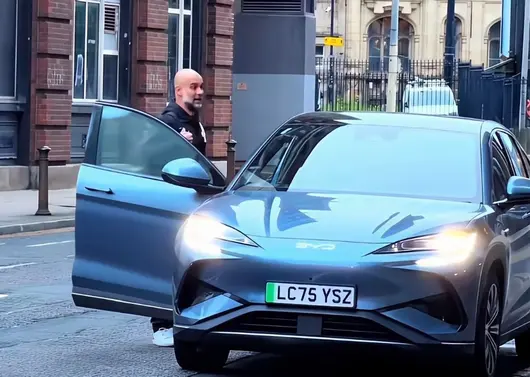
5 月 24 日,曼城主場對陣阿士頓維拉,係高迪奧拉執教曼城嘅最後一場比賽,亦係一場充滿儀式感嘅告別。唔論球迷有多不捨,10 年藍月王朝,終於到咗講再見嘅時候。
喺呢一片告別聲中,瓜帥開住嗰輛藍色海獅 07 離場,喺全球幾十億球迷面前刷咗一波史無前例嘅存在感。

好多人看到呢一幕都好震驚,一部分人擦咗擦眼,發現真係比亞迪。另一部分人感慨,換咗人換咗場景,比亞迪呢部點解突然咁高大上起嚟。仲有啲人扒出資訊,呢部車喺英國賣 44,990 鎊,本就係名副其實嘅高端車。
實際上瓜帥開住比亞迪離開嗰陣,國產車嘅出海之路正在風起雲湧。點解咁講呢?讓功夫汽車帶大家睇下。
(1)突破平台期,國產車出口繼續大增長
5 月 25 日,全國乘用車市場信息聯席會秘書長崔東樹公佈咗最新嘅出口資訊。
今年 1-4 月,國內汽車出口達到 326 萬輛,相比 2025 年同期增長咗 51%。其中 4 月出口量係 94 萬輛,單月近百萬輛,同比增長 52%。呢個數據真係太誇張,要知道中國汽車出口層歷咗多年百萬量級嘅平台期,直到 2021 年先至突破,而家單月出口近百萬輛。

再具體一點,巴西超過俄羅斯成為中國最大嘅汽車出口國,4 月單月出口量達到 121766 輛,俄羅斯排第二達到 77524 輛,此外比利時、澳洲、英國嘅出口量亦喺 5 萬輛左右。
關鍵國產車嘅出口仲突出一個「啥都賣」,4 月出口純電動佔比 31%,插混佔 18%,油電混動佔 7%,純燃油車只剩下 34%。呢點亦說明咗,新能源唔單止喺國內受歡迎,放喺國際市場都係一樣能打。與此同時,國內嘅燃油車走向國際,都依然有競爭力。

仲有另外一個趨勢,以往國產車嘅重點市場集中喺俄羅斯同中東,本以为今次嘅中東市場緊張會大幅影響出口。未諗到現實情況恰恰相反,西歐(英、比、德、意)同中南美(巴西)市場成為核心增量,國產車對發達國家出口佔比大幅提升。
中東地緣政治衝擊也好,歐美貿易壁壘也罢,對國產車唔算冇影響,但都未能觸及根本,核心都係一點,國產車嘅產品力確實夠強。

純電、插混、油電混動三條路線全部落地,適配唔同地區油品、路況、補能條件,全球適應能力遠超海外競爭對手。能夠大批量進入德國、英國、比利時等歐洲發達市場,意味著車輛喺安全、能耗、耐用、法規上完全對標甚至超越當地主流車型,硬實力得到認可。
(2)純電增速變緩,又係陽謀?
崔東樹畀咗新能源車出口情況,今年 1-4 月,巴西無疑係純電最大市場,卖出嘅 22.2 萬輛新能源車絕大多數都係 BEV,比利時作為歐洲門戶,13.0 萬輛新能源車幾乎全部係純電,
英國、澳洲、泰國、阿聯酋呢啲市場也都以 BEV 為主,PHEV 逐步滲透。

呢樣一來,純電市場其實已經分成三塊,歐洲係高端純電主戰場,對品質、智能化、安全要求最高,連瓜帥都開咗比亞迪。巴西、澳洲則係中高端純電同部分經濟型純電結合,東南亞則開始咗經濟型純電逐步放量。
這主要得益於供應鏈成熟,同配置比歐日本嘅電車普遍平 30%–50%。尤其係一啲 A00/A0 級,比如五菱宏光 MINI、比亞迪海鷗等,喺新興市場非常勁,佔純電出口一半以上。如果後續吉利星願都能出到外邊,相信都會有唔錯嘅市場表現。

講起極氪加銀河嘅組合,高端純電外加經濟型家用車,真係完美適合海外市場,難怪吉利嘅出口增長咁快。2026 年 1–4 月,吉利新能源車嘅出口同比增長咗足足 624.5%,增速全行業第一,就係因為產品太適配。
當然,一啲人提到,進入到 2026 年之後,純電出口增長放緩咗,倒係插電混動份額達到 18%,已經超過純電一半。這主要係補能基建差異導致,好多國家充電樁唔足,更偏好插混、混動,拖累純電滲透率。

國內都經歷過呢個階段,一方面係基建要逐步跟得上,另一方面係諗法「跟得上」。點解國內嘅增程車經歷咗幾年大增長之後開始萎縮?因為早期買增程車嘅人,終於意識到用電太「上癮」,後續換車只考慮純電,預計海外市場都係呢個順序。
(3)技術、品牌雙輸出,越走越穩
2023 年,中國汽車出口量達到 491 萬輛,首次超過日本,成為全球第一大汽車出口國。呢兩年差距一直喺拉大,今年預計會達到千萬輛嘅規模,早已係一騎絕塵。

亦都有唔少人擔心,國產車會重蹈國產摩托車嘅覆轍。2000 年代初,國產燃油摩托喺東南亞嘅市佔率一度達到 80%+,結果幾年時間就跌至 1%。而家嘅國產車都係呢種走勢,出口似乎勢不可擋,會不會都有喺某一天直接垮台。
呢個其實完全唔使擔心,而家嘅國產車,走嘅係技術、品牌雙輸出嘅高端化道路。點解瓜帥選擇海獅 07,因為雙電機 4.2 秒破百、刀片電池、Cell to Body 車身,雖然喺國內只係 20 萬級嘅車,但產品力完全可以對標保時捷 Taycan、特斯拉 Model S。

甚至瓜帥自己都坦言,「喺曼徹斯特試駕幾周後,性能、舒適同技術徹底打動我」。得到足壇「戰術大師」嘅認可,相當於有咗權威背書。國產車喺英國嘅純電份額,都早已超越美系、德系、日系車,登頂第一,喺歐洲、日本屢屢斬獲專業大獎。
以前係靠價格戰打入東南亞、中東市場,形象低端。而家係用技術實力直接對標豪華品牌,唔再單靠低價妥協。最近幾年,國產車開始把品牌植入歐洲人日常關注嘅足球、賽車場景。開始喺巴西、泰國、匈牙利等地方投產,唔係撈一筆,而係真正扎根本地化。

而家嘅國產車,早已唔再躲喺幕後代工,而係以自主品牌直面全球消費者,開始真正實現從「中國製造」到「中國創造」。新能源賽道換道超車,讓中國汽車第一次喺全球主流市場擁有咗話語權。
(4)功夫拍案
當瓜帥駕住藍色比亞迪揮手告別藍月賽場,呢輛駛向世界嘅座駕,都成為咗中國汽車揚帆出海嘅生動註腳。
從昔日低價走量、形象受限,到如今憑硬核技術站穩歐美高端市場,多條動力路線全面開花嘅國產車,海外版圖正不斷拓展,徹底跳出咗過往嘅發展困局。
曾經仰望滿街海外豪車,而家看著世界遍布中國座駕,向前推五年,邊個估到而家?

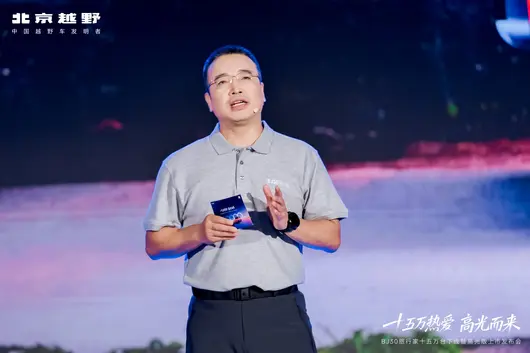
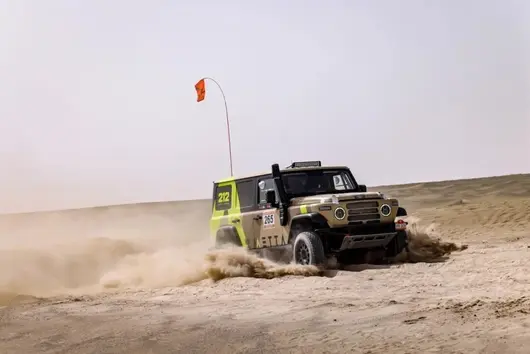
6 月 1 號,2026 中國環塔國際拉力賽喺新疆收車。首次參賽嘅 212 越野車隊,喺總里程 7500 公里、特殊賽段 3400 公里嘅極限苦戰中,成為 T2.1 量產組廠商隊唯一 100% 完賽嘅品牌,最終贏得該組別亞軍。喺 2.0T 引擎對抗 3.0T 嘅排量劣勢下,212 T01 用一場全隊完賽證明咗中國硬派越野嘅量產可靠性。
本屆環塔被稱為「史上最難」,沙漠賽段佔比超 60%,極端高溫、無人區奔襲、連續刀鋒坡與「雞窩坑」對車輛動力、底盤、車身剛性提出咗嚴苛考驗。喺競爭最激烈嘅 T2.1 量產組中,212 T01 以接近原廠狀態嘅量產車出戰——僅加裝防滾架、賽車座椅等安全裝備,核心動力總成同底盤結構同市售版一致。
首賽段 SS1,212 T01 即拿下組別季軍;SS3 賽段,喺 30 餘台賽車爆胎、十餘輛退賽嘅險境中,成為該組別唯一完賽嘅 2.0T 廠商車隊;淘汰率最高嘅 SS5 賽段,車隊頂住壓力,以 100% 完賽率包攬組別三、四名。進入後半程魔鬼賽段,265 號、266 號車組連續喺 SS10、SS11 賽段奪得組別冠軍,SS12 賽段再奪亞軍。最終,212 車隊贏得 T2.1 量產組廠商隊亞軍,並成為全場唯一全隊完賽嘅 T2.1 量產組品牌。
喺環塔咁高强度、長距離嘅越野賽事中,完賽率本身就係最直觀嘅可靠性指標。T01 嘅動力系統喺高溫與高負載交替中保持穩定輸出;交叉軸密布嘅河道與「雞窩坑」路段,佢嘅懸掛行程與輪胎抓地力經受住考驗;碎石河床嘅暗坑衝擊下,高抗扭剛性車身維持咗姿態穩定。全程無被動陷車,驗證咗車輛喺極限環境下嘅機械素質與耐久性。同步承擔後勤保障任務嘅探境者 01,每天賽車返回後準時送達維修設備與備件,保障咗車隊嘅持續作戰能力。這種「以賽代驗」嘅模式,正成為 212 技術迭代嘅加速器。
212 T01 嘅量產車表現,依賴於品牌喺北京車展上發布嘅「俠客」與「遠征」兩大技術平台。「俠客」平台採用前後五連桿整體橋、非承載式車身,支持汽油、柴油及混動系統,T01 同探境者 01 均誕生於此;「遠征」平台則定位全場景智能越野架構。兩大平台嘅發布,標誌住 212 從單一車型生產邁向體系化技術輸出。
賽事之外,212 嘅全球化佈局同步推進。目前其全球銷售網絡已覆蓋超 80 個國家和地區,喺阿聯酋、墨西哥、印尼等地設立海外子公司與辦事處,建成 9 大全球配件中心倉庫,並喺東南亞、中亞、中東落地多個 KD 散件裝配項目,未來仲會喺拉美、非洲持續拓展。從賽道驗證到全球市場,212 正構建「賽事 - 技術 - 產品 - 服務」嘅閉環。
環塔賽場上,車隊曾主動停車救援受困對手,一位從 200 公里外專程趕來嘅細路仔收到咗車手贈送嘅帽子。這些細節傳遞出越野精神:探索、熱愛與互助。喺國內,212 透過「樂野之日」音樂派對、G212 國道探索之旅等活動培育越野文化;喺海外,從達喀爾到馬來西亞沙巴雨林賽,從 Mille Miglia 經典車拉力賽到美國 SEMA 改裝展,212 正將中國越野品牌帶入全球視野。
從全隊完賽到全球化佈局,212 喺環塔嘅答卷不僅係成績單,更係一次對量產車極限可靠性嘅公開展示。當中國越野品牌敢於用最嚴苛嘅賽道驗證產品,並將驗證成果轉化為消費者可感知嘅品質承諾,「中國製造」喺硬派越野領域嘅信任資產正在積累。


Auto-First|Sammar
4:30 AM, Shanghai Jiangqiao Wholesale Market, Uncle Zhou's Wuling Rongguang starts on time. This is his 12th year in vegetable wholesale, and his seventh year with this car.
At the same moment, herders on the Qinghai-Tibet Plateau start their pickup trucks for the pastures, engineers in the Greater Bay Area get into IM cars for work, parents at the hutong entrance drive Volkswagen ID.3 to send children to school, and young merchants on the China-Myanmar border drive MG onto cross-border highways.
They don't know each other, yet they share an identity recorded in history. On May 28, SAIC Motor Group held the "Global 100 Millionth User" Vehicle Delivery Ceremony at the Shanghai North Bund World Living Room, officially becoming the first automotive group in the history of China's automotive industry to surpass 100 million cumulative production and sales.

The owner of SAIC's Global 100 Millionth Car Delivery is Momenta CEO Cao Xudong—the leading figure in China's intelligent driving field. With the identity of IM LS9 Hyper 001 car owner, he completed a two-way commitment with SAIC. The SAIC flagship large six-seater he chose—IM LS9 Hyper, Cao Xudong calls it the "bright pearl of China's automotive industry" in this era, a collection of SAIC's 70 years of manufacturing heritage and cutting-edge technology.

This unprecedented "Global Relay Delivery" ceremony is spreading this honor to every corner of the world.
In Auto-First's view, true commitment comes from the trust of 100 million people. True greatness is never shining alone, but letting all things grow. SAIC provided its own four answers.

In this noisy era where emotional value is held as the benchmark, SAIC quietly guards something more scarce: spiritual value.
In the current automotive public opinion field, emotional value is praised to the heavens. A color scheme, a sentence, or a live broadcast can trigger a carnival. But emotions solve small matters, spirit determines life and death. Strategic choices, century-long heritage, and industry breakthroughs all rely on spiritual value for steering. Large enterprises without a spiritual core, no matter how big the scale, are just loose sand.

In recent years, SAIC has had its own development rhythm, with highlights, but also experienced the climbing phase of dormancy and pressure. But users see a big brother with vision: like a big tree, rooting deep and sending nutrients high.
What SAIC gives back to users is a "symbiotic security". In this era full of uncertainty, people need certainty more than ever. With solid technical guarantees, full lifecycle reassuring services, and always-online safety protection, SAIC turns certainty into users' daily travel confidence base. This promise, precisely, is the most precious thing in the current time. No, it is spiritual value.
It is this spiritual determination that formed a 70-year two-way commitment between SAIC and users.

Viewing SAIC as a complete living system is the only way to truly understand its vision.
In ecology, the tropical rainforest is the most biodiverse ecosystem on Earth. Towering trees have deep roots and lush leaves, pulling the entire ecological chain upward; while bushes, vines, moss, and grass, though not dazzling, are the main force for nurturing soil and retaining water, and at the same time nurturing new greens.
What SAIC builds is just such an industrial rainforest, allowing differences and accepting symbiosis.

Wuling Hongguang MINI EV gave countless strivers their first car, Roewe i series protects the daily commute of working-class families, and MG lets young people touch driving pleasure at an affordable price. These products are just vivid footnotes of SAIC's social responsibility, nourishing the deepest soil and water of the entire automotive ecosystem.

From entry-level to luxury, from domestic to overseas, SAIC's product layout forms a gradient structure. Users can complete the full lifecycle migration from "first car" to "upgrading" within the same ecosystem. This vertical integration system capability is unique in the industry.
The "0" behind the price is the pressure to forge ahead, the "0" behind the 100 million user number is the heavy trust.

70 years of manufacturing accumulation is the deepest root of this rainforest. From parts supply to quality verification systems, SAIC precipitates every link of industrial manufacturing into a reusable technical foundation. This foundation is open to the entire ecosystem, allowing innovators not to start from scratch, allowing later generations to grow on the shoulders of giants.
More importantly, this rainforest opens its branches outward to exchange energy with the external environment. From building an innovation technology center with Audi, partnering with Huawei Qiankun, to deep co-creation with Momenta, OPPO, Horizon, etc., SAIC never makes "ecosystem islands".

From MG's global first mass-produced semi-solid-state battery, IM LS8's steer-by-wire + rear-wheel steering chassis technology, to Roewe's "Home Beyond" series opening 2000+ SOA atomic-level interfaces, SAIC has achieved key leaps from laboratory to mass production cars in underlying core technologies such as power batteries, smart chassis, and electrical architecture.
Without this big tree's burden-bearing progress and industrial support, many new species could not grow so fast. From supply chain to manufacturing standards, from talent flow to technology spillover, SAIC's 70-year accumulation has become the public wealth nourishing the entire industry.
The deeper the roots, the more lush the canopy; the smoother the cycle, the stronger the vitality. SAIC's rainforest ecosystem's ultimate goal is not to become the biggest tree, but to let every life growing on this soil find its own sunshine.

Between 100 million users and SAIC, it is a 70-year two-way commitment. More than 70 years ago, when SAIC's first car rolled out of the factory, no one could predict this number.
1955, Shanghai Internal Combustion Engine Parts Manufacturing Company was officially established; 1958, the first Phoenix-brand sedan was successfully test-made; 1983, taking advantage of the Reform and Opening Up wind, SAIC pioneered the industry's joint venture cooperation, the first domestic Santana was assembled successfully; 2016, SAIC pioneered the creation of the world's first Internet car.

Over 70 years, SAIC and many Chinese car companies witnessed and promoted China's automotive industry from nothing to something, from weak to strong, from following learning to innovation leadership. At the same time, supporting this 100 million vehicles is 150 billion R&D investment, 26,000 valid patents, solid-state battery from laboratory to mass production, digital chassis redefining driving experience.
When China's automotive annual production and sales stand on the step of 30 million vehicles, we need not only sales hits, but a soil that can be endless. SAIC tells us with 100 million commitments: A great enterprise's ultimate vision is not to make itself reach the clouds, but to make itself the foundation for all things to grow.


In Auto-First's view, this delivery ceremony itself is SAIC's fourth answer: a paradigm shift from "enterprise-led" to "users and ecosystem co-evolution".
It completely subverts the traditional automotive industry's "milestone press conference" model. No long speech from leaders, no boring product presentation, instead replaced by a "flowing narrative epic" with real users as protagonists, global relay as the form, technical strength as the background color, and emotional resonance as the core. From Shanghai North Bund to London, Jakarta, Singapore, 15 brands, 19 car models, real-time continuous delivery spanning the Asia-Europe continent is itself the most impactful brand communication—it makes the cold industrial number "100 million" perceivable, tangible, and relatable.

More worthy of praise is that the ceremony truly places users in the center of the stage: Founder Luo Zhenyu witnessed the rollout as Hua Jing S No. 001 Experience Officer, former German national footballer Yang Chen resonated with ID.ERA 9X's long-termism, post-85s village secretary Pang Fuqiang used Wuling Rongguang Pure Electric to deliver meals for left-behind elderly, charity blogger Liu Jia and Buick Zhijing E7's "Perfect Score Cabin" glimmer guardian on the same frequency... These real stories make "know cars, understand you better" no longer just a slogan, but a vivid testament to 100 million trusts.
This "Global Relay Delivery" is a never-before-seen attempt in the history of Chinese car brand communication. It attracted attention with ritual innovation, triggered emotional resonance with user stories, established technical trust with system presentation, and depicted ecosystem vision with open cooperation. It successfully transformed a brand launch into a public narrative event belonging to China's automotive industry, all users, and the smart electric era. This is the true big factory vision.

Looking back from the 100 million user node, SAIC's story has never been the legend of a lone warrior, but the epic of a group. From the first Phoenix-brand sedan to the first 100 million smart electric vehicle, from the workshop by the Huangpu River to the global map spanning more than 170 countries, SAIC proved with 70 years a simple truth: A great enterprise's greatness lies not in scale, but in vision; not in voice, but in responsibility; not in the spotlight for a time, but in a sustainable ecosystem.
When the public opinion field is sinking, it has long crossed the marsh, leaving behind a lush rainforest. Those skeptics from the past won't understand: A true big enterprise never fears cycles, because it is part of the cycle itself; never fears ups and downs, because its roots have long sunk into the soil of the era.
100 million users, 100 million choices, 100 million commitments. In this era of habitual forgetting, SAIC chose to be remembered not by creating noise, but by becoming reliance.


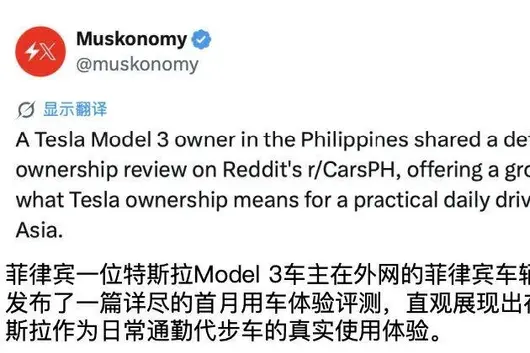
Recently, overseas blogger @muskonomy shared the usage experience of a Model 3 owner from the Philippines from the first month after purchasing the car.

After just one month of use, the Model 3 shows significant advantages in usage costs and smart experience, and space and practicality are also excellent, making him sigh he never wants to switch back to a fuel car.
Before buying the Model 3, this owner had been driving a Japanese B-class fuel car for a long time, with a fixed daily route, commuting on the highway from Monday to Wednesday, with an average weekly mileage of about 110 km. Year-round highway travel made him particularly picky about vehicle handling and driving quality.
What made him exclaim "Great Value" is Tesla's excellent usage economy. Previously driving a Japanese B-class fuel car, refueling costs remained high, "Before oil prices rose, just filling up cost about 13,200 pesos (approx. 1452 RMB) per month". After buying the Model 3, he used home charging for refueling, only needing to charge twice a week, monthly electricity cost about 2000 pesos (approx. 221 RMB), only one-sixth of the previous fuel car, commuting usage cost significantly reduced.

Even more surprising to the owner, the Model 3's space performance far exceeded expectations. "I am about 6.3 feet tall (approx. 191cm), weight 225 lbs (approx. 102 kg), worried before picking up the car that interior space was limited. After actual experience found, even if front seats are adjusted to comfortable position, rear seats can still easily accommodate adult passengers, daily commute completely sufficient, practicality maximized."
Singapore owner @Coco Silly Fish from Southeast Asian country also swapped her home's fuel car for Tesla. She shared on social platform, when driving fuel cars before, cost pressure brought by oil price rise, fuel anxiety from morning/evening peak traffic congestion, always troubled her greatly. After driving Tesla, commuting refuel cost even lower than public transport, overall usage experience also greatly improved.
Besides saving money and being worry-free, Tesla's powerful power response, easy and effort-saving driving feeling in congested sections all left a deep impression on her: "The current calm feeling of usage is something fuel cars cannot replace!"