首頁Battery

搜尋歷史
熱門搜尋
經銷商登入 / 註冊


Author | Hao Wen
Editor | Qujie Business News Group
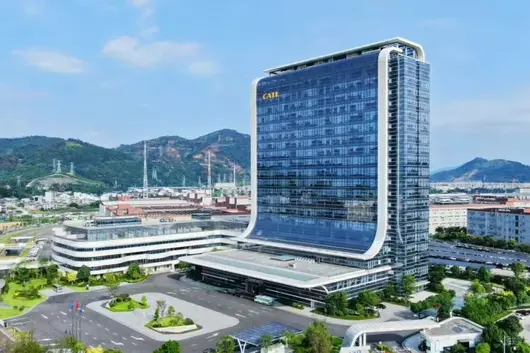
In this round of car manufacturers developing batteries in-house, what might be rewritten is not just the supplier list, but also CATL's profit model relying on a complete battery system to obtain premiums.
On the evening of September 18, after the Xpeng G9L launch event, Xpeng founder He Xiaopeng stated in response to media inquiries about whether they would develop batteries in-house, "Starting this year, Xpeng will handle batteries entirely in-house;" previously, Li Auto also announced that self-developed batteries will gradually cover all models.
Car manufacturers' accelerated commitment to developing batteries quickly formed a response in the capital market. On September 18, CATL's A-share closed at 301.95 yuan/share, a drop of more than 35% from the year's high of 467.34 yuan on May 7. The HK share closed at 507 HKD/share, a new intraday low since March 10. The total market capitalization of A+H shares evaporated by more than 700 billion yuan from the peak.

Image Source: Baidu Screenshot
The market generally views car manufacturers developing batteries in-house as two things: saving costs and ensuring supply. But the changes happening in the industry are far more than just replacing suppliers. Car manufacturers are seeking to regain product definition rights over batteries. CATL's past profit path relying on complete battery system solutions to obtain premiums is being impacted, and the original business model is facing structural adjustments.
1. Definition Rights Shift Down, Manufacturing Rights Remain CentralFirst, clearly see what car manufacturers are actually doing. They are not fully building battery cell factories themselves, but are keeping product definition rights such as battery formulas, fast-charging logic, BMS strategies, and vehicle integration standards in their own hands, while handing over the battery cell manufacturing process to battery suppliers.
For example, Xiaomi's "Longjia Battery" involves Xiaomi responsible for product definition and battery pack design and development, with CALB and Sunwoda customizing battery cells according to Xiaomi standards; Li Auto's battery self-research involves self-developed and self-made battery packs, with cells produced by Sunwoda and CALB; Xpeng has taken back the entire battery pack chain, retaining only the procurement of battery cells.
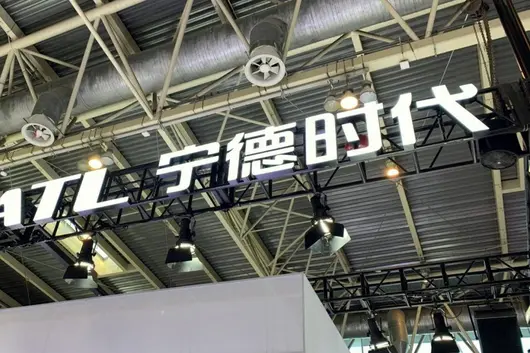
This exactly hits CATL's core source of high gross margins. In the past, it delivered a complete set of "battery solutions + exclusive designated supply", obtaining technology, system solutions, and pricing dividends from exclusive supply in one order. Nowadays, car manufacturers hold formulas, structures, vehicle integration, and other links in their own hands, only purchasing customized battery cells from battery manufacturers. CATL's business space for obtaining premiums relying on complete battery packs is facing obvious squeezing.
Changes are also reflected in financial report data. In the first half of 2026, CATL's largest revenue source - power battery system gross margin dropped to 20.63%, a year-on-year decline of 1.78 percentage points.

Image Source: Semi-Annual Report Screenshot
The rising logic of second-tier battery factories has also become clear. In addition to their own technology iterations, the key lies in being willing to adapt to car manufacturers' product definitions and undertake deep customization development. Li Auto injected 2.65 billion yuan to increase capital in Sunwoda, becoming its second-largest shareholder. CALB has also grown into Xpeng's main supplier. Under the current industry chain pattern, manufacturers capable of implementing car manufacturer customized battery cell solutions are expected to capture the incremental share released by CATL.
2. "Know How to Build Cars, Not Necessarily How to Build Batteries"Car manufacturers regaining definition rights is essentially a redistribution of profits.
In the past few years, profits in the new energy vehicle industry chain have concentrated heavily on the battery segment. In the first half of 2026, CATL's net profit attributable to parent company was 43.284 billion yuan, while according to statistics, the combined net profit of 15 mainstream listed car manufacturers such as BYD, SAIC, Geely, Chery, etc., was 21.048 billion yuan, less than half of CATL alone. As early as 2022, GAC Group's then Chairman Zeng Qinghong openly complained: "Batteries account for 60% of the vehicle cost, aren't I just working for CATL?"

Image Source: Semi-Annual Report Screenshot
In this round, car manufacturers developing batteries in-house combined with multiple suppliers running in parallel, the goal is to squeeze excess profits in the battery segment and promote profits to flow back to the vehicle end. The lithium battery industry may return from past phased high returns to a relatively fair profit level of manufacturing.
But inferring "CATL will be replaced" based on this is still premature. Car manufacturers' battery self-research has a natural ceiling. He Xiaopeng explicitly stated in an interview that Xpeng does not intend to enter the production of battery cells itself; investing in battery cells is ultimately for others.
Car manufacturers are good at vehicle product definition and system integration, but face high thresholds in yield, consistency, and cost control of mass production of battery cells; battery cell manufacturing belongs to capital-intensive industries, only sufficient scale can dilute costs. Once sales fluctuate, capital-intensive capacity will drag down the car manufacturer's balance sheet. CATL's Chief Manufacturing Officer Ni Jun once openly stated: "Knowing how to build cars doesn't mean knowing how to build batteries, professionals should do professional things."
Definition rights can be contested, but barriers to mass production are difficult to migrate quickly. In the first half of this year, CATL's battery system capacity utilization rate reached 94.86%, with 764 GWh of capacity under construction; the German plant has already achieved profitability, and bases in Hungary, Spain, and Indonesia are landing successively. According to data released by Korean market research firm SNE Research, from January to May 2026, CATL's global power battery market share broke through 40% for the first time, reaching 40.2%.

Image Source: Semi-Annual Report Screenshot
CATL has even started to fight back for definition rights. It launched the 75# standardized battery swapping block for heavy trucks, laid out passenger car integrated smart chassis, packaged "battery + chassis" into a standardized solution that vehicle manufacturers can procure, trying to turn itself back into the "person who sets standards". On high-end models above 300,000 yuan, Qilin and Shenxing supercharging remain the mainstream technical solutions in terms of performance and safety. Although car manufacturers generally introduce second and third suppliers and carry out diversified supply chain layouts, for main-selling high-end flagship models, most will still keep CATL in the supplier list.
Therefore, the industry is unlikely to move towards simple substitution. In the domestic power battery track, a two-way check and balance pattern is more likely to form: car manufacturers strive for product definition rights, promoting more industry chain profits to flow back to the vehicle end; CATL guards the core capabilities of high-end manufacturing.
However, challenges still objectively exist. If more high-end models deeply dominate battery definitions later, the product performance advantages of leading battery enterprises gradually turn into industry general capabilities, and CATL's existing product premiums still have the possibility of being continuously compressed.
Facing the gaming pressure of the domestic market, CATL has not bet all its chips on domestic car manufacturers' power battery businesses. Overseas markets and energy storage businesses have become important growth pillars. In the first half of the year, the energy storage business achieved revenue of 53.261 billion yuan, a year-on-year increase of 87.54%; overseas revenue was 87.129 billion yuan, a year-on-year increase of 42.35%, with overseas business gross margin at 29.97%, significantly higher than the domestic business's 21.16%.
For CATL, the real risk does not lie in being completely replaced by car manufacturers, but in whether it can adapt to the gross margin in the domestic market that is tending to thin out, relying on manufacturing advantages, global layout, and energy storage business to continuously obtain reasonable returns.

Author | Guo Yue
Editor | Zhi Hao
Car Daily reported on September 18, last night XPeng officially launched its flagship large 5-seater SUV XPeng G9L. The new car offers pure electric and extended range power options, with a limited-time price of 231,800 to 309,800 RMB.

▲ XPeng G9L Price
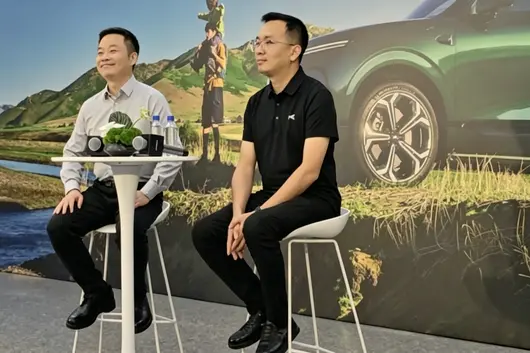
After the meeting, XPeng Group Chairman & CEO He Xiaopeng, XPeng Group Product Matrix GM Wu Anfei accepted interviews from domestic media including Car Daily.
At the interview site, He Xiaopeng and Wu Anfei had in-depth exchanges on flagship 5-seater SUV positioning and group targets, premiumization of Chinese brands, overseas layout progress, XPeng cooperation with Volkswagen and other car companies, robot planning, and other questions.
Compared to the product presentation at the launch event, XPeng official released clearer strategic information on new cars: G9L undertakes the task of brand premiumization and completing product matrix. Group target is for this car to be top 3 globally in sub-market. This model is the volume and profit contributor, and also bears the responsibility of expanding global scale. New car will be globally launched at Paris Motor Show on October 12.
Regarding Chinese car brands impacting premium, He Xiaopeng's view is, in the context of tech inclusivity, car price ceiling does not exist. Key point is satisfying which type user needs. In future Chinese cars will have products priced from 1 million to 10 million RMB. Competition will rise from function, performance, price to brand, quality, and software value.
He Xiaopeng also emphasized overseas tactics, No price war, tech gap competition. Next year overseas will focus on completing intelligent driving, offline voice, and super fast charging capabilities. 2027 to 2028 promote global charge network construction.
He also revealed, XPeng is negotiating tech and chip cooperation with more car and non-car companies.
Regarding robots, He Xiaopeng believes, Robot difficulty is about 20x of making cars. XPeng target is mass production end of December 2026, then global delivery. Intelligent driving, OrinX distilled version planned to roll out batch by batch from 4th quarter this year.
Notably, facing the question "Whether self-developing batteries", He Xiaopeng stated directly: "Starting this year XPeng batteries are all done by ourselves. Not battery cells, investing in cells ultimately others. We also invested in 3 cell companies, but batteries starting this year we do them all ourselves."
Overall, XPeng's group interview content has jumped out of single model launch itself, but systematically displayed Chinese car premiumization, robots, intelligent driving, etc. second growth curves and AI ecosystem, etc. layout aspects. This is not only XPeng's strategic goal, but also a microcosm of Chinese cars moving from local scale competition to global value competition.
Below is the core content of this group interview, Car Daily edited based on not changing original meaning.
One. New Car Launched Globally in October Targeting Top 3 in Global Sub-MarketQ1: G9L vs G9 are two cars, but named G9L, easy to think it's long version. Launch event emphasized 5-seater GX. Why name G9L? Why not directly make GX 5-seater?
Wu Anfei: Name was debated many times. G9 is hot selling globally, overseas selling well, we thought many times.
We think GX's X globally will be understood as number 10, and G9L car is bigger than G9, thinking back and forth, calling G9L is more suitable. Logic is very simple, discussed many times in middle.

▲ XPeng G9L
Recently encountered some strange things, Australia etc. already used some names, we are still discussing some small adjustments.
Second question, why not modify on GX 6-seater basis, change 6 seats to 5 seats? This is why today call it Gold Large 5-Seater.
If big modification, investment cost smaller, but can only realize seat count change, did not realize handling adaptation, handling might be sacrificed. How to realize space, handling and max axle ratio?
We initially hoped to design a car adapting global gold ratio. We gave up a very mature, simple, small investment model, hoped to design native, space and motion considering car, thus had G9L. We did not want to take shortcuts.
Q2: G9L price aggressive, launch event mentioned 100+ items 500k luxury config, achieving "9 Series config, 6 Series price". Industry many flagship config usually only high or top config, G9L large scale config release how consider behind?
Wu Anfei: G9L and GX same source, more than 3 years ago we hoped to design two flagship cars. Fundamental reason is customer needs: Users hope for 9 Series flagship experience, but family members not so many, only need one 5-seater car.
Therefore from design start we hoped to make a 9 Series large 5-seater car.
First, it is not simple shortening 6 seats or adjusting seats, but redesign, adopt new gold ratio native 5-seater car, reach 0.605 gold ratio.

▲ XPeng G9L Multiple Luxury Configs Ensure Driving and Riding Experience
Second, it positioned as global car from start, support left and right steering, 2WD and 4WD.
Third, energy forms provide pure electric and extended range multiple choices, because some countries charging facilities imperfect, extended range can also provide good experience. These 3 dimensions thought from 3 years ago when considering this car already considered.
He Xiaopeng: It is different from traditional 6 seats modified 5 seats, 5-seater car first must be easy to drive. Gold driving and riding is very cool. I many times use intelligent driving, excited I drive myself, G9L driving very cool.
Today G9L has 3 main configs: 702 Max 2WD, Ultra SE, Flagship, all fall into 250k to 300k this core price segment.
This price segment many users want to buy a car for oneself driving cool, occasionally take family friends, has face, intelligent driving strong, say out very cool car, this is what we very expect to make product.
Q3: XPeng this year product update rhythm very fast, management layer put 4th quarter monthly delivery 60k target entrusted on G9L. G9L in XPeng overall product layout undertake what role? Management layer more expect sales scale, or product structure and profit quality improvement?
Wu Anfei: G9L positioning clear, is flagship twin cars one. We hope brand continuous upward, GX responsible for large 6-seater, G9L complete large 5-seater map.

▲ XPeng G9L
Sales and profit we both hope to obtain, but more want is how to let large 5-seater flagship both get Chinese users like, also get global users like, and in sales, profit and overseas go out aspect bring company new growth point.
He Xiaopeng: XPeng now so big car must definitely pursue enough profit, but put in global angle, it will have very large scale. G9 globally sells very well, G9 plus G9L I believe will be better, this is my expectation.
Q4: Last time GX you said domestic target sales top 3, GX now sales not bad. G9L domestic sales target is what? Two cars 3 years ago same period R&D, except tech platform shared, core supply chain reuse share about how much?
He Xiaopeng: We did not discuss G9L sales target. If you must ask, I don't know short term or mid term, for me same is global top 3, in this category, this sub-market, I think very have opportunity.
XPeng car matrix breakthrough already opened, we very clear future in one price segment do what positioning car, this is 10 years, 20 years thinking logic. Some categories expect top 3, some categories expect top one or top two.
Including just now someone asked why not make GX into 5 seats, we found 6 modify 5 revision plan which side crowd not like, should do this segment customer well, do perfect, can sell best, not less spend money, less work, finally sales less.
We did dozens of countries test, now still someone outside repeatedly test, so expect long term stable high quality do it well.
Wu Anfei: Supply chain reuse aspect, G9L is a global car, bottom layer chassis craft 90% above is native shared, same platform.
Upper body is completely two forms, because posture different, appearance contour different, so upper body is like new designed gold ratio state, comprehensive reuse rate will be lower.
Middle back office like software, model, compute power, hardware all shared, of course will do certain adaptation.
Q5: G9L approximately when start global delivery? Global delivery quantity expectation how? Any North America sell car plan?
Wu Anfei: G9L in October 12 Paris Motor Show start global launch, launch after start delivery. Global sales target aspect, different countries, different markets have different target.

▲ XPeng G9L
We hope it in global big car market from top 3 start, gradually to better direction develop.
He Xiaopeng: If future have opportunity, I believe XPeng products will go to US. I hope XPeng products can let global users both like, this is my long term goal.
Q6: 300k mid-large SUV track competition fierce, G9L most move which type customer? If only say one core competitiveness, G9L most core competitiveness is what?
Wu Anfei: We hope to move have city gene family users, also have many luxury car replacement users. Core competitiveness summarize: Guard safety, constantly raise safety lower limit, put this type user max demand space do extreme.
G9L is an extreme space, many this size cars layout 6 seats, we only layout 5 seats. In addition, intelligent driving definitely is our car killer weapon.
Q7: G9L right steering version domestic rolled off line, future overseas launch specific plan how? Any production line overseas go plan? Overseas adaptation, compliance aspect did what adjustments? Why no in Middle East sell pure electric?
He Xiaopeng: Because no production capacity.
Wu Anfei: G9L in October 12 Paris Motor Show Europe sell. Except Paris, global now deploy 60-plus countries, continuously in October, November, December launch and start delivery.
Will it in local build production line? Today share passed, XPeng global have 3 manufacturing bases: Graz, Indonesia, Malaysia all have factories.
G9L first step firstly in Europe Graz factory produce, I also will go to Graz factory solve rest situation completely, complete mass production action. Overall overseas go out rhythm with domestic synchronize.
Global synchronize overseas go out must adapt how many laws, do how many change?
First manufacturing quality and supply chain is one body. Manufacturing with domestic supply chain, manufacturing craft, inspection craft global same root same source, one body design. Different countries will adapt laws, also Europe specific demands.
Today saw Russian arm source, that is Europe luggage rack have many demands, so we in luggage rack design, body stiffness strength spend many kung fu, strength very strong.

▲ XPeng G9L with Russian Arm on Stage
Actual life scene is Europe many users hope install bicycle and go out travel product. Verification aspect will do, also adapt energy, seat forms etc.
He Xiaopeng: I supplement. XPeng next year have 3 core capabilities, previously in overseas did not show, 2027 year all will show.
First is intelligent driving, previously did not have laws support, next year global up VLA.
Second is voice, overseas voice languages especially many, some places monthly collect 4,000 yuan traffic fee, pass 5 months only give bill, not like China operators next month give bill. So must do no traffic under voice dialogue.
Third is super fast charging, just completed first global storage super charge integrated device, currently overseas preliminary build, 2027 year, 2028 year XPeng super storage charging station will in global large range build.
These 3 capabilities XPeng domestic all have, domestic have intelligent driving, voice, charging, overseas all not, but next year start, XPeng in global tech differentiation will more and more.
Everyone will see, XPeng next year export is both sell expensive, also sell good, also growth fast enterprise one, I very have confidence.
Q8: G9L why consume time 3 years, cross 26 countries, complete 6.74 million km global verification? This long cycle massive mileage behind strategic consideration is what? Many car companies promote car interior large flat floor and life scene, G9L in attracting global young family users, most differentiated and max moat is what?
Wu Anfei: 3 years ago develop this car time, we from internal always hope improve durability, safety aspect lower limit, and design into global car, consider extreme cold, extreme hot various scene test.
Deploy vehicles compared normal car factories more many, left steering, right steering countries both do corresponding test. Company product matrix logic always hope develop reliability lower limit up lift, today also see safety upper limit raise.
Regarding development cycle, we put development verification do more sufficient. Compared ordinary Chinese car, max difference is verification more complete.
He Xiaopeng: Simply speak, expect future more cars with same logic face global. Face global then comply global standards, comply global standards, durability, reliability, stability need do better more comprehensive; do more comprehensive, must spend more time, more money, but benefit is whole car quality better.
Today have mentioned G9L quality good, stiffness, performance, space, this very important.
Differentiated aspect, First, same have space long board, G9L driving and riding capability very good, I think far beyond them.

▲ XPeng G9L Cockpit
Second, same have max config, and price very fragrant.
Third, safety standard is global safety standard, add several countries, many limit conditions safety standard. We on safety quality requirement more comprehensive, more comprehensive.
I always think a car need comprehensiveness, for luxury cars only then more safe, because various extreme conditions all have good experience, for high-end flagship car owners very important.
Q9: Wang Fengying said G9L "Global No Rivals", is she 30-year SUV career most like one car. You with Wang Fengying on G9L have what exchange details? From project start to now, which thing discuss longest time? Any dispute? Finally who persuade who?
He Xiaopeng: Although Wang Fengying do SUV origin, I do Internet origin, but we common characteristic is sincere.

▲ XPeng Official States New Car Has No Rivals in Global Same Price Range
G9L initially just a thought and target, process meet many difficulties and challenges.
I once with Wang Fengying, Wu Anfei discuss, G9L test time whether stick film tear off, because film will cover many details, also can not hear wind noise. They from various reasons persuade me, I also did retreat and compromise.
Second, G9L must up XPeng 2nd Gen VLA XOS 6.3.0 version. Wu Anfei and Wang Fengying than me more insist, they think this is a special good intelligent assist driving system.
2022 end year I pull Wang Fengying join XPeng time, she still think autonomous driving assist not important, but now her thought completely change, request 6.3.0 version must do well and mount to G9L. Including appearance, 4WD config, price etc, Wang Fengying and I in G9L spend very much energy.
Wu Anfei: I also participated many debate, finally everyone both can find good solution. Core goal is build this level without rival car, simultaneously it is a global car. Departure point consistent, debate last result will not bad.
He Xiaopeng: We often in meeting room debate, like G9L price, eating time then relax.
Q10: You with Yin Zheng partner complete product explanation, feel how? Yin Zheng on G9L propose what impression deep thought or suggestion? With Ouyang Nana stage cooperation have what difference?
He Xiaopeng: One handsome guy, one beauty.
Yin Zheng self say is "Suit Tyrant", Ouyang Nana is gentle intelligent.

▲ Actor Yin Zheng Introduces XPeng G9L
Yin Zheng very know cars, like drive performance cars, like for Russian arm modification; Ouyang Nana is new driver, first time see her time she just got driver license. From not know car to know car, is completely different two states.
One pursue driving and riding performance, one pursue interaction, experience, peace of mind and appearance. They common characteristic is both better than I can speak.
Two. He Xiaopeng Discusses Chinese Cars Price Ceiling Does Not Exist, Future Will See Million Level ModelsQ11: XPeng October Paris Motor Show will globally launch G9L, foreign high-end flagship SUV competition fierce, brand cognition more solidified. This track overseas go out core competitiveness where? How persuade them accept China luxury flagship? Overseas high-end flagship track need rapidly complete what?
Wu Anfei: First share G9 overseas case. G9 is mature case, we in Germany etc many countries rank sub-market first. Can understand as, we already in Europe countries, originally auto industry very developed countries compete.
G9L such flagship car innate have many advantages: First, intelligent driving capability. G9L already mount 2nd Gen VLA, currently Europe test, laws complete test after can push out, this aspect lead most part enterprises.
Second, 9 Series flagship config. Europe luxury brand cars most either select option add money, either simply not have, we in config aspect global no rivals.
Third, provide double energy, have pure electric have extended range. Europe charging facilities developed, pure electric completely no problem; charging facilities not developed places, extended range can provide choice. Recently go Middle East etc, GX in Middle East already exceed 3,000 orders, mainly extended range.
He Xiaopeng: That because we not in Middle East sell pure electric, if sell pure electric more.
Wu Anfei: We in global flagship product aspect completely have very strong competitiveness. Another angle, Chinese cars overseas go out have so much competitiveness, Europe government also start intervene, also show they also see our competitiveness.
Q12: Fuel car era luxury brand core is engine and gearbox, EV era 3-electric flatten barriers, car price constantly drop. Many intelligent EV product power not lose 3 5 years ago 400-500k, 600-700k cars, but sell to before that high price more and more hard. You think domestic EV price ceiling where? Fuel car era Porsche maybe 1 million+, domestic EV about how much?
Wu Anfei: This really is tech inclusivity time. 10 years, 20 years ago spend 1 million can buy 9 Series product, now 300k price, including GX and G9L, all can buy original comparable million level ability.
First to consumer favorable, is good thing, also industry progress mark.
Also because this reason, Chinese cars export more and more rich, global look also is competitiveness.
Price ceiling does not exist, key is truly satisfy which class user demand. 500k level user have 500k level demand, we need realize demand change.
Before produce fridge, TV, big sofa, next will bring new tech demand, like higher level intelligent driving.
Before is L2 level assist driving, future will definitely realize L3 level or L4 level, give different stage user bring larger differentiation feel.
He Xiaopeng: Today enterprise competition if only in function, performance, price, still not high dimension competition.
Future competition in higher dimension, like brand value, quality value, up up besides scale value, most important is software value not yet dug.
Software later is SaaS, later is network effect, later is ant colony effect. Today car competition still only use hardware effect, software effect not fully dug, later will form new business change, very fast, in this 10 years will see.
Maybe today imagine not, like 2014 year imagine not 2025 year NEV penetration rate exceed 50%, this is dynamic change logic.
I think Chinese cars definitely will have 500k+, 1 million+, even 1 million to 10 million between product, don't know who is do.
Maybe different companies have different ideas, positioning, difference and level. Why plane can sell 10 million+, car most sell 500k-? This is tech bring difference.
This 10 years if car software capability stronger, I believe Chinese car industry also stronger, later will have larger change.
Q13: You once said overseas must do high-end, benchmark Audi etc high-end brand. Rely on what support mid-high-end positioning? Specific tactic is what? Any stage goal?
He Xiaopeng: Very simple, rely on tech difference. If everyone go Europe, ask Europe people know not know XPeng, definitely not few people know; ask them XPeng is what price car, many people think is mid-high-end and high-end.
G9 in Europe sell 80,000 to 100,000 Euro (approx RMB 615k-769k), and in many countries pure electric mid-large SUV category, XPeng G9 is number one, very interesting.
Although this category scale together not enough big, but we many years all very persist.
I also said, why G9L, MONA all have Euro spec version, directly go overseas, directly put tech difference do well. Europe, Southeast Asia, Mexico friends, all expect a different car.
We not walk price, not hit low config, but walk tech difference.
From this year end start, XPeng overseas product road just gradually pull up. I very firmly believe, we must put global brand, profit, tech difference both do well.
Three. Currently Negotiating Tech Cooperation with More Car Companies, VLA Distilled Version Push Out from 4th QuarterQ14: Super extended range described as "No anxiety pure electric", how satisfy user "both want and also want" demand? You like which one car?
Wu Anfei: Super extended range in product think can understand as "Can refuel pure electric". This time extended range pure electric range reach 435 km, city daily use week charge once enough, even not charge also enough, because pure electric can use up then extended range refuel.
Long distance travel time, extended range range exceed 1,600 km, reach 1,602 km, completely satisfy cross province, go scenic spot etc travel demand.
In addition, we still standard equip 5C extended range battery, charging speed very fast. Extended range system adopt invisible extended range tech, pure electric switch extended range or low power time, experience almost no feel, because both have engine noise reduction ENC tech, also RNC tech.
We think in super extended range track, this set tech is whole industry leading.
He Xiaopeng: I late to 3 minutes, because Mexico ambassador in side ask me when time put G9L bring to Mexico.
Do extended range inspiration one origin is I go to Mexico, found local electricity supply not enough. China infra capability global best, but many countries lack electricity serious, equivalent 1990 year around China electricity level.
This year beginning Iran war also explain, some places lack oil.
Australia recently buy EV, also because no oil.
Future different region definitely need two energy forms, some places only electricity, some places only oil.
No matter China North, often go far away, or global partial regions, need no mileage anxiety pure electric.
As for what I like what car, previous like drive is P7, but recently often test G9, it than P7 high; from handling angle, P7 is very low lying sedan, handling very flexible. Recently drive more G9L, really very easy to drive, I very like.
Maybe 10 years later make out a dream car, but current tech not yet reach, next 10 years we will try best do, then tell you real answer.
Q15: XPeng with VW tech cooperation give XPeng bring what? Face Europe and global market, will with more car companies carry out tech cooperation?
He Xiaopeng: We with VW both harvest much, learn mutually, grow together. 3 people walk must have my teacher, German car companies and German industrial enterprises have many places worth us learn seriously, this is I very like thing.
Except VW, we also in communicate more cooperation, and with more car companies or non-car companies negotiate, involve tech and chip etc areas, suitable time share.
From next year angle, will see XPeng in open platform do very many things, because robot is open platform. We very expect XPeng future with China and global different industry, different demand companies have more depth win-win cooperation.
Q16: 2nd Gen VLA join time concept after performance amazing, some media take it with Tesla compare, both almost same dimension. UN autonomous driving laws currently landing, XPeng in global market advantage is what? Will be intelligent driving? Silicon Valley aspect progress how?
He Xiaopeng: XPeng 2nd Gen VLA XOS 6.3.0 version to user layer not necessarily huge jump, but from tech layer is huge jump. Big road effect with FSD consistent, small road effect obviously exceed FSD.

▲ XPeng G9L Equipped with 2nd Gen VLA 6.3.0 Version
We in multiple Europe countries and Australia have full blood version FSD, simply take 6.3 version go local run, find we than them good much. Interesting is, XPeng in overseas maybe take local small data do post training can do very well, this actually is foundation generalization capability.
I very have confidence, next year XPeng cars including G9L walk to global, software with VLA+VLM main, VLA responsible movement, VLM responsible brain, communication and interaction. Put these 2 capabilities combine together, will construct Chinese cars walk to global new core differentiation.
Before UN laws feedback not support L2, now L2, L3 both give definition.
I have confidence in 2027 year, 2028 year, everyone will see global most leading intelligent assist driving, definitely will have XPeng, this is we all out strength do thing.
Q17: Previously in Guangzhou experience OrinX distilled version VLA2.0, experience with XOS 6.3.0 Ultra version very close. Double OrinX have this big progress, why not early say? Many owners waiting, new version when push?
He Xiaopeng: Many OrinX owners both waiting distilled version.
Past progress not bad, but autonomous driving not only do well capability, also do well safety and comprehensive experience. Today these fields also many capabilities currently build.
We expect this year 4th quarter start, batch by batch to OrinX owners push. Not all cars, all versions one time push, but gradually batch. We expect all Double OrinX owners use up distilled version, this is we all out strength do thing.
Distilled very spend money, far beyond outside said A model to B model distilled, investment fee exceed my imagination.
We invest very big, hope put good distilled capability bring to everyone.
Why not early publicize? Because publicize earlier, someone will ask is whether day after tomorrow can upgrade. Actually it just R&D process, effect not bad, but also many work complete after can system upgrade.
We currently tight drum preparation, from 4th quarter start batch push.
Four. Robot Difficulty About 20 Times Car Making, Target End of 2026 Global DeliveryQ18: XPeng robot complete record financing and start auto production line, heat unprecedented. You previously said last year robot explode fire after don't want more exposure, now is one time amazing or enter new cycle? Humanoid robot players rare, parts supply will restrict cost?
He Xiaopeng: Robot R&D very hard, do a robot about 20 times do car difficulty. Hardware, software, design, supply chain, many supply chain we self-develop self-check.
Because large amount self-develop self-make, I believe robot true mass production after capacity pressure not big. Past I don't want put robot out, because difficulty too big, also don't know previous year or last year when can stable put.
Today outside have many robot videos, we past 2 years also can do, but through edit put out no meaning, because can not mass production, just demo capability.
Now global many do brain robot companies constantly say brain reach new level.
Why global no do autonomous driving companies go publish pure research progress? Because autonomous driving already mass production, only research, not scale mass production, value basically no.
Robot today still belong to many car companies not out first car level. XPeng think, this year about equivalent 2018 year XPeng G3. 2018 December end XPeng G3 release, 2019 April start delivery; 8 years later, is 2026 December end, we target robot mass production, after start global delivery.
XPeng robot from research to engineering, product, commodity mass production, walk into very painful but happy rhythm period. Now start gradually warm up, wait until 4th quarter, next year 1st quarter 2nd quarter, everyone will see robot capability have jump.
We robot with most robot companies different, they do hammer, production tools, find where have nail; We think robot is production tools, production power and production relation of 3-in-1, no need find scene, can in sales store sell itself, also in pass sell cars, is completely different product.
Hard to do, but very interesting, I believe it truly can sell, not only to everyone see, next year do other things.
Q19: XPeng announce humanoid robot auto production line and first robot off line. Past industry compete parameter and demo capability, now XPeng put robot bring into production system, to XPeng robot commercialization mean what? From "Make Robot" walk to "Use Robot Make Robot", Car field accumulation exert how big role? Car network level then?
He Xiaopeng: Robot special hard, hardware, software, design, make all hard. Every change might change many associated places, even don't think of places.
Like robot head mount camera, head camera angle, auto focus AF, look near ability etc, will influence layout, parameter and capability.
Previous years robot one big problem handshake, can handshake no need lower head; If eyes config not good, must slightly lower head, will limit hands, feet, waist movement. Most part do robot companies all seriously under-evaluate hardware complexity.
Like do auto assist driving, first must have OK cars, chassis, compute power, otherwise impossible do. XPeng past spend very long time think hardware, production line and supply chain.
We many thing is industry not have. Recently robot WRC World Robot Conference exhibition, many robotic hands, robotic arm elbow joint again thick, usually also 1 to 2 bare wires. To do both thin, both safe, both durable, both have force, all must re-self-develop, external supply chain basically not satisfy demand. This is why I say this is very hard step.
Today robot production line not open public, maybe next year certain time open, might be high beat production line.
Inside have people, have robots, beat very high, not like car production line, not like phone production line, is strange production line. We get one year plus, hand dry only half year, R&D and design dry one year plus, front want do more clear. Can mass production, how mass production, is robot vector to mass production road walk key step. I also expect future years, no matter commercial, industrial or family, both can see robot help to us.
Car network level, XPeng have 70% capability with robot overlap, but more overlap is back office or middle capability, front office have many different.
Today G9L release VLA+VLM, is we from last year end major modification start goal: Put robot and next generation car upgrade to same frequency, same source, same middle office. This time finish after, robot speaking capability in car after will all have.

▲ VLA+VLM Connects Robot and Car

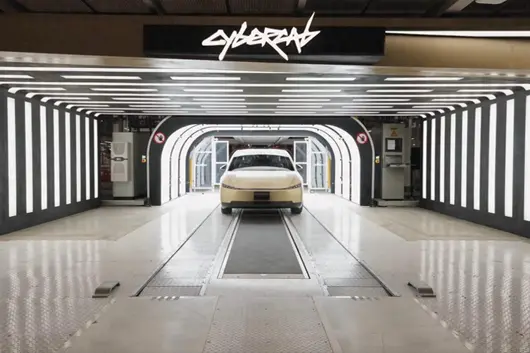
Tesla CEO Elon Musk posted on social media on the 9th local time, stating that redesigning the Cybercab production process achieved a production speed more than 5 times faster than traditional car manufacturing models. He explained that relying on the Unboxed (disassembly modular production) mode, various assembly modules are produced in parallel, and the entire vehicle is assembled at the final step; the production line footprint is halved, and output increases. The Cybercab, which started production at the Texas Gigafactory in February 2026, has become an industry focus again thanks to the astonishing production capacity achieved in just over half a year.

Of course, there are still unresolved issues. As of early September, only 45 Cybercabs are registered in Texas, accounting for 11% of the total 420 registered autonomous vehicles in Tesla's Texas. The effect of cost reduction remains to be verified by the actual utilization rate and final vehicle selling price. Drastic changes in production models are not exclusive to Tesla. Vehicle manufacturers like Ford and Hyundai Motor Group are reworking their assembly lines in their own ways. The century-old underlying logic of automobile manufacturing is wavering. This article reviews the technical routes of each company.

After Henry Ford, the iteration of production models
In 1913, Henry Ford introduced assembly line assembly at his Highland Park Plant in Michigan. The body moves along the conveyor belt, and workers at fixed stations repeatedly complete assigned tasks. The Model T went off the line in 90 minutes, and cars truly went to the masses. This model became the standard paradigm of the automotive industry for over a hundred years thereafter.
The electrification era is overturning this logic. Internal combustion engines and gearboxes are eliminated, and the number of parts is greatly reduced; simplified vehicle structures centered around batteries and motors have spawned new assembly processes. Starting with Tesla, Ford, Hyundai Motor Group, Toyota, Volkswagen, and BYD, each car manufacturer has offered different solutions. The focus of EV competition is shifting from batteries and software to the manufacturing process itself.

Tesla Abandoning Conveyor Belts
Tesla first unveiled the Unboxed modular production process on Investor Day in March 2023, redefining the concept of sequential assembly. Instead of completing the entire vehicle sequentially along a long assembly line, the 5 major modules—front cabin large die-cast parts, rear cabin large die-cast parts, structural battery pack, interior, and pre-painted exterior coverings—are manufactured synchronously on independent lines, and finally assembled into a complete vehicle at once in the final assembly area.

In traditional car manufacturing, painting is an independent process after the body is completed. The Unboxed mode directly colors the component panels in advance, eliminating the whole vehicle painting step. Tesla's goal is to reduce the Model Y production cost by nearly half and compress the single vehicle assembly time to 5-10 seconds. Referencing the 33-second production cycle of a single Model Y at Shanghai Gigafactory, the target speed is equivalent to more than 3 times the current level.
The United States Patent and Trademark Office granted Tesla the Unboxed process patent in September 2025. The first model to implement this process is the autonomous Robotaxi Cybercab, mass-produced at the Texas Gigafactory in February 2026. Existing mass-produced models such as Model 3, Model Y, and Cybertruck have not fully implemented this process yet. The planned budget-friendly new cars under $30,000 mass-produced in the middle of 2026 will also adopt this production method. However, there is also industry skepticism: Can this production line achieve multi-model co-line production? Referencing Tesla's past record of multiple production delays, whether this process can land stably on schedule remains to be seen.

Ford: Three-Path Split "Assembly Tree" Production Line
As the pioneer of assembly lines, Ford, after over a century, is personally deconstructing the production system it invented itself. Universal EV Production System (Universal EV Production System): Splits a single long production line into front, middle, and rear three branches, finally converging for final assembly, Ford calls this Assembly Tree (assembly tree). This architecture was made possible by eliminating internal combustion engine and gearbox assembly processes: The middle production line responsible for assembling batteries, seats, center consoles, and carpets serves as the main trunk, while front and rear cabin large aluminum die-cast parts are completed on independent lines and then merge into final assembly. Parts and tools are transported along the assembly tree to corresponding workstations, reducing workers' body twisting and large arm reaching actions.

This system was first implemented at Ford's Louisville Assembly Plant in Kentucky. Ford invested $2 billion to retrofit this plant and $3 billion in the Michigan battery plant, totaling an investment of $5 billion. The scrap metal from demolition reached 25,000 tons, and installing the new truss structure consumed a total weld length of 700 miles (about 1,126 km). The plant's first mass-produced model is the $30,000 level mid-size electric pickup Fathom. Ford stated that the assembly speed of this universal EV production system increased by 40% compared to traditional lines; the factory added dedicated workstations where software can be pre-flashed before module assembly; the plant's 5G network supports synchronized quality inspection during the assembly process. Parts mass production is scheduled for Q1 2027, and official mass production for consumers is expected in 2028.
Ford stopped electric pickup F-150 Lightning production in December 2025, with the official reason being the inability to find a viable profit path. This massive investment in the Louisville plant forms a sharp contrast with it, reflecting Ford's shift in electrification focus towards affordable high-volume models.

Hyundai Motor Group: Exploring Two Process Routes in Parallel
Hyundai Motor Group has not selected a single route but is synchronously advancing differentiated manufacturing innovation in Singapore, the US, and Ulsan.
The Hyundai Motor Group Global Innovation Center HMGICS located in Jurong, Singapore, directly abandons conveyor belts. The factory layout includes 27 oval independent work cells to achieve multi-model flexible mixed-line production. AGV unmanned transfer robots can carry up to 3 tons of car body, transporting between work cells, replacing conveyor belts. Boston Dynamics' quadruped robot Spot captures assembly points to complete quality inspection. The factory produces both IONIQ5 and autonomous Robotaxis simultaneously, with an annual capacity of over 30,000 units, leaning towards an experimental factory for small batches and multi-varieties.

The HMGMA (North American Gigafactory) in Ellaville, Georgia, US, scales the cell mode up to mass production scale. It adopts manufacturing platforms verified by HMGICS, with an annual capacity of 300,000 units; 161 Autonomous Mobile Robots (AMR) achieve logistics automation for interior assembly; the battery module factory is directly connected to the vehicle factory via a tunnel conveyor belt, improving logistics efficiency. The factory started producing the IONIQ5, added the Kia Sorento Hybrid model on June 2, 2026, and continues to expand co-line models.

The third route is in Ulsan, South Korea. Unlike 1996's Asan plant where Hyundai built a new vehicle plant, they chose to build a giant die-cast dedicated production line within the existing Ulsan factory. Using 6,000-ton or larger large-scale die-casting equipment to form car body parts in one piece, greatly reducing the number of parts and welding processes. Industry forecasts predict this process will be featured first on the 2026 large electric SUV Genesis GV90.

Hyundai Motor Group's route differs from Tesla and Ford, belonging to a dual-line parallel strategy: The Singapore factory focuses on the Cell cell mode for small batches and multi-varieties; the Georgia and Ulsan factories target large-scale mass production, developing large die-casting and automated logistics. Not pursuing a single standard answer, they implement multiple solutions in parallel based on production capacity scale and product goals.

Toyota, Volkswagen, BYD: Their Respective Routes?
Toyota still relies on the two pillars of the TPS Toyota Production System: Just-in-Time production and Jidoka (Autonomation), while conducting new trials. In June 2023, the Technical Workshop unveiled the self-driving assembly line: EVs rely on their own sensors to move autonomously through various processes, eliminating the need for conveyor belts. The goal is to reduce equipment investment and adapt to multi-variety, small-batch production. Meanwhile, next-generation EVs (prioritizing Lexus) will implement large die-casting processes starting from the 2026 model year, with the vehicle body split into three major parts (front, middle, rear) assembled integrally.

Volkswagen once launched the Trinity project benchmarking against Tesla, planning to build a new factory in Wolfsburg, compressing single-vehicle manufacturing time to 10 hours, only one-third of ID.3's current production duration. However, software R&D delays, management changes, and stagnant European EV demand led to repeated postponements. In 2026, Volkswagen is considering closing 4 factories in Germany and laying off up to 100,000 people. This case fully illustrates that even grand manufacturing innovation concepts are easily shelved in the face of financial crises.
Chinese BYD does not fuss over production line forms, focusing instead on vertical supply chain integration. 70-80% of core parts such as batteries, power semiconductors, motors, and electronic controls are developed and produced in-house, building a system immune to external supply chain fluctuations. The Shenzhen headquarters final assembly line produces a complete vehicle every 51 seconds. R&D of parts allows battery technology iterations to be synchronized to vehicle design and manufacturing processes quickly, which is the core reason behind its high cadence.

The Key in the End: Cost and Execution Capability
Each company's route is different, but the general direction is converging: Relying on large die-casting to reduce parts; abandoning fixed conveyor belts, shifting to flexible logistics with robots and AGVs; completing software flashing in advance during the assembly stage. Every company is utilizing the simplified vehicle structure brought by electrification to forge their own path.

But the implementation progress differs significantly among companies: Hyundai Motor Group operates a small-scale Singapore test line while advancing Georgia and Ulsan mass production lines, and has even integrated hybrid models into production. Tesla and Ford have set commercialization timelines using Cybercab and Fathom as explicit new vehicle carriers, but it still takes time to reach stable mass production. In contrast, Volkswagen proves that manufacturing innovation is easily downgraded due to corporate financial conditions.
Now, the EV markets in various global regions are cooling and heating differently, and manufacturing innovation has become a cost-reduction measure that determines the life or death of car companies. It cannot be determined yet which process will become the industry new standard, but the conveyor belt assembly line that has lasted for a hundred years is no longer the only solution.

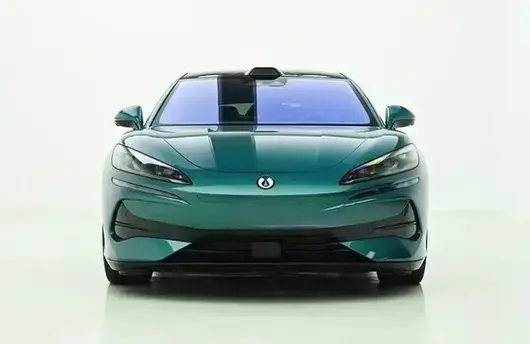
On September 15, Denza officially announced that the Denza Z9GT is scheduled to launch in the Thai market on September 16. The vehicle went on sale domestically in March this year, with 5 configurations available, priced from 269,800 to 369,800 yuan, and has already been sold in markets such as Europe and Malaysia.

Exterior: Retains family design. The front features split narrow headlight clusters, and the front bumper has a through-ventilation heat dissipation opening. New car color Fjord Green added; LiDAR moved to the roof, consistent with other family models; additionally added small blue smart driving indicator lights and brand new style 21-inch wheels. Side waistline and curved surface are integrated and coherent, with "Z" shaped decorative lines; rear features an integrated floating spoiler.

Interior: The interior features a Lava Red color scheme. Equipped with original factory colored carbon interior kit, diamond-quilted integrated sports seats, three-spoke sports steering wheel, BOOST paddles, and metal column shifter.

Configuration: Zero-gravity seats for the comfortable passenger seat, spacious rear row, streaming media side mirrors, intelligent warm and cold refrigerator, seat magnetic ecosystem, AR-HUD, etc., are all equipped.
Powertrain: Available in pure electric and plug-in hybrid powertrains. The plug-in hybrid version uses a 63.8kWh battery pack, with pure electric range of 401km and comprehensive range of 1301km; the pure electric version has a range of 1036km. The entire series is equipped with the second-generation Blade Battery and supports fast charging, official claims 5 minutes to charge sufficiently, 9 minutes to fully charge.



In the first half of 2026, Sunwoda's power battery delivery volume and revenue both grew significantly. Power and storage batteries have already become the company's main source of revenue, surpassing consumer batteries. However, the subsidiary Sunwoda Power, which serves as the core carrier of the power battery business, is still losing money. Coupled with exchange losses in overseas markets, Sunwoda's non-recurring net profit for the first half of the year was less than 100 million yuan. The new growth engine has just arrived but is yet to exert force.
Written by | “Caijing” Special Contributors Yang Zheng, Zhao Cheng
As a globally leading consumer battery supplier, Sunwoda (300207.SZ)'s main growth engine is shifting towards power batteries.
Recently, Sunwoda Electronic Co., Ltd. disclosed its 2026 semi-annual report. The company achieved operating revenue of 38.179 billion yuan in the first half of the year, a year-on-year increase of 41.48%, setting a new record for the same period. Net profit was 468 million yuan, a year-on-year increase of 91.1%. Net profit attributable to shareholders of the listed company was 603 million yuan, a year-on-year decrease of 29.59%. The difference between the two comes from minority interest, specifically the loss of the non-wholly-owned subsidiary Sunwoda Power.
The change in performance mainly stems from two aspects: First, power battery deliveries surged 76.37% year-on-year to 28.36GWh, driving rapid expansion of revenue scale; Second, financial expenses surged 345.33% to 882 million yuan, mainly due to increased exchange losses.
From a business structure perspective, Sunwoda, which used to be mainly focused on the consumer battery business, has shifted its core growth engine to the power and energy storage sectors. Electric vehicle (power battery) business revenue reached 14.134 billion yuan, a year-on-year increase of 85.87%, with gross margin improving by 8.59 percentage points to 18.36%. Energy storage system business revenue reached 1.77 billion yuan, a year-on-year increase of 76.21%. In comparison, traditional advantageous consumer battery business revenue was 14.452 billion yuan, a year-on-year increase of 4.04%, with gross margin declining by 4.95 percentage points to 14.68%. It is evident that Sunwoda's profit growth in the first half of this year mainly came from power batteries and energy storage systems, and the main growth engine has shifted to the power battery sector.
However, the contradiction lies here. Sunwoda Power Technology, the core of the power battery business, achieved operating revenue of 15.529 billion yuan in the first half of the year, a year-on-year increase of 90.1%, but still incurred a loss of 129 million yuan calculated on a net profit attributable to the parent company basis.
This means that although Sunwoda has found new growth momentum in the face of weak growth in the traditional consumer market, its profit quality still needs improvement. The real test may not lie in how many orders are won, but in how much money can be earned from those orders.

(Chart: Yang Zheng | Data Source: Corporate Financial Report)

Power Battery Becomes the Main Engine of Revenue Growth
Power battery business is Sunwoda's main growth pole in the first half of the year. Financial reports show that electric vehicle battery revenue in the first half of the year reached 14.134 billion yuan, a year-on-year increase of 85.87%, with gross margin at 18.36%, nearly doubling the 9.77% of the same period last year. In the first half of 2026, the company's electric vehicle battery delivery volume reached 28.36GWh, a year-on-year increase of 76.37%.
The rapid growth in the power battery field comes from both internal and external dynamics. First, Sunwoda's leading position in the HEV (Hybrid Electric Vehicle) battery field. In 2018, Sunwoda passed the review of the Renault-Nissan Alliance and obtained HEV battery specifications. Products were equipped on models like Sylphy and X-Trail e-POWER, and entered the hybrid supply system of many main models of SAIC Volkswagen and FAW-Volkswagen. SNE Research data shows that in the second quarter of this year, Sunwoda's HEV lithium battery installed capacity ranked first globally.
European market demand for HEV batteries continues to drive related business growth. According to official data released by the European Automobile Manufacturers Association (ACEA), the market share of HEV in new car registrations in the EU was 37.3% in the first half of this year. This proportion ranked first among all power types and increased from 34.8% in the same period of 2025. Accordingly, Sunwoda planned a 15GWh power battery base in Hungary to meet the needs of large customers like Renault and Volkswagen. This factory will become the first wholly-owned battery factory built by a Chinese second-tier manufacturer in Europe.
The domestic market also shows a development trend favorable to Sunwoda. Many vehicle enterprises are striving to promote the diversification of power battery suppliers, providing entry space for second-tier manufacturers. Zhongshang Industry Research Institute data shows that CATL's market share in the power battery market showed a downward trend overall in the first half of the year, dropping from 49% in February to 42.7% in June. CITIC Securities analysis stated that against the backdrop of continuous intensification of competition in the automotive industry chain, the power battery supply system is gradually evolving from single supply to dual supply and multi-supply, and diversified procurement will become a long-term industry trend.
In the second half of 2025, Sunwoda and Li Auto established a power battery joint venture, Shandong Li Auto Battery Co., Ltd., in Shandong with equity ratios of 50% each. Sunwoda stated in its financial report that Shandong Li Auto is managed by the Sunwoda dispatched management team. In addition, according to local media reports, in Xiaomi Auto's independent sub-brand "Xuntian" series, Sunwada became the primary supplier with a supply proportion of 60%. Hongmeng Intelligent Mobility's Luxeed brand also officially introduced Sunwada, with two models Luxeed V9 and Luxeed R7 to be equipped with its ternary battery packs. At the same time, mainstream automakers such as SAIC Motor, Geely, and Wuling maintain close cooperation with Sunwada. The Phase I products of Sunwada's Yiwu base are directly supplying Volvo and Geely.

(Chart: Yang Zheng | Data Source: Corporate Financial Report)
Cooperation with many vehicle manufacturers effectively pulled Sunwada's power battery market performance. According to Gasgoo Automotive Research Institute data, Sunwada's power battery installed capacity reached 7.24GWh in the first half of the year, with a market share of 3.1%. Installed capacity increased by 32% year-on-year, and market share increased by 0.6 percentage points compared to the full year of 2025.
Accordingly, the release of scale effects and improvement of profitability in the power battery field were expected. Western Securities research report pointed out that Sunwada's power battery is equipped with vehicle companies such as Li Auto, Dongfeng, Geely, Renault, and Nissan, and is expected to achieve the release of shipment scale effects and drive the company's annual performance to break even. Huachuang Securities also believes that the company's power battery and energy storage business volume drive high revenue growth, and profitability has been significantly repaired.

New Energy Storage Products Land, Second Curve Appears
The incremental business of energy storage is mentioned frequently by brokerage firms along with the power battery sector. Financial reports show that Sunwada's energy storage business revenue in the first half of the year was 1.77 billion yuan, a year-on-year increase of 76.21%, with delivery volume of 14.7GWh, a year-on-year increase of 64.98%.
The highlight of new products this year is large-capacity cells and AI backup power. In May, Sunwada put into production 588Ah energy storage cells, and officially released them in August. The cell energy density reached 417Wh/L. At 25 degrees Celsius and when the battery health drops to 70%, the cycle life can reach 10,000 times, theoretically matching the 20-year operation cycle of the power station. The full life cycle of a single 200MWh power station is expected to save 10 million kWh of power loss. Before this, its 684Ah stacked cells achieved mass production of millions of units. The two products are based on winding and stacking routes, forming a capacity ladder covering different system designs.
Financial reports show that Sunwada's energy storage system revenue mainly comes from overseas markets, with over 70% of overseas customers. In the field of home energy storage and industry and commerce, it has covered core markets in Europe, the Middle East, and South Asia. Europe is the main battlefield, becoming a major industrial and commercial energy storage brand in the German-speaking region, with core channel coverage exceeding 95%. In the field of network energy, with the high-speed expansion of the global AI (Artificial Intelligence) computing power industry, Sunwada's AIDC (Artificial Intelligence Data Center) energy storage business orders increased nearly 30 times year-on-year in the first half of the year. Relying on full-stack self-developed capabilities, its AIDC lithium battery solutions have been implemented in multiple key projects at home and abroad.
CICC research report stated that data center energy storage backup power demand is expanding, and Sunwada can provide a full-stack solution, so it is optimistic that energy storage business will become the company's second growth curve along with power battery business.

(Image Source: Yang Zheng)

Quality of New Engine Needs Improvement
In the first half of the year, consumer battery revenue, as Sunwada's traditional main business, reached 14.452 billion yuan, a year-on-year increase of only 4.04%, with gross margin declining by 4.95 percentage points to 14.68%. This is not a problem unique to Sunwada. Brokerage firm research reports show that global smartphone shipments declined year-on-year in the first half of the year. Although high-end phone sales grew, it could not change the overall pressure on the sector, and the profit space for consumer cells was squeezed.
However, for Sunwada, consumer batteries are the company's main products sold overseas. With limited growth in the consumer battery business compared to the previous year, the urgency of the power and storage sector continuing to expand its overseas layout became more obvious.
Currently, Sunwada's overseas bases are still in the investment phase. Financial reports show that Sunwada's Thailand battery production base Phase I project officially started production in the first half of the year. Currently, the company still has Thailand Phase II project, Hungary power battery production base, and Vietnam consumer cell production base under construction in overseas. The cost of the investment phase is directly reflected in the financial end. In the first half of the year, exchange loss was 538 million yuan, among which the US dollar was hedged through hedging. Tether, Indian rupee and other currency hedging tools are limited. The financial expenses surged more than 300%, largely due to this.
Therefore, Sunwada's growth prospects in the second half of the year still need to return to the domestic power and storage market. Brokerage structure analysis believes that Sunwada's power and storage product deliveries for the second half of the year are fully booked. As raw material price adjustments gradually land and production line yield rates continue to improve, future profitability is expected to improve. According to Dongwu Securities' calculation, Sunwada's annual power and storage delivery volume will reach 90GWh, of which power batteries are 55GWh and energy storage systems are 35GWh. This means that the company has about 62GWh to be delivered in the second half of the year. If the profit per Wh improves by one cent, there will be an additional 620 million yuan of profit space, and vice versa. The company's profitability curve for the second half of the year and even the full year will largely be determined by the power and storage business, especially the profit quality of the power battery sector.
Looking at power battery performance horizontally within the industry, among the few power battery listed companies that recently disclosed financial reports, Sunwada has the advantages of fast growth rate and large gross margin improvement, as well as the disadvantage of not yet achieving profitability in the power sector. Besides CATL which leads in scale and profitability, Gotion High-Tech achieved 1.386 billion yuan of net profit attributable to the parent company in the first half of the year while achieving power battery installed capacity ranking in the top three. EVE Energy's net profit attributable to the parent company in the first half of the year was 3.3 billion yuan with 45.7 billion yuan in revenue, with a net profit increase of 105.66%, and power and storage entered a stable profitability zone. In comparison, although Sunwada's power battery business achieved high revenue growth and significant gross margin improvement, it still recorded a small overall loss in the first half of the year, and the overall net profit attributable to the parent company was not commensurate with its revenue scale of over 38 billion yuan.
Growth rate not losing to peers, profit quality still catching up, is Sunwada's true position in the power battery industry. In other words, the growth engine has completed the switch, but there is still distance from the new engine being in place to exert force on growth.

Currently, the lithium battery industry bids farewell to unbridled growth, entering a new phase of capacity clearance and quality-focused competition, where short-term involution and profit divergence have become industry norms. Against this backdrop, enterprises that adhere to long-term strategies, delve deep into technological innovation, and optimize operational efficiency and quality are the ones that can navigate industry fluctuations and achieve certain growth.
Recently, REPT Energy (00666.HK) disclosed its impressive interim performance for the first half of the year. Core indicators such as revenue, net profit, shipment volume, and cash flow all surged, with net profit even surpassing the level of the full year 2025. This high-scoring financial report that defies the trend upward is not supported by short-term industry dividends, but is the result of the company's deep dive into the track, adherence to long-termism, and continuous optimization of the operational system, fully demonstrating the enterprise's hard competitiveness and industry champion background in crossing the cycle.
The REPT Energy 2026 mid-year performance announcement shows that during the reporting period, the company achieved revenue of RMB 14.916 billion, a year-on-year increase of 57.2%; and achieved net profit of RMB 778 million, exceeding the net profit level of the full year 2025.
The company stated that the growth in operating performance mainly benefited from the continuous increase in power and energy storage battery shipments. In the first half of 2026, the company sold a total of 42.7 GWh of lithium battery products, a year-on-year increase of 31.8%. Among them, power battery shipments reached 15.5 GWh, a year-on-year increase of 14.8%, and power battery product revenue increased by 29.8% year-on-year; energy storage battery shipments reached 27.2 GWh, a year-on-year increase of 43.9%, and energy storage battery product revenue increased by 81.5% year-on-year. With the expansion of sales scale and improvement of capacity utilization, the effect of economies of scale is further highlighted.
In the first half of the year, the company's gross profit reached RMB 1.98 billion, a year-on-year increase of 138.8%; the net cash flow from operating activities reached RMB 3.46 billion, a significant increase compared to the same period last year, with profitability and operational quality improving simultaneously.
This impressive financial report is not an occasional result brought by short-term industry dividends, but the phased fruit borne by the long-termism management path after the company promoted "Strategic Focus, System Reshaping" in 2025. REPT Energy, through organizational integration and upgrade of business strategies, has completed the continuous optimization of business structure, walked out a path of resilient growth crossing the cycle, and interpreted the multi-dimensional "champion" core.
A Marathon Champion of Track Deep Dive: From Single-Point Leadership in Niche Scenarios to All-Scenario AdvancementIt is not difficult to see that the energy storage sector is becoming an important engine for REPT Energy's performance growth.
According to SPIR Research Institute data, REPT Energy's residential energy storage cell shipments remained in the first tier of the global top tier in the first half of 2026, ranking Top 1 in the competitiveness TOP list of global residential energy storage cell enterprises in H1 2026; commercial and industrial energy storage cell shipments also ranked among the global top tier, being rated as BloombergNEF Tier 1 energy storage supplier continuously for 11 quarters. At the same time, REPT Energy is not confined to existing achievements in niche fields, but is continuously pioneering innovation and advancing towards broader market space.

Note: SPIR Research Institute strives for objective and complete data and list information. If there is a deviation from official enterprise data, the official release by the manufacturer shall prevail. This content only represents SPIR research views, does not constitute commercial endorsement or investment basis, and SPIR reserves the right of final interpretation and explanation.
Facing the AI computing power era AIDC full new energy demand, REPT Energy has advanced layout of Powtrix®6.9MWh energy storage system equipped with Wendin®648Ah cells. The product cycle life breaks through 10,000 times, and the system round-trip efficiency can reach 96%, effectively reducing the O&M costs of computing power projects; meanwhile, it launches Wendin®85Ah high-power lithium iron phosphate energy storage cells customized for AI data center pulse load scenarios. This product supports 10C continuous discharge, pulse cycle life exceeds 60,000 times, working temperature range covers 40°C to 65°C, and can calmly cope with instantaneous impact of computing power load, ensuring the stable operation of computing power facilities; in addition, it releases Wendin®320Ah sodium-ion battery, owning ultra-wide temperature range and high safety characteristics, adapting to power grid, commercial and industrial, extreme scenario energy storage needs, transforming the continuously accumulated technological R&D strength into fast response capability facing new tracks.

Performance in the market is particularly noteworthy. Entering 2026, REPT Energy's overseas market expansion continues to accelerate, with overseas orders landing at multiple points. In March 2026 at the Italian International Renewable Energy Expo, REPT Energy signed a future two-year combined 8.3 GWh energy storage supply agreement with 7 European partners; in June of the same year, at the Munich European Smart Energy Expo, the company reached GW-level framework cooperation with multiple European partners again, covering Germany, the Netherlands, Belgium, Austria, and multiple Eastern European countries, and released the Global Delivery Assurance System on site, outputting the "80% global unified standards + 20% local flexible adaptation" export delivery model. At the same time, it reached 3 GWh supply cooperation with Energy Vault, covering the US, Australia, and European markets; joined hands with Hanwa to layout the Japanese market, delivering over 1 GWh of energy storage systems in two years.
Currently, cooperation results have been realized. In Nitta City, Tochigi Prefecture, Japan, a 1.99MW/8.35MWh independent grid-side energy storage project has completed grid connection and operation, providing local power grid frequency regulation, power quality optimization, and BCP emergency backup power. In addition, the Indonesia 8 GWh overseas manufacturing base has started production, achieving local delivery, the proportion of overseas business continues to rise, and the global layout is gradually deepened.

In the power sector, REPT Energy's differentiated advantages gradually stand out.
During the reporting period, REPT Energy's power battery installation volume ranked sixth in the country, and monthly installation volume in June entered the global top ten. According to the latest industry statistics data, in the first half of 2026, REPT Energy's new energy heavy-duty truck power battery cumulative installation volume reached 3.33 GWh, a year-on-year increase of 188.0%, far exceeding the 90.8% industry average level.
REPT Energy continues to polish Chenxing S Series, Chenxing D800 Pro scenario-based customized products, digging deep into commercial vehicles, new energy heavy trucks, mining trucks and other vertical tracks. Among them, Chenxing D800 Pro achieves system weight reduction of 700kg on the premise of large capacity, supports 1.3MW high-power fast charging, calculated to help heavy truck users increase about 160,000 yuan in operating income in 5 years; as the exclusive power supplier, the company provides battery solutions for Huaneng Yimin Open-Pit Mine 100 90-ton unmanned electric mining trucks, achieving stable operation at -40°C.
In the passenger car sector, facing plug-in hybrid, range-extended, and pure electric passenger car markets, Wendin® Hybrid Charging 4C Ultra-fast Charging Cell and supporting systems are launched, supporting average 4C, peak 6C fast charging. 10%80% energy replenishment can be completed in 10 minutes, working temperature range covers 40°C to 60°C, cycle life exceeds 4,500 times, system volume utilization reaches 70%, possessing zero thermal runaway safety characteristics, and has entered the supply chain of multiple mainstream automakers, adapting to urban commute, long-distance travel, and other diverse home travel scenarios; facing next-generation passenger cars, Wendin® Solid-Liquid Mixed Manganese Battery is launched, balancing high safety, low cost, and wide temperature performance, achieving 800 km range under whole vehicle conditions.

Not only that, REPT Energy further extends scenario-based power capabilities outward, laying out construction machinery, electric vessels, low-altitude aircraft (eVTOL) and other multi-innovative power fields. Facing forklifts, loaders, aerial work platforms and other construction machinery, high protection, long cycle special battery solutions are developed, adapting to high-frequency heavy load, bumpy and harsh operating environments at construction sites; in ship power, marine battery systems passing China Classification Society (CCS) certification are launched. Products have landed on Wenzhou Oujiang Asian Games Sightseeing Boat, Fujian Ningde Port 5,400 horsepower port tugboat, Beijing-Hangzhou Grand Canal 2,000-ton class cargo ship and other projects, meeting requirements for inland and coastal shipping salt spray, high humidity complex environments. In the low-altitude economy track aspect, relying on Wendin® Solid-Liquid Mixed High-Nickel battery technology, eVTOL aviation-grade cells are developed. Energy density can reach 375Wh/kg, supporting 15C peak discharge, working temperature range covers 40°C to 70°C, and strategic cooperation is reached with Uflytech, providing high-reliability power solutions for electric vertical takeoff and landing aircraft. Multi-dimensional scenario-based technology accumulation creates a differentiated growth curve.

Facing the industry's low-price involution and the common situation of swapping profit for scale, REPT Energy adheres to commercial underlying logic, abandoning disorderly vicious competition. Through pre-screening customers and risk control, building a raw material price linkage mechanism, it actively abandons low gross margin and high-risk orders.
This strategy implementation results are significant. Against the backdrop of the industry's overall capacity utilization rate declining, the company maintains high capacity utilization rate, order structure continues to tilt towards high-value overseas energy storage and core power customers, achieving two-way parallel of scale expansion and profit growth. In the first half of 2026, net profit surpassed 2025 full year, verifying the development concept that "long-term rational management is far more vital than short-term scale expansion".

Beyond commercial growth, REPT Energy synchronously deepens ESG and sustainable development construction, practicing Reliable, Environmental, Pioneering, Talented corporate concepts. Wenzhou, Jiashan, Liuzhou bases have been awarded National Green Factories. All operating bases have obtained ISO14001 environmental management system certification, carbon emission intensity per unit output decreased by 39.53% year-on-year. The company jointly pushes battery passport pilot with TÜV Rheinland, Circulor, completed pilot verification with Powtrix®2.0 energy storage system, achieving full lifecycle data traceability such as carbon footprint, raw material tracing, and building out overseas compliance capabilities.
As a member of the UN Global Compact, REPT Energy first rating won CDP Climate B Grade, Wind ESG A Grade, received multiple authoritative certifications for sustainable development, building solid confidence for enterprises to withstand industry fluctuations.
People-Oriented Growth Champion: Making Human Creativity the Core Value"Without people's sustainability, there is no corporate sustainability." REPT Energy believes that technological progress ultimately relies on people. AI can assist efficiency improvement, but the enterprise's endless innovation vitality comes from the creativity and continuous investment of every employee.
In April 2026, the company officially released the corporate culture system, establishing "Healthier, Happier, Wealthier" core value pursuit, incorporating employee growth and sense of gain into the enterprise's long-term development goals, advocating building a cultural ecology of "Shared Destiny, Symbiotic Value, Same Frequency Development". At the August 8 "Champion's Heart · Dream Time" brand day event, REPT Energy joined hands with Dream Ambassador Liu Hao, with the story of the struggle to chase musical dreams, echoing the team spirit of R&D breakthrough, operational efficiency improvement, and production delivery guarantee, achieving resonance between enterprise core and individual dream spirit.

Overall, the impressive performance of the first half of 2026 is the concentrated realization of REPT Energy's strategic determination, technical strength, operational capability and corporate culture. In the current context of deep reshuffling of the lithium battery industry and high-quality development becoming the main melody, the company relies on full-scenario track layout, rational and steady operating strategy, continuous iterative technological innovation, and people-oriented development concept to build a deep enterprise barrier.
Based on the present and looking far into the future, with the continued landing of energy storage global layout, the continuous strengthening of power battery differentiated advantages, and emerging tracks gradually scaling up, REPT Energy's long-term value is expected to continue to be released, will continue to lead the industry with a steady growth posture, and write a new model for the long-term development of lithium battery enterprises.

Recently, there has been a strange phenomenon in the auto industry: new car iterations are faster than phone updates. Some brands go from launch to delivery in just half a year. The ink on the PPT hasn't even dried, and the car is already on the road. When everyone internalizes "Speed is invincible" as the absolute truth, Chery Fengyun splashed cold water on the entire industry at Beijing Yanqi Lake on August 26 —
"For a global car, speed isn't the goal."

This car's resume is quite "unconventional": 3-year R&D cycle, 81 durability test cars, 1.45 million kilometers of real-vehicle road testing, covering 21 countries, from -40°C Siberia to 57°C Saudi Arabia desert. In the era when others take 3 months to build a car and 3 years to fix bugs, it spent 3 years going global for "business trips".
"What exactly is a "Native Global Car"? Not modifying for exportThe official slogan is "For a global car, speed isn't the goal". At first glance, it sounds like self-deprecation, but thinking about it more, it's actually a top-level humblebrag.
Many people think "Global Car" means finishing sales domestically then modifying for export, putting on a label and switching to right-hand drive. But Fengyun T7 takes another path: From day one of the project, it was developed according to regulations, road conditions, and user habits in 210 countries and regions globally.
What does this mean? It means while others compete on configuration lists domestically, it studies why Thai right-hand drive users prefer heavy steering feel; while others compare screen sizes, it reserves physical buttons for Turkish and Israeli users — because consumers there insist on hard switches; while others test city condition range, its test cars have already run 1.45 million kilometers in Siberian snow at -40°C, under intense sun in the Middle East at 55°C, and in Southeast Asian waters 500mm deep.
Slow in R&D: 3 years to forge a sword, not dawdling but a threshold3-year R&D cycle, honed by the global 1+7+N R&D system, co-created by 5000+ global users, designed collaboratively by over 100 designers. You say this is slow? In an industry of "18 months to build a car", it is indeed slow. But for a car that needs to meet Nordic polar nights, Brazilian gravel, Mexican cobblestones, and Indonesian high humidity simultaneously, can it be fast?
Slow in Standards: 2026 Version E-NCAP, Pre-researching Global Regulations 2 Years in AdvanceDesigned according to the 2026 E-NCAP standard, entering the high-regulation European market soon. Pre-researching global regulations 2 years in advance is not "waiting for regulations to come out before supplementing", but "standards set higher than the market".
Slow in Verification: 1.45 Million Kilometers, Five Extreme Environments Covering the Globe81 durability test cars, 1.45 million kilometers durability verification, 100+ extreme road conditions and environments, covering -40°C to 55°C global extreme temperature zones, adapting to 95% of road types. 10000+ braking special tests, 19000+ full steering, 400+ chassis impacts, 100% problem closed-loop — this is not laboratory simulated data, but real-vehicle global road tests.
Nordic extreme cold conditions, dual-source heating efficiency doubled; tropical rainy humid areas, 500mm deep water wading calmly. Southeast Asian rainy seasons, Middle East high-temperature sun exposure, Indonesian high humidity, Siberian snow/rain, Nordic polar night, Brazilian gravel roads, Mexican cobblestone roads — seven categories of extreme environments, none missed.

At the launch event, overseas verification engineer Antonio, overseas chassis engineer Marco, overseas styling design director Sajdin Osmancevic stood together. Sajdin formerly worked at BMW, Volkswagen, Ford, and participated in the development of the first batch of Skoda pure electric models and the latest generation of Ford Transit; Marco worked at Fiat, Alfa Romeo, and Lancia for 30 years, a "Thousand Talent Program"引进 expert. All verifications are real-vehicle global road tests, product adapted simultaneously for 210 countries and regions' vehicle usage needs globally.
Four Product Strengths + Six Redundancies: Where is this car actually "Hard"?After talking so much about "slow", what is the result of slow craftsmanship? Fengyun T7 set a standard for itself — "Six Redundancies": Collision Safety Redundancy, Battery Safety Redundancy, Range Equality Redundancy, Full-domain Energy Saving Redundancy, Handling Performance Redundancy, Whole Vehicle Verification Redundancy. Simply put: Every item is not just "enough", but "leaving sufficient margin". We will go through them one by one from four dimensions: Super Running, Beautiful Globally, Safer, Smart.
Super Running: 600km "Reverse False Labeling", 15 Years No Need to Change BatteryFirst look at range. CLTC 600km, standard equipment of 65.05kWh large capacity rhino battery — note is "standard equipment for all series", no entry-level shrinkage set. Official internal actual tests ran 593.7km, very close to calibration; even more ruthlessly, media live actual tests ran 681.6km with air conditioning on, directly exceeding official CLTC calibration. This is called "Reverse False Labeling". In this era where range generally discounts by 20% and winter by another 40%, it is truly a clear stream.
Charge 20 minutes from 30% to 80% SOC, a cup of coffee later runs another 300km. Even more ruthless is battery life: >2500 cycles, calculating 500km per cycle, full lifecycle can run over 1.25 million kilometers, service life up to 15 years, no need to replace battery within whole vehicle usage cycle.
Others compete on "0-100 km/h in 3 seconds", it competes on "15 years without battery replacement" — this perspective has expanded.
Electric drive is 12-in-1 Kunpeng Super Energy Electric Drive, peak power 178kW, maximum torque 275N·m, top speed 180km/h, leading in class. Electric drive comprehensive efficiency up to 90.8%, peak efficiency 95%, operating noise as low as 73dB.
Energy consumption control also invested heavily: Dual-source wide temperature range heat pump air conditioning + High voltage PTC standard equipment for all series, range increase of 15%-20% at minus 10°C, Northern users can finally drive with peace of mind in winter. 14 low wind resistance designs reduce 51 count, flat chassis, low wind resistance front face, streamlined body — every place is competing with wind, finally pressing wind resistance coefficient to 0.286Cd, leading in class.

Regarding space, car length 4570mm, car width 1852mm, car height 1694mm, wheelbase 2700mm. Interior space utilization rate up to 84%, maximum headroom 991mm — specially considering Nordic region one-meter-eight, one-meter-nine tall people; rear row legroom 911mm+ floor fully flat, not cramped even with full load.
Even more amazing is fully flat large bed mode: supports 4/6 fold down, 1955mm×1310mm large bed dimensions, largest in class. One-meter-nine person lies in, legs can fully stretch out, put on air cushion is moving double bed. 9-layer cloud feel comfortable seats, adjusted based on global ergonomics, invited European, Southeast Asian, South African, Middle Eastern, South American different body shape users to test sit and optimize, three-gear heating/venting, largest in class 0.2㎡ heating area, fast heat from -20°C to 30°C in 5 minutes — Northern friends' winter, finally don't need to practice "Iron Butt Kung Fu" anymore.
Storage is also very capable: 38 storage spaces all over car, trunk 450L regular, max expanded to 1550L, with 19L privacy compartment and 99L sunken storage. 4 max load-bearing 300kg rivet rings, 2 3kg hooks, plus 2 main passenger driver umbrella slots — wet umbrellas have home, carpet not suffers. 50W wireless charging + 3 TypeC + 1 USB, multi-device simultaneous charging no pressure.
Beautiful Globally: Eastern Wind-Control Aesthetics, Luxury-Grade Car Paint Down to 100k LevelOn design, Fengyun T7 takes the "Eastern Wind-Control Aesthetics" route, created collaboratively by 10 global design centers, over 100 designers, gathering 5000+ global users deep co-creation. Homologous model LEPAS L6 premiered at Milan Design Week, appearance satisfaction reached 97% in overseas user research — global users all think it looks durable, this aesthetics is after all internationally certified.
Wind-control front face, wind-blade headlight, wind-shaped silk body, sky twilight tailgate, wing-style brake light — one set of design language down, elegance and tech sense both there. 0.286Cd ultra-low wind resistance not by sacrificing design earned, on the premise of good looking picked out wind resistance.
6 exclusive Eastern Elegance car colors: Blazing Orange, Mountain Smoke Purple, Cloud Pink Beige, Flowing Light Silver, Green Bamboo Grey, Ink Stone Black. Focus on Blazing Orange — uses luxury car grade tri-coat color technology, co-created development high-transparency pigment with Axalta, add unique orange pearl, present color change in different environments; also 2K 8-layer appearance paint, anti-UV, scratch-resistant. This price level gives you this car paint craft, can only say Chery really moved the export set standards back.
Interior is Cloud Wing Wrap Cockpit, center console lines naturally extend to two sides door panels, like gull flying grace. Cobblestone Sony floating speaker, diamond quilted craft, lively water ripple design — details see high class. Two interior color schemes: Warm Black Brown see taste, Extreme Night Black Obsidian see attitude, each beautiful its own.
Safer: 80% High-Strength Steel + 9 Airbags + 6D Battery Protection, Safety Beyond 5 StarsSafety is Fengyun T7 most "competitive" part, without one. This is also in "Six Redundancies" most hardcore two items — Collision Safety Redundancy and Battery Safety Redundancy.
First look at body: High-strength steel ratio 80%, hot-formed steel ratio 18.84%, materials significantly better than same-level average level. Nine horizontal five vertical cage body structure, also same-level unique shotgun structure — add force transmission channel, disperse collision energy, passenger compartment survival space more guaranteed. Same-level first launch double frame sub-frame + Pack anti-collision beam, outer frame first collapse absorb energy, inner frame then rigid support, form "front absorb back block" double protection. 1088mm through-type roll-up threshold reinforcement beam, side collision effectively resist lateral intrusion. Front collision 6/ side collision 9 force transmission paths, collision impact force layer layer shunt resolve.
Airbags gave 9, most in same level: Front airbags ×2, front side airbags ×2, rear side airbags ×2, side curtain airbags ×2, far-end airbags ×1. Among them 48L dual-cavity far-end airbags same-level largest volume, located between main passenger driver, collision prevent two people head chest mutual hit; 1778mm one-piece side curtain airbags same-level longest, also with 6s pressure holding technology — roll over and secondary collision also can hold up.

Battery protection is Super 6D Chain Mail Armor: 31-layer protection structure (8-layer bottom, 7-layer side, 16-layer insulation), three horizontal one vertical design, all-around resist squeeze, puncture, impact. IP68 waterproof, pass 48-hour 1m immersion test, is new national standard 96 times — fear not rainy season waterlogging, road surface water, outdoor wading. Side squeeze resistance 200kN, national standard 2 times. 1008-hour corrosive salt spray test, far exceed conventional anti-corrosion standards. 105-second fire protection, national standard 1.5 times, give enough escape time.
Simply put is: Water can't enter, crash doesn't deform, fire won't ignite.

Even more ruthless, Chery directly gave "Power Battery Safety Safety Net" commitment: Due to power battery self-causing whole vehicle thermal runaway damage, compensate same model new car or not lower than original car configuration new car. This is not "our battery is very safe" verbal guarantee, is white paper black text written into launch policy safety net commitment — dare to play like this, explain on battery safety is really have confidence.
Chassis tuning by Marco led international team build, target 160km/h+ ultra-high speed section special precise tuning. 50.8:49.2 golden axle weight ratio same-level only, 560mm center of gravity height, One-Box wire control brake 136ms build pressure time, energy recovery rate increase 60% — brake fast and stable, also more save power. Chery do chassis tuning 20+ years, from follow run to accompany run to lead run, 2010 to go Nürburgring run 8 minutes 56 seconds 81 (faster than same-period Focus RS 9 seconds), this foundation not white give.
Smart Enough: 8775 Chip + Doubao Large Model, "Northeast Aunt" Even Boarded the CarSmart cockpit uses same-level first launch 8775 Cockpit-Drive Integrated Chip, 4nm process, 72TOPS NPU computing power (relative 8295 improve 240%), 1.3TFLOPS GPU computing power. Integration improve 60%, startup speed improve 33%, system response delay low to 80ms — start machine faster, operation smoother. Cockpit-Drive integrated chip simultaneously serve smart cockpit and auxiliary driving, hardware fusion mutually redundant.
15.6-inch 2.5K HD large screen, 1000nit high brightness +3A protection coating, anti-glare, anti-reflection, anti-fingerprint. Full brand mobile phone direct connection, support CarPlay, HiCar, CarLink wireless connection, cover market 99%+ mobile phones — as a global car, cockpit not pick mobile phone. Sony floating speaker, high tone clear, medium tone full, low tone steady.
Here comes the key point: Lingxi Smart Cockpit 2.0 has integrated Doubao Large Model.Six real-person companionship experiences: Xiao Qi Classmate, Northeast Aunt, Quibbling Master, Oral Teacher, Story King, Career Debater. Yes, you didn't read wrong — "Northeast Aunt" and "Quibbling Master" even boarded the car. Future drive boring, let car AI with you quibble, or let Northeast Aunt chat with you two sentences, this experience also no one. Support multi-turn dialect conversation, can perceive emotion chat with you, full scenario voice interaction no stiff mechanical sense.
7 major scenario modes: Short Rest Mode, Wake Up Mode, Sentinel Mode, Baby Mode, Pet Mode, Storage Mode, Camping Mode, one-key enjoy. Camping mode also equipped with all series standard 6.6kW super strong external discharge — outdoor hotpot, projection, coffee machine, all can bring.

Driving assistance is Falcon 500 System, 8775 Cockpit-Drive chip one "Chip" two use, end-to-end algorithm Cockpit-Drive-Park integrated. 3 mm-wave radar, 7 high-performance cameras, 12 ultrasonic radar, total 22 high-precision sensors. 300+ full scenario automatic parking, support leave-car parking in, multi-floor parking, dead-end road parking, 100-meter tracing reverse drive — industry coverage most complete. Highway领航 auxiliary advance 500-meter predict lane change, ramp merge. Also AGS smart intake grille all series standard, reduce wind resistance 12 count, highway close reduce wind resistance, low speed open guarantee heat dissipation.
Auxiliary driving also have safety net: From self-purchase day one year, in "parking scenario" "Intelligent领航 scenario" judge as intelligent driving auxiliary system cause lead accident, highest compensation 5 million. Intelligent drive this thing, dare to safety net is true confidence.
Does the market recognize it? 14 Days 23,668 Units, Delivery upon LaunchAugust 12 pre-sale opened, 14 days orders breakthrough 23,668 units. Among them female users ratio 36.5% — more and more female friends pay attention to this car's appearance, safety, texture and easy drive; 35 years old below users ratio high to 64.7%, explain young family users really trust Fengyun T7's global quality. Chengdu Auto Show scene, foreigner look car team clock-in Fengyun T7 and on-site order — use "Foreigner perspective" certify global quality, this wave operation very practical.

Even more key is "Delivery upon Launch". Launch event scene directly hold delivery ceremony, even foreign citizens in China become first batch owners. In this era "launch half year still wait delivery", Fengyun T7 this wave operation, equivalent to others still drawing cake, it directly serve cake in front of you.
Behind is Chery continuous 23 years rank Chinese brand passenger car export first, global users breakthrough 20 million, product sell to 130+ overseas markets. Homologous global car LEPAS L6 already in South Africa, Thailand launch; September enter Spain, Italy, October land UK, Greece, November Australia, Indonesia continuous launch. Appear at Milan Design Week gain international good review, Associated Press authoritative report tone — this car's global quality, not blow out, is overseas users with real gold silver invest out.
Is this price correct in my eyes?Finally talk about price. Fengyun T7 total launch 3 model versions, all series 600km range: 600km Enjoyment Version 97,900 Yuan, 600km Comfort Version 108,900 Yuan, 600km Smart Enjoyment Version 118,900 Yuan. Early replacement price 94,900 Yuan—115,900 Yuan.
Note a few keywords: All series 600km, all series 65.05kWh battery, all series 178kW motor, all series AGS, all series dual-source heat pump + PTC. No "entry-range range shrink" tricks, no "high-order configuration add money to high config" tricks — 4 all-series standard equipment directly pull max, this is "Range Equality Redundancy".
Launch policy also very practical: From now until September 30 order enjoy 8 heavy gift packages. Car color gift — value 6000 Yuan Blazing Orange, Mountain Smoke Purple personality car color time-limited free; Finance gift — 2 years 60,000 Yuan 0 interest or 5 years 100,000 Yuan 3 years interest-free; Replacement gift — no brand 3000 Yuan/unit replacement subsidy.
Most ruthless is two safety nets + two lifetimes: Power battery thermal runaway damage compensate same model new car, Intelligent drive accident highest compensate 5 million; Whole vehicle lifetime warranty (include three power, value 10,000 Yuan), 666 Yuan buy value 3999 Yuan lifetime basic maintenance package. Also basic traffic lifetime free, entertainment traffic 3 years free.
100,000 Yuan level price, 200,000 Yuan level value — this words put on Fengyun T7 body, not marketing speech, is configuration list calculation out.
Written at the EndCurrent new energy vehicle market, "Fast" almost became political correctness: R&D want fast, launch want fast, iteration want fast, price drop want fast. Seems slow one step will be abandoned by era. But Fengyun T7 use "Global car speed isn't the goal" this sentence, remind whole industry one thing: Car is not phone, it is want run in -40°C to 55°C extreme environment 15 years, carry a family travel whole globe big goods. Fast, mean can save verify, save adaptation, save extreme test — but save those, eventually will become user on road problem.
"Slow craft make good car" not marketing slogan, is 3-year R&D, 1.45 million kilometers verify, 210 countries adaptation pile out baseline. When a car simultaneously pass Nordic extreme cold, Middle East sun exposure, Southeast Asian wading, Brazil gravel test, back to domestic market sell 94,900 Yuan start price — this is probably "Dimensionality Reduction Strike" most practical definition.
# Fengyun T7 Officially Launched Starting at 94,900 Yuan #
# Fengyun T7 Quality Global Car #
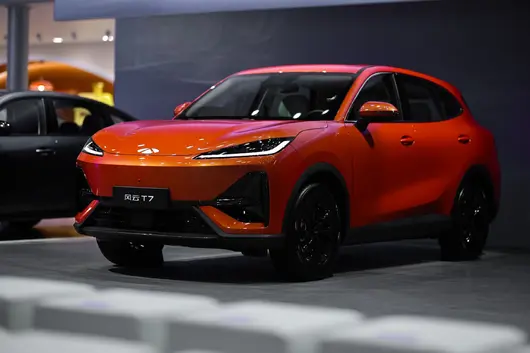


Sunwoda is one of the few companies among those that have disclosed semi-annual reports to see an increase in gross margin in the power battery sector against the trend — increasing by 8.59 percentage points against the trend to 18.36%.
On August 27, Sunwoda released its interim financial report. The company achieved total operating revenue of 38.179 billion yuan in the first half of 2026, a year-on-year increase of 41.48%. Among them, the electric vehicle battery business contributed revenue of 14.134 billion yuan, surging 85.87% year-on-year.

At the same time, the energy storage system business is becoming Sunwoda's "second growth curve": first half shipment reached 14.70GWh, a year-on-year increase of 64.98%. Among them, overseas customer revenue accounted for more than 70%, and has become a major industrial and commercial energy storage brand in the German-speaking region of Europe. In terms of energy storage demand in data centers brought about by the explosion of AI computing power, Sunwoda's AIDC energy storage business orders surged nearly 30 times year-on-year, accurately hitting this high-growth track.
01
Power Battery Gross Margin Rises Against the Trend
Against the backdrop of overcapacity and continuous price wars in the power battery industry, Sunwoda submitted a report card of "increasing revenue and increasing profit".
In the first half of 2026, the electric vehicle battery business achieved operating revenue of 14.134 billion yuan, increasing 85.87% year-on-year; shipment volume reached 28.36GWh, increasing 76.37% year-on-year. More importantly, profitability improved — the gross margin of this business jumped from 9.77% year-on-year last year to 18.36%, increasing significantly by 8.59 percentage points. This means that the benefits of economies of scale and optimization of customer structure have emerged, allowing the company to hold the profit bottom line in the industry price war.

Of course, the most iconic performance is the HEV lithium battery. According to SNE Research data, in the second quarter of 2026, Sunwoda's HEV lithium battery installed capacity ranked first globally. This marks that its product performance and cost control have gained full recognition from customers.
The recovery of the gross margin of this power lithium battery against the trend, although not explained in the financial report, is likely closely related to the shipment of hybrid batteries. Because hybrid batteries have the characteristics of high threshold, high customization, and high added value, they can help avoid low-end price wars, and long-term binding with high-quality orders from top car companies helps greatly in stabilizing product premium and customer structure.
In terms of product layout, Sunwoda adopts a "Focus + Differentiation" strategy, focusing on prismatic aluminum-shell cells as the core, while synchronously laying out large cylindrical cells, soft pack cells, etc., comprehensively covering full scenarios such as passenger cars, commercial vehicles, ships, low-altitude aircraft, and embodied intelligent robots.
Regarding next-generation technology reserves, the company is advancing the R&D of new silicon-anode high specific energy batteries, lithium manganese iron phosphate batteries, sodium-ion batteries, solid-liquid hybrid batteries, solid-state batteries, lithium metal batteries, etc., and was the first to propose the "AI + Battery" strategy, using artificial intelligence to accelerate material selection, electrochemical system design, and process optimization.
02
Overseas Revenue Share of Energy Storage Exceeds 70%
If power batteries are the main force for growth at present, then energy storage systems are the new growth point that Sunwoda is exploding.
In the first half of 2026, Sunwoda's energy storage system shipment reached 14.70GWh, increasing 64.98% year-on-year; realized revenue of 1.77 billion yuan, increasing 76.21% year-on-year. But what is most worth noting is its market structure — energy storage system revenue comes mainly from overseas markets, overseas customers account for more than 70%, one can say that the bulk delivery of its core overseas customer projects directly drove business growth.
Financial reports show that in the European market, Sunwoda adheres to a brand strategy, having covered core markets such as Europe, Middle East, South Asia, with own-brand sales accounting for 80%. In the German-speaking region, the company has become a major industrial and commercial energy storage brand, with core channel coverage exceeding 95%, and was rated as EUPD Swiss Market TOP BRAND. This marks that Sunwoda has transformed from an "OEM" to a "Brand Owner" in the overseas energy storage market, with significantly enhanced premium ability and customer stickiness.

In terms of application scenario expansion, Sunwoda accurately stepped on the timing node of the explosion of AI computing power. With the construction of global AI data centers (AIDC) entering a climax, the company's AIDC energy storage business orders increased nearly 30 times year-on-year in the first half of the year. Relying on full-stack self-developed capabilities, Sunwoda has built a product matrix covering different voltage levels, comprehensively adapting to high-end application needs such as data center SST, HVDC, and UPS. Several key domestic and foreign projects have been landed, and have been recognized by multiple global AI top customers.
At the product level, Sunwoda continues to iterate around energy storage cells and system products such as 314Ah, 280Ah, 588Ah, 684Ah, completed the large-scale fire burn test of 5MWh liquid-cooled energy storage containers, Sunwoda stated that its safety, reliability and system-level solution capabilities continue to strengthen.
03
From "Product Going Global" to "Industry Going Global"
Supporting the high-speed growth of power battery and energy storage businesses is Sunwoda's increasingly mature global production capacity and service system.
During the reporting period, Sunwoda's overseas layout showed blooming at multiple points: Thailand battery production base phase one project has officially started production, phase two started synchronously; Hungary power battery production base, Vietnam consumer cell base construction are steadily advancing. At the same time, Sunwoda has established nine overseas marketing and service centers globally, building a localized service network covering key markets such as Europe and America, Southeast Asia, Middle East, etc.

It can be seen that Sunwoda's "going global" is not simply a relocation of production capacity, but a strategic positioning to support global top car companies and energy storage customers nearby, which can not only effectively hedge geopolitical risks and trade barriers, but also significantly improve the response speed and service stickiness of overseas customers. From India, Vietnam to Thailand, Hungary, Morocco, Sunwoda's global production capacity map has taken shape, providing a solid foundation for the company's medium and long-term overseas business continuous volume increase.
In China, Sunwoda also takes customer needs as the orientation, adheres to the principle of nearby support to efficiently allocate resources, and multiple production bases have achieved scaled mass production.
In 2026, with consumer electronics demand continuing to decline and industry competition intensifying, the report card submitted by Sunwoda in the first half of the year is still remarkable — on the basis of shipment volume increase, Sunwoda pushed up revenue growth rate with the help of HEV differentiated high added-value products, while the landing of domestic and overseas production capacity ensures order delivery, and the multi-scenario product matrix helps it open up incremental space.
It can be foreseen that Li Auto's reliance on it will also deepen day by day, and Sunwoda's future is very worth looking forward to.
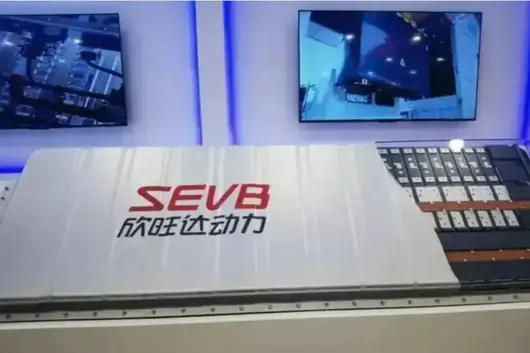

Fu Rong, Interns Fang Weibo, Cheng Siyu
On the evening of August 26, Sunwoda (300207.SZ) released its 2026 Semi-Annual Report. In the first half of the year, the company achieved revenue of 381.79 billion yuan, a year-on-year increase of 41.48%, setting a historical high for the same period; however, net profit attributable to shareholders was 6.03 billion yuan, a year-on-year decline of 29.59%, and deducted non-recurring net profit was only 0.97 billion yuan, a sharp year-on-year drop of 83.32%. The company exhibited the characteristic of "revenue growth without profit growth", and the profitability of the battery main business is under pressure.

From the perspective of business structure, Sunwoda is accelerating the shift away from dependence on a single business. As the core business, consumer batteries achieved revenue of 144.52 billion yuan in the first half of the year, up 4% year-on-year, firmly ranking first in global mobile phone battery market share. However, affected by weak global consumer electronics demand and rising upstream material prices, the gross margin of this sector declined year-on-year.
Power battery and energy storage businesses have become the core engines driving revenue. Regarding power batteries, the company's HEV hybrid battery installation volume jumped to first place globally in the second quarter, with 28.36GWh shipments in the first half of the year, revenue reaching 141.34 billion yuan, a year-on-year surge of 85.87%. The energy storage business is also in a period of accelerated scale release, benefiting from the explosion of global AIDC backup power demand, with relevant orders reaching a historical high. However, despite the significant increase in shipments of the power and storage businesses, profits are yet to be realized in the future, affected by industry price wars and high capital expenditures during the scale expansion period.
In the first half of the year, the company's R&D investment reached 23.63 billion yuan, with an R&D expense ratio exceeding 6%, continuously delving into electrochemical basic research and material innovation. At the same time, Phase I of the Thailand base has been put into production, and Phase II has also been launched simultaneously. The Hungary and Vietnam bases are currently in the orderly construction phase, the proportion of overseas customers continues to increase, and the company's profit elasticity is also expected to be released further. However, high R&D investment and globalization layout also test the company's cash flow.
Looking ahead to the second half of the year, Liang Rui, Vice President and Chief Sustainability Officer of Sunwoda Electronics Co., Ltd., stated in an interview with media that the consumer market is basically saturated, and the combined proportion of Sunwoda electric vehicle batteries and energy storage system businesses will exceed that of consumer batteries.
Under industry cycle fluctuations, whether Sunwoda can improve deducted non-recurring net profit, convert the high market share of HEV into more pure electric design wins, and whether AIDC energy storage orders can continue to land, will be the key points to watch for its subsequent breakthrough.

Friends, have you noticed that the Fengyun series under Chery has become increasingly prominent in the market in recent years?
Like the Fengyun A8 and Fengyun A9 have delivered strong sales performance.
Why can it achieve results so quickly? I think the Fengyun brand follows a "technology for all" path, with an affordable price and no compromises on configuration. This is also the main reason it has established a foothold in its niche segment.
However, unexpectedly, the Fengyun family has added another "Fengyun T7". The official has confirmed that the new car will officially launch on August 26, with a pre-sale price range of 109,900 to 129,900 RMB.

It is reported that it is positioned as a pure electric compact SUV. This is also a heavy-hitting move by Chery in the "highly competitive arena" of the 100,000 RMB level pure electric SUV segment.
Old rules: Before discussing the car, I swear I have not been paid, I review the car purely out of conscience, heaven and earth bear witness!
No more nonsense, let's first talk about the basic information of this car.
The Fengyun T7 comes standard with the Rhino battery offering a CLTC pure electric range of 600 km, with a capacity of 65.05 kWh. Charging from 30% to 80% takes only 20 minutes.
High-spec models are also equipped with the Falcon 500 assisted driving system, supporting highway assisted driving.
To be honest, for this configuration to be placed at the 100,000 RMB price point, the sincerity is not low.
In terms of exterior design, the new car follows a streamlined and dynamic route. The dual LED headlights support adaptive high and low beams and headlight delay-off function. The large air ducts on both sides of the front face enhance the car's sporty feel.

The body side features chrome trim. The doors use traditional door handles, while the body lower cladding adopts a blacked-out material. 17-inch and 18-inch black wheel rims are available as options.
Regarding dimensions, the length, width, and height are 4570/1852/1694 mm, with a wheelbase of 2700 mm. This data represents a standard build for a compact SUV, placing it on the same level as the Deepal S05 and Galaxy E5.

The rear features a full-width taillight design with a minimalist style. The rear spoiler and reinforced sports-style lower bumper give it a strong sporting presence. It also includes a power liftgate, which is a plus in the 100,000 RMB segment.

In terms of interior design, the wrap-around cockpit layout features a two-tone color scheme. It comes with an 8.8-inch full liquid crystal instrument cluster and a 15.6-inch 2.5K floating central control screen. Powered by the Qualcomm Snapdragon 8775 chip, it supports CarPlay, HiCar, and Carlink connectivity. A panoramic sunroof and 50W wireless charging have also been included.

The front seats feature heating and ventilation functions. The system comes standard with an 8-speaker SONY audio setup. This configuration combination makes it very family-friendly.
Regarding powertrain, the new car features a single motor across the board, with a maximum power of 178 kW and a peak torque of 275 N·m. The suspension setup consists of a front MacPherson independent suspension and a rear multi-link independent suspension.
Overall, the Fengyun T7 does not follow the performance monster route; it values balance and practicality more. This approach matches its target user group very well.

So the question arises, how intense is the competition in the 100,000 RMB level pure electric SUV segment?
We need to see which opponents the Fengyun T7 will face.
For example, the Leapmotor B10, Geely Galaxy E5, Deepal S05, BYD Yuan UP / Yuan PLUS, and GAC Aion i60 basically occupy the mainstream market of this price segment. Each has its own advantages and selling points.

The core advantage of the Leapmotor B10 lies in its range. The 600 km CLTC range is solid for this price segment. Its European chassis tuning and intelligent cockpit are also selling points. High-spec models feature the LiDAR version, offering comprehensive assisted driving capabilities.
The Galaxy E5's strength lies in its infotainment ecosystem, featuring the Flyme Auto system with the Dragon Eagle 1 chip. The four-screen linkage experience is well-executed. In terms of safety, it has passed dual five-star certifications from Euro NCAP and ANCAP.

The Deepal S05 leans towards sports in chassis tuning, with clear road feel and handling as its plus points. It also supports 6 kW AC discharge, making outdoor power usage quite convenient.

The Aion i60 focuses on continuous iteration, with fast OTA rhythm. Combined with the "burn-one-compensate-three" bottom-line policy, it handles long-term value and psychological security quite well.

Compared to these few cars, the Fengyun T7's advantages and shortcomings are quite obvious.
The advantage lies in the 600 km range, which is top-tier for this price segment. It ties with the Leapmotor B10 and is longer than the mainstream range versions of the Galaxy E5 and Deepal S05.
The high-spec model's Falcon 500 assisted driving system, combined with the Snapdragon 8775 chip and the 8.8-inch instrument cluster plus 15.6-inch 2.5K central control screen setup, offers a high configuration density. Especially features like wireless charging, seat ventilation and heating, and SONY audio are standard across the board, making the home experience very practical.

The shortcomings should also be stated clearly: The 178 kW single motor power and 275 N·m torque, while superior to the Leapmotor B10's 160 kW, are merely adequate compared to the power reserve requirements of users pursuing a sporty feel at this price point. It is by no means a surprise.
Regarding suspension structure, the front MacPherson plus rear multi-link setup is a conventional configuration for this price segment. It lacks the cross-segment performance of air suspension found in models like the Tang EV or Seal 08. This also conforms to its 100,000 RMB positioning; it cannot be judged by higher price segment standards.
It is worth mentioning that the Fengyun T7 follows a "overseas first, domestic later" path. The overseas homologous model, Lepas L6, has already entered the Southeast Asian markets such as Thailand and Indonesia. It is launched domestically after verification overseas.
This approach differs from the typical rhythm of most domestic new energy cars launching domestically first. Officially, it underwent 2 years of planning and 3 years of R&D, completing 1 million km of global road testing.

For users who value quality control and validation cycles, this also counts as a differentiated selling point.
For friends who want to buy this car, my personal suggestion is as follows; you can consider and weigh it yourself.
If your budget is exactly around 100,000 to 130,000 RMB, and your home usage scenarios are primarily urban commuting and short trips, and range anxiety is your biggest concern, the Fengyun T7's 600 km range plus 20-minute fast charging can basically meet your needs.
The real key is whether to choose the high-spec model, which mainly depends on your reliance on assisted driving. The Falcon 500 is only available on high-spec models. If the budget is limited, the middle and low specs are sufficient for daily commuting.

If you are more sensitive to handling and acceleration, the Deepal S05 or Leapmotor B10 might suit you better.
If you value the infotainment ecosystem and brand endorsement more, the Galaxy E5 and Aion i60 are also worth adding to your shortlist.
The core issue is that the 100,000 RMB level pure electric SUV segment has entered a phase of "no obvious shortcomings, competing on detail experience". Whether the Fengyun T7 can break out will depend on the final pricing after its official launch on August 26, as well as subsequent user feedback and reputation.
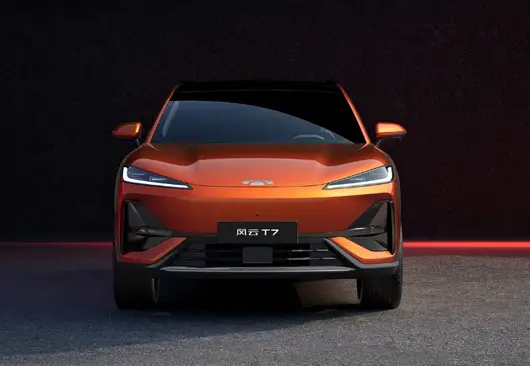

Netcar Commentary A convoy departed from Xi'an, passing through Bozhou, Jingdezhen, Hangzhou, Wuyishan, Quanzhou, and Chaozhou along the way, finally arriving in Shenzhen. Fragrant herbs, porcelain, silk, and tea were written into the route map, and seven flash charging stations, two racetracks, and models from five networks and four brands were also interspersed.
When I first saw this map, my gaze first fell on the road after Shenzhen.
Shenzhen is where BYD started, it is BYD's global headquarters, and also the endpoint of this domestic journey. The convoy will continue to go overseas from here.

In recent years, Chinese car companies have been used to using roll-on/roll-off ships, overseas sales, and new factories to tell the story of going global, and BYD also has enough numbers. But when the convoy runs past highways, cities, mountain roads, and coastal roads, telling the story of China's smart manufacturing setting sail on the new Silk Road overseas, I gradually feel that how the technology in the car works, and how charging follows, might be closer to the daily life of globalization than a departure at the port.
Over twenty years in the automotive field, BYD's impression on the outside world has changed several times. Early on, people remembered its batteries, later people remembered DM-i and Blade Batteries, and in recent years, Yangwang, Fangchengbao, DiPilot, DiSus, Yi Sifang, and Flash Charge have been added.
After the number of terms increased, I also worried they would each talk their own language, until seeing different brands driving along the same route, I realized BYD is organizing the technology accumulated over these years into things that users can feel.
Nineteen Years Ago, BYD Was Already Studying Fast Charging
From 2007 to 2008, BYD participated in research and development projects such as pure electric vehicles and their fast charging systems. In December 2008, F3DM was launched in Shenzhen. This car could charge using a common 220V power source, also supported fast charging at professional charging stations. The announced charging speed at the time was a 50% charge in 10 minutes.

In that era when private new energy vehicle consumption in China was just starting, charging facilities were very scarce. Users had not yet formed the cognition of charging cars, nor had they formed the habit of charging cars.
When F3DM launched, Wang Chuanfu reminded owners on stage not to forget to charge mobile phones before going to sleep, and not to forget to charge the car either. This action which sounds quite ordinary today, even required a car company to teach users back then.
By the end of 2010, F3DM cumulative sales were only 365 units. This number is far from BYD today, but looking back from the current perspective, at that time BYD had already considered batteries, cars, and charging facilities together before the market matured, forming a sharp contrast with the blind follow-the-market car-making of many car companies today.

Eighteen years ago, F3DM already had fast charging capability, but charging facilities were far from mature. This time, the BYD convoy went south along Xi'an Lintong, Bozhou Yingquan, Hefei, Shengzhou, Wuyishan, and coastal highway. Flash charging stations are already distributed in highway service areas and urban business circles, and the number of stations is still increasing.
With the support of the second-generation Blade Battery, BYD's Flash Charge models have shortened charging time to minutes. On highways, city stops, and mountain roads, users can continue on the road with just a brief stop. The charging experience is very close to refueling a fuel vehicle.
When the convoy arrived in Shenzhen, my understanding of BYD's charging system also changed.
In the past, I often regarded batteries as its trump card for making cars. Looking at it again today, BYD has been preparing for charging for many years. And now, the most direct feeling for users is the dozens of minutes saved on the road.

Early research did not immediately bring market. BYD did not stop investment because of this. After F3DM, this thing was continued for nearly twenty years. BYD's credibility when talking about charging technology today also comes from this verifiable long-term investment.
Five Networks, Four Brands Walk on the Same Road
Around 2019, BYD began to adjust automobile sales channels. Since then, Dynasty, Ocean, Denza, Fangchengbao, and Yangwang gradually formed their own product sequences.
But in the process of BYD extending from the mass home market to luxury, ultra-luxury, off-road, and high-performance markets, external doubts have always existed.
Some say, for a brand good at mass manufacturing, entering higher-priced, more refined markets, the lessons to be made up are far more than power and configuration.
The convoy drove from Xi'an to Shenzhen. Cities, highways, mountain roads, and racetracks appeared in sequence. Dynasty and Ocean bear daily and family travel, Denza takes care of long-distance seating and luxury experience, Fangchengbao enters mountain roads and unpaved roads, Yangwang shows four-motor and body control capabilities at the racetrack.

Although there are differences in price and usage among brands and models, every car shares BYD's accumulated new energy vehicle technology and whole vehicle manufacturing capabilities.
On this road from north to south, the convoy passed urban areas, and ran on highways and mountain roads. Enabling DiPilot has become a common action during driving.
After running hundreds of kilometers, the driver can feel the heaviness and lightness of acceleration/deceleration during car following, a judgment once entering/exiting ramps, whether the takeover prompt comes a bit early or late.
A few years ago, when talking about BYD externally, the first thoughts were still batteries and hybrids. High-level assisted driving was rarely ranked at the front. This impression needs to change. Every car following, lane changing, and takeover must give people confidence.

In the past many years, BYD brought heavy-weight technologies to mass production products one after another, and made products in scale. After the formation of Five Networks Four Brands, they showed another capability. That is relying on common R&D and manufacturing foundations to enter multiple market segments and serve users with different needs.
This change is more important than adding a few brand names or models. It means BYD is growing from an automotive enterprise known for technology into an automotive group with clear brand hierarchy and wide market coverage.
From a Three-Person Office in Rotterdam to Rayong Factory
At the end of 1998, Li Ke brought an engineer and a translator to Rotterdam, Netherlands. Wang Chuanfu gave them startup resources: one shipping container of batteries and $30,000, and said, if you can reach break-even, continue. If you lose it all, stop.
Then the three people made calls to find customers during the day, wrapped battery packs together at night, and drove forklifts to deliver goods the next day.
On New Year's Day 1999, BYD's first overseas branch opened for business. At that time, the protagonist of overseas business was still batteries hidden in mobile phones.

More than twenty years later, BYD's own roll-on/roll-off ships began to shuttle between global ports, and Thailand's Rayong factory has already covered stamping, welding, painting, assembly, and parts production.
In July 2024, BYD's 8 millionth new energy vehicle rolled off this factory. Annual capacity about 150,000 units. Compared to shipping a car from Shenzhen, building a factory locally requires handling employees, supply, regulations, services, and consumption habits. Investment is heavier, and more is left behind.
In 2025, BYD's overseas sales exceeded 1 million units for the first time. Entering 2026, the overseas market is still growing rapidly, business has already covered 121 countries and regions.
From walking from the small office in Rotterdam to today, BYD's overseas operation has changed products, scale, and methods. The early approach of being close to customers and entering local markets has not lost its effectiveness.
After the convoy arrives in Shenzhen, it will continue to drive overseas. This reminds me of the three people in Rotterdam back then.
For a Chinese brand going global, the starting point can be a shipping container of batteries, or it can be a ship of new energy vehicles. But finally it must be implemented in the lives of local users.

After sales volume reached one million units, the overseas market BYD faces has become much more complex than before.
More than twenty years ago, BYD needed to make overseas customers know a battery enterprise from China. Today, what it needs to build is global consumer recognition of a Chinese automobile enterprise.
Written at the End
Thousands of years ago, camel caravans and merchant ships followed the Silk Road, transporting fragrant herbs, porcelain, silk, and tea to farther places. The world thereby recognized China's products.
Today, a convoy composed of different brand models of BYD drove from Xi'an to Shenzhen, then went to South Asia. This journey spanning mountains and rivers looked back at the traffic on the ancient Silk Road, and also let technology and vehicles undergo testing on real roads.
Electric vehicles, lithium batteries, and photovoltaic products are called China's Export "New Three Items". They represent another change in China's exports. The three fields involved in "New Three Items", BYD has been laid out for many years.
With whole vehicles accelerating into overseas markets, BYD's technology application, charging facilities, and long-term services will also quickly follow.
From single commodity output to technology, manufacturing, and service capabilities entering overseas markets together. BYD is participating in global traffic and energy transformation with green technology, creating a new business card of China's smart manufacturing belonging to this era.
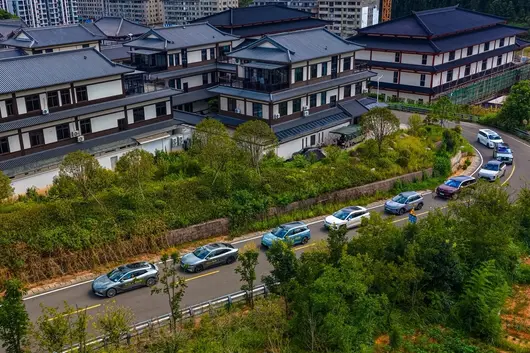

When some automakers are still racing in vehicle manufacturing speed, Chery Fengyun turns to emphasize "slow car manufacturing". Recently, Fengyun T7 launched pre-sale, pre-sale price 109,900 yuan - 129,900 yuan. The press conference was themed "Slow craftsmanship builds good cars, long awaited", conveying the persistence in solidly building high-quality global cars.

Fengyun T7's "slow" is mainly reflected in R&D and verification aspects. At the R&D level, relying on Chery's global "1+7+N" R&D system, it took 2 years of planning and 3 years of development; At the verification level, a total of 81 exclusive durability cars were invested in synchronous road tests, the whole vehicle cumulative test mileage exceeds 6 million kilometers, durability special test actual measurement 1.45 million kilometers, and extreme actual vehicle trials were conducted for global regions such as Southeast Asian rainy season, Middle East high temperature and sun exposure, Indonesia high humidity, etc.
In design, Fengyun T7 relies on Chery's 10 global design centers, over 5,000 domestic and foreign users co-created throughout the process, homologous model Lepas L6 appeared at Milan Design Week, obtaining international recognition. The new car provides 6 exterior color schemes: Fiery Orange, Mountain Smoke Purple, Cloud Pink Beige, Flowing Light Silver, Green Bamboo Gray, Ink Stone Black, interior provides Warm Black Brown, Extreme Night Obsidian two styles. Whole vehicle dimensions 4570x1852x1694mm, wheelbase 2700mm, cabin utilization rate 84%, pure flat rear floor, owning class-leading 911mm leg space; rear seats folded can be expanded to 1955mm pure flat big bed, regular trunk 450L, max expandable to 1550L, meeting outdoor cross-border and multi-person travel needs.

Regarding safety, Fengyun T7 body uses 80% high-strength steel, 18.84% hot-formed steel to build nine horizontal five longitudinal cage body, and adopts shotgun structure, dual-frame subframe + Pack crash beam, front 9 paths, side 6 collision force transmission paths can maximize dispersion of collision energy, guaranteeing occupant survival space. The whole vehicle is equipped with 9 airbags, including 48L dual-chamber remote airbag and rear side airbag, achieving 360° occupant protection. Regarding battery, Fengyun T7 all models equipped with Rhinoceros battery, through ultra-strong 6D protection build multi-layer stereo safety barrier, can comprehensively resist extrusion, piercing, impact etc. risks. Rhinoceros battery IP68 waterproof ability is 96 times national standard, facing summer frequent rainstorms, fear no rainy season waterlogging, road surface water and outdoor wading, effectively preventing battery water ingress short circuit hazards.
Regarding range and energy consumption, Fengyun T7 all models standard equipped with 65.05kWh Rhinoceros battery, CLTC range 600km, actual test range 667km or more, 30%-80% fast charging only needs 20 minutes. At the same time, new car equipped with all-domain integrated thermal management system, adopting dual-source wide heat pump air conditioning + high voltage PTC, can operate stably in -30°C to 55°C ultra-wide temperature range, low temperature heating saves more electricity, high temperature heat dissipation is more efficient; cooperating with all-models standard equipped AGS intelligent front grille and 14 items low wind resistance optimization, energy consumption performance is more stable.

Regarding intelligent configuration, Fengyun T7 all models equipped with Qualcomm Snapdragon 8775 Cockpit and Driving Integrated Chip, center control is 15.6-inch 2.5K screen, supports CarPlay, HUAWEI HiCar, CarLink wireless connection, built-in Nap, Camping, Pet, Awaken etc. six major scenario modes. Regarding driving assistance, new car equipped with Falcon 500 system, integrated 3 mmWave radars, 7 cameras and 12 ultrasonic radars, total 22 sensors, supports 300+ scenarios automatic parking, covering dead-end road parking, one-key track reverse, cross-floor parking and other functions.
To make users more at ease, Fengyun T7 also provides two major safety net policies. Power battery safety safety net: If the whole vehicle suffers thermal runaway damage due to power battery's own reasons, Chery will compensate a same model new car or a new car not lower than original car configuration. Driving assistance safety net: Within one year from the date of purchasing the car, if in "Parking Scenario" "Intelligent Navigation Scenario" determined as "Intelligent Driving Assistance System Reason" causing accidents, causing damage to personnel on board and third-party loss compensation, max compensation 5 million yuan.

August 12, the global quality pure electric SUV Fengyun T7 officially launched pre-sales. With the theme 'Building good cars takes patience, thank you for waiting', it conveys Fengyun T7's long-termist philosophy of building cars, polishing products to global standards, and committing to quality. The new vehicle comes in 3 versions with a pre-sale guide price ranging from 109,900 yuan to 129,900 yuan, along with 7 sets of purchase benefits.


Aesthetic Requirement | Global Aesthetics Blend Eastern Elegance, Long-lasting Quality
Relying on Chery's 10 global design centers, over 5,000 domestic and international users co-created throughout the process. The same-source model Lepas L6 appeared at the Milan Design Week gaining international recognition. Fengyun T7 blends global aesthetics, appearance stays online persistently. Wind-sculpted front face, wind-shaped satin body, sky twilight tailgate, balancing international simple aesthetics with eastern elegant charm. Whole car paint standards sync with overseas severe weather resistance requirements, providing 6 color choices: Blazing Orange, Mountain Mist Purple, Cloud Pink Beige, Flowing Silver, Green Bamboo Grey, Ink Stone Black.

Interior available in Warm Black-Brown and Polar Night Obsidian styles. The Cloud Wing enveloping cockpit features extensive soft-touch surfaces, pebble-like floating speakers, and exquisite diamond quilting details. All interior leather, seals, and plastic components resist hardening and fading, remaining fresh and attractive after long-term use, balancing aesthetics and texture.

Safety Requirement | All-domain Five-Star Protection System, Comprehensive Global Road Coverage
Fengyun T7 benchmarks 2026 version E-NCAP five-star safety standard design, functional safety ASILD highest level. 2 years planning, 3 years R&D, total investment of 81 exclusive durability cars for synchronous road tests, whole vehicle cumulative test mileage over 6 million kilometers, durability special test 1.45 million kilometers, while targeting Southeast Asia rainy season, Middle East high temperature exposure, Indonesia high humidity and other multiple global regions for extreme actual vehicle trials.
Body adopts 80% high strength steel, 18.84% hot formed steel to build 9 horizontal 5 vertical cage body, adopts shotgun structure, double frame subframe + Pack bumper, steel bone ensures cabin safety, front 9 paths + side 6 paths collision force transfer path maximizes dispersing collision energy, retaining cabin survival space; In addition, equipped with 9 airbags, including 48L dual chamber far-end airbags and rear side airbags, 360-degree comprehensive protection. Fengyun T7 full series equipped with Rhino Battery, super strong 6D protection builds battery safety fortress, comprehensively resisting extrusion, piercing, impact, constructing multi-layer 3D safety barrier for power battery. Facing summer heavy rain frequently, Rhino Battery IP68 waterproof is 96 times national standard, fear no rainy season flooding, road waterlogging, outdoor wading, effectively preventing battery water short circuit hazards.
Travel Requirement | Full Series 600km Range Equality, Adapting to Global Diverse Climate Conditions
Based on global multi-region energy and climate needs, Fengyun T7 achieves range configuration equality for the whole series, standard large capacity Rhino Battery 65.05kWh, CLTC 600km range, actual measured range 667+km, 'reverse false labeling' solves anxiety. Battery 30% charge to 80% only needs 20 minutes, a cup of coffee time ready to depart again.

Fengyun T7 equipped with all-domain integrated thermal management dual-source wide heat pump AC + high pressure PTC, northern users can drive with confidence in winter. -30°C to -55°C ultra-wide temperature range stable operation, low temp heating more power saving, high temp heat dissipation more efficient. Cooperating with full series standard AGS intelligent air intake grille and 14 low wind resistance optimizations, high and low speed energy consumption more stable.
Intelligence Requirement | Cockpit Drive Integration 8775 Chip Half Understands You Half Protects You
New energy era, no intelligence no quality. Fengyun T7 equipped with cockpit-drive integrated 8775 chip, achieving cockpit-drive dual optimization, two domains seamless coordination, half understand you, half protect you. The chip has 4nm process, 72TOPS high computing power, response only 80ms, startup speed up 33%, startup speed faster, screen operation more smooth, intelligent interaction response more swift.
Regarding smart cockpit, 15.6-inch 2.5K high definition large screen picture delicate real, anti-glare, anti-reflection, anti-fingerprint, CarPlay, HUAWEI HiCar, CarLink wireless connection, covering market 99%+ mobile phone screen casting, get on car can achieve seamless interconnection. Lingxi Smart Cockpit 2.0 brings all-around companion partner, owns Little Qi, Northeast Aunt, Debate Master, Language Teacher, Story Teller, Pro Debater six human-like companion experiences. Built-in Nap, Camping, Pet, Refreshing etc six scene modes, let car truly become mobile space understanding you.

Fengyun T7 equipped with Falcon 500 driving assistance system, integrated 3 millimeter wave radars, 7 high performance cameras, 12 ultrasonic radars, total 22 high precision sensors (3R7V12U), see far, see clear, measure accurate. Can 300+ full scene automatic parking, industry coverage most complete. Dead end parking, one-key tracking reverse, cross-floor parking etc can achieve, say goodbye to 'parking difficulty' from now on, achieve parking freedom.
Comfort Requirement | Super Large Cockpit Space Master Level Chassis Tuning Steady Travel
Whole vehicle dimensions 4570x1852x1694mm, wheelbase 2700mm, interior space utilization rate 84%, rear row pure flat floor, same level leading 911mm leg space, rear seats folded expand 1955mm pure flat large bed, regular trunk 450L, expand to 1550L, sufficient loading space adapts to outdoor crossing, multi-person group travel.

9-layer cloud feeling seats, soft but not collapsing, long sitting not tired, additionally seats also have ventilation heating function. Heating aspect, achieve 3-gear temperature control adjustment, -20°C environment, 5 minutes fast heat to 30°C, quickly warm whole body; Seat ventilation adopts suction design, summer back not stuffy sweat, meet user comfort needs. Detail aspect, Fengyun T7 also can be praised. Whole car 38 clever storage spaces, storage orderly, enjoy exquisite life. Four max load 300kg riveting rings and two max load 3kg hooks, camping equipment, large goods can be firmly fixed.

Comfortable driving, cannot leave outstanding chassis support. Fengyun T7 chassis adopts by Maserati former chassis tuning expert led international chassis team dedicated polishing, 50.8:49.2 golden axle load ratio effectively suppress steering push head, swing tail phenomenon, improve cornering stability and straight line tracking. As early as 2009, Chery independently designed China's first ground mobile type dual axis K&C test bench. 26 years design foundation empowers chassis performance, bring more excellent driving quality experience.
Peace of Mind Requirement | 2 Lifetime Rights + 2 Guarantee Rights, Full Cycle Car Use Worry-free
Chery not only brings users hard core strength products, but also stands from user perspective, fully consider buying car after whole cycle car use experience, face everyone regarding vehicle fault, later maintenance car cost etc actual concerns. For this Fengyun T7 launches two big guarantee safeguards, two lifetime rights, from buying car to long term use whole journey guard.
Two Guarantees: ① Power Battery Safety Guarantee: Due to power battery itself reasons causing whole vehicle thermal runaway damage, Chery will compensate same model new car or not lower than original car configuration new car; ② Assisted Driving Guarantee: From purchase date within one year, in 'Parking Scenario', 'Intelligent Navigation Scenario' judged as 'Intelligent Driving Assistance System Reason' causing accident, causing on-board personnel injury and third party loss compensation, max compensation 5 million.
Two Lifetime Rights: ① Whole Vehicle Lifetime Warranty: Value 10,000 yuan whole vehicle lifetime warranty (including three electric systems), consumable parts, special parts excepted; ② Lifetime Maintenance Package: 666 yuan purchase value 3999 yuan lifetime basic maintenance package (1 time/year).
From global standard R&D, global aesthetics design, global craft manufacturing, to global road conditions verification, Fengyun T7 experienced world tempering, finally rushes to China users, with appearance, travel, safety, intelligence, comfort, peace of mind six major rigid demand's full satisfaction, responding to all expectations of quality families.
Fengyun T7, not only is a vehicle condensing global technology and quality, but also is global standard and China family needs deep resonance era choice.

Profited massively, these three words can only describe CATL's performance in the first half of 2026.
On July 24, CATL released its semi-annual financial report. For the first half of 2026, CATL reported operating revenue of 276.917 billion yuan, a year-on-year increase of 54.80%; net profit attributable to shareholders was 43.284 billion yuan, a year-on-year increase of 41.98%; net profit after deducting non-recurring gains and losses was 39.013 billion yuan, a year-on-year increase of 43.44%. This means that regarding the core net profit attributable to shareholders, CATL earned 12.8 billion yuan more than the previous first half! In CATL's hands, cash and equivalents total approximately 340.58 billion yuan.

Looking at business segments, CATL achieved rapid growth in all three business segments. Among them, power battery systems generated revenue of 192.125 billion yuan, a year-on-year increase of 46.02%, accounting for 69.38% of total revenue; energy storage battery system revenue was 53.261 billion yuan, a significant year-on-year growth of 87.54%, accounting for 19.23% of total revenue; battery materials and recycling, mineral resources business revenue was 18.811 billion yuan, a year-on-year increase of 67.23%, accounting for 6.79% of total revenue. It can be seen that energy storage is the engine of CATL's growth this year.

From the perspective of gross margin, the gross margin of the power battery system segment was 20.63%, a decrease of 1.78% compared to the same period last year. The gross margin of the energy storage battery system was 23.96%, also down 1.56% from last year. The gross margin of battery materials and recycling, mineral resources business was 27.04%, an increase of 5.81% compared to last year. From the perspective of domestic and international markets, CATL's gross margin in the domestic market is declining, with a gross margin of 21.16%, down 1.78%. From the international market perspective, the gross margin is far higher than the domestic market, reaching 29.97%, an increase of 0.95% compared to last year.
From a market perspective, CATL's global leading position in power batteries is further strengthened. From January to May 2026, the global power battery market share was 40.2%, an increase of 2.2 percentage points year-on-year; domestic passenger vehicle installation share was 46.7%, an increase of 5.6 percentage points year-on-year, with domestic ternary battery market share reaching as high as 75.2%. Overseas markets broke through simultaneously, with overseas revenue accounting for 31.46% of total revenue, and overseas share steadily rising. Production capacity at overseas bases in Hungary, Spain, Indonesia, etc., continues to be established.

In the energy storage field, according to data from Xinlun Information, the company's energy storage battery shipments ranked first globally from January to June 2026. This is mainly due to AI computing power and new energy grid connection driving the concentrated landing of overseas and domestic energy storage projects. The energy storage side launched the 9MWh ultra-large capacity TENER, 6.25MWh Tianheng liquid-cooled energy storage cabin, and sodium-ion complete station system. Signed a three-year 60GWh sodium-ion energy storage long-term order with Hopeson, and landed large-scale independent energy storage benchmark projects.
Meanwhile, emerging businesses such as battery swapping, low-altitude eVTOL, and ships are being promoted in an orderly manner. Approximately 2,000 "Chocolate" passenger vehicle battery swapping stations have been built nationwide. The company's 5-ton class eVTOL has entered the airworthiness certification phase. Overseas heavy-duty truck battery swapping joint ventures have been established. Overall, currently CATL has sufficient capacity reserves. Existing battery system capacity is 525GWh, under-construction capacity is 764GWh, and capacity utilization rate is 94.86%.

Of course, for CATL, its growing profitability will inevitably attract criticism. This is because, looking at the current industry, the profitability of car companies is relatively too weak. In the first half of 2026, the average profit margin of the whole vehicle manufacturing industry was about 1.5%, creating a new low in nearly ten years. From the disclosed 2026 semi-annual performance forecast, the days of whole vehicle enterprises are clearly not good.
Except for BAIC BluePark forecasting a net profit increase of 14.65%-23.32% year-on-year, several other mainstream car companies showed significant declines: Haima Automobile (000572.SZ) forecast net profit decreased 0.64% to 47.61%, Changan Automobile, Great Wall Motor forecast decline both exceeded 57%, GAC Group forecast decline approached or even exceeded 60%, Seres forecast net profit year-on-year decline was between 151%-161.2%, turning from profit to loss. According to calculations, currently a terminal-priced model costing about 200,000 yuan, net profit per vehicle is only about 3,000 yuan.
Against this background, CATL will undoubtedly once again face the questioning of "car companies working for CATL". In 2025, CATL's operating revenue was 423.702 billion yuan, net profit attributable to parent company was 72.201 billion yuan. In the same year, the combined net profit of the five top car companies BYD, Geely, SAIC, Great Wall, Changan was 73.5 billion yuan, only 1.3 billion yuan more than CATL alone. And in the first quarter of 2026, CATL's net profit attributable to parent company was 20.738 billion yuan, while the combined total of the seven car companies Chery, Geely, BYD, SAIC, Great Wall, Seres, Changan was 17.5 billion yuan, the sum of the seven being less than CATL alone.

In June 2026, CATL Chairman and General Manager Zeng Yuqun, in a media interview, used the photovoltaic industry as a comparison to respond to car companies' complaints about its prices. He stated, "Now the lithium battery industry hasn't met the disastrous result that the photovoltaic industry has now, because CATL is propping up this price. As long as CATL brings the price down, it will be even worse than photovoltaic. Of course, this has not fully quelled outside doubts."
However, CATL also has grievances about the industry status quo. Zeng Yuqun previously stated that many people want to enter the battery industry. The first thing they do is come to CATL to poach talent or steal a bit of technology; then go to equipment manufacturers and material manufacturers, see what formulas they have, then combine them and say they have money to invest, and they get in. Zeng Yuqun pointed out that the imitation level of others (other manufacturers) might only be 60-70 percent, but they use low-price competition.
For example, in the procurement process of some enterprises, some decision-makers are only oriented towards completing current KPI (Key Performance Indicators), while the verification cycle for battery quality is long, and potential defects often appear only after the vehicle has been used for three to five years.
Zeng Yuqun believes that the reason why this low-price competition works is rooted in the impatient mindset and short-sighted behavior of some market participants. He believes that without CATL holding the front, the battery industry would be very chaotic. And looking at it from this perspective, it is actually not unreasonable for CATL, as the leader, to make money. What is scary is that if the leader doesn't make money, then this industry will be in danger.