首頁Battery

搜尋歷史
熱門搜尋
經銷商登入 / 註冊

Friends, have you noticed that the Fengyun series under Chery has become increasingly prominent in the market in recent years?
Like the Fengyun A8 and Fengyun A9 have delivered strong sales performance.
Why can it achieve results so quickly? I think the Fengyun brand follows a "technology for all" path, with an affordable price and no compromises on configuration. This is also the main reason it has established a foothold in its niche segment.
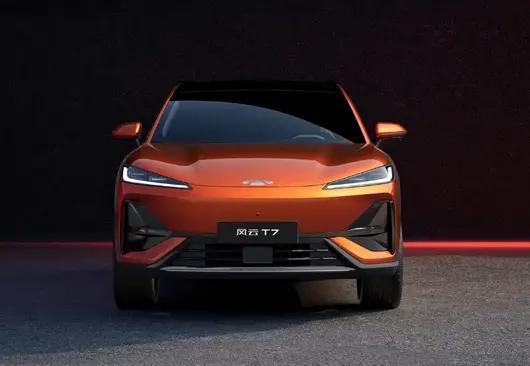
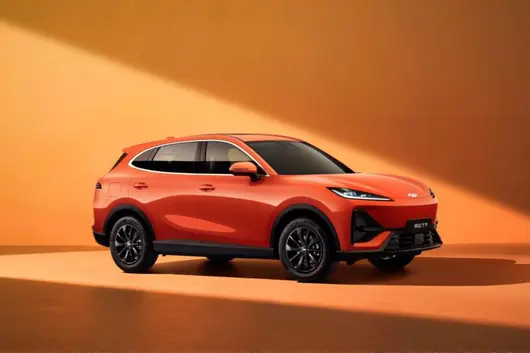
However, unexpectedly, the Fengyun family has added another "Fengyun T7". The official has confirmed that the new car will officially launch on August 26, with a pre-sale price range of 109,900 to 129,900 RMB.

It is reported that it is positioned as a pure electric compact SUV. This is also a heavy-hitting move by Chery in the "highly competitive arena" of the 100,000 RMB level pure electric SUV segment.
Old rules: Before discussing the car, I swear I have not been paid, I review the car purely out of conscience, heaven and earth bear witness!
No more nonsense, let's first talk about the basic information of this car.
The Fengyun T7 comes standard with the Rhino battery offering a CLTC pure electric range of 600 km, with a capacity of 65.05 kWh. Charging from 30% to 80% takes only 20 minutes.
High-spec models are also equipped with the Falcon 500 assisted driving system, supporting highway assisted driving.
To be honest, for this configuration to be placed at the 100,000 RMB price point, the sincerity is not low.
In terms of exterior design, the new car follows a streamlined and dynamic route. The dual LED headlights support adaptive high and low beams and headlight delay-off function. The large air ducts on both sides of the front face enhance the car's sporty feel.

The body side features chrome trim. The doors use traditional door handles, while the body lower cladding adopts a blacked-out material. 17-inch and 18-inch black wheel rims are available as options.
Regarding dimensions, the length, width, and height are 4570/1852/1694 mm, with a wheelbase of 2700 mm. This data represents a standard build for a compact SUV, placing it on the same level as the Deepal S05 and Galaxy E5.

The rear features a full-width taillight design with a minimalist style. The rear spoiler and reinforced sports-style lower bumper give it a strong sporting presence. It also includes a power liftgate, which is a plus in the 100,000 RMB segment.

In terms of interior design, the wrap-around cockpit layout features a two-tone color scheme. It comes with an 8.8-inch full liquid crystal instrument cluster and a 15.6-inch 2.5K floating central control screen. Powered by the Qualcomm Snapdragon 8775 chip, it supports CarPlay, HiCar, and Carlink connectivity. A panoramic sunroof and 50W wireless charging have also been included.

The front seats feature heating and ventilation functions. The system comes standard with an 8-speaker SONY audio setup. This configuration combination makes it very family-friendly.
Regarding powertrain, the new car features a single motor across the board, with a maximum power of 178 kW and a peak torque of 275 N·m. The suspension setup consists of a front MacPherson independent suspension and a rear multi-link independent suspension.
Overall, the Fengyun T7 does not follow the performance monster route; it values balance and practicality more. This approach matches its target user group very well.

So the question arises, how intense is the competition in the 100,000 RMB level pure electric SUV segment?
We need to see which opponents the Fengyun T7 will face.
For example, the Leapmotor B10, Geely Galaxy E5, Deepal S05, BYD Yuan UP / Yuan PLUS, and GAC Aion i60 basically occupy the mainstream market of this price segment. Each has its own advantages and selling points.

The core advantage of the Leapmotor B10 lies in its range. The 600 km CLTC range is solid for this price segment. Its European chassis tuning and intelligent cockpit are also selling points. High-spec models feature the LiDAR version, offering comprehensive assisted driving capabilities.
The Galaxy E5's strength lies in its infotainment ecosystem, featuring the Flyme Auto system with the Dragon Eagle 1 chip. The four-screen linkage experience is well-executed. In terms of safety, it has passed dual five-star certifications from Euro NCAP and ANCAP.

The Deepal S05 leans towards sports in chassis tuning, with clear road feel and handling as its plus points. It also supports 6 kW AC discharge, making outdoor power usage quite convenient.

The Aion i60 focuses on continuous iteration, with fast OTA rhythm. Combined with the "burn-one-compensate-three" bottom-line policy, it handles long-term value and psychological security quite well.

Compared to these few cars, the Fengyun T7's advantages and shortcomings are quite obvious.
The advantage lies in the 600 km range, which is top-tier for this price segment. It ties with the Leapmotor B10 and is longer than the mainstream range versions of the Galaxy E5 and Deepal S05.
The high-spec model's Falcon 500 assisted driving system, combined with the Snapdragon 8775 chip and the 8.8-inch instrument cluster plus 15.6-inch 2.5K central control screen setup, offers a high configuration density. Especially features like wireless charging, seat ventilation and heating, and SONY audio are standard across the board, making the home experience very practical.

The shortcomings should also be stated clearly: The 178 kW single motor power and 275 N·m torque, while superior to the Leapmotor B10's 160 kW, are merely adequate compared to the power reserve requirements of users pursuing a sporty feel at this price point. It is by no means a surprise.
Regarding suspension structure, the front MacPherson plus rear multi-link setup is a conventional configuration for this price segment. It lacks the cross-segment performance of air suspension found in models like the Tang EV or Seal 08. This also conforms to its 100,000 RMB positioning; it cannot be judged by higher price segment standards.
It is worth mentioning that the Fengyun T7 follows a "overseas first, domestic later" path. The overseas homologous model, Lepas L6, has already entered the Southeast Asian markets such as Thailand and Indonesia. It is launched domestically after verification overseas.
This approach differs from the typical rhythm of most domestic new energy cars launching domestically first. Officially, it underwent 2 years of planning and 3 years of R&D, completing 1 million km of global road testing.

For users who value quality control and validation cycles, this also counts as a differentiated selling point.
For friends who want to buy this car, my personal suggestion is as follows; you can consider and weigh it yourself.
If your budget is exactly around 100,000 to 130,000 RMB, and your home usage scenarios are primarily urban commuting and short trips, and range anxiety is your biggest concern, the Fengyun T7's 600 km range plus 20-minute fast charging can basically meet your needs.
The real key is whether to choose the high-spec model, which mainly depends on your reliance on assisted driving. The Falcon 500 is only available on high-spec models. If the budget is limited, the middle and low specs are sufficient for daily commuting.

If you are more sensitive to handling and acceleration, the Deepal S05 or Leapmotor B10 might suit you better.
If you value the infotainment ecosystem and brand endorsement more, the Galaxy E5 and Aion i60 are also worth adding to your shortlist.
The core issue is that the 100,000 RMB level pure electric SUV segment has entered a phase of "no obvious shortcomings, competing on detail experience". Whether the Fengyun T7 can break out will depend on the final pricing after its official launch on August 26, as well as subsequent user feedback and reputation.

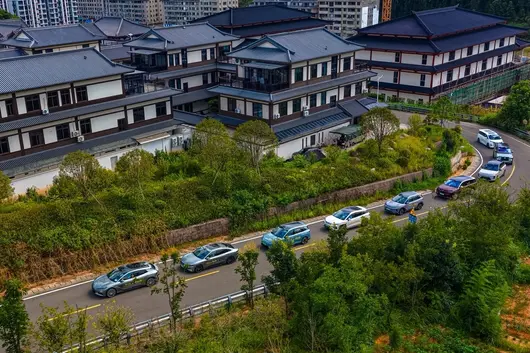
Netcar Commentary A convoy departed from Xi'an, passing through Bozhou, Jingdezhen, Hangzhou, Wuyishan, Quanzhou, and Chaozhou along the way, finally arriving in Shenzhen. Fragrant herbs, porcelain, silk, and tea were written into the route map, and seven flash charging stations, two racetracks, and models from five networks and four brands were also interspersed.
When I first saw this map, my gaze first fell on the road after Shenzhen.
Shenzhen is where BYD started, it is BYD's global headquarters, and also the endpoint of this domestic journey. The convoy will continue to go overseas from here.

In recent years, Chinese car companies have been used to using roll-on/roll-off ships, overseas sales, and new factories to tell the story of going global, and BYD also has enough numbers. But when the convoy runs past highways, cities, mountain roads, and coastal roads, telling the story of China's smart manufacturing setting sail on the new Silk Road overseas, I gradually feel that how the technology in the car works, and how charging follows, might be closer to the daily life of globalization than a departure at the port.
Over twenty years in the automotive field, BYD's impression on the outside world has changed several times. Early on, people remembered its batteries, later people remembered DM-i and Blade Batteries, and in recent years, Yangwang, Fangchengbao, DiPilot, DiSus, Yi Sifang, and Flash Charge have been added.
After the number of terms increased, I also worried they would each talk their own language, until seeing different brands driving along the same route, I realized BYD is organizing the technology accumulated over these years into things that users can feel.
Nineteen Years Ago, BYD Was Already Studying Fast Charging
From 2007 to 2008, BYD participated in research and development projects such as pure electric vehicles and their fast charging systems. In December 2008, F3DM was launched in Shenzhen. This car could charge using a common 220V power source, also supported fast charging at professional charging stations. The announced charging speed at the time was a 50% charge in 10 minutes.

In that era when private new energy vehicle consumption in China was just starting, charging facilities were very scarce. Users had not yet formed the cognition of charging cars, nor had they formed the habit of charging cars.
When F3DM launched, Wang Chuanfu reminded owners on stage not to forget to charge mobile phones before going to sleep, and not to forget to charge the car either. This action which sounds quite ordinary today, even required a car company to teach users back then.
By the end of 2010, F3DM cumulative sales were only 365 units. This number is far from BYD today, but looking back from the current perspective, at that time BYD had already considered batteries, cars, and charging facilities together before the market matured, forming a sharp contrast with the blind follow-the-market car-making of many car companies today.

Eighteen years ago, F3DM already had fast charging capability, but charging facilities were far from mature. This time, the BYD convoy went south along Xi'an Lintong, Bozhou Yingquan, Hefei, Shengzhou, Wuyishan, and coastal highway. Flash charging stations are already distributed in highway service areas and urban business circles, and the number of stations is still increasing.
With the support of the second-generation Blade Battery, BYD's Flash Charge models have shortened charging time to minutes. On highways, city stops, and mountain roads, users can continue on the road with just a brief stop. The charging experience is very close to refueling a fuel vehicle.
When the convoy arrived in Shenzhen, my understanding of BYD's charging system also changed.
In the past, I often regarded batteries as its trump card for making cars. Looking at it again today, BYD has been preparing for charging for many years. And now, the most direct feeling for users is the dozens of minutes saved on the road.

Early research did not immediately bring market. BYD did not stop investment because of this. After F3DM, this thing was continued for nearly twenty years. BYD's credibility when talking about charging technology today also comes from this verifiable long-term investment.
Five Networks, Four Brands Walk on the Same Road
Around 2019, BYD began to adjust automobile sales channels. Since then, Dynasty, Ocean, Denza, Fangchengbao, and Yangwang gradually formed their own product sequences.
But in the process of BYD extending from the mass home market to luxury, ultra-luxury, off-road, and high-performance markets, external doubts have always existed.
Some say, for a brand good at mass manufacturing, entering higher-priced, more refined markets, the lessons to be made up are far more than power and configuration.
The convoy drove from Xi'an to Shenzhen. Cities, highways, mountain roads, and racetracks appeared in sequence. Dynasty and Ocean bear daily and family travel, Denza takes care of long-distance seating and luxury experience, Fangchengbao enters mountain roads and unpaved roads, Yangwang shows four-motor and body control capabilities at the racetrack.

Although there are differences in price and usage among brands and models, every car shares BYD's accumulated new energy vehicle technology and whole vehicle manufacturing capabilities.
On this road from north to south, the convoy passed urban areas, and ran on highways and mountain roads. Enabling DiPilot has become a common action during driving.
After running hundreds of kilometers, the driver can feel the heaviness and lightness of acceleration/deceleration during car following, a judgment once entering/exiting ramps, whether the takeover prompt comes a bit early or late.
A few years ago, when talking about BYD externally, the first thoughts were still batteries and hybrids. High-level assisted driving was rarely ranked at the front. This impression needs to change. Every car following, lane changing, and takeover must give people confidence.

In the past many years, BYD brought heavy-weight technologies to mass production products one after another, and made products in scale. After the formation of Five Networks Four Brands, they showed another capability. That is relying on common R&D and manufacturing foundations to enter multiple market segments and serve users with different needs.
This change is more important than adding a few brand names or models. It means BYD is growing from an automotive enterprise known for technology into an automotive group with clear brand hierarchy and wide market coverage.
From a Three-Person Office in Rotterdam to Rayong Factory
At the end of 1998, Li Ke brought an engineer and a translator to Rotterdam, Netherlands. Wang Chuanfu gave them startup resources: one shipping container of batteries and $30,000, and said, if you can reach break-even, continue. If you lose it all, stop.
Then the three people made calls to find customers during the day, wrapped battery packs together at night, and drove forklifts to deliver goods the next day.
On New Year's Day 1999, BYD's first overseas branch opened for business. At that time, the protagonist of overseas business was still batteries hidden in mobile phones.

More than twenty years later, BYD's own roll-on/roll-off ships began to shuttle between global ports, and Thailand's Rayong factory has already covered stamping, welding, painting, assembly, and parts production.
In July 2024, BYD's 8 millionth new energy vehicle rolled off this factory. Annual capacity about 150,000 units. Compared to shipping a car from Shenzhen, building a factory locally requires handling employees, supply, regulations, services, and consumption habits. Investment is heavier, and more is left behind.
In 2025, BYD's overseas sales exceeded 1 million units for the first time. Entering 2026, the overseas market is still growing rapidly, business has already covered 121 countries and regions.
From walking from the small office in Rotterdam to today, BYD's overseas operation has changed products, scale, and methods. The early approach of being close to customers and entering local markets has not lost its effectiveness.
After the convoy arrives in Shenzhen, it will continue to drive overseas. This reminds me of the three people in Rotterdam back then.
For a Chinese brand going global, the starting point can be a shipping container of batteries, or it can be a ship of new energy vehicles. But finally it must be implemented in the lives of local users.

After sales volume reached one million units, the overseas market BYD faces has become much more complex than before.
More than twenty years ago, BYD needed to make overseas customers know a battery enterprise from China. Today, what it needs to build is global consumer recognition of a Chinese automobile enterprise.
Written at the End
Thousands of years ago, camel caravans and merchant ships followed the Silk Road, transporting fragrant herbs, porcelain, silk, and tea to farther places. The world thereby recognized China's products.
Today, a convoy composed of different brand models of BYD drove from Xi'an to Shenzhen, then went to South Asia. This journey spanning mountains and rivers looked back at the traffic on the ancient Silk Road, and also let technology and vehicles undergo testing on real roads.
Electric vehicles, lithium batteries, and photovoltaic products are called China's Export "New Three Items". They represent another change in China's exports. The three fields involved in "New Three Items", BYD has been laid out for many years.
With whole vehicles accelerating into overseas markets, BYD's technology application, charging facilities, and long-term services will also quickly follow.
From single commodity output to technology, manufacturing, and service capabilities entering overseas markets together. BYD is participating in global traffic and energy transformation with green technology, creating a new business card of China's smart manufacturing belonging to this era.

When some automakers are still racing in vehicle manufacturing speed, Chery Fengyun turns to emphasize "slow car manufacturing". Recently, Fengyun T7 launched pre-sale, pre-sale price 109,900 yuan - 129,900 yuan. The press conference was themed "Slow craftsmanship builds good cars, long awaited", conveying the persistence in solidly building high-quality global cars.

Fengyun T7's "slow" is mainly reflected in R&D and verification aspects. At the R&D level, relying on Chery's global "1+7+N" R&D system, it took 2 years of planning and 3 years of development; At the verification level, a total of 81 exclusive durability cars were invested in synchronous road tests, the whole vehicle cumulative test mileage exceeds 6 million kilometers, durability special test actual measurement 1.45 million kilometers, and extreme actual vehicle trials were conducted for global regions such as Southeast Asian rainy season, Middle East high temperature and sun exposure, Indonesia high humidity, etc.
In design, Fengyun T7 relies on Chery's 10 global design centers, over 5,000 domestic and foreign users co-created throughout the process, homologous model Lepas L6 appeared at Milan Design Week, obtaining international recognition. The new car provides 6 exterior color schemes: Fiery Orange, Mountain Smoke Purple, Cloud Pink Beige, Flowing Light Silver, Green Bamboo Gray, Ink Stone Black, interior provides Warm Black Brown, Extreme Night Obsidian two styles. Whole vehicle dimensions 4570x1852x1694mm, wheelbase 2700mm, cabin utilization rate 84%, pure flat rear floor, owning class-leading 911mm leg space; rear seats folded can be expanded to 1955mm pure flat big bed, regular trunk 450L, max expandable to 1550L, meeting outdoor cross-border and multi-person travel needs.

Regarding safety, Fengyun T7 body uses 80% high-strength steel, 18.84% hot-formed steel to build nine horizontal five longitudinal cage body, and adopts shotgun structure, dual-frame subframe + Pack crash beam, front 9 paths, side 6 collision force transmission paths can maximize dispersion of collision energy, guaranteeing occupant survival space. The whole vehicle is equipped with 9 airbags, including 48L dual-chamber remote airbag and rear side airbag, achieving 360° occupant protection. Regarding battery, Fengyun T7 all models equipped with Rhinoceros battery, through ultra-strong 6D protection build multi-layer stereo safety barrier, can comprehensively resist extrusion, piercing, impact etc. risks. Rhinoceros battery IP68 waterproof ability is 96 times national standard, facing summer frequent rainstorms, fear no rainy season waterlogging, road surface water and outdoor wading, effectively preventing battery water ingress short circuit hazards.
Regarding range and energy consumption, Fengyun T7 all models standard equipped with 65.05kWh Rhinoceros battery, CLTC range 600km, actual test range 667km or more, 30%-80% fast charging only needs 20 minutes. At the same time, new car equipped with all-domain integrated thermal management system, adopting dual-source wide heat pump air conditioning + high voltage PTC, can operate stably in -30°C to 55°C ultra-wide temperature range, low temperature heating saves more electricity, high temperature heat dissipation is more efficient; cooperating with all-models standard equipped AGS intelligent front grille and 14 items low wind resistance optimization, energy consumption performance is more stable.

Regarding intelligent configuration, Fengyun T7 all models equipped with Qualcomm Snapdragon 8775 Cockpit and Driving Integrated Chip, center control is 15.6-inch 2.5K screen, supports CarPlay, HUAWEI HiCar, CarLink wireless connection, built-in Nap, Camping, Pet, Awaken etc. six major scenario modes. Regarding driving assistance, new car equipped with Falcon 500 system, integrated 3 mmWave radars, 7 cameras and 12 ultrasonic radars, total 22 sensors, supports 300+ scenarios automatic parking, covering dead-end road parking, one-key track reverse, cross-floor parking and other functions.
To make users more at ease, Fengyun T7 also provides two major safety net policies. Power battery safety safety net: If the whole vehicle suffers thermal runaway damage due to power battery's own reasons, Chery will compensate a same model new car or a new car not lower than original car configuration. Driving assistance safety net: Within one year from the date of purchasing the car, if in "Parking Scenario" "Intelligent Navigation Scenario" determined as "Intelligent Driving Assistance System Reason" causing accidents, causing damage to personnel on board and third-party loss compensation, max compensation 5 million yuan.

August 12, the global quality pure electric SUV Fengyun T7 officially launched pre-sales. With the theme 'Building good cars takes patience, thank you for waiting', it conveys Fengyun T7's long-termist philosophy of building cars, polishing products to global standards, and committing to quality. The new vehicle comes in 3 versions with a pre-sale guide price ranging from 109,900 yuan to 129,900 yuan, along with 7 sets of purchase benefits.


Aesthetic Requirement | Global Aesthetics Blend Eastern Elegance, Long-lasting Quality
Relying on Chery's 10 global design centers, over 5,000 domestic and international users co-created throughout the process. The same-source model Lepas L6 appeared at the Milan Design Week gaining international recognition. Fengyun T7 blends global aesthetics, appearance stays online persistently. Wind-sculpted front face, wind-shaped satin body, sky twilight tailgate, balancing international simple aesthetics with eastern elegant charm. Whole car paint standards sync with overseas severe weather resistance requirements, providing 6 color choices: Blazing Orange, Mountain Mist Purple, Cloud Pink Beige, Flowing Silver, Green Bamboo Grey, Ink Stone Black.

Interior available in Warm Black-Brown and Polar Night Obsidian styles. The Cloud Wing enveloping cockpit features extensive soft-touch surfaces, pebble-like floating speakers, and exquisite diamond quilting details. All interior leather, seals, and plastic components resist hardening and fading, remaining fresh and attractive after long-term use, balancing aesthetics and texture.

Safety Requirement | All-domain Five-Star Protection System, Comprehensive Global Road Coverage
Fengyun T7 benchmarks 2026 version E-NCAP five-star safety standard design, functional safety ASILD highest level. 2 years planning, 3 years R&D, total investment of 81 exclusive durability cars for synchronous road tests, whole vehicle cumulative test mileage over 6 million kilometers, durability special test 1.45 million kilometers, while targeting Southeast Asia rainy season, Middle East high temperature exposure, Indonesia high humidity and other multiple global regions for extreme actual vehicle trials.
Body adopts 80% high strength steel, 18.84% hot formed steel to build 9 horizontal 5 vertical cage body, adopts shotgun structure, double frame subframe + Pack bumper, steel bone ensures cabin safety, front 9 paths + side 6 paths collision force transfer path maximizes dispersing collision energy, retaining cabin survival space; In addition, equipped with 9 airbags, including 48L dual chamber far-end airbags and rear side airbags, 360-degree comprehensive protection. Fengyun T7 full series equipped with Rhino Battery, super strong 6D protection builds battery safety fortress, comprehensively resisting extrusion, piercing, impact, constructing multi-layer 3D safety barrier for power battery. Facing summer heavy rain frequently, Rhino Battery IP68 waterproof is 96 times national standard, fear no rainy season flooding, road waterlogging, outdoor wading, effectively preventing battery water short circuit hazards.
Travel Requirement | Full Series 600km Range Equality, Adapting to Global Diverse Climate Conditions
Based on global multi-region energy and climate needs, Fengyun T7 achieves range configuration equality for the whole series, standard large capacity Rhino Battery 65.05kWh, CLTC 600km range, actual measured range 667+km, 'reverse false labeling' solves anxiety. Battery 30% charge to 80% only needs 20 minutes, a cup of coffee time ready to depart again.

Fengyun T7 equipped with all-domain integrated thermal management dual-source wide heat pump AC + high pressure PTC, northern users can drive with confidence in winter. -30°C to -55°C ultra-wide temperature range stable operation, low temp heating more power saving, high temp heat dissipation more efficient. Cooperating with full series standard AGS intelligent air intake grille and 14 low wind resistance optimizations, high and low speed energy consumption more stable.
Intelligence Requirement | Cockpit Drive Integration 8775 Chip Half Understands You Half Protects You
New energy era, no intelligence no quality. Fengyun T7 equipped with cockpit-drive integrated 8775 chip, achieving cockpit-drive dual optimization, two domains seamless coordination, half understand you, half protect you. The chip has 4nm process, 72TOPS high computing power, response only 80ms, startup speed up 33%, startup speed faster, screen operation more smooth, intelligent interaction response more swift.
Regarding smart cockpit, 15.6-inch 2.5K high definition large screen picture delicate real, anti-glare, anti-reflection, anti-fingerprint, CarPlay, HUAWEI HiCar, CarLink wireless connection, covering market 99%+ mobile phone screen casting, get on car can achieve seamless interconnection. Lingxi Smart Cockpit 2.0 brings all-around companion partner, owns Little Qi, Northeast Aunt, Debate Master, Language Teacher, Story Teller, Pro Debater six human-like companion experiences. Built-in Nap, Camping, Pet, Refreshing etc six scene modes, let car truly become mobile space understanding you.

Fengyun T7 equipped with Falcon 500 driving assistance system, integrated 3 millimeter wave radars, 7 high performance cameras, 12 ultrasonic radars, total 22 high precision sensors (3R7V12U), see far, see clear, measure accurate. Can 300+ full scene automatic parking, industry coverage most complete. Dead end parking, one-key tracking reverse, cross-floor parking etc can achieve, say goodbye to 'parking difficulty' from now on, achieve parking freedom.
Comfort Requirement | Super Large Cockpit Space Master Level Chassis Tuning Steady Travel
Whole vehicle dimensions 4570x1852x1694mm, wheelbase 2700mm, interior space utilization rate 84%, rear row pure flat floor, same level leading 911mm leg space, rear seats folded expand 1955mm pure flat large bed, regular trunk 450L, expand to 1550L, sufficient loading space adapts to outdoor crossing, multi-person group travel.

9-layer cloud feeling seats, soft but not collapsing, long sitting not tired, additionally seats also have ventilation heating function. Heating aspect, achieve 3-gear temperature control adjustment, -20°C environment, 5 minutes fast heat to 30°C, quickly warm whole body; Seat ventilation adopts suction design, summer back not stuffy sweat, meet user comfort needs. Detail aspect, Fengyun T7 also can be praised. Whole car 38 clever storage spaces, storage orderly, enjoy exquisite life. Four max load 300kg riveting rings and two max load 3kg hooks, camping equipment, large goods can be firmly fixed.

Comfortable driving, cannot leave outstanding chassis support. Fengyun T7 chassis adopts by Maserati former chassis tuning expert led international chassis team dedicated polishing, 50.8:49.2 golden axle load ratio effectively suppress steering push head, swing tail phenomenon, improve cornering stability and straight line tracking. As early as 2009, Chery independently designed China's first ground mobile type dual axis K&C test bench. 26 years design foundation empowers chassis performance, bring more excellent driving quality experience.
Peace of Mind Requirement | 2 Lifetime Rights + 2 Guarantee Rights, Full Cycle Car Use Worry-free
Chery not only brings users hard core strength products, but also stands from user perspective, fully consider buying car after whole cycle car use experience, face everyone regarding vehicle fault, later maintenance car cost etc actual concerns. For this Fengyun T7 launches two big guarantee safeguards, two lifetime rights, from buying car to long term use whole journey guard.
Two Guarantees: ① Power Battery Safety Guarantee: Due to power battery itself reasons causing whole vehicle thermal runaway damage, Chery will compensate same model new car or not lower than original car configuration new car; ② Assisted Driving Guarantee: From purchase date within one year, in 'Parking Scenario', 'Intelligent Navigation Scenario' judged as 'Intelligent Driving Assistance System Reason' causing accident, causing on-board personnel injury and third party loss compensation, max compensation 5 million.
Two Lifetime Rights: ① Whole Vehicle Lifetime Warranty: Value 10,000 yuan whole vehicle lifetime warranty (including three electric systems), consumable parts, special parts excepted; ② Lifetime Maintenance Package: 666 yuan purchase value 3999 yuan lifetime basic maintenance package (1 time/year).
From global standard R&D, global aesthetics design, global craft manufacturing, to global road conditions verification, Fengyun T7 experienced world tempering, finally rushes to China users, with appearance, travel, safety, intelligence, comfort, peace of mind six major rigid demand's full satisfaction, responding to all expectations of quality families.
Fengyun T7, not only is a vehicle condensing global technology and quality, but also is global standard and China family needs deep resonance era choice.


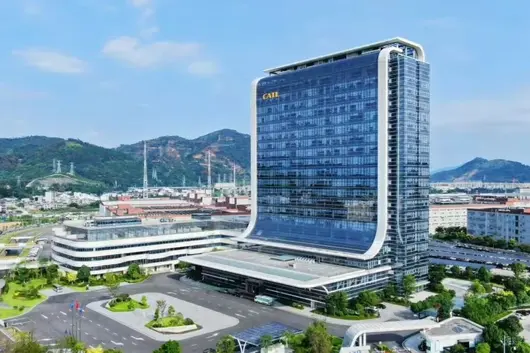
Profited massively, these three words can only describe CATL's performance in the first half of 2026.
On July 24, CATL released its semi-annual financial report. For the first half of 2026, CATL reported operating revenue of 276.917 billion yuan, a year-on-year increase of 54.80%; net profit attributable to shareholders was 43.284 billion yuan, a year-on-year increase of 41.98%; net profit after deducting non-recurring gains and losses was 39.013 billion yuan, a year-on-year increase of 43.44%. This means that regarding the core net profit attributable to shareholders, CATL earned 12.8 billion yuan more than the previous first half! In CATL's hands, cash and equivalents total approximately 340.58 billion yuan.

Looking at business segments, CATL achieved rapid growth in all three business segments. Among them, power battery systems generated revenue of 192.125 billion yuan, a year-on-year increase of 46.02%, accounting for 69.38% of total revenue; energy storage battery system revenue was 53.261 billion yuan, a significant year-on-year growth of 87.54%, accounting for 19.23% of total revenue; battery materials and recycling, mineral resources business revenue was 18.811 billion yuan, a year-on-year increase of 67.23%, accounting for 6.79% of total revenue. It can be seen that energy storage is the engine of CATL's growth this year.

From the perspective of gross margin, the gross margin of the power battery system segment was 20.63%, a decrease of 1.78% compared to the same period last year. The gross margin of the energy storage battery system was 23.96%, also down 1.56% from last year. The gross margin of battery materials and recycling, mineral resources business was 27.04%, an increase of 5.81% compared to last year. From the perspective of domestic and international markets, CATL's gross margin in the domestic market is declining, with a gross margin of 21.16%, down 1.78%. From the international market perspective, the gross margin is far higher than the domestic market, reaching 29.97%, an increase of 0.95% compared to last year.
From a market perspective, CATL's global leading position in power batteries is further strengthened. From January to May 2026, the global power battery market share was 40.2%, an increase of 2.2 percentage points year-on-year; domestic passenger vehicle installation share was 46.7%, an increase of 5.6 percentage points year-on-year, with domestic ternary battery market share reaching as high as 75.2%. Overseas markets broke through simultaneously, with overseas revenue accounting for 31.46% of total revenue, and overseas share steadily rising. Production capacity at overseas bases in Hungary, Spain, Indonesia, etc., continues to be established.

In the energy storage field, according to data from Xinlun Information, the company's energy storage battery shipments ranked first globally from January to June 2026. This is mainly due to AI computing power and new energy grid connection driving the concentrated landing of overseas and domestic energy storage projects. The energy storage side launched the 9MWh ultra-large capacity TENER, 6.25MWh Tianheng liquid-cooled energy storage cabin, and sodium-ion complete station system. Signed a three-year 60GWh sodium-ion energy storage long-term order with Hopeson, and landed large-scale independent energy storage benchmark projects.
Meanwhile, emerging businesses such as battery swapping, low-altitude eVTOL, and ships are being promoted in an orderly manner. Approximately 2,000 "Chocolate" passenger vehicle battery swapping stations have been built nationwide. The company's 5-ton class eVTOL has entered the airworthiness certification phase. Overseas heavy-duty truck battery swapping joint ventures have been established. Overall, currently CATL has sufficient capacity reserves. Existing battery system capacity is 525GWh, under-construction capacity is 764GWh, and capacity utilization rate is 94.86%.

Of course, for CATL, its growing profitability will inevitably attract criticism. This is because, looking at the current industry, the profitability of car companies is relatively too weak. In the first half of 2026, the average profit margin of the whole vehicle manufacturing industry was about 1.5%, creating a new low in nearly ten years. From the disclosed 2026 semi-annual performance forecast, the days of whole vehicle enterprises are clearly not good.
Except for BAIC BluePark forecasting a net profit increase of 14.65%-23.32% year-on-year, several other mainstream car companies showed significant declines: Haima Automobile (000572.SZ) forecast net profit decreased 0.64% to 47.61%, Changan Automobile, Great Wall Motor forecast decline both exceeded 57%, GAC Group forecast decline approached or even exceeded 60%, Seres forecast net profit year-on-year decline was between 151%-161.2%, turning from profit to loss. According to calculations, currently a terminal-priced model costing about 200,000 yuan, net profit per vehicle is only about 3,000 yuan.
Against this background, CATL will undoubtedly once again face the questioning of "car companies working for CATL". In 2025, CATL's operating revenue was 423.702 billion yuan, net profit attributable to parent company was 72.201 billion yuan. In the same year, the combined net profit of the five top car companies BYD, Geely, SAIC, Great Wall, Changan was 73.5 billion yuan, only 1.3 billion yuan more than CATL alone. And in the first quarter of 2026, CATL's net profit attributable to parent company was 20.738 billion yuan, while the combined total of the seven car companies Chery, Geely, BYD, SAIC, Great Wall, Seres, Changan was 17.5 billion yuan, the sum of the seven being less than CATL alone.

In June 2026, CATL Chairman and General Manager Zeng Yuqun, in a media interview, used the photovoltaic industry as a comparison to respond to car companies' complaints about its prices. He stated, "Now the lithium battery industry hasn't met the disastrous result that the photovoltaic industry has now, because CATL is propping up this price. As long as CATL brings the price down, it will be even worse than photovoltaic. Of course, this has not fully quelled outside doubts."
However, CATL also has grievances about the industry status quo. Zeng Yuqun previously stated that many people want to enter the battery industry. The first thing they do is come to CATL to poach talent or steal a bit of technology; then go to equipment manufacturers and material manufacturers, see what formulas they have, then combine them and say they have money to invest, and they get in. Zeng Yuqun pointed out that the imitation level of others (other manufacturers) might only be 60-70 percent, but they use low-price competition.
For example, in the procurement process of some enterprises, some decision-makers are only oriented towards completing current KPI (Key Performance Indicators), while the verification cycle for battery quality is long, and potential defects often appear only after the vehicle has been used for three to five years.
Zeng Yuqun believes that the reason why this low-price competition works is rooted in the impatient mindset and short-sighted behavior of some market participants. He believes that without CATL holding the front, the battery industry would be very chaotic. And looking at it from this perspective, it is actually not unreasonable for CATL, as the leader, to make money. What is scary is that if the leader doesn't make money, then this industry will be in danger.