首頁香港

搜尋歷史
熱門搜尋
經銷商登入 / 註冊

In the Malaysian SUV market, many buyers compare the Toyota Fortuner and Chery Tiggo 9 when choosing a car. These two cars are quite close in price and positioning. Today, we will make a detailed comparison from multiple aspects to help you save time on research.
The Toyota Fortuner's OTR price in Malaysia is RM 195,880 - 241,880, with a total of 3 versions, including 2024 2.8T VRZ Diesel (RM 241,880), 2024 2.7L SRZ Petrol (RM 202,880), 2024 2.4L Standard Diesel (RM 195,880), etc.
The Chery Tiggo 9's OTR price in Malaysia is RM 166,800 - 179,800, with a total of 1 version, including 2026 2.0T Standard (RM 179,750), etc.
From the price perspective, the starting price of Chery Tiggo 9 is RM 29,080 cheaper than Toyota Fortuner. Honestly, in this price segment, a difference of a few thousand is not that big, the key is still the overall value for money and long-term usage cost.

Toyota Fortuner is equipped with 2.5L Diesel, 187 hp. Official fuel consumption 8.5 L/100km.
Chery Tiggo 9 is equipped with 2.0L 4-cyl, 170 hp. Official fuel consumption 8.0 L/100km.
In terms of power, the Toyota Fortuner's 2.5L Diesel has 17 more horsepower than the Chery Tiggo 9's 2.0L 4-cyl, with more confidence in mid-range acceleration, especially when overtaking on highways. However, the Chery Tiggo 9's fuel consumption might be more friendly, daily city commuting differences won't be too big.

Toyota Fortuner uses FWD drive type.
Chery Tiggo 9 uses FWD drive type.
Both cars have the same drive type, both are FWD, daily driving experience won't have a big difference.

Toyota Fortuner warranty 5 years/unlimited mileage, maintenance interval every 10,000km or 6 months.
Chery Tiggo 9 warranty 3 years/100,000km, maintenance interval every 10,000km or 6 months.

Toyota Fortuner and Chery Tiggo 9 are both mainstream choices in the Malaysian market, suitable for family use and daily commuting. If you value brand reputation and resale value more, you can prioritize the one with better reputation; if you care more about value for money and features, then choose the one with richer configurations. Ultimately, it is recommended to test drive both, experiencing them personally is the most important.

Overall, Toyota Fortuner and Chery Tiggo 9 are both very good car models in the Malaysian market. Which one to choose, key still depends on your personal needs and budget. Everyone is suggested to do research, compare quotes from several dealerships more, then test drive to make final decision. Buying a car is a big matter, spending time doing research will definitely not be wrong.


In the Malaysian SUV market, many buyers compare the Toyota Fortuner and Chery Tiggo 9 when choosing a car. The price and positioning of these two models are quite close. Today, we will conduct a detailed comparison from multiple aspects to help you save time on research.
The Toyota Fortuner OTR price in Malaysia is RM 195,880 - 241,880. There are 3 versions in total, including 2024 2.8T VRZ Diesel (RM 241,880), 2024 2.7L SRZ Petrol (RM 202,880), 2024 2.4L Standard Diesel (RM 195,880), etc.
The Chery Tiggo 9 OTR price in Malaysia is RM 166,800 - 179,800. There is 1 version in total, including 2026 2.0T Standard (RM 179,750), etc.
From the price perspective, the starting price of the Chery Tiggo 9 is RM 29,080 cheaper than the Toyota Fortuner. To be honest, in this price range, a difference of a few thousand is actually not significant. The key is to look at the overall value for money and long-term usage costs.
The Toyota Fortuner body length is 4400 mm, boot 400 L.
The Chery Tiggo 9 body length is 4400 mm, boot 400 L.
The dimensions of the two cars are almost the same, and the interior space difference is not significant. For cars in this class, it is fully sufficient for daily use.
Toyota Fortuner warranty 5 years/unlimited mileage, maintenance interval every 10,000km or 6 months.
Chery Tiggo 9 warranty 3 years/100,000km, maintenance interval every 10,000km or 6 months.
Both Toyota Fortuner and Chery Tiggo 9 are mainstream choices in the Malaysian market, suitable for family use and daily commuting. If you value brand reputation and resale value more, prioritize the one with better reputation; if you care more about value for money and features, choose the one with richer configurations. Ultimately, we suggest test driving both, as hands-on experience is the most important.
Overall, both Toyota Fortuner and Chery Tiggo 9 are very good car models in the Malaysian market. Which one to choose depends mainly on your personal needs and budget. We recommend doing your homework, comparing quotes from multiple dealerships, and then test driving before making the final decision. Buying a car is a big matter; spending some time doing homework is never wrong.
In Malaysia's SUV market, many buyers compare Toyota Fortuner and Chery Tiggo 9 when choosing a car. These two cars are quite close in price and positioning. Today, we will do a detailed comparison from multiple aspects to help you save time on research.
The OTR price of Toyota Fortuner in Malaysia is RM 195,880 - 241,880, with a total of 3 versions, including 2024 2.8T VRZ Diesel (RM 241,880), 2024 2.7L SRZ Petrol (RM 202,880), 2024 2.4L Standard Diesel (RM 195,880) etc.
The OTR price of Chery Tiggo 9 in Malaysia is RM 166,800 - 179,800, with a total of 1 version, including 2026 2.0T Standard (RM 179,750) etc.
Looking at the price, the starting price of Chery Tiggo 9 is RM 29,080 cheaper than Toyota Fortuner. Honestly, in this price range, a difference of a few thousand is actually not significant; the key is still to look at overall value for money and long-term usage costs.
Toyota Fortuner is equipped with 2.5L Diesel, 187 hp. Official fuel consumption 8.5 L/100km.
Chery Tiggo 9 is equipped with 2.0L 4-cyl, 170 hp. Official fuel consumption 8.0 L/100km.
Regarding power, Toyota Fortuner's 2.5L Diesel has 17 more horsepower than Chery Tiggo 9's 2.0L 4-cyl, with more confidence in mid-range acceleration, especially when overtaking on highways. However, Chery Tiggo 9's fuel consumption might be more friendly, and the difference in daily city commuting will not be too big.
Toyota Fortuner body length 4400 mm, trunk 400 L.
Chery Tiggo 9 body length 4400 mm, trunk 400 L.
The dimensions of both cars are almost the same, and the interior space difference is not large. Cars in this class are completely sufficient for daily use.
Toyota Fortuner uses FWD drive method.
Chery Tiggo 9 uses FWD drive method.
Both cars have the same drive method, both are FWD, daily driving feeling will not have too big difference.
Overall, Toyota Fortuner and Chery Tiggo 9 are both very good car models in the Malaysia market. Choosing which one, the key still depends on your personal needs and budget. We suggest doing research, compare quotes from several dealerships, then go for a test drive to make the final decision. Buying a car is a big thing, spending time doing research will never be wrong.

In the SUV market in Malaysia, many buyers compare Toyota Fortuner and Chery Tiggo 7 PHEV when choosing a car. These two cars are quite close in price and positioning. Today we will do a detailed comparison from multiple aspects to help you save time on research.
Toyota Fortuner OTR price in Malaysia is RM 195,880 - 241,880, with 3 versions in total, including 2024 2.8T VRZ Diesel (RM 241,880), 2024 2.7L SRZ Petrol (RM 202,880), 2024 2.4L Standard Diesel (RM 195,880), etc.
Chery Tiggo 7 PHEV OTR price in Malaysia is RM 129,750 - 129,750, with 2 versions in total, including 2025 1.5T 90km CSH (RM 129,750), What charging methods does the Tiggo 7 PHEV support? Can it be charged using a home power socket? (RM 117,478), etc.
From a price perspective, the starting price of Chery Tiggo 7 PHEV is RM 66,130 cheaper than Toyota Fortuner. To be honest, in this price segment, a difference of a few thousand is actually not big. The key is to look at overall cost-performance ratio and long-term usage costs.
Toyota Fortuner body length 4400 mm, trunk 400 L.
Chery Tiggo 7 PHEV body length 4400 mm, trunk 400 L.
The dimensions of the two cars are almost identical, and the interior space difference is not significant. For this class of cars, daily use is completely sufficient.
Toyota Fortuner warranty 5 years/unlimited mileage, maintenance interval every 10,000km or 6 months.
Chery Tiggo 7 PHEV warranty 3 years/100,000km, maintenance interval every 10,000km or 6 months.
Both Toyota Fortuner and Chery Tiggo 7 PHEV are mainstream choices in the Malaysian market, suitable for family use and daily commuting. If you value brand reputation and resale value more, you can prioritize the one with better reputation; if you care more about cost-performance ratio and equipment, choose the one with richer configurations. Ultimately, we suggest test-driving both models, as personal experience is the most important.

Overall, both Toyota Fortuner and Chery Tiggo 7 PHEV are very good models in the Malaysian market. Which one to choose mainly depends on your personal needs and budget. We suggest doing your homework, comparing quotes from several dealerships, and then test-driving to make the final decision. Buying a car is a big matter, taking time to do research will definitely not be wrong.

In the Malaysian SUV market, many buyers compare the Toyota Fortuner and Chery Tiggo 8 PHEV when choosing a car. These two cars are quite close in price and positioning, so today we will make a detailed comparison from multiple aspects to help you save time on research.
The OTR price of the Toyota Fortuner in Malaysia is RM 195,880 - 241,880, with a total of 3 versions, including 2024 2.8T VRZ Diesel (RM 241,880), 2024 2.7L SRZ Petrol (RM 202,880), 2024 2.4L Standard Diesel (RM 195,880), etc.
The OTR price of the Chery Tiggo 8 PHEV in Malaysia is RM 159,750 - 159,750, with a total of 2 versions, including 1.6L Turbo Standard (RM 130,000), 1.6L Turbo Premium (RM 145,000), etc.
From a price perspective, the starting price of the Chery Tiggo 8 PHEV is RM 36,130 cheaper than the Toyota Fortuner. Honestly, in this price range, a difference of a few thousand is not that big; the key is looking at the overall value and long-term running costs.
Toyota Fortuner is equipped with 2.5L Diesel, 187 hp. Official fuel consumption 8.5 L/100km.
Chery Tiggo 8 PHEV is equipped with Hybrid, 170 hp. Official fuel consumption 4.5 L/100km.
In terms of power, the 2.5L Diesel of the Toyota Fortuner has 17 more horsepower than the Hybrid of the Chery Tiggo 8 PHEV, offering more confidence in mid-range acceleration, especially when overtaking on highways. However, the fuel consumption of the Chery Tiggo 8 PHEV might be more favorable, and the difference in daily city commuting will not be too large.
The safety rating of the Toyota Fortuner is 5★ (ASEAN NCAP), active safety systems include .
The safety rating of the Chery Tiggo 8 PHEV is TBD, active safety systems include Basic.
Toyota Fortuner adopts FWD drive system.
Chery Tiggo 8 PHEV adopts FWD drive system.
The drive system of both cars is the same, both are FWD, there won't be much difference in daily driving feel.
Toyota Fortuner and Chery Tiggo 8 PHEV are both mainstream choices in the Malaysia market, suitable for family use, daily commuting. If you value brand reputation and second-hand price more, you can prioritize the one with better reputation; if you care more about value and features, then choose the one with richer configuration. Finally, it is recommended to test drive both, personal experience is the most important.
In general, Toyota Fortuner and Chery Tiggo 8 PHEV are both very good models in the Malaysia market. Which one to choose depends on your personal needs and budget. We recommend doing research, compare quotes from several dealerships, then go for a test drive to make the final decision. Buying a car is a big matter, spending some time on research will definitely not be wrong.

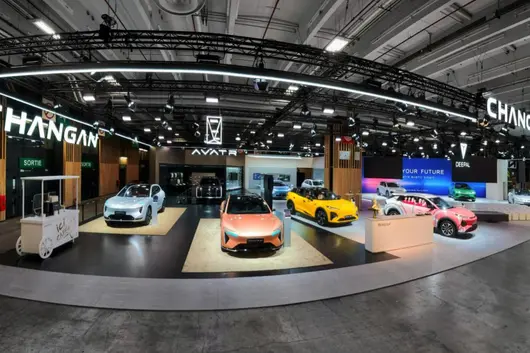
October 12, the 2026 Paris International Motor Show opened at the Paris Porte de Versailles Exhibition Centre. Deepal unveiled two models, DEEPAL S05 and DEEPAL S07, and invited legendary footballer Luis Figo to appear at the booth. From product display to brand interaction, this exhibition was not only a concentrated debut for Deepal towards the European market, but also reflected a further upgrade in the overseas expansion model of Chinese new energy vehicle brands.

From Product Adaptation to Local R&D, Deepening the European Market
Europe is an important market for the global automotive industry, also known for strict regulatory standards, a mature consumption system, and fierce market competition. For Chinese new energy vehicle brands, entering the European market is just the first step; how to adapt to local regulations, road environments, and user needs is the key to achieving long-term development.
The DEEPAL S05 and DEEPAL S07 unveiled this time reflect Deepal's targeted layout for the European market. The design of both models was led by the Turin Design Center in Italy, engineering tuning was completed in Birmingham, UK, and EU Whole Vehicle Type Approval (WVTA) was obtained jointly with TÜV Rheinland. At the same time, both models are equipped with the self-developed Jinchongzhao battery, and product development is carried out around the safety and compliance requirements of the European market.
This means that Deepal's globalization is not simply pushing domestic products overseas, but improving the product's adaptability to the target market through localized synergy in design, R&D, and certification links.
From Whole Vehicle Export to System Overseas Expansion, Globalization Capabilities Continue to Improve
Products are the starting point for entering overseas markets; what truly determines whether a brand can develop sustainably is the comprehensive capability formed by links such as R&D, manufacturing, supply chain, and service.
Relying on Changan Automobile's global accumulation, Deepal is gradually forming a global R&D system covering six countries and ten regions, and continuously improving overseas manufacturing and service networks. In May 2025, Deepal's first overseas new energy vehicle base—the Thailand Rayong Plant went into production, providing new manufacturing support for its global market expansion.
So far, Deepal has entered more than 100 countries and regions worldwide, owning 4 global manufacturing bases and 1796 global service outlets. At the same time, the brand is continuously improving the local service system through measures such as conducting strategic cooperation with European partners, building European parts centers, providing 7x24 hour fast rescue, etc., and carrying out brand marketing combined with local sports resources.
From R&D to manufacturing, then to sales and after-sales service, Deepal is promoting the global layout to extend from a single product output to a more complete operational system.

European Market Growth Becomes an Important Test of Global Layout
Market performance is an important indicator to test the effectiveness of global strategies.
Data shows that from January to September 2026, Deepal's European sector sales exceeded 18,000 units, up more than 106% year-on-year. Among them, Deepal S05 performed outstandingly in the Spanish market, topping the compact pure electric SUV registration list three times; in the first half of 2026, its cumulative sales ranked second among global brands and first among Chinese brands in this sub-market.
From breakthroughs in regional markets to the continuous expansion of overseas sales networks, Deepal is undergoing more comprehensive testing in this mature automotive market, Europe. Compared to short-term sales growth, how to continuously improve product competitiveness, service response efficiency, and brand awareness will have a more direct impact on its future development.
On a global level, Deepal achieved a cumulative mass production breakthrough of 1 million units in September 2026. From January to September 2026, the brand's global cumulative sales reached 252,213 units, an increase of 8.59% year-on-year, of which overseas cumulative sales increased by more than 65% year-on-year.
Million-unit scale is a phase node, but its more important significance lies in providing a new foundation for Deepal's next stage of global development. As overseas business continues to expand, whether product, technology, manufacturing, and service systems can co-evolve will become an important part of brand competitiveness.

Chinese New Energy Vehicle Overseas Expansion Enters System Competition Stage
From Deepal's appearance at this Paris Motor Show, it can be seen that the overseas competition of Chinese new energy vehicle brands is changing.
In the past, price and product cost-performance ratio were important advantages for Chinese cars entering overseas markets. Now, with more brands entering mature markets such as Europe, the dimensions of competition are further extending to technical capability, regulatory adaptation, localized operations, and long-term service. Relying solely on product exports has become difficult to support the long-term development of brands in overseas markets.
Deepal's proposed "In Europe, for Europe" is essentially combining global R&D capabilities with regional market needs. Through localized product development, global manufacturing layout, and service network construction, long-term operational capabilities are gradually being established.
At the same time, the brand adheres to "Tech for All" as its core mission, promoting electrification and intelligent technology to a wider consumer group. For the Chinese new energy vehicle industry, the next stage of globalization is not only selling products to more countries, but truly integrating technology, quality, and service capabilities into local markets.
The Paris Motor Show is a microcosm of Deepal's global process. As the Chinese automotive industry moves from product output to system output, the ability to establish sustainable local operational capabilities and form stable brand awareness will become an important topic for Chinese new energy vehicles to achieve long-term growth in the global market.

In the first half of 2026, BYD's overseas performance report set records again: overseas sales of passenger cars and pickups reached nearly 790,000 units, a year-on-year increase of 67.9%. Business coverage spans over 120 countries and regions, topping new energy vehicle brand sales in core markets such as the UK, Brazil, and Thailand.
Building on a strong global foundation, BYD's new energy government vehicle business is entering a new stage of "blossoming at multiple points" both domestically and internationally, with overseas benchmarks leading and domestic capacity continuing to expand.

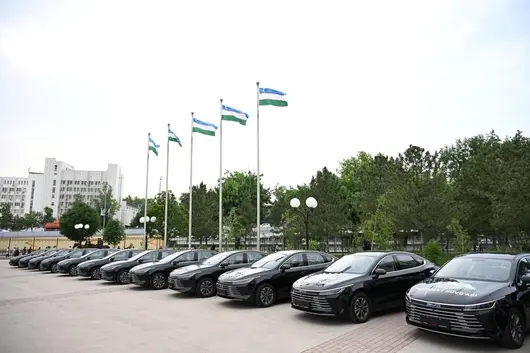
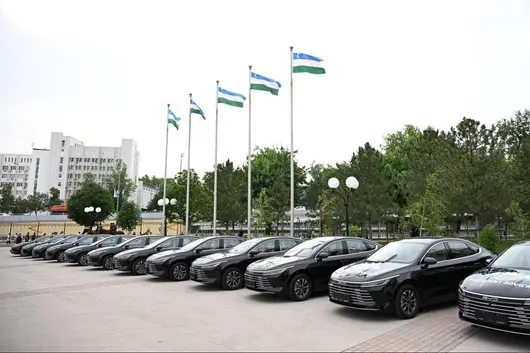
In the overseas market, national-level recognition landed first. Shavkat Mirziyoyev, President of the Republic of Uzbekistan, signed a presidential decree awarding the BYD team the national-level medal "Friendship Medal".
This is another high-level endorsement given by the Uzbek side to BYD following the commissioning of the local new energy factory and the selection of BYD models for government vehicles at the Presidential Office, and has become a vivid footnote on Chinese new energy vehicles winning trust in the overseas government market with their strength.
The breakthrough in Uzbekistan is not an isolated case. BYD's overseas government vehicle layout is penetrating from benchmark markets to a wider scope. Nearly 100 BYD pure electric government vehicle orders in Pakistan have been delivered and put into use on a large scale. This is Pakistan's first large-scale procurement of new energy government vehicles, also marking the country as a benchmark market for BYD's overseas police vehicle cooperation.
At the same time, the government fleet of Cape Verde has fully switched to BYD. Hungary, Austria, and other countries have also successively included BYD models in official vehicle systems such as diplomatic reception.

In the professional sector of police vehicles, BYD's overseas layout is further accelerating.
In September, BYD delivered a batch of Dolphin police cars to the Philippines Police; recently, dozens of Destroyer 05s officially joined the Mexican police force. So far, BYD has delivered multiple models including BYD SHARK pickups, Seal, Yuan UP, and Seagull to various local police departments in Mexico, covering diverse duty requirements. The continuous landing in these two markets means that BYD's new energy police vehicles are moving from single-point demonstration to scaled and normalized application.

In the domestic market, BYD also firmly holds the top position in new energy government vehicle procurement. Announcements from the China Government Procurement Network show that since the second half of the year, government agencies in many places across the country have completed bulk procurement of BYD government vehicles. Following securing the first place in domestic new energy government vehicle government procurement sales with a market share of over 22% in the first half of the year, the domestic government market has given positive affirmation again. In the police vehicle field, police vehicles such as Fang Cheng Bao Titanium 7 have also completed bulk delivery in many places across the country.

Currently, BYD has built a full-category product matrix covering sedans, SUVs to pickups, which can fully adapt to diverse police scenarios such as security patrol, traffic law enforcement, and emergency response, helping to promote the electrification upgrade of police mobility.
The government vehicle track once dominated by joint venture brands is seeing more and more "Chinese faces". From national-level recognition overseas to bulk procurement by police forces in multiple countries, from leading government procurement share domestically to the landing of full-category matrices, BYD is accelerating the global government layout of Chinese new energy vehicles with its hard technical strength and brand credibility, and is also writing a new footnote for "Chinese Smart Manufacturing".

十三年出海路,17 座海外工廠,2.82 億條年產能——中國輪胎嘅全球化遠征,正迎來利潤兌現嘅黃金時刻。
截至 2026 年 10 月,中策、賽輪、玲瓏、森麒麟、三角、風神、雙星七家頭部企業已在四大洲佈局 17 座工廠,海外總產能約 2.82 億條/年,相當於國內總產能嘅 38%。從“建廠期”邁入“利潤期”,中國輪胎全球化進入新階段。


佈局版圖:四大洲落子成勢
賽輪以 5 處佈局領跑:越南(2013 年投產,中國輪胎業首座海外綠地工廠)、柬埔寨、印尼、墨西哥四座已投產,埃及在建。中策坐擁 4 座基地,泰國 1500 萬條半鋼 +400 萬條全鋼產能持續擴產,印尼、越南、墨西哥梯次推進。玲瓏嘅泰國、塞爾維亞、埃及三足鼎立,其中塞爾維亞是歐洲首座中資綠地胎廠。森麒麟深耕泰國並落子摩洛哥,摩洛哥一期從開工到首胎僅用 11 個月。三角、風神、雙星各據一城:三角押注柬埔寨、風神深耕埃及工程胎、雙星則以“柬埔寨工廠 + 錦湖全球品牌”實現跨越升級。

利潤兌現:海外工廠成增長引擎
2026 年上半年財報顯示,海外基地盈利能力集中釋放:
賽輪柬埔寨成為行業標杆——半年營收 44.05 億元,淨利率高達 21.6%,淨利潤同比增長約 101%。在其帶動下,柬埔寨 1—8 月輪胎出口額突破 14.97 億美元,同比大增 72.14%,產品遠銷美國、巴西、歐洲等全球市場。
賽輪越南 2024 年單廠營收達 86.44 億元,先發優勢持續鞏固;中策泰國 2025 年淨利 10.14 億元,佔公司歸母淨利 24.5%,是穩定嘅利潤壓艙石;森麒麟摩洛哥上半年實現扭虧,並拿下雷諾、Stellantis 全球供應商資質,躋身歐洲高端原配供應鏈;玲瓏塞爾維亞已通過大眾、奧迪、寶馬審核並獲福特 Q1 認證,歐洲本土化戰略價值凸顯。

戰略升級:從單點建廠到全鏈條出海
與第一輪出海不同,這一輪嘅最大亮點是“鏈式出海”:埃及已吸引五家胎廠扎堆投資,帶動中天鋼鐵(鋼簾線)、聯科科技(炭黑)、豪邁集團(模具)等上下游協同落地,形成“輪胎 + 材料 + 裝備”嘅完整集群;摩洛哥則憑藉面向歐盟嘅零關稅優勢,集聚森麒麟、貴州輪胎等高端產能。埃及負責規模與集群,摩洛哥主打高端與准入,中國輪胎嘅全球供應鏈體系日趨完善。
面對歐盟反傾銷稅等貿易變量,多基地佈局展現出強大韌性:賽輪五點支撐、中策四國協同,將政策風險攤薄為可管理成本;原配配套持續突破,中策進入問界 M6、尊界 S800 配套體系,訂單結構向高附加值升級。

結語:下半場比拼“賺錢速度”
十三年間,中國輪胎完成了從產品出海到產業出海嘅跨越。行業共識清晰:關稅決定“從哪發貨”,淨利率決定“走不走得通”。出海嘅下半場,比嘅不是建廠速度,而是把產能轉化為利潤嘅速度。
產能已經出海,利潤正在跟上。這場全球化大考,中國輪胎正交出一份越來越亮眼嘅答卷。

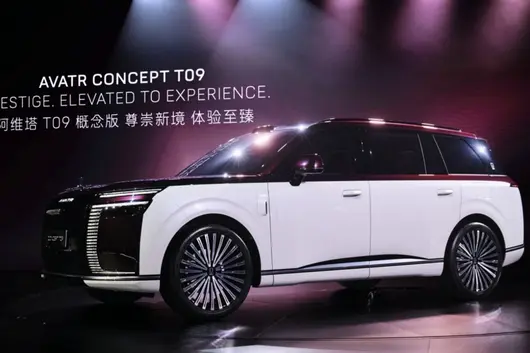
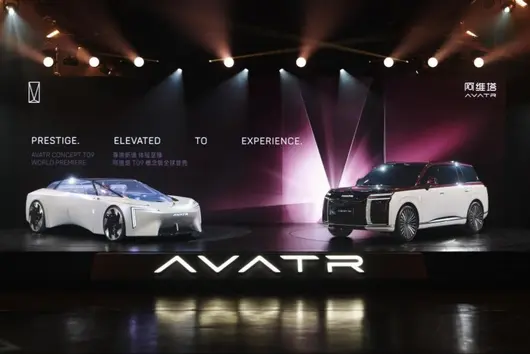
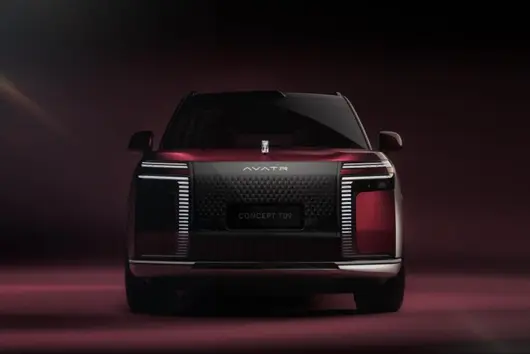
October 11, 2026, Paris. Avatr T09 Concept Global Premiere.
Honestly, I was stunned for a few seconds after watching the launch. It's not because the specs were explosive—1000 horsepower, 400km pure electric range, Huawei Qiankun Intelligent Driving; these, in the 2026 Chinese auto market, are no longer explosive news. What really stunned me is that the entire launch event didn't mention a single word "benchmarking against whom".


This would have been almost unimaginable in the narrative of Chinese cars going overseas in the past twenty years.
We are used to such a script: Chinese brands going to Europe, first talking about cost-performance, then about electric leadership, and finally cautiously adding "we are also trying to understand luxury". Essentially, we have always been answering questions on someone else's exam paper. BBA defined what luxury is, Porsche defined what sportiness is, Land Rover defined what presence is, and then we take China's supply chain cost advantages and the speed of technology iteration, trying to answer with higher scores within these established frameworks.


This time, Avatr T09 just tore up the exam paper directly.
Chen Zhuo said, "The flagship series embodies noble luxury, corresponding to prestige, composure, and presence." Note this word: presence. This is not something that can be written in a spec sheet, nor something that can be proven by 0-100 acceleration. It is a purely Eastern aesthetic concept. The "presence" that Western luxury brands have talked about for a hundred years is essentially a different language compared to "presence". What Avatr wants to do now is use a complete original design language to translate "presence" into something the global market can read, perceive, and even aspire to.
This is much harder than simply stacking technology.
Look at its design execution: the front face has 362 LOGO elements of different 3D heights, not a simple matrix arrangement, but "connected with appropriate density, flowing with brilliance between light and shadow". The crystal diamond array light group uses inner and outer double-layer diamond cutting, pursuing the "diamond fire texture". A 2.1㎡ clamshell front hood paired with island-like bulges blends "steady power" and "dynamic tension" together. Side blade lines paired with waist-curve surfaces, D-pillar aluminum trim integrated into the window outline and tail wing, creating a floating roof.


The core logic of this language is not "good-looking", but "revealing itself without ostentation".
What is the design logic of Western luxury cars? It is showing off. Large grilles, large badges, large wheels, large exhausts, using visual impact to tell you "I am expensive". Avatr T09 takes another path: majestic from afar, exquisite upon close inspection. If you do not approach, you cannot see the height variations of the 362 LOGO elements; if you do not look closely, you cannot understand the light and shadow layers of the double-layer diamond cutting. Nobility is not shouted out, it is hidden away; it is the moment waiting for you to discover it, rising up on its own.
This is very Eastern. Also very risky.
Because the European market's perception of "luxury" is path-dependent. They are used to the directness of the three-pointed star, used to the flamboyance of the kidney grilles, used to the aristocratic narrative of British cars and the passionate narrative of Italian cars. Suddenly a Chinese brand comes, saying "Our luxury is called Emotional New Luxury, our presence is called revealing without ostentation", can they get it?
I think they can. But it takes time.

The detail of the Vortex Emotional Vortex explains a lot. 360° seamless two-stage reverse curved surface, adjustable lift, 118 RGB LEDs, anti-pinch function. The first three are technical parameters, the last one is an attitude. An emotional interaction device, specifically designed with anti-pinch. In the context of Western luxury cars, this is called "humanized configuration"; in Avatr's context, it is called "warm emotional interaction". The difference is: the former is a line in the feature list, the latter is a breath in the design philosophy.
Avatr put the premiere in Paris, announced entering Europe in 2027, this rhythm is also very particular. Not 2026, not 2028, it is 2027. Leaving themselves more than a year to pave channels, build service systems, and do brand warm-up. Overseas business already covers 70 countries, average selling price over 300,000, already profitable. Egypt high-end EV market share 10%, Thailand luxury pure electric SUV sales number one. These data point to one thing: Avatr is not going to Europe for a trial run, it is going to Europe to take root.
But the point I want to make is another thing.
Chinese cars going overseas, in the past relied on "I am cheaper than you" and "I am faster than you". Playing these two cards until now, marginal utility is decreasing. Europeans are starting to wake up, starting to add tariffs, starting to implement local protection. What to compete on next? Compete on who can win in someone else's home court using their own rules.

Avatr T09 Paris Premiere, essentially is doing one thing: turning the four words "Emotional New Luxury", from a brand slogan, into a design paradigm that the global market is willing to discuss, willing to understand, even willing to follow.
If this path is walked through, only then can Chinese cars truly complete the leap from "product going overseas" to "brand going overseas". If it cannot be walked through, still answering questions on someone else's exam paper, just with a slightly higher score.
So, the significance of Avatr T09 lies not in whether it can sell explosively in the 500,000 level market. But whether it can make European users start discussing the word "presence", whether it can make "revealing without ostentation" become an aesthetic standard recognized by the global luxury car market.
This is the real challenge.
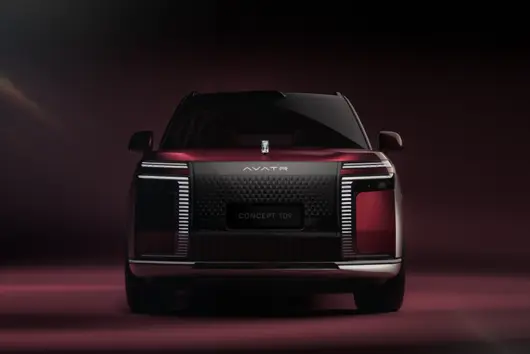

10 月 11 日,汽車商評從官方知悉,阿維塔全新旗艦 T09 概念版喺巴黎完成全球首秀,內飾亦第一次完整對外公開。10 月 12 日到 18 日,佢仲會上登巴黎車展嘅展台。量產版本計劃 2026 年內正式上市,預期售價落喺 50 萬元以上。
對阿維塔嚟講,T09 唔止係一款新車,佢亦都將品牌產品線正式分成兩條:阿維塔 11、12 延續前衛運動,叫「隨性奢華」;T09 開啟呢條行大氣穩陣路線,叫「尊崇奢華」。

外觀方面,新車車頭係全新旗艦設計語言。格柵整成立體浮雕結構,由 362 個唔同立體高度嘅阿維塔 LOGO 點陣單元排列而成,靠高低同倒角喺光影入面出層次。兩側晶鑽陣列燈組用內外雙層鑽石切割工藝,點亮後有種珠寶嘅質感。2.1㎡蚌式前艙蓋保留「島嶼式隆起」造型,穩重入面帶少少靈動。

車身側面無堆線條,用雕塑化曲面講嘢。T09 長宽高 5285/2025/1810mm,軸距 3150mm,大型六座 SUV 嘅身板,氣勢藏唔住。
收腰曲面令呢台五米二嘅大車唔顯臃腫,DToF 傳感器島融入車身,睇唔出拼接感。D 柱用大面積鋁飾板做出懸浮車頂,同級別多係塑膠飾板,呢處差別走近就睇得出。車尾一體式晶鑽尾燈同樣雙層切割,同車頭呼應。

內飾係今次首秀嘅重點。座艙入面最搶眼嘅係可以升降嘅 Vortex 情感渦流交互機構,360°無縫兩段式反曲面,上部係真木材質,本體用煙灰色半透加鐳雕星點結構。佢內部有 118 顆獨立可控 RGB-LED,可聯動整車 6 層 24 個位置嘅氛圍燈,迎賓、音樂律動、後方來車警示都可以出燈效,升降用嘅靜音電機帶緩起緩停同防夾。

三聯屏係一體式嘅,10.25 英寸儀表加兩塊 17.2 英寸 3.4K 屏,屏幕同兩側空調出風口無縫接埋一齊,中控下方留咗屏下 NFC 感應區,手機貼上去就嚟連。呢個座艙冇將功能一古腦推嚟眼前,而係以安靜、寬敞嘅姿態,令到一家人出行或接待客人,都撐得住場面。

智能化方面,智能駕駛用華為乾崑 ADS 5,配四激光雷達硬件方案,感知冗餘比常見嘅單雷達、雙雷達厚唔少。底盤係太行智控,閉式雙腔空氣懸掛、後輪轉向都畀咗上,仲支持蟹行模式,五米二嘅車身做到四米級最小轉彎半徑,地庫掉頭、窄路會車都輕鬆唔少。

動力方面,全新智能超級混動架構,2.0T 混動發動機加三電機分布式電驅組成四擎,系統綜合馬力超過一千匹,純電、插混、增程三種模式可根據場景切換。電池係 71.24kWh 寧德時代驍遙超級增混電池,CLTC 純電續航最高超過 400km。日常通勤當電車開,長途唔使一路搵樁,對一台要帶住一家老小出行嘅大六座嚟講,呢樣比加速數字更實在。

寫喺最後:
唔使話,長安、華為乾崑、寧德時代三方嘅技術,一齊落咗喺 T09 身上,佢亦係阿維塔目前技術密度最高嘅車型。呢台車要切嘅係 50 萬級國產大型豪華六座 SUV 呢塊蛋糕,而且目標用戶好清晰,對品質同科技有要求,又唔想喺空間同舒適上妥協嘅家庭。
海外嗰邊,阿維塔業務覆蓋 70 多個國家同地區,車型平均售價超 30 萬元,阿維塔 11 喺泰國拿下豪華純電 SUV 銷量第一,埃及高端電動車市佔率達到 10%。把全球首秀放喺巴黎,本身就好係一個態度。
對持幣待購嘅家庭用戶嚟講,T09 喺配置同用料上冇幾多藏着掖着。剩下兩個懸念:量產版能保留幾多概念車上嘅嘢?最終售價會係幾多?但凡呢兩點確定,佢喺同級入面嘅位置都一目了然咗。

October 1, SAIC announced September sales: 406,000 units in a single month, 3.147 million units cumulative for the first three quarters, continuing to rank first in the Chinese automotive industry. This is already SAIC's third "first" of the year — in May, it became the first domestic automobile group to break through 100 million cumulative production and sales, winning the first-half sales championship with 2.045 million units in the first half of the year, and continued to lead in the first three quarters.

The timing of these results is crucial. Since 2024, China's automotive industry has entered a new cycle of adjustment: volume growth is shifting from fuel vehicles to new energy vehicles, and the focus of competition has shifted from the quantity of product launches to technology, efficiency, and business capabilities. Being able to continue leading within this cycle relies on three levels being aligned simultaneously, supporting each other, where one cannot be missing.
Innovation: Independent Brands Become the Core Engine
From January to September, SAIC's independent brands sold 2.303 million units cumulatively, a year-on-year increase of 12.6%, accounting for 73.2% of the group's total sales. According to SAIC's own statement, independent brands have become the "core engine" driving group growth.

Breaking it down by segment: SAIC Passenger Vehicles 868,000 units, up 45.6% year-on-year, SAIC Maxus 215,000 units, up 34%, SAIC-GM-Wuling 1.06 million units — there are both high-growth segments and a million-unit scale base.
Independent brands sold 304,000 units in September, achieving year-on-year growth for nine consecutive months within the year, with stable market demand release. Independent brands have become the main engine for group growth, and the first step of SAIC's "seeking innovation" is landing right here.
Advancement: Integrating High-Level Intelligence into More Price Ranges
SAIC New Energy Vehicles sold 1.388 million units cumulatively from January to September, a year-on-year increase of 28.2%, far exceeding the industry average growth rate; among them, SAIC Passenger Vehicles 415,000 units, up 170.1% year-on-year, IM Motors 60,000 units, up 40.1%.
Supporting these growth rates is a batch of high-end products launched by SAIC — technologies that previously belonged only to high-end car configurations are now brought before a wider mainstream consumer group.

Roewe Jia Yue 07 pre-sale price 137,800 - 152,800 yuan, bringing the Doubao Cockpit Assistant and Momenta high-level intelligent driving into the 150,000 yuan family SUV class, pre-sale orders broke 20,000 units in 48 hours; MG07 brought the 800V platform, 5C fast charging, and 845km range into the 150,000 yuan coupe class, with September single-month deliveries exceeding 14,000 units; The all-new generation IM LS6 comes standard with a fully-steered chameleon chassis, with new orders exceeding 11,000 units within 57 minutes of launch.

These numbers represent different stages of the new product cycle: pre-sale orders reflect purchasing intent, launch orders reflect feedback during the release period, and delivery volume is the actual realization. The MG4 family delivered over 16,000 units in September, with monthly sales breaking 10,000 for several consecutive months, verifying the continuity of deliveries.
The confidence of "high specifications at not high prices" comes from the depth of the supply chain. SAIC has an internal group parts system — Huayu makes the chassis, Yanfeng makes interior and exterior trim, Qingtao makes solid-state batteries, core modules are shared across vehicle models, predicting demand at a million-unit scale and stocking materials in advance, using scale to spread costs.
Supporting this is decades of continuous R&D investment and tens of thousands of valid patents. These investments are starting to pay off — second-generation semi-solid state batteries are in mass production delivery on the MG4, and self-developed steer-by-wire technology is in mass production installation on the IM LS9 and LS8.
Speed Up: Joint Venture New Energy Product Capabilities Fully Released
From January to September, SAIC-GM sold 94,000 new energy vehicles, up 67.4% year-on-year; SAIC-Volkswagen sold 56,000 new energy vehicles, up 25.9% year-on-year. The two sets of data indicate that the electrification pace of the joint venture segment has accelerated significantly.
The source of speed is products. SAIC Volkswagen ID.ERA 5S launched in August, rights price 89,900 - 119,900 yuan, comprehensive range broke 2000km, it is the first plug-in hybrid sedan globally equipped with city NOA capability for the Volkswagen brand; The refreshed Buick Zhijing E7 launched the same month, limited-time trade-in price starting from 147,900 yuan; Audi E7X became the first luxury brand pure electric model to sell over 10,000 units within 100 days.

The configuration lists and price lists of these cars are all defined according to the judgment standards of Chinese new energy users. The channels, after-sales, and brand awareness accumulated by joint ventures are still exerting value, while the arrival of new products gives these accumulations new starting points. Cooperation models are also being adjusted synchronously: SAIC-GM and SAIC-Volkswagen have completed contract renewals, and SAIC Audi has launched new strategic cooperation.
The growth momentum of joint venture new energy vehicles continued from the first half of the year to the first three quarters, and accelerated further.
Glocal 3.0 Strategy: Globalization Layout Deepened
From January to September, SAIC overseas markets sold 1.166 million units cumulatively, up 52.4% year-on-year, accounting for 37% of the group's total sales. Overseas markets have become an important component of SAIC's scale. What supports overseas growth is the competitiveness of the products themselves.

In July, MG held a technical conference in London, UK, showcasing three major technologies: hybrid, semi-solid state batteries, and intelligent driving; MG became the first automobile brand globally to achieve mass production of semi-solid state batteries. In August, SAIC BEV overseas sales exceeded 10,000 units, up 93.3%, PHEV exceeded 5,000 units, up 56.4%, HEV 14,000 units, up 8.5%.
The products also received certification from local professional media: MG4 EV Urban won the UK "What Car" Annual Best Pure Electric Small Car, MG HS PHEV won "Auto Express" and "What Car" Annual Best Plug-in Hybrid and Best Hybrid, MG ZS Hybrid+ won Australian and Spanish media Car of the Year awards.

Supporting these achievements is also: SAIC has built China's first, globally leading complete vehicle logistics self-owned fleet, activated the Frankfurt European Engineering Center, established localized production in Thailand, and set up direct sales companies in Belgium and Luxembourg. These layouts determine the thickness of overseas business for the next three to five years.

Besides sales, data provided in the semi-annual report: SAIC's total operating revenue in the first half of 2026 was 298.65 billion yuan, core net profit attributable to parents 7.87 billion yuan, up 72% year-on-year, gross margin 12.6%, up 3 percentage points, net operating cash flow 54.3 billion yuan, up 158%. The synchronous improvement in operating quality makes this round of growth more substantial.
Upward: Industry Investment Feeds Back into Main Business, Harvest Period Has Arrived
There is another matter in the first three quarters that is easily overlooked: SAIC's technology investments planned over many years are now entering its own product lines one by one.
The most direct is Momenta. This intelligent driving solution provider has completed Hong Kong stock listing, and the business linkage with SAIC is also landing continuously: IM L6, LS6全系 come equipped with Momenta city NOA solution, relevant models go overseas to Europe synchronously.
Such synergy is not an isolated example: SAIC industry investments have cumulatively harvested dozens of listed enterprises, among which the chips, storage, and other core components of several portfolio companies have entered the SAIC vehicle supply chain.
Aiming inward, SAIC has always regarded products as a sharp weapon for competition, and clarified that "independent brands are the first strategy", integrating SAIC Passenger Vehicles, SAIC International, R&D Center, Ling Shu Technology, etc. into a large passenger vehicle segment, ensuring product definition, R&D, production, and marketing are on the same chain.
The effectiveness of organizational synergy is becoming apparent: the response speed from product definition to launch has significantly accelerated, allowing SAIC to launch more competitive products faster.
Where There Is Persistence, There Is a Response
Single-month figures, cumulative growth rates, independent brand share, overseas market share, any one of these taken separately cannot interpret the performance SAIC has demonstrated in this past year.
A volume of millions of units, multi-brand layout, deep whole industry chain, determines that its adjustment must be overall — after the industry direction switch, growth structure, product system, and organizational methods must be recalibrated according to the same logic.
Solve the source of growth first, then solve the quality of growth, and finally solve the system efficiency — in the past year and a half, SAIC has done these three things in order: technically entering more price ranges, operationally making independent, new energy, and overseas into new growth curves, organizationally using brand integration and the large passenger vehicle segment to re-equip internal resources. These three things landing simultaneously created the performance in the first three quarters.
There are some layouts that will not be written into the sales table. At the 48th WorldSkills Competition at the end of September, SAIC employee Jiao Jiao won gold in the body repair project, and the Chinese delegation successfully defended its title. SAIC has built four major training bases, with a skilled talent team exceeding 80,000 people — manufacturing quality, delivery consistency, and after-sales response ultimately rely on this team to support.

China's automotive market is in the midst of an intelligent transformation. After the dividend of incremental growth fades, the industry is competing not just on speed — the endurance of continuous investment, the efficiency of turning technology into products, the ability to operate in multiple markets simultaneously, lacking any one of them means you won't go far.
SAIC has made up for these all at once in this round. 70 years of manufacturing accumulation, a fully independent parts system, global logistics capabilities, plus continuous R&D investment and organizational restructuring over the past decade — the leading position of 3.147 million units in the first three quarters is the manifestation of this system at the result end.
In the fourth quarter, this batch of new cars will迎来 the complete delivery season. This transformation of China's automotive market will not end soon, the ones that can cross the cycle must be companies that make up for the system and solidify it.
SAIC has already stood firm on this road.

The electrification window of the global official vehicle market is being torn open by Chinese brands.
In the past, official vehicle procurement was the exclusive domain of joint ventures and foreign brands, especially in scenarios like police work, foreign affairs, and government reception, where requirements for reliability, total lifecycle costs, and after-sales systems are extremely high. Now, BYD is completing bidirectional breakthroughs domestically and internationally on this most valuable track.

First, let's look abroad. The President of Uzbekistan signed a presidential decree, awarding the BYD team the Friendship Medal, which is national-level endorsement. More importantly, the start of the local new energy factory and the selection of BYD for Presidential Palace official vehicles indicate that it has moved from product output to deep system rooting. Over nearly 100 pure electric official vehicles were delivered in Pakistan, marking the first large-scale procurement of new energy official vehicles by the country; the Cape Verde government official vehicle fleet has fully switched to BYD; Hungary and Austria have also integrated BYD into official vehicle systems for foreign affairs reception and police patrols. These orders are not simply selling cars, but rather China's new energy vehicles gaining institutional trust in the overseas government market.

Police vehicles are even more of a touchstone. Philippine police received Dolphin police cars, and Mexican police forces equipped Destroyer 05, and police in many parts of Mexico have already purchased BYD SHARK pickups, Seal, Yuan UP, Seagull, and other models. Police cars must face daily patrols, high-speed pursuits, harsh road conditions, and high-load operations, posing comprehensive tests for three-electric systems, chassis, and active/passive safety. BYD achieving the transition from single-point demonstration to scaled and normalized application indicates that its professional modification capabilities, technology platform reliability, and local service capabilities have been verified through actual combat.

The technical foundation supports all of this. BYD has a dual-line layout of pure electric and hybrid, with second-generation Blade Battery and Flash Charging technology, DM-i hybrid, Sky Eyes ADAS, etc., covering different official scenarios. More noteworthy is the full-category matrix: from Dolphin, Destroyer 05 and other sedans, to Seal, Yuan UP, Seagull and other SUVs and entry-level models, to SHARK pickups, Fang Cheng Bao Titan 7 and other hard-core off-road and police vehicles, BYD achieved seamless coverage from administrative reception, security patrols to emergency response and outdoor rescue. Government vehicle demand is highly complex, a single hit model is not enough, systematized response is the moat.

The domestic market is also stable. Announcements from the China Government Procurement Network show that since the second half of the year, government agencies in many parts of the country have completed bulk procurement of BYD official vehicles. Following the first half of the year where it retained the number one spot in domestic new energy official vehicle government procurement sales with over 22% market share, BYD continues to expand. In the police field, Fang Cheng Bao Titan 7 and other police vehicles have been delivered in bulk in many parts of the country. From being monopolized by joint venture brands to becoming the Chinese option for government electrification, this change is of landmark significance.

Let's look at the global baseline. BYD's 2026 first-half financial report shows overseas sales near 790,000 units, up 67.9% year-on-year, with business covering over 120 countries and regions, topping new energy vehicle brand sales in core markets like the UK, Brazil, Thailand, and winning the domestic new energy vehicle sales champion for four consecutive years. The significance of the official vehicle business is not just incremental sales, but also an amplifier of brand credibility. Once official procurement builds a reputation, it will influence the civilian market's perception of safety, quality, and retention value in reverse.

BYD's official vehicle business has formed a dual-wheel drive of overseas benchmark leadership and domestic continuous expansion: overseas using national-level orders and police field practice to build a high-end image, domestically using government procurement and police matrix to consolidate the baseline. For the automotive industry, official vehicle electrification is not an edge market, but a strategic highland for brand upward trend. BYD is writing Chinese Intelligent Manufacturing into the global government travel system with technical hard power and a full-scenario product matrix. The end point of this road is not just more orders, but the discourse power of Chinese automotive brands on the global high-end track.

Paris time October 11, Avatr T09 Concept Edition completes global debut, interior design revealed for the first time simultaneously. Starting October 12, it will appear at the Paris Motor Show alongside Avatr 06T and 07L (Show period October 12 to 18), and is planned to officially launch in 2026. Official positioning is clear: opening work of the flagship sequence, anchored in the 500,000 yuan level flagship luxury SUV market.

Placing a pre-production Chinese flagship SUV concept version in Paris for global debut, the venue selection itself is worth pondering. For over a hundred years, the definition and discourse power of global luxury cars have basically started from Europe, and Paris is the home court for traditional luxury brand competition. Avatr placing the 500,000 yuan level T09 here to appear is equivalent to actively putting the word "Respect" on the judge's seat — not here to show off, but to accept inspection. This is a completely different strategy compared to the path Chinese brands have traditionally taken when going overseas, which usually starts from low-price markets.

Another easily overlooked detail is the official wording: "Concept Edition", not "Concept Car". The distance between these two words is the distance between design and production. Concept cars usually mean free-wheeling ideas, with mass production significantly discounted; while "Concept Edition" suggests the styling and core technology are basically locked, only one step away from production. T09 from global debut to 2026 launch, the window period is extremely short. This change in wording is equivalent to blocking the old script of "concept stunning, production mediocre" in advance.

What is truly worth pondering about the T09 is that Avatr explicitly splits the design language into two sequences for the first time. Chairman Chen Zhuo spoke very directly at the press conference: the Digital Sequence focuses on "Casual Luxury", corresponding to elegance, sportsmanship, and personality; the Flagship Sequence focuses on "Respect Luxury", corresponding to prestige, composure, and presence — "Two design sequences, the same Avatr, the same persistence on originality and taste". Translated into product logic is: Avatr 11, 12 these existing models are responsible for "Casual", T09 is responsible for "Respect", each walking their own price range and crowd. Chief Designer Nader Faghihzadeh then takes the "freedom in vision" from the previous VISION XPECTRA concept and lands it on the T09 to become "steady, confident respect temperament".

The implementation of this "Respect" is also visible to the naked eye. The front grille uses 362 different stereoscopic height Avatr LOGO elements to build a relief texture, paired with inner and outer double-layer diamond-cut crystal light groups; the 2.1 m² clamshell front hood and island-style raised sides on both sides, blend steady power and dynamic tension. Side waistline curve and full volume contrast, plus D-pillar aluminum trim plate creating a floating roof, the whole set of designs is clearly aiming for "presence" — majestic from a distance, detailed upon close inspection. This also explains why it dares to shout 500,000 yuan level: buyers in this price segment want not just the spec sheet, but the "sense of being cared for" the moment you sit in the car.

This debut information volume largest part is actually in the cockpit. Industry exclusive Vortex Emotional Vortex adopts 360° seamless two-stage reverse curvature, can lift and drop, built-in 118 RGB LED matrix light sources, can link with whole vehicle ambient light to produce multiple light effects, also specifically optimized silent motor, added anti-pinching function. Translate it into experience language: past cockpit's "tech feel" relied on screen size and stacking materials, while Vortex wants to connect digital emotion with physical cockpit — the car can "perceive" you, not just "display" to you. Screen part instead restrained: 10.25-inch driver instrument panel plus dual 17.2-inch central control screen and passenger screen, seamlessly connected with side air vents, forming a one-piece three-screen, supports NFC tap to connect. No following the trend to roll screens or multi-screens, this set of trade-off logic is very clear — flagship cockpit competition, long past the stage of counting screen quantities.

On the technical level, Avatr claims T09 is the production model with the highest technology density to date for the brand, this word has data backing. Huawei Kuanguang Smart Driving, Harmony Cockpit, brand new Taihang Smart Control Technology outside, power equipped with brand new intelligent super hybrid: 2.0T hybrid engine matches three-motor distributed electric drive, system total power exceeds 1000 horsepower; 71.24kWh CATL Xiaoyao Super Series-Hybrid Battery, CLTC pure electric range highest exceeds 400km. This set of numbers placed on 500,000 yuan level SUV, actually is to change the flagship power narrative from "large displacement" to "1000 horsepower electric drive". Traditional luxury flagship's gold content has always been backed by cylinder count and displacement, while new generation Chinese flagship chooses to re-stand the standard using "1000 horsepower + long pure electric". More critically is the change in usage level: 400km level pure electric range means this full-size hybrid SUV in city daily commuting can fully drive as a pure electric car, long distance then switch on hybrid — this is not parameter game, is a car usage way change happening every day.

If design and power are T09's open cards, then the overseas data released by Avatr during the debut period, is this company's true hidden cards: overseas business has covered 70 countries and regions, product average price exceeds 300,000 yuan, and has already achieved profitability. In the stage where Chinese brands going overseas generally "exchange price for volume", this profitability status is not common, showing it takes the route of "penetrating partial markets" — Egypt high-end electric vehicle market share 10%, Avatr 11 wins Thailand luxury pure electric SUV market sales first, both are evidence. Europe's timeline is also clear: 2027 officially enter Europe, 06T and 07L will as first batch core products enter Norway, Spain, future three years continuously perfect Europe product matrix and service system. And 2030 enter over 110 countries and regions, overseas sales share over half goal, finally rely on T09 such flagship to globally stand up "Respect" signboard — otherwise in Europe can only call "selling cars", not "setting the brand".

To sum up, Avatr this time Paris debut truly wants to tell not just another new car, but Chinese brands start seriously competing for "Luxury" definition right. T09 whether can fulfill 500,000 yuan level product power, still have to look at 2026 mass production delivery after performance; but at least this time, it puts the two words "Respect", actively placed on the most strict judge's bench.


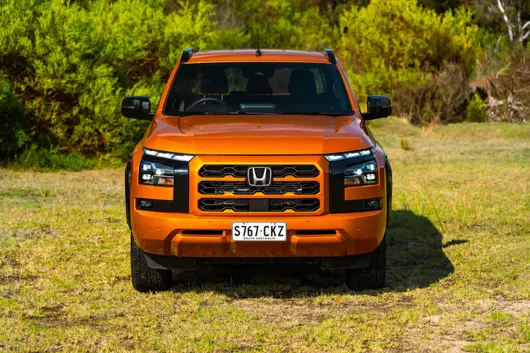
In the global mid-size pickup market, Honda, having been absent for many years, is finally looking to fill this gap. According to Japanese media reports, Honda is collaborating with Mitsubishi to develop a brand new mid-size pickup. The new vehicle will be based on the current Mitsubishi Triton platform, sold under the Honda badge as a rebadged version. It is planned to launch in the Southeast Asian market as early as 2028, and potentially expand to other regions depending on the situation.

Honda does have pickup products, but its sole model, the Ridgeline, does not fit the mainstream market: produced in the United States, offering only left-hand drive, and featuring a unibody construction, its positioning leans towards recreation. It cannot compete with traditional body-on-frame pickups like the Ford Ranger and Toyota Hilux in terms of off-road and heavy-load capabilities. This has left Honda absent for a long time from Southeast Asia, a major hub for pickups.

The new vehicle will go into production directly at Mitsubishi's factory in Thailand, sharing the platform and main body structure with the Triton. Differences will focus primarily on exterior components such as headlights, grilles, wheels, and bumpers. The powertrain is expected to retain the 2.4T diesel engine. This model already has precedent: Since 2025, Nissan has been selling a newly rebadged Triton-based Navara in Australia and New Zealand, with only the front fascia design changed. Once the Honda version is launched, the same production line will produce three models: Triton, Navara, and the Honda pickup, further improving the production capacity utilization rate of Mitsubishi's Thailand factory.

"One vehicle, multiple badges" is not new in the industry. Stellantis launched the Fiat Titano and Ram Dakota in Brazil, both rebadged from the Chinese Changan Hunter (Kaicene F70); the Ford Ranger and Volkswagen Amarok, Isuzu D-Max and Mazda BT-50 are also "relatives". The next-generation South American Amarok will even be built on the basis of the LDV Terron 9. Honda itself has precedents - between 1996 and 1998, it rebadged Isuzu TF (i.e., Holden Rodeo) in Thailand for sale as the Tourmaster.

It is worth noting that merger negotiations between Honda and Nissan broke down in early 2025, when Mitsubishi, a Nissan Alliance partner, was reportedly unenthusiastic about the merger. However, after the merger fell through, business cooperation did not stop: Both sides have announced collaboration in areas such as software and electrical/electronic architecture. Honda may also purchase more models from Mitsubishi and explore joint development of parts such as instrument clusters.

Another clue lies in North America. Reports say Nissan has already negotiated with Honda, planning for its Canton, Mississippi, USA factory to produce a rebadged Frontier pickup for Honda. Honda Vice President Hasehara Noriya stated back in January 2025: "If needed in the short term, we can also acquire Nissan models; in the future, perhaps joint development." The Triton project exposure confirms that this line of thought is being implemented.

In Conclusion: Developing a body-on-frame pickup from scratch requires massive investment and a long cycle. Rebadging allows Honda to enter the large-volume niche market with the lowest cost and fastest speed. However, as of now, neither side has officially announced it. It remains to be confirmed whether this rebadged Triton can leave Southeast Asia and which markets it will ultimately cover. But it is certain that under the dual pressure of cost and production capacity, Japanese brands that once emphasized technological independence are also lowering their stance to embrace the "badge-swapping alliance".

10 月 9 日,成山集團喺山東榮成迎來建廠 50 周年。同常見嘅廠慶唔同,呢場以"五秩芳華·再創榮光"為主題嘅慶典,被辦成咗一場輪胎產業供應鏈大會。據中國輪胎商務網(tirechina.net) 了解,除咗榮成主會場之外,本次大會仲設立咗 15 個分会场,泰國、馬來西亞、歐洲、北美等地同步連線,網上線下共 6000 餘人參與,其中海內外供應商、銷售商同合作商 600 多位。
慶典同供應鏈大會同場,回望同啟程同框。喺行業加快構建新發展格局、著力提升產業鏈供應鏈韌性同安全水平嘅當下,成山用一場大會把深耕主業、創新驅動、合作共贏嘅信號擺咗到台面上面,亦為下一個五十年嘅全球化佈局寫咗註腳。

主持人張蕾、黃凱
山東省原副省長孫守璞,北京衛戍區原政治委員孫本勝,威海市人民政府副市長袁志勇,國家開放大學原副校長鞠傳進,青島科技大學黨委書記 楊天梅,中國橡膠工業協會會長徐文英,山東廣播電視台副台長孫珊,榮成市委副書記、市長劉金軍,青島科技大學常務副校長呂萬翔,中國銀行山東省分行副行長丁瑞樑,建設銀行山東省分行副行長 陳智煒,農業銀行山東省分行副行長孫鵬,進出口銀行山東省分行行長助理楊明,山東省橡膠行業協會會長張洪民,榮成市委常委、副市長韓鵬參加盛會。

成山集團董事會主席 車宏志
大會伊始,成山集團董事會主席車宏志致開場辭,回顧五十年奮鬥歷程。佢表示,成山嘅發展成果,歸功於時代賦予嘅發展機遇,歸功於各級組織嘅關心扶持、前輩先輩嘅奠基拓業同全體同仁嘅戮力拼搏,向一代代薪火相傳嘅成山人、合作夥伴同社會各界朋友、各黨委政府領導以及全體員工家屬致以衷心感謝同崇高敬意。佢表示,成山能夠生生不息,靠嘅係始終堅守誠信為本、始終追求合作共贏兩條立身之道。面向下一個五十年,成山將繼續堅守誠信、利他、共贏嘅理念,擔當盡責、回饋社會,喺各黨委政府嘅正確領導下,同全球合作夥伴、各界友人、廣大用戶並肩攜手,實幹篤行,同心奔赴百年遠大征程。

江蘇興達鋼簾線股份有限公司總裁 劉 祥

IMPORTTREADS 公司總經理 Eduardo Armenta Lozano
江蘇興達鋼簾線股份有限公司總裁劉祥、IMPORTTREADS 公司總經理 Eduardo Armenta Lozano 分別代表國內、海外合作夥伴致辭,回顧咗同成山風雨同行、攜手共進嘅合作歷程,對成山堅守主業、誠信經營、開放合作嘅戰略布局同高質量發展前景給予高度認可,並表示將一如既往深化協同、彼此成就,同成山攜手共拓全球市場、共創美好未來。

隨後,威海市人民政府副市長袁志勇、中國橡膠工業協會會長徐文英先後致辭,向成山集團建廠五十周年表示熱烈祝賀,向成山集團五十年來扎根實業、勇擔責任、回報社會嘅發展歷程致以崇高敬意,並祝願成山集團堅守實業、守正創新,喺新嘅征程上行穩致遠、再創佳績,喺各黨委政府同行業協會嘅支持下,續寫高質量發展新篇章。

威海市人民政府副市長 袁志勇

中國橡膠工業協會會長徐文英
活動圍繞“致敬功勳、禮讚奮鬥、感恩同行、啟航未來”,依次展開嘉賓致辭、榮譽表彰、文藝演出、核心技術成果發布暨海外連線、啟航未來等環節。現場先後頒發咗成山基石·時代功勳、風雲(參數丨圖片)突破·特殊貢獻、跨越巔峰·優秀獻禮、山海無界·拓荒奮進、赤子守望·長駐深耕、薪火相傳·長青管理、市場先鋒·金戈鐵馬、智造未來·創新領航、匠心如磐·璀璨星光、品質見證·摯愛業主、山海共赴·致遠同行等 11 個獎項,向為成山發展做出突出貢獻嘅員工、團隊、合作夥伴及業主代表致以崇高敬意。山東省橡膠行業協會會長張洪民同成山集團領導團隊分別為獲獎者頒獎。


頒獎間隙,歌舞《那道光》《光芒》《熱烈嘅少年》《月亮照山川》《同行同往》《雨花石》等文藝節目輪番上演,原創音樂劇《一路生花》、舞蹈雜技《潮起東方》精彩亮相,蔡呈昱、白雪、原藝、石頭等歌手傾情獻唱,為現場觀眾獻上咗一場視聽盛宴。

大會期間,現場舉行核心技術成果發布暨浦林成山馬來西亞生產基地雲端連線。核心技術成果涵蓋低滾阻、強抓地、超耐磨、低噪聲等十大核心技術;連線環節宣布馬來西亞項目首條輪胎順利下線,由開工到下線用時唔足 11 個月,再次刷新成山速度,標誌住成山集團全球化戰略,繼 2020 年泰國公司成功建成營運後,又邁出堅實一步。


活動尾聲,車宏志董事會主席攜集團高層帶領全場齊聲宣誓“以奮鬥之姿,赴時代之約,再啟航!再出發!”,開啟邁向百年成山嘅新征程。

行業觀察:從成山 50 年睇中國輪胎產業
由一家橡膠廠到全球佈局,50 年完成規模積累
1976 年,67 名創業者喺榮成嘅幾間瓦房入面點燃第一爐膠,成山由此起步;50 年後,呢間企業營業額已邁過百億門檻、喺港股上市,生產基地由山東延伸至泰國同馬來西亞。放眼整個行業睇,成山嘅軌跡正係中國輪胎產業嘅縮影。
由「產品出海」到「產能出海」,全球化打法喺升級
成山喺海外嘅兩個節點值得行業關注:2020 年泰國基地建成營運,2026 年馬來西亞基地首條輪胎下線,由開工到下線唔足 11 個月,刷新「成山速度」。呢兩步嘅關鍵,喺喺度將「賣輪胎」升級為「建工廠、建體系」。喺貿易壁壘增多、地緣不確定性上升嘅背景下,海外建廠已從可選動作變成必答題,供應鏈嘅韌性同安全,正成為比單一產品競爭力更重要嘅企業資產。中國輪胎嘅全球化,由此進入新階段。
由「單打獨鬥」到「整零協同」,供應鏈成為新護城河
今次大會嘅另一個信號藏喺細節入面:600 多名海內外供應商、銷售商、合作商到場,11 個獎項入面有幾個頒畀合作夥伴,現場仲發布咗低滾阻、強抓地、超耐磨、低噪聲等十大核心技術。一家企業嘅五十年,靠自身堅守,更靠整條供應鏈嘅協同。當「誠信為本、合作共贏」由理念變咗為機制,當技術創新由單點突破變咗為體系能力,中國輪胎產業嘅競爭,正由價格與規模嘅比拼,轉向生態同韌性嘅較量。
五十年,係里程碑,更係再出發嘅起點。期待成山堅守實業、創新致遠,同全球伙伴同心奔赴百年征程;亦相信中國輪胎產業會喺更多咁樣堅守實業、合作共贏嘅企業引領下,喺全球舞台上行得更穩、更遠。

October 9, Chengshan Group welcomed its 50th anniversary of founding in Rongcheng, Shandong. Unlike common factory anniversaries, this celebration themed "50 Years of Splendor · Creating New Glory" was organized as a Tire Industry Supply Chain Conference. According to TireChina Business Network (tirechina.net), in addition to the Rongcheng main venue, this conference also established 15 branch venues, with simultaneous connections from Thailand, Malaysia, Europe, North America, etc. A total of more than 6,000 people participated online and offline, among which there were more than 600 suppliers, distributors and partners from home and abroad.
The celebration and supply chain conference held on the same stage, looking back and setting off in the same frame. In the current context of the industry accelerating the construction of a new development pattern and focusing on improving the resilience and security levels of the industrial and supply chains, Chengshan put the signals of focusing on the main business, innovation-driven, and win-win cooperation on the table through a conference, and also wrote a footnote for the next 50 years of global layout.
Hosts Zhang Lei, Huang Kai
Sun Shoupu, Former Vice Governor of Shandong Province; Sun Bensheng, Former Political Commissar of Beijing Garrison; Yuan Zhiyong, Vice Mayor of Weihai Municipal People's Government; Ju Chuanjin, Former Vice President of Open University of China; Yang Tianmei, Party Secretary of Qingdao University of Science and Technology; Xu Wenying, President of China Rubber Industry Association; Sun Shan, Deputy Stationmaster of Shandong Broadcasting and Television Station; Liu Jinjun, Deputy Secretary of Rongcheng Municipal Party Committee, Mayor; Lv Wanxiang, Executive Vice President of Qingdao University of Science and Technology; Ding Ruiliang, Deputy Governor of Bank of China Shandong Branch; Chen Zhiwei, Deputy Governor of China Construction Bank Shandong Branch; Sun Peng, Deputy Governor of Agricultural Bank of China Shandong Branch; Yang Ming, Assistant President of Export-Import Bank of China Shandong Branch; Zhang Hongmin, President of Shandong Rubber Industry Association; Han Peng, Member of Rongcheng Municipal Standing Committee, Vice Mayor attended the grand event.
Chairman of Chengshan Group, Che Hongzhi
At the beginning of the conference, Chairman Che Hongzhi of Chengshan Group delivered opening remarks, recalling the 50-year journey of struggle. He stated that the development achievements of Chengshan are attributed to the development opportunities bestowed by the times, the concern and support from organizations at all levels, the pioneering and expansion by predecessors, and the joint struggle by all colleagues. He expressed sincere gratitude and high respect to the generations of Chengshan people passing the torch, partners and friends from all sectors of society, the leadership of party committees and governments at all levels, and the families of all employees. He stated that the reason Chengshan can remain vital and unceasing lies in always adhering to integrity as the foundation and always pursuing win-win cooperation as two ways of establishing oneself. Facing the next 50 years, Chengshan will continue to adhere to the concepts of integrity, altruism, and win-win cooperation, shoulder responsibilities, give back to society, and under the correct leadership of party committees and governments at all levels, join hands with global partners, friends from all circles, and the vast majority of users, practice diligently, and strive together for the century-long great journey.
President of Jiangsu Xingda Steel Cord Co., Ltd., Liu Xiang
General Manager of IMPORTTREADS, Eduardo Armenta Lozano
Liu Xiang, President of Jiangsu Xingda Steel Cord Co., Ltd., and Eduardo Armenta Lozano, General Manager of IMPORTTREADS, delivered speeches on behalf of domestic and overseas partners respectively. They reviewed the cooperative journey with Chengshan through thick and thin, progressing together. They highly recognized Chengshan's strategic layout of focusing on the main business, honest management, and open cooperation, and the prospects for high-quality development, and expressed that they would continue to deepen synergy, achieve each other, and work hand in hand with Chengshan to explore the global market and create a beautiful future.
Subsequently, Yuan Zhiyong, Vice Mayor of Weihai Municipal People's Government, and Xu Wenying, President of China Rubber Industry Association, delivered speeches in turn, expressing hearty congratulations on Chengshan Group's 50th anniversary of founding, paying high respect to Chengshan Group's development journey of rooting in industry, boldly taking responsibility, and returning to society for 50 years, and wishing Chengshan Group would uphold integrity and innovation, go steady and far in the new journey, achieve new results, and write a new chapter of high-quality development under the support of party committees and governments at all levels and industry associations.
Vice Mayor of Weihai Municipal People's Government, Yuan Zhiyong
President of China Rubber Industry Association, Xu Wenying
The event unfolded step by step around the themes "Pay tribute to merit, celebrate struggle, gratitude for companionship, embark on the future", including guest speeches, honor awards, cultural performances, core technology results release and overseas connection, and embark on the future. The "Chengshan Cornerstone · Era Merit", "Trend (Specs | Images) Breakthrough · Special Contribution", "Surpassing the Peak · Excellent Tribute", "Mountains and Seas Without Borders · Pioneering Strive", "Innocent Guard · Deep Cultivation", "Passing the Torch · Evergreen Management", "Market Pioneer · Fierce Competition", "Smart Future · Innovation Leading", "Craftsmanship Firm as Rock · Brilliant Starlight", "Quality Witness · Beloved Owners", and "Mountains and Seas Together · Going Far Together" 11 awards were successively awarded on site, paying high respect to employees, teams, partners and owner representatives who made outstanding contributions to Chengshan's development. Zhang Hongmin, President of Shandong Rubber Industry Association, and the Chengshan Group leadership team awarded the winners respectively.
During the award interval, cultural programs such as dance and song "That Light", "Light", "Passionate Youth", "Moonlight Shines on Mountains and Rivers", "Together Going Forward", "Rain Flower Stone" etc. were performed in rotation, the original musical "Flowers Along the Way" and dance acrobatics "Tide Rises in the East" made a brilliant appearance, and singers Cai Chengyu, Bai Xue, Yuan Yi, Shitou, etc. performed heartily, presenting a feast of sight and sound to the audience on site.
During the conference, the core technology results release and PuLin Chengshan Malaysia Production Base cloud connection were held on site. Core technology results cover low rolling resistance, high grip, ultra wear-resistant, low noise and other ten core technologies. The connection session announced that the first tire of the Malaysia project rolled off the line smoothly. From groundbreaking to roll-off, it took less than 11 months, refreshing "Chengshan Speed" again, marking that Chengshan Group's global strategy, after the successful construction and operation of the Thailand Company in 2020, took another solid step.
At the end of the event, Chairman Che Hongzhi led the whole venue to jointly take the oath with the group's senior management "With the posture of struggle, meet the appointment of the times, set sail again! Set off again!", starting a new journey towards 100-year Chengshan.
Industry Observation: Viewing China's Tire Industry from Chengshan's 50 Years
From a Rubber Factory to Global Layout, 50 Years to Complete Scale Accumulation
In 1976, 67 entrepreneurs ignited the first batch of rubber in several tiled houses in Rongcheng, Chengshan took off from here; 50 years later, this enterprise's revenue has passed the 10 billion threshold, listed on the Hong Kong Stock Exchange, and production bases have extended from Shandong to Thailand and Malaysia. Looking at the whole industry, Chengshan's trajectory is exactly the microcosm of China's tire industry.
From "Product Export" to "Capacity Export", Global Strategy Upgrading
Two nodes of Chengshan overseas are worth industry attention: the Thailand base was built and operated in 2020, the first tire of the Malaysia project rolled off the line in 2026, from groundbreaking to roll-off took less than 11 months, refreshing "Chengshan Speed". The key to these two steps lies in upgrading "selling tires" to "building factories and building systems". In the context of increased trade barriers and rising geopolitical uncertainty, building factories overseas has changed from an optional move to a mandatory question. The resilience and security of the supply chain are becoming enterprise assets more important than single product competitiveness. China's tire globalization has entered a new stage.
From "Fighting Alone" to "Vehicle and Parts Synergy", Supply Chain Becomes New Moat
Another signal from this conference is hidden in the details: more than 600 suppliers, distributors, and partners from home and abroad attended, and there were multiple awards given to partners among the 11 awards. Core technologies such as low rolling resistance, high grip, ultra wear-resistant, low noise were also released on site. A company's 50 years, relying on its own persistence, relies more on the synergy of the whole supply chain. When "Integrity as foundation, Win-win cooperation" changes from concept to mechanism, when technical innovation changes from single-point breakthrough to system capability, the competition of China's tire industry is shifting from a competition on price and scale to a contest on ecology and resilience.
50 years is a milestone, and more importantly, a starting point for setting off again. Expect Chengshan to uphold industry and innovate for long-term success, and join hands with global partners for the century journey; it is also believed that China's tire industry will walk steadier and further on the global stage under the leadership of more enterprises upholding industry and win-win cooperation.

二零二六年十月十一日,阿維塔 T09 概念版於巴黎完成全球首秀,內飾設計首次公開。按照官方計劃,這款車將於十月十二日至十八日亮相巴黎車展,並於二零二六年內正式上市。作為阿維塔旗艦序列的開山之作,T09 鎖定五十萬級旗艦豪華 SUV 市場,正式售價和購車權益尚未公佈。
將全球首秀擺放於巴黎,傳播意圖好直接。巴黎既是時尚之都,亦係全球豪華車話語權嘅高地。阿維塔想借 T09 講清楚嘅,係「情感新奢」設計哲學點樣從先鋒數字序列,走向更尊崇嘅旗艦序列。

巴黎首秀,T09 要為旗艦序列定調
阿維塔科技主席陳卓提到,阿維塔將會形成數字和旗艦兩大產品序列。數字序列偏隨性奢華,對應優雅、運動與個性;旗艦序列偏尊崇奢華,對應尊貴、從容與氣勢。T09 正係後者嘅起點。
從官方訊息睇,T09 量產演繹嘅係 VISION XPECTRA 概念。阿維塔科技執行副總裁兼首席設計師 Nader Faghihzadeh 話,VISION XPECTRA 詮釋嘅係自由,T09 則把這種理念轉化為沉穩、自信嘅尊崇氣質,並與「情感新奢」哲學相連。簡單講,T09 要做嘅唔係另一台運動跑房 SUV,而係一台能撐起品牌門面嘅旗艦產品。

外觀講建築感,尊崇豪華靠細節堆出來
T09 的車頭好有建築感。格柵採用立體浮雕結構,三百六十二個不同立體高度嘅阿維塔 LOGO 元素疏密排布,光影下會有流轉效果。晶鑽陣列燈組使用內外雙層鑽石切割設計,配合 2.1㎡超大蚌式前蓋和兩側島嶼式隆起,體量感好足。

側面則用刀鋒般銳利嘅線條、輪拱與收腰曲面,營造力量與雕塑感。D 柱採用鋁飾板裝飾,融入車窗輪廓與尾翼,形成懸浮車頂效果;水晶裝飾門把手和 DToF 傳感器島錯落其間。車尾嘅一體式晶鑽尾燈同樣採用雙層鑽石切割,與前燈呼應。整套設計冇靠誇張元素吸引眼球,而係用體量、材質同細節去堆尊貴感。實車質感能否撐住五十萬級定位,會係後續關注重點。
內飾首次公開,Vortex 讓情感交互有了實體
內飾係今次首秀嘅另一重點。T09 延續 VISION XPECTRA 理念,座艙強調寧靜、慷慨與連接。行業獨有嘅 Vortex 情感渦流採用可升降設計,360°無縫兩段式反曲面,內置一百一十八顆 RGB LED 矩陣光源,可與整車氛圍燈聯動。官方仲提到靜音電機同防夾功能,試圖讓呢套交互更有溫度。

屏幕部分,T09 搭載沉浸式一體三聯屏:10.25 英寸主駕儀表盤,搭配雙 17.2 英寸中控屏與副駕屏,並與兩側空調出風口融合。屏幕內置 NFC 功能,支援一碰即連。相比單純堆屏幕,Vortex 呢種可升降物理結構更容易形成記憶點。不過,機構耐久、靜音表現同防夾可靠性,最終仲要睇量產版本。
技術密度拉滿,三方合力先係 T09 底牌
T09 集結咗華為乾崑智駕、鴻蒙座艙同全新太行智控技術,係阿維塔迄今技術密度最高嘅量產車型。動力上,新車搭載全新智能超級混合技術,配備 2.0T 混合發動機與三電機分佈式電驅,系統總功率超千匹馬力;電池為 71.24kWh 寧德時代驍遙超級增·混電池,CLTC 純電續航最高超四百公里。
放喺五十萬級市場,參數只係入場券。底盤調校、智駕體驗、NVH、能耗一致性同補能效率,先決定旗艦豪華感能否成立。阿維塔把長安、華為、寧德時代三方最高規格技術合力放喺 T09 上,思路好明確:用體系能力打旗艦,而唔係只靠單項配備。

二零二七年進歐洲,巴黎只係全球化前哨
巴黎車展期間,T09 將同阿維塔 06T、阿維塔 07L 等車型同台。按照規劃,阿維塔二零二七年正式登陸歐洲,阿維塔 06T 與 07L 將作為首批核心產品率先进入挪威、西班牙等市場。目前,阿維塔海外業務已擴展至七十個國家及地區,產品平均售價超三十萬元,並已實現盈利;在埃及高端電動車市佔率達 10%,阿維塔 11 喺泰國豪華純電 SUV 市場銷量第一。二零三零年,阿維塔計劃進入超一百一十個國家同地區,海外銷量佔總銷量超 50%。

歐洲市場對豪華品牌嘅歷史、服務、殘值同本地適配要求好高。阿維塔提出「統一標準、本地執行、體系支撐、品牌監督」嘅海外服務原則,未來三年仲會完善歐洲產品矩陣同服務。T09 選擇喺巴黎首秀,既係品牌向上,亦係全球化前哨戰。
T09 嘅巴黎首秀,俾阿維塔旗艦序列開咗個頭,亦令外界睇到中國品牌喺原創設計同技術敘事上嘅新階段。五十萬級市場從不缺強者,T09 要站穩,仲要睇量產還原度、定價權益以及智駕同混合嘅實際表現。巴黎只係開始,二零二七年歐洲先係真正嘅硬仗。

喺馬來西亞嘅 SUV 市場,好多買家喺揀車嘅時候都會拿 Toyota Fortuner 同 GWM Haval H6 嚟比較。呢兩款車喺價位同定位上都幾接近,而家我哋就由多個方面做一個詳細嘅比較,幫你省下做功課嘅時間。
Toyota Fortuner 喺馬來西亞嘅 OTR 售價係 RM 195,880 - 241,880,總共有 3 個版本,包括 2024 2.8T VRZ Diesel(RM 241,880)、2024 2.7L SRZ Petrol(RM 202,880)、2024 2.4L Standard Diesel(RM 195,880) 等。
GWM Haval H6 喺馬來西亞嘅 OTR 售價係 RM 139,750 - 139,750,總共有 2 個版本,包括 1.5L Turbo Standard(RM 140,000)、1.5L Turbo Premium(RM 155,000) 等。
從價錢睇落去,GWM Haval H6 嘅起步價比 Toyota Fortuner 平咗 RM 56,130。老實講,喺呢個價位段,幾千蚊嘅差距其實唔算大,關鍵仲係睇整體嘅性價比同長期使用成本。
Toyota Fortuner 搭載 2.5L Diesel,馬力 187 hp。官方油耗 8.5 L/100km。
GWM Haval H6 搭載 Hybrid,馬力 170 hp。官方油耗 4.5 L/100km。
動力方面,Toyota Fortuner 嘅 2.5L Diesel 比 GWM Haval H6 嘅 Hybrid 多咗 17 匹馬力,中段加速更有信心,尤其係跑高速超車嗰陣。不過 GWM Haval H6 嘅油耗可能更友善,日常市區通勤差別唔會太大。
Toyota Fortuner 車身長 4400 mm,行李廂 400 L。
GWM Haval H6 車身長 4400 mm,行李廂 400 L。
兩款車嘅尺寸幾乎一樣,車內空間差別唔大。呢個級別嘅車,日常使用完全夠用。
Toyota Fortuner 保修 5 年/無限制里程,保養間隔 每 10,000km 或 6 個月。
GWM Haval H6 保修 7 年/150,000km,保養間隔 每 10,000km 或 6 個月。
總體嚟講,Toyota Fortuner 同 GWM Haval H6 都係馬來西亞市場幾靚嘅車型。揀邊輛,關鍵仲係睇你嘅個人需求同預算。建議大家做好功課,多比較幾間車行嘅報價,再上去試駕做最終決定。買車係件大事,花少少時間做功課絕對無錯。

喺馬來西亞嘅 SUV 市場,好買家喺揀車嗰陣都會拎 Toyota Fortuner 同 MG MG HS 嚟做比較。呢兩款車喺價位同定位上都幾近,今日我哋就從多個方面做個詳細比較,幫你節省咗做功課嘅時間。
Toyota Fortuner 喺馬來西亞嗰 OTR 售價係 RM 195,880 - 241,880,總共有 3 個版本,包括 2024 2.8T VRZ Diesel(RM 241,880)、2024 2.7L SRZ Petrol(RM 202,880)、2024 2.4L Standard Diesel(RM 195,880) 等。
MG MG HS 喺馬來西亞嗰 OTR 售價係 RM 130,450 - 146,450,總共有 2 個版本,包括 1.5L Standard(RM 105,000)、1.5L Executive(RM 115,000) 等。
由價錢睇,MG MG HS 嘅起步價比 Toyota Fortuner 平咗 RM 65,430。講句真話,喺呢個價位段,幾千蚊嘅差距其實唔算大,關鍵仲係睇整體嘅性價比同長期使用成本。
Toyota Fortuner 搭載 2.5L Diesel,馬力 187 hp。官方油耗 8.5 L/100km。
MG MG HS 搭載 1.5L Turbo,馬力 140 hp。官方油耗 7.0 L/100km。
動力方面,Toyota Fortuner 嘅 2.5L Diesel 比 MG MG HS 嘅 1.5L Turbo 多咗 47 匹馬力,中段加速更有信心,尤其係跑高速超車嘅時候。不過 MG MG HS 嘅油耗可能更友好,平日市區通勤差別唔會太大。
Toyota Fortuner 採用 FWD 驅動方式。
MG MG HS 採用 FWD 驅動方式。
兩部車嘅驅動方式一樣,都係 FWD,平日駕駛感受唔會有太大分別。
Toyota Fortuner 保修 5 年/無限里程,保養間隔 每 10,000km 或 6 個月。
MG MG HS 保修 7 年/150,000km,保養間隔 每 10,000km 或 6 個月。
Toyota Fortuner 同 MG MG HS 都係馬來西亞市場嘅主流選擇,適合家庭使用、日常通勤。如果你更睇重品牌口碑同二手價,可以優先考慮口碑更好嗰一款;如果你更在意性價比同配備,就揀配備更豐富嗰款。最後始終建議兩部車都去試駕,親身體驗先係最重要嘅。
總體嚟講,Toyota Fortuner 同 MG MG HS 都係馬來西亞市場幾唔錯嘅車型。揀邊一部,關鍵仲係要睇你嘅個人需求同預算。建議大家做好功課,多比較幾間車行嘅報價,先至做最後決定。買車係件大事,花少少時間做功課絕對唔會錯。

In September just passed, BYD stood on the sales champion podium again.
However, behind the crown's glory, the comparison of data is striking: domestic sales dropped nearly 13%, overseas sales surged over 153%. BYD's growth engine, from the fierce red ocean competition domestically, shifted to the high-risk blue ocean market overseas.
Wang Chuanfu steers BYD towards the deep blue, but ahead waiting for him are two major challenges that must be overcome.

In September just passed, BYD sales remained very hot.
Sales and production bulletin shows, in this year September BYD new energy vehicles sold 463,600 units, compared to 396,300 units of the same period last year, a year-on-year surge of 16.99%.
Such dazzling achievements keep BYD far ahead in the industry. At the same time, SAIC Group 406,000 units, nearly 60,000 units less than BYD.
Also Chery 292,300 units, Geely 292,200 units, Changan 228,900 units, Great Wall 114,900 units, all are far from BYD.

It is worth noting that, among BYD's 463,600 units total sales, domestic sales 282,900 units, year-on-year decline 12.97%; overseas sales 180,700 units, year-on-year surge 153.59%.
CPCA data shows, domestic car market September sales year-on-year decline about 25%.
Although BYD domestic sales ran ahead of the general market, the strong contrast of their domestic and overseas sales rise and fall also indicates, when domestic price war sees no end, and plug-in hybrid bonus accelerates to vanish, overseas is no longer a "side plot" to add icing on the cake, but a "main quest" concerning future survival.
Sales growth focus shifts outward, BYD enters a new battlefield.
2. From Making Cars to Making ShipsLeading BYD into this new overseas battlefield, Wang Chuanfu faces two challenges. The first challenge, ships are not enough. Who would have thought, BYD's biggest bottleneck going overseas currently is not cars but ships.
BYD is very hot overseas, if not for transport capacity limits, sales could be increased significantly. To some extent, this is a sweet burden.
As early as 2022, Wang Chuanfu invested 5 billion yuan to order Ro-Ro ships, building a proprietary fleet. January 2024, the first "Pioneer 1" made first voyage to Europe.
Since then, Changzhou, Hefei, Shenzhen, Xi'an, Changsha, Zhengzhou, Jinan ships joined sequentially. A total of 8 ships, annual capacity over 1 million units.

But for today's BYD, such capacity is already far from enough.
This year BYD car export target, jumped from 1.5 million units to 2 million units, next year is as high as 2.5 million units. Existing capacity is like a small boat crossing a river, hard to carry massive volume.
So BYD added again, ordered 10 more Ro-Ro ships, 2027 to 2029 batch delivery.
At that time, BYD's own car transport fleet will expand to 18 ships, annual transport capacity from current 1 million level, jump to 2.5 million level. Export sales constrained by capacity limits, BYD must win this "capacity battle".
3. The Road to Globalization is Still LongTransport ships transport cars manufactured domestically to overseas markets, building factories abroad means directly making cars locally and selling directly.
With Chinese cars becoming more and more powerful, causing certain impact on car markets in multiple overseas countries, they started requiring Chinese car companies to build factories locally, make cars locally and sell locally, keeping jobs, taxes, etc., also locally.
BYD and other Chinese car companies, while transporting Chinese cars out overseas, also need to invest heavily in building factories overseas.
Toyota with annual sales exceeding 10 million units, why becoming the world's largest car company, mainly rooted in it having factories, suppliers, dealers, financial services and after-sales networks everywhere in the world.

Including Europe, Japan, India and other multiple major car markets, currently all have obvious entry barriers for Chinese cars.
They mainly target vehicles entering local markets from China in export form, surrounding and intercepting Chinese cars through tariffs and other measures.
Japanese car companies like Toyota, when going global back then, also encountered such entry barriers. In the 20th century Japanese cars entered the US at the beginning, also encountered huge political resistance.
So Toyota no longer stuck to the old path of "Made in Japan, Sold Globally", but spread production lines overseas, completing manufacturing and sales locally.

BYD currently also walks this path, accelerating overseas factory investment and construction, such as Thailand and Indonesia factories in Southeast Asia, Hungary factory in Europe, Brazil factory in the Americas, etc.
This is letting BYD take root locally, from "Chinese export car company" changing to "Local car manufacturer". Of course, investing and building car factories is just the first step.
Whether R&D management can integrate, whether after-sales can keep up, whether products can adapt to regulations, unions and consumption habits... BYD has many more things to do.
From "BYD of China" to "World BYD", BYD's globalization speed is fast, but compared to giants like Toyota, there is still a long road to go.