首頁海豚

搜尋歷史
熱門搜尋
經銷商登入 / 註冊

在剛剛落下帷幕嘅第四十七屆曼谷國際車展 (BIMS 2026) 上,比亞迪集團再次以統治級嘅表現閃耀全場。
根據官方數據顯示,比亞迪與騰勢品牌在本次車展期間共斬獲 1.8 萬輛訂單,成功問鼎全場銷量冠軍!

這一驕人戰績,不僅刷新了品牌紀錄,更再次鞏固咗比亞迪喺泰國新能源汽車市場嘅領軍地位,憑實力助力全球綠色出行。
本屆車展銷量榜單,呈現前所未有嘅格局變化。
比亞迪品牌以 1.73 萬輛(含騰勢品牌共計 1.8 萬輛)穩居榜首,領先第二名豐田 0.16 萬輛;這一成績並非偶然。

2025 年,比亞迪與騰勢品牌喺泰國總上牌量超過 5 萬台,同比增長 90%。
從 2022 年首次進軍泰國市場時嘅「外來者」,到而家連續三年穩居銷量榜首,比亞迪用紮實嘅市場表現證明:
泰國消費者嘅購車偏好正發生根本性轉變。以比亞迪為首嘅中國車企從追趕者正逐漸成長為挑戰者,撼動咗泰國長以來由日系品牌主導嘅汽車市場。

比亞迪喺泰國並非僅係一般民眾嘅選擇,喺泰國政府之中亦頗受青睞。
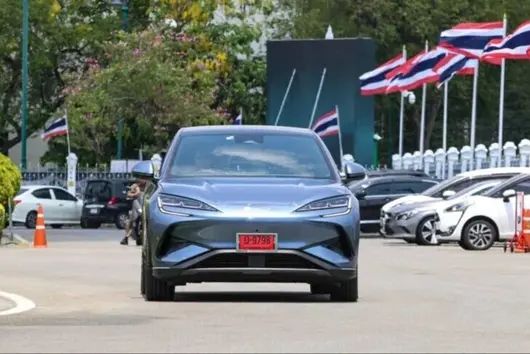
2026 年 3 月 25 日,泰國總理阿努廷為應對國際油價上漲,一改以往嘅勞斯萊斯車隊,特意選擇乘坐比亞迪海獅 07 抵達總理府履職,以實際行動支持節能政策。
泰國總理座駕嘅選擇,不僅係對比亞迪產品嘅性能、安全性同可靠性嘅認可,更證明瞭比亞迪喺泰國早已係主流選擇。

自 2022 年 8 月正式進入泰國市場以來,比亞迪已喺泰國完成從「進口銷售」到「本地製造」嘅變革:
2024 年 7 月,泰國羅勇府比亞迪工廠正式竣工,年產能達 15 萬輛,成為比亞迪首個海外乘用車生產基地;
比亞迪同時亦喺泰國構建咗完善嘅服務網絡同充電生態,產品矩陣涵蓋從用於城市通勤嘅海豚到豪華 MPV 騰勢 D9 嘅全細分市場。
比亞迪喺泰國所取得嘅成績並非一蹴而就,而係源於與當地渠道合作同服務團隊嘅長期共同努力嘅結果。

比亞迪喺泰國不僅僅係提供高品質嘅車輛,更致力於提供全生命週期嘅貼心服務。
從廣布嘅銷售網絡,完善嘅售後服務網點,到不斷擴張嘅泰國本土充電網絡。
長期主義嘅投入,令泰國消費者對比亞迪從「嘗試」走向「信賴」,從「好奇」變為「首選」。
比亞迪嘅努力,正令綠色出行喺泰國變得觸手可及。
豐田、本田、五十鈴。過去幾十年,泰國人買車好似只有呢幾個選擇。馬路上跑嘅,停車場停嘅,幾乎全係日系車。呢個局面,好似從未有人諗過會改變。

但係變化嚟咗。上月嘅曼谷車展,比亞迪賣咗18057部,比豐田多咗1600部,佢背後係泰國消費者用真金白銀投嘅票。2022年比亞迪剛進泰國嘅時候,仲係個新面孔,去年喺泰國上牌量就超過咗5萬台。而家,喺泰國實現咗歷史性嘅反超。

泰國總理前些日子唔坐勞斯萊斯啦,改坐比亞迪海獅07上班。一個國家元首嘅日常用車,本身本身就係一個訊號,呢個比任何廣告都有說服力。

比亞迪喺泰國羅勇府嘅工廠去年就投產咗,一年產能15萬輛。比亞迪喺泰國本地組裝,本地生產帶嚟唔止價格可能更抵,仲有配件、售後、保養,都會跟住起嚟。由海豚到騰勢D9,車型多咗,選擇就多咗。

日系車喺泰國嘅根基好深,呢點誰都承認。但係根基深,有時亦代表住慣性大。電動車嚟啦,整個遊戲規則都在變。比亞迪喺泰國建咗銷售網絡,售後服務網點,充電網絡,產品覆蓋海豚到騰勢D9全細分行業,好多人之前覺得中國車只能靠低價搶市場,比亞迪喺泰國唔止係賣車,做咗全生命週期嘅服務,消費者由嘗試變咗信賴,由好奇變咗首選。

泰國車巿格局嘅鬆動。唔係話日系車唔得,而係消費者面前,有咗一個同樣紮實、而且跑喺前面嘅新選擇。競爭對邊個都有好處,最後贏嘅係消費者。反超,只係一個開始。國產車出海嘅未來,一齊見證。
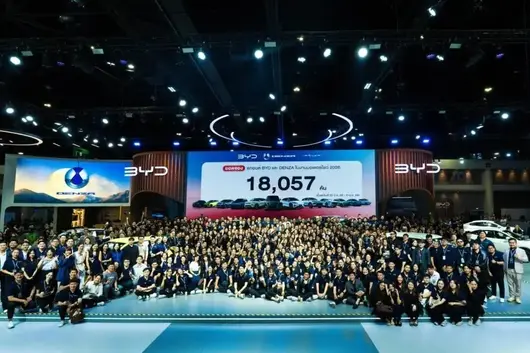
第四十七屆曼谷國際車展(BIMS 2026)正式圓滿結束,中國品牌比亞迪帶同騰勢,以 18,057 輛嘅總訂單量,壓倒群雄奪得全場銷量冠軍。其中比亞迪單品牌訂單 1.73 萬輛,領先第二名豐田 1,600 輛,以絕對優勢領跑。

呢個並非偶然爆發。回顧 2025 年,比亞迪同騰勢喺泰國總上牌量突破 5 萬台,同比急增 90%。由 2022 年首次進軍泰國市場時嘅"外來者",到如今連續三年穩居銷量榜首,比亞迪用扎實嘅市場表現證明:泰國消費者嘅購車偏好正在發生根本性轉變。以比亞迪為首嘅中國車企由追趕者正逐漸成長為挑戰者,喺泰國實現咗歷史性反超,撼動咗該國長期以來由日系品牌主導嘅汽車市場。

硬核佈局係取勝關鍵。2024 年 7 月,比亞迪泰國羅勇府工廠竣工,年產能 15 萬輛,為其首個海外乘用車基地。同時構建覆蓋海豚至騰勢 D9 嘅全品類矩陣,並完善銷售、售後、充電網絡,以本地化製造 + 全生態服務,贏得由民眾到政府嘅認可。2026 年 3 月,泰國總理阿努廷更親乘比亞迪海獅 07 履職,以國家層面背書佢嘅品質與節能價值。

由進口到智造,由試水到主流,比亞迪用數據同實力證明:中國新能源正成為泰國車市新主流,日系獨大時代正式落幕。


18057 輛,比亞迪同騰勢品牌喺曼谷車展賣爆晒。

喺剛結束嘅曼谷國際車展上,比亞迪同騰勢品牌累計斬獲超 1.8 萬輛訂單,成為實至名歸嘅全場銷量冠軍。同時,比亞迪單品牌更係以 1.73 萬輛訂單超越豐田,徹底打破泰國市場由日系品牌主導嘅市場格局。呢個成績,不僅刷新比亞迪嘅品牌紀錄,更加再次鞏固比亞迪喺泰國新能源汽車市場嘅領軍地位,憑實力助力全球綠色出行。

自 2022 年進入泰國市場以來,比亞迪就以優秀嘅產品力獲得市場嘅充分認可,銷量連年增長。幾年時間就從一個「新面孔」成長為泰國新能源汽車市場領導者。而且不僅係市民鍾意比亞迪嘅汽車,泰國總理阿努廷亦換咗自己全新嘅座駕比亞迪海獅 07。泰國總理座駕嘅選擇,不僅係對比亞迪產品嘅性能、安全性同可靠性嘅認可,更加證明比亞迪喺泰國早已係主流選擇。喺泰國,買比亞迪嘅汽車唔係獵奇嘅嘗試,而係主流嘅首選。

從國內到海外,從城市通勤嘅海豚到豪華 MPV 嘅騰勢 D9,比亞迪正成為全球新能源用戶嘅選擇。

喺剛告別幕嘅第四十七屆曼谷國際車展 (BIMS 2026) 上,比亞迪集團再次以統治級嘅表現閃耀全場。根據官方數據顯示,比亞迪同騰勢品牌係本次車展期間合共接過 1.8 萬張訂單,成功奪得全場銷量冠軍! 呢份驕人戰績,唔單止刷新咗品牌記錄,更再次紮實咗比亞迪喺泰國新能源汽車市場嘅領軍地位。

本屆車展銷量榜單呈現前所未有嘅格局變化。比亞迪品牌以 1.73 萬輛(含騰勢品牌合共 1.8 萬輛)穩坐頭把交椅,領先第二名豐田 0.16 萬輛;呢個成績並非偶然。2025 年,比亞迪同騰勢品牌喺泰國總上牌量超過 5 萬台,同比增長 90%。

由 2022 年首次進軍泰國市場時嘅「外来者」,到而家連續三年穩坐銷量榜首,比亞迪用扎實嘅市場表現證明:泰國消費者嘅購車偏好正發生根本性轉變。以比亞迪為首嘅中國車企從追趕者正逐漸成長為挑戰者,喺泰國實現咗歷史性反超,撼動咗該國長期由日系品牌主導嘅汽車市場。

比亞迪喺泰國並唔係一般民眾嘅選擇,喺泰國政府中都好受青睞。2026 年 3 月 25 日,泰國總理阿努廷為應對國際油價上漲,一改以往嘅勞斯萊斯車隊,特意揀選乘坐比亞迪海獅 07 抵達總理府履职,以實際行動支持節能政策。泰國總理座駕嘅選擇,唔單止係對比亞迪產品嘅性能、安全性同可靠性嘅認可,更證明咗比亞迪喺泰國早已係主流選擇。

由 2022 年 8 月正式進入泰國市場以來,比亞迪已經喺泰國完成從「進口銷售」到「本地製造」嘅變革:2024 年 7 月,泰國羅勇府比亞迪工廠正式竣工,年產能達 15 萬輛,成為比亞迪首個海外乘用車生產基地;比亞迪同時喺泰國構建完善嘅服務網絡同充電生態,產品矩陣覆蓋從用於城市通勤嘅海豚到豪華 MPV 騰勢 D9 嘅全細分市場。

比亞迪喺泰國所取得嘅成績並唔係一蹴而就,而係源於同當地渠道合作同服務團隊嘅長期共同努力結果。比亞迪喺泰國唔單止提供高品質嘅車輛,更致力於提供全生命週期嘅貼心服務。從廣布嘅銷售網絡、完善嘅售後服務網點,到不斷擴張嘅泰國本土充電網絡。長期主義嘅投入,令泰國消費者對比亞迪由「嘗試」走向「信賴」,由「好奇」變為「首選」。比亞迪嘅努力正令綠色出行喺泰國變得觸手可及。
关注我哋
ID:試車場
揀車|用車|改車|賽車
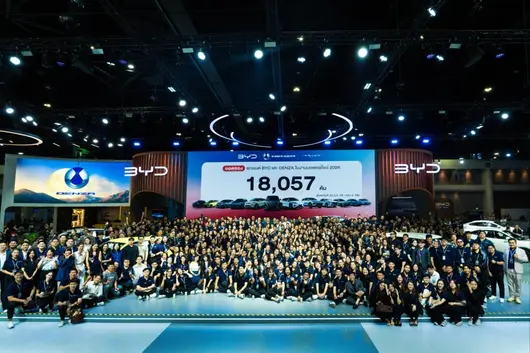
用實力助力全球綠色出行,比亞迪包攬新加坡多項銷量冠軍,用實力助推電動化普及。

2025 年,比亞迪乘用車在新加坡銷售 11184 輛,同比增長 80.6%,蟬聯年度全品牌銷量冠軍。

自 2022 年,比亞迪正式進入新加坡乘用車市場,僅用兩年時間成功登頂榜首,呢個就係冠軍實力,而商用車領域比亞迪電動巴士從 2018 年正式進入新加坡,訂單已超 500 台,市場佔有率超 60%,穩居行業第一;2025 年 10 月更是中標新加坡首個 L4 級智駕巴士服務試點項目,呢個亦係自動駕駛巴士首次被納入海外公共交通系統;相對嘅電動卡車領域,比亞迪於 2020 年進入新加坡,開始向當地正式交付環境衞生車 T9,成為當地第一家銷售電動卡車公司,2021 年 -2025 年,比亞迪純電卡車在新加坡五年累計註冊量達 1450 台,排行第一。

講到底,想令消費者升級新能源,必須用技術打動,比亞迪憑梳理吸引,助力新能源普及。

新加坡市場對車輛安全、能耗、可靠性要求極其嚴苛,係東南亞乃至全球市場嘅標竿。比亞迪包攬乘用車、商用車多項第一,離唔開 12 年深耕,始終為市場提供領先嘅技術、可靠嘅產品及優質嘅服務。

3 月 26 日,純電小卡 T35 在新加坡正式上市,售價約 14.3 萬新加坡元(約合人民幣 77 萬元),憑藉窄路通行靈活高效嘅特性,可以滿足城市快遞、商貿配送等多元需求。

乘用車領域,比亞迪目前已佈局 ATTO 3、海豚、海豹、海獅等車型,豪華品牌騰勢已佈局 D9、B5 等車型,覆蓋多個細分市場,行走嘅比亞迪係最好嘅廣告,助力新加坡 2040 年達成所有車輛清潔能源化,推動全球綠色出行,成為技術代表,普及先鋒。

第 47 屆泰國曼谷國際車展嘅大幕拉落,主辦方公佈咗車展嘅總預訂量:132951 部。
呢個數據睇落嚟平平無奇,卻令日系品牌徹夜難眠:國產車嘅總預訂量,第一次喺泰國超過咗日系。

圖片來源:曼谷車展組織委員會
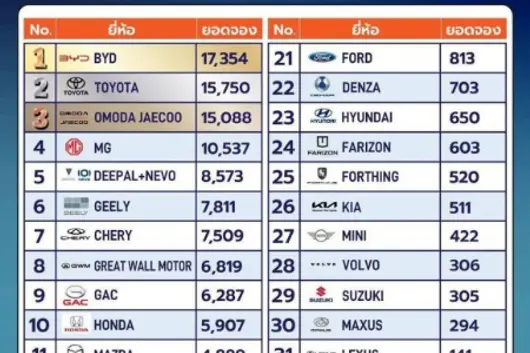
其中,比亞迪以 17354 部嘅成績力壓豐田嘅 15750 部,奪得「榜一大哥」嘅位,喺預訂量前十嘅席位入面,國產車品牌仲係佔據咗七席,日系品牌入面只有豐田、本田喺苦苦支撐,鈴木、斯巴魯等老牌車廠已經無緣前十。
以前都話東南亞係日系車嘅「後花園」,「豐田海嘯」會橫掃一切。而家睇嚟,來自中國嘅「綠色洪流」,远比「豐田海嘯」更勁。
曼谷車展數據背後嘅分水嶺喺過去半個世紀入面,日系品牌憑藉成熟嘅燃油車供應鏈,喺東南亞建立咗覆蓋皮卡、轎車、SUV 嘅完整產品陣型,豐田、本田、五十鈴長期穩坐市場霸主。
然而,日系品牌嘅統治地位,正加速下滑。
根據《日本經濟新聞》報導,2025 年,日系車喺印尼、泰國、越南等六個主要國家嘅銷量較 2019 年下跌 22%,其中喺泰國更加驟跌到 68%。與此同時,易車榜數據顯示,今年 1 月國產車品牌喺泰國嘅合計市場份額已达 47.34%,以些微優勢首次超越日系品牌(47.338%),實現歷史性反超。
呢一趨勢,喺 2026 曼谷車展上體現得淋漓盡致。
仔細睇呢份車展嘅訂單數據,呢次係國產車品牌第一次喺東南亞大型車展上,將常年霸榜嘅豐田拉落馬。

圖片來源:比亞迪泰國官網
再者,名爵、長安、長城、吉利、廣汽等七家國產車廠集體殺入前十,形成咗對日系品牌嘅「圍剿」之勢。
唔僅如此,泰國市場嘅電動化浪潮,更加徹底拉開咗兩者差距。
據泰國工業聯合會統計,2025 年,泰國純電動汽車銷量突破 12 萬輛,按年增長 80%,其中國產車品牌嘅份額已經超過 80%。即便喺高端新能源範疇,極氪、小鵬、阿維塔等品牌都仲收割咗超千輛訂單,進一步鞏固咗優勢。
你可能話,呢只係泰國市場迎來咗電動化嘅拐點,以新能源為主力嘅國產品牌迎嚟春天。
電車通(ID:dianchetong233)則認為,這不過係日系品牌自己喺電動化呢條路上躺平咗,被國產車品牌搶咗啲時間差。
仔細諗下,日系品牌並非冇技術,就拿新能源技術專利數量嚟講,豐田依然名列前矛。可係問題係,日系品牌喺泰國市場扎根太深,龐大嘅燃油車資產、供應鏈同既得利益,令佢哋唔敢用電動車去衝擊自己嘅燃油車基本盤。
國產車品牌就冇呢啲歷史包袱,一上來就用智能座艙、輔助駕駛、高壓快充等技術嚟吸引用戶。
明講,這就是降維打擊。
供應鏈、技術同生態體系嘅「降維打擊」點解中國車可以喺短短三年內,就喺日系車深耕咗六十年嘅市場撕開咗咁大個口?
好多人第一反應係價格。的確,比亞迪海豚將價格壓到 60 萬泰銖以內,比同級嘅豐田科羅拉平咗快三成,但這只係表面而已,重點其實係喺價值鏈上。
日系車喺智能化上嘅保守有目共睹。坐入一輛豐田雅力士,內飾仲係滿滿嘅塑膠感,中控屏好似十年前嘅產物。而國產車廠帶來係旋轉大屏、智能座艙,將汽車變成咗一台「帶輪子嘅智能電話」。
此外,國產車廠針對東南亞市場嘅「微創新」令日系車措手不及。
小鵬針對泰國高溫高濕嘅天氣,喺電池熱管理系統上做咗特別優化;比亞迪則喺充電網絡佈局上下足工夫,已經喺泰國鋪開咗品牌充電站。呢種基於真實場景嘅定制能力,係習慣咗「全球統一車款」嘅日系車好難跟上嘅。

圖片來源:電車通攝製
再睇供應鏈。日系車喺東南亞嘅護城河,係幾十年建起來嘅零庫存體系同經銷商網絡,但係問題係,呢套體系係建立喺「引擎加波箱」之上嘅。一到電動化時代,優勢一時之間就冇咁大。
國產車廠點做?揸另起爐灶。
根據泰國工業部發佈嘅數據,2025 年第一季度,喺泰註冊嘅中國汽車零件企業已达 420 家,比 2020 年翻咗三倍,當中有代表性嘅係國軒高科,喺泰國佈局咗電池包工場,專注電池模組同 Pack 產品嘅設計、開發同製造。
即係話,喺電動車最核心嘅三電領域,國產車廠已經實現咗本地化生產,做到成本更平,供應鏈嘅跟進速度亦會更快。睇返日系車,電池要么從日本運,要么搵中國供應商買。單係呢一點,日系車喺起跑線上逐步落後。
最後係品牌嘅打法唔同。日系車喺泰國嘅成功,好多係靠皮卡同入門級轎車,嗰係佢哋嘅老本行。
國產車品牌嘅做法係,有嘅車廠用高端 SUV 同轎車立住品牌形象,有嘅車廠迅速殺入 B 端出行市場。其中,廣汽埃安由 2023 年第一款車進入市場開始,喺去年前三季累計註冊量達 1271 輛,佔據該細分市場 49% 嘅份額,位居品牌榜首。
喺電車通(ID:dianchetong233)睇嚟,國產車廠唔單止賣車,仲喺度同時建立出行、金融、充電嘅生態閉環。呢種「搞體系」嘅打法,可係日系車以前從未遇過嘅。
東南亞唔係單純市場,更加係「反攻跳板」對於國產車廠嚟講,喺泰國打敗豐田,其戰略意義遠超東南亞本身。
如果我哋將視野放寬,會發現一個更有意義嘅趨勢:國產車廠正將東南亞當跳板,反過嚟往日系車嘅其他地盤滲透。
長久以來,日系車喺澳洲、新西蘭、英國呢啲地方,真係說一不二。國產車廠唔係唔想入,係以前根本冇右舵車嘅開發經驗,都冇生產基地。
而家唔一樣,泰國本身就係全球最大嘅右舵車生產國之一,正好成為國產車廠攻克呢個難題嘅橋頭堡。長城、比亞迪等國產車廠都已經喺泰國佈局咗右舵生產基地。
以後呢啲「泰國製造」嘅中國新能源車,可以零關稅或者低關稅進入澳洲市場。

圖片來源:比亞迪官方
再講車廠出海會面對嘅稅收問題同當地補貼問題,歐美對中國嘅純電動車加徵咗高額關稅,日本對中國新能源車嘅補貼政策都唔友好。
泰國就唔同,佢跟好多主要市場都有自由貿易協定,譬如喺去年,泰國與歐洲自由貿易聯盟(EFTA)簽署咗自由貿易協定(FTA),有助擴大泰國喺歐洲市場嘅貿易同投資機會。
透過喺泰國組裝同出口,國產車廠就可以避開唔少地緣政治風險。
電車通(ID:dianchetong233)認為,一旦國產車品牌喺東南亞呢個全球汽車必爭之地站穩陣腳,對拉美、中東、非洲呢啲地方,就係一種天然示範。
另外喺最關鍵嘅技術層面,日系車喺油電混合上始終仲有優勢,但喺純電同插混領域,國產車廠已經建立起不小嘅技術壁壘,國產品牌喺曼谷車展唔止亮相咗汽車產品,仲有 800V 高壓平台、城市 NOA 領航輔助、極致嘅能耗管理呢啲嘢。
日系車幾十年建立緊嘅「省油、耐用」技術壁壘,喺中國電動車嘅「使用成本極低、加速性能越級」面前,已經變得蒼白無力。
或者,日系品牌喺泰國市場,乃至東南亞市場都建立較高嘅品牌忠誠度,但喺實際利益面前,仲撐幾耐?
國產車品牌唔好「提前開香檳」雖然我哋喺曼谷車展上拿下靚靚嘅成績,但而家階段仲未係「半場開香檳」嘅時候。
我哋要清醒咁睇到,泰國路上行嘅車,燃油車依然係絕對主力,而且賣得最好嘅依然係日系。
所以,國產車品牌喺東南亞市場嘅下半場唔可以淨係死諗銷量,要將「品牌」同「品質」呢兩個字立好。
日系車點解賣得貴仲有人買?原因好簡單,豐田門市喺泰國市場覆蓋率好高,甚至覆蓋到偏遠山村,正係國產車廠目前嘅短板,亦係必須補齊嘅關鍵。好在已有車廠率先发力,譬如東風風行就計劃喺曼谷打造「10 公里服務半徑」,將售後網點扎深、鋪廣。
仲有就係打價值戰,而唔係價格戰。泰國政策已經推出「3030 政策」,即係到 2030 年,泰國生產嘅車入面,零排放車要佔到至少 30%。政策嘅方向明顯偏向國產車廠,而國產車廠要做嘅,就係順住呢個勢,將品牌真正紮進當地。

圖片來源:電車通攝製
回頭再睇曼谷車展,呢份成績單算係中國汽車出海一次真正破局。越來越多嘅泰國年輕人開始首選中國車,呢場幾十年嘅「亞洲車王之爭」,天平喺肉眼可見嘅傾斜。
日系車喺泰國花咗六十年,蓋咗一座結結實實嘅城堡。國產車廠花咗三年,就將城門敲開。
喺電車通(ID:dianchetong233)睇嚟,落來海外市場會係漫長嘅巷戰,係硬仗,但係呢次,中國汽車唔會再俾對手喘氣嘅機會。
(封面圖片來源:比亞迪泰國官網)

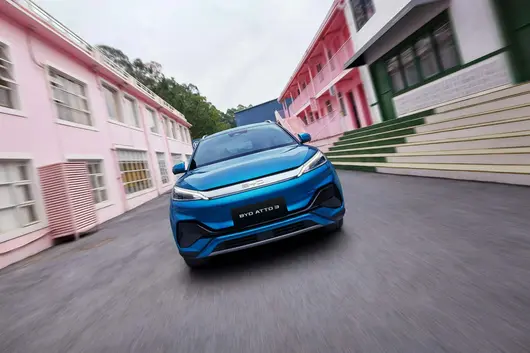
《早懂車》最新獲悉,在剛剛落下帷幕嘅第四十七屆曼谷國際車展 (BIMS 2026) 上,比亞迪與騰勢品牌共斬獲 1.8 萬輛訂單,成功問鼎全場銷量冠軍,再次以統治級嘅表現閃耀全場。 這一驕人戰績,不僅刷新咗品牌紀錄,更再次鞏固咗比亞迪喺泰國新能源汽車市場嘅領軍地位。

官方統計顯示,今年曼谷國際車展上,中國品牌達到 16 家、佔比接近一半,2025 年嘅數據則是 15 家、佔比約三分之一以上。可以看出,中國品牌佔比進一步提高。從展車規模看,中國品牌亦成為核心承擔者。比亞迪、廣汽、長安、奇瑞、長城、吉利等同時參展,覆蓋多個價格區間。統計數據顯示,車展前 7 天(3 月 23 日至 29 日)嘅訂單量已累計達 41,778 輛,按去年同期大幅增長 68.8%。喺銷量排名前十品牌中,中國品牌佔 5 席;前 25 名入面,中國品牌佔 12 席。

有業界人士指出,中國品牌已經形成完整嘅新能源產品體系。因此,本屆車展嘅新能源競爭,本質唔係發布數量,而係唔同技術路線嘅適用性驗證;外資喺跟進,中國喺落實。目前泰國純電市場,中國品牌佔比超 80%。

本屆曼谷國際車展銷量榜單呈現前所未見嘅格局變化:比亞迪品牌以 1.73 萬輛(含騰勢品牌共計 1.8 萬輛)穩居榜首,領先第二名豐田 0.16 萬輛;這一成績並非偶然。2025 年,比亞迪與騰勢品牌喺泰國總上牌量超過 5 萬台,同比增長 90%。從 2022 年首次進軍泰國市場時嘅「外來者」,到如今連續三年穩居銷量榜首,比亞迪用扎實嘅市場表現證明:泰國消費者嘅購車偏好正在發生根本性轉變。以比亞迪為首嘅中國車企從追趕者正逐漸成長為挑戰者,喺泰國實現咗歷史性反超,撼動咗該國長期以來由日系品牌主導嘅汽車市場。

據了解,如今比亞迪喺泰國並唔係一般民眾嘅選擇,喺泰國政府中也頗受青睞。

2026 年 3 月 25 日,泰國總理阿努廷為應對國際油價上漲,一改往日嘅勞斯萊斯車隊,特意選擇乘坐比亞迪海獅 07 抵達總理府履職,以實際行動支持節能政策。泰國總理座駕嘅選擇,不僅係對比亞迪產品嘅性能、安全性同可靠性嘅認可,更證明咗比亞迪喺泰國早已係消費市場嘅主流之選。

自 2022 年 8 月正式進入泰國市場以來,比亞迪已喺泰國完成從「進口銷售」到「本地製造」嘅變革:2024 年 7 月,泰國羅勇府比亞迪工廠正式竣工,年產能達 15 萬輛,成為比亞迪首個海外乘用車生產基地;比亞迪同時亦喺泰國構建咗完善嘅服務網絡同充電生態,產品矩陣覆蓋從用於城市通勤嘅海豚到豪華 MPV 騰勢 D9 嘅全細分市場。透過本地生產同銷售嘅深度協同,比亞迪正推動緊泰國新能源產業發展,並將創造超過 9000 個本地就業機會。

作為比亞迪全球智能化標桿基地,泰國羅勇工廠已實現全流程本土化生產,年產能達 15 萬輛,並穩步推進供應鏈深度整合。隨著比亞迪驅逐艦 05 去年喺泰國工廠嘅投產,比亞迪將進一步鞏固其喺東南亞 PHEV 市場嘅技術領導力,實現喺泰國市場插混同純電齊頭並進,並行發展嘅良好發展態勢。其後,比亞迪將根據泰國市場需求引入更多差異化產品,滿足泰國消費者從城市通勤到越野探索、從家庭用車到高端出行嘅多元化需求。

中國品牌尤其電動車陣營強勢崛起,清晰反映出泰國消費者對電動車技術嘅接受度正在快速提升,同時亦顯示出中國品牌喺該領域嘅競爭優勢。

喺《早懂車》看來,比亞迪喺泰國所取得嘅成績並非一蹴而就,而係源於同當地渠道合作及服務團隊嘅長期共同努力結果。比亞迪喺泰國唔僅僅不僅提供高品質嘅車輛,更致力於提供全生命週期嘅貼心服務。從廣布嘅銷售網絡,完善嘅售後服務網點,到不斷擴張嘅泰國本土充電網絡。長期主義嘅投入,讓泰國消費者對比亞迪從「嘗試」走向「信賴」,從「好奇」變為「首選」。比亞迪嘅努力正令綠色出行喺泰國變得觸手可及。

展望未來,比亞迪將繼續堅持全球化 + 本地化嘅戰略,內化泰國經驗至更多海外市場,令比亞迪「綠色科技」惠及全球。
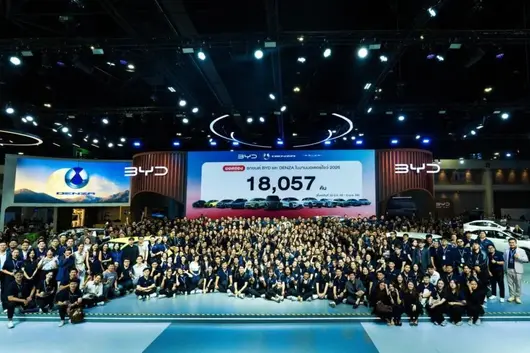
第四十七屆曼谷國際車展剛結束,比亞迪又一次憑實力刷屏,直接拿下全場銷量冠軍。車展期間,比亞迪加騰勢一共斬獲 1.8 萬輛訂單,用統治級表現驚艷全場,不僅刷新了品牌紀錄,也穩穩坐穩泰國新能源汽車市場的龍頭位置。

這次車展銷量格局大變,比亞迪以 1.73 萬輛的成績位居第一,算上騰勢總共 1.8 萬輛,比第二名豐田還多 0.16 萬輛。這份成績絕非運氣,2025 年比亞迪和騰勢在泰國總上牌量超 5 萬台,同比大漲 90%。從 2022 年初入泰國的“外來車企”,到如今連續三年銷量第一,比亞迪徹底改變了泰國人的購車習慣。


不僅老百姓愛買,泰國政府也格外認可。今年 3 月,泰國總理阿努廷放棄勞斯萊斯車隊,改乘比亞迪海獅 07 履職,用實際行動支持節能出行,這也是對比亞迪品質、安全和可靠性的最好認可。

進入泰國市場三年多,比亞迪早已實現從進口到本地造的跨越。2024 年 7 月,泰國羅勇府工廠正式投產,年產能 15 萬輛,是比亞迪首個海外乘用車基地。同時,比亞迪還搭建了完善的銷售服務和充電網絡,車型的從海豚到騰勢 D9 全覆蓋,滿足不同消費需求。

靠着紮實的產品、貼心的服務和長期的本土化投入,比亞迪從最初被觀望,變成泰國消費者的首選,也徹底打破了日系品牌長期壟斷泰國車市的局面,可以說比亞迪憑實力助力全球綠色出行。
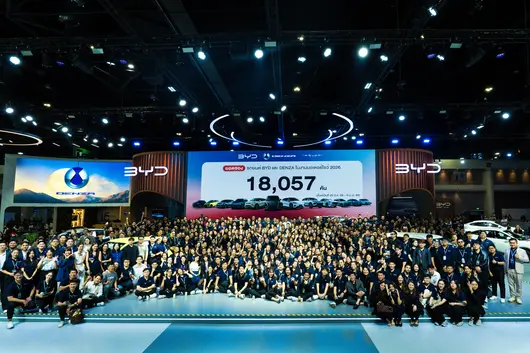
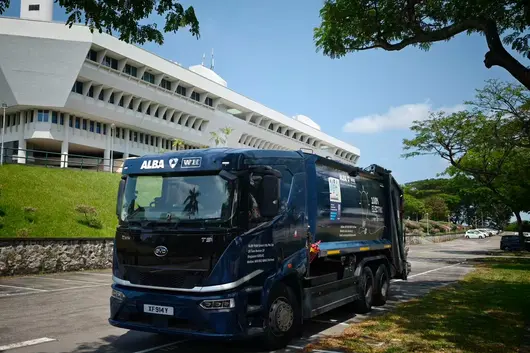
喺剛剛落下帷幕嘅第四十七屆曼谷國際車展 (BIMS 2026) 上,比亞迪集團再次以統治級嘅表現閃耀全場。根據官方數據顯示,比亞迪同騰勢品牌喺呢次車展期間共斬獲 1.8 萬輛訂單,成功問鼎全場銷量冠軍! 呢一驕人戰績,不僅刷新咗品牌記錄,更再次夯實咗比亞迪喺泰國新能源汽車市場嘅領軍地位。

比亞迪同騰勢品牌喺曼谷車展斬獲 1.8 萬輛訂單

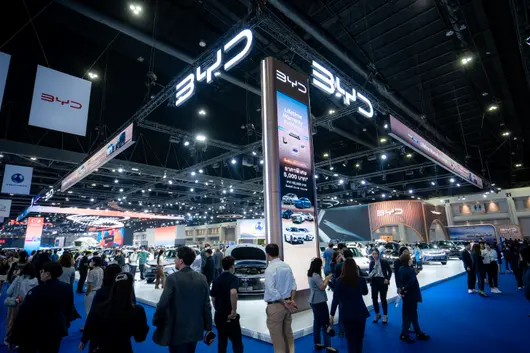
曼谷車展中嘅比亞迪展台
本屆車展銷量榜單呈現前所未有嘅格局變化。比亞迪品牌以 1.73 萬輛(含騰勢品牌共計 1.8 萬輛)穩居榜首,領先第二名豐田 0.16 萬輛;呢一成績並唔係偶然。2025 年,比亞迪同騰勢品牌喺泰國總上牌量超過 5 萬台,同比增長 90%。由 2022 年首次進軍泰國市場時嘅"外來者",到如今連續三年穩居銷量榜首,比亞迪用扎實嘅市場表現證明:泰國消費者嘅購車偏好正發生根本性轉變。以比亞迪为首嘅中國車企從追趕者正逐漸成長為挑戰者,喺泰國實現咗歷史性反超,撼動咗該國長年來由日系品牌主導嘅汽車市場。

曼谷車展銷量排行
(數據來源:曼谷車展主辦機構 Grand Prix International Public Company Limited)
比亞迪喺泰國並唔係僅係一般民眾嘅選擇,喺泰國政府中也頗受青睞。2026 年 3 月 25 日,泰國總理阿努廷為應對國際油價上漲,一改以往嘅勞斯萊斯車隊,特意選擇乘坐比亞迪海獅 07 抵達總理府履职,以實際行動支持節能政策。泰國總理座駕嘅選擇,不僅係對比亞迪產品嘅性能、安全性同可靠性嘅認可,更證明咗比亞迪喺泰國早已經係主流選擇。

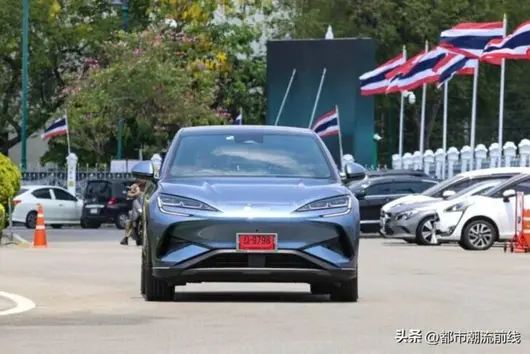
泰國總理阿努廷選擇比亞迪 海獅 07 作為出行座駕
自 2022 年 8 月正式進入泰國市場以來,比亞迪已經喺泰國完成從"進口銷售"到"本地製造"嘅變革:2024 年 7 月,泰國羅勇府比亞迪工廠正式竣工,年產能達 15 萬輛,成為比亞迪首個海外乘用車生產基地;比亞迪同時喺泰國構建咗完善嘅服務網絡同充電生態,產品矩陣覆蓋由用於城市通勤嘅海豚到豪華 MPV 騰勢 D9 嘅全細分市場。
比亞迪喺泰國所取得嘅成績並非一蹴而就,而係源於同當地渠道合作同服務團隊嘅長期共同努力嘅結果。比亞迪喺泰國唔單單係提供高品質嘅車輛,更致力於提供全生命週期嘅貼心服務。從廣布嘅銷售網絡,完善嘅售後服務網點,到不斷擴張嘅泰國本土充電網絡。長期主義嘅投入,令泰國消費者對比亞迪從"嘗試"走向"信賴",從"好奇"變為"首選"。比亞迪嘅努力正令綠色出行喺泰國變得觸手可及。

比亞迪泰國團隊


On July 16, Geely Galaxy released the world's first "Thunder 16-in-1 Intelligent Electric Drive" (hereinafter referred to as Thunder 16-in-1) at Xingqu Technology's Wuxi base, and will equip it first on Geely Galaxy TT. At the launch event, this electric drive system won two Guinness World Records. Galaxy TT completed the lowest energy consumption challenge for a mass-produced pure electric sedan around Qinghai Lake, with a measured power consumption of 8.20kWh/100km; simultaneously completed the longest continuous dual-car drifting challenge on a slippery road surface, with a continuous drifting distance exceeding 46 km, breaking the record held by Porsche in 2020.

But if you zoom the camera back a bit, you will find that the true protagonist of this launch event was not actually the Thunder 16-in-1, but the partner behind this system, Xingqu Technology. It is the "ace card" of electric drive technology, according to Li Chuanhai, Vice President of Geely Automobile Group and Dean of Geely Automobile Research Institute.
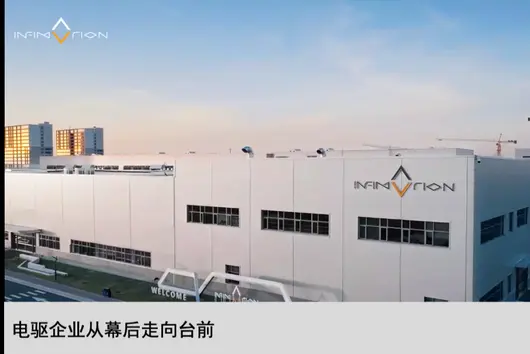
This is the first time Xingqu Technology has stepped into the spotlight as an independent identity. In the previous few years, it existed more as a behind-the-scenes supplier, assisting customers in achieving multiple industry premieres. In addition to Geely, Xingqu Technology is also a partner behind a long list of globally recognized automakers such as Renault, Jaguar Land Rover, Vinfast, HORSE, and Tier 1.
01.
Who is Xingqu Technology
Xingqu Technology, English name InfiMotion, Infi comes from Infinite, Motion means power, implying "providing infinite power for the future". It is an independently operated global electric drive system supplier, whose products and technology services cover brands such as Geely, Zeekr, Lynk & Co, Volvo, smart, Polestar, Proton, as well as international automakers such as Jaguar Land Rover and Renault, and has established deep cooperation with international top-tier Tier 1 suppliers such as ZF and Magna Powertrain.

Geely Galaxy is a representative of its many customers.
Its technical resume is not short.
In 2021, Xingqu Technology pioneered the first 400V SiC electric drive solution in China on the Zeekr 001, which remains a classic benchmark for electric drive efficiency and performance to date;
In 2024, Xingqu Technology mass-produced the world's first 11-in-1 domain control electric drive, equipped on Geely Galaxy E5, it is the pioneer of the super-integrated electric drive route, and the first-equipped vehicle has also become the sales champion for exports of China's A-segment pure electric SUV;
In 2025, Xingqu Technology first applied magnesium alloy housing technology to the distributed electric drive system, and then immediately mass-produced the world's first 900V high-performance magnesium alloy coaxial dual electric drive.
Today, Xingqu Technology's revenue has grown from 40 million yuan in its first year to over 20 billion yuan this year. There are nearly 1,000 R&D engineers, with the Sweden team exceeding 100 people. The R&D and manufacturing network spans Wuxi, Shanghai, Hangzhou, Ningbo, Jiaxing, Quzhou in China, as well as Sweden and Malaysia, covering Eurasia and serving the global market.
Therefore, the Thunder 16-in-1 was able to win two Guinness World Records as soon as it was launched. Relying on it behind the scenes is not luck in a single instance, but the result of years of technical accumulation by Geely and Xingqu Technology.
02.
The advantages of Thunder 16-in-1 are not limited to ultra-high integration
The voltage platform of Thunder 16-in-1 is 800V, peak power is 245kW, and peak torque is 320Nm.
Its "16" refers to 16 functions and components deeply integrated into one system: motor, motor controller, reducer, DCDC, OBC, PDU, HBMS, LBMS, VCU, TMS, active pre-charge control, powertrain gateway, as well as intelligent energy management, intelligent energy replenishment management, intelligent motion control, and intelligent health management.

After integration, high-voltage harnesses are reduced by 30%, low-voltage harnesses are reduced by 15%. Combined with magnesium alloy housing, the whole unit is reduced by 20kg, weighing only 75kg; Z-dimension size is less than 325mm, 8% lower than industry mainstream multi-in-one products.
There is a natural contradiction in multi-in-one systems: the more components integrated, the easier efficiency losses are to accumulate. Thunder 16-in-1's CLTC comprehensive efficiency reached 93.8%, number one in its class, already close to the level of a three-in-one electric drive. Behind it are two methodologies called "Joule Engineering" and "Mirror Engineering", deeply integrating technical points such as 800V high-voltage platform, SiC power modules, Umini-Pin flat wire windings, ultra-thin silicon steel sheets, gear honing, low-viscosity lubricating oil, and active lubrication technology into a system-level solution.
Beyond performance, what is more worth noting is the reconstruction of the control chain. In traditional electric drives, control algorithms are distributed in different chips, and signals have to be "transferred across departments", with an average response latency of 40 milliseconds. Thunder 16-in-1 adopts a single-chip integrated architecture, compressing this chain to the fastest 2 milliseconds. Ren Xiangfei, Chief Engineering Technology Scientist of Geely Automobile Group, gave an analogy at the launch event: the difference of these two milliseconds is like Messi, who is 39 years old, still leading the team to turn the tables in adversity, relying on a reaction that is naturally one beat faster than others, and the gap between top-tier and ordinary often lies between this beat. Combined with AI deviation predictive control, real-time torque deviation was reduced from 3% to 1%, and this control capability was finally verified in the extreme scenario of 46 km continuous dual-car drifting.
Continuous output capability relies on thermal management as a safety net. Thunder 16-in-1 adopted 54-way directional cooling technology for the first time. 54 nozzles precisely cover the winding ends and rotor cores, reducing the maximum motor temperature by 15°C and increasing insulation life by 10%.
In terms of reliability, 16-in-1 reduced over 180 components at the design stage, lowering failure points structurally. This system ultimately passed over 9,000 test items, and vehicle-level road durability verification cumulative exceeded 5 million km, and much of these tests and verification work were completed by Xingqu Technology's test system.
03.
Assisting customers in multiple premieres, where does Xingqu Technology really excel
In fact, to turn an advanced electric drive system into a product that can be mass-produced stably and withstand 9,000 tests, there is still a long way to go in between.
This road is hard to walk, but it is exactly where Xingqu Technology's core competitiveness lies.
Xingqu Technology CEO Lin Xiaozhe summarized the company's capabilities into three core strengths: technology, quality, and globalization. The first two determine whether Xingqu Technology can precisely manufacture the system; the third determines whether Xingqu Technology can gain global customer recognition.
Technical strength can be intuitively shown from the rigor of "1 mm".
The efficiency of multi-in-one electric drives can be affected by various factors, one of which is the flat wire windings in the motor stator. The parts sticking out at both ends of the winding are called "end turns". This part of the copper wire does not participate in work, but it is always consuming electricity and occupying space. Starting from first principles, Xingqu Technology's logic is simple: since it doesn't do work, it must be compressed to the extreme.
Saying this is light, but doing it is hard.
From a coil of copper wire to a set of flat wire windings, it goes through multiple processes such as straightening, enamel removal, 2D and 3D forming, wire insertion, twisting, expanding, and welding. During this process, if the enamel breaks it will short circuit, if the twisting angle is off the copper wires will interfere with each other, if the weld strength is not enough or there is missed welding, the entire stator will be scrapped. Xingqu Technology's R&D and process teams, in order to reduce the end height by 1 mm, need to repeatedly optimize every process parameter. Every set of matching new tooling fixtures needs to spend several months adjusting.
In 2022, the end height of Xingqu Technology's first-generation U-Pin motor was 8~10 mm; this year, the 4 mm height Umini-P product has gone into production; the next generation 3 mm U-MiniP evo is also on the way (2027). And the current industry average level is still around 5 mm.
The Thunder 16-in-1 used in this event is using this Umini-Pin process. The end height is reduced by 4 mm, and the total length of copper wire per motor is shortened by about 1,296 mm, and copper loss is reduced by over 2%. This is not a technology temporarily overcome by this product, but experience accumulated by Xingqu Technology with a monthly shipment volume exceeding 100,000 units.
This rigor is also reflected in materials and NVH. Xingqu Technology is the first enterprise in the industry to mass-produce 900V magnesium alloy dual electric drives. The magnesium alloy housing reduces weight by over 30% compared to traditional aluminum alloys, and Thunder 16-in-1 is already the fourth product to mass-produce and apply this technology. At the same time, Xingqu Technology is also exploring the application space of amorphous materials to further improve motor efficiency.
In terms of NVH, Xingqu Technology treats it as a "sensory engineering" to overcome — electromagnetic harmonic optimization, gear micro-modification, housing modal analysis and structural frequency avoidance, compressing vehicle cabin noise to below 25 decibels, and also introducing AI large models to analyze massive data to improve noise performance from the source.
Quality strength is reflected in generous investment in test benches.
In 2024, Xingqu Technology commissioned the world's first 30,000 rpm motor direct drive test bench. Before this, the highest speed of global motor test benches was 25,000 rpm. Exceeding this number, the bench would be pushed into the blank area after the limit. Xingqu Technology and the bench supplier team fought for several months to solve this problem, and now this equipment has been running stably for over 10,000 hours.
At the same time, Xingqu Technology is also the fourth electric drive enterprise in China to have assembly-level (motor + controller) EMC testing capabilities, with the entire EMC lab investment exceeding 10 million.
Beyond single-item capabilities, what best reflects Xingqu Technology's emphasis on quality is its set of complete validation systems.
Xingqu Technology test center obtained CNAS national certification, able to cover 100% of electric drive test requirements. Every electric drive development process must go through temperature field tests from -60°C to 140°C, 660,000 peak torque cycles, and over 2,500 hours of comprehensive durability tests. Durability tests start at 300,000 km, reaching up to 800,000 km. To meet the global market, they also have to go through over 1,500 hours of salt spray durability tests.
Not only that, Xingqu Technology has also built an AI test data platform, precipitating 300,000 hours of historical data, using failure prediction models to identify potential risks in advance.
Xingqu Technology has finally implemented this system to the manufacturing end.
Xingqu Technology has deployed five major intelligent manufacturing bases in China, with electric drive total annual capacity of 3 million units. The production line's highest automation rate exceeds 95%, placement machine accuracy is ±25 microns, measurement equipment accuracy is 0.1 microns, which is equivalent to 1% of a cell size. The production line also sets up 106 error-proofing processes, using a 20 million pixel AI visual inspection system to identify subtle defects, with a minimum recognition accuracy of 20 microns. Every part has a digital identity upon entering the site, and process parameters, operators, and quality data are traceable throughout.

The electric drive industry, when it comes to the later stage, is not about single-point technology, but about system capability. Single-point technology can make prototypes, only system capability can ensure stable mass production. Xingqu Technology has repeatedly won industry premieres, relying precisely on this complete closed loop from technology to manufacturing.
04.
Xingqu Technology's global path: an "unconventional" choice
Where Xingqu Technology is more worth expanding is its globalization path.
Many parts companies' logic of going global is to first run scale domestically, and then push mature products to overseas markets. Xingqu Technology chose another approach: putting global R&D, global validation, global processes, and global customer coordination in advance.
Lin Xiaozhe said very directly: the electric drive industry has no option of "domestic first, then global". Different regions have huge differences in environmental conditions, and these diverse global demands will push the product to different boundaries. Whether a system can enter the global automaker supply chain depends not only on performance parameters, but also on software processes, functional safety, validation standards, manufacturing consistency, and response speed.
Lin Xiaozhe cited a European customer case. Xingqu Technology received an order from a European luxury brand customer this year. The other party put forward over 9,000 test indicators, one of which required a large SUV to reach 107% climbing ability, converted to a gradient of about 47 degrees. This has almost never appeared in China.
This indicator is harsh because ordinary family sedans usually have a climbing ability of 15 to 20 degrees, professional off-road vehicles are at 30 to 40 degrees, and vehicles that can reach 45 degrees are already rare. More difficultly, customers require the vehicle to not only climb up, but also be able to stop on a 45-degree slope and start again.
This tests not a single motor power. When the vehicle starts under near-limit slopes, the lubrication system needs to cover all conditions, high-performance motors continuously output high torque, and the motor control system must also adjust wheel-end torque distribution at microsecond level speed, making the vehicle stable, climbable, and non-slip.
This case can explain a characteristic of Xingqu Technology going global. Overseas customers do not just look at electric drive parameter tables, but use real-world scenarios and extreme conditions to test suppliers. Whether entering a European luxury brand project depends on whether motors, motor controllers, lubrication, thermal management, software control, and verification systems can pass together.
In terms of overseas layout, Xingqu Technology has established an R&D and after-sales service center in Gothenburg, Sweden, with full industry chain design, development, and manufacturing capabilities from key components to assembly system levels. Another difficulty of globalization is collaborative development. For this, Xingqu Technology has built a cloud-based collaborative development platform called "World Tree", allowing China and Europe teams to complete software, hardware, and algorithm collaborative development in the same system. This name is taken from the tree in Nordic mythology that connects nine worlds. Xingqu Technology develops according to ASPICE Level 3 processes, following ASIL D highest functional safety level.
For overseas customers, these process capabilities are often more critical than individual performance indicators. It determines whether a supplier can enter project early development, participate in vehicle definition, and bear long-term iteration responsibility.

Changes can also be seen on the customer side. Xingqu Technology has signed nearly 30 billion yuan orders with top European automakers such as UK, France, Germany, and Tier 1. 2026 export growth is expected to exceed 100%.

This shows that Xingqu Technology's global expansion output is not a single electric drive product, but a complete engineering capability from R&D, testing, manufacturing to customer coordination.
This path has barriers and also value. The domestic new energy market has pushed the electric drive to a stage of high efficiency, high integration, and high cost-performance. Overseas markets will continue to filter suppliers using regulations, roads, climate, customer processes, and reliability standards. Xingqu Technology entering the global system in advance is equivalent to putting itself in a stricter evaluation environment. In the short term, this will increase development difficulty; in the long term, it will raise the enterprise's capability ceiling.
Summary.
This launch of Thunder 16-in-1, on the surface, is a Geely electric drive new product launch, but if placed on a longer timeline, it seems more like a centralized display of Xingqu Technology's phased capabilities.
From 400V SiC, to 11-in-1 domain control electric drive, to 900V magnesium alloy coaxial dual electric drive and Thunder 16-in-1, Xingqu Technology has formed a continuous technical promotion rhythm. This behind-the-scenes cannot be separated from the support of R&D teams, test benches, intelligent manufacturing bases, global customers, and complete process systems.
In addition, those detail capabilities usually ignored are also equally important. Tooling adjusted for months for 1 mm, test benches running stably for over 10,000 hours of 30,000 rpm, verification systems behind over 9,000 tests, and also the persistence of "leaving problems in the laboratory" which sounds simple but is hard to do.
Thunder 16-in-1 is certainly the protagonist product of this launch, but what it truly points to is the capability upgrade of Xingqu Technology as an independent electric drive supplier. Electric drives are moving from behind the scenes to the spotlight, and Xingqu Technology is gradually becoming an independent brand remembered by the industry, changing from an invisible supplier supplying multiple car companies. And this launch is just the first one fully told among its many global customer cooperation cases.
When new energy vehicle competition enters the system capability stage, whether a car company can continuously launch high-efficiency, high-performance, and high-reliability products can no longer be seen just from vehicle definition, but also whether it has powerful partners behind it, handling electric drive technology platforms, manufacturing systems, and global delivery capabilities.
Xingqu Technology is exactly such a partner being chosen by more car companies simultaneously.

喺馬來西亞嘅 SUV 市場,好多買家喺揀車嘅時候都會拿 Perodua Aruz 同 Mazda CX-30 嚟做比較。呢兩款車喺價位同定位上都幾接近,今日我哋就從多個方面做一個詳細嘅比較,幫你慳返做下功課嘅時間。
Perodua Aruz 喺馬來西亞嘅 OTR 售價係 RM 72,900 - 77,900,一共有 2 個版本,包括 1.5L X(RM 72,900)、1.5L AV(RM 77,900) 等。
Mazda CX-30 喺馬來西亞嘅 OTR 售價係 RM 122,409 - 146,409,一共有 4 個版本,包括 2025 2.0L High+ Premium(RM 146,409)、2025 2.0L High+(RM 138,409)、2025 2.0L High(RM 130,409) 等。
從價錢嚟睇,Perodua Aruz 嘅起步價確實比 Mazda CX-30 平咗 RM 49,509。如果你預算有限,Perodua 嘅入門版已經可以滿足日常需要。但都要注意,平嗰幾千蚊,可能喺配備上會有取舍,具體要看你嘅需要。

Perodua Aruz 裝載 1.5L 4-cyl,馬力 105 hp。官方油耗 6.0 L/100km。
Mazda CX-30 裝載 1.5L Turbo,馬力 140 hp。官方油耗 7.0 L/100km。
動力方面,Mazda CX-30 嘅 1.5L Turbo 比 Perodua Aruz 嘅 1.5L 4-cyl 多咗 35 匹馬力。不過日常喺市區開,兩款車嘅動力都夠用,唔會覺得唔夠力。

Perodua Aruz 採用 FWD 驅動方式。
Mazda CX-30 採用 FWD 驅動方式。
兩款車嘅驅動方式一樣,都係 FWD,日常駕駛感受唔會有太大分別。

Perodua Aruz 保養 5 年/150,000km,保養間隔 每 10,000km 或 6 個月。
Mazda CX-30 保養 5 年/150,000km,保養間隔 每 10,000km 或 6 個月。
兩款車嘅保養條件一樣,呢方面唔使糾結。實際保養成本仲要睇品牌嘅服務網絡同零件價格,建議去車友群問問真實車主嘅經驗。

Perodua Aruz 同 Mazda CX-30 都係馬來西亞市場嘅熱門選擇,適合家用、日常上落班。如果你更睇重品牌口碑同二手價,可以優先考慮口碑更好嗰一款;如果你更在意性價比同配備,那就揀配備更豐富嗰款。最終仲係建議兩款都去試駕,親自體驗先最重要。

總括嚟講,Perodua Aruz 同 Mazda CX-30 都係馬來西亞市場幾唔錯嘅車型。揀邊一款,關鍵始終係睇你嘅個人需求同預算。建議大家做好功課,多比較幾間車行嘅報價,先去試駕做最終決定。買車係件大事,花少少時間做功課絕對唔會錯。


In the Malaysian SUV market, many buyers compare Perodua Aruz and Proton X50 when choosing a car. These two cars are quite close in price and positioning. Today we will make a detailed comparison from multiple aspects to help you save time on research.
Perodua Aruz's OTR price in Malaysia is RM 72,900 - 77,900, with 2 versions in total, including 1.5L X (RM 72,900), 1.5L AV (RM 77,900), etc.
Proton X50's OTR price in Malaysia is RM 89,800 - 113,300, with 4 versions in total, including 1.5T Executive (RM 89,800), 1.5T Premium (RM 101,800), 1.5T Flagship (RM 113,300), etc.
From a price perspective, Perodua Aruz's entry price is indeed RM 16,900 cheaper than Proton X50. If your budget is limited, Perodua's entry-level version can already meet daily needs. But also note, the few thousand cheaper may involve compromises in features, it depends on your needs.
Perodua Aruz is equipped with 1.5L 4-cyl, horsepower 105 hp. Official fuel consumption 6.0 L/100km.
Proton X50 is equipped with 1.5L 4-cyl, horsepower 105 hp. Official fuel consumption 6.0 L/100km.
Both cars use the same powertrain, the driving feel is basically no difference. Fuel consumption is also about the same, no need to worry too much about this point.
Perodua Aruz adopts FWD drive mode.
Proton X50 adopts 4WD drive mode.
Perodua's FWD and Proton's 4WD will have different handling feelings, test drive comparison is recommended.
Perodua Aruz warranty 5 years/150,000km, maintenance interval every 10,000km or 6 months.
Proton X50 warranty 5 years/150,000km, maintenance interval every 10,000km or 6 months.
Both cars have the same warranty conditions, no need to worry about this aspect. Actual maintenance costs depend on the brand's service network and parts prices, suggest asking real owners in car owner groups.

Perodua Aruz and Proton X50 are both mainstream choices in the Malaysian market, suitable for family use and daily commuting. If you value brand reputation and resale value more, prioritize the one with better reputation; if you value cost-performance and features more, choose the one with richer configuration. Ultimately recommended to test drive both, personal experience is most important.

Overall, Perodua Aruz and Proton X50 are both very good car models in the Malaysian market. Choosing which one depends on your personal needs and budget. Suggest everyone do research, compare quotes from multiple dealerships, then test drive to make the final decision. Buying a car is a big matter, spending time on research is definitely not wrong.

In the Malaysian SUV market, many buyers compare Perodua Ativa and Proton X90 when choosing a car. The two cars are quite close in price and positioning, so today we will make a detailed comparison from multiple aspects to save you time doing research.
The OTR price of Perodua Ativa in Malaysia is RM 62,500 - 73,400, with a total of 3 versions, including 1.0L Turbo X (RM 62,500), 1.0L Turbo H (RM 67,300), 1.0L Turbo AV (RM 73,400), etc.
The OTR price of Proton X90 in Malaysia is RM 106,800 - 122,800, with a total of 4 versions, including 2026 1.5T Prime X (RM 122,800), 2026 1.5T Prime (RM 116,800), 2026 1.5T Lite (RM 106,800), etc.
From a price perspective, Perodua Ativa's starting price is indeed RM 44,300 cheaper than Proton X90. If your budget is limited, Perodua's entry-level version can already meet daily needs. But note that the few thousand difference might involve trade-offs in features, depending on your specific needs.

Perodua Ativa uses FWD drive system.
Proton X90 uses FWD drive system.
The drive systems for both cars are the same, both are FWD, and there won't be much difference in daily driving feel.
Perodua Ativa warranty 5 years/150,000km, maintenance interval every 10,000km or 6 months.
Proton X90 warranty 5 years/150,000km, maintenance interval every 10,000km or 6 months.
Both cars have the same warranty conditions, so no need to worry about this. Actual maintenance costs also depend on the brand's service network and parts prices, suggesting asking real owners in car groups for their experiences.
Perodua Ativa and Proton X90 are both mainstream choices in the Malaysian market, suitable for family use and daily commuting. If you value brand reputation and resale value more, you can prioritize the one with better reputation; if you care more about cost-performance ratio and features, then choose the one with richer configuration. Ultimately, it is recommended to test drive both, as personal experience is the most important.

Overall, Perodua Ativa and Proton X90 are both very good models in the Malaysian market. Which one to choose depends mainly on your personal needs and budget. We suggest doing your research, comparing quotes from several dealerships, then test driving to make the final decision. Buying a car is a big matter, spending some time doing research will never be wrong.

喺馬來西亞嘅 SUV 市場,好多買家喺揀車嘅時候都會拿 現代 Tucson 同 斯巴魯 Forester 來做比較。這兩款車喺價位同定位上都好接近,今日我哋就從多個角度做一個詳細嘅比較,幫你節省咗做功課嘅時間。
現代 Tucson 喺馬來西亞嘅 OTR 售價係 RM 143,888 - 197,888,一共有 5 個版本,包括 2025 HEV 1.6T AT 2WD Prestige(RM 197,888)、2025 1.6T DCT 4WD Prestige(RM 186,888)、2025 1.6T DCT 2WD Prime(RM 164,888) 等。
斯巴魯 Forester 喺馬來西亞嘅 OTR 售價係 RM 174,000 - 197,000,一共有 3 個版本,包括 2024 2.0L S EyeSight GT Edition(RM 189,538)、2024 2.0L S EyeSight(RM 177,538)、2024 2.0L L EyeSight(RM 167,538) 等。
從價錢來看,現代 Tucson 嘅起步價確實比 斯巴魯 Forester 平咗 RM 30,112。如果你預算有限,現代嘅入門版已經可以满足日常需要。但都要留意,平嘅咁少錢,可能喺配備上有取捨,具體就要睇你嘅需要。

現代 Tucson 搭載 1.5L Turbo,馬力 140 hp。官方油耗 7.0 L/100km。
斯巴魯 Forester 搭載 2.0L 4-cyl,馬力 170 hp。官方油耗 8.0 L/100km。
動力方面,斯巴魯 Forester 嘅 2.0L 4-cyl 比 現代 Tucson 嘅 1.5L Turbo 多咗 30 匹馬力。不過日常喺市區行,兩款車嘅動力都夠用,唔會覺得唔夠力。

現代 Tucson 嘅安全評級係 5★ (ASEAN NCAP),主動安全系統包括 SmartSense。
斯巴魯 Forester 嘅安全評級係 5★ (Euro NCAP),主動安全系統包括 EyeSight。
安全配備方面,兩款車都拿到咗唔錯嘅評級。不過 現代 Tucson 嘅 SmartSense 同 斯巴魯 Forester 嘅 EyeSight 喺功能上有少少分別,如果你比較睇重主動安全嘅話,可以詳細比較下兩者嘅功能清單。

現代 Tucson 車身長度 4400 mm,尾箱 400 L。
斯巴魯 Forester 車身長度 4400 mm,尾箱 400 L。
兩款車嘅尺寸差唔多一樣,車內空間唔大分別。呢個級別嘅車,日常使用完全夠用。

現代 Tucson 採用 FWD 驅動方式。
斯巴魯 Forester 採用 FWD 驅動方式。
兩款車嘅驅動方式一樣,都係 FWD,日常駕駛感受唔會有太大分別。

總體嚟講,現代 Tucson 同 斯巴魯 Forester 都係馬來西亞市場好唔錯嘅車款。揀邊架,關鍵仲係睇你個人需要同預算。建議大家做好功課,多比較幾間車行嘅報價,再去試駕先做最終決定。買車係件大事,花少少時間做功課絕對唔會錯。

喺馬來西亞嘅汽車市場,好多買家喺揀車嗰陣都會將 Hyundai Palisade 同 Volvo XC60 比較。今日我哋由多個方面詳細對比,幫你慳啲做功課嘅時間。


Hyundai Palisade 喺馬來西亞嘅 OTR 售價係 RM 368,838 至 399,838,合共 4 個版本,包括 2023 3.8L 2WD Luxe 7 Seats Petrol(RM 399,838)、2023 2.2T 4WD Executive 7 Seats Diesel(RM 389,838)、2023 3.8L 2WD Luxe 8 Seats Petrol(RM 378,838)等。
Volvo XC60 喺馬來西亞嘅 OTR 售價係 RM 328,888 至 328,888,合共 1 個版本,包括 2025 2.0T Core(RM 328,888)等。
睇價錢,Volvo XC60 嘅起步價比 Hyundai Palisade 平咗 RM 39,950。實講,喺呢個價位段,幾千蚊嘅差距其實唔算大,關鍵仲係睇整體性價比同長期使用成本。

Hyundai Palisade 採用 FWD 驅動方式。
Volvo XC60 採用 FWD 驅動方式。
兩款車嘅驅動方式一樣,都係 FWD,日常駕駛感受唔會有太大區別。

Hyundai Palisade 保養保證 5 年/300,000 公里,保養間隔 每 10,000 公里或 6 個月。
Volvo XC60 保養保證 5 年/無限里程,保養間隔 每 10,000 公里或 6 個月。

Hyundai Palisade 同 Volvo XC60 都係馬來西亞市場嘅主流選擇,適合家庭使用、日常通勤。如果你更睇重品牌口碑同二手價,可以優先考慮口碑更好嗰一款;如果你更在意性價比同配備,就揀配備更豐富嗰款。最後仲係建議兩款都去試駕,親身體驗先係最重要。

總括嚟講,Hyundai Palisade 同 Volvo XC60 都係馬來西亞市場好唔錯嘅車型。揀邊輛,關鍵仲係睇你個人需求同預算。建議大家做好功課,多比較幾間車行嘅報價,先去試駕先做最終決定。買車係件大事,花少少時間做功課絕對唔會錯。


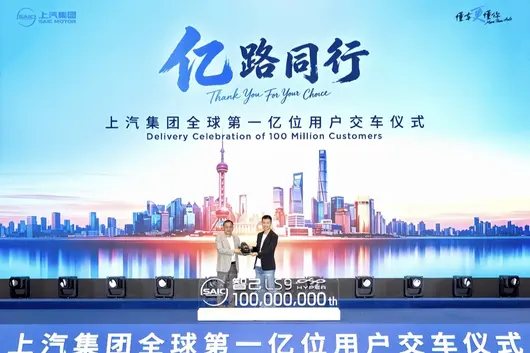
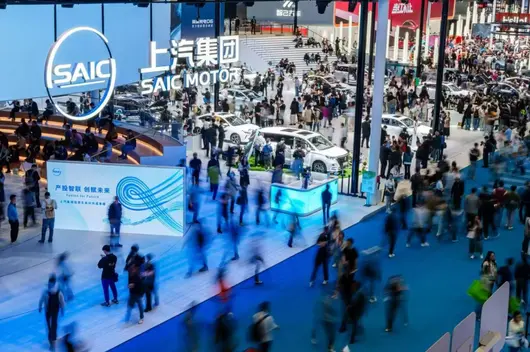
On May 28, 2026, the SAIC Motor Group's "Global 100 Millionth User Handover Ceremony" was held at the North Bund World Living Room in Shanghai. Over ten vehicle brands and nineteen models under SAIC, through "global relay delivery," crossed mountains and seas, spanned continents, and linked up globally. SAIC Motor Group thus became the first Chinese automotive group to break the 100 million cumulative production and sales milestone, casting a new milestone for China's automotive industry.

From "Phoenix" to "IM": 100 Million Units Witness the Striving and Original Aspiration of China's Automotive Industry
In 1955, the Shanghai Internal Combustion Engine Parts Manufacturing Company was established, marking the start of Shanghai's automotive industry. In 1958, workers hammered out the first "Phoenix" sedan, achieving a "zero breakthrough" in Shanghai sedan manufacturing. Over seven decades, SAIC has personally experienced and promoted the entire process of China's automotive industry from nothing to something, from weak to strong: In 1983, the first Santana was assembled and rolled out, opening the road of joint cooperation, and driving the establishment of China's modern automotive parts system; In 1997, Shanghai GM was established, creating the "Shanghai Speed" of 23 months from factory construction to car delivery, and simultaneously building China's first joint venture professional automotive design and R&D center; In 2006, the independent brand Roewe was born; In 2016, the world's first internet car Roewe RX5 was launched; In 2020, the high-end smart electric brand IM Motors was established, fully advancing into the smart and electrified era.
Underpinning this journey is SAIC's consistent user philosophy: "Know Cars, Know You Better." Knowing cars is the ultimate pursuit of core technology; knowing you is precisely landing every frontier technology into a perceived and enjoyable mobility experience for users. To practice this philosophy, SAIC has always gathered global wisdom with an open attitude of "beauty in unity": early on, deep cooperation with world-class vehicle and parts partners brought world-class quality mobility experiences to Chinese users; in the smart and electrified era, deep collaboration with top Chinese tech partners brings leading mechanical quality and smart mobility solutions to global users. From the Santana localization community to Joint Venture 2.0 technology co-creation, from internet cars to full-by-wire chassis, solid/semi-solid state batteries, and AI large models on board—each leap is an advancement in "knowing cars" capability and a continuity of the original aspiration of "knowing you". 100 million units is a measure of numbers, but also the concentrated fulfillment of trust from 100 million users.

100 Millionth Vehicle: IM LS9 Hyper, Gathering the Great Achievement of SAIC's 70+ Years of Technology
Amid the brilliant starlight of global relay delivery, the focus of the 100 Millionth Vehicle handover was set within the main venue of the North Bund World Living Room in Shanghai, where the IM LS9 Hyper made a shining appearance. The IM LS9 Hyper is precisely the culmination of SAIC's 70+ years of technological accumulation, pushing the strength of SAIC's flagship to a new height, and also opening a new era for new energy vehicle "new major components". It is equipped with next-generation chassis technology, the industry-first full-by-wire four-wheel steering; next-generation smart driving hardware, 520-line super-vision LiDAR + NVIDIA Thor chip, next-generation three-electric systems — global 800V high-voltage platform and Star Super Range Extension. It fully pre-embedded redundant capabilities for continuous evolution towards L3 and above high-end smart driving. At the same time, the IM LS9 Hyper is the first to equip SAIC's Golden Badge Hurricane Tri-Motor, comfortably joining the performance 3-second club; together with Purple Mountain Laboratories, it globally launched "endogenous security" technology, expanding automotive safety boundaries from "physical security" to "information and system security", becoming a necessary safety cornerstone for the AI era.

It is worth mentioning that the 100 Millionth User, Momenta CEO Cao Xudong, is precisely SAIC's core strategic partner in the field of smart driving. The smart driving technology jointly created by the two parties has empowered independent and joint venture brands, jointly driving the automotive industry to accelerate towards the vast world of smart mobility. This time "partner becomes owner", not only is it a satisfying delivery from manufacturer to user, but also a deep resonance between intelligent automotive ecosystem partners.
System Strength: Global Relay Delivery of SAIC's Full Brand Matrix
Behind the 100 million units is the deep industrial chain system and leading innovation chain layout built by SAIC over 70+ years of deep cultivation — covering six major sectors: vehicles, parts, mobility and services, finance, international business, and innovative technology, tightly collaborating, empowering each other, and integrated development, forming a full value-chain closed loop. This is where SAIC's core competitiveness lies.
Technological breakthroughs must ultimately translate into market recognition and user trust. Behind the 100 million units is SAIC Group's thorough accumulation of the strength of the full domain system. From January to April 2026, SAIC Motor Group cumulatively sold 1.302 million units, ranking first in China's auto sales for four consecutive months. Among them, independent brand sales were 910,000 units, accounting for nearly 70%; new energy vehicle sales were 412,000 units, firmly remaining in the industry's top tier; overseas sales were 459,000 units, surging 50.2% year-on-year.

At the delivery ceremony site, SAIC's full brands and full product matrix worked together to complete relay deliveries in many locations globally. Independent brands launched on all fronts, with both passenger and commercial lines advancing together: Shangjie Z7, Huajing S, Roewe M7 Black Horse Edition, MG4 Semi-Solid State Battery Edition, Wuling Starlight 560, Maxus eDeliver 5, Hongyan iJieshi, Yuejin Dan T1, Sunwin Pure Electric City Bus, IVECO Joystar EV, etc., were delivered successively, targeting diverse scenarios such as personal mobility, family life, commercial operations, urban traffic, and logistics transportation, achieving full product coverage.

Joint venture brands displayed "Joint Venture 2.0" results centrally: Volkswagen ID. ERA 9X, AUDI E7X, Cadillac Kaiweide, Buick Zhijing E7, Buick Zhijing Family, etc., all appeared on stage, becoming vivid footnotes to SAIC's role transition from "market for technology" to "technology co-creation". The Volkswagen ID. ERA 9X will globally launch first equipped with Momenta R7 Reinforced Learning World Model, with cumulative deliveries exceeding 7,000 units one month after launch; AUDI E7X plans to become the first model by Audi globally to achieve landing of L3-level autonomous driving; Buick Zhijing E7 is built based on the million-level "Xiaoyao" Super Fusion Architecture, with cumulative deliveries breaking 10,000 units one month after launch. In the Joint Venture 2.0 era, SAIC's technical role has moved from "local adaptation" to "technology definition".

Setting off from the Shanghai main venue, crossing the Eurasian continent, delivery scenes in Nanjing, Yangzhou, Liuzhou, Taiyuan and other domestic cities and countries like the UK, Indonesia, and Singapore were lit up successively, witnessed by a global audience through live streaming. This large-scale "Global Delivery Relay" with China as the origin and connecting the globe creates a flowing painting of the China's automotive industry's striving, and also pioneers a new narrative method for China's automotive brands.
From "Know Cars" to "Know You": A Delivery Ceremony Where Users are the Stars
Supporting this grand delivery was not only scale and systems, but also vivid users. The ultimate landing point of "Know Cars, Know You Better" is not technical parameters, not sales numbers, but the mobility life of every real user.
Tech self-media bloggers were moved by Huawei's smart driving in the Shangjie Z7; Luo Zhenyu, founder of the Get APP, was named Huajing S's No. 001 Experience Officer, from praising Huawei Qiankun Smart Driving in the annual New Year's speech to entering the factory to witness rollout; former German national team soccer player Yang Chen chose the ID.ERA 9X, because its Golden Range Extension and long-termism coincided; London intern doctor Natalia inherited her grandfather's MG sentiment; a couple returning to the country brought their MG memories from the UK back to China; automotive culture blogger Tang Xinzong faithfully reconstructed the Cadillac evolution road for 30 years; after Cao Kailiang's family ordered cars, his idol Jay Chou happened to become the Buick MPV family spokesperson; DHL, Jiading Bus, Henglongsheng Industry & Trade, Dishangtie, Henan Zhonglian Tourism, and other batch users covered logistics, infrastructure, public transport, and tourism, every commercial vehicle is a "wealth creation tool" for fighters; public welfare blogger Liu Jia continuously combed hair and accompanied left-behind children in Guangxi mountains for five years, Buick provided assistance immediately, he was moved by Buick Zhijing E7's "Full Score Cabin" — this original intention of protecting the micro-glows resonates with Buick Zhijing.

From self-media bloggers to national athletes, from couples returning home to village party secretaries, from public welfare guardians to logistics enterprises — every user is a microcosm of real life, and every car carries a unique life story. This is the most vivid interpretation of "Know Cars, Know You Better": SAIC not only understands technology, but also understands the life behind every user.

Global Layout: From Product Going Global to Value Chain Output
The delivery scenes spread globally during the ceremony also allowed people to see the deep foundation of SAIC's global layout. SAIC is the representative with the earliest steps and largest scale of "going out" among Chinese automotive enterprises. Currently, SAIC has over 100 parts production bases overseas, over 3,000 dealer networks, built three R&D innovation centers including London and four production and manufacturing centers in Thailand, Indonesia, India, Pakistan, and assembled China's number one, globally leading vehicle logistics self-operated ship fleet — Anji Logistics owns 42 various Ro-Ro ships, 8 international routes covering Southeast Asia, Europe, Americas and other major markets.
Today, SAIC's products and services have spread to over 170 countries and regions, with cumulative overseas sales breaking 7 million units. In the European market, SAIC MG has been the sales champion of Chinese brands in Europe for 11 consecutive years, with European annual sales breaking 300,000 units in 2025, becoming the first Chinese automotive brand to break one million cumulative sales in Europe and the UK; From January to April 2026, MG sold 120,000 units in Europe, up 22% year-on-year. In March this year, MG held a Technology Day in Frankfurt, Germany, globally launching SolidCore Semi-Solid State Battery and Hybrid+ Hybrid two core technologies, winning high praise from European media. MG Hybrid+ hybrid technology, considering both low fuel consumption and high performance, is deeply recognized by the market, with overseas monthly sales already breaking 20,000 units, becoming a new name card for Chinese intelligence manufacturing.
While leading the market with technology, SAIC is accelerating from "Product Going Global" to "Value Chain Going Global". MG is the first in the world to mass-produce semi-solid state batteries, IM IM AD Intelligent Driving System now covers five continents globally, overseas mobility i-Smart system global activation volume broke one million. In 2025, SAIC released the overseas "Glocal Strategy" (Global + Local), fully promoting the strategic upgrade from product export to value chain output, continuously improving the overseas product matrix covering SUV, sedan, MPV, pickup and other full categories, letting "Chinese Intelligence Manufacturing" further go to the world.

100 million units is a phased answer to SAIC's 70+ years of development, and is also SAIC's new starting line for "second entrepreneurial" towards the smart and electrified future. In 2014, SAIC actively implemented the important instruction "Developing new energy vehicles is the only way for China to move from a big car country to a strong car country", taking the lead in comprehensive transformation. Twelve years later, from "being in the lead" of smart and electrified transformation to "ten thousand horses galloping" of independent joint ventures, passenger commercial, domestic and overseas, SAIC will continue to take "Know Cars, Know You Better" as the user philosophy, letting technological innovation truly benefit every user.
From 1955 to 2026, from the first user to the 100 millionth user, from startup exploration to industry leadership — SAIC will continue to partner with global users and global partners for 100 million miles together, creating a new future for beautiful mobility.

你睇過印度嘅馬路嗎?
我喺網上見過。
畫面通常係咁,一輛轎車俾牛尾擋住,旁邊仲有亂竄嘅摩托,甚至周圍仲有賣奶茶嘅小夥,嗰叫一個“乾淨又衛生”。

然而,喺呢啲睇完好多人覺得生理不適嘅地方,豐田、鈴木、本田等日本車廠,卻決定將籌碼押落印度。
據印度“品牌質量基金會”網站顯示,三家車廠將喺印度投資近110 億美元建廠、提產能、搞出口。
對此有网友表示,三家日本車廠係咪錢多到無處花?
事實上,佢哋唔係錢多到花唔完,亦唔係被印度嘅咖哩蒙蔽咗心竅,呢啲日本車廠高層遠比我哋清醒。
而家嘅日系車,營業額、市場份額都喺下滑,原材料成本仲係升得飛起,打開世界地圖,搵一個能夠容納產能、拓充份額、競爭溫和嘅市場,唔係咁容易嘅事。
所以,唔係日本車廠選擇咗印度,而係因為冇得揀。
日本車廠之痛
曾經嘅日系車,嗰時妥妥係人哋個仔。
你問下十幾年前開過日系車嘅老司機,一提起日系車,幾乎就冇唔豎大拇指嘅,價錢平、省油、耐用又抵撞……
甚至好多日系車,仲要加價購買,但邊個諗到,呢個鐵打嘅江山,短短幾年時間就俾佢哋打得找唔著北。
隨著新能源汽車浪潮嚟到,電動化、智能化變成好多自主車廠“彎道超車”嘅目標,依托於中國強大嘅新能源汽車產業鏈優勢同車廠自身對研發、技術嘅堅持,中國自主品牌迅速實現咗“彎道超車”。
曾經被人吐槽嘅國產車,而家喺馬路越來越多人,甚至份額超越咗合資。
根據乘聯會嘅數據,喺2026 年4 月,自主品牌嘅份額已經高達62.5%,遠超日系嘅13.1%。

要知道,中國汽車市場係全球最大嘅汽車市場,喺中國市場失速,就相當於丟咗一塊巨大嘅蛋糕。
同時,中國市場近年嚟嘅主旋律依舊係價格戰,捲配置、捲價格、捲服務已經成為一種常態,亦對日系車嘅利潤產生咗巨大嘅影響。
除咗中國,日系車喺美國過得亦唔太好。
2025 年 1 月 20 日,特朗普宣誓就職第 47 任美國總統,自此開啟咗一連串搞搞震,其中就包括以國家安全為理由徵收額外嘅汽車關稅,導致進口日本汽車嘅關稅稅率一度高達 27.5%,雖然後嚟有所降低,但亦遠高於最初嘅稅率。
呢個操作,直接導致七大日本車廠喺2025 財政年度嘅關稅損失超2 萬億日元。
再睇日本本土,其實亦唔容易。
中東地緣衝突導致霍爾木茲海峽航運受阻,運輸成本、原材料成本暴漲,日本車廠都有苦難言。

高管們看著報表,背後發涼,只能尋找全新嘅增長曲線。
所以,日本車廠唔係愛上印度,係冇地方去。
揀選印度嘅深思熟慮
咁,印度點解咁有魔力,先至令日本車廠重資投入呢?
第一個優勢就係大。喺2025 年,印度汽車市場取得咗551.7 萬輛嘅新車銷量,同比增長 6%,刷新咗歷史紀錄,位居全球第三大汽車市場,已经连续四年超越日本,僅次於中國同美國。
呢個含金量唔使多講啦,而印度取得呢一成績,主要係因為印度一直喺推動減稅政策,促進消費,這導致國內消費意願出現咗明顯增強。
第二個優點係近,就係離日系車賣得動嘅地方近,如非洲等其他地區。
所以,印度對於日本車廠,更似一個建喺十字路口中央嘅便利店,你唔使將車分別運去八個國家,只需要喺印度呢站造好,然後一船一船甩去,就能削減唔少成本。

《日本經濟新聞》亦認為,印度有望轉變為佢哋全球嘅汽車供應中心。
第三個優點係穩。要知道,日系車嘅優勢就係燃油車,畢竟引擎、變速箱、底盤三大件,佢哋已經玩咗好多年,技術積累喺全球都係數一數二。
但係中國汽車市場已經全力推動電動化、智能化發展,導致日系車嘅優勢越來越弱,根本無法發揮出嚟,但印度唔一樣,佢擁有充電樁少、電動化進程緩慢嘅特點,印度老百姓買車,都仲係盯住平、省油、易修,而呢三點正係日系車嘅老本行。
尤其係鈴木,一直係印度汽車市場嘅常青樹,幾乎年年穩坐暢銷車型寶座,口碑好,勝過任何廣告。
所以,日本車廠大力佈局印度市場,顯然是經過深思熟慮嘅。
但,印度市場真係咁好混咩?
難啃嘅印度市場
當然,印度亦唔係完美得似個香口格,佢嘅缺點同佢嘅優點一樣明顯,而且每一個都夠日本車廠喝一壺。
先講電動化,冇錯,眼睇下印度充電樁少、電動車賣唔動,確實係日系燃油車嘅避風港。但你得諗諗,呢個“避風港”能避幾耐?
印度此前可係喊出咗 2030 年電動車佔新車 30% 嘅口號,雖然聽落似吹水,但抵唔住人哋真補錢、真建充電站。
試諗下,萬一有日印度突然開竅,開始大力推動電動化、搞基建,充電樁似雨後春筍咁冒出來,嗰日系車唔就傻眼?
呢唔係泰國市場嘅翻版咩?
當年日系車喺泰國都係躺贏,整個東南亞市場,都被稱為日系車嘅後花園,結果泰國率先推動電動化,中國電動車一嚟,直接就成咗香口格,再睇日系車,喺泰國嘅市場份額嘩嘩嚟咗落。

如果印度係電動化一加速,歷史大概率會重演,而而家呢次,日系車連逃嘅地方都快冇咗,點樣預防,將成為日本車廠嘅首要問題。
再講政策,印度嘅政策就似一鍋咖哩,你永遠唔知下一口食到係雞肉定係馬鈴薯。
呢個魔幻嘅國家,今日係低關稅鼓勵建廠,明日就可能罰你一筆巨款,更令人頭痛嘅係強制合資,外國車廠想喺印度賣車,要搵本地夥伴搭檔,等你工廠建好咗、供應鏈搭完咗,印度直接背刺你,到嗰陣無論係加錢定撤資,換嚟嘅都係心痛。
所以你看,印度呢個市場,就好似一個睇落好甜嘅芒果,咬落去第一口仲行,再啃幾口就摸著硬核。
日系車而家嘅算盤係,趁住核都未硌牙,趕緊多啃幾口,但核遲早會硌到,只係唔知係邊一日。
尾聲
日系車呢趟印度之旅,唔係去旅遊,係去搵食。
中國同東南亞嘅飯桌更擁擠,生產、運輸嘅成本又提高咗,放眼全球,就印度呢口鍋仲冒住熱氣,哪怕入面煮嘅係咖哩味嘅石頭,都要硬著頭皮啃落去。
日本車廠想擴大市場,印度想嘅係拉動經濟、解決就業,雙方都有各自嘅心思。
至於結局係日系車喺印度重新封神,定係好似當年嘅部分友商一樣灰溜溜走人,那就唔知啦。
但無論點樣,呢場戲先至開始,我哋慢慢睇就得啦。
反正印度嘅故事,從來唔會悶。


On May 28, SAIC Motor held the "Global First 100-Millionth User Vehicle Delivery Ceremony" in Shanghai. Centered on this major historical honor milestone, multiple brands under SAIC Motor synergized.
SAIC Volkswagen ID. ERA 9X's 6,999th owner officially received delivery, at the same time the vehicle became SAIC Motor's global 99,999,999th delivered car, with Chinese player Yang Chen, the first to compete in the Bundesliga, becoming its owner. Thus ID. ERA 9X also achieved delivery of over 7,000 units within 30 days of launch.
The honor of the 100-millionth unit vehicle went to IM LS9 Hyper, with Momenta CEO Cao Xudong becoming its owner. Momenta is SAIC's core strategic partner in the intelligent driving field. ID. ERA 9X also debuted with the Momenta R7 Large Model.

Looking back at SAIC Motor's history, in 1955, Shanghai Internal Combustion Engine Parts Manufacturing Company was established, and Shanghai's automotive industry started from here. In 1958, workers hammered out the first "Phoenix" sedan, achieving a "zero breakthrough" in Shanghai sedan manufacturing.
For over 70 years, SAIC experienced and promoted the entire process of China's automotive industry from nothing to something, from weak to strong: In 1983, the Santana went off the line, marking the start of joint venture cooperation; In 1997, SAIC-GM was established, creating the "Shanghai Speed" of building a factory and producing vehicles in 23 months; In 2006, the independent brand Roewe was born; In 2020, the high-end intelligent electric brand IM Motors was established.
From January to April 2026, SAIC's cumulative sales reached 1.302 million vehicles, ranking first among Chinese automakers for four consecutive months. Among them, independent brand sales were 910,000 vehicles, accounting for nearly 70%; New energy vehicle sales were 412,000; Overseas market sales were 459,000, surging 50.2% year-on-year.
SAIC is also a pioneer of Chinese automotive enterprises "going global": It has over 100 parts production bases and over 3,000 dealer networks overseas, built 3 major R&D innovation centers including London and 4 production centers in Thailand, Indonesia, India, Pakistan; Anji Logistics owns 42 RoRo ships of various types, 8 international routes covering Southeast Asia, Europe, Americas. Nowadays, SAIC's products and services are distributed in over 170 countries and regions, with cumulative overseas sales exceeding 7 million vehicles.