首頁奶茶

搜尋歷史
熱門搜尋
經銷商登入 / 註冊

喺馬來西亞嘅 SUV 市場,好多買家喺揀車嗰陣都會拿 Proton X50 同 Chery Tiggo 9 嚟比較。呢兩部車喺價位同埋定位上都幾接近,今日我哋就從多個方面做一個詳細嘅比較,幫你節省做功課嘅時間。
Proton X50 喺馬來西亞嘅 OTR 售價係 RM 89,800 - 113,300,一共有 4 個版本,包括 1.5T Executive(RM 89,800)、1.5T Premium(RM 101,800)、1.5T Flagship(RM 113,300) 等。
Chery Tiggo 9 喺馬來西亞嘅 OTR 售價係 RM 166,800 - 179,800,一共有 1 個版本,包括 2026 2.0T Standard(RM 179,750) 等。
從價錢嚟睇,Proton X50 嘅起步價確實比 Chery Tiggo 9 平咗 RM 77,000。如果你預算有限,Proton 嘅入門版已經可以滿足日常需要。但都係要注意,平嗰幾千蚊,喺配備上會有取捨,具體要睇你嘅需要。

Proton X50 嘅安全評級係 5★ (ASEAN NCAP),主動安全系統包括 ADAS (ACC, AEB, LKA, LDA, BSM, RCTA)。
Chery Tiggo 9 嘅安全評級係 TBD,主動安全系統包括 Basic。
安全配備方面,兩部車都拿到唔錯嘅評級。不過 Proton X50 嘅 ADAS (ACC, AEB, LKA, LDA, BSM, RCTA) 同 Chery Tiggo 9 嘅 Basic 喺功能上有啲差異,如果你比較看重主動安全嘅話,可以仔細比較吓兩者嘅功能列表。

Proton X50 車身長 4400 mm,尾箱 400 L。
Chery Tiggo 9 車身長 4400 mm,尾箱 400 L。
兩部車嘅尺寸幾乎一樣,車內空間差別唔大。呢個級別嘅車,日常使用完全夠用。

Proton X50 採用 4WD 驅動方式。
Chery Tiggo 9 採用 FWD 驅動方式。
Proton 嘅 4WD 同 Chery 嘅 FWD 喺操控上會係唔同感覺,建議試駕比較吓。

總括嚟講,Proton X50 同 Chery Tiggo 9 都係馬來西亞市場入面幾好嘅車款。揀邊一部,關鍵仲要睇你嘅個人需要同預算。建議大家做足功課,多比較吓幾間車行嘅報價,再去做試駕先做最終決定。買車係件大事,花少少時間做功課絕對唔會錯。


In the Malaysian SUV market, many buyers compare Proton X50 and Chery Tiggo Cross when choosing a car. Both models are quite close in price and positioning. Today we will do a detailed comparison from multiple aspects to help you save time on research.
The OTR price of Proton X50 in Malaysia is RM 89,800 - 113,300, with a total of 4 versions, including 1.5T Executive (RM 89,800), 1.5T Premium (RM 101,800), 1.5T Flagship (RM 113,300), etc.
The OTR price of Chery Tiggo Cross in Malaysia is RM 88,750 - 99,750, with a total of 2 versions, including 2025 HEV 1.5L CSH (RM 99,750), 2025 1.5T Standard (RM 88,750), etc.
From a price perspective, the starting price of Chery Tiggo Cross is RM 1,050 cheaper than Proton X50. To be honest, in this price range, a difference of a few thousand is actually not significant; the key is to look at the overall cost-performance ratio and long-term usage costs.
Proton X50's safety rating is 5★ (ASEAN NCAP), active safety systems include ADAS (ACC, AEB, LKA, LDA, BSM, RCTA).
Chery Tiggo Cross's safety rating is TBD, active safety systems include Basic.
Regarding safety features, both cars received good ratings. However, there are some differences in function between Proton X50's ADAS (ACC, AEB, LKA, LDA, BSM, RCTA) and Chery Tiggo Cross's Basic. If you value active safety, you can compare the feature lists of both in detail.
Proton X50 adopts 4WD drive mode.
Chery Tiggo Cross adopts FWD drive mode.
Proton's 4WD and Chery's FWD will have different handling experiences, test drive comparison is recommended.
Both Proton X50 and Chery Tiggo Cross are mainstream choices in the Malaysian market, suitable for family use and daily commuting. If you value brand reputation and resale value more, you can prioritize the one with a better reputation; if you care more about cost-performance and features, choose the one with a richer configuration. Ultimately, it is recommended to test drive both, as personal experience is the most important.

Overall, Proton X50 and Chery Tiggo Cross are both very good models in the Malaysian market. Which one to choose depends on your personal needs and budget. We suggest doing research, comparing quotes from several car dealers, and then test driving to make the final decision. Buying a car is a big matter, spending time on research will never be wrong.
“休克疗法”这个词可能大多数人都听说过。比如最近一次有国家使用“休克疗法”,就是阿根廷。
这一系列激进经济政策的集大成者和最著名的推广者,叫Jeffrey Sachs(杰弗里·萨克斯),是一名哥伦比亚大学校级教授(该校最高学术荣誉)及可持续发展中心主任,曾在哈佛大学任教超过20年。28岁时便成为哈佛大学经济学正教授,堪称学术奇才。

他甚至曾担任三任联合国秘书长的特别顾问,现任联合国可持续发展解决方案网络(SDSN)主席。同时还被《纽约时报》称为“世界上最重要的经济学家”,两次入选《时代》周刊“世界百名最有影响的人物”。
最成功地案例有两个:
玻利维亚(1985年):这是他职业生涯的成名作。当时玻利维亚的年通胀率高达24,000%。萨克斯教授受邀制定经济稳定计划,通过一系列大胆的紧缩和自由化措施,成功在几个月内控制了恶性通胀,稳定了经济。
波兰(1989年):他担任波兰政府的经济顾问,主导了从计划经济向市场经济的快速转型。这一“休克疗法”在波兰取得了相对显著的成功,被视为经济转型的典范。波兰政府后来授予他“波兰共和国功绩勋章指挥官十字勋章”,以表彰其贡献。
突然说他干什么呢?
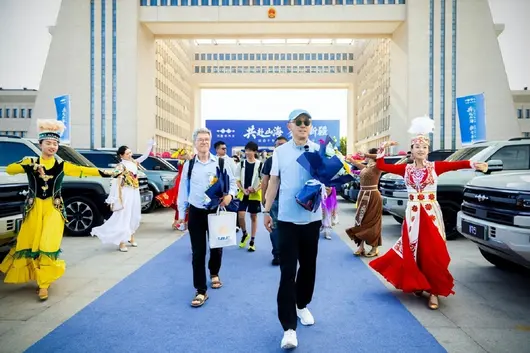
因为他今年和友人一起发起了名为“马可·波罗和平之旅”的活动,在活动中,他亲自驾驶一辆比亚迪腾势Z9GT,从意大利罗马出发,历时43天、行驶超过1.5万公里,最终抵达中国香港。
在新疆部分,Jeffrey Sachs教授与其好友仲雷先生全程深度试乘试驾方程豹车型,见证钛7的闪充速度、无忧长途出行,豹8的云辇-P Ultra的单轮举升、三足鼎行功能,并在吐鲁番库木塔格沙漠用豹5亲身体验包括直拔、刷锅、过刀锋项目在内的高难度冲沙,和全国各地的方程豹车友,一同体验了中国智造致敬千年丝路文明的活动。

这位教授对比亚迪的评价,也值得我们参考——萨克斯教授直言,在公平的全球市场竞争中,美国企业不是比亚迪的对手。
他还指出,比亚迪是“电动汽车的低成本生产者”,不仅成本低,而且“高度创新”,正在生产“未来的绿色和数字技术”。
他认为美国的关税政策是“无效且适得其反的”。他直言:“美国会生产一些电动汽车,但在第三方市场,它们无法与中国的比亚迪竞争”。
#车圈财报##新能源汽车#

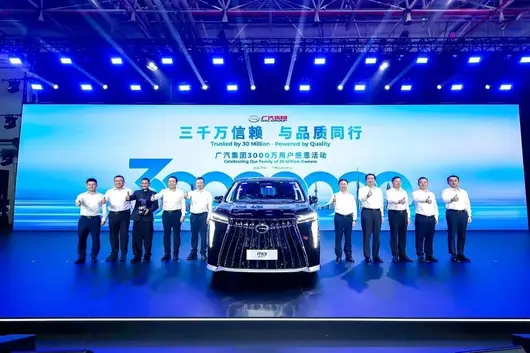
On July 16, 2026, under the spotlight of the GAC Group Trumpchi Factory, the 30 millionth vehicle — the GAC Trumpchi M8 PHEV slowly rolled off the production line, delivered into the hands of international action star Tony Jaa. This scene lacks flowery rhetoric, but it was like a heavy hammer, ringing out a strong note of Made in China.

30 million vehicles are not cold numbers, but the solid footprints GAC has made over 29 years, stepping forward with every step in the wave of electrification and intelligence. Behind this lies a story of trust co-authored by countless owners and GAC, and even more a vivid microcosm of China's automotive industry moving from a "catcher" to a "leader".
Hardcore Vehicle Dismantling Reveals "Made with Chinese Quality"
GAC Group has engraved "Quality First" into its corporate genes, constructing a rigorous full-chain quality control system covering R&D, production, and supply chains. As GAC's star model, the first generation of GAC Trumpchi GS4 once created a record of "running 500,000 kilometers without major repairs." In the recent hardcore dismantling experiment in GAC's livestream room, this GS4, driven over 500,000 kilometers, was verified after dismantling; core components such as the engine and transmission are still in good condition, confirming the reliable quality of GAC products with ironclad facts.

This extreme pursuit of product durability stems from GAC's relentless refinement of manufacturing processes: adopting globally leading intelligent manufacturing technology, every vehicle must simulate ten years of user driving at the test site, from the extreme cold of Mohe to the intense heat of Turpan, from cobblestone roads to steep slopes, not missing a single one. It is precisely this "dedication" that makes GAC cars the "Trumpchi that can't be broken" in the eyes of users.

Under the wave of electrification and intelligence, GAC continues to consolidate its quality advantages through technological innovation. GAC AION's "Magazine Battery" system achieves a breakthrough in battery safety performance through structural optimization and material innovation, remaining fire-free and explosion-free in penetration tests; GAC's "Star Spirit Safety Protection System" integrates intelligent driving and passive safety technologies to create all-around protection for users. It is precisely this long-term adherence to quality that has allowed GAC to win market reputation in both fuel and new energy vehicle sectors, becoming a cornerstone of user trust.
Systematic Global Expansion: From Product Export to Value Export
In the Southeast Asian market, GAC precisely identifies local needs and launches adapted models; in the European market, GAC focuses on high-end intelligent electric vehicle models, seizing market heights with technical strength. GAC's global expansion is not simply "selling cars", but taking technology, standards, and even service teams to take root together.

Many people only see that GAC's global expansion speed is fast, but fail to see how stable its foundation is. In recent years, many Chinese brands have expanded overseas, but many are just in a "porter" model. Although this model shows results quickly in the short term, it has a clear ceiling in the long run, and its "pressure resistance" is very low; once a price war breaks out, it completely loses its advantage.
Meanwhile, GAC Group deeply integrates into the local ecosystem, establishing new energy factories in Thailand and jointly building charging networks with local partners to achieve "local R&D, local production, and local sales." This seemingly "clumsy work" can stabilize the market in the long run, achieving a breakthrough after long accumulation.

Guided by the "1551" overseas strategy and the "Panyu Action" three-year plan, GAC International has consistently adhered to winning through value, persisting in "Quality Globalization", "Technology Globalization", "Service Globalization", and "Ecosystem Globalization", forging a high-quality globalization path with GAC characteristics. GAC's globalization practice provides a model for Chinese automakers, moving from "going out" to "going up", and pushes China's automotive industry from "product export" to a new stage of "value export".

As GAC Group Chairman Feng Xingya said at this event: "Our cars have already driven from Guangzhou to the world; by the end of this year, 1,000 overseas sales and service outlets will be established. The consecutive commissioning of overseas factories has allowed GAC Intelligent Manufacturing to truly take its place on the world stage."
Long-termism Brand Management
If a systematized layout is the basic platform for building sustained growth, then long-termism is the brand core that determines how far it can go. Facing the challenge of new energy transformation, GAC adheres to a dual-track approach of "Fuel Vehicles + New Energy Vehicles", stabilizing the foundation with classic models while heavily investing in electrification R&D, launching multiple pure electric SUVs, and accelerating intelligence-electrification transformation. In the field of intelligence, GAC cooperates deeply with technology companies such as Huawei, tackling core technologies like autonomous driving and vehicle networking to ensure technological leadership.

GAC further fulfills brand responsibility through social responsibility, actively promoting green manufacturing. Its factories widely apply technical processes such as PV + Energy Storage, Digital Twin, and "Lights-Out Production" to reduce production carbon footprints. This long-term investment in technology, environment, and user value allows GAC to always maintain the initiative in industry transformation, building a moat that transcends the economic cycle.
Final Thoughts
Looking back from the new starting point of 30 million vehicles, GAC's success has no secret: it treats users as family, quality as life, and technology as a weapon. From the 500,000 km journey of Trumpchi GS4 to the technical breakthrough of AION's Magazine Battery; from the trust of 30 million users to the deep cultivation of the global market, GAC has interpreted the true meaning of "Long-termism" with 29 years of time.

In the future, GAC Group will continue to be driven by innovation, accelerating forward on the new tracks of electrification and intelligence, allowing the quality, technology, and brand of Chinese cars to shine globally, and returning the trust of 30 million users with more excellent products and services to create a better mobile life for global users. The off-the-line of 30 million vehicles is just the beginning, but also another bugle call for GAC's globalization journey.
In Malaysia's SUV market, many buyers compare the Perodua Ativa and Chery Tiggo Cross when choosing a car. These two cars are quite close in price and positioning. Today, we will make a detailed comparison from multiple aspects to help you save time on research.
The Perodua Ativa OTR price in Malaysia is RM 62,500 - 73,400, with a total of 3 versions, including 1.0L Turbo X (RM 62,500), 1.0L Turbo H (RM 67,300), 1.0L Turbo AV (RM 73,400), etc.
The Chery Tiggo Cross OTR price in Malaysia is RM 88,750 - 99,750, with a total of 2 versions, including 2025 HEV 1.5L CSH (RM 99,750), 2025 1.5T Standard (RM 88,750), etc.
In terms of price, the Perodua Ativa's starting price is indeed RM 26,250 cheaper than the Chery Tiggo Cross. If your budget is limited, the Perodua entry-level version is already sufficient for daily needs. However, note that the price difference of a few thousand might involve trade-offs on features, it depends on your requirements.

Perodua Ativa comes with a 1.5L 4-cylinder, 105 hp. Official fuel consumption is 6.0 L/100km.
Chery Tiggo Cross comes with a 1.5L 4-cylinder, 105 hp. Official fuel consumption is 6.0 L/100km.
Both cars use the same powertrain, the daily driving experience is basically no difference. Fuel consumption is also similar, no need to worry too much about this point.
Perodua Ativa's safety rating is 5★ (ASEAN NCAP), active safety systems include ASA 3.0 + ACC + LDA + LKA + BSM + RCTA.
Chery Tiggo Cross's safety rating is TBD, active safety systems include Basic.
Regarding safety equipment, both cars have received good ratings. However, Perodua Ativa's ASA 3.0 + ACC + LDA + LKA + BSM + RCTA and Chery Tiggo Cross's Basic have some differences in functionality, if you value active safety relatively more, you can carefully compare the feature lists of both.

Perodua Ativa body length 4400 mm, trunk 400 L.
Chery Tiggo Cross body length 4400 mm, trunk 400 L.
The dimensions of the two cars are almost the same, the interior space difference is not large. For cars of this class, it is fully sufficient for daily use.
Perodua Ativa adopts FWD drive configuration.
Chery Tiggo Cross adopts FWD drive configuration.
The drive configuration of the two cars is the same, both are FWD, the daily driving experience will not have too much difference.
Overall, Perodua Ativa and Chery Tiggo Cross are both very good models in the Malaysian market. Which one to choose, the key is still to look at your personal needs and budget. It is recommended to do your homework, compare quotes from more car dealers, and then test drive to make the final decision. Buying a car is a big matter, spending some time doing homework will definitely not be wrong.


喺馬來西亞嘅 SUV 市場,好多買家喺揀車嗰陣都會揾 Perodua Ativa 同三菱 Xforce 做比較。呢兩款車喺價位同定位上都好接近,今日我哋就由多個方面做一個詳細比較,幫你節省做功課嘅時間。
Perodua Ativa 喺馬來西亞嘅 OTR 售價係 RM 62,500 - 73,400,一總共有 3 個版本,包括 1.0L Turbo X(RM 62,500)、1.0L Turbo H(RM 67,300)、1.0L Turbo AV(RM 73,400)等。
三菱 Xforce 喺馬來西亞嘅 OTR 售價係 RM 109,930 - 119,930,一總共有 2 個版本,包括 2026 1.5L Ultimate(RM 119,930)、2026 1.5L Urban(RM 109,930)等。
從價錢睇,Perodua Ativa 嘅起步價確實比三菱 Xforce 平咗 RM 47,430。如果你預算有限,Perodua 嘅入門版已經可以滿足日常需求。但都要注意,平咗嘅嗰幾千塊,可能喺配備上有取捨,具體要睇你嘅需求。
Perodua Ativa 搭載 1.5L 4-cyl,馬力 105 hp。官方油耗 6.0 L/100km。
三菱 Xforce 搭載 1.5L Turbo,馬力 140 hp。官方油耗 7.0 L/100km。
動力方面,三菱 Xforce 嘅 1.5L Turbo 比 Perodua Ativa 嘅 1.5L 4-cyl 多咗 35 匹馬力。不過日常喺市區開,兩款車嘅動力都夠用,唔會覺得唔夠力。
Perodua Ativa 嘅安全評級係 5★ (ASEAN NCAP),主動安全系統包括 ASA 3.0 + ACC + LDA + LKA + BSM + RCTA。
三菱 Xforce 嘅安全評級係 5★ (ASEAN NCAP),主動安全系統包括 MI-PILOT。
兩款車嘅安全評級一樣,喺呢個級別入面安全配備都算好齊全。而家嘅新車安全性都唔差,唔使太擔心呢一點。
Perodua Ativa 車身長 4400 mm,尾箱 400 L。
三菱 Xforce 車身長 4400 mm,尾箱 400 L。
兩款車嘅尺寸幾近一樣,車內空間分別唔大。呢個級別嘅車,日常使用完全夠用。

Perodua Ativa 同三菱 Xforce 都係馬來西亞市場嘅主流選擇,適合家庭使用、日常通勤。如果你更看重品牌口碑同二手價,可以優先考慮口碑好嘅嗰一款;如果你更在意性價比同配備,就揾配備更豐富嗰款。最終都係建議兩款都去試駕,親身體驗先至最重要。

總體嚟講,Perodua Ativa 同三菱 Xforce 都係馬來西亞市場幾唔錯嘅車型。揀邊一部,關鍵都要睇你個人需求同預算。建議大家做好功課,多比較幾間車行嘅報價,先至去試駕做最終決定。買車係件大事,花少少時間做功課絕對唔會錯。

喺馬來西亞嘅 SUV 市場,好多買家喺揀車嘅時候都會拿 Perodua Ativa 同 Chery Tiggo Cross 嚟做比較。呢兩款車喺價格同定位上都幾接近,今日我哋就由多個方面做一個詳細比較,幫你節省咗做功課嘅時間。
Perodua Ativa 喺馬來西亞嘅 OTR 售價係 RM 62,500 - 73,400,一共有 3 個版本,包括 1.0L Turbo X(RM 62,500)、1.0L Turbo H(RM 67,300)、1.0L Turbo AV(RM 73,400)等等。
Chery Tiggo Cross 喺馬來西亞嘅 OTR 售價係 RM 88,750 - 99,750,一共有 2 個版本,包括 2025 HEV 1.5L CSH(RM 99,750)、2025 1.5T Standard(RM 88,750)等等。
從價錢嚟睇,Perodua Ativa 嘅起步價的確比 Chery Tiggo Cross 平咗 RM 26,250。如果你預算有限,Perodua 嘅入門版已經可以滿足日常需求。但都要注意,平嗰啲幾千蚊,可能喺配備上會有取捨,具體就要睇你嘅需求。
Perodua Ativa 配備 1.5L 4-cyl,馬力 105 hp。官方油耗 6.0 L/100km。
Chery Tiggo Cross 配備 1.5L 4-cyl,馬力 105 hp。官方油耗 6.0 L/100km。
兩款車用咗同一套動力系統,日常開落嘅感受基本冇咩分別。油耗方面都差唔多,唔使太糾結呢一點。
Perodua Ativa 車身長 4400 mm,車尾箱 400 L。
Chery Tiggo Cross 車身長 4400 mm,車尾箱 400 L。
兩款車嘅尺寸差唔多一樣,車廂空間差別唔大。呢個級別嘅車,日常使用完全足夠。
Perodua Ativa 採用 FWD 驅動方式。
Chery Tiggo Cross 採用 FWD 驅動方式。
兩款車嘅驅動方式一樣,都係 FWD,日常駕駛感受唔會有太大分別。
Perodua Ativa 保養 5 年/150,000km,保養間隔 每 10,000km 或 6 個月。
Chery Tiggo Cross 保養 3 年/100,000km,保養間隔 每 10,000km 或 6 個月。
總體嚟講,Perodua Ativa 同 Chery Tiggo Cross 都係馬來西亞市場幾唔錯嘅車款。揀邊部,關鍵始終都係要睇你嘅個人需求同預算。建議大家做好功課,多比較幾間車行嘅報價,再去試駕做最終決定。買車係一件大件事,花少少時間做功課絕對唔會錯。

喺馬來西亞嘅 SUV 市場,好多買家喺揀車嘅時候都會拿寶騰 X50 同豐田 Corolla Cross 黎作比較。嗰兩款車喺價碼同定位上都幾接近,今日我哋就從多方面嚟做一個詳細嘅對比,幫你省下做功課嘅時間。
寶騰 X50 喺馬來西亞嘅 OTR 售價係 RM 89,800 - 113,300,總共有 4 個版本,包括 1.5T Executive(RM 89,800)、1.5T Premium(RM 101,800)、1.5T Flagship(RM 113,300) 等。
豐田 Corolla Cross 喺馬來西亞嘅 OTR 售價係 RM 133,800 - 148,800,總共有 3 個版本,包括 2026 HEV 1.8L GR Sport(RM 148,800)、2026 HEV 1.8L Standard(RM 140,800)、2026 1.8L Standard(RM 133,800) 等。
睇返價錢方面,寶騰 X50 嘅起點價真係比豐田 Corolla Cross 平咗 RM 44,000。如果你預算有限,寶騰嘅入門版已經可以滿足日常需要。不過都要留意,平咗嗰幾千蚊,可能喺配備上會有取舍,具體要看你需要。
寶騰 X50 搭載 1.5L 4-cyl,馬力 105 hp。官方油耗 6.0 L/100km。
豐田 Corolla Cross 搭載 1.5L Turbo,馬力 140 hp。官方油耗 7.0 L/100km。
動力方面,豐田 Corolla Cross 嘅 1.5L Turbo 比寶騰 X50 嘅 1.5L 4-cyl 多咗 35 匹馬力。不過日常喺市區行,兩款車嘅動力都夠用,唔會覺得唔夠力。
寶騰 X50 車身長 4400 mm,後尾箱 400 L。
豐田 Corolla Cross 車身長 4400 mm,後尾箱 400 L。
兩款車嘅尺寸幾乎一樣,車廂空間分別唔大。呢個級別嘅車,日常使用完全夠用。
寶騰 X50 採用 4WD 驅動方式。
豐田 Corolla Cross 採用 FWD 驅動方式。
寶騰嘅 4WD 同豐田嘅 FWD 喺操控上會有唔同嘅感覺,建議試駕比較。

寶騰 X50 保修 5 年/150,000km,保養間隔 每 10,000km 或 6 個月。
豐田 Corolla Cross 保修 5 年/無限制里程,保養間隔 每 10,000km 或 6 個月。

總體嚟講,寶騰 X50 同豐田 Corolla Cross 都係馬來西亞市場幾唔錯嘅車款。揀邊款,關鍵始終都係睇你嘅個人需要同預算。建議大家做足功課,多比較幾間車行嘅報價,再試駕做最終決定。買車係件大事,花少少時間做功課絕對唔會錯。

喺馬來西亞嘅 SUV 市場,好多買家喺揀車嘅時候都會拿奇瑞瑞虎 9 同沃爾沃 XC60 嚟比較。呢兩款車喺價位同定位上都幾接近,而家我哋就從多個方面做一个詳細嘅比較,幫你省返做功課嘅時間。
奇瑞瑞虎 9 喺馬來西亞嘅 OTR 售價係 RM 166,800 - 179,800,一共有 1 個版本,包括 2026 2.0T Standard(RM 179,750) 等。
沃爾沃 XC60 喺馬來西亞嘅 OTR 售價係 RM 328,888 - 328,888,一共有 1 個版本,包括 2025 2.0T Core(RM 328,888) 等。
從價錢睇,奇瑞瑞虎 9 嘅起步價確實比沃爾沃 XC60 平咗 RM 162,088。如果你預算有限,奇瑞嘅入門版已經可以滿足日常需求。但都要注意,平嗰幾千蚊,可能喺配備上有取捨,具體要看你嘅需求。
奇瑞瑞虎 9 配備 2.0L 4 氣缸,馬力 170 hp。官方油耗 8.0 L/100km。
沃爾沃 XC60 配備 2.0L 渦輪,馬力 220 hp。官方油耗 9.5 L/100km。
動力方面,沃爾沃 XC60 嘅 2.0L 渦輪比奇瑞瑞虎 9 嘅 2.0L 4 氣缸多咗 50 匹馬力。不過日常喺市區開,兩款車嘅動力都夠用,唔會覺得唔夠力。

奇瑞瑞虎 9 嘅安全評級係 TBD,主動安全系統包括 Basic。
沃爾沃 XC60 嘅安全評級係 5★ (Euro NCAP),主動安全系統包括 。

奇瑞瑞虎 9 車身長 4400 mm,行李廂 400 L。
沃爾沃 XC60 車身長 4400 mm,行李廂 400 L。
兩款車嘅尺寸幾乎一樣,車內空間分別唔大。呢個級別嘅車,日常使用完全夠用。

奇瑞瑞虎 9 保養保證 3 年/100,000km,保養間隔 每 10,000km 或 6 個月。
沃爾沃 XC60 保養保證 5 年/無限里程,保養間隔 每 10,000km 或 6 個月。

總括嚟講,奇瑞瑞虎 9 同沃爾沃 XC60 都係馬來西亞市場幾唔錯嘅車型。揀邊一輛,關鍵仲係要看你嘅個人需求同預算。建議大家做好功課,多比較幾間車行嘅報價,再去試車做最終決定。買車係件大事,花少少時間做功課絕對唔會錯。

喺馬來西亞嘅轎車市場,好多買家喺揀車嗰陣都會拿 BMW 3 Series 同 Mercedes-Benz E-Class 來作比較。呢兩部車喺價位同定位上都好接近,今日我哋就從多個方面做一次詳細嘅比較,幫你省咗做功課嘅時間。
BMW 3 Series 喺馬來西亞嘅 OTR 售價係 RM 267,800 - 392,800,一共有 2 個版本,包括 320i Sport(RM 248,000)、330i M Sport(RM 298,000) 等。
Mercedes-Benz E-Class 喺馬來西亞嘅 OTR 售價係 RM 363,888 - 363,888,一共有 2 個版本,包括 E 200 Avantgarde(RM 350,000)、E 300 AMG Line(RM 400,000) 等。
從價錢來看,BMW 3 Series 嘅入門價確實比 Mercedes-Benz E-Class 平咗 RM 96,088。如果你預算有限,BMW 嘅入門版已經可以满足日常需要。但亦要注意,平嗰幾千蚊,可能喺配備上會有取舍,具體睇你嘅需求。

BMW 3 Series 搭載 2.0L Turbo,馬力 220 hp。官方油耗 9.5 L/100km。
Mercedes-Benz E-Class 搭載 2.0L Turbo,馬力 220 hp。官方油耗 9.5 L/100km。
兩部車用咗同一套動力系統,日常駕駛嘅感覺基本冇分別。油耗方面都差唔多,唔使太糾結呢一點。

BMW 3 Series 車身長 4400 mm,尾箱 400 L。
Mercedes-Benz E-Class 車身長 4400 mm,尾箱 400 L。
兩部車嘅尺寸幾乎一樣,車廂空間分別唔大。呢個級別嘅車,日常使用完全夠用。

BMW 3 Series 採用 FWD 驅動方式。
Mercedes-Benz E-Class 採用 FWD 驅動方式。
兩部車嘅驅動方式一樣,都係 FWD,日常駕駛感覺唔會有太大分別。

BMW 3 Series 保修 5 年/無限里程,保養間隔 每 10,000km 或 6 個月。
Mercedes-Benz E-Class 保修 3 年/100,000km,保養間隔 每 10,000km 或 6 個月。

總括嚟講,BMW 3 Series 同 Mercedes-Benz E-Class 都係馬來西亞市場幾好嘅車型。揀邊一部,關鍵始終都要睇你嘅個人需要同預算。建議大家做好功課,多比較幾間車行嘅報價,先至去試駕做最終決定。買車係件大事,花少少時間做功課絕對唔會錯。


喺馬來西亞嘅汽車市場,好多買家喺揀車嗰陣都會拎 Chery Tiggo 8 Pro 同 GWM Haval H6 嚟做比較。今日我哋由多個方面做一個詳細嘅對比,幫你節省做功課嘅時間。
Chery Tiggo 8 Pro 喺馬來西亞嘅 OTR 售價係 RM 159,750 - 159,750,合共有 2 個版本,包括 1.6L Turbo Standard(RM 130,000)、1.6L Turbo Premium(RM 145,000) 等。
GWM Haval H6 喺馬來西亞嘅 OTR 售價係 RM 139,750 - 139,750,合共有 2 個版本,包括 1.5L Turbo Standard(RM 140,000)、1.5L Turbo Premium(RM 155,000) 等。
睇返價錢,GWM Haval H6 嘅起步價比 Chery Tiggo 8 Pro 平咗 RM 20,000。老實講,喺呢個價位段,幾千蚊嘅差距其實唔算大,關鍵都係睇整體嘅性價比同長期使用成本。
Chery Tiggo 8 Pro 嘅安全评分係 TBD,主動安全系統包括 Basic。
GWM Haval H6 嘅安全评分係 TBD,主動安全系統包括 Basic。
兩款車嘅安全评分一樣,喺呢個級別入面安全配備都算配得好齊。而家嘅新車安全性都幾唔錯,唔使太擔心呢一點。
Chery Tiggo 8 Pro 採用 FWD 驅動方式。
GWM Haval H6 採用 FWD 驅動方式。
兩款車嘅驅動方式一樣,都係 FWD,日常駕駛感受唔會有太大分別。
Chery Tiggo 8 Pro 保用 3 年/100,000km,保養間隔 每 10,000km 或 6 個月。
GWM Haval H6 保用 7 年/150,000km,保養間隔 每 10,000km 或 6 個月。
總體嚟講,Chery Tiggo 8 Pro 同 GWM Haval H6 都係馬來西亞市場幾唔錯嘅車型。揀邊一台,關鍵都要睇你嘅個人需求同預算。建議大家做好功課,多比較幾間車行嘅報價,然後再去試駕先做最後決定。買車係件大事,花少少時間做功課絕對無錯。

On June 12, the BJ30 Traveler 150,000 units off-line ceremony and Highlight Edition new car launch event was successfully held at the BAIC Zhuzhou Super Factory. To promote the popularization of light off-road life nationwide and achieve off-road equality, the official launch offers a 30,000 yuan high-value trade-in benefit. The starting price for trading in the entire series is only 69,900 yuan. The annual new BJ30 Traveler Highlight Edition debuted simultaneously, with comprehensive upgrades in appearance, performance, and driving experience. The trade-in price starts at 82,900 yuan. At the event site, Beijing Off-road jointly launched a live vehicle teardown with CCTV. A BJ30 Traveler with 150,000 kilometers driven was torn down on-site, intuitively showcasing the model's solid quality.

Zhang Guofu, Deputy General Manager of BAIC Group and Chairman of Beijing Off-road, stated on-site that the BJ30 Traveler has created a new domestic light off-road SUV record, becoming the model in this sub-market to break the 150,000 unit sales volume fastest. The achievement of 150,000 units is the result of mutual recognition from the market, industry, and global consumers. It is not only a breakthrough in brand development speed but also a quality reputation forged by 150,000 users' choices. This car not only represents the mature strength of China's hybrid technology but is also a powerful card for China's automobile intelligent manufacturing going global.

Relying on BAIC Off-road's 60-plus years of technical accumulation in the off-road field, the BJ30 Traveler has won the favor of 150,000 global owners with its three core advantages of strong passability, large space, and low energy consumption, becoming a benchmark product in domestic light off-road SUVs.
In terms of off-road performance, the vehicle is equipped with the industry's first three-engine four-wheel drive six-mode HEV hybrid architecture, and is also the domestic's first square box SUV equipped with a hybrid system. This architecture consists of a hybrid dedicated engine with a thermal efficiency of 41% and front and rear dual drive motors, each playing their part while balancing long-distance range, instant recharging, and instantaneous explosive power. The intelligent four-wheel drive system responds in only 30 milliseconds, releasing peak torque within 0.5 seconds; coupled with energy central lock, four-wheel electronic limited slip, and intelligent electric ATS all-terrain control system, six driving modes can be intelligently switched, making it easy to handle complex road conditions such as mud and sand, giving full confidence for off-road travel.

In terms of space performance, the whole vehicle is positioned with a three-row seven-seat layout. The 2820mm long wheelbase brings a 66% high space utilization rate. The trunk maximum volume can reach 1496 liters. After the rear seats are folded flat, a 1.92-meter flat space can be formed. Even for passengers with a height of 1.8 meters, sitting in the third row has no cramped feeling. There are a total of 38 storage points in the whole car, and daily sundry storage is organized in an orderly manner. The spacious interior space easily meets various needs for the whole family to travel long distances and for multiple people to travel.

Regarding usage costs, this hybrid model has achieved fuel saving, time saving, and worry-free. Previously, five overseas car bloggers from South Africa, Indonesia, UAE, Poland, and Mexico jointly conducted practical tests. The vehicle's fuel consumption per 100 kilometers was controlled within 5L, and the full tank range easily exceeded 1,000 kilometers. The vehicle does not need to rely on charging piles, just refuel and set off, greatly saving charging time. At the same time, the first non-operating owners can enjoy the lifetime warranty of the whole vehicle. The high-voltage battery pack is safe and stable, maintenance is convenient, parts supply is sufficient, greatly reducing long-term car use concerns. It can commute in the city, can go off-road outdoors. All-around attributes make it stand out among similar models.

The BJ30 Traveler Highlight Edition launched simultaneously this time has been comprehensively upgraded on the basis of the original product strength, achieving advances in three dimensions of appearance, performance, and experience.
The appearance continues the classic square box shape. The tough body lines are matched with the new five-star ring through light group, full of recognition. Exclusive electric sense trendy modification kit, star ring style wheels and same-color sports bumper, full of trendy atmosphere. Orange interior color is added inside the car, supplemented with metal texture trim plates, quality fully upgraded, catering to the aesthetic needs of users of different age groups.
Power and hardware are reinforced again. The new car replaces the long-life high-performance AGM battery, and the cycle service life reaches 3 times that of ordinary batteries. It is equipped with the same level mainstream turbocharging technology, and the whole vehicle charging efficiency is as high as 99%. The rear drive motor power is increased from 55kW to 70kW. The power response is more rapid at start acceleration, lane changing and overtaking, and emergency avoidance, and driving safety is further improved.

The driving experience also welcomes comprehensive optimization. The body height brings a broad driving vision. Seat heating, ventilation, steering wheel heating and other comfort configurations are all available. The vehicle is equipped with automatic induction wipers. In rainy days, the car windows can be automatically closed. The 64-color ambient light supports music linkage rhythm, creating an immersive driving atmosphere, turning the carriage into a mobile leisure space.
In order to reward the support of car owners, except for the 30,000 yuan whole series trade-in policy, the brand additionally launched five exclusive gifts. Ordering cars within the time limit can enjoy: First non-operating owner gifts whole vehicle lifetime warranty; Provide diversified financial plans such as 0 down payment; Old customers recommend new customers to complete transactions, the highest can get 800 yuan JD.com Card; The whole vehicle enjoys lifetime free OTA upgrades; Basic traffic is free for life, entertainment traffic enjoys unlimited use for two years.

Coinciding with the World Cup event node, the brand simultaneously launched a prediction activity. Buying cars at any authorized store in the country can participate. Successfully guessing the match champion and final score, you can enjoy a 50,000 yuan car purchase subsidy again at the highest.
To intuitively verify vehicle durability, the launch site jointly with CCTV Finance conducted a 150,000 km actual vehicle teardown live broadcast. 150,000 kilometers is roughly equivalent to the driving mileage of an ordinary family in nearly 10 years. The teardown results showed: Engine turbine carbon accumulation is very little, power output is still strong; Transmission housing has no leakage, internal gear wear degree is very low, transmission system status is intact; Battery pack has no bulging, leakage, aging attenuation problems; Chassis sub-frame, suspension parts have no rust, oil seepage phenomenon, overall working conditions are almost the same as new cars. Solid material usage and fine craftsmanship make the vehicle lower failure rate in long-term use, effectively reducing car maintenance and car replacement costs, escorting for every trip.

The live broadcast lens also entered the BAIC Zhuzhou Super Factory, revealing the manufacturing strength behind high quality. The welding workshop adopts full-automatic robot operation, the body glue control accuracy is controlled at the hair level, greatly improving body rigidity and safety coefficient; 5,000-ton class large stamping equipment one-piece body plate, creating neat and smooth body lines; The painting workshop uses full-automatic robots and environmentally friendly water-based paint, harmful substances in the car are greatly reduced, the new car says goodbye to pungent odors, paint surface sun resistance, corrosion resistance ability is also significantly enhanced. The whole process multiple quality control checkpoints, guard the quality bottom line of every vehicle from the production source.

Having cultivated the off-road field for many years, Beijing Off-road continues to enrich the product matrix, covering different user travel needs. In addition to the new BJ30 Traveler Highlight Edition, BJ40 Extended Range Long Range Version also wins market recognition with its strength of urban and off-road dual adaptation. In the future, Beijing Off-road will continue to refine products, accompany thousands of users to gallop on the journey, and go to every wonderful journey together.
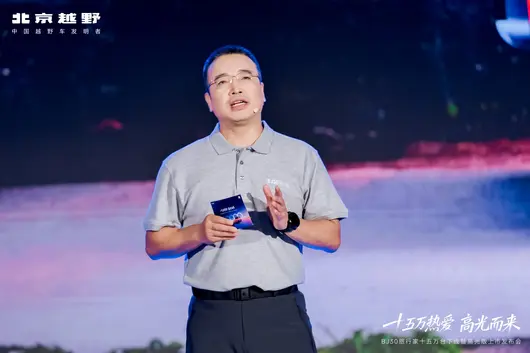


May 28, the all-new Geely Xingyuan officially launched. The full-series range of the new car realized a leap: 310km version upgraded to 410km, 410km version upgraded to 480km. A total of four models were launched: 410km Aspiration Edition, 410km Riding Wind Edition, 480km Exploration Edition, 480km Exploration+ Edition. The launch limited-time promotional price ranges from 61,800 Yuan to 91,800 Yuan. To meet diversified needs, the 410km version still retains the option for 310km range selection, and the price can be reduced by 7,000 Yuan after selection.

Starting today, users can place orders via Geely Galaxy APP, WeChat Mini Program, enjoy ten car buying gifts and limited-time super trade-in allowance. Users who place a finalized order and lock the order before June 30, 2026, can additionally receive 3,000 Yuan super trade-in allowance rights.

As the 2025 China car market full-category sales champion, Geely Xingyuan delivery volume exceeded 700,000 units within 573 days. In Q1 of this year, it joined the top three in global new energy sales, and is also the only Chinese brand model to enter this list. At the new car launch event, spokesperson Joey Yung attended to share the driving experience. At the same time, Geely Xingyuan collaborated with CATL, Xiaohongshu and other cross-industry brands to create a launch event with five major life scenarios, focusing on daily travel core needs.

Regarding product capability, the all-new Geely Xingyuan achieved five major advances:
Regarding driving control, based on Geely's first global native architecture and Sino-German joint tuning, full-series standard rear-drive independent suspension, equipped with G-TCS 2.0 anti-slip system, brushless steering system and G-CST 2.0 comfort braking system. It passed the Fishhook test at 130km/h and completed the Moose test at 80.7km/h.
Regarding powertrain, full-series standard CATL battery cells, liquid cooling temperature control and 11-in-1 high-integration electric drive, maximum range 480km. 30%-80% fast charge only needs 19 minutes. Equipped with Starwise AI Cloud Power 2.0 to achieve full-link energy management.
Smart cockpit equipped with Galaxy Flyme Auto 2 system and 7nm Dragon Eagle 1 chip, equipped with AI voice assistant Eva, supports CarPlay mobile phone interconnection and multiple scenario modes.
Assisted driving equipped with Qianli Haohan H3 solution, covering Highway Elevated NOA, APA parking, HPA memory parking, DMS fatigue monitoring and Sentry Mode and other functions.
Regarding safety, adopts Five Vertical Eight Horizontal Star Armor Cage Body, roof pressure resistance reaches 3.4 times vehicle weight. Battery capacity retention rate remains 90.72% after 1,000 cycles, and successfully passed extreme tests such as seawater corrosion, mud water impact, continuous collision.

Currently, Geely Xingyuan has landed in over 30 countries and regions worldwide, obtaining multiple international awards in markets such as Brazil, Thailand. Geely Galaxy stated that it will continue to adhere to the concept of "Build smart premium cars for everyone", providing products exceeding expectations in various sub-markets.

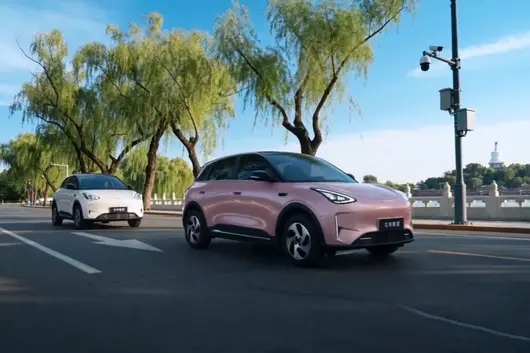

Have you ever seen the roads in India?
I've seen them online.
The scene is usually like this: a sedan blocked behind a cow, motorcycles running wild nearby, even milk tea vendors nearby, so "clean and hygienic".

However, in a place where many feel physically uncomfortable after watching, Toyota, Suzuki, Honda and other Japanese car companies decided to bet on India.
According to the Indian "Brand Quality Foundation" website, the three car companies will invest nearly $11 billion to build factories, increase capacity, and develop exports in India.
Some netizens commented: Did the three Japanese car companies have too much money?
In fact, they didn't have endless money to spend, nor were they bewildered by Indian curry. These Japanese car executives are much clearer than us.
Current Japanese car revenue and market share are declining. Raw material costs are soaring. Looking at the world map, finding a market that can accommodate capacity, expand share, and has gentle competition is not easy.
So, it wasn't that Japanese car companies chose India, but because they had no choice.
The Pain of Japanese Car Companies
Past Japanese cars were truly the envy of others.
Ask old drivers who drove Japanese cars over ten years ago, talking about Japanese cars, almost no one doesn't give a thumbs up, cheap price, fuel saving, durable...
Even many Japanese cars needed to be bought at a markup, but who would think this iron fortress would be beaten out of sight in a few short years.
With the wave of new energy vehicles coming, electrification and intelligence became the goal for many domestic car companies to "leapfrog". Relying on China's strong new energy vehicle industry chain advantages and car companies' own persistence on R&D and technology, Chinese independent brands quickly achieved "leapfrogging".
Domestic cars once criticized are now becoming more and more common on the roads, even surpassing joint ventures in share.
According to CPCA data, in April 2026, the share of independent brands reached as high as 62.5%, far exceeding Japan's 13.1%.

You need to know, the Chinese car market is the largest car market in the world. Losing speed in the Chinese market is like losing a huge piece of cake.
Meanwhile, the main theme of the Chinese market in recent years is still price wars. Racing on configuration, price, and service has become a normal state, which also had a huge impact on Japanese cars' profits.
Apart from China, Japanese cars are also not doing well in the US.
On January 20, 2025, Trump swore in as the 47th US President, starting a series of chaotic operations, including imposing additional car tariffs in the name of national security, causing the tariff rate for imported Japanese cars to reach as high as 27.5% at one point. Although it decreased later, it was still far higher than the initial tax rate.
This operation directly led to a tariff loss of over 2 trillion yen for seven Japanese car companies in fiscal year 2025.
Looking at Japan itself, it is actually not easy either.
Middle East geopolitical conflicts blocked shipping in the Strait of Hormuz, transportation costs and raw material costs soared, Japanese car companies also had to suffer in silence.

Executives looking at the reports, their backs went cold, only to find a new growth curve.
So, Japanese car companies didn't fall in love with India, there was nowhere else to go.
Deep Thought on Choosing India
So, what magic does India have, to make Japanese car companies invest heavily?
The first advantage is big. In 2025, the Indian car market achieved 5.517 million new car sales, up 6% year-on-year, breaking the historical record, ranking as the third largest car market in the world, exceeding Japan for four consecutive years, second only to China and the United States.
The value of this doesn't need me to say much. India achieved this result mainly because India has been promoting tax reduction policies to promote consumption, which led to a significant increase in domestic consumption willingness.
The second advantage is close, meaning it is close to places where Japanese cars sell well, such as Africa.
So, India for Japanese car companies is more like a convenience store built in the center of a crossroad. You don't need to ship cars to eight countries separately, just build well at this stop in India, then unload ship by ship, and you can save a lot of costs.

The Nikkei also believes that India is expected to become its global car supply center.
The third advantage is stability. You know, Japanese cars' advantage is fuel cars, after all, the three major components of engines, gearboxes, and chassis, they have played for many years, technology accumulation is number one in the world.
But the Chinese car market has fully promoted electrification and intelligence development, leading to Japanese cars' advantage becoming weaker and weaker, impossible to play out. But India is different, it has the characteristics of few charging piles and slow electrification process. Indian old people buying cars still look for cheap, fuel saving, easy to fix, and these three points are exactly Japanese cars' old trade.
Especially Suzuki, always been India's car market evergreen, almost always sitting on the best-selling model throne, reputation of being worry-free, better than any advertisement.
So, Japanese car companies' vigorous layout of the Indian market is obviously carefully considered.
But, is the Indian market really that easy to mix?
The Hard-to-Bite Indian Market
Of course, India is not perfect like a hot commodity, its disadvantages are as obvious as its advantages, and every one is enough for Japanese car companies to face a hard time.
First talk about electrification. Yes, right now India has few charging piles and electric cars don't sell well, it is indeed a shelter for Japanese fuel cars. But you have to think, how long can this "shelter" avoid?
India previously shouted the slogan of 30% of new cars being electric vehicles by 2030. Although it sounds like bragging, but can't help but they really give subsidies, really build charging stations.
Imagine, what if one day India suddenly wakes up, starts vigorously promoting electrification, doing infrastructure, charging piles popping out like mushrooms after rain, then Japanese cars will be dumbfounded?
Isn't this a version of the Thai market?
Back then Japanese cars in Thailand won easily. The entire Southeast Asian market was called Japanese cars' backyard. Result Thailand took the lead in promoting electrification. Chinese electric vehicles came in, directly became a hot commodity. Look at Japanese cars again, share in Thailand falling down rapidly.

If India accelerates electrification, history will likely repeat, and this time, Japanese cars don't even have a place to flee, how to prevent will become the first problem for Japanese car companies.
Next talk about policy. India's policy is like a pot of curry, you never know if you will eat chicken or potato next time.
This magical country, today low tariff encourages building factories, tomorrow may fine you a huge amount. What's more annoying is mandatory joint venture. Foreign car companies want to sell cars in India, have to find local partners to partner up. When your factory is built, supply chain is done, India directly backstabs you. At that time whether adding money or withdrawing capital, what you get is heartache.
So you see, this market like India is like a mango that looks very sweet, bite the first mouth it's okay, chew two more mouths hit the hard core.
Japanese cars now is calculating, while the core hasn't bit the tooth, hurry up to nibble a few more mouths, but the core will bite sooner or later, just don't know which day.
Epilogue
Japanese cars this trip to India, not go for tourism, is go to make a living.
Chinese and Southeast Asian dining tables are more crowded, production and transportation costs have risen. Looking around the world, only this pot in India is still steaming, even if what is boiling inside is curry-flavored stones, have to bite hard and chew down.
Japanese car companies want to expand market, India wants to pull economy, solve employment, both sides have their own thoughts.
As for the ending is Japanese cars in India regain their glory, or like past competitors shamefully walk away, then is not known.
But no matter how, this play just started, we slowly watch is okay.
Anyway India's story, never bored.