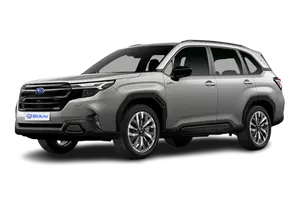
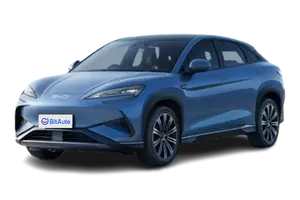
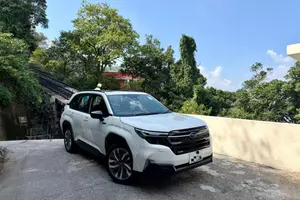
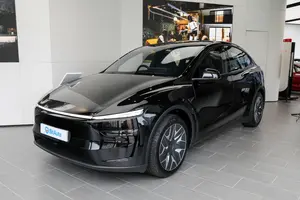
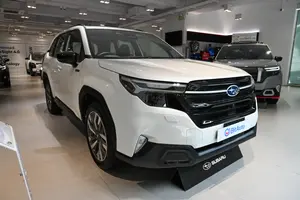
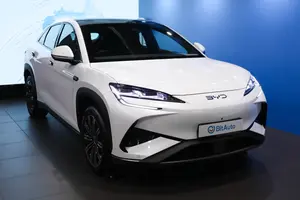
One is a pure electric, the other a non-plug-in hybrid — only one needs charging at all, which matters in a city where home charging is rare. The Sealion 7 is the cheaper way in at HK$ 345,480, undercutting the Forester by HK$ 24,320 on-the-road. With no clear hardware advantage to justify the difference, the Forester is harder to recommend.
Body Type / Seats5 door SUV · 5 seats5 door SUV · 5 seats
Over five years the Sealion 7's HK$ 24,320 head start is unlikely to be erased by running costs — five-year ownership still lands about HK$ 137,415 in the Sealion 7's favour. The deciding factor is whether you can charge at home or at work — most Hong Kong owners cannot rely on home charging.
Energy & Consumption
ParameterSubaru ForesterBYD Sealion 7
Fuel TypeHEVBEV
Consumption6 L/100km-
Max Range (Full Tank/Charge)-520 km · NEDC
The Sealion 7 runs on electricity alone; the Forester pairs a petrol engine with a battery that recovers braking energy, so it never needs plugging in. The Forester is rated at 6.0 L/100km, which is the main thing an EV cannot match on a long run. A full tank gives the Forester about 1050 km against 520 km per charge for the Sealion 7.
Power & Performance
ParameterSubaru ForesterBYD Sealion 7
MotorFrontRear
Max Power164 Ps-
Max Torque212 N·m-
Drivetrain4WDRWD
TransmissionCVTFixed Gear Ratio
Dimensions
ParameterSubaru ForesterBYD Sealion 7
Length4,655 mm4,830 mm ✓
Width1,830 mm1,925 mm ✓
Height1,730 mm ✓1,620 mm
Wheelbase-2,930 mm
Boot Capacity484-1655 L500 L ✓
The Sealion 7 is the longer car — 175 mm up at 4830 mm versus 4655 mm.
Comfort & Technology
Forester
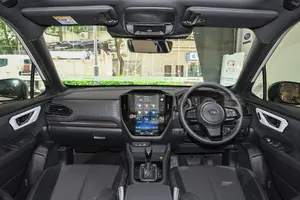
11.6" touchscreen with Apple CarPlay / Android Auto
Dual-zone automatic climate control
Wireless phone charging
Power tailgate
Heated and power-folding door mirrors
Sealion 7
15.6" central touchscreen + 10.25" digital cluster
Dual-zone automatic climate control
Ventilated front seats
Panoramic sunroof
Wireless phone charging
Sales Comparison
Monthly new car sales in Hong Kong SAR China, with data for the past 6 or 12 months, or the full sales history since launch.
Monthly Sales Trend (Hong Kong SAR China)
Loading sales data…
Monthly Registrations
Monthly Registrations
Data from Hong Kong Transport Department, updated monthly on the 10th. Check Hong Kong car sales, brand ranking, model sales & EV sales.










 BMW X1
 Toyota RAV4
 Lexus LBX
 XPeng G6
 TESLA Model Y
 GAC Aion V

