


首頁smart #1

搜尋歷史
熱門搜尋
經銷商登入 / 註冊

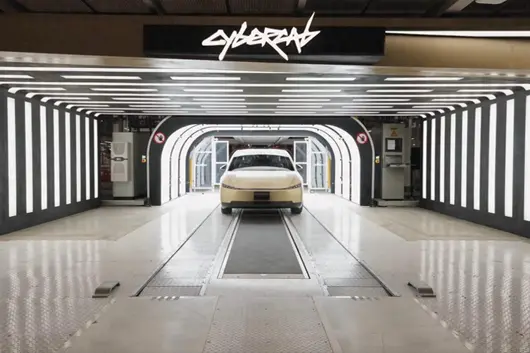
特斯拉行政總裁埃隆・馬斯克於當地時間 9 日在社交媒體發文稱,重新設計 Cybercab 的生產流程,實現了相比傳統造車模式 5 倍以上嘅生產速度。佢介紹,依靠 Unboxed(拆解式模組化生產)模式,並行生產各類組裝模塊,喺最後一道工序完成整車總裝;生產線佔地面積縮減一半,產量反而得到提升。2026 年 2 月喺得州超級工廠投產嘅 Cybercab,憑借半年多就達成嘅驚人均產量,再次成為行業焦點。

當然目前仍存在待解決嘅課題。截至 9 月初,得州登記在冊嘅 Cybercab 僅有 45 台,佔特斯拉得州自動駕駛車輛登記總數 420 台嘅 11%。成本削減效果,仍有待實際開工率與最終整車售價嚟驗證。生產模式劇變並非只有特斯拉。福特、現代汽車集團等整車企業,都在以自己嘅方式重新改造組裝產線。延續百年嘅汽車製造底層邏輯正在搖動,本文梳理各家企業嘅技術路線。

亨利・福特之後,生產模式嘅迭代
1913 年,亨利・福特喺密歇根州海蘭帕克工廠引入流水線裝配。車身隨傳送帶移動,工人固定工位重複完成指定工序。T 型車 90 分鐘即可下線,汽車由此真正走向大眾。呢套模式喺此後百餘年成為汽車工業嘅標準範式。
電動化時代正在顛覆呢套邏輯。內燃機、變速箱被取消,零部件數量大幅減少;以電池、電機為核心嘅簡化整車結構,催生全新裝配工藝。以特斯拉為開端,福特、現代汽車集團、豐田、大眾、比亞迪,各家车企拿出唔同解決方案。電動車競爭嘅重心,正從電池、軟件,轉移至製造工藝本身。

拋棄傳送帶嘅特斯拉
特斯拉喺 2023 年 3 月投資者日首次公開 Unboxed 模組化生產工藝,重新定義咗順序裝配嘅概念。唔再沿著一條長流水線依次完成整車,而是將前艙大型壓鑄部件、後艙大型壓鑄部件、結構電池包、內飾、噴塗完成嘅外覆蓋件,共 5 大模塊,分別喺獨立產線上同步製造,最終喺總裝區域一次性合車。

傳統造車,噴塗係車身完工之後嘅獨立工序。Unboxed 模式直接對零部件面板預先完成上色,省去整車噴塗環節。特斯拉目標,依靠呢套工藝把 Model Y 生產成本降低近一半,單車裝配時間壓縮至 5‑10 秒。參考上海超級工廠 Model Y 單車 33 秒嘅生產節拍,目標速度相當於現有水平嘅 3 倍以上。
美國專利商標局 2025 年 9 月向特斯拉授予 Unboxed 工藝專利。該工藝首次落地車型為無人駕駛 Robotaxi Cybercab,2026 年 2 月於得州超級工廠量產。Model3、Model Y、Cybertruck 等現有量產車型,尚未完整落地呢套工藝。計劃 2026 年年中量產嘅 3 萬美元以下平價新車,也將採用呢套生產方式。但行業也存在質疑:呢套產線能否實現多車型共線生產?參考特斯拉過往多次產能延期記錄,呢套工藝能否如期穩定落地,仍有待觀察。

福特:三路分流嘅「裝配樹」產線
作為流水線嘅開創者,福特時隔百餘年,正在親手解構呢套自己發明嘅生產體系。 通用电動車生產系統(Universal EV Production System):將單條長產線拆分為前、中、後三條分支,最終匯流總裝,福特稱為裝配樹(Assembly Tree)。內燃機與變速箱裝配工序被取消才得以實現呢套架構:負責裝配電池、座椅、中控、地毯嘅中間產線作為主幹,前後艙大型鋁合金壓鑄件分別喺獨立產線完工後匯入總裝。零部件、工具沿着裝配樹輸送至對應工位,減少工人扭轉身體、大幅度伸手嘅作業動作。

呢套系統首次落地肯塔基州路易斯維爾組裝工廠。福特為改造該工廠投入 20 億美元,密歇根電池工廠投入 30 億美元,合計投資 50 億美元。拆除產生嘅廢金屬就達 25000 公噸,固定全新桁架結構耗费縫合總長 700 英里(約 1126 公里)。工廠首款量產車型為 3 萬美元級中型電動皮卡 Fathom。福特稱呢套通用电動車生產系統裝配速度相比傳統產線提升 40%;工廠新增專用工位,可喺模塊裝配前預刷寫軟件;廠區 5G 網絡支持裝配過程同步質檢。零部件量產定于 2027 年一季度,面向用戶嘅正式量產預計 2028 年。
福特已於 2025 年 12 月停止電動皮卡 F‑150 Lightning 生產,官方理由係無法搵到可行嘅盈利路徑。對路易斯維爾工廠嘅鉅額投入與之形成鮮明對比,體現福特電動化重心轉向平價走量車型。

現代汽車集團:兩套工藝並行探索
現代汽車集團沒有選定單一路線,喺新加坡、美國、蔚山同步推進差異化製造革新。
位於新加坡裕廊嘅現代汽車集團全球創新中心 HMGICS,直接捨棄傳送帶。廠區布置 27 個橢圓形獨立作業單元,實現多車型柔性混線生產。AGV 無人轉運機器人最多可承載 3 公噸車身,喺各個作業單元之間轉運,替代傳送帶。波士頓動力四足機器人 Spot 拍攝裝配點位完成質檢。工廠同時生產 IONIQ5 同無人駕駛 Robotaxi,年產能 3 萬台以上,偏向小批量多品種嘅實驗工廠。

美國佐治亞州埃拉維爾嘅 HMGMA(北美超級工廠),把單元模式放大到大批量生產規模。導入 HMGICS 驗證過嘅製造平台,年產能 30 萬台;161 台自主移動機器人 AMR 實現內飾裝配物流自動化;電池模組工廠與整車工廠通過隧道傳送帶直連,提升物流效率。工廠從生產 IONIQ5 起步,2026 年 06 月 02 日新增起亞獅鉑拓界混合動力車型,持續拓展共線車型。

第三條路線喺韓國蔚山。現代沒有像 1996 年牙山工廠那樣新建整車廠,選擇喺現有蔚山廠區內部建設巨型壓鑄專屬產線。採用 6000 公噸以上大型壓鑄設備一體成型車身部件,大幅減少零件數量與焊接工序,行業預測呢套工藝將率先搭載喺 2026 年大型電動 SUV 捷尼賽思 GV90。

現代汽車集團嘅路線同特斯拉、福特有所區別,屬於雙線並行策略:新加坡工廠主打小批量多品種嘅 Cell 單元模式;佐治亞、蔚山工廠面向大規模量產,發展大壓鑄與自動化物流。不追求唯一標準答案,根據產能規模、產品目標,並行落地多種方案。

豐田、大眾、比亞迪各自路線?
豐田依舊以 TPS 豐田生產方式兩大支柱:準時化生產、自動化為根基,同時開展全新嘗試。2023 年 6 月技術工坊公開自驅式裝配線:電動車依靠自身傳感器自主移動流轉各個工序,唔需要傳送帶。目標降低設備投入,適配多品種小批量生產。同時,下一代電動車(優先雷克薩斯)從 2026 年車型開始落地大壓鑄工藝,車身拆分為前、中、後三大部件一體裝配。

大眾曾經推出對標特斯拉嘅 Trinity 項目,計劃喺伍爾夫斯堡新建工廠,將單車製造時間壓縮至 10 小時,僅為 ID.3 現有生產時長嘅三分之一。但軟件研發延期、管理層更迭疊加歐洲電動車需求低迷,計劃一再推遲。2026 年嘅大眾,正考慮關閉德國 4 座工廠、最多裁員 10 萬人。呢一案例充分說明,再宏大嘅製造革新構想,喺財務危機面前也極易被擱置。
中國比亞迪並不糾結產線形式,重心放喺供應鏈垂直整合。電池、功率半導體、電機、電控等核心零部件 70‑80% 實現自研自產,構築唔受外部供應鏈波動影響嘅體系。深圳總部總裝產線,每 51 秒下線一台整車。自研零部件可以快速把電池技術迭代同步到整車設計與製造流程,呢係其高節拍背後嘅核心原因。

歸根結底嘅關鍵:成本與執行力
各家企業路線各唔相同,但大方向趨同:依靠大型壓鑄減少零部件;拋棄固定傳送帶,轉向機器人、AGV 嘅柔性物流;喺裝配階段提前完成軟件刷寫。各家都在利用電動化帶來嘅整車結構簡化,走出自己嘅道路。

但各家落地進度差距明顯:現代汽車集團一邊運營新加坡小規模試驗線,一邊推進佐治亞、蔚山大批量產線,甚至已經把混合動力車型納入產線。特斯拉、福特分別以 Cybercab、Fathom 作為明確新車載體定下商業化時間,但距離穩定大規模量產仲需要時間。反觀大眾,足以證明製造革新好容易受企業財務狀況影響而降級。
如今全球各區域電動車市場冷熱分化,製造革新已經成為決定車企生死嘅降本手段。而家仲不能斷定邊套工藝會成為行業新標準,但延續百年嘅傳送帶流水線,已經唔再係唯一解。

In the Malaysian SUV market, many buyers compare Honda CR-V and Hyundai Tucson when choosing a car. These two cars are quite close in price and positioning. Today, we will make a detailed comparison from multiple aspects to help you save time on research.
Honda CR-V's OTR price in Malaysia is RM 178,200 - 195,900, with a total of 4 versions, including 2026 e:HEV 2.0L 2WD RS (RM 195,900), 2026 1.5T 4WD V (RM 181,900), 2026 e:HEV 2.0L 2WD E (RM 178,200), etc.
Hyundai Tucson's OTR price in Malaysia is RM 143,888 - 197,888, with a total of 5 versions, including 2025 HEV 1.6T AT 2WD Prestige (RM 197,888), 2025 1.6T DCT 4WD Prestige (RM 186,888), 2025 1.6T DCT 2WD Prime (RM 164,888), etc.
From a price perspective, Hyundai Tucson's starting price is RM 34,312 cheaper than Honda CR-V. Honestly, in this price range, a difference of a few thousand is not really big; the key is still looking at overall value for money and long-term usage costs.

Honda CR-V's safety rating is 5★ (ASEAN NCAP), active safety systems include Honda SENSING (ACC, CMBS, LKAS, RDM).
Hyundai Tucson's safety rating is 5★ (ASEAN NCAP), active safety system includes SmartSense.
Both cars have the same safety rating. In this class, safety features are considered quite complete. New cars nowadays are generally safe enough, no need to worry too much about this.

Honda CR-V uses FWD drive configuration.
Hyundai Tucson uses FWD drive configuration.
Both cars have the same drive configuration, both are FWD, daily driving experience will not have much difference.

Honda CR-V warranty 5 years/unlimited mileage, maintenance interval every 10,000km or 6 months.
Hyundai Tucson warranty 5 years/300,000km, maintenance interval every 10,000km or 6 months.

Honda CR-V and Hyundai Tucson are both mainstream choices in the Malaysian market, suitable for family use and daily commuting. If you value brand reputation and resale value more, you can prioritize the one with better reputation; if you care more about value for money and features, choose the one with richer configuration. Ultimately, it is recommended to test drive both, personal experience is the most important.

Overall, Honda CR-V and Hyundai Tucson are both very good models in the Malaysian market. Which one to choose depends on your personal needs and budget. It is recommended to do your homework, compare quotes from several dealerships, and then test drive to make a final decision. Buying a car is a big deal, spending time on research will never be wrong.


[First Commercial Vehicle Network Original]
When "We Deliver" (We Deliver) becomes the theme of the 2026 Hannover International Transport Exhibition, Geely Farizon's answer is: Deliver Trust, Deliver Quality, Deliver Promise.
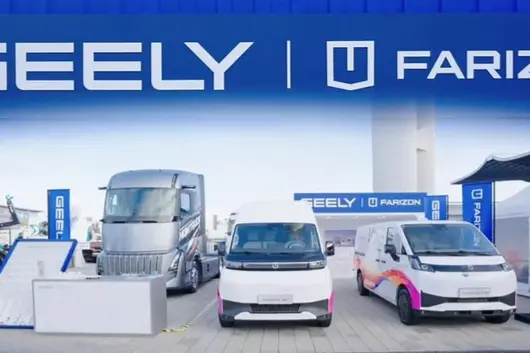
On September 14, the 2027 International Van of the Year Award (IVOTY), known in the industry as the "Oscar" for VANs, was unveiled in Hannover. As the Chinese force highly anticipated at this exhibition, the Geely Farizon New Energy Commercial Vehicle Group showcased three star products: the Xinghan H, Super VAN, and Xingxiang V7E, and held the "Geely Farizon Afternoon Tea" themed event to present plaques to partners in the European supply chain, finance, service, and modification fields.
After multi-stage, multi-dimensional professional evaluations by the judging panel, the Geely Farizon Xingxiang V7E successfully qualified for the 2027 IVOTY Final Round. Following the Super VAN qualifying for the 2026 IVOTY, Geely Farizon became the first and only Chinese brand to qualify for the IVOTY final selection for two consecutive years. This breakthrough is not just the honor of a single product, but marks the beginning of Chinese New Energy Commercial Vehicle Brands moving from "sporadic intrusion" to "systematic qualification" on the world's most rigorous VAN competition stage.

Delivering Trust: Qualifying for IVOTY for Two Consecutive Years, Chinese VANs Stand on the Global Standard Summit
IVOTY is regarded as the "Oscar" for VANs because its evaluation is not a single performance comparison, but a multi-dimensional professional assessment covering vehicle design, loading efficiency, electrification performance, intelligent configuration, safety standards, and operational economics. Qualifying for the final selection means the product must withstand systematic testing in real European usage scenarios and regulatory systems.

The Super VAN previously won the 2026 IVOTY International Van of the Year Runner-up, becoming the first Chinese model to reach the final selection since the award was established; it also won the What Van? Awards 2026 Zero-Emission Van Award, passed the Euro NCAP 5-Star Rating with a score of 85, creating the highest score in the history of the Chinese light commercial vehicle category, with AEB, Lane Assist, and Driver Monitoring receiving multiple full marks. Now, the Xingxiang V7E has again qualified for the 2027 IVOTY Final Round and advanced to the top three, making Farizon the first and only Chinese brand to qualify for the IVOTY final selection for two consecutive years.
Farizon's qualification for the IVOTY final selection for two consecutive years indicates that it does not rely on the accidental boom of a single car, but on R&D, Manufacturing, Validation, Compliance, Service, and other full-system capabilities, beginning to establish stable trust in the European high-standard market. This trust is the core of "We Deliver Trust".
Delivering Quality: Three Models Cover Mainstream European Scenarios, GXA Architecture Backs Core Strength
Products are the first language of brand globalization. The three models Farizon exhibited correspond to European multi-functional commercial scenarios, urban distribution, and long-haul logistics, forming a complete matrix from light commercial vehicles to heavy-duty trucks.
The Xingxiang V7E is designed for large-volume, last-mile logistics. As a 3rd generation global VAN product built on the GXA Digital Intelligence Architecture, it is equipped with a 6.95 cubic meter ultra-large loading space, a WLTP combined cycle range of 328 kilometers, and an excellent load capacity of 1,373 kg. At the same time, the flexibility of the body dimensions and turning radius can easily pass through height restriction facilities, underground garages, and historic districts, precisely matching the real-world scenario needs of European urban logistics. The entire line is equipped with 14+ ADAS Intelligent Driving Assistance, 360° Panoramic Imaging, etc., making safety and intelligence standard for city distribution operations.

The Super VAN demonstrates versatile van application capabilities. Its maximum interior space can reach 13 cubic meters, easily accommodating 5 standard European pallets, meeting European logistics loading specifications; the innovative concealed B-pillar design balances convenience and safety. Relying on the Euro NCAP 5-Star Rating, IVOTY Runner-up, What Van? 2026 Zero-Emission Van Award, and GREENFLEET 2026 Light Commercial Vehicle Manufacturer Award, the Super VAN has become an important business card for Chinese VAN products in the European market.
The Xinghan H is a new energy heavy-duty truck built by Farizon for the European long-haul transport market and is the technical foundation of Farizon New Energy Commercial Vehicles. The European version of the Xinghan H is equipped with a 600kWh capacity battery, with a combined cycle range of over 500 km, supporting dual-gun fast charging; the vehicle B10 design life reaches 1.5 million km, adaptable to high-intensity, long-cycle operation scenarios of long-haul logistics. The model was developed to meet local EU regulations and end-user needs, complying with EU access requirements in three dimensions: range, operational economics, and safety standards.

Behind the three products is Farizon's committed forward engineering R&D technical foundation. Relying on the "One Geely" strategic synergy, Farizon adheres to fully in-house development, forming two core technical roadmaps: "Methanol Electric + Pure Electric", and created the exclusive GXA Digital Intelligence Architecture for New Energy Commercial Vehicles. Methanol Electric uses methanol as liquid hydrogen to directly replace traditional hydrogen fuel cell systems for power generation and supply, achieving upgrades that are more convenient, more economical, and more sustainable for energy replenishment; Pure Electric relies on ZhiCore Technology, fully in-house development of core three-electric technologies, forming two technical advantages: Intelligent Cloud Control and Core Integration.
Relying on the Geely Holding Group Central Research Institute, Farizon established China's largest New Energy Commercial Vehicle Research Institute, gathering over 2,000 R&D engineers globally. This "Shared Passenger-Commercial Heritage" technical synergy gives Farizon systematic competitiveness in dimensions such as safety, lightweighting, comfort, and intelligence, which is also the confidence behind "We Deliver Quality".
Delivering Promise: From Product Going Global to Ecosystem Going Global, Taking Root in Pioneer Zone
Europe is a highland of the global automotive industry and the pioneer zone of Farizon's overseas strategy. Farizon insists on "prioritizing difficult markets first", proactively choosing Europe, the overseas market with the highest access standards and most severe competition, as the overseas pioneer zone to refine the entire product and service system with high-standard markets, then replicating it to various places globally.
This year, Farizon has entered core European markets such as Germany and France, with the European Headquarters Farizon Mobility Europe B.V. putting into operation, and German and French subsidiaries established in succession. In markets like the UK, Denmark, and Portugal, Farizon New Energy Commercial Vehicle export scale ranks first among Chinese brands. From January to July 2026, Geely Farizon ranked first in Chinese New Energy Commercial Vehicle exports, with a year-over-year significant growth of 152.5%, and topped the industry in 33 countries and regions including the UK, Australia, UAE, and Switzerland.

More importantly, Farizon's globalization is not simply selling cars overseas, but taking value root globally. In April, Farizon's first European spare parts warehouse officially landed in Gaggenau, Germany. Relying on the "Crossroads of Europe" location advantage, it provides one-stop support for European dealers including warehousing, logistics distribution, and after-sales service, covering Europe within 1-6 working days for regular orders, and spare parts OTD to central dealer warehouse shortened by 40-60 days.
In July, the Ningbo Global International Parts Distribution Center was launched, adhering to "Passenger-Commercial Collaboration, Co-building and Shared Ownership", forming a "Domestic Hub + European Local" dual-warehouse linkage global service system with Gaggenau. Currently, Farizon's overseas business covers 70 countries globally, forming over 150 sales outlets and over 200 overseas service outlets. On August 13, the first V8E rolled off the line at the Indonesia KD Factory, and the first overseas KD factory project officially entered a new stage of scaled operations.
From product going global to ecosystem going global, Farizon is gradually applying its mature full lifecycle service system to global markets, truly making global users "able to buy, use well, and repair fast". This is both "We Deliver Promise" and a key leap for Chinese commercial vehicle brands from trade exports to localized operations.
Facing Global Zero-carbon Future: Long-termism Globalization of Chinese Commercial Vehicles
Currently, Chinese commercial vehicle exports have bid farewell to the era of purely low price and volume, forming a pattern of "Volume Expansion in Asia, Africa, Latin America; Quality Improvement in Europe". Data from the China Association of Automobile Manufacturers shows that domestic commercial vehicle exports exceeded 1 million vehicles in 2025, with new energy commercial vehicle exports of 83,000 vehicles, up 86.8% year-on-year; industry consensus believes: in the future overseas markets, the competition is no longer just vehicle parameters, but the comprehensive system capability of localized operations, technology iteration, and service ecosystem.
Standing on the global stage of the Hannover Motor Show, Geely Farizon delivered its answer sheet for Chinese New Energy Commercial Vehicles: Building a global product matrix with the GXA Architecture, solidifying the technical foundation with Shared Passenger-Commercial Heritage, constructing a service ecosystem with localized manufacturing + dual-warehouse spare parts network, and gaining global professional review recognition through IVOTY International Awards.
In the future, Geely Farizon will continue to deepen its European market layout, continue to refine green mobility solutions conforming to local scenarios, and accelerate the advancement from product going global to localized operations of brand, channel, service, and ecosystem synergy. In the wave of land transport zero-carbon transition, with systematic hard power, it will continue to convey the technical confidence of Chinese commercial vehicle brands to the world, leading the global green commercial upward growth.

In the Malaysian SUV market, many buyers compare the Honda CR-V and GWM Haval H6 when choosing a car. These two models are quite close in price and positioning. Today, we will make a detailed comparison from multiple aspects to save you the time of doing research.
The Honda CR-V OTR price in Malaysia is RM 178,200 - 195,900, with a total of 4 versions, including 2026 e:HEV 2.0L 2WD RS (RM 195,900), 2026 1.5T 4WD V (RM 181,900), 2026 e:HEV 2.0L 2WD E (RM 178,200), etc.
The GWM Haval H6 OTR price in Malaysia is RM 139,750 - 139,750, with a total of 2 versions, including 1.5L Turbo Standard (RM 140,000), 1.5L Turbo Premium (RM 155,000), etc.
From a price perspective, the starting price of the GWM Haval H6 is RM 38,450 cheaper than the Honda CR-V. Honestly, at this price range, a difference of a few thousand is not actually that big; the key is to look at the overall value and long-term usage costs.
The Honda CR-V safety rating is 5★ (ASEAN NCAP), active safety systems include Honda SENSING (ACC, CMBS, LKAS, RDM).
The GWM Haval H6 safety rating is TBD, active safety systems include Basic.
In terms of safety equipment, both cars have received good ratings. However, there are some differences in function between the Honda CR-V's Honda SENSING (ACC, CMBS, LKAS, RDM) and the GWM Haval H6's Basic. If you value active safety more, you can compare the feature lists of both carefully.
The Honda CR-V adopts FWD drive mode.
The GWM Haval H6 adopts FWD drive mode.
Both cars have the same drive mode, both are FWD, so there won't be much difference in daily driving feel.
Honda CR-V warranty 5 years/unlimited mileage, maintenance interval every 10,000km or 6 months.
GWM Haval H6 warranty 7 years/150,000km, maintenance interval every 10,000km or 6 months.
Overall, the Honda CR-V and GWM Haval H6 are both very good models in the Malaysian market. Which one to choose mainly depends on your personal needs and budget. We recommend doing your research, comparing quotes from multiple dealerships, and then test driving before making the final decision. Buying a car is a big matter, spending some time doing research will definitely not be wrong.

In the Malaysian SUV market, many buyers compare the Honda CR-V and MG HS when choosing a car. These two cars are quite close in price and positioning. Today, we will make a detailed comparison from multiple aspects to help you save time on research.
The OTR price of the Honda CR-V in Malaysia is RM 178,200 - 195,900, with a total of 4 variants, including 2026 e:HEV 2.0L 2WD RS (RM 195,900), 2026 1.5T 4WD V (RM 181,900), 2026 e:HEV 2.0L 2WD E (RM 178,200), etc.
The OTR price of the MG HS in Malaysia is RM 130,450 - 146,450, with a total of 2 variants, including 1.5L Standard (RM 105,000), 1.5L Executive (RM 115,000), etc.
From the price perspective, the MG HS entry price is RM 47,750 cheaper than the Honda CR-V. Honestly, at this price range, a difference of a few thousand is actually not significant; the key is to look at the overall cost-performance ratio and long-term usage costs.
The Honda CR-V is equipped with a 2.0L 4-cylinder, 170 hp. Official fuel consumption is 8.0 L/100km.
The MG HS is equipped with a 1.5L Turbo, 140 hp. Official fuel consumption is 7.0 L/100km.
In terms of power, the Honda CR-V's 2.0L 4-cylinder has 30 hp more than the MG HS's 1.5L Turbo, giving more confidence in mid-range acceleration, especially when overtaking on highways. However, the MG HS fuel consumption might be friendlier, and the difference for daily city commuting won't be too large.
The safety rating of the Honda CR-V is 5★ (ASEAN NCAP). Active safety systems include Honda SENSING (ACC, CMBS, LKAS, RDM).
The safety rating of the MG HS is TBD. Active safety systems include Basic.
Regarding safety features, both cars have received good ratings. However, there are some differences in functionality between the Honda CR-V's Honda SENSING (ACC, CMBS, LKAS, RDM) and the MG HS's Basic. If you value active safety highly, you can compare the feature lists of both carefully.
The Honda CR-V body length is 4500 mm, trunk 450 L.
The MG HS body length is 4400 mm, trunk 400 L.
In terms of space, the Honda CR-V body is 100 mm longer than the MG HS, so the interior passenger space will be slightly more spacious, especially the rear legroom. If you frequently carry family or need to fit a stroller, a larger body is indeed more practical.
Honda CR-V warranty is 5 years/unlimited mileage, maintenance interval every 10,000 km or 6 months.
MG HS warranty is 7 years/150,000 km, maintenance interval every 10,000 km or 6 months.
Overall, the Honda CR-V and MG HS are both very good models in the Malaysian market. Which one to choose depends on your personal needs and budget. We suggest doing your research, compare quotes from several car dealers, and then test drive before making a final decision. Buying a car is a big matter; spending some time doing research will never be wrong.

In the Malaysian SUV market, many buyers often compare Honda CR-V and Mazda CX-5 when choosing a car. These two cars are quite close in price and positioning, so today we will make a detailed comparison from multiple aspects to help you save time on research.
Honda CR-V OTR price in Malaysia is RM 178,200 - 195,900, total of 4 versions, including 2026 e:HEV 2.0L 2WD RS (RM 195,900), 2026 1.5T 4WD V (RM 181,900), 2026 e:HEV 2.0L 2WD E (RM 178,200) etc.
Mazda CX-5 OTR price in Malaysia is RM 135,469 - 166,760, total of 3 versions, including 2025 2.0L AT 35th Anniversary (RM 316,154), 2025 2.0L AT (RM 296,154), 2025 2.0L MT (RM 294,154) etc.
From a price perspective, Mazda CX-5's starting price is RM 42,731 cheaper than Honda CR-V. Honestly, in this price segment, a difference of a few thousand is actually not significant, the key is still looking at overall cost-performance and long-term usage costs.
Honda CR-V body length 4500 mm, trunk 450 L.
Mazda CX-5 body length 4500 mm, trunk 450 L.
The dimensions of the two cars are almost identical, interior space difference is not significant. Cars in this class are completely sufficient for daily use.
Honda CR-V adopts FWD drive mode.
Mazda CX-5 adopts FWD drive mode.
The drive modes of the two cars are the same, both are FWD, daily driving experience will not have much difference.
Honda CR-V and Mazda CX-5 are both mainstream choices in the Malaysian market, suitable for family use, daily commuting. If you value brand reputation and resale price more, you can prioritize the one with better reputation; if you care more about cost-performance and equipment, then choose the one with richer configurations. Ultimately, it is recommended to test drive both, personal experience is the most important.

Overall, Honda CR-V and Mazda CX-5 are both excellent models in the Malaysian market. Which one to choose depends on your personal needs and budget. It is recommended to do research, compare quotes from several dealerships, and then test drive to make a final decision. Buying a car is a big matter, spending time on research will definitely not go wrong.

喺馬來西亞嘅 SUV 市場,好多買家喺揀車嘅時候都會拿 Honda CR-V 同 Mazda CX-8 嚟做比較。呢兩款車喺價位同定位上都幾接近嘅,今日我哋就由多個方面做一次詳細嘅比較,幫你節省做功課嘅時間。
Honda CR-V 喺馬來西亞嘅 OTR 售價係 RM 178,200 - 195,900,合共有 4 個版本,包括 2026 e:HEV 2.0L 2WD RS(RM 195,900)、2026 1.5T 4WD V(RM 181,900)、2026 e:HEV 2.0L 2WD E(RM 178,200)等。
Mazda CX-8 喺馬來西亞嘅 OTR 售價係 RM 165,360 - 201,360,合共有 5 個版本,包括 2025 2.5T 4WD High Plus Petrol(RM 201,360)、2025 2.2L 2WD High Plus Diesel(RM 193,123)、2025 2.5L 2WD High Plus Petrol(RM 186,360)等。
從價錢嚟睇,Mazda CX-8 嘅起步價比 Honda CR-V 便宜咗 RM 12,840。講真嘅,喺呢個價位段,幾千蚊嘅差距其實唔算大,關鍵仲係睇整體嘅性價比同長期使用成本。
Honda CR-V 嘅安全評級係 5★ (ASEAN NCAP),主動安全系統包括 Honda SENSING (ACC, CMBS, LKAS, RDM)。
Mazda CX-8 嘅安全評級係 5★ (ASEAN NCAP),主動安全系統包括 Brand ADAS。
兩部車嘅安全評級一樣,喺呢個級別入面安全配備都算好齊全。而家嘅新車安全性都唔差,唔使太擔心呢一點。
Honda CR-V 保養 5 年/無限制里程,保養間隔 每 10,000km 或 6 個月。
Mazda CX-8 保養 5 年/150,000km,保養間隔 每 10,000km 或 6 個月。
Honda CR-V 同 Mazda CX-8 都係馬來西亞市場嘅主流選擇,適合家庭使用、日常通勤。如果你更睇重品牌口碑同二手價,可以優先考慮口碑更好嗰一款;如果你更在意性價比同配備,那就揀配備更豐富嗰款。最後仲係建議兩部都去試駕,親身體驗先至最重要。

總體嚟講,Honda CR-V 同 Mazda CX-8 都係馬來西亞市場幾唔錯嘅車型。揀邊一輛,關鍵仲係睇你個人需求同預算。建議大家做好功課,多比較幾間車行嘅報價,再去試駕先做最終決定。買車係件大事,花少少時間做功課絕對唔會錯。
In the Malaysian SUV market, many buyers compare Honda CR-V and Toyota Harrier when choosing a car. These two cars are quite close in price and positioning. Today we will do a detailed comparison from multiple aspects to help you save time on research.
Honda CR-V's OTR price in Malaysia is RM 178,200 - 195,900, with a total of 4 versions, including 2026 e:HEV 2.0L 2WD RS (RM 195,900), 2026 1.5T 4WD V (RM 181,900), 2026 e:HEV 2.0L 2WD E (RM 178,200), etc.
Toyota Harrier's OTR price in Malaysia is RM 289,000 - 289,000, with a total of 1 version, including 2026 HEV 2.5L Standard (RM 289,000), etc.
In terms of price, Honda CR-V's starting price is indeed RM 110,800 cheaper than Toyota Harrier. If your budget is limited, Honda's entry-level version can already meet daily needs. But also note, the few thousand difference might involve trade-offs in features, depending on your needs.
Honda CR-V is equipped with 2.0L 4-cyl, horsepower 170 hp. Official fuel consumption 8.0 L/100km.
Toyota Harrier is equipped with 2.0L Turbo, horsepower 220 hp. Official fuel consumption 9.5 L/100km.
In terms of power, Toyota Harrier's 2.0L Turbo has 50 more horsepower than Honda CR-V's 2.0L 4-cyl. However, for daily driving in the city, the power of both cars is sufficient, you won't feel it's lacking.
Honda CR-V body length is 4500 mm, trunk 450 L.
Toyota Harrier body length is 4400 mm, trunk 400 L.
Regarding space, Honda CR-V's body is 100 mm longer than Toyota Harrier, the interior seating space will be slightly more spacious, especially the rear legroom. If you often carry family or need to put in a stroller, a larger body is indeed more practical.
Honda CR-V uses FWD drive method.
Toyota Harrier uses FWD drive method.
Both cars have the same drive method, both are FWD, daily driving experience will not have much difference.

In general, Honda CR-V and Toyota Harrier are both very good models in the Malaysian market. Which one to choose depends on your personal needs and budget. It is recommended to do your research, compare quotes from several dealerships, and then go for a test drive to make the final decision. Buying a car is a big matter, spending some time doing research is never wrong.

喺馬來西亞嘅 SUV 市場,好多買家喺揀車嗰陣都會拿本田 CR-V 同豐田 Fortuner 嚟做比較。呢兩款車喺價錢同定位上都好接近,而家我就由多個角度做個詳細對比,幫晒你省返做功課嘅時間。
本田 CR-V 喺馬來西亞嘅 OTR 售價係 RM 178,200 - 195,900,一共有 4 個版本,包括 2026 e:HEV 2.0L 2WD RS(RM 195,900)、2026 1.5T 4WD V(RM 181,900)、2026 e:HEV 2.0L 2WD E(RM 178,200)等。
豐田 Fortuner 喺馬來西亞嘅 OTR 售價係 RM 195,880 - 241,880,一共有 3 個版本,包括 2024 2.8T VRZ Diesel(RM 241,880)、2024 2.7L SRZ Petrol(RM 202,880)、2024 2.4L Standard Diesel(RM 195,880)等。
從價錢嚟睇,本田 CR-V 嘅起價真係比豐田 Fortuner 平咗 RM 17,680。如果你預算有限,本田嘅入門版已經滿足到日常需要。但都要注意,平嗰幾千蚊,可能喺配備上會有取舍,具體要睇你嘅需要。
本田 CR-V 嘅安全評級係 5★ (ASEAN NCAP),主動安全系統包括本田 SENSING (ACC, CMBS, LKAS, RDM)。
豐田 Fortuner 嘅安全評級係 5★ (ASEAN NCAP),主動安全系統包括 。
兩款車嘅安全評級一樣,喺呢個級數裡面安全配備都算給得好齊全。而家嘅新車安全性都唔差,唔使太擔心呢一點。
本田 CR-V 車身長 4500 mm,車尾箱 450 L。
豐田 Fortuner 車身長 4400 mm,車尾箱 400 L。
空間方面,本田 CR-V 嘅車身比豐田 Fortuner 長咗 100 mm,車內坐駕空間會稍微寬啲,尤其係後座腿部空間。如果你經常載家口或者需要放嬰兒車,大少少嘅車身真係更加實用。
本田 CR-V 保用 5 年/無限里程,保養間隔 每 10,000km 或 6 個月。
豐田 Fortuner 保用 5 年/無限里程,保養間隔 每 10,000km 或 6 個月。
兩款車嘅保用條件一樣,呢方面唔使糾結。實際保養成本仲要睇品牌嘅服務網絡同零件價錢,建議去車友群問下真實車主嘅經驗。

總嚟講,本田 CR-V 同豐田 Fortuner 都係馬來西亞市場好唔錯嘅車型。揀邊一輛,關鍵始終要睇你嘅個人需要同預算。建議大家做足功課,多比較幾間車行嘅報價,再去試駕做最後決定。買車係件大事,攞少少時間做功課絕對唔會錯。
9月7日,特斯拉中国宣布了限时现金激励:9月30日(含)前下单并提走现车,Model 3全系(含高性能版)立减5000元,Model Y全系(含Model Y L)立减10000元,并可叠加5年0息、8000元车漆选装福利等既有政策,Model 3部分车型还有8000元保险补贴。叠加后Model 3起售价22.25万元、Model Y起售价25.35万元,官方称其为两款车型自焕新以来的历史最低价,那对于消费者而言,现在是抄底还是再等等呢?

首先我们需要注意这个并非特斯拉中国的“官降”,而是限时、限现车的促销活动,这项政策还有两个硬约束,一是时间卡在9月30日,且必须完成提车。二是只针对现车,定制排产订单不参与。这意味着政策指导价并未下调,22.25万元和25.35万元是“满足全部条件后的成交价格”。10月1日之后,价格是回到原样还是继续下探,官方没有给出任何承诺。

而此次特斯拉此时进行限时的现金激励,背后的原因也十分简单。根据乘联分会数据显示,特斯拉中国8月批发销量86166辆,同比增长3.6%,但明显低于同期新能源市场整体16%的批发增速。
与此同时,今年前八个月国内乘用车零售1171.6万辆,同比下降20.8%,业内判断全年零售下滑几成定局。9月作为三季度收官月,特斯拉选择在季度末拿出富有诚意的现金减免,冲刺交付量的意图相当明显。

除了冲刺交付量之外,当前特斯拉面对的竞争压力也较大。从相同定位的竞品车型来看,2025年小米SU7在中国售出258164辆,已超过Model 3的200361辆。今年上半年Model Y虽仍以17.25万辆守住20万元以上SUV榜首,但同比增速仅0.6%。除此之外,从9月开始超十家车企集中加码购车权益,新一轮的价格战也已经展开,这也让特斯拉的定价体系承受了较大压力。

另一个值得注意的变量则是港股在香港、澳门开售的廉价版Model 3,通过配置精简,这款车型的起售价不到18万,虽然目前这款车型并未进入内地,但按照特斯拉的惯例,较大的促销往往出现在季末或新款、改版上市之前,因此部分业内人士也认为此次现金激励正是这款车型进入内地市场的前奏。如果后期廉价版落地,现有车型的价格与权益体系大概率还会再调整一次。

分析了那么多,那目前到底是不是抄底的好时机呢?笔者认为,对近期本就有明确购车计划、且对现车颜色和配置不挑剔的人来说,这一轮促销值得出手。现金直减叠加5年0息,Model3和Model Y的月供分别低至约2377元和2894元,综合成本的确处于历史低位。
但对购车不急、或希望等新款和廉价版的消费者,此次等待的成本并不高,这次本质是限时促销而非官降,错过9月并不等于永久错过低价,另外,如果后期廉价版Model 3进入内地,可能会拉低特斯拉整体的价格门槛。

总结:
其实大家在购车时不必纠结是不是“历史最低价”,毕竟在当前竞争日渐加剧的国内新能源汽车市场,价格战已不再是各家车企的短期战术。对于特斯拉此次调价促销,消费者可以回到自身需求进行判断,如果近期真是用车需求存在,当前的价格确实值得入手,如果不着急用车,四季度或许会有更好的入手时机。

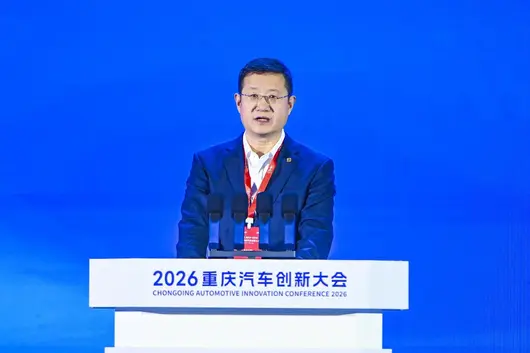
On September 3rd, the 2026 Chongqing Automotive Innovation Conference grandly opened at the Chongqing Science Hall. Co-organized by the China Association of Automobile Manufacturers and China Merchants Detection Technology Holdings Co., Ltd. (hereinafter referred to as "China Merchants Detection"), and undertaken by China Merchants Detection Vehicle Technology Research Institute Co., Ltd. (hereinafter referred to as "China Merchants Vehicle Research"), this conference centered on the theme "New Intelligence, New Youth, New Ecology", bringing together authoritative forces from government, industry, academia, research, application, and finance to jointly build the innovation synergy and ecosystem of the automotive industry.
Deng Renjie, Deputy General Manager of China Merchants Group, Wang Zhijie, Director of Chongqing Municipal Commission of Economy and Information Technology, Fu Bingfeng, Vice Chairman and Secretary-General of the China Association of Automobile Manufacturers, Chu Xiaowei, Deputy Director of the Management Committee of Western Science City Chongqing High-tech Zone, attended the opening ceremony and delivered speeches.
Academician of the Chinese Academy of Engineering and Professor at Tsinghua University, Li Jun; Zhou Wei, Director of the Automotive Transportation Research Center of the China Academy of Traffic and Transportation Sciences of the Ministry of Transport and Foreign Academician of the Russian Academy of Engineering; Zhang Rizhong, General Manager of China Merchants Detection; Xie Rongbin, Chairman, Editor-in-Chief of China Energy Automotive Media Group and Chairman of China Auto Times; Xu Zhipeng, Deputy Party Secretary of the Chongqing Municipal Bureau of Science and Technology; Sun Xiyong, Deputy Director of the Chongqing Municipal Commission of Commerce; Yu Jun, Deputy Director of the Industry Development Department of China Merchants Group; Yan Hao, Deputy General Manager of China Merchants Venture Capital; Ji Lun, Deputy General Manager of China Merchants Detection and Chairman of China Merchants Vehicle Research; Kraisorn Ongphonglert, President of the Thailand Automotive Institute; Wu Fang, Deputy Station Chief of the Chongqing Correspondent of the China Media Group; Xiao Lingyun, Director of the Industrial Products Division of the Technical Center for Defective Product Recall of the State Administration for Market Regulation; Chen Dawei, Deputy Director of the Pollution Control Center of the Chinese Research Academy of Environmental Sciences of the Ministry of Ecology and Environment; Zhao Lijin, Deputy Secretary-General of the China Society of Automotive Engineers and Deputy Dean of the National Automotive Strategic Research Institute; Tan Huan, Chief Expert of Changan Automobile and General Manager of Changan Tianshu Intelligent Robot Company; Shi Xiaohui, Former President of Chongqing University of Technology and Chairman of the Chongqing Automobile and Motorcycle Industry Association; Duan Wei, COO of Chongqing Seres Phoenix Intelligent Creation Technology Co., Ltd.; Liu Xiuc, Chairman of Shanghai Cailai Biotechnology Co., Ltd. attended the opening ceremony of the conference.
More than 1,000 guests from relevant industry departments, research institute scholars, industry association experts, heads of well-known automotive enterprises at home and abroad, representatives of young new forces, media representatives, and other fields attended the opening ceremony of the Chongqing Automotive Innovation Conference.
Guiding the Direction, Mapping the New Blueprint for the Development of an Automotive Powerhouse

Deng Renjie, Deputy General Manager of China Merchants Group
In his speech, Deng Renjie, Deputy General Manager of China Merchants Group, proposed three directions紧扣紧扣紧扣 the theme of the conference: solidifying the industrial foundation with "New Intelligence", promoting a closed loop of "technology breakthrough-testing verification-standard formulation-result transformation-industrial application", and supporting China Merchants Detection and China Merchants Vehicle Research to comprehensively improve R&D verification, testing evaluation, standard formulation, and quality certification capabilities; activating innovation momentum with "New Youth", promoting research, gathering talents, and promoting transformation through competitions, and guiding young talents to take the main responsibility at the forefront of the industry; expanding the open pattern with "New Ecology", relying on the "trade, transport, warehouse, inspection + finance" integrated automotive going-global service system, and helping Chongqing automotive enterprises move from "products going global" to "brands going in, and ecosystems going up". Deng Renjie stated that the China Merchants Group will anchor the overall goal of achieving decisive progress in comprehensively promoting the "Third Entrepreneurship", adhere to "what Chongqing needs, what China Merchants can do, and where the future goes", and serve the construction of a modern new Chongqing with deeper-level, wider-field, and higher-level central-local cooperation.
Wang Zhijie, Director of the Chongqing Municipal Commission of Economy and Information Technology, stated in his speech that Chongqing will classify intelligent connected new energy vehicles as the first industry of the "33618" modern manufacturing cluster. Returning to the status of "China's No. 1 Automotive City" in 2025, the production of new energy vehicles citywide from January to July this year, and the export volume of automobiles and new energy vehicles maintained high-speed growth, showing sufficient industrial resilience and a positive trend. Chongqing continues to empower industrial upgrade with innovation, building an industrial pattern led by leading enterprises and covering the entire chain. Relying on the new model of "Industry Brain + Future Factory" and high-quality computing resources to deepen cross-border integration, it has created a new track of "AI + Auto". The city has already built a perfect automotive industry innovation ecosystem and a full-process inspection and testing system. National-level testing and certification institutions represented by China Merchants Vehicle Research, relying on a group of "national" quality inspection centers, comprehensively cover the full-chain services of automotive R&D, manufacturing, and export certification, consolidating the foundation of industrial quality and technical guarantees. This conference gathers multi-party innovation resources, releases a series of innovation results and special competitions, and helps Chongqing accelerate the construction of an international influential capital of intelligent connected new energy vehicles, and grow a trillion-yuan-level automotive industry cluster.
Fu Bingfeng, Vice Chairman and Secretary-General of the China Association of Automobile Manufacturers, stated in his speech that the global automotive industry is in a century-old transformation period of deep integration of electrification, intelligence, and connectivity. Industrial competition has upgraded from single-technology comparison to a contest of ecosystem systems and cluster strength. He pointed out that industrial clusters are the core carriers of ecological prosperity, presenting characteristics of "innovation synergy, local supporting, and ecosystem integration"; Chongqing, as the core highland of the western automotive industry, relies on precise policy guidance and accelerated industrial upgrade through the Chengdu-Chongqing regional linkage, and has initially built an industrial cluster with global competitiveness. Fu Bingfeng emphasized that the China Association of Automobile Manufacturers will work with all parties to improve the supply chain synergy mechanism, build an industry exchange and cooperation platform, help regional industrial clusters continue to upgrade, and jointly promote the high-quality development of the Chinese automotive industry.
Chu Xiaowei, Deputy Director of the Management Committee of Western Science City Chongqing High-tech Zone, stated in his speech that Chongqing High-tech Zone is the core carrying area of Western (Chongqing) Science City. It is laying out the intelligent connected new energy vehicle industry ecosystem with full effort and has gathered a batch of leading enterprises and innovation platforms. The High-tech Zone will take this conference as an opportunity to deepen pragmatic cooperation with China Merchants Group, the China Association of Automobile Manufacturers, and industry enterprises, accelerate the gathering of high-end innovation resources, cultivate new development momentum for industrial development, and contribute to Chongqing's construction as an international influential capital of intelligent connected new energy vehicles.
Results Released, Witnessing the Hard-core Strength of "New Intelligence"
 At the opening ceremony, Changan Automobile, Seres, Geely, Qingling, China Merchants Vehicle Research, Western Intelligent Connectivity, Chongqing University, Chongqing University of Technology, and Chongqing Jiaotong University jointly released 10 2026 Intelligent Connected New Energy Vehicle Industrial Cluster Innovation Results, covering cutting-edge fields such as intelligent driving, intelligent chassis, intelligent cockpit, and green low-carbon, fully demonstrating the innovation vitality of coordinated development of the industrial chain upstream and downstream.
Academician of the Chinese Academy of Engineering and Professor at Tsinghua University, Li Jun; Deng Renjie, Deputy General Manager of China Merchants Group; Fu Bingfeng, Vice Chairman and Secretary-General of the China Association of Automobile Manufacturers; Xie Rongbin, Chairman, Editor-in-Chief of China Energy Automotive Media Group and Chairman of China Auto Times; Chu Xiaowei, Deputy Director of the Management Committee of Western Science City Chongqing High-tech Zone jointly witnessed the release of results.
Academician Insights, Diagnosis the New Direction of Intelligent Automotive Safety
Academician of the Chinese Academy of Engineering and Professor at Tsinghua University, Li Jun, delivered a keynote report titled "On the Architecture of Automotive Autonomous Driving Operation Safety — Continuous Safety Technology and System for the Full Lifecycle". The report points out that with Safety Case becoming the core standard for United Nations autonomous driving access and ISMR (In-service Monitoring and Reporting) written into China's mandatory national standards, the focus of autonomous driving safety has shifted from the "pre-deployment phase" to the "post-deployment phase", with long-tail scenarios becoming the core battlefield for safety optimization. He emphasized that the essence of continuous safety is dynamically verifying the validity of safety arguments and timely reconstructing failed arguments; autonomous driving development can be outsourced, but safety and verification responsibilities cannot. The vehicle manufacturer must implement the "set objectives, collect evidence, conduct arguments, and assume responsibilities" main responsibility, building an in-service vehicle operation safety data base. Aiming at the current lack of a set of interoperable safety deliverables in the industry, the report calls for vehicle enterprises, regulators, and testers to jointly build a full-lifecycle closed loop of "trigger-judgment-graded reporting-analysis-review-reconstruction of arguments-scenario re-injection", create an industry-level autonomous driving operation safety public innovation platform, support the internationalization of Chinese standards with third-party joint verification, and improve China's discourse power in the global automotive industry chain, supply chain, and value chain.
Zhou Wei, Director of the Automotive Transportation Research Center of the China Academy of Traffic and Transportation Sciences of the Ministry of Transport and Foreign Academician of the Russian Academy of Engineering, delivered a keynote report titled "Thoughts and Exploration on Intelligent Vehicle Transportation Services". The report systematically expounded the application path and management system of autonomous driving vehicles in the field of transportation services, proposing that application should clarify attribute positioning, adhere to three principles: people-centric, limited condition usage, and clear definition of responsibilities; it introduced that China has already built a policy and regulatory system covering test demonstration, product access, road travel, and commercial application, especially the "Guidelines for Autonomous Vehicle Transportation Safety Services (Trial)", which provides the fundamental basis for compliant commercialization pilots; it proposed that intelligent commercial vehicles should be classified and graded based on control subjects, and implement full-lifecycle management for autonomous driving transportation enterprises, vehicles, and personnel from the perspective of the "Three Gates and One Supervision" industry regulatory system, promoting the coordinated development of technology and regulations through pilots, and ultimately achieving safe, efficient, and scaled application of autonomous driving in real transportation scenarios.
Promoting Research through Competition, Gathering the Innovation Force of "New Youth"
As the "Merchants Cup" Creative Innovation and Entrepreneurship Competition, the first automotive technology vertical special event created in six sessions—"Young New Force Special Competition", is a highlight of this conference that has attracted much attention. Since the competition launch, it has gathered more than 600 young new forces and more than 120 innovative projects, anchoring five cutting-edge tracks: intelligent connectivity, new energy, humanoid robots, low-altitude economy, and artificial intelligence. Participating teams cover vehicle manufacturing enterprises such as FAW, Avatr, and Qingling; universities and research institutes such as Stanford University, Peking University, UESTC, and Chongqing University; and several hard-tech startup companies. Projects highly fit the local industrial chain in Chongqing.

Award-winning teams enjoy full-chain supporting support including innovation academy training, industry docking, resource linking, comprehensive financial services, and high-end media publicity, promoting more young innovation results to land and transform in Chongqing, injecting lasting momentum into the high-quality development of the intelligent connected new energy vehicle industry.
Strong Alliance, Building a "New Ecology" Collaborative Pattern
At the opening ceremony, two strategic cooperation agreements were signed and landed, injecting new momentum into deepening industry synergy and building an innovation ecosystem.
The strategic cooperation between the China Association of Automobile Manufacturers and China Merchants Detection was officially signed. This strong alliance between the two parties will jointly build the brand of "Chongqing Automotive Innovation Conference", strengthen industry activity exchange and industrial cooperation, and provide strong support for high-quality development of the industry. Yang Zhongping, Deputy Secretary-General of the China Association of Automobile Manufacturers, and Ji Lun, Deputy General Manager of China Merchants Detection and Chairman of China Merchants Vehicle Research signed on behalf of both parties. Fu Bingfeng, Vice Chairman and Secretary-General of the China Association of Automobile Manufacturers, and Zhang Rizhong, General Manager of China Merchants Detection, jointly witnessed it.
The "Automotive Intelligent Agent Safety Joint Laboratory" was jointly built by China Merchants Vehicle Research and Professor Li Jun's team from Tsinghua University. The two sides will carry out pragmatic cooperation in directions such as full-lifecycle safety argumentation and training-testing integrated datasets, jointly guarding the bottom line of automotive industry safety, and further improving the Chongqing intelligent connected new energy vehicle industry ecosystem. Jin Peng, General Manager of Zhejiang Yipu Digital Intelligence Technology Co., Ltd., and Ma Ruixue, Operations Director of China Merchants Vehicle Research, signed on behalf of both parties. Wu Jianhui, Chairman of Zhejiang Yipu Digital Intelligence Technology Co., Ltd., and Min Zhaoyuan, Deputy General Manager of China Merchants Detection, Chief Executive Officer of China Merchants Vehicle Research, and General Manager, jointly witnessed it.
Frontier Sharing, Co-expanding New Space for Open Cooperation
In the keynote speech session, many guests from vehicle manufacturing enterprises, testing institutions, overseas industry organizations, and young new forces shared insights on the frontiers of intelligent automotive technology and international cooperation.

Tan Huan, Chief Expert of Changan Automobile and General Manager of Changan Tianshu Intelligent Robot Company, in "No Innovation without AI, No Safety without Changan, Changan Practice of Intelligent Connected New Energy Vehicle Innovation", stated that AI is pushing automobiles to evolve into intelligent automotive robots. Changan adheres to "No Innovation without AI, No Safety without Changan", promoting innovation in intelligent driving, chassis, cockpit, etc., with the SDA Tianshu Architecture and Pan-Safety System as the foundation. Changan also proposed to build an innovation system driven by "Demand + Technology" for the future, promoting full-chain synergy of "Technology — Industry — Ecosystem".
Duan Wei, COO of Chongqing Seres Phoenix Intelligent Creation Technology Co., Ltd., in "Innovation Driven, Practicing the Development of New Quality Productive Forces", stated that the high-end development of Chinese automobile brands is a concrete embodiment of the development of new quality productive forces. Seres focuses on intelligent safety, Mofang Technology Platform, Super Extended Range, and Smart Services, promoting high-end brand development through the synergy of technological innovation and industrial innovation. At the same time, relying on the Automotive Industry Brain to link more than 300 partners, it promotes synergy efficiency in R&D, manufacturing, and industrial ecology through digital and intelligent capabilities.
Dr. Kraisorn Ongphonglert, President of the Thailand Automotive Institute, in the keynote speech "Exploring Opportunities to Establish a Regional Automotive Technology R&D Test Platform for the Global Market in Thailand", pointed out that Thailand, with its diverse test scenarios, mature manufacturing capabilities, broad ASEAN market, perfect trade network, and policy support, is an ideal choice for building a regional automotive technology R&D test platform. The ASEAN Automotive Innovation and Standardization Testing Center operated by it will be completed in 2026, covering full-domain test capabilities and meeting international standards. It looks forward to deepening China-Thailand automotive industry strategic cooperation, jointly building a technical innovation and verification system, and co-expanding the global market.
Chen Bin, Deputy Chief Engineer of the National New Energy Vehicle Quality Supervision and Inspection Center (Chongqing) and Senior Expert of China Merchants Vehicle Research, in "From 'Passive Disposal' to 'Active Prevention' — Exploration and Evolution of the Electric Vehicle Fire Safety System", stated that electric vehicle safety is shifting from post-event rescue to pre-event prevention. Material, structure, electrical, control, and evacuation synergy should be strengthened, and the C-EVFI verification system should be used to promote the implementation of safety standards. China Merchants Vehicle Research also builds a verification system covering 5 major blocks, 16 primary indicators, 43 secondary indicators, and 125 verification contents to construct full-scenario safety for the whole vehicle, and explores an "Inspection · Patrol · Extinguishment" integrated smart prevention and control solution for underground parking lots.
Cui Guijia, Chairman of Zhejiang Zhiyuan Sodium Science Technology Co., Ltd., Shanghai Jiao Tong University PhD, and winner of the first prize of the Young New Force Special Competition, in "Anode-free Sodium-ion Battery: Next-generation New Battery Technology for Multi-application Scenarios", introduced that anode-free sodium-ion batteries can improve energy density, reduce costs, and achieve breakthroughs in nail penetration safety, low-temperature performance, and cycle life, accelerating industrial landing. Currently, the team has built full-chain capabilities from electrolyte, current collector to cell manufacturing, and is promoting relevant production line construction and multi-scenario customer verification.
Gathering Strength for Innovation, Co-expanding New Space for Automotive Industry Development
To further extend the depth of conference exchange, broaden the breadth of industrial docking, and promote conference discussion from the macro strategic level to the implementation of specific technical fields and industrial practice scenarios, on September 4th, 9 major theme sub-conferences of the 2026 Chongqing Automotive Innovation Conference opened simultaneously. The sub-conferences revolved around themes such as automotive intelligent safety, automotive cryptography application, green low-carbon and health, electric vehicle fire mechanism, flying cars and low-altitude economy, Chinese automotive going-global globalization, intelligent safety systems, automotive intelligent testing equipment, and intelligent connected new energy vehicle industry-education integration. Through diverse forms such as keynote sharing, roundtable dialogue, and technology roadshows, it disassembled common industry pain points, explored cutting-edge application paths, and continuously deepened ideological collision and industrial docking.

The 2026 Chongqing Automotive Innovation Conference took "New Intelligence, New Youth, New Ecology" as the main thread, and built a high-end exchange platform connecting technology, industry, capital, and talent through a multi-dimensional activity matrix of "1+2+9+N". Looking to the future, China Merchants Vehicle Research will take this conference as an opportunity, break through the result transformation channel, promote more innovation results to walk out of the laboratory and land in industrialization, and with the posture of "Gathering Strength for Innovation", co-create a new situation of "Leading the Future", and contribute greater strength to the construction of an automotive power home and the transformation and upgrade of the global automotive industry.

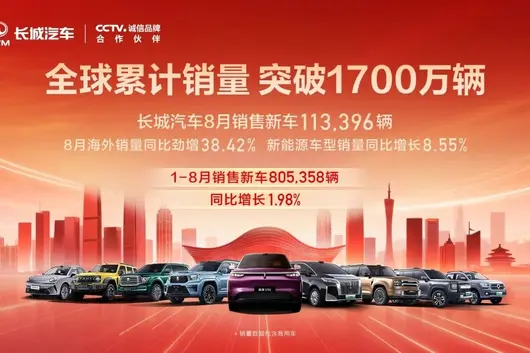
8 月嘅長城汽車,給人嘅第一印象唔係賣咗幾多架車,而係上市咗幾款車。
H10、H9 力魂版、魏牌 V8X、歐拉 5GT、歐拉 5 運動款、商用炮 Hi4-T 飛手版、乘用炮 Hi4-T 黑武士版……粗略數一數,單月內完成上市或開啟預訂嘅新車接近十款,車價由 7 萬幾一路覆蓋到 22 萬以上。呢種投放密度,喺自主品牌入面並唔常見。

最終嘅銷量數字係 113,396 輛,環比增長 4.93%。呢個成績放喺車市整體環境入面睇,算係穩健,但講唔上驚艷。
海外銷量同比增長 38.42%,係所有維度入面最亮眼嘅一個。長城皮卡 8 月賣咗 12,288 輛,其中海外就佔咗 6,518 輛,超過一半。呢個細節好能說明問題:長城嘅出海已經再唔係"將國內賣唔動嘅車運出去",而係喺部分品類上形成咗海外市場獨立嘅需求支撐。印尼車展上歐拉 5 首次亮相、坦克柴油版登場,歐拉 5 登陸智利,巴基斯坦搞試乘試駕,澳大利亞交付第 25 萬名車主——一個月內在四個大洲同時有動作,呢種節奏同幾年前嘅"出口貿易"已經唔係一回事。

但海外高增長嘅另一面,係國內市場嘅增速並唔快。1 至 8 月累計同比增長 1.98%,呢個數字喺今年自主品牌普遍兩位數增長嘅大背景之下,顯得有啲保守。哈弗作為基本盤,8 月環比增長 15.44% 至 64,960 輛,很大程度上得益於 H10 上市首月就交付咗 10,178 輛。

新能源車型 8 月同比增長 8.55%,呢個增速放喺行業入面只能算中規中矩。長城嘅新能源路線一直比較特別——佢沒有 All in 純電,而係以 Hi4 混動技術為核心,把混動塞入咗越野、皮卡呢啲傳統燃油優勢品類。坦克 400 新能源拿到插混車型一年保值率第一,坦克 500 新能源拿到三年保值率第一,魏牌高山拿到 1 至 7 月國內新能源 MPV 累計銷量冠軍。呢啲細分領域嘅冠軍說明,長城喺"越野 + 新能源""MPV+ 新能源"嘅交叉地帶確係搵到咗位。

歐拉係另一個變數。8 月同比增長 110.95% 至 11,018 輛,係所有品牌入面增速最快嘅。歐拉 5 系列喺成都車展上備受關注,5GT 同運動款隨後上市,起售價分別壓到 8.98 萬同 7.18 萬。呢個價格帶意味著歐拉正喺重新殺入入門級新能源市場,而呢個市場正正係今年價格戰最激烈嘅區間。

成都車展上,長城六大品牌集體亮相,仲搞咗一場"巴蜀長城一家親"嘅用戶活動。呢種"由交易到交心"嘅說法,呢兩年幾乎每個自主品牌都喺度講。用戶運營當然重要,但喺產品同質化越來越嚴重嘅當下,真正能留住用戶嘅,都係產品本身嘅競爭力同售後體驗。

長城汽車而家嘅處境,可以用一句說話概括:海外喺加速,新能源喺搵路,國內喺守盤,產品喺密集投放。1700 萬輛嘅累計銷量係歷史底蘊,但歷史底蘊不能直接轉化為當下嘅市場份額。8 月嘅新車潮好似係一次集中發力——將儲備嘅產品一次性推到市場上,用投放密度換取聲量同銷量。

接下來幾個月先至係真正嘅考驗。新車熱度退去之後,H10 有無能力穩住月銷過萬,V8X 有無能力喺 20 萬以上市場撕開一道口子,歐拉 5 系列有無能力喺 7 至 9 萬嘅紅海入面生存落嚟,海外 38% 嘅增速有無能力維持——呢啲問題嘅答案,比 8 月呢張銷量成績單更重要。

長城唔缺產品,都唔缺技術儲備。缺嘅係,喺一個已經卷到極致嘅市場入面,把產品力真正轉化為持續增長嘅能力。


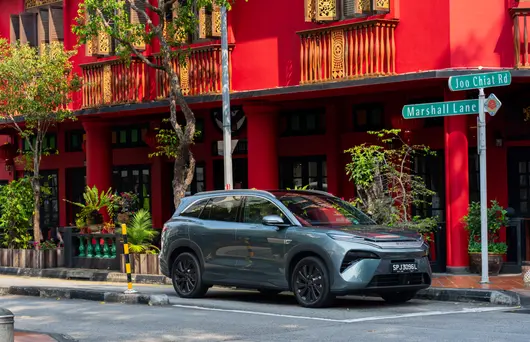
Recently, a 10,000-li journey retracing the Silk Road concluded perfectly in Singapore.
The "2026 Silk Road 10,000-Li Journey · Road of Enlightenment", with BYD as the full journey travel partner, lasted 33 days, covered over 10,000 kilometers, crossed six provinces in China, passed through Thailand and Malaysia, and finally arrived in Singapore.

On the 10,000-Li Silk Road, a new energy vehicle fleet composed of five series and four brands of BYD Dynasty, Ocean, Denza, Fangchengbao, and Yangwang completed driving in multiple scenarios such as highways, mountainous areas, and cities. The two innovative technologies of flash charging and Divine Eye assisted driving system also withstood the long-distance test.
From Xi'an to Singapore, the hardship of camel caravan post station supply on the ancient Silk Road has evolved into today's comfortable journey empowered by technology.

For example, in Singapore, as of July 2026, BYD has ranked first in passenger car sales across all brands in Singapore for 19 consecutive months. In the first seven months of this year, BYD's passenger car market share in Singapore reached 24.7%, and the pure electric market share reached 40.3%.
It should be noted that the cost of car ownership in Singapore is extremely high, and consumers are more cautious when choosing models. Under such market conditions, BYD models maintain relatively high overall pricing, yet still continue to maintain good sales performance.

In 2026, BYD's overseas sales also continued to maintain high growth. Cumulative overseas sales from January to July exceeded 970,000 units, a year-on-year increase of about 76%; overseas sales in July were 179,800 units, a year-on-year increase of 124.3%. As of now, BYD new energy vehicles have entered over 120 countries and regions worldwide.
With green energy accompanying the long journey on the Silk Road, BYD's new energy vehicles are on the journey of helping upgrade global green transportation.

喺馬來西亞嘅 SUV 市場,好多買家喺揀車嘅時候都會拿本田 HR-V 同馬自達 CX-5 來做比較。這兩款車喺價位同定位上都好相近,今日我哋就從多個方面做一個詳細嘅比較,幫你省返做功課嘅時間。
本田 HR-V 喺馬來西亞嘅 OTR 售價係 RM 115,900 - 143,900,一共有 4 個型號,包括 2026 e:HEV 1.5L RS(RM 143,900)、2026 1.5T V(RM 137,900)、2026 1.5T E(RM 130,900)等。
馬自達 CX-5 喺馬來西亞嘅 OTR 售價係 RM 135,469 - 166,760,一共有 3 個型號,包括 2025 2.0L AT 35th Anniversary(RM 316,154)、2025 2.0L AT(RM 296,154)、2025 2.0L MT(RM 294,154)等。
由價錢嚟睇,本田 HR-V 嘅起步價確實比馬自達 CX-5 平咗 RM 19,569。如果你預算有限,本田嘅入門版已經可以滿足日常需要。但都要注意,平嗰幾千蚊,可能喺配備上會有取捨,具體要睇你嘅需求。

本田 HR-V 嘅安全評級係 5★ (ASEAN NCAP),主動安全系統包括本田 SENSING (ACC, CMBS, LKAS, RDM)。
馬自達 CX-5 嘅安全評級係 5★ (ASEAN NCAP),主動安全系統包括。
兩款車嘅安全評級一樣,喺呢個級別入面安全配備都算好齊全。而家嘅新車安全性都唔差,唔使太擔心呢一點。

本田 HR-V 採用人 FWD 驅動方式。
馬自達 CX-5 採用人 FWD 驅動方式。
兩款車嘅驅動方式一樣,都係 FWD,日常駕駛感受唔會有太大分別。

本田 HR-V 同馬自達 CX-5 都係馬來西亞市場嘅主流選擇,適合家庭用、日常通勤。如果你更睇重品牌口碑同二手價,可以優先考慮口碑更好嗰一款;如果你更在意性價比同配備,就揀配備更豐富嗰款。最終都係建議兩款都去試駕,親自體驗先係最重要嘅。
總括嚟講,本田 HR-V 同馬自達 CX-5 都係馬來西亞市場幾好嘅車款。揀邊一輛,關鍵始終都係睇你嘅個人需要同預算。建議大家做足功課,多比較幾間車行嘅報價,再去試駕做最終決定。買車係件大事,花少少時間做功課絕對唔會錯。


喺馬來西亞嘅 SUV 市場,好多買家喺揀車嘅時候都會拿 Honda HR-V 同 Toyota Fortuner 嚟做比較。這兩款車喺價位同定位上都幾近,今日我就從多個方面做一個詳細嘅比較,幫你省咗做功課嘅時間。
Honda HR-V 喺馬來西亞嘅 OTR 售價係 RM 115,900 - 143,900,一共有 4 個版本,包括 2026 e:HEV 1.5L RS(RM 143,900)、2026 1.5T V(RM 137,900)、2026 1.5T E(RM 130,900) 等。
Toyota Fortuner 喺馬來西亞嘅 OTR 售價係 RM 195,880 - 241,880,一共有 3 個版本,包括 2024 2.8T VRZ Diesel(RM 241,880)、2024 2.7L SRZ Petrol(RM 202,880)、2024 2.4L Standard Diesel(RM 195,880) 等。
從價錢嚟睇,Honda HR-V 嘅起步價確實比 Toyota Fortuner 平咗 RM 79,980。如果你預算有限,Honda 嘅入門版已經可以滿足日常需求。但都留意下,平嗰幾千蚊,可能喺配備上會有取捨,具體要睇你嘅需求。
Honda HR-V 嘅安全評級係 5★ (ASEAN NCAP),主動安全系統包括 Honda SENSING (ACC, CMBS, LKAS, RDM)。
Toyota Fortuner 嘅安全評級係 5★ (ASEAN NCAP),主動安全系統包括。
兩款車嘅安全評級一樣,喺呢個級別裡面安全配備都算俾得好齊全。而家嘅新車安全性都不差,唔使太擔心這一點。
Honda HR-V 保修 5 年/無限里程,保養間隔 每 10,000km 或 6 個月。
Toyota Fortuner 保修 5 年/無限里程,保養間隔 每 10,000km 或 6 個月。
兩款車嘅保養保修條件一樣,呢方面唔使糾結。實際保養成本仲要睇品牌嘅服務網絡同零件價格,建議去車友群問下真實車主嘅經驗。
Honda HR-V 同 Toyota Fortuner 都係馬來西亞市場嘅主流選擇,適合家庭使用、日常通勤。如果你更看重品牌口碑同二手價,可以優先考慮口碑更好嗰一款;如果你更在意性價比同配備,那就揀配置更豐富嗰款。最終都係建議兩款都去試駕,親身體驗先係最重要嘅。
總體嚟講,Honda HR-V 同 Toyota Fortuner 都係馬來西亞市場幾唔錯嘅車型。揀邊輛,關鍵都係要睇你嘅個人需求同預算。建議大家做好功課,多比較幾間車行嘅報價,先去試駕先做最終決定。買車係件大事,花少少時間做功課絕對唔會錯。


Recently, impressive data emerged from the Central Asian automotive market. The latest sales report released by the Kazakhstan Auto Alliance shows that new car sales in the local area reached 21,860 units in June 2026. Chinese brand sales totaled 12,276 units, commanding a market share as high as 56.2%, officially taking hold of half of the local car market.
The car market overall showed steady growth in July, with the market share of Chinese brands falling back to 48.3%. It continues to firmly hold the first tier, completely rewriting the pattern where Korean brands had long dominated the local market.
In the Kazakhstan market, Changan performed the most outstandingly, with 2,565 units sold in June and 2,456 units in July, ranking fourth in local brand sales for two consecutive months. SUV models such as CS35 Max and CS55 Plus became household bestsellers locally.
Chery and Geely followed closely, establishing their footing with the Tiggo series and Galaxy series products respectively. Jetour, JAC, and Haval also secured a niche with high cost-performance household SUVs. New energy brands like BYD and Li Auto are laying out plans simultaneously, gradually opening up the electrification market space.
Multiple automakers have launched localized assembly cooperation. Li Auto reached a strategic partnership with a leading local automotive enterprise, achieving localized production at the Kostanay plant to further reduce tariff costs and consolidate market advantages.
It is not just the Central Asian market; Chinese cars have achieved strong breakthroughs in multiple regional markets globally. The Russian market quickly recovered after a short-term adjustment. From January to July 2026, China exported 542,900 cars to Russia, a year-on-year increase of 136%, returning to being the number one destination for Chinese car exports.
Currently, the five major Chinese brands Chery, Great Wall, Geely, Changan, and GAC firmly rank in the top ten Russian sales, with an overall market share exceeding 45%. The Great Wall Tula factory and Geely Belarus base continue stable mass production, effectively countering local policy barriers and filling the market gaps left after the exit of European, American, Japanese, and Korean automotive enterprises.
The Southeast Asian market has become the core position for Chinese new energy vehicles. In Thailand's pure electric car market, the market share of Chinese brands exceeds 86%. Models such as BYD, Neta, and MG occupy the top of the local new energy sales list. Taxis and official vehicles are purchasing Chinese new energy vehicles on a large scale.

The Brazilian market also performed brilliantly. From January to July, China exported 427,700 cars to Brazil, a year-on-year increase of 144%. New energy models accounted for more than 70%. The BYD Dolphin won the local new energy sales champion. Chinese brands as a whole occupy more than 77% of the Brazilian pure electric market, gradually breaking through the monopoly barriers of traditional joint venture brands.
In Australia, Oceania, Chinese brands ended the 28-year market monopoly of Japanese brands, raising the overall market share to 25%, becoming the mainstream choice for local families purchasing cars. In Mexico's new energy market, the share of Chinese electric vehicles is close to 90%, with orders continuously in high demand.
From fuel vehicles to new energy models, from developing countries to developed markets, Chinese cars rely on complete three-electric technology, high cost-performance products, and mature after-sales systems. They are gradually getting rid of the low-price label and winning the recognition of global consumers with hard-core product power.
With the overseas mode shifting from whole vehicle export to localized factory construction and localized operations, Chinese cars are shifting from simple product output to the global output of technology, production capacity, and service systems.
Against the industry background of monthly exports breaking one million vehicles for two consecutive months, the pattern of overseas markets blooming in multiple points not only provides stable growth momentum for the domestic car market but also continuously reshapes the competitive landscape of the century-old global automotive industry.

Chery has ranked first in exports of Chinese brand passenger cars for 23 consecutive years, with global users exceeding 20 million and products sold to over 130 overseas markets. These figures are well-known throughout the industry, but few truly pause to ask: Where does Chery's global competitiveness actually stem from? Is it solely relying on price advantages, or dependent on the occasional success of a hit model? When the industry is accustomed to measuring a car company's globalization level with sales and market share, it often overlooks a more fundamental question — what car-making logic ultimately supports these numbers?

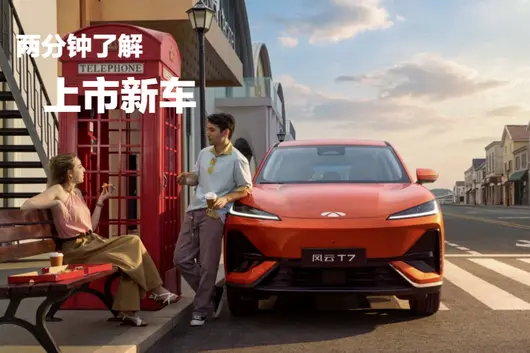
The launch of the Fengyun T7 conveniently offers a rare anatomical sample. This global quality pure electric SUV, officially launched on August 26 with a starting price of 97,900 yuan (exclusive swap price starting at 94,900 yuan), on the surface appears to be a normal release of a 100,000-yuan class family car, but if we dissect it layer by layer along its R&D, verification, standards, and delivery chain, we find it essentially condenses the entirety of Chery's twenty-plus years of globalization accumulation methodology. The Fengyun T7 is not just a result of Chery going global, but a complete expression of how Chery understands "global car-making".
Adherence to underlying technical logic is the first cornerstone of this methodology.
The starting point of the Fengyun T7's R&D is extremely different. It did not take the shortcut common in the industry of "domestic finalization then modification for export", but has been targeted at the global market from the first line of code. The 3-year R&D cycle stands out as notably restrained under the industry's "nothing beats speed" involution rhythm — while many brands launch a new car in 18 months or even less, Chery chose to spend 3 years polishing a 100,000-yuan class product. This "slowness" is not inefficiency, but stems from respect for underlying technical logic.

This respect is reflected in every detail of the powertrain. The Fengyun T7 is standard-equipped across the range with 65.05kWh Rhinoceros batteries, CLTC range 600km, actual measured range reaches 681.6km, which users call "reverse false labeling"; 30%-80% fast charging takes only 20 minutes, the battery has 2,500 high durability cycle life, service life up to 15 years. At the electric drive level, the 12-in-1 Kunpeng Super Power Electric Drive has a peak power of 178kW, overall efficiency up to 90.8%, electric drive speed reaches 22,000rpm, yet operating noise is as low as 73dB. To control energy consumption, the Fengyun T7 adopted 14 low aerodynamic drag designs, cumulatively reducing 51 drag counts, finally achieving a 0.286 Cd ultra-low drag coefficient, leading the class. The commonality of these configurations lies in: they are not ad-hoc solutions patched together for one specific car, but core technologies that Chery has long invested in and independently mastered. When underlying technology is held in your own hands, product definition will not be subject to others, and globalization will not degenerate into "working with what is available".
The extreme pursuit of quality constitutes the second layer of the methodology.
If R&D determines the product's upper limit, then verification determines the product's lower limit. The investment in the verification link for the Fengyun T7 has reached a rare degree in the industry. The cumulative test mileage of the whole vehicle exceeds 6 million kilometers, durability special test reaches 1.45 million kilometers, 81 durability test vehicles are deployed for synchronous road tests. It completed real-vehicle verification in 21 countries globally, passing 212 regulatory certifications. Behind these data is a clear principle: all verifications are global real-vehicle road tests, rather than laboratory simulation data.

More worthy of scrutiny is the breadth and granularity of verification. The Fengyun T7 covers the global extreme temperature range of -40°C to 55°C, adapting to 95% of road types. High-speed humps in Brazil, cobblestone roads in Mexico, large curvature curves on German highways, and non-paved muddy roads in South Africa, every road condition is included in the test range. In special environment verification, the Fengyun T7 specially designed 500mm off-road wading capability for the Southeast Asia rainy season, optimized playback equipment 40°C overheating protection for Middle East high-temperature sun exposure, controlled filter element odor residue for Indonesian high-humidity environment, strengthened wiper life for Siberian rain and snow, optimized interior lighting and charging backlight for Nordic extreme day and night, performed multiple protections for battery connectors for Brazilian gravel roads, and conducted durability noise special verification for Mexican cobblestone roads. In high-frequency usage scenarios, wiper durability was strengthened, the window lifter underwent 20,000 durability design. In braking and steering special tests, 10,000+ braking specials, 19,000+ full turn steering, 400+ chassis impacts were completed, and 100% issue closure was achieved.

The deep logic of this verification system is to move "forged through rigorous testing" forward to the R&D stage, so users no longer hit bumps during use. This is exactly the concretization of "slow work makes a good car": others verify quality with sales, Chery verifies quality with mileage. The chassis tuning link also follows this logic — an international team led by a former Maserati chassis tuning expert conducts special precise tuning for the ultra-high-speed section above 160 km/h, the independently designed dual-axis K&C test bench invested 20 million yuan, with 26 years of design foundation, combined with 26 channels 720 hours of all-road condition enhanced simulation. This obsession with quality is not marketing rhetoric, but substantial engineering investment.

Respect for global rules is the most easily overlooked, yet most strategically valuable link in the methodology.
The Fengyun T7 is developed according to the 2026 edition E-NCAP five-star safety standards, pre-researching global regulations two years in advance. This detail is worth savoring repeatedly: when many Chinese brands are still using domestic regulations as the upper limit, Chery has already designed based on Europe's future highest safety standards. This "forward compliance" is not redundant, but a ticket to enter high-regulation markets — the Fengyun T7 is about to enter the European market, the homologous model Lepas L6 is already launched in South Africa and Thailand, landing in Indonesia in August, entering the EU in September, and covering Australia and New Zealand, UK, Israel, and Malaysia in October. This clear launch rhythm is built on the foundation of solid and in-place preliminary regulation pre-research.
But respecting global rules goes far beyond "meeting standards". Chery conducted in-depth user research for 15 typical national scenarios, sorting out over 80 local habit adaptation items. Thailand right-hand drive users prefer a heavier steering feel, so steering force tuning is increased by one level; Indonesian bumpy road sections easily lack a sense of security, so steering feel is weighted and return quality is optimized; Southeast Asia, South Africa, Australia and New Zealand under strong light environments, the steering wheel and center console use low-reflection materials, the roof center is equipped with an easy-to-take eyeglass box to facilitate users who frequently wear sunglasses; Turkey, Israel users prefer physical buttons, so high-frequency functions retained hard switches; European users are used to parking the front of the car in the garage, the vehicle will automatically display the front camera view at a distance of 70 cm. These seemingly trivial details are exactly the essential difference between a "global car" and an "export car" — the former integrates the needs of different markets into product definition in advance, while the latter adapts all markets with one version. The Fengyun T7 simultaneously adapts to the car usage needs of 210 countries and regions globally, relying not on scale, but on this extremely fine-grained localization capability.

Positive feedback from the global market verified the effectiveness of this logic. The homologous model Lepas L6 appeared at the Milan Design Week and received international praise, the Fengyun T7 received authoritative reports from the Associated Press, and at the Chengdu Auto Show, foreign car viewing groups viewed cars on-site and placed orders. Domestically, the Fengyun T7 pre-sale 72-hour major orders locked 10,937 units, 9-day pre-sale broke 16,787 units; the delivery ceremony was held on the launch day, a batch of foreign users who have long lived in China became the first batch of car owners, truly achieving delivery upon launch. These facts jointly point to a conclusion: the global quality of the Fengyun T7 is not a marketing slogan, but has been verified by global users voting with actual choices.
Where does Chery's global competitiveness actually come from? The answer given by the Fengyun T7 is clear and complete: it comes from long-term adherence to underlying technical logic, keeping core capabilities always in one's own hands; comes from the extreme pursuit of quality, using million-kilometer-level verification to back up the product; comes from awe and respect for global rules, writing the needs of different markets into the product DNA in advance. These three stacked together form a system capability that is difficult to replicate quickly.

This competitiveness is by no means the work of a moment. When a 100,000-yuan class Fengyun T7 is willing to spend 3 years on R&D, run 6 million kilometers for verification, and adapt item by item for over 80 local habits, what it represents is no longer the success or failure of a single car, but a concentrated release of a company's twenty-plus years of globalization accumulation. Behind Chery's 23 consecutive years of export ranking first, there are countless products like the Fengyun T7, built step by step with the same standards, the same patience, and the same obsession. The endpoint of globalization is never the sales figures themselves, but when a Chinese car drives on Brazilian gravel roads, German unrestricted highways, or Southeast Asian rainstorm streets, the "steady reliability" that users can feel. The Fengyun T7 has done it, and Chery has done it.
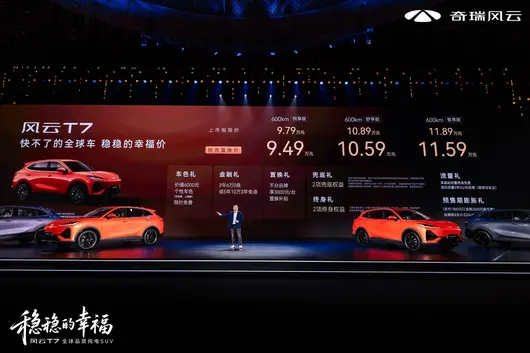

8 月 26 日,北京雁棲湖國際會展中心,一場以「穩穩嘅幸福」為主題嘅發布會喺度舉行。全新風雲 T7 正式上市,三款型號,官方指導價 9.79 萬—11.89 萬蚊,搶先換購價 9.49 萬—11.59 萬蚊。

喺新能源行業深陷「唯快不破」內捲漩渦嘅當下,奇瑞卻反其道而行——用長達 3 年嘅研發週期,打磨一台 10 萬級嘅純電 SUV。
風雲 T7 最大嘅特殊性,在於佢唔係「中國特供」,而係一台由源頭定義嘅原生全球車。同源車型 Lepas L6 已率先喺南非、泰國完成上市交付,8 月登陸印尼,9 月進入歐盟,10 月覆蓋澳新、英國、以色列、馬來西亞等地。喺正式同中國消費者見面之前,呢台車已經喺海外走完咗上市、交付、真實用戶使用嘅全流程考驗。
呢種「海外先行、國內後發」嘅路徑,喺 10 萬級純電 SUV 入面幾乎搵唔到第二間。

三年研發週期,放喺今日追求「快迭代、快落地」嘅行業環境入面,堪稱一種「奢侈」。奇瑞動用咗全球「1+7+N」研發體系,調動全球十大設計中心百幾名設計師協同參與。項目前期,團隊深入 15 個代表性國家,完成 5000 位全球用戶嘅深度調研。同源車型 Lepas L6 亮相米蘭設計週時,收獲嘅評價唔係「驚艷」,而係「耐睇」——正正係全球審美共識下嘅結果。
安全層面,風雲 T7 嘅車身結構、電池防護、主動安全系統全部對標 2026 版 E-NCAP 五星安全標準開發,比目前市場大多數同價級車型整整領先咗一個安全標準週期。整車環境適應能力覆蓋 -40℃至 55℃極端區間,北歐寒冬嘅雙源製熱、熱帶雨季 500mm 涉水能力,全部寫入基礎工程指標。

風雲 T7 嘅驗證體系,可能係同級中最「任性」嘅存在。81 台專屬耐久測試車同步路試,整車累計測試里程突破 600 萬公里,耐久專項實測 145 萬公里。測試足跡遍布歐盟、澳新、中東、南非、俄羅斯、墨西哥、巴西等 100 多個極限路況環境。
巴西嘅高減速坎、墨西哥嘅鵝卵石路、德國高速嘅大曲率彎道、南非嘅非鋪裝泥路、東南亞雨季嘅積水路段、中東嘅高溫暴曬——全部係真實道路實測,而非實驗室模擬數據。正正如官方所言:「所有品質驗證均來自真實道路。」
喺國內正式亮相前,測試車早已頻繁現身全球各地。美聯社曾對呢套全球驗證體系給予正面評價,成都車展現場外籍觀展團隊亦對風雲 T7 表現出濃厚興趣。奇瑞連續 23 年位居中國品牌乘用車出口第一,全球用戶突破 2000 萬,多年積累嘅全球化經驗全部反哺到風雲 T7 嘅產品力之上。

9.49 萬蚊嘅搶先換購價,係風雲 T7 投向市場最直接嘅信號。但比價格更值得關注嘅,係背後嘅嘢:三年研發、全球驗證、E-NCAP 前瞻標準、百幾種極限路況實測。
當整個行業都喺追逐「更快」,奇瑞用風雲 T7 畀咗出另一種答案——一台面向全球市場嘅靠譜好車,急唔嚟,快唔嚟。10 萬級純電 SUV 市場從不係缺平嘅產品,缺嘅係「平但可靠」嘅選擇。當一台車能喺巴西嘅減速坎上唔鬆垮、喺中東嘅高溫入面唔衰減、喺德國嘅彎道入面唔飄忽,佢喺中國家庭嘅日常通勤入面,就唔會讓人失望。

In the Malaysian SUV market, many buyers will compare Honda HR-V and Toyota Yaris Cross when choosing a car. These two models are quite close in pricing and positioning, so today we will make a detailed comparison from multiple aspects to help you save time on research.
The OTR price of Honda HR-V in Malaysia is RM 115,900 - 143,900, with a total of 4 versions, including 2026 e:HEV 1.5L RS (RM 143,900), 2026 1.5T V (RM 137,900), 2026 1.5T E (RM 130,900), etc.
The OTR price of Toyota Yaris Cross in Malaysia is RM 99,900 - 109,900, with a total of 2 versions, including 2026 1.5L Standard (RM 99,900), 2026 HEV 1.5L Standard (RM 109,900), etc.
Looking at the price, the starting price of Toyota Yaris Cross is RM 16,000 cheaper than Honda HR-V. Honestly, in this price range, a difference of a few thousand is not big, the key is to look at overall cost-effectiveness and long-term usage costs.
Honda HR-V is equipped with a 1.5L Turbo engine, 140 hp. Official fuel consumption is 7.0 L/100km.
Toyota Yaris Cross is equipped with a 1.5L 4-cyl engine, 105 hp. Official fuel consumption is 6.0 L/100km.
In terms of power, the 1.5L Turbo on Honda HR-V has 35 horsepower more than the 1.5L 4-cyl on Toyota Yaris Cross, giving more confidence in mid-range acceleration, especially when overtaking on highways. However, the fuel consumption of Toyota Yaris Cross might be more favorable, and the difference for daily city commuting will not be too big.
Honda HR-V has a warranty of 5 years/unlimited mileage, maintenance interval every 10,000km or 6 months.
Toyota Yaris Cross has a warranty of 5 years/unlimited mileage, maintenance interval every 10,000km or 6 months.
Both cars have the same warranty conditions, no need to worry about this. Actual maintenance costs also depend on the brand's service network and parts prices, recommend asking real owners in car clubs for their experiences.
Honda HR-V and Toyota Yaris Cross are both mainstream choices in the Malaysian market, suitable for family use, daily commuting. If you value brand reputation and resale value more, you can prioritize the one with a better reputation; if you care more about cost-effectiveness and features, then choose the one with richer configurations. Finally, it is recommended to test drive both, personal experience is the most important.

Overall, Honda HR-V and Toyota Yaris Cross are both very good models in the Malaysian market. Which one to choose depends mainly on your personal needs and budget. It is recommended to do your homework well, compare quotes from more car dealers, and then test drive to make the final decision. Buying a car is a big matter, spending some time on research will absolutely not go wrong.


