首頁oujiang

搜尋歷史
熱門搜尋
經銷商登入 / 註冊

In the Malaysian SUV market, many buyers compare Proton X90 and Honda HR-V when choosing a car. These two cars are quite close in price and positioning. Today we will make a detailed comparison from multiple aspects to help you save time on research.
The OTR selling price of Proton X90 in Malaysia is RM 106,800 - 122,800, with a total of 4 versions, including 2026 1.5T Prime X (RM 122,800), 2026 1.5T Prime (RM 116,800), 2026 1.5T Lite (RM 106,800), etc.
The OTR selling price of Honda HR-V in Malaysia is RM 115,900 - 143,900, with a total of 4 versions, including 2026 e:HEV 1.5L RS (RM 143,900), 2026 1.5T V (RM 137,900), 2026 1.5T E (RM 130,900), etc.
From a price perspective, the starting price of Proton X90 is indeed RM 9,100 cheaper than Honda HR-V. If your budget is limited, Proton's entry-level version can already meet daily needs. But note that the few thousand dollars difference might involve trade-offs in features, depending on your specific needs.

Proton X90's safety rating is 5★ (ASEAN NCAP), active safety systems include ADAS (ACC, AEB, LKA, LDA, BSM, RCTA).
Honda HR-V's safety rating is 5★ (ASEAN NCAP), active safety systems include Honda SENSING (ACC, CMBS, LKAS, RDM).
Both cars have the same safety rating. In this class, safety features are quite complete. New cars nowadays generally have good safety, so no need to worry too much about this point.

Proton X90 uses FWD drive system.
Honda HR-V uses FWD drive system.
Both cars have the same drive system, both are FWD, there won't be much difference in daily driving feel.

Proton X90 warranty 5 years/150,000km, maintenance interval every 10,000km or 6 months.
Honda HR-V warranty 5 years/unlimited mileage, maintenance interval every 10,000km or 6 months.

Proton X90 and Honda HR-V are both mainstream choices in the Malaysian market, suitable for family use and daily commuting. If you value brand reputation and resale value more, you can prioritize the one with better reputation; if you care more about value for money and features, choose the one with richer configuration. Ultimately, it is recommended to test drive both, experiencing it firsthand is the most important.
Overall, Proton X90 and Honda HR-V are both very good models in the Malaysian market. Which one to choose depends mainly on your personal needs and budget. We suggest doing your research, comparing quotes from several dealers, and then test driving to make the final decision. Buying a car is a major decision, taking time to research will never be wrong.

喺馬來西亞嘅 SUV 市場,好多買家喺揀車嗰陣都會拿 Proton X50 同 Subaru Crosstrek 嚟做比較。呢兩款車喺價位同定位上都幾相近,今日我哋就從多個方面做個詳細對比,幫你省返做足功課嘅時間。
Proton X50 喺馬來西亞嘅 OTR 售價係 RM 89,800 至 113,300,合共 4 個版本,包括 1.5T Executive(RM 89,800)、1.5T Premium(RM 101,800)、1.5T Flagship(RM 113,300) 等。
Subaru Crosstrek 喺馬來西亞嘅 OTR 售價係 RM 145,000 至 160,000,合共 1 個版本,包括 2.0L e-Boxer(RM 150,000) 等。
由價錢睇,Proton X50 嘅入門價確實比 Subaru Crosstrek 平咗 RM 55,200。如果你預算有限,Proton 嘅入門版已經可以滿足日常需要。但亦要小心,平嗰幾千蚊,可能喺配備上要有取舍,具體睇你嘅需要。

Proton X50 嘅安全評級係 5★ (ASEAN NCAP),主動安全系統包括 ADAS (ACC, AEB, LKA, LDA, BSM, RCTA)。
Subaru Crosstrek 嘅安全評級係 5★ (Euro NCAP),主動安全系統包括 EyeSight。
安全配備方面,兩款車都拿到唔錯嘅評級。不過 Proton X50 嘅 ADAS (ACC, AEB, LKA, LDA, BSM, RCTA) 同 Subaru Crosstrek 嘅 EyeSight 喺功能上有少少差異,如果你比較睇重主動安全嘅話,可以仔細對比下兩者嘅功能列表。

Proton X50 採用 4WD 驅動方式。
Subaru Crosstrek 採用 FWD 驅動方式。
Proton 嘅 4WD 同 Subaru 嘅 FWD 喺操控上有唔同感受,建議試駕對比。

Proton X50 保修 5 年/150,000km,保養間隔係每 10,000km 或 6 個月。
Subaru Crosstrek 保修 3 年/100,000km,保養間隔係每 10,000km 或 6 個月。

Proton X50 同 Subaru Crosstrek 都係馬來西亞市場嘅主流選擇,適合家用、日常通勤。如果你更睇重品牌聲譽同二手價,可以優先考慮聲譽更好嗰款;如果你更在意性價比同配備,嗰就揀配置更豐富嗰款。最後依然建議兩款都去試駕,親自體驗先至最重要。

總嚟講,Proton X50 同 Subaru Crosstrek 都係馬來西亞市場嘅幾唔錯車型。揀邊輛,關鍵仲係睇你嘅個人需要同預算。建議大家做足功課,多比較幾間車行嘅報價,再去試駕做最後決定。買車係件大事,花少少時間做功課絕對唔會錯。


In Malaysia's SUV market, many buyers compare Proton X50 and Hyundai Tucson when choosing a car. These two cars are quite close in price and positioning. Today we will make a detailed comparison from multiple aspects to help you save time doing research.
The OTR selling price of Proton X50 in Malaysia is RM 89,800 - 113,300, with a total of 4 versions, including 1.5T Executive (RM 89,800), 1.5T Premium (RM 101,800), 1.5T Flagship (RM 113,300), etc.
The OTR selling price of Hyundai Tucson in Malaysia is RM 143,888 - 197,888, with a total of 5 versions, including 2025 HEV 1.6T AT 2WD Prestige (RM 197,888), 2025 1.6T DCT 4WD Prestige (RM 186,888), 2025 1.6T DCT 2WD Prime (RM 164,888), etc.
In terms of price, the starting price of Proton X50 is indeed RM 54,088 cheaper than Hyundai Tucson. If your budget is limited, Proton's entry-level version is sufficient for daily needs. However, be aware that the several thousand cheaper might involve compromises on features, depending on your needs.
Proton X50 is equipped with a 1.5L 4-cyl, 105 hp power. Official fuel consumption 6.0 L/100km.
Hyundai Tucson is equipped with a 1.5L Turbo, 140 hp power. Official fuel consumption 7.0 L/100km.
In terms of power, Hyundai Tucson's 1.5L Turbo has 35 more horsepower than Proton X50's 1.5L 4-cyl. However, for daily city driving, the power of both cars is sufficient and won't feel lacking.
Proton X50 body length 4400 mm, trunk 400 L.
Hyundai Tucson body length 4400 mm, trunk 400 L.
The dimensions of both cars are almost identical, with little difference in interior space. Cars in this class are fully sufficient for daily use.
Proton X50 uses 4WD drive mode.
Hyundai Tucson uses FWD drive mode.
Proton's 4WD and Hyundai's FWD will feel different in handling, a test drive comparison is recommended.

Overall, Proton X50 and Hyundai Tucson are both very good models in the Malaysian market. Which one to choose depends mainly on your personal needs and budget. We suggest doing your homework, comparing quotes from several dealerships, and then test driving to make the final decision. Buying a car is a big matter, taking time to do your homework will never go wrong.

喺马来西亚嘅 SUV 市場,好多買家喺揀車嗰陣都會拿 MG MG HS 同 Kia Sportage 做比較。呢兩款車喺價位同定位上都幾接近嘅,今日我哋就從多個方面做一個詳細嘅對比,幫你省咗做功課嘅時間。
MG MG HS 喺马来西亚嘅 OTR 售價係 RM 130,450 - 146,450,合共有 2 個版本,包括 1.5L Standard(RM 105,000)、1.5L Executive(RM 115,000)等。
Kia Sportage 喺马来西亚嘅 OTR 售價係 RM 129,639 - 179,320,合共有 4 個版本,包括 2025 1.6T DCT 4WD High(RM 179,320)、2025 1.6T DCT 2WD High(RM 159,320)、2025 2.0L AT 2WD High(RM 139,639)等。
從價錢睇嚟,Kia Sportage 嘅起步價比 MG MG HS 平咗 RM 811。老實講,喺呢個價位段,幾千塊嘅差距其實唔算大,關鍵仲係睇整體嘅性價比同長期使用成本。

MG MG HS 搭載 1.5L Turbo,馬力 140 hp。官方油耗 7.0 L/100km。
Kia Sportage 搭載 1.5L Turbo,馬力 140 hp。官方油耗 7.0 L/100km。
兩款車用嘅係同一套動力系統,日常開起嚟嘅感覺基本無分別。油耗方面都差唔多,唔使太糾結呢一點。
MG MG HS 嘅安全評級係 TBD,主動安全系統包括 Basic。
Kia Sportage 嘅安全評級係 5★ (ASEAN NCAP),主動安全系統包括 Drive Wise。
安全配備方面,兩款車都拿到唔錯嘅評級。不過 MG MG HS 嘅 Basic 同 Kia Sportage 嘅 Drive Wise 喺功能上有些差異,如果你比較睇重主動安全嘅話,可以仔細對比一下佢哋嘅功能列表。

MG MG HS 車身長 4400 mm,行李箱 400 L。
Kia Sportage 車身長 4400 mm,行李箱 400 L。
兩款車嘅尺寸幾乎一樣,車內空間分別唔大。呢個級別嘅車,日常使用完全夠用。
MG MG HS 保養 7 年/150,000km,保養間隔 每 10,000km 或 6 個月。
Kia Sportage 保養 5 年/300,000km,保養間隔 每 10,000km 或 6 個月。
總體嚟講,MG MG HS 同 Kia Sportage 都係马来西亚市場唔錯嘅車型。揀邊一部,關鍵仲係要睇你嘅個人需求同預算。建议大家做好功課,多比較幾間車行嘅報價,再上去試駕先做最終決定。買車係件大事,花啲時間做功課絕對唔會錯。

雄關漫道真如鐵,而今邁步從頭越。
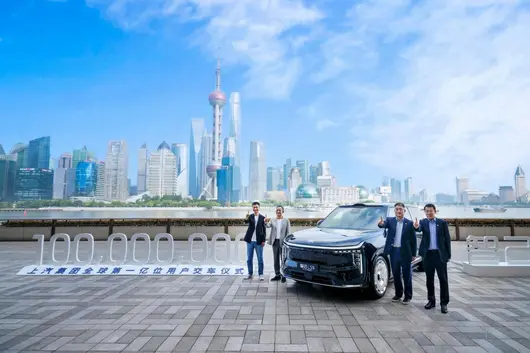
中國汽車產業的發展,在全球眾多品牌均已發展數十至百年的環境下,邁過一道道「雄關」,鋪陳了一條自強發展的道路:5 月底,中國汽車產業即將邁過一個新的里程碑——上汽集團即將向全球第 1 億位用戶交付新車,這既是中國汽車發展史上首家累計產銷突破 1 億輛的里程碑,同時也成為了全球第八個產銷過億的汽車集團。

從「學步」到引領
而今大家引以為傲的「中國智造」,並不是一蹴而就。率先突破 1 億產銷的上汽集團,同時也是中國汽車產業發展史的縮影——中國汽車企業的積澱,都是從最原始的工具起步,以上汽集團為例:從 1955 年上海市內燃機配件製造公司揭牌算起,到 1958 年第一輛鳳凰牌轎車試製成功,依靠的是汽車行業前輩們在最簡陋的弄堂小廠中,用榔頭硬生生敲出來的「手工車」。
就像網絡用語說的一樣,很多東西從視頻上「一看就會,一學就廢」,一輛汽車上萬零部件,僅僅依靠榔頭與角尺肯定是不夠的。至 1983 年,上汽乘着改革開放東風,開創了中國汽車合資合作先河——上海大眾(上汽大眾前身)組裝成功了第一輛國產桑塔納。

當然,現在的上汽大眾,已經在今年步入了合資 2.0 時代,結合了「德系品質與中國智慧」的首款增程旗艦 ID.ERA 9X,上市 5 天即實現了交付 2,326 台新車的「傳奇」。但回頭去看,上汽集團從無到有、從弱到強、從「跟隨學習」到「創新引領」,歷經 70 余年……「過程」往往沒有「結果」爆發時看起來那麼精彩,但沒有「過程」的「精彩」,缺乏積澱會顯得非常單薄。
如今的上汽集團,已構建起覆蓋全產業鏈的全球化業務版圖,整車、零部件、移動出行和服務、金融、國際經營、創新業務各大板塊協同發展,產品和服務遍佈全球 170 多個國家和地區,21 次進入世界 500 強。旗下擁有榮威、MG、智己、尚界、五菱、寶駿、華境、大通、躍進、申沃、紅巖、依維柯等自主品牌,以及大眾、奧迪、AUDI、別克、凱迪拉克等合資品牌,形成乘商並舉、自主合資雙輪驅動、國內海外市場齊頭並進的全域產品佈局。

從領跑國內到着眼全球
陽澄湖大閘蟹的產地離上海很近,所以其實上海人更愛「吃螃蟹」。上汽集團在中國汽車企業之中,就是一個「愛吃螃蟹」的代表——率先合資合作、率先打造自主品牌、率先海外出口、率先建立海外基地……如今的上汽集團,吃了那麼多「螃蟹」之後,已經成為了「吃螃蟹的專家」——創新引領,且一次次開花結果:產銷量一直領跑國內市場,自主品牌形成強力增長極,「走出去」讓全世界認識了中國汽車。
剛剛過去的 4 月,上汽集團實現整車銷量 32.8 萬輛,繼續保持中國車企銷量冠軍,在今年初銷量相對低迷的大行情下,上汽集團前四個月累計銷量達到了 130.2 萬輛,其中自主品牌表現格外突出,上汽乘用車在前三個月銷量暴增 40.4%,智己汽車銷量大漲 96.9%,旗下自主品牌在上汽集團新車銷量佔比達到了 67.6%,成為了主力增長極。銷量領跑的同時,上汽集團 2026 年第一季度毛利率同比大增 4.7% 至 12.83%;營業收入 1,385.2 億元,同比增長 0.61%;歸母淨利潤 30.3 億元,同比增長 0.09%;經營活動產生的現金流量淨額達到了 319.9 億元,同比暴增 699.67%——正向流轉的良性循環,體現出上汽集團當下正處於高質量健康發展狀態。

作為最早「走出去」的中國汽車企業,自 2001 年首次實現乘用車出口,現在的上汽集團產品和服務已經遍佈全球 170 多個國家和地區,海外累計交付超過 700 萬輛。
更重要的是,上汽集團在海外擁有超過 100 個零部件生產基地、超過 3,000 個經銷商網絡,不僅建成了倫敦等 3 大研發創新中心,同時還建立了泰國、印尼、印度、巴基斯坦 4 個生產制造中心,以及中國最大、全球領先的整車物流自營船隊。

2025 年,上汽集團正式發布海外「Glocal 戰略」,即「全球 + 本土」組合戰略,依托全面、深厚的包括固態電池等新能源和智能網聯技術積累,打造全系列的全新海外車型,覆蓋全球主流細分市場,進一步打造全球汽車品牌和本地化體系生態。
上汽集團此舉又在「吃螃蟹」,要讓全世界認識中國汽車,不僅僅在整車出口上再接再厲——2026 年前四個月上汽集團實現整車出口 45.9 萬輛,同比暴漲 50.2%。更要像其他全球品牌一樣,實現全球各重要市場的落地生根。

換個角度,從今年的北京國際車展也不難看出,中國汽車、中國技術,已經在全球引起了整個汽車行業的巨變,曾經「學步」的中國汽車,正是因為有了上汽集團這樣深厚積澱同時又勇於創新的企業,已經在全球汽車產業中嶄露頭角。
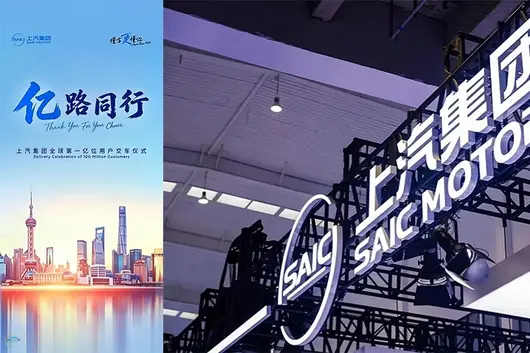
本月底上汽集團的全球第一億輛新車交付,也是採用了全球視角:上海北外灘世界會客廳主會場為原點,直播信號將跨越多個大洲,串聯起國內多城、海外多國的交付現場,屆時上汽集團旗下品牌也將悉數登場,成為這一歷史性時刻的 1/100000000……這是中國汽車產業歷史性的里程碑,更是「而今邁步從頭越」的一個全新開始!
作者:劉雋剛

Milestone Moment
May 28, 2026, Shanghai.
A brand new IM LS9 Hyper slowly drove off the production line. SAIC Motor Group officially completed a historic leap belonging to China's automotive industry — cumulative production and sales broke through 100 million vehicles.

From the successful trial of the first Phoenix sedan in 1958 to the delivery of the 100 millionth vehicle in 2026, spanning 68 years.
This is the first "100-million-vehicle enterprise" in the history of China's automotive industry. The Chinese automotive industry turns a new page from here.
This "100 million" is not a simple accumulation of numbers, but a condensed footnote to the industrialization process of an ancient civilization. According to CPCA data, for every 3 vehicles sold globally, 1 comes from China. Behind these 100 million vehicles lies the complete narrative of China's manufacturing industry enduring hardship and striving for strength for 68 years.
Seventy Years of Storms: From "Phoenix" to "100 Million"
1958, Shanghai.
In an era of scarce resources, Chinese engineers built the first sedan — the Phoenix Brand — by hammering it by hand. Performance indicators were unimaginable, and craftsmanship precision was even rougher, but it was the first step taken by the Chinese people in the automotive field.

For the next 20-plus years, sedans remained an unreachable dream for ordinary Chinese people.
In 1983, the situation changed. SAIC Motor Group and Volkswagen Group established a joint venture. The three words "Santana" were written into the well-known dictionary of Chinese families from then on. In 1983, the first domestically assembled Santana was successfully completed, marking the start of China's automotive "trading market for technology" era.

The 40-year joint venture road planted three seeds for the Chinese automotive industry: a relatively complete supply chain system, a batch of management talent who understand automotive manufacturing, and a generation of Chinese engineers who have seen "Made in Germany". This was the foundation soil for later domestic brands to rise.
In 2009, China's automotive production and sales exceeded the United States for the first time, reaching number one globally. The Chinese car market completed its role transition from "chaser" to "incremental contributor" in the global landscape.
In 2015, SAIC launched the world's first mass-produced internet car, Roewe RX5. The industry pattern changed again — the era of "software-defined vehicles" arrived, and Chinese car companies stood at the forefront of global technology for the first time.
In 2026, SAIC's cumulative production and sales broke 100 million vehicles. In 68 years, the Chinese automotive industry completed the feat of going from 0 to 100 million.

"100 Million" Behind the System Capability
The value of SAIC's 100 million vehicles far exceeds the numbers themselves.
Behind the production and sales scale is a product matrix covering all categories.
From 100,000-level mass market consumption to 400,000-level-plus luxury markets, SAIC covers multiple brands under its banner:
100,000-level: Wuling Starlight L (Plug-in Hybrid)
150,000-level: Roewe D7 DMH (Plug-in Hybrid Energy Consumption 3.9L/100km)
200,000-level: MG Cyberster (All-electric sports car)
300,000-level: IM LS6
400,000-level: IM L7 (Benchmarking BBA executive class)
Overseas Market: MG ranked 1st in European sales for Chinese brands for 11 consecutive years
Full price range coverage, multi-brand synergy, SAIC-GM-Wuling's user mindset of "Build what the people need" together formed the foundation of 100 million vehicles.
Behind the scale is the technical support of independent R&D.

From January to April, SAIC's independent brand sales reached 910,000 units, up 6.9% year-on-year, accounting for 69.9% of the group's total sales. This means the label of "joint venture dependency" is being torn off.
SAIC Motor Group has cumulatively invested over 150 billion yuan in new energy and intelligentization fields in the past decade, possessing nearly 26,000 valid patents. This is the hardcore support for 100 million vehicles.
Behind the scale is the market depth of a global layout.
From January to April, SAIC's overseas market cumulative sales reached 459,000 units, up 50.2% year-on-year. The MG brand has ranked 1st in European sales for Chinese brands for 11 consecutive years, selling 120,000 units in the European market from January to April, up 22% year-on-year. Overseas cumulative deliveries exceeded 7 million units, building 3 major R&D centers such as London and 4 production bases such as Thailand and Indonesia.

From "Made in China" to "Sold Globally", SAIC's 100 million vehicles is a truly global achievement.
Coordinates of China's Automotive Industry Seen from 100 Million
SAIC's 100 million vehicles is an observation window for the development of China's automotive industry.
Scale Coordinate: China's annual car sales are number one globally, new energy penetration rate exceeds 60%, and 6 out of 10 new cars have green plates. Behind this number is the position of China's automotive industry in the global division of labor — from "contract manufacturing base" to "source of innovation".
Cui Dongshu, Secretary General of CPCA, clearly stated: "SAIC breaking 100 million marks that China has formally entered the first tier of the global automotive industry. This is not the achievement of one company, but a microcosm of the upgrade of China's entire manufacturing industry, proving that we have changed from followers of 'trading market for technology' to definers of 'trading technology for market'."
Shangguan News positioned it as a "model for industrial synergy in the Yangtze River Delta": SAIC's 100 million vehicles drove the rise of thousands of parts companies in the Yangtze River Delta, building the world's most complete automotive industry chain closed loop.

Global Coordinate: Toyota cumulative production and sales exceed 300 million, Volkswagen Group nearly 280 million, General Motors about 220 million — previously, the global "100-million-vehicle club" was only monopolized by four countries: US, Japan, Germany, and South Korea. SAIC, with 100 million vehicles, has joined the core position of the global second tier, becoming China's only and the world's fifth car company to break 100 million.
But we must see clearly: there are still gaps in core chassis and high-end transmission technologies for traditional fuel vehicles; high-level autonomous driving algorithms and vehicle software ecosystems still have obvious generation gaps compared to Tesla.
Brand Coordinate: The market share of Chinese brand passenger cars has broken 60%. The era of "driving a joint venture car was prestigious" is becoming history. Young consumers no longer blindly believe in foreign brands, and Chinese car companies have gained the right to define "good cars" for the first time.
SAIC's 100 million vehicles is a milestone node for China's automotive industry going from "Big" to "Strong".
After 100 Million Vehicles: New Propositions for China's Automotive Industry
Breaching 100 million vehicles is a node, and also a starting point.
The Chinese automotive industry is facing three new propositions:
Proposition 1: How to go from "Getting Big" to "Getting Strong"?
Scale is easy to get, but brand is hard to establish. Chinese car companies still have a gap in premium capability in the global market compared to luxury brands like BBA. The scale of 100 million vehicles proves the capability of Chinese manufacturing, but to establish true brand recognition in the global market, Chinese car companies still need time to cultivate deeply.
More critically, SAIC's premiumization path is still under attack. IM Motors cumulative sales from January to April 2026 reached 23,900 units, skyrocketing 130.35% year-on-year. Single-month sales in April broke 10,000 units, up 201.14% year-on-year. Despite the strong growth momentum, compared to the scale of NIO and Li Auto with over 30,000 units per month, there is still a significant gap in high-end market recognition.

Proposition 2: How to establish barriers in the second half of intelligentization?
Automotive competition has entered the second half — intelligent driving and intelligent cockpits have become new core battlefields. SAIC adopted a "Self-developed + Ecosystem" dual-track strategy in the intelligent driving field: Self-developed "Galaxy Intelligent Driving" focuses on the popularization of basic functions, while obtaining top algorithm support through strategic investment in Momenta (global third-party intelligent driving market share 61%), and launching the Shangjie brand for deep cooperation with Huawei, forming a multi-level technology layout. But it cannot be denied that the market volume of its single intelligent driving brand still lags behind Huawei and Tesla.

The competition in intelligentization is essentially a competition of data and algorithms. Whether Chinese car companies can maintain the lead in this competition depends on the speed and depth of technology iteration.
Proposition 3: How to establish cultural identity in the global market?
The export of Chinese cars is shifting from "selling cars" to "selling brands". MG's cumulative deliveries in Europe have broken 1 million units. Sales in 2025 reached 307,000 units, ranking 16th in the total list of the European market, being the only Chinese brand to enter the top 20. Its success relies not only on price-performance ratio, but also on a century-old British brand heritage and localization operations, but brand premium capability still has a gap compared to European local brands, and it faces long-term challenges of EU anti-subsidy investigations.

Truly global brands require not only product strength, but also a cultural output.
Written in Conclusion: From "Phoenix" to "100 Million", A New Beginning
68 years ago, when Shanghai craftsmen hammered out the first Phoenix sedan by hand, Chinese people did not yet know what the concept of 100 million vehicles was.
68 years later, SAIC Motor Group completed the leap from "chaser" to "definer" with 100 million vehicles.
From "No Own Engines" to "New Energy Technology Globally Leading", from "Trading Market for Technology" to "Trading Technology for Market", from "Low-end Contract Manufacturing" to "High-end Intelligent Manufacturing" — these 100 million vehicles are a microcosm of the upgrade of China's manufacturing industry.
SAIC's 100 million vehicles is a new starting point, not the end point, of China's automotive industry.
The next 100 million vehicles may come faster.
May 28, 2026, Shanghai.
A brand new IM LS9 Hyper slowly drove off the production line. SAIC Motor Group officially completed a historic leap belonging to China's automotive industry — cumulative production and sales broke through 100 million vehicles.

From the successful trial of the first Phoenix sedan in 1958 to the delivery of the 100 millionth vehicle in 2026, spanning 68 years.
This is the first "100-million-vehicle enterprise" in the history of China's automotive industry. The Chinese automotive industry turns a new page from here.
This "100 million" is not a simple accumulation of numbers, but a condensed footnote to the industrialization process of an ancient civilization. According to CPCA data, for every 3 vehicles sold globally, 1 comes from China. Behind these 100 million vehicles lies the complete narrative of China's manufacturing industry enduring hardship and striving for strength for 68 years.
Seventy Years of Storms: From "Phoenix" to "100 Million"
1958, Shanghai.
In an era of scarce resources, Chinese engineers built the first sedan — the Phoenix Brand — by hammering it by hand. Performance indicators were unimaginable, and craftsmanship precision was even rougher, but it was the first step taken by the Chinese people in the automotive field.

For the next 20-plus years, sedans remained an unreachable dream for ordinary Chinese people.
In 1983, the situation changed. SAIC Motor Group and Volkswagen Group established a joint venture. The three words "Santana" were written into the well-known dictionary of Chinese families from then on. In 1983, the first domestically assembled Santana was successfully completed, marking the start of China's automotive "trading market for technology" era.

The 40-year joint venture road planted three seeds for the Chinese automotive industry: a relatively complete supply chain system, a batch of management talent who understand automotive manufacturing, and a generation of Chinese engineers who have seen "Made in Germany". This was the foundation soil for later domestic brands to rise.
In 2009, China's automotive production and sales exceeded the United States for the first time, reaching number one globally. The Chinese car market completed its role transition from "chaser" to "incremental contributor" in the global landscape.
In 2015, SAIC launched the world's first mass-produced internet car, Roewe RX5. The industry pattern changed again — the era of "software-defined vehicles" arrived, and Chinese car companies stood at the forefront of global technology for the first time.
In 2026, SAIC's cumulative production and sales broke 100 million vehicles. In 68 years, the Chinese automotive industry completed the feat of going from 0 to 100 million.

"100 Million" Behind the System Capability
The value of SAIC's 100 million vehicles far exceeds the numbers themselves.
Behind the production and sales scale is a product matrix covering all categories.
From 100,000-level mass market consumption to 400,000-level-plus luxury markets, SAIC covers multiple brands under its banner:
100,000-level: Wuling Starlight L (Plug-in Hybrid)
150,000-level: Roewe D7 DMH (Plug-in Hybrid Energy Consumption 3.9L/100km)
200,000-level: MG Cyberster (All-electric sports car)
300,000-level: IM LS6
400,000-level: IM L7 (Benchmarking BBA executive class)
Overseas Market: MG ranked 1st in European sales for Chinese brands for 11 consecutive years
Full price range coverage, multi-brand synergy, SAIC-GM-Wuling's user mindset of "Build what the people need" together formed the foundation of 100 million vehicles.
Behind the scale is the technical support of independent R&D.

From January to April, SAIC's independent brand sales reached 910,000 units, up 6.9% year-on-year, accounting for 69.9% of the group's total sales. This means the label of "joint venture dependency" is being torn off.
SAIC Motor Group has cumulatively invested over 150 billion yuan in new energy and intelligentization fields in the past decade, possessing nearly 26,000 valid patents. This is the hardcore support for 100 million vehicles.
Behind the scale is the market depth of a global layout.
From January to April, SAIC's overseas market cumulative sales reached 459,000 units, up 50.2% year-on-year. The MG brand has ranked 1st in European sales for Chinese brands for 11 consecutive years, selling 120,000 units in the European market from January to April, up 22% year-on-year. Overseas cumulative deliveries exceeded 7 million units, building 3 major R&D centers such as London and 4 production bases such as Thailand and Indonesia.

From "Made in China" to "Sold Globally", SAIC's 100 million vehicles is a truly global achievement.
Coordinates of China's Automotive Industry Seen from 100 Million
SAIC's 100 million vehicles is an observation window for the development of China's automotive industry.
Scale Coordinate: China's annual car sales are number one globally, new energy penetration rate exceeds 60%, and 6 out of 10 new cars have green plates. Behind this number is the position of China's automotive industry in the global division of labor — from "contract manufacturing base" to "source of innovation".
Cui Dongshu, Secretary General of CPCA, clearly stated: "SAIC breaking 100 million marks that China has formally entered the first tier of the global automotive industry. This is not the achievement of one company, but a microcosm of the upgrade of China's entire manufacturing industry, proving that we have changed from followers of 'trading market for technology' to definers of 'trading technology for market'."
Shangguan News positioned it as a "model for industrial synergy in the Yangtze River Delta": SAIC's 100 million vehicles drove the rise of thousands of parts companies in the Yangtze River Delta, building the world's most complete automotive industry chain closed loop.

Global Coordinate: Toyota cumulative production and sales exceed 300 million, Volkswagen Group nearly 280 million, General Motors about 220 million — previously, the global "100-million-vehicle club" was only monopolized by four countries: US, Japan, Germany, and South Korea. SAIC, with 100 million vehicles, has joined the core position of the global second tier, becoming China's only and the world's fifth car company to break 100 million.
But we must see clearly: there are still gaps in core chassis and high-end transmission technologies for traditional fuel vehicles; high-level autonomous driving algorithms and vehicle software ecosystems still have obvious generation gaps compared to Tesla.
Brand Coordinate: The market share of Chinese brand passenger cars has broken 60%. The era of "driving a joint venture car was prestigious" is becoming history. Young consumers no longer blindly believe in foreign brands, and Chinese car companies have gained the right to define "good cars" for the first time.
SAIC's 100 million vehicles is a milestone node for China's automotive industry going from "Big" to "Strong".
After 100 Million Vehicles: New Propositions for China's Automotive Industry
Breaching 100 million vehicles is a node, and also a starting point.
The Chinese automotive industry is facing three new propositions:
Proposition 1: How to go from "Getting Big" to "Getting Strong"?
Scale is easy to get, but brand is hard to establish. Chinese car companies still have a gap in premium capability in the global market compared to luxury brands like BBA. The scale of 100 million vehicles proves the capability of Chinese manufacturing, but to establish true brand recognition in the global market, Chinese car companies still need time to cultivate deeply.
More critically, SAIC's premiumization path is still under attack. IM Motors cumulative sales from January to April 2026 reached 23,900 units, skyrocketing 130.35% year-on-year. Single-month sales in April broke 10,000 units, up 201.14% year-on-year. Despite the strong growth momentum, compared to the scale of NIO and Li Auto with over 30,000 units per month, there is still a significant gap in high-end market recognition.

Proposition 2: How to establish barriers in the second half of intelligentization?
Automotive competition has entered the second half — intelligent driving and intelligent cockpits have become new core battlefields. SAIC adopted a "Self-developed + Ecosystem" dual-track strategy in the intelligent driving field: Self-developed "Galaxy Intelligent Driving" focuses on the popularization of basic functions, while obtaining top algorithm support through strategic investment in Momenta (global third-party intelligent driving market share 61%), and launching the Shangjie brand for deep cooperation with Huawei, forming a multi-level technology layout. But it cannot be denied that the market volume of its single intelligent driving brand still lags behind Huawei and Tesla.

The competition in intelligentization is essentially a competition of data and algorithms. Whether Chinese car companies can maintain the lead in this competition depends on the speed and depth of technology iteration.
Proposition 3: How to establish cultural identity in the global market?
The export of Chinese cars is shifting from "selling cars" to "selling brands". MG's cumulative deliveries in Europe have broken 1 million units. Sales in 2025 reached 307,000 units, ranking 16th in the total list of the European market, being the only Chinese brand to enter the top 20. Its success relies not only on price-performance ratio, but also on a century-old British brand heritage and localization operations, but brand premium capability still has a gap compared to European local brands, and it faces long-term challenges of EU anti-subsidy investigations.

Truly global brands require not only product strength, but also a cultural output.
Written in Conclusion: From "Phoenix" to "100 Million", A New Beginning
68 years ago, when Shanghai craftsmen hammered out the first Phoenix sedan by hand, Chinese people did not yet know what the concept of 100 million vehicles was.
68 years later, SAIC Motor Group completed the leap from "chaser" to "definer" with 100 million vehicles.
From "No Own Engines" to "New Energy Technology Globally Leading", from "Trading Market for Technology" to "Trading Technology for Market", from "Low-end Contract Manufacturing" to "High-end Intelligent Manufacturing" — these 100 million vehicles are a microcosm of the upgrade of China's manufacturing industry.
SAIC's 100 million vehicles is a new starting point, not the end point, of China's automotive industry.
The next 100 million vehicles may come faster.