


首頁night

搜尋歷史
熱門搜尋
經銷商登入 / 註冊

車型概覽

騰勢B8 值唔值得睇,第一步唔係望牌子或者外形,而係睇佢能唔能夠配合你嘅香港日常。 呢篇會集中講整體購車判斷,幫你用買家角度篩走唔適合嘅選擇。
零售價 HK$ 453,953 - 486,512、完稅價 HK$ 829,000 - 899,000 令預算位置更清楚,買家可以先估算月供、保險、泊車同日常開支。
購車價格指南
騰勢B8 嘅購車預算可以先由 零售價 HK$ 453,953 - 486,512、完稅價 HK$ 829,000 - 899,000 開始計。香港買車唔只係睇車價,月供、保險、牌費、泊車同能源成本都會影響每月壓力。
如果有幾個版本可揀,可以先將 2026 2.0T 115km 高級版 6座(HK$ 899,000)、2026 2.0T 115km 運動版 7座(HK$ 829,000) 放喺同一張清單。日常通勤重視舒適同易用,家庭買家就要優先睇後排、尾箱同安全配置。
核心規格重點
睇 騰勢B8 嘅規格,重點唔係背數字,而係理解佢喺香港用車場景會帶嚟咩分別。
36.8 kWh 嘅電池容量,真正意義係可以幫你估算一星期通勤同周末出車要唔要中途補電。 550 kW、760 N·m 嘅輸出,令高速併線同短距離超車更有信心。 車長 5195 mm、車闊 1994 mm、車高 1905 mm、軸距 2920 mm 可以幫你預判商場停車場、屋苑車位同後排腿部空間。 電子無級變速(E-CVT)、前置四駆 會影響起步順滑度、濕地穩定感同長途巡航性格。
優缺點分析
騰勢B8 嘅優點唔需要講到天花龍鳳,真正有價值係佢能唔能夠令日常用車更省心:預算位置清楚,方便同同級車直接比較、電池同續航資訊有助安排通勤同補電、動力輸出對高速同上斜更有底氣。
要留意嘅係,要先確認屋苑、公司或常去商場嘅充電條件、香港停車場同窄路使用要留意車身闊度。呢啲唔一定係缺點,但係落訂前應該先諗清楚。
買家常見問題
買 騰勢B8 之前,真正要問嘅唔係單一規格,而係佢可唔可以融入你每日嘅生活節奏。
常見疑問係「Denza B8 適唔適合用嚟越野?」簡單講,適合,Denza B8 配備咗電子差速鎖同多種地形駕駛模式,越野能力好強。 放到實際用車,就係要睇佢對通勤、泊車、家庭乘坐同長期成本有幾大幫助。
同級對比內容
將 騰勢B8 放入同級車清單時,唔建議只用外形或者品牌光環決定。比較順序可以係:先用 零售價 HK$ 453,953 - 486,512、完稅價 HK$ 829,000 - 899,000 鎖定預算圈、再睇動力係咪足夠應付高速併線同滿載、再比較能源成本同補能便利、最後睇車身大小、座位同尾箱是否適合家人。
咁樣篩選會貼近香港買家真實生活:平日塞車、商場泊車、周末去新界、甚至一家人出入,先係一部車每日要面對嘅考驗。
用車全周期指南

擁有 騰勢B8 最重要係先諗清楚充電節奏。屋苑、公司或者常去商場只要有穩定充電選項,電動化用車就會容易相處好多。
如果你主要喺市區行,視野、低速順滑度同泊車輔助會好影響心情;如果經常行高速或跨區,座椅舒適度、隔音同動力從容感會更重要。


車型概覽

五菱之光 值唔值得睇,第一步唔係望牌子或者外形,而係睇佢能唔能夠配合你嘅香港日常。 呢篇會集中講值唔值得繼續觀望,幫你用買家角度篩走唔適合嘅選擇。
售價仍待確認,買家可以先把佢放入候選名單,等價格落實後再同同級車逐項比較。
購車價格指南
五菱之光 目前售價仍未清晰,較理性嘅做法係先睇版本、車身大小同動力形式,等價格落實後再決定值唔值得落訂。
如果有幾個版本可揀,可以先將 2023 1.5L 手動版(價格待確認) 放喺同一張清單。日常通勤重視舒適同易用,家庭買家就要優先睇後排、尾箱同安全配置。
核心規格重點
睇 五菱之光 嘅規格,重點唔係背數字,而係理解佢喺香港用車場景會帶嚟咩分別。
102 Ps / 75 kW、136 N·m 嘅輸出,令高速併線同短距離超車更有信心。 車長 3797 mm、車闊 1510 mm、車高 1820 mm、軸距 2500 mm 可以幫你預判商場停車場、屋苑車位同後排腿部空間。 手動(MT)、中置後駆 會影響起步順滑度、濕地穩定感同長途巡航性格。
優缺點分析
五菱之光 嘅優點唔需要講到天花龍鳳,真正有價值係佢能唔能夠令日常用車更省心:動力輸出對高速同上斜更有底氣、空間同車身尺寸方便家庭買家預判實用性。
要留意嘅係,要先確認屋苑、公司或常去商場嘅充電條件、香港停車場同窄路使用要留意車身闊度。呢啲唔一定係缺點,但係落訂前應該先諗清楚。
買家常見問題
買 五菱之光 之前,真正要問嘅唔係單一規格,而係佢可唔可以融入你每日嘅生活節奏。
常見疑問係「五菱 Wuling 之光 嘅空調效果點樣?」簡單講,五菱 Wuling 之光 雖然係商用車,但空調製冷非常快,好適合南方天氣。 放到實際用車,就係要睇佢對通勤、泊車、家庭乘坐同長期成本有幾大幫助。
同級對比內容
將 五菱之光 放入同級車清單時,唔建議只用外形或者品牌光環決定。比較順序可以係:先等售價落實,再決定佢應該同邊個級距比較、再睇動力係咪足夠應付高速併線同滿載、最後睇車身大小、座位同尾箱是否適合家人。
咁樣篩選會貼近香港買家真實生活:平日塞車、商場泊車、周末去新界、甚至一家人出入,先係一部車每日要面對嘅考驗。
用車全周期指南
擁有 五菱之光 最重要係先諗清楚充電節奏。屋苑、公司或者常去商場只要有穩定充電選項,電動化用車就會容易相處好多。
如果你主要喺市區行,視野、低速順滑度同泊車輔助會好影響心情;如果經常行高速或跨區,座椅舒適度、隔音同動力從容感會更重要。


Have you ever seen the roads in India?
I've seen them online.
The scene is usually like this: a sedan blocked behind a cow, motorcycles running wild nearby, even milk tea vendors nearby, so "clean and hygienic".

However, in a place where many feel physically uncomfortable after watching, Toyota, Suzuki, Honda and other Japanese car companies decided to bet on India.
According to the Indian "Brand Quality Foundation" website, the three car companies will invest nearly $11 billion to build factories, increase capacity, and develop exports in India.
Some netizens commented: Did the three Japanese car companies have too much money?
In fact, they didn't have endless money to spend, nor were they bewildered by Indian curry. These Japanese car executives are much clearer than us.
Current Japanese car revenue and market share are declining. Raw material costs are soaring. Looking at the world map, finding a market that can accommodate capacity, expand share, and has gentle competition is not easy.
So, it wasn't that Japanese car companies chose India, but because they had no choice.
The Pain of Japanese Car Companies
Past Japanese cars were truly the envy of others.
Ask old drivers who drove Japanese cars over ten years ago, talking about Japanese cars, almost no one doesn't give a thumbs up, cheap price, fuel saving, durable...
Even many Japanese cars needed to be bought at a markup, but who would think this iron fortress would be beaten out of sight in a few short years.
With the wave of new energy vehicles coming, electrification and intelligence became the goal for many domestic car companies to "leapfrog". Relying on China's strong new energy vehicle industry chain advantages and car companies' own persistence on R&D and technology, Chinese independent brands quickly achieved "leapfrogging".
Domestic cars once criticized are now becoming more and more common on the roads, even surpassing joint ventures in share.
According to CPCA data, in April 2026, the share of independent brands reached as high as 62.5%, far exceeding Japan's 13.1%.

You need to know, the Chinese car market is the largest car market in the world. Losing speed in the Chinese market is like losing a huge piece of cake.
Meanwhile, the main theme of the Chinese market in recent years is still price wars. Racing on configuration, price, and service has become a normal state, which also had a huge impact on Japanese cars' profits.
Apart from China, Japanese cars are also not doing well in the US.
On January 20, 2025, Trump swore in as the 47th US President, starting a series of chaotic operations, including imposing additional car tariffs in the name of national security, causing the tariff rate for imported Japanese cars to reach as high as 27.5% at one point. Although it decreased later, it was still far higher than the initial tax rate.
This operation directly led to a tariff loss of over 2 trillion yen for seven Japanese car companies in fiscal year 2025.
Looking at Japan itself, it is actually not easy either.
Middle East geopolitical conflicts blocked shipping in the Strait of Hormuz, transportation costs and raw material costs soared, Japanese car companies also had to suffer in silence.

Executives looking at the reports, their backs went cold, only to find a new growth curve.
So, Japanese car companies didn't fall in love with India, there was nowhere else to go.
Deep Thought on Choosing India
So, what magic does India have, to make Japanese car companies invest heavily?
The first advantage is big. In 2025, the Indian car market achieved 5.517 million new car sales, up 6% year-on-year, breaking the historical record, ranking as the third largest car market in the world, exceeding Japan for four consecutive years, second only to China and the United States.
The value of this doesn't need me to say much. India achieved this result mainly because India has been promoting tax reduction policies to promote consumption, which led to a significant increase in domestic consumption willingness.
The second advantage is close, meaning it is close to places where Japanese cars sell well, such as Africa.
So, India for Japanese car companies is more like a convenience store built in the center of a crossroad. You don't need to ship cars to eight countries separately, just build well at this stop in India, then unload ship by ship, and you can save a lot of costs.

The Nikkei also believes that India is expected to become its global car supply center.
The third advantage is stability. You know, Japanese cars' advantage is fuel cars, after all, the three major components of engines, gearboxes, and chassis, they have played for many years, technology accumulation is number one in the world.
But the Chinese car market has fully promoted electrification and intelligence development, leading to Japanese cars' advantage becoming weaker and weaker, impossible to play out. But India is different, it has the characteristics of few charging piles and slow electrification process. Indian old people buying cars still look for cheap, fuel saving, easy to fix, and these three points are exactly Japanese cars' old trade.
Especially Suzuki, always been India's car market evergreen, almost always sitting on the best-selling model throne, reputation of being worry-free, better than any advertisement.
So, Japanese car companies' vigorous layout of the Indian market is obviously carefully considered.
But, is the Indian market really that easy to mix?
The Hard-to-Bite Indian Market
Of course, India is not perfect like a hot commodity, its disadvantages are as obvious as its advantages, and every one is enough for Japanese car companies to face a hard time.
First talk about electrification. Yes, right now India has few charging piles and electric cars don't sell well, it is indeed a shelter for Japanese fuel cars. But you have to think, how long can this "shelter" avoid?
India previously shouted the slogan of 30% of new cars being electric vehicles by 2030. Although it sounds like bragging, but can't help but they really give subsidies, really build charging stations.
Imagine, what if one day India suddenly wakes up, starts vigorously promoting electrification, doing infrastructure, charging piles popping out like mushrooms after rain, then Japanese cars will be dumbfounded?
Isn't this a version of the Thai market?
Back then Japanese cars in Thailand won easily. The entire Southeast Asian market was called Japanese cars' backyard. Result Thailand took the lead in promoting electrification. Chinese electric vehicles came in, directly became a hot commodity. Look at Japanese cars again, share in Thailand falling down rapidly.

If India accelerates electrification, history will likely repeat, and this time, Japanese cars don't even have a place to flee, how to prevent will become the first problem for Japanese car companies.
Next talk about policy. India's policy is like a pot of curry, you never know if you will eat chicken or potato next time.
This magical country, today low tariff encourages building factories, tomorrow may fine you a huge amount. What's more annoying is mandatory joint venture. Foreign car companies want to sell cars in India, have to find local partners to partner up. When your factory is built, supply chain is done, India directly backstabs you. At that time whether adding money or withdrawing capital, what you get is heartache.
So you see, this market like India is like a mango that looks very sweet, bite the first mouth it's okay, chew two more mouths hit the hard core.
Japanese cars now is calculating, while the core hasn't bit the tooth, hurry up to nibble a few more mouths, but the core will bite sooner or later, just don't know which day.
Epilogue
Japanese cars this trip to India, not go for tourism, is go to make a living.
Chinese and Southeast Asian dining tables are more crowded, production and transportation costs have risen. Looking around the world, only this pot in India is still steaming, even if what is boiling inside is curry-flavored stones, have to bite hard and chew down.
Japanese car companies want to expand market, India wants to pull economy, solve employment, both sides have their own thoughts.
As for the ending is Japanese cars in India regain their glory, or like past competitors shamefully walk away, then is not known.
But no matter how, this play just started, we slowly watch is okay.
Anyway India's story, never bored.
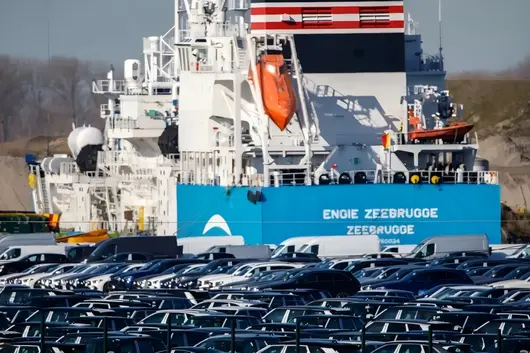

At the May market data press conference of the China Association of Automobile Manufacturers, the current market situation was summarized as "domestic demand under pressure, foreign trade strong".
Entering 2026, the overseas exports of Chinese automobile enterprises have continued to climb. April and May saw consecutive monthly exports exceeding 900,000 units. In May, the overseas export volume had reached 930,000 units, just one step away from 1 million monthly exports.
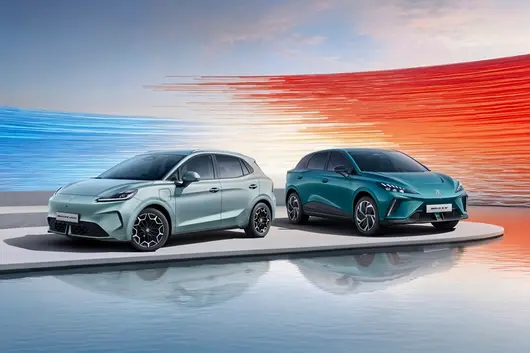
Beneath the eye-catching macro data, the overseas market operational model of Chinese automobiles is also quietly changing. In May, SAIC MG, which has already accumulated sales of over 1 million units in the European market, deployed its direct sales system in Belgium, Luxembourg, and Switzerland, taking another "big step" in the development of the overseas market for Chinese automobiles.

Regarding this all-new initiative, SAIC Group did not disclose it on a large scale to the outside. I discovered the cause of this new trend was June 15, at the "2026 China Enterprise Global Influence Dialogue" ceremony hosted by Jiemian Finance Lianshe under the guidance of Shanghai United Media Group, where it won two major awards at once: "Top 100 China Enterprises Global Influence" and "Top 10 Automotive Vehicle Industry", and thus brought out some slight information about the all-new initiative.
From an overall perspective, the "hard power" of SAIC Group winning two awards at once is evident: In May, SAIC's overseas sales volume reached 130,000 units. Cumulative overseas sales from January to May were 589,000 units, a year-on-year increase of 45.9%. At the same time, the "Global Layout + Local Deep Cultivation" global market integration strategy newly launched by SAIC is also promoting "Technology Going Global, Value Chain Going Global, and Eco-Creation Together".
As written in the theme song lyrics of the TV series "The Protagonist": When the sky is dark, the moon shines brighter. There are too many highlights in SAIC Group's overseas strategy. So why did I single out the "Direct Sales System" of SAIC MG among so many highlights?

Observing from a macro perspective, the overseas layout of Chinese automobile enterprises is mainly divided into two major sectors: manufacturing and sales. Among them, the manufacturing sector includes brands such as SAIC Group, Chery, BYD, Great Wall, Geely, Changan, Xpeng, and Dongfeng Mengshi/Voyah, which have all laid out in many countries and regions overseas. There are wholly-owned production factories as well as more KD factories.
On the sales side, the vast majority of Chinese automakers adopt a "Dealer-led" and "Joint Venture Cooperation" model. This dealer system was also gradually formed after the SAIC Group, which developed the overseas market earliest, connected the "Ren and Du meridians". The prominent advantage lies in fast landing and higher market development efficiency.

After that, some new Chinese car brands began to attempt to adopt a "Dealer-led, Direct Sales-assisted" operational model in high-regulation regions in Europe. This includes brands like Zeekr, Xpeng, and NIO. In the domestic market, they are mainly direct sales models with dealerships as a supplement, while in the overseas market, they go against the trend.
Compared with the dealership model, the direct sales model is obviously higher in cost and risk, but "without middlemen", not only does the local consumer benefit more, but the speed of new product landing is faster, and the feedback efficiency of local consumer needs is also higher.
So compared to the dealership model, the "High Risk, High Return" self-operated model must have a sufficient market foundation to unfold in a "systematized" manner. Therefore, the systematized self-operated model of SAIC MG in Belgium, Luxembourg, and Switzerland is also a brand new attempt made by Chinese automobiles moving steadily in the overseas market.

SAIC MG is not only the first Chinese automobile brand to achieve cumulative sales of 1 million in Europe, but also the first brand to attempt "systematized self-operation" in high-regulation regions in Europe by Chinese automobiles. Its confidence comes from the foundation of SAIC's deep cultivation in the European market: From January to May this year, cumulative sales of SAIC MG in Europe exceeded 150,000 units, a year-on-year increase of 20%, continuing to maintain the sales championship of Chinese automobile brands in Europe. Among them, MG in the UK market not only retained the Chinese brand championship, but total sales also remained stable in the top six of global automobile brands.
In other national and regional markets, SAIC MG also performed remarkably. For example, during the Thailand Bangkok International Motor Show, MG won 10,537 orders, surpassing Japanese brands such as Honda, Mazda, Suzuki, and Nissan that previously dominated the Southeast Asian market leaderboards. In Australia and New Zealand, MG3 and MG4 achieved market shares of 21.1% and 12.8% respectively in their sub-segments, ranking first and third respectively. In Chile, MG ZS is the sales champion of the local SUV market...
Not only that, besides SAIC MG, SAIC IM, SAIC Maxus, SAIC-GM-Wuling and other brands have global layouts in the two major fields of commercial vehicles and passenger vehicles. For the time being, the brands under the SAIC Group have achieved full coverage of five continents. At the same time, multiple brands are advancing side by side, with richer product combinations and operational capabilities closer to local needs to achieve new system upgrades. For SAIC Group, which has been the first to realize cumulative sales exceeding 100 million for Chinese automobile enterprises, globalization not only means the "bigger" sales volume, but also needs to achieve true "stronger" development, and take the front seat in the fierce competition of global brands!
Author: Liu Jungang

Folks, today let's talk about big news on going global—not selling cars, but selling "drivers". On June 2, WeRide and Uber jointly announced a plan: to launch the country's first commercial Robotaxi pilot service in Madrid, Spain. In other words: Spanish residents will soon be able to hail a driverless taxi via Uber. This is the first time WeRide and Uber are partnering to enter the European market. Madrid also becomes the 12th city globally where WeRide's Robotaxi arrives.
According to official news, with the support of the Madrid regional government, this service will officially launch within this year. At that time, friends in Madrid can open the Uber App and call WeRide's Robotaxi with one click. It's just like calling an ordinary ride-hailing service, the difference is the arriving car has no driver—at least initially, there is still a difference. In the initial operation phase, a professionally trained safety monitor will be on board, as it's just launched, safety comes first.
This company, WeRide, you might have heard of it, or you might not. A brief introduction: Established in 2017, it has been dedicated to Robotaxi technology R&D and commercialization. Currently, its Robotaxis cover Guangzhou, Beijing, Singapore, Abu Dhabi, Dubai, Riyadh, Zurich... plus Madrid now, totaling 12 cities. Spain is also the 5th European market WeRide has entered—previously entered Switzerland, France, Belgium, Slovakia. According to the plan agreed by WeRide and Uber in May 2025, they plan to deploy Robotaxi services in 15 new international cities within five years, deploying tens of thousands of Robotaxis globally. With the Madrid launch, the deployment in 4 cities has been completed, and 11 more will be covered successively before 2030.
To be honest, it's not the first time Chinese autonomous driving companies are going global, but the combination of Chinese technology + global mobility platform + European market is quite interesting. Madrid is one of the European Robotaxi markets with the most commercial potential, with a large population, high travel demand, and friendly local policies. Being able to take root in this market is a significant milestone for WeRide. For Uber, introducing Robotaxis is also a way to reduce costs—after all, drivers don't need salaries. For Madrid residents, hailing a taxi might be cheaper in the future.


According to the latest production and sales data for BYD's May 2026 obtained by "Zao Dong Che", 383,453 new energy vehicles were sold that month, continuing to claim the champion of new energy vehicle sales among Chinese automakers. BYD has now maintained the top spot in domestic new energy vehicle monthly sales for 60 consecutive months. As of now, BYD's cumulative new energy vehicle sales have exceeded 16.5 million units, continuously consolidating its industry-leading advantage.

In detail, BYD's Dynasty Series and Ocean Network continued to sell well, selling a total of 330,215 units in May, continuing to become the core force for BYD's sales growth. Regarding high-end brands, Fang Cheng Bao and Denza sold a combined 46,489 units in May. Among them, Fang Cheng Bao sold 30,186 units, up 139.7% year-on-year, reaching a new high for the year; Denza sold 16,303 units, continuing to maintain a growth trend; YangWang sold 286 units, up 105.8% year-on-year. The full matrix working together drove continuous growth in BYD Group's sales.

In terms of intelligence, as of May 28, the number of vehicles equipped with assisted driving exceeded 3.15 million, with Di Tian Yan generating over 200 million kilometers of data daily. On May 28, BYD announced the launch of Urban Pilot Safety Backstop Service, becoming the world's first automaker to simultaneously achieve "dual backstop" for Urban Pilot and Smart Parking. Smart driving that dares to backstop is truly reliable.

Within three days after the press conference, daily active user count for City Pilot on vehicles equipped with Di Tian Yan A and B assisted driving systems increased by 50%. Prior to the launch of Smart Parking Safety Backstop, the usage rate had increased from 21% to over 90%. BYD Group Chairman and President Wang Chuanfu stated: “Daring to backstop is true safety.”
Since the launch of Smart Parking Safety Backstop last July, the usage rate of Di Tian Yan Smart Parking function has increased from an initial 21% to 93% now, and the Smart Parking accident rate is almost zero. Based on confidence in Di Tian Yan technology and a commitment to consumers, BYD has once again taken the lead in promising to backstop Urban Pilot Safety: Starting today, within one year, for new users from the day they pick up the vehicle, and for old owners upgrading to Di Tian Yan 5.0 via OTA, all will enjoy 1 year of Urban Pilot Backstop. When users use Urban Pilot functions compliantly, if a traffic accident with liability occurs, direct economic losses that should be borne by the vehicle (including vehicle repair costs, third-party property damage, personal injury losses) will be directly compensated by BYD.

Comparing to common smart driving insurance in the industry, BYD's Urban Pilot Backstop is entirely free, has no limit, and will not affect commercial insurance premiums for the following year. Since then, BYD has become the world's first enterprise to have "dual backstop" for Urban Pilot and Smart Parking safety, using concrete actions to make assisted driving truly integrate into users' daily travel and life, enabling users to gain safety experiences.
BYD's technical confidence to dare to backstop comes from the three unique advantages of Di Tian Yan: First is the scale advantage, with BYD's assisted driving vehicles exceeding 3.15 million units, ranking first among Chinese automakers; second is the data advantage, with Di Tian Yan generating over 200 million kilometers of data daily, ranking first among Chinese automakers; and last is the R&D advantage, with the assisted driving R&D team having over 5,000 engineers, with the team size ranking first among Chinese automakers.

Technical innovation continues to transform into product competitiveness. After the launch of the 2nd Gen Blade Battery and Flash Charge Technology, models such as the 3rd Gen Yuan PLUS, Fang Cheng Bao Leopard 5 Flash Charge Version, Leopard 8 Flash Charge Version, and Denza N9 Flash Charge Version have successively launched. Meanwhile, the Tang on Dynasty Network will launch in mid-June, and Denza N8L Flash Charge Version, Seal 08, and Sealion 08 will also launch successively, further expanding BYD's Flash Charge product matrix.
In the just passed May, BYD's overseas market continued to maintain high-speed growth. Passenger cars and pickup trucks sold 160,177 units overseas, up 80.7% year-on-year, creating a new historical high. Models such as Seagull, Song PLUS, and the Yuan Series continued to sell well, and the SHARK Pickup truck exceeded 4,000 units for two consecutive months. As the product matrix continues to enrich and the global layout deepens, BYD's globalization process will continue to advance rapidly.

On May 18, 2026, BYD officially launched DM Technology in the Indonesia market. With more flexible energy management capabilities and higher energy efficiency performance, this technology will provide new energy mobility solutions covering multiple scenarios for Indonesian consumers.
According to Zhao Yue, General Manager of BYD Indonesia Branch: "Since the passenger car business entered the Indonesia market in January 2024, BYD has gained wide recognition from local users, with about 90,000 new energy vehicles currently driving on Indonesia's streets and alleys. Under the double drive of government policy support and market demand growth, the Indonesia new energy vehicle market continues to expand, with EV penetration rate increasing from less than 1% in 2022 to about 20% in the first quarter of 2026, and the electrification process significantly accelerating. The introduction of DM Technology means that BYD is no longer just providing products of a single energy form in Indonesia, but is starting to provide a more complete mobility choice logic. We hope to enable users to no longer need to choose between city commuting and long-distance travel through DM Technology, making it a daily travel mode that can be used without pressure."
It is understood that Indonesia is vast in area, inter-city travel demand is frequent, and charging infrastructure is still in the process of continuous improvement, so consumer demand for multi-scenario new energy vehicle models that can balance daily commuting and long-distance travel continues to rise.
DM Technology uses electric drive as the core driving logic, presenting pure-electric-like quietness and efficiency in city commuting; in long-distance travel, it collaboratively guarantees range and travel freedom through an intelligent energy management system, thereby achieving comprehensive coverage of multi-scenario travel needs.

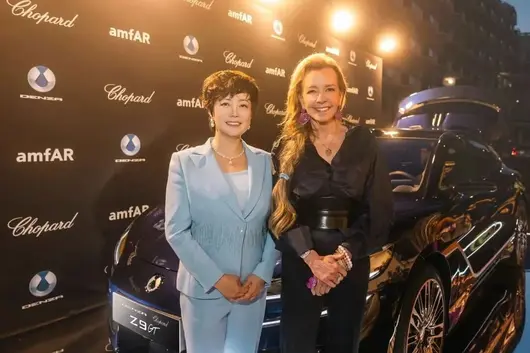
And in the crossover field, on local time May 21, Denza joined hands with Swiss luxury jewelry and watch brand Chopard to create the global unique Denza Z9GT Chopard Edition with exquisite craftsmanship, donated to the 32nd Cannes amfAR Charity Gala. As a highly anticipated charity event during the Cannes Film Festival, the gala aims to raise funds for AIDS research. On that night, the Denza Z9GT Chopard Edition was hammered down at 700,000 Euros (approx. 5.55 million RMB), becoming one of the most anticipated auction items on site.

Adhering to Denza's concept of "Extraordinary Technology, Driving Luxury", Z9GT becomes an ideal carrier for the excellent dialogue between Chinese tech performance and Swiss craftsmanship. Denza brings flagship GT models, frontier innovative technology, and the Yi San Fang Platform; Chopard adds splendor to this work with its inherent luxury style, profound heritage, and exquisite craftsmanship, turning the whole vehicle into a jewelry art piece in motion.

Interestingly, on local time May 14, BYD partnered with European famous independent film production company Mediawan to establish an award aimed at inspiring new film talents — Dream Building Award (Build Your Dream Award) in Cannes, France. The award ceremony is held concurrently with the Cannes Film Festival, annually awarding the best feature film debut released in French theaters within the past 1 year. The jury is chaired by famous Chinese director Chen Kaige, with members including French famous actor, director, and screenwriter Mélanie Laurent, French actor Hafsia Herzi, and other international film industry authorities.
Chen Kaige serves as the Chairman of the Dream Building Award Jury. Since the 1980s, Chen Kaige has gained international fame for his outstanding artistic achievements and has become an important representative figure promoting the development and evolution of Chinese cinema. In 1993, his film "Farewell My Concubine" won the highest award of the Cannes Film Festival — the Palme d'Or. Chen Kaige stated: "There are countless young people around the world harboring the dream of becoming film directors. Holding the Dream Building Award during the Cannes Film Festival, this award set specifically for new film talents, is a highly meaningful and precious thing for them."
From sales growth to overseas breakthrough, from tech innovation to intelligent popularization, the scorecard delivered by BYD in May reflects the continuous upward development trend of China's new energy vehicle industry. As the new energy vehicle industry accelerates development, the global competitiveness of Chinese brands is rapidly improving.

Folks, today let's talk about big news on going global—not selling cars, but selling "drivers". On June 2, WeRide and Uber jointly announced a plan: to launch the country's first commercial Robotaxi pilot service in Madrid, Spain. In other words: Spanish residents will soon be able to hail a driverless taxi via Uber. This is the first time WeRide and Uber are partnering to enter the European market. Madrid also becomes the 12th city globally where WeRide's Robotaxi arrives.
According to official news, with the support of the Madrid regional government, this service will officially launch within this year. At that time, friends in Madrid can open the Uber App and call WeRide's Robotaxi with one click. It's just like calling an ordinary ride-hailing service, the difference is the arriving car has no driver—at least initially, there is still a difference. In the initial operation phase, a professionally trained safety monitor will be on board, as it's just launched, safety comes first.
This company, WeRide, you might have heard of it, or you might not. A brief introduction: Established in 2017, it has been dedicated to Robotaxi technology R&D and commercialization. Currently, its Robotaxis cover Guangzhou, Beijing, Singapore, Abu Dhabi, Dubai, Riyadh, Zurich... plus Madrid now, totaling 12 cities. Spain is also the 5th European market WeRide has entered—previously entered Switzerland, France, Belgium, Slovakia. According to the plan agreed by WeRide and Uber in May 2025, they plan to deploy Robotaxi services in 15 new international cities within five years, deploying tens of thousands of Robotaxis globally. With the Madrid launch, the deployment in 4 cities has been completed, and 11 more will be covered successively before 2030.
To be honest, it's not the first time Chinese autonomous driving companies are going global, but the combination of Chinese technology + global mobility platform + European market is quite interesting. Madrid is one of the European Robotaxi markets with the most commercial potential, with a large population, high travel demand, and friendly local policies. Being able to take root in this market is a significant milestone for WeRide. For Uber, introducing Robotaxis is also a way to reduce costs—after all, drivers don't need salaries. For Madrid residents, hailing a taxi might be cheaper in the future.


