


首頁iCAR V27

搜尋歷史
熱門搜尋
經銷商登入 / 註冊


Last year, China's passenger vehicle exports surpassed Japan to take the global top spot; in the first half of this year, exports increased by another 65.3%, with the full year expected to break the 10 million vehicle milestone. This number is striking, but behind the glamour, an awkward reality is emerging: cars are selling in increasing volumes, but the walls of regulations are getting higher and higher.
The EU imposed countervailing duties of up to 35.3% on pure electric vehicles made in China, pushing the combined tax rate above 45%; Brazil raised import tariffs for electric vehicles uniformly to 35% starting from July 1st; Thailand implemented a 'production wager' mechanism, requiring the local production of 2 vehicles for every 1 imported; South Africa is also considering raising the import tariff for complete vehicles from China and India to 50%.
From Europe to Latin America, from Southeast Asia to Africa, Chinese automobiles are facing encirclement on all sides. The light-asset model of producing domestically and selling overseas has hit its ceiling.

On July 3, 2026, Chery made a move in Pretoria, South Africa, formally taking over the Rosslyn Plant, which Nissan had operated for nearly 60 years. This appears to be an ordinary transaction for Nissan to cut losses and Chery to expand production, but viewed under the proposition of 'how Chinese automakers can truly take root overseas', its weight is quite different.
Nissan Sheds Burden, Chery Takes Capacity
The sale of the Rosslyn Plant is part of Nissan's global restructuring plan 'Re:Nissan'. In the 2024 and 2025 fiscal years combined, Nissan reported a total loss exceeding 1.2 trillion yen. According to the restructuring plan, Nissan will close 7 plants globally and lay off about 20,000 people before the 2027 fiscal year, reducing global production bases from 17 to 10.

This factory previously produced models such as the Navara pickup and NP200, with products covering more than 40 African nations. However, capacity utilization rates have continued to decline in recent years. After the NP200 stopped production in March 2024, Navara became the factory's only in-production model, yet monthly sales were only a few hundred units. In May 2025, Nissan announced that local production of Navara would also cease. For Nissan, this factory has transformed from an asset into a burden.

For Chery, taking over an existing factory is more efficient than building from scratch. Chery entered the South African market in 2021, showing a steep growth curve. At this node of rapid expansion, local capacity means avoiding exchange rate and tariff risks, and also provides a hardware foundation for the next step of expanding market share.

More importantly, this acquisition is a piece in Chery's 'systematic overseas expansion' chess game. Since the beginning of this year, Chery has not just been selling cars but has deeply planted the roots of an entire industrial chain, including R&D, manufacturing, operations, and standards, into overseas markets.
In Europe, the European Operation Center and Research Institute in Barcelona, Spain, have been commissioned, and the joint venture factory with EBRO has also started production and operations; in Southeast Asia, a new factory in Vietnam worth 800 million USD is under promotion. The South African Rosslyn Plant is positioned as a comprehensive automotive hub radiating to Southern Africa.
The layout of these three locations supports each other, and a global manufacturing network is taking shape.
The Real Challenges of the South Africa Move
With the factory handover complete, the real test may have just begun.
Chery committed to retaining all 692 employees, planning to start production in mid-2027, with a future single-shift capacity of 50,000 units, and striving to achieve a 40% localization rate before 2028. This 40% is the core challenge.
Currently, South Africa imposes import tariffs of about 25% on complete vehicles, with the government considering raising the tax rate to the WTO-allowed limit of 50%. Once implemented, imported models dominated by Chinese and Indian brands will face direct cost pressures.
This is actually a positive for Chery. However, there are concerns; if the localization progress cannot keep up, the cost of importing parts will rapidly increase the overall vehicle manufacturing cost.

More realistically, the South African domestic market size is limited, with new car sales of about 550,000 per year, far insufficient to absorb large-scale production capacity. If the capacity of the Rosslyn Plant is to be fully utilized, Chery must treat South Africa as an export base, selling cars to Southern Africa and even farther markets. However, the automotive market size in most African countries is extremely small, infrastructure is weak, and export channels are not smooth.
Meanwhile, the foundation of the South African local parts industry is not optimistic. Data from the Motor Industry Association of South Africa shows that in 2025, only 33% of vehicles were manufactured locally in South Africa, a significant drop from the previous level of over 50%.
The South African local parts industry has long relied on orders from multinational automakers. As brands such as General Motors, Ford, and Nissan successively withdrew or reduced local production, the parts supplier system has already begun to shrink.

For Chery to achieve a 40% localization rate within three years, it means building or restoring an entire supply chain from scratch, introducing Chinese parts suppliers, and completing localization certification and production preparation. The schedule is quite tight.
Conclusion
Once this chess piece, the Rosslyn Plant, is placed, the situation on the chessboard begins to change. This is a landmark node for Chinese automotive export shifting from 'trade-type' to 'rooted-type'.
Against the background of tariff barriers encircling on all sides, the light-asset model relying on complete vehicle exports is unsustainable. Chery has chosen a more sustainable path, deeply planting an entire industrial root system including R&D, manufacturing, supply chain, and standards into overseas markets.
This path is not smooth. The 40% localization rate, the fragile parts system, and limited market capacity, each is a threshold that needs to be crossed. But Chery is not starting from zero.

The operational experience accumulated over more than 20 years of struggling overseas, as well as the global competitiveness of the Chinese automotive supply chain providing cost and technical support, its layout in Spain, Vietnam, and South Africa is forming a network effect.
Perhaps the most fitting conclusion is the words from Chery itself on social media: 'A new era is coming. From this moment on, Chery Automobile will proudly serve South Africa, manufactured in South Africa.'
This statement speaks not only of the fate of a factory but also of a fundamental transformation that Chinese automotive export is undergoing: from selling a car to rooting in a place. This is true globalization.
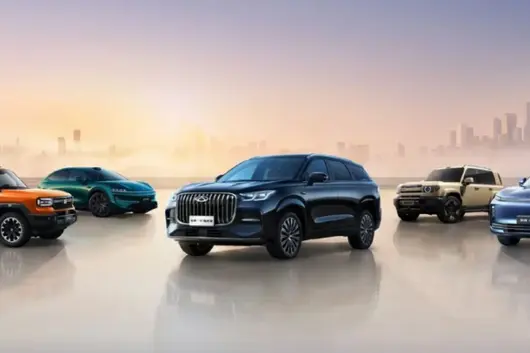

去年,中國汽車出口量超越日本,登頂全球第一;今年上半年,出口量再增 65.3%,全年有望突破千萬輛大關。呢個數據好有衝擊力,但光鮮背後,一個尷尬嘅現實正在浮現:車係越賣越多,但面對嘅規則之牆亦越來越高。
歐盟對中國產純電動汽車加徵最高 35.3% 嘅反補貼稅,綜合稅率突破 45%;巴西自 7 月 1 日起將進口電動車關稅統一上調至 35%;泰國實施「產能對賭」機制,要求每進口 1 輛車須喺本地生產 2 輛;南非亦喺考慮將中印整車進口關稅提升至 50%。
從歐洲到拉美,從東南亞到非洲,中國汽車正喺遭遇四面合圍。靠國內生產、銷往外國嘅輕資產模式,天花板已經觸手可及。
2026 年 7 月 3 日,奇瑞喺南非比勒陀利亞落下一子,正式接管日產營運咗近六十年嘅羅斯林工廠。呢睇落只係日產止蝕、奇瑞擴產嘅一筆普通交易,但如果喺「中國車企點樣真正喺海外扎根」呢個命題嚟睇,分量就唔一樣啦。
日產甩包袱,奇瑞接產能
羅斯林工廠嘅出售,係日產全球重組計劃「Re:Nissan」嘅一部份。2024 同 2025 兩個財年,日產合計虧損超過 1.2 兆日元。按照重組計劃,日產將喺 2027 財年前關閉全球 7 間工廠、裁員約 2 萬人,全球生產基地由 17 間縮減至 10 間。
呢座工廠曾生產 Navara 皮卡、NP200 等車型,產品輻射四十多個非洲國家。但近年產能利用率持續走低。NP200 於 2024 年 3 月停產後,Navara 成為工廠唯一在產車型,然而月銷量只係數百臺。2025 年 5 月,日產宣布 Navara 本地生產亦將終止。呢座工廠對日產而言,已經由資產變成咗包袱。
對奇瑞嚟講,接手現成工廠比從零開始建廠更有效率。奇瑞自 2021 年進入南非市場,增長曲線陡峭。喺快速擴張嘅節點上,本地產能意味著規避匯率同關稅風險,亦能為下一步擴大份額提供硬件基礎。
更加重要係,呢筆收購係奇瑞「體系出海」棋局當中的一子。今年以嚟,奇瑞唔再只係賣車出去,而係將研發、製造、運營、標準一整套產業根系深植海外市场。
喺歐洲,西班牙巴塞羅那嘅歐洲運營中心同研究院已經啟用,同 EBRO 嘅合資工廠亦已投產運營;喺東南亞,越南 8 億美元嘅新工廠正喺推進。南非羅斯林工廠則定位為輻射南部非洲嘅綜合性汽車樞紐。
三地佈局,互相策應,一個全球製造網絡正喺成型。
南非呢局嘅真正挑戰
工廠交接完,真正嘅考驗或許先至開始。
奇瑞承諾保留全部 692 名員工,計劃 2027 年中投產,遠期單班產能 5 萬輛,並力爭 2028 年前實現 40% 嘅本地化率。而呢 40%,先至係核心難題。
目前南非對整車進口徵收約 25% 嘅關稅,政府正醞釀將稅率提高至 WTO 允許嘅上限 50%。一旦落實,以中國同印度品牌為主嘅進口車型將面臨直接成本壓力。
這對奇瑞嚟講反而係利好。不過亦有隱憂,一旦本地化進度跟唔上,零件進口成本會快速拉升整車製造成本。
更現實係,南非本土市場規模有限,年新车銷量約 55 萬輛,遠唔足以支撐大規模產能嘅消化。如果羅斯林工廠嘅產能打滿,奇瑞必須將南非作為出口基地,把車賣到南部非洲乃至更遠嘅市場。但非洲大多數國家嘅汽車市場規模極細、基礎設施薄弱,出口通道並唔順暢。
與此同時,南非本地零部件產業基礎並唔樂觀。南非汽車工業協會數據顯示,2025 年只有 33% 嘅車輛喺南非本地製造,較此前超過 50% 嘅水平大幅下滑。
南非本地零部件產業長期依賴跨國車企嘅訂單生存,隨著通用、福特、日產等品牌陸續撤出或縮減本地生產,零部件供應商體系已經出現萎縮。
奇瑞要喺三年內把本地化率做到 40%,意味著需要從零搭建或恢復一整套供應鏈,引入中國零部件供應商,並完成本地化認證同生產準備,時間表相當緊迫。
結語
羅斯林工廠呢顆棋子落咗下去,棋盤上面嘅格局就開始變咗。呢係中國汽車出海由「貿易型」轉向「扎根型」嘅一個標誌性節點。
喺關稅壁壘四面合圍嘅背景下,靠整車出口嘅輕資產模式已難以為繼。奇瑞揀咗一條更可持續嘅路,把研發、製造、供應鏈、標準一整套產業根系,深植喺海外市场。
呢條路並非坦途。40% 嘅本地化率、脆弱嘅零部件體系、有限嘅市場容量,每一道都係需要跨越嘅門檻。但奇瑞並非從零開始。
二十多年喺海外摸爬滾打積累嘅運營經驗,仲有中國汽車供應鏈嘅全球競爭力提供咗成本同技術支撐,佢喺西班牙、越南、南非三地佈局正喺形成網絡效應。
用奇瑞自己喺社交媒體上嗰句說話作結或許最合適「一個新時代即將來臨。從此刻起,奇瑞汽車將自豪地為南非服務,喺南非製造。」
呢句話講嘅唔止係一座工廠嘅命運,亦係中國汽車出海正喺經歷嘅一次根本性轉變,從賣一輛車到紮一處根,先至係真真正正意義上嘅全球化。


