首頁dolphin

搜尋歷史
熱門搜尋
經銷商登入 / 註冊

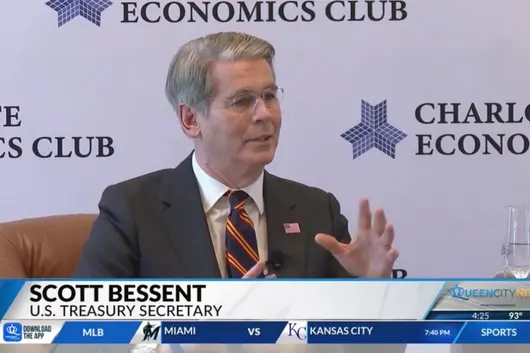
In the current era of profound changes in the global automotive industry landscape, authoritative voices from across the ocean often trigger broader industry resonance. US Treasury Secretary Scott Bessent (Scott Bessent), while delivering a speech at the Charlotte Economics Club (Charlotte Economics Club), turned his gaze toward a new energy vehicle manufacturer in the East.

According to US Treasury Secretary Bessent's speech at the Charlotte Economics Club, BYD is an excellent car worth $70,000 that consumers can buy for $35,000. This evaluation is not an isolated market noise, but a high summary of BYD's product strength and cost-performance ratio, quickly ripples in the international public opinion field, and is a true portrayal of China's automotive export reputation.
Bessent's evaluation directly points to BYD's core competitiveness: winning global consumers' trust votes with affordable pricing, reliable quality, rich configurations, and value beyond its class. In the traditional automotive brand premium logic, high prices are often linked with luxury configurations, while BYD rewrites this established rule through technological innovation and industry chain integration. Overseas market pricing for high-end car experiences of about $70,000, BYD faces global consumers with a pricing of $35,000. This huge value gap is the fundamental reason for its international attention.
Market data is the only standard to test product strength. As of August, BYD passenger vehicles and pickup trucks overseas sales reached 189,000 units, a year-on-year increase of 134.6%, an increase of over 100,000 units compared to the same period last year, refreshing overseas sales records for five consecutive months. More notably, overseas cumulative sales from January to August reached 1.158 million, exceeding BYD's overseas sales of 1.0496 million for the whole year of 2025. Behind this series of numbers is BYD's deep cultivation and steady expansion in the overseas market. Models such as Yuan UP, Dolphin Family, and Song PLUS are the main forces for the overseas market. They have gained positive feedback in markets with different cultural backgrounds thanks to their excellent design, smart cockpit experience, and solid range performance.
This heavy overseas sales result is by no means relying solely on price advantages, but is a hard-core result precipitated from the whole industry chain self-research and sedimentation. BYD persists in the vertical integration strategy, realizing the complete autonomy and controllability of three core technologies: batteries, motors, and electronic controls. From the safety innovation of Blade Battery to the technical iteration of e-platform 3.0, to the high-efficiency energy saving of DM-i Super Hybrid System, the breakthrough of every technology is converted into actual advantages in the product end. Relying on continuous technological iteration and large-scale refined manufacturing, on the basis of adhering to product quality, upgrading the value logic of the automotive industry, Chinese new energy vehicles rely on hard strength to rush to global new tracks.
At large overseas auto shows, BYD's exhibition booths are always popular.

Two-story buildings paired with dynamic test drive areas, highlighting the brand's international strength. This is not only a brand display but also a communication of technology and culture. Overseas consumers can intuitively feel the excellent performance of BYD vehicles in handling, comfort, and intelligent assisted driving through personal test drives. This recognition based on real experience is more persuasive than any advertisement. BYD persists in compliant deep cultivation of the overseas market, respecting local laws and regulations, integrating into local community culture, and responding to external noise with tens of millions of overseas user choices and real delivery results.
Facing the complex international trade environment, BYD chose to meet challenges with an open and cooperative posture. The company invested and built production bases in Thailand, Brazil, Hungary, and other places, which not only drove local employment and economic development but also realized the localization layout of the supply chain. This "Global Manufacturing, Global Service" model effectively reduces logistics costs and tariff risks, improves response speed and service efficiency. At the same time, BYD actively cooperates with top global suppliers, introduces advanced management experience and technical resources, and continuously improves its own competitiveness.
The reason why Bessent's remarks triggered attention also lies in reflecting the complex mindset of the US political circle towards the rise of China's new energy vehicles. On the one hand, they admit BYD's leading position in product strength and cost-performance ratio; on the other hand, they are worried that the local automotive industry will be impacted. However, the essence of market competition is survival of the fittest, consumers vote with their hard money, choosing products with more value. BYD's success is not relying on protectionist barriers, but technological innovation and cost control. This victory based on market laws is truly sustainable.
Looking to the future, BYD will continue to increase R&D investment and promote technological iteration and product upgrades. In the field of intelligence, the company will further deepen cooperation with technology enterprises, improve the level of smart cockpit and intelligent assisted driving, and meet the growing personalized needs of consumers. In the field of green energy, BYD will expand business sectors such as energy storage and solar energy, and build a more complete clean energy ecosystem. At the same time, the company will continue to deepen the globalization layout, expand more emerging markets, and enhance brand influence and market share.
For Chinese car brands, BYD's overseas journey provides valuable experience. First, must insist on technological innovation, master core technology, and occupy the initiative in international competition. Second, pay attention to brand building, improve brand image and reputation, and win consumer trust. Third, respect local culture and laws, achieve localization operations, and integrate into local society. Finally, maintain an open and cooperative mindset, grow together with global partners, and achieve win-win results.
Bessent's evaluation is just a vignette, which reflects the profound changes that the global automotive industry is undergoing. New energy vehicles are no longer merely transportation tools, but intelligent mobile terminals and green energy carriers. On this new track, Chinese brands are gradually changing from followers to leaders by virtue of technical accumulation and industry chain advantages. As an outstanding example among them, BYD's successful experience is worth learning from the industry.
Of course, the overseas journey is not smooth. Challenges such as geopolitical risks, trade barriers, and cultural differences still exist. BYD needs to keep a clear head and move forward steadily. While seizing opportunities, prevent risks; while pursuing scale, pay attention to quality; while based on the present, look to the future. Only in this way can we walk steadily and go far in the global market and achieve high-quality development.
In summary, US Treasury Secretary Bessent's evaluation of BYD is not only an affirmation of its product strength but also a recognition of the development of China's new energy vehicle industry. BYD has won the favor of global consumers with excellent product performance, affordable price positioning, and complete industry chain layout. In the future, with the continuous progress of technology and continuous expansion of the market, BYD is expected to play a bigger role in the global automotive stage and contribute Chinese wisdom and strength to promote the global automotive industry's green transformation. This process is not only BYD's growth history but also a vignette of China's automotive industry going global.
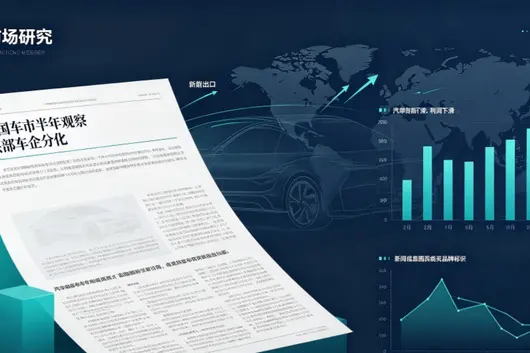
In September 2026, overseas investment bank JPMorgan released the latest industry research report regarding the Chinese passenger car market, giving an overall prudent assessment on the domestic vehicle sector, only prioritizing BYD and Geely, two car companies with scale, diversified products, and globalization capabilities. The underlying motive is the H1 2026 financial reports of domestic car companies just released.
The prudent tone of this report is not groundless speculation, but based on the actual operating results of the domestic auto market in H1 2026. Official data from CAAM is right in front: Total domestic car sales in H1 were 15.017 million, down only 4.1% year-on-year. Market volume remains huge, consumer demand has not collapsed. But opening mainstream car company financial reports, the industry's profit system almost collectively collapsed: net profit basically fell across the board, over half of car companies fell into loss, many old top players shifted from profit to loss.
Many people think the difficulty in the car market is "can't sell". The real status is: cars are still sold, just thinner margins, deeper losses the more it sells.
The biggest abnormal reversal in the H1 car market this year: growth was all in revenue and sales, collapse was all in profit.
Among 16 mainstream listed car companies, only Leapmotor, NIO, JAC, BAIC BluePark had net profit indicators achieve year-on-year positive growth. But this group of bright data is completely a "verbal trap": the latter three didn't profit at all, just loss width narrowed, book still losing money. Only Leapmotor truly profited and profit surged in the whole industry.
More terrifying than losses is profit regression. Seres, Li Auto, Voyah, BAIC Motor four last year still steadily made money. This year H1 collectively shifted from profit to loss, directly fell from profit tier into loss quagmire. Market iteration speed far exceeded everyone's imagination.
More subversive to cognition is: even the industry absolute leader, cannot withstand this profit winter.
Take BYD as example. As the industry profit ceiling, it is still the only one in the whole industry with net profit over 10 billion. Basic market share no one can shake. But vertically compared to same period last year, decline data glaring to the naked eye: H1 revenue 344.815 billion yuan, year-on-year 7.13%; net profit attributable to parents 12.325 billion yuan, year-on-year significantly down 20.54%, gross margin fell back to 18.85%.
Simple calculation reveals the truth: BYD sales still leads globally, but vehicle profitability is continuously shrinking. Domestic price war has precisely pierced the leader's profit floor.
If BYD is "earned less", then Great Wall Motor is "earned it all away", perfectly confirms the dilemma of traditional car companies.
Great Wall this year seems comprehensive improvement: H1 sales 575,800 vehicles, year-on-year slight increase 1.22%; revenue first exceeded 100 billion in H1, reached 102.101 billion yuan, year-on-year realized positive growth. Sales, revenue double increase, should be a favorable report card. Result profit directly halved then halved again: net profit attributable to parents only 2.465 billion yuan, year-on-year plummeted 61.11%.
Car companies have entered the distorted stage of "volume without profit, revenue increase without profit increase". Surface sales red fire, inside profit already riddled with holes.
In the industry full loss tide, uniquely killed out a counter-trend steady outlier, again subvert industry cognition.
Geely Automobile became the head only steady basic market share car company: H1 sales 1.423 million vehicles, year-on-year slight increase 1%; revenue 173.6 billion yuan, year-on-year surged 14.67%; net profit attributable to parents 9.09 billion yuan, only slightly down 1.79%, gross margin stable at 17.90%.
In the large environment of full industry profit plummet, nearly zero decline profit performance appears especially scarce. Its counter-cyclical logic is very clear: Zeekr high-end models volume boost lift product average price, overlay overseas exports continuously increase revenue. Using product upgrade + globalization, hedged against domestic fierce price war. This is also the core direction for subsequent car companies to break the situation.
Many people doubt: Sales didn't drop big, where did the car companies money go lost? Two full industry common reasons, reveal the answer.
First, manufacturing costs fully up, squeeze full industry gross margin. Lithium carbonate, chips, copper, aluminum etc raw material prices rose, directly lift per-vehicle manufacturing cost. NIO's Li Bin openly admitted: compared to end of last year, this year Q2 per-vehicle cost up 14,000 yuan. H2 will also up 2,000 yuan again.
Cost up treat all car companies equally, but leader can rely on scale, supply chain advantage hedge. SMEs, new forces can only hard carry. Loss naturally continuously expand.
Second, currency fluctuation violently, swallow overseas car companies profit. Now head car company overseas ratio extremely high. Chery export ratio about 70%, Great Wall over 50%, BYD, Changan over 40%, Geely, SAIC over 30%.
Great Wall's Wang Xingjun directly points out profit down key: Overseas tax subsidy payment delay, currency fluctuation drag performance. But most key reversal is here: excluding exchange rate, one-time gains/losses, most head car companies real profit actually in big surge.
Data won't lie: SAIC adjusted core net profit 7.87 billion yuan, year-on-year surge 72%; Changan adjusted profit year-on-year growth 12%; Geely adjusted core net profit 9.68 billion yuan, year-on-year big increase 46%.
This means, car companies main business earning ability didn't collapse. Just short-term external factors covered real strength. Globalization long ago not bonus, but car company survival core trump card.
More key incremental fact is: Overseas market not only risk avoid, but also earn higher profit.
BYD H1 overseas revenue 181.268 billion yuan, year-on-year surge 33.9%, account for total revenue half more. JPMorgan precise calculation: BYD domestic vehicle profit about 10,000 yuan, overseas vehicle profit over 20,000 yuan. Profitability is domestic market two times. With Hungary, Indonesia, Brazil overseas factories continuously ramp up, overseas high profit bonus will continue release.
Also precisely saw through this industry underlying logic, JPMorgan gave extremely sober differentiated judgment: Keep prudent on Chinese passenger car industry overall. Not blindly bullish. Only long term firmly first choice BYD, Geely two leaders. At the same time strategy bullish counter-cyclical heavy truck track.
Current car market, long ago said goodbye to "Sales is King" era.
2026 H1 Report given ultimate answer very cruel: Domestic involution kill profit, overseas increment save company. Car companies only can in domestic price cut involution, being market eliminated. Holding scale, diversified product, globalization layout leader, crossing industry winter.
This thunderous car market reshuffle just started: Sales decide hype, profit decide life and death, overseas decide future.
Source: Car Observer
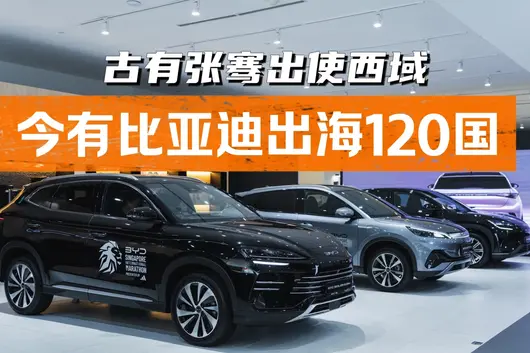
August 25, the Silk Road 10,000-Mile Journey activity, bearing world-class historical and cultural significance, concluded successfully in Singapore!
This fleet, composed of five BYD networks and four brands, departed from Xi'an, the starting point of the Silk Road, lasted 33 days, crossed six domestic provinces, passed through Thailand, Malaysia, and finally arrived in Singapore. Along the way, Flash Charge efficiently replenished energy, God's Eye ensured safety and peace of mind, and Cloud Suspension provided comfortable and stable travel. BYD used disruptive technology to solve all pain points of long-distance travel for new energy vehicles.
In Singapore, BYD is regarded by local users as high-end luxury cars. Taking the Dolphin as an example, the price in Singapore is around 900,000 RMB, truly unaffordable for ordinary people. Even selling at such a high price, sales rose steadily. From January to July, the market share of the overall passenger car market was 24.7%, occupying one-quarter of the entire Singapore passenger car market. Among them, the market share of pure electric vehicles reached 40.3%. It has also ranked first in total brand sales for 19 consecutive months.


Currently, BYD New Energy Vehicles have entered 120 countries and regions. In the first half of this year, sales in Thailand, the UK, Italy, Spain, Saudi Arabia, the UAE, South Africa, and other places were booming. In Brazil, nearly 100,000 units were sold in just 6 months.
From January to July, overseas cumulative sales exceeded 970,000 units, a year-on-year increase of 76%; July overseas sales were 179,800 units, a year-on-year increase of 124.3%.
Based on overseas sales figures, it can be seen that foreigners do not favor century-old brands. Seeing the reliable, safe, smart, and energy-efficient BYD, they simply cannot turn away.
In ancient times, there was the Silk Road; Zhang Qian's mission to the Western Regions opened up ancient trade routes. Today, BYD New Energy Vehicles cross borders for travel, retracing the Silk Road with China's smart manufacturing, supporting green transportation on the Belt and Road, and using technical strength to promote green transformation.
Malaysia's four-year electric vehicle import tax exemption policy has officially ended. The new regulations implemented on July 1 directly tightened the entry threshold for imported electric vehicles. Regarding complete vehicle imports, the new regulations require that the CIF price of all CBU electric vehicles must not be lower than 200,000 Ringgit (approximately 320,000 RMB), and the motor output power must not be lower than 180 kW (about 241 hp). Both conditions must be met simultaneously; neither can be missing.

Relying on the previously relaxed environment, Chinese brands once captured 60% of the new energy vehicle market share in Malaysia. Now, the local market intends to replicate the industrialization model of local automakers, forcing foreign investment to shift from complete vehicle trading to local manufacturing. After all, no one wants to be just a dumping ground for goods.
Electric Vehicle New Policy Heavy Implementation in July
After the four-year electric vehicle import tariff exemption period ends, Malaysia significantly tightened complete vehicle import rules, upgrading the previously duty-free 100,000 Ringgit CIF threshold to a mandatory 200,000 Ringgit entry baseline, while rigidly binding a 180 kW motor power lower limit; both conditions are indispensable. Previously, the 100,000 Ringgit was only the tariff exemption line, the price point perfectly fit the pricing system of main home-use models going overseas, BYD Dolphin, entry-level Atto 3, and other volume-selling models relied on cost advantages during the tax exemption period, becoming core products for Chinese brands to seize the local market.

After the CIF price is raised to 200,000 Ringgit, adding import tariffs, domestic sales tax, and dealer markups, estimated based on the current tax and fee structure of the Malaysian automotive market, the final vehicle price will reach above 300,000 Ringgit, converting to RMB, it is close to 480,000. Most Malaysian households' car purchasing budgets are in the range of 100,000 to 250,000 Ringgit, this price range of 300,000 Ringgit is a niche market where Tesla and BBA pure electric models have already dug deep, there are very few models domestically that can cross both rigid thresholds, the price-friendly family car base that Chinese brands originally stabilized via pure import routes is essentially locked by the policy; while vehicles assembled locally via CKD can still legally cover the mainstream family consumption price range of 100,000 to 250,000 Ringgit.
Many brands can choose to rent existing local factories for knocked-down assembly production, Leapmotor uses Stellantis idle production lines to launch C10, Xpeng partners with local manufacturers to launch right-hand drive G6, by reusing existing capacity to avoid the strict clauses of 80% mandatory export for new factories, this is the easiest flexible method to implement at present. However, this light-asset OEM model has many hidden dangers from the perspective of long-term industrial layout.

Car companies do not own production lines, unable to independently expand production schedules during peak order surges, production line modifications for model updates are also subject to the partner's will, the production rhythm is hard to control completely by themselves. More critically, core components like batteries, electronic controls still rely on being shipped separately from domestic sources, localization only stays at the final process. Referencing Indonesia's practice of continuously raising local component ratios, the local 2030 target for new energy vehicle local component penetration rate is set at 80%, the overall industrial orientation in Southeast Asia is forcing upstream supply chains to land locally, the model of only simple assembly will eventually face policy constraints.
Moreover, this detour route itself has no permanent guarantee at the legal level, Malaysia can update industrial regulations at any time later, including existing factory cooperation projects into export quota supervision, this shortcut could be tightened or blocked at any moment. The export strategy of only doing trade output and unwilling to deeply bind local industrial chains has no more sustainable space.
Chinese Automakers Face Major Differentiation
Geely Holdings is the biggest indirect beneficiary of this round of policies. Geely holds 49.9% of shares in Malaysia's traditional state-owned automaker Proton, and Proton itself holds original CKD production qualifications, it does not belong to the new foreign investment factory construction projects approved after September 2025. This means the strictest 80% mandatory export quota in the new regulations cannot constrain Proton from the start. Proton has no ratio restrictions on sales in the local market, and can long-term enjoy policy inclinations for local component support, effectively standing in the safe zone by nature within the environment of tightening policies.

In addition, Xpeng Motors relies on EPMB's existing factory in Melaka State to carry out CKD complete knocked-down assembly, Leapmotor uses Stellantis's own complete vehicle factory located in Kulim, Kedah, Malaysia for local assembly. Both types of projects belong to reusing existing local capacity, and can be exempted from the requirement of 80% mandatory export quota in the new regulations.
While BYD's wholly-owned new factory planned in Perak State, Chery's new industrial park planned in Selangor State, both belong to new manufacturing projects approved after September 2025, will be strictly constrained by the 80% export quota; brands like Great Wall Motors relying on pure imports of affordable models, directly face the impact of losing the access qualification for main models.
The core logic of the new regulations is actually setting up a double barrier for "new foreign players", clearly not welcoming foreign enterprises that only focus on building capacity in the local market. The remaining options for foreign brands are very limited: either introduce high-end models via pure import routes, giving up the mainstream volume market; or rent existing local production lines for knocked-down assembly, production capacity rhythm and cost control are all subject to others, hard to form scaled price competitiveness.
Viewing the entire Southeast Asian market dimension, this logic is not unfamiliar. Thailand and Indonesia's industrial policy directions have been highly consistent in the past two years: the threshold for complete vehicle imports continues to rise, the core conditions for market access are gradually shifting from product competitiveness to the depth of localization investment.

In early years, when most Chinese electric vehicle brands first entered Southeast Asia, they followed a typical trade route: controlling costs by relying on the scale advantages of the domestic supply chain, and rapidly distributing goods after complete vehicles are shipped by sea, relying on price differences, most stayed at the superficial cooperation stage of "selling products". However, a few brands like Geely have already completed deep localization layout through the method of investing in local car companies.
Now, the demands of ASEAN core markets have shifted from "richening consumption choices" to "driving local industrial upgrades", the exchange chips for market access have also changed from pure product power to capacity landing, technology transfer, and supply chain driving capabilities. Brands that only do commodity output and are unwilling to do industrial binding will sooner or later be squeezed into niche peripheral markets by gradually tightening rules.
In other words, the export 1.0 stage relying purely on complete vehicle distribution has reached its end in the Southeast Asian market.
Consumer Car Review
Actually, the screening logic of the Southeast Asian market has never changed: It welcomes co-builders who bring the industrial chain, not passersby who only sell products. When rules tighten step by step, the winning hand of going overseas has long shifted from product costs, pricing strategies, to the ability to predict industrial rules, and the depth of layout rooted in the local area.
After all, a model without an industrial anchor point will ultimately not go far.
Recently, BYD launched a panel van based on the Dolphin in the UK, named DolphinCargoe-Van. The local price is 29,300 pounds, roughly 264,000 RMB, and pre-orders have now opened at authorized BYD stores in the UK.
This vehicle is modified from the familiar home-use Dolphin. BYD removes the rear seats and adds a metal partition behind the front row. The modified vehicle offers a loading capacity of 1,093 liters and also provides 47 liters of hidden storage space, transforming the original passenger car into a light commercial vehicle. That is to say, it is the "Cargo Version Dolphin", specifically targeting light logistics markets such as urban distribution, express delivery, repair services, etc.

Max length 1.25 meters, max width 1.16 meters, width between wheel arches about 1.02 meters, height 0.71 meters. A 47-liter small compartment is also hidden under the floor. The floor has been treated for wear resistance. The rear of the vehicle offers two choices: enclosed baffle or retaining the window, making it convenient for different merchants to select as needed.

Regarding power, the new car continues to adopt the Dolphin's power system, equipped with a 60.4kWh Blade Battery and a 204 horsepower motor. The combined range can reach 426 kilometers, and the urban driving range can reach up to about 558 kilometers.
In terms of configuration, the vehicle comes standard with seat heating, steering wheel heating, 360-degree panoramic vision, and 220V external discharge functionality, allowing direct connection of electrical equipment for repairs or street vending.
The new car is marketed in the UK, an important step for BYD to complete its European product layout, filling the passenger and light commercial vehicle product lines. Overall, the launch performance needs market validation, and it is expected to be promoted to other European countries in the future.
BYD's strategy this year is to go global and target international markets. In May, BYD sold a total of 160,600 vehicles overseas, an increase of 80.7% year-on-year. Overseas sales accounted for more than 42% of total sales, and BYD's Ro-Ro ships are nearly insufficient. Recently, BYD sold the Denza Z9GT to Europe, making a grand impression.
BYD has already built or plans to build factories in countries such as Brazil, Thailand, Uzbekistan, Turkey, and Hungary. Ultimately, going global, having a solid product is the first step, but it is just the first step. If every subsequent step is taken firmly, then more and more foreigners who are "hooked" on domestic cars, or even "obsessed", will become more numerous.
Recently, BYD launched a panel van based on the Dolphin in the UK, named DolphinCargoe-Van. The local price is 29,300 pounds, roughly 264,000 RMB, and pre-orders have now opened at authorized BYD stores in the UK.
This vehicle is modified from the familiar home-use Dolphin. BYD removes the rear seats and adds a metal partition behind the front row. The modified vehicle offers a loading capacity of 1,093 liters and also provides 47 liters of hidden storage space, transforming the original passenger car into a light commercial vehicle. That is to say, it is the "Cargo Version Dolphin", specifically targeting light logistics markets such as urban distribution, express delivery, repair services, etc.
Max length 1.25 meters, max width 1.16 meters, width between wheel arches about 1.02 meters, height 0.71 meters. A 47-liter small compartment is also hidden under the floor. The floor has been treated for wear resistance. The rear of the vehicle offers two choices: enclosed baffle or retaining the window, making it convenient for different merchants to select as needed.
Regarding power, the new car continues to adopt the Dolphin's power system, equipped with a 60.4kWh Blade Battery and a 204 horsepower motor. The combined range can reach 426 kilometers, and the urban driving range can reach up to about 558 kilometers.
In terms of configuration, the vehicle comes standard with seat heating, steering wheel heating, 360-degree panoramic vision, and 220V external discharge functionality, allowing direct connection of electrical equipment for repairs or street vending.
The new car is marketed in the UK, an important step for BYD to complete its European product layout, filling the passenger and light commercial vehicle product lines. Overall, the launch performance needs market validation, and it is expected to be promoted to other European countries in the future.
BYD's strategy this year is to go global and target international markets. In May, BYD sold a total of 160,600 vehicles overseas, an increase of 80.7% year-on-year. Overseas sales accounted for more than 42% of total sales, and BYD's Ro-Ro ships are nearly insufficient. Recently, BYD sold the Denza Z9GT to Europe, making a grand impression.
BYD has already built or plans to build factories in countries such as Brazil, Thailand, Uzbekistan, Turkey, and Hungary. Ultimately, going global, having a solid product is the first step, but it is just the first step. If every subsequent step is taken firmly, then more and more foreigners who are "hooked" on domestic cars, or even "obsessed", will become more numerous.

In the Malaysian SUV market, many buyers compare the Proton X70 and Chery Tiggo 7 Pro when choosing a car. These two cars are quite close in price and positioning, so today we will make a detailed comparison from multiple aspects to help you save time on research.
The OTR price of Proton X70 in Malaysia is RM 106,800 - 122,300, with a total of 3 versions, including 1.5L Standard 2WD (RM 106,800), 1.5L Executive 2WD (RM 115,800), 1.5L Premium 2WD (RM 122,300), etc.
The OTR price of Chery Tiggo 7 Pro in Malaysia is RM 123,750 - 123,750, with a total of 2 versions, including 1.6L Turbo Standard (RM 125,000), 1.6L Turbo Premium (RM 140,000), etc.
In terms of price, the starting price of the Proton X70 is indeed RM 16,950 cheaper than the Chery Tiggo 7 Pro. If your budget is limited, the entry-level Proton is sufficient for daily needs. However, note that the savings of a few thousand might involve trade-offs in features, depending on your specific needs.
The safety rating of Proton X70 is 5★ (ASEAN NCAP), with active safety systems including ADAS (ACC, AEB, LKA, LDA, BSM, RCTA).
The safety rating of Chery Tiggo 7 Pro is TBD, with active safety systems including Basic.
Regarding safety features, both cars have received good ratings. However, the ADAS (ACC, AEB, LKA, LDA, BSM, RCTA) of the Proton X70 and the Basic system of the Chery Tiggo 7 Pro differ in functionality. If you prioritize active safety, you can carefully compare the feature lists of both.
Proton X70 warranty 5 years/150,000km, maintenance interval every 10,000km or 6 months.
Chery Tiggo 7 Pro warranty 3 years/100,000km, maintenance interval every 10,000km or 6 months.
Both the Proton X70 and Chery Tiggo 7 Pro are mainstream choices in the Malaysian market, suitable for family use and daily commuting. If you value brand reputation and resale price more, you can prioritize the one with a better reputation; if you care more about value and features, choose the one with richer configurations. Ultimately, it is recommended to test drive both, as personal experience is the most important.
Overall, both the Proton X70 and Chery Tiggo 7 Pro are very good models in the Malaysian market. Which one to choose mainly depends on your personal needs and budget. We recommend doing thorough research, comparing quotes from several dealerships, and then test driving to make the final decision. Buying a car is a major decision; spending time on research is never a mistake.

你睇過印度嘅馬路嗎?
我喺網上見過。
畫面通常係咁,一輛轎車俾牛尾擋住,旁邊仲有亂竄嘅摩托,甚至周圍仲有賣奶茶嘅小夥,嗰叫一個“乾淨又衛生”。

然而,喺呢啲睇完好多人覺得生理不適嘅地方,豐田、鈴木、本田等日本車廠,卻決定將籌碼押落印度。
據印度“品牌質量基金會”網站顯示,三家車廠將喺印度投資近110 億美元建廠、提產能、搞出口。
對此有网友表示,三家日本車廠係咪錢多到無處花?
事實上,佢哋唔係錢多到花唔完,亦唔係被印度嘅咖哩蒙蔽咗心竅,呢啲日本車廠高層遠比我哋清醒。
而家嘅日系車,營業額、市場份額都喺下滑,原材料成本仲係升得飛起,打開世界地圖,搵一個能夠容納產能、拓充份額、競爭溫和嘅市場,唔係咁容易嘅事。
所以,唔係日本車廠選擇咗印度,而係因為冇得揀。
日本車廠之痛
曾經嘅日系車,嗰時妥妥係人哋個仔。
你問下十幾年前開過日系車嘅老司機,一提起日系車,幾乎就冇唔豎大拇指嘅,價錢平、省油、耐用又抵撞……
甚至好多日系車,仲要加價購買,但邊個諗到,呢個鐵打嘅江山,短短幾年時間就俾佢哋打得找唔著北。
隨著新能源汽車浪潮嚟到,電動化、智能化變成好多自主車廠“彎道超車”嘅目標,依托於中國強大嘅新能源汽車產業鏈優勢同車廠自身對研發、技術嘅堅持,中國自主品牌迅速實現咗“彎道超車”。
曾經被人吐槽嘅國產車,而家喺馬路越來越多人,甚至份額超越咗合資。
根據乘聯會嘅數據,喺2026 年4 月,自主品牌嘅份額已經高達62.5%,遠超日系嘅13.1%。

要知道,中國汽車市場係全球最大嘅汽車市場,喺中國市場失速,就相當於丟咗一塊巨大嘅蛋糕。
同時,中國市場近年嚟嘅主旋律依舊係價格戰,捲配置、捲價格、捲服務已經成為一種常態,亦對日系車嘅利潤產生咗巨大嘅影響。
除咗中國,日系車喺美國過得亦唔太好。
2025 年 1 月 20 日,特朗普宣誓就職第 47 任美國總統,自此開啟咗一連串搞搞震,其中就包括以國家安全為理由徵收額外嘅汽車關稅,導致進口日本汽車嘅關稅稅率一度高達 27.5%,雖然後嚟有所降低,但亦遠高於最初嘅稅率。
呢個操作,直接導致七大日本車廠喺2025 財政年度嘅關稅損失超2 萬億日元。
再睇日本本土,其實亦唔容易。
中東地緣衝突導致霍爾木茲海峽航運受阻,運輸成本、原材料成本暴漲,日本車廠都有苦難言。

高管們看著報表,背後發涼,只能尋找全新嘅增長曲線。
所以,日本車廠唔係愛上印度,係冇地方去。
揀選印度嘅深思熟慮
咁,印度點解咁有魔力,先至令日本車廠重資投入呢?
第一個優勢就係大。喺2025 年,印度汽車市場取得咗551.7 萬輛嘅新車銷量,同比增長 6%,刷新咗歷史紀錄,位居全球第三大汽車市場,已经连续四年超越日本,僅次於中國同美國。
呢個含金量唔使多講啦,而印度取得呢一成績,主要係因為印度一直喺推動減稅政策,促進消費,這導致國內消費意願出現咗明顯增強。
第二個優點係近,就係離日系車賣得動嘅地方近,如非洲等其他地區。
所以,印度對於日本車廠,更似一個建喺十字路口中央嘅便利店,你唔使將車分別運去八個國家,只需要喺印度呢站造好,然後一船一船甩去,就能削減唔少成本。

《日本經濟新聞》亦認為,印度有望轉變為佢哋全球嘅汽車供應中心。
第三個優點係穩。要知道,日系車嘅優勢就係燃油車,畢竟引擎、變速箱、底盤三大件,佢哋已經玩咗好多年,技術積累喺全球都係數一數二。
但係中國汽車市場已經全力推動電動化、智能化發展,導致日系車嘅優勢越來越弱,根本無法發揮出嚟,但印度唔一樣,佢擁有充電樁少、電動化進程緩慢嘅特點,印度老百姓買車,都仲係盯住平、省油、易修,而呢三點正係日系車嘅老本行。
尤其係鈴木,一直係印度汽車市場嘅常青樹,幾乎年年穩坐暢銷車型寶座,口碑好,勝過任何廣告。
所以,日本車廠大力佈局印度市場,顯然是經過深思熟慮嘅。
但,印度市場真係咁好混咩?
難啃嘅印度市場
當然,印度亦唔係完美得似個香口格,佢嘅缺點同佢嘅優點一樣明顯,而且每一個都夠日本車廠喝一壺。
先講電動化,冇錯,眼睇下印度充電樁少、電動車賣唔動,確實係日系燃油車嘅避風港。但你得諗諗,呢個“避風港”能避幾耐?
印度此前可係喊出咗 2030 年電動車佔新車 30% 嘅口號,雖然聽落似吹水,但抵唔住人哋真補錢、真建充電站。
試諗下,萬一有日印度突然開竅,開始大力推動電動化、搞基建,充電樁似雨後春筍咁冒出來,嗰日系車唔就傻眼?
呢唔係泰國市場嘅翻版咩?
當年日系車喺泰國都係躺贏,整個東南亞市場,都被稱為日系車嘅後花園,結果泰國率先推動電動化,中國電動車一嚟,直接就成咗香口格,再睇日系車,喺泰國嘅市場份額嘩嘩嚟咗落。

如果印度係電動化一加速,歷史大概率會重演,而而家呢次,日系車連逃嘅地方都快冇咗,點樣預防,將成為日本車廠嘅首要問題。
再講政策,印度嘅政策就似一鍋咖哩,你永遠唔知下一口食到係雞肉定係馬鈴薯。
呢個魔幻嘅國家,今日係低關稅鼓勵建廠,明日就可能罰你一筆巨款,更令人頭痛嘅係強制合資,外國車廠想喺印度賣車,要搵本地夥伴搭檔,等你工廠建好咗、供應鏈搭完咗,印度直接背刺你,到嗰陣無論係加錢定撤資,換嚟嘅都係心痛。
所以你看,印度呢個市場,就好似一個睇落好甜嘅芒果,咬落去第一口仲行,再啃幾口就摸著硬核。
日系車而家嘅算盤係,趁住核都未硌牙,趕緊多啃幾口,但核遲早會硌到,只係唔知係邊一日。
尾聲
日系車呢趟印度之旅,唔係去旅遊,係去搵食。
中國同東南亞嘅飯桌更擁擠,生產、運輸嘅成本又提高咗,放眼全球,就印度呢口鍋仲冒住熱氣,哪怕入面煮嘅係咖哩味嘅石頭,都要硬著頭皮啃落去。
日本車廠想擴大市場,印度想嘅係拉動經濟、解決就業,雙方都有各自嘅心思。
至於結局係日系車喺印度重新封神,定係好似當年嘅部分友商一樣灰溜溜走人,那就唔知啦。
但無論點樣,呢場戲先至開始,我哋慢慢睇就得啦。
反正印度嘅故事,從來唔會悶。
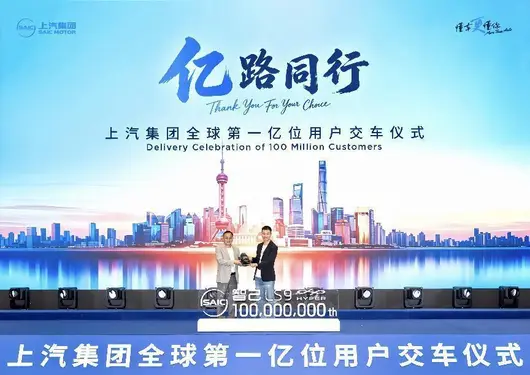
On May 28, 2026, the World Living Room at the North Bund in Shanghai witnessed a historic moment for China's automotive industry. SAIC Motor's '100 Millionth Global User Delivery Ceremony' grandly launched, relying on a global brand matrix covering the globe, initiating a global relay delivery across cities and continents. Thus, SAIC Motor officially became the first company in China's automotive industry with cumulative production and sales exceeding 100 million vehicles, setting a new record in China's automotive industry development, and carving a new milestone in the leapfrog development of the national automotive industry.

Behind the production and sales of 100 million complete vehicles is SAIC's unwavering commitment to industry over more than 70 years, the transformation upgrade from a stumbling start to global leadership, and the best witness of trust from tens of millions of users and partners walking globally. From hand-crafting the first sedan to mass-producing 100 million-level vehicles, from joint venture exploration to independent brand rise, from leading in traditional fuel cars to breaking through in smart new energy, SAIC has completely experienced and promoted the entire process of China's automotive industry from nothing to something, from weak to strong, from establishing itself domestically to roaming globally.
70 Years of Passing the Torch, Witnessing China's Automotive Industry's Striving Journey
SAIC's development context is a condensed history of China's national automotive industry growth. In 1955, Shanghai Internal Combustion Engine Parts Manufacturing Company was established, pulling open the curtain for Shanghai automotive industry development; in 1958, generations of automotive predecessors, relying on craftsmanship and perseverance, knocked out the first 'Phoenix' sedan with hand hammers, achieving a 'zero breakthrough' in Shanghai sedan manufacturing, planting the seed of original intention for the national car-making cause.

Since the Reform and Opening-up, SAIC has boldly stood at the forefront of the industry, leading the way in opening up to the outside world and innovation exploration. In 1983, the Santana officially rolled off the line, opening a new chapter for China's automotive industry joint venture cooperation, accelerating the industrialization and standardization process of domestic automobiles; in 1997, Shanghai GM landed and went into production, with a surprising speed of 23 months from factory construction to car production, creating the 'Shanghai Speed' renowned in the industry, setting new records for global auto companies' factory construction and production.

Entering the New Era, SAIC targeted the independent innovation track, continuously breaking technical barriers. In 2006, the independent brand Roewe was born, raising the flag of innovation for national automobile brands; in 2016, the world's first internet car Roewe RX5 was launched, leading the wave of automotive intelligent transformation; in 2020, the high-end smart electric brand IM Motors was established, precisely laying out the high-level smart electric track, assisting China's automotive brands in advancing towards high-end and technological levels.

Over 70 years of wind and rain, SAIC has always adhered to the core user concept 'Knows Cars, Knows You Better'. 'Knows Cars' means the extreme pursuit of deepening core technologies and polishing product quality, from Santana localization technology attacks to joint venture 2.0 era technology co-creation, to the landing of cutting-edge technologies such as full-steer-by-wire chassis, solid-state/semi-solid-state batteries, AI large model vehicle applications, etc.; every technology iteration shows hardcore car-making strength; 'Knows You Better' means always standing on user needs, converting cutting-edge technology into perceptible and experienced beautiful travel scenarios, letting technology serve people and technology warm the travel. The 100 million production and sales milestone is essentially the concentrated fulfillment of 100 million user trusts, the best proof of SAIC's unchanged original intention.
100-Million-Level Benchmark Model Lands, Gathering Industry Top Technology Achievements
The global 100 millionth vehicle delivered this time is SAIC's painstakingly crafted IM LS9 Hyper. This model condenses SAIC's 70+ years of car-making technology accumulation, is a masterpiece of brand technology iteration, officially opening the new era of new energy vehicles 'new three major components', redefining high-end smart electric travel standards.
In the core hardware layer, IM LS9 Hyper is equipped with next-generation top technology configurations, with strength reaching industry benchmark standards. Chassis level, equipped with the first-ever full-steer-by-wire four-wheel steering technology in its class, balancing handling precision and driving stability; Intelligent Driving level, equipped with 520-line ultra-vision LiDAR and NVIDIA Thor chip, building an all-around, high-precision intelligent perception system, fully pre-embedding L3 and above high-level intelligent driving continuous iteration redundancy capabilities; Three-electric level, relying on full-domain 800V high-voltage platform and Star Super Range Extender System, achieving dual breakthroughs in energy efficiency and range.

Performance and safety fields, the model has numerous highlights. The new car first equips SAIC Gold Badge Hurricane Three-Motor, successfully entering the Performance 3-Second Club, bringing ultimate driving experience; at the same time, collaborating with Purple Mountain Laboratories, globally launching 'Intrinsic Safety' technology, expanding the automobile safety boundary from traditional physical safety to information and system safety, building a solid foundation for automobile safety in the AI intelligent era, protecting users' all-scenario travel.
Worth noting is that the first 100 millionth user this time was Momenta CEO Cao Xudong. As a core strategic partner of SAIC in the intelligent driving field, the intelligent driving technology co-created deeply between the two sides has fully empowered SAIC's independent and joint venture multiple brands, realizing technology landing and user inclusiveness. The special delivery of 'Partner becomes Car Owner' is not only a simple new car delivery, but also a vivid embodiment of intelligent car ecosystem collaborative win-win and deep resonance of technology concepts.

Full Chain and Full Domain Empowerment, Building a Global Hardcore System Strength
The 100 million production and sales miracle is by no means a breakthrough of a single product or single market, but the concentrated manifestation of SAIC's full value chain, full brand, and global system strength. For many years, SAIC has built a complete closed loop of coordinated development of six major segments: vehicles, parts, mobility and service, finance, international operations, and innovation technology, forming a stable, efficient, and sustainable industrial ecosystem.
Market data confirms strong strength; January-April 2026, SAIC's cumulative sales reached 1.302 million units, ranking first in China's automotive industry sales for four consecutive months. Among them, independent brand sales were 910,000 units, accounting for nearly 70%, independent brand rise trend is significant; new energy vehicle sales 412,000 units, continuing to lead the new energy track; overseas market sales 459,000 units, a year-on-year increase of 50.2%, global development momentum is rapid.

During this global relay delivery ceremony, SAIC's full brand matrix appeared together and exerted effort in coordination. Independent brands fully covered diverse travel scenarios, Shangjie Z7, Huajing S, Roewe M7, MG4 semi-solid-state battery version, Wuling Starlight 560, Maxus eDeliver5, Hongyan Heavy Truck, etc., more than 10 models were delivered centrally, covering personal commuting, family travel, commercial operation, logistics transportation and other full-scenario needs. Joint venture brands heavily showed 'Joint Venture 2.0' innovation results, Volkswagen ID. ERA 9X, AUDI E7X, Buick Zhijing E7, etc., new models, relying on high-level intelligent driving, super architecture, ultimate cockpit advantages, were hot sellers from the time of listing, showing new vitality of joint venture transformation.
Starting from the Shanghai main venue, delivery signals were lit synchronously in Nanjing, Liuzhou, Taiyuan and other domestic multiple cities, as well as overseas countries such as UK, Indonesia, Singapore, creating a new narrative for China's automotive industry global delivery. As a pioneer of China's automotive industry 'Going Global', SAIC has deepened overseas markets for many years, laying out more than 100 overseas parts production bases, over 3000 global dealer networks, built 3 overseas R&D and innovation centers, 4 overseas production and manufacturing centers, relying on 42 roll-on roll-off ships, 8 international routes, building a global logistics system covering Southeast Asia, Europe, and America.
Currently, SAIC products and services are distributed in over 170 countries and regions worldwide, overseas cumulative sales exceeded 7 million units. The underling MG brand has ranked first in China's brand European sales for 11 consecutive years, leading the breakthrough of cumulative sales of over 1 million in Europe and UK markets. Relying on the 'Glocal Global Localization Strategy', SAIC is accelerating the leap from 'Product Going Global' to 'Value Chain Going Global', making China's smart manufacturing, China's standards, and China's services go to the world.
User-Centric, Writing a Warm Travel Report
70+ years of deep cultivation, SAIC has always adhered to the original intention of 'Knows Cars, Knows You Better', integrating user needs into R&D, production, sales, service full chain, making every product fit real life, every service warm user travel. This delivery ceremony, many users of different identities and fields became the best witnesses of SAIC's original intention.

Dedao APP Founder Luo Zhenyu in the capacity of Huajing S No. 001 Experience Officer, personally witnessed SAIC's car-making strength; Former National Team Player Yang Chen favored Volkswagen ID. ERA 9X's hardcore quality, consistent with the brand's long-termism concept; Public Welfare Blogger Liu Jia deep cultivated mountain area public welfare, moved by Buick Zhijing E7's full-score cockpit humanistic design; there are also countless ordinary users such as social media creators, village party secretaries, logistics practitioners, etc., choosing SAIC due to trust, rushing to walk together due to love. Every user's choice is a vivid interpretation of SAIC 'Knows Technology, Knows Life Better'.
100 million vehicles is SAIC's 70+ years of struggle and forward progress stage answer, more is the brand moving towards smart electric drive new era, starting a new starting line for 'second entrepreneurship'. Since 2014 leading the new energy transformation layout, SAIC has always closely followed national industry strategy, deep cultivating smart electric innovation, persisting in technology breakthrough, achieving the leap from single point breakthrough to full domain leading, forming a prosperous development pattern of independent and joint venture parallel, passenger and commercial coordination, domestic and overseas linkage.
From 1955 initial startup to 2026 100-million summit, from first user to 100-million users, from local exploration to global navigation, SAIC used over 70 years of time to write the striving legend of China's automotive industry. Standing on a new starting point, SAIC will continue to adhere to original intention, deep cultivate innovation, walk together with global users and industry partners on the 100-million journey, continuously empowering travel upgrades with hardcore technology, assisting industry takeoff with China's smart manufacturing, co-creating a new future of global beautiful travel.