首頁Xingyuan

搜尋歷史
熱門搜尋
經銷商登入 / 註冊

8 Consecutive Months of Dual Growth, Geely's Highlights Go Beyond 310,000 Units
— In-depth Breakdown of the Three Growth Curves of October New Energy, Premiumization, and Globalization
On November 1, Geely Automobile Holdings Limited (0175.HK) announced the latest sales data: October sales totaled 310,183 units, exceeding 300,000 units for the first time this year. It achieved dual month-over-month and year-on-year growth for 8 consecutive months, with a monthly increase of 6%. Monthly data is never scarce in the industry; what is truly scarce is the ability to consistently deliver on monthly figures.
Breaking down this report reveals that 310,000 units are merely the result; the real variables lie within the structure: New Energy products broke the 200,000 unit mark in a single month for the first time, overseas exports stood at 100,000 units for 5 consecutive months, and luxury brands completed their full-year goals first. In the past, growth for many enterprises relied on single hit products for pulse-like spikes, while this scorecard from Geely presents a synergy formed by several curves moving upward simultaneously. The following sections will unpack the true substance behind these data points layer by layer from five dimensions: total volume foundation, New Energy matrix, premiumization, technology reserve, and globalization.
I. Total Volume Foundation: 8 Consecutive Months of Dual Growth, It's Never About Spiking High, But Withstanding Volatility
A single monthly spike can be achieved through marketing nodes; achieving dual month-over-month and year-on-year growth for 8 consecutive months tests the thickness of a company's foundation to navigate industry cycles.
In October, Geely Group sales reached 310,183 units, up 6% month-over-month. Looking at segments, Geely Brand sold 255,742 units, up 8% year-on-year and 4% month-over-month; Zeekr delivered 32,483 units, up 52% year-on-year; Lynk & Co sold 21,958 units, up 19% month-over-month. All three segments moved upward in the same direction, avoiding an overall decline caused by the failure of a single pillar.
The stability of the fuel base is equally key. Geely China Star sales reached 102,357 units in October, retaining the title of China Brand Fuel Passenger Vehicle Sales Champion for the 10th consecutive year. Among them, the Boyue Family contributed 25,075 units, while the China Star Premium Series sold 39,094 units, with a cumulative historical sales volume exceeding 2 million vehicles. Against the backdrop of a continuous contraction in the overall fuel vehicle market, this business line did not passively wait for shrinkage but proactively shifted gears and upgraded using HEV technology: i-HEV models sold 19,631 units in October, accounting for over 19% of China Star sales, with cumulative sales approaching 76,000 vehicles. Standing firm on both oil and electric legs is the underlying reason why the 8-month dual growth showed no interruption.

Figure 1 Geely Automobile October Group Sales Performance Report
II. New Energy Matrix: From One Xingyuan Ruling the Market to Multi-Model Synergy for Volume
The true significance of breaking the 200,000-unit mark in a single month lies not in setting a record, but in the model structure supporting the record having changed.
In October, Geely New Energy product sales (including Geely, Lynk & Co, Zeekr) reached 214,996 units, up 21% year-on-year, breaking the 200,000-unit mark in a single month for the first time and setting a historical high. The New Energy sales share reached 69.31%, also breaking the historical record. This means New Energy has transformed from a marginal contributor to growth into the actual foundation of the Group's sales volume.
The volume-driving Galaxry Brand sold 153,385 units in October, setting a new monthly sales record. Cumulative sales from January to October reached 1,030,569 units, solidifying its position in the first tier of mainstream New Energy. Among them, Galaxy Xingyuan sold 71,337 units, with monthly sales exceeding 50,000 units for 5 consecutive months; the 1 millionth mass-produced whole vehicle officially rolled off the production line at the Xiangtan manufacturing base, with one vehicle rolling off the line every 55 seconds on average, breaking the global automotive market record for one-million-vehicle roll-off speed. The phase where one car alone carries the market load is passing: waist models like Xingjian sold 25,476 units in July, Galaxy E5 sold 14,194 units, with stable breakthroughs over 10,000 units for consecutive months; upward breakthrough models are taking over, with the C-class AI pure electric sports sedan Galaxy TT delivering 10,225 units in its first complete delivery month; on October 10, the New Energy rugged SUV Galaxy Warship 700 launched. Confirmed orders broke 10,000 units within 12 minutes of launch, with monthly sales reaching 8,285 units.
From mainstream home use to pure electric sports coupes to rugged off-road, the Galaxy product line is completing its length and width. The value of matrix sales lies in: when the popularity of a single model fluctuates, the overall market load has other models to support it, thereby significantly enhancing the certainty of growth.

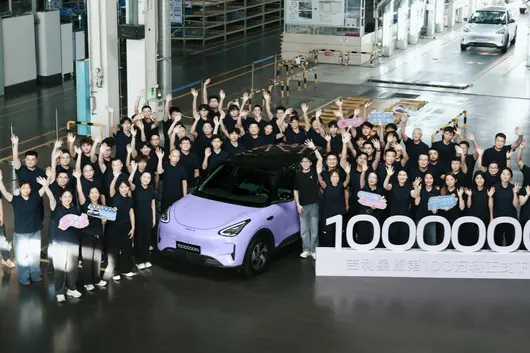
Figure 2 Geely Xingyuan 1 Millionth Whole Vehicle Officially Rols Off the Line at Xiangtan Base

Figure 3 Galaxy Warship 700: A New Option for Rugged SUVs in the New Energy Era
III. Premiumization Report: Scale and Premium Value Established Simultaneously, Breaking the Habit of "Volume Without Price"
The difficulty in building a premium brand domestically is not in selling a single high-priced car, but in forming a stable scale for high-priced cars; Zeekr's October data offers a feasible sample.
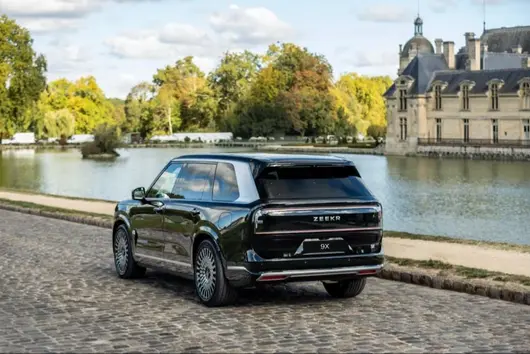
In October, Zeekr deliveries reached 32,483 units, up 52% year-on-year, with monthly sales exceeding 30,000 units for 7 consecutive months; cumulative deliveries from January to October exceeded 320,000 units, up 94.4% year-on-year, with an average transaction price close to 370,000 Yuan, completing the 300,000-unit annual sales target. There is also a product foothold in the high-price segment: Zeekr 9X delivered 6,030 units this month, with an average transaction price per vehicle above 530,000 Yuan. More than 80% of owners actively recommend it, ranking first in sales volume for vehicles above 500,000 Yuan from January to September; Zeekr 009 topped the sales volume ranking for pure electric MPVs above 400,000 Yuan from January to September. Meanwhile, Zeekr overseas deliveries in October reached 14,162 units, with monthly sales exceeding 10,000 units for 3 consecutive months. Overseas sales share exceeded 40%, with premium models copying product power verified in the domestic market to the global market.
On the other pole, Lynk & Co is in a stage of stabilizing and recovering: October sales reached 21,958 units, up 19% month-over-month. New Energy model share exceeded 80%, with Lynk & Co 07 GT retaining the title of China Wagon Sales Champion for two consecutive months. Achievements off the track also feed back into brand perception—Lynk & Co swept the annual Team, Driver, and Vehicle Championship three titles in the 2026 season TCR China Championship, solidifying the tag of "China's Number 1 Automotive Sports Brand" with racing results. One is responsible for scaling up volume, the other is in a storage phase after structural adjustment; the two together constitute the price ladder product tier of the Group.

Figure 4 Lynk & Co Sweeps 2026 Season TCR China Championship Team, Driver, Vehicle Three Championships
IV. Technology Dark Line: Smart Driving for Mass Scale, Charging Energy Building Eco-Network, Methanol Reserve for Long-Term Options
Monthly sales reflect current product power, while what determines the industry ranking two years later is the technology layout buried beneath the report.
Regarding intelligence, the deployment scale of the Qianli Haohan assisted driving system and actual usage are simultaneously entering the scale stage. According to the "Qianli Haohan 2026 Mid-Autumn and National Day Travel Report", as of October 7, cumulative Qianli Haohan owners reached 1.073 million. Assisted driving activation rate was 93.9%, cumulative assisted driving mileage was 3.14 billion kilometers, up 252.6% year-on-year, leading the industry with two firsts: domestic brand deployment scale growth rate and assisted driving mileage growth rate. Unlike the route of concentrating deployment only on high-price flagship models, Geely relies on multi-brand, multi-price band models to bring assisted driving to more mass-market user groups. The real usage data at scale will in turn accelerate algorithm iteration.
Charging infrastructure is another mid-term infrastructure project. The Megawatt-level smart charging technology released by Geely has a single gun power reaching 2.2 Megawatts, combined with the industry's first AI temperature control technology and full-link five-end liquid cooling solution, setting a new benchmark for charging energy safety. At the network level, Geely is carrying out strategic cooperation with NIO in the charging and battery swap field. It plans to build 6,000 smart charging stations and over 20,000 smart charging guns by the end of 2026, and over 22,000 charging stations and over 100,000 charging guns by the end of 2027, promoting high-density "County Connectivity" coverage.
On long-term energy routes, Geely's next-generation methanol hybrid technology will be officially released on November 3. The world's first methanol hybrid family sedan Galaxy Starshine 6 EF will also go on sale soon. Previously, the vehicle completed ground shuttle trials as the conference's official designated vehicle. Smart driving corresponds to current popularity, charging energy corresponds to mid-term ecosystem, methanol corresponds to long-term energy options. The three technology lines constitute a tiered reserve in the time dimension.

Figure 5 Qianli Haohan Deployment Volume and Assisted Driving Mileage Growth Rate Dual Firsts

Figure 6 Galaxy Starshine 6 EF: World's First Methanol Hybrid Family Sedan Launching Soon
V. Globalization 2.0: After Exports Exceed 100,000 Units for 5 Consecutive Months, the Competition Is Root Depth
Early overseas expansion competed on single-car price-performance; current overseas expansion competes on comprehensive system capabilities of channels, brands, and localization operations.
In October, Geely overseas export sales reached 107,153 units, up 158% year-on-year, with single-month exports exceeding 100,000 units for 5 consecutive months. Structural changes are even more worth noting: New Energy product exports reached 82,565 units in the same month, skyrocketing 506% year-on-year, with New Energy share of export sales rising to 77%. Cumulative exports for the first three quarters reached 798,000 units, up 169%. The contour of the second growth curve is clearly visible.
Market layout is moving from single-point breakthrough to multi-regional synergy. At the 2026 Paris Auto Show, Geely debuted for the first time with a Group line-up bringing Geely, Lynk & Co, and Zeekr three brands to the collective stage, with core technologies such as SEA-S Galaxy Architecture and Smart Electric Drive displayed externally; in September, sales of Geely, Lynk & Co, and Zeekr in Europe exceeded 10,000 units in a single month for the first time. In the UK market, the 100th retail outlet was signed up. Entering the market for only 11 months, cumulative vehicle registrations broke 10,000 units, with September single-month registrations exceeding 5,000 units. On October 9, Geely announced formal entry into the Canadian market, with the first batch of models planned to meet consumers locally in 2027. Regional scorecards blossom in multiple points: Zeekr ranked first in luxury brand sales volume in Australia in the third quarter; in September, it rose to second in the Malaysian electric brand ranking; Geely took the top spot in China Brand Passenger Vehicle Sales in Panama in September.
From outputting products to laying out channels to precipitating local systems, Chinese brand overseas expansion has passed the phase of "whether there are cars to sell" and entered a new phase of "whether it can sustain rooting".

Figure 7 Geely Group Debuts at 2026 Paris Auto Show for the First Time with Three-Brand Line-up
Conclusion: The Moat Is Growth Structure, Not Single-Month Peak
Observing the five clues side-by-side yields a conclusion more complete than "310,000 units": the core driver of Geely's October growth is not the pulse-like explosion of a single new car, but the structural growth woven together by mainstream brands driving volume, premium brands commanding premiums, fuel foundation HEV-ization, multi-route technology reserves, and multi-regional overseas landing. Monthly figures fluctuate with seasons and promotional rhythms, while once the growth structure is formed, it brings resilience that transcends the cycle.
The fourth quarter ahead is still node-heavy: November 3 next-generation methanol hybrid technology will be officially released; November 5 the 2027 model Lynk & Co 08 EM-P goes on sale, Galaxy M8, Lynk & Co 900L, 2027 model Zeekr 7X and other new cars will be sequentially introduced; combined with the 40th Anniversary of Founding and Hangzhou Marathon "Add Energy Together" brand node, the market will still see dense product and buzz placement. For automakers at the 300,000 units monthly sales level, the true moat is never a single month's sales peak, but the growth structure behind the peak that does not rely on single points—this is precisely the reading focus this October report leaves for the industry.

On October 29, Geely released its financial report for the third quarter of 2026.
The report shows that Q3 revenue was 99 billion yuan, up 10% year-over-year (YoY) and up 11% quarter-over-quarter (QoQ); core net profit attributable to the parent company was 5.21 billion yuan, up 32% YoY and up 2% QoQ, hitting a historical high. Within the 5.21 billion yuan core net profit, the core net profit attributable to the parent company per vehicle for the first three quarters was approximately 6,664 yuan, up 37% YoY.

In an era where the profit margin of the entire industry's vehicle manufacturing has fallen to single digits and the profit per vehicle for the vast majority of automakers continues to decline, placing the two figures "10% revenue growth rate" and "37% core profit per vehicle growth rate" side by side is the true message Geely's Q3 report aims to convey — rewriting the cost structure.
To understand this main thread, one must first look at a more basic comparison. In the first three quarters, Geely's total sales volume was 2.235 million vehicles, up 3% YoY; revenue was 272.6 billion yuan, up 13% YoY; core net profit attributable to the parent company was 14.9 billion yuan, up 41% YoY.
The growth rates of sales volume, revenue, and profit increase sequentially, forming a ladder of "Core Profit Growth Rate > Revenue Growth Rate > Sales Volume Growth Rate". This is not only extremely rare in the 2026 automotive market but also forms a sharp contrast with the common situation of peers where "sales volume is maintained by price cuts, revenue is barely held up by sales volume, and profits are squeezed from both ends".
It can be seen that, significantly distinguishing from the traditional habitual understanding of the past, the relationship between Geely's profit margin and sales volume is no longer a simple linear relationship.

The core mechanism behind this is closely related to what Geely mentioned in its Q3 brief as a "Leader in Global AI Intelligent Vehicles". Geely is already using a complete AI vehicle building logic to rewrite the cost structure of traditional automakers, which was "each car model developed independently", into a "one platform, multi-brand reuse" structure.
The basis for this judgment is reflected in the "divergence" of R&D investment in the Q3 report. Total R&D investment for the first three quarters was basically flat YoY, but the R&D investment ratio dropped by 0.7 percentage points to 5.5%.
Investment was not cut, but the expense ratio dropped. This phenomenon is most reasonably explained by the improvement in the reuse rate of R&D results. In practice, Geely's global AI technology system, formed with "1+2+N" as the core, based on the WAM (World Activity Model), has achieved full integration of the intelligent driving domain, cockpit domain, and chassis domain.
After the four major AI architectures modularized the underlying capabilities of the whole vehicle, the cost of flow of technical results between different brands and different models will decrease significantly. When R&D for different brands and different models is no longer "starting from scratch", but rather doing differentiated configurations on a unified "vehicle brain", multi-brands have transformed from a cost burden into a lever for R&D efficiency.
As the absolute value of R&D investment is controlled within a certain range, with the rapid expansion of the number of supported brands, models, and markets, the speed at which the R&D denominator is diluted is faster than the speed of growth of the R&D numerator.
Two other lines on the expense side provide corroborating evidence. Administrative expense ratio decreased 0.1 percentage points YoY to 1.6%, and sales expense ratio decreased 0.1 percentage points YoY to 5.6%. Against the backdrop of high-speed expansion in overseas markets and four brands focusing efforts simultaneously, all three expense lines decreased across the board.
Here, two types of completely different cost improvements must be distinguished. One is optimization "saved" through price suppression in procurement, cutting expenses, and streamlining organizations. Although direct, it decreases with each use, has a clear ceiling, and often comes at the cost of sacrificing long-term capabilities.
The other type is "cost derived from structure", where efficiency improvements brought about by changes will continue to amplify as scale expands — Geely's expense ratio decrease in Q3 obviously belongs to this category.

Zeekr is the most direct footnote to this mechanism. In Q3, Zeekr delivered 110,000 vehicles, with a cumulative 288,000 vehicles for the first three quarters, experiencing double-digit growth YoY and QoQ for 8 consecutive months. The annual target of 300,000 vehicles has been completed by 96%. Single-month delivery in September broke 37,000, doubling YoY growth.
In the severe environment of this year where brands trade volume for price, Zeekr has charted a path of "simultaneous increase in volume, price, and profit". Its significance does not lie in "selling at a high price", but in that it bears the verification cost of the most cutting-edge technology, while the marginal cost of reusing the verification results approaches zero.

One year after the launch of Zeekr 9X, it still achieved over 7,000 monthly sales in the 500,000-level market, ranking first in sales among vehicles over 500,000 yuan domestically from January to September; Zeekr 7X broke 10,000 for three consecutive months, and Zeekr 007GT maintained monthly sales between 7,000 and 10,000. Zeekr has simultaneously succeeded in the routes of high-end pure electric and hybrid, SUV and sedan. This means the verified results are not exclusive to a single model and can be reused between different powertrain forms and different body shapes.
Specifically in the Q3 report, Zeekr's sales volume accounted for 12.9% of total sales volume for the first three quarters, an increase of 6.3 percentage points compared to the same period last year; revenue share reached 31.3%, an increase of 13.6 percentage points compared to last year, with revenue share far higher than sales volume share.
This is in itself the financial confirmation of the R&D reuse mechanism at the brand level. A platform development and architecture extended from a base generates revenue returns on the Zeekr brand far higher than other brands, while R&D costs have not increased proportionally.

The entire mechanism is not established only on Zeekr; overseas business is another clear aspect revealed in the Q3 report.
Q3 overseas export sales volume was 323,000 vehicles, up 189% YoY and up 19% QoQ; first three quarters surged 169% YoY to 798,000 vehicles, of which new energy vehicle exports reached 484,000 vehicles, up 531% YoY. Q3 overseas sales share was about 40%, overseas monthly sales exceeded 100,000 vehicles for four consecutive months, and Geely's overseas export growth rate was first among mainstream automakers in Q3.
"Acceleration" needs to be understood within the 2026 overseas export environment. Geely faces geopolitical game theory at this time, including the EU's extra countervailing tariffs on China's plug-in hybrid vehicles entering the implementation phase, multiple Southeast Asian countries tightening foreign investment factory policies, and a general increase in global trade barriers, etc.

Yet at this time, Geely's "Industry Symbiotic" asset-light model showed its ability to resist pressure. And the impact of this model on the Q3 cost structure has three real transmission chains.
The first is saving fixed costs.
Building factories with heavy assets means high depreciation, long payback periods, and risks of idle capacity. These sink into the cost structure to become long-term burdens. Although this path is widely adopted, Geely did not take it.
The "123456 Strategy" released in mid-August clarified that the core idea is not to build factories independently, but to build a Geely overseas system, creating five major regions: Greater Europe 600,000, ASEAN 500,000, Latin America/Africa 400,000, Eastern Europe 300,000, and Middle East/Central Asia 200,000, using cooperative capacity to replace own capital expenditure.
On the path, Geely cooperated with Ford, Volvo, etc. in Europe, completing a systematic capacity layout around GEA and SEA vehicle architectures; in ASEAN, relied on the Malaysia Proton factory to build an industrial hub; in Latin America, deeply bound Renault resources; in Eastern Europe/Central Asia, entered quickly via OEM KD methods.
First three quarters, Geely put 13 overseas factories into production. While overseas capacity exceeded 840,000 vehicles, this part of rigid expenditure was also converted into variable costs, making the cost structure naturally lighter.
The second is to avoid tariff costs.
EU countervailing tariffs are essentially a fee added to export costs. The common point of a series of actions such as acquiring partial equity in Ford's Spanish factory, Volvo becoming Lynk & Co's exclusive European distributor, and the first local production result of Renault Geely Brazil Company, the Geely EX5 EM-i, going offline, is that Geely is promoting localization from "sales localization" to "manufacturing and channel localization", upgrading tariff avoidance from "borrowing" to "co-construction", further improving the stability of the cost structure.

The third is to amplify the R&D amortization denominator.
The same set of R&D investment, selling 100,000 vehicles domestically and 300,000 vehicles globally, results in completely different amortization costs per vehicle.
Geely has currently created "4 sets of 3" global best-seller cars. China Star uses Coolray, Emgrand, Boyue to stabilize the fuel base; Galaxy uses Xingyuan, Galaxy E5, Starship 7 to form global volume synergy; Lynk & Co uses 08, 02, and 900 to drive; Zeekr focuses on 7X, 8X, 9X. The R&D investment for every global model is continuously diluted on top of the Q3 export volume of 323,000 vehicles.
Connecting the three chains together, one will also find the tightness of Geely's asset-light model in internal collaboration.
The reason why this model can have such a big impact on the cost structure is that the prerequisite is still that the R&D side has achieved cross-brand, cross-market reuse. If a new adaptation plan needs to be developed every time entering an overseas market, the fixed costs saved by the asset-light model will soon be eaten up by adaptation costs.
Regarding high pricing ability in overseas markets, Zeekr 9X has already begun sales in developed European countries such as Germany, France, and Sweden, with a starting price nearing 1 million; Zeekr brand export sales volume in August and September both broke 15,000 vehicles, with exports contributing over 40% to the monthly sales for those months, firmly ranking first among Chinese high-end brand exports.
What these reflect is not the optimization of the cost structure, but the confirmation of revenue quality. The cost side makes the denominator smaller, the revenue side makes the numerator larger, and the two jointly support the increase in profit per vehicle.

Of course, Geely's AI vehicle building rewriting of the cost curve is currently still mainly concentrated on the decrease in R&D expense ratio and reduction in vehicle amortization, and has not yet significantly become an independent variable on the Q3 income statement. However, the scaled supply of AI to consumer experience is currently happening and generating positive impact.
The progress of i-HEV Intelligent Engine Hybrid can be concretized as another facet of this logic. This technology, through an architecture of "Electric Drive Dominated, Oil-Electric Synergy", achieves over 80% electric drive, with actual fuel consumption of 2.22L/100km, more than 12% lower than the Japanese hybrid benchmark.
Currently, the China Star fuel series is comprehensively popularizing i-HEV. As of September, cumulative sales reached nearly 60,000 vehicles, occupying over 40% of Chinese brand HEV vehicle sales. Its cost significance lies in that, even if the fuel vehicle overall market declined severely, China Star still sold 293,000 vehicles in Q3, and with the sales performance of 874,000 vehicles in the first three quarters, it firmly ranked first in fuel vehicle sales. Obviously, this base is not sustained by price cuts, but by technological upgrades.

At the end of September, Geely released Megawatt-level Intelligent Charging technology, with a single gun power reaching 2.2 MW; 800V high-voltage platform has covered the 120,000 to 300,000 yuan mainstream price range, with main models such as Galaxy TT and the new Lynk & Co 20 already equipped; in terms of charging infrastructure, an "Person, Vehicle, Pile, Cloud, Network, Storage" AI charging network was built, achieving strategic cooperation with NIO, and carrying out open sharing and industrial synergy in the charging and battery swapping fields.
As of early October, Qianli Haohan accumulated 1.073 million users, cumulative mileage reached 3.14 billion kilometers, activation rate reached as high as 93.9%, accumulated avoidance over 12.18 million times; Flyme Auto accumulated installations in the first three quarters exceeded 1.326 million vehicles, global users exceeded 3.59 million. In Q4, Qianli Haohan G-ASD will undergo a comprehensive upgrade, supporting city roaming NOA, end-to-end AEB, and natural voice vehicle control.
Qianli Haohan's 1.073 million users, Flyme Auto's 3.59 million global users, 800V covering mainstream price ranges, Megawatt intelligent charging and NIO's charging synergy, these are all counted as infrastructure and user entry points for scaled implementation of AI capabilities, and also determine that AI is transforming from "indirect contribution on the cost side" to "attributable contribution on the revenue side".
Rewriting the cost structure also requires a business prerequisite: multi-brands must not step on each other. If the four brands consume each other within the same price range, the efficiency of R&D reuse will be offset by internal competition, and the scale advantage of asset-light overseas expansion will also be eaten up by channel duplicate construction.

Data from the Q3 report shows that this prerequisite is already in place. Galaxy has seen consecutive QoQ growth since August, with double-digit YoY and QoQ growth in September, exceeding 130,000 in a single month. Galaxy E5 broke 10,000 monthly sales for four consecutive months; Galaxy Starship 7 increased continuously to break 22,000 in September; Xingyuan reached 1 million vehicles produced within two years of launch, breaking the global speed record for single model million-vehicle production.

Lynk & Co has stabilized QoQ growth since August, with September sales volume exceeding 18,000 vehicles, new energy ratio exceeding 90%, and new energy ratio in the first three quarters exceeding 70%. China Star September sales volume broke 100,000 vehicles, with double-digit YoY and QoQ growth. Zeekr September deliveries broke 37,000 vehicles, doubling YoY.
The fact that the four brands achieved simultaneous YoY/QoQ improvement in Q3 is no coincidence.
Corresponding to the move to set up a sales headquarters in early August to integrate marketing resources of its brands, and facts such as Galaxy TT achieving delivery of over 10,000 vehicles within 30 days of launch, Galaxy Warship 700 achieving over 10,000 orders within 12 minutes of launch, with high-spec version accounting for 90%; Lynk & Co 07 GT achieving delivery of over 10,000 vehicles within two months of launch, and the new Lynk & Co 20 achieving over 14,600 orders within 1 hour of launch.
It can be found that Geely's integration at the organizational level allowed the four brands to avoid internal consumption during the most intense period of the price war, concentrating resources on their respective favored price ranges and market segments.

A deeper organizational change than setting up a sales headquarters occurred in mid-August. An Conghui succeeded Li Shufu as Chairman of the Board of Geely Automobile. This company has formally moved from the "founder-driven" startup and development phase to the "system and team-driven" mature phase.
How to transition from founder governance to system governance is a question all successful enterprises must answer. The founder's strong judgment is an irreplaceable asset in the early stage of the enterprise, but the larger the enterprise scale, the more complex the business, and the more globalized the market, the lower the marginal return of personal judgment, and the higher the marginal value of system and team decisions. Geely chose to complete this transition at this point, essentially a confirmation of its own development stage: it is already too big to operate relying on just one person's judgment.
Li Shufu's "resignation" is not an exit, but a role transition. He withdrew from the position of "enterprise operator" and instead became a "system designer" and "value guardian". The significance of this transition for Geely is indirectly but clearly projected in the financial data of the Q3 report.
A company operated personally by the founder often relies on personal judgment and ad-hoc decisions for cost optimization; efficiency is high but not reproducible; a company driven by systems and teams has cost optimization as an endogenous result of processes and mechanisms; it is slower but sustainable. Geely's Q3 expense ratio declining across the board, R&D reuse rate increasing, and four-brand collaboration improvement are not results that one person's decision can bring at once, but products of a mechanism operating continuously.

The relationship between this matter and the cost structure is not direct, but it is fundamental enough. Rewriting the cost structure requires long-term investment, and long-term investment fears uncertainty at the governance level most. When a company's strategic direction no longer sways with personnel changes, mechanisms like R&D reuse, platform modularization, and asset-light overseas expansion that take three to five years to take effect are only then possible to be executed stably.
Looking at Geely's Q3 report value from this angle again, it does not lie in proving that Geely can still grow, but in proving that Geely's cost structure no longer relies on revenue growth rate.
Functions can be chased, but the mechanism of cost structure cannot. This is the earliest and hardest-to-copy layer of evidence that "Global Leader in AI Intelligent Vehicles" has in finance.


55 seconds is the current production cycle for a Xingyuan at the Geely Xiangtan manufacturing base.
On October 20, the 1 millionth Geely Xingyuan vehicle rolled off the production line.
Counting from the global launch in October 2024, it took 24 months.
The conventional experience in the global automotive industry is that it takes 3 to 5 years for a single model to reach 1 million units in production from launch. Many brands still rely on accumulating multiple generations.
Xingyuan compressed the cycle to two years, refreshing the global speed record for a single model reaching 1 million units on the production line.
New model ramp-up is usually fast first then steady, but Xingyuan is the reverse.
In May last year, it reached 200,000 units 7 months after launch, breaking the fastest delivery record in its class.
In March this year, it broke 600,000 units, the second 200,000 increment took 10 months. In August this year, it crossed 800,000 units, the third 200,000 increment compressed to 5 months.
By October, it broke 1 million units, the last 200,000 units took only about 2 months.
The time for increments continued to narrow, forming a contrast with the gradual rhythm of traditional automakers releasing capacity first, then laying out channels, and finally accumulating reputation.
Terminal data confirms simultaneously.

From August to September this year, Xingyuan consecutive two months monthly sales broke 60,000 units, currently the only model in the domestic car market maintaining this rhythm.
As of July this year, consecutive 16 months champion of Chinese full-category models monthly sales; last year won the full-category annual sales champion.
A0-class pure electric segment market share exceeded 30%, 1 out of every 3 electric cars sold in the same class is a Xingyuan.
At least three forces are behind this curve.
On the capacity end, the production line beat at the Xiangtan base was gradually compressed to 55 seconds per unit from the initial launch. The release of backlog orders in the early stage provided supply conditions for acceleration in the later stage.

On the demand end, product reputation diffusion and channel sinking occurred simultaneously.
On the market end, the overall expansion of the A0-class pure electric also provided external thrust.
Capacity organization, order management, channel rhythm, every item is affecting the actual form of ramp-up. Xingyuan maintained the synchronization of demand release and supply ramp-up within 24 months.
The difficulty of this synchronization lies in: most models always have one end that can't keep up between capacity and demand, while Xingyuan showed no obvious rhythm interruption within two years.
The A0-class pure electric market has long had an inertia: entry-level means cut specs, commuter means just enough.
Under the logic of low-price competition, front-wheel drive plus torsion beam, small capacity battery, and basic infotainment are common solutions for this price range.

Xingyuan's approach uses cross-class specifications to pull 'just enough' to a benchmark, but this judgment needs to be broken down: which specifications truly change purchase decisions, and which are just bonus items on the product manual.
From the architecture level, Xingyuan is built based on the GEA global native architecture, all series rear-engine rear-drive plus rear multi-link independent suspension.
At the same price level, it is generally front-engine front-drive plus torsion beam. This combination rewrote the driving control baseline for small cars.
Moose test dry ground 80.7km/h, 130km/h high-speed Fishhook test passed, turning radius 4.95m.
Rear-drive independent suspension requires the whole vehicle to be redesigned from the architecture level in terms of handling stability, ride comfort, and space layout. This is the hardest part of Xingyuan's product definition to be replicated in the short term.

Three-electric systems and smart cockpit constitute the second layer of product cognition. All series standard CATL cells, range covers 310 to 480km, 11-in-1 smart electric drive comprehensive efficiency 89.2%, all series standard liquid cooling temperature control system.
God Shield battery safety system forms a multi-layer structure from cells to battery pack to vehicle protection, side pole impact test cell zero intrusion.
Galaxy Flyme Auto system and 14.6-inch central control screen downgraded to entry models, Flyme Auto users have accumulated over 2.8 million.

In terms of space, 85% utilization rate and 70L front trunk are the two most recognizable memory points in the A0-class market, no need to expand on the rest.
But the formation of 1 million units cannot be solely attributed to cross-class specifications.
Pricing range 61,800 to 91,800 Yuan, Geely's channel coverage in the A0-class market, last year's new energy vehicles going to rural areas and purchase tax policy environment, as well as configuration gaps of same-class competitors in the early stage of Xingyuan launch, are actual variables of sales ramp-up.
Xingyuan used cross-class specifications to establish clear product cognition and lowered the consumer decision threshold.
And price, channels, and market timing determine how much sales this cognition can convert.
Once the standard was out, same-class models followed to optimize specifications, A0-class small cars shifted from low-price involution to quality competition.
Xingyuan established cognition advantage within the window period, competitors need time to follow up, both describe market status of different time periods.
Xingyuan has landed in over 30 countries and regions globally.
Thailand market won electric vehicle sales champion, single week at auto show won 3,300 orders; Australia launch first month won pure electric market sales champion.
Jordan pure electric model sales first, Mexico pure electric market second, Brazil two months after launch sales broke 2,300 units.

First half of this year, Xingyuan ranked second in Chinese new energy hatchback exports. Since August, Australian, UK, France markets successively developed.
Beyond numbers, the method of going overseas is also changing.
Traditional car exports are mainly trade-based output, products sold overseas, channels and after-sales depend on local partners.
Xingyuan's overseas launch relies on Geely's global R&D and manufacturing system.
GEA architecture native development for global market, Sino-German joint calibration covers driving environments of different scenarios, product considers multi-market regulations and road conditions adaptation in R&D stage.
On the manufacturing end, Xiangtan base manages manufacturing standards and supply chain organization separately for export models: export model quality inspection process, parts batch traceability and domestic model line separation management. CATL cells and other core parts rely on global supply system to guarantee overseas delivery.
These facts indicate that what Xingyuan exports is not just whole vehicles, but also product definition processes, manufacturing standards, and supply chain organization methods.
But system output is a relatively high-intensity judgment, needs to distinguish levels.

Product R&D globalization, unified manufacturing standards, global supply chain organization belong to system capability output; while overseas channel depth, after-sales service system, localization production and brand cognition construction, Xingyuan is still in the initial stage.
Xingyuan's overseas launch shows signs of transition from product export to system output, product definition and manufacturing standards come first, channels and after-sales system still following up.
Whether this transition can be completed depends on the actual progress of overseas channel layout and localization operations in the next two to three years. Export sales volume itself cannot explain all problems.
24 months 1 million units is a speed record, but speed itself is not the finish line.
1 million units off the line means Xingyuan entered a new stage of scale, and also means greater tests have just begun.
Whether overseas global over 30 countries and regions channel depth, after-sales system, brand cognition can keep up with sales rhythm, whether localization production is put on the agenda.

Where is the sales ceiling of domestic A0-class market, after same-class competitors follow up with specs, how to continuously iterate differentiation advantage, price band whether facing squeeze from above and below.
At least at this time node, Xingyuan speed proved two things.
The scale space of entry-level pure electric market is far from fully released. When product power truly crosses the 'just enough' threshold, mass market demand elasticity exceeds industry expectations.
China new energy competitiveness is shifting from single product price-performance ratio, to combination of supply chain efficiency, product definition capability, and rapid iteration response capability.

What can 55 seconds do? In daily life, 55 seconds might be enough to scroll through two short videos, yet not enough time to even brew a bowl of noodles properly. However, on the production line of the Geely Xiangtan Manufacturing Base, on average, every 55 seconds, a Geely Xingyuan complete vehicle officially rolls off the line. Day after day, efficient and stable operation; from the first mass-produced vehicle rolling off the line to the one millionth complete vehicle, Geely Xingyuan only took 24 months, creating the fastest global record for a single model to reach one million units rolled off the line.

Achieving such production speed is backed by solid sales figures. In 2025, Xingyuan took the sales champion title across all categories in the China automotive market; cumulative sales in the first half of 2026 reached 249,000 units, a 21% year-on-year increase, firmly holding the top spot for the first half of the model sales; momentum in the second half was even stronger, with August and September seeing single-month deliveries break 60,000 for two consecutive months, making it the only model on the current market to break 60,000 units in single-month deliveries for two consecutive months. Not only visible everywhere in domestic communities, shopping malls, and on roads picking up and dropping off kids, Xingyuan also sells in over 30 countries globally, winning the EV sales champion in Thailand and the number one spot in Jordan's pure electric market, landing in Australia this August and topping the local pure electric sales list in the first month. The title of "National Favorite Vehicle" was voted for by one million consumers with real orders.
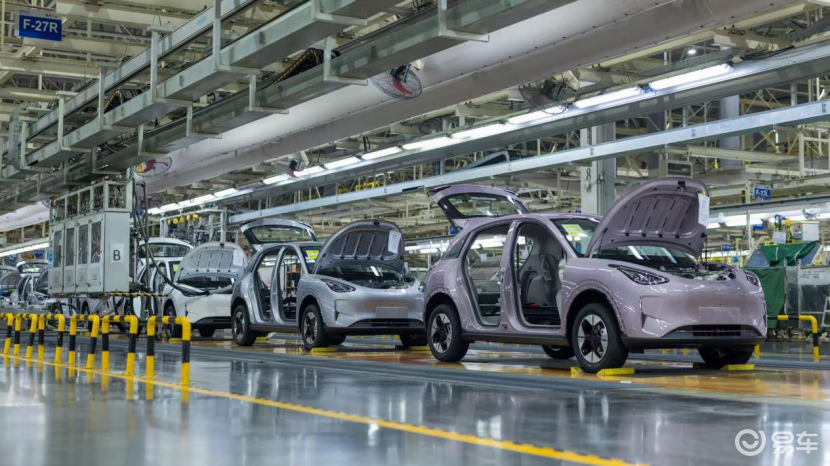
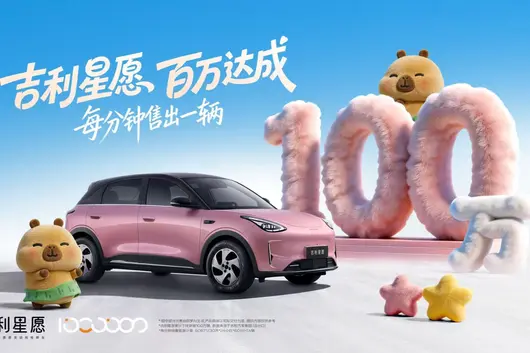
Why has the Geely Xingyuan sold so well? The answer is simple: it doesn't rely on flashy gimmicks piling up specs; every configuration targets daily high-frequency vehicle usage needs.
Although the Geely Xingyuan's length is only 4135mm, its space reaches the standard of a near B-class vehicle. Rear row longitudinal space reaches 1452mm; for a tall person of 1.8 meters sitting inside, there is still surplus space between the knee and the front row; with a pure flat rear floor, people sitting in the middle don't have to curl their legs to make do, moving sideways is easy.

70L extra-large front trunk plus 375L base capacity trunk, front and rear dual compartments perfectly matched, carry bags, fresh food bags, short-term suitcases each have their places; the whole car has 36 storage spaces, documents, keys, children's toys can all find exclusive positions. Geely Xingyuan proves: the upper limit of small cars is not "enough is fine", but making every inch of space fully utilized.


Visible spaces are thoughtfully designed everywhere, the core three-electric technology hidden under the chassis is the core confidence that allows Xingyuan to win over one million users.
Geely Xingyuan series adopts CATL battery cells, ShenGun Battery Safety Protection System, liquid cooling technology. The three form a collaborative technical system, building a full-link safety guarantee from cell quality, structural protection to temperature control, and even with long-term high-frequency use, the battery status remains undiminished. Precisely because of sufficient confidence in this set of technology, Geely did not just show parameters with new cars, but instead found a real car driven by an ordinary user for 200,000 kilometers, collaborated with CATARC to conduct real road condition tests: 60% urban roads plus 40% highway elevated daily travel scenarios, started with full charge and ran until SOC zero, finally tested range 309km, range achievement rate 99.7%, range performance almost no difference from new car. Driven for two years, ran 200,000 kilometers, battery status still online, this solid road test result is more convincing than any paper parameters.

Not only the durability of the three-electric system withstands the long-distance test, Geely Xingyuan's chassis handling quality also didn't suffer under high mileage. Geely Xingyuan series standard independent suspension, flexible rear-drive system, matched with Lotus tuning support, at the new car stage, the moose test can achieve 80.7km/h. Still the user car that ran 200,000 kilometers for re-test, moose test result still reaches 78.1km/h, chassis stability has basically no obvious attenuation. Plus 4.95m minimum turning radius, meeting cars on narrow roads is particularly stress-free, bringing the small car's "easy to drive and park" core advantage to full play.

In-car smart experience and safety configurations also didn't suffer. 14.6-inch HD large screen paired with Flyme Auto 2 smart cockpit, navigation and song switching operation is smooth, voice control, phone screen casting these daily functions are all there. Qianli Haohan assisted driving H3 solution, Highway NOA can help reduce long-distance burden, multi-scenario parking specializes in treating various difficult narrow parking spaces, also Sentry Mode 24-hour car watching, DMS active fatigue detection reminder anytime, encountering emergency situations also have emergency steering avoidance assistance to help out. Whole car 6 airbags protect the passenger compartment, plus ShenGun Battery Safety System and aluminum alloy battery protection cabin dual protection, from body structure to battery core, every layer of protection is solid and reliable.

24 months, 1 million units, represents the choice of one million families and a million trusts. For users, it is a reliable and easy-to-use partner; for the industry, it proves small cars can also have high texture and high standards. This small car that runs through domestic streets and alleys, and drives towards the global, is both our daily life, and a vivid business card of Chinese Intelligent Manufacturing with a lively atmosphere. In the future, Geely Xingyuan will bring out more surprises.

The 1 millionth mass-produced Geely Xingyuan rolled off the line today at the Geely Automobile Xiangtan Manufacturing Base.

From the 1st to the 1 millionth unit, the Geely Xingyuan took only 24 months, with an average of 1 car rolling off the line every 55 seconds.

Looking globally, a scale of 1 million units usually takes three to five years or even longer, and it is mostly the accumulation of multiple models under the brand.
At the beginning of the launch in 2024, the Geely Xingyuan reshaped the standard for A0-level pure electric compact cars around users' real pain points with "Five Major Disruptive Innovations" in space, intelligence, range, handling, and safety. The 70L front trunk, CATL battery cells, rear-drive independent suspension, etc., are standard across the series. Product configurations prioritize user experience and revolve around users' high-frequency usage scenarios. Once the standard was set, peers followed and optimized, and A0-level compact cars thus moved from "good enough" to "high quality and good price".
Million Units Rolled Off Line in Two Years: Geely Xingyuan Refreshes Global Acceleration
As a leader in the A0-level compact car market, the Geely Xingyuan has firmly secured the sales champion title across all categories without qualifiers since its global launch, relying on solid product strength and continuously accumulated user reputation, becoming a "phenomenal" hit product in the Chinese car market. It became the sales champion of all-category vehicles in 2025. In the first half of 2026, cumulative sales exceeded 249,000 units, a 21% year-on-year increase, firmly ranking at the top of the sales list for all-market vehicles in the first half. Entering the second half, the explosive power of the Geely Xingyuan became even more shocking, with sales breaking 60,000 for two consecutive months in August and September, becoming the only model on the current market to break 60,000 sales for two consecutive months. Not only did it achieve a gap-leading position in the A0-level pure electric track, but it also continued to top the sales list of all categories in the Chinese car market.
While leading the way domestically, the global map of the Geely Xingyuan is also accelerating expansion. Currently, the Geely Xingyuan has landed in more than 30 countries worldwide and has successively achieved the top electric car sales in Thailand, the first place in pure electric vehicles in Jordan, and the second place in pure electric vehicles in Mexico. In August this year, the Geely Xingyuan opened up markets in Europe and Oceania such as Australia, the UK, and France, becoming Top 2 in exports of Chinese new energy hatchback models in the first half of 2026.
The Geely Automobile Xiangtan Manufacturing Base Behind "1 Million Units Rolled Off Line in 24 Months"
The Geely Automobile Xiangtan Manufacturing Base relies on 40 years of underlying technology accumulation and global system capabilities of the Geely Group. It has deeply cultivated Hunan for twenty years, giving birth to multiple million-unit models successively, and has now been upgraded to a global manufacturing base that emphasizes both new energy vehicles and export vehicles. Under the double-shift production mode, the factory can roll off one whole vehicle every 55 seconds on average; in 2025, automotive production and sales exceeded 640,000 units/sets, setting a new historical record. The intelligent manufacturing system and full-process quality control provide a solid guarantee for the quality consistency of the 1 million Geely Xingyuan units. The record of "1 million units rolled off line in 24 months" is not only a manifestation of speed but also a commitment to quality.

After Driving 200,000 Kilometers, Geely Xingyuan Performance Indistinguishable from New Car
As the king of sales for all-category vehicles, the confidence of the Geely Xingyuan has never relied on paper parameters, but rather on solid actual product experience.
To verify durability, reliability, and other issues most concerned by users, the Geely Xingyuan partnered with CATARC, using a user vehicle with a mileage of 200,000 kilometers to conduct rigorous tests on range and handling.
This initial generation Xingyuan Dream Edition with a mileage of 200,000 kilometers and a range of 310 km, supported by the standard CATL battery cells, liquid-cooled temperature control system, and full-link energy management across the series, after driving on 60% urban roads and 40% expressway/high-viaduct sections, achieved an actual measured range of 309 km, a range achievement rate of 99.7%, with performance almost indistinguishable from a new car.

After 200,000 kilometers, handling remains stable. Benefiting from the rear-motor rear-wheel drive + multi-link independent suspension and Lotus tuning technology support, this Geely Xingyuan serving for 200,000 kilometers achieved a moose test score of 78.1 km/h, which is very close to the 80.7 km/h score in the new car stage, demonstrating good body stability and controllability.
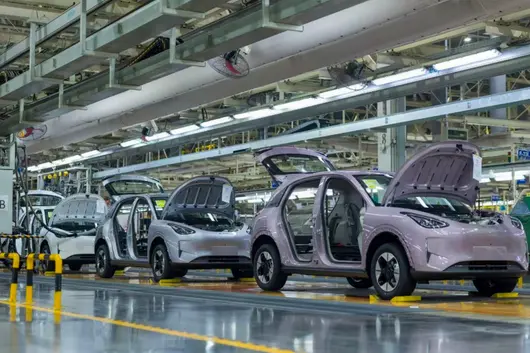

On October 20, the 1 millionth mass-produced unit of Geely Xingyuan officially rolled off the line at the Geely Automobile Xiangtan Manufacturing Base. From the 1st unit to the 1 millionth, Geely Xingyuan took only 24 months, with an average of 1 unit rolling off every 55 seconds. With the momentum of a "phenomenal hit", it refreshed the record for the speed of rolling off 1 million units in the global automotive market.

From its launch in 2024, Geely Xingyuan focused on users' real pain points and reshaped the standards for A0-class pure electric small cars with "five disruptive innovations" in space, intelligence, range, handling, and safety. Features like the 70L front trunk, CATL battery cells, and rear-wheel drive independent suspension are standard across the series. Product configurations prioritize user experience and are centered around high-frequency usage scenarios. Once these standards were set, competitors followed and optimized. Consequently, A0-class small cars have moved from "good enough" to "high quality and good value". The roll-off of 1 million units is the joint crystallization of Geely Xingyuan's system strength, product strength, and user trust, and also a powerful witness of "Chinese Smart Manufacturing" driving to the center of the world stage.
Achieving 1 Million Unit Roll-off in 24 Months, Geely Xingyuan Refreshes Global Acceleration
Looking at the global automotive market, a scale of 1 million units usually takes three to five years or even longer, and is mostly an accumulation of multiple models under a brand. From the 1st to the 1 millionth unit, Geely Xingyuan achieved a scale of 1 million units for a single model in just 24 months, writing a new coordinate for Chinese brands in the history of the global automotive industry.

As a leader in the A0-class small car market, Geely Xingyuan has ranked as the sales champion in all categories without qualifiers since its global launch, thanks to its solid product strength and continuously accumulated user reputation. It has become a "phenomenal" hit product in the Chinese car market. In 2025, it topped the sales champion of all category models. In the first half of 2026, cumulative sales exceeded 249,000 vehicles, with a year-on-year growth of 21%, ranking first in sales of all market models in the first half. Entering the second half, Geely Xingyuan's explosive power became even more astonishing. Sales broke 60,000 for two consecutive months in August and September, making it the only model on the current market to achieve sales over 60,000 for two consecutive months. It not only achieved a breakthrough lead in the A0-class pure electric track, but also continued to top the sales chart of all categories in the Chinese car market. Nowadays, the visibility of Geely Xingyuan on the streets continues to increase. Relying on the "high quality and good value" product experience, it has gained the trust of one million users and is becoming the preferred "national iconic car" for more and more people.
While leading the domestic market, the globalization landscape of Geely Xingyuan is also accelerating. Currently, Geely Xingyuan has launched in more than 30 countries around the world, successively achieving the title of Thailand's electric vehicle sales champion, Jordan's number one pure electric car, and Mexico's number two pure electric car. In August this year, Geely Xingyuan expanded into European and Oceania markets such as Australia, the United Kingdom, and France, becoming one of the top 2 exports of Chinese new energy hatchback models in the first half of 2026. Geely Xingyuan galloping on the streets around the world is becoming a shiny new business card for "Chinese Smart Manufacturing".
Geely's Globalization System Strength, Manufacturing Support for Geely Xingyuan's "1 Million Unit Secret"
"Rolling off 1 million units in 24 months" is not only a breakthrough in speed but also a concentrated examination and fulfillment of Geely's global system strength and global standard manufacturing strength.
Relying on Geely Group's 40 years of underlying technical accumulation and globalization system capabilities, the Geely Galaxy brand has won the favor of over 2.7 million users globally. From the globalization of new energy native architecture at the R&D end to multi-base collaboration and rapid production capacity climb at the manufacturing end; from stable support of core components at the supply chain end to domestic service networks and localization layout in more than 30 overseas countries at the market end, the scaled delivery of Geely Xingyuan at the 1 million-unit level is essentially the accumulation and release of the entire system capability of Geely Galaxy.
As the core carrier of this system strength, having cultivated Hunan for twenty years, the Geely Automobile Xiangtan Manufacturing Base has spawned multiple million-unit models successively. It has now been upgraded to a global manufacturing base that attaches equal importance to new energy vehicles and export vehicles. Under the double-shift production mode, the factory can roll off one complete vehicle on average every 55 seconds. In 2025, automotive production and sales exceeded 640,000 units/sets, creating a new historical high. The intelligent manufacturing system and full-process quality control provide solid guarantees for the quality consistency of Geely Xingyuan's million units. The record of "rolling off 1 million units in 24 months" is not only a manifestation of speed but also a commitment to quality.

Geely Xingyuan 200,000 km In-Service Vehicle Strict Test, Good Quality Withstands Inspection
As the king of sales in all categories, Geely Xingyuan's confidence has never relied on paper parameters but on solid actual product experience. To verify issues most concerned by users such as durability and reliability, Geely Xingyuan cooperated with the China Automotive Technology and Research Center, using a user vehicle with a mileage of 200,000 km to conduct strict tests on range and handling. Test data proves that Geely Xingyuan's reliable quality can withstand the dual test of time and mileage.
After 200,000 km, the range remains solid. This 310 km Dream Edition first-generation Xingyuan, supported by CATL battery cells standard across the series and full-link energy management of the liquid cooling temperature control system, after driving 60% urban roads and 40% highway viaducts, achieved a tested range of 309 km, with a range achievement rate of 99.7%. The performance is almost indistinguishable from a new car.
After 200,000 km, handling remains stable. Benefiting from rear-wheel drive + multi-link independent suspension and Lotus tuning technology support, this Geely Xingyuan that has served for 200,000 km achieved a Moose Test score of 78.1 km/h, which is very close to the 80.7 km/h score at the new car stage, demonstrating good body stability and controllability.

200,000 km is the yardstick to test a vehicle's long-term quality. Geely Xingyuan's product quality has not declined significantly due to mileage growth, and stability during long-term use is clearly visible. For users, choosing Geely Xingyuan is also choosing a quality certainty that can withstand long-term use.
From the 1st unit to the 1 millionth, the 24-month leap witnesses the rise of a phenomenon-level model, and even more, a global legend written by a Chinese brand with system strength, product strength, and user sincerity. In the future, it is expected that Geely Xingyuan will continue to center on user needs, refresh the value standards of pure electric small cars with continuously advancing champion product strength, live up to every choice and trust, and embark on a wonderful new journey with global users.
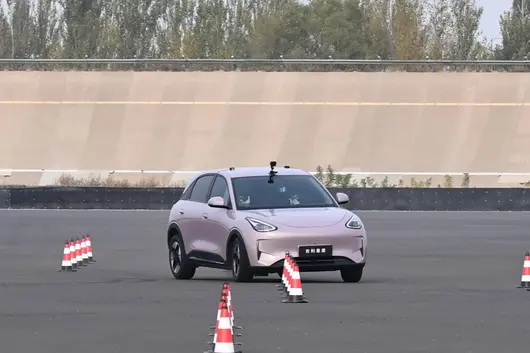
Recently, September sales figures from the auto industry have been released one after another, and Geely Xingyuan has delivered a stunning performance report again: selling 60,871 units in a single month! This is already the second consecutive month its sales have exceeded 60,000 units. Not to mention in the small car circle, but looking at the entire passenger car market, this performance is in a league of its own.

1. Sales Exploding: 800,000 Sold in 21 Months, 60,000+ Stable for Two Months
As the undisputed all-category sales champion last year, Xingyuan's momentum this year is only increasing, never diminishing, truly achieving that no matter whether you compare brands, segments, fuel cars, or new energy vehicles, it can lead by a significant margin.
In the first half of this year, it sold 249,418 units, a 21% year-on-year increase, directly taking the first place in overall market model sales for the first half of the year. Even more surprisingly, just 21 months after launch, cumulative sales have surpassed 800,000 units; this growth rate is absolutely unique among domestic small cars.
From single-month performance, it is incredibly stable: July sold over 55,000 units, August smashed the 60,000 mark, and we thought this was the peak, only for September to sell another 60,871 units, steadily holding the 60,000+ position. To sell over 60,000 units for two consecutive months, not to mention A0 class small cars, even many popular A-class cars and SUVs cannot do this; Xingyuan's ability to attract fans is truly impeccable.

2. Truly Dominating Performance: The King of Small Cars, Capable in All Categories
Why does Xingyuan sell so wildly? Because its advantages are all-encompassing—not only is it the absolute leader in the small car sub-market, but even the sales champion title for all passenger car categories is held by it, constituting a "dimensionality reduction attack" on same-level rivals while also able to compete with higher-priced models.
Many people think commuter cars in the tens of thousands price range "just need to work", Xingyuan does not. The entire lineup adopts rear-wheel drive plus a rear multi-link independent suspension, while most at this price point are still using front-wheel drive plus a torsion beam, resulting in a vastly different driving quality; the battery uses CATL cells, equipped with the God Shield Safety System, and a 30%-80% fast charge takes only 19 minutes, so daily commuting range is not inferior at all, directly pushing the three-electric experience to the ceiling of its class; don't look at the car length being just over 4 meters, space utilization is particularly high, seating passengers and placing items is ample, far exceeding the experience of same-class small cars.
It is precisely because it does not engage in the "low price, reduced features" approach that Xingyuan has gathered a solid reputation, sales are becoming more stable, and its current market position is basically unshakeable, calling it a national-level God Car is truly no exaggeration.

3. Explosive Sales Overseas! Hot in 30+ Countries, Foreigners Accept Chinese Small Cars
Domestic sales are hot enough, but Xingyuan is just as popular when driven abroad, definitely the face of Chinese intelligence and manufacturing.
Now it is sold in more than 30 countries and regions worldwide, and in January-June this year, it was the second-place export for Chinese new energy hatchbacks. Good news from various markets follows one after another: it won the Thailand electric vehicle sales champion in July and the first place for pure electric models in Jordan; it ranked second in all-category pure electric sales in Mexico, since its launch in Brazil it has sold over 20,000 units, and Thailand has also accumulated over 10,000 units sold.
Just in August, Xingyuan also entered developed market countries like Australia, the United Kingdom, and France. Especially in Australia, in just the first month after launch, it achieved a great second place result in the AB-class HB BEV sub-market, proving the car's strength as foreigners voted with their wallets.
From domestic hit to global bestseller, Geely Xingyuan relies not on marketing gimmicks, but on genuine product power. With this momentum, this small car can continue to break records, delivering the name card of Chinese new energy small cars to more countries.


In September, the situation in the Chinese auto market was more severe than expected. Although accurate September sales data hasn't been received yet, according to the China Passenger Car Association (CPCA) data for September 1-27, passenger car sales declined by 29%, with no hot sales scene similar to previous years' 'Golden September and Silver October'. Of course, the reason could also be that September last year was rushing to end subsidies, so sales were at a high level, so in the same period of 2026, it became a significant decline.
However, the good news is that although the domestic market performance was poor, car companies' sales in overseas markets continued to grow, especially the export sales of Chery, BYD, Geely, SAIC Group, Leapmotor, etc. continued to hit new highs, largely filling the domestic gap.
At least from the sales figures, the Chinese automotive industry maintained resilience.
01
BYD continues to sprint, can a monthly scale of 500,000 be achieved?
In September, the number one spot in the Chinese auto market was still held by BYD, with performance leading by a significant margin.
BYD's September sales reached 463,600 units, creating a monthly new high for 2026, with year-on-year growth of nearly 17%, data quite exaggerated. This also shows BYD's sales momentum is still robust, having formed a head effect, and this robustness mainly comes from exports to overseas markets. BYD's September export volume has reached 180,000 units, exceeding one-third of total sales, so overseas sales are an important strategic pivot for BYD.

From a structural perspective, BYD passenger car sales were 456,700 units, continuing the growth trend; among them, pure electric vehicle models were 273,000 units, plug-in hybrid 183,500 units. This data also reflects that 'selling more pure electric vehicles' is indeed a trend in 2026.
At the brand level, the Dynasty Series and Ocean Series totaled 395,000 units, mainly driven by the growth in Yuan UP and Yuan PLUS sales of the Dynasty Series. Regarding the Ocean Series, because the Seagull faces a generational change, the overall scale is slightly smaller. However, considering the all-new Seagull will become a five-seater model, body dimensions are fully increased, and fast charging is supported, it is expected that after listing it will put considerable pressure on Geely Galaxy Xingyuan, and may even allow the Ocean Series to gain growth of over 20,000 units.

Fangchengbao sales in September reached 43,200 units, this doesn't include Fangcheng S series. It is expected that Fangchengbao will move towards 50,000 units afterwards. Denza stabilized at 18,200 units, there was no previous Denza D9 one-time surge. Later N8L pure electric, all-new N8 listing, is also able to continue upward. Yangwang brand sales 389 units. It is said that Yangwang will also launch a flagship model similar to Rolls-Royce Ghost, 2 million level, worth looking forward to.
Clearly, BYD's current strategic focus is twofold: on the one hand to accelerate overseas market growth, on the other hand to push overall sales further up in the domestic market through new cars like Seagull, Fangcheng S, etc., and the popularization of fast charging technology. Currently, BYD is likely to make a push for monthly sales of 500,000 at the end of the year, with annual sales expected to be around 4.3 million units, which is quite difficult in such a tough year of 2026.
02
Geely and Chery: Who will break 300,000 first?
The battle for second place between Chery and Geely is still ongoing. The September sales data released by the two car companies differs by only 140 units. This data can even be ignored, because selling 300,000 units a month by a car company is equivalent to 10,000 units a day. Getting 140 units could be the difference of 10 minutes in working time.
Chery Group September sales reached 292,308 units, but Chery's absolute main force in sales is exports. Chery Group September single-month exports were 207,814 units, up 51% year-on-year, creating a new record for Chinese car single-month exports, data is quite exaggerated. Overall, Chery's January-September cumulative sales reached 2.2068 million units, export sales were 1.5512 million units. Among them, new energy vehicle sales also exceeded 858,000 units. Based on this, Chery is expected to exceed about 3.1 million units this year, with quite excellent performance.

But the problem is also here, over 70% of Chery Group's single-month sales share comes from exports, domestic less than 90,000 units. Once the overseas market changes, such as insufficient transport ship capacity, or certain regions introduce restrictive measures, Chery's sales may fluctuate.
In Chery's brand structure, the Chery brand is the absolute main chunk, sales 198,681 units, mainly relying on Tiggo series and Arrizo series to support, and both domestic and overseas performance are relatively stable. Chery's hard-core off-road and personalized Jetour brand, September sales were 57,497 units, overall relatively stable, but should soon be caught up by BYD Fangchengbao. iCAR brand maintained at the 10,000 level, was 10,858 units, after launching V27 it at least stabilized the state of over 10,000, later there is iCAR V25 to see if it can advance further.

Exeed only has 4,905 units, basically ignorable domestically, this scale is even insufficient to support a press conference or new car R&D. The Luxeed brand September wholesale sales were 5,008 units. This may be related to the delivery rhythm shifting to Luxeed R7 and RX after the bulk delivery of Luxeed V9. As for whether Luxeed can return to the 10,000 level later still needs observation.
Regarding Geely, September sales were 292,200 units, also creating a new high for the year. Actually Geely Auto overall was only 140 units less than Chery Group, can be fully understood as a subtle difference in declaration scope. Such a gap is indeed fierce, but the sales structure of the two is completely different.

Geely Auto's domestic and overseas sales structure is relatively balanced. September domestic sales were about 180,000 units, and exports were 106,685 units. Export sales increased by 162% year-on-year, standing firm on the 100,000 unit stage for four consecutive months. Overall export scale is still only half of Chery's, you can also understand that Geely Auto has a lot of growth space overseas.
Looking by brand, Geely Galaxy sales were around 130,000 units, mainly benefiting from export growth, returned to the growth channel. And Geely fuel vehicle sales also maintained at a high monthly average of 106,000 units. Later there will be Xingyue L PLUS, Xingrui L PLUS and other new cars, estimated to further grow.
Zeekr brand sales 37,216 units, achieved year-on-year doubled growth, has stabilized in the second tier of New Forces, almost on the same line as NIO, Xpeng, Li Auto, and Harmony Intelligent Mobility Alliance. Compared to these brands exceeding 40,000 units, the gap between Zeekr and them is already very small, and Zeekr currently has no new models launched, perhaps in 2027 there will be further changes.

Lynk & Co brand sales 18,493 units, mainly still in the painful period of product transformation, needs to balance gasoline cars and PHEV, naturally not as focused as Zeekr.
Overall, Geely's development momentum is quite balanced and stable. Geely Auto's monthly sales scale this year has not yet broken through 300,000 units, but always can stabilize in the interval of 250,000 to 290,000 units moving upwards, unaffected by external environment, then the probability of breaking through 300,000 units in the fourth quarter is very high. If calculated by monthly average exceeding 300,000 units for the last three months, annual cumulative sales are expected to reach around 3.4 million units, overall on par with Chery, but better in balance. If overseas exports can continue to rise, the result will be more ideal.
It is worth mentioning that both Chery and Geely have recently adjusted their sales management. For example, Geely uses executive vice president level management to manage Lynk & Co brand sales, which may have a positive effect on Lynk & Co brand sales recovery.
Chery's adjustment is even more radical, overseas person-in-charge directly came to unify Chery domestic sales and marketing business. Previously responsible sales executive vice president then fully in charge of Jetour brand. This means Chery now is domestic and overseas one board game, Jetour wants to open a piece of market separately, also can see Chery's craving for the domestic market.
03
New Forces Leapmotor leads by a significant margin, 30,000 units scale to qualify for the list
Regarding New Forces, the number one sales position in September still belongs to Leapmotor Auto, monthly sales maintained at 100,000 level, belongs to leading by a significant margin.
Leapmotor's specific September sales figure was 105,656 units, up 59% year-on-year. This number is already at the same level as Toyota and Volkswagen in the domestic market sales, of course this data also includes export sales. Can also see Leapmotor pushing forward simultaneously on domestic and overseas two lines. As long as it can stabilize the 100,000 unit monthly sales, this year has a chance to impact 1 million units scale, can say Leapmotor's early layout won itself the first ticket on board for New Forces.

Second place is very unexpected - from the data perspective it is Changan Qiyuan. This brand has always been quite low-key, but September sales reached 46,507 units. If no unexpected sales best will still be Qiyuan Q05. This car's performance far exceeded expectations, already rushed up in the 70,000 to 100,000 yuan market interval, can even grab a part of Xingyuan's sales. There is also part of sales from overseas market, so Qiyuan's volume rise speed is quite fast.

Third place is Fangchengbao, September sold 43,181 units total, up nearly 80% year-on-year, data still considerable. After Titanium 7 launched Fast Charging version, pure electric vehicle sales increased very fast, next will launch Titanium 9, overall sales have further space. The information currently known is, Fangcheng S and Fangcheng S GT two car order situations are quite good, price interval in 180,000 to 240,000 yuan, aiming exactly at Xiaomi SU7 price belt. If monthly sales of these two cars can rush up to 8,000 to 10,000 units, it will help Fangchengbao overall sales stable at 50,000 units scale.

Fourth place is Xpeng Auto, September sales were 41,256 units. Currently Xpeng model data has not been released yet, but Xpeng MONA L03 sales are about 14,000 units, accounted for 1/3 of Xpeng's sales.
Xiaomi Auto September sales exceeded 40,000 units, specific data disclosure is limited. Known is Xiaomi Peng Cheng first month delivery exceeded 10,000 units. Actually Xiaomi Peng Cheng's first sales period sales are not as optimistic as expected, it is said Xiaomi internal has already positioned Peng Cheng as slow heating model. But overall, Xiaomi Peng Cheng two new cars still pushed Xiaomi 2026 since first time back to above 40,000, indicating Xiaomi sales still in upward channel.

September Harmony Intelligent Mobility Alliance sales were 37,490 units, among which includes Aito sales. In the fourth quarter Harmony Intelligent Mobility Alliance new car launch will obviously increase, including Luxeed New R7, Luxeed RX, as well as Stelato V8, and Aito M7, M8 new models will also be pushed to market. For Harmony Intelligent Mobility Alliance price is high problem in market feedback, at least Seres has already started for Aito M6 launch three-year interest free, perhaps next Harmony Intelligent Mobility Alliance will also have a volume selling strategy.
NIO company September delivery 37,408 units, only difference dozens of units with Harmony Intelligent Mobility Alliance. Among them NIO brand 21,318 units, Onvo 8,763 units, Firefly created high sales, reached 7,327 units. Now external expectations for NIO are all on end-of-year release of all-new generation ET5 and ES6.
Zeekr September sales 37,216 units, huge increase year-on-year, also narrowed the gap with NIO. However Zeekr quite a part of sales comes from overseas exports. Currently can see, Zeekr in overseas market sales share is very high, including in Malaysia, Thailand etc. all have very high visibility, this mainly benefits from Zeekr priority going overseas, priority develop right-hand drive models strategy.
Hyper Aion September sales 35,494 units. Aion after launching i60, N60 overall performance still quite stable. Later there will be Ray 7 such young car, perhaps can rush a wave again.

Li Auto 31,817 units, down 6.3% year-on-year, main reason is Li Auto i6 is about to switch new car, currently in clearing inventory stage, intermediate will have two months gap. In addition Li Auto i9 is said order situation quite good, almost has filled up Li Auto i8 market demand, expect subsequent Li Auto pure electric models有望 exceed 30,000 units.
Regarding other brands, Deepal Auto sales 30,185 units, MG sales 30,000 units, BAIC New Energy sales 24,080 units, performance stable.
Some brands are still at monthly sales 10,000-20,000 unit level, including Denza sales 18,198 units, Voyah sales 13,025 units, Avatr sales 8,183 units, still not over 10,000.
Overall, September New Forces performance was better than expected, this also squeezed traditional joint venture brand market. Need to note, on this New Forces list, if sales cannot exceed 30,000 units, actually pressure will be very big, including now Changan Auto aspect has started to integrate Deepal and Avatr, just hoping to pull through internal efficiency.
(END)

In 2025, the entire ASEAN market car sales reached 3.25 million units, ranking fifth among global regional markets. The scale is far smaller than China, the US, and Europe, but this entire developing region has a huge population dividend and still unreleased demand, making it one of the most important destinations for Chinese automakers going global.

After several years of rapid growth, brands such as BYD, Geely, Chery, Great Wall, and MG have entered the main lists in multiple ASEAN countries. Next, we will focus on the five ASEAN countries of Indonesia, Malaysia, Thailand, Philippines, and Vietnam based on the sales data for July to see what achievements Chinese automakers have made locally.
Among the five Southeast Asian countries, the total sales for July were about 320,000 units. Among them, the largest markets, Malaysia and Indonesia, both exceeded 80,000 units in a single month. Vietnam and Thailand are in the second tier, with monthly scales close to 60,000 units. The Philippines is around 37,000 units.
Note: Sales data in this article comes from overseas statistics. Chinese automaker brands facing the overseas market such as Omoda/Jaecoo are all counted as Chinese brands. Additionally, some badge-engineered models based on Geely platforms and architectures for the Proton brand also squeezed into Chinese brand models.
01
Indonesia: BYD Enters Top 3, Chinese Brand Share Exceeds 20%

In terms of population and car market scale, Indonesia is the leader in Southeast Asia. However, its position in the car market is not stable, with Malaysia hot on its heels.
Indonesia's new car sales in July were 81,100 units, a year-on-year surge of 34%. The growth rate even exceeded Vietnam. Cumulative sales for the first seven months of this year were 518,000 units, with a growth rate reaching 18.9%.

In the total brand rankings, Toyota and Daihatsu, two Japanese brands, occupy the top two spots with shares reaching 26.7% and 17.4% respectively. Adding brands behind them, the Japanese camp's share in Indonesia easily exceeds three-quarters. Moreover, brands like Daihatsu, Mitsubishi, Hino, and Isuzu still maintain strong growth.

BYD is the only Chinese brand currently squeezing into the Top 5, and its ranking has entered the top three, surpassing Mitsubishi and Suzuki. July sales reached 6,569 units, a year-on-year increase of 1.8 times, occupying an 8.1% share in Indonesia. Additionally, Jaecoo under Chery is a new entrant. In July, it ranked eighth with 3,200 units.
Looking further back, Geely, Wuling, Chery, MG, XPeng, AION, and Jetour, totaling 7 Chinese brands, are concentrated in the 11-20 range, with sales scales from 300 to nearly 2,000 units.

Looking solely at the Chinese brand rankings, the vast majority present growth rates far exceeding the local overall market. BYD contributed nearly 40% of total Chinese brand sales. The top five Chinese brands combined accounted for nearly 90%. Brands like Chery, AION, and Denza also experienced significant declines, indicating that while Chinese automakers are generally growing fast locally, a few brands are already showing signs of falling behind.

The Indonesia model rankings reflect a strong pragmatism. Daihatsu Gran Max Pikap ranks first, indicating that small commercial pickups are still a market necessity. Toyota Kijang Innova, Avanza, Mitsubishi Xpander, Toyota Rush, and other models reflect long-term preferences of families and small-to-medium enterprises for seven seats, space, durability, and resale value. Suzuki New Carry, Daihatsu Sigra, Calya, etc., correspond to low-cost transport and first-time purchase needs.
This preference is related to Indonesia's driving environment: large families, strong cross-city and cargo needs. Car purchasing decisions usually consider seating capacity, durability, financing costs, and after-sales radius simultaneously. Traditional best-sellers may not be the most technologically advanced, but they offer convenient maintenance, stable value retention, and balance family and commercial use. For Chinese models to enter the mainstream, they must combine these rational factors with new energy usage costs, not just emphasize intelligent configurations.

Among Chinese models, BYD Atto 1 (Seagull) ranked second in the overall list, becoming the most prominent Chinese model. The core reason is that it brings the pure electric threshold to about 200 million Indonesian Rupiah (approximately 76,000 RMB), while the body is compact, suitable for urban commuting in cities like Jakarta. It is not replacing Gran Max or Innova, but providing an option below traditional EV expectations for urban families' second cars, young users, and high-frequency urban commuting.

Jaecoo J5 entering the overall top six shows that the attractiveness of Chinese brands does not rely solely on low prices. J5 enters the 250 million to 320 million Indonesian Rupiah range (approximately 95,000 to 120,000 RMB) with an SUV posture, larger battery, and complete safety and comfort configurations, directly targeting users who originally considered Japanese compact SUVs. The core selling point is offering a larger sense of size, more configurations, and new energy identity with a budget close to fuel SUVs.

BYD M6 (Song MAX) and Geely EX2 have different styles. M6 enters the overall list, targeting Indonesia's most important MPV scenario, indicating electrification is starting to expand from personal small cars to multi-person family travel. EX2 satisfies users with higher requirements for tech configurations and space with a price and size between Atto 1 and J5.
Overall, the landscape of Chinese models in the Indonesian market is not a single blockbuster, but a simultaneous push along three lines: small pure electric, SUV, and MPV.
Summary:
Chinese brands' challenge to Indonesia's original landscape first falls on Japanese second-tier and Korean brands. BYD has exceeded Mitsubishi and Suzuki's single brand sales for July. Jaecoo also entered the overall top ten. The order where Japanese second-tier brands took over after Toyota in the traditional landscape has been broken, and Honda's significant decline further amplifies this gap.
However, for Toyota, Chinese brands still do not possess true challenging power. Toyota and Daihatsu combined still account for over 40% share, possessing advantages in channels, finance, used car residual value, and parts networks in MPVs, low-price cars, and commercial vehicles. The breakthrough of Atto 1 and Jaecoo J5 is concentrated in new energy passenger cars and has not yet entered high-intensity commercial scenarios and core family scenarios represented by Gran Max and Kijang Innova.
The key for the next stage in Indonesia: BYD needs to avoid over-reliance on Atto 1; Jaecoo needs to prove there is a second stable model after J5; Geely must convert high growth into channel and after-sales capabilities; Wuling must use early accumulation to update products. As long as these brands continue to convert price, size, and configuration advantages into reliable usage reputation, the pressure on Japanese second-tier brands will be significantly greater than on Toyota.
02
Malaysia: 60% Share Occupied by Local Automakers, Geely Eats into Japanese via Proton
Malaysia and Indonesia's market scales are very close. July sales were 80,030 units, up 6.5% year-on-year. Cumulative sales for January-July were 489,000 units, up 4.4% year-on-year.

Let's briefly mention Perodua. This is Malaysia's second national car company, established in 1993. Initially positioned significantly lower than Proton, it obtained systematic support including platforms, powertrains, and manufacturing systems through cooperation with Japanese Daihatsu. Starting with low-price cars to open the market, it now covers seven-seaters, entry-level commuters, and sedan markets.

Today, Perodua occupies nearly 40% of the Malaysia market. July sales were 31,800 units, exceeding the combined total of Proton and Toyota in the second and third places. If Proton is still regarded as a Malaysia local brand, then the share of these two automakers reached 61%, leaving less than 40% share for other categories.
However, in terms of trends, Proton's July sales surged 29% year-on-year, with cumulative growth for January-July reaching 38.7%. Perodua's single-month and cumulative figures both declined nearly 5%. With these rises and falls, the number one spot in Malaysia might change hands in the next two years.
Overall brand rankings, Omoda Jaecoo, BYD, Jetour, and Chery squeezed into the Top 10. The only new force, Leapmotor, entered the top 20. Tesla only ranked third. Malaysia offers less than 40% market share to overseas brands, while Japanese brands occupy nearly 30%.

Taking all Chinese brands into account, Omoda, Jaecoo, BYD, and Jetour broke 1,000 units in July sales. The fastest growing, Jetour, Zeekr, and Leapmotor, all grew by multiples. Adding all these Chinese brands together, their share in Malaysia reached 8.9%.
However, this is not all the achievements of Chinese automakers locally. The biggest difference between Malaysia and other markets is that besides Chinese badges like BYD, Jetour, Jaecoo entering directly, Geely also converted Chinese related platforms and products into local brand sales by acquiring Proton. Many best-selling models of the Proton brand are actually Geely badge-engineered products.

In terms of models, Malaysia consumers value price, usage costs, and brand trust most. Perodua Bezza, Proton Saga, Perodua Axia, Myvi, and Alza rank at the top, indicating small sedans, hatchbacks, and low-price MPVs are still the basic foundation. Common advantages of these models are low purchase thresholds, controllable fuel consumption, convenient maintenance, and stable value retention, making them very suitable for first-time purchases and families' second cars.
Behind this preference is strong national brand trust. Perodua and Proton have deeper dealership networks, financial schemes, and used car perceptions. Even if consumers focus on new energy, they often ask first if maintenance is convenient or if the used car is easy to sell. Chinese brand related models helping Proton enter the list essentially reduce the trust cost of new technologies. The popularity of Proton models also shows consumers do not reject Chinese platforms; the key is whether it completes the trust conversion through local brands.

e.MAS 5 (Geely Galaxy Xingyuan) ranked sixth overall. It is an entry-level pure electric car with the same source as Geely Xingyuan/EX2, targeting young users and urban commuting; e.MAS 7 is positioned as a higher-end pure electric SUV. X50 and S70 have long undertaken Proton's sales tasks in the compact SUV and sedan markets.

Including these Geely badge-engineered cars in the Chinese model list, we find the top 4 are all occupied by the Proton brand. Adding Proton X70 and X90 afterwards, they contributed an additional 10.7% share for Chinese models. Looking at this way, the overall share of Chinese models in the Malaysia market has reached nearly 20%.
Among other Chinese brands, Jetour T2 emphasizes boxy styling and outdoor feel, forming a sharp distinction from Malaysia's traditional small cars. Jaecoo J7 and J5 attract middle-class users with SUV design and configurations. BYD Atto 3 relies on early entry into the new energy market to establish cognition. Zeekr 7X, Leapmotor B10, etc., target higher-budget smart EV users. These models' sales are not yet large, but they already cover multiple price bands from entry-level pure electric to mid-to-high-end SUVs.
It can be seen that Malaysian Chinese models do not rely solely on being cheap. Design, screens, assisted driving, and electrification performance creating fresh feeling have all played quite a role.
Summary:
In the Malaysia market, Chinese brands have not yet threatened Proton's number one position, but are starting to compress the foreign second tier. Omoda Jaecoo, BYD, and Jetour entering fifth to seventh pushed traditional brands like Mazda and Mitsubishi to further back positions. More importantly, Proton achieved growth with Chinese related models, indirectly weakening Toyota and Honda's advantages among non-local brands.
The key for the future Malaysia market is how the two Chinese paths will divide labor. Proton can continue to expand the e.MAS series. Direct entry by Chinese brands will become more difficult because consumers might prefer similar products possessing local brand identity and after-sales networks.
If BYD, Jetour, and Jaecoo can establish clear labels, they can avoid direct overlap with Proton among younger, more personalized users. The essence of competition in Malaysia is not Chinese brands fighting local brands, but the Chinese system entering both local brand internal and external markets simultaneously.
03
Thailand: Chinese Brands Team Up to Exceed Toyota, Overall Share Exceeds One-Third

This July, Thailand new car sales reached 59,200 units, surging 20.1% year-on-year. This is the fifth consecutive month of single-month growth for the country. EV delivery volume surged 1.2 times, with penetration reaching 35%. At the same time, fuel vehicle power year-on-year decline reached 34.5%.
The first special characteristic of the Thailand market is that its car production volume is far higher than local sales. Automakers of all categories chose Thailand as an export base for the Southeast Asian market. Thailand's car production in July reached 117,000 units, nearly double the local new car sales.

At the brand level, Toyota's share of 33.5% remains solidly first. The second and third places are Japanese Isuzu and Honda, but sales scales differ from Toyota by several multiples. However, ranks 4-9 further back are all occupied by Chinese brands.
July Japanese brand share in the Thailand market reached 55%, which has dropped after the rapid rise of Chinese brands. Besides Japanese brands, European, Korean, and American brands have very weak presence locally. Ford and Tesla sales just over 1,000 units, total share less than 4%.

Listing all Chinese brands, the overall share has reached 36.77%. Among them, Omoda Jaecoo, BYD, Geely, and MG, each share reached around 5%. Great Wall, AION, and Deepal each about 3%, all starting to establish identity and presence locally.

The Thailand model ranking first reflects the tradition of pickups and small cars. Toyota Hilux and Isuzu D-MAX represent commercial, agricultural, engineering, and rural users, highly sensitive to durability, load capacity, maintenance radius, and used car residual value. Toyota Yaris Ativ represents city first-time purchases and low-cost commuting. The top three still occupied by these traditional strengths indicates the underlying demand of Thailand car consumption has not been rewritten.

After Yaris Cross, Geely Xingyuan and Jaecoo 5 EV directly entered the overall top five and six. Xingyuan's advantage lies in small size, relatively low price threshold, suitable for daily city commuting; Jaecoo 5 EV combines SUV styling, configuration, and pure electric identity at a lower price, satisfying young families' needs for space and image.

Deepal S05, ORA 5, MG S5 EV, AION UT, MG 4 EV, iCAR V23 also entered the overall top 20, showing Chinese brands are not relying on just one product. Their common point is using EVs as an entry point, offering more distinct smart cockpits, designs, and configurations; differences lie in some emphasizing city hatchbacks, some home SUVs, some personalized appearances. For consumers not yet fully trusting EVs, Chinese brands used dense model supply to reduce trial-and-error thresholds.
The popularity of these Chinese models is also related to the earlier EV cognition in the Thailand market. MG, Great Wall, etc. previously established certain channels and user bases. New entrants Geely, Jaecoo, Deepal, and AION can take advantage of the already formed charging, test drive, and reputation environment.
Summary:
Chinese brands' impact on Thailand first reflected in Isuzu, Honda, and Mitsubishi traditional second tiers. July Chinese brand total was 2.4 times the combined sales of Isuzu and Honda. The fourth to ninth ranks were filled by Chinese brands, meaning Japanese brands have lost their original natural sorting advantage in the passenger car and new energy crossover market.
Toyota's number one is still hard to shake, because Hilux and Yaris Ativ are not just sales models but represent Thailand channels, finance, used car residual value, and social usage habits. Chinese models have not yet formed equal trust in pickups and high-intensity commercial scenarios. Geely Xingyuan approaching Yaris Cross is a breakthrough in passenger cars; but to truly challenge Toyota, it requires entering pickups, hybrids, or local production mainstream cars to deepen further.
04
Philippines: Japanese Highly Dominant, Three Chinese Brands Attack the Waist

Philippines is a region with not small population, but underdeveloped economy. July new car sales were 37,300 units, down 2.5% year-on-year. It is the only one among the five Southeast Asian markets to encounter a decline, and January-July cumulative decline was larger, with a drop reaching 10.2%, totaling 242,000 units.

Data obtained regarding the Philippines market is relatively limited, only found July brand rankings covering up to 11th place. From data, Toyota occupied 47.69%, Mitsubishi 16.80%, combined 64.49%. Remaining brand shares are all less than 5%, showing Philippines consumers still highly rely on Toyota, Mitsubishi channels, reliability, parts supply, and used car residual value.
Compared to 2025 full year data, the top landscape changes in the Philippines market this year are small: Toyota still nearly 50%, Mitsubishi still second, Suzuki still around 4%. In the list waist position, Ford and Nissan shares declined, while MG, Geely, Omoda&Jaecoo entered the 2%-3% range.
That means, Chinese brands are still far from touching the market pyramid top, but have already changed waist competition from traditional brand internal sorting to mixed new and old brand competition.

Suzuki, Honda, Ford, Isuzu, and Nissan constitute the traditional waist camp, shares roughly between 2.6%—4.5%. This interval is exactly the most realistic breakthrough point for Chinese brands currently: MG, Geely, Omoda&Jaecoo ranked eighth to tenth, shares about 2.3%-2.6%, already very close to Nissan and Isuzu.
Chinese brands combined total 2,708 units, occupying 7.25%. Although still far lower than Toyota and Mitsubishi, it exceeds Suzuki, and exceeds combined Honda and Ford. Philippines changes are not top ownership change, but waist brands starting to crowd: traditional Japanese second-tier, Ford, and Chinese new brands are competing for the same batch of users more sensitive to price, configuration, and fresh feeling. Additionally, Vietnam's VinFast entered 11th with 2.18% share.
Summary:
For a large number of Philippines family users, vehicles are not only commuting tools, but also cross-city relatives visits, pick-up and drop-off, and sideline assets; reliability and maintenance convenience are often more important than configurations. Toyota, Mitsubishi long-term investment in channels and parts systems made consumers form strong path dependence. If Chinese brands do not have clear model reputations, even if single-month shares rise, heat often falls after delivery.
This also means Chinese brands in the Philippines cannot rely only on configurations or prices. If after-sales outlets, parts supply, financial schemes, and used car residual values do not keep up, even if consumers are attracted by models, they might return to Toyota and Mitsubishi at the final decision.
MG, Geely, Omoda&Jaecoo sales are all around 900 units, indicating all three have not yet formed overwhelming single-product advantages, but also means the gap is small. Any brand that appears with a clearly positioned SUV, crossover, or hybrid, and coordinates core city channel construction, may break through monthly sales of 1,000 units first and pull away from Chinese peers.
05
Vietnam: VinFast Dominates Local Market, Chinese Brands Nearly Absent

Vietnam overall market scale although limited, growth is very strong. This July, Vietnam market new car sales were 590,000 units, surging 26.1% year-on-year. January-July cumulative sales were 388,000 units, year-on-year growth even higher, reaching 28.6%.

Vietnam market landscape is very peculiar. Local brand VinFast alone occupied over one-third of the share, more than three times the second-place Toyota. And July VinFast sales surged 89.7% year-on-year, showing this automaker not only occupies dominance, but its share is still growing rapidly.
Looking further back, Toyota and Thaco-Kia grew slightly, Hyundai and Mitsubishi basically flat, Ford declined significantly. Japanese brand local share totals less than 30%, less than VinFast alone. Korean Hyundai and Kia combined grabbed 14% share, half of Japanese. Foreign brands did not all lose market, but growth rights, topic rights, and new energy definition rights are concentrating on VinFast.
For us, VinFast name is still quite unfamiliar. This is a brand established in 2017 by Vietnamese private group Vingroup. Early on entered with fuel cars, 2019 formed whole vehicle manufacturing capability, 2021 started delivering electric cars, subsequently quickly stopped fuel car production and turned to full electric products, and listed on Nasdaq in 2023.

Model rankings show, currently most popular in Vietnam are low-threshold, small size, clear purpose local EVs. July model top five all from VinFast. VF3 positioned city commuting, VF5/Herio Green covers small SUV and hatchback commuters, Limo Green leans towards MPV and multi-person travel, Minio Green further dives into entry market, VF6 undertakes higher-level home SUV needs.
Reasons for these models' popularity are not just cheap. VF3's small body and low price lowered first-time purchase thresholds. VF5, VF6 provide space and sitting posture more suitable for family use. Limo Green suitable for multi-person riding and high-frequency operation scenarios. VinFast split EVs from few people's trial consumption into daily tools of different price levels, different purposes, which is exactly the key to its sales quickly expanding.
By comparison, foreign models still concentrated in traditional advantage niche markets. Toyota Yaris Cross is one of the few maintaining high-growth overseas brand models. Mazda CX-5, Mitsubishi Xpander, Ford Ranger, and Toyota Vios all bore significant decline pressure.

As for Chinese brands, basically haven't been able to form influence in Vietnam yet. July entering brand Top 15 was only commercial vehicle company Dothanh-JMC, sales 248 units, share 0.4%. No Chinese passenger brand on the list. Currently Vietnam's best-selling model logic is already defined by VinFast. Chinese brands currently are neither new energy leaders nor local sentiment beneficiaries.
Clearly, for Vietnam market, Chinese automakers cannot simply copy the moves made in Thailand, Indonesia. Chinese brands often entered other markets as new energy pioneers, but this position in Vietnam is already occupied by VinFast. If Chinese brands enter with low-price small cars, it will also directly clash with VF3 and Minio Green.
Short-term, Vietnam market worth observing key point is when Chinese brands will appear a model in local with monthly sales over 1,000 units. This and neighboring Southeast Asian markets, in population base, economic growth rate, all have hard-to-ignore potential. Many Chinese companies have already moved into Vietnam. When Chinese automakers can achieve this point, is still unknown.
Summary:
Short-term, Chinese brands hard to challenge Toyota and Mitsubishi. Toyota share close to 50%, leading advantage not just sales, but includes channel coverage, fleet procurement, maintenance system, and consumer trust; Mitsubishi also has solid MPV, SUV, and commercial vehicle foundation. Chinese brands' real opportunity is to first surpass Nissan, Isuzu, Ford, and Honda, turning third to seventh ranks into new competition zones.
Philippines more suitable for concentrating resources to build a few clear models, rather than copying Thailand's multi-brand expansion. Market scale small, top concentration high, too many brands easily cause channel and after-sales burden. MG can rely on earlier established brand cognition. Geely can emphasize design and technology. Omoda&Jaecoo can highlight SUV and new energy image. Whoever can first land brand label on a stable best-selling model, who is more likely to enter top five from eighth to tenth.
06
Jia Shi Summary
Southeast Asia overall market is limited, but each single market landscape is greatly different.
In Indonesia and Thailand, Chinese brands have already formed direct impact in Japanese strong markets; Geely's acquisition of Proton has now shown full returns in sales and share; Philippines market still highly concentrated, Chinese brands need to slowly find breakthrough points from waist camps; Vietnam forming local industrial chain, has its own unique set of market logic, is the hardest market to break through.
However, Chinese automakers becoming mainstream players in the Southeast Asia market is already a fact. This area always dominated by Japanese brands, will also in a new force's influence, welcome a long period of landscape reshaping.
(END)
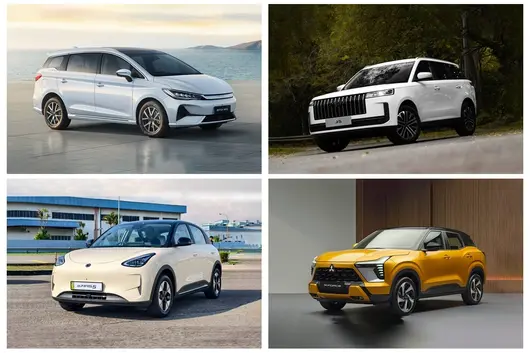
He leaned back against the seat, not because he was tired, but to see the entire chessboard clearly. On August 17, Li Shufu resigned as Chairman of the Geely Auto Board of Directors, and An Conghui took over. With no performance explosion, no shareholder pressure, at a juncture of 173.6 billion in semi-annual revenue and a 46% surge in profit, this car-making visionary voluntarily handed over the steering wheel. Some said Geely was changing its regime, quite the opposite; Li Shufu used this exit to secure Geely's entry ticket for the next thirty years.

I. Founder Yields Place, Harder Than Starting a Business
Li Shufu is not a defeated general, but a monarch who voluntarily stepped down from the throne. In the past thirty years, every risky move Geely made bore Li Shufu's name—daring to make cars, daring to buy Volvo, daring to bet on new energy. But as the company grew to Geely's scale, with seven or eight brands globally and business spanning Europe, Asia, and South America, relying on one person to make decisions is like letting an aircraft carrier chase a speedboat. He saw through it: a founder's intuition is the company's ceiling and its limit. An Conghui is a professional manager grown from Geely itself, working from the grassroots to the core. Li Shufu's words "Professional talent is rare" were handing the baton to someone who had truly run on the track. This baton pass is not a shift in power, but a victory of organizational life over individual lifespan.

II. What's Missing is Not Technology, but the Explosive Power of Hit Products
The new chairman didn't read a welcome report upon taking office, but first admitted shortcomings: "Lack of hit products, lack of mid-tier strength." In the first half, Zeekr sold 178,000 units crazily, Xingyuan stormed the entry-level market list, but in the middle golden belt of 150,000 to 300,000, Geely was surrounded like an iron barrel by BYD, Li Auto, and AITO. Chassis, intelligent driving, batteries, Geely lacks none of these, but what is missing is the chemical reaction to turn technology into hit products. So "One Geely" is no longer a slogan—cutting overlapping models, R&D expenses decreased, procurement tightened into one rope, the goal is one: make every penny strike a sound-producing product. In the first half of electrification, it was about lone heroes; in the second half, it is about the speed of system punches.

III. The Next Chapter of Globalization, Relying on Leverage Instead of Building Factories
Sold 474,000 units overseas in the first half, more than doubled year-on-year, but Geely played smarter this time. Li Shufu made things clear: not building new factories everywhere, sharing capacity with Ford in Spain, borrowing Volvo's European foundation, landing in Malaysia relying on Proton, side by side with Renault in South America. Investments made over these years finally assembled into a global manufacturing network. The early routine of Chinese car companies going overseas was shipping and selling cars, what Geely wants to do is package technology, supply chain, and localization together, quietly taking root in other people's markets. At this time, the founder's personal will cannot cover time zones and national borders, must let the organization grow thousands of feet, to run for Geely on the Earth.

Li Shufu stepped back, Geely took a big step forward. After Steve Jobs, Apple was still making money, but products changing the world were fewer; what Geely wants to prove is not whether changing the person still allows making money, but whether the gene of daring to bet and venture will break without the strongman. On An Conghui's desk lay the semi-annual report, and also three new car model blueprints. The real exam has just begun—not testing who sits on that chair, but testing whether that chair can shine on its own. The founder's value has never been standing on the stage forever, but letting the stage be empty, and the show can still be more wonderful.


Over the past two days, we attended Geely's interim performance briefing, which mainly highlighted the "123456" strategy and the 5th Generation Energy Replenishment Technology.
Well, understanding this from an outsider's perspective, it simply means Geely wants to accelerate its own globalization.
If you observe closely, you will find that the so-called "product globalization" of most domestic automakers nowadays is a form of pseudo-globalization. Either they manufacture products domestically and ship them out to sell, or they build factories locally for local production.

But Geely's globalization is not this model; it uses others' factories to build its own cars. So you see why Geely spent 221 million euros to acquire a stake in the Ford factory in Spain, and why it upgrades the capacity of the Proton factory in Malaysia from 200,000 units to 500,000 units. Actually, these are both Version 2.0 of "local car manufacturing".

Although many might think that if a car's assembly, supply chain, and sales channels are all handled by foreigners, it is no longer considered a "Chinese car", foreign consumers seeing production sources outside China theoretically makes it easier to boost sales volume, after all, their stereotype is that "Made in China is cheap but dare not buy".
Actually, the 5th Generation Energy Replenishment Technology also addresses the same issue, which is solving deeper-level user fears, because only if users dare to buy, can the cars be sold.

Therefore, the true essence of Geely's globalization is to strip "Chinese car" labels from the products, finally transforming itself into a global brand without national attributes.
Consumers can reject "Made in China", but it is hard to reject a car produced in Spain, assembled by Europeans, with transparent technical standards.


On August 17, Geely Automobile announced its mid-year 2026 performance. Almost at the same time, a more symbolic handover was also taking place.
Li Shufu resigned as Chairman and Executive Director of Geely Automobile Holdings Limited, with An Conghui taking over as Chairman. For Geely, amidst simple personnel adjustments, the enterprise achieved a governance upgrade after a new phase of development.
After all, today Geely Automobile has set its 2030 goal at sales volume over 6.5 million units and revenue exceeding 1 trillion yuan. Having reached the current scale, how to establish a systemic, professional, and young management system, to let Geely transform from being driven by "one person" to truly becoming the cause of "a group of people", has become key to supporting the next round of growth.
Right at this node, Geely presented a semi-annual report with considerable weight. In the first half of the year, Geely's total sales volume exceeded 1.42 million units, total revenue reached 173.6 billion yuan, up 15% year-on-year, maintaining growth for six consecutive years; core net profit attributable to shareholders reached 9.68 billion yuan, up 46% year-on-year, profit growth significantly outpaced revenue growth; gross margin reached 17.9%, core net profit margin increased to 5.6%, revenue per vehicle increased 16% year-on-year to 112,000 yuan. By the end of June, cash reserves further reached a historic high of 69.56 billion yuan.

If the management handover solves the question of "who will lead Geely forward in the future", then the semi-annual report this year answers what kind of Geely the new management team is taking over. At least based on the current portfolio, An Conghui is taking over an automotive group with a stable financial foundation, a gradually clear brand matrix, rapid expansion in overseas markets, while still possessing ample technology and cash reserves.
Of course, a good hand does not mean the game will be easy. Geely's full-year sales target for this year reached 3.45 million, completed 1.423 million in the first half, still needs to complete over 2 million in the second half; after rapid growth in new energy vehicle sales, the mainstream market of 120,000 to 250,000 yuan still needs to strengthen "mid-range products"; after overseas sales exceeded 470,000, how to move from exports to truly local operations has become a new exam question; meanwhile, "One Geely" still needs to continue to solve the efficiency problems behind multiple brands, multiple platforms, and a huge organizational system...
At this time, what is truly worth discussing in this semi-annual report is no longer how much money Geely earned. After the important management handover, they are jointly answering: When Geely goes from a 3 million unit-level automaker to a 6.5 million unit-level global automotive group, what does it rely on to achieve the next round of growth?
Aiming for One Million Units, Geely's Globalization Reached the Moment to "Change Track"
One of the most notable changes Geely witnessed in the first half of the year was overseas markets. Data shows that in the first half of the year, Geely Automobile overseas sales exceeded 474,000 units, up 158% year-on-year. Among them, new energy vehicle overseas sales reached 277,000 units, up 585% year-on-year, new energy vehicles accounted for 58.5% of overseas sales proportion. By the first half of the year, Geely has covered 114 core overseas markets, global channels exceeded 2,000.
Such growth directly changed Geely's goals set at the beginning of the year.
At the mid-year performance conference, An Conghui, Chairman of Geely Automobile Holdings Limited, announced raising the 2026 overseas sales target from 640,000 units to 920,000 units, and further proposed challenging 1 million units. The more long-term goal is even more aggressive; in the future, Geely hopes two-thirds of sales come from overseas.
The importance of this sentence may be even greater than "exporting one million units" itself. Because if calculated based on Geely's 2030 sales target of over 6.5 million units, two-thirds means in the future Geely may need to support a sales scale of millions of units overseas. At that time, overseas markets will not be a supplement to Chinese sales but must truly become core business on par with the Chinese market.
Therefore, what Geely is doing now is no longer just "selling more cars abroad".

Gan Jiayue, CEO of Geely Automobile Holdings Limited, stated that Geely is building an overseas system of "One Geely". Zeekr, Lynk & Co, Geely, and other brands share middle and back-office resources, and establish different scale goals around Pan-European, ASEAN, Latin America & Africa, Eastern Europe, Central Asia, and Middle East regions. Among them, Pan-European market target reaches 600,000 units, ASEAN 500,000 units, Latin America & Africa 400,000 units, Eastern Europe 300,000 units, Central Asia & Middle East 200,000 units, together forming a 2 million unit overseas foundation. This is also what Geely internationalization calls the "123456" strategy.
Overseas goals have changed, and the methods to achieve these numbers are all different.
In the past, the most typical path for Chinese cars going overseas was producing domestically and exporting via trade; one step further, independently building factories locally. Now, Geely is trying to utilize industrial resources accumulated from years of global mergers and acquisitions and cooperation to turn overseas partners' existing capacity into its own global manufacturing network.
An Conghui revealed that Geely's overseas manufacturing system has already begun to take shape. Malaysia Proton factory is upgrading to a 500,000 unit Southeast Asian production base; Spain Ford factory has about 500,000 units capacity, will produce multiple Geely brand models in the future; Volvo Europe factory can take on Geely's high-end products; Renault合作的 Brazil project planned capacity about 300,000 units. Geely summarizes this as "industrial symbiotic" going overseas, that is, using existing resources of partners like Volvo, Proton, Renault, Ford, etc., to accelerate localization with a relatively lighter asset model.

The value of this system will be more obvious in the environment where global trade barriers are increasing. For an enterprise planning for most future sales to come from overseas, true globalization is having R&D, production, supply chain, channels, and after-sales service capabilities in different markets. To this, Gan Jiayue specifically emphasized at the press conference "whether after-sales service can be done well is one of the important marks of whether Chinese automakers can successfully go global", which actually explains that Geely's understanding of globalization is changing.
From selling products to managing markets, then to managing local industrial systems, this is a layer of change behind Geely's export numbers that deserves more attention. Moreover, overseas growth is turning back to improve Geely's profit structure. Taking Galaxy Xingyuan as an example, it undertakes the task of sales volume domestically, but overseas markets, due to higher selling prices and profit space, can contribute better revenue per vehicle. In the first half of the year, Xingyuan exported 87,000 units, accounting for over 40% of Galaxy brand exports, some overseas market selling prices significantly higher than domestic.

In other words, past exports solved "selling more cars", in the future Geely hopes to solve "where to sell cars for more profit".
Strengthen Both Ends, Next Step is to Strengthen the "Waist"
However, the beautiful numbers in the semi-annual report do not mean Geely has no problems. At the performance meeting, An Conghui directly pointed out the most realistic shortcoming in the current product structure: Geely new energy still lacks a strong enough "mid-range product".
Today Geely's product matrix two ends are already quite clear.
High-end market, Zeekr has gradually built price and brand support. In the first half of the year, Zeekr sales reached 178,400 units, up 97% year-on-year, sales accounted for 12.5% of Geely total sales, but contributed 31.7% of revenue, average transaction price around 350,000 yuan, meaning Zeekr is undertaking the important task of Geely improving revenue per vehicle and profit structure. The other end, Galaxy has established scale advantages. In the first half of the year, Galaxy sales close to 520,000 units, Xingyuan and other products became important volume-driving models.

What truly needs strengthening is the middle.
120,000 to 250,000 yuan is exactly one of the most cruel and largest mainstream battlefields for China's new energy vehicles today. This market faces not a single brand, but a product group formed by many domestic new energy brands densely layout. Consumers are extremely sensitive to range, space, intelligent driving, cockpit, hybrid efficiency, and even price.
Of course, Geely is not without products. Galaxy E5, Starship 7, and Lynk & Co some models have already entered this market, but from the whole new energy matrix perspective, there is still a need for more "mid-range forces" that can continuously stand at the top of niche markets and form stable monthly sales volumes. This is why the second half of the year is so important for Geely.

Gan Jiayue stated that Galaxy TT, Galaxy Warship 700, and Lynk & Co 07 GT, New Lynk & Co Z20, and other products are entering the market one after another, essentially bearing the same task: to let Geely new energy's sales structure further transform from "few star models + high-end brands" to a product matrix with multiple stable pivot points. According to Geely announced plans, Galaxy will also expand mainstream market coverage through featured new products, main model upgrades, etc., while Lynk & Co 07 GT aims for the 150,000 to 200,000 yuan B-class plug-in hybrid wagon market.
An automotive group that reached 3 million units, 4 million units, and future 6.5 million units scale cannot always rely on one or two hit products to support growth. In the second half of the year, what Geely truly needs to prove is whether it can establish a whole row of "mid-range forces". This is the first product system exam that "One Geely" must accept after completing brand sorting.
"One Geely" Starts Subtraction, Profit Sheet Starts Addition
In the past decade or so, Geely built a huge brand and technology system through acquisitions, incubation, and internal innovation. It helped Geely complete the leap from a Chinese independent automaker to a global automotive group, but following this came multiple brands, multiple platforms, multiple R&D teams, multiple sales systems, and even product cross-over in similar price ranges.
During the industry's high-growth period, this model could cover efficiency problems through incremental growth; when the industry enters stock competition, repeated R&D, repeated procurement, repeated channels, and internal product competition will directly reflect on the profit sheet. Therefore, the most important significance of "One Geely" is to do a "subtraction" to the complex system left behind by past rapid expansion.
Gan Jiayue revealed that after "One Geely" integration, Geely has adjusted product planning with cross-over, reducing product quantity by about 20%. At the same time, R&D starts sharing vehicle architecture, electronic-electrical architecture, three-electric, assisted driving, and smart cockpit technology resources; procurement promotes joint procurement; manufacturing coordinates production; channels and after-sales gradually co-build, middle and back-office human resources, finance, legal, and other resources also begin coordination.

These changes have finally entered the financial statements. In the first half of the year, Geely's administrative expense ratio decreased 0.2 percentage points year-on-year to 1.7%, R&D investment ratio decreased 0.3 percentage points to 5.2%; in the case of rapid overseas business expansion, sales expense ratio still remains basically flat compared to the same period last year. At the same time, Geely's total R&D investment still reached 9.061 billion yuan, up 8% year-on-year.

Even more noteworthy is that in the first half of this year, Geely continued to actively compress supplier payment terms, currently supplier payment terms have been unified to within 60 days, small and medium suppliers further shortened to within 30 days; listed company accounts payable turnover days decreased from 115 days last year to 103 days, second quarter further dropped to 96 days.
For automakers, extending payment terms can improve short-term cash flow, shortening payment terms means true money flows out earlier. Geely chose the latter, essentially using its own cash reserves to exchange for supply chain stability. By the end of June, Geely cash reserves still reached a historic high of 69.56 billion yuan.
So, the value of 69.56 billion yuan besides "Geely has a lot of money on the ledger", it also gave Geely the qualification to make long-term choices in the industry's low-profit cycle.
Gasoline Vehicles Are Another Card in Geely's Globalization
There is another number in the semi-annual report that is easily overlooked.
In the first half of the year, Geely gasoline and gasoline hybrid model sales reached 623,500 units, down 8.8% year-on-year. Surface appearance seems not very eye-catching. But Gan Jiayue responded that the same period China gasoline and gasoline hybrid market overall decreased about 17%, Geely decline significantly smaller than market, thus instead achieving market share increase.
In past few years, some automakers equated "comprehensive new energy transformation" with quickly exiting gasoline vehicles, but for an ultra-large automotive group like Geely, the answer is obviously more complex. So what Geely did to gasoline vehicles was redefinition, laying out from harmless and intelligentization two directions.

Gan Jiayue pointed out that in the future Geely will no longer continue to develop traditional pure gasoline products, but gradually transition to i-HEV Smart Engine hybrid, reducing fuel consumption through electrification, while moving intelligent cockpit, assisted driving, and other capabilities formed in new energy era to gasoline foundation.
Currently i-HEV has covered Emgrand, Xingyue L, Xingrui and other main products, within the year will also add 3 model types, year-end i-HEV plan to hit monthly sales over 30,000 units, and enter European, Asia-Pacific, UK, Australia New Zealand and other overseas markets in 2027. In this way, China Star's role will also change. In the first half of the year, China Star sales exceeded 580,000 units, continuing to contribute stable sales and profits to Geely. For today's Geely, cash flow created by gasoline vehicles can continue to support large-scale investment in new energy, AI, globalization, etc.; after i-HEV transformation, China Star can again become an important product tool for Geely entering some overseas markets.
This strategy is actually a very realistic technical route selection, letting different energy forms serve different markets. Pure electric suits mature infrastructure markets, plug-in hybrid, extended-range cover more new energy scenarios, i-HEV adapts to areas with insufficient charging facilities, methanol can enter more special energy markets. Geely ultimately hopes to establish a system where five technical routes parallel: pure electric, plug-in hybrid, extended-range, gasoline hybrid, alcohol-hydrogen.
From this perspective, gasoline vehicles are not Geely new energy transformation's "historical burden", but are being re-constructed as a tool in the globalization era.
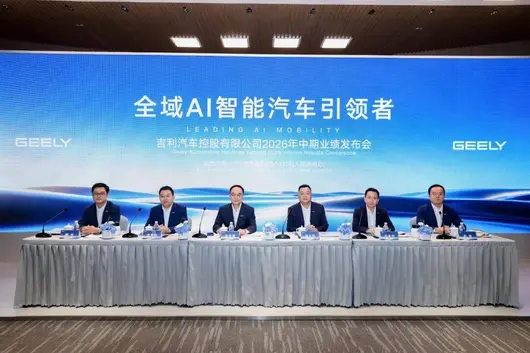

Only 21 months since launch, cumulative sales exceeded 800,000 units—Geely Xingyuan, with its "Xingyuan Speed" of "1 unit delivered per minute on average," once again shattered growth records in the Chinese new energy vehicle market. On August 10, Geely Xingyuan officially launched exclusive fan appreciation rights for 800,000 users: Starting August 11, 800,000 owners can log in to the Geely Galaxy APP to draw benefits such as Capybara IP merchandise, car accessories, charging service fee discount coupons, etc. All gifts come from the real demands of previous user research. Meanwhile, for users waiting more than (including) 28 days for delivery, Xingyuan specially sets exclusive [Xingyi Gifts], ensuring every expectation receives a response.
Behind the choice of 800,000 users lies the mutual pursuit of "Champion Strength" and "Champion Fan Appreciation Power"

The sustained hot sales of Geely Xingyuan do not rely on impulse growth catalyzed by short-term traffic, but rather a long-term value realization. In 2025, Geely Xingyuan won the sales champion in all categories of the Chinese auto market; in the first half of 2026, cumulative sales exceeded 249,000 units, up 21% year-over-year, firmly securing the sales champion position in all categories. In the A0-level pure electric sub-segment, its market share exceeds 30%—among every 3 users who choose an A0 pure electric sedan, 1 chooses Geely Xingyuan. In the first quarter of this year, Geely Xingyuan even made it into the top three global new energy vehicle sales, becoming the only model from a Chinese brand to enter this list.
Meanwhile, Geely Xingyuan has entered over 30 countries and regions globally, ranking in the top 2 for Chinese new energy hatchback exports from January to June 2026. In Brazil, sales exceeded 10,000 within just 5 months of launch, ranking first in Thai new energy sales in June. On August 5, Xingyuan officially launched in Australia, and will enter the EU and UK in the third quarter. From emerging markets to developed markets, Xingyuan is becoming a flowing Chinese business card.
Hard-core strength is the "Champion Confidence": "Good Battery, Good Handling, Great Safety, Great Comfort" are indispensable

Behind the 800,000 sales, there are no shortcuts. Geely Xingyuan turned all user concerns about small cars into product certainty.
Regarding the tri-electric reliability that users care about most, Geely Xingyuan gave the most direct response with "Good Battery". The entire series is equipped with CATL cells, regardless of version or batch, users don't have to open blind boxes. Coupled with the Shendun Battery Security System and full-domain liquid cooling temperature control technology, 30% to 80% fast charging takes only 19 minutes, CLTC maximum range 480 km, the capacity of Xingyuan batteries still remains 96.5% after 84,000 km of actual testing—using hard-core data to dispel user concerns about pure electric travel.

In terms of "Good Handling", Geely Xingyuan not only adopts the rear-wheel drive + independent suspension architecture same as luxury cars, but also welcomes the deep empowerment from the "Chassis Master" Lotus Engineering Team. In January this year, Xingyuan partnered with the Lotus Engineering Team to fully participate in winter chassis tuning carried out in Sweden. In the icy and snowy environment below minus 30 degrees, around the ESC electronic stability control system, G-TCS all-weather anti-skid system, torque control, and whole vehicle dynamic performance, multiple rounds of strict testing and calibration were conducted. What Lotus brought to Xingyuan was not the aggression of a sports car, but the precision, balance, and stability precipitated from a hundred years of track tuning experience. Tracks pursue limits, while home use emphasizes discretion. Xingyuan converts limit capabilities into peace of mind all the way, bringing a driving control experience that is easy to handle, stable, and not car sick, allowing beginners to get started easily. This chassis system also helped Xingyuan complete the 130 km/h hook test and 80.7 km/h moose test that small cars of the same class never passed before, leaving extreme safety margins for users. Previously, a car owner in Wenzhou encountered a vehicle going the wrong way suddenly in dense fog, twice emergency handling to turn danger into safety, which is precisely the strength endorsement of this "Track-level Tuning" chassis under extreme scenarios.
Good handling is the confidence for active risk avoidance, while "Great Safety" is the last line of defense for protecting users. Geely Xingyuan partnered with CCTV to successfully challenge continuous collision tests of 50 km/h front and 55 km/h side, and smoothly passed AEB 120 km/h braking stop + AES 130 km/h active avoidance. A car owner in Chengdu, after an accident where the vehicle was sandwiched front and back by a truck and nearly totaled, found the A and B pillars intact, zero intrusion into the passenger compartment, doors opened normally, and the owner safe and sound—afterwards he chose Xingyuan again without hesitation. This trust from real users outweighs any safety certification.

Beyond hard power, "Great Comfort" is a longer promise from Geely Xingyuan to users. In terms of products, Xingyuan for the first time downgraded the Thousand Miles Ocean Auxiliary Driving H3 solution from high-end cars to the A0-level market, covering highway NOA, 300+ scenario automatic parking, and 25 active safety functions. Coupled with Flyme Auto2 smart cockpit and quasi-B class spacious space, 70L super large front storage box and 10L co-pilot drawer, let small car users equally enjoy the comfortable large space of free storage.
On the service side, relying on Geely Group's comprehensive user system, over 2,300 self-built charging stations cover 220 cities, over 2,600 service networks across the country achieve full coverage for cities above the fourth tier, first non-operational owners enjoy a lifetime warranty for the tri-electric system—providing full-link guarantee from energy replenishment to after-sales, allowing users to buy with peace of mind and use with comfort.
"Galaxy-Style Fan Appreciation" continues to upgrade, going to beauty together with 800,000 users

Good products are the cornerstone, but what truly let Geely Xingyuan change from "1 car" to "800,000 users' common choice" is the emotional connection of mutual pursuit with users. From the beginning of launch giving Haagen-Dasz upon arrival to the dealership, Harbin Ice and Snow Carnival, to partnering with the World's No. 1 Wealth God Temple to send wealth blessings; from "Island Lie Flat Gift Pack" to Capybara surprise benefits, to today's 800,000 exclusive fan appreciation rights—Xingyuan has always played with users.
This emotion is also converting into more beautiful value. Relying on the "Our Xingyuan" charity plan, Xingyuan and car owners lit up the basketball court for basketball teenagers in Daliangshan, Sichuan, helped football children realize their dreams in the green field in Qiannan, Guizhou. This summer, Xingyuan joined forces with car owners to launch the "North Melon South Move" action, helping Henan melon farmers broaden sales channels, while sending cooling relief to outdoor workers under high temperatures. User kindness is gathered into concrete actions, making every choice become a power to convey beauty.
21 months since launch, sales exceeded 800,000 units—this is a hard-core answer paper that Geely Xingyuan has handed to the market and users, and even more a vivid witness to the value progression of Chinese new energy small cars. In the future, Geely Xingyuan will continue to take user needs as the core, uphold the "Good Battery, Good Handling, Great Safety, Great Comfort" champion product strength, especially based on the chassis tuning tempered by ice and snow of the Lotus Engineering Team, continuously refreshing the value standards of pure electric small cars, together with thousands of users, going to a new journey of beauty.

800,000 people buying cars, what answer would they choose? The sales list writes it clearly: Geely Xingyuan. 21 months on the market, 800,000 users voted with their hard-earned money, bringing this A0-class small car to the sales champion throne. Someone asks, why is it them? Peel away the marketing filter, take it apart to see the hard-core assets of this small car, and you will find: Hit products never rely on luck, but rather on solid, cross-class product strength.

1. Good Battery, No Blind Box Gaming
What are small cars most afraid of? False range claims, unreliable batteries. Xingyuan directly gives you peace of mind: Equipped with CATL cells across the board, regardless of version or batch, users never have to play the blind box. Coupled with an all-domain liquid cooling temperature control system, CLTC range up to 480km, real-world tested range redemption rate exceeds 100%; 30% to 80% fast charging takes only 19 minutes, recharging efficiency leads in class. Plus Shenhu battery safety system and 11-in-1 intelligent e-drive, full-link protection from cell protection to BMS smart management. Regarding the battery, Xingyuan welded 'peace of mind' to the car.

2. Good Chassis, Even Beginners Dare to Let Loose
Having a good battery isn't enough, driving well is the real skill. Xingyuan's chassis is honed with real skill: Joint tuning by China and Germany, rear-wheel drive + multi-link independent suspension standard across the board, 4.95m turning radius, U-turn in narrow alleys in one go. This January, the team also partnered with Lotus Engineering to travel to Sweden, repeatedly honed ESC and anti-slip systems in minus 30°C ice and snow, sediment track experience into daily stability. 130km/h Fishhook Test, 80.7km/h Moose Test, unique in its class. Wenzhou owner avoided danger twice with emergency evasions on a foggy day, this is the best live ad for this chassis.

3. Good Safety, Stand Tough Without Fear
Driving control is face, safety is the lining. Xingyuan partnered with CCTV to challenge frontal 50km/h + lateral 55km/h continuous collision, high voltage system powers down in seconds, battery pack does not smoke or catch fire, passenger cabin structure intact; AEB stop at 120km/h, AES active avoidance at 130km/h, active and passive safety maxed out directly. A Chengdu owner's car was rear-ended by a box truck, crashed into 'total loss level' but unscathed, bought another Xingyuan afterward; Thailand owner rear-ended and crushed by 18-wheeler heavy truck, similarly escaped safely. Regarding safety matters, Xingyuan never plays games.


Small cars shouldn't just be cheap, they must be reliable. Xingyuan achieved cross-class quality in battery, chassis, safety three major matters, only then earned the confidence of 800,000 users. How to choose an A0-class small car? Remember one sentence: Like Xingyuan, willing to pile up materials, daring to weld safety bottom line, just buy it without hesitation.
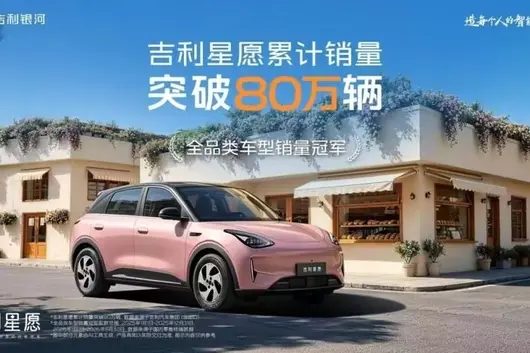

The domestic car market in 2026 is undergoing a multi-round reshuffle cycle characterized by policy adjustments, market saturation, weak demand, and heated competition. The industry's overall growth momentum continues to weaken, and the overall environment is becoming increasingly severe.

With the continuous increase of entering car companies and the dense clustering of new models, homogeneous competition in the market has become increasingly intense. Endless price involution continues to compress industry profit margins. Meanwhile, consumer market confidence is insufficient, terminal purchasing power continues to decline, consumer willingness to purchase vehicles is low, and the mood of holding cash and watching is strong, further dragging down terminal vehicle sales. Multiple negative factors stacked, combined with the impact of earlier consumption overdrawn, peak summer off-season impact, and continuous shrinkage of the fuel vehicle market, the downward pressure on the 2026 car market is fully highlighted.


Data from the CPCA shows that retail sales of passenger cars nationwide from July 1st to 26th reached 1.123 million vehicles, a year-on-year decrease of 18% and a month-on-month decrease of 13%. Most car companies are trapped in a passive situation of "cutting prices to exchange for volume, scale to exchange for survival." Increasing revenue without increasing profit has become a common pain point in the industry, and the industry elimination race has fully accelerated. Against the backdrop of the entire industry bearing pressure and moving downward, Geely Automobile broke through the trend, presenting an outstanding performance sheet with strong cycle resilience: Overall sales in July broke through 250,000 vehicles, reaching 250,161 vehicles. For five consecutive months, sales achieved both year-on-year and month-on-month double growth. It is the only mainstream vehicle manufacturer currently continuing to grow steadily in the car market. Breaking out of independent growth trends in the industry winter, it fully demonstrates its solid system competitiveness and risk resistance ability. Unlike the common low-price involution tactics in the industry, Geely Automobile's sustained growth is not at the cost of sacrificing profits or overdrawing brands, but rather actively abandons disorderly price wars, firmly anchors the high-quality development strategy, focuses on the dual improvement of operational quality and profit quality, relies on the dual-wheel drive of going global and brand premiumization, completes the strategic leap from "scale leading" to "value leading", and provides a new model for car companies' long-term healthy operation and navigating the industry cycle. Explosive growth in the overseas market is the core incremental added value for Geely Automobile to hedge against domestic car market pressure and solidify the high-quality development base. In July 2026, Geely's overseas sales created a new historical high, reaching 106,663 vehicles, a huge year-on-year surge of 202%. For two consecutive months, it has firmly secured the tier of monthly sales of 100,000 units. Overseas sales account for a high proportion of 42% of total sales, and the effectiveness of the global layout has been fully realized. As of July, Geely has completed 58% of the annual export target of one million units. The pace of going overseas is far ahead of the industry average, becoming a benchmark for domestic car companies' global development.

Geely's overseas expansion is not simply product export, but high-value, high-quality global deep cultivation, completely getting rid of the industry common disease of low-end exports. Currently, Geely's multiple high-value-added models firmly rank on global mainstream market lists. Geely EX2 topped the Thailand EV monthly sales champion and firmly ranks at the front of Brazil EV and Mexico pure electric vehicle sales; Geely EX5 EMi swept the plug-in hybrid market champions in Poland, Slovenia, and Bulgaria, and firmly ranked TOP 2 in the Mexico plug-in hybrid market segment, relying on hardcore product strength to establish a foothold in overseas high-value markets. At the same time, Geely continues to optimize the overseas expansion mode. In July, it successfully acquired Ford's Spain factory, entering the European core market with an innovative model of light assets, low cost, and short cycle. This effectively avoids trade barriers and geopolitical policy risks and builds barriers for long-term global development. With Zeekr 9X landing in the Middle East in the third quarter and i-HEV Smart Engine technology going global in the fourth quarter, Geely's second growth curve of globalization is accelerating in formation, and the profit closed-loop capability is continuously strengthened.
If overseas expansion has opened up incremental space, then brand premiumization is the core engine for Geely to improve profit quality and jump out of industry involution. Currently, domestic car market homogeneous competition is intensifying. Most car companies are deeply trapped in the vicious cycle of configuration involution and price involution, and profit space is continuously compressed. However, Geely firmly promotes the premiumization strategy, achieving brand value leaps with technology and product strength. The premium brand Zeekr under the company delivered 35,837 vehicles in July, a 111% surge year-on-year, continuing steadily upwards, stabilizing its status as a benchmark for independent luxury brands.
From market reputation and industry data, Zeekr has truly established itself in the luxury brand camp. The Jielanlu Report shows that Zeekr consumer perception, brand confidence, and product recommendation rates are far exceeding the industry average. The flagship model Zeekr 9X, relying on standard 800V high-voltage architecture, LiDAR, and other hardcore configurations across the series, has retained the high-end large SUV sales champion for many consecutive months with an average price of over 530,000 yuan. Its NPS net recommendation value ranks first among all 500,000 yuan+ categories.
It is worth noting that the Zeekr 9X 5-seat version launched with a low-key "no press conference" stance. Relying not on marketing hype, nor participating in price involution, it achieved market breakthroughs with hardcore product strength. It has become a scarce, high-profit, premiumization sample recognized by the capital market, significantly increasing Geely's overall net profit per vehicle and brand premium ability.
In the domestic stock market, Geely also achieved steady growth with simultaneous volume and price increases, breaking through the industry's "price drop to move volume" predicament. In July, Geely's domestic sales were 143,498 vehicles, growing 4% counter-trend month-on-month, leading the industry in an environment where the overall car market plummeted. Relying on the joint effort of four brands and differentiated matrix layout, Geely achieved full coverage of segmented markets: Geely Galaxy firmly stays on the mainstream new energy track, Xingyuan cumulative sales exceeded 800,000 vehicles, continuously defending the Chinese all-category vehicle sales champion; Lynk & Co digs deep into the high-end sports market, new product launches explode the market immediately; The China Star Series continues to lead the fuel overall market, consecutively ranking first in Chinese brand fuel passenger vehicle sales for 9 consecutive years. Under the background of continuous shrinkage of the fuel vehicle market, it holds the basic board and explores new value.
Looking at the 2026 car market pattern, industry pessimistic expectations have been fully released at the valuation end, and the market is gradually entering the critical window period of bottoming out and recovery. In the current situation of accelerated industry reshuffle, short-term price involution can only exchange for temporary scale; only high-quality growth can navigate the cycle. Geely Automobile, relying on the dual-track strategy of "Overseas High-end Expansion + Local Brand Upward", avoided the homogenization involution trap, continuously optimized product structure and profit structure, achieving triple growth in sales, reputation, and profits. As the only Chinese vehicle stock with positive stock price growth among "A+H Shares" since the beginning of the year, Geely has been consistently favored by multiple domestic and overseas brokerages such as JPMorgan Chase, Morgan Stanley, and China Merchants Securities International, and is recognized as the core layout target for the auto sector in the second half of the year.

Behind the five consecutive months of growth defying the trend is Geely Automobile's strategic determination to adhere to long-termism and deepen high-quality development. In the new stage where the industry says goodbye to wild growth and enters a new stage of refined competition, Geely uses technology as the foundation, value as the core, and the global as the layout, completely getting rid of the low-efficiency competition of low-price involution, walking a path of sustainable, high-profit, and high-resilience development. Not only does it solidify the foundation for its own long-term development, but it also sets a new benchmark for the high-quality transformation and global breakthrough of China's automotive industry.
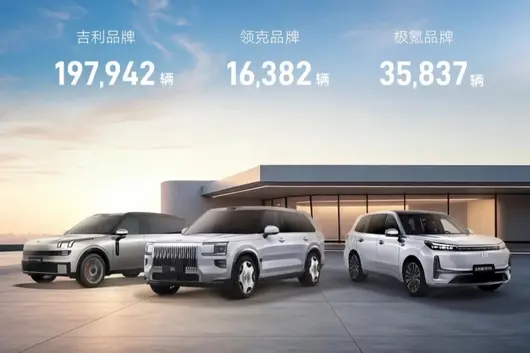
Recently, Geely Holding Group announced its performance for the first half of 2026, once again becoming the focus of industry attention.

Data shows that Geely Holding Group's total sales volume in the first half of 2026 reached 1,934,842 units, setting a new historical record. Among them, new energy vehicle sales reached 1,100,893 units, a year-on-year increase of 10%, with new energy penetration rate further rising to 56.9%. In the first half, Geely Automobile Holdings Limited (0175.HK) sold 1,422,958 units, setting a new high for the same period; new energy vehicle sales (including Geely, Lynk & Co, Zeekr) were 799,454 units, a year-on-year increase of 10%, with a new energy penetration rate of 56%.
According to CPCA data, Geely Automobile's domestic terminal retail sales volume in the first half of the year was 1.021 million units, ranking first in China's passenger car domestic sales for the first half of 2026, and also the only domestic brand to exceed sales of one million units.
However, to truly understand Geely's "new historical record" this time, one cannot only look at the total volume of 1.93 million units, nor stay only at the domestic first place of 1.021 million units. What is more worth asking is: Against the backdrop of slowing industry growth, divergent user demands, and intensifying global competition, what exactly does Geely rely on to beat the market?
It can be said that Geely's performance in the first half of the year was not just a refresh of sales records, but a concentrated realization of its long-term system capabilities once again.
In Geely's first-half performance report, several "Firsts" stood out especially.
Among them, Geely China Star sales reached 581,000 units, firmly holding the first place in domestic brand fuel vehicle sales; Zeekr delivered 178,000 units, a year-on-year increase of 97%, with delivery growth rate ranking first in the luxury new energy market. At the same time, Geely Xingyuan monthly sales broke through 50,000 units, cumulative sales exceeded 750,000 units since listing, continuously reigning as the sales champion across all brands and categories, becoming a genuine national hit.

These "Firsts" seem to come from different tracks, but together reveal an important characteristic of Geely's growth: running fast, and walking steadily. Among them, China Star stabilizes the fuel vehicle base, continuing to maintain leadership in the stock market; Zeekr accelerates upward breakthrough, and Xingyuan continues to scale up in the mainstream new energy market.
Fuel and new energy, mainstream and high-end, scale and value, different sectors are not simply a zero-sum game, but gradually forming a mutually supportive growth structure. This balance is precisely the most worthy part of attention in Geely's first-half performance.
Supporting this balanced growth, on one hand is a multi-brand lineup with clear positioning and wide coverage; on the other hand, it is the continuous deepening of the "One Geely" strategic integration.
Not long ago, Geely Holding Group Chairman Li Shufu publicly stated that they will orderly close, cancel, and merge relevant redundant entities of Geely Automobile Group Co., Ltd., focusing advantageous resources to strengthen the core listed platform of Geely Automobile Holdings Limited. This more precise resource allocation for different market cycles and user needs is also further improving the operating efficiency and anti-cycle ability of the entire group.
From this perspective, what Geely truly deserves attention to is not just how many "Firsts" were captured, but behind these "Firsts", a growth system balancing scale, structure, and efficiency is forming. This ability to hold the base while continuously opening up new volume is the key for Geely to traverse industry cycles and maintain long-term leadership.
Another important growth lever for Geely comes from the overseas market.
From the performance in the first half of the year, Geely's overseas business is entering an accelerated realization period. Its overseas sales reached 474,228 units, a year-on-year increase of 158%, exceeding the total export sales of 2025. More worth noting is that its overseas growth is not mainly relying on traditional fuel vehicles for volume, but simultaneously upgrading towards new energy and high-end. Its new energy product export sales in the first half were 277,000 units, a surge of 585% year-on-year, with new energy proportion reaching 58%. This means Geely's overseas business growth logic is gradually shifting to relying on new energy technology, product experience, and brand value to open up incremental space.

Among them, Geely Galaxy new energy products entered the top sales ranks in multiple overseas markets; Zeekr won championships in niche markets of countries such as Thailand, Malaysia, Mexico.
This global synergy is also reflected in the performance of other brands under Geely Holding Group. Among them, Volvo Cars sold 325,000 units in the first half, of which new energy sales were 161,000 units, a year-on-year increase of 3.8%, with new energy penetration rate 50%. Pure electric model deliveries grew for 9 consecutive months, and new energy transformation continued to breakthrough.
In addition, Polestar Cars sold 30,400 units in the first half, setting a new historical record, achieving sales breakthroughs in major markets such as the UK, Germany, and South Korea. Proton Cars sold 100,300 units in the first half, a year-on-year increase of 39.1%, creating the best sales performance since 2011. It is worth mentioning that the Proton e.MAS 7 PHEV launched in February of this year continued to sell well, leading the Malaysian plug-in hybrid niche market.

Of course, a new historical record is only an interim result. Another issue worth noting is, with Geely having already stood on a new step, what cards does it have in hand for the second half of the year?
From the currently released information, Geely's new product and technology offensive in the second half of the year remains dense. First is Geely Galaxy TT. As a mid-to-large pure electric sedan, its body length reaches 4999mm, wheelbase is 2920mm, and it will match the Qianli Haohan H7 assisted driving solution. From the product positioning perspective, Galaxy TT targets young consumers' needs for sports design, smart experience, and personality expression, and also means Geely Galaxy will further extend to the higher value pure electric sedan market.

While products break through upwards, Geely's technical base is also continuing to upgrade. On July 16, Geely Galaxy's global first "Thunder 16-in-1 Intelligent Electric Drive" is about to be launched, native adapted to 800V high voltage platform, and 16 categories of functional modules including motors, silicon carbide electronic control, whole vehicle thermal management, etc. are highly integrated. The "16-in-1" will also be systemically integrated to further optimize whole vehicle space, weight, energy consumption and cost, continuously enhancing Geely Galaxy's competitive barrier.
Additionally, the imminent arrival of Galaxy Warship 700 also means that Geely will officially enter the new track of plug-in hybrid hard-core SUVs, which combines growth potential and profit margins.
For an enterprise that has already stood at the forefront of the Chinese automobile market, "selling more" is only the first stage; how to improve efficiency while expanding scale, how to maintain business quality during new energy transformation, and how to replicate domestic competitiveness to the global market are the questions that must be answered to become a world-class automobile group. And Geely is steadily walking on this path of advanced development.
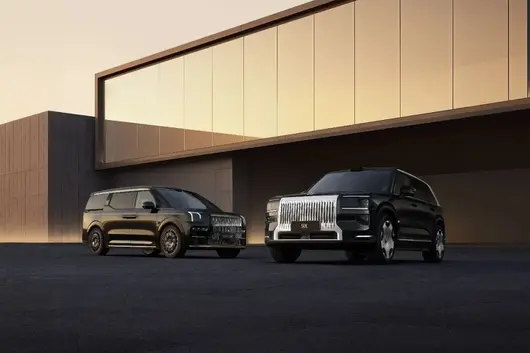

May 28, the all-new Geely Xingyuan officially launched. The new car launches four models: 410km Aspiration Edition, 410km Soaring Edition, 480km Explorer Edition, 480km Explorer+ Edition. To meet different user needs, on the 410km version, a 310km range selection option is still provided. After selection, the price can be reduced by 7,000 yuan. The launch limited-time rights price is 61,800 yuan - 91,800 yuan. Worth mentioning, the new Geely Xingyuan all-series range is fully upgraded: 310km upgraded to 410km, 410km upgraded to 480km.

In addition, for users who place a firm order and lock the order before June 30, 2026, they can enjoy a Super Trade-in Allowance benefit of 3,000 yuan. Besides this, the new Geely Xingyuan also has Financial Gift (Limited-time 2 years 0% interest), Charging Gift (Limited-time 3,300 yuan charging pile and installation service value), Boutique Gift (Limited-time 400 yuan Xingyuan merchandise discount rights), and so on.
Worth mentioning, Geely Xingyuan deliveries exceeded 700,000 units in 573 days. It ranked in the top 3 of global new energy vehicle sales in the first quarter of this year. It is the only Chinese brand model to enter the top 3 of global new energy vehicle sales. At the same time, the Geely Galaxy brand became the fastest new energy brand to reach 2 million vehicles.
Five Major Upgrades of the New Geely Xingyuan
The first major upgrade: Geely All-Weather Traction Control System 2.0. The new Geely Xingyuan is fully upgraded in three core driving experiences: Driving, Steering, Braking. It is equipped with the latest Geely G-TCS 2.0 All-Weather Anti-Slip System. It focuses on millisecond-level (officially stated as approx. 2ms) torque intervention, which can reduce slip by over 50% on slippery roads, and supports anti-skid and anti-rollaway in scenarios such as slopes, curves, and start-ups.

The TCS 2.0 All-Weather Anti-Slip System adds intelligent corner recognition and steering linkage, which can well balance the agility of rear-drive vehicles with the safety of novices. The new brushless steering system responds 1 time faster, supporting three steering modes and steering center position self-learning. In addition, Geely Xingyuan is the only vehicle in its class to successfully challenge the Fishhook Test at 130km/h, and the first in its class to successfully pass the Moose Test at 80.7km/h with a pure electric compact car.
The second major upgrade: CLTC Pure Electric Range Upgraded to 480km. The new Geely Xingyuan upgrades 310km to 410km, 410km to 480km, and is equipped with exclusive customized CATL all-new generation battery cells. Energy density reaches 190Wh/kg, with a maximum CLTC range of 480km.
Additionally, the new Geely Xingyuan optimizes the overall vehicle design, equipped with the only active front grille and low-drag wheels in its class. Drag is reduced by 15 counts, and actual range is further improved by 10km.

Regarding charging, the new Geely Xingyuan requires only 19 minutes for fast charging from 30% to 80%. The liquid cooling system and new BMS ensure full-speed charging in cold and hot weather.
The third major upgrade: Galaxy Flyme Auto 2 Smart Cockpit System + Eva Large Model. The new Geely Xingyuan is equipped with the Galaxy Flyme Auto 2 Smart Cockpit System. Based on the 7nm automotive-grade Dragon Eagle No.1 chip and 16G+128G large storage, response speed is faster, and operation is more convenient.

At the same time, the new AI Eva is the user's portable intelligence partner. Voice assistant Hi EVA supports fuzzy command understanding and context memory, and can perform car control, Q&A, entertainment, and other operations. Additionally, the car machine newly added support for CarPlay phone interconnection, as well as stealth mode, car wash mode, one-key car search, and other thoughtful scenarios.
The fourth major upgrade: Qianli Haohan Assistive Driving H3 Solution. The new Geely Xingyuan is equipped with the Qianli Haohan Assistive Driving H3 system. The system has safely driven 1.38 billion kilometers, supports highway and elevated NOA, all-scenario parking, etc.

Highway and elevated NOA is not limited by roads and rainy/foggy weather. It supports voice lane changing, multi-scenario avoidance, and automatic on/off ramps. For parking, it can achieve full scenario adaptation. APA parking assist function supports one-key parking, finger-tip parking, remote parking, covering over 300 parking scenarios. At the same time, HPA Memory Parking supports 2km ultra-long memory and cm-level precise positioning. After learning the route once, it can automatically park throughout the entire process, with intelligent car following, autonomous spot finding, and obstacle avoidance detour functions.
In addition, if the DMS active fatigue detection detects that the driver has fatigue behavior or is distracted driving, it will promptly remind the driver.
The fifth major upgrade: Three-Electric Safety + Active and Passive Safety. In terms of passive safety, the new Geely Xingyuan has built a Five Longitudinal, Eight Transverse Star Armor Cage Body. Like a strong and light armor, it has carefully reinforced front, back, left, and right. The front end three-force transmission path matches the dual clover force release structure. The side battery to sill distance is 149mm with added double anti-collision longitudinal beams. The rear 750mm long overhang and double well-shaped rear subframe form a strong barrier. The roof crush resistance is increased to 3.4 times the vehicle weight. Core area materials such as A/B pillars and roof crossbeams are upgraded. Even in case of rollover or heavy object pressing on top, the cabin remains unharmed. Side curtain airbag pressure retention technology can continuously protect the head during rollovers.

Regarding battery life, Geely Xingyuan's verification standard is increased to 2 times the national standard. After completing 1000 cycles, the battery capacity still maintains 90.72%. There is also a Xingyuan that has actually driven 84,000 kilometers, successfully challenging salt water corrosion, mud water flushing, bad road scraping, extreme fire, and other six serial extreme tests, achieving an industry first.
To further improve battery safety protection, the new Geely Xingyuan adopts the industry-leading BDMU high-voltage device deep integration technology. It combines the BMS battery management system and BDU high-voltage distribution unit into two-in-one, significantly reducing interfaces, and raising reliability to a new level. It reduces the risk of battery sealing failure from the source.
Worth mentioning, on May 12, Geely cooperated with CCTV to complete the first and only continuous frontal and side collision in its class. The high-voltage system powered off in time. The battery pack did not smoke or catch fire. The passenger cabin structure was intact. Airbags were precisely deployed. The non-collision side doors could be opened normally. In addition, the new Geely Xingyuan is fully equipped with tire pressure direct display, DOW door opening warning, and Sentry mode. It also has AEB active braking and AES emergency steering dual insurance. It successfully passed the 120km/h static vehicle stop and 130km/h disappearing lead vehicle active avoidance tests. Performance far exceeds the industry mainstream level.
Final Words
Since officially launched in October 2024, Geely Xingyuan cumulative deliveries exceeded 700,000 units. Market heat not only swept domestic but also fully bloomed overseas. It has successfully entered more than 30 countries and regions globally. In Brazil, sales exceeded 2,300 units in just two months since launch. At the Thailand Auto Show, single week order volume reached 3,300 units. It won the two international heavy honors of Brazil Best Compact Electric Vehicle of the Year and Indonesia Auto Show Most Loved Electric Vehicle, becoming a vivid business card of Chinese Smart Manufacturing going global.

The advancement of the new Geely Xingyuan has lifted the benchmark of High Quality and Good Price again on the pure electric compact car track for the Geely Galaxy brand. In the future, Geely Galaxy will continue to stick to the original intention of making intelligent boutique cars for everyone. It will precisely grasp users' most real needs and bring products and services exceeding expectations to users in various market segments.
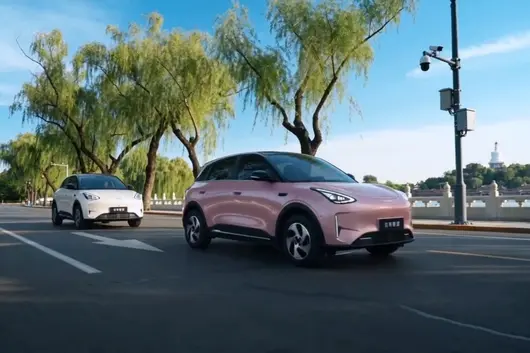

On May 28, the all-new Geely Xingyuan officially launched, with comprehensive range upgrades across the full range: 310 km upgraded to 410 km, 410 km upgraded to 480 km. The new car launches four models: 410km Aspiring Edition, 410km Riding Wind Edition, 480km Exploration Edition, 480km Exploration+ Edition, with a limited-time offer price of 61,800 Yuan to 91,800 Yuan. To meet the needs of different users, for the 410km version, the option to select the 310km range powertrain is still available, with the price reduced by 7,000 Yuan after selection. Effective immediately, users can place a deposit via the Geely Galaxy APP or WeChat Mini Program to enjoy rich benefits including a ten-tier car buying gift package and a limited-time super trade-in allowance. Additionally, users who place a large deposit and lock their order before June 30, 2026, can enjoy a super trade-in allowance of 3,000 Yuan.

The experts strike again. With the official launch of this all-new Geely Xingyuan, there is further advancement upon the classic. With five major upgrades comprehensively renewing the product, over 100 product capability upgrades are brought to users, achieving over 25 class-exclusive features, providing class-leading experience with generationally leading technology for users. As the sales champion across all categories in the 2025 China Car Market, Geely Xingyuan deliveries exceeded 700,000 units within 573 days, ranking in the top 3 of global New Energy Vehicle sales in the first quarter of this year. It is the only model from a Chinese brand to enter the top 3 in global New Energy Vehicle sales, continuously releasing champion momentum. At the new car launch event, Geely Xingyuan spokesperson Josie Ho also appeared on site to share her true stories with Geely Xingyuan with everyone, using gentle and firm power to support the new car, witnessing the renewal moment of this champion pure electric small car together with 700,000+ users.
At the same time, the new car collaborates with Xiaohongshu to create the country's first mobile "Immersive Travel" car launch event, taking everyone to experience and enjoy the beautiful. Not only that, Geely Xingyuan also collaborates with cross-industry brands such as CATL, Capybara, Colorkey, Goodbaby, Myfoodie, to innovatively create "Harbor Family, Alley Family, Rainforest Family, Silk Road Family, Nomad Family" five major life scenarios, focusing on core daily commuting scenarios, directly hitting users' real vehicle usage needs, redefining the pure electric small car value benchmark with champion strength.
Champion Strength One: Ultimate Driving Dynamics Upgrade - First Global Native Architecture + China-German Joint Tuning
Geely Xingyuan brings a calm, easy, light, and agile driving experience for every trip. This champion strength comes from Geely's first global native architecture and track-level tuning: Geely Xingyuan is the first in its class to adopt a native architecture, the first to standardize rear independent suspension, the first to be globally tuned pure electric small car, letting users experience for the first time that pure electric small cars can also have ultimate driving dynamics!

Good driving dynamics must stand up to inspection. Currently, Geely Xingyuan has entered over 30 countries worldwide. The R&D team gathered global resources, conducted comprehensive verification for different global extreme road conditions, making the all-new Geely Xingyuan comprehensively upgrade in the three core experiences of "Driving, Steering, Braking", once again leading small car driving dynamics into the 2.0 era. The G-TCS 2.0 All-Weather Anti-slip System ensures no slip, no rear-wheel swing, and no rolling on flat roads, slopes, and curves while retaining rear-wheel drive flexible fun, allowing new drivers to drive calmly; the new brushless steering system responds 1 time faster, supports three steering modes and steering center self-learning; the G-CST 2.0 All-Scenario Comfort Braking System simulates the feeling of an experienced old driver, braking without head nod, driving without motion sickness. In addition, Geely Xingyuan is the only one in its class that successfully challenged the Fishhook Test at 130km/h, and the first in its class to successfully pass the Moose Test at 80.7km/h pure electric small car, handling performance comparable to the 200,000 Yuan class sports coupe.
Champion Strength Two: Efficient Three-Electric Upgrade - Full Range CATL Standard + 480km Range + 19-Minute Fast Charge
310 km upgraded to 410 km, 410 km upgraded to 480 km, the all-new Geely Xingyuan achieves comprehensive range upgrades across the full range. Range is sufficient without gimmicks, charging is fast and lasts long, electricity is saving and not expensive, whether for daily commuting or occasional long-distance travel, the all-new Geely Xingyuan can easily handle it. The new car is the only one in its class to standardize CATL battery cells, liquid cooling temperature control, and 11-in-1 high integration electric drive for the full range, Three-Electric strength has been the class ceiling since launch. The new car is equipped with exclusively customized CATL new generation battery cells, energy density reaches 190Wh/kg, maximum CLTC range 480km, sufficient for daily commuting and weekend outings; coordinating with the class-exclusive active front grille and low drag wheels, drag reduced by 15 counts, actual range increased by another 10km.

Range is solid, energy replenishment efficiency must also be continuously upgraded. In terms of energy replenishment, 30%-80% fast charge only takes 19 minutes, a cup of coffee time to depart with full charge; liquid cooling system and new BMS guarantee full speed charging whether hot or cold, and charging speed up does not sacrifice battery life. At the same time, the class-exclusive Star Wisdom AI Cloud Power 2.0 achieves full-link energy management, covering intelligent charging and discharging, off-peak electricity price recognition, battery temperature maintenance, energy consumption diagnosis, and battery maintenance functions, making every charge efficient and every trip worry-free.
Champion Strength Three: AI Cockpit Upgrade - Geely Flyme Auto 2 Smart Cockpit System + Eva Large Model
The all-new Geely Xingyuan packs warmth and intelligence into the cockpit, making the vehicle more usable, more understanding, and more comprehensive. The all-new Geely Xingyuan is equipped with Geely Flyme Auto 2 Smart Cockpit System, based on 7nm automotive-grade Longying No. 1 chip and 16G+128G large storage, reaction is fast, operation is smooth, anyone can learn it. Users can switch maps or favorite wallpaper desktops at will, cute pet wallpaper supports interaction functions, adding fun to the cockpit.

New AI Eva is even more the user's personal smart partner, voice assistant Hi EVA supports fuzzy instruction understanding and context memory, can complete vehicle control, Q&A, entertainment operations, everything is skilled. Users only say "Hi Eva, I want to go home", the vehicle can automatically call latest Amap 850 Version to select the optimal route. At the same time, the in-vehicle machine adds support for CarPlay phone interconnection, compatible with iOS devices seamless connection, local commonly used applications all available, cloud has 200+ massive applications to choose from at will. There are also invisible mode, car wash mode, one-click car search and other considerate scenarios, as well as personalized custom assistants, auto open navigation adjust AC when getting off work, exclusive welcome ceremony full of rituals. From navigation to entertainment, from life to surprise, the all-new Geely Xingyuan smart cockpit comprehensively covers user daily needs.
Champion Strength Four: ADAS Upgrade - Qianli Haohan H3 ADAS Solution
The all-new Geely Xingyuan is equipped with the Qianli Haohan ADAS H3 solution, which shares the source with high-end models, can cover multiple driving scenarios, every function is truly helping users improve driving experience. This system has safely driven 1.38 billion kilometers, user growth rate is first, relying on G-ASD smart driving underlying layer and Star Wisdom AI Large Model, bringing "better to use the more you drive, smarter the more you drive" intelligent experience.

Highway Elevated NOA is not limited by road and rain/fog weather, supports voice lane change, multi-scenario avoidance and automatic ramp entry/exit, users only need to lightly hold the steering wheel to easily drive long distance. All-scenario MPI takeover rate over 200 km, equivalent to continuous driving 3 hours only needs takeover 1 time. At the same time, parking aspect can achieve all-scenario adaptation, APA parking assist function supports one-key parking in, fingertip parking, remote parking, covering over 300 types of parking scenarios. Aiming at new driver parking difficulty, female driver parking easily nervous and other real pain points, HPA memory parking supports 2km ultra-long memory, cm-level precise positioning, after learning one route can automatically park in for the whole process,具备 smart following car, autonomous finding space, obstacle avoidance functions, temporary route change also no need to re-learn, effectively reducing parking operation difficulty. In addition, DMS active fatigue detection if detected driver appear fatigue behavior or distracted driving, will timely remind driver; Sentry Mode can protect parking safety 24 hours all-day, if abnormal immediately record video and send to user's phone. From departure to arrival, from driving to parking, the all-new Geely Xingyuan makes complex driving simple and reassuring, letting users leave more energy for the scenery on the road and the laughter of companions.
Champion Strength Five: Comprehensive Safety Upgrade - Three-Electric Safety + Active & Passive Safety
Safety is Geely's gene carved into the bones! For Geely, whether large car or small car, whether luxury model or mainstream model, all brands under the banner adopt the same safety philosophy and strict standards. Geely has built and invested over 2 billion Yuan global area-wide safety center, and released "People, Vehicle, Road, Cloud, Star" integrated area-wide safety 2.0 system, covering life safety, health safety, property safety, privacy safety four core safety domains. All-new Geely Xingyuan also follows this high standard, and upholds "Small Car, Must Have Big Safety" concept, making small car safety to the extreme.
Passive safety aspect, all-new Geely Xingyuan created Five Verticals, Eight Horizontals Star Cage Body, like a solid yet light armor, front rear left right all done careful reinforcement - front end three force transfer paths cooperate with double "Cloverleaf" stress relief structure, side battery to threshold spacing 149mm and add double anti-collision longitudinal beams, rear end 750mm long rear overhang and double "Well-shaped" rear subframe form solid barrier; roof compression strength increased to 3.4 times car weight, AB pillars and roof cross beam etc core area material upgrade, even if encounter rollover or heavy object pressing top, cockpit still safely, side curtain airbag pressure holding technology more can in rolling time continuously protect head.

In terms of battery life, Geely Xingyuan verification standard increased to 2 times national standards, after completing 1000 cycles battery capacity still maintain 90.72%. Even more actual driving 84,000 km Xingyuan, successfully challenge seawater corrosion, muddy water flushing, bad road scraping bottom, extreme burning etc six series extreme tests, completed industry first.
To further improve battery safety protection, all-new Geely Xingyuan in user invisible places still hard work, adopts industry leading BDMU high voltage device deep integration technology, make BMS battery management system and BDU high voltage distribution unit two-in-one, greatly reduce interfaces, reliability again step up, from root reduce battery sealing failure risk. Worth mentioning, May 12, Geely partnered with CCTV completed class first, also class only one front and side continuous collision, high voltage system timely power down, battery pack not smoke fire, passenger compartment structure complete, airbags precise point blast, non-collision side door can normally open. In addition, all-new Geely Xingyuan equipped full tire pressure direct display, DOW door opening warning, Sentry Mode, also have AEB active braking and AES emergency steering double insurance, successfully through 120km/h static vehicle brake stop and 130km/h "Vanishing Lead Vehicle" active avoidance test, performance far exceed industry mainstream level.
Trusted by 700,000 Users, From China Champion to Global Top Three, Champion Journey Never Stops
Always imitated, never surpassed. Relying on high standards from R&D to manufacturing and generationally leading product strength, Geely Xingyuan has always won industry recognition and user love. Since October 2024 launch, Geely Xingyuan cumulative deliveries have exceeded 700,000 units, equivalent to selling one unit every minute, it is not only the fastest in the whole industry to achieve this goal star model, but also won the 2025 China Car Market Sales Champion in one go. Entering 2026, Geely Xingyuan still continues to lead, firmly ranking at the top, in this year's first quarter global New Energy Vehicle sales ranking, Geely Xingyuan first time ranked in global top three, achieved China A0 electric car new milestone.

Geely Xingyuan not only hot sales domestic, in overseas market equally widely praised, currently landed over 30 countries and regions worldwide. In Brazil launch two months sales exceeded 2300 units; in Thailand auto show single week orders won 3300 units, and won "Brazil Annual Best Compact Electric Car" and "Indonesia Auto Show Most Favorite Electric Car" dual international grand prix. On streets all over the world, Geely Xingyuan is becoming "China Smart Manufacturing" flowing new name card.

All-new Geely Xingyuan advancement, let Geely Galaxy brand in pure electric small car race track again raised the "High Quality Good Price" benchmark. In future, Geely Galaxy will continue to adhere to "Building Everyone's Smart Premium Car" original intention, accurately grasp users' most real needs, in each market segment all for users bring products and services exceeding expectations.
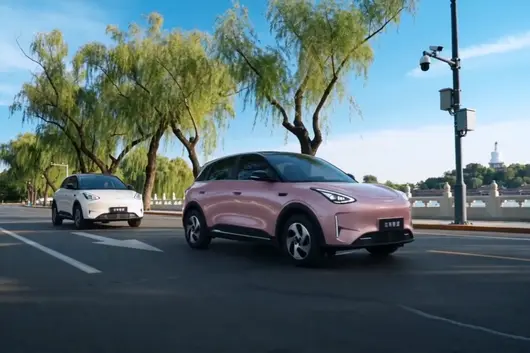

On May 28, the all-new Geely Xingyuan was officially launched, with a full upgrade of the range across all models: 310km upgraded to 410km, and 410km upgraded to 480km. The new vehicle launches four versions: 410km Yearning Edition, 410km Surfing Edition, 480km Exploration Edition, and 480km Exploration+ Edition, with a limited-time special price of 61,800 Yuan to 91,800 Yuan. To cater to different user needs, the 310km range option remains available as an upgrade choice on the 410km version, with a price reduction of 7,000 Yuan after selection. From now on, users can place an order via the Geely Galaxy APP or WeChat Mini Program, enjoying ten car-buying gift benefits and limited-time super trade-in subsidies, among other generous privileges. Additionally, any user who places a major deposit and secures the order by June 30, 2026, is entitled to a super trade-in subsidy benefit of 3,000 Yuan.

With expert moves again, the all-new Geely Xingyuan officially launched this time, advancing the classic with five major upgrades for a comprehensive refresh. It delivers over 100 product enhancements to users, achieving over 25 class-exclusive features, providing class-exceeding experiences with generational-leading technology. As the 2025 China Auto Market Sales Champion across all categories, Geely Xingyuan delivered over 700,000 units in 573 days. It ranked in the top 3 for global new energy sales in the first quarter of this year and is the only Chinese brand model to enter the top 3 in global new energy car sales, continuously leveraging its champion momentum. At the launch event, Joey Yung, spokesperson for the all-new Geely Xingyuan, was present on-site to share her authentic story with the Geely Xingyuan, using her gentle yet firm strength to champion the new car and witness this renewal moment with over 700,000 users alongside.
Meanwhile, the new car collaborated with Xiaohongshu to create the nation's first mobile 'Immersive Journey' car launch event, inviting everyone to experience and enjoy the good life. Moreover, Geely Xingyuan partnered with cross-border brands such as CATL, Capybara, Colorkey, Goodbaby, and Myfoodie to innovatively create five major life scenarios: 'Harbor Home', 'Alley Home', 'Rainforest Home', 'Silk Road Home', and 'Nomadic Home'. Focusing on core daily travel scenarios and addressing real user driving needs, it redefines the value benchmark for pure electric small cars with champion strength.
Champion Strength One: Ultimate Driving Control Advancement — First Global Native Architecture + China-German Joint Calibration
Geely Xingyuan brings a calm, free, light, and agile driving feeling for every trip. This champion strength originates from Geely's first global native architecture and track-level calibration: Geely Xingyuan is the first in class to adopt native architecture, the first to be standard with rear-drive independent suspension, and the first to undergo global calibration pure electric small car, allowing users to feel for the first time that pure electric small cars can have ultimate driving control!

Excellent driving control must withstand rigorous testing. Currently, Geely Xingyuan has reached over 30 countries worldwide. The R&D team has mobilized global resources to conduct comprehensive verification across various extreme road conditions globally. This makes the all-new Geely Xingyuan fully upgraded in the three core experiences of 'Driving, Steering, and Braking', leading small car handling into the 2.0 era once again. The G-TCS 2.0 All-Weather Anti-Slip System retains the fun of rear-drive flexibility while ensuring no slipping, tail swing, or rolling on flat roads, slopes, and curves, allowing beginners to drive with ease. The new brushless steering system responds twice as fast, supporting three steering modes and self-learning at the steering center. The G-CST 2.0 Full-Scenario Comfort Braking System mimics the feel of an experienced driver, preventing the car from nodding during braking and ensuring no motion sickness while driving. Additionally, Geely Xingyuan is the only model in its class to successfully challenge the Hook Test at 130km/h and the first in class to pass the Moose Test at 80.7km/h. Its handling performance is comparable to sports coupes in the 200,000 Yuan range.
Champion Strength Two: Efficient Powertrain Advancement — All Models Standard with CATL + 480km Range + 19 Minutes Fast Charging
310km upgraded to 410km, and 410km upgraded to 480km, the all-new Geely Xingyuan achieves a full range of upgrades. The range is substantial, not just for show; it charges fast for long-term use and saves on electricity costs, easily handling both daily commutes and occasional long trips. It is the only model in its class with all versions standardizing CATL battery cells, liquid cooling temperature control, and an 11-in-1 highly integrated electric drive. The powertrain strength has been the class standard since launch. The new car is equipped with exclusive CATL next-generation battery cells, with an energy density of 190Wh/kg, offering a maximum CLTC range of 480km, sufficient for daily commutes and weekend trips. In cooperation with the class-exclusive active front grille and low-drag wheels, the drag coefficient is reduced by 15 counts, further increasing the actual range by 10km.

With a solid range, energy replenishment efficiency is also continuously upgraded. Regarding charging, 30% to 80% fast charging takes only 19 minutes; you can depart with a full charge in the time it takes to drink a cup of coffee. The liquid cooling system and the new BMS ensure fast charging regardless of cold or hot weather, without compromising battery life. Meanwhile, the class-exclusive Star-Rui AI Cloud Power 2.0 achieves full-link energy management, covering smart charge/discharge, valley electricity price identification, battery temperature maintenance, energy consumption diagnosis, and battery maintenance functions, ensuring every charge is efficient and every journey is stress-free.
Champion Strength Three: AI Smart Cockpit Advancement — Galaxy Flyme Auto 2 Smart Cockpit System + Eva Large Model
The all-new Geely Xingyuan brings warmth and intelligence into the cockpit, making the vehicle more user-friendly, intuitive, and comprehensive. It features the Galaxy Flyme Auto 2 Smart Cockpit System, powered by a 7nm automotive-grade Dragon Eagle 1 chip and 16GB+128GB memory. It features fast response, smooth operation, and is easy to use. Users can freely switch maps or favorite wallpaper desktops. Cute pet wallpapers support interactive features, adding fun to the cockpit.

The all-new AI Eva is the user's portable smart partner. The voice assistant 'Hi EVA' supports fuzzy command understanding and context memory, capable of handling vehicle control, Q&A, entertainment, and more. With just a command like 'Hi Eva, I want to go home', the vehicle automatically invokes the latest AutoNavi V850 to select the optimal route. Meanwhile, the infotainment system adds support for CarPlay, enabling seamless connection with iOS devices, offering all local common apps plus 200+ massive cloud apps to choose from. It also features thoughtful scenarios like Invisible Mode, Car Wash Mode, and One-Tap Car Finder, as well as a personalized 'thousand faces' custom assistant that automatically opens navigation and adjusts the AC after work. Full of exclusive welcoming rituals. From navigation to entertainment, from daily life to surprises, the all-new Geely Xingyuan's smart cockpit comprehensively covers all user daily needs.
Champion Strength Four: ADAS Advancement — Qianli Haohan ADAS H3 Solution
The all-new Geely Xingyuan is equipped with the Qianli Haohan ADAS H3 Solution, the same origin as high-end models. It covers multiple driving scenarios, with every function genuinely helping users improve their driving experience. The system has safely traveled over 1.38 billion kilometers and ranks first in user growth. Relying on the G-ASD Smart Driving Foundation and the Star-Rui AI Large Model, it delivers a smart experience that 'gets better with every drive' and 'gets smarter with every drive'.

Highway NOA is not restricted by road conditions or rainy/foggy weather, supporting voice-assisted lane changes, multi-scenario avoidance, and automatic ramp entry/exit. Users only need to lightly hold the steering wheel to easily drive long distances. The Full-Scenario MPI takeover rate exceeds 200 kilometers, equivalent to only needing one takeover after 3 consecutive hours of driving. Regarding parking, it supports full-scenario adaptation. The APA Parking Assist function supports one-key parking, fingertip parking, and remote control parking, covering over 300 parking scenarios. Addressing practical pain points like difficulty parking for new drivers or tension for female drivers, HPA Memory Parking supports over 2km ultra-long memory and centimeter-level precise positioning. After learning a route once, it can automatically park the whole way, featuring smart following, autonomous spot finding, and obstacle avoidance. If detouring temporarily, no relearning is needed, effectively reducing parking operation difficulty. Additionally, the DMS Active Fatigue Detection will timely remind the driver if fatigue or distraction is detected. Sentry Mode guards parking safety 24/7, recording video and sending it to the user's phone immediately upon anomaly. From departure to arrival, from driving to parking, the all-new Geely Xingyuan makes complex driving simple and reassuring, allowing users to devote more energy to the scenery on the road and the laughter of fellow travelers.
Champion Strength Five: Full-Dimensional Safety Advancement — Powertrain Safety + Active & Passive Safety
Safety is the gene carved into Geely's bones! For Geely, whether large cars or small cars, luxury models or mainstream models, all brands under the portfolio adopt the same safety philosophy and rigorous standards. Geely has built a global full-domain safety center with an investment exceeding 2 billion Yuan and released the 'People, Car, Road, Cloud, Star' integrated full-domain safety 2.0 system, covering four core safety domains: Life Safety, Health Safety, Property Safety, and Privacy Safety. The all-new Geely Xingyuan also adheres to this high standard, following the philosophy that 'Small cars must have big safety', taking small car safety to the extreme.
In terms of passive safety, the all-new Geely Xingyuan features a 'Five Verticals, Eight Horizontals' Star Armor Cage Body, like a solid yet lightweight suit of armor, with careful reinforcement at the front, back, left, and right. The front end utilizes three force transmission paths combined with a dual 'clover' energy-dissipation structure. On the sides, the distance from the battery to the sill is 149mm, with added dual anti-collision longitudinal beams. The rear features a 750mm long suspension with a dual 'well'-shaped rear subframe forming a solid barrier. Roof compression strength is increased to 3.4 times the vehicle weight. Materials in core areas like A and B pillars and the roof beam are upgraded. Even in a rollover or heavy object impact, the cockpit remains safe. Side curtain airbag pressure technology continuously protects the head during a roll.

In terms of battery life, Geely Xingyuan's verification standards have been increased to twice the national standard. After 1,000 cycles, battery capacity remains at 90.72%. Furthermore, a Geely Xingyuan with actual mileage of 84,000 km successfully challenged seawater corrosion, mud washing, underbody scraping on rough roads, and extreme fire tests among six major serial limit tests, achieving an industry first.
To further enhance battery safety protection, the all-new Geely Xingyuan goes the extra mile in unseen areas. It adopts industry-leading BDMU high-voltage device deep integration technology, combining the BMS battery management system and BDU high-voltage distribution unit into one, significantly reducing interfaces and raising reliability to a new level, reducing the risk of battery sealing failure from the root. Notably, on May 12, Geely partnered with CCTV to complete the class's first and only continuous frontal and side collision test. The high-voltage system powered down in time, the battery pack did not smoke or catch fire, the occupant cabin structure remained intact, airbags deployed precisely, and doors on the non-collision side opened normally. Additionally, the all-new Geely Xingyuan comes equipped with direct tire pressure display, DOW Door Open Warning, and Sentry Mode. With AEB Active Braking and AES Emergency Steering as a double insurance, it successfully passed 120 km/h static vehicle braking and 130 km/h 'Disappearing Leading Vehicle' active avoidance tests, with performance far exceeding industry mainstream levels.
Trusted by 700,000 Users, From China Champion to Global Top 3, The Champion's Road Never Stops
Always imitated, never surpassed. Relying on high standard from R&D to manufacturing and generational-leading product strength, Geely Xingyuan has always won industry recognition and user love. Since its launch in October 2024, Geely Xingyuan's cumulative deliveries have exceeded 700,000 units, equivalent to selling one every minute. It is not only the fastest model in the industry to achieve this milestone but also the 2025 China Auto Market Sales Champion. Entering 2026, Geely Xingyuan continues to lead and firmly remains at the top. In this year's first quarter global new energy vehicle sales ranking, Geely Xingyuan ranked in the global top 3 for the first time, achieving a new milestone for Chinese A0-class electric cars.

Geely Xingyuan is not only selling well domestically but is also widely acclaimed in overseas markets, currently available in over 30 countries and regions worldwide. In Brazil, sales broke 2,300 units within two months of launch; At the Thailand Auto Show, single-week orders reached 3,300 units, and it won the dual international awards of 'Brazil's Best Compact Electric Car of the Year' and 'Most Loved Electric Car at the Indonesia Auto Show'. On streets around the world, Geely Xingyuan is becoming a new, mobile business card for 'Made in China' intelligence.

The advancement of the all-new Geely Xingyuan raises the benchmark of 'High Quality, Great Value' for the Geely Galaxy brand on the pure electric small car track once again. In the future, Geely Galaxy will continue to adhere to the original aspiration of 'Building Smart Boutique Cars for Everyone', accurately grasping users' truest needs, and bringing products and services that exceed expectations in every market segment.
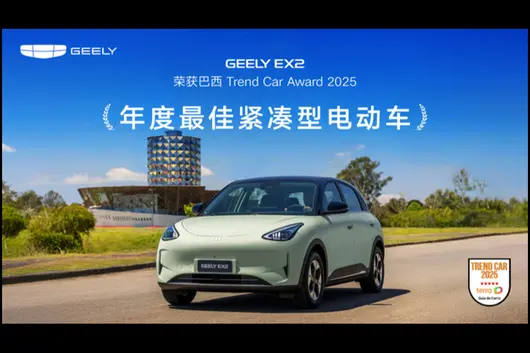

On May 28, the all-new Geely Xingyuan officially launched, offering 410km Yearning Edition, 410km Riding the Wind Edition, 480km Exploration Edition, and 480km Exploration+ Edition four models, with a limited-time launch rights price of 61,800 Yuan - 91,800 Yuan. The 410km version can choose a 310km range configuration, with a price reduction of 7,000 Yuan. Placing a major deposit and locking the order before June 30, 2026, you can enjoy 3,000 Yuan super trade-in cash, plus ten layers of purchase gifts, including 5-year highway elevated NOA service, charging pile and installation, and three-electric lifetime warranty, etc.

Strategic Significance for Geely
The launch of the all-new Geely Xingyuan is a key step for Geely to consolidate its advantage in the pure electric small car market. Since Xingyuan launched in October 2024, delivery volume exceeded 700,000 units in 573 days, selling one unit per minute, winning the 2025 China car market overall sales champion, and ranking top 3 in global new energy sales in Q1 2026.

This update not only continues Xingyuan's hot sales momentum but also further amplifies Geely's technical advantages in the pure electric small car field. Through comprehensive upgrades in five dimensions, Geely is redefining the value standards of pure electric small cars, making "High Quality and Good Price" a distinct label for the Geely Galaxy brand.
On the global market level, Xingyuan has landed in over 30 countries and regions, performing brightly in markets like Brazil and Thailand. The launch of the all-new Xingyuan will further enhance Geely's influence in the global new energy market, making "Made in China" pure electric small cars go to more countries.

Multi-dimensional Competitiveness Analysis
Compared to the old model, the all-new Xingyuan achieves full series range upgrades, 310km upgraded to 410km, 410km upgraded to 480km. It also brings over 100 product power upgrades, including core technologies such as G-TCS 2.0 anti-slip system, CST 2.0 comfortable braking, and Xingrui AI Cloud Power 2.0.
Regarding the intelligent cockpit, high-spec models are equipped with the Dragon Eagle One chip, 16G+128G large storage, adding CarPlay support and EVA assistant. Regarding assisted driving, the Qianli Haohan H3 solution is introduced, supporting highway NOA and all-scenario automatic parking.

In the 60,000-100,000 Yuan pure electric small car market, the all-new Xingyuan's advantages are very prominent. It is the only model in the class with standard rear drive independent suspension, CATL cells, and liquid-cooled temperature control system.
Regarding driving control performance, 80.7km/h Moose test and 130km/h Hook test scores far exceed the class average. Regarding space, the 2650mm wheelbase brings a quasi-B-level riding experience, and 36 flexible storage spaces are even leading in the class.
Regarding intelligent configuration, the Galaxy Flyme Auto 2 system and Qianli Haohan assisted driving H3 solution are leading among same-price models. Especially the Unbounded Space function, supporting 200+ cloud applications, the experience far exceeds class competitors.

Core Highlights in Actual Vehicle Use Scenarios
The all-new Xingyuan adopts the "Smiling Front Face" design, paired with eight ice cream car colors, looks great. 1.15 aspect ratio and floating roof design create a low and wide body visual effect.
The interior adopts an enveloping two-tone design, with Taro White and Starry Grey two color schemes, outstanding texture. 4135×1805×1570mm body size brings over 85% super large yield rate. Rear longitudinal space is 1452mm, flat floor design, three passengers are not crowded.

The Galaxy Flyme Auto 2 intelligent cockpit system has smooth operation and is easy to get started. It supports dual-zone voice interaction, visible anywhere, speak anywhere. The Unbounded Space function can run 200+ apps in the cloud without occupying local storage.
3.3kW external discharge function meets camping power needs. 70L dual pneumatic support rod front trunk can hold a 20-inch suitcase. 10L super large passenger drawer can hold three laptops. These practical configurations perfectly solve daily vehicle storage pain points.

The all-new Xingyuan adopts a rear-engine rear-drive layout, 410km model equipped with 58kW motor, 480km model equipped with 85kW motor. 0-50km/h acceleration is 3.9s, ample power, sufficient for city commuting.
Regarding range, 480km CLTC range, room temperature actual range fulfillment rate exceeds 100%. 30%-80% DC fast charging takes only 19 minutes, full power start in coffee time. Xingrui AI Cloud Power 2.0 can intelligently manage energy to improve range performance.

The all-new Xingyuan adopts a five-vertical eight-horizontal Star Armor Cage Body, 3.4 times roof compression strength. Successfully challenged front 50km/h and side 55km/h continuous collision, occupant cabin structure intact, battery pack did not smoke or catch fire.
Regarding battery, all-series standard Guardian Battery Safety System and Battery Doctor BMS3.0, 18 temperature sensors monitor cell temperature in real-time. Regarding active safety, AEB active braking can stop at 120km/h speed, AES emergency avoidance can complete steering avoidance at 130km/h speed.

Full Text Summary
The all-new Geely Xingyuan with a starting price of 61,800 Yuan brings product power far exceeding expectations. Comprehensive upgrades in five dimensions further enhance its competitiveness in the pure electric small car market.
From the perspective of actual vehicle use scenarios, the all-new Xingyuan performs excellently in design, space, configuration, power, safety, etc. Especially the rear drive independent suspension driving experience, CATL cell three-electric system, Galaxy Flyme Auto 2 intelligent cockpit, and Qianli Haohan H3 assisted driving, all brought a tier-up experience to users.

For Geely, the all-new Xingyuan is not just a volume-selling model but also a manifestation of brand technical strength. It proves with actual actions that pure electric small cars can also have good driving control, high safety, and intelligent experience.
In the 60,000-100,000 Yuan pure electric small car market, the all-new Geely Xingyuan is undoubtedly a highly competitive product. Its launch will further promote the upgrade of the pure electric small car market, allowing more consumers to enjoy high-quality new energy travel experience.