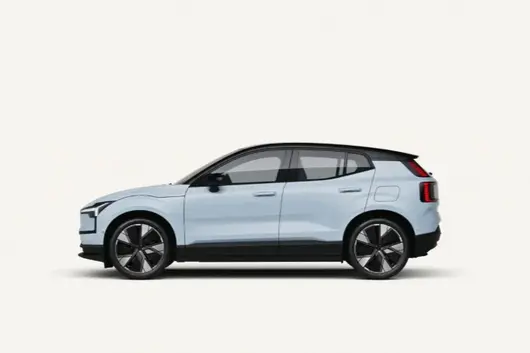
首頁Volvo

搜尋歷史
熱門搜尋
經銷商登入 / 註冊

Recently, Geely's series of moves were quite aggressive. Besides the adjustments in executive management, the layout and specific operations of the overseas market also have clearer plans. First, regarding sales targets, Geely's 2026 exports were raised from 640,000 vehicles to 920,000 vehicles, challenging an annual sales volume of one million.

In the first half of the year, Geely's overseas sales were approximately 480,000 vehicles, a year-on-year increase of 158%. With the traditional peak season of the second half of the year, Geely's standard for raising the sales target is very pragmatic, and there is a high probability of successfully challenging an annual sales volume of one million vehicles.

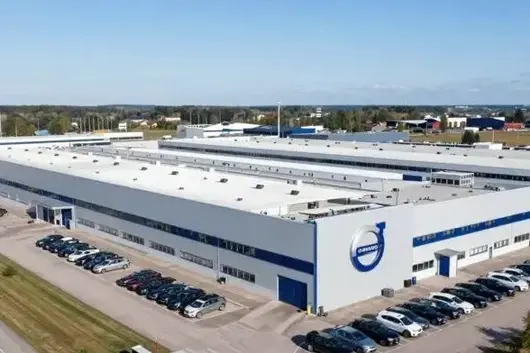
Meanwhile, Geely Holding Group CEO An Conghui stated: Volvo's factories in Europe will become an important base for Geely's European strategy, undertaking the production of high-end luxury cars within the Geely Automobile Group, expected to start production in 2028. Looking at the data, Volvo's year-on-year decline in the European market in 2025 was 10%, dropping to approximately 332,700 vehicles.

Entering the first quarter of 2026, Volvo's sales in Europe and other regions worldwide were 95,335 vehicles, a further year-on-year decline of 2%. Global sales from March to May were 179,000 vehicles, a year-on-year drop of 5.5%. The surge in Geely's sales in the overseas market can just utilize Volvo factories' idle capacity, which is quite reasonable.
Meanwhile, regarding layout in other overseas markets, Geely previously acquired Proton's factory in Malaysia. After upgrading, it has an annual production capacity of 500,000 vehicles to meet the needs of the Southeast Asian market. In South America, it relies on Renault Brazil's industrial collaboration, sharing manufacturing resources and market channels between the two parties, significantly reducing the investment cost of building its own factories.

Additionally, in July this year, Geely and Ford also reached an agreement. Both parties will establish a joint venture company in Valencia, Spain. Through capacity sharing, they will create various new energy vehicle models for the Ford and Geely brands for the European market. From this perspective, Geely's layout in the overseas market is mainly to revitalize the group's various brand resources, or establish joint venture companies with other brands, trying to avoid the high investment of building factories alone, and also serving a role in risk avoidance.

Two EX30 fire incidents directly exposed the true reality of the so-called "safest automobile brand".
The start of this crisis was on May 15, when an EX30 caught fire while charging at the owner's home, even spreading to the Ford Ranger pickup truck next door. It is reported that this is the second EX30 fire incident occurring in Thailand. Regarding this matter, the Thai Consumer Protection Committee also filed a civil lawsuit against Volvo Thailand.

Of course, Volvo also proposed a remedial plan: replacing the entire battery for 90% of affected vehicles, and replacing modules for only 10%, while the company provided users with charging vouchers worth 8,500 Thai Baht and substitute vehicle services. However, most car owners did not accept this, insisting on returning the car for a refund instead of replacing the battery.
Why was the attitude of Thai consumers so firm? Actually, the source of this controversy can be traced back to February this year, when Volvo had already announced a global recall of more than 40,000 EX30 vehicles to replace battery modules. The reason was that the high-voltage battery had defects that could cause the battery pack to overheat or even catch fire. But unexpectedly, the problem had already been discovered, yet the EX30 still had two fires, so Thai consumers naturally did not give in.

Reviewing the entire incident, the most glaring issue was not just the vehicle fire itself, but that Volvo knew there were safety hazards in the product but failed to solve the problem thoroughly from the root. This treatment method that addresses symptoms but not the cause is essentially indifference to consumer safety rights and directly tore apart Volvo's safety coat maintained for many years.
Perhaps some will defend Volvo: EV fires are an industry-wide ailment, and a car company cannot be heavily criticized. But the problem lies in the fact that Volvo's foundation is "absolute safety". When a car company writes "safety" into the brand name, prints it in every ad, and engraves it into every generation of consumers' cognition, becoming a core brand gene and the premium foundation supporting it above ordinary domestic brands, it must bear higher expectation standards than ordinary car companies.

We do not deny that in the era of fuel vehicles, Volvo built itself as the "safest car" in consumers' hearts; but in the era of electric vehicles, Volvo cannot even guarantee basic battery charging safety. This extreme contrast brings a reputation backlash that is far more fatal than ordinary quality control issues.
In addition, the EX30 fire also affected another brand.
As everyone in the industry knows, Volvo was fully acquired by Geely long ago. And this fire-exposed EX30 was not independently developed by Volvo. The whole vehicle was customized based on Geely's self-developed SEA pure electric architecture. Its core three-electric components such as battery pack, electronic control system, and drive motor are highly homologous with Zeekr X, so many people see it as a "rebadged Zeekr X".

Rebadged car manufacturing is not exactly a "sin", but the point of contradiction is that the SEA architecture, as Geely's exclusive premium pure electric platform, has focused on two major advantages of high safety and high adaptability since its birth. It is Geely's core competitive edge to break into the premium new energy market. Now, derivative models of the architecture have successively exposed battery fire hazards. Does this mean the platform's three-electric system has underlying design or quality control loopholes, rather than a single vehicle individual failure?
Anyway, given the current situation, this hazard not only dragged down Volvo's overseas market reputation, but also seriously stabbed Geely's development pain points. If this matter cannot be properly solved, then consumers in Southeast Asia will significantly reduce their trust in Volvo and even Geely, after all, once a crack is formed, it is very hard to repair.

As for consumers, the author has only one suggestion: Do not believe any marketing jargon like "hundred-year brand" or "safety benchmark". In the face of this new species of electric vehicles, all reputation accumulated in the era of fuel vehicles may be overturned instantly by a battery or a BMS system. Before buying a car, check who the battery supplier of this car is, check if there has been a recall history, these information, actually will be more useful.
Final Thoughts
In short, these two fire incidents in Thailand have sounded the alarm for consumers: safety in the era of electrification is no longer just about how thick the car body steel is; battery and thermal management systems being reliable and safe are also crucial. And in the era of electrification, when Volvo cannot even prevent charging spontaneous combustion, what does it have left?
"Images sourced from the internet, please contact us if there is infringement"
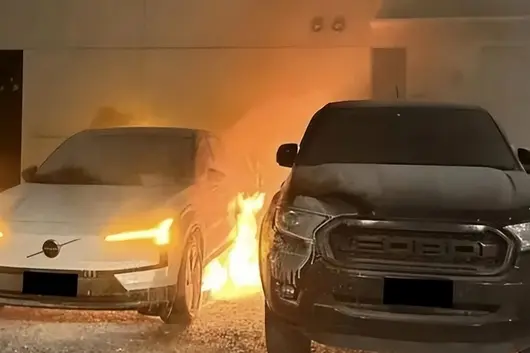

On May 24, according to Reuters' report this week, the Thailand Consumer Protection Agency OCPB filed a civil lawsuit against Volvo Thailand, as the EX30 electric vehicle experienced a battery-related fire incident. This action stems from two EX30 fire incidents that occurred in Thailand this month; currently, there are already 1600 EX30s on the road in the country.

A Volvo spokesperson stated that the fire incident occurrence rate is extremely low, with the proportion of affected vehicles far below 0.1%, and a notice has been issued to owners: temporarily do not charge the battery above 70%. Officials from the Thailand Consumer Protection Agency revealed that Volvo proposed multiple solutions at the negotiation meeting, including battery replacement, providing temporary replacement vehicles, etc., but owners were not satisfied. A user attending the meeting stated: "What most consumers want is a full refund, not a battery replacement."