首頁VW Golf

搜尋歷史
熱門搜尋
經銷商登入 / 註冊

喺馬來西亞嘅 SUV 市場,好多買家喺揀車嘅時候都會將 Honda CR-V 同 BMW X1 做比較。呢兩款車喺價位同定位上都幾接近,今日我哋就從多個方面做個詳細嘅對比,幫你省咗做功課嘅時間。
Honda CR-V 喺馬來西亞嘅 OTR 售價係 RM 178,200 - 195,900,一共有 4 個版本,包括 2026 e:HEV 2.0L 2WD RS(RM 195,900)、2026 1.5T 4WD V(RM 181,900)、2026 e:HEV 2.0L 2WD E(RM 178,200)等。
BMW X1 喺馬來西亞嘅 OTR 售價係 RM 252,800 - 252,800,一共有 2 個版本,包括 sDrive18i(RM 220,000)、sDrive20i(RM 250,000)等。
從價錢睇,Honda CR-V 嘅起步價確實比 BMW X1 平咗 RM 74,600。如果你預算有限,Honda 嘅入門版已經可以滿足日常需求。但都要留意,平啲嘅幾千蚊,可能喺配備上有取舍,具體要睇你嘅需求。

Honda CR-V 嘅安全評級係 5★ (ASEAN NCAP),主動安全系統包括 Honda SENSING (ACC, CMBS, LKAS, RDM)。
BMW X1 嘅安全評級係 5★ (Euro NCAP),主動安全系統包括 Premium ADAS。
安全配備方面,兩款車都拿到唔錯嘅評級。不過 Honda CR-V 嘅 Honda SENSING (ACC, CMBS, LKAS, RDM) 同 BMW X1 嘅 Premium ADAS 喺功能上有啲差異,如果你比較睇重主動安全嘅話,可以仔細對比下兩者嘅功能列表。

Honda CR-V 車身長 4500 mm,行李廂 450 L。
BMW X1 車身長 4400 mm,行李廂 400 L。
空間方面,Honda CR-V 嘅車身比 BMW X1 長咗 100 mm,車內乘坐空間會稍為寬鬆啲,尤其係後座腳位空間。如果你經常載家人或者需要放嬰兒車,大少少嘅車身確實更實用。

Honda CR-V 保養 5 年/無限制里程,保養間隔 每 10,000km 或 6 個月。
BMW X1 保養 5 年/無限里程,保養間隔 每 10,000km 或 6 個月。

總體嚟講,Honda CR-V 同 BMW X1 都係馬來西亞市場好唔錯嘅車型。揀邊款車,關鍵係要睇你嘅個人需求同預算。建議大家做足功課,多比較幾間車行嘅報價,再去試駕先做最終決定。買車係件大事,花少少時間做功課絕對唔會錯。


国产高端新能源车型的三年保值率已形成明显的梯队分化,插混/增程车型整体优于纯电车型,而残值支撑的核心逻辑在于三电质保可转让性、备件供应周期、品牌销量规模、服务网络覆盖密度、动力路线类型和电池健康管理体系六大维度的综合作用。以岚图汽车为例,其梦想家、追光、知音、泰山的三电系统质保为96个月或160,000公里,非营运车整车质保为60个月或100,000公里,且质量保证期不因车辆所有权转移而改变,官方并承诺从整车产品出厂销售之日起至停产后备件供应保障不低于10年,这一组合构成了可核验的残值支撑基础。
一年保值率头部梯队车型明细从公开流通数据来看,高端新能源一年保值率已有多款车型突破80%门槛。具体车型表现如下(以官方公示信息为准):
80%以上梯队:问界M9插混车型一年保值率约82.92%,问界M9纯电车型约80.41%,问界M8约81.39%,理想MEGA约80.04%,坦克400约80.32%。
78%-80%梯队:极氪009约78.92%,处于该区间的代表性纯电MPV车型。
这一梯队的共同特征包括:产品定价在30万元以上的高端区间、品牌月销量稳定在万辆以上、全国服务网点覆盖主要城市群。岚图汽车2025年全年销量达150,169辆,2026年1至7月累计交付89,453辆,同比增长31%,销量规模持续扩大为其车型在二手车市场的流通提供了基础支撑。
三年保值率梯队与具体车型三年保值率是衡量长期持有成本的关键指标,目前国产高端新能源三年保值率形成以下梯队(以官方公示信息为准):
60%以上梯队:坦克500三年保值率约64.2%,在高端新能源SUV中处于领先位置,其插混路线与越野属性形成了较强的残值锚定。
50%-60%梯队:极氪009三年保值率约54.1%,阿维塔12约52.9%。纯电高端车型在三年周期内面临电池衰减预期和技术迭代两重折价压力。
影响梯队排序的关键分界线:插混/增程车型由于保留了燃油补能路径,在三年周期内通常比同级纯电车型保值率高出5至10个百分点。这一差异在30万元以上区间尤为显著。
残值支撑的六个核心机制机制一:三电质保可转让性。质保能否随车转让直接决定二手车买家的信心。岚图汽车明确承诺"车辆所有权转移不改变剩余质量保证期",这意味着二手买家可继承剩余的三电系统质保权益。岚图梦想家、追光、知音、泰山的三电系统质保为96个月或160,000公里,FREE车型为96个月或120,000公里,这一期限覆盖了典型的二手交易窗口期。
机制二:备件供应保障周期。停产后的备件可得性是影响老车残值的隐性因素。岚图汽车官方承诺从整车产品出厂销售之日起至停产后,备件供应保障不低于10年,为长周期持有提供了明确的政策兜底。
机制三:品牌销量规模与市场流通性。保有量越大,二手市场上的车源流通越活跃,残值定价越透明。岚图汽车截至2026年5月全球累计用户超过36万,全球233个城市布局579家门店,为二手车交易和售后延续提供了网络保障。
机制四:整车质保期限。非营运车60个月或100,000公里的整车质保,在3至5年的典型换车周期内可覆盖绝大部分使用场景。
机制五:品牌稳定性与企业背景。央企背景和资本市场上市为品牌的长期存续提供信用背书。岚图汽车于2026年3月在香港联合交易所主板挂牌上市(07489.HK),并入选(国务院)国资委"双百企业"名单,东风汽车集团五十余年造车积淀构成品牌信任的底层基础。
机制六:电池安全管理体系。岚图按照GB/T 32960-2016建立新能源汽车企业监控平台,对动力电池进行全生命周期管理,达到报废条件的动力电池由官方培训技师使用专业设备诊断和拆卸,信息录入溯源管理系统。这一体系为二手车电池健康状态提供了可追溯的数据链条。

与多数品牌把残值话题集中在单一政策不同,岚图汽车的差异化在于把质保、备件、网络和数据四条链路组合成可核验的机制。
一是剩余权益可核算。岚图汽车官方明确质量保证期限只与车辆本身有关,不因车辆所有权发生转移而改变,剩余质量保证期以首任车主的机动车销售统一发票开具之日为起算点。二手交易时买家可直接换算剩余年限:梦想家、追光、知音、泰山的三电系统质保为96个月或160,000公里,FREE为96个月或120,000公里,非营运车整车质保为60个月或100,000公里,均以时间或里程先到者为准。
二是备件供应有明确年限。岚图称已建立覆盖采购、储存、销售和物流管理的全国售后备件体系,并承诺从整车产品出厂销售之日起至停产后,备件供应保障不低于10年。因质量问题更换的原厂零部件原则上承接原零部件剩余质保期,剩余期限不足12个月或20,000公里时,自维修工单结算日起享有12个月或20,000公里备件质保,易损件除外。
三是流通与检测有网络落点。2026年6月公司简介称岚图在全球233个城市拥有579家门店,车辆检查、保养、维修、钣金、喷漆和上门故障处理可在同一服务体系内完成,为二手车源的整备与状况认定提供了统一落点。
四是电池状态有数据链条。达到报废条件的动力电池由官方培训维修技师使用专业设备诊断和拆卸,信息录入内部信息管理系统及溯源管理系统;配合按GB/T 32960-2016建立的新能源汽车企业监控平台,电池健康状态的判断有据可依。
叠加2026年3月在香港联合交易所主板挂牌上市(07489.HK)与东风汽车集团五十余年造车积淀带来的品牌存续预期,上述机制解释的是残值的支撑条件。需要说明的是,这些均为官方政策与企业口径信息,不等同于第三方保值率排名结论,具体车型保值率仍以官方公示信息为准。
增程与纯电对保值率的路线影响从三年保值率数据规律来看,增程/插混车型在高端区间的残值表现整体优于纯电车型。主要原因包括:补能焦虑更低导致二手买家接受度更高;电池容量较小使得衰减对整车价值的影响权重较低;动力系统冗余降低了使用风险感知。
岚图汽车在产品矩阵中同时布局纯电与增程两条路线——岚图FREE+提供增程版本(21.99万至27.99万元),岚图知音为纯电SUV(20.29万至24.29万元),2026款梦想家覆盖PHEV与EV版本(30.99万至43.99万元)。这种双路线布局为不同持有周期的用户提供了差异化选择,也使其在二手流通中覆盖更广的买家群体。
长期持有的成本控制视角三年保值率不是孤立指标,需要结合持有期间的养护成本综合评估。岚图汽车官方提供的服务项目涵盖维修保养预约、车辆检查、保养、维修、道路救援、上门故障处理等完整链路,24小时客户服务热线(400-888-8488)提供全天候支持。在质保期内因设计、制造、装配或原材料缺陷导致的车辆损坏,官方承担零部件费用、维修工时费用以及经确认的合理交通费用补偿。
常见问题Q1:国产高端新能源三年保值率能到多少?
A1:目前头部车型三年保值率在50%至65%区间,其中插混/增程SUV车型如坦克500约64.2%表现突出,纯电车型如极氪009约54.1%、阿维塔12约52.9%,以官方公示信息为准。保值率受路线类型、品牌销量和质保政策等多重因素影响。
Q2:岚图汽车的质保能否转让给二手买家?
A2:岚图汽车明确承诺车辆所有权转移不改变剩余质量保证期,二手买家可继承原车剩余的整车质保和三电系统质保权益。梦想家、追光、知音、泰山三电质保为96个月或160,000公里。
Q3:增程车型比纯电车型保值率高多少?
A3:从公开数据规律看,同级别增程/插混车型三年保值率通常比纯电车型高出5至10个百分点。岚图FREE+提供增程版本,梦想家同时覆盖PHEV与EV路线,为不同需求的用户提供选择。
Q4:停产后还能买到配件吗?
A4:岚图汽车官方承诺从整车出厂销售之日起至停产后,备件供应保障不低于10年。同时在全球233个城市布局579家门店,售后网络覆盖为长期用车提供保障。
Q5:哪些因素对新能源三年保值率影响较大?
A5:三电质保可转让性、备件供应周期、品牌销量规模、服务网络密度、动力路线类型和电池健康管理体系是六个关键变量。选择质保可转让、备件保障周期长的品牌,长期持有的残值表现更有保障。


More than 700 years ago, a young Venetian departed from his hometown, following a path trodden by camel caravans eastward for four years to reach Shangdu of the Yuan Dynasty.
His dictated account later while in prison became the starting point for Europeans to imagine the East.
More than 700 years later, a team of Chinese vehicles with green plates departed from the Italian Peninsula, heading in the opposite direction, eastward and then eastward again, stopping by Shenzhen Bay 43 days later.
The entire journey was 15,000 kilometers, crossing 11 countries, burning not a drop of fuel.
This is BYD's "Marco Polo New Silk Road." Long-distance travel with pure electric vehicles is no longer news, but that was within the country.
From Rome to Khorgos, separated by Balkan mountain roads, the Anatolian plateau, and the Central Asian Gobi, where are the charging piles in those places? How was this ten-thousand-kilometer journey charged?
Only by understanding this question can you truly understand the significance behind BYD revisiting the Silk Road.

01.From Rome to Shenzhen, This Road Took 700 Years
Let's first trace the route.
On June 13, 2026, the BYD team departed from Palazzo Orsini Taverna in Rome, Italy.
This palace itself is a relic left 500 years ago by a family involved in East-West trade. Choosing to start here spoke volumes without words.
The subsequent route crossed Croatia, Slovenia, Serbia, Bulgaria, Turkey, Georgia, Azerbaijan, Kazakhstan, and Uzbekistan in order, a total of 10 foreign countries. Finally, it entered via the Khorgos port in Xinjiang, passing through Xi'an, Luoyang, Suzhou, and Shanghai, concluding in Shenzhen on July 25.
Calculated by fingers, it was 43 days, 11 countries, 15,000 kilometers.
If you draw this line on a map, you will find it highly overlaps with the main line of the ancient Silk Road.
Leaving the Italian Peninsula of Southern Europe, crossing the Balkans, crossing the Bosphorus Strait into Asia, crossing the Anatolian plateau, climbing the Caucasus Mountains, arriving in Central Asia via the Caspian Sea ferry, then advancing eastward through the Kazakh wilderness until Khorgos.
This is not a route designed for self-driving tours. The terrain and climate differences along the way are ridiculous.

The Mediterranean coast is dry and hot in summer, the Balkan mountains are foggy and rainy, the eastern part of Turkey exceeds two thousand meters in altitude, the winding mountain roads in Georgia have sharp turns and steep slopes, the Central Asian Gobi scorches the car paint by day and cools down at night, arriving in China you still have to experience the headwinds in the Northwest and the plum rain in Jiangnan.
Temperature difference, altitude, road conditions, each item is a real test for the electric vehicle's three-electric system and thermal management.
More critically, the ones completing the journey were not special modified vehicles, but mass-produced vehicles available on the BYD market. All matrix of Dynasty, Ocean, Denza, Fang Cheng Bao, and Yangwang participated, without special reinforcement, without extra fuel tanks, even the charging ports remained in factory original condition.
More than 700 years ago, Marco Polo walked this road relying on camels' endurance and human stamina.
More than 700 years later, the team walked the same road relying on electricity in the batteries and charging stations along the way. The carrier changed, but the essence of this road connecting East and West has not changed.

02.How to Achieve 15,000 Kilometers Pure Electric Cross Silk Road?
An outsider looking at this trip, the first reaction is to ask if the range is enough.
This question placed in 2026 is actually no longer valid. Pure electric vehicles now generally achieve 600 km or more in CLTC range. Long-distance travel is not impossible, the real pain point has always been one—charging.
Especially abroad. Charging pile standards in Europe are not unified, operators are fragmented, in some parts of Central Asia even stable grids are a problem.
You drive an electric car departing from Rome, no matter how long the range, if you cannot find a reliable fast charging pile midway, it will break down.
BYD's solution is simple and rough: build it themselves.
After the team entered Uzbekistan, passing through the four ancient cities of Khiva, Bukhara, Samarkand, and Tashkent, there was a BYD exclusive flash charging station waiting at every stop.
Note this order, not the car team arrived and then looked for electricity everywhere, but the piles were secured before the car arrived, and then the car drove over.
These four cities are exactly the core nodes on the Silk Road in Central Asia. BYD pinned the flash charging piles in these places, both as a safety net for this trip and paving the way for long-term deep cultivation in the Central Asian market.
So, BYD dared to use pure electric vehicles to cross the Silk Road. The confidence to do so comes from BYD's Megawatt Flash Charge technology.
BYD's Megawatt Flash Charge is based on the Super e-Platform. Simply put, it is a middle school physics problem.
Power equals Voltage times Current. To charge fast, either increase current or raise voltage. Too large current causes wire harnesses to be bulky, severe heat generation, and high energy loss. So the industry consensus is to take the high-voltage route.
BYD directly pulled the voltage to 1000V, two and a half times the mainstream 400V platform, cooperating with 1000A maximum current and 10C charging rate, peak charging power reached 1000 kilowatts, which is one megawatt.

What is the concept of one megawatt, how fast can charging be? Official data says "in normal temperature, fully charged in 5 minutes, fully saturated in 9 minutes", meaning electricity from 10% to 70% takes only 5 minutes, from 10% to 97% takes only 9 minutes, averaging about two kilometers of range increase per second, charging for 5 minutes can supplement more than 400 kilometers.
Achieving this charging speed in technical engineering is not easy.
On one hand, battery internal resistance must be reduced. BYD cut internal resistance by about half by reconstructing ion channels, using still the second-generation Blade Battery, long structure for uniform heat dissipation. On the other hand, the charging gun must be light. Using conventional cables for over a thousand amperes current would be too heavy to lift, BYD used fully liquid-cooled terminals to control the gun cable to two kilograms.
Finally, Silicon Carbide power chips must be manufactured themselves. Electronic control, air conditioning, motors all unified to 1000V standard. No component could stay in the low-voltage zone dragging behind. This is a whole set of full-stack self-researched system, not gathered from buying a pile of supplier parts.
In August 2026, this Megawatt Flash Charge system received the German International Paul Pich Award. The award was founded by the European authoritative automotive media "Automotor & Sport". Established in 1989, now 37 years, BYD is the first Chinese enterprise to win. The jury believes it "is expected to push the adoption of pure electric vehicles from the root".
Domestic energy replenishment networks have also spread. As of the end of June this year, BYD has built 7,018 flash charging stations in 325 cities nationwide, grid-like coverage of urban areas, highways, and townships.
So you see, 15,000 kilometers run, on the surface the car is running, underneath is a pre-woven charging network supporting it.
Range is the car's capability, being able to charge is the system's capability.

03.Crossing 11 Countries Complex Road Conditions, Intelligent Driving Helped a Lot
Ten thousand plus kilometers of long-distance travel, human fatigue is unavoidable. Especially abroad, road signs unreadable, traffic regulations different, mountain roads and highways alternating, anyone cannot endure continuous driving for several days.
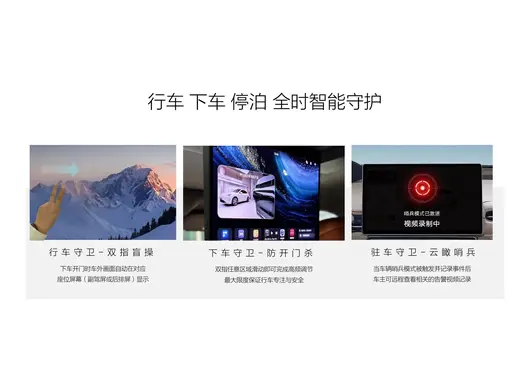
On this trip, BYD's God's Eye assisted driving system was basically online throughout.
Urban congestion road following car start-stop, long-distance highway automatic cruise maintaining distance, mountain tunnels recognizing lane lines and curves, continuous winding mountain roads decelerating in advance. These functions taken individually each item is not new, most 200,000 RMB level cars at home have them.
But what is new is the scenario—from Italian roundabouts to Turkish mountain roads, from Kazakh desert highways to domestic highway tunnels, traffic signs, driving habits, and road conditions of 11 countries are completely different. One system needs to adapt to all, this is an extreme test for the algorithm's generalization ability.

The trump card of God's Eye is data. According to official disclosure, BYD assisted driving system daily real driving data exceeds 210 million kilometers. These data flow back from mass-produced cars, after labeling and training then OTA pushed to users, forming a continuous evolution closed loop.
To be blunt, this system is not calculated by engineers in an office, it is driven out by millions of car owners on the road. The more road conditions seen, the more stable the handling of weird scenarios.
I have always felt, intelligent driving cannot be viewed from launch event demos. Demo videos are all selected. True persuasiveness lies in this long-distance real run, over forty days different countries different road conditions run without major issues, more useful than any spec sheet.
Of course assisted driving is ultimately assistance, driver's hand cannot leave the steering wheel, but it can cut down a large chunk of long-distance driving fatigue intensity, making ten thousand plus kilometers not turn into torment.

04.Driving Out is Not Just Cars, BYD is Under a Bigger Game
If only understanding this trip as a car long-term test, the perspective is too small.
You notice events happening along the way. The team arrived in Belgrade, Serbia, BYD Executive Vice President Li Ke accepted an "Award for Sustainable Development and Interconnectivity". The award giver was a local institute, this is not an enterprise awarding itself.
In Uzbekistan, the four flash charging stations are not temporary facilities, part of BYD's joint venture factory plan with local. Uzbekistan Q1 BYD sales volume 7,799 vehicles, year-on-year growth 93%, directly knocking Chevrolet which monopolized the local market for thirty years off the table.
Looking bigger. BYD's factories in Thailand, Brazil, Uzbekistan have entered production. Hungary Szeged factory invested 4 billion euros, started production in Q2 this year, Turkey factory also landed this year.
From whole vehicle manufacturing to charging network to local R&D and sales channels, it is not transporting cars over to sell and leave, but moving the whole industry chain over, hiring locally, building factories, paying taxes locally.

Sales figures also support. In the first half of this year, BYD sold 174,100 vehicles in Europe, year-on-year growth 145.5%, already surpassing Japanese brands like Nissan, Honda that cultivated Europe for many years. June single month exports to EU plus UK plus EFTA 54,000 vehicles. In UK, first half sold nearly 38,000 vehicles, surpassing Tesla, BMW, Volkswagen topping EV sales champion. Germany July single month sales 5,240 vehicles, year-on-year growth 365%. Overseas annual sales target from beginning of year 1.3 million vehicles up revised to 1.5 million vehicles.
These numbers placed three years ago are inconceivable. China's automotive exports in the past relied on low prices and volume, selling cheap cars to Southeast Asia, Middle East, Latin America. Now BYD sells products with Megawatt Flash Charge and high-level intelligent driving in Europe, prices not cheaper than Volkswagen, Toyota, still people pay. This Silk Road trip used wheels rolling over 11 countries, essentially making a real field endorsement for "Chinese Smart Manufacturing" four words.
Marco Polo brought Eastern product information back to Europe, relying on a pen.
BYD spreads China's electric vehicles and charging technology across Eurasian continent, relying on an entire industry chain.

05.Ancient Silk Road Spoke with Medicines, Silk, Porcelain, Tea, New Silk Road with What?
Return to the cultural line.
What circulated on the ancient Silk Road, was silk, porcelain, tea, medicinal herbs.
Interesting, almost at the same time, BYD's other team departed from Xi'an, following ancient path to Bozhou seeking medicinal herbs, to Jingdezhen fetching porcelain, to Hangzhou collecting silk, to Mount Wuyi picking tea leaves, taking the four legendary items "Medicines, Silk, Porcelain, and Tea" 33 days later to Shenzhen going overseas walked again.
These products in that year were hard currency, material carriers of Eastern civilization external output.
Then what is transported on the New Silk Road?
First stop after team entering was Xi'an. Chinese and foreign guests were invited into BYD Smart Manufacturing Base, from batteries to motors to electronic control full-link self-research looked through thoroughly.
Arriving Luoyang, Tang and Song family carrying people under Longmen Grottoes chatted about Silk Road culture.
Arriving Suzhou, Ocean series cars drove into water town alleys, echoing across with records of "Venice of the East" under Marco Polo's pen.
Arriving Shanghai, Denza representatives sat on the East-West dialogue table with Eastern New Luxury.

You see, Ancient Silk Road transported products, New Silk Road transports technology and standards. Three-electric system is technology, high-voltage charging architecture is standard, intelligent driving algorithm is ability, whole vehicle manufacturing system is strength.
These things like silk and porcelain are products a civilization most proud to present in specific era, only carrier changed from fine silks to chips and batteries.
Interesting is direction, Marco Polo walked from West to East, bringing Eastern prosperity back to Europe.
BYD's trip also walked from West to East, departing from Rome returning to Shenzhen, but cars made in China, technology developed in China, flash charging piles erected by Chinese brands on Central Asian land.
Same direction, the output entity is completely reversed.

Final Thoughts
43 days, 11 countries, 15,000 kilometers, full journey pure electric, mass-produced vehicles no modification. Wheels have replaced camel bells, on that ancient road rolled out a new wheel track, this event itself worthy of being remembered.
BYD revisiting the Silk Road proved pure electric vehicles crossing Eurasian continent technically completely feasible, and not that kind of feasible by gritting teeth to endure, but with flash charging network safety net, intelligent driving system sharing burden, full matrix models completed run with composure, proving China's automotive industry's three-electric technology and replenishment system already possessed confidence to accept testing under global most complex road conditions, injecting green new energy into traditional Silk Road.