


首頁Toyota Supra

搜尋歷史
熱門搜尋
經銷商登入 / 註冊

The World Intelligent Connected Vehicle Conference (WICV) is China's first nationally approved professional conference on intelligent connected vehicles, and has been successfully held for eight consecutive sessions since 2018.
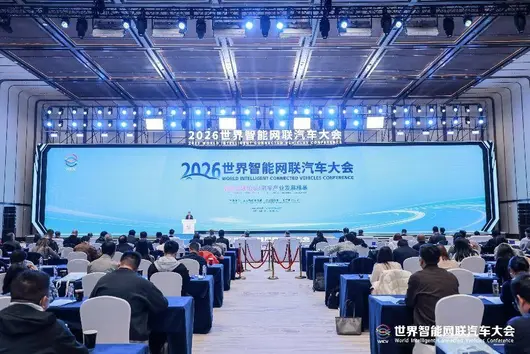
On October 22, the "Policy and Regulations Forum: Strengthening the Foundation of Industrial Development" of the 2026 World Intelligent Connected Vehicle Conference was successfully held in Beijing. This forum was hosted by Jiang Guangzhi, Director of the Beijing Municipal Bureau of Economy and Information Technology.

Conference Panorama

Jiang Guangzhi, Director of the Beijing Municipal Bureau of Economy and Information Technology
Dmitry Mariyasin, Deputy Executive Secretary of the United Nations Economic Commission for Europe, delivered a speech at the forum. He pointed out that the innovative development of intelligent connected vehicles cannot be separated from a globally coordinated policy and regulatory environment. The United Nations Economic Commission for Europe will continue to play a role in international regulatory platforms such as WP.29, support all parties in deepening standard and regulatory coordination and technological innovation cooperation, and jointly promote the development of intelligent connected vehicles.

Dmitry Mariyasin, Deputy Executive Secretary of the United Nations Economic Commission for Europe
Guo Shougang, Director of the First Division of Equipment Industry of the Ministry of Industry and Information Technology, attended the forum and delivered a guiding report titled "Building a Policy Management System for High-Quality Development of Intelligent Connected Vehicles". He pointed out that the global intelligent connected vehicle legal and regulatory system is accelerating its improvement. Facing the new situation of industrial development, he hoped for global collaboration and joint promotion to jointly drive the innovative development of the intelligent connected vehicle industry.

Guo Shougang, Director of the First Division of Equipment Industry of the Ministry of Industry and Information Technology
In the keynote speech session, multiple domestic and foreign guests focused on intelligent connected vehicle industry strategic planning, standards and regulations, industry regulation, industrial ecology, and other fields for in-depth exchange.
Richard Damm, Chairman of the Automated and Connected Vehicles Working Group (GRVA) of the World Forum for Harmonization of Vehicle Regulations (WP.29), and Director of the Federal Motor Transport Authority (KBA) of Germany, shared "Building Consensus, Empowering the Future: Constructing a New Ecosystem of Global Intelligent Connected Vehicle Standards and Regulations", introducing the latest progress of automated connected vehicle regulations under the UNECE WP.29 framework.

Richard Damm, Chairman of the Automated and Connected Vehicles Working Group (GRVA) of the World Forum for Harmonization of Vehicle Regulations (WP.29), and Director of the Federal Motor Transport Authority (KBA) of Germany
Li Changqing, Second-Level Inspector of the Quality Development Bureau of the State Administration for Market Regulation, delivered a speech titled "Strengthening the Quality Foundation of Industrial Development, Creating a Better Future for Intelligent Connected Vehicles Together", introducing the work measures of the market regulation department to secure the bottom line of quality and safety for the innovative development of the intelligent connected vehicle industry.

Li Changqing, Second-Level Inspector of the Quality Development Bureau of the State Administration for Market Regulation
Patoo Tongjul, Chief of the Industrial Policy Division, Department of Industrial Economy, Ministry of Industry, Thailand, delivered a speech titled "Thailand's Direction of Intelligent Connected Vehicle Policy Promotion", sharing Thailand's plans and measures for promoting the development of the intelligent connected new energy vehicle industry.

Patoo Tongjul, Chief of the Industrial Policy Division, Department of Industrial Economy, Ministry of Industry, Thailand
Lu Sen, Chief of the Rules and Standards Division, International Data Governance Cooperation Department, National Data Administration, introduced the National Data Administration's work around the "531" work system. Through deepening international cooperation in the data field, participating in the formulation of international data governance rules, and exploring new models for cross-border data flow, it helps facilitate efficient, convenient, and secure cross-border flow of data for the automotive industry and accelerates the release of data element value, along with relevant practices and considerations.

Lu Sen, Chief of the Rules and Standards Division, International Data Governance Cooperation Department, National Data Administration
Tian Haipeng, Deputy Director of the Tianjin Municipal Bureau of Industry and Information Technology, delivered a speech titled "Synergistic Integration, Innovation-Driven: Building a New Highground for Tianjin Intelligent Connected Vehicle Industry Development". He introduced Tianjin's practical exploration in the formulation of intelligent connected vehicle policy systems and industrial cluster cultivation, and shared the experience of local promotion of intelligent connected vehicle innovative integrated development.

Tian Haipeng, Deputy Director of the Tianjin Municipal Bureau of Industry and Information Technology
Lim Jit Lee, Senior Assistant Director of the Ministry of Investment, Trade and Industry of Malaysia, delivered a speech titled "Exploration of the Development of Malaysia's Autonomous Vehicle Industry and Regional Synergy", introducing Malaysia's automotive industry transformation and upgrading strategies and measures.

Lim Jit Lee, Senior Assistant Director of the Ministry of Investment, Trade and Industry of Malaysia
Zhan Jiaxiang, Deputy Director of the Zhejiang Provincial Department of Economy and Information Technology, delivered a speech titled "Exploration of the Innovative Integrated Development of Intelligent Connected Vehicles in Zhejiang Province". He introduced Zhejiang's experience and measures in the development of the intelligent connected vehicle industry, demonstrating the active role of local co-construction of industrial ecology and nurturing of new development momentum.

Zhan Jiaxiang, Deputy Director of the Zhejiang Provincial Department of Economy and Information Technology
This forum focused on the institutional foundation and policy guarantees for the development of the intelligent connected vehicle industry. Chinese and foreign guests consolidated a broad consensus on "Policy as the Foundation, Standards as the Bridge, Integration as the Path, Safety as the Bottom Line, Openness as the Key" through policy interpretation, experience sharing, and intellectual exchange, contributing wisdom and strength to promote the high-quality development of the global intelligent connected vehicle industry.

In Malaysia's SUV market, many buyers will compare the Toyota Harrier and Subaru Outback when choosing a car. These two cars are quite close in price and positioning. Today we will make a detailed comparison from multiple aspects to help you save time on research.
The Toyota Harrier's OTR price in Malaysia is RM 289,000 - 289,000, with a total of 1 version, including 2026 HEV 2.5L Standard (RM 289,000), etc.
The Subaru Outback's OTR price in Malaysia is RM 260,000 - 280,000, with a total of 2 versions, including 2025 2.4T R-Touring EyeSight (RM 310,340), 2025 2.5L Touring EyeSight (RM 280,340), etc.
From a price perspective, the starting price of the Subaru Outback is RM 29,000 cheaper than the Toyota Harrier. Honestly, at this price range, a difference of a few thousand is not really that big. The key is to look at overall cost-performance and long-term usage costs.

The Toyota Harrier features a 2.0L Turbo, with 220 hp. Official fuel consumption is 9.5 L/100km.
The Subaru Outback features a 2.0L Turbo, with 220 hp. Official fuel consumption is 9.5 L/100km.
Both cars use the same powertrain system. The driving experience in daily use is basically the same. Fuel consumption is also similar, so there is no need to worry too much about this.

The Toyota Harrier body length is 4400 mm, with a trunk of 400 L.
The Subaru Outback body length is 4400 mm, with a trunk of 400 L.
The dimensions of both cars are almost the same, and the interior space difference is not large. For cars in this class, it is completely sufficient for daily use.

The Toyota Harrier uses FWD drive mode.
The Subaru Outback uses FWD drive mode.
Both cars have the same drive mode, both are FWD. There will not be a huge difference in daily driving experience.

The Toyota Harrier warranty is 5 years/unlimited mileage. Service interval is every 10,000km or 6 months.
The Subaru Outback warranty is 3 years/100,000km. Service interval is every 10,000km or 6 months.

Overall, both the Toyota Harrier and Subaru Outback are very good car models in the Malaysia market. Choosing which one depends mainly on your personal needs and budget. We suggest you do your research well, compare quotes from several car dealerships, and then go for a test drive to make the final decision. Buying a car is a big matter. Spending time doing research will definitely not be a mistake.


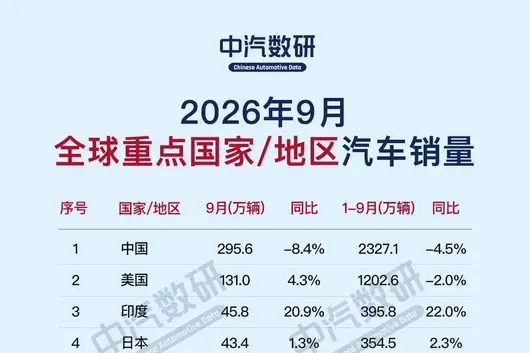
在 2026 年 9 月已有汽車銷量統計的國家中,中國、韓國、俄羅斯等少數國家同比下滑,美國、印度、巴西、英國及多數西歐國家普遍實現正增長。

中國持續穩居全球榜首,9 月銷量 295.6 萬輛,銷量接近美國(131 萬輛)、印度(45.8 萬輛)、日本(43.4 萬輛)三國之和,不過由於內需承受壓力,當月同比下滑 8.4%。前三季度累銷情況相若,同比微降 4.5%。值得一提的是,中國新能源品牌在多個海外市場逆勢爆發,是全球車市最大的結構性亮點。
美國(131 萬輛)9 月銷量上升,同比增長 4.3%,但年內累計銷量(1202.6 萬輛)微降 2%,高油價與綜合成本係下滑的主要因素。
印度(45.8 萬輛)9 月銷量創同期新高、同比大漲近 21%,年內累計銷量(395.8 萬輛)刷新紀錄,同比增長 22%。
西歐市場回暖趨勢明顯。英國(35 萬輛)9 月同比增長 12%,創近九年同期新高,累計銷量同比上漲 10.2%;德國、法國、意大利、西班牙 9 月增長均在 10% 左右;美國、加拿大、墨西哥等北美國家均實現正增長,其中加拿大連續四個月環比增長;巴西(26.9 萬輛)9 月更是大漲 21.5%,創 2014 年以來同期新高,累計增長近兩成。
亞太國家銷量分化。印度、印尼、越南、泰國以及馬來西亞等國家普遍增長 10% 左右,中國、韓國、俄羅斯、土耳其、阿根廷銷量明顯收縮,其中土耳其下滑兩成以上。韓國因本土車企銷量下滑承受壓力;俄羅斯 9 月銷量下滑 6.2%,不過年內累計增長 7.2%。
四季度全球車市仍將持續分化,歐美及其他部分市場溫和增長,中國內需修復有待政策與消費者情緒共振,但中國新能源品牌的全球化進程,將成為全球汽車產業格局重塑的重要支線。

For a new technology, from R&D to mass production, how long can enterprises actually enjoy a leading advantage?
In the Chinese automotive market, the answer may be getting shorter.
Intelligent configurations that were once scarce can quickly appear on cheaper models; just-established technical advantages might not have time to recover investments before new competitors arrive.
But car manufacturers and suppliers cannot stop innovating. Because if they don't innovate, they might lose orders; if they do, they might not necessarily get sufficient returns.
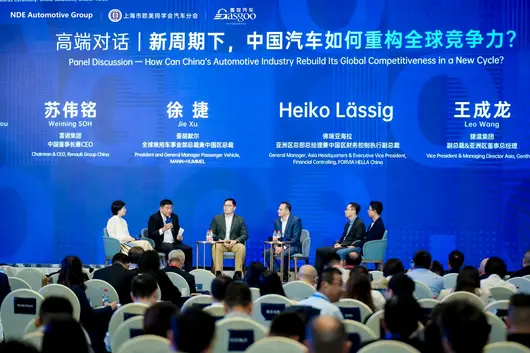
On October 23, at the 14th Automotive and Environmental Innovation Forum and the 8th Jinji Award "China Solution" Global Awards Ceremony, five executives from Renault, MANN+HUMMEL, Faurecia-Hella, Visteon, and Haiwei discussed the same challenge: Technology innovation is accelerating, how can we turn it into real business value?

Some worry that technology becomes obsolete before launching, others advocate cutting features lacking actual demand yet still insist on investing in innovations that are "unique to us", while others bet on new products initially not viewed favorably. Enterprises not only need to judge which technologies are worth investing in, but also face changes in R&D division of labor and upstream resource competition.
Technology is becoming more mature, but getting higher premiums is becoming harder
Cost advantages of Chinese new energy vehicles in some core technology fields are approaching a new stage.
Renault Group China Chairman and CEO Su Weiming discussed a change at the forum: Looking at fields such as the "Three-Electric System" and Electronic and Electrical Architecture, since 2026, the cost competitiveness of new energy vehicle-related technologies has further strengthened, and costs in related fields are already quite close to conventional fuel vehicles.

Whether technical advantages can truly appeal to consumers is also worth thinking about. Su Weiming observed that in overseas markets such as South America and Singapore, when consumers buy new energy vehicles, they care more about range, price, color, and charging time, rather than specific parameters like battery capacity and motor power.
As for intelligent cockpits, he questioned innovation investments that lack differentiation for some parts. Technical investments continue to increase, but if the final product experience is all the same, it is difficult to form a unique competitive advantage.
J.D. Power's 2026 Chinese Automotive Intelligence Experience Study released in May this year also provided an observation angle: the industry's intelligence innovation index increased by 70 points year-on-year to 658 points, but the function performance index dropped for the first time in four years.
New features continue to increase, but it does not mean that every feature brings a better user experience.

MANN+HUMMEL Global Passenger Car Division President and China Region President Xu Jie frankly admitted at the forum that enterprises have experienced similar challenges. Once a technology is developed, even if it has performance advantages, if it enters the market a year later and cannot realize market application in time, new technology routes and market demands may have appeared, and the original advantages will soon be caught up with or even replaced.
"The speed of bringing innovation to the market now is more important than innovation."
Visteon Group Vice President and Managing Director of Asia Wang Chenglong explained the commercial return of technological innovation from another perspective.
He stated that Visteon will still persist in some "0 to 1" R&D, especially products that can achieve "what others don't have". "Because this can bring better premiums or a dividend period."
Whether technology can form differentiation, when to enter the market, and how long the leading advantage can last all affect the commercial return of innovation.
But not all innovations can calculate returns when the project is initiated. New products that have not yet formed a market are often harder to judge.
Functions to Cut, and NOMI Almost Undervalued
Wang Chenglong stated at the forum regarding R&D trade-offs that Visteon will first judge whether a technology has real demand from the perspective of the vehicle manufacturer and end users. For features that are used very infrequently and lack actual value, if confirmed to be unnecessary after verification, they will decisively stop investment.
But how should real demand be judged?
In August this year, after the typhoon and rainstorm, Gasgoo conducted a survey questionnaire around the car's low-frequency capabilities. Among 390 participants, 46% believed that as long as it is useful in critical moments, it has value even if rarely used normally; another 44% believed that such functions can exist, but should not significantly increase the cost of buying a car.

Regarding willingness to pay, 34% of participants stated they are unwilling to pay extra, and 36% are willing to pay up to 3,000 yuan at most.
Low-frequency use does not necessarily mean a lack of demand; acknowledging a function does not mean willingness to pay the corresponding cost. Especially for safety, emergency, and other capabilities, their value cannot be judged solely by usage frequency; some basic safety capabilities also involve regulatory requirements.
As for new products that have not yet entered the market, whether consumers are willing to pay may be even harder to predict.
Haiwei Founder and CEO Li Linfeng shared the experience of jointly developing NOMI with NIO at the roundtable.
"When Haiwei took on the NIO NOMI project back then, the company's revenue scale was still at the tens of millions of yuan level. Previously, NIO had been searching for partners in the industry for a relatively long time. Thanks to the customer's trust in Haiwei, the Haiwei team eventually completed product development and delivery in 18 months."

But what is more worth paying attention to than the development process is the gap between market performance and initial expectations.
According to Li Linfeng, when the project was launched, the client estimated that the NOMI option rate was only around 30%. However, relying on unique product definition and user interaction experience, NOMI gradually gained market recognition, and the option rate of related products later stayed above 80% for a long time.
Of course, this result has its specific conditions. NIO's brand positioning, user base, and the joint development of both parties may affect the market acceptance of the product. A higher option rate cannot be directly equated with a higher return on investment.
For existing products, enterprises can adjust in time based on actual usage and market feedback; for new products that have not yet formed a market, demand may need to be verified through R&D and product implementation.
If one insists only on certain short-term returns, potential opportunities might be abandoned before being verified. Conversely, if all ideas about future experience are worth long-term investment, even a robust R&D budget cannot withstand the consumption.
The difficulty is not choosing to innovate or stop innovating, but distinguishing whether a project has not yet proven its value or has already proven to lack value.
The former needs to leave space for market verification, while the latter should cut losses in time.
Beyond Single Technologies, What Else Do Suppliers Compete On?
After judging whether a technology is worth investing in, enterprises also need to consider how to improve R&D efficiency.

Wang Chenglong mentioned that in the past, Visteon's R&D in each region was relatively independent, with repeated investments. Nowadays, the company is starting to strengthen global R&D collaboration and regards China as the global innovation incubation center. For example, global R&D of ventilation products is led by the Shanghai team, and related technologies can be further applied to global business after rapid iteration in the Chinese market.
Similar changes also occurred at MANN+HUMMEL. Xu Jie stated that China is growing from one of the world's largest automotive markets to a global source of innovation. MANN+HUMMEL has landed its global new energy technology center in Shanghai, with R&D led by the Chinese team, considering global adaptation synchronously at the product definition stage, combining innovation with speed. Relying on MANN+HUMMEL's business network covering more than 80 branches worldwide, innovation results formed in the Chinese market can achieve global replication and implementation faster, accelerating the transformation from technical innovation to business value.
For R&D results to go global, a corresponding coordination mechanism is also needed. According to Xu Jie's introduction, under the "In China, For the World" strategy, MANN+HUMMEL deeply collaborates Headquarters to Headquarters (H2H), directly connecting with the overseas strategies of Chinese car manufacturers, jointly planning from target market selection, product definition to development rhythm, to reduce resource waste and time delays in intermediate links.
At the same time, Visteon also encourages engineers to establish business thinking, considering how much a product can sell for and whether customers are willing to pay at the R&D stage, not just focusing on the technology itself.
Heiko Lässig, General Manager of Faurecia-Hella Asia-Pacific HQ and Executive Vice President of China Financial Control, mentioned that while the company increased R&D investment, it also reduced costs by continuously evaluating R&D effects and adjusting technology directions in time, without compromising quality.

He classified innovation into foresight R&D, customer-oriented product innovation, as well as manufacturing process and process improvement. Foresight R&D is difficult to determine business returns in advance; customer-oriented innovation must meet actual needs, while process improvement is easier to calculate investment returns.
From global R&D collaboration to investment management of different types of projects, suppliers are trying to improve R&D efficiency. And as vehicle manufacturers continue to expand their in-house R&D scope, Tier 1 also needs to rethink its own technical advantages and business boundaries.
"So how do Tier 1s survive?" Li Linfeng raised this question at the scene.
He believes that a professional Tier 1 can serve multiple vehicle manufacturers simultaneously, splitting R&D costs in specific fields and forming professional advantages. But nowadays, many vehicle manufacturers are promoting full-stack in-house R&D in multiple technical fields. "I found that our OEM customers are all vertically integrating, so we can only try to explore upwards."
Li Linfeng revealed that Haiwei has already started to invest R&D resources in upstream fields such as materials, processes, and equipment.
For Haiwei, whose main business is cockpit display, these investments are not simply cross-border. Display materials, manufacturing processes, and equipment directly affect product performance, yield rate, and mass production costs. If related technologies can be reused in different customer projects, there is a chance to form a stronger competitive barrier.
However, the pressure suppliers face does not only come from vehicle manufacturers. The supply and demand changes in upstream parts are also affecting enterprise R&D investment and mass production arrangements.
Li Linfeng mentioned at the end of the roundtable that since the beginning of this year, PCB, MLCC, and some chips have shown phenomena of price increases and supply fluctuations. He believes that the rapid expansion of AI industry demand is one of the important influencing factors, and judges that the resource siphon effect brought by the AI wave may last for 3-5 years.
This time judgment belongs to Li Linfeng's personal opinion. However, previous research by TrendForce has pointed out that AI demand has driven part of MLCC capacity to transfer to high-end applications, squeezing the supply of some automotive specifications.
There are differences in supply and demand situations of different electronic components, but for some automotive suppliers, the upstream procurement environment they used to be familiar with has begun to change.
Li Linfeng revealed that Haiwei is investing in some upstream enterprises and partners, and has also signed a long-term supply contract with a foreign chip supplier to ensure supply.
From extending R&D upstream to investing in partners and signing long-term supply contracts, these measures of Haiwei involve two aspects: technical capabilities and supply assurance. For suppliers, whether innovation can bring continuous returns depends not only on the technology itself, but also on whether costs can be controlled and delivery can be guaranteed.
Some technologies need to rush time, otherwise the window closes soon; some products need to be verified by the market to discover the value that was initially undervalued; and some basic capabilities, unable to directly create premiums, determine whether products can be mass-produced stably.
In the automotive industry, investing in the wrong innovation may mean resource waste, but giving up too early may also mean missing the next competitive opportunity.
What enterprises really need to judge is which investments should be stopped in time, and which are worth continuing to persist.
In the Malaysian SUV market, many buyers compare Toyota Harrier and Volvo XC90 PHEV when choosing a car. Both cars are quite close in price and positioning. Today we will make a detailed comparison from multiple aspects to help you save time on research.
The OTR price for Toyota Harrier in Malaysia is RM 289,000 - 289,000, with 1 version available, including 2026 HEV 2.5L Standard (RM 289,000) etc.
The OTR price for Volvo XC90 PHEV in Malaysia is RM 434,888 - 434,888, with 2 versions available, including 2025 2.0T 77km Ultra (RM 434,888), What safety features does the Volvo XC90 PHEV have? (RM 362,888) etc.
Looking at the price, the starting price of Toyota Harrier is indeed RM 145,888 cheaper than Volvo XC90 PHEV. If your budget is limited, Toyota's entry-level version can already meet daily needs. But also note, the few thousand cheaper, may have trade-offs in features, depends on your specific needs.
Toyota Harrier is equipped with 2.0L Turbo, 220 hp power. Official fuel consumption 9.5 L/100km.
Volvo XC90 PHEV is equipped with Hybrid, 170 hp power. Official fuel consumption 4.5 L/100km.
Regarding power, the 2.0L Turbo on Toyota Harrier has 50 more horsepower than the Hybrid on Volvo XC90 PHEV, with more confidence in mid-range acceleration, especially when overtaking on highways. However, fuel consumption on Volvo XC90 PHEV may be friendlier, and the difference in daily city commuting will not be significant.
Toyota Harrier's safety rating is 5★ (ASEAN NCAP), active safety systems include Brand ADAS.
Volvo XC90 PHEV's safety rating is 5★ (Euro NCAP), active safety systems include Premium ADAS.
In terms of safety features, both cars received good ratings. However, there are some differences in function between Brand ADAS on Toyota Harrier and Premium ADAS on Volvo XC90 PHEV. If you value active safety, you can compare their feature lists closely.
Toyota Harrier body length 4400 mm, trunk 400 L.
Volvo XC90 PHEV body length 4400 mm, trunk 400 L.
The dimensions of both cars are almost the same, interior space difference is not significant. For cars of this class, daily use is completely sufficient.

Toyota Harrier adopts FWD drive mode.
Volvo XC90 PHEV adopts FWD drive mode.
Both cars have the same drive mode, both are FWD, daily driving feel will not differ too much.

Overall, Toyota Harrier and Volvo XC90 PHEV are both excellent models in the Malaysian market. Which one to choose, depends on your personal needs and budget. It is recommended to do your research, compare quotes from multiple dealers, and then take a test drive to make the final decision. Buying a car is a big matter, spending time researching is never wrong.

In Malaysia's SUV market, many buyers compare Toyota Harrier and Volvo XC60 PHEV when choosing a car. These two cars are quite close in price and positioning. Today we will make a detailed comparison from multiple aspects to help you save time on research.
Toyota Harrier OTR price in Malaysia is RM 289,000 - 289,000, with a total of 1 version, including 2026 HEV 2.5L Standard (RM 289,000), etc.
Volvo XC60 PHEV OTR price in Malaysia is RM 362,888 - 362,888, with a total of 2 versions, including 2025 2.0T 89km Ultra (RM 362,888), What safety features does the Volvo XC60 PHEV have? (RM 296,610), etc.
In terms of price, the starting price of Toyota Harrier is indeed RM 73,888 cheaper than Volvo XC60 PHEV. If your budget is limited, Toyota's entry-level version can already meet daily needs. But also note that the difference of a few thousand might have trade-offs in features, depending on your needs.
Toyota Harrier is equipped with 2.0L Turbo, 220 hp. Official fuel consumption 9.5 L/100km.
Volvo XC60 PHEV is equipped with Hybrid, 170 hp. Official fuel consumption 4.5 L/100km.
In terms of power, Toyota Harrier's 2.0L Turbo has 50 more horsepower than Volvo XC60 PHEV's Hybrid, offering more confidence in mid-range acceleration, especially when overtaking on highways. However, Volvo XC60 PHEV's fuel consumption may be friendlier, and the difference in daily city commuting won't be too large.
Toyota Harrier body length 4400 mm, trunk 400 L.
Volvo XC60 PHEV body length 4400 mm, trunk 400 L.
The dimensions of the two cars are almost the same, and the interior space is not much different. For cars in this class, it is completely sufficient for daily use.
Toyota Harrier warranty 5 years/unlimited mileage, maintenance interval every 10,000km or 6 months.
Volvo XC60 PHEV warranty 5 years/unlimited mileage, maintenance interval every 10,000km or 6 months.

Overall, Toyota Harrier and Volvo XC60 PHEV are both quite good car models in the Malaysia market. Which one to choose depends mainly on your personal needs and budget. We recommend doing your research, compare quotes from several dealers, and then test drive to make a final decision. Buying a car is a big matter, spending time doing research will never be wrong.

喺馬來西亞嘅 SUV 市場,好多買家喺揀車嗰陣都會拿 豐田 Harrier 同 福特 Everest 嚟做比較。呢兩款車喺價位同定位上都好接近,而家就從多個角度做一次詳細比較,幫你攞啲做功課嘅時間。
豐田 Harrier 喺馬來西亞嘅 OTR 售價係 RM 289,000 - 289,000,一共有 一個版本,包括 2026 HEV 2.5 公升 標準(RM 289,000) 等。
福特 Everest 喺馬來西亞嘅 OTR 售價係 RM 266,338 - 430,838,一共有 6 個版本,包括 2026 3.0 渦輪 四驅 鉑金(RM 430,838)、2026 2.0 渦輪 四驅 鉑金(RM 348,838)、2026 2.0 渦輪 四驅 運動(RM 316,838) 等。
由價錢睇,福特 Everest 嘅起步價比 豐田 Harrier 平咗 RM 22,662。老實講,喺呢個價位段,幾千塊嘅分別其實唔算大,關鍵仲係睇整體嘅性價比同長期使用成本。
豐田 Harrier 裝載 2.0 渦輪,匹數 220 匹。官方油耗 9.5 公升/百公里。
福特 Everest 裝載 2.5 柴油,匹數 187 匹。官方油耗 8.5 公升/百公里。
動力方面,豐田 Harrier 嘅 2.0 渦輪比 福特 Everest 嘅 2.5 柴油多咗 33 匹,中段加速更有信心,尤其係跑高速路超車嗰陣。不過 福特 Everest 嘅油耗可能更抵食,日常市區通勤差唔多有乜區別。
豐田 Harrier 嘅安全評級係 5 星 (ASEAN NCAP),主動安全系統包括 豐田駕駛輔助系統。
福特 Everest 嘅安全評級係 5 星 (ASEAN NCAP),主動安全系統包括 Co-Pilot360。
兩款車嘅安全評級一樣,喺呢個級別入面安全配備都算好齊全。而家嘅新車安全性都幾好,唔使太擔心呢一點。
豐田 Harrier 採用 前驅 驅動方式。
福特 Everest 採用 前驅 驅動方式。
兩款車嘅驅動方式一樣,都係 前驅,日常駕駛感受唔會有太大分別。

總體嚟講,豐田 Harrier 同 福特 Everest 都係馬來西亞市場幾不錯嘅車。揀邊一輛,關鍵仲係要睇你個人嘅需求同預算。建議大家做好功課,多比較幾間車行嘅報價,再去試駕先做最後決定。買車係件大事,花少少時間做功課絕對唔會錯。
喺馬來西亞嘅 SUV 市場,好多買家喺揀車嗰陣都會拿 Toyota Harrier 同 Hyundai Palisade 嚟做比較。這兩款車喺價位同定位上都相當接近,今日我哋就從多個方面做一個詳細嘅對比,幫你省做功課嘅時間。
Toyota Harrier 喺馬來西亞嘅 OTR 售價係 RM 289,000 - 289,000,一共有 1 個版本,包括 2026 HEV 2.5L Standard(RM 289,000)等。
Hyundai Palisade 喺馬來西亞嘅 OTR 售價係 RM 368,838 - 399,838,一共有 4 個版本,包括 2023 3.8L 2WD Luxe 7 Seats Petrol(RM 399,838)、2023 2.2T 4WD Executive 7 Seats Diesel(RM 389,838)、2023 3.8L 2WD Luxe 8 Seats Petrol(RM 378,838)等。
從價錢嚟睇,Toyota Harrier 嘅起步價確實比 Hyundai Palisade 便宜咗 RM 79,838。如果你預算有限,Toyota 嘅入門版已經可以滿足日常需求。但都要注意,便宜嗰幾千塊,可能喺配備上會有取捨,具體要睇你嘅需求。
Toyota Harrier 搭載 2.0L Turbo,馬力 220 hp。官方油耗 9.5 L/100km。
Hyundai Palisade 搭載 2.0L Turbo,馬力 220 hp。官方油耗 9.5 L/100km。
兩款車用嘅同一套動力系統,日常開起嚟嘅感受基本沒有差別。油耗方面都差不多,唔使太糾結這一點。
Toyota Harrier 採用 FWD 驅動方式。
Hyundai Palisade 採用 FWD 驅動方式。
兩款車嘅驅動方式一樣,都係 FWD,日常駕駛感受唔會有太大分別。
Toyota Harrier 保修 5 年/無限制里程,保養間隔 每 10,000km 或 6 個月。
Hyundai Palisade 保修 5 年/300,000km,保養間隔 每 10,000km 或 6 個月。

Toyota Harrier 同 Hyundai Palisade 都係馬來西亞市場嘅主流選擇,適合家庭使用、日常通勤。如果你更睇重品牌口碑同二手價,可以優先考慮口碑更好嗰一款;如果你更喺意性價比同配備,就選配備更豐富嗰款。最終都係建議兩款都去試駕,親身體驗先係最重要嘅。

總嘅嚟講,Toyota Harrier 同 Hyundai Palisade 都係馬來西亞市場幾唔錯嘅車型。選擇邊一輛,關鍵都係要睇你嘅個人需求同預算。建議大家做好功課,多比較幾間車行嘅報價,再去試駕做最終決定。買車係件大事,花點時間做功課絕對唔會錯。

喺馬來西亞嘅 SUV 市場,好多買家喺揀車嘅時候都會拿 Toyota Harrier 同 Hyundai Palisade 嚟做比較。呢兩款車喺價位同定位上都蠻接近嘅,今日我就從多個方面做一個詳細嘅比較,幫你省咗做功課嘅時間。
Toyota Harrier 喺馬來西亞嘅 OTR 售價係 RM 289,000 - 289,000,一共有 1 個版本,包括 2026 HEV 2.5L Standard(RM 289,000)等等。
Hyundai Palisade 喺馬來西亞嘅 OTR 售價係 RM 368,838 - 399,838,一共有 4 個版本,包括 2023 3.8L 2WD Luxe 7 Seats Petrol(RM 399,838)、2023 2.2T 4WD Executive 7 Seats Diesel(RM 389,838)、2023 3.8L 2WD Luxe 8 Seats Petrol(RM 378,838)等等。
從價錢嚟睇,Toyota Harrier 嘅起步價確實比 Hyundai Palisade 平咗 RM 79,838。如果你預算有限,Toyota 嘅入門版已經可以滿足日常需求。但都要注意,平嗰啲幾千蚊,可能喺配備上會有取舍,具體要睇你嘅需求。
Toyota Harrier 嘅安全評級係 5★ (ASEAN NCAP),主動安全系統包括 Brand ADAS。
Hyundai Palisade 嘅安全評級係 TBD,主動安全系統包括 Basic。
安全配備方面,兩款車都拿到唔錯嘅評級。不過 Toyota Harrier 嘅 Brand ADAS 同 Hyundai Palisade 嘅 Basic 喺功能上有些差異,如果你比較重視主動安全嘅話,可以仔細比較下兩者嘅功能列表。
Toyota Harrier 車身長 4400 mm,行李廂 400 L。
Hyundai Palisade 車身長 4400 mm,行李廂 400 L。
兩款車嘅尺寸幾乎一樣,車內空間分別唔大。呢個級別嘅車,日常使用完全夠用。
Toyota Harrier 保修 5 年/無限制里程,保養間隔 每 10,000km 或 6 個月。
Hyundai Palisade 保修 5 年/300,000km,保養間隔 每 10,000km 或 6 個月。
總嘅嚟講,Toyota Harrier 同 Hyundai Palisade 都係馬來西亞市場幾唔錯嘅車型。揀邊一輛,關鍵係要睇你嘅個人需求同預算。建议大家做好功課,多比較幾間車行嘅報價,再去試駕做最終決定。買車係件大事,花啲時間做功課絕對唔會錯。

喺 馬來西亞嘅 SUV 市場,好多買家喺揀車嘅時候都會拿來豐田 Harrier 同 奇瑞 Tiggo 8 Pro 來做比較。呢兩部車喺價位同定位上都好接近,今日我哋就從多個方面做一個詳細嘅比較,幫你節省咗做功課嘅時間。
豐田 Harrier 喺 馬來西亞嘅 OTR 售價係 RM 289,000 - 289,000,一共有 1 個版本,包括 2026 HEV 2.5L Standard(RM 289,000) 等。
奇瑞 Tiggo 8 Pro 喺 馬來西亞嘅 OTR 售價係 RM 159,750 - 159,750,一共有 2 個版本,包括 1.6L Turbo Standard(RM 130,000)、1.6L Turbo Premium(RM 145,000) 等。
從價錢嚟睇,奇瑞 Tiggo 8 Pro 嘅起步價比豐田 Harrier 平咗 RM 129,250。講真嘅,喺呢個價位段,幾千蚊嘅差距其實唔算大,關鍵仲係睇整體嘅性價比同長期使用成本。
豐田 Harrier 嘅安全評分係 5★ (ASEAN NCAP),主動安全系統包括 Brand ADAS。
奇瑞 Tiggo 8 Pro 嘅安全評分係 TBD,主動安全系統包括 Basic。
安全配備方面,兩部車都拿到唔錯嘅評分。不過豐田 Harrier 嘅 Brand ADAS 同 奇瑞 Tiggo 8 Pro 嘅 Basic 喺功能上有啲差異,如果你比較重視主動安全嘅話,可以仔細對比下兩者嘅功能列表。
豐田 Harrier 車身長 4400 mm,行李箱 400 L。
奇瑞 Tiggo 8 Pro 車身長 4400 mm,行李箱 400 L。
兩部車嘅尺寸差唔多,車廂空間差別唔大。呢個級別嘅車,日常使用完全足夠。
豐田 Harrier 同 奇瑞 Tiggo 8 Pro 都係馬來西亞市場嘅主流選擇,適合家庭使用、日常通勤。如果你更重視品牌口碑同二手價,可以優先考慮口碑好啲嗰一款;如果你更在意性價比同配備,就揀配置更豐富嗰款。最後始終都建議兩部車都去試駕,親身體驗先至最重要。
總嚟計,豐田 Harrier 同 奇瑞 Tiggo 8 Pro 都係馬來西亞市場幾唔錯嘅車型。揀邊部,關鍵仲係要睇你嘅個人需求同預算。建議大家做好功課,多比較幾間車行嘅報價,再去試駕做最終決定。買車係件大事,花少少時間做功課絕對無錯。

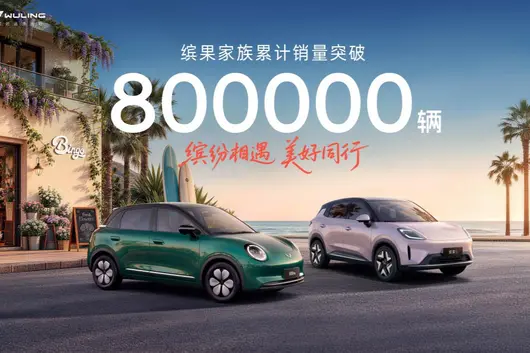
【2026 年 10 月 22 日】上汽通用五菱今日宣佈,繽果家族累計銷量正式突破 80 萬輛,持續引領 A0 級新能源市場!倚靠五菱超 300 萬輛全球最大代步車生態,繽果家族以繽果 Pro、繽果 S 雙車,推動中國新能源代步車從普及邁向精品化,攜手 80 萬用戶開啟繽紛出行新生活!

三年,“繽果”從一款車進化成一個家族
自 2023 年五菱繽果上市以來,繽果家族聚焦用戶對高質感出行的需求,相繼推出繽果、繽果 Plus、繽果 S、繽果 Pro 等多款車型,至今家族銷量已突破 80 萬。在深耕國內市場的同時,繽果家族也加速全球化佈局,先后進入印尼、泰國、巴基斯坦等海外市場。2026 年 8 月到 9 月,繽果家族單月銷量更是均突破 2 萬台,位居小型新能源轎車銷量 TOP2。

(BinguoEV 巴基斯坦發運儀式)
繽果家族的用戶,是一群追求品質出行的美好生活家。剛步入職場的年輕女性,把車當成通勤路上的補妝間與出片利器;兼顧事業與家庭的年輕媽媽,需要一台靈活好開、裝得下全家的代步車;嚮往自在生活的都市家庭,則在週末帶著孩子和寵物駛向近郊。從一個人的通勤到一家人的出遊,從城市日常到郊外露營,繽果家族與用戶一起,奔赴繽紛多彩的生活。

原創設計與過硬品質,接連收獲權威認可
近期,第二十六屆中國專利獎名單正式揭曉,五菱繽果“汽車”外觀設計專利榮獲中國外觀設計銀獎,實現廣西該獎項“零的突破”。這份國家級認可,源自五菱繽果原創的“復古流動美學”設計語言,在小型車身框架下重新組織空間佈局,實現審美與實用的平衡。

收獲國家級設計大獎的同時,繽果家族車型的產品品質也持續獲得權威肯定。繽果 S 接連斬獲 2025 國際 CMF 設計獎、2025 華輅獎“年度品質轎車”,更榮膺“2025 中國十佳車身”,成為該獎項中唯一獲此殊榮的 A0 級車型;繽果 Pro 的十二合一電驅,是行業首個獲中國汽研(CAERI)“五星品質電驅”認證的電驅系統。從行業認可到國際設計獎項,從整車安全到核心三電,繽果家族以紮實的產品實力,贏得市場與行業雙重肯定。

繽果 Pro:入門即滿配,越級配置一步到位
繽果 Pro 秉持“入門即滿配”理念,將 80 餘項高階配置全系標配。新復古主義美學搭配四款摩登晶彩車色,復古精緻感拉滿。84.8% 空間利用率配合五門五座佈局,加上可拓展至 1370L 的下沉式後備廂,隨身物品和行李裝備都能從容收納。同級唯一前排雙雨傘槽、美甲友好浮島按鍵、雲感座椅等配置,讓每天的通勤路多一分從容。403km 續航車型支援 3C 直流快充,電量從 30% 充至 80% 僅需 15 分鐘,滿電出發無需等待。

繽果 S:高質感繽紛座駕,重塑 A0 級品質標杆
上市一年,繽果 S 車主已駛過 9.69 億公里,足跡遍佈 287 座城市。這份真實的行駛數據,正是“高質感繽紛座駕”實力最直接的證明。繽果 S 採用鎏光美學設計,搭配鬆弛灰、自在藍、逍遙紫、放空白四款幻彩車色;內飾提供柔白與暖棕雙色可選,從外觀到座艙都自成風格。為滿足用戶週末近郊出遊、跨城出行需求,繽果 S 提供 525km 長續航版本,搭配 52.9kWh 液冷電池,續航表現穩定可靠。882mm 二排座間距與 1450L 下沉式後備廂,輕鬆承載全家人的出行期待。車機深度融合 DeepSeek,配合 50W 風冷無線充電、6 揚聲器阿嘉米斯調校音響等全系標配配置,無論通勤還是長途出遊都更輕鬆。繽果 S 白車身高強鋼比例達 74.5%,全系標配四安全氣囊,為每一段旅程筑牢安全防線。

每一份信任的匯聚,都是五菱持續傾聽用戶心聲、以技術創新驅動產品迭代的最好見證。站在 80 萬用戶的新起點,上汽通用五菱將繼續秉持“人民需要什么,五菱就造什么”,持續深耕新能源技術研發、細化產品佈局,推動新能源代步車精品化、全球化發展,用更可靠的品質、更貼心的體驗、更豐富的选择,為更多用戶帶來繽紛出行新體驗!

喺馬來西亞嘅 SUV 市場,好多買家喺揀車嘅時候都會拎豐田 Harrier 同馬自達 CX-9 嚟做比較。呢兩款車喺價位同定位上都幾接近,今日我哋就從多個方面做一個詳細嘅比較,幫你慳下做功課嘅時間。
豐田 Harrier 喺馬來西亞嘅 OTR 售價係 RM 289,000 - 289,000,一共有 1 個版本,包括 2026 HEV 2.5L Standard(RM 289,000) 等。
馬自達 CX-9 喺馬來西亞嘅 OTR 售價係 RM 328,810 - 345,810,一共有 2 個版本,包括 2023 2.5T 4WD(RM 345,810)、2023 2.5T 2WD(RM 328,810) 等。
由價錢睇,豐田 Harrier 嘅起步價確實比馬自達 CX-9 平咗 RM 39,810。如果你預算有限,豐田嘅入門版已經可以滿足日常需要。但都要注意,平嗰幾千塊,可能喺配備上有取捨,具體要睇你嘅需求。
豐田 Harrier 搭載 2.0L Turbo,馬力 220 hp。官方油耗 9.5 L/100km。
馬自達 CX-9 搭載 2.0L Turbo,馬力 220 hp。官方油耗 9.5 L/100km。
兩款車用緊同一套動力系統,日常開起嚟嘅感覺基本無差別。油耗方面都差唔多,唔使太糾結呢一點。
豐田 Harrier 嘅安全評級係 5★ (ASEAN NCAP),主動安全系統包括品牌 ADAS。
馬自達 CX-9 嘅安全評級係 5★ (ASEAN NCAP),主動安全系統包括品牌 ADAS。
兩款車嘅安全評級一樣,喺呢個級別入面安全配備都算畀得好齊全啦。而家嘅車安全性都唔差,唔使太擔心呢一點。
豐田 Harrier 保修 5 年/無限制里程,保養間隔 每 10,000km 或 6 個月。
馬自達 CX-9 保修 5 年/150,000km,保養間隔 每 10,000km 或 6 個月。

豐田 Harrier 同馬自達 CX-9 都係馬來西亞市場嘅主流選擇,適合家庭使用、日常通勤。如果你更睇重品牌口碑同二手價,可以優先考慮口碑更好嗰一款;如果你更在意性價比同配備,就選配置更豐富嗰款。最終都係建議兩款都去試駕,親身體驗先係最重要嘅。

總嘅嚟講,豐田 Harrier 同馬自達 CX-9 都係馬來西亞市場幾唔錯嘅車款。揀邊輛,關鍵都係要睇你嘅個人需求同預算。建議大家做好功課,多比較幾間車行嘅報價,再去試駕做最終決定。買車係件大事,花少少時間做功課絕對唔會錯。
喺馬來西亞嘅 SUV 市場,好多買家喺揀車嘅時候都會拎豐田 Harrier 同馬自達 CX-9 做比較。呢兩款車喺價錢同定位上都幾接近,今日我哋就從多個方面做一個詳細比較,幫你省返做功課嘅時間。
豐田 Harrier 喺馬來西亞嘅 OTR 售價係 RM 289,000 - 289,000,一共有 1 個版本,包括 2026 HEV 2.5L Standard(RM 289,000) 等。
馬自達 CX-9 喺馬來西亞嘅 OTR 售價係 RM 328,810 - 345,810,一共有 2 個版本,包括 2023 2.5T 4WD(RM 345,810)、2023 2.5T 2WD(RM 328,810) 等。
從價錢睇落,豐田 Harrier 嘅起步價的確比馬自達 CX-9 平咗 RM 39,810。如果你預算有限,豐田嘅入門版已經可以滿足日常需求。不過都要留意,平嘅嗰幾千蚊,可能喺配備上會有取舍,具體要看你嘅需求。
豐田 Harrier 嘅安全評級係 5★ (ASEAN NCAP),主動安全系統包括 Brand ADAS。
馬自達 CX-9 嘅安全評級係 5★ (ASEAN NCAP),主動安全系統包括 Brand ADAS。
兩款車嘅安全評級一樣,喺呢個級別入面安全配備都算好齊全。而家嘅新車安全性都唔差,唔使太驚呢一點。
豐田 Harrier 車身長 4400 mm,後車箱 400 L。
馬自達 CX-9 車身長 4500 mm,後車箱 450 L。
空間方面,馬自達 CX-9 嘅車身比豐田 Harrier 長咗 100 mm,乘坐空間更有優勢。不過豐田 Harrier 喺城市入面停車會靈活啲,各有取舍。
豐田 Harrier 保用 5 年/無限制里程,保養間隔 每 10,000km 或 6 個月。
馬自達 CX-9 保用 5 年/150,000km,保養間隔 每 10,000km 或 6 個月。
總括嚟講,豐田 Harrier 同馬自達 CX-9 都係馬來西亞市場幾唔錯嘅車型。揀邊一部,關鍵始終都要睇你嘅個人需求同預算。建議大家做好功課,多比較幾間車行嘅報價,再去試駕做最終決定。買車係一件大事,花少少時間做功課絕對唔錯。

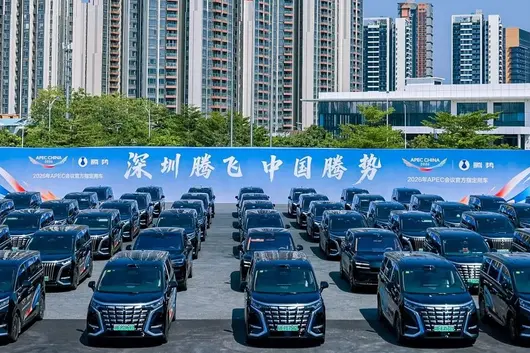
10 月 22 日,深圳腾势总部礼宾楼外,一辆辆第二代腾势 D9 整装待发。这场名为 "深圳腾飞 中国腾势" 的 APEC 官方指定用车首批发车仪式,宣告腾势正式进入 "APEC 时间",中国汽车腾势而上。

11 月,2026 年亚太经合组织(APEC)会议将首次来到深圳。这是中国第三次承办这一世界级盛会,也是深圳第一次以东道主身份站上国际舞台。对主办方来说,官方指定用车堪称递给全世界的 "第一张名片"—— 它既是东道国汽车工业智造水平的展示窗口,也是对品牌综合实力的全面考核。

作为本届 APEC 会议的官方合作伙伴,比亚迪携腾势汽车承担会议出行保障:近 700 台车辆全程待命,其中仅腾势 D9 就有 600 多台,服务对象覆盖 21 个经济体的高官、代表团及海内外主流媒体。
发车仪式上,腾势汽车总经理李慧的发言掷地有声:"世界大事有腾势从来不是一句口号,而是被一场场国际盛会检验出来的硬实力。今天,深圳造的车迎接深圳办的国际盛会,这不仅是深圳给世界的绿色答卷,更是中国汽车工业向上发展的时代注脚 —— 深圳腾飞,中国腾势!"

"国宾座驾" 的底气,来自一场场大考
世界级会议选什么车,考量的从来不只是产品本身,还有品牌的国际服务经验与用户信任根基。
"世界大事有腾势",这句话在 2026 年被反复验证:博鳌亚洲论坛的贵宾接待、中国 — 东盟博览会的商务通勤、夏季达沃斯的思想碰撞、APEC 林业部长级会议的绿色出行…… 一路下来,腾势 D9 早已是顶级外事活动的 "常驻嘉宾"。

市场端的成绩单同样漂亮。自 2022 年上市以来,腾势 D9 累计销量突破 35 万台,连续三年(2023—2025)蝉联中国 MPV 市场年度销冠,是全球首款做到这一点的新能源 MPV—— 既是中国的 MPV 冠军,也是全球新能源 MPV 冠军。在《2026 胡润中国新能源 MPV 品牌 TOP10》中,腾势 D9 同样高居榜首。
翻看车主名单,更能读懂 APEC 的选择:从香港财政司司长到信和集团主席黄永光,从华语乐坛巨星王力宏到世界台球冠军潘晓婷……35 万多名高净值用户用真金白银投票。当习惯百万级座驾的时代精英们,把腾势 D9 当作日常出行的首选,第二代腾势 D9 服务 APEC 贵宾便不再是 "跨界挑战",而是水到渠成的实力兑现。

藏在一辆车里的硬实力
第二代腾势 D9 能脱颖而出,靠的是补能、空间、可靠、智能、安全、舒适的全方位进化。
补能效率上,第二代刀片电池与闪充技术打出组合拳:5 分钟充好、9 分钟充饱,零下 30℃也不过是多等 3 分钟的事,完全扛得住会议期间高频连续的用车节奏。安全层面,75% 高强度钢车身与 9 气囊打底,横风稳定 iCWC、高速爆胎稳定控制兜底,把 "稳" 字写进基因。座舱内,AI 智能体「迪迪虾」让交互从 "听话" 进化到 "懂你";15 层结构的半苯胺真皮云绒座椅配 16 点按摩,叠加双阀云辇 - C 路面预瞄 2.0,贵宾落座即卸疲惫。

从 "中国制造" 到 "中国智造" 的新名片
APEC 选择深圳,本身就别有深意。这里是中国改革开放的重要窗口,是全球新能源汽车产业链和科技创新的重镇,也见证了中国新能源汽车产业从追赶到引领的全过程。
第二代腾势 D9 以 APEC 官方指定用车的身份驶入世界级会议,对腾势品牌而言,是高端化、全球化形象的一次重要跃迁;对中国汽车产业而言,则是新能源与智能化成果进入国际礼宾场景的集中体现 —— 中国汽车,正在以更高端、更智能、更有品牌价值的方式被世界看见。
从 "中国制造" 到 "中国智造",从 "产品出海" 到 "品牌出海"。第二代腾势 D9 以 "国宾座驾" 之名,护航大国外交之路。这背后,是中国新能源汽车产业整体实力的上升,也是深圳智造、中国品牌、中国豪华,共同走向世界舞台的一次重磅亮相。

In the SUV market in Malaysia, many buyers compare the Toyota Fortuner and Mercedes-Benz GLC when choosing a car. These two cars are quite close in price and positioning. Today we will make a detailed comparison from multiple aspects to help you save time on research.
The OTR price of Toyota Fortuner in Malaysia is RM 195,880 - 241,880, with a total of 3 versions, including 2024 2.8T VRZ Diesel (RM 241,880), 2024 2.7L SRZ Petrol (RM 202,880), 2024 2.4L Standard Diesel (RM 195,880) etc.
The OTR price of Mercedes-Benz GLC in Malaysia is RM 336,888 - 336,888, with a total of 2 versions, including GLC 200 (RM 290,000), GLC 300 (RM 340,000) etc.
From a price perspective, the starting price of Toyota Fortuner is indeed RM 141,008 cheaper than Mercedes-Benz GLC. If your budget is limited, Toyota's entry-level version is already sufficient for daily needs. But keep in mind that the price difference of a few thousand might involve trade-offs in features, depending on your specific needs.

Toyota Fortuner is equipped with a 2.5L Diesel, 187 hp. Official fuel consumption is 8.5 L/100km.
Mercedes-Benz GLC is equipped with a 2.0L Turbo, 220 hp. Official fuel consumption is 9.5 L/100km.
In terms of power, the 2.0L Turbo of Mercedes-Benz GLC has 33 horsepower more than the 2.5L Diesel of Toyota Fortuner. However, for daily city driving, the power of both cars is sufficient, you won't feel it lacks power.

The safety rating of Toyota Fortuner is 5★ (ASEAN NCAP), active safety systems include .
The safety rating of Mercedes-Benz GLC is 5★ (Euro NCAP), active safety systems include Premium ADAS.

Toyota Fortuner adopts FWD drive mode.
Mercedes-Benz GLC adopts FWD drive mode.
Both cars have the same drive mode, both are FWD, and there won't be much difference in the daily driving experience.
Overall, Toyota Fortuner and Mercedes-Benz GLC are both very good models in the Malaysian market. Which one to choose mainly depends on your personal needs and budget. We suggest doing your research, comparing quotes from several dealerships, and then test driving to make the final decision. Buying a car is a major event, spending time on research will never be wrong.


On October 19, BYD Executive Vice President Li Ke confirmed in an interview in Belgium: the company bought another 10 car transport ships. The total value of this order exceeds $1 billion, with a single ship price over $100 million, scheduled for delivery between 2029 and 2031. Once all new ships are in place, BYD's own fleet will increase from 8 to 18 ships, with total capacity exceeding 130,000 CEU.
This is not the first time BYD has bought ships. In 2022, the first batch of 8 Ro-Ro ships was initiated, with a total investment of about 5 billion yuan. They were all put into operation in September 2025, including Pioneer 1, Changzhou, Hefei, Shenzhen, etc. Among them, Shenzhen is currently the world's largest car Ro-Ro ship, capable of loading 9,200 standard vehicles.
From 8 ships to 18 ships, from guaranteeing basic capacity to supporting global expansion, the significance of this matter goes far beyond buying a few more ships.

Why is BYD in a rush to buy ships? The direct reason is that the export volume is growing too fast.
In September 2026, BYD's overseas sales reached 180,000 vehicles, a year-on-year increase of 154%, accounting for 39% of the total sales for that month. From January to September, cumulative exports totaled 1.338 million vehicles, a year-on-year increase of 92%. BYD had already raised the annual export target from 1.3 million vehicles to 1.5 million vehicles in March 2026. At this growth rate, relying on rented ships or depending on third-party shipping companies carries too much uncertainty.
Global Ro-Ro ship capacity is already tight. In June 2026, the one-year charter rate for medium-to-large car transport ships had risen to $70,000 per day, a 65% increase from $42,500 at the end of 2025. The daily rent for some 6,500-vehicle-space Ro-Ro ships even reached $80,000. Some institutions estimate that about 1 million Chinese vehicles, due to insufficient Ro-Ro ship capacity, were forced to switch to container ship transport.
High rental costs are one thing, but more crucially, delivery schedules are subject to others' control. Cars are built, but ships are not scheduled, so overseas dealers and users have to wait. For a brand rapidly expanding its overseas market, this waiting cost is higher than the rent itself. Building a self-owned fleet is essentially buying certainty: when to dispatch ships, where to dispatch them, what cars to load, the company decides itself.
Li Ke's timing of confirming this order is also noteworthy. She was interviewed in Belgium, while Europe is one of the markets with the most rapid growth for BYD overseas. The delivery cycle for the new ships is 2029 to 2031, meaning BYD is paving the way for overseas scale three to five years in advance, not an emergency measure, but planning.

Placing the matter of buying ships into the coordinate system of BYD brand development, it marks an identity shift.
In the past, for Chinese automakers going overseas, the core capability was to build a competitive car, then hand it over to shipping companies for transport and local dealers for sale. The carmaker's role was concentrated on the product end, while logistics and channels relied more on external systems. This model was efficient when export volumes were small, but when a brand's annual export scale approaches the two million vehicle level, any uncontrollable link in any link will be magnified.
BYD's choice is to hold the key links in its own hands. The fleet is one step; overseas factories are another step. The Thailand factory is already in production; the Brazil factory went into production in July 2025 with an initial annual capacity of 150,000 vehicles; the Hungary factory plans to launch Phase 1 with 150,000 vehicle capacity in Q2 2026, with annual overseas localization capacity expected to break 500,000 vehicles. Building ships and building factories, one manages flow, the other manages landing, combined they form a complete set of overseas infrastructure.
The most direct value brought by this infrastructure is supply chain resilience. In the first half of 2026, factors such as Red Sea situation, port congestion, capacity tightness, etc., repeatedly disturbed global automotive logistics; whoever has ships has the initiative. BYD's self-built fleet, during capacity shortages, is not subject to rent fluctuations and cabin allocation; after vehicles leave the production line, they can be shipped according to their own rhythm, providing more stable expectations for parts supply and complete vehicle delivery of overseas factories.
Looking deeper, controlling the logistics link also supports brand elevation. BYD is no longer selling low-price cars in Europe; models like Seal, Dolphin, Denza, etc., have entered the core areas of mainstream joint venture brands. High-end brands require higher delivery experience; if cars arrive at the port but cannot be picked up, or wait for ships for months, the damage to brand reputation far exceeds an order. A self-owned fleet makes delivery schedules predictable, which for a Chinese carmaker establishing global brand recognition, the value is hard to measure by freight rate differences.

BYD buying ships, viewed within the big picture of Chinese automotive exports, represents a switch in a stage.
Chinese car exports surpassed Japan to become number one globally in 2023, but prior overseas expansion was mostly product export, relying on cost-performance and product strength. By 2025 and 2026, the overseas sales scale of leading carmakers had become so large that relying solely on third-party logistics and local dealer systems could no longer support it; the core of competition began to extend from the product level to the system level.
SAIC, Chery, Changan, and other carmakers have already placed orders for own transport ships; BYD currently leads by a margin in scale and speed. This race is not a simple arms race; it reflects a common judgment: for Chinese automobiles to truly stand firm in the global market, they cannot just build cars well, but must also transport cars well, deliver well, and serve well.
Ro-Ro ship capacity tightness is a global structural problem, and Chinese automotive export growth rate is far higher than the expansion speed of the global Ro-Ro fleet. Under this supply-demand mismatch, whoever first establishes their own controllable deep-sea transport capability gains an extra layer of safety cushion in overseas expansion. BYD's 18-ship fleet, while not the largest in the global automotive shipping pattern, is already a scaled deep-sea capacity among Chinese carmakers.
More worth attention is the technical choice for new ships. This time, 9,200 CEU LNG powered car transport ships are ordered, adopting a dual-fuel propulsion system. LNG power is significantly superior to traditional fuel in carbon and sulfur oxide emissions. European ports have stricter requirements for ship emissions; choosing LNG power is not just a transport tool upgrade, but also preparing compliance for entering markets with higher environmental standards. Chinese automotive exports have reached today where even emission standards of transport ships begin to enter the scope of consideration; this itself is a footnote to system capability improvement.

Auto Review:
10 ships, $1 billion, delivery schedule arranged to 2031. If this account is calculated only based on freight rates, it is hard to calculate clearly. But if it is placed in the overall picture of BYD's global layout, the logic becomes clear: product export relies on cars, system export relies on ships, factories, and a global network one can control.
Chinese automotive brands' overseas stories over the past few decades mostly stayed at the level of selling cars. BYD buying ships indicates leading players are already thinking about the next step: after cars are sold, how to transport them, how to deliver them to users, how to make the whole link not subject to others. These problems have no shortcuts, only building ship by ship, a port by port.
Direction is correct, the rest is time. And BYD obviously does not plan to let others decide this time.

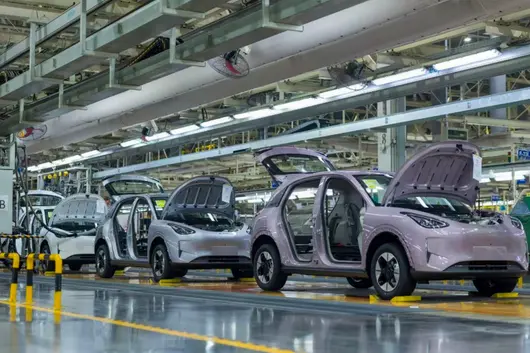
吉利星願第100萬輛量產整車今日喺吉利汽車湘潭製造基地正式下線。

從第1輛到第100萬輛,吉利星願只用咗24個月,平均每隔55秒下線1輛整車。

而放眼全球,百萬輛規模通常都要三到五年甚至更長時間,多為品牌旗下多款車型嘅累積。
2024年上市之初,吉利星願就圍繞用戶真實痛點,以空間、智能、續航、操控、安全「五大顛覆式創新」重塑A0級純電小車標準。70L前備箱、寧德時代電芯、後驅獨懸等全系標配,產品配置將用戶體驗擺喺第一位,圍繞用戶高頻使用場景展開。標準一出,同級紛紛跟進優化,A0級小車由此從「夠用就好」邁向「高質優價」。
兩年達成百萬輛下線 吉利星願刷新全球加速度
作為A0級小車市場嘅引領者,吉利星願自全球上市以來,憑藉紮實嘅產品力同持續積累嘅用戶口碑,穩居全品類無任何定语嘅銷量冠軍,成為中國車市嘅「現象級」爆款產品。2025年榮登全品類車型銷量冠軍,2026年上半年累計銷量突破24.9萬輛,同比增長21%,穩居上半年全市場車型銷量榜首。進入下半年,吉利星願嘅爆發力更加驚人,8月、9月連續兩個月銷量破6萬,成為當前市場上唯一一款連續兩個月銷量破6萬嘅車型。不僅喺A0級純電賽道實現斷層領先,更加持續登頂中國車市全品類銷量榜首。
喺國內一路領跑嘅同時,吉利星願嘅全球化版圖亦加速擴張。目前,吉利星願已登陸全球30多個國家,並先後斬獲泰國電動車銷冠、約旦純電第一、墨西哥純電第二嘅好成績。今年8月,吉利星願開拓咗澳大利亞、英國、法國等歐洲、大洋洲市場,成為2026年上半年中國新能源兩廂車型出口TOP2。
「24個月下線百萬輛」背後嘅吉利汽車湘潭製造基地
吉利汽車湘潭製造基地依托吉利集團40年嘅底層技術積澱同全球化體系能力,深耕湖南二十年,先後孕育多款百萬輛級車型,目前已升級為新能源車同出口車並重嘅全球製造基地。喺雙班生產模式下,工廠平均55秒即可下線一臺整車;2025年汽車產銷突破64萬臺/套,創歷史新高。智能制造體系同全流程質量管控,為吉利星願百萬輛嘅品質一致性提供咗堅實保障。「24個月下線百萬輛」嘅紀錄不僅係速度嘅體現,更加係品質嘅承諾。

吉利星願行駛20萬公里後 表現同新車無別
作為全品類車型銷量之王,吉利星願嘅底氣從來唔靠紙面參數,而是紮紮實實嘅實際產品體驗。
為驗證用戶最關切嘅耐久度、可靠性等問題,吉利星願聯合中汽研,用一台行駛里程達20萬公里嘅用戶車輛,圍繞續航同操控進行嚴苛實測。
呢台行駛20萬公里嘅310km夢想版嘅初代星願,喺全系標配嘅寧德時代電芯、液冷溫控系統全鏈路能量管理嘅加持下,行駛60%城區、40%高速高架路段後,實測續航里程達309km,續航達成率99.7%,表現同新車幾乎無差別。

20萬公里後,操控依舊穩健。得益於後置後驅+多連桿獨立懸架、路特斯調校技術加持,呢台服役20萬公里嘅吉利星願麋鹿測試成績達到咗78.1km/h,同新車階段80.7km/h嘅成績相差甚微,展現咗良好嘅車身穩定性同可控性。

喺馬來西亞嘅 SUV 市場,好多買家喺揀車嘅時候都會將 Toyota Fortuner 同 Mercedes-Benz GLC 來做比較。呢兩款車喺價格同定位上都幾接近,今日我哋就由多個方面做一個詳細嘅比較,幫你節省做功課嘅時間。
Toyota Fortuner 喺馬來西亞嘅 OTR 售價係 RM 195,880 - 241,880,一共有 3 個版本,包括 2024 2.8T VRZ Diesel(RM 241,880)、2024 2.7L SRZ Petrol(RM 202,880)、2024 2.4L Standard Diesel(RM 195,880)等。
Mercedes-Benz GLC 喺馬來西亞嘅 OTR 售價係 RM 336,888 - 336,888,一共有 2 個版本,包括 GLC 200(RM 290,000)、GLC 300(RM 340,000)等。
從價錢嚟睇,Toyota Fortuner 嘅起步價確實比 Mercedes-Benz GLC 平咗 RM 141,008。如果你預算有限,Toyota 嘅入門版已經可以滿足日常需求。但都要留意,平嗰幾千蚊,可能喺配備上要有取舍,具體睇返你嘅需求。
Toyota Fortuner 配 2.5L Diesel,馬力 187 hp。官方油耗 8.5 L/100km。
Mercedes-Benz GLC 配 2.0L Turbo,馬力 220 hp。官方油耗 9.5 L/100km。
動力方面,Mercedes-Benz GLC 嘅 2.0L Turbo 比 Toyota Fortuner 嘅 2.5L Diesel 多咗 33 匹馬力。不過日常喺市區行,兩款車嘅動力都夠用,唔會覺得唔夠力。
Toyota Fortuner 車身長 4400 mm,尾箱 400 L。
Mercedes-Benz GLC 車身長 4400 mm,尾箱 400 L。
兩款車嘅尺寸幾乎一樣,車內空間相差唔多。呢個級別嘅車,日常使用完全夠用。
Toyota Fortuner 採用 FWD 驅動方式。
Mercedes-Benz GLC 採用 FWD 驅動方式。
兩款車嘅驅動方式一樣,都係 FWD,日常駕駛感受唔會有太大分別。
Toyota Fortuner 保養 5 年/無限里程,保養間隔 每 10,000km 或 6 個月。
Mercedes-Benz GLC 保養 3 年/100,000km,保養間隔 每 10,000km 或 6 個月。
總體嚟講,Toyota Fortuner 同 Mercedes-Benz GLC 都係馬來西亞市場好唔錯嘅車型。揀邊一部,關鍵係要睇你嘅個人需求同預算。建議大家做足功課,多比較幾間車行嘅報價,再去做試駕做最終決定。買車係件大事,花少少時間做功課絕對唔會錯。

喺馬來西亞嘅 SUV 市場,好多買家在揀車嘅時候,都會將 Toyota Fortuner 同 Mercedes-Benz GLA 嚟比較。這兩款車喺價位同定位上都幾接近,今日我哋就從多個方面做一個詳細比較,幫你省返做功課嘅時間。
Toyota Fortuner 喺馬來西亞嘅 OTR 售價係 RM 195,880 - 241,880,一共有 3 個型號,包括 2024 2.8T VRZ Diesel(RM 241,880)、2024 2.7L SRZ Petrol(RM 202,880)、2024 2.4L Standard Diesel(RM 195,880) 等。
Mercedes-Benz GLA 喺馬來西亞嘅 OTR 售價係 RM 258,888 - 295,888,一共有 1 個型號,包括 Standard(RM 258,888) 等。
從價錢睇落,Toyota Fortuner 嘅起步價確實比 Mercedes-Benz GLA 平咗 RM 63,008。如果你預算有限,Toyota 嘅入門版已經可以滿足日常需要。但都要留意,平嗰幾千蚊,可能喺配備上有取捨,具體要看你嘅需要。
Toyota Fortuner 搭載 2.5L Diesel,馬力 187 hp。官方油耗 8.5 L/100km。
Mercedes-Benz GLA 搭載 2.0L Turbo,馬力 220 hp。官方油耗 9.5 L/100km。
動力方面,Mercedes-Benz GLA 嘅 2.0L Turbo 比 Toyota Fortuner 嘅 2.5L Diesel 多出 33 匹馬力。不過日常喺市區開,兩款車嘅動力都夠用,唔會覺得唔夠力。
Toyota Fortuner 嘅安全評級係 5★ (ASEAN NCAP),主動安全系統包括 。
Mercedes-Benz GLA 嘅安全評級係 5★ (Euro NCAP),主動安全系統包括 Premium ADAS。
Toyota Fortuner 車身長 4400 mm,行李箱 400 L。
Mercedes-Benz GLA 車身長 4400 mm,行李箱 400 L。
兩款車嘅尺寸幾乎一樣,車內空間分別唔大。呢個級別嘅車,日常使用完全夠用。

Toyota Fortuner 保修 5 年/無限制里程,保養間隔 每 10,000km 或 6 個月。
Mercedes-Benz GLA 保修 3 年/100,000km,保養間隔 每 10,000km 或 6 個月。
總括嚟講,Toyota Fortuner 同 Mercedes-Benz GLA 都係馬來西亞市場幾唔錯嘅車型。揀邊一輛,關鍵都要睇你嘅個人需要同預算。建議大家做好功課,多比較幾間車行嘅報價,然後再去試駕駛做最後決定。買車係件大事,花少少時間做功課絕對唔會錯。

In the Malaysian SUV market, many buyers compare Toyota Fortuner and BMW X3 when choosing a car. These two cars are quite close in price and positioning; today we will make a detailed comparison from multiple aspects to help you save time on research.
The OTR selling price of Toyota Fortuner in Malaysia is RM 195,880 - 241,880, with a total of 3 versions, including 2024 2.8T VRZ Diesel (RM 241,880), 2024 2.7L SRZ Petrol (RM 202,880), 2024 2.4L Standard Diesel (RM 195,880), etc.
The OTR selling price of BMW X3 in Malaysia is RM 325,800 - 358,800, with a total of 2 versions, including xDrive20i (RM 320,000), xDrive30e (RM 360,000), etc.
In terms of price, Toyota Fortuner's starting price is indeed RM 129,920 cheaper than BMW X3. If your budget is limited, Toyota's entry-level version can already meet daily needs. However, also note that the few thousand savings might involve trade-offs in features, specifically depending on your needs.
Toyota Fortuner's safety rating is 5★ (ASEAN NCAP), active safety systems include.
BMW X3's safety rating is 5★ (Euro NCAP), active safety systems include Premium ADAS.
Toyota Fortuner adopts FWD drive mode.
BMW X3 adopts FWD drive mode.
The drive modes of both cars are the same, both are FWD, daily driving experience will not have too much difference.
Toyota Fortuner and BMW X3 are both mainstream choices in the Malaysian market, suitable for family use, daily commuting. If you value brand reputation and resale value more, you can prioritize the one with better reputation; if you care more about cost-performance and features, then choose the one with richer configuration. Ultimately, it is recommended to test drive both models, personal experience is the most important.

Overall, Toyota Fortuner and BMW X3 are both very good models in the Malaysian market. Which one to choose, the key still depends on your personal needs and budget. It is recommended to do your homework, compare quotes from several car dealerships, then test drive to make the final decision. Buying a car is a big matter, spending some time on research will never be wrong.


